L.E. Henderson's Blog, page 4
November 15, 2020
Easing the Emotional Risk of Sharing Stories
Years ago, I shattered a stubborn case of block by deciding not to heed writing advice anymore.
The trick to ignoring the “authorities” was to pretend I was ten — a time before I had learned to stutter out dry, self-conscious prose for teachers. I had never blocked as a child when I was penning exuberant stories featuring my dog as the hero. For a while I had fun flouting every rule I knew. I could now be silly, trite, or sentimental if I felt like it.
My new attitude quieted the voice of criticism inside me, and playfulness nudged its way back into my art.
But my epiphany only carried me so far. Right after I shared my writing, my inner demons would break out of their cage and howl. Why did you have to complain so much? Did you have to reveal so much about yourself? No one has responded yet. Something is wrong! You should worry deeply about this! Deeply, I say!
Writing was one thing; sharing was another. What was safe to say in private seemed risky to say in public.
I kept sharing my writing anyway. Freed from block, I published two more novels and three anthologies of short stories.
But my anxiety about sharing never went away. After letting my work go, my dread of criticism always rebounded. I would doubt my choices and sink into insecurity.
It was maddening. I needed a psychiatrist. Brain surgery. Electro-shock therapy. A fairy godmother.
The internet seemed to offer simpler solace. Google was teeming with self-help articles that instructed readers how to stop caring what others think of them, so that they could become their “fully realized, authentic selves.”
Although these articles were not directly related to writing, they seemed to apply to my problem, since I identified myself so much with my writing; in my mind my writing was me.
If you Google “Stop caring what people think of you,” a plethora of articles and self-help book ads will pop into view. I scoured through a number of them.
I gave particular attention to an article called “Taming the Mammoth: Why You Should Stop Caring What People Think” by Tim Urban.
Urban says there was a point in human evolutionary history, during the heyday of the wooly mammoth, when caring what others thought of you was an essential survival skill; if no one liked you, other tribe members would banish you from the tribe to die alone in the wilderness. The unpopular members who were allowed to stay failed to leave offspring.
The author argues that the antiquated brain is at fault because survival no longer depends upon anyone liking you, so caring what others think should have gone extinct with the wooly mammoth. He says that in the modern world, fears of rejection just keep you from getting what you want; he calls pleasers “cowards” for hiding who they really are. Urban draws cartoons featuring an insecure mammoth as a symbol of ancient fears that are no longer useful.
Urban encourages his audience to honor their “authentic voice” instead of trying to impress or please; besides, he adds, people will like you more anyway if you insist upon being yourself, and even if some people still dislike you, that’s okay, because sooner or later everyone whose good opinion you seek is just going to die anyway.
The final argument especially intrigued me.
Using my inevitable demise as a source of social freedom sounded exciting, but I wondered about the wisdom of forming a philosophy based on what will happen after you die. It seemed like a slippery slope to nihilism. Was I willing to accept the belief that nothing temporary matters just so I could feel less anxiety about sharing a blog post?
There was another point Urban made that troubled me, which was that, once you stop caring whether people like you, they are bound to like you more. He claims that people will be irresistibly charmed by your honest authenticity.
True or not, my problem with this tip is that it summons the very motivation — to be liked — that the author urges the reader to avoid indulging. It is as if he is saying, “Here is how to become someone you should not want to be.”
If I try to stop caring what people think of me mainly because I want people to like me, then I have already failed.
I also questioned the main premise of the author – his belief that the brain is acting on antiquated genetic instructions when it induces fears of what others think about us.
All it takes is a glance at the news to see that those fears are still warranted. Not everyone in the world lives in a healthy democracy where speaking your mind is safe. Even in the United States, freedom of speech is eroding. Here – and in many other parts of the world — “being authentic” really can get you killed. Brutal dictators execute critics. Thuggish bigots issue death threats to those who disagree with them, and sometimes they carry them out.
Amusing as it may be to think that our silly primal brains are misleading us, at the very least, workers can lose their incomes for what they say and how they act.
That is one reason writing or speaking honestly even when you know many people will strongly object is courageous. The risk is real.
The “stupid brain that needs to get with the times” argument shows up repeatedly in self-help literature, but it needs more critical examination.
My final problem with “Taming the Mammoth” is that the author argues that you “should” not care what others think.
Whenever a writer pairs the word “should” with any emotion, I bristle. Does anyone ever feel anything genuinely because someone shames them into feeling it? Does love, hate, or sadness ever arise from moral obligation?
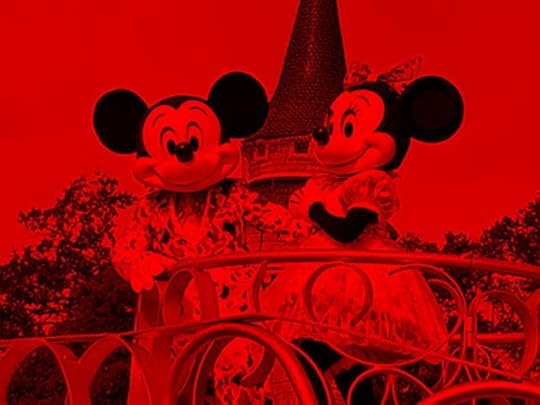
I never feel the way I should. I have felt sad on some of my birthdays and impatient rather than cheerful at weddings. Once I even felt grumpy at Disney World. On that July day, a parade stranded me in the sweltering heat with no shade in sight.
A costumed Mickey Mouse was waving at the crowd and dancing joyously. Sweat was pouring down my back as the trumpets shattered my eardrums. Everyone was cheering and confetti was falling as the sun slowly incinerated my face. I had never hated anyone more than I hated Mickey Mouse that day. If any of the gift shops had giant mouse traps, I would have given the shirt on my back and all the money in my purse to procure one.
My emotions have their own inscrutable rules. I am unable to adopt new traits. I can only strengthen or weaken the ones that exist in me already.
That was the knowledge that actually gave me hope.
On one particularly rough day in which one of my favorite stories had gotten a lukewarm response from a friend, I was sitting in a fast food restaurant feeling melancholy and watching the sun begin to set through the glass walls.
The sun warmed my face and glanced off the tables. Everything around me looked luminous. Seemingly out of nowhere, I thought, I feel happy. All my worries had vanished, and for no apparent reason except for sunlight coming through a wall.
After that day, I began to notice that even on days I published my writing, there were already many moments in which what people thought of me was the last thing on my mind.
During those times, not fearing criticism was not some far-off inconceivable enlightenment. It was a reality, and one I already experienced most of the time.
It was only immediately after sharing my writing that my whole life seemed to hinge on its positive reception. But that was not a problem of caring what others thought; it was my difficulty in seeing beyond the moment.
On my normal days, I needed to pay attention to all the moments when I was already not worried, the times I felt content for no good reason. I needed to zoom in on those moments, until they filled the entire screen of my imagination.
My belief that I had to stop caring what anyone thought had only made me more self-conscious. I had ended up dwelling on my fears, augmenting them instead of simply letting them disappear on their own.
As long as I care about my writing, I will always feel some anxiety over sharing it. I will probably always enjoy praise and dislike criticism. And maybe after I publish anything, I will always feel tense and crave a glowing response.
But I love writing too much to depend upon praise as a condition for sharing it, even if sharing hurts sometimes.
Albert Einstein said, “A ship in harbor is safe, but that is not what ships are built for.”
If I keep my writing in the harbor of my desk drawer, it can never do what I built it for, which is to reach out to others. And if I know no one is ever going to see my work, I am less motivated to get it just right. Sharing my writing makes me a better writer.
If I want to hide my writing, I can keep a diary. But ultimately I want to communicate. Writing is the reward of writing. But sharing is a big reward of finishing.
No matter the response.
The post Easing the Emotional Risk of Sharing Stories appeared first on PASSIONATE REASON.


November 8, 2020
Why Drawing, Even Badly, is Worthwhile
Recently I told my brother I had been drawing a lot during the pandemic.
He said, “I envy you. I wish I could draw. I remember how much I enjoyed it as a kid. I’m too old now to really get good at it.”
I knew how he felt. I’ve spent much of my life talking myself out of fun activities by asking myself, “What’s the point in learning a new skill at this stage? To achieve the Ninja-like mastery I require, I would have needed to start as a three-year-old.’ Therefore, it’s not worth it to even begin.”
But my view has changed. I told my brother, “I’m not drawing to be an expert. I’m drawing because I enjoy it.”
I told him how I was working my way through a drawing book for beginners. This surprised him since I was an art major in college.
But I was never the best at drawing. I was always better at writing. However, there is no shame in starting anew.
I love how-to books for beginners. There is something liberating about an introduction that assumes you know nothing about a subject even if you do. Even though I’ve written four novels, I still enjoy books for children that cover the basics of storytelling.
Books for beginners call forth my childhood – a time that I felt free to experiment before my adult ego decided I had to do everything perfectly the first time.
That’s why I loved my drawing book Learn to Draw in 28 Days by Mark Kistler. It made me remember how I had drawn as a child, not with some practical purpose like making money, getting a good grade, or impressing anyone, but because I enjoyed the scratch of a pencil across a page and the power to create something new.
Moreover, drawing feels the way I think meditation ought to feel but never does. While making marks, I lose track of time. I feel clearer. Drawing has even relieved my migraine headaches.
At the same time, creating the illusion of three-dimensional space on a two-dimensional surface feels magical. I like exploring the way my eyes perceive my surroundings — the play of light and shadow that make objects look the way they do.
Drawing awakens my sense that life is fundamentally strange. It makes me aware of the dynamic role negative space plays in a visual composition. Negative space is the underdog of the visual world. Usually it gets overlooked, but without it a drawing couldn’t exist. It makes me ponder the necessity of nothing for there to be something.
I finished my beginning drawing book. Since then, I have also been working through a book for beginners on drawing comics. Though my skills are shaky, I love exploring the linear component of human expressions. Can you create an emotion on a page using only a few strokes of a pencil? Comic book artists do this all the time with astonishing ease.
The fun I have had with my messy beginnings makes me think that sometimes a thing is worth doing badly rather than not doing it at all. Whenever I slip into a frame of mind that says I must only draw to make money or become famous, I try to catch myself. This utilitarian attitude, with its accompanying fear of failure, can leech joy from any activity. The trick to enjoying art is to pretend you are a kid again and no one expects anything from you. Writing is the same way. I wish I had known this much earlier — and I wish my brother had, too.
The post Why Drawing, Even Badly, is Worthwhile appeared first on PASSIONATE REASON.
November 1, 2020
Writing is Not a Jealous God
I was soaring. It was April 2019 and I’d just finished the draft of my new novel Prowl, which I’d painstakingly written three times, each time starting from scratch. I was eager to release something new, but I needed feedback before publishing it.
But before I could get any Beta readers, I suddenly found out I had to move. Two weeks after finishing my book in Florida, I found myself trundling across three state lines with a yowling cat.
That move was only the beginning. I moved several times in a one-year period, bouncing from Florida to North Carolina and finally on to South Carolina.
The upheaval froze my publishing progress for over a year.
My writing wasn’t exactly roaring either. In North Carolina I still wrote, but I felt unstable, like I was trying to juggle ice in a car that kept zipping around tight curves.My concentration lapsed. I would begin writing a story and pursue it with gritted teeth, only to end up putting it away.
I wondered, what was wrong with me? I wasn’t blocked. But I felt exhausted.
By itself moving didn’t seem to explain my lassitude. In the past, moving to new places had only energized me.
I thought the unthinkable. Maybe I needed a break from writing. For almost a decade, I’d written every day, never skipping, not even on weekends or holidays if I had any say.
I never made myself write over a sentence a day, but as soon as I did, habit would take over and I’d end up writing until sunset. The one-sentence rule had begun as a kind of trick to lure myself into writing more — but it worked too well. Writing every day, a habit begun in freedom, had grown compulsive – as all habits can, even good ones.
My routine left little room for anything else I dreamed of doing. I did read for brief periods, and I consulted news online. But even during my non-writing activities, I mostly lived in my head.
My Android wasn’t helping matters. My smartphone followed me everywhere, chirping and buzzing all my clear thoughts away. At the first sign of boredom, I’d grope for my phone and go roving through my Facebook feed for a “like” or some new political outrage to whisk me into drama.
Maybe I needed to set aside time for “real life” — or at least carve out more time for new activities. I decided to go off-line awhile. I began burying my smartphone in my sock drawer and abandoning it. I stopped going to social media sites, including Facebook.
Many articles tout the mental health benefits that come from going off social media. But my withdrawal wasn’t immediately a good experience. I missed my online friends, and I felt lonely. But over time, I began to enjoy my freedom from compulsion, and, no longer focused on likes, my thoughts cleared.
On weekends especially, I made a point to do something besides writing. I’d play with my cat or take a walk. Other times I’d listen to music or sit on the balcony and allow my mind to wander.
I delved into different academic subjects, even subjects that seemed unlikely to benefit my writing. I started reading a textbook on business although I’d never cared about business before. I took up drawing again – I’d majored in art in college but had mostly stopped drawing after graduation.
Taking more breaks from writing was like opening a window. My energy drifted back to me, and my ideas began to flow again.
Finally, last December I moved into a new house in Rock Hill, South Carolina — just in time for the pandemic to begin. Sheltering in place, I regained my concentration and I finally got someone to read Prowl – which I’m now getting ready to publish.
While settling down made it easier to focus on writing, my new activities have given me a sense of freedom I’d been lacking even before the move. Now, whenever my concentration flags or writing starts to feel compulsive, I order myself to take to a break from writing even if it hurts. I forbid myself to even write a sentence. Ironically, forbidding myself to write renders me desperate to write, so I have to take the injunction seriously.
During my off time, anything goes – including doing nothing. Sometimes I procrastinate for the unsung Zen-like bliss that only comes from consigning a task to the future.
As a writer I’m not a closed system. I need to breathe in as well as out — which should’ve been obvious. Yet I still have trouble going a whole day without writing. This is partly because I love writing, but also because the urge to write feels like a “righteous” impulse I should always obey — as if writing were a jealous god that smites writers for exploring other activities.
I have to remind myself that creativity is more likely to flourish if I let myself learn, feel, and observe — which not only enriches not just my writing, but my life.
I still think about social media, and sometimes I still miss it. But I’m enjoying having my concentration back.
To my friends online, I hope you’re staying safe and having a great autumn. You’ll be hearing from me again soon because I want to start blogging regularly again. I’ve missed it more than anything. Happy autumn!
[image error]
The post Writing is Not a Jealous God appeared first on PASSIONATE REASON.
October 24, 2020
How Cat Logic Vanquishes Worry
When life gets too confusing, when petty worries seem profound, I rely on three ways to realign my perspective.
One is to ask myself, “What difference will this make in a hundred years?” That can quiet my thoughts quickly.
Another trick is to imagine I am standing on the moon looking down on Earth with all its boundaries erased by distance. From far above the stratosphere everything appears silent and serene.
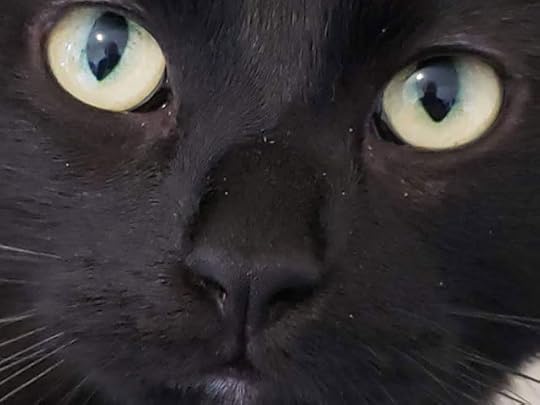
But sometimes, my first two methods fail me, and I remember my favorite lens for putting my problems in perspective. I pretend I am my cat.
Almost any human problem looks trifling from the perspective of a cat. I fret about the quality of my writing, but my cat has never read a novel and does not think a lot of them.
As I type on my laptop, laboring over every word, I imagine what sage advice my cat would offer about my writing woes if she could speak: “Why would you make marks on a nonexistent surface? Can you eat them? Drink them? Smell them? You could be doing important things like batting bottle caps under the stove. You could be hiding under the bed and chewing lint. Humans are boring. You have no idea how to have fun!”
And my cat would have made an excellent point. To myself I am a writer. I have wrapped my ego in the printed word. Thus, I take it – and myself — very seriously.
My cat could not care less about the quality of my writing or my ego.
My cat knows what really matters. She cares about play, comfort, my lap, the mysterious red dot that appears when I am around, my ability to produce treats, and my power to open cabinets so she can dive into them.
Unlike everyone else I know, my cat deems money barely worth a sniff, although the super-important bills stacked on my counter promise her many joyous hours of shredding fun time. She prefers soda caps to cars and shoe boxes to real estate. She does not own a watch and if she had one, she would just bat it under the refrigerator so she could try to paw it out later.
Whenever my life seems dull, I seek to emulate her fascination with details I normally dismiss as trivial. To my cat, a frayed shoe string is as dazzling as a rainbow bridge to Mars. A drop of tap water is – perhaps — a tiny crystal world. The mighty rattle of a paper grocery bag paralyzes her with wonder and fear.
To my cat, a fruit fly is magical and deserve full, tail-swishing concentration. A warm patch of sunlight on the floor is worth more to her than a treasure chest exploding with rubies. A cube of ice in her water dish is a gem of nature, slick, cold, and vanishing — more wonderful than the stars.
I need a cat to remind me that ice is weird and status pointless. I need a cat to rescue me from the faulty common sense that has been hammered into me since birth: Be disciplined. Make lots of money. Your worth depends upon how beautiful, successful, or productive you are.
Cats are wise. They know better.
When the prospect of dying fails to jolt me from my rut, when contemplating the vastness of the universe fails to embolden me, I look to my furry philosopher stretching in a patch of sunlight in the floor. With a lazy yawn, she says without speaking that none of what you care about matters, that playing is paramount, that tuna is delightful, that reality is now.
The post How Cat Logic Vanquishes Worry appeared first on PASSIONATE REASON.
September 22, 2019
Why my Depression Got Miffed and Stormed Off to Starbucks

Over the summer my depression made an unwelcome
reappearance on my emotional doorstep. For therapy I tried this exercise I had
read about somewhere, which was to write an imaginary dialogue with my
depression. This roll-and-tumble dust-up of a conversation was the result.
The transcript:
Depression: Gee,
I just arrived. Why are you not smiling? After all this time, do I not get a
hug? Have you forgotten about me? After
all the great times we have had together, the least you could do is invite me in.
Me: You are not
welcome in these parts, buddy. Go. Away.
Depression: Why,
you treat me like a total stranger. How could
you? We share so many fond memories together.
Me: Of course.
You came to me right after my thirteenth birthday. You shamed me for being fat.
I weighed 113. You held up a distorting
mirror you had stolen a circus fun house. I lost 13 pounds. My dad made me see
a psychiatrist.
Depression: Haha,
psyche! You fell for it! But, hey, that was just my little joke. You know you need me, right? Without me, you always
get too complacent. As soon as you think you have life all figured out, I have
to come back and prove that you have more to learn. What were you thinking
while I was gone anyway, that life was all rainbows and kittens? That you had any control whatsoever over the things
that matter most to you? Oh, stop
glowering like a cornered wildcat. Cheer up, Sugar Pops. Would you like some
bubble gum?
Me: No thanks.
I’m not really into bubble gum these days. The TMJ. Oh. Wait. What flavor is
it? Hold on. Is that grape? I love grape. Wait. No! Never mind. Keep
your silly bubble gum. Why are you here?
Depression: Well,
the simple answer is you have bipolar disorder, so I am automatically attracted
to you. Those chemicals in your brain, they drive me crazy. They call to me and
I have to come. No cure. Remember? Just pills. Did you think such a tiny thing
as a pill could banish me forever?
Throw all the pills you want at me. I will always find a way to seep, slink, or
ooze through your defenses. Even if you think you are feeling better, I will
always be there, lurking beneath the surface of your psyche waiting for the day
you will see me, once again, in all my dark glory.
Me: Seriously, Depression.
(Looks around self-consciously.) I need
you to go away. If someone sees you here, standing at my doorstep, it will be…embarrassing.
I have written powerful, cogent inspirational articles about how I have
heroically overcome you! People have praised me for writing them, told me it
helped them. Besides, by writing essays, I have proven that I am way too mature
for you. I have outgrown you. I am too wise
for you!
Depression: Yeah,
I remember those essays. That was back when your writing was good. Well I am here to invalidate every
last word of them. The fact that you thought you had escaped me makes my
surprise appearance all the more fun. Would you like a Skittle?
Me: A…what? No! I
would not like a Skittle! What do you
do, walk around with pockets stuffed with candy?
Depression: (Shrugs)
Suit yourself. You can watch me eat a
Skittle. Unlike you, I will actually be able to enjoy it. Mmmm. (Chomp, chomp,
chomp.) So fruity. So deliciously grape.
Fruity, grapey goodness! Om nom nom!
Me: Um. Grape? Well,
I do love grape. Wait. No! Never
mind!
Depression: I
tell you, Sugar Pops, you are missing out.” (Chomp, chomp, chomp)
Me: Listen,
Depression. Can we just make a deal? You
go eat your candy. I will stay here and do some writing and other activities I
enjoy. I will draw and read and listen to good music and try to forget you were
ever here. As for you, you must have other things to do, too. What are your
hobbies, Depression? Surely you must have some favorite activity, besides torturing
me. Crocheting? Salsa dancing? Pottery? Maybe you could go to Greece. Or even
better! I hear that the moon is very
interesting this time of year.
Depression: Actually,
I brought my suitcase. I am moving in with you. Where should I hang my
life-size rendering of your first elementary school teacher who ridiculed you
in front of the class for coloring outside the lines? Look. It’s made of multi-colored
popcorn kernels! Is that unique, or
what?
Me: Oh my God!
You have bags of luggage all over my yard! No! There is no way my house will hold all that
baggage. What did you do, rob a department store?
Depression: What?
No. I have gotten used to a certain lifestyle, and I like having all my stuff
with me. No worries. I’m certain we will find ample room for all of it. Just
throw away all your boring cosmetics. I hear the no-makeup look is in. Hmm. No.
On second thought, that might not be the best approach for you.
Me: Depression,
have you really thought this through? Where do you intend to sleep?
Depression: My
favorite room, baby: inside your head. I will swirl like a dark thread through
your dreams. I will make your food bitter. I will distract you as you read. I
will rehash memories for you to regret. I will point out despairing news
articles that suggest the world will be ending soon. I will question your
worthiness to exist. Oh my goodness. (Claps hands) We are going to have so much fun together!
Me: Fuck you, Depression.
Depression: You
might as well just settle in and accept that I am going to be here for a little
while.
Me: Depression.
Tell me. Why? Why now? I have been doing everything right. Taking all
my bipolar meds. Writing consistently. Keeping journals where I record
everything good that is going on in my life. Thinking positive thoughts. Making
silly gratitude lists and trying to forgive my enemies. I have meditated. I
have read books about how to keep you at bay. I have practically abandoned
social media, just so I could be happy.
Depression: Oh?
Who told you abandoning social media would make you happy?
Me: All the articles
people posted on social media!
Depression: Fascinating!
But to be honest, I am a little insulted. You thought going off social media
would get rid of me? I have existed for millennia, kiddo. Social media is not
even a blip on the cosmic calendar. Kings have fallen before me. Hoards of
writers just like you have succumbed to my wiles. I have dangled the bottle and
the sword before the despairing, brought celebrities to their knees. Think
about it. Was everyone always happy
before social media came along? I suppose it’s fine to find a scapegoat. But
remember how ancient I am and give me a little credit, will you? Social media.
Ha!
Me: Depression. Why are you here?
Depression: Whoa.
Maybe it’s time we had a little talk about who is in charge, missy. Unlike most
things, I am not bound by silly rules like cause and effect. I come and go as I
please. You will never figure me out. I live by my whims. You can take your
pills. You can meditate and be as mindful
as you want. You can read self-help books, study philosophy, try to logic me out of existence, but you will
never be able to control me. Face it. I will always be part of your life. I
will always be part of you.
Me: Okay. I get
it. You will always be with me. Like you said, as soon as I think I have life
figured out, you will be there to scramble my thoughts and have me doubt
everything I think I know. But Depression, I have a big question for you. A big
important question, a question I want you to really, really think about.
Depression: Oh.
You want to ask me a question? Pray, tell.
Me: Tell me, Depression. What would you do if I laughed at you?
(Silence)
Me: Depression,
you didn’t answer my question.
Depression: I was
just thinking. Your question is wildly hypothetical. No one laughs at depression. I am a very serious matter. Why do you
think I always wear black turtlenecks? Why do you think Psychology Today writes so many glowing articles about me?
Me: No, Depression.
My question is not hypothetical. This
is a question for here and now. What if I laughed at you? What if I laughed about how absurdly pointless
you are? About how you are either a stupid accident or the biggest joke natural
selection ever pulled on humanity? My teeth make sense. They help me chew food,
which gives me the energy I need to survive. My eyes make sense. They let me see
beauty and identify danger. But you. What did you ever do? Did nature at some point say, “Hey, this is gonna work! Biological
organisms who lose interest in activities they usually enjoy because they are
in the grip of existential despair, this is going to help humans survive. Take away their energy, make them question why
they are here. It will help them outrun tigers.” Pointless silly things are the
stock and trade of comedians. So again, I ask you, Depression, what if I laugh
at you? You brag about how you have brought down kings, but you are no more formidable
than a stray hair on my neck. What if I laugh at you? At how you strut and
preen? Or how your breath always smells like week-old boiled cabbage?
Depression: Boiled
cabbage? I do not smell like boiled
cabbage! (Blows into hand) No one has ever said that about me! That is
not even a thing!
Me: (Quietly) Again,
Depression. What if I laughed at you?
Depression: Um. I
would rather you not. I am your house
guest after all. It would be rather rude. I would certainly think less well of
you. I might even give you a bad review on Yelp.
Me: My brain is not open for business. Write
all the negative reviews you want.
Depression: Huh. (Glances
casually back over his shoulder) I was sure I saw an “open” sign.
Me: You are
ridiculous. And the more seriously you take yourself, the sillier you seem. You
wear stifling hot clothes on sultry summer days. You think you are deeper than God,
but really you are just a poseur, a clown in funeral garb. And you smack your mouth
when you eat your Skittles.
Depression: Do not!
Me: Do too! You smack like a lady who just put on
lipstick. Just answer the question. Depression. A simple question: What if I
laughed at you?
(Silence)
Me: Depression? Are
you still awake?
Depression: Mmhmm.
I was just thinking. Actually, I think there is this…place I need to be. I think I, um, forgot my toothbrush.
Me: I just saw
your toothbrush. Your suitcase is partly transparent beneath that little flappy
thing.
Depression: Well,
I, um, I forgot to get my coffee this morning. I’m getting a devil of a
headache. I need to go grab something at Starbucks. Black coffee. No sugar, no
cream. Dark roast.
Me: I have some
coffee here.
Depression: No. I
mean thanks, but never mind. I need to get some professionally made coffee. Your coffee tastes like fermented cat
drool. No worries, though. I just need to think. But remember. Always remember.
I am undefeated and un-vanquishable. I rule the world, and I am taking it out one
person at a time. Soon I will enshroud the entire cosmos in darkness and my
diabolical laughter will echo through the empty
space where all the stars used to be. And mark my words, missy. I will be back. I will always be back.” (Throws package of Skittles
on the lawn, turns around and struts away)
Me: I know. (Walks outside, takes deep breath,
and looks up at the sky) But next time I
will be prepared.
The post Why my Depression Got Miffed and Stormed Off to Starbucks appeared first on PASSIONATE REASON.
August 15, 2019
What Is a Hero?
The panelist seemed super-human. She had drawn awed murmurs after
telling us at the indie writing conference in Orlando that she had written and
published over fifty romance novels. She was barely over twenty.
I was eager to hear what the prolific author was going to
say, especially when the moderator asked her a question I loved, “How do you
define a hero?”
As a novelist myself, I had read many definitions of a hero in
how-to-write books. Many were dry and technical: “A hero is the main character
of a story who struggles against overwhelming obstacles, usually for some
principle, ideal, person, or goal beyond the narrow scope of his or her own ego.
Heroes may be flawed but, in the end, they will always act according to their
conscience, even when it means risking everything, including, sometimes, their
lives.”
Although abstractly academic, the definition fit my own idea
of what a hero was. As an adolescent I had absorbed countless memoirs about individuals
who had hidden Jews in their houses
during the Nazi regime. I thought they were heroes because they had risked
their lives to oppose a cruel government; they were the essence of courage.
As I waited for the author to provide her own answer, she appeared
to look inward as if selecting her words carefully. At last she opened her
mouth and said: “Well, a hero, he’s gotta be good-looking. But not too
good-looking. He’s gotta be kind of rugged. He can’t look like, say,
Brad Pitt. Brad Pitt, now, he’s too pretty. A man, he’s gotta to be a man, you
know? Not mean. But not too nice either. He has to be, you know, dominant.
Personally, I like a five O-clock shadow.”
The room had fallen silent. I squirmed in my folding chair
and waited for someone to laugh. When no one did, I waited for the other romance
novelists to contradict her, to explain to her that heroism has nothing to do
with the way a character looks, and that a hero is more than just a sex symbol
with traits that happen to appeal to an author personally. I wanted to object,
too, that being dominant did not make someone a hero. Bullies and genocidal
dictators were dominant, too, but no one was awarding them the Nobel Peace
Prize.
I waited for someone to say a hero could be flawed,
unattractive, and even prone to cowardice, yet still pull off stunningly brave
acts during a crisis. I wanted
someone to say that everyone has the potential for courage, and that part of
why we love stories so much is that it helps us imagine how we might be brave
in the most devastating circumstances despite our childhood wounds, our
baggage, and innermost fears.
I felt certain that the second panelist, when questioned,
would shuffle the discussion onto a more sensible path. She appeared to be in her twenties, too, with
a fair complexion and long purple hair. When asked to define a hero, she said,
“Well, the main quality of a hero is he has got to be good. But not too
good. I mean, I have a strong personality and I do want a man who will
let me have my way most of the time, or I’ll get mad at him. But he can’t agree
with me all the time either, or I won’t respect him. But still, he has to be good.
You know how it is when you are with a man who has a good heart? You just feel
the goodness coming off him. You
just feel it. That’s what a hero is.”
The discussion continued in this manner. In my mind, I rehearsed what I had just learned about heroes:
Good-looking but not as pretty as Brad PittNice but not too nice but not mean eitherGoodness exudes from heroes in a mysterious way, and that is how you know they are good.
The replies the other panelists gave comported with what the
first two had said. No one even mentioned the female protagonists, although the
main character of a story is normally considered the “hero.”
I thought romance writers must live in an entirely different
universe from science fiction writers like me; their genre conventions must
have been much different. But a good story is a good story regardless of genre,
and I had to disagree with the definitions the panelists were giving.
Even the more familiar, technical definitions of a hero did
not quite satisfy me really. They seemed to be missing something vital. What
was a hero really, and why did we care about them so much? Why, in particular,
did I care about them?
A few weeks ago, at a comic book convention in Charlotte,
North Carolina called Heroes Con, I asked myself that question once again. I
wandered through the crowded signing room looking at brightly inked comic book
covers. I took in the flashy images of dauntless, grim-faced mega-men in
colorful spandex costumes. Bristling with muscles, they planted their boots
firmly on the ground, knees bent as if they had just leapt from the roof of a
ten-story building. They squared their shoulders. They balled their fists. Gorgeous
voluptuous women wearing revealing iron bikinis wielded crossbows while somehow
looking fierce and pouty at the same time.
The drawings were skillfully done, but something was missing.
The male heroes seemed like the kind the panel of romance
novelists at the convention in Florida had described as ideal. I had made fun
of the writers in my head for their clumsy definitions of a hero, but were the
messages conveyed by the comics really that different? The men struck dominant
poses, leaning forward, shoulders squared, all of them rugged, none of them
“pretty.”
All the characters looked so invulnerable. And maybe that
was the problem. There were no underdogs.
The reason I enjoyed The Game of Thrones television series was
because so many of the characters pursued ambitious goals despite apparent limitations
that should have disqualified them. Sometimes
they succeeded despite their weaknesses, or even because of them.
I loved watching the dwarf Lord Tyrion Lannister rises to
perilous and seemingly impossible challenges using wit, cunning, and courage, dispelling
any prejudice against him. Young and petite Daenerys Targerien is sold by her
brother, yet she charms, and falls in love with, the barbarian leader who has
bought her. She ultimately wins over the tribal army he leads and manages to
turn the harrowing situation into a win until she becomes a force to be
reckoned with in the battle to take the Iron Throne.
Game of Thrones has no monopoly on underdogs. They
are as old as David and Goliath, the tortoise and the hair, Rudolf the
Red-nosed Reindeer.
But there has to be more to a hero than being an underdog. A
ruthless dictator may emerge from humble origins and ascend to power with
something resembling courage. A hero does have to be “good” – although people
may disagree about what good means.
Author Maren Elwood in her book Characters Make Your Story tries to define a hero by what one is
not.
She says that a hero
must never be shown acting cruelly toward others, seeking revenge, flying off
the handle based on little provocation, or indulging in abject self-pity. The
implication is that these traits will cause readers to throw down the book in
disgust.
But even the most sensible sounding “rules” seem to have
exceptions. Two popular movies, Gladiator
and Kill Bill are stories in
which a hero is driven by revenge; the audience sympathizes with, and even
pulls for them because of the intensity of their suffering and the unfathomable
cruelty of their opponents.
Elwood goes on to say that readers of fiction hold the main
characters of the stories they read to a much higher standard of morality than
they do for themselves. Readers want their fictional characters to act in a way
that they like to imagine they would, not the way they really would act.
I remembered how, as a formerly bullied twelve-year-old, I had
marveled that my bullies enjoyed the same books I did. They pulled for
characters who had been abused, even though the bullies themselves were
abusers. They empathized with the suffering of imaginary people. They pulled
for characters who were “good” even if —
at least in my judgment — the bullies were not “good” at all.
Determining which behaviors are off-limits in heroes is not
enough to define what one is. In general, the fictional characters I admire,
however flawed they might be, are driven by love of something or someone to act
with courage.
However, sometimes heroes in books seem impossibly unselfish.
The courage to dash into fires to save tenants comes too easily to them. Part of me is constantly
asking, “Would I have acted as fearlessly in that situation as they did?” It is
an uncomfortable question because, too often, I am not so sure.
But I remember something one of my college literature
professors had said about the heroes of literature. He said, “Yes, literature is
filled with characters willing to risk their lives or be tortured for their
beliefs and principles. But should we worry because we might not be as brave as
they are in their situation ? I would like to think I would always do what was
right, no matter what the consequences. But honestly, if the punishment were
horrible enough, I would probably do some squirmy deed, if I had to, to escape
being beheaded, lynched, or tortured.”
He had made a good point. It is much easier to write a
dauntless hero into existence than it is to become one. So why did I or anyone
else bother making self-comparisons to fictional heroes anyway?
I think it has to do with one of the reasons we admire
heroes in the first place: they give us a vision of rising above our
limitations in order to honor what really matters to us.
The heroic literary figure speaks to the universal struggles
and limitations of being human. Life is hard and death is certain. Too often,
we feel helpless.
Our most cherished dreams evaporate like a morning mist.
Everything we care about the most, we are destined to someday lose. As much as
we try to control life, there are certain things that will always be beyond our
control.
It seems impossible to even master ourselves, our drives,
our obsessions, and our impulses. We fret about what others think. We live life
carefully, even when we have goals that we are passionate about. We feel
confused. We are indecisive. We are afraid.
A hero offers a glimpse of something different, something
that perhaps exists within all of us, a potential freedom from the strait
jacket of fear and the possibility of accomplishing something greater and more
lasting than just getting through the day.
A hero sees hope where others see despair. He sees opportunities
where others see impossibilities, even if the opportunity requires descending
into hell. But few of us want to descend into the nightmare of a torturous, uncertain
struggle, and it is sometimes hard to identify with anyone who does.
We like underdogs because through them we can start from a
familiar place of vulnerability and cross an imaginary bridge to strength, resolve, and freedom.
A hero is freer than most because he is willing to lose
everything for the love of a person, a principle, or an ideal, yet he never
becomes a rock without any feelings. A
hero might stand his ground even when a gun being pointed to his head, yet
still be afraid. What makes him free is that he insists in every situation,
upon preserving his right to make a choice.
The hero model offers a fantasy of how things could be
different, if only we were willing to be audacious enough to accept the
penalties and risks of true freedom.
Heroes should not be a cudgel for beating ourselves up
though. They are instead a window into another way to live, the tantalizing
possibility of what life might look like if we could set our fears aside and
live for what truly matters to us, even if it means losing the stable floor
beneath our feet and the illusions that make us feel safe.
Not every story features the kind of hero that speaks to the
love, fears, vulnerabilities, and suffering that come with being human. Stories
are about people striving to get what they want. But the fictional heroes that
mirror the real fears and potential courage that lie within every reader are
the ones most likely to endure.
The post What Is a Hero? appeared first on PASSIONATE REASON.
June 14, 2019
Why I Banished My Ego from My Writing Process
The silent inner voice that criticizes me as I write means well. It wants to shield my ego, to prevent me from saying anything embarrassing or offensive that might get me banished from the human race and possibly sent into the wilderness to survive on dirt and berries.
My ego does not understand that the only kind of writing that matters is honest writing. Mastering the art requires me to look at the world, including myself, in all its messy, multifaceted complexity.
Writing honestly, even about embarrassing things, should be easy — or so it seems. After all, it is “just my ego” at stake. But egos are like little toes. My little toes may not claim much space, but when I stub one of them, hard, against a table leg, the pain resonates to the outer reaches of the cosmos.
Below I have listed ways that my ego — or narrow concerns about my self-image — conflict with the greater need to explore freely and write honestly. The exercise is worthwhile because when I recognize what is happening inside my head, I can counter the voice of discouragement that threatens to sink my efforts.
My ego says, “Go Faster!”
I am a slow writer. My ego hates this. It wants me to be a speedy production powerhouse. It wants me to fling out flawless finished products with a single stroke of my pen. While I hate deadlines, my ego thinks, “Maybe you should give them another try. They are so basic. Everyone uses them. What makes you think you are so special?”
Whenever I listen to my ego on this, I slam into a paradox: Trying to rush actually slows me down. Anxiety over deadlines triggers resistance and procrastination. I finish far more quickly when I allow myself to get caught up in the moment instead of fretting over the clock. Deadlines create guilty pressure. They turn writing into a pious duty rather than something I do because I love doing it. When I lose track of time, my writing flows. When I am wondering, learning, experimenting, and discovering, I finish before I know it.
Unfortunately, our society does not especially prize artistic discovery; it does, however, enshrine finished products.
Maybe this is why, as soon as I begin to write anything, my ego immediately demands: “How are you going to finish this? Write an outline at once! Answer every question you will likely encounter. Resolve all potential inconsistencies! Write an ending now! Otherwise, you are just wasting time!”
I have to argue back with it, “Let me experiment! Let me have fun! Let me surprise myself.”
As much as my ego wants me to write quickly, it slows me down by trying to censor anything that might draw criticism, which includes everything worth saying in the world. My ego says, “Never mention death. It will depress people. Stay away from politics; it will divide people! Stay away from religion; you will offend people! Never mention anything that makes you appear vulnerable or flawed or less than fully in control. Be polite in your writing. Only say things that will make people like you! Be a good girl!”
The problem is that safe, self-conscious writing is generally stale writing. What separates merely competent writing from writing that electrifies is honesty. Besides, I am not an airbrushed cardboard cut-out of a person. Why would I even pretend to be? I am complex, hopeful, messy, searching, thoughtful, flawed and human. My writing, if it is worth anything, should reflect that.
My ego says: Collect impressive credentials!
Writing like any art is subjective. My writing is not just subjective from person to person; it is subjective from moment to moment. I can love my writing one minute and hate it the next for seemingly no reason at all.
I say I write what I love, but this is tricky. If I have a headache or if I am in a grumpy mood, I might begin to hate writing I used to love. If I cannot always use myself as a reliable frame of reference to determine if my writing is good, what can I use? As I go back and forth, insecurity and frustration arise. I begin to turn to outside sources of validation to settle the matter of whether my writing is “good” or not.
For this, our society offers many options. I can take it to a critique group or get opinions from friends. I can send my stories to magazines or seek traditional publishing for my novels. The last two seem to offer badges of authenticity that say, “Look at me. I am not some amateur wannabe. I have been vetted.”
While seeking feedback from readers is priceless for discovering my blind spots, there is a danger here. I will never master my art if I am constantly looking to others to tell me whether I am good or not.
Replacing my own judgment with the opinions of “gatekeepers” is not the answer; it will leave me uncertain, floundering, and indecisive. If I have an artistic vision I want to realize, I should be the one in charge of it. If I waver about whether it is good, which I inevitably will, my best bet is to trust my process, which has never let me down.
Or, if, even during my final polish stages, I keep vacillating on whether my writing is good, I can sometimes remedy my uncertainty by putting my work-in-progress away for a few days. When I come back to it, my judgment is usually clearer; if there really is something wrong with my writing, I am more likely to spot what needs to be fixed.
In any case, uncertainty is part of doing any art; seeking to arbitrate the matter by submitting my work to “the authorities” may actually lead to some decent advice, but I have to be careful because it can also diffuse my original vision and undermine my artistic integrity.
It is important to realize, too, that “the authorities” are not always authorities. Almost anyone can start their own publishing company and claim expertise.
I learned this lesson the hard way. A few years ago, I got what I had thought I wanted: an acceptance letter for my novel from a small publisher. My ego danced on the crest of a rainbow and went soaring over the clouds.
Several months later, I realized that my acceptance was not an honor. When the edits came back, they were full of changes I knew to be wrong. Grammatically correct sentences that had made perfect sense before had been changed to mangled sentences that made no sense at all. Every pronoun-verb pair had been combined into contractions.
The note accompanying the content edits ordered me to change things that were not even in my novel, leading me to think my editor had not even read my book, or had only skimmed it at best.
She made wildly inaccurate generalizations, such as claiming that all fantasy novels must begin with an action scene, and that the only exceptions she had ever seen were in novels by Brandon Sanderson, and that I was not Brandon Sanderson. I wondered: had she never read Lord of the Rings? Or The Chronicles of Narnia? Did she not realize that for an action scene to be suspenseful, readers have to care what happens to the characters, which first need to be introduced?
She also accused the beginning of my novel of being “too bleak.” But conflict is the soul of fiction, and no emotion is off-limits. Making my writing more “pleasant” would have only weakened it.
I found myself in a seemingly impossible situation. I wanted the plaudits of traditional publication. But how could I obey an editor who did not seem to grasp the fundamentals of story-telling? How could I make “corrections” I knew to be wrong and still feel good about myself? How would I feel if I knowingly weakened my novel for the sake of bring able to tell people I had been published traditionally? On the other hand, what if the badge of traditional publication could open doors previously closed to me? Should I give that up for any reason?
It was a clear conflict between surface and substance. In the end I cancelled the contract so that I could self-publish my novel the way I wanted to do it, because I knew that what might seem impressive to others would in reality be nothing but show.
I still hated giving up that “traditionally published author” badge. It had seemed to dazzle people when I told them my novel had been accepted. It had proved to them that I was not just some hack, that I was good enough to be taken seriously in the publishing world.
But was it not better to prove I could write well by actually writing well? I thought so. Since my traditional publishing adventure, I have become an avid proponent of self-publishing which allows me the full creative autonomy I seek.
My ego says, “Write everything perfectly the first time!”
When I was a kid, I imagined that all successful novelists had a clean one-step process. I imagined they would sit down at their computer and bang out a single, nearly perfect draft in a white-hot blaze of inspiration; that was what writer characters always did in movies anyway. I never saw them mind-mapping, plotting, or simply thinking.
Writers in movies apparently needed no planning, no trial and error; nary a moment of confusion or indecision ever hindered their steady progress. I still sometimes envy these imaginary writers. And there are real ones who claim to work in much the same way, churning out polished masterpieces in periods of a month or less.
However, the one-step approach to writing novels will not work for me. I have tried it for most of my life and I was always baffled when it never worked. I would start with musical beginnings, but I would always reach an impasse around the second chapter. The mysterious writing mindset I thought I needed would bail on me.
I only began to finish stories consistently when I found a multi-step process that allowed me to separate discovering what I wanted to say from how I wanted to say it. To discover content, I free-associate for ideas using mind-maps. Afterward I pick my best brainstormed ideas for planning my direction. Then I write a horrendously messy rough draft in longhand and type it up, revising as I go along; next, I analyze my work and change the content where needed. When I am happy with the content, I give my story a final polish. This is the process that worked, and still works, for me.
However, sometimes this multi-stage journey frustrates my impatient ego. I recently finished writing my novel Prowl, my sequel to Paw. I wrote three rough drafts, but only the last one excited me enough to finish it. Writing all those drafts was valuable because they allowed me to discover my story. My inner ten-year-old frolicked through my imaginary worlds with happy abandon. My ego, however, was not pleased at all. You wrote three whole drafts, it accused. Three! After all you have written, why are you not faster by now?
I still sometimes dream of the ideal, the glamorous vision of unbridled, effortless creativity unfurling from my fingertips. The problem with this model is it makes me dependent on the unpredictable — something artists like to call “the muse.” When muse-dependent writers get abandoned by their fickle helpers, they get “blocked,” and block can sometimes last for years. I know. I have been there. With a muse I am either on fire or I am “stuck.”
Now that I have a process, I never get blocked anymore. That is because I fired all my muses. Muses may sing beautifully, but they are notorious slackers, whereas a process always gets to work on time and delivers consistently good results that balance creativity with logic.
My Ego says, “Prove yourself!”
Of all the things my ego tells me, “prove yourself” is perhaps the one that tortures me the most. I have a voice in the back of my head that is constantly telling me, “Your writing is not as good as it used to be.” Whenever I have this self-trolling thought, I feel driven to prove it wrong. “I will make every story I write better than the story before,” I tell it, “so you will never be able to say that again!”
This is a lie. No matter how much “good” writing I do or how much praise I get, I never get to rest on my successes. I am continually taunted by all my previous selves into thinking that I wrote better years or even months ago, and that, somehow, I have “lost my way.” I feel constantly goaded into proving I am still “good,” which can lead to a clunky and self-conscious writing experience if I let it.
Writing to prove myself means sweating over my metaphors and trying to figure out every possible way to write a sentence so I can select the absolute best. My drive to compete with my former selves leads me away from creative discovery and into the trap of perfectionism.
Perfectionism is not my friend and it does not benefit my writing. It induces anxiety and despair. It is driven by fear, and not by love.
On my best days I let myself make mistakes so I can learn from them. I forget all about being “good;” I become immersed in my story and just write.
I have to reject the widespread assumption that once you have gained a certain level of competency in writing, the next step is to show everyone how “good” you are. When I attempt to show off, my writing flails. It goes best when I am not trying to prove anything but am instead trying to learn, explore, and understand. If I want to master writing, I can never give up being a student of the art.
When I write to discover, and not to parade my poetic descriptions of cumulus clouds, my ego howls in protest. It does not care about learning or discovering. It wants a finished product, and an impressive one at that. It would like for me to plan everything in painstaking detail before writing the first word, to ensure absolute perfection. But my product is only as good as my process, and if I knew everything I was going to write before I wrote it, writing would not be nearly as exciting. There would be no learning, no wondering, no surprising myself, and no letting my writing change me in some way, such as removing a cherished bias or clarifying a fuzzy belief.
Every time I sit down to write, I try to be as patient with myself as I would be with a child learning to write for the first time. Every time I start something new, I try to forget everything I know about writing and simply move my pen across the page.
Unfortunately, nothing I do is ever going to make my ego pack up its bags and move out of my mind.
But if my ego is going to lounge around in my brain rent-free, it has to follow my rules. It needs to stay out of my writing and leave my metaphors to me. My ego can handle the business end. It can enter my finished stories in contests and go to writing conferences. It can even start its own publishing company if it wants.
Then, while it is busy, I can sneak away to my private space and wander through my passages of words, observing the scenery as I inhale the prize that matters most: creative freedom.
The post Why I Banished My Ego from My Writing Process appeared first on PASSIONATE REASON.
April 20, 2019
My Cat Counsels Me on Outrage Addiction
Weeks ago I found myself so outraged by an online news
article, I had to remind myself to breathe.
Enough, I told myself. It is time to be proactive. So I sat back in my
sofa, massaged my temple — and did a rabid search for more articles I knew would
rocket my outrage to a whole new level.
As I read, adrenalin surged. I became madder by the minute.
When I had burned through my most incendiary news articles, I turned to
Facebook for the solace of its snarky fury.
Before I knew it, hours had passed with my eyes glued to my smart phone.
Now, blinking up, I looked around the living
room and wondered what I had actually accomplished, except for miffing
my cat.
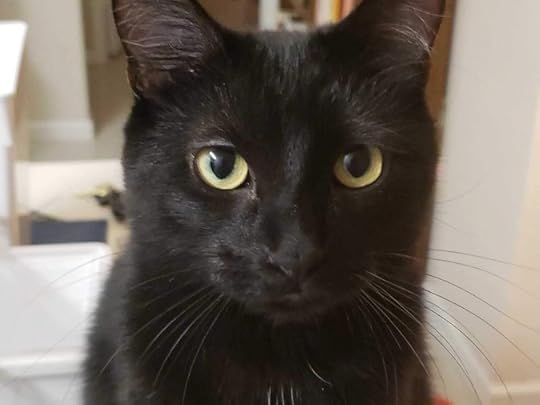
Some time ago she had dropped on the couch beside me a
brightly colored fuzzy ball. She is the only cat I have ever met who liked to
play fetch. Now she mewled piteously as
she nosed her violet toy toward me and looked up to gaze into my eyes, begging
me to throw it.
But, kitty, if you
only understood, I wanted to tell her. Democracy
is being undermined. Scandals are
rife. Corruption has woven itself
into the fabric of society, and we are possibly verging on apocalypse.
Throw me my fuzzy ball,
she said with her eyes. I looked back at her, trying to convey with my grave
stare that when you are outraged about politics the last thing you want to do
is throw a fuzzy ball.
However, the sheen of melancholy, of neglect, in her eyes
was a wakeup call; I could deny it no longer. I was in the grip of an
addiction; political outrage was annihilating every other feeling on my emotional spectrum. I was
losing the ability to feel empathy for those on the other side. Cynicism was brewing. I was not just addicted
to outrage. I was becoming it.
How had I not noticed the signs earlier? The way I had
clenched my teeth upon seeing any article that said good things about
politicians I disliked, or the almost physical pinch of pain when some new
piece of information bumped against my world view?
It had not always been this way. I had once taken great
pride in welcoming divergent opinions. I needed others to challenge my settled
beliefs so I could adjust them whenever they fell short of the truth. But my
news obsession was plunging me into a web of emotional bias.
Righteous hate was sidelining the things I loved. I was
becoming more like the political leaders I disliked, more prone to puerile
name-calling and less open to listening.
I wondered: What if the more you hated someone hateful, the
more like them you became? I thought I had seen a Star Trek episode long ago that had dramatized that very theme. Was
outrage the only alternative to apathy?
I could imagine the coalescing voices of every authoritarian
leader in the world tempting me from the shadows of Cyberspace, Come
now. We are not so different, you and I. Join me in my conquest. We shall crush
all dissenting opinions, so that never again will you endure the friction of
having your precious views invalidated by a stubborn fact. The rebel worms will
perish. We shall rule the galaxy together.
Ya-ha-ha!
Horrified, I could now see my phone for what it really was:
not a technological wonder, but a talisman from the dark side.
My phone, with me always, validated me for being chronically
enraged at politicians. It encouraged the worst in me. Made me miserable in a
way that was perversely satisfying. Suddenly I wanted to throw my phone to the
bottom of the sea to be consumed by angry eels. Except it had video games on it
I liked.
What was happening? As a writer I had once believed in my
ability to empathize with anyone, but somewhere, somehow, I seemed to have lost
my way. Developed an appetite for scandal and a penchant for schadenfreude.
I tried to remember a time it had been different. A time
that I could read, just read, no snap judgments or knee-jerk responses. No
grasping need for intellectual validation. I could do that with fiction, with
memoirs, with any nonpolitical literature.
But there was somethingabout online news sites — especially the commercial ones — that
electrified judgmental ire and erected fortresses of resistance.
Some editorials encouraged anger overtly. I had read
recently had said things like: “We should always remember to remain outraged at
these rampant abuses of power.”
I was inclined to agree. Hoards of citizens outraged about
abuses of power could counter injustice, could change the world. The Civil
Rights Movement. The American Revolution. Child labor laws. The Emancipation
Proclamation. All of these seemed to vindicate outrage as an instrument of
social progress.
But what was my
outrage actually doing aside from exhausting my emotional reservoirs,
depressing me, and saddening my cat?
But, cat, I
silently argued. I am entitled to my
outrage. These circumstances are
extreme. I am morally obligated to
work myself up into a towering inferno of self-righteous zeal. What was it the
poem by Yeats had said? “The best have no conviction but the worst are full of
passionate intensity.” Did I want to have no conviction at a time it was most
called for?
My cat nudged the fuzzy ball toward me slyly. It had little
bits of glitter on it and a veneer of feline drool, and little bits of fur
caught in the fibers.
I gazed at the fuzzy ball gravely. But the effort required
to toss the cat toy across the room seemed too extraordinary. A fog of
exhaustion had settled over me. Reacting to click bait was like coughing when
you are sick. It felt compulsive, draining; it felt unhealthy.
Maybe reading things besides news was the answer. Or at
least part of it. Whenever I read a novel or began to write, I always tried to
imagine what it would feel like to be someone or something else. Like a flea.
I had started identifying with fleas in the sixth grade.
Every day my teacher would ask the class to imagine what it would feel like to
be a flea or some other animal nobody liked.
She would then get us to pick one and write a story from its point of
view. When I picked a flea, I imagined myself crawling around, lost and
starving, in a towering forest of dog fur.
Even now, whenever I write a story, part of my mind folds
time, and I am in sixth grade again, trying to form a bridge between myself and
someone else — often some crawling, misunderstood creature. Without that kind
of identification, none of my characters
including my villains, would seem real. On some level I have to “love”
even my most abhorrent characters. I have to understand them. To find myself in
them.
Whenever I choked down incendiary news articles, empathy
evaporated, leaving me with only my anger. Some people spoke of outrage as a
virtue. Not mine. Mine only made me feel unhinged, out of control, driven by
blind impulse, full of explosive energy, yet ultimately helpless.
Not to mention irrational.
Compulsions drove me. Every time I had a moment alone, my
hand flew to my Android to stave off encroaching boredom.
But the world had gotten so noisy lately. A gaudy circus of
chaos and distraction. What if I needed my boredom? My silence? A moment to
think my own thoughts and to experience the full spectrum of emotions, and not
just the dull monochromatic energy of political outrage?
I wanted to be someone who sought to learn and understand,
not just an ever-gaping mouth.
On the other hand, never had the news felt so personal and
so alarming and so ominous. It did seem like there was something unique about
this moment in time, something especially dark that called for a powerful
response other than simply voting.
Anger was a natural response to injustice. And somehow in America abuses of
power kept sliding by without democracy sneezing it out the way a democracy was
supposed to do.
However, the excesses of wrongdoing seemed to overshadow, by
far, my responses to them.
But responses were more than just passive reflexes against a
political a narrative; for better or worse, they could shape history. Many new
sites knew this. I had read a recent headline began: “Why we should still be
worried about.. .”
Like a mindless sit-com laugh track, many articles, whether
liberal or conservative, cued particular emotions. Photographs of political
“villains” seemed always selected for their weird expressions, as if the
photographer shot the subject in mid-cough or mid-snort. The internet bristled
with messages that suggested what you ought to feel. And most of the time, the
messages were, Be worried. Be scared. Be
angry.
But I am not meant to burn red-hot all the time.
I needed to really look at the world around me. I needed to
read subversive novels and eat decadent ice cream and bury my feet in beach
sand until they turned raw. I needed to replay a favorite song so many times.
it swept me into the stratosphere.
I needed to focus not just on what I hated but what I loved.
I needed to throw a fuzzy ball to my cat.
And throw it, I did. The ball went soaring, carving an
imaginary rainbow in the air, and
thudded softly onto the kitchen floor.
Miss Percy scrambled after it, picked it up with her teeth,
and trotted back with it for me to throw again. Now she was staring fixedly at
me with her golden eyes.
What is that you say, kitty? I should not be defending fleas? Fuzzy
balls are far more precious than politics or diamonds? And because humans are
irrational, cats should rule the world from now on?
I started to protest about the world-ruling part. That is,
until she purred, and for a sublime moment, all my political anger melted into
a warm, rumbling lake of sound.
Maybe outrage would always be with me. But I felt, at last,
that I had found my way.
The post My Cat Counsels Me on Outrage Addiction appeared first on PASSIONATE REASON.
January 23, 2019
The Tightrope of Writing for Love and Pay
Money looks the same regardless of how it is earned. Money
made waitressing or cutting lawns looks no different from the money you would
make for publishing a bestselling masterpiece destined to survive for
millennia. Maybe in the moment, when the bills are due, money seems paramount,
but in the end it is the writing that compels interest, surprises, enchants,
persuades, and inspires.
That being said, I must admit that when I was a child
penning stories about talking animals and dreaming of being an author when I
grew up, I also hoped that I would make a living at writing.
It was not because I considered writing to be an onerous
chore that would only be worthwhile if someone greased my peanut- butter-and-jelly-stained
palms. Writing enchanted me; Otherwise I would have chosen a different career
to idealize. I imagined I would be paid because whenever someone asked me what
I wanted to be when I grew up, I knew they were not asking about my future
hobbies. They were asking how I was planning to earn a salary. Salaries, I
thought, made writers official.
I no longer care about being “official.” I am a writer
regardless of how many books I sell, because I write every day.
However, the earnings from my books are not yet enough to
support me. I hope they will be someday, if only because I want to spend most
of my time writing.
On the other hand, sometimes I am tempted to write just for
the sake of writing and not complicate my art with gritty and mundane marketing
concerns; the advantage of not pursuing payment is that I would never face any
conflict between what my art needs and what selling seems to require. There is
something appealing about having an avocation driven solely by love.
When your main goal is money, you risk trading artistic power
for purchasing power. A drive to make money can, if you let it, erode the art
itself. For example, in self-publishing there is a widely accepted belief that
releasing a new book every few months is the essential rule of financial success,
especially sequels in a series.
If that is my main goal, I may be tempted to avoid ambitious
projects in favor of easier, quicker ones; to write according to a formula; to
limit content to whatever the marketing research says is selling at the moment;
and to prioritize deadlines over quality.
Writing purely for love of the art comes without any of
those shackles. A writer not leashed to a boss, editor, client, publisher, or
marketing plan can devote every resource to bringing the imaginary to life in
the best way possible. When I write without pay, I also write without creative boundaries,
and nothing feels better.
At least until the bills come in or my dentist tells me I
need an $1800.00 root canal or else my tooth is history. At that point I am tempted
to compromise. I ask the inevitable question: how can I spend my time doing
what I love and still pay for groceries, cat food, antidepressants, water
service, and shoes?
There are no easy answers, but I did find comfort and
inspiration in a poem.
In “Two Tramps in Mud Time” Robert Frost creates a memorable
scenario in which the narrator forges a seamless bond between what he needs to
do and what he loves to do.
The narrator is in a wooded area chopping firewood for the
winter. He is doing it himself instead of hiring someone, because he enjoys the
activity so much. He describes in detail the almost sensual experience of physical
labor in a scenic natural environment.
A couple of tramps approach the narrator and mock him for doing
a task for the love of it that they could be doing for pay, pay that they
desperately need; from their perspective, their need to fill their stomachs outweighs
his love of chopping wood, so they think he should just step aside and let them
have the job.
The narrator strongly disagrees with their assumption that
their need outweighs his love, bringing him an extraordinary conclusion in the
final stanza:
But yield who will to
their separation
My object in living
Is to unite
My avocation and my vocation
As my two eyes make one in sight.
Only where love and need are one,
And the work is play for mortal stakes,
Is the deed ever really done
For Heaven and the future’s sakes.
Robert Frost, one of the most famous American poets, was
ultimately successful in uniting his “avocation and vocation” — that is, to get
paid for what he loved to do so that he could spend most of his time doing it. Few
writers ever achieve that ideal union between love and need and many spend much
of their lives searching for it.
Will I? After all, it is not as if anybody ever says, “Know
what I wish? I wish there were more books
in this world. There just are not enough books to read on this planet, and the
ones we do have are all drivel.” In reality, there are tens of thousands of extraordinary
books in the world. Even if no one published anything else ever again, I could
never skim the surface in ten lifetimes. I wonder how many books in the world would
be among my absolute favorites if I only knew to read them. From the standpoint
of a writer “competing” with writers both living and dead, the market can
seem hopeless.
However, there is a silver lining. I take consolation in
knowing that, even though there are countless books in the world, there is not
room on my mental radar for all of them. When I start to buy a book, I will
often think of a book I recently loved reading and I will actively search for
another book by the author who awed me. I get attached to certain authors and
start to view them as friends. From talking to others, I know I am not alone in
this. For that reason, if no other, even a relatively unknown writer should be
able to earn a living writing fiction with the right marketing.
But is uniting vocation and avocation really necessary? Are
hobbies so bad? Do love and need really have to work “as one” for a job to be “really
done”?
Robert Frost suggests that for a task to be truly complete, they
must satisfy “heaven” and “the future.” What does he mean by that? “Heaven” appears
to mean the intrinsic joy of an activity, and “the future” suggests using the activity
to survive beyond the present moment.
But I am not willing to pronounce all my novels and stories
not “really done” just because they were not used to pay rent. I consider
my own stories complete if they accomplish whatever artistic purpose I have
assigned to them, whether it is exploring a philosophy, working through a
personal conflict, or describing my cat.
However, I consider uniting “vocation and avocation as my
two eyes make one in sight” a compelling aspiration. I especially like the part
about eyes making “one in sight” because it suggests that if my “need” for money
ever begins to shove aside my love of writing by demanding artistic dishonesty
or sloppy shortcuts, then I will know I have become cross-eyed and lost my way,
so I can course-correct.
But what if I never realize the ideal in the poem, that perfect,
yet elusive, union between vocation and avocation?
The answer is simple. I will still write. I will write
forever no matter how much I am paid. Making money is only one of the many powers
of the written word. Writing moves, captivates, transports, persuades, and
inspires.
The poem “Two Tramps in Mud Time” by Robert Frost proves
it. But, in the earliest days of my childhood, long before I ever read the poem,
I already knew.
The post The Tightrope of Writing for Love and Pay appeared first on PASSIONATE REASON.
November 12, 2018
Penning My Way to Clarity
When I first began blogging, I began all my posts without being totally certain what they would be about. I would ask myself questions without clear resolutions. I would probe hazy memories for meaning. Then I would set off like an itinerant mountain hiker, without a map, to explore them. I liked to get lost in my prose, to confuse myself, then forge a path to clarity as I went along.
I later learned I could speed the process if I wrote about something I knew for sure, an essay I could fully envision in its finished state, like how to plot a story or what a movie was about. I could just begin with a thesis statement like I had done for essays in college, then write an outline. Those blogs would usually turn out fine, but they were not fulfilling in the same way my inefficient, confusing meandering blogs were.
That was partly because with my pre-structured posts, I never “crossed.”
“Crossing” is a transition from chaos to clarity. It happens when you reread your work-in-progress to discover that you have been utterly confused in areas where you had once believed you were clear. Seeing your muddy thoughts translated into lucid language exposes them as the fiction, and sometimes the nonsense, that they are. This sets off cognitive shockwaves.
In some cases, you may have a flash of insight that turns everything you have just written on its head. Biases and deeply held beliefs are suddenly shaky; interpretations of memories change. You may teeter on the edge of heresy. Up appears down. Down appears up. For a terrifying and exhilarating moment, the world is a new place.
Something like this happened to me once when, as an adult, I wrote about being bullied by a gang of girls throughout the sixth grade. The narrative I had built since age 11 and carried around for many years was that I had been a totally passive victim and that I had not fought back. Plus, I believed that every part of that year had been terrible, a dark monochrome of pain.
But when I sat down and began to write about it, something changed. I reread my first two pages and realized something was off. My voice sounded forced. My prose did not ring true.
I kept remembering details that contradicted my narrative. I ended up tossing all my efforts aside. With an open mind, I started over. Afterwards, writing about the sixth grade was like walking on a seashore at midnight and finding seashells sparkling under a moonlit sky. Yes, the hurt had been there. But I remembered I had had a friend that year, a girl who like me did not quite fit in with my other classmates. She was a soft-spoken African American with large, sensitive black eyes.
We would walk around the track at recess and talk about the pitfalls of being shy. We made fun of how talkative people assumed shy people had no thoughts and how they stupidly believed that if you were shy at school, you must be shy around your family and best friends too. We complained about how the teacher held us up as role models for the talkative class to emulate, which, we agreed, had to be some kind of child abuse worthy of government intervention. Those conversations had made recess bearable. I had taken the friendship for granted at the time but from my adult point of view everything looked different.
As I wrote, I remembered how she had loaned me her coat on a bitterly cold winter day at recess, and how she had never once joined in the ridicule or acted afraid of my bullies the way the rest of the class had. Yet, I had been so self-absorbed at the time, it took me decades to realize what an extraordinarily kind person she was or how much I had enjoyed those conversations at recess.
The sixth grade was also the year I fell in love with writing. I also remembered many times I had not been passive but actually had fought back, including a fight in the hallway which had left me with a black eye, although my normally critical classmates had declared me the winner.
All of my inefficient verbal wandering had yielded priceless insights. An entire chapter of my personal history book had been wrong. I had not been a passive victim after all.
Why had I believed such a terrible myth? After the sixth grade, I had “needed” to believe my experience had been purely black to match my feelings in the aftermath. To do otherwise would have invited cognitive dissonance, the anxiety that arises when you hold two contradictory beliefs at once. I had edited out anything good because I had “needed” to justify the intensity of my pain. But, in doing so, I had actually made the pain worse and for many years I had lived with a crippling illusion. I had not been exactly unconscious of my friend or my fight in the hallway and my black eye, but I had banished those memories into the shadows of irrelevancy because they were bad fuel for brooding.
I wrote my new narrative to reflect my new, more nuanced understanding of my sixth grade year.
Changing my memory of the experience changed the way I saw the sixth grade and it changed the way I saw myself.
You interpret things differently as a child than you do as an adult; writing gives you a chance to re-examine faulty old beliefs, and that can be therapeutic. Especially when you “cross.”
Not all of my crossings have happened while writing about childhood though. And not all of them “flipped” my original perspective. There was another time when my writing just led me through painful confusion to find clarity in a principle I had known but forgotten.
This happened shortly after a small publishing company had accepted my novel The Ghosts of Chimera. I saw this as a dramatic turning point in my writing career and I was especially looking forward to the professional editing, which I thought would be a priceless learning experience.
But there were problems. Due to changes going on at the publishing company, it took over nine months for the editing to even begin. And because the company was running short on editors, one of the co-owners of the company finally took over the editing herself. Still. I was beyond thrilled. I was expecting constructive criticism and was willing to do whatever was needed to make my book as good as it could possibly be.
However, when I finally got my edits and read them, I was crestfallen. The edits, many of them delivered in a snarky tone, seemed designed to shame rather than help me. The editor told me that a part of my novel was way too bleak — so bleak that she had become depressed and had to put my novel down for three days before she could resume editing. Her other “edits” were presented in the same scolding, and even contemptuous manner; taken together, they sounded like a scathing one-star Amazon review — the kind where the reviewer says, “The product should be stripped from shelves and never sold to anyone ever again.” It was baffling to have my book verbally shredded by a publisher that had already accepted my novel. I had been so eager to get my content edits from a professional in the hope of perfecting my story, but her acerbic delivery left me perplexed and disturbed. Even if my novel had depressed her, was it necessary for her to say that with such apparent disdain for a novel her own acquisitions team had enthusiastically – and politely – accepted?
I thought of setting my ego aside and making the changes based on her criticism, regardless of my personal feelings. I was an adult, after all, and mature, at least I tried to be. And although the scenes she appeared to dislike were meant to be sad, ultimately I did want my novel to be enjoyable. Yet my philosophy had been, “Write what you love, not what you think other people will love.” I had included my bleak scenes for a reason. I had included them because as an artist I had thought they belonged there.
Someone who had read my novel and loved it told me that “too bleak” was not a valid edit. I was not sure, so I decided to write a blog about it.
My writing was a feeble attempt to regain lost hope; at first I floundered in uncertainty. Flustered, I contradicted myself. I tried out different sentences to see which ones “sounded” true. When I reread what I had written, I was distressed to find that my shaky confidence showed. I was not sure what I believed.
Then, halfway through writing my teetering, meandering, inefficient blog, something clicked. I stopped vacillating and found clarity. The answer seemed obvious. Of course I was not going to take out the “bleak” scenes. If I did, not only would my theme of dealing with suffering through denial fall apart; my resolution would not be fulfilling. Removing suffering from literature because it was “bleak” defied the most basic dynamics of story telling. In art contrast created meaning. If I purged all the unhappy scenes, the joyful scenes that followed would lose all significance.
I started thinking, too, about all the literary masterpieces — some of them my all-time favorite novels like A Separate Peace — that were way bleaker than anything I had ever written, yet they had been, by far, the most powerful novels I had ever read.
I wondered: How many classic works of literature would have to be thrown out if all the “bleak” ones were removed from library shelves? Conflict was the engine of drama. Suffering drove character motivation. In literature no emotion was off limits. Not even bleak ones.
By the time I had reached the conclusion of my blog, I no longer felt stung by what the editor had said. If she had gotten depressed, that meant that I had been successful; I had made her feel something. The failure would have been for her not to care.
I had “crossed” from confusion to clarity and as a result, I made a painful decision. Instead of making my novel rosier for the editor, I ended the publishing contract and self-published my novel. As a result, it remained my novel, and it has been well-reviewed overall since I self-published it.
Not everything I write comes with an epiphany or self-discovery lying in wait. But that experience is part of what I always hope for when I write. Regardless of how it may appear to others, writing alone is never lonely. I always feel as though I am engaged in a dialogue. I write down whatever is in my head and then I ask, Is this true? Is there something I could say about this subject that would be truer? When I get a clear answer, especially a credible answer that challenges me to think in a new way, that is when I know my writing is going well. When my world turns upside down, when I question my grip on reality, when my most cherished beliefs are called into question, I know it is going great.
The post Penning My Way to Clarity appeared first on PASSIONATE REASON.