L.E. Henderson's Blog, page 6
March 13, 2018
Escape to Reality
 I
I
was not exactly trapped. I could leave whenever I wanted, of course. Yet, at one point, missing even a day of checking in with my social media websites triggered extreme anxiety.
Because social media felt compulsive, I would sometimes dream of escape. My thoughts would often drift to the legendary science fiction writer Ray Bradbury. Even though he wrote science fiction, in many ways he repudiated technology preferring a simple life; he thought having too many machines crushed passion and destroyed the simple pleasures that made life truly worthwhile: taking a walk, reading a book, or enjoying a peaceful moment of silence.
He drew near-universal scorn when he said, “The Internet is a big distraction. It’s meaningless. It’s not real. It’s in the air somewhere.” He also resisted the digitization of books. He refused to have his books printed electronically because he thought a book should be a real object with rustling pages, a physical thing you could grasp, touch, and smell.
Many dismissed him as a fussy old codger who hated change. I like my Kindle, and it is hard to imagine going back to a time with no internet, but there have been times, lately, when I have sympathized with his point of view. The internet is a “world” that does not even exist in space, yet at times it has caused me real pain.
When I first started posting my blog to websites like Twitter, Facebook, Reddit, and Google Plus, my writing was my central focus: the joy of the process, the fun of creativity, the rhythms of sentences, and the vividness of metaphor. But during the several years I spent regularly visiting social media websites, an insidious shift occurred. I still loved writing, but somehow social media had shoved writing aside and stolen the spotlight. I began to feel like I was writing for social media rather than that social media was serving my writing. I had to consciously remind myself that I was a writer first, and a social media user second.
This was vexing because social media seemed to be all about being popular. It was as if the most superficial aspects of high school group behavior had been converted into algorithms, yet somehow, in my mind, writing and social media became confusingly conflated. The boundaries between the two worlds began to blur as I began to imagine, as I wrote, how specific social media acquaintances would react to my posts.
Self-consciousness set in. I worried that getting “likes” for blog posts had come to mean too much to me, diverting my focus from the writing itself. I was living a lot in my head, but not in a good way, not in the creative, productive artistic way that had previously brought joy. I began to feel wistful for things that were real and meaningful. Ray Bradbury is my go-to fiction writer for when I want to feel hopeful but not blindly hopeful, so I reread one of his books, Zen in the Art of Writing. I love that in his books he seems to have an uncompromising grasp on what really matters to him regardless of what the rest of the world is saying.
Looking at my sterile computer screen, I would think about how he loved circuses and how he had treasured, as I do, libraries and taking walks. I would imagine myself taking languorous night time strolls beneath a full moon or breathing the vaguely sweet aroma of books in dimly lit libraries, and I would feel hope.
In his essay on how to feed and keep a muse, he defines creativity as a lifelong chasing after loves.
I wonder what Ray Bradbury, if he were still living, would think about the social media style of loving things, through the touch of a “like” button, with the passions of humanity and all the possible ways of expressing them reduced to facile finger flexing. I suspect he would have thought it was a bland way to express love, awe, admiration, excitement, or passion.
But that is only assuming that a “like” means any of those things. A social media “like” may be approving or compulsive or thoughtful, or even accidental, but a “like” always means “like” to the validation starved.
And this is the key to what made social media so painful for me . While social media encouraged liking, it also encouraged and reinforced my want to be liked. That was not what I needed. All of the “likes,” the “plus ones,” the “favorites,” and the “up votes” may have felt good for a moment, but they also induced a painful self-consciousness and a drive to please.
But as Bradbury suggests, what enriches life and makes it meaningful is not being liked or merely liking, but loving, whether the object is an art like writing, a circus, a cat, a book, or anything else that connects you to the world in a way that intensifies the feeling of being alive — preferably in a good way.
Conversely, concern about being liked detaches me from my surroundings so that I fail to appreciate what is right in front of my eyes.
Self-consciousness is like being trapped at the ticket booth of an amusement park for hours seeking compliments for your ID photo. “Tell me, ma’am. Does my hair look okay in this picture? I used a new shampoo.”
“It looks fine, Miss. Now move along. You are holding up the rest of the line!”
“No, no, I’m serious. Will you look at my photo again? Is that a cowlick? Oh, God! Please, tell me it’s not a cowlick!”
“No miss, your hair looks fine. Now go on through. There are rollercoasters, one of them makes you feel like you’re flying through space on the back of a robot.”
“Do you really mean that about my hair, or are you just saying that because people are behind me? Ooh. Is that a bump on my cheek? Or just a shadow?”
Seeking validation is boring. I am tired of the ticket booth. I want to ride the Ferris Wheel. I want to see monkeys riding unicycles. I want to prowl haunted houses and eat popcorn and turn my lips blue with cotton candy. And the internet, despite its many benefits, is a poor amusement park.
The great thing about the internet, though, is I can turn it off. Is it troubling me? I can make it disappear. Problems with trolls? My computer has an off button. If I feel like I want to live in my head, I can indulge my imagination through writing. The rest of the time I will inhabit a world with cats, coffee, and comic books. Not to mention popcorn. The real kind that inhabits physical space, fluffy, buttery, kernels that sound crunchy when you eat them but make no sound at all when they fall on the carpet.
Internet popcorn, on the other hand, is not crunchy, fluffy, or buttery. It numbs the taste buds; it is flavorless, airless, and popped in a vacuum. It is odorless and bland. It needs more dimension. It needs more salt. It is not good.
It is not there.
The post Escape to Reality appeared first on PASSIONATE REASON.


February 12, 2018
To Blog or Not to Blog?
I love to blog. For over seven years my blog has followed me through my life, marking meaningful events and shifts in my thinking. It has at times felt like a home where my mind goes to meditate even when I am not actually writing. It feels like so much a part of me, it is hard to imagine a time I was ever without it. I assumed ever since I began blogging that I would be doing it forever.
However, I did originally hope my blog would promote my writing. Although blogging is fun and worth doing for its own sake, I had always hoped that if I wrote for the right reasons, my blog would eventually, somehow, help me sell my fiction.
I dreamed of growing my following so much that I would eventually have an audience for the books I published. Or, if I decided to publish traditionally, I could show an agent how many followers I had in order to improve my chances of success.
For years I kept self-imposed weekly deadlines, and I have spent as much as 20 hours in a week or more to get a blog post exactly the way I envisioned it. However, I never attracted throngs of readers the way I had imagined. I quickly learned that just like novels, blogs have to be promoted; otherwise no one knows about them. And blogs, just like novels, are super-hard to promote — especially since legions of other bloggers are competing to promote theirs too. But even after I learned that my “marketing plan” was not going to work, I continued blogging anyway for the same reason I ate chocolate or played video games; I enjoyed it.
However, I also enjoy writing fiction. I enjoy it even more than blogging. I now have three published novels and three short story collections, and I am working on a sequel to my fantasy novel Paw. But as I have been concentrating more on writing my novels, I have had less time for blogging, and I am facing an uncomfortable choice.
One of my friends who is knowledgeable about marketing put it into words, “Do you want to be a blogger, or do you want to be a writer?”
It was strange hearing the question put that way. I had thought blogging was writing. I have always written my blogs the way I had written anything else. Writing is writing, I told myself. Not so, according to my marketing friend. What I had been doing was writing “articles” each week, mainly about writing, when what I should have been doing was building an online journal.
Writing my blogs instead of blogging them was fine as long as I was content to be a hobbyist, but if I wanted my blog to be useful to me as a marketing tool I had to view it differently. The career bloggers who actually made money off their blogs wrote brief posts — a few sentences or a couple of paragraphs — and updated frequently, many times in a day. And they did not just blog about whatever they felt like saying; they did research to see what was “trending” and they wrote about popular topics. Moreover, blogging was not really about the writing at all. The writing only had to be serviceable.
My friend went on to tell me other things I did not want to hear. As a writer seeking to promote myself, I had been doing it all wrong; I would be better off writing brief journal entries, kind of like expanded Facebook posts, than articles. I would be more successful blogging about what restaurant I was eating at or what books I was reading that how to generate creative ideas for stories.
“Real” blogging sounded tedious! Yet I had to admit that I had never been a very strategic blogger. I had followed the simple advice I had been given when I began it, because I had loved the sound of it: “Write what you are passionate about.” I had needed no convincing. My “epiphany” for getting over a bad case of block had been to write what I would want to read, not what I thought others would want to read.
The problem with telling writers to write what they are passionate about is that many writers end up blogging about their chief obsession, writing, which is what I did. While there is nothing wrong with writing about writing, it is only interesting to other writers. Science fiction and fantasy readers who care nothing about the craft are not wooed. To give myself credit, I did write about more than writing. I wrote about personal experiences, movies, critical thinking, agnosticism, books, and my bipolar disorder. But I always returned to writing because it was what I knew best.
Writing about writing was fun but strategy-wise and book-promotion-wise, it was not the most effective move. However, I loved the encouragement I got from doing it.
When I began my blog I had just gotten over a severe case of block, which had allowed me to write the first draft of my second novel The Ghosts of Chimera. In my blog I shared my experience of rediscovering my creativity. Readers on the writing Reddits began to tell me that my posts on writing had inspired them and helped them get “unstuck.” I basked in a warm plethora of “up-votes.” Although I told myself I was writing to crystalize lessons I wanted to remember, I loved that my posts were helping other writers, too. It filled me with a strong sense of purpose, and even though I made no money for my blog, it was too rewarding, I thought, for me to ever quit.
I brimmed with hope. The future bristled with promise. I was destined for fame. Starting a blog seemed like one of the best things I had ever done!
But my audience was severely limited. Reddit has strict rules about how often you could post your own work. Being ignorant of them, I ended up being banned from the site, so I started a Twitter account and began to build a large following. I ended up with 50,000 followers, mostly writers. There I shared everything I knew about the writing process and how to get past the kinds of insecurities and hang-ups that had once held me back. I never got many readers for my blog on Twitter the way I had on Reddit, but I often got comments from Twitter followers, usually a couple for each new post.
Though I enjoyed blogging about writing, it would have only been a good marketing strategy if my career goal had been to make a living off my 40 page, 99 cent e-book A Trail of Crumbs to Creative Freedom about how I had overcome my block. But blogging about writing made me happy, and compliments could sweep me up into a stratospheric “high.”
However, my mood disorder finally caught up with me as I discovered that my bipolar disorder-afflicted brain was not well-suited to Twitter or social media in general. It seemed to throw my moods out of balance. I stayed on Twitter for about three years, and by the time I had collected 50,000 followers, I was suffering from depression and chronic anxiety. Worries about inconsequential things disrupted my sleep and undermined my concentration. I ended up having to leave Twitter despite having 50,000 followers.
I hated to leave, but I needed my sanity more than I needed Twitter followers. After I left Twitter in December 2016, my sleep normalized and my moods stabilized. Thus, in 2017 I was able to focus on my fiction writing well enough to finish editing two novels, Paw and The Ghosts of Chimera, which I published.
However, in November of last year, I considered returning to Twitter. I missed sharing my blog posts with my followers and getting responses. It had been almost a year since I had left. The bad feelings had faded, and it seemed silly that I was unable to handle it. Other writers with bipolar disorder who were on Twitter seemed to be doing just fine. Whatever my problem had been in December 2016, I reasoned, surely I must be over it by now. Besides, some of my Twitter friends had been kind enough to continue to post my blogs and book links even after I had left. I regretted that I had been unable to tweet their links too. I downloaded the Twitter app on my phone and for the first time since I had left, I checked my account. It was a bad idea.
Though I kept my app for several weeks, I never tweeted anything. Considering the problems I had had before, I was reluctant to dive into tweeting headfirst. Instead, I tried wading in. I began with “safe” activities like following people. But even wading turned out to be too much for me. As I anticipated the day of my official return, my sleep was the first thing to suffer. I began waking up several times during the night with a feeling of fight-or-flight alarm and was unable to go back to sleep. My depression, too, came slinking back. My concentration floundered. After a point I felt as if practically no time had passed between the time I had gone off Twitter and the point where I had tried to return. It was like the past had fender-bumped the present.
In frustration I ended up deleting my app, but during the weeks that followed I was slow to recover and I shied away from all social media.
Though my mood finally stabilized, my disappointment was sharp. My days of sharing my blog posts with Twitter followers appeared to be officially over. But I had to face the truth: I had been getting nowhere with Twitter anyway, not really. Trying to market books on Twitter was like trying to sell pine cones on the side of the road, and even giving books away was nearly impossible. Twitter was possibly dying anyway; at least that was what a lot of news analysts said. And instead of marketing my fiction, I was pouring out blog posts on writing, which was fun but not helpful promotion-wise. Maybe it was time to move on. Maybe it was time to stop writing so much about writing and focus on my novels. Writing them. Selling them.
As often happens during times where my thinking leads me to places I did not expect to go, I suddenly longed for silence, a refuge from the chattering online world. I turned off all my social media notifications. From the Christmas holidays through January, I only blogged once to announce that one of my story anthologies was free. I wanted to be alone in my own mind, without the danger of anyone responding to my thoughts.
I had once fled to the online world to escape the mundane. Now I was more than happy to reconnect with the real world again, the world of cats, coffee, and cabinets, with books that have rough paper pages and slick, solid covers. But most of all I wanted to connect fully with my fiction. I am currently working on a sequel to my novel Paw called Prowl, but writing a sequel is turning out to be a daunting challenge that makes extreme demands on my concentration.
I had been working on it in short bursts when what I needed was full immersion without interruption. In January, during my break from blogging and social media, that was what I found. Having an extra 10 to 16 hours in the week to work on a novel has been extraordinarily beneficial, and I am making a lot of progress quickly without social media to distract me or a self-imposed blog deadline to pull me away from my fiction.
What my marketing friend said came back to me: “Do you want to be a blogger, or do you want to be a writer?”
If “writer” means “fiction writer,” and “blogger” means “someone who writes tedious text online according to a bunch of boring arbitrary rules with the intention of making money,” I suppose I have made my choice.
I am not retiring my blog, but I am turning a corner. I will still blog whenever I have something to say, and that might be often, but once a week is too much. I want to finish the Bastis Archives trilogy and start a new series.
I want to fully immerse myself in my stories. I want long stretches of creative solitude and silence. Sometimes I may long for connection. On those days I may venture out of my mind cave and be a blogger. But mainly I want to be what I have longed to be since early childhood: I want to be a writer.
The post To Blog or Not to Blog? appeared first on PASSIONATE REASON.
December 15, 2017
My Book Remembering the Future is Temporarily Free on Amazon Kindle
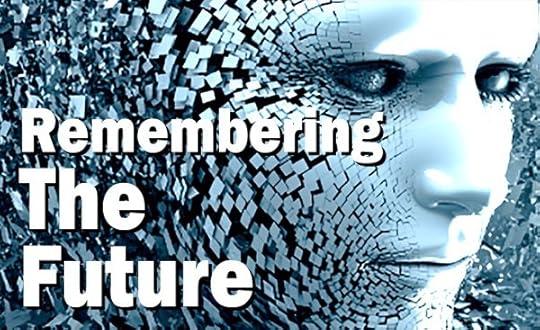
I have a happy announcement for the holiday season! My short story collection Remembering the Future is now free for electronic download on the Kindle, so if you don’t have it yet, now would be a great time to get a copy. It will be free for five days starting December 15 and ending on December 19.
Featuring fantasy and science fiction stories with a psychological twist, my book has an average five star rating on Amazon. Here have been some of the comments:
“An interesting read for one who feels he has read everything”
“well-developed characters and crisp prose”
“A mind-bending collection of fascinating and innovative stories”
If you read my stories, feel free to write to me and let me know what you think. Until then, happy holidays!
Click Here to Visit Amazon and get Remembering the Future for FREE
The post My Book Remembering the Future is Temporarily Free on Amazon Kindle appeared first on PASSIONATE REASON.
December 11, 2017
Disarming the Cliché Police

For most of my life the way I viewed the writing process was destructive to my ambitions. To write freely and learn from my mistakes, I had to jettison beliefs that had blocked me and made me dread writing.
One attitude that fortified my block for many years was a terrible fear of bring trite. To call my work trite was the ultimate weapon of my inner critic; it shut me down completely.
I thought that if a cliché appeared in my work, even in a rough draft, it must mean I was a human cliché myself: a dull, unimaginative, and lazy thinker. So many books I had read about writing denounced cliché users as lazy; in general the authors condemned not just expressions like “dead as a doornail,” “fit as a fiddle,” or “It was a dark and stormy night,” but almost universal real-life situations like a cheating spouse or even themes like good versus evil.
Beyond the injunction to always be fresh and original, and to avoid clichés at all costs, there was an implied moral judgment about triteness, a tone of scolding, a threat of shame, and usually a dire warning about how editors had no tolerance for lazy thinkers, and how if they found out you were one, they would primly purse their lips and point you toward the door.
During one period when I was painfully blocked and severely depressed, my fears of triteness reduced me to a plodding place. Writing hurt. Everything seemed dull and derivative. Every moment felt self-conscious, until on one particularly torturous afternoon of writing, I had a kind of cathartic meltdown. It was wonderful and terrible. Staring at my limp prose,I had beenon the verge of giving up on writing for good; instead, I rebelled. Not against writing but against the legions of writing authorities whose advice I had taken so seriously all my life.At that moment I no longer felt hurt or depressed or ashamed. I was angry. I was incensed that writing was no longer what it once had been when I had enjoyed it as a kid. I remembered thatat one time, writing had been more like chocolate chip cookies than boiled cabbage. I had loved writing once. What had happened? Where had all the fun gone?
After a lot of thought, I decided that, from that day on, I would write whatever and however I pleased. I missed the way I had enjoyed writing before I had learned that writing was all about pleasing editors or catering to what I imagined readers wanted. I went to work on taming my internal critic. One of my first acts was to defund the “police department” in my head that was charged with punishing triteness.
Though I had no love for clichés, flinging them around with reckless abandon like confetti seemed like fun. It was also a powerful place to begin my rebellion against the Writing Authorities since clichés seemed more forbidden to writers than hard porn. I decided that if a night was dark and stormy I was damn well going to say so, in those very terms, and maybe I would show the whole snooty cliché-hating literary world that a book about dark and stormy nights could sell like gangbusters and hotcakes, too. (Fun facts, by the way: The first sentence of the best-selling children’s classic A Wrinkle in Time is “It was a dark and stormy night.” And “dead as a doornail” was used by Charles Dickens in A Christmas Carol.)
My writing became fun again once I started back focusing on what I wanted to create and not what I wanted to avoid. One of the biggest sources of block, something that leeches the fun out of writing more than anything else, is the belief that writing well is largely about avoiding mistakes that will identify you as an amateur. This kind of self-consciousness strangles creative freedom.
However, I still want to write fresh, interesting content. I want to write with my own voice and style. I want to write stories I have never seen written. I want to write observations I have never seen printed. How can I do that without making a self-conscious effort to avoid clichés or berating myself whenever I catch myself using one?
My solution has been to think of clichés in my rough drafts as a kind of useful shorthand for bigger ideas. Art contains an analogy I like. The book Drawing on the Right Side of the Brain makes the point that as children we learn to draw symbols that represent the world around us: a triangle for the roof of a house or a circle for a human face, for example. As gross oversimplifications, these symbols barely resemble reality, but the more they are repeated, the more true-to-life they seem.
In writing I do something similar. In rough drafts I find myself using certain phrases again and again to represent certain emotions, behaviors or expressions. I often write, “He furrowed his forehead” to represent puzzlement; “She sighed” to represent resignation; She shrugged” to represent indifference; or “His mouth went dry” to represent anxiety. They are commonly used phrases that quickly signify something I want to say without my having to imagine it too deeply. Sighing and shrugging are so basic, they may not be considered clichés exactly, but like clichés they are repeated again and again, and no depth of thought is required.
Such verbal tags, garnered through a lifelong habit of reading, simplify the world — and writing — for me. However, you can only have your characters shrug, sigh, or furrow their foreheads so many times without them becoming tedious, and creating a life-like character from these shallow tags alone is improbable.
As I write, I know that these repetitive tags are inadequate for a finished work of fiction. But for my rough drafts they are fine; there, I am only trying to get down the broad strokes. In a rough draft, I only want to know what happens; I can save the detail work — the how and the why — for later. In other words, I know that my roof of my story house is probably not a perfect triangle, but my sketch of a simple shape lets me know the roof is meant to be there; I can go back later and examine how the roof appears from different angles, from above or below. By changing points of view, by studying my “roof” as it really is, with its missing shingles and flaking paint, I can make it fresh and realistic in my final “drawing.” But my simple “triangle” gives me a place to start.
Similarly, I can return to my rough draft and ask, “What is my character actually feeling when he sighs? Does he really sigh? Is he even the sort who would sigh or does he just clam up under stress? If he sighs, does he also look off into the middle distance and cross his eyes? Does he sit and play with the strings on his jacket? Or does he start to sigh, get embarrassed, and just cough instead?”
I am constantly working to get better at creating fictional characters by observing real people and writing down what I see. Lately I have been describing photographs of politicians on the notepad of my phone. I ask, do I trust the way they look? Why or why not? What is their emotional expression? Are they angry? If they look angry, what is it exactly that makes them look angry? Do they appear arrogant? Benign? Jovial? Dishonest? How so? Usually I am surprised by my answers — and that is a good sign.
As a writer I need my shorthand, which sometimes takes the form of clichés, but in the end I also need the ability to look beyond it, to explore the complex nature beyond my symbols. Pre-labeled verbal packages may be convenient but they are not enough. The illusion of life behind the words must seem dynamic and real. Writers, like artists, must admit, in the end, that most roofs are not perfect triangles and that faces are all different shapes and sizes.
However, seeing beyond the shorthand is a much broader and interesting endeavor than just avoiding clichés. Clichés are harmless in themselves; they will not necessarily ruin a work of fiction as Charles Dickens and Madeline L’Engle have demonstrated. The real challenge of a writer is a positive one and it is a lifelong challenge: to see the world as it is rather than how it is supposed to be. Seeing beyond symbols is more about letting go of rigid ways of thinking and allowing the full intricacy of nature to emerge without fleeing from it.
This is so hard for me that when writing a rough draft, I try not to worry about it at all; the point of a rough draft is just to get something, anything, down. During my first effort, I think of my clichés or pet phrases such as “she sighed,” “his mouth went dry,” “his palms were sweating,” or “he furrowed his forehead” as mere placeholders. If I decide not to keep them, then they can at least serve as markers for fuller thoughts I might want to go back and develop later.
The injunction to avoid clichés is the wrong formulation of the problem writers face. No sane writer writes expressly for the purpose of avoiding something. A writer could avoid clichés most easily by not writing at all. The problem is much more exciting. We write to create something new, intriguing, and ideally honest. The way to do that is not by avoiding common figures of speech, themes, or genre tropes, but by learning to see beyond them, to grasp the true beauty, complexity, and irony of nature without fleeing to the stagnant comfort of the familiar.
The post Disarming the Cliché Police appeared first on PASSIONATE REASON.
December 2, 2017
Disgraced (Short Story)
I.
I have never understood the emotion of admiration; but then, I am a cat. Cats feel a lot of things, including pride and affection, but at our very essence lies independence, the source of all dignity. If I ever need a mentor, I will be my own. Admiration is a color of feeling I will never see.
But I have glimpsed its ghastly reflection in humans enough to sense what a trap it is. I have seen it lurking in their star struck eyes, and that alone is enough to make my spine curl and my tail fur bristle.
I especially used to cringe at the looks the young women gave Michael when he brought them into the apartment we shared, the sickly-looking glazed-eyed expressions that a male friend of his later explained by saying, “Look how much they admire you. I wish I was you.”
“Who is Michael?” you may be asking. He is a recent college graduate. I live with him. He is human, which of course limits him in countless ways, which means I am forever having to look out for him. Michael is also something called an actor, a person who pretends for a living. Women always used to croon over how talented and perceptive he was and, except for finger-combing his hair, he would act all humble, like he never got that kind of praise when he actually got it all the time.
Michael had become a local celebrity from stealing the show in community plays, even when he was just a minor character. He was getting a lot of glowing press for his talent, and even talent scouts and reviewers from bigger cities were taking notice. Hence, all the admiration, which is what humans give you when you are successful at what you do.
I saw the dangers early. I would have banned admiration from the apartment if I could have, suspecting it of being the trap it was. I saw the lurking menace in how women visiting Michael would cross their legs, “accidentally” hitching their skirts as they giggled, their eyes never leaving his face. I wanted to be brave for him, but every time I saw such outrages, I dove under the couch and hid inside the netting above the floor until they left.
Shivering, I would hear them calling to me in their high-pitched voices, “Here, here, kitty, we don’t bite,” like they were eager to prove how “good” they were with cats. I crawled higher into the wooden framework of the chair. I was not about to let them use me as a flirting prop.
When women displayed egregious admiration, I always expected Michael to be scared too, to maybe hide under the couch and shiver with me, but instead he always seemed pleased, which scared me even more. He patted his dark wavy hair as if making sure it looked just right for his admirers so they would gawk over him even more. Could he not see the wrongness of it all? Could he not see that they were looking at him that way because of their own need, because their admiration satisfied a hunger that had nothing to do with him?
The problem was much bigger than a few women though. If it had just been them, I might have figured out some way to banish the threat, but sometimes his former college professors from his old acting classes came to eat dinner with him, respect peeking from their wise-looking eyes. Reporters who interviewed him seemed eager to impress him with details about what schools they had gone to and the grades they had made. A prestigious critic who wrote a column visited once and praised his “incredible repertoire of nuanced emotional expression.”
There seemed to be no one he had not charmed. Male friends used a deferential tone of voice when they spoke to him and always let him decide where to go and what to eat. They laughed nervously and asked him for advice.
I could have foretold his doom because as an accomplished predator myself, I knew that what appeared to be a gift was actually conditional, and that if it was ever taken back, it would not be taken gently.
I could have told him that it all could change in the blink of an eye if he made one wrong move, because he was not their idol; their idol was something in their heads, something they needed him to be for them, which made him not their master, but their slave.
II.
How am I so wise about humans, you may be wondering. Well, maybe cats are just much smarter than you ever thought they were. But I think it might also have to do with the radioactive turpentine I sniffed.
Sometimes Michael painted set designs for his own plays. He had a jar of turpentine in his studio, a strong-smelling paint thinner, but I had never paid much attention to it until The Event.
It happened about a year ago. A small green glowing rock, which I now believe was a meteor, crashed through the upper window and smashed the glass jar of turpentine on the floor. Curious, I felt compelled to sniff the spilled turpentine, which had turned from pale blue to bright green. I should have fled when I saw electric sparks jumping out of the fluid. Instead the oddity wooed my curiosity. I sniffed the puddle deeply – and began to gag. The vapor burned my nostrils and my throat. I fled the room coughing and sneezing. I drank all the water in my water dish to sooth the burn. Finally my symptoms calmed down. But soon afterwards, I started to have something called insight. Over the next few days, I began to understand human words, then I began piecing together bits of syntax until I could understand most anything anyone said. I must admit I am not sure if the turpentine really was radioactive; it is just a theory I have based on some superhero movies I watched later.
At any rate I began to analyze each visitor who came through the door based on whether they were good or bad for Michael. And I concluded that all his adoring fans were bad for him.
My insights were a blessing, but they were also a curse.
The most painful insight was learning that Michael could be just as dishonest as anyone; he was an actor after all, and not just on the set. He could turn the charm on and off when he felt like it. But he was my adopted human, and despite his many flaws, I loved him like he was my own kitten. I believe I am the only one who ever saw him as he actually was, unguarded, relaxed, and free of all his masks.
But I would never admire him; even if I could, I liked him too much for that. I did even better: I knew him. I knew him even beyond his being a warm lap to sit on and a scratcher of ears and a bringer of toys. He was a pattern. I always knew when he was in the kitchen because he liked to chew on whole ice cubes and I could hear the distinctive one-two rhythm of his crunching. And at night he slept with a tattered teddy bear that had one eye missing, a toy I doubted anyone knew about since he was in his late twenties. Sometimes tears fell silently from his eyes as he slept.
He was always on the verge of blowing up at me when I did something “bad” like shredding his toilet tissue, but he never went over the edge; he always caught himself and “scolded” me in a tolerant, gentle voice instead. I took great advantage of this. I liked to see how far I could go. The zest of life is not for conformists, I say. But he always seemed to think I did bad things by accident. For this I pitied him.
He liked pickles for snacks, and his breath always smelled vaguely of vinegar. Because I often fell asleep to that smell, lying on his lap, I got to where the scent of vinegar always made me sleepy. He would stroke my ears softly as I drifted off. He had never hurt me, and I knew he never would.
As for toys, he was always bringing me colorful stuffed mice and porous cardboard to scratch on, and fuzzy balls with googly eyes on springs, and elastic, iridescent strings.
I did not always reward him for his kindness. For a new toy I had a ritual. At first I would act utterly bored with it as if I had seen that kind of toy all my life, all the time secretly wondering, “What magic is this?” I would sniff the toy broodingly and wander off with an upturned nose, because it was undignified to gawk at a new toy just because someone expected you to. However, as soon as Michael went into another room, curiosity would get the best of me and I would go scampering into the living room and start batting the new toy around, chasing it, flicking it into the air, and having the time of my life. The worst part is that by the time Michael would get back, I would be so immersed in my play, I would be unable to stop, which meant all my attempts at dignity had been for naught. He would smile and say in a ridiculous high-pitched voice, “Does kitty like the fluff ball? Huh? Does wittle kitty likey the fluff ball?”
Granted, it was an unforgivably condescending thing to say, but the mortifying truth was that I really did likey the fluff ball, I likeyed it a lot. And I liked Michael. But I did not admire him. I would never do something like that, not to anyone, not even if I could. And because I liked him, I felt it was my duty to watch out for him, as if I would have done with my own kitten. Or maybe I should say, as I should have done on a tragic day long ago.
III.
The Day of Doom began routinely. Michael put fresh kibble in my plastic dish and ate his breakfast before checking the computer in his office. That was when all the commotion began. I heard objects flying as he cursed. “No, no, no, no,” he screamed again and again. I was tempted at first to hide, but this was Michael and I knew he would never hurt me. Maybe I could help, but when I sauntered into the office, he barely seemed to see me. He had his hands clamped over the sides of his face and he was gritting his teeth, and the whites of his eyes were mapped with veins. Then his cell phone began to ring and after answering he yelled into the receiver in a way that made my fur stand on end. “Now everyone knows. My career is over,” he finally said. “Over. I will be lucky if I can dine in a public restaurant. Show my face in the street. I might even have to move.” As he hung up the phone, I wondered what he had done. How desperately I wished then that I could speak, or I would have asked.
I had a wild, silly thought: I wondered if anyone had seen him decapitating a mouse. I was thinking strictly in terms of my own experience, of course. But why would I connect his experience to my own? I have always chased mice as long as I can remember, especially when Michael and I used to live in a rented house close to the woods. And for the most part, I never felt any shame, regret, or guilt over it.
And why should I? When I chase a mouse, I lose myself. I am all instinct. I yield to an altered state of heightened risk, heightened desire, and heightened pleasure. I stalk. I corner. My eyes rove from side to side, my head on a constant swivel, every sense sharpened, every cell of me awake. My nose twitches, my ears perk; I can smell the warmth of the shivering body; I can almost hear its tiny heartbeat. I chase. I corner. I entrap. And in the end, I triumph. I am a cat, a huntress, a killer, and I am good at what I do.
Usually, just afterward, I feel an immense sense of pride and accomplishment. Except one time, when I lived at the rent house, as I was staring at the still, decapitated body of a black mouse, I had a chilling flash. For a moment, just a moment, the mouse transformed. It looked just like one of my two-week-old kittens who had died years ago after a dog had snapped its tiny neck with a bite. My kitten, too, had been black and so tiny, she had not even opened her eyes yet, and I had been unable to stop the dog. I had yowled, rushed at him with my claws, and hissed at him. I had managed to scare him away but the damage was already done. I had tried to revive her, to lick her awake, but there had been nothing I could do to bring her limp body back to life.
That night I discovered a stray black sock in the outdoor laundry room. I picked it up with my mouth and dragged it around with me for days; everywhere I went, the sock went too. I had licked it clean and tried to keep it warm until one morning I woke feeling like I was choking on all the lint I had in my mouth from licking that sock so much. I retched and coughed the lint out onto the grass. From that point on, I had to fully acknowledge the truth: my kitten was gone, and she was never coming back.
Staring at the mouse, I relived that moment of sickening horror, and I had the feeling that there might be some connection between what the dog had done to my kitten and what I had just done to the mouse. For the first time in my life I knew remorse. I was so confused, I gave up chasing mice afterwards.
That is what gave me the idea that maybe Michael had decapitated a mouse which, I must admit, was a very strange thought since I have never seen a human chase one. But I did sense a common emotion: a shameful remorse.
Michael did not go to rehearsals that day. Or the day after that. Or the next. He spent most of the day sitting on the couch crunching ice cubes and staring at the wall or lying down facing the backrest of the couch, knees bent, with an afghan halfway covering him. He ordered a lot of pizza, and pizza boxes began to stack up on the coffee table and some days he went without changing clothes.
Aside from the sudden absence of visitors, his new schedule did not sit well with me. I am a creature of habit and I hate change. There is a particular corner of the couch I inhabit on the days he is at work. In the afternoon it is perfectly positioned to absorb the full lulling rays of the sun. I tried lying on top of him, but he shooed me away. “Ouch Sheba!” He said. “Your claws must be ten inches long!”
I cried out when he raised his voice to me and suddenly he was all apologies. “Sorry I yelled, Sheba,” he softened his voice. “I love you kitty, you know that.. I just need to trim your nails is all.” I trained innocent, soulful eyes on him as he went on. “ So, so sorry. Pretty kitty. Pretty, pretty kitty. Forgive me?”
Of course I forgave him. But, as you might imagine, I did nothing to make his life easier for him. My motive was partly selfish. I wanted my spot in the sun back.
But I also wanted him to snap out of whatever stupor was stealing his soul from him. Ergo, I caterwauled, waking him in the early hours in the morning. I am all about tough love, and I find that nocturnal expeditions do wonders for my mood; I have never understood the human habit of waiting until dark to sleep, and I thought a different experiment might lift his spirits. Once he saw how the dramatic shadows of night time made everything you did an adventure, perhaps he would return to his senses. I wanted my old Michael back.
My strategy was to make as much noise and sow as much chaos as possible. I begged for salmon treats in the most strident, demanding tones I could muster. I knocked over his beer bottles running at maximum clatter velocity. I overturned drinking glasses and batted their straws under the refrigerator. A couple of times he yelled at me, “What are you trying to do, Sheba? My career is ruined and everyone hates me now, do you understand? I thought cats were supposed to sense when their owners were feeling down and be sympathetic! You of all people are supposed to be my friend!”
Well I did feel some pity, but I had to laugh inside. There was nothing more hilarious in the world than Michael thinking he owned me. Who, I could have asked him, served who food? Who bought who special toys? Who served as whose bed? Who groomed who? Ha! Own me! I dropped to the ground and rolled onto my back luxuriating on the plush living room pile carpet as I stretched and squirmed to scratch my back. I yawned lazily as he glared at me, but after a few moments his eyes softened; I knew he could not resist my charms for long, especially once I flashed my soft belly at him.
But as I saw the self-pity returning to his eyes, I flipped onto my feet, darted off to the bathroom and proceeded to shred the toilet paper in his master bathroom. Before long it was flying everywhere like confetti. I rationalized that I was saving him from his brooding thoughts while — I must admit — having a little fun for myself. I love the sound paper makes when I tear it. It is the music of chaos, my favorite melody!
But this time, my antics had failed to get the rise out of him I had hoped for. After a point he stopped yelling at me and just let me do whatever I wanted, which took away all the fun. It was not just sobering; it was downright scary. It was like Michael was dying before he actually had died.
The phone rang. More yelling commenced. I still could not tell what Michael had done. What I was able to gain from the conversation was this: All of his admiration, which he had so treasured, had gone away, had dried up, possibly forever. He had tried to hide his shame, whatever it was, but whatever his unacceptable deed had been had gotten out. Now his acting career was in jeopardy and he was “depressed,” which is why is needed alcohol and why all the funny-looking bottles that I liked to tip over kept appearing all over the house.
I got a little more insight into the situation when his main girlfriend Angela came. I had never liked Angela. Usually she would speak to me in a high-pitched voice that came across more condescending than charming and sweet, but this time she ignored me altogether. She was clearly enraged.
“What were you thinking?” she screamed at him. What bothered me more than anything was that he was not fighting back. I unleashed a hiss at her because I did not think he deserved it. He filled my food dish every day, gave me tuna treats on command, bought me fluff balls on springs, and stroked my ears. Plus, he was patient with me when I toppled his beer bottles, seeming to think I did not know any better. I thought that all of this, regardless of whatever else he had done, should be taken into account. But Angela paid me no attention.
Instead she said something that made my ears perk. “You didn’t just embarrass yourself Michael. You really hurt people, innocent people, and now everyone knows what you did. You could go to jail, Michael. You could go to jail for what you did.”
The tone of her voice chilled me. I didn’t know what jail was, but I knew it must’ve been bad, and I knew it wasn’t here, which meant that if he had to go there, I would be alone.
He heaved a sigh. “I apologized,” he said. “I made a formal public apology and I meant every word of it. What else do you want me to do, Angela? Go back in time?”
The last question made my ears twitch and my tail flick. Could you do that? Go back in time? If I could, maybe I would go back and save my kitten from the dog that had killed her. I would know to show up minutes before he came, and I would chase him off before he had a chance to hurt her.
A long moment of silence hung in the air until finally Angela said, so silently I could barely hear her, “We’re through.”
“Angela, no,” he said, “you can’t leave me, not now. I need you.”
“You should’ve thought of that before you disgraced yourself and me.” She took her coat which was slung next to her on the sofa put it on, and buttoned it up. She was sobbing into her collar as Michael followed her to the door, but she help up her palm to stop him from coming any closer. “Stay back. I can’t even look at you anymore.”
Michael stopped and watched her walk out the door and slam the door behind her. He staggered over to the sofa and collapsed into it, leaning forward with his elbows on his knees and his face propped on his hands. For a long time he made no move at all. He just stared at the door looking barely alive. His face was a chalky blue. Even his lips looked almost white. His eyes were pale and dull. I meowed at him to get him to snap out of his stupor, but still he would not move.
I tried all my usual tricks. I tore around the house toppling everything I could from lamps to drinking glasses. I clattered and shattered and disrupted and caterwauled. Michael had an open jar of pickles on the coffee table and I toppled it too; I thought for sure that would arouse his anger; Michael loved his pickles. But Michael still did not make a move.
At last I went to him and looked up at him and decided to try something else, so I went and got one of my fluff balls from under the refrigerator. I jumped up on the couch and dropped it in his lap. It was my nicest one, the most colorful and the least soggy, and it still had glitter on it that I had not yet managed to lick off. I nudged it toward his elbow so it would graze his skin.
Slowly Michael raised his head and turned his face toward the toy and picked it up and looked at me. A hint of a smile appeared on his lips. “Thanks kitty,” he said, and laughed. Then, all of a sudden, he buried his face in his hands and began to sob uncontrollably. I had never heard him cry like that before and I was tempted to run away, but instead I crawled onto the part of his lap not occupied by his elbows.
I am pitiless in the wild, a heartless predator in the woods. And I may have just destroyed a lot of his possessions. But I felt for him at that moment. I could hear in his sobs all the regrets I had ever had about my kitten. And I wondered if we could just go back in time right then, both of us. I could save my kitten and the mouse that looked like her, and he could refrain from doing whatever he had done that had hurt people.
Then a funny thing happened. We didn’t go back in time exactly, but time kind of stood still. Michael’s sobbing tapered down. Then, sniffling, he began to wave the fluff ball in front of me. “Does kitty like the fluff ball?” he said. Of course I liked the fluff ball. As I tracked it with my eyes, he laughed and wiped his eyes. For that moment, I was only aware of the warmth of his lap and the colorful fluff ball and his gentle voice.
It was hard to believe someone with such a gentle voice had ever hurt people. I wished he could undo whatever it was he had done but I was glad the admiration was gone. It is my theory that no one who admires you can ever truly love you. But I am a cat, and I suppose I can only understand so much about the human world, no matter how much radioactive turpentine I sniff.
Rather than try to sort out human nature, I decided to gnaw on my fluff ball because I liked the way its soft texture felt against my tongue and my teeth. Gently chewing, I was lulled by the steady ticking of the wall clock as Michael stroked the fur behind my ears. Shutting my eyes, I thought about admiration and how it was such a sad substitute for love. Admiration was like a feeling made of cardboard. I was glad I did not feel it. I was glad I never would.
The post Disgraced (Short Story) appeared first on PASSIONATE REASON.
November 18, 2017
How Immersive Video Games Ignite My Writing

As a kid, what enticed me to become an author was the way fiction could sweep me into other places. Through reading I could experience through words what I could not experience in real life; I could even become other people. It was sorcery.
However, words were imperfect. Reading could only transfer experiences to me if I had some personal frame of reference for them. As an adolescent I had trouble relating to books with military settings, for example. They were so far removed from my experience, I struggled to create a vivid picture of them in my mind.
I was painfully aware of how my patchy store of personal experiences could limit me in writing. I scrounged for anything that I could use to make up for the gaps, so as a sheltered adolescent, I seized upon one of the most reviled technologies of the age as a way to broaden the scope of my experience for my writing: video games.
At first I only loved them because they were fun, but as they became more advanced, I began latching onto the pseudo-experiences as raw material for my writing.
My epiphany began with the NES Zelda games. They offered whole worlds to explore with castles, waterfalls, and mountains. No matter that that were crudely drawn; my imagination could fill in any gaps. They were like books in that they could take me places I had never been without my actually having to go anywhere. However, even then, it did not occur to me to use the settings as inspiration for my writing.
Decades later that changed with games like Skyrim that took graphic realism to a whole new level. Scenery burst into three-dimensional clarity and there seemed to be no limit to the wonders I could experience without even leaving my living room. With the new games, I really felt like I was crunching snow as I climbed a mountain; I could almost feel the chill of the wind that thrashed the cedar trees. I could explore the great echoing halls of magnificent castles; wade over slippery stones through roaring rivers; climb towers and look down at the world in miniature with the same wonder as if it were all real. Those games inspired me, and it is perhaps no coincidence that all three of my published novels were originally inspired by playing video games.
My novel Paw actually began as an exercise to add missing sensory details to what was lacking on the screen. I would record what I saw but add scents, emotional responses, temperature, and textures. I tried to feel the chill of the snow, smell the wild scent of grass, or imagine the horror I might feel at having just killed another living creature in a fight. I admired the full moon, lamented my sore feet, and shivered from the wind chill. I ended up with a bunch of scenes written from the point of view of my emotional two-legged cat-like avatar that I had named Mittens. Those exercises became the basis for Paw.
In writing my novel I made the most of my “virtual” frames of reference. In my novel Paw, my main character needed a horse. I had personally never ridden a horse. No problem. I had galloped around on a whole lot of video game horses. Using Skyrim as a frame of reference, I described how my main character trotted her horse through cobbled streets looking for a way to escape slavery. I have never mined a mountain for ore either, except in the game Skyrim. No matter. My character still ached from the repetitive effort of tapping on rock under the boiling sun all day.
I know video games are not always true to real life, so I am careful to add research to my virtual experiences, but for experiential frames of reference video games are a fun place to start that appeal not just to the mind but the senses.
I thought that graphic realism could not progress much beyond Skyrim. However I was mistaken. For my birthday I got an Oculus Rift. For anyone who does not know what an Oculus Rift is, it represents the latest in virtual reality technology in which you wear a kind of helmet which allows you to perceive a 360 degree video game environment. The experience is the closest I have ever felt to actually being inside a video game. If I am in a simulated museum, no matter where I turn, I still appear to be in a museum with its glass cases and signs. If I walk closer to an object, say a desk, it appears to get bigger. In some games I can see my hands and interact with objects like a book or pen.
One of my favorite programs is the Oculus Dream Deck. It is aptly named because the program makes you feel that you are walking around in the dreams of another person. It simulates a variety of environments and situations: At one point I am visiting with a bloated bug-eyed alien on another planet that looks so real I feel like I could reach out and touch him; later I am in a dimly lit, desolate, ruined dinosaur museum. Moments later I find out why it is desolate and ruined as a fully 3-dimensional T-Rex turns a corner down the hall and begins lumbering my way. He stops right in front of me, inspects me with irate, suspicious eyes and treats me to a mighty roar; he lowers his neck, turns his massive head to the side, and studies me with one wild orange eye. I can almost feel the scales of his skin, they look so close and detailed. At last he loses interest in me and walks over me so that if I look up I can see his massive belly and fleshy tail. The effect is terrifying and magnificent.
As a toy, the Oculus Rift has much to offer. However, I am fascinated with the potential of the Oculus Rift to benefit me as a writer because the realism means better frames of reference for a writing addict like me who enjoys staying home rather than joining circuses, taking weird jobs, or sky-diving for the writerly “experience.”
The Oculus Rift is also useful for my character observation exercises. I keep a notebook on my Android phone. Whenever I go out to, say, a grocery store, I try to observe people, noting their expressions, mannerisms, styles of dress, or habits of speech as raw material that I may later use in creating characters for stories. However, there is a problem with this method. When you observe people, they observe you back.
On my Oculus Rift I have a video app called “Amaze” that allows me to travel to different virtual places and observe passers-by in 3-D. I can observe them all I want without worrying that they will see me looking at them. Plus, I get to go to more interesting places. Forget grocery stores. Why not Times Square? The Golden Gate Bridge? Amsterdam? Virtual reality is truly one of the best parts of living in the early 21st century.
Plus, the technology has the ability to do something that novels do: it enables me to see the world through other eyes. Aside from games, there are many videos available for the Oculus that are impressively artistic.
I watched one 360 degree VR video called Limbo: A Virtual Experience of Waiting for Asylum. The video grants the viewer the point of view of an asylum seeker, someone who is forced to flee their home and move to a foreign country, perhaps because they fear for their lives or those of their children. The video did for me what books often do; it gave me the feeling of being someone else for a time. Enhanced by narration, the video created the same first person experience of anxiety, loneliness, and alienation that a person seeking asylum would likely really feel. It swept me through streets and crosswalks of fast-moving, faceless, ghostlike pedestrians in such a way that I myself felt like a ghost, floating, searching, and adrift.
The camera led me into my desolate-looking new apartment where the beds, desks, and tables were all transparent; nothing looked solid, permanent, or certain. Later it treated me to a point of view in a government office in which a husky, barrel-chested male interviewer was towering over me and interrogating me about my reasons for changing countries, magnifying the sense of helplessness and fear asylum seekers must commonly experience.
Many great novelists and movie-makers have used the tools of their respective mediums to encourage empathy for strangers, but because 3-D virtual reality mimics real life so closely, it allows you to experience the “dream” of another with minimal demands on the imagination.
I have sometimes worried though: In a world where video games can recreate an illusion of real life or visually represent the outermost limits of the imagination, what value does fiction have, which only uses the low-tech medium of words? I comfort myself with the thought that, while virtual reality may dazzle, I have still not lost my appetite for the written word. Reading satisfies me in a way that playing video games never will, allowing me to build in my own mind a picture of what is being described. In some ways reading invites more personal engagement because I must bring my own memories, thoughts, and emotions to reading a story in order to create my own picture of what the author has described.
However, the Oculus Rift makes it an exciting time to be a writer. Plus, I have an ironclad excuse to play video games: research. What more could a nerdy, introverted writer want?
Well, I suppose a Holo-deck like on Star Trek would be nice, but I may have to wait a few more years for that. For now I will settle for my magic helmet. But if I ever do have to choose between it and writing, I will have to say a sad goodbye to my Oculus Rift in favor of the virtual reality I know best: the timeless sorcery of the written word.
If you enjoyed this post you might like my other writing. Take a moment and sign up for my free starter library. Click here.
The post How Immersive Video Games Ignite My Writing appeared first on PASSIONATE REASON.
November 7, 2017
Paw is Free for 5 days!

I have some great news: My novel Paw will be free for electronic download from November 7 through November 11. If you have not downloaded it yet, now is the time. Here is the description on my Amazon page:
When Mitalla turns three, she learns that her mother has kept a dark secret from her: Mitalla is a slave. Being a member of an intelligent feline species, she has never seen a “pink and furless” human until a cruel overseer takes her and her siblings from their seemingly safe home and into a life of bondage.
Even though Mitalla has struggled to survive as the runt of her litter, she is unprepared for the harsh world of the desert where her enslaved species is forced to mine a precious mineral collected by the human king of her world.
As Mitalla comes of age, she constantly seeks ways to escape with her siblings into “the greater world,” a place her mother once described as having lush green grass and an abundance of food and water. To her advantage, her early struggles have honed her persistence and wit.
Despite her strengths, cruel guards, barbed wire fencing, swords, whips, and constant hunger make escape seem all but impossible.
Frustrated desires finally erupt in a tragedy that forces her to make a decision: to stay and suffer or risk her life and the lives of her family to escape. Either way, she will need all the cunning and courage she possesses to survive.
The novel, which has a five star rating on Amazon, is the first installment of a three-part series. I am currently at work on the second book of the trilogy. Thanks to all of you who have bought my books and kept up with my blog! There will be more stories, blogs, and novels coming soon!
Get Paw FREE on Amazon
The post Paw is Free for 5 days! appeared first on PASSIONATE REASON.
November 4, 2017
The Pain Surrogate (Short Story)

I.
Pain was almost a myth to him, something he could no more fathom than he could see an atom. He had never felt the stinging, stabbing, burning, or aching that could come from courting danger.
He only knew how the dogs of his neighborhood whimpered when injured, but he could not imagine what was going on inside of them. His siblings could not imagine it either, but unlike them Brand loved being alive, loved it enough to keep on living.
He had known moments of heightened awake-ness when the world had leapt into full color. He had enjoyed the tangy sweetness of a ripe strawberry, the contemplative view of a night sky, and the wonder of his shimmering reflection in a pond. He enjoyed chopping firewood, the blunt sound of impact, he loved shivering in the cozy warmth of a fireplace on a cool night, and he liked to write about them in his journal, how they sounded, how they felt, how they smelled.
All the neighbors were supposed to write in their computer journals and send them to the Supreme Observers or even to each other, but nobody enjoyed writing journal entries like Brand did.
The others did not seem to enjoy much of anything, nor did they learn. Brand learned lots of things. He learned he could approach fire without dying, as long as he did not go too far. He learned that he could immerse himself in cool water as long as he did not try to breathe under it. He felt no discomfort at inhaling water, but he reasoned he needed air to live, and when he realized the water was preventing him from getting it, he rose and coughed and gasped for oxygen, and never inhaled water again.
His siblings were not so savvy. They almost always drowned once they had entered large bodies of water, silly smiles on their wavering underwater faces, their eyes dull, unseeing.
He learned by observing the dying, too, benefiting from the fatal and almost absurd self-inflicted mishaps of his reckless siblings.
He was one of the few, in fact, who lived over a year. “Born” as newly minted adults, the other newcomers felt no pain and they did not observe much. They did not test the limits of their environment. They did not use reason. They died within months or even weeks. They died with vacant eyes, and they all died happy.
It was not that they lacked intelligence. If anything they had too much. They had photographic memories and there was no limit to the complex calculations they could perform in a matter of seconds if asked to. What they lacked was purpose, self-interest, and the will to give it context and direction. They were puppets without so much as a hand inside.
Brand liked to think that not only did he have a guiding hand inside him; he liked to think he was his own puppeteer.
II.
They all lived in a tiny gated village – a kind of neighborhood really – with 50 houses, all bordered by white picket fences. Each had a tiny latticed side garden. Some of his siblings shared houses, but Brand lived alone because his previous housemates had perished. Brand did not mind so much living alone, because even when his housemates had lived with him, he had been lonely. They had never spoken much and they were always smiling even when there was nothing to smile about.
One of them named Elvis had walked into a flaming pile of leaves and burned to death without screaming or even changing expressions. Brand had watched the skin melt off his face until the flames had consumed him. His other housemate had jumped off a building, apparently thinking he was taking a shortcut to the local deli. Brand knew better than to try either of those things. He knew that a glass would shatter when it hit the floor even from a short distance. Brand did not know what he was made of, but just in case it was some kind of glass, Brand tried to stay clear of jumping off buildings.
Everyone in the village had a job: all day Brand picked fruit off tall trees using ladders – apples, oranges, coconuts, and mangos – from a many-acred ever-blossoming orchard in the middle of town. He and his fellow employees transported them in wheelbarrows to the Altar next to the gate. The Supreme Observer, whose magnificent white stone house could be seen right outside the gate, would collect the fruit as they slept. No one had ever seen his face, only his silhouette or shadow.
His servants had issued all of them clay-colored sacks with their names on them, and they would get paper credits in their mailboxes based on how much fruit ended up in their sack at the end of each day. Even in the absence of pain, hunger was a great pleasure-inducing motivator so that even the most indolent usually showed to work.
There was a commissary where they all bought their food. The commissary had strawberries. Brand loved strawberries; therefore, Brand loved the commissary.
III.
One afternoon Brand had a visitor. The meeting began with a knock on his cabin door. When he opened it, Brand drew in a sharp breath.
At first the newcomer appeared in a cloak and a cowl. Brand could not see his face, but Brand knew. No one else in his village dressed as if made of shadows or would have dreamed of doing so. A visit from the Supreme Observer to an underling like Brand was unheard-of. Brand backed into a corner of a wall trembling with awe at seeing someone of such importance in his own home.
“Do not be afraid.” The Supreme Observer, perhaps taking pity on Brand, removed his terrifying cloak to reveal a stunning ordinariness. He had a bald head, wire-rimmed spectacles, a three-piece suit, and long, pale, almost prim-looking hands.
Honored to have been treated to this rare glimpse behind the mask, Brand stared a moment longer, then bowed as he had been taught to do in the presence of a god. “To what do I owe this honor, sir?”
The Supreme Observer smiled with his bright white teeth that seemed to gleam inside the shadows that contoured the sharp angles of his face. “May I come in?”
“Why of course.” Brand stepped aside freeing the entire door space.
The Supreme Observer entered as if walking on air, lifted his spectacles, and stared closely at Brand with pale green eyes. “I have read your journal, Brand. You are an anomaly,” he said.
Brand took a step backward and crossed his arms over his chest, heat rushing up his cheeks and up the backs of his ears. “I am sorry, sir. I shall try not to be.”
Settling his spectacles back on his nose, the man cleared his throat. “My apologies if I sounded rude. When I say that, I mean it in a good way. You were what I intended the others to be, a rational creature who could survive and enjoy life without the opposite side of joy. Most of my creatures are happy, but they are not functional. They can do any calculation you ask of them, they have perfect memories, yet practically speaking, I still have a society of smiling idiots who are that way because they have never felt pain, because they have never suffered. Their eyes will never glow with the light of wisdom. They have no particular interest in even staying alive. But you, Brand, you are different. Like the others, you feel no pain warning you of the horror of death, yet you still want to live. Why?”
Brand was not sure he totally understood the reasoning behind the question, but he said, “I live to look at the stars at night and to wonder where they all came from. I live for the warmth of a fireplace on a cool day. I live for the tangy sweetness of the fruit called a strawberry. I do not live so much because I want to stay, but because I do not want those experiences I love to ever leave me.”
“How do you figure out which dangers to avoid?”
“I watch. I watch the others. When they hurt themselves, I make a note not to do what they do.”
The Supreme Observer grinned and clasped his long, carefully manicured fingers in front of his chest. “You impress me, Brand. You impress me very much. Even better, you give me hope, not just for my experiment but for my own species. I am going to keep a careful eye on you.” He withdrew a device from his pocket, a black rectangular box. At one end was a red button. “Feel free to call me and let me know now and then what you are thinking and how you are feeling. One press of this button is all it takes. I may not always be available, but if I am not around, feel free to leave a message. I promise to listen whenever I find the time. I will especially be interested in your response after the next phase of your test, which will be soon. Very soon.”
Brand wanted to ask what the next “phase” was but worried it might be rude to ask. Instead he bowed as he had been instructed to do in such situations. “What an incredible honor, sir. Thank you.”
That night Brand had just blown out a candle on his bedside table to go to sleep when a commotion outside his window grabbed his attention. He heard something that alarmed him terribly, something he usually never heard in his village: voices lifted in protest. He looked outside to see the uniformed guards who usually patrolled the streets to make sure everyone met their 7:00 curfew. The guards ordinarily used gentle methods to enforce compliance, jovial nudging, mild scolding at most.
But now Brand saw them holding sharp glowing objects and using them to push his siblings out of their cabins in their pajamas. The siblings who Brand had only ever seen smiling and who apparently felt no pain were apparently capable of displeasure when their routine was disrupted or their televisions were turned off, when they were taken from a place of comfort and forced out into the night without any explanation.
Brand could see them grudgingly handing to the guards whatever they had in their pockets, like the credits they had earned at their jobs, before the guards seized them by the wrists and loaded the prisoners into their cars. Brand wondered at first what the others had done wrong. But Brand had been observing them almost constantly and felt certain his siblings did not deserve this. Brand saw other guards banging on other doors and knew that he would soon be next.
He stashed away everything of any value to him. He began by grabbing his greatest treasure, his cardboard carton of super-ripe, juicy strawberries. He also grabbed the speaker phone the Supreme Observer had given him, but before he hid them, he tried pressing the big red button. He hated to disturb the deity so early but he had to ask what was going on, urgently saying “The guards who usually enforce curfew are carrying dangerously sharp objects and threatening my neighbors. They are taking our belongings and they are taking us away. What is happening? Do you know?” When after a few moments there was no response, Brand hid the solid rectangular box under a mattress. Then he went to his refrigerator, draped a tattered handkerchief over his carton of strawberries, and shoved them into the back of the freezer.
When the guards arrived, he did not resist the threat of the glowing objects he thought were knives because he had observed the others resisting and knew it was futile because of the sharpness. Brand had observed that sharpness could kill, so he went along with the guards without a fight, but he would surely have resisted more if he had known what was in store for him.
IV.
Brand arrived at a flat-roofed cinder block building the guards called “the clinic.” He was shoved inside, where a woman orderly instructed him to line up with the others to become “activated,” whatever that meant. Brand watched as his siblings in front of him went in and came out looking no different than before, except most of them looked baffled. When his turn finally came, he went into an office with white walls and was ordered to sit down in a straight chair.
A man dressed in a white lab coat held a cold instrument against the bone where his ear met his skull, but all he felt was a sudden pressure. “There,” the aide said. “All done. You are now ready to proceed to the acclimation room.” The aide gave Brand a pat on his shoulder and sent him on his way. Brand wanted to ask what being activated meant, but he had the feeling he would not like the answer, and so he was afraid to ask.
On the way out, a woman aide with brown eyes and a prominent mole on her upper lip greeted him and guided him to a room with a long table. In one hand she clutched an oval device with buttons on it. She pulled out a metal folding chair and gestured for him to sit. He did so and looked with interest at a series of floating items hovering over the table as if by magic. “These are holograms,” she explained. “They are no danger to you. Can you name what they are for me? Or, at least, what they appear to be?”
“A flame, a nail, and a paddle,” Brand said automatically.
“Very good. Now, even though they are not real, I want you to put your finger on each of them in succession and tell me what you feel. Oh, And with the nail I want you to put your finger on the pointed tip.”
Brand stared at her mole. He felt something he had never felt before, a kind of seething pressure. He thought he might actually be angry. Angry about not being told anything about his sudden upheaval and the kidnapping of his neighbors. Angry about having to take orders. “But why? What is the purpose of all of this? The activation. Activated how? And this test? What is this all for? What is acclimation?”
“You will understand soon enough. If I explained now, you would have to frame of reference. Everything we are doing will give you the frame of reference for the understanding you now lack. Now.” She smiled curtly. “Shall we proceed?”
“I have observed that fire and sharpness can wound.” He stared at the paddle, which was in constant motion, waving back and forth with blurring speed. “I have learned that the force of motion can shatter.”
“Trust me.” The woman smiled. “What you see here will not hurt you. It is all an illusion. If you refuse to cooperate, we will stay here forever until you do or we will put you in a closet by yourself until you change your mind.”
Brand sighed. He did not want to be trapped in a closet. Maybe if he cooperated they would let him go home where he could relax, eat juicy strawberries by the fireplace and listen to the secretive flickering of the flames “Okay,” he said finally.
“Good. But I must warn you. You will not like the sensation, so be prepared.”
Brand reached out his finger, as he never would have done in real life, and touched the hologram of the flame. With a cry, he drew his finger back. The sensation made his finger feel as if it were being stripped to the bone, but when he looked at his finger, it was all there.
“That feeling you just had, it is called burn,” she said. “Now. The others.”
Brand did not want to touch the others. “No,” he said. “I have had enough. Put me in a closet if you like. I refuse to play this cruel game with you any longer.”
“If you fail to accomplish what you need to do here, you will not survive training camp.” She scolded him with a hardening of her brown eyes. “You will certainly die.”
Brand swallowed. He did not like the words “training camp.” Did that mean he was not going home after this? But whatever the case might have been, Brand liked life. He wanted to survive. Brand touched the nail and drew back his hand as before with a gasp.
“Sharp,” she said as he shook his hand frantically. “That is what sharp feels like. Now for the final hologram. See the paddle swinging back and forth in the air? Place your hand in the middle of its motion.” With a grimace of great reluctance, Brand did as she had instructed. The paddle struck his knuckles with excruciating force. With a cry he drew his hand back as before and, as before, his hand remained physically unharmed.
The woman said, “Aches, slaps, punches, all manner of collisions – they all come from force and pressure. They will all feel a little something like what you just felt. Okay?”
Still trembling from the apparent impact, Brand nodded. He would have done or said most anything to get out of the terrible room with the dispassionate woman who seemed to think his suffering was nothing more than an academic curiosity.
At last the lady nodded toward the door. “Acclimation is complete. Now you are ready for your training.”
V.
After Brand left the acclimation room, he was directed to a waiting room with his other siblings. A guard soon came, told them to follow him, and guided them down a hallway to a room labeled above the door as “Survival Training.”
The new room was enormous and confusing, an indoor playground full of traps, mazes, and colorful gadgets. The guide said, “A lot of what you see here are holograms, each of which represents a real threat you are certain to face in real life. When you approach such a hologram, you will feel their danger through burn, sharpness, or pressure – components of what we call pain. You will feel them even though here you are at no risk of actually dying from what you see. However, the risk to your life is real in that you must figure our how to eat and drink, despite the threat of pain.
“For most of you that will mean hard labor working in the boulder mazes. You will find sustenance by clearing color-coded boulders away to reveal secret areas, but the boulders are heavy and require strength to move. Some areas of the maze will contain burn, sharpness, or pressure. And you must be careful to see that you are not expending more energy than you are taking in.
“Food is also hidden in plain sight behind the holograms, but even approaching them will cause you pain that will intensify with increased proximity. You must use your ingenuity, wit, strength, or perseverance to get food and water however you can, or you will perish. If any of you should consider escaping the training room, please note that the door you came in is made of four inch steel, and it is heavily guarded. There is another way out though. It is more of a curiosity than a viable means of escape. We call it the Gauntlet.” She pointed to a machine with rotating parts that caused ropes or whips to whack to floor repeatedly. The ropes, set between narrowly spaced walls, formed a pathway that led to an opened door. Afterward she left, opening the steel door with her fingerprint, exiting, and slamming it behind her. Brand looked around to see more of his new home.
In one area a giant sphere balanced precariously on the top of a steep ramp. A tilted mirror attached to a wall revealed a basket of eggs behind the sphere. Pressure. Walls of spikes that rose and fell, emerging from the floor and back again; you would have to go through them with lightning speed to get the loaves of bread positioned in a stack on the other side. Sharpness. Behind a wall of fire, a shank of beef lay in the open, and there appeared to be no way to go behind the fire except to walk through the flames. Burn.
The chamber called the Survival Training Room appeared to be a veritable amusement park full of hazards.
Of course, pain was one thing, and discomfort was another; Brand felt uncomfortable on many levels. The survival training room was mostly cold. Brand saw one of the fires and, hoping for a familiar comfort, made the mistake of moving toward it. A mere approach did it; moments later he was curled in a ball on the floor writing and screaming in burning pain.
Hours afterward he felt like his world had ended, not just because of the hurt, but because it appeared that one of his greatest loves, the cozy warmth of a fireplace on a cool day, was forever ruined for him. He was not hungry yet. If anything, he had lost his appetite, so after the burning had subsided and his tears had dried, he did what he always did; he observed.
At first the others were all tempted to grab the food that appeared within easy reach, the shank behind the fire or the loaves of bread across the barrier of moving spikes, but quickly they learned to avoid the “easy” solutions. The torture of proximity was truly unbearable, and it did not stop after stepping away from the hologram. The burns continued to burn. The stabs continued to stab. Sweaty toil lasting hours was preferable to raw unmitigated pain.
At last the gnawing of hunger forced Brand to break away from his spectator role. Like most of the others he participated in the laborious boulder mazes. The mazes had food hidden inside spaces between a mass of color-coded boulders, but you could only get to the food-yielding boulders by working to push the regular boulders out of the way in a certain order. You could only push them and never pull them, so you had to be careful not to push one into a wall unless you were finished with it. Moving the heavy boulders often required group cooperation and it was not without hazards. Sometimes the boulders, when pushed aside, revealed not food but hoard of biting rats. All holograms, of course. Sharp.
Brand would never forget the first time he heard someone cry. She was a petite girl named Cadence. She and a few others were helping Brand to move boulders to reveal a food-rich area when at last they rolled aside a green boulder to reveal bounty: loaves of soft rolls with giant open jars of honey. Cadence opened her green eyes wide and laughed. She ran and grabbed a roll, which she started to dip in honey when a swarm of bees swept up from a jar behind it and slammed into her face. She dropped the roll, screaming as she flailed her arms, and began to cry.
Brand surged forward and grabbed her and pulled her away, but all the while he was observing the strangeness of her crying. When crying, water emerged mysteriously, as if from some hidden fount, from the eyes. The sound of it, an uneven wail, was a wordless language. But the real sorcery was that when others cried you felt something of what they felt. Brand thought about how the dogs of his neighborhood had whimpered when injured, and he thought he understood something of what had been going on inside them.
At night they rested. In the mean time, the labor required to eat and drink took its toll. Hollow cheeks and eyes appeared around the camp. Despite their hard efforts, Brand and his siblings were becoming undernourished.
Soon he and all his siblings knew intimately what “burn, “sharp,” or “pressure” felt like, but they also knew the hollow ache of hunger. But they lived. After only a few days, most of them were gaunt, dull-eyed, and weak-looking.
Brand was surprised to hear one of his siblings say one day, “Maybe pain is good for us. Before, maybe I would have walked right into a big roaring fire for the fun of it. Now I know better. Real fire will never kill me now.” Other siblings said similar things. But there was no joy in their voices when they spoke. He never saw them smile anymore, not at all.
Brand had to admit that his siblings were living longer, even struggling to eat, but was there no other way to save their lives? What about his way? There was no need for this.
He heard one of the aides say that after the training, all “the test subjects” would all be released to go home, but the memories would remain due to something called trauma, whenever the subjects approached something sharp or hot they would feel pain just as if they were back in the chamber again. There would even be a vague feeling that would come when danger was out of view, a kind of pain echo called fear. Brand realized that if that were so, he would never again enjoy warming himself by a fireplace again. He mourned his old simple pleasures.
Here he was in a terrible prison; all his siblings were. More and more often, he looked wistfully toward the Gauntlet of mechanical whips guarding the exit of the chamber. They flailed constantly all day long. For anyone who seriously wanted to escape, there was no way to avoid them. But they were only another pain-inducing illusion.
The guide had said the whips represented all different kinds of pain and their manifestations. There were whips of burning, whips of sharpness, and whips of pressure, but there were many ways those types of pain could manifest. Pressure, for example, could be slow and steady or sudden and shattering. A burn could be a simple soreness of a fiery flaying.
Brand had to escape, lest he lose all joy in life forever which, to him, was the same as dying, or maybe worse. The only way to free himself from the whips was to willingly – though briefly – endure the worst the Gauntlet had to offer.
It might destroy him, obliterate his mind perhaps, but that was better than accepting the undeserved evil that had been thrust upon him and his siblings. Simpletons who defended pain only did so because they saw no way to avoid it, but even before coming here, he had found a better way.
Brand would escape and report the injustice to the Supreme Observer. Brand tried not to believe that the deity who had been so kind to him had any knowledge of the atrocities he and his siblings endured. Surely the Supreme Observer would be infuriated to know how he had been treated. His underlings must have gotten out of control. With the help of the Supreme Observer, Brand would return to free the rest of his kin. And if he by some unlikely chance Brand was wrong and the Supreme Observer was in on the abuse, at least Brand could confront him, demand answers, and persuade him to end the torture.
Brand tried to undergo the tunnel of whips many times and failed painfully. Luckily, once he had cleared a whip, that one stopped cracking for as long as he was in the tunnel; that meant he could turn back at any time without having to endure the pain a second time; only once he was clear of it would it reset.
Away from the Gauntlet, he would mentally prepare himself for the next attempt, trying to imagine exactly what the burning, stabbing, or pounding pain had been like earlier, so he could concoct a convincing vision of triumphing over it. But on the next night, whenever he reached the midpoint of the Gauntlet, he would realize how bad his memories really were.
The pain was always more flaying than he remembered it being. So each night, before he went to sleep, he meditated, trying to remember better so he could realistically envision triumphing over the memory; he saw himself reaching the end, which always left him with tears of imaginary joy in his eyes. Night after night, he tried again and again to escape, and again and again he failed.
However, one day, after despair had settled over him and he was on the verge of quitting forever, something changed: he woke up and knew with calm certainty that he was going to make it. He was not quite ready to try though. He decided to test his theory first.
Early that night as others slept, he slipped through the hologram of flames, every cell screaming protest, the flaying burn of his skin red-hot, and he emerged, half-insane and still burning, with the basket of eggs. After waiting for the burning to settle down, he marched across the wall of moving spikes and returned, limping with agony, to the sleeping area with loaves of bread. He staggered up the ramp with the heavy sphere at the top and felt its pressure as it barreled toward – and through – him; then, breathless from the impact and weeping, he crawled on his knees to gather the basket of apples that had been behind hidden it. Trembling, he fed himself first. Then, still on fire, feeling like he was walking on a bed of nails, he took the food to the clearing where he and his siblings usually slept and set it all down where they would see it when they woke. Then, half-broken and delirious, he spoke to them, and particularly to Cadence whose eyes were softly closed. “Enjoy your breakfast,” he whispered.
Them he took a deep breath and headed toward the Gauntlet.
VI.
At the time Brand felt the pain in vivid colors of orange and red, though he would someday remember it as a blue-grey blur. The whips created a seething cauldron of burning, sharpness, and pressure, and Brand imagined himself as a ghost moving invisibly through it all, although his skin felt every raw screaming jolt to his being. Still, he continued, as if in a dream, to move against it. His struggle felt timeless and immediate and unbearably endless.
At last, gritting his teeth, with sweat running down his face, back, and legs, demented and weeping, every cell of his body screaming for him to stop, he finally made it to the end of the Gauntlet – and escaped.
He left the Gauntlet sobbing and laughing. He was hot, yet shivering. His body felt like lead sinking into the Earth, but his head felt light as wind. He had made it through the Gauntlet of whips that burned, cut, stabbed, froze, and even choked him, and there was no better feeling in the world.
Yet he was not home. He found himself in a sterile-looking white room with a single door. He staggered out into a hall. To his surprise no one tried to stop him. At the end of the hall was a door; he exited and found himself just outside the gates of his own village; they were wide open, as if waiting just for him.
He knew nothing else to do but to go through the gates and head back to assigned cabin where he had stashed the mechanical device the Supreme Observer had given him beneath the mattress of his single bed, although he was not totally sure the Supreme Observer could be trusted; he just needed to believe he could be; who else could Brand go to?
Back at home, after a few desperate pushes of the button, Brand heard the voice of the Supreme Observer whose name, it turned out, was also John Calvin, CEO of Cerebrodyne, Inc. At least, that was how he introduced himself upon answering.
“We were taken,” Brand said breathlessly. “The men who usually enforce curfew carried sharp glowing instruments. They forced us to go to a place called the clinic where they hurt us. Please help me. They have the others. We have to stop them.”
“Hmm.” The Supreme Observer cleared his throat a little nervously. “I take it you must have escaped, since Phase 2 is still in-progress.”
For a long moment Brand refused to hear what he had just heard. Understanding came gradually like the setting of the sun. “Phase 2?” Brand said at last, fighting a sudden wave of nausea. “That was Phase 2?”
“Actually, I ordered it.” Brand had to work to keep from retching. Maybe Brand had suspected that the Supreme Observer had been complicit, but the idea had been too painful to believe. He struggled to make his lips form words. “How could you do that to us? To me? I thought you were impressed with me.”
“I was impressed with you, Brand. I still am, especially now. If you escaped, then you would have to have summoned exceptional powers of will. But you are an important part of the experiment too. You were created for a purpose.”
“Yes,” Brand said. “And you told me yours. You wanted a society of happy creatures who could survive without pain and use reason instead. The way I used to. But Phase 2 is only creating misery. It works against your plan.”
“No, not exactly. My plan was much bigger – much bigger – than you ever knew. You are a reflection of my species, Brand, created in our image, and in a sense we are your gods. My species evolved emotion before it evolved reason. It felt before it knew. It suffered first. It feared first. It hated first. Reason did not emerge until the latest stage of our evolution. Perhaps for that reason suffering is our oldest motivator; it is mainly our anger, our fear, our irrational passions that drive us. But what if we had evolved the ability to reason first? That was the question I kept asking myself when I created you and your kind, Brand. I created you in a lab, organically cultivated artificial life forms with cybernetic components. I wanted to know if such a pain-free creature would be capable of surviving. I gave you the equipment for being rational, allowing you to feel only pleasure.
“But being rational has no meaning without a problem to solve. I allowed you and your siblings to have phenomenal intelligence and perfect memories, yet I kept you innocent in certain areas because I wanted you to discover the world for yourselves. I wanted to see if you could connect cause and consequence through your actions and use your conclusions to thrive.” The Supreme Observer frowned. “Overall, I failed. So I decided to start a new experiment. What happens to the survival odds of a creature who has never felt pain before but suddenly can feel it?
“The problem at the start was that I was working against reality. Reality has laws, and they are fixed. For there to be pleasure, there must be pain. Like I said earlier, Brand, you are an anomaly. Like you the others are not incapable of pleasure, but they take it for granted. They need something more to push them to survive.”
The revelation that his whole existence meant so little had taken the breath out of Brand, and it took a long moment before he could speak. “But maybe there is hope for them. You said you were working against reality, but I am part of reality, too. You gave up too soon. Your society of happy, reasonable creatures might still be possible. Just give me some time to think, to come up with an alternative, a much better alternative, to pain. Please consider it. Let me at least try.”
“Very well,” the Supreme Observer said. “I see no harm in your trying. I will give you three days. I promise to consider your proposal. Beyond that, I can make no promises.”
VII.
So Brand went back to his cabin and thought about the problem of pain. He thought and he thought until his head hurt. Brand thought, what if the others had an earpiece that could convert pain signals into strident sounds in the presence of danger? He wrote his thoughts in his journal.
The auditory mechanism would make subjects uncomfortable in the presence of threats, but the discomfort would fall far short of torture.
But what was to keep his siblings from ignoring the mild signals if they did not really care about living? Where did the will to survive come from? Brand gave a lot of thought to that. Wanting to live had been indispensable to his own survival. Maybe the earpiece could somehow magnify small pleasures in order to increase a zest for living. Maybe everyone should be required to eat more strawberries.
Brand sighed. His system did not go far enough. The solution of using unpleasant sounds to indicate danger was really only a weakened mimicry of pain. When subjects were ready, they had to have the desire and the equipment for asking the right questions for survival; only then could there be wisdom.
There needed to be a curiosity chip, an algorithm for wonder. He was not sure how to make one but he thought the Supreme Observer might. Somehow life needed to be made fun. And there needed to be an enhanced mechanism for learning from the mistakes of others in order to minimize making them all over again. That way more time could be spent on pleasurable activities like eating strawberries.
He did not know the how of making such creatures, but he thought he had some valid insights on the whats. After the journal entry was all done Brand had never been more excited, more filled with purpose. His mission felt transcendent; it bristled with destiny.
Brand visited the Supreme Observer at his great white house. Together he and the Supreme Observer, looking at the computer there, reviewed the journal entry that Brand had sent. The deity read over it several times and nodded his approval. “Well, you’ve certainly put a lot of thought into this,” he said. “I think I like it. Sure, we’ll try it. Why not? We’ll de-activate the pain for now and create a new kind of algorithm.”
Beaming, Brand could not wait to save his siblings from the scourge of suffering; he felt heroic. He was so transported by his victory he barely heard the Supreme Observer when he offered Brand some tea. Brand finally accepted the offer, and when the Supreme Observer left him alone for a moment, Brand continued to look at the computer, with its large screen, that the Supreme Observer used. He saw at the bottom of the screen a tiny drawing that looked like the Supreme Observer. When he touched it, a list of names and addresses came up, and each address had a tiny portrait beside it. A thrill shivered through him. Did each of the portraits represent a god like the Supreme Observer? Were there gods everywhere? He stared at the addresses long enough to make sure he remembered them so that if he ever met one, he would know what name to call them. When the Supreme Observer returned, he said that implementation of the pain alternative would begin in a few days, but he would go ahead and call off the “survival training” and allow the subjects to return home, although de-activating the pain would take longer than activating it.
Later Brand went back to the village to wait with the Supreme Observer for the return of his siblings. He was worried that only a few would come back alive, or that they would be mere shadows of their former selves, broken and barely walking. However he was in for a big surprise: his fellow creatures were not the defeated, deflated, pitiable creatures he had left. They had changed. Some actually stood taller. They had gained something nameless that had been missing in them. There was a depth in their eyes he had never seen in them before. They made expressions they had never made before: wistful, regretful, sorrowful, pensive, and yearning. When they smiled, they smiled sadly.
A few women were softly singing songs that were heart-breaking and beautiful at once. Gone was every trace of the vacant smiles most of them had worn before they came. Many of them, though not all, had taken on the appearance of wisdom. Some, even the most emaciated, wore expressions of triumph. And when they saw their homes for the first time in many weeks, some of them cried with hope and laughter in their eyes. At first neither the Supreme Observer nor Brand said anything. Finally the Supreme Observer said, “They are…,” he seemed to choke on the words, “They are beautiful.”
Brand was crestfallen because he knew the new depth his siblings had found may have doomed them to suffer forever at the time they deserved it the least. “Not all of them. Some just look broken. Look. You can see the defeat in their eyes. They are really wounded and they need help.” It was true. A few of his siblings looked dazed, bent, and almost paralyzed. ” Please. Do not be swayed by what you see here. What you see in only a beautiful way of adapting to the ugly, a way to make the unbearable bearable. The beauty of the adaptation to torture does not justify the torture itself. Please. My way is better. The cruel system of pain for survival is unjustified.”
But the Supreme Observer was unmoved. “Before, they had no purpose, no wisdom. I was ashamed to claim them as my own creations. Now they amaze me. I admire them. No, I like too much what I see.”
Brand felt like crying. He knew he had lost. But he also knew the Supreme Observer was wrong. There was beauty in the wisdom that could come from suffering, but there was also beauty in the powers of reason that could prevent it. Pain was not the only way, just because it was the only way anyone knew; it did not deserve to be enshrined. Brand could only hope that someday someone with power and vision would see that.
Brand parted ways with the Supreme Observer and went home. The whole time his mind was furiously searching for a way to save his siblings from the scourge of pain; otherwise its curse might be with them forever. Was the Supreme Observer the only one with any power? A thought came to him: he wondered who all the mailing addresses he had seen on the Supreme Observer’s computer really had belonged to other deities. No matter. It was worth a try. Brand sent his journal entries detailing plans for a pain alternative to every one of the hundreds of addresses he had memorized. Afterward his throat began to feel strange and the muscles in his face twitched. He laid his head on his arms and allowed his eyes to leak all over them.
Before long, all thoughts of pain fled and all he could think of was his strawberries, dusky with ripeness. He went to his freezer and dug them out. The night was cool, and he dared to make a flame in his living room despite the trauma, and he popped a few icy strawberries in his mouth next to his fireplace, savoring their tart sweetness as he shivered. Fortunately, after he had escaped the Gauntlet, mere proximity to fire no longer burned him. After his affair with sweetness, Brand went outside, lay down on his back, and gazed at the stars.
Sharp, he thought. At first the word troubled him, but after a moment or two he could see that the stars were not sharp at all, but swirling with radiance, glowing with a soft and welcoming warmth. They are beautiful, he thought. As beautiful to me as they ever were.
For now, that is enough.
If you enjoyed this post you might like my other writing. Take a moment and sign up for my free starter library. Click here.
The post The Pain Surrogate (Short Story) appeared first on PASSIONATE REASON.
October 14, 2017
Finding the Pulse of a Story

When I write a rough draft of a story or novel, I am constantly looking for its pulse, the raw energy of a story, the point of transition in which the story takes on a life of its own and seems almost to write itself.
That being said, there is nothing wrong with writing rough drafts that lag. I write them all the time because I have to start somewhere. In fact, sometimes my story does not come to life for me until after I have written my self-conscious, plodding. uninspired rough draft. But after having been through the process many times, I have learned some things about making dead prose stir to life.
In fiction, a problem that I have grappled with, which can be solved early on, is the strength of character motive.
Sometimes stories lag because characters have weak motives, because characters only sort of want what they want, the way they might want a potato chip between meals, or because they want an object – like a spatula – very badly without having an urgent human reason to want it.
I want things unemotionally and without drama all the time. In the mornings I want coffee. But unless there is a deeper desire behind this mundane, and usually easily gratified desire, it is not normally compelling enough, alone, to make a story – at least not in a society where coffee is easy to obtain.
A want for coffee would become more far compelling if I lived in a post-apocalyptic world where coffee was almost impossible to get; in a deplorable, decaffeinated wasteland, coffee would become more than itself, a rich symbol of the old world which has been lost.
When it comes to fictional desire, context is everything. Suppose I were to write a story about a woman who wants to wear a red dress. Wanting to wear a red dress is not a strong story motivation by itself. What makes it compelling is knowing what the red dress means to a character. In the movie Requiem for a Dream a single, middle-aged, and slightly overweight mother of a heroin-addicted son learns that she has won a spot on a television game show.
The prospect of appearing before thousands of viewers triggers an elaborate fantasy of reclaiming her youth and former beauty by fitting into a tiny red dress that she wore at a happier time during her life with her husband. She imagines being applauded for her great beauty as she humbly accepts praise in her stunning red dress on a stage before an adoring crowd. As a result, she goes on a strict diet and becomes addicted to amphetamine diet pills, which leads to a terrifying downward spiral culminating in her hospitalization.
The red dress is not just a pretty strip of fabric; it is a symbol of a greater desire: to feel special, loved, and wanted at a time when her sense of worth has diminished. Behind her simple want to wear a red dress is a poignant, lonely, and even tragic, desperation.
That is the kind of motive that makes stories seem to write themselves. The same is true when characters desperately wants two things at once, such as romantic love and total independence, but getting one thing, they yearn for means not getting the other thing they crave. An inner conflict can serve as the pulse of a story, a driving force that moves the character into the storms of conflict and into the realms of change.
How do I get to know the deepest desires of a character? Some professional writers advise filling out questionnaires about characters. However, I gain a more intuitive understanding from points of view. Sometimes when I write short stories, I begin with a detached, and often boring, third person narrative voice, but as soon as I begin to view the action through the lens of a thinking, feeling, and yearning individual character, whether it is a doctor, dog, toddler, thief, or villain, my story gains the first murmurings of a pulse.
If a character I am writing about only in third person is behaving robotically, I can almost always solve the problem by stopping and writing a brief “point of view study,” just a few paragraphs to gather what my character is thinking and feeling; afterward, I have a far better grasp of what she will do or say. When I rewrite, their outward behavior becomes more natural.
However, the pulse of a narrative goes beyond character. A powerful theme can serve as the pulse of a story as well. Sue Monk Kidd, the bestselling author of The Secret Life of Bees, advised writers to “go for the jugular.” For her this meant challenging the cultural trends of racism and misogyny that are so entrenched in the Deep South where she lives.
I agree. I sometimes find myself being too safe and inoffensive when I write; I know this is happening when I start to feel bored. I remind myself, when you write, say what others are afraid to say; ask the hard questions that have no easy answers; challenge the sacred; shine light into the dark corners you have never seen anyone else explore; write about the topics that keep coming back to you, that tear down the illusion of a stable world, that haunt you, that flip the world on its head.
Anne Rice wrote some additional advice I wish I had written: “Go where the pain is. Go where the pleasure is; go where the excitement is. Believe in your own original approach, voice, characters, story. Ignore critics. Have nerve. Be stubborn.”
Having nerve and being stubborn are not generally encouraged by teachers and editors, yet they are excellent ways to make sure the pulse of a story remains strong. When you write, a chorus of internal critics will tell you what should, and should not, write about. They will lecture you about what is socially acceptable, and what is not. They will tell you what readers or publishers do, or do not, like. They will instill fear and evoke images of shocked and angry faces. They will have you apologizing to an imaginary mob before you even write a word if you let them.
But for words to have a pulse they have to reflect what is true, and the truth, if it is about anything that matters, is bound to offend some people. If you find that internalized parental figures or stodgy teachers are directing your pen, steering you away from dangerous subjects and nudging you toward safe ones, it is time to rebel.
Recently I made a decision to be stubborn about a work of fiction even though my first impulse was to apologize. In my recently published novel Paw there is a scene in which my “hero” does something horribly unheroic in a fit of passion. My mom chastised me for allowing my main character to misbehave so recklessly. I found myself wanting to defend my character who, despite her crime, had been in a horribly desperate and painful situation. Although I regretted that my scene had upset my mom, I thought it needed to be there. Even though I worried others would react the same way she had, I kept my scene.
When I began working on my sequel, I was glad I did. I was struggling to find the energy, the pulse, of my follow-up story. I floundered for about 80 pages until I remembered the tragic scene in Paw with its naked moment of truth. Then I realized that the scene my mom had hated contained the pulse of my sequel; that was where all the energy was. Although not many consequences had followed the dark scene in Book I of my series, I could now envision many.
I remembered what Anne Rice had said: “Go where the pain is.” Emotionally the event fit the bill. It reverberated. It would be a memory that would haunt my main character for years to come, producing far-reaching consequences that would strike right into the heart of my theme.
However, in fiction, theme can never be forced and should never seem imposed by the author from the outside. It is bound up with characters, their motives, their experiences, and the way they see the world. However, when a strong character motive and a strong theme converge in a way that feels natural, a story gains more than a pulse; it takes its first autonomous breath and begins to move, almost magically, on its own.
If you enjoyed this post you might like my other writing. Take a moment and sign up for my free starter library. Click here.
The post Finding the Pulse of a Story appeared first on PASSIONATE REASON.
October 3, 2017
I Have Finally Released The Ghosts of Chimera
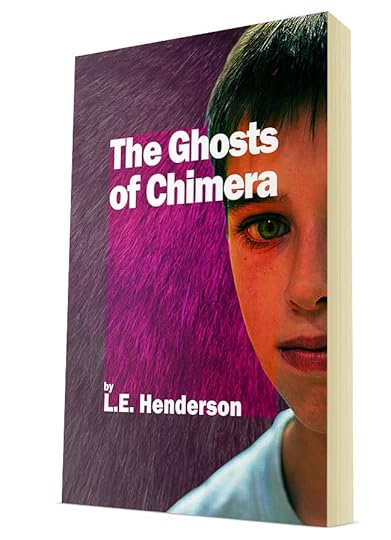
Exciting news: My novel The Ghosts of Chimera, which I began to write over ten years ago, is now available on Amazon for electronic purchase.
It is 558 pages, but I have reread it dozens of times, and it has never seemed that long to me, to the point that I have at times questioned the veracity of my computer.
The novel was accepted by a traditional publisher a couple of years ago, but my experience was not good. I strongly disagreed with the content edits and backed out of the deal. I would have done any amount of work, gone to most any length, to make changes if I had believed they would strengthen the novel, but I refused to make any changes that I thought would weaken it.
I am happy with my choice. In editing my book, I had one overriding criterion: to publish a book I would love. That was far more difficult than it sounds, involving many painstaking rewrites and edits spanning a period of years. At times I had doubts that I would ever be ready to publish my novel, but at last I can say I am satisfied with it.
Here is my book description as it appears on Amazon:
The Ghosts of Chimera is a psychological fantasy about a troubled 13 year old boy who is drawn into another world in a search for the ghost of his younger brother.
There he learns of an ancient menace called the Scavenger, a creature that uses the powers of wishful thinking and denial against humans. The Scavenger is threatening to destroy its world Chimera, a place where human dreams take on physical reality, a place so interlinked with the human world that the destruction of Chimera will mean the end of humans as well. Caleb’s quest to find his brother broadens as he becomes entangled in a struggle against the Scavenger.
However, as Caleb moves through Chimera, worrying signs accumulate that Chimera may not exist at all, but may be the product of his own mind, and his own attempt to deny a terrible truth he does not want to face.
His journey through Chimera forces Caleb to confront the dangers of an alien world and, finally, the most perilous landscape of all: the secrets that lie, deeply hidden, within himself.
Thanks to all of you who have read, reviewed, or told me you enjoyed my other books. I hope you enjoy this one too! Have a great October!
Buy The Ghosts of Chimera [image error]
If you enjoyed this post you might like my other writing. Take a moment and sign up for my free starter library. Click here.
The post I Have Finally Released The Ghosts of Chimera appeared first on PASSIONATE REASON.