L.E. Henderson's Blog, page 7
September 12, 2017
Meandering Toward Insight

I have written all my life, but it was only in college that I discovered the thesis statement. My professors prized them highly, selling them as magic wands of clarity to wave over fuzzy prose. There was nothing like a thesis statement to unravel tangled thinking. Every essay, they insisted, should have one, to be worthy in their eyes.
A thesis statement meant taking responsibility for all that I said. I had to say in the first paragraph what I wanted to prove, such as “Little Red Riding Hood is Gullible,” then I had to back up my general claim; I had to prove it, preferably again and again, using as many supporting details as possible.
I was a skeptic, and I was all for thinking clearly. I even became a writing tutor who explained how to write, and develop, thesis statements. As a student, and nerd, I could not have respected them more.
But I was also a fiction writer who as a kid had written lawlessly and recklessly. The unhinged fiction writer in me, the creative inner child, the incorrigible spinner of vampire tales, was not a fan of thesis statements. I worried that the formula led to boring and predictable writing. To be fair, my professors were not looking for art. They were looking for sound arguments and clear thinking from students who were, by and large, accustomed to neither.
However, I felt strait-jacketed, particularly when writing about personal experiences. I wanted to experiment, to play, to start my stories at the end and vice-versa. Beginning my essays by writing a thesis statement set my writing on tracks rather than allowing me to wander freely through the Wild West of my imagination. It seemed to forbid the adventure of getting lost or stumbling upon new insights. It felt like riding a fake horse in an endless circle on a carousel as opposed to galloping on a real horse through an open prairie, past roaring rivers, crumbling bridges, and quaint cottages.
A thesis seemed to require drawing a quick, definitive conclusion from the very start, but in my writing, I kind of enjoyed my indecisiveness. I was not always sure what I wanted to say when I sat down to write, and I liked my temporary confusion. I wanted to discover what I wanted to say as I said it. I liked to meander my way to insights, and I liked to be surprised.
Of course, that is not really a good argument against using thesis statements. Any clean, logical, zipped-up essay might have an unbelievably messy history behind it. Most any rough draft has a lot of useless content that needs trimming. In any writing, a rough draft also provides space to wander. However, there was something about a thesis statement that said to me, “This is serious. There is to be no dallying and no foolishness. Decide what your purpose is before you begin, and stick with it at all costs.”
my thesis-driven essays had begun to sound all alike: “I will show that Pinocchio, through various means and methods, attempts to become a real boy despite numerous trials and temptations thrown in his path.” I used the same dull phrases again and again, such as “to illustrate” and “moreover.” Every other phrase seemed to be “for example.” By my senior year, I wanted to rip all my literary analysis papers to shreds.
That is why, as soon as I got out of college, I returned to my old meandering ways. I started some of my essays in the middle of the action or “in medias res” to use the Latin term. I wrote without regard for rules. I threw down trite phrases on purpose, just to spite the platitude police. I became a shameless word wastrel. I was out of school. I could say whatever I pleased. Who said I even had to prove anything? I would use obnoxiously big words followed by the most opprobrious slang if I felt like it.
Like a vagabond with a grocery cart, l started writing many of my blogs without being sure when I began what my destination would be. I was wandering through a wilderness of words, letting myself get lost, letting go, ready to exchange what I thought I knew for what I could discover.
There are many rewards to writing this way, and they are why I will never get bored with writing. When I write to learn instead of trying to perform, my writing often comes to life in ways that surprise me. When I meander, when I forget about what I am trying to prove, when I toss efficiency aside, impressions shift. My memories, and how I perceive them, can change. Mountains of old, distorted assumptions crumble.
My experimentation has led to some unexpected insights. Decades after I was bullied as a kid, I wrote about it. It was a surprisingly emotional process considering all the time that had passed. I was traumatized not so much by the bullying itself, but by the belief that I had not fought back or stood up to the gang of bullies much, who were popular and had a lot of support all over the school. I had essentially shut down and taken refuge in silence. While writing I realized that, being eleven years old, I had lacked the life experience to know how to deal with such widespread ridicule and sustained daily, year-long abuse. I stopped blaming myself. I became sympathetic to the confused, bullied child I once had been, and I realized that I had done the best I could under extreme circumstances. Plus I remembered all the times I had fought back, although it had not been every day. Writing about my experience changed my entire perspective.
Letting a conclusion unfold naturally from the writing process, rather than throwing down a conclusion and setting out to prove it from the first paragraph, does more than deliver an interesting finished product. I actually emerge from the writing changed, with more understanding and even, sometimes, catharsis.
I sometimes even feel as if I am asking my writing a question rather than sharing what I already know. My question, “How do I overcome my annoying obsessive-compulsive behavior?” became the short story “The Mechanical Siren,” in which an android is told she must overcome her programming if she wants to survive.
I still use thesis statements in my writing, but I am no longer a slave to them. If I find that my final drafts are lacking in purpose, I use thesis statements to get me back on track. I ask, what is my central message? What am I trying to prove? What truth do I want to convey?
Even in my fiction, thesis statements have a place, except I think of them as statements of purpose, or themes. Without a clear sense of purpose, my stories would lack focus, and they would be almost impossible to finish. Without my ability to wonder and my willingness to get lost, my stories would be mechanical and I would miss out on the potential to let my writing change me.
It turns out that in the world of writing, it is possible to ride a fake horse right off the carousel and into the prairie without ever getting lost beyond the point of no return. The academic discipline of organizing thoughts and the artistic pursuit of wandering were never in conflict after all. They are just just contrasting parts of the same pursuit, each of them powerful, and each belonging to their own place and time.
The post Meandering Toward Insight appeared first on PASSIONATE REASON.


August 28, 2017
A Peaceful Transition (Short Story)
I.
The boy coughed. He knew he was dying. He had watched many other children die before him, suffocate over a period of months even as they breathed. With each new day, the synthetic air seemed to feel grittier, heavier. But he was only nine. He could not let himself die yet, not if he could help it.
He had dreams. Lately he had been dreaming of a place he could call home, a place of rolling waves on starlit seas and dreamy, iridescent mountains made of ice. He had never seen the lost home his father had described, a casualty of a dying sun that had sent them space borne.
Aerrie had often asked his father about the lost world. His father had said his home had been far more than its physical features; it had been governed by something called principles, which was the only part of his home planet the natives had been able to carry with them. Unfortunately, Aerrie could not feel or see principles like water, snow, or sand.
“When will we find a new place to rest, father?” he asked for at least the hundredth time. “A place with clear air and rolling oceans?”
His father Zuma was kneeling at his bedside. “Soon, Aerrie, I hope. But we need to find a livable planet we can colonize without waging war. We must land on any foreign planet as humble guests, not as conquerors. As an interplanetary diplomat, I must abide by our laws and report back to our council of elders. They will accept nothing less than reports of a peaceful transition.”
“But why do we have to be peaceful, if we are so desperate?”
“Because,” Zuma sighed, “in finding a new place to live, we must never forget who we are. I wish we understood why children like you seem to need more than just artificially synthesized air, why for the first ten years of your lives, you seem to require a real planetary atmosphere to grow into full maturity. Until we understand, we have no choice but to seek habitable planets to colonize. But we must do so peacefully.”
“Why does it take so long?”
“The last planets we tried were not receptive. Our next target is Earth, the planet where our ancient ancestors lived over 25 million years ago. It is now a place of hominids in the throes of a dark age. They are successors to humans just as we are, though unlike us they never reached the stars. I have carefully researched them. I have learned their language and I believe its leader, a king, will be amenable, which means there is hope for you and all the other children on this ship.”
“And these natives, they will leave Earth so we can take their place?”
His father chuckled. “Not necessarily. Every time is different. It is sometimes helpful to approach them with gifts, to befriend them before making such a big request. Once we establish our colony, we will plant our flag there and claim the area for ourselves. You know our flag with the orba on it? The comical creature with two heads I told you about? On our old planet, our people used to keep them for pets. An orba was on the flag of my home planet. My planet is gone, but the flag still exists. The orba flag will help keep the memory of my planet Raya alive on new soil.”
“Why the orba?” Aerrie asked.
Zuma smiled sadly. “When our Earth ancestors reached for the stars, they chose an animal to represent them on their flag. They chose a lion, a predator with big teeth and sharp claws. It was the wrong choice, but it began the tradition of using animals for flags The orba is the type of animal we should have chosen, but Earth had no orba.
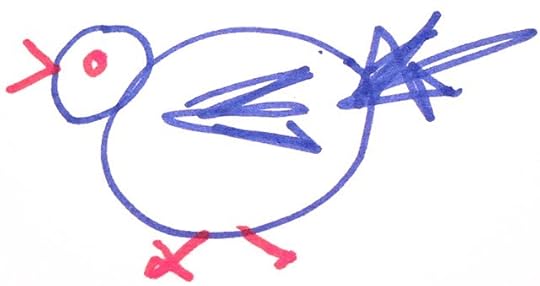
“The ones who ended up staying on Earth were considering leaving at one time, and they actually had a better idea for a flag. They chose a peaceful creature. Their flag design was a tiny bluebird drawn by a five-year-old girl. Though the flag was never used, there are still records of that drawing in our computer data banks. After many years of violence, we used that drawing as a model for who we wanted to become. But there were no bluebirds on my planet, so we chose the gentle orba.”
Aerrie said, “Before I die I want to see oceans and mountains. Are you sure there is no way just to colonize the planet without waiting for permission? I bet we have the power, the technology to do just that, especially if Earth is in a dark age.”
His father leaned in close to the boy and said. “It is no accomplishment just to have power, Aerrie. Some people are given power without having done anything to earn it. Unearned power either reveals strength or exposes weakness. It is those with both power and self-restraint who will inherit the universe.”
Aerrie disagreed, but he secretly admired his father for saying what he had said. Maybe Aerrie would understand principles someday, if he lived long enough. Aerrie was in love with the idea that there were ideals that mattered even more than even surviving; the idea gave him chills. Like heroic tales, it uplifted and inspired him. Ironically, more than anything else, including the idea of home, mountains, and oceans, it made him want to live.
He hated being young. He hated the thought of dying because he wanted to be wise like his father, but Aerrie might have killed in order to live, because Aerrie knew that wise was something the dead could never be.
II.
King Alfred wished he was dead. No, that was not exactly true. He wished everyone else was dead, at least every last one of his tedious dinner guests. However, a mass murder at a dining table would make a big mess and cause way more trouble than it was worth.
Instead Alfred flung a fork across the dining table. It struck a dainty crystal goblet with a hearty clink; the goblet toppled and spilled red wine onto the prissy ivory gown of a noblewoman. As she stood, gasps erupted all around the stunned victim. A few diners looked at Alfred expectantly, but Alfred did not apologize. Alfred never apologized for anything. He was king; he had every right to act however he pleased.
Especially now, because it was still raining and someone had had the audacity to say, “I am so sick of all the rain. I wish it would stop raining at least once before I die.” The rain, the clear nemesis of Alfred, had managed to spit in his face at his honorary dinner, and he had had to do something.
The very mention of rain was how Alfred knew his dinner had failed. It had been the culmination of a stuffy, hour long affair in which not a single diner had bent a knee to him or kissed his ring or even thanked him for the invite. Now Alfred stood, gave the table cloth a violent tug, sending dishes clattering, and declared the feast over. Amid a chorus of angry protests, he ordered the maids to sweep away the half-eaten dishes and his guards to escort the still-hungry guests from the royal dining hall. Soon Alfred was all alone – and, to his surprise, a little lonely.
He stood for a moment, his spine curved, his forehead dipping into his cupped hands. Slowly he raised his head. With a decisive rustle of his long, heavy cloak, he swept over to the balcony to look out at his nemesis the weather, a foe he could neither imprison nor behead.
The insolent grey clouds were clearly meant as an insult to him; from the beginning they had cast a shadow on his true glory; made it appear that the fates had gathered against him on the very day of his coronation, a day he had dreamed about his whole life.
At 25, he was supposed to have morphed from the sad-looking, weak, younger brother of the beloved, golden-haired king Stephen into a kingly butterfly – a very masculine butterfly of course, the kind that swooped instead of fluttered and that was mostly black instead of pansy yellow. In his very masculine butterfly state, his brave soul would shine through. He had dreamed that everyone would declare his previous self a hidden gem as he emerged powerful, ingenious, wise, and formidable. Not to mention irresistible to girls. That was how he thought of all women, as girls. Any female over 25 was not worthy of his regard, and thus not considered anything at all.
The grey weather had changed his luminous plans, had smothered them with an atmosphere where his good fortune could not thrive. The grey skies had not brightened, not even once, after the crowning ceremony, which had been woefully short on pomp; practically no one had knelt to him or clapped; even the royal dog had snubbed him.
For weeks, then months, after his coronation, the sun had hidden itself behind grim and beefy clouds. It had rained almost constantly; he could hear the gurgle of the gutters outside his chamber at night. The ponds and fountains had turned the color of dish water. He had heard rumors of people saying, “I wish King Stephen was still alive. How I miss seeing blue skies. How they seemed to favor him.”
Stephen! If Alfred could have tried the heavens for treason, he would have done so, if he were not so busy washing his hands. He washed his hands a lot. He washed his hands five times a day with a harsh soap that burned his skin raw. His skin remained sore for hours afterward, but he reassured himself he had done the right thing, if only the weather would agree.
He prayed for a sign from the heavens, any sign at all, that his fate would soon change, and that his righteous actions would soon be vindicated by the gods. Reckless Stephen had been about to make unwise diplomatic concessions to the hostile neighboring kingdoms of Mara and Aurora in order to ease mounting tensions over a land dispute. Alfred had done what he had to do to prevent the toxic agreement and save the kingdom of Everwell.
It just so happened that his duty toward the good people of Everwell had also happened to make him king. Destiny, Alfred called it. No one could argue with destiny. Not even the clouds.
III.
Alfred was so fixated on the dismal weather, he barely noticed when the stranger came. It was his bodyguard who urged Alfred to look at the odd vehicle floating in the heavens. From the balcony, Alfred could make out a half-cube of a basket drifting high in the grey sky, attached to a beautiful, ruby-colored balloon almost twenty times its size.
Alfred thought he could see a lone, standing figure inside the basket, a basket which was slowly floating down toward the castle courtyard, rocking slightly, getting bigger and bigger as it approached land. A crowd of palace servants were gathering on the palace lawn to witness the marvelous spectacle with lifted heads, dazzled murmurings, and eyes rapt with interest.
Alfred remembered his earnest prayers for a sign from above. With surging hope, Alfred raced downstairs to the courtyard just in time to finish witnessing the flashy descent of the balloon.
Though desperate, Alfred was not entirely un-cautious. He knew not to trust strangers or other people generally. But he had prayed for a sign of hope from the heavens, and he thought this bizarre sign was likely meant for him. The gawking grounds keepers stood back when at last the basket landed. Alfred could finally get a better look at the stranger.
The stranger did not smile; at first glance his face seemed impassive. His skin had an unusual golden cast, giving him an ethereal appearance. He had an exceptionally high forehead devoid of eyebrows, and he was gracefully bald. He wore a heavy-looking brown robe and had high, intelligent eyebrows, a linear nose and an amused, yet otherwise unreadable, expression.
He was holding a wrinkled, dun-colored satchel of some sort, and when some of the guards stepped forward and tried to seize it from him, he replied, “I would advise against that. I have come from a ship that sails on the winds of the sky.” He gazed up at the sky as if he fully expected to see a ship hovering there, outfitted, perhaps, with cannons. Though the stranger had not exactly threatened anyone, the guards appeared to be unsure if they had been or not, and somehow that was far more ominous than if the stranger had promised full-scale destruction for all.
Whatever the stranger had done, it had worked; the guards did not take his satchel, but could only stare dumbfounded at him as if awaiting his command. His next words were, “I wish to see the king.” A guard said, “The king is very busy. That will not be possible.”
“Untrue, untrue, most untrue, disregard that comment,” Alfred said, pushing and shoving his way through the crowd. “I am the king.” He realized he may have sounded too eager and added with a note of fake anger, “What makes you think you have the right to trespass on royal property?”
The stranger eyed Alfred with a look of intense interest. “I saw no other way to request a private audience with your majesty,” he said. “I have something I believe will be of great interest to you. An answer to your prayers, perhaps. A sign.”
The final words rendered Alfred speechless and sent chills rippling through his body. Answers to prayers. Signs. The stranger spoke his language.
Still, Alfred was not stupid. “Shackle him,” he told his guards coldly. “Cuff his wrists and ankles. I want to speak with him in my royal court. Alone.”
The stranger made no move to resist. His calm, slightly amused expression did not change as the guards cuffed his wrists and ankles.
Alfred had the odd sense that the stranger could easily have escaped if he had wanted to. Alfred turned around and left, followed by his body guard. “Do you really want to be alone with him in the royal court, or shall I accompany you?” the body guard said. “He could be a sky person. Like in the ancient cave drawings of Mount Mystique. Remember the legends. The sky people overthrew kingdoms not with spears but with words and charms.”
Alfred was familiar with the sky people who were said to inhabit cloud continents. They did not scare him. “I am king,” he said. “I can take care of myself.”
His body guard looked at the king a long moment. “You are king,” he shrugged. “I will respect your wishes.” However, his frown conveyed his true feelings. If Alfred could only have taken it to heart, everything might have gone differently.
IV.
In the royal court, the stranger bowed. “It is such an immense pleasure to make your acquaintance in a more official venue,” he said. As he spoke, a servant came in with the satchel the stranger had brought and set it on an ornate chair. Alfred had tried to open it and peek inside but opening it had required manipulating a complicated series of interlocking puzzles Alfred had been unable to solve.
King Alfred said, “Why should I trust you?”
“I do not require your trust. However, I do promise you my honesty. My kind has not always been a peace-loving species. Early in our history we almost destroyed ourselves in a devastating civil war. At last we made friends among ourselves, and now we are seeking friends outside our race. We wish to understand those who are different from us, and to make amends to anyone we may have harmed unknowingly. Therefore, I am bringing you a gift. If you wish, you may decline, and I will simply take my leave of you.”
Alfred looked down at the humble cloth satchel on the chair. Warily Alfred said, “What kind of gift?”
“Un-shackle my wrists and I will show you. My name, by the way, is Zuma.”
After a moment of hesitation, Alfred decided to trust the stranger. The king drew a key from his pocket and unlocked the wrist cuffs. Zuma turned toward his satchel on the chair and deftly worked the puzzles that unlocked the opening. “I am offering you a choice of three.”
The stranger pulled out a wooden disk about the size of a stool top. “I have three wheels that will each allow you to behold magnificent beauty. He held up the first disk so Alfred could see that it was surrounded by pictographs at the edges. In the center of it was a circle containing a map. Alfred recognized it well. It represented the continent Esmerald which contained the three kingdoms of Mara, Aurora, and Everwell.
Zuma said, “This wheel will give you the power to command your night sky. You may call to your nearest comet, and it will come running to you like a loyal dog, its tail streaming across the sky. With the turn of a dial, you may direct meteor showers to appear and perform for you any time you wish. You may control the orbit of your moon, which means you can see an eclipse any time you like. You will be as a god. Can you imagine? The beauty. The drama. The majesty. The mystery.”
Alfred was too skeptical about the outlandish claims to be awed by them, but the stranger had certainly captured his interest. “Ah,” he said. “What a beautiful fancy. Tell me, what are the others for?”
The stranger restored the first wheel to the bag and gathered another from it. “This wheel will give you power to command the Earth. You can create mountains where there were none before, or erase mountains where you prefer flat plains. You can lift or lower the ocean tides. You can set the heights of the waves. You can stop volcanos in progress or behold dramatic plumes in ones that have been dormant for years. You can raise new islands from the sea floor and shift the desert sands.”
“Hmm,” Alfred said. His imagination had taken flight as the stranger spoke and, with a thrill, he envisioned all the ways he could remake Everwell, molding his kingdom as if it were made of soft clay. He could even use the dormant volcano that overshadowed a royal village to threaten tax payers into yielding more of their income. However, once again skepticism ruined the fantasy. “That would be spectacular indeed. I am most tempted by your offer. But please proceed. Tell me about the third prize.”
The stranger set the second disk back in his satchel and held up the third for display. He said, “The final contraption gives you complete power over the weather.”
Alfred leaned forward, savoring the pleasant chills, like sweet mint, that the words had sent rippling through his body. He listened raptly as the stranger went on. “You can make it rain. You can command the winds. You can deploy the clouds as you please, make it snow in summer or order flowers to blossom in the dead of winter.”
Alfred had never been more thrilled in his life. “Please. Can I make it sunny?” His voice caught on the final word. “Right now? All the time?” Strange how all his prudent skepticism had given way entirely to the consuming heat of his desire.
“May I?” The stranger gestured toward the balcony. Once again drawing the key from the pocket of his cloak, Alfred unhooked the leg shackle from a chain attached to a column. The stranger thanked him with a nod, then headed toward the balcony. “Will you allow me to demonstrate?”
The day was dismal as always, and Alfred dreaded opening the curtains that separated the balcony from the royal court.
“Or perhaps you would like to try it yourself,” the stranger said, moving the red velvet curtains aside. With mounting excitement Alfred moved quickly to his side, and the stranger handed the circular device to the king. He showed the king how to highlight the kingdom of Everwell in the center of the disk simply by touching it; then he told Alfred to turn the dial to the sun symbol, and Alfred did.
From the balcony Alfred watched his palace gardens glitter to life. Slowly at first, the stern clouds vanished, drifting apart to leave a cobalt blue sky. The sun painted the flowers in splashes of color usually seen only in dreams, tangerine-reds and deep dusky purples like the bottom-most parts of the ocean. The fountains and royal ponds lost their dullness and became glimmering pools of cool light. The entire courtyard looked beyond real, more oil painting than photograph, more fantasy than reality.
At first Alfred could only stare in mute amazement. “This one,” Alfred was breathless. “It has to be this one.”
The stranger laughed with cool pleasure “Very well then. I am so glad I am able to offer a gift worthy of your majesty.”
“Please. What do I owe you for this magnificent treasure?”
“Your trust,” the stranger said. “And of course,” he looked down at the chain still attached to his leg, “my freedom.”
“Granted,” Alfred said.
Before the stranger left, he showed Alfred that he could bestow beautiful weather not just to his own kingdom, but to that of others. He told Alfred he could highlight either of the other two kingdoms with a touch to the map on the screen. “It will be an excellent way to make friends,” the stranger said. “You made need friends someday.”
Alfred did not have many friends. He considered himself perfectly self-reliant, and was proud of it. He shared the continent with the two other kingdoms, Mara and Aurora, which were allies. He was not exactly allies with either of them; they were kind of snooty, but for the most part they left him alone. He saw them as bullying siblings. He was not exactly at war with them, but the kingdoms lived in a perpetual state of distrust, spying on one another, arguing over boundaries, and haggling over trade.
The idea of making friends with Mara or Aurora disgusted him even though they were the only two kingdoms left on the planet; the other continents had sunk into the ocean eons ago. At any rate, Alfred was not eager to share the precious beauty of his unexpected new gift with them, although he would have loved for them to tremble with the knowledge that he had a new super power.
The stranger explained how smaller dials on the back of the device could be used to fine-tune the speed and angle of the rain, say, or the direction of the wind. The stranger gave him a reference scroll with instructions in case he needed help with calibrations
After Alfred thanked the stranger again, he bid Alfred goodbye. “Perhaps we shall meet again soon,” Zuma said, but Alfred was barely listening. He was in his own world. For the first time since his inauguration, Alfred felt a surge of real hope. From now on his kingdom would be forever sunny. At last the skies would forever reflect his true glory; Alfred felt that the whole universe loved him, for it had bestowed upon him a meeting with a remarkable, yet forgettable, stranger from the skies who had changed his world forever.
V.
At first, all was well in Everwell. Beneath the sunlit sky, the summer fruit ripened extravagantly on the trees. The tulips and roses splashed the yellow-tipped green grass with violets, ochers, and ruby reds. Trade flourished within the kingdom. Harp music and care-free laughter drifted from the festivals that cropped up with sweet, edible new bounty.
However, once the summer gaiety had hit its peak, it began to decline. At first, Alfred was able to seek refuge in denial from the elevated perch of his castle balcony.
Away from his castle, the flowers began to wilt from lack of rain. Color drained from them. He heard reports from servants who worked at the castle that farmers were complaining of drought and failing crops. Villagers mourned their starving children. The sun, once a gentle agent of growth, quickly became an aggressive force to be feared instead of loved.
Alfred knew that he should heed the warnings of rampant death, but he was still not ready to surrender the glory of eternal sunshine. Even though he knew better, he let the sun continue to shine its approval of him for many weeks longer as the crops shriveled outside the walls of his palace grounds, and as his people grew gaunt with starvation.
One day a servant announced that the stranger from the balloon urgently desired a second meeting with Alfred. Alfred declined. He had tried his best to forget about the stranger. He was ashamed of the first meeting. He wanted to believe that he had always been destined to control the weather; the stranger was a reminder that this was not so, and therefore was of no use to Alfred anymore.
Having retreated into his righteous bubble of sunshine, Alfred had stopped listening to just about everyone. What finally got his attention was hearing reports that the other kingdoms were making fun of him. The king of Mara had said that Everwell would be more aptly named “Neverwell” because all his citizens were becoming so poor, they were beginning to die like flies. The king of Aurora had reportedly laughed and said, “At least if we ever have to go to war with King Alfred, we will surely win against his army of corpses.” The two kingdoms were close allies after all, and neither of them trusted Alfred.
Alfred could endure most anything except for other rulers laughing at him. It was almost as bad as if the skies had turned eternally grey again. Mockery belittled him. It annihilated his very sense of who he was. It robbed him of the glory rightfully due to him. For his own survival he had to fight back. He decided to make it rain in Everwell to relieve the drought for his subjects, but he had a final bit of business to take care of first.
Alfred wanted to punish his enemies severely. He wanted the king of Mara to know about the awesome god-like powers Alfred now commanded.
Hours after he had confided his plans to his court counselors, a servant once again informed Alfred that the stranger from the skies urgently desired a second meeting with him, and would not take no for an answer. Again Alfred refused to meet with the stranger and told the servant to make sure all the castle doors were bolted against intruders.
Then Alfred sent a royal missive to the king of Mara saying that a violent storm was coming unlike any ever seen, compliments of King Alfred. In it he said that Mara and Aurora should think twice about mocking the king of Everwell in the future. The missive said the terrible storm would begin at the setting of the sun and end only once darkness had fully fallen.
When the sun began to set, Alfred activated the weather dials. He produced a violent hurricane over Mara. He delivered torrential rains, violent winds, and ubiquitous, inescapable lightning. The attack only lasted an hour. His goal was more to frighten than to decimate. Alfred only wanted to flex his muscles, to command the respect he deserved, and he could not acquire adulation from the dead.
After the attack, Alfred sent a cool, gentle rain to Everwell, the first in many months, to fill the ponds, wells, and river beds, to cure the cracked soil, to make the wheat grow once again, and to return life to the troubled villages.
Alfred slept better that night than he had in weeks. He congratulated himself on how wisely he had solved his problems. The late King Stephen had nothing on him.
The next morning, King Alfred received a royal missive from the king of Mara. It said, “Congratulations, King Alfred of Neverwell. I am most impressed by your unusual talents. A hurricane came out of nowhere at sunset yesterday, just as you promised. Your storm killed many of my citizens, including many children, infants, and elderly villagers. I have reason to believe you are as responsible as you claim to be. You will pay a terrible price beginning tonight as soon as the sun touches the horizon. Prepare.”
King Alfred stared anxiously at the missive for a few moments. At last he shrugged off the threat. The king of Mara was clearly bluffing to save face. He was just jealous of what Alfred could do. The thought buoyed Alfred, although sudden moments of uneasiness disturbed him throughout the day.
The real troubles began when twilight came. They started when the volcano that overshadowed the royal village began to belch and make cracking noises that could be heard all over the kingdom. Alfred went onto the balcony and watched distant smoke rising, softly at first, then in bold plumes; then he heard a great roar. He soon heard reports that torrents of lava were spewing from the mouth, liquid fire gushing like rivers down the sides of the volcano. Hours later Alfred learned that many had died in terror, and the village below the volcano was left in ruins.
At first Alfred was baffled. He was supposed to be the all-powerful one, the one who alone had god-like powers over nature. He was the one the universe had chosen to be its ruler. It took a while to dawn on him that the stranger had left his court with two other very powerful wheels. Where had he taken them? Then he remembered that the stranger had tried to meet with Alfred twice, and that Alfred had refused. Was this his revenge for Alfred adorning him?
Alfred accidentally bit his tongue with the thought that the stranger had played him for a fool, and now thousands of his royal subjects were dead. He felt utterly humiliated, and for Alfred, there was no worse feeling. Yet at no time did Alfred ever blame himself for his problems.
Alfred paced. Alfred fumed. Alfred blamed his body guard for showing him the stranger and fired him. I will leave it to the imagination what Alfred did next. I will only say that he dug out his wheel and he yielded to every impulse of vengeance that burned deep within him. He did not hold back, and after his remote attack, he felt thoroughly spent, nauseated, triumphant, and horrified.
Alfred congratulated himself, believing his problems were all over. He felt gloriously omnipotent. However, the next morning he awoke in his bedchamber with a scroll beside him on his pillow. It bore the seal of Aurora. With trembling fingers, he opened it and read, “In Mara all are dead. Not a single bird, squirrel, or bug survives.” Alfred turned the parchment over to see if there was more, but there was nothing, not a jot.
The royal missive weirdly gave no ultimatums, threats, or condemnations. The silence frightened Alfred, but the more he thought about it, the more he believed he had won. Hours later Alfred could not have been more pleased. Alfred may have lost most of his kingdom but at last he had finally gained respect from Aurora, who would be less likely now to challenge him the next time there was a trade dispute.
To celebrate his marvelous victory, he let the sky become clear that evening. He was in a rare, pensive mood and wanted to take an evening stroll through the royal gardens to celebrate. He might have had hardly any subjects left, but at least Aurora was at his mercy; it was so afraid of him now that he could probably annex it as part of his kingdom and it would be too afraid to resist.
That was when he saw the eclipse. The moon turned an enchanting ruby color that made his breath catch and his pulse race.
The redness of the moon stayed but for an instant. Then the black canvas of the sky cleared just before the meteor showers began. Nothing so beautiful had ever been seen in all of Everwell, and all the citizens who still lived dribbled out of their houses to witness the dramatic showers of light against the darkness. Everyone murmured about how beautiful it all was.
Then, more beautiful still, a light appeared in the sky, a brilliant flash, silent and wonderful. It was the last thing anyone in Everwell ever saw. Or any Earth native, ever.
VI.
“What you did was wrong, father. I thought I was the ignorant one, the unwise one. I hated myself for not being like you. I would have killed to live, yet I wanted to believe in something that mattered more than my own life. I admired you so much for having principles I was too stupid to grasp. But you lied to me. You, father, are a hypocrite.”
“How did I lie? All I did was give them power. I only suggested peaceful purposes for it. I told them to use it for beauty, for recreation, for friendship. Pretty meteor showers. Sunshine. Pleasant breezes on a mild day. I even tried to avert destruction when I sensed it was coming. Of course, I failed. Afterward, I merely allowed fate to run its course.”
The boy stopped suddenly on the uneven slope of the volcano and glared at his father, and jabbed his flagpole accusingly at him. “But you knew. You did research. You knew his personality, you knew what he was capable of doing. You knew he was vain and had no impulse control. You also knew what the others were likely to do in response to his actions.”
“True.” Zuma pushed the flagpole down with his hand. “But nothing is inevitable, Aerrie. There are always choices. Always. Are those who used the power I gave them to destroy themselves not to blame at all?”
“Maybe.” Aerrie was clutching the flag pole so hard, his fingers hurt. “Maybe they are. But what about the children who were killed in the crossfire? What about the good-hearted villagers who were poor and powerless? I saw your research. They existed. You knew about them. Were they to blame as well?”
Zuma said,. “Your point is well taken, Aerrie. I am afraid that the price of having ideals is we are bound to be judged harshly by them in the end, no matter how hard we may strive to realize them.”
“Then you admit it. Tell me this, father. How do you live with yourself? How do you live with your hypocrisy?”
He looked at the boy. “I remind myself that you are still here. That you still live. And that others of our kind will live as well. I suppose that no matter how much I may wish for peace, I want our kind to survive most of all, especially our young. That includes you. You may someday be able to live up to the ideals I could only aspire to. The flag you hold with the orba on it deserves to fly here regardless of what you may believe. I would have fetched it from the storage bay and carried it here, you know. I know this is hard for you, but you insisted.”
The boy was silent for a long moment. He inhaled deeply, enjoying the fresh air despite himself. “Maybe someday I will be able to forgive you, if only because seeing how you have violated your principles has finally made me understand and appreciate them. I want to become what I needed you to be. But you must promise me one favor.”
“Oh? What would that be?”
“Never again call what you did a peaceful transition. Not to me and not to the council of elders. Admit you destroyed them. You destroyed them completely.”
His father sighed. “Very well Aerrie. I destroyed them. What now?”
Aerrie was silent a long moment. “We will hold a memorial service for them in the morning. I will apologize to their spirits on behalf of my species for desecrating their planet. I will thank them for my life. Whatever you have said, they did not deserve to die.”
“How about you, Aerrie? Do you deserve to breathe?”
“I do not know.” Aerrie staked the flag into the carpet of ash, a flag that revealed not an orba, but a clumsy drawing of a bluebird. “But I am going to try.”
If you enjoyed this post you might like my other writing. Take a moment and sign up for my free starter library. Click here. Also my story collection “Remembering the Future” is available for purchase on Amazon.
The post A Peaceful Transition (Short Story) appeared first on PASSIONATE REASON.
August 9, 2017
Wasting Time Productively

I once had a college professor who derided video games as the curse of the century and a deplorable waste of time.
Maybe he would have been surprised to know that playing video games inspired me to write all three of my novels.
The games may have appeared silly and inconsequential, yet they engaged my imagination. My creative impulse could not resist a colorful virtual playground.
Contrary to what many believe, video games did not drain my soul of poetry; they enlivened my senses; made me curious; and shifted my perspective. Games like The Legend of Zelda were more than passive diversions; they were worlds, moon-lit, snow-swept, shadowy, mysterious, magnificent places I could visit without ever leaving the house.
I suppose if video games had not existed, I still would have written novels, but they would have been different novels, and I am happy with the ones I wrote.
My experience has made me think, “Maybe I need to waste time more often.”
I have never heard another writer say that. Maybe it is because most writers think they waste enough time already, especially through a phenomenon they call procrastination.
I know this affliction well. Procrastination in writing is actually a simple problem to solve, although it took me many years to solve it. I solved it by applying the one-sentence rule.
The one-sentence rule means that all I ask of myself each day is that I write one sentence on a story, essay, or novel. Sometimes, to prove to myself I am serious, I forbid myself to write more than a sentence. There is no reason to put it off because it is so ridiculously easy. Most of the time I want to write much more than my minimum, but after my first sentence, I am free to stop. That means that after the “starting gun,” I am writing only because I choose to write. Usually I end up writing for hours without any of the resentment I would have if I were forcing myself.
As long as I meet my minimum requirement of a sentence, I allow myself to proceed through the rest of my day without any guilt at all. I can do anything I want: swim, draw on my balcony, play The Legend of Zelda, or read a science fiction novel without labeling any of my activities procrastination.
My problem, if anything, is that my technique works too well. Once I get started writing, I want to keep going. Stopping early leaves me unfulfilled and grumpy. The Philip K. Dick novel I have been wanting to read lies untouched, my video games stay entombed in their wrappers, my bathing suit remains dry. I am too busy to be anything but a closed system, a locked skull full of frozen memories. I look at my sketchbook and dusty box full of drawing pencils and think wistfully, There is not enough time to waste time.
However, I am convinced that occasionally breaking up my goal-driven routines and turning myself over to the unpredictability of life is the best way to prevent my attitudes from ossifying while keeping my writing fresh.
After all, as a writer I never know, going into an experience, what is going to inspire me. I may think I know. I may think a day at the beach gazing at pretty ocean waves will send muses fluttering to my shoulder, but usually ocean-gazing only leads to writing trite poetry in my head.
Much as I hate to admit it, I am far more likely to be inspired by a tedious confrontation with a pushy time share representative. Anger, frustration, dissatisfaction with the world as it is, and a burning sense of injustice are the uncelebrated muses of the creative world, even though I am unlikely to seek them out.
Luckily there is no need. Experiences that waste my time are everywhere. They come to me without invitation. It is up to me to see them as creative opportunities and make the most of them.
Whether I end up outraged or enchanted, “wasting time” is not really an accurate description of any activity that engages my imagination, regardless of how pointless it may appear at first glance. Maybe there is a better phrase to distinguish creativity-inducing activities from those that do nothing but deaden me and dull my thinking.
Drawing my cat may never make me any money or turn me into an accomplished artist, but it encourages me to pay close attention to the world. Real wastes of time include staring vacantly at television shows I have only a lukewarm interest in or slogging through a tedious Hollywood action film that is full of predictable explosions and characters without a pulse.
That being said, even bad movies can inspire me; one of the best parts of being a writer is that nothing you experience ever has to be meaningless. Writing encompasses everything from shooting stars to missing socks. Even the experience of boredom is fair game. You can write an entire story about it, and take on the paradoxical task of making boredom the most interesting phenomenon in the world. If you are a writer, nothing ever has to be a waste of time, not unless you let it be.
If you enjoyed this post you might like my other writing. Take a moment and sign up for my free starter library. Click here. Also my story collection “Remembering the Future” is available for purchase on Amazon.
The post Wasting Time Productively appeared first on PASSIONATE REASON.
July 28, 2017
Writing as Art, Therapy, and Philosophy
Sometimes I decide, “I would rather not do real life today. I would rather write instead.”
And sometimes someone has the audacity to pull me away from my writing and pressure me into doing something “real” like going shopping. Lucky for me, even when the saboteur manages to persuade me into buying groceries instead of penning my next masterpiece, I have a super-secret, sneaky way to rebel.
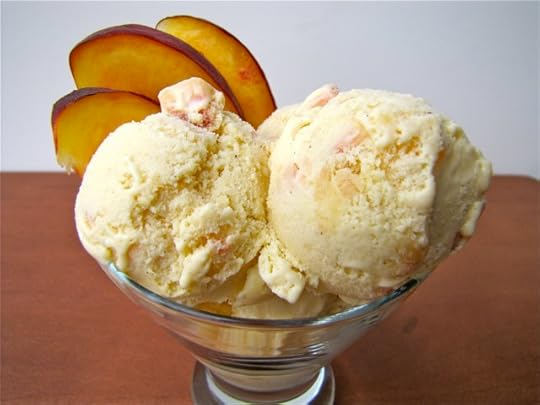
Little does he know that just because I’m not at my computer, that doesn’t mean I’m not writing. Every snarky cashier I meet becomes a potential character model for a story. The lady who snatches the last carton of my favorite peach ice cream in a supermarket? Villain fodder! “Better enjoy that ice cream, missy. I have disparagingly described your facial contours, style of dress, and gestural habits on the notepad of my phone. However I have noted one good trait so you will be believable. I will see you in my novel!”
Other friends who would sabotage my writing surpass themselves in cunning. They know that the one venue I absolutely cannot resist is the beach.
However, there is a caveat here. In general it is best to keep writers away from bodies of water. They will never leave. Moreover, they may exhibit strange symptoms, such as a wistful, faraway look in the eyes.
Every time I see a body of water, my mind goes berserk exploring different ways to describe how water looks when light strikes it. “The lake glimmered softly in the morning sunlight.” No, no, no, too trite. “The water was still as glass.” Hmm. Trite but classic and definitely apt. Still, I could do better. “Cotton candy blue?” No. Too…fuzzy. Water is not a cat.” This will go on all day if I let it, unless whoever I am with shows me something else shiny to obsess over, like a ball of tin foil. There is nothing that enthralls a writer more than reflected light.
Such obsessing over seeming trifles is not an isolated incident, nor is it the product of a mental illness or a psychoactive drug. Still, no matter where I go, a part of me is somewhere else. No matter how engaged I appear to be with my surroundings, part of me is always thinking about what I will write about it when I make it back to the safe haven of my computer, the home where my mind really lives.
In a sense my trips away from home are all out-of-body experiences. Every visit to a restaurant, amusement park, birthday party, or even funeral becomes a field trip for writing where anything I hear, see, feel, or do can become potential source material for some unwritten story, essay, or poem.
I sometimes wonder if this is a healthy approach to life. This is not just art. It is practically a philosophy. But is it a good one? Does life need a purpose beyond itself? Do I do life a disservice by burdening it with something so heavy as a purpose? Maybe sometimes it is enough just to enjoy ice cream, stroke my cat, or drink coffee.
There is a strange paradox that comes with using life as a source for artistic material, and not prizing it as a precious gift in itself.
On one hand, I write to feel more intensely. I gather information in such a way that it makes emotional sense to me. In that way the act of observing as a writer makes me feel more fully alive. However, the mindset of using these emotions for art also detaches me from the very life I am trying to describe.
Whenever I venture out into the world, I am like a photographer who is constantly seeing scenery that captivates her as she hides behind the rectangular lens of her camera. Ooh, pretty. I think this palm tree looks extra beautiful when trapped inside the arbitrary prison of a rectangle! I wonder what this gorgeous tree would look like without an artificial window cutting off half its fronds. Oh, never mind. Snap!
As a writer I carry my rectangular lens with me in my head everywhere I go, constantly framing what I see in ways that interest me. Instead of experiencing life directly, I filter my experiences through words, memory, and imagination.
Like a photographer I may love my subject passionately whether it is a flower or a person, yet in a way I have detached myself from the objects I admire in that nothing I see is really an end in itself; everything that catches my eye is evaluated for its usefulness as creative material. I wonder, what would this look like in a story, a passage of a novel, or an essay?
Whether this approach to life is good or bad or something in between, there is no stopping me now, because I have become as dependent on my writing as my writing is on me.
My way of observing, as a means to an end, is as much a psychological defense mechanism as it is an artistic tool. Sometimes peppering what I see with imagination makes what is beautiful more beautiful.
Framing experiences for later creative use can also turn suffering into creative triumph. Even when I cry, there is always a part of me, the writer, standing outside of me with a notepad objectively recording everything, a kind of reassuring Vulcan figure who finds the phenomenon of lachrymose expression “fascinating” or at least very amusing. With an inquisitive arch of his eyebrow he asks, What does it feel like to cry? Tears notwithstanding, what happens to the throat muscles or the tiny muscles around the eyes? Is there a sense of impending doom, a subjective feeling that the world is ending even though crying has never ended the world before? The next time I write, I think, I will remember this. And immediately I feel better.
Full detachment from the world is not ideal. Taken to the extreme it would be insanity. Artistic detachment seems safer, but maybe even it comes with a price. Maybe I do miss out on some of the uninhibited wonder I had as a child when I saw the ocean for the first time, without the words to express how it looked or how I felt, but with nothing more than a pure, dazzling sense of wonder.
Maybe sometimes it is more exciting to just look without analyzing, to feel without trying to put anything into words. Maybe the ineffable wonder of experiencing something beautiful without any attempt to “capture” it is a sacrifice you make when you become a writer. I do not know which is better for most people.
I only know that I made my choice long ago. I continue to make it again and again everyday, and for as long as I live, I will never stop trying to capture, in words, the way light looks when it glances off water or observing strangers in grocery stores when I should be shopping for cucumbers. Writing is not just an occupation or even a way of life. It is who I am.
If you enjoyed this post you might like my other writing. Take a moment and sign up for my free starter library. Click here. Also my story collection “Remembering the Future” is available for purchase on Amazon.
The post Writing as Art, Therapy, and Philosophy appeared first on PASSIONATE REASON.
July 17, 2017
Hope in the Age of Trump
I knew America was in serious trouble the day an NPR journalist praised Republican Senator John McCain as being a “profile in courage” just for suggesting that a free press might be a good thing.
McCain had contradicted the president, who had tweeted that the press was the “enemy of the American people.” McCain argued that silencing the press was how dictators got started.
I thought, wow, the bar has never been lower for any Congressional Republican who might seek the legendary status of an American hero. All one had to do is acknowledge the truth, to say what most every U.S. history student learns in public schools: that a free press is a basic feature that supports democracy.
I wondered why other Republicans were not leaping at the opportunity to carve their names in future history books, when all they had to do to be deemed courageous was to speak a simple truth – such as, “A free press is good for democracy, and not “the enemy.”
However, no Republican in Congress seemed willing at the time to contradict Trump on anything, except for John McCain every now and then.
This bizarre tweet about the mainstream press being “the enemy” took me back to my own eleventh grade history class in 1987. I lived in South Carolina where most everyone I knew was Republican. Although I am a Democrat now, being a Republican was different then. Most of the Republican adults I knew cared about the first amendment, including a free press, and would not have hesitated to say so.
My U.S. history teacher Mr. Howell had urged students to question and challenge him because he believed critical thinking was vital to a free society.
He taught the book 1984 by George Orwell, which introduced me to terms like “double think” and illustrated how politicians and dictators could distort language to control how others thought in order to manipulate them into blind obedience.
He had warned about the fragility of democracy and the need for constant, informed vigilance to preserve it, a vigilance that began with students staying informed while reasoning about and questioning what they had been told by authorities in order to arrive at the truth.
Mr. Howell did not perpetuate silly myths about the virtues of American presidents or founding fathers. He was not afraid to admit that they were only human. He did not confuse patriotism with hero – or leader – worship. He explained the need for checks and balances designed to keep presidents from becoming autocrats, or to keep any one branch of government from seizing too much power. One of those checks was a free press that was able to criticize leaders and tell the truth without government-driven retribution.
At the time all of this was new to me. I had recently changed from a strict Christian school which taught that morality was obedience to authority, and that even certain thoughts were forbidden by God.
My fear of being punished by God for thinking “bad” thoughts had induced a severe depression that had led to me questioning my beliefs until I finally concluded that most of what I had been taught made no sense. My revelation freed me, that it was always okay to think. My depression lifted, leaving me full of new curiosity about the world. I switched to a public school and discovered something called critical thinking.
That is why freedom to criticize authority, embedded in the first amendment and permitted in my history class, resonated so deeply with me. By changing from a strict religious school to a public one I felt like I had moved from a totalitarian state to a free society, represented in microcosm by the classroom of Mr. Howell. I came to see in his teaching style the essence of the American spirit.
When I see modern day Republicans in Congress looking on in silence while Trump attacks the free press as fake news, I remember Mr. Howell and think, “What has happened to the Republican Party?”
Unlike my history teacher, Trump will not tolerate being challenged. He lashes out at the press when they criticize him, the courts when they disagree with him, and his intelligence agencies when they show the slightest sign of…intelligence.
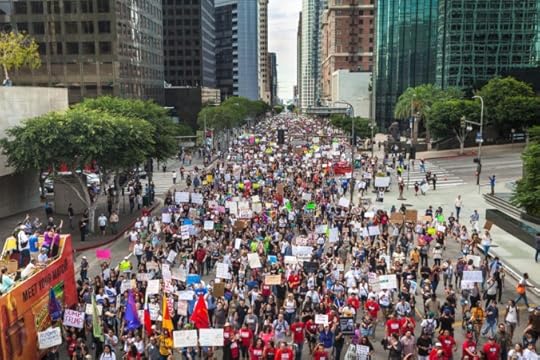
Trump insults intelligence generally when he lies about subjects such as the size of his inauguration crowd, despite contradictory photographs, or his outrageous, unsubstantiated accusation that Obama wiretapped him.
When the mainstream press debunks such baseless claims with clear evidence to the contrary and calls him on his mendacity, he lashes out with personal attacks on journalists, name-calling, and accusations of Fake News.
Trump appears to want total, all- encompassing authority over media so he can control what people think and say about him.
That is why I cringe when pundits suggest that Trump is just giving us a “new” kind of presidency. Trump is not merely “new, “unorthodox” or a “provocateur.” He is steering America in the direction of authoritarianism, and an authoritarian style of leadership is not new; it is historically very old, whereas for the American founders democracy was a new experiment, a departure from the abuses of the old ways.
Living in a country that identifies itself as a democracy has given me certain expectations of political leaders, so ever since Trump was inaugurated, I have been waiting for Trump to say the word democracy in such a way that suggests he approves of it; after six months of hearing him talk, I am not confident he could explain what one is, or why it is a good thing.
I never would have thought I would miss the rhetoric of past presidents waxing lyrical about freedom, speeches which often seemed hollow or cheesy. But I do.
Trump is separating America from deeply held principles of liberty by which it defines itself, principles that reach back into the early history of the nation. Meanwhile, Congressional Republicans have remained mostly passive.
I am worried about them. I want to say, “What has happened to you? You used to hate Russia more than anything and now you are supporting a president that idolizes a brutal Russian dictator with a Kremlin past? You used to talk about freedom all the time. I mean all the time. Where did that go? Did you never read 1984?”
Despite knowing better, I have always felt that Western autocrats of the past like Stalin who gave rise to 1984 were safely entombed inside the pages of history textbooks.
Blind adulation for authorities who made impossible promises and demonized minorities – those were the Old Days. Americans and other Western Democracies knew better now.
I was wrong to feel so secure.
Most, if not all, politicians lie, but Trump goes further by refusing to defer to an objective standard of reality, one defined by rules of logic and respect for evidence. He says Obama wiretapped him and for Trump that is enough. He makes no effort to explain or supply proof, leaving it to others to make sense of what he means; without meeting others on a common ground of objective reality, rational discourse is impossible. He peddles ambiguity and confusion, such as later claiming that by “wiretapping” he meant surveillance generally, creating the impression that truth is slippery, elusive, and possibly unobtainable.
This matters because authoritarianism takes root in the realm of thought.
The mainstream press is not having it. It calls Trump on his easily disprovable lies and demands proof for his outrageous accusations. It holds him to standards of evidence and reason. Therefore, he has named the press “the enemy.”
By swinging the power of his presidency like a cudgel to knock down critics, by hurling threats, tirades, and character assaults, Trump is not just changing policy; he is changing our national identity and reshaping it in the image of his own disturbed personality.
My hope lies in knowing that the face Trump is presenting to the world is not the true face of America; it is a mask, and there is a lot of resistance going on behind it.
Despite his unflinching supporter base of 38 per cent, opposition to his leadership has been robust overall. Activism is on the rise. The feminist movement has become super-charged due to his overt misogyny. Law suits threaten his xenophobic policies.
However it may appear to the world, America is not Trump. America is the people who live here and most of us know something is wrong, terribly wrong.
However, I must admit: If I have ever taken for granted the institutions that support democracy such as a free press and an independent judiciary, I never will again because through Trump, I have glimpsed the abusive alternative.
The hidden gold of the Trump presidency is that I am more engaged with how government works than I have ever been. In the weeks following his inauguration I learned everything I could about the limits and scope of presidential power.
Boring textbook concepts like checks and balances scintillate with new meaning and flicker to life when faced with a real threat. And Donald Trump is.
Maybe someday the Republicans in Congress will see that. Maybe they will see that his abusive governing style is an attack on the country they have long promised to defend.
Maybe they will recover from their moral amnesia and remember how their party used to care about things like education and defending the Bill of Rights.
Maybe even a lone Republican (other than McCain), a dauntless Chosen One, will separate from the Pack and aspire to easy heroism by firmly and consistently raising his voice above that of Trump to say, “A free press is not the enemy of the people. In fact, it is kind of a useful thing for a democracy to have. And democracy, well, maybe that is not such a bad thing either. Maybe it is even sort of, kind of good.”
If you enjoyed this post you might like my other writing. Take a moment and sign up for my free starter library. Click here. Also my story collection “Remembering the Future” is available for purchase on Amazon.
The post Hope in the Age of Trump appeared first on PASSIONATE REASON.
July 3, 2017
Updates, Including My Next Release: The Ghosts of Chimera
 I
I
have exciting news. I am finally, finally, finally about to publish my psychological fantasy The Ghosts of Chimera.
Busy with making final edits, I have not been on social media much lately, only peeking out of my cave every now and then to see how my friends online are doing. Although I have reduced my blogging to about once every other week, I promise that I am actually still here.
I am now transferring The Ghosts of Chimera to an Amazon file. After multiple revisions, I am finally happy with it, and it will be ready to go before the end of summer. Although I was advised to divide the 600 page novel into three books, I have decided to publish it as a whole, the way I originally meant it to be read.
The novel is about a 13-year-old boy who ventures into an alternate universe in search of the ghost of his younger brother, a place where it is hard to tell the difference from dream and reality. My novel was accepted by a traditional publisher over a year ago, but due to creative differences, I withdrew from the deal and decided to self-publish. My experience made me realize how important it is to me to keep my creative autonomy.
A couple of months ago I published my second novel, entitled Paw, and I am still trying to figure out how to promote a book about a bipedal feline slave. I am not sure there is an existing market for bipedal feline slave stories, but doggone it, a trend has got to start somewhere and it might as well start with me.
Now that I have finally finished editing The Ghosts of Chimera, I am working on my sequel to Paw.
Although I am primarily focusing on writing my new novels during the week, I have decided to start back writing short stories again on the weekends, some of which I will publish on my blog. Months ago, with great reluctance, I gave them up to focus completely on novel writing.
However, giving up writing short stories felt like giving up chocolate, which is why my abstinence was doomed before it even began. While writing novels is satisfying in its own way, it makes me commit to a single idea for many months. Short stories allow me to react creatively to my life in real time. If I get mad at Donald Trump, or my cat, or a crabby doctor, I can reach for a metaphor and turn my woes into art. It is fun therapy, and lately I have needed all the therapy I can get. I recently finished a short story entitled “Binary Boy,” which is too long to publish on my blog, so I am considering posting it on Amazon as a “single.”
In the mean time, I am trying to figure out how best to promote my newest releases. After quitting Twitter in January, I sometimes miss it. Part of me wants to go back on to the site and promote Paw, which not many people know about yet. Maybe at some point the temptation to return will prevail, although I am not sure how effective Twitter actually is for promoting books. Still, it would be emotionally satisfying to tell more of the world Paw exists. Publishing a novel no one knows about feels similar to dropping a megaton boulder into the ocean without a splash.
I recently went back and read some old journal entries to see what Old Me had to say about Twitter. My entries confirmed what I already knew, that Twitter and my bipolar disorder did not dance well together. If I returned, I would have to figure out exactly what I was doing wrong last time so I would know not to do it again.
For now I am searching for other promotional avenues, such as getting my books reviewed or entering contests. More importantly, I am writing constantly, and I hope to step up my blogging again soon.
Thanks to all of you who have been following my blog and reading my books. I will update you further when The Ghosts of Chimera is released at long last.
If you enjoyed this post you might like my other writing. Take a moment and sign up for my free starter library. Click here. Also my story collection “Remembering the Future” is available for purchase on Amazon.
The post Updates, Including My Next Release: The Ghosts of Chimera appeared first on PASSIONATE REASON.
June 21, 2017
Hope

Although tragic and depressing things sometimes happen in my stories, I try to always find a thread of plausible hope.
However, I sometimes wonder if this conscious effort to work hope into my works of fiction is less than honest. After all, there are many real-life situations that crush hope completely and scatter its ashes to the winds.
Some brilliant writers like Dostoyevsky in The Idiot have written some hope-crushing stories, with main characters dying, being decapitated, or going insane at the end. When I was in high school I tried writing some stories like this myself; it made me feel edgy. It was as if I were saying, “Look, the world is not a rosy place, and I am honest and courageous enough to say it.” Or, “Look at how the hypocrisy of those in power are destroying the world; people are innately evil!”
However, I now view these early efforts as a kind of immaturity. Writing stories that end with utter despair is easy. The news gives them to us every day, no imagination required. Real life routinely dispenses tragic stories without resolutions or clear explanations.
To me one of the most interesting questions of fiction is, “Despite suffering, despite the knowledge of death, despite the fact that the universe cares nothing for our deepest wishes and aspirations, how to we go on? How do we make the best of what life has to offer?” Every time I write a story, that question is always lingering at the back of my mind.
It is not that I want to paint an artificially rosy picture of the world. I am acutely aware of the dangers of fabricating a fake happy ending in which every underdog comes out on top, every bully changes his ways, and every romantic relationship has a fairy tale ending. The problem with fake happy endings is that they end up being depressing to any thinking person.
While I have enjoyed many stories that end happily like The Harry Potter series, the happy ending must never seem forced or contrived.
A reader with any insight knows that the world does not grant every wish, no matter how high-minded and noble that wish may be, that hard effort does not always pay, that cruel people often get away with cruelty, that bullies do not change their ways overnight, and that kind people are not always treated kindly.
When I write I search for hope that is realistic, which sometimes means that characters win something they long for but lose something else. However, for some reason the word “realism” is associated with only the negative aspects of life as if hope were as fanciful as unicorns frolicking on pink cotton candy clouds.
To present only darkness without its brighter flip side is no more true-to-life than a belief that life is all glitter and marshmallows. My favorite fiction celebrates the dual nature of reality, the darkness and the light. Some may veer more toward darkness like my last novel Paw, and others more toward light, yet either one of them, alone, offers an incomplete picture of the world that I try to reflect back in my fiction.
But what if I am wrong? Maybe there is some therapeutic value in painting totally hopeless scenarios in which death and disease march to triumph, in which villains thoroughly trample the innocent. There is no doubt that such scenarios occur in real life, and have occurred frequently throughout history.
My avoidance of ending my stories with purely hopeless scenarios is a personal preference. I write stories with hope because I cannot live without hope. Even when I have been at my most depressed, there has was always been something, however small, that I hoped for. I hoped my cat would not shred the couch cushions. I hoped could enjoy breakfast, I hoped to play a fun video game, I hoped I could get through the day.
I ultimately write for myself, and I can personally find no meaning, satisfaction, or purpose in writing stories that end on a note of pure, uncompromising, unmitigated despair.
That being said, some of my favorite novels are thematically depressing – A Separate Peace for one. Taking place during World War II America, a teenage boy pushes his best friend off a tree branch in an impulsive moment of jealousy; ultimately his friend dies, and the narrator is left to confront the horror and sadness of what he has done.
However, the narrator expands his personal story to comment on the demented nature of war, concluding that war is the product of something broken inside the human heart. The main character, wiser and forever changed, still manages to move on despite a wound that is likely to never heal. His understanding, the catharsis of being able to tell his story, and his ability to move forward comprise the grain of hope that levitates the story from merely depressing to something more.
However, I know that many different ways of writing stories can work. No artistic purpose should be proscribed as “wrong.” However, one of my obsessions as a fiction writer, for now, is clear: to find hope where it is not readily apparent, to search the shadowy places for glimpses of light, as my personal and artistic obsessions align.
If you enjoyed this post you might like my other writing. Take a moment and sign up for my free starter library. Click here. Also my story collection “Remembering the Future” is available for purchase on Amazon.
The post Hope appeared first on PASSIONATE REASON.
June 4, 2017
The Perils of Reading About Writing

I used to love reading about how to write more than I liked to write. While I longed to be a writer, writing was scary. It meant unmasking my own mind, delving into the dark complexities of my subconscious, my childhood wounds, my fears of rejection, and other traits I preferred to deny.
Chronically blocked, I was constantly looking for the how-to-write book that would catapult me into creative bliss. My book shelf was packed with inspiring glossy-covered books; however, my inspiration had mostly fizzled by the time I got around to writing.
In my quest I did come across good books I still treasure, such as Characters Make Your Story and Writing Down the Bones. Whenever I found a book I really liked, I wanted to christen the author as my personal mentor, drag her into the next writing session with me and have her tell me everything to do. Yet when I did sit down to write, all I had learned seemed to have abandoned me as I stared at the blank page.
There were other problems with reading about writing. The writers often contradicted each other and themselves. Some were “light editing” advocates who said the first drafts were always better because they were more honest, while other writers said “good writing is rewriting.” (The latter works best for me.)
Some said, “Go out and get some life experiences, then write.” This vague advice was unhelpful and confusing. What did it mean to go out and get life experiences?
The writers usually seemed to have a particular kind of experience in mind, daredevil feats or taking high risk jobs. Did I have to join a circus or become a bar bouncer to have worthy thoughts about what it was like to be human?
The effect of this advice was to discourage me. I fretted about my “experience deficit.” It became yet another excuse for being under- confident. Besides, it took time to join a circus – time I could otherwise be using to write.
The writers generally propounded their opinions with great authority. They discussed rules of craft as if they were inflexible, universal, and definitive.
Ironically, the worst advice I have ever read ultimately taught me one of the most valuable lessons about writing. It taught me in a strange way: by discouraging me completely; by shattering my trust in advice- giving experts; by waking me up. Along with other painful writing experiences, it ultimately made me realize I had to stop looking to others for answers and trust my own mind.
The advice came from a popular writing magazine. In it, a best-selling writer declared that if you are having trouble making yourself write, writing must not be for you; you probably just like the idea of being a writer, not the act of writing itself; if that is the case, he advised, you should go do something else instead, gardening or accounting perhaps, and leave writing to the “real writers” (like him) who could not help themselves.
At the time I was blocked and teetering on the edge of despair; I was heavily sedated with mood stabilizing medication after a severe manic episode had left me in emotional tatters. I already suspected I would never enjoy writing again, yet I was trying my best to write every day anyway; however, “making myself” write under the circumstances was painful.
The advice went to the heart of my worst fear, that I was not a real writer but a dilettante, a starry-eyed poseur with no future in the one activity I longed to do more than anything.
However, I sensed something was wrong with the advice, that it was untrue. I decided to disregard it. I went even further. I stopped reading writing advice.
I remembered that as a child I had enjoyed writing, and I pinned my hopes on those early days before inhibitions had hindered me creatively. Then I did something more exciting than reading about writing: I began writing. A lot. It was the beginning of getting past my block and learning to love writing as I had in my childhood.
I played with words; I made a big mess. I experimented recklessly. I rejoiced when something worked. I learned from what did not. I took notes. I built confidence in my own judgment by writing what I cared about, not what I thought others would like. Most liberating of all, I learned to refrain from judging my writing prematurely.
I avoided writing magazines for over ten years, peeking inside the covers only on very rare occasions. Breaking my hiatus usually confirmed to me that I had made the right choice by going rogue. When I peeked at writing magazines I would put them down after the first few sentences, especially if I saw that the article was about how to cater to agents or editors, and not how to write a powerful story.
I was so happy about my experiment of learning from writing rather than from other writers, I considered never again reading another book or article on writing.
But recently it occurred to me that my reasons for avoiding reading about writing no longer exist. My fear of being discouraged by bad advice is gone. I no longer take to heart anything a professional writer says. I have my own point of view, rooted in experience, and it is not fragile.
Although I feel no urgent need to read about the writing craft, I do remember there were books on writing I once treasured and even loved. Classics like Writing Down the Bones mostly encouraged rather than discouraged me. The book Characters Make Your Story fundamentally changed how I viewed the dynamics of story telling. If I am honest I have to admit that I have not discovered everything on my own. I have been influenced.
Weeks ago I wondered: Why not take advantage of insights other writers have had, whether I agree with them or not? Why not try reading about the craft again, if only to see if it feels any different after writing three novels, three story anthologies, and a book on overcoming block?
So I did something I had not done in many years. I read a book about writing. As it happened, I thoroughly enjoyed it, a fascinating study of archetypes in fiction such as mentors, heroes, and “shape-shifters,” characters who are not what they seem. The book, called The Writer’s Journey is eye-opening and worth reading twice.
Reading about writing was an entirely different experience this time. Though interested, I never ceded my own point of view to that of the author. Sometimes I agreed and sometimes I disagreed. Both felt okay.
As I read, my imagination became engaged. The content inspired ideas about what I wanted to do with the novel I was working on, and I wrote them down.
I also picked up a few tips and insights I can use, but now I see them for what they are: tips, not rules.
My past problem was not that bad advice on writing existed, but my dependency on others telling me what to do. I was used to the teacher-student, boss-employee model of instruction.
But that was the wrong way to read writing advice. Now I view it as comparing notes between equals. I view writing principles as tools, not rules. They are meant to be useful; they should empower, not enslave writers.
I do not feel a great need books on how to write, but it is nice to be able to enjoy reading them again. A lot can be learned by the experiences of other writers, as long as in the end I return home to the true source of my art: myself.
If you enjoyed this post you might like my other writing. Take a moment and sign up for my free starter library. Click here. Also my story collection “Remembering the Future” is available for purchase on Amazon.
The post The Perils of Reading About Writing appeared first on PASSIONATE REASON.
May 17, 2017
The Hell of Defensive Editing
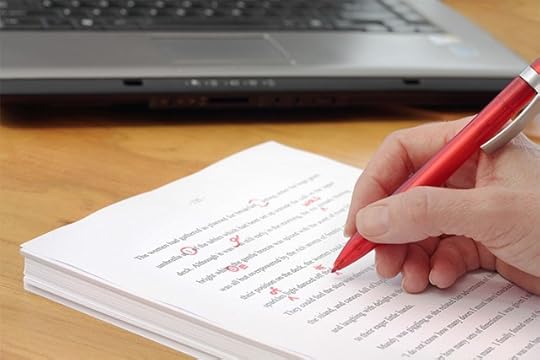
For the first 98 percent of writing a story, it is generally fun. At that stage, anything goes. Possibilities abound. Words are magical. Writing feels like the ultimate freedom. I am the master of my world.
However, the last two percent of editing can become a mangled knotty, tooth grinding torture if I let it. This is because during the final stages, I try to view my work through eyes other than my own. I try to see my work as an imaginary reader might. I try to figure out how someone coming to my story for the first time will perceive it.
This is not necessarily a bad idea. I want to make sure my writing is clear not just to me but to others. I need to be able to see any plot holes, inconsistencies, or flaws in logic that could take readers out of my story. As I edit or revise, I am on the lookout for fuzzy language, missing transitions, faulty pacing, implausibility, or lags in interest that could ruin the narrative flow for a reader.
However, this process becomes torture when my imaginary reader becomes a troll, as often happens right after I have read critical reviews of anything online.
Thus, I begin to edit defensively, making frantic changes based on what my imaginary future critic might think. In this mindset, every scathing Amazon review I have ever read rises to the surface of my memory – and at an emotional level, they are all now directed laser-like toward me. I feel like I am editing at gunpoint.
As my panic peaks, I make frenzied changes, sometimes random ones just to see if they work better. I begin to revise “by feel” and too often everything I used to love now feels wrong, wrong, wrong. I become so obsessed at fixing problems, I fail to notice what I have done right. I am too frantic to even notice that my mood is gradually tanking.
My approach becomes scattershot. I rearrange words, cutting some, adding others, and cutting some more. My agony is only slightly ameliorated by a vaguely righteous feeling at how much work I am doing.
I feel like I am being productive when in reality I am killing my original spontaneity and doing unnecessary work when I could be working on a new story.
When I edit defensively, my role changes from being a creator to a slave of my own compulsive insecurities. I become an over-zealous robot programmed to identify and obliterate errors whether any exist or not. Or, to use a different analogy, I am pulling up weeds and killing flowers in the process because I have lost the ability to tell the difference.
The cost in time and energy squandered by defensive editing is immense. Many times I have spent over ten hours revising a piece only to realize that what I had at the beginning was fresher and more interesting. Obviously, I want to avoid this situation.
That is why I need to be sensitive not only to what I am editing, but how. I know I am revising defensively when I find myself trying to delete anything that anyone anywhere could possibly ever object to. Gone, then, is any vision of greatness; I lose my sense of what I was originally trying to do, what I dreamed of building, what I wanted to be born.
The goal becomes weeding out anything “unsafe,” any passage that is potentially offensive or objectionable, which is usually the most interesting and powerful part.
Non-defensive editing is different. I am likely to do it well when I calmly seek to bring my original ideas into the light with greater vividness and clarity. I judge my work solely on whether it accomplishes the creative purpose I have assigned to if, whether it is to show that adolescence is torture or to describe a place I love.
In contrast, defensive revision feels out-of-control, a hair-pulling, jaw-grinding panic-filled attempt to eradicate anything and everything that might cause a strong reaction in a reader. Despite my painful defensive efforts and all the energy I lose, nothing important really gets done.
Defensive editing makes me feel like I am trying to plug tiny holes in a dam with cotton balls but every time I plug one, a gaping new hole emerges, letting through violent sprays that send me reeling.
Fortunately, I have learned a lot over the years about how to nullify defensive editing. First, I need to consciously recognize what is happening. I label my editing as “defensive” if I am experiencing a frantic loss of control over my writing along with a desire to please nonexistent people.
Next, I step away for a time to clear my head. I need a way to “reset” my process, so I take a break in the hope that when I return to my writing, I will return with a fresh perspective.
I remind myself that nothing I ever write will be beyond reproach and that I am still ultimately the master of my own creative work – not editors, critics, or readers, whether real or imaginary. What I like still trumps all. The problem is that sometimes I get so caught up in what the readers might think, I lose the ability to know what I think.
When this happens, I turn to an exercise which has never failed me. It lets me revise or edit effectively while focusing on what is right rather than what is wrong.
First I make a copy of my text on my computer. Then I set my original version in bold lettering. I read through the bold text and select my favorite parts, the ones that ring with passion or resonate with truth.
After I am done, I delete all the bold lettering, and I am left only with the parts I love. The remaining text is usually a disorganized mess. It will need new transitions and probably some rewriting to make it cohesive again, but it is much more rewarding to work with even fragmented text I love than with integrated parts I dislike. I have written many of my stories this way, including passages of novels.
Of course, this is a process designed for deep revisions; it may not be appropriate at the polish stage of editing. However, in terms of resetting my perspective, I can benefit from simply going through my work and highlighting my favorite parts. It changes my perspective, so I am no longer looking through the eyes of an imaginary future troll; I am focused once again on writing what I like.
Defensive editing shatters creativity and concentration. It is more concerned with the subjective responses of individual readers than my original purpose in creating my story. It makes me imagine wrinkled noses, sardonic remarks, and eye rolls.
Non-defensive revision is about re-envisioning. It is about building, not tearing down. I take pleasure in the changes I make because I see the reward of immediate improvement: a tighter sentence, a more vivid metaphor, or a musical rhythm that perfectly highlights the drama of a scene.
For editing to work as it should, it must be done in a focused and decisive way – not frantically or haphazardly. It must also be based on reality, not paranoia.
Editing defensively is an energy drain with little or no reward. Avoiding it means trusting my own judgment. It means having the courage to be myself.
If you enjoyed this post you might like my other writing. Take a moment and sign up for my free starter library. Click here. Also my story collection “Remembering the Future” is available for purchase on Amazon.
The post The Hell of Defensive Editing appeared first on PASSIONATE REASON.
May 2, 2017
My Promise to Write for Myself is Tested

I have often said I write for myself. What exactly do I mean by this? Is it realistic for me to write for myself, yet still hope others will enjoy it?
When I say I write for myself, I mean I write for enjoyment, catharsis, expression, and discovery, not just to deliver a product that is pleasing to others. Moreover, the spirit, the content, the emotions, and the style have to come from me even if critics oppose my work.
At times my policy of writing for myself is tested and I have to ask myself it I am serious. Whether the challenge comes from editors, trolls, or parents, my promise to myself is to remain uncompromising when I believe strongly in something I have written.
I do sometimes seek criticism for my writing in case I have blind spots due to being to close to my work, but seeking feedback is about seeing what may be unclear; it is not about relieving my insecurities by having others tell me what to fix. If I try to please everyone, I will ultimately please no one. What unifies my stories is me.
However, last week I learned that some people, without even having read your story or knowing its content, believe that if your mom disapproves of something you have written, you should change it. I had blogged that my mom had disapproved of a scene in my new novel Paw and to some readers that was reason enough to un-publish my book and take it before a critique group for trouble-shooting.
Changing writing I am happy with just because one or more person disapproves of it goes against my writing philosophy, which is that I only write prose that excites me and that I would want to read.
My write-what-you-love approach emerged from a personal experience. I have told this story again and again, and I never get tired of telling it because is was one of the few life-changing epiphanies I have ever had. If I ever have another one I will write about it again and again, too, but right now this is all I have.
I have to remind myself of it frequently, because I feel a constant tug in the opposite direction in a world that says to value the opinions of others before your own, to obey the writing authorities, to follow the rules, and to be careful not to offend your mom.
My experience happened years ago, a case of block that began right after a severe manic episode. A depression followed. My thoughts and feelings seemed to happen in slow motion. I slept twelve hours a day. I barely recognized my own mind
Numbed by bipolar medication, I thought I would never enjoy writing again, but writing was too important to me to surrender without a fight, so I tried writing anyway.
I would force myself to sit at a computer each day for a set number of hours, horrified by my seeming inability to conjure an original thought. As I wrote I imagined snarky critics looking over my shoulder They had annoyingly big vocabularies. “Mawkish, self-indulgent, and shoddily constructed,” they said. “Cloyingly sentimental. The literary equivalent of skim milk.”
These comments emerging from my own mind overwhelmed me. Drowning in them, I tried to remember the last time I had enjoyed writing.
I remembered how, when I used to write, my mind would sometimes scintillate with ideas. There would be a feeling of writing the masterpiece of all masterpieces, and even after I left my story, for the rest of the day, in the shower, on the elliptical cycle, or cleaning the house, I would write in my head, imagining all the exciting possibilities, every idea bursting with epic potential and raw passion.
Now there was no such reward. My medication had apparently drained me of all creative thoughts. Nothing seemed to exist except what was right in front of me. Look. A chair. Oh, I know. I’ll write, “she sat down in a chair.” Drat. Why isn’t this working?
The act of writing felt like placing my hand on a hot burner and seeing how long I could hold it there, knowing the smoky residue of despair would continue even long after I removed it.
Paralyzed by fears of ridicule I would sometimes wonder wistfully what I might be able to accomplish if my fear of failure and criticism fell away.
On one writing day, I could take no more. I stopped writing. I shut my laptop. I closed my eyes. At that moment it seemed ridiculous that I was subjecting myself to mental torture every day with so few results. For all my efforts, I was getting nowhere. For all the time I was using to torture myself, I could have been doing something I enjoyed like playing Banjo-Kazooie on my Nintendo 64.
In my mind, I gave up. At first came relief, a yielding, a bitter-sweet sigh of resignation. Maybe it is like that when you are dying and you have accepted that you are about to take your final breath, and you console yourself with reassurances: No more suffering, no more worrying.
But the equivalent of my final breath never came. It was arrested by a forgotten voice, an echo from my childhood. With it came a kind of puerile temper tantrum, a stubborn refusal to listen to any more authorities, a scorn of regimentation, and a disdain for critics. I sensed that because of them I had lost something priceless.
As a bullied kid, writing had been my refuge, the place I could go to be myself without risking ridicule, the one place where I had full control. Somehow that feeling of power and freedom had eroded over the years as I had learned that writing was a chore I did for teachers, and that if I were lucky, writing might someday become something I did for editors.
I remembered it now, my boundless childhood curiosity, my exuberant horror stories, my point-of-view studies of animals, the festive feeling of beginning a new tale, the fun of dreaming on the page, the wild experimentation, and the magnificent power – the ability to create a world and have full control over it.
Where had all of that gone? Years of school had instilled the common belief that writing was about pleasing others, that it was a game with rules which had already been written and which I was obligated to obey. Creativity had withered after I had been taught that I owed deference to teachers, publishers, editors, and critics, and that I must be careful never to offend or disturb them.
Back in the present, my feeling was, hell no, this ends now. I wanted to go back to writing the way I had as a child before fears of ridicule and offending had paralyzed me. I was not in school anymore. I was not writing for a boss. I had absolutely nothing to lose by writing however and whatever I chose, whether it was trite, silly, sentimental, or self-indulgent.
I promised myself that from then on I would write what I liked. I would write for myself. I wrote on a sheet of paper “the freedom to write without fear of criticism, the freedom to make mistakes, the freedom to explore the way I did when I was twelve.” I put the sheet of paper in a box and adorned it in colorful wrapping paper, my gift to myself. I did not know if I would ever make money writing, or if I would ever write anything others would enjoy.
But at the time none of that mattered. I gave the stifled ten-year-old in me the permission to have fun writing whatever she wanted, no matter how silly, self-indulgent, offensive, or trite. Even “flat” writing was allowed; I would no longer beat myself up over it.
Little by little I began to enjoy writing again. My imaginary critics stood back and gave me space. Creating felt magical.
I went from being completely blocked to being fairly prolific. Since then I have written a 600 page novel, three story anthologies, a book on creative recovery, and hundreds of blog posts.
After beginning my blog, I began to receive a lot of praise for my writing; as a general rule, when I wrote what I loved, there were others who loved it too. Most recently I published my novel Paw, which contained the scene my mom had disliked.
Usually writing what I love moves readers too, but not always. When applause fails to come, when shaming blindsides me, am I still serious when I say I write for myself? Would I continue to write for myself if no one approved, ever?
The answer I always come back to is, yes. I would miss praise if I had to let it go, but for me writing is an end in itself. Feeling hopelessly blocked was the worst experience of my life.
To dig myself out of it I had to sacrifice the approach that passes for common sense, one that mandates writing to please others. This “common sense” makes no sense, however. Because writing is subjective, changing my writing to please one person may ruin it for another.
As an artist, I cannot afford to become a slave to anyone with a strong opinion; otherwise, there is no artist, no self at the center of my work; the product ends up being design by committee.
I did not go back to search for something wrong with my novel Paw as one commenter had suggested. I made no changes. I had already revised and edited it painstakingly. I had only published it when I was happy with it.
Instead, I wrote something new to remind myself of why I write, something fun; I lost myself in creative exploration, got caught up the rhythms of words., remembering the advice of Ray Bradbury: “Write what you love and love what you write.”
A week after my decision to keep my offending scene, my brother called and said he had finished my book.
I tensed. My brother has been critical of my writing in the past, and even though I write for myself, criticism still feels like an electric shock sometimes. I hesitated to1 ask what he thought.
But he volunteered. “I loved it,” he said.
I released the breath I had been holding. But I had to ask about the scene my mom had disliked. “It didn’t ruin the book for you?” I asked
“Not at all,” he said. “I was amazed at how well-written it was. I was completely immersed and I had trouble putting it down. I got a little mad at you though. I was seeing all the action through the eyes of your character, identifying with her so much, and suddenly she was doing something I would never do, yet I felt just as sad as if I was doing it myself, and the reason is that your writing was so good, I was totally caught up in it. I was really, really impressed.”
Beaning despite myself, I asked, “How do you think it compared to my first novel?”
“It’s been so long. I remember really liking and enjoying that one. But I don’t remember if I loved it. This one I kind of did.”
While I am committed to writing for myself regardless of the response, the compliment made my mood soar. Apparently I have not entirely freed myself from the dread of criticism or the honeyed shackles of praise, and perhaps I never will.
But for as long as I live, I will never stop striving to write what I love, whether anyone approves of it or not.
If you enjoyed this post you might like my other writing. Take a moment and sign up for my free starter library. Click here. Also my story collection “Remembering the Future” is available for purchase on Amazon.
The post My Promise to Write for Myself is Tested appeared first on PASSIONATE REASON.