David Pilling's Blog, page 53
July 7, 2019
The big man keels over
7 July 1307, the big man turns up his toes.
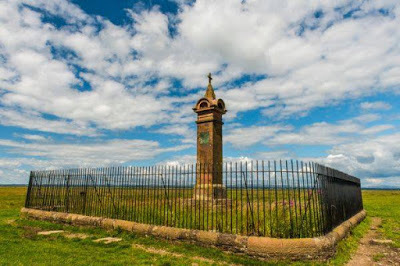
Edward I of England died at Burgh-by-Sands, a remote and cheerless spot west of Carlisle, on his way to the Scottish border. His end, after fifty years of relentless war and politics, reads like the final act in some Greek tragedy. The king hadn't backed a horse for over a year, and was dragged up to Carlisle in a litter. There his spirits were lifted by the sight of 400 bachelor knights riding past with bundles of spring leaves dripping from their lances. Much 'pleased and merry' by the sight, Edward gave up his litter to God and insisted on leading his army into Scotland on horseback, as he had done so often in the past. Wracked with dysentery or possibly bowel cancer, he covered six excruciating miles in three days. On the 6 he rested. On the morning of the 7, when his servants tried to lift him to take food, Edward gave a loud cry and fell back dead in their arms.
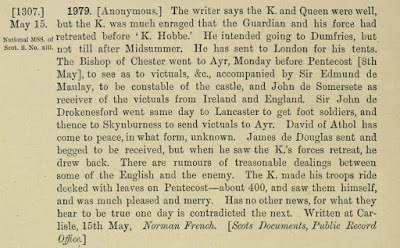

Edward I of England died at Burgh-by-Sands, a remote and cheerless spot west of Carlisle, on his way to the Scottish border. His end, after fifty years of relentless war and politics, reads like the final act in some Greek tragedy. The king hadn't backed a horse for over a year, and was dragged up to Carlisle in a litter. There his spirits were lifted by the sight of 400 bachelor knights riding past with bundles of spring leaves dripping from their lances. Much 'pleased and merry' by the sight, Edward gave up his litter to God and insisted on leading his army into Scotland on horseback, as he had done so often in the past. Wracked with dysentery or possibly bowel cancer, he covered six excruciating miles in three days. On the 6 he rested. On the morning of the 7, when his servants tried to lift him to take food, Edward gave a loud cry and fell back dead in their arms.


July 6, 2019
Director of finance
On 7 July (yes I know it's the 6 today, but nothing happened on the 6, so bollocks to the 6) 1298, Edward I was at Redpath on the Scottish border. No doubt that man William Wallace was uppermost in his thoughts, but a king always had other demands on his time. On that day he appointed Robert Clifford to the custody of Nottingham Castle, previously in the keeping of Robert Tibetot or Tiptoft, now deceased.

Edward may have regretted Tibetot's unavoidable absence from the Falkirk campaign. He was a useful soldier who almost single-handedly paid for the king's war in West Wales in 1282 out of his own pocket. Less usefully, he later aggravated a personal feud with Rhys ap Maredudd, lord of Ystrad Tywi, which resulted in Rhys's downfall and the end of the ancient House of Dinefwr. Edward himself did his best to prevent the feud, so the final conquest of Cantref Mawr was more or less the consequence of a private disagreement between two aristocrats.
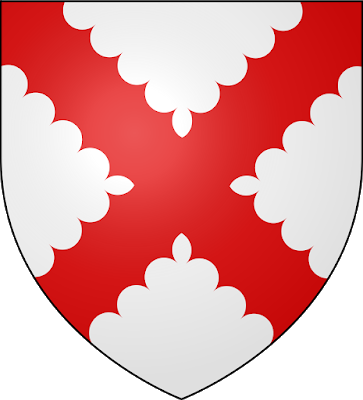
In 1294 Tibetot was packed off to Gascony, where he did sterling work as 'director of finance' and killed lots of Frenchmen. He also sealed a useful marriage alliance for his son with the daughter of a rich nobleman of Bayonne. He died shortly after his return to Wales in 1297.

Edward may have regretted Tibetot's unavoidable absence from the Falkirk campaign. He was a useful soldier who almost single-handedly paid for the king's war in West Wales in 1282 out of his own pocket. Less usefully, he later aggravated a personal feud with Rhys ap Maredudd, lord of Ystrad Tywi, which resulted in Rhys's downfall and the end of the ancient House of Dinefwr. Edward himself did his best to prevent the feud, so the final conquest of Cantref Mawr was more or less the consequence of a private disagreement between two aristocrats.
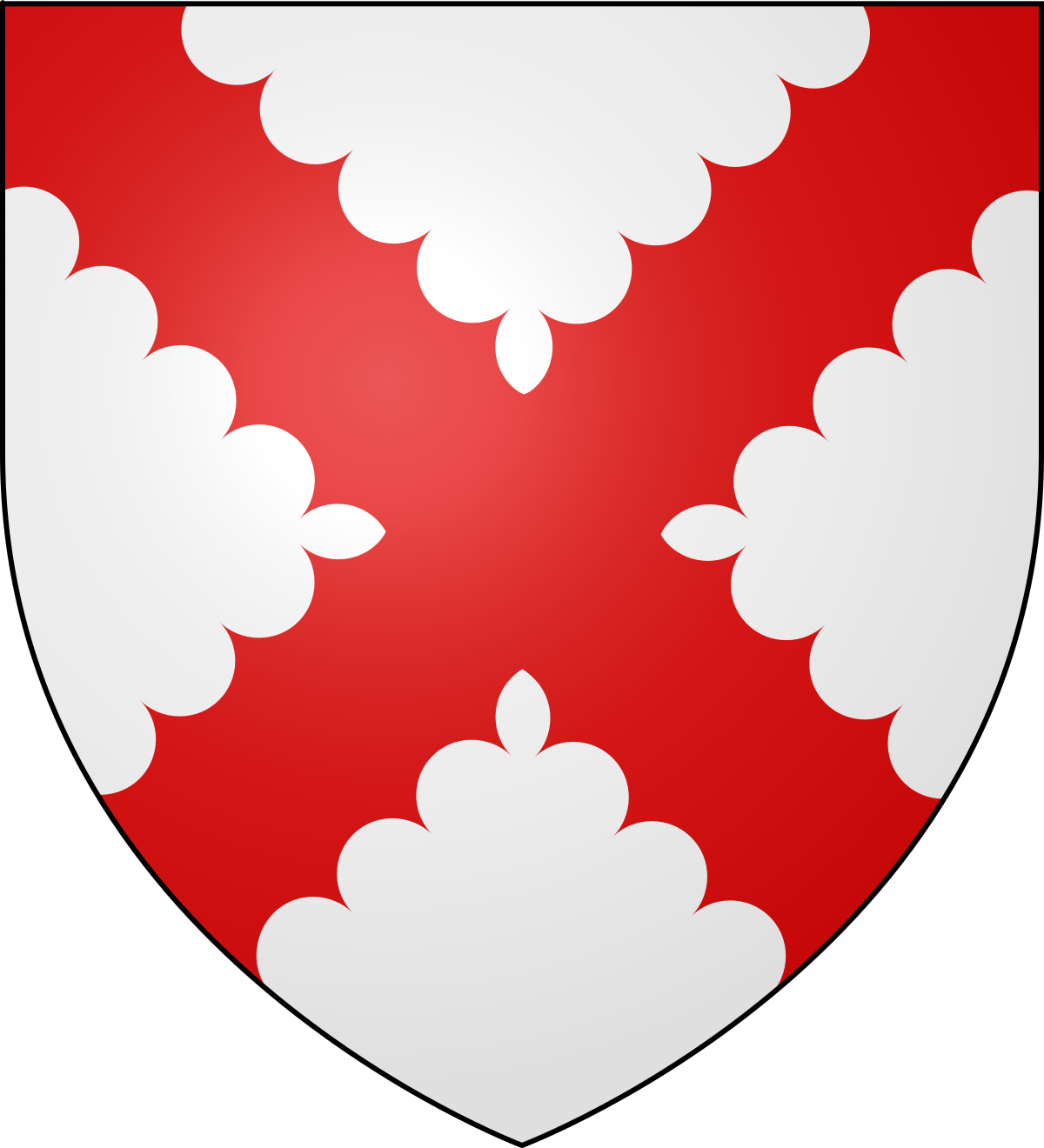
In 1294 Tibetot was packed off to Gascony, where he did sterling work as 'director of finance' and killed lots of Frenchmen. He also sealed a useful marriage alliance for his son with the daughter of a rich nobleman of Bayonne. He died shortly after his return to Wales in 1297.
July 5, 2019
Big Phil
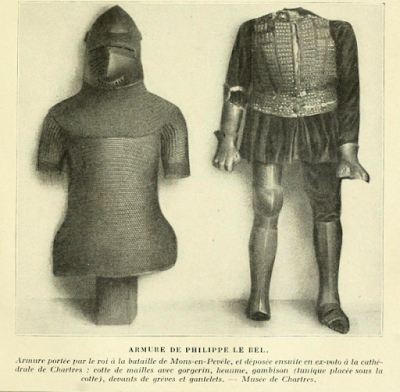
The armour worn by Philip IV at the Battle of Mons-en-Pévèle in 1304. Looks a bit later 14th century to me, but I'm guessing kings got all the best stuff before anyone else.
 Ah, Big Phil. Stole Gascony and Ponthieu from the English, stole Flanders from the Flemish, twice expelled the Jews after seizing their assets, gutted his Italian creditors and then threw them out of France, had the Knights Templar tortured to death on false charges of heresy and sodomy, had his men assault the pope, tortured men and women in public, exploited and abandoned his Scottish allies, debased the French currency, and had a good old laugh about it all. Quite a good medieval king, as medieval kings went.
 Ah, Big Phil. Stole Gascony and Ponthieu from the English, stole Flanders from the Flemish, twice expelled the Jews after seizing their assets, gutted his Italian creditors and then threw them out of France, had the Knights Templar tortured to death on false charges of heresy and sodomy, had his men assault the pope, tortured men and women in public, exploited and abandoned his Scottish allies, debased the French currency, and had a good old laugh about it all. Quite a good medieval king, as medieval kings went.
July 4, 2019
To deal with the devil
Part of transcript of a meeting between Pope Boniface VIII and the envoys of Edward I at the Curia, August 1300.
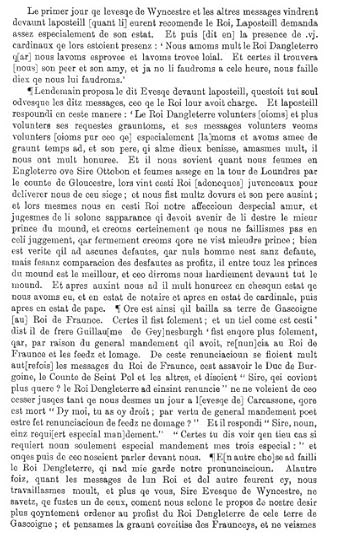
The meeting was part of the complex negotiations over Edward’s duchy of Gascony, invaded and partially conquered by the French in 1294. After three years of fighting both sides agreed to lay their claims before the pope. Boniface informed the English that he favoured their claim, and that Philip was guilty of wrongfully detaining the duchy. However, he could not give an award in Edward’s favour, because the French would simply ignore it:
“We cannot give you an award. If we pronounced in your favour the French would not hold to it, and could not be compelled, for they would make light of any penalty. We have, however, a hold over their king by reason of his wrongful detention of the land.”
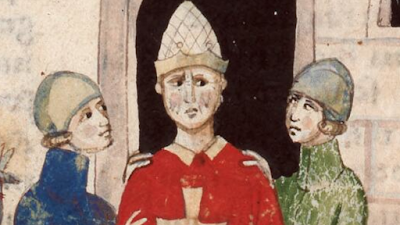
Boniface also remarked that ‘to deal with the French is to deal with the Devil’. At about the same time he fired off an angry letter to Edward, asking the king to whom he expected to answer on the Day of Judgement, if he continued to regard Scotland as his fief? The pope thus favoured Edward’s case for Gascony but frowned on his case for Scotland. An impartial witness might say Boniface was correct on both counts, but this was politics.
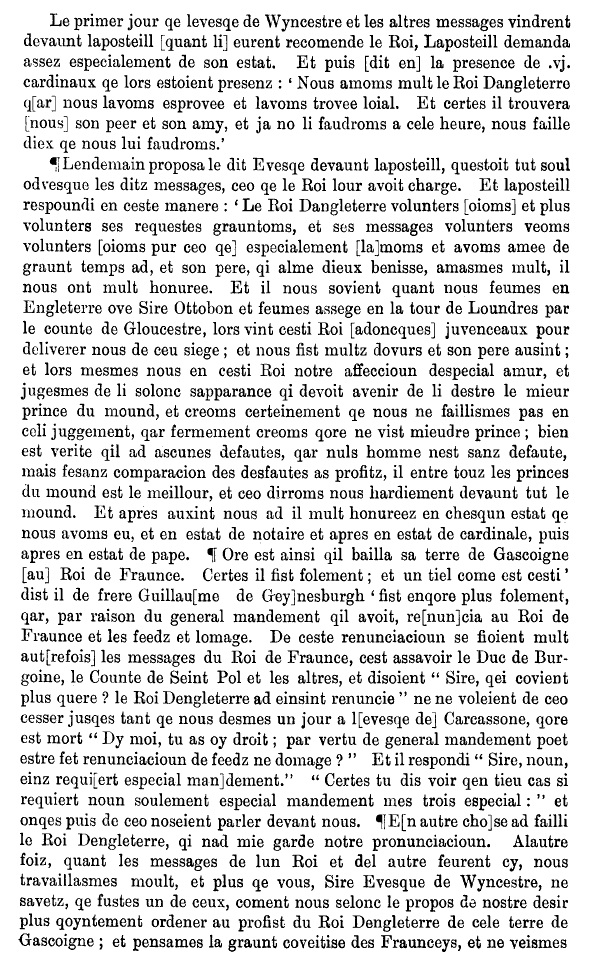
The meeting was part of the complex negotiations over Edward’s duchy of Gascony, invaded and partially conquered by the French in 1294. After three years of fighting both sides agreed to lay their claims before the pope. Boniface informed the English that he favoured their claim, and that Philip was guilty of wrongfully detaining the duchy. However, he could not give an award in Edward’s favour, because the French would simply ignore it:
“We cannot give you an award. If we pronounced in your favour the French would not hold to it, and could not be compelled, for they would make light of any penalty. We have, however, a hold over their king by reason of his wrongful detention of the land.”

Boniface also remarked that ‘to deal with the French is to deal with the Devil’. At about the same time he fired off an angry letter to Edward, asking the king to whom he expected to answer on the Day of Judgement, if he continued to regard Scotland as his fief? The pope thus favoured Edward’s case for Gascony but frowned on his case for Scotland. An impartial witness might say Boniface was correct on both counts, but this was politics.
The son of a slave girl
A slightly wordy letter dated 26 May 1222, from the Archbishop of Canterbury and bishop-elect of Norwich to Llywelyn ab Iorwerth, in response to a petition from the latter:
"To the nobleman Lord Llywelyn of North Wales. Bringing about from us the attached petition. Certainly your petition to us showed that since some detestable custom or rather corruption has developed in the land subject to your authority - as evidently the son of the slave girl could be the heir together with the son of the free woman and illegitimate sons could obtain the inheritance just as the legitimate - you and your Lord Henry, the illustrious king of the English, beloved sons of Christ, have agreed in harmony and also furthermore with the intervening authoruty of our beloved sons, our venerable brother Archbishop Stephen of Canterbury, cardinal saint of the Roman church and also Pandulf the elect of Norwich then in those parts as official legate in the customary manner, or if the corruption of this sort contrary to divine just is to be abolished and rooted out in curing, it is required to be established that in the preceding case it henceforth in the before mentioned land [Wales] inviolably will be followed that the provisions of the law is by canonical and lawful ordinances, according to the statute of this sort as composed by you that Dafydd your son, who from Joan the daughter of Clementia and the king of England, your legal wife, should succeed in receiving your inheritance by right in your possessions..."

With the consent of Henry III and the English church, Llywelyn had abolished the custom in Wales that illegitimate children should inherit just as if they were legitimate. He did this so the pope would confirm Llywelyn's statute that his second son, Dafydd, the prince's child by Joan Plantagenet, should succeed him in all his possessions.
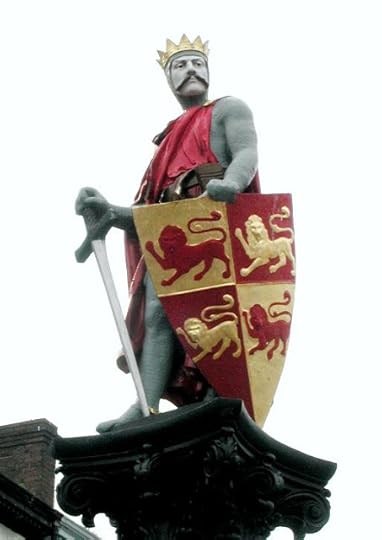
This was all at the expense of Llywelyn's first wife, who now stood condemned as a 'slave girl'. Her son, Gruffydd, was now legally 'the son of a slave girl' and brutally cast out of the succession. In an effort to get rid of him, Llywelyn later tried to send Gruffydd as a permanent hostage to the English court. Llywelyn thus only had himself to blame when Grufydd rose against him in his final years:
"Llywelyn was not in himself in a fit state of mind, weakened by the sickness of a partial paralysis, weighted down by the attack of Gruffydd his son." - Matthew Paris
"To the nobleman Lord Llywelyn of North Wales. Bringing about from us the attached petition. Certainly your petition to us showed that since some detestable custom or rather corruption has developed in the land subject to your authority - as evidently the son of the slave girl could be the heir together with the son of the free woman and illegitimate sons could obtain the inheritance just as the legitimate - you and your Lord Henry, the illustrious king of the English, beloved sons of Christ, have agreed in harmony and also furthermore with the intervening authoruty of our beloved sons, our venerable brother Archbishop Stephen of Canterbury, cardinal saint of the Roman church and also Pandulf the elect of Norwich then in those parts as official legate in the customary manner, or if the corruption of this sort contrary to divine just is to be abolished and rooted out in curing, it is required to be established that in the preceding case it henceforth in the before mentioned land [Wales] inviolably will be followed that the provisions of the law is by canonical and lawful ordinances, according to the statute of this sort as composed by you that Dafydd your son, who from Joan the daughter of Clementia and the king of England, your legal wife, should succeed in receiving your inheritance by right in your possessions..."

With the consent of Henry III and the English church, Llywelyn had abolished the custom in Wales that illegitimate children should inherit just as if they were legitimate. He did this so the pope would confirm Llywelyn's statute that his second son, Dafydd, the prince's child by Joan Plantagenet, should succeed him in all his possessions.

This was all at the expense of Llywelyn's first wife, who now stood condemned as a 'slave girl'. Her son, Gruffydd, was now legally 'the son of a slave girl' and brutally cast out of the succession. In an effort to get rid of him, Llywelyn later tried to send Gruffydd as a permanent hostage to the English court. Llywelyn thus only had himself to blame when Grufydd rose against him in his final years:
"Llywelyn was not in himself in a fit state of mind, weakened by the sickness of a partial paralysis, weighted down by the attack of Gruffydd his son." - Matthew Paris
July 3, 2019
To serve kings
Line from zer vork in progress:
"It was Master James who first recruited Hugh. He was rotting in his plain tomb now, in a discreet corner of Westminster Abbey. That was his reward for a lifetime of devoted service; to be laid to rest alongside the kings and archbishops whose secrets he had kept, and whose little problems he had induced to go away."
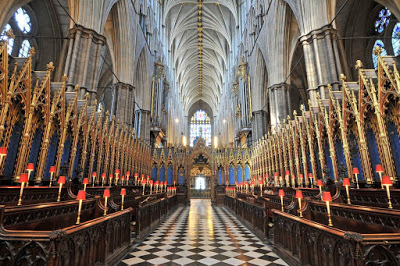
"It was Master James who first recruited Hugh. He was rotting in his plain tomb now, in a discreet corner of Westminster Abbey. That was his reward for a lifetime of devoted service; to be laid to rest alongside the kings and archbishops whose secrets he had kept, and whose little problems he had induced to go away."

July 2, 2019
A drifting wreck
Translation of a poem on the state of Flanders, composed in the late 1290s by Master Gilbert van Outere:
"Flanders, once guided by an auspicous star,
Now unrigged by storms, a drifting wreck,
Flanders, that once glittered with opulence,
Now sunk and mourns in mire and ash,
Flanders, that was always able to rule,
Now resembles a slave in rags!
How deep have you fallen! And still!
We hope that you will stand up once again and will find solace.
Say with us: let it be so!
France rejoices!
But times change,
Fate is but an unsettled thing."
"Flanders, once guided by an auspicous star,
Now unrigged by storms, a drifting wreck,
Flanders, that once glittered with opulence,
Now sunk and mourns in mire and ash,
Flanders, that was always able to rule,
Now resembles a slave in rags!
How deep have you fallen! And still!
We hope that you will stand up once again and will find solace.
Say with us: let it be so!
France rejoices!
But times change,
Fate is but an unsettled thing."
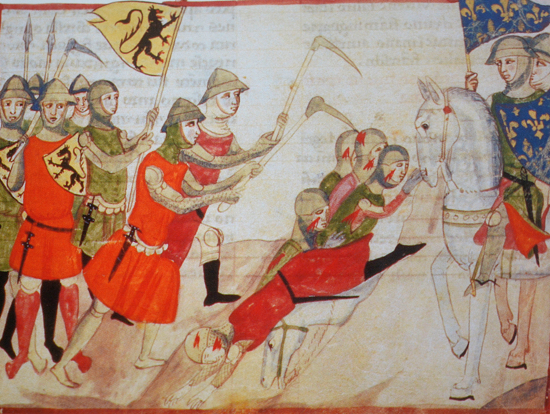
Spiked clubs
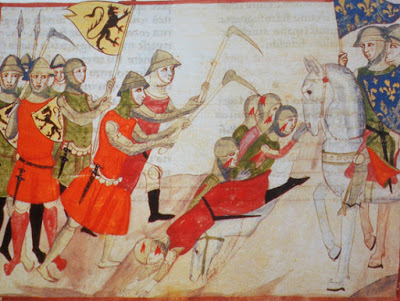
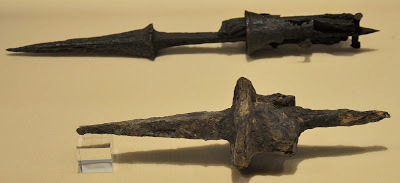
The goedendag (also rendered godendac, godendard, godendart, and sometimes conflated with the related plançon) was a weapon originally used by the militias of Medieval Flanders in the 14th century. This multi-purpose butcher's tool was essentially a combo of club and spear, a wooden staff three to five feet long, wider at one end, with a sharp metal spike inserted into this end. Ideal for men who couldn't afford expensive kit.
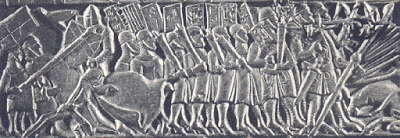
At the Battle of Courtrai in 1302, Flemish militia armed with the goedendag slaughtered hundreds of armoured French knights. That showed 'em.

At the Battle of Courtrai in 1302, Flemish militia armed with the goedendag slaughtered hundreds of armoured French knights. That showed 'em.

July 1, 2019
Balls on a platter
Line from WIP, and Hugh Longsword is guilty of staring.
“Stop ogling, Hugh,” she said calmly. “Go to the palace, or Master Burnell will have your balls on a plate. That would be a pity. I have too much use for them.”
“Stop ogling, Hugh,” she said calmly. “Go to the palace, or Master Burnell will have your balls on a plate. That would be a pity. I have too much use for them.”
June 28, 2019
Bruce Almighty (again)
A negative review of Angus McFayden's new film on Robert de Bruce. The reviews have only just started coming in, but it isn't looking good.
Robert the Bruce review on List Film
This is the fourth stab (as Bruce said to Comyn) at depicting Bruce's life in modern cinema, and none have really worked. Perhaps the best depiction is in the otherwise ridiculous Braveheart, in which Bruce is shown as a conflicted character while everyone else is playing goodies and baddies.
In my 'umble opinion, the problem lies in the basic lack of honesty in these films. A dishonest piece of art carries no conviction either, and you're left watching a silly pantomime. The adage 'it's a movie, not a documentary' simply won't wash. Give us the reality plus detail, and perhaps we will finally get a decent movie or mini-series out of this subject. It can be done: see the likes of The Devil's Crown, Shadow of the Tower and the more recent Wolf Hall.
Robert the Bruce review on List Film
This is the fourth stab (as Bruce said to Comyn) at depicting Bruce's life in modern cinema, and none have really worked. Perhaps the best depiction is in the otherwise ridiculous Braveheart, in which Bruce is shown as a conflicted character while everyone else is playing goodies and baddies.
In my 'umble opinion, the problem lies in the basic lack of honesty in these films. A dishonest piece of art carries no conviction either, and you're left watching a silly pantomime. The adage 'it's a movie, not a documentary' simply won't wash. Give us the reality plus detail, and perhaps we will finally get a decent movie or mini-series out of this subject. It can be done: see the likes of The Devil's Crown, Shadow of the Tower and the more recent Wolf Hall.