
Pamela D. Toler's Blog, page 32
March 9, 2023
Talking About Women’s History: Three Questions and an Answer with Susan Ware
A pioneer in the field of women’s history and a leading feminist biographer, Susan Ware is the author and editor of numerous books on twentieth-century U.S. history. Educated at Wellesley College and Harvard University, she has taught at New York University and Harvard, where she served as editor of the biographical dictionary Notable American Women: Completing the Twentieth Century (2004). Ware has long been associated with the Schlesinger Library at the Harvard Radcliffe Institute, most recently as the Honorary Women’s Suffrage Centennial Historian. From 2012-2022 she served as the general editor of the American National Biography. She is currently writing a book about feminist biography and preparing two volumes on Eleanor Roosevelt for the Library of America.
Take it away, Susan!

You are one of the second wave feminist historians who helped create women’s history as an academic discipline. What sparked that interest for you? And did you face institutional challenges in addition to all the other challenges that confront someone writing about women in the past?
My interest in history was sparked by growing up as a voracious reader—I always had a book in my hands (still do). My interests vacillated between literature and history but in college I tilted towards history. This was the late 1960s, so it was very much “men’s” history, even at the women’s college I attended. But in 1970 I became aware of the powerful ideas of modern feminism, which caused me to ask “where are the women in history?” I never looked back. One institutional difference between my career and those of other, slightly older second-wave women’s historians is that they often started their careers in another field like Russian history (Linda Gordon), diplomatic history (Blanche Wiesen Cook), or colonial history (Linda Kerber) and then switched to women’s history, whereas I applied to graduate school in 1972 with the stated purpose of studying women. Why Harvard admitted me given their hostility to women’s history then and for many years after (talk about a chilly academic climate!) has always been a puzzle, but I thrived once I discovered the resources of the Schlesinger Library at Radcliffe and found mentors like Barbara Miller Solomon. Fifty years later I’m still at it.
You’ve written about a lot of interesting women. Do you have a favorite?
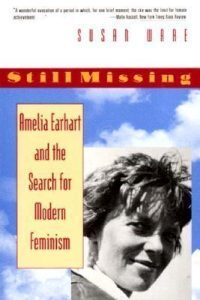
When Martha Graham was asked her favorite role, she would reply “the one I am dancing now.” Babe Didrikson Zaharias said the same thing about sports. I have always felt that way about my subjects, especially the biographical ones: my favorite is the one I am writing about now. But if I had to choose, it would be Amelia Earhart. I published Still Missing: Amelia Earhart and the Search for Modern Feminism thirty years ago and yet whenever I am asked to talk about her, I find myself just as excited and engaged as when I was researching the book. This is a good thing, actually, because I still am fielding calls, requests for interviews and lecture invitations on Earhart on a regular basis – and probably will until they find her plane. Such is her enduring hold on popular culture, whose coattails I have been delighted to ride.
For a book like Why They Marched, in which you look at a group of women, how did you chose which women to include?
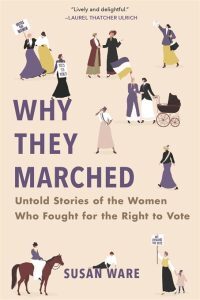
Why They Marched, my recent book on the women’s suffrage movement timed to the centennial of the Nineteenth Amendment, is a collection of nineteen portraits (the actual term is prosopography, but that’s too much of a mouthful) designed to capture the experiences of rank-and-file suffragists who made the vote happen in localities across the country. Biography –telling stories – is a perfect way to make the history come alive. I steered clear of national leaders (although I did include Susan B. Anthony) and tried to chose a range of subjects who represented the broad diversity of the movement in terms of chronology, geography, race, class, sexual identity and age. In addition I wanted to include a male suffragist as well as a female anti-suffragist. It was one huge balancing act but great fun too. Many of the subjects had some connection to the Schlesinger Library at Radcliffe, which has been my go-to library since graduate school. In many ways Why They Marched is a love letter thanking the Schlesinger Library for what it has meant to my career.
A question from Susan: During an intense few months in 1970 I was introduced to the powerful ideas of modern feminism by reading Betty Friedan’s The Feminine Mystique, Simone de Beauvoir’s The Second Sex, and Doris Lessing’s The Golden Notebook. Have you ever had a comparable life-changing feminist experience?
I was thirteen, going on fourteen, in 1972. I had already had the confusing experience of people telling me, on the one hand, that I was smart enough to do anything I wanted and, on the other hand, that there was a whole universe of things I couldn’t do because I was a girl. Then, seemingly all at once, the world changed with the passage of the Civil Rights Act, and Title XI in particular. For a brief, giddy time it seemed like anything was possible. That all the doors were open. I soon learned that wasn’t true: that some doors were still closed, and others were nominally open but had gatekeepers intent on keeping me from coming through them. But I never lost that sense of possibility—and I developed a taste for hip-checking my way through closed doors.
***
Want to know more about Susan Ware and her work? Check out her website at https://www.susanware.net/
***
Tomorrow it will be business as usual here on the Margins with a women’s-history- related blog post from me. But we’ve still got more people talking about women’s history from a lot of different angles next week. Don’t touch that dial!


March 8, 2023
Talking About Women’s History: Three Questions and an Answer with Elisabeth Griffith
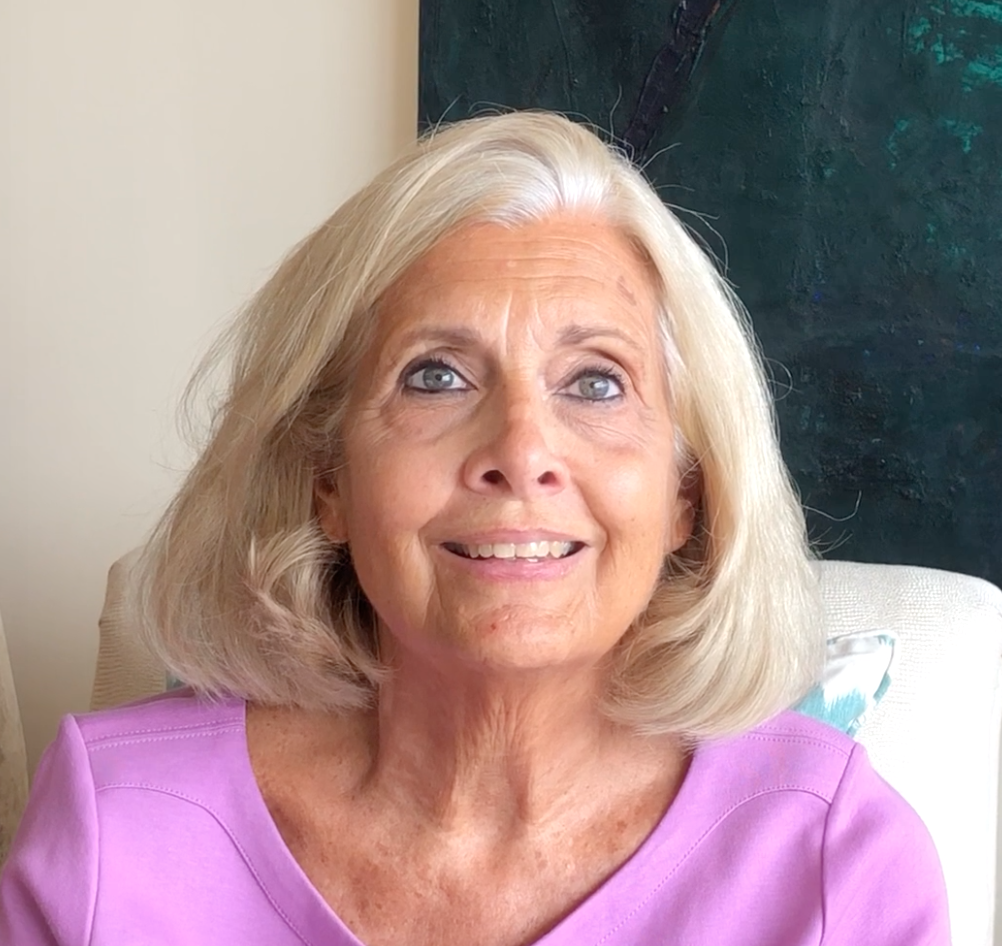
Historian Elisabeth Griffith is an academic, activist, author, and expert on American women’s history. Her biography of suffragist Elizabeth Cady Stanton, IN HER OWN RIGHT, was hailed by both Oprah and the Wall Street Journal as “one of the five best books on women’s history.” It was the basis of Ken Burns’ documentary on Stanton and Anthony, NOT FOR OURSELVES ALONE, his only film about women’s history.
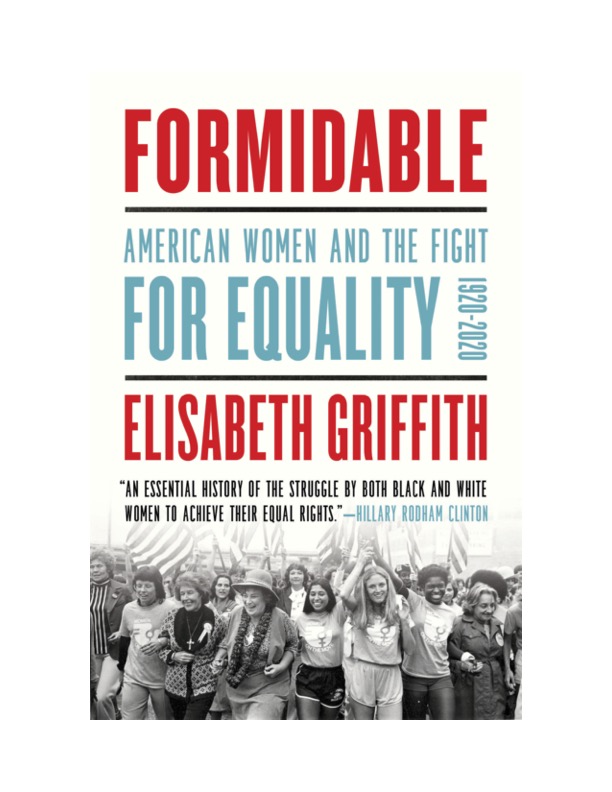
According to the Los Angeles Times, Betsy’s new book, FORMIDABLE: AMERICAN WOMEN AND THE FIGHT FOR EQUALITY, 1920-2020, is a “thorough and thoughtful” account of the struggles of white and Black women to expand their rights. The New York Times review found FORMIDABLE an “engaging, relevant, sweeping chronicle. [Griffith delivers a] multiracial, inclusive timeline of the struggles and triumphs of both Black and white women. A profoundly illuminating tour de force.”
A graduate of Wellesley College with a doctorate from American University, Betsy has been teaching women’s history for forty years. She marched for women’s rights in the 1970s with the National Women’s Political Caucus, before she led the Women’s Campaign Fund, a forerunner of Emily’s List. Her twenty-two-year tenure as headmistress of the Madeira School, a girls’ boarding and day school in McLean, Virginia, earned the Washington Post’s Distinguished Educational Leadership Award. A member of the Society of American Historians and Veteran Feminists of America, she has been a Kennedy Fellow at Harvard and a Klingenstein Fellow at Columbia.
Take it away, Betsy!
One of the questions I’m fascinated with right now is how biographers name their subjects, particularly when writing about a woman. You briefly discuss that subject in the introduction to Formidable. Where do you come down on the first name/last name question, absent any complicating factors?
When writing about the lives of men, biographers don’t have to worry about what to call their subjects. George Washington advanced from young George to Master George to Lieutenant Washington to General to Mr. President. He was always George Washington. In comparison, his wife was born Martha Dandridge, took her first husband’s name, and became the Widow Custis. When she married George, she was the General’s Lady. After her husband’s election, she was frequently called Lady Washington. The term “First Lady” appeared in 1838 and referred to Martha Washington.
The only name most women keep is their first. They exchange their fathers’ names for that of their husbands. For a married woman to keep her “birth” or “maiden” name was once both illegal and an act of feminist rebellion. Elizabeth Cady Stanton combined her father’s and husband’s names; Lucy Stone refused to take Henry Blackwell’s name. Neither woman vowed to obey their husbands. When Massachusetts granted limited local suffrage to women in 1879, the state insisted that Stone register in her married name. She refused, and never voted.
Francis Perkins, FDR’s Secretary of Labor, was another member of the “Lucy Stone League” of women who kept their birth names. Today, 68.5% of women take their partner’s names, even in 49% of LGBTQ marriages; 22% keep their birth names, and 8.9% use hyphens or create a new surname. The number of women keeping their own names is increasing among highly educated and high earning women, those who marry later, celebrities, and women committed to their personal “brand.” Maybe those women expect to become the subjects of biography.
Biographers of women who adopt married names, possibly more than once, face the naming quandary. Using only their first names, for consistency, seems disrespectful or dismissive once they become adults. To call married women by their married names leads to confusion with their husbands. For clarity in my biography of Elizabeth Cady Stanton, I call my subject Stanton and referred to her husband as Henry.
The more important issue is the act of naming women. “Say Her Name!” was the entreaty and demand of Black activists, that we acknowledge the Black women as well as the men who were victims of police violence. Historians of women want more women to be visible, remembered, respected, incorporated into the canon and included in the curriculum. While more and more notable women are being introduced to students and general readers, there are even more women whose names we will never know.
· Those of Native women whose tribes were by murdered by conquerors or germs or famine and whose descendants’ names were changed in government boarding schools.
· Those who were seized, enslaved, packed into slave ships, auctioned, raped, tortured, forced to give up their children, given the names of their owners, whose descendants fought for their rights for decades, with toilet paper and toothbrushes in their purses, anticipating beatings and jail.
· Women who crossed the plains, whose deaths are still marked by a cairn of stones.
· Women who worked in shoe factories or textile mills whose names only appear in census records or city directories.
· Immigrants whose names were misspelled on ship manifests or at border crossings.
Whether we know their names or not, we need to acknowledge the contributions women made to the creation of our country.
There are too many to name.
Do you think Women’s History Month is important and why?
It started with a week and it was never enough. Not enough time to recover and incorporate the lives and stories of the people ignored by the general narrative. That narrative, like all history, “was written by the winners,” who, in America, were mostly white men: the explorers, exploiters, frontiersmen, military leaders, statesmen, inventors, entrepreneurs, and politicians.
Over time, the American story became more inclusive and accurate as more perspectives were included and more primary sources were uncovered. Some accounts were lost with their original languages. Some were never written down by people forbidden to read or write. Other potential narrators were too poor or overworked to leave a record. Many were purposely ignored or silenced.
American history became more inclusive after the Second World War, when the mostly white beneficiaries of the GI Bill used its benefits to attend college. If they enrolled in history graduate school, these “social historians” wrote about soldiers, immigrants, factory workers, and farmers, still mostly men, but widening the lens.
To recover lost Black voices, Carter G. Woodson founded the Journal of Negro History in 1916. He published articles about slavery and professors from Fisk University collected stories from its survivors. On February 7, 1926, Woodson established Negro History Week. “If a race has no history, it has no worthwhile tradition,” he declared, “it stands in danger of being exterminated.”
Black communities had been honoring Lincoln since his assassination and segregated schools in Washington, DC, dedicated another day in February to teaching about Frederick Douglass. Woodson wanted to honor more than great men. Encouraged by Black churches and newspapers, by 1929 cities and states with sizable Negro populations adopted sundry teaching plans and classroom materials. By the end of the 1960s, Black history was offered more widely. During the 1976 celebration of the Bicentennial, President Gerry Ford recognized the value of Black History Month.
When draft boards denied academic deferments during the Vietnam war, graduate programs admitted more women. If they pursued women’s history, they confronted scarce source material. In 1970, Laura X, who like Malcolm X would not use her “owner’s name,” established the Women’s History Research Center, to collect archival materials and promote women’s history as an academic field. Credited with coining the term “herstory,” she launched a campaign to commemorate women’s history.
In 1978, a California county Commission on the Status of Women organized a Women’s History Week, to correspond with International Women’s Day, March 8. In 1980, President Carter made the week a national celebration. In 1987, the Congress created Women’s History Month. May became Asian-Pacific Islander Month and Jewish American Heritage Month. Hispanic History Month spans September and October, to incorporate what used to be known as Columbus Day and is now Indigenous People Day. Franklin Roosevelt established Columbus Day in 1937, to appeal to Italian American and Catholic voters. Politics has long played a role in how we acknowledge our past. The Daughters of the Confederacy rewrote the history of slavery and the Civil War into a cavalier myth of the Lost Cause.
All of these Americans, all of their stories, positive and negative, deserve more than a few weeks of attention. Our schools need to incorporate these narratives into lesson plans, and confront political pushback with facts. Every American deserves to know our whole history, in its full, rich, diverse, flawed, and glorious complexity.
You have spent your career teaching women’s history at a secondary and college level. What aspects of women’s history surprise your students most? What outrages them?
I’m passionate about teaching women’s history, as the length of my answers to earlier questions might indicate. I find it hard not to add one more fact or footnote.
I’m fortunate to have graduated from a women’s college at the cusp of the revival of the women’s movement in the 1970s. I had no classes in women’s history in any school I attended, although I did write a paper about mid-nineteenth century divorce and custody laws in a British history course. Noted historian Lady Antonia Fraser has expanded on that topic in her latest book, The Case of the Married Woman: Caroline Norton and Her Fight for Women’s Justice (2022).
But the combination of an institution led by women, in which students were challenged to use their brains and their leadership skills, and the energy exploding out of civil rights, anti-war and women’s rights protests fueled my interest in learning more. I moved to Washington, DC, enrolled in graduate school, and volunteered for the National Women’s Political Caucus.
The Caucus has been founded in 1971 as a bipartisan organization to elect more women and ratify the Equal Rights Amendment. Record keeping was casual and recollections were contradictory. In one creation myth, the first meeting of the NWPC was in a chapel on a junior college campus in DC. None of the organizers or the journalists covering it or anyone else knew enough women’s history to recognize the parallel to the first formal women’s rights convention in America, held in a Methodist chapel in Seneca Falls, NY, in July 1848.
I signed on, marched, lobbied, and was shouted at by both Bella Abzug and Betty Friedan. My actual tasks were more mundane. In anticipation of the first NWPC national membership gathering, in January 1973, I was put in charge of creating a backdrop behind the podium. This was long before “pipe and drape” setups or electronic screens displaying an organization’s logo. After I secured an American flag and some ficus trees, the setting still seemed anonymous. I wanted to signal that fighting for women’s rights was not a new proposition.
My search took me to the Smithsonian National Museum of American History, where I met the curator of political history, Edie Mayo. She led me into the back rooms where drawers held photographs of the founding feminists. I recognized Elizabeth Cady Stanton, Susan B, Anthony, Lucretia Mott and Sojourner Truth, but not Matilda Jocelyn Gage, Francis Ellen Watkins Harper, Carrie Chapman Catt, Ida B. Wells, Mary Church Terrell, or so many other unacknowledged foremothers.
We reproduced and enlarged the black-and-white photos of these old, wrinkled, care worn, unsmiling women, mostly wearing business black, and shipped them off, to post behind the podium and across the stage. Identifying them became an pop quiz.
Meanwhile, I’d chosen my dissertation topic, a biography of Elizabeth Cady Stanton, the principal organizer, with Lucretia Mott, of the 1848 convention. Stanton was the first to demand voting rights for women. In the history department at my university, there were no specialists in American women’s history. The only female, tenured, full professor was an expert on ancient Greece, but she was an ally and served as the only woman on my dissertation committee.
I was also teaching part-time at an independent girls’ high school, because it did not require a teaching certificate. I got the job because the head of the English department, who had been my teacher in public school in Michigan, introduced me to the head of the history department. We were all alumnae of the same women’s college. I was invited to reach a course about US politics, which allowed me to cover women in politics and in the streets. The Congress had passed the Equal Rights Amendment after Martha Griffiths (D-Michigan) freed it from the House Judiciary Committee, where it had been held hostage since 1943. The Supreme Court had decided Roe. Phyllis Schlafly had not yet joined the fray.
My new boss found funding for me attend the Berkshire Women’s History Conference. Founded in 1930 by women who felt marginalized in a profession dominated by white men, the “Berks” began as a series of weekend retreats in the Berkshire Mountains. It was reinvigorated in 1973 at Douglass College, Rutgers University. I returned, inspired if unprepared to teach one of the first women’s history courses at the high school level.
I’ve been teaching women’s history ever since – to diverse audiences, to boys and girls, to men and women, to Girl Scouts, high school students, undergraduates, women running for office, adults in lecture halls and bookstores, at corporate retreats, at dinner tables, with speeches, in books, articles and media appearances. The responses are always the same. “OMG! Who knew?” It’s a challenge, especially for young people, to imagine the lives of women decades or centuries ago – the lack of rights, the physical hardship, the early deaths brought on by exhaustion and childbirth, the lack of opportunity, the constricting clothing and confining laws. People find women’s history engaging, compelling, outraging, and empowering. It is.
A question from Elisabeth: What is the role of political leaders in defining the purpose and content of teaching American history?
In the best of worlds, I believe political leaders should play no role in defining the purpose and content of teaching American history—or any history for that matter. In prior years we left plenty of people out of the historical picture in the classroom, and we were all the worse for it. But that neglect was a result of cultural blindness, not a matter of official policy. Turning curricula into political battlegrounds is not the answer.
* * *
Want to know more about Elisabeth Griffith and her work? Check out her website: https://www.elisabethgriffith.com/
***
Come back tomorrow for three questions and a answer with historian Susan Ware.
March 7, 2023
Talking About Women’s History: Four Questions and an Answer with Eileen Bjorkman
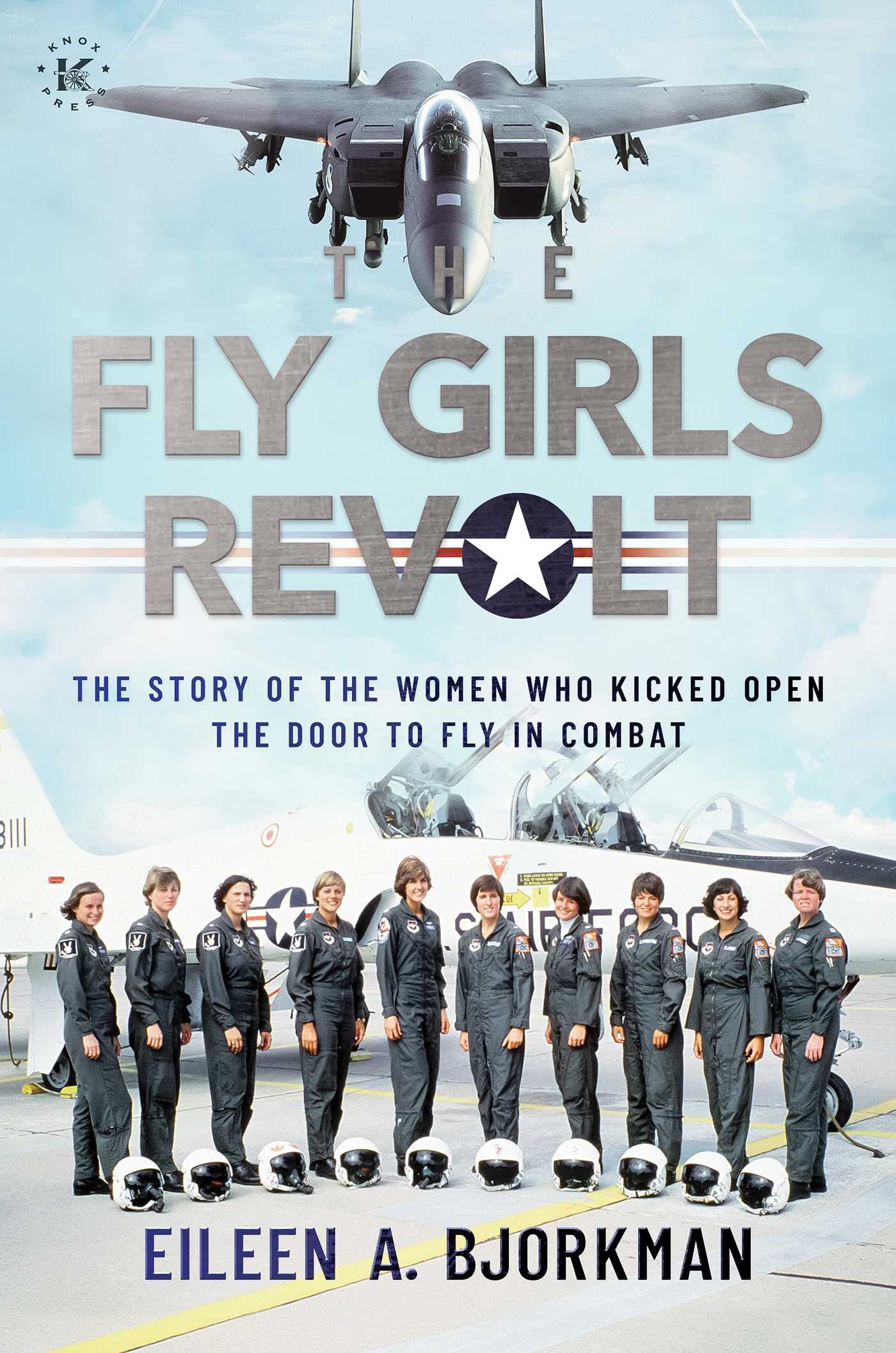
Eileen Bjorkman is a writer and retired Air Force colonel. She is the author of three books, including The Fly Girls Revolt: The Story of the Women Who Kicked Open the Door to Fly in Combat, which will be released in May. She has also had numerous articles and essays published in many outlets, including The Washington Post, Time.com, Air & Space, and Aviation History.
Take it away, Eileen!
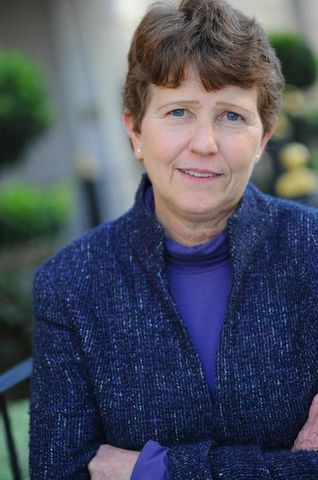
What inspired you to write The Fly Girls’ Revolt?
I’ve read a lot of recent memoirs about women who have flown in combat in the past 20 years or so. And there are plenty of books about the Women Airforce Service Pilots in World War II, a group of about 1,000 civilian women who ferried military aircraft and did other support flying during the war. But there are almost no books about the women of my generation who served in the military in the 1970s and 1980s. This is the first generation of women who trained as military pilots, but could only fly support aircraft. These women led the charge to open the door in 1993 to allow women to fly combat aircraft. The full story that gives credit to everyone involved in making the change has never been told, so I wanted to tell that story. And the story isn’t just about women aviators; it’s about all the women who served and proved they belonged, along with those who supported them along the way, such as members of Congress and lawyers, including an unknown lawyer in the 1970s, Ruth Bader Ginsburg.
We’re all familiar with the challenges of finding sources for writing about women from the distant past. What are the challenges of writing about women from the late twentieth century?
The biggest challenge I had was finding materials in archives. A lot of material from that time period in military archives is still marked “For Official Use Only” or is still considered classified, even if the normal 25 year point for declassification has passed. I likely could have accessed some of the materials I wanted if I’d had time to file FOIA (Freedom of Information Act) requests, but I was on a tight timeline because I wanted to get the book published to coincide with the 30th anniversary of opening the door to combat in 1993. I’m not sure it made that much difference overall because I was able to learn much of what I needed by interviewing women, but some of the official sources would have been nice for fact checking and providing another perspective. Another challenge was that some of the archival material I used was recently donated and hadn’t yet been organized. I had to examine every single document in about a dozen boxes to see if it had any relevance to my research. I enjoyed looking at all the documents, but again, I was short on time, so some better organization might have helped. Last, a lot of the archival materials had maiden names in them, so I sometimes had to chase down who was who and what their current name was if I needed more information or wanted to check something. Fortunately, the Women Military Aviators association was able to help me find most of the women.
Did your own experience as a military aviator shape the writing of The Fly Girls’ Revolt?
Yes, definitely. I was a flight test engineer, not a pilot, and because of that, I was able to fly in the back seat of fighter aircraft because the airplanes we used for testing weren’t considered combat aircraft. From my own experiences, I knew that women were fully capable of flying combat aircraft, so I was a big proponent of opening the door, even though it didn’t impact me personally. I followed the news on women aviators very closely, and I knew some of the women who were working hard to get into combat. Knowing the basic story and some of the women helped shape my research from the beginning, as I knew which events I wanted to cover. I of course discovered some other things during my research that I included, but knowing the basic outline helped me focus. I also knew that I wanted to put myself into the story in a few places since I had the experience of being one of a handful of women who flew in fighters before it was allowed. I wanted to talk about some of the issues I encountered, as well as my ability to navigate the fighter and test pilot cultures to be part of the team.
What was the most surprising thing you’ve found doing historical research for your work?
I’d have to say it was learning that some things were not exactly the way I remembered them from the 1980s. I had some misperceptions about the Reagan administration’s attitudes towards women in the military because of what I’d observed as a young woman. I found during my research that I was wrong. I also learned things about one of the main characters that led me to write about her in a different way than many writers have previously. Having access to original source documents was very helpful in changing my mind about how to portray certain events and people. I think the biggest lesson learned is that, even if you’ve lived something, you still need to do research!
A question from Eileen: Why is it important to tell the stories of historical women today?
It’s really pretty simple. In her book, Headstrong, journalist Rachel Swaby describes the process of treating historical women scientists as scientists rather than anomalies or moonlighting wives and mothers as “revealing a hidden history of the world.” That’s true whether you are talking about scientists, or activists, or aviators, or journalists, or artists, or factory workers. When you put half the population back into history, you get a very different story.
* * *
Want to learn more about Eileen and The Fly Girls’ Revolt?
Check out her website: https://eileenbjorkman.com
Follow her on Twitter: @AviationHistGal
Follow her on Facebook: https://www.facebook.com/AviationHistGal/
* * *
Come back tomorrow for Three questions and an answer with historian and activist Elisabeth Griffith
March 6, 2023
Talking About Women’s History: Three Questions and an Answer with Sara Fitzgerald
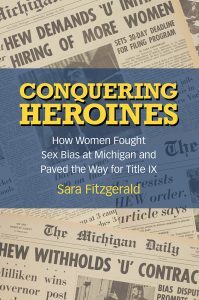
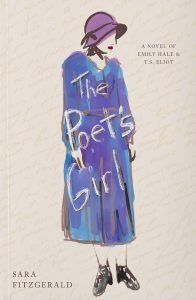
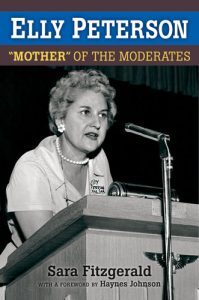
Sara Fitzgerald is an author and retired journalist who has been researching the untold stories of little-known women since she earned a bachelor’s degree in honors history from the University of Michigan in 1973. Her journalism career included 15 years as an editor and new media developer for The Washington Post. In 2020, the University of Michigan Press published her book Conquering Heroines: How Women Fought Sex Bias at Michigan and Paved the Way for Title IX in connection with the 50th anniversary of the so-called “HEW complaint” and the 150th anniversary of the admission of women to Michigan. Fitzgerald covered the complaint as a staff member of The Michigan Daily, the U-M student newspaper; in 1972, she became the first woman to serve as its editor in chief. In 2013, Fitzgerald contributed a project on the Michigan complaint to Volume 17 of “Women and Social Movements in the United States: 1600-2000.” Fitzgerald is also the author of a biography, Elly Peterson: ‘Mother’ of the Moderates (University of Michigan Press, 2011), which was recognized by the Historical Society of Michigan and as a Notable Book of the Year by the Library of Michigan. She is also the author of the 2020 novel The Poet’s Girl, and now is completing a biography on the subject of that novel, Emily Hale, the longtime secret muse of the poet T. S. Eliot.
Take it away, Sara!
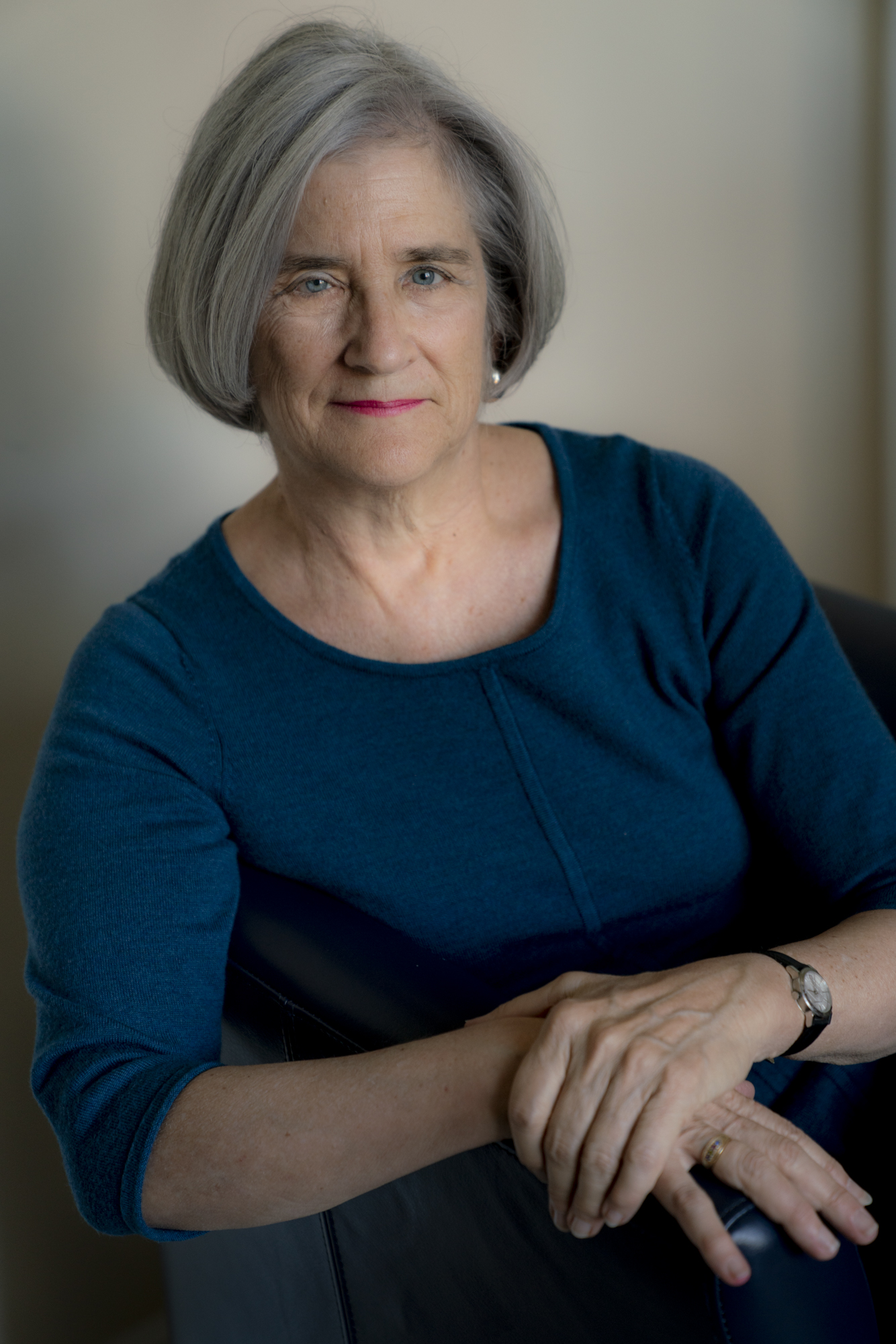
When did you first become interested in women’s history? What sparked that interest?
I attended the University of Michigan between 1969 and 1973. It was a time of great turmoil on campus—and a time of great change for women. It was during those years that Ms. Magazine was created, the National Women’s Political Caucus was founded, the Equal Rights Amendment first cleared Congress, and the Supreme Court affirmed the reproductive rights of women in its Roe v. Wade decision. At the end of my freshman year, a group of women filed a sex discrimination complaint against the university that was ultimately successful in forcing Michigan to change some of its long-standing, discriminatory practices. At that time, it was revealed that admissions officers had imposed a quota of 55 percent men: 45 percent women for my freshman class, because they were concerned about what one described as a potential “over-balance” of women in my class because women had been out-performing men in high school.
I started off as a journalism major, but by my junior year, I decided to make history my main field of study. It was a time when women professors were eager to research and teach topics related to women’s lives, even if they had to hold the courses in their living rooms, as one of my professors was forced to do. Within a few years, these professors established the Women’s Studies Program at Michigan.
I was lucky to get to know Kathryn Kish Sklar, a pioneer in the field of women’s history. (Kitty’s biography of Catherine Beecher was a finalist for the National Book Award for Biography in 1974.) As I pursued my courses in history, I always looked for a fresh topic related to women to research and write my papers about. The summer before my senior year, I read Nancy Milford’s ground-breaking biography of Zelda Fitzgerald and decided to write my senior thesis on the flapper phenomenon. When I retired from a career in journalism and public policy work and looked around for what to do next, I realized how much I had enjoyed researching and writing about the lives of women, and returned to those roots.
Did you have a woman (or group of women) from the past who inspired you as a child?
My parents were moderate Republicans, and in 1964, I was watching television coverage of the Republican National Convention when I was astounded to see network correspondents interviewing a woman named Elly Peterson. I think I took note of her because it was so rare to see a woman on the political stage back then, and I was proud that she came from my home state of Michigan. At that time, she was the highest ranking woman in the national Republican Party, she was running for a Senate seat from Michigan, and she was about to become the first woman to address a national presidential convention in prime time. She did not win her Senate race, but she got on my radar screen. During my college years, she became one of the Republican leaders of the National Women’s Political Caucus after it was founded. Then in 1976, she was recruited, along with Democrat Liz Carpenter, to chair ERAmerica, the coalition of groups that was organized to work for ratification of the Equal Rights Amendment, to try and counter the opposition of Phyllis Schlafly.
As fate would have it, I got to meet Peterson a few years later when she moved to the same retirement community in North Carolina where my parents lived. She was a true “people” person, friendly and outgoing, and later sent me some “fan mail” about a novel I wrote at the time.
When I retired earlier than I had expected, I reflected that she was one of those little-known women of our history who deserved to be better known. She had since moved to Colorado, but I was able to track her down and explore whether she was interested in working with me. In the end, I wrote her biography. She was supportive of the project, but it was not an “authorized” biography, per se. But it was a very satisfying project, and I was only sorry that I was not able to complete the book before she died—two days after Hillary Clinton formally ended her first presidential campaign in 2008.
How does your experience as a journalist inform your work as a biographer?
Biographers need to get inside the heads of their subjects, but I find I have to push myself to go beyond the known facts of a person’s life. I am currently working on a biography of Emily Hale, the longtime secret love of the poet T. S. Eliot. I previously wrote a novel about her, but after their lengthy correspondence was opened in 2020 after a fifty-year embargo, I decided to write a more traditional biography. So I’m now trying to be more careful about what is known about her and what is just speculation—or taken as fact because Eliot wrote it. Most of the scholars who are writing about Hale and Eliot come from the discipline of English literature and are primarily interested in analyzing Hale’s impact on Eliot’s poetry and plays—an approach that is much more subjective, I think, than historical analysis. I’ve also come to realize that because Hale was, by nature, a very private, reticent person, her story was ultimately written by others, some of whom got significant facts wrong or distorted her motivations. I think my experience as a journalist motivated me to try and “set the record straight.” I think I’ve also been able to use my reporting skills to turn up new details about her life and “connect the dots” in fresh ways.
A question from Sara: As a professional historian who seeks to translate history for popular audiences, what are your thoughts about how history is being taught—or not being taught—in schools and colleges today?
Not an easy question, and no easy answers.
That said, I think as a group, the United States has not done a good job of teaching history in a way that includes our nation as a whole.* That is the reason that Women’s History Month, Black History Month and all the other ethnic heritage months exist. It is also the reason groups like the Remedial Herstory Project exist —to provide teachers with resources about historical subjects that are not included in classroom textbooks.
I am heartened by the numbers of people who are struggling to confront the parts of our history that we never learned. I cheer whenever I visit a museum that explicitly expands the story to include the uncomfortable parts, as well as adding women and and people of color back into the narrative. It is hard and it is uncomfortable. Over and over I am confronted by the blind spots in my own historical knowledge, and the accompanying pain in the pit of my stomach.**
At the same time, I am tremendously distressed by attempts to make whitewashing history a matter of policy rather than of collective cultural blindness, as well as by the attempt to gut or remove history departments.
*With the acknowledgement to my non-American readers, I’m going to be talking only about the United States here.
**If you are interested in a thoughtful discussion of this subject, I strongly recommend A More Just Future by Dolly Chugh. If you want to read an account of American history that deals directly with our collective blind spots, On Juneteenth by Annette Gordon-Reed is a wonderful entry point.
* * *
Want to know more about Sara Fitzgerald and her work?
Check out her website: www.sarafitzgerald.com
Check out her blog: Notes from a Chronicler of Little-Known Women https://sarafitzgeraldcom.wordpress.com/
* * *
Come back tomorrow for four (!) questions and an answer with Eileen Bjorkman, author of The Fly Girls Revolt
March 3, 2023
Women in World War II: “French Army Drafts Plan to Enlist Women”
For the last few years, I’ve spent a lot of time reading and re-reading old issues of the Chicago Tribune, between 1919 and the end of the Second World War in pursuit of the subject of my current book. And as those of you who been with me on this journey know, in doing so I’ve stumbled across stories that don’t belong in the book but are too good not to share. (I’m looking at you, Fiume.)
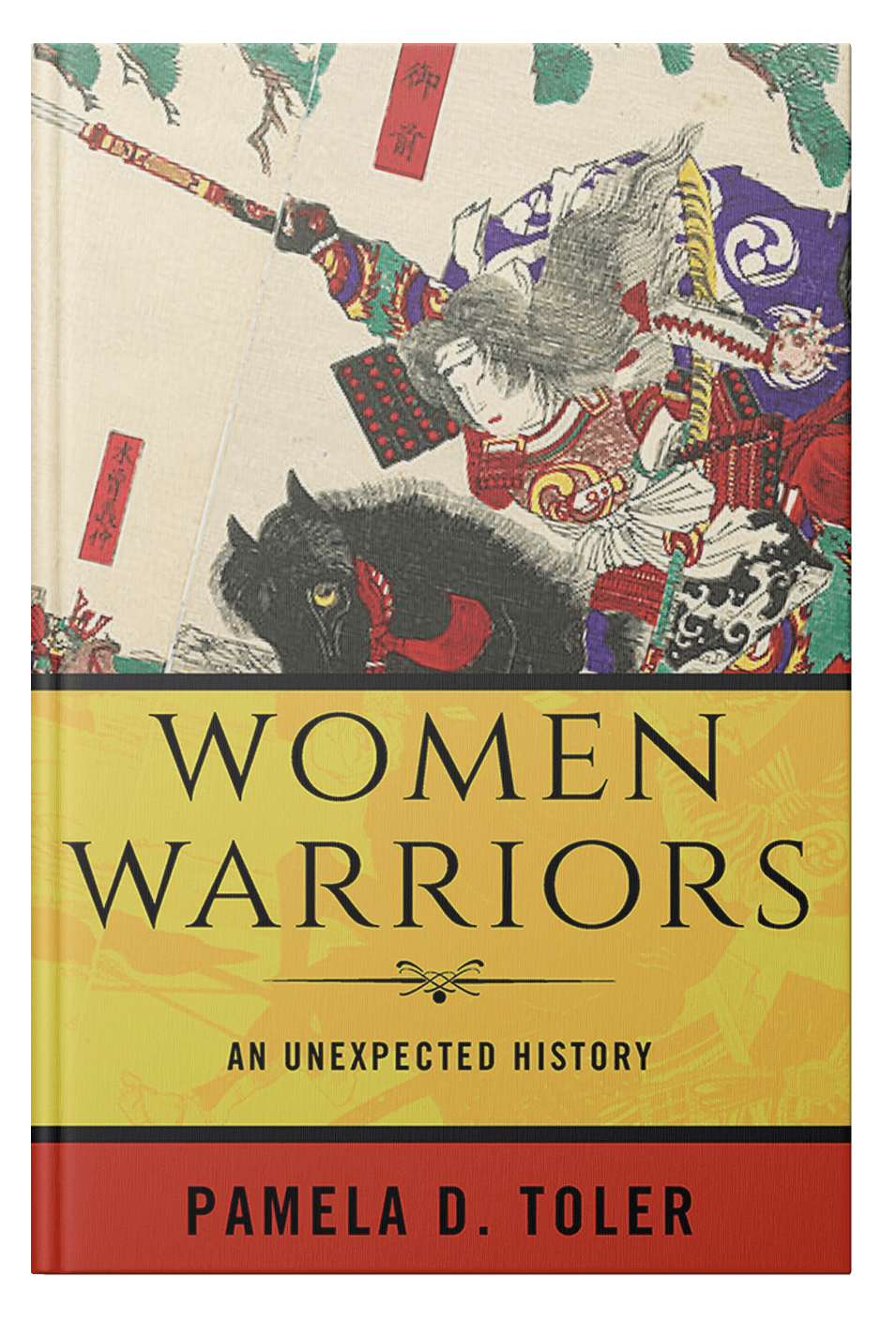
Most recently I found a small article—a total of four sentences—that had more to do with my last book, Women Warriors, than with my current book.
One thing I discovered as I worked on that book is that periods of national crisis open up spaces in which women are able to play roles that society otherwise might not have allowed them to play. The Second World War offered unprecedented opportunities for women to enlist in the armed services. Great Britain, the United States and Germany all had women in uniform providing support services to their forces. Several hundred thousand women actively fought in the Soviet Union’s army LINK as snipers, machine, gunners, tank crews, and antiaircraft personnel, not to mention as bombers, fighter pilots and navigators. (Who sayss wome ndon’t go to war?)
But what about France, you ask?
According to an article in the Chicago Tribune, on May 22, 1940, the French premier, Paul Reynaud, announced that French women between the ages of 21 nd 55 could now enlist as female auxiliaries of the armed forces—the French equivalent of WACs, WAVEs, WRENs and the like. Even if women swarmed the enlistment offices the next day,* it was too late for them to make a difference. German troops had crossed the border into the Ardennes on May 12 and were fighting their way toward Paris, which they occupied on June 14.
Personally, I like to think that many of the women who would have donned neat uniforms and “freed up a man to fight” instead became members of the Resistance.**
*Which they might well have done. They certainly hurried to sign up as Red Cross volunteers in the weeks after France and Britain declared war on Germany on September 3, 1939.
**If you’re interested in one woman’s involvement in the French resistance, I recommend The General’s Niece: The Little-Known DeGaulle Who Fought to Free Occupied France by Paige Bowers.
Come back on Monday for 3 Questions and an Answer with journalist and biographer Sara Fitzgerald who’s been researching untold stories of women since 1973.
“French Army Drafts Plan to Enlist Women”
For the last few years, I’ve spent a lot of time reading and re-reading old issues of the Chicago Tribune, between 1919 and the end of the Second World War in pursuit of the subject of my current book. And as those of you who been with me on this journey know, in doing so I’ve stumbled across stories that don’t belong in the book but are too good not to share. (I’m looking at you, Fiume.)
Most recently I found a small article—a total of four sentences—that had more to do with my last book, Women Warriors, than with my current book.
One thing I discovered as I worked on that book is that periods of national crisis open up spaces in which women are able to play roles that society otherwise might not have allowed them to play. The Second World War offered unprecedented opportunities for women to enlist in the armed services. Great Britain, the United States and Germany all had women in uniform providing support services to their forces. Several hundred thousand women actively fought in the Soviet Union’s army LINK as snipers, machine, gunners, tank crews, and antiaircraft personnel, not to mention as bombers, fighter pilots and navigators. (Who sayss wome ndon’t go to war?)
But what about France, you ask?
According to an article in the Chicago Tribune, on May 22, 1940, the French premier, Paul Reynaud, announced that French women between the ages of 21 nd 55 could now enlist as female auxiliaries of the armed forces—the French equivalent of WACs, WAVEs, WRENs and the like. Even if women swarmed the enlistment offices the next day,* it was too late for them to make a difference. German troops had crossed the border into the Ardennes on May 12 and were fighting their way toward Paris, which they occupied on June 14.
Personally, I like to think that many of the women who would have donned neat uniforms and “freed up a man to fight” instead became members of the Resistance.**
*Which they might well have done. They certainly hurried to sign up as Red Cross volunteers in the weeks after France and Britain declared war on Germany on September 3, 1939.
**If you’re interested in one woman’s involvement in the French resistance, I recommend The General’s Niece: The Little-Known DeGaulle Who Fought to Free Occupied France by Paige Bowers.
Come back on Monday for 3 Questions and an Answer with journalist and biographer Sara Fitzgerald who’s been researching untold stories of women since 1973.
March 2, 2023
Talking About Women’s History: Three Questions and an Answer with Nancy Kopp
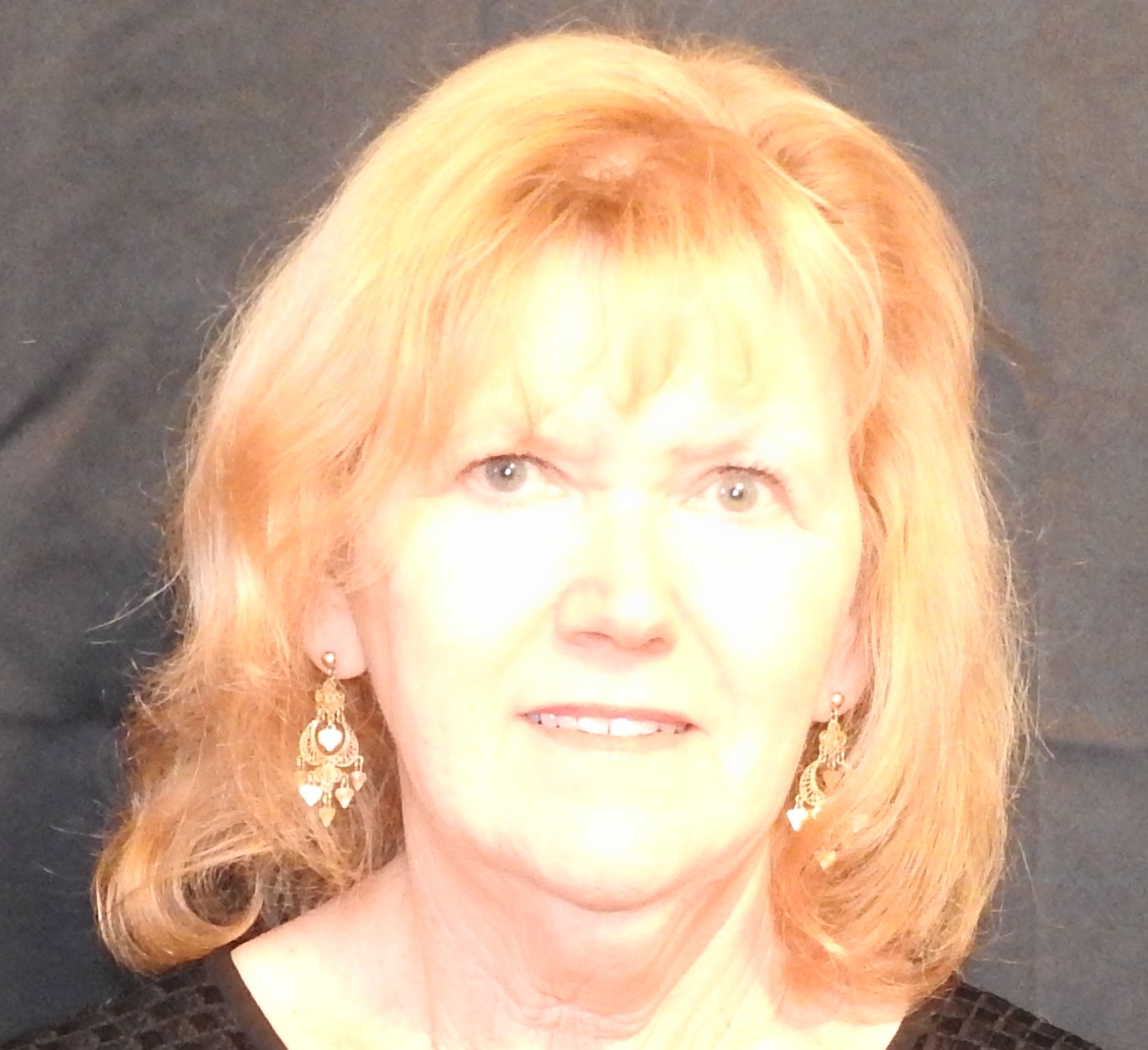
Attorney and author Nancy Kopp is part of a two-woman team with an unusual women’s history project. They researched Lavinia Goode, the first woman lawyer in Wisconsin, and created a website to tell her story.
Nancy grew up on a dairy farm about 10 miles from Janesville, Wisconsin. After graduating from a Milwaukee business college, she got a job as a legal secretary in Janesville. She has always enjoyed research and writing, and she discovered that she loved the law – which requires doing a lot of both – so she went back to school. She has a B.A. in history from the University of Wisconsin-Whitewater and a J.D. from the University of Wisconsin law school. She was in private practice at a large law firm for a few years but for many years has been employed by the Wisconsin Supreme Court as a Supreme Court Commissioner. Years ago she wrote five legal mysteries that were published as paperback originals by Penguin Putnam. She lives in Madison, Wisconsin and loves to travel – most often to historical sites, including many associated with Lavinia Goodell.
Take it away, Nancy!
What path led you to Lavinia Goodell? And why do you think it is important to tell her story today?
I first learned about Lavinia Goodell many years ago – before I went to law school – when I was working as a legal secretary in Janesville, Wisconsin. I was very surprised to discover that a Janesville woman had become Wisconsin’s first woman lawyer. The article I read referenced Wisconsin Supreme Court Chief Justice Edward Ryan’s condescending 1876 opinion refusing to allow Lavinia to appear before the court. I found the decision in our law office library and was infuriated to read that Ryan had denied Lavinia’s petition because, in his opinion, “the law of nature destines and qualifies the female sex for the bearing and nurture of the children of our race and for the custody of the homes of the world and their maintenance in love and honor. And all life-long callings of women, inconsistent with these radical and sacred duties of their sex, as is the profession of law, are departures from the order of nature; and when voluntary, treason against it.” Fortunately Lavinia did not take Ryan’s decision sitting down. She persuaded a male Janesville attorney, who also happened to be a member of the legislature, to introduce a bill changing Wisconsin’s statute to make clear that the legal profession was open to both sexes. That bill passed and was signed into law by the governor in 1877.
Since then I have thought of Lavinia as somewhat of a kindred spirit, and I have always felt that I – and all other women lawyers in the state – owe her a huge debt of gratitude for opening the profession to us. When a friend contacted me in 2018 to ask if I would be interested in doing more in-depth research on Lavinia, I jumped at the chance. I think it is important to tell Lavinia’s her story today to remind people, especially young women, that we all stand on someone else’s shoulders and no matter our profession or avocation might be, we are all benefiting from the hard work and perseverance of so many women who came before us. There are still many glass ceilings to be broken and many societal attitudes that need to be changed before women are truly viewed as equal to men in all walks of life. But hearing stories about women like Lavinia, who overcame enormous obstacles and prejudices to achieve their goals, might give young women today who are being told they ought to “stay in their lane” the grit they need to ignore the naysayers and keep going.
What do you find most challenging or most exciting about researching historical women?
I have found that the most challenging things about historical research are the astonishing amount of erroneous information that is available online and trying to decipher nineteenth century cursive script. These two issues converged when twentieth century folks began to digitize and catalog information. Misspellings of proper names are inevitable, and this presents a real challenge for a researcher. I have seen Lavinia’s name spelled Lavina, Lavona, Lavena and her last name also misspelled in multiple ways. Even the Wisconsin Historical Society’s death record index spelled her name wrong. I learned early on to approach every search using alternate techniques and multiple spellings. When trying to pinpoint where Lavinia lived and worked and the placement of various businesses that she frequented, I also discovered that many cities, including Janesville, Wisconsin, changed street names and renumbered buildings several times, the last time around 1915. In the 1870s, the Goodells lived at 29 South Academy Street. In order to determine the present day location of the house, I had to go through multiple Janesville City directories looking for families who lived on South Academy in the 1870s and still lived there in 1915. It took many hours, but I eventually determined that the Goodell’s house is now numbered 168-170 South Academy. Most articles about 1870s Janesville are unaware of the address changes, meaning that people looking for old sites go to the wrong place. In 2021 I developed two Janesville walking tours that take people past sites that played a role in Lavinia’s life and made sure to note the current location.
Reading 150 year old documents also requires enormous patience. The most frustrating document I encountered was four pages of notes from a court hearing after Lavinia died in which the people who witnessed her will testified about her state of mind at the time she signed the will. The court clerk must have scratched the notes down very quickly with a fountain pen. When I first looked at the document I could only make out a few words on each page. I had to go over it countless times before I finally figured out most of what it said. (There are still a few words that are a mystery.) Over time I became very familiar with Lavinia’s handwriting and her colloquial expressions. Her father, on the other hand, was born in 1792, and his script is exceedingly difficult to read.
I think the most exciting thing about historical research is making an unexpected, sometimes almost serendipitous find. We had known that during the Civil War, Lavinia helped her father publish an anti-slavery newspaper called the Principia. During one of my visits to Berea College in Berea, Kentucky, where the Goodell family papers are housed (because Lavinia’s nephew William Goodell Frost was the longtime president at Berea) I discovered that Lavinia had written dozens of articles and poems for the paper. I was able to access all of the issues of the Principia online and found her articles. That was a thrilling discovery. I doubt that anyone had read them in the last 140 years, but we are now sharing them on our website.
What was the most surprising thing you’ve found doing historical research for your work?
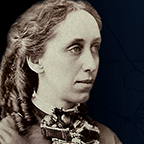
The most surprising thing I found came to light early in my research, and it is that the photograph of Lavinia Goodell that was featured in all previous articles and books mentioning her was not her at all. In the fall of 2018, through ancestry.com, I was able to make contact with several descendants of Lavinia Goodell’s eldest nephew. Virtually the first thing they told me was that back in 1959 one of their relatives had been asked for a photo of Lavinia and he sent off a picture of someone else. His daughter, Sarah Stamps of Nashville, Tennessee, who just died last year at age 95, saw the photo when it was returned and told him, “That’s not Lavinia.” The man responded that he was aware of that but said his photo of the real Lavinia was in poor condition and “This is a better looking woman anyway.” Ms. Stamps was a bit uneasy about the mix-up but she was busy raising a young family and decided the photo was unlikely to ever be disseminated so she did not try to correct the error at that time. Many years later Ms. Stamps was doing some family research online and, to her horror, she discovered that the picture of the “Faux Lavinia” was everywhere, including on a large plaque honoring Lavinia that had been installed in the Rock County Courthouse in Janesville, Wisconsin in 2000. Ms. Stamps and another relative made some efforts to correct the record but soon discovered that once erroneous information is on the web, it is very difficult to change it. Lavinia’s relatives were very pleased that we were researching their ancestor and urged us to try to “give her her real face back.” One of the most gratifying parts of our research project was doing just that. Through our website, social media accounts, and media accounts we have featured what we call the “case of mistaken identity,” and in December 2021, a new plaque bearing Lavinia’s true image was installed at the Rock County Courthouse. We would love to identify the woman in the “faux” picture. With assistance from another Lavinia relative, we have a good idea who it might have been but so far have not been able to definitively prove it. I have not given up on this quest and hope to be able to declare the case closed at some point.
A question from Nancy: My research over the last five years has focused largely on the time period from 1855 to 1880. Are there one or two women from that era that you particularly feel should be better known and why?
The thing that has caught my attention from the period is a type of institution that served women rather than an individual woman. American industrialists founded schools of design for women in northern cities in the decade or two before the Civil War. The curriculum was designed to train women in textile and wallpaper design, wood engraving, and other marketable artistic skills. It wasn’t a purely philanthropic endeavor. Textile mill owners, for instance, wanted to produce homegrown talent to replace the expensive designs they previously purchased from France. I want to know more about the women who attended these schools and what they did after they graduated.
***
Want to know more about Lavinia Goodell?
Check out the website: www.laviniagoodell.com.
Like the Facebook page: https://www.facebook.com/LaviniaGoodell
Follow her on Instagram: @laviniagoodell
***
Tomorrow it will be business as usual here on the Margins with a women’s-history- related blog post from me. But we’ve still got more people talking about women’s history from a lot of different angles next week. Don’t touch that dial!
March 1, 2023
Talking About Women’s History Month: Three Questions and an Answer with Cathy Curtis
I’m pleased to start off this year’s Women’s History Month series with Three Questions and an Answer with biographer Cathy Curtis.
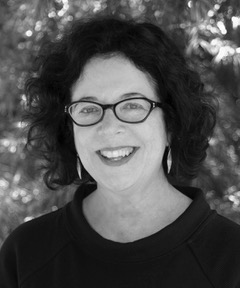
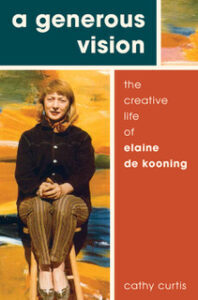
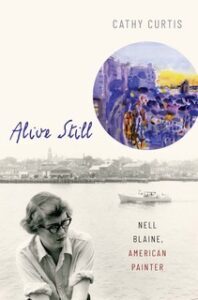
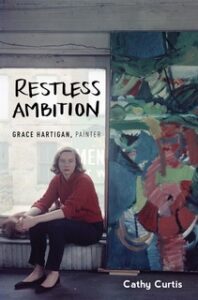
Cathy is a former Los Angeles Times staff writer with degrees from Smith College and the University of California, Berkeley. She is the author of three recent biographies of twentieth-century artists—Restless Ambition: Grace Hartigan, Painter; A Generous Vision: The Creative Life of Elaine de Kooning; and Alive Still: Nell Blaine, American Painter—all published by Oxford University Press. Curtis also has written A Splendid Intelligence: The Life of Elizabeth Hardwick (W. W. Norton), and Edna O’Brien: The Passionate Life of a Fearless Irish Writer (forthcoming).
Take it away Cathy!
How do you choose subjects for your biographies?
I look for an artist or writer whose work I admire, who led an eventful life, and who has an archive that is open for researchers. By now, having written five biographies (the fifth is still in manuscript), I’ve learned that the most important components of an archive for my purposes are the subject’s journals and letters (written and received), followed by newspaper and magazine interviews. Of course, I also look for letters from my subject in the archives of the people to whom she wrote.
One of the questions I’m fascinated with right now is how biographers name their subjects, particularly when writing about a woman. Where do you stand on the first name/last name question in your books?
I am not an academic, which perhaps explains why I was surprised to discover the existence of the first name vs. last name issue. I use my subject’s first name freely because I have “lived” with her every day while researching and writing my books. Employing the last name strikes me as the sign of an impersonal, arm’s-length relationship with a subject, better suited to a book with a theoretical or critical approach than to an intimate biography. The notion that first-name references are somehow demeaning to a subject (whether male or female) strikes me as ridiculous. My respect for my subjects is clear from the context of the book.
You’ve written about a number of interesting women. Do you have a favorite?
My favorite subject tends to be the last one I’ve written about, in this case, the great Irish author Edna O’Brien. But each of my subjects have endeared themselves to me in a different way, often by means of overcoming a significant obstacle.
Grace Hartigan, who never attended art school, struggled to master the painting medium, ultimately developing a memorable abstract style. Elaine de Kooning found her niche in a painting genre (portraiture) that her famous husband, Willem de Kooning, had largely abandoned in favor of abstraction. The painter Nell Blaine prevailed against enormous odds after becoming a paraplegic in her late thirties, by simplifying her canvases and loosening her technique. The author Elizabeth Hardwick kept writing her deeply considered essays despite the ongoing stress of coping with the mental illness of her celebrated husband, the poet Robert Lowell.
By the way, I was intrigued to discover that none of these women were outspoken feminists: they all viewed themselves essentially as independent agents. Women artists who managed to carve out careers in the 1950s tended to believe that superior work would triumph, so there was no need to give women a special break. For Elizabeth Hardwick, great art always trumped ideology; she disparaged the novels of feminist writers that were poorly written. She also believed that women’s great strength is fortitude, a quality that allows them to carry on in the face of disappointment and hardship.

A question from Cathy: What overlooked woman from the past would YOU like to read about in a biography, and why?
A once famous and now largely forgotten artist/writer named Rose O’Neill (1874-1944). She was the creator of the Kewpie doll, based on her cartoons with the same character, and the first person to license characters of her own creation on an international scale. (Think of her as a predecessor to Walt Disney in some ways.) She was famous, productive, and connected to lots of famous artists. She was active in the suffrage movement–and made pro-suffrage Kewpie cartoons. She became rich thanks to her work, and died in poverty. I was exploring the possibility of a book when my current subject, Sigrid Schultz, grabbed me by the labels and said “My turn!”
* * *
Want to know more about Cathy Curtis and her work? Check out her website: www.cathycurtis.net
***
Come back tomorrow for three questions and an answer with attorney and author Nancy Kopp, talking about her work on the first woman attorney in Wisconsin. Good stuff!
February 28, 2023
From the Archives: Book thieves
Every time I write a book I reach the point where I am so deep in the work that I have to stop writing blog posts and newsletters. I always hope to avoid it. That somehow I’ll be smarter, or faster, or more organized, or just more. This time I’ve managed to avoid hitting the wall for several months by cutting back to one post a month. But the time has come. For last two months, I’ve shared blog posts from the past.–including this one from 2017. I hope you re-discovered an old favorite, or read a post that you missed when it first came out.
Tomorrow is March 1st–time to celebrate Women’s History Month here on the Margins with our annual series of mini-interviews, and a few blog posts from me. I have some interesting people lined up to talk about their work in women’s history, starting with biographer Cathy Curtis. Good stuff, people.

Ceremonial book burnings and the theft of precious art works are well-known elements of Nazi Germany’s rampage through Europe. In The Book Thieves: The Nazi Looting of Europe’s Libraries and the Race to Return a Literary Inheritance, Swedish journalist Anders Rydell tells the less familiar story of how two Nazi agencies—the intelligence wing of the Schutzstaffel (SS) under Heinrich Himmler and the Reichsleiter Rosenberg Taskforce headed by Alfred Rosenberg –competed to plunder Europe’s libraries until the regime’s fall in 1945.
The Nazis’ motivation for the theft and dismemberment of libraries was different from that which inspired the looting of precious artworks from museums and private homes. The stolen books were intended to supply Nazi “research” libraries with the raw material for an intellectual war between Nazism and its enemies. Jewish libraries, public and private, were the primary targets, but the agencies also attacked libraries dedicated to Freemasonry, socialism and the occult. Plunder was followed by destruction. Collections were divided up between different research institutes and warehouses. Books that were not deemed valuable, whether for their rarity or for research, were often destroyed.
The Book Thieves is written in the form of a quest. Rydell travels across Europe, visiting the remains of plundered libraries and the institutions that still hold many of the stolen books. He talks to librarians who are engaged in the overwhelming task of identifying stolen books and their owners, those attempting to rebuild lost collections, and those who mourn the libraries that are lost without a trace. In the process, he tells the story of how the collections were built and the heroic attempts to protect them, creating a vivid and heartbreaking picture of lost communities and lost knowledge.
February 24, 2023
From the Archives: The Empress Maud (aka Matilda)
Every time I write a book I reach the point where I am so deep in the work that I have to stop writing blog posts and newsletters. I always hope to avoid it. That somehow I’ll be smarter, or faster, or more organized, or just more. This time I’ve managed to avoid hitting the wall for several months by cutting back to one post a month. But the time has come. For the next little while, I’m going to share blog posts from the past. (This one is from 2014.) I hope you re-discover an old favorite, or read a post that you missed when it first came out.
There will be new posts in March no matter what: we celebrate Women’s History Month hard here on the Margins. (I have some fascinating people lined up.)

I was first introduced to the Empress Maud and her battles to regain the throne of England by mystery writer Ellis Peters.(1) The war between Maud and her cousin Stephen is the immediate background against which her Brother Cadfael mysteries are set. (One step behind that stand the Crusades–a deft way to place her stories within their larger historical context and to give her main character a broader view of the world than many of the people around him.) Both Maud and Stephen are distant figures in the book and Peter’s main characters are Stephen supporters, so for years I never thought about why a medieval noblewoman would feel she had a right to the crown.
Since then I’ve spent a fair amount of time thinking about Maud within the context of women warriors.(2) It turns out she had a good reason to claim the crown. Here’s the short version.
Born in 1102 CE, Maud was the daughter of Henry I of England and Normandy.(3) When she was twelve, she was married to the Holy Roman Emperor, Henry V, who was almost twenty years her senior.(4) By all accounts, she was a hardworking empress and well-regarded by her people: her German subjects called her “the good Matilda”. She may have even been happy.
In 1125, the Emperor Henry died. If he had left an underaged son as heir to the throne, Maud would no doubt have served as the child’s regent.(5) Since they were childless, she was left as a dowager empress at the relatively young age of 23. The options for a surplus empress were limited, though Maud clung to the title, calling herself “Matilda the Empress, daughter of King Henry”.
In fact, the death of her brother some years previously meant that Maud was once again a factor in Henry I’s dynastic calculations. Henry could have named one of his twenty-some illegitimate sons as his successor or one of his numerous nephews, Instead he called his now-marriageable daughter home, named her as his successor, and forced his council of nobles and bishops to swear fealty to her as “lady of England and Normandy”. He then made the mistake of arranging another political marriage for her, this time to the teenaged son of the Count of Anjou, whose lands lay next to Normandy.
When Henry died in 1135, Maud was in Normandy. Her cousin Stephen of Blois had himself crowned in Westminster Abbey before a very pregnant Maud could hurry across the Channel and claim her throne, plunging England into nineteen years of civil war, known as the Anarchy. (6) The English nobility took sides, and sometimes changed sides depending on who seemed to be winning.
Finally the war ended with a compromise. Stephen kept the crown accepted Maud’s young son, the future Henry II, as his heir. (Which, if truth be told, was probably Henry’s intention in naming Maud his heir–women who inherited thrones or titles were often seen as the conduit between two generations of men.) The Empress Maud settled for the title Lady of the English.
As for me, I’m now squarely on team Maud.
(1) I realize not all hard-core history buffs agree, but I find that well done historical fiction is an excellent doorway to history itself.
(2) She was the first woman that I had to cut from the book because she didn’t fit even my broadest definition of woman warrior. Just about broke my heart.
(3) Just to help you keep track: He was the son of William the Conqueror. Hard to tell the players without a program.
(4) That sounds horrible enough to a modern reader. Consider this: she was betrothed to him at the age of eight and sent immediately to Germany. Once there, her future husband sent away her English attendants and did his best to turn her into a good German. Now picture yourself at eight.
(5) Mothers were often preferred over uncles or grandfathers as regents, under the (usually correct) assumption that they were less likely to get ambitious and/or greedy and seize the throne for themselves.
(6) He claimed that Henry had changed his mind and named Stephen his heir on his deathbed. It may even have been true–primogeniture was not yet a settled theory of inheritance and thrones tended to go to the man most able to seize them. (There are echoes here of the rival claims to the English throne that led to the Norman Conquest. Or is that just me?)


