Michelle Ule's Blog, page 31
March 3, 2020
Readers, Writers & Thankfulness
Any readers in this audience?
Thank you.
You’re important to writers.
Am I a writer if I have no readers?
It’s an interesting question.
Actor Charlton Heston discussed the conundrum about acting and writing without an audience in The Actor’s Life.
He said it was hard to be an actor if you don’t have an audience. But writer and painters can always produce with satisfaction–because they have a completed work.
Actors need an audience.
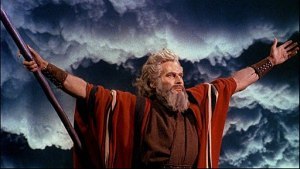 An actor, yes, but also an author.
(Wikipedia Commons CC0)
Anyone who writes a diary–or even a blog or Facebook post–can call themselves a writer.
That may be true, but without readers reacting to your words, an author can miss one of the greatest pleasures of publication.
Thankful for
The greatest joy of being a writer is hearing from readers.
Not necessarily thank yous, though thanks for thinking of us.
But sharing information with the author or insights gained through reading the material–is golden.
While I make a genuine effort to be accurate in my writing, I make mistakes.
When someone writes with . . . let’s say, additional information, I swallow and think about it.
If I question their correction, I do additional research to find the truth.
When I make an error–I correct it.
I made a snarky comment about a known and famous snarky son.
Somehow, he saw my post and wrote in indignation.
He was right. So, I apologized and corrected the post.
I’m more careful now.
Thrilled by readers with more information
In writing about the Chambers canon, I’ve had the opportunity to exchange emails with many people.
It’s all a joy.
In 2018, I wrote a dozen blog posts about Oswald Chambers’ legacy–his students at the Bible Training College and one soldier from Zeitoun.
Using my genealogy and research skills, I followed what happened to them after Chambers died.
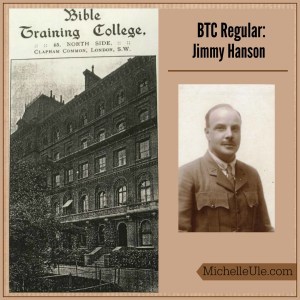
Several became missionaries in China, several in India. One went to the African Congo with C.T. Studd. Another attended seminary down the road from me near San Francisco. He and his wife (another student) became missionaries in Persia circa 1927.
The stories were terrific, but even better was hearing from family members.
Out of a dozen people, only one family knew of Chambers’ influence on their relatives.
Sharing the information I had with family members was pure joy.
Why write if no one reads?
I’ve long known that I write to understand issues I cannot articulate in words.
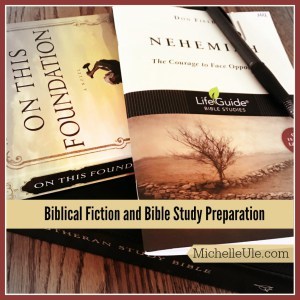
Researching, thinking, finding alternate ideas and presenting them in a coherent form, helps me process better.
I’ve often written posts based on Bible studies I’m teaching. Doing additional research on the text enhances my faith and understanding.
I tell stories about some of the ridiculous things that happen to me while traveling–to warn others.
Stories about child-rearing, the Navy, and interesting history I stumble upon are worth the trouble if they help or provide insight for others.
In addition, if I’ve learned or experienced something which might help someone else, why not share?
Always thankful for readers
When I review my blog stats, I’m humbled and honored by the number of people reading my words each day.
Thank you.
I’m astonished at the people who read my daily Facebook author posts–my Utmost Responses.
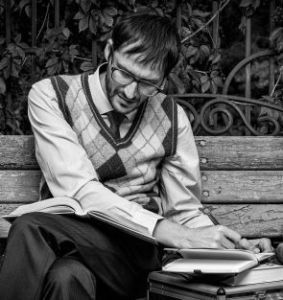 Loves it so much he’s writing the review while he reads it!
( Photo by Eugene Lagunov on Unsplash )
As for books, a writer only gets one type of report card–reader reviews.
If you like an author’s book, please write a review online or wherever you bought it. I post my reviews on Goodreads.
The publisher looks at the number of reviews–not the quality or length. Two or three sentences, good or bad (about the book), are all it takes.
Writers thank you–because if they get enough reviews, a publisher is more likely to contract another book.
If you’ve read Mrs. Oswald Chambers or A Poppy in Remembrance, feel free to write any review you like.
And make sure you do the same for any of your other favorite writers.
On behalf of all writers–and readers–thanks.
Tweetables
Thanks to readers who make writers’ lives joyful! Click to Tweet
Please write a review–or correct an error! Click to Tweet
The post Readers, Writers & Thankfulness appeared first on Michelle Ule, Author.


February 25, 2020
Prayer Workshop: A Primer
We held a prayer workshop at our church on Saturday.
Like many, our church has a variety of issues and the Board of Education felt a morning of prayer could help.
We learned a lot about prayer, prayed, and left after three hours feeling like we had accomplished something.
What did we cover?
Prayer workshop: Individual prayer
We spent the first half-hour, 9-9:30, reviewing what prayer is.
Using the PRAY acronym, one of our Sunday school teachers explained how he taught his students to pray.
He’s taught children ages 7-10 for twenty-five years.
The rest of his outline:
Pray Without Ceasing – 1 Thessalonians 5:17 Praying versus “Talking at God”· TThe Spirit of God will bring these things to remembrance – John 14:26 Prayer is through the Spirit (Spirit – Soul – Body). The Word of God is sharper than a two-edged sword, dividing soul from spirit – Hebrews 4:12 God gives you the desires of your heart – Psalm 37:4 With man it is impossible, with God all things are possible – Matthew 19:26 We don’t pray as we ought – Romans 8:26· God gets the glory – John 11:40
A prayer workshop without prayer?
Of course not.
On the half-hour of the three-hour workshop, we broke to put into practice what we’d been taught.
From 9:30-9:55 (providing five minutes to return), we took our notes from the first teaching and prayed about our own life.
Some used the PRAY acronym, others used the ACTS acronym.
We also handed out a list of the “26 attributes of God,” in case we couldn’t think of anything to praise God about!
Living with prayer and requests
Two members of the Board of Education split the 10-10:30 section.
 Photo by Ben White (Unsplash)
The first speaker, me, talked about Adventures in Prayer and the need for honesty.
As I’ve written many posts about prayer, please see the list here and choose your subject!
Our church sends prayer needs through email as people request them.
Our board head felt concerned about the need to preserve privacy better–to encourage others to ask for prayer.
She taught a 15-minute prayer workshop on how to write a request.
She then broke us into groups and gave us a prayer request to rewrite for more privacy.
The exercise was helpful to participants–enabling them to see how to frame a request and maintain anonymity for the subjects.
We then all wrote a personal request.
Praying with another
We spent the second prayer time with one other person.
We shared our prayer request with that person and prayed together.
Twenty-five minutes can be a long time to pray–particularly with someone you don’t know well. Several people brought Bibles (from the library shelf) and shared Scripture.
I prayed with someone from my Bible study. In addition to our written request, we prayed for friends we knew.
Because there’s confidentiality when friends pray together, we also shared other personal concerns.
My prayer partner moved away several months ago; this time was refreshing for me.
Corporate prayer
After individual, then shared prayer, we moved into corporate prayer.
Our Lutheran Church has put out a “call” for a new pastor. This subject is of great concern to many.
 Photo by Ismael Paramo (Unsplash)
The pastor took this half-hour portion and worked through a specific list of things for us as a church body to pray about.
For other churches not seeking a new pastor, this section of the prayer workshop would incorporate other “group” needs.
Using Bible passages, he explained how and why we should pray a specific way.
At 11:30, our group shared “popcorn prayers.”
Here’s the definition:
A format of group prayer in which people pray aloud by taking turns in no particular order.
1996 Lutheran Woman Today vols. 9–10 3: It’s called a popcorn prayer because it seems to pop from one side of the circle to the other, and the effect is like that of com popping on the stove.
Of all corporate prayers, this has been for us the most participatory, and often the most joyful!
Dictionary of Christianese
We finished with an amen!
Putting together a prayer workshop
Our churches have different needs, but prayer is at the heart of Christian ministry.
While our church has an email prayer list and a small group gathers the last Sunday of the month, we hadn’t had a real call to pray together like this in a long time.
Certainly, our many Bible studies pray together.
Friends pray for each other all the time.
But something about reviewing the ways and means, and practicing, made this morning special.
Why not have a teaching/praying time yourself?
Tweetables
How to set up and run a prayer workshop. Click to Tweet
Personal, shared and corporate prayer: a how-to. Click to Tweet
The post Prayer Workshop: A Primer appeared first on Michelle Ule, Author.
February 18, 2020
Who Wrote Streams in the Desert?
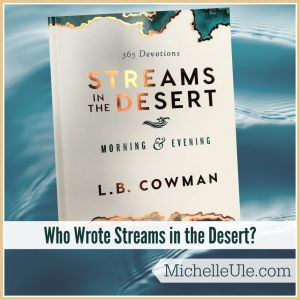
Streams in the Desert first appeared in 1924.
Along with My Utmost for His Highest, it was one of the bestselling devotionals of the 20th century.
But who wrote it?
L. B. Cowman?
Depending on the book edition, answers can vary:
L. B. CowmanMrs. Charles CowmanLettie B. Cowman
All those answers are correct because they’re the same person.
But Lettie had a different idea about the gestation of the book.
When asked why she wrote it by her friend long-time missionary Esther Enry, Lettie paused before explaining,
Streams was born. The other books were written.”
“The Story Behind Streams in the Desert” page 8
A birthed book?
Streams of the Desert was “born” during the hardest years of Lettie’s life: 1918-1924.
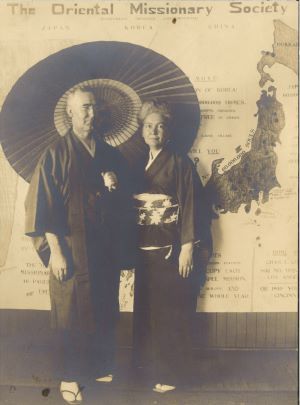 The Cowmans 1915
(OMS archives)
Her husband and co-founder of the Oriental Missionary Society (OMS) Charles lay dying for six years in Los Angeles.
The OMS had just completed a magnificent missionary endeavor in Japan: the Great Village Campaign.
Organizing, fundraising, directing and participating in the campaign wore out Charles’ heart. He and Lettie left Japan for California in 1919 and stayed there.
Charles was chair-ridden, he couldn’t really lie down comfortably, and rarely slept at night.
Healing
Charles and Lettie prayed for healing. Their friends joined them, often coming late in the night when things took a turn for the worse.
But healing didn’t come.
Lettie poured through books, particularly A. B. Simpson’s The Gospel of Healing.
They scoured their souls, looking for any sin to confess that might be blocking God’s healing.
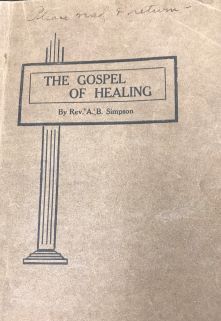 Lettie’s handwriting on her copy.
 (OMS archives)
They turned to their only source for comfort: the Bible.
Lettie spent her days and nights trying to help and encourage her husband.
When his angina pains became too much, she served him black coffee. During those years, doctors recommended caffeine for angina.
Books
During the days, she scoured used bookstores throughout the Los Angeles area, hunting for encouraging books.
She read to him during the grim hours of the night. Her readings included poetry, stories, sermons, hymns, and Bible passages.
Her 1924 diary entries list numerous books they read together including:
Thy Healer (Mrs. Baxter, circa 1885) The ‘I Wills’ of Psalms (Philip Powers)Walking in the Spirit (A B Simpson) The Promise of the Father (Mrs. V. D. Palmer)
Her biographer Ben Pearson notes:
There seems something almost uncanny about the way she day by day discovers devotional readings and words of encouragement that perfectly suit their situation.
Throughout her life in fact she felt that God in some sweet providential way brought to her the materials that would one day find their way into her books, and become a source of blessings to millions.”
“The Story Behind Streams in the Desert” page 16
Already a prolific writer for both the OMS Standard Magazine and God’s Bible School’s God’s Revivalist, Lettie began using the encouraging words as devotionals.
She called them “Thoughts for the Quiet Hour,” since that’s when she and Charles most often shared their wisdom.
Streams in the Desert non-book sources
When we ask God for encouragement, it can turn up in many forms.
I do not find material,” she [Lettie] once said. “Materials come to me, fly to me, from all over the world–in an unlikely tract, an old faded booklet, crumpled church bulletin, a tattered songbook.”
The Story of Streams in the Desert page 16
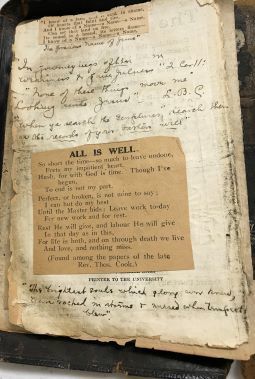 Lettie Cowman Bible clippings
 (OMS archives)
While working in the OMS archives, I opened a large manila envelope and a flurry of paper scraps burst out.
I laughed at her bits and pieces, quotes, and sayings all awaiting a new devotional!
Like Oswald Chambers, she liked to glue particularly encouraging clippings into her Bible for further reference.
She also cut pages of loved hymns from hymnals and glued them into her own personal book.
The title?
According to Pearson, the impetus for the titles comes from Exodus 14–Israel’s crisis at the Red Sea with Pharaoh’s army bearing down on them.
This for Lettie symbolizes their position, one which from the human standpoint is utterly hopeless.
Yet, like Moses, she feels that God is saying to them, “Fear not, stand still and ye shall see the Salvation of the Lord.”
“The Story Behind Streams in the Desert” page 17
The actual title is from Isaiah 35:6:
Then shall the lame man leap as an hart, and the tongue of the dumb sing: for in the wilderness shall waters break out, and streams in the desert.
KJV
Charles and Lettie endured the six years of their “Gethsemene,” waiting for that healing and those streams of joy to break through into their lives.
In both cases, the streams finally flowed at their deaths and meeting with Jesus.
Streams in the Desert official publication
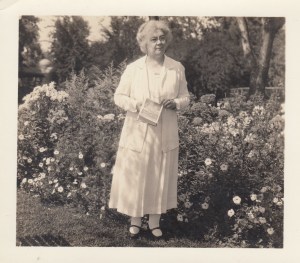 Lettie with an original copy of
Streams in the Desert
(OMS archives)
The Cowmans produced their first edition of Streams in the Desert in 1924.
They arranged for the publication of 3000 copies, with the printer doubting that many would sell.
And yet it did.
A more professional, hardcover edition released in 1925.
But who really wrote it?
Lettie might have said the Holy Spirit–by His promptings, the clippings and stories that came her way, and the miraculous things God accomplished in her life.
Charles’ physical healing in this world never came despite their prayers. He died on September 24, 1924.
Yet the book compiled from encouraging him has survived nearly 100 years and ministered to countless people–often in sorrow or sickness–ever since.
No one really knows how many copies have sold.
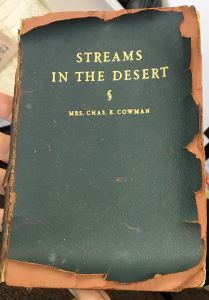 An early edition!
(OMS archives; Lettie’s library).
Tweetables
Who wrote Streams in the Desert? Click to Tweet
Streams in the Desert–written or compiled? Click to Tweet
Why Lettie Cowman wrote Streams in the Desert. Click to Tweet
The post Who Wrote Streams in the Desert? appeared first on Michelle Ule, Author.
February 11, 2020
Hamilton, the Revolution and Me

I finally saw the musical Hamilton.
I thought it thought-provoking and original.
The catchy music, the amazing dancing, and the clever dialogue are delightful.
But I’m glad I knew the story beforehand.
Hamilton and the Revolutionary War
As seems to happen often in my life, I’d spent time with Alexander Hamilton the week before.
My daughter and I visited both Philadelphia’s Second Bank of the United States and The Museum of the American Revolution.
Alexander Hamilton is a topic at both.
The Second US Bank, an impressive structure halfway between Independence Hall and the Museum of the American Revolution, is a portrait gallery now.
It features paintings of prominent Colonial Americans done by Charles Peale. It’s a gallery of famous people–we’ve seen many of these portraits before.
My daughter, who loved the musical Hamilton, pretended to swoon.
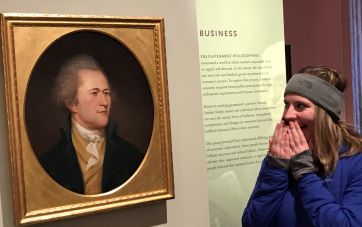
(I also took her photo beside John Paul Jones–the father of the US Navy.)
Museum of the American Revolution
This fine museum was well worth the two hours we spent examining the exhibits. We thoroughly enjoyed it.
Even as we walked in, I mentioned at least eight of my ancestors participated in the American Revolutionary War.
But then I remembered my daughter has another genealogical side.
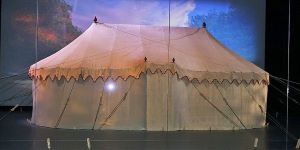 Washington’s Headquarters Tent
 by Gordon Makryllos (Wikipedia Commons)
One of her ancestors spent the war as a bodyguard to General George Washington!
So, at least nine ancestors for her.
It particularly hit home when we viewed the museum’s most proud possession: George Washington’s tent.
While I’m not big on owning artifacts, this one amazed me.
One of her ancestors stood outside that tent for six years of war.
And, of course, Hamilton also spent a lot of time in that tent working with the General.
Hamilton‘s war service
What does this have to do with Alexander Hamilton?
His fingerprints are all over the American Revolution.
As General George Washington’s aide-de-camp, he helped plan much of the Army’s movements.
As the musical points out, the illegitimate son of a planter and French woman wanted to distinguish himself in battle. He wanted to be famous, even if it meant his death in war.
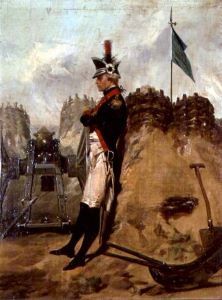 Battle of Yorktown Painting
by Alonzo Chappel
(Wikipedia Commons)
But Washington kept him close until the final major battle of Yorktown.
In the planning for the assault on Yorktown, Hamilton was given command of three battalions. Hamilton and his battalions fought bravely and took Redoubt No. 10 with bayonets in a nighttime action.
The French took Redoubt No. 9, forcing the British surrender of an entire army at Yorktown, Virginia, marking the de facto end of the war.
Wikipedia
Hamilton got his fame and went on to help establish the United States we know today.
Hamilton, the musical
Because I had tickets to the musical, my daughter and I pointed out Hamilton-related history as we wandered through Philadelphia.
Thanks to a friend, I’d already read My Dear Hamilton: A Novel of Eliza Schuyler Hamilton by Stephanie Dray and Laura Kamoie.
I’d written a paper about his relationship with Thomas Jefferson many years ago.
All that helped me understand the story, even as I grappled with catching the snappy lyrics.
It didn’t take long to recognize clever witticisms and asides that made me laugh out loud.
The story implies a long-running antagonism between Hamilton and Aaron Burr. It’s poignant.
(Someone pointed out to me today that Aaron Burr was also an orphan–and was thus raised by his grandfather, Jonathan Edwards!)
The men knew each other for years; they studied law together in Hamilton’s father-in-law’s library.
Up and coming, ambitious, both were brilliant and dedicated.
Certainly, their duel was a tragedy–for all involved.
But Hamilton, the musical, doesn’t pull any punches. A flawed man, for good reasons, the creator of the US Bank sought to do good.
I appreciate the brilliance of this musical, particularly the care Lin-Manuel Miranda took to balance the story based on Ron Chernow’s biography.
There’s a political angle for everyone in this musical
Which undoubtedly, is also true of the American Revolution.
I’m glad I saw the musical.
I’m even more thankful that my life has benefited from the sacrifice so many men, women, families, and my ancestors made 244 years ago.
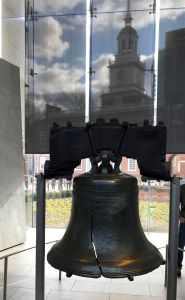
Tweetables
Hamilton, the American Revolution and me. Click to Tweet
An American Revolution War’s descendent reflects on Hamilton. Click to Tweet
The post Hamilton, the Revolution and Me appeared first on Michelle Ule, Author.
February 4, 2020
Oswald Chambers in Japan

August 1907 found Oswald Chambers in Japan.
I’ve written about his experiences with the Oriental Missionary Society and his trip with Juji Nakada and Yale graduate Gilbert Little Stark.
But what did he think of the experience?
Chambers was a wide-eyed appreciator of a country locked away from the west for many, many years.
His diary detailed his excitement at what he saw and experienced.
Cowman and Kilbourne and I took jinrickshaws to the depot; how these fellows can run!
Oswald Chambers: Abandoned to God p 128.
Once arrived in Tokyo, a group met them at the train station. Tokyo Bible Training Institute students escorted the men to the school.
Impressed with nearly everything he saw, Chambers thought the school well laid-out.
He spoke with an interpreter, which he noted was splendid, “but restraining.”
Lettie Cowman
He liked Lettie Cowman.
“Mrs. Cowman is a royal soul and truly a saint. They have taken me into their home in splendid style.”
Oriental Missionary Society friends have often described the hardships Lettie and Charles Cowman suffered while serving in a faith-based ministry unsupported by a missionary board.
A retired missionary told me a story involving the Cowmans’ financial sacrifice.
One night, Lettie went to make dinner and only had a loaf of bread and a tiny bit of tea.
Charles surprised her by returning with a guest, Oswald Chambers.
Lettie swallowed, set the table well, and placed the pot and small loaf of bread in the middle for them to share.
Given his notorious lack of concern over money matters, Chambers probably didn’t care.
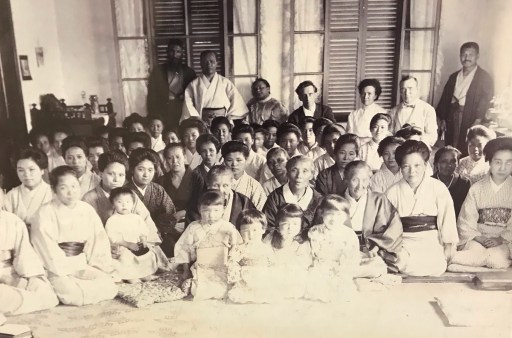 A Woman’s Meeting at Tokyo’s Bible Training Institute. In the back row, Sassao, Juji Nakada, unknown, Oswald Chambers, Lettie Cowman, Charles Cowman.
Tokyo Events
Chambers and Nakada spoke the first three days of August 1906 to gatherings of Christians.
Nakada was a near-celebrity in his homeland.
“Nakada is a mighty preacher here. To see the altar service is wonderful.”
Chambers’ diary soon filled with descriptions of the scenery, the people, thoughts on missionaries and how much he enjoyed Japan.
He traveled halfway around the world to observe missionaries in action. He particularly wanted to observe how the Bible Training Institute trained their native-born believers.
To his surprise, Japanese natives embraced Christianity very quickly and with great enthusiasm. He marveled at their faith and how God answered their prayers.
The other missionaries
The Oriental Missionary Society’s entrance into Japan in 1901 did not come easily.
Other missionaries in-country were suspicious–wondering if the OMS planned to begin a new denomination in Tokyo.
Cowman and Kilbourne had no such plans; they merely came to preach a traditional version of their faith, based in the Holiness Movement.
As Chambers was a noted speaker for Britain’s League of Prayer and sympathetic to the Holiness Movement, this presented no problems for him.
But at the convention he attended that summer, he noted some degree of hostility among the non-OMS missionaries, and it troubled him.
Chambers in Japan found it, “a most entrancing country.” He thought the Oriental Missionary Society a far more elaborate and well-organized work than he anticipated.
Lessons to take home from Japan
As a student at Duncan McGregor’s Dunoon Bible College, Chambers appreciated how living in a community with other students stretched his spiritual life.
He believed Christianity better “caught,” not “taught.” Living together and thus forced to deal with issues provided an excellent training ground.
But, he wondered if missionaries heading overseas might not be as well prepared for the task once they arrived in-country.
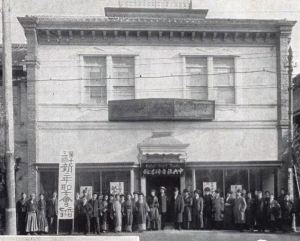 Tokyo Bible Training Institute
He appreciated how the Tokyo Bible Training Institute focused on training their students for the ministry.
The school trained “Bible Women,” to work with women–particularly in their homes.
The BTI trained the men for street evangelism, and they soon went to work preaching the gospel.
Chambers appreciated their preparation.
Traveling with the Cowmans
Shortly after Chambers’ arrival, Charles and Lettie Cowman decided to leave Japan for a “deputation trip,” to England.
They asked Chambers to join them, anticipating his presence in England could help their fund-raising.
The three sailed south, around India and back to England through the Suez Canal.
When they stopped in Kobe, Japan, Charles lay ill from neuralgia, but Lettie delivered tracks and Scripture portions to the crew.
Several days later, Charles Cowman pointed out a comet in the sky.
They arrived in England on October 11, 1907.
When he saw his brother Franklin, Chambers pulled a shilling from his pocket and handed it to him. “I went all the way around the world on that one shilling.”
God had provided everything else he needed!
Oswald Chambers founded and ran his own Bible College four years later.
Tweetables
Oswald Chambers in Japan with the Oriental Missionary Society. Click to Tweet
Why did Oswald Chambers visit Japan? Click to Tweet
The post Oswald Chambers in Japan appeared first on Michelle Ule, Author.
January 28, 2020
Archives: Tips from Two Weeks of Scanning
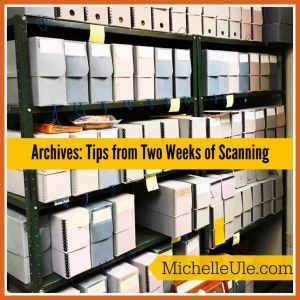
I recently spent two weeks in the archives–researching of course.
I brought an assistant with me from California, since the archives were in the Mid-west and I hoped to get all the information I needed in one trip.
I won’t know until I’m done writing the next book, but here is some information about working with archives.
Just in case you ever need it.
Technology and archives
Since I first began doing research 25 years ago, technology has vastly improved.
On this trip, we carried a laptop computer, a portable scanner, an Ipad, pencils, notes, and an Iphone.
We used them all.
Scanners
I bought this scanner while working in the Wheaton College archives on my book Mrs. Oswald Chambers.
It links to my laptop and is easy to use.
But it takes time to lift the lid and place a new piece of paper or photo into the scanner.
It’s perfect for photos–they come out crisp and clear.
But two of us were working.
So, I incorporated the Scannable App on my Iphone, which linked to my Evernote account.
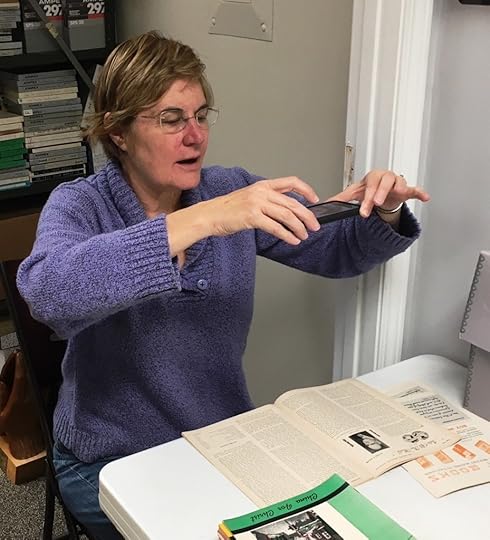
We used the Scannable app for documents–it easily and automatically, clicked through them. Once it could recognize the paper edges and focus, it clicked.
That enabled us to scan all sorts of documents at a faster pace than the scanner.
The Scannables app does not produce photos–as they are on the scanner–but they’re readable and that’s what I needed.
Scanning directly to Evernote–with some glitches–also meant they were stored in the cloud and therefore accessible from more than one device.
Laptop, flashdrives, pencils, and paper
The laptop helped keep things organized. We downloaded information and photos off our phones to the laptop daily.
I also moved information off the laptop onto flashdrives to ensure we had copies in several locations. (We each carried a stuffed flash drive home on the plane, just in case!)
Archives only allow pencils for archival work–if they allow anything to take notes other than a phone or voice recorder.
A notebook to help us keep track of what we sought and post-it notes also helped. It’s surprising how often the post-it notes came in handy
In addition, I printed out the basic facts of my subject’s life and placed it in a red folder, so we could make additions or add dates as needed.
The notebook allowed us to find the information we needed without using the computer (busy scanning).
The human factor
Researchers are the most important factors in archival work.
You can have all the tools in the world, but without a brain to direct and choose what’s important, it’s all simply information.
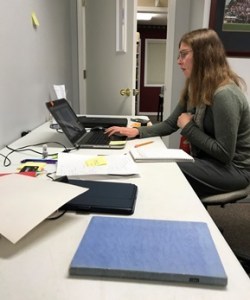
In this case a technologically-capable assistant helped. Catherine solved all our technology problems–as well as those of the archives’ new scanner!
My knowledge of the subject matter meant I could glance through a document and decide if we wanted it scanned or not.
If in doubt, we scanned the whole thing, of course.
But when faced with boxes and boxes of photos, it made more sense to have me evaluate what I sought before we scanned.
It also means I’m more familiar with the data for when I start to process it for my writing. If I’ve seen it somewhere, I know to look for it.
It’s been sheer pleasure and surprise to find items Catherine scanned that I never saw!
I have a lot of reading to do.
Guests in the archives
By far, the most valuable findings were those pointed out to us by “guests” familiar with their archives.
One woman in particular described items she thought I’d like to see–which was absolutely true.
Knowing the information was there sent us hunting more diligently.
She also brought us information, which is invaluable.
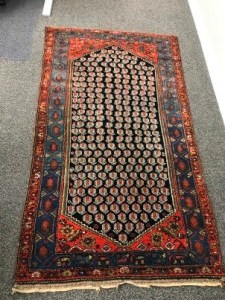
Several visitors also identified what looked like a mere rug to us, but which was a gift from Ethiopian Emperor Haile Selassie.
Bring over the Iphone for a photo!
I also enjoyed sharing stories that caught my attention, with people who may or may not have known about them.
Showing information or telling a story often reminded them of something they knew–which went into my brain as potential information for later.
The human factor is always important while writing a biography.
Tallying up the archive numbers
Two of us spent ten days working eight to five, with an hour lunch break, for two straight weeks.
Allowing for conversation, interviews, and general shelf surfing, I calculated we spent, total, about 140 hours scanning or photographing material.
We stuffed the flash drives with 7.8 GB of data.
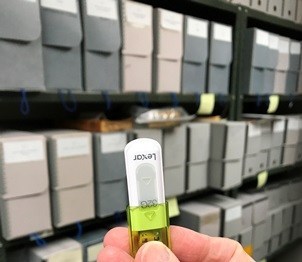 2 weeks of research fit onto one flash drive!
Will I need that much information?
Probably not.
But you never know–which is why we scanned so much material.
But you know what? It actually was fun.
Tweetables
Tips and tools for archive research. Click to Tweet
How much can you scan in 140 hours in an archive? Click to Tweet
The post Archives: Tips from Two Weeks of Scanning appeared first on Michelle Ule, Author.
January 21, 2020
Historical Fiction and Genealogy
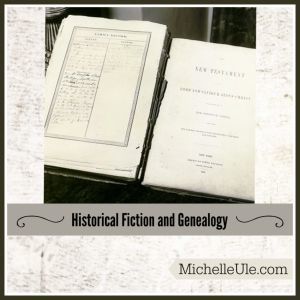
Historical fiction can be an excellent gateway to genealogy.
“They” say if you want to know political history, you should read history books.
But if you want to understand the manners, mores, and life of past generations, historical fiction provides insight.
It can help genealogists put their ancestors’ lives into historical context, making their choices far more understandable.
(And if you’re a writer of the genre, your genealogy can provide great, true stories. See my posts about The Dogtrot Christmas and An Inconvenient Gamble).
Historical fiction and genealogy example
I recently read Laura Frantz‘s latest historical fiction: An Uncommon Woman, and enjoyed it very much.
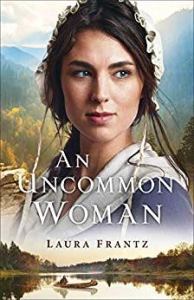
It’s the tenth in a long line of Frantz’s books that remind me of my personal genealogy.
I’m not related to her, but her stories touch very close to home.
If your family includes the Scots-Irish immigrants, you may find glimpses of your heritage as well. (A Bound Heart)
Like many of Frantz’s heroines, my family line settled along the Eastern seaboard. Mine first arrived as early as 1628.
They went through the Cumberland Gap (A Moonbow Night, The Frontiersman’s Daughter) to southern Kentucky.
Along the way, they encountered Native Americans understandably hostile to encroaching farmers (An Uncommon Woman).
Some lived in Williamsburg (The Lacemaker), maybe even Jamestown.
But most of my family left Virginia for places west after the American Revolution (The Mistress of Tall Acre).
I’ve read Frantz’s last several novels trying to catch glimpses of names matching her historical fiction with my genealogy!
I may have to feed Frantz a few names . . .
Why should genealogists read historical fiction?
When I put together my family’s extensive history, I didn’t leave it as the charts you find on Ancestry.com. (Though they are located in the back of the book).
I wrote narratives about each family line’s life. I told their history as a story, and not just as a family tree.
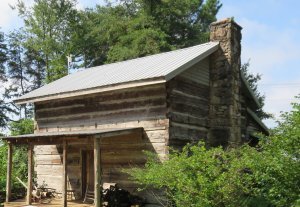 Photo by Susan Englert (Unsplash)
It’s not enough just to describe a name and give it some dashes. We can’t completely grasp our ancestor’s lives if we don’t understand the choices they faced and why they made them.
An Uncommon Woman helped me understand the daily terror of living on a farm as a target.
I’ve often wondered where the courage came from which enabled my ancestors to live in such conditions?
Well-researched novels like Frantz’s–she even writes the first draft in longhand–can provide that insight and understanding.
I’ve learned about corduroy roads and colonial bee-keeping. I’ve savored descriptions of the Cumberland Gap 225 years ago, and how men built wilderness forts.
None of this is applicable to my daily life, but it’s something to contemplate when I wonder about my ancestors.
Echoing details
Historical fiction provides readers with details about life.
Within a story, readers learn songs that were sung–maybe even in their families.
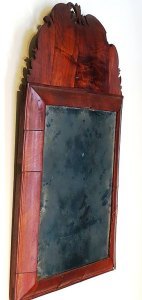 1700 English looking glass; Concord, MA museum
We learn about epidemics and why women bore so many children.
Imagine the value of a looking glass in Virginia in the 17th century. Why was that one of only three items of value in my ancestor’s will?
Who would have thought that clothing would be so important at Jamestown?
Perhaps the frontier folk wore deerskin because they had no looms to make cloth?
I read Laura Ingalls Wilder’s Little House books to my children for the stories, yes. But I also wanted my sons to understand the contrast between pioneer life and their lives.
The children needed to know the context of their “easy” life.
Historical fiction, and our genealogy, provided that richness.
They know who they come from, now, and what a blessing their life is today.
Thanks, Laura Frantz–and Laura Ingalls Wilder, too!
Tweetables
Historical fiction as a genealogy tool. Click to Tweet
Laura Frantz’s stories and my family history. Click to Tweet
How historical fiction can aid genealogists. Click to Tweet
The post Historical Fiction and Genealogy appeared first on Michelle Ule, Author.
January 14, 2020
Remembering the Saints Gone Before
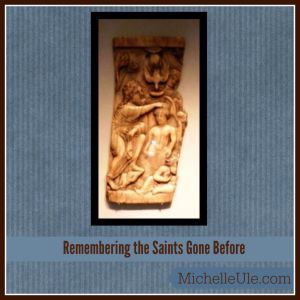 And yet, they are part of that “great cloud of witnesses,” I’ll meet someday.
That thought struck me several years ago while standing before an exhibit case at London’s British Museum.
Behind the glass sat a humble chalice made of pottery from the third century, found somewhere in Britain.
(I’m sorry, I can’t find it on the Internet. It looked something like the simple infamous chalice Indiana Jones found in The Last Crusade).
I stood mesmerized, thinking of all the history, all the people, who used it to worship our God before it came to rest in climate-controlled comfort.
Time folded and I felt chilled.
Someday someone may admire an “artifact” I handled today.
Christians are part of a living eternity.
On Sunday, our pastor called us to corporate prayer:
“Join with me, the prayer prayed by generations of believers who have gone before.”
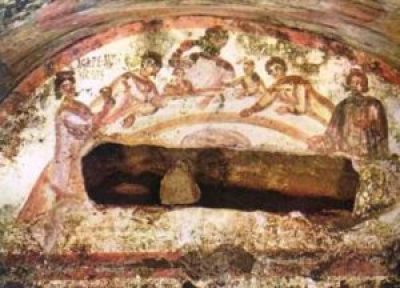
Fresco of figure holding chalice for Agape Feast. Catacomb of Saints Pietro e Marcellino, Rome(Wikipedia Commons)
We recited the same Nicene Creed Saints gone before spoke in their churches around the world.
The same creed Christians speak today in Africa, Asia, South America, Australia, Europe and, for all I know, maybe even a few in Antarctica.
Words spoken by my 21st century lips echo the affirmation of faith first written in 326 AD.
The beginning acknowledges our mutual faith–past and present:
“We believe in one God, the Father Almighty, Maker of all things visible and invisible.”
It reminds me that with my faith secure in the forgiveness of Jesus, I’m part of a living eternity.
Recognizing artwork from Saints gone before
Wandering through the museums of Europe–the British Museum, the Vatican, the Louvre–I’ve always seen plenty of Christian art.
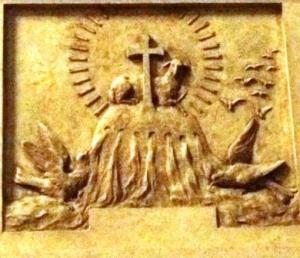
Behold, the Lamb of God who takes away the sins of the world. (Vatican Museum; Wikipedia Commons)
We’re all familiar with the famous paintings, but the humble ones catch me more often.
Here’s Jesus as the Shepherd–my toddlers recognized the meaning when they saw it at the Vatican.
There’s a depiction in stone of a baptism.
Wandering about Venice, the lion of Judah grinned down from paintings, sculptures and even a modern marketing campaign.
I recognized what that lion meant, even if others didn’t.
And of course, the symbol of Christ and a reference to baptism.
The spring I last visited Europe, I hunted for signs of Easter, the pascal lamb, for example.
I saw more lions . . . but in a church in Sicily, I found a reference to the lamb of God, Jesus of course.
Some artwork looks too cheesy even for me–saints with arrows in them, for example. But others remind me of a shared faith that recognizes the danger of following Jesus.
Many, of course, went to their martyred deaths in places like Rome’s Coliseum.
Seeing the Saints in history
Christian life floods history since Jesus’ death on the cross and the founding of the church.
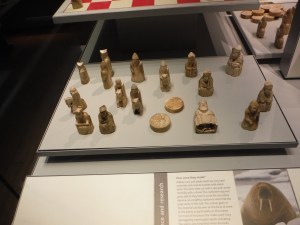
Worshiping Saints figurines from long ago (British Museum; personal photo)
As King Solomon noted long before Jesus, “there’s nothing new under the sun.”
Based in history, real paper, real events, real places, those looking for Christianity can find it throughout the world.
It always makes me smile to stumble on an artifact that connects me with people who shared–and continue to share–my belief in the risen Lord.
Do you see signs of Saints who have gone before in your daily life?
Tweetables
Recognizing Saints who have gone before. Click to Tweet
Art throughout the ages connects modern Christians with historic Saints. Click to Tweet
Seeing familiar Christian symbols in the wild. Click to Tweet
The post Remembering the Saints Gone Before appeared first on Michelle Ule, Author.
January 7, 2020
Mrs. Oswald Chambers as a Textbook
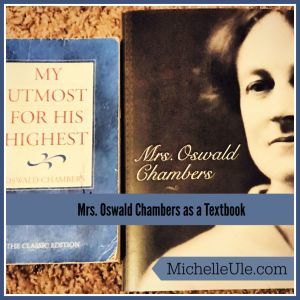
Who knew Mrs. Oswald Chambers works as a textbook?
In fall 2019, a Lexington, Kentucky women’s Bible study used the biography to help study My Utmost for His Highest.
I asked the facilitator, the recently retired missionary and church historian Dr. Eric Frugé, to describe the experience.
When one of his colleagues recommended him to the leaders of the Monday morning women’s Bible study, the ladies agreed.
He was the first man in 30 years to receive the invitation. They even asked him to choose the subject.
Why My Utmost for His Highest for a Bible study?
Frugé prayed and decided to use the weekly meeting as a time to examine My Utmost for His Highest He’d personally used the devotional for more than 40 years.
“God has used OC [Oswald Chambers] to force me to my knees over the years, to acknowledge and repent of my persistent right to myself, and to call me back to simple faith in Christ.
“The messaging in My Utmost for His Highest is uniquely articulated in many ways. I felt that God would speak profoundly to the ladies in this Bible study through the book, especially if they were not already familiar with it.”
Frugé had read David McCasland’s excellent biography, Oswald Chambers: Abandoned to God, many years ago and had just finished my biography, Mrs. Oswald Chambers, when asked to lead the study.
“I was very honored and humbled and I confess more than a little intimidated. These women are spiritual giants in our church!”
Only two or so of the twenty women were familiar with My Utmost for His Highest. Frugé thought the study would be a good one to introduce people to the devotional.
Themes and curriculum
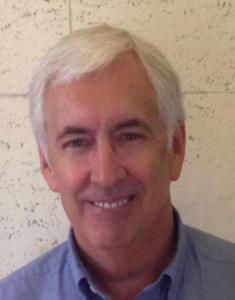 Dr. Eric Fruge
 After more prayer, he worked on a curriculum using themes from My Utmost for His Highest to bring out “the most compelling aspects of OC’s message; themes that surface repeatedly through Utmost.”
“I had never grouped OC’s Utmost devotionals by theme before. It was a fresh approach that gave me a fuller understanding of those themes, and consequently a deeper walk with Christ.”
He chose seven themes, one per week after the initial study. They included:
Surrender of the Will and the Cost of
DiscipleshipIntercession and Others-centered
MinistryFaithfulness in the OrdinaryAdversity and Crisis The Road to Spiritual AuthenticityCome unto MeGod’s Guidance in our Lives
Frugé chose themes he felt were most important from the devotional. He liked the idea of students “brooding,” [OC’s favorite terms for meditating] over the themes, if only for eight weeks. “It could have a lasting influence on their lives.”
(For more on themes found in My Utmost for His Highest, see Dr. Ken Boa’s talk on the subject, here).
Frugé wanted the women to see how Biddy’s life paralleled their own in significant ways. Biddy’s confidence in God propelled her to have a “Kingdom ministry and impact far beyond her own expectations.”
“The session about not being an “amateur providence,” triggered the most questions and responses. The theme “Come unto me,” and its relationship to Biddy’s later years saw the most engaging conversation.”
He noted the Bible study members often shared from personal experience and were very responsive to the themes and discussion.
The textbook and additional handouts
One of the women in the study divided Mrs. Oswald Chambers into chronological readings to match each of the eight lessons.
“We were amazed at how the themes corresponded to the chapters we read each week in Mrs. Oswald Chambers.
“Hazard? Coincidence? I think OC would disagree, but I confess it was not the best method of course design,” he laughed.
In a packet of handouts for the study, Frugé included
Lesson plans for all eight sessions.A timeline of OC’s life.A description of England during the late 19th and early 20th centuries.Information on “Oswald Chambers’ Religious Context.” A copy of OC’s favorite hymn, “O Love That Will Not Let Me Go.”
Frugé also provided short descriptions of contemporary folks who influenced OC, including D. L. Moody and C. H. Spurgeon,
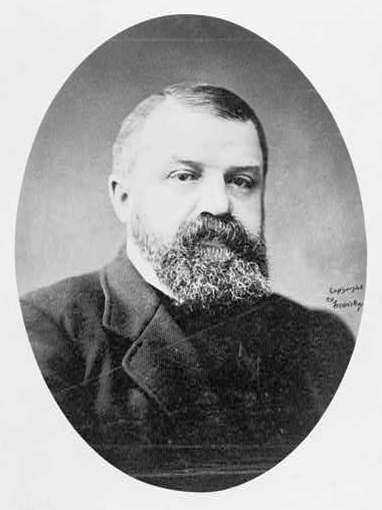
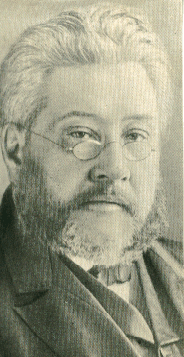 Two men whose work influenced Chambers: Moody and Spurgeon
As for using Mrs. Oswald Chambers as a textbook,
“I was curious to learn how women would respond to Biddy’s story, to hear their discernment on how she applied the principles in Utmost to her life. I would be the learner, not the teacher in that regard.”
How did the study work?
After the usual fellowship, announcements, hymn, and prayer, Frugé brought a unique approach to each session.
They always discussed the readings from the
devotional and the textbook, often examining the readings in light of the
Chambers’ lives at the time.
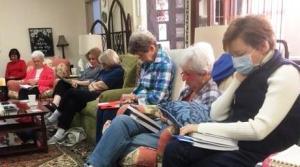
With a Ph.D. in church history, Frugé incorporated Bible passages relating to the themes, for example, the Mount of Transfiguration, or Jesus asleep in the boat during the storm.
He also included several novel ideas.
“I brought a section of HO railroad track once to illustrate the nature of paradox in the Bible (as in the Incarnation, the Trinity, and C.H. Spurgeon’s illustration of Election and Free Will) to explain the relationship of the actions of men and the sovereignty of God in our circumstances – a major theme of OC’s.”
They sang OC’s favorite hymn one week and had a guest speaker over the Internet one day: me.
Results from the study?
Frugé and the other leaders asked the participants to evaluate the study afterward, along with the textbook.
Here are a few comments:
“I feel
like I met Biddy and know her. This makes the devotional even more powerful.
The two books together were perfect.”
“This
caused me to re-evaluate my own spiritual thoughts. Biddy is what I aspire to
be but I woefully fall short.”
“I loved
integrating the history in with the devotional and Biddy’s and OC’s story.”
“Michelle’s book . . . helps one understand why certain components of My Utmost might have been written. The life of Biddy was definitely worth studying.”
As for Frugé himself,
“Seeing how both Oswald and Biddy utterly defended upon God has helped me understand in a fuller way the faithfulness of God. They weren’t just talking about theories, but “actualities” (to use an OC term). The study has deepened, and in a sense, simplified my walk with Christ.”
Speaking as the textbook author, I’m so honored by these answers.
I write to glorify God and my goal is the books I write will help people to see and appreciate our God in a new and better way.
Thank you for sharing your answers, Dr. Frugé and thank you to all the participants of the Calvary Baptist Church, Lexington, KY, Bible study.
If you would like more information or would like to receive a copy of Dr. Frugé’s study, please contact Michelle Ule here.
Tweetables
Using Mrs. Oswald Chambers as a Bible study textbook. Click to Tweet
How themes from My Utmost for His Highest and Biddy’s biography inform a Bible study. Click to Tweet
Using biography to understand My Utmost for His Highest. Click to Tweet
The post Mrs. Oswald Chambers as a Textbook appeared first on Michelle Ule, Author.
December 31, 2019
The Best of 2019

Here’s my best of 2019 list, just in time for 2020.
These are my personal favorite books, music, events, trips, Bible verses, and so forth.
Yours probably will be, and should be, different.
Favorite Books
You can read my reviews of all 150 books I read during 2019 on my Goodreads page.
The books range from novels written by friends (Sarah Sundin’s The Sky Above Us), insight into spiritual truth (Perfectly Human; What is a Girl Worth?), a local fire story (Brian Fies’ A Fire Story), and new books about a favorite subject (Elisabeth Elliot; military wives, and Genealogy).
I also found several series writers whom I enjoyed or anticipate following into the future. They include Will Thomas and Rosanna M. White.
In addition, several books informed me about important subjects I didn’t expect to care about (Dopesick; Being Mortal: Medicine and What Matters in the End; From Scratch: A Memoir of Love, Sicily, and Finding Home).
Most memorable books
I’ve thought more about the book God is Red, and discussed it more often than I ever imagined.
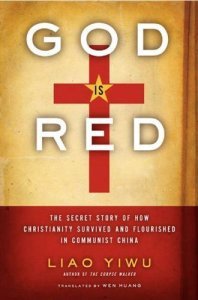
Someone recommended Chinese journalist Liao Yiwu as a way to understand Christianity in China–which is important for my current research.
What I didn’t anticipate is how my interpretation of Yiwu’s interviews would reverberate in my imagination.
Yiwu is not a Christian, but he wanted to understand why people remained true to Christianity despite 80 years of persecution.
Based on what I read, it’s two things: “God will never leave us nor forsake us,” and “the peace that passes all understanding.”
Those are meaningful concepts to all who claim to be Christians.
Best of 2019 Movies
My favorite, hands down, was Yesterday.
The music is great, of course, who doesn’t like the Beatles?
The whole movie is silly, light-hearted, fun, and simply makes me happy.
But I also loved the story.
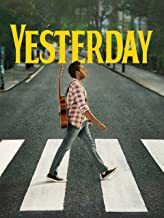
Irony is my favorite humor display and I also appreciated a story that pointed out fame is no substitute for love.
Isn’t that what the Beatles sing about?
Favorite vacation spot
After attending a work-related retreat, my husband and I spent several days on Folly Island, South Carolina.
What a wonderful visit to a fantastic beach. We also loved our one-day excursion to Morris Island. We had a splendid time.
All the more sweeter, we dined with our Connecticut pastor and his wife from many years ago. The stories flew, the spiritual wisdom informed, and we returned to our hotel full and content.
Favorite Research Event
A two-week visit to One Mission Society in Greenwood, Indiana.
I took an assistant and we spent two weeks scanning 7.8 GB of information.
On to the next biography!
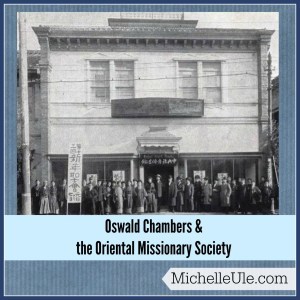
I’ve also been the recipient of surprising Oswald and Biddy Chambers-related stories, several of which I’ll document in the coming year, mostly in my monthly newsletter.
They include:
The tale of one man’s quest to find Oswald’s birthplace.
A young man’s meeting Oswald on a train–an OC in the 1907 “wild” sighting!
Learning a Bible study used Mrs. Oswald Chambers as a textbook!
Best of 2019 Bible concepts
I began the year trapped in discouragement.
But I knew the verse, “in everything give thanks for such is the will of God in Christ Jesus for you.” (1 Thessalonians 5:18, NKJV)
Realizing I didn’t want to ruin all my relationships with disappointment and bitterness, I resolved to mourn for a few weeks and then set it all aside.
I wanted to be grateful and thankful, not depressing.
Once I began to look for reasons to be thankful, the burdens lifted, and I genuinely felt much better.
It’s almost hard to remember last winter’s bleakness; joy fills my heart as we say goodbye to 2019.
Coming up in 2020?
I’m turning a research corner and have plenty to share.
I also anticipate being even more thankful for the books, movies, friends, Bible verses, trips, concepts and research to come.
Watch for it here!
Happy new year, 2020.
 Photo by Annie Spratt (Unsplash)
The post The Best of 2019 appeared first on Michelle Ule, Author.