Michelle Ule's Blog, page 35
June 11, 2019
Art Museums and Kids: How?

How do you make art museums palatable to children?
Oh, not the ones who can hardly wait to get there.
I’m talking about the children who look at you incredulously and want to bring their footballs.
(Experience).
How do you prompt an interest in them?
You turn it into a game, of course.
Art museums scavenger hunt
Here’s the deal, boys.
Take this piece of paper.
You’re on a scavenger hunt.
As soon as you’ve answered all the questions, or an hour has gone by, you’re done.
You can then go outside and play football on the lawn with your father.”
It worked.
My father-in-law was with us at the Los Angeles County Museum of Art, and he asked how I knew the museum owned a Madonna and child painting.
I laughed. “They all do!”
Even preschoolers can enjoy art museums
I hauled preschoolers to Europe twice in an effort to catch up with their father.
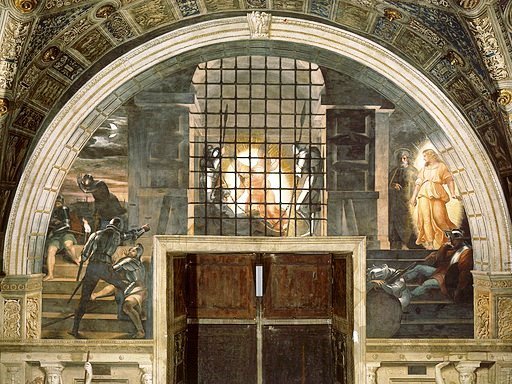 Do you know the Bible story?
(Raphael, Vatican Museum, Wikipedia)
(When you’re two-years-old and your father deploys for five months, that’s nearly a quarter of your life. They needed to see their dad.)
Before we left for Italy, a friend gave my four-year-old a small packet of colored pencils and a notebook. “Draw me a picture of what you saw,” she told him.
Upon our return from the Vatican Museum (where a kind guard gave my children candy!), he immediately rummaged through his backpack.
“I have to draw my picture for Mrs. Springer,” he explained.
He drew a lady dressed in blue holding a baby.
See?
There’s a madonna and child in every art museum.
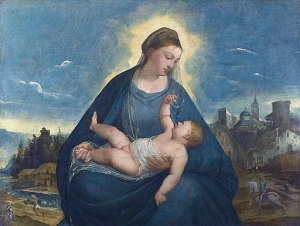 There’s always a Madonna and Child (Anonymous; Wikipedia Commons)
During that same visit, we paused before several large paintings depicting Bible stories they knew.
One, in particular, was the story from Acts about Peter being freed from prison.
“Do you remember this story?” I asked.
They weren’t sure until I began to tell it. Then, they easily picked up pertinent details.
(We also got in trouble at that painting because the children sat on the floor. It’s important to mind the rules).
The four-year-old enjoyed himself.
The toddler loved riding on Daddy’s shoulders.
Bring enthusiasm!
Our daughter was five when we visited the Art Institute of Chicago.
The much older boys got through their scavenger hunt very quickly and decamped to the lawn with my husband.
But our daughter was more interested, so we took our time.
I put gusto into my voice as we walked between the galleys and in her enthusiasm, she rushed ahead.
 A Sunday on the Grand Jatte; Seuret (Chicago Art Institute; Wikipedia Commons)
“What do you see?” I called.
“A lady with purple hair!”
In the Impressionists?
She pointed at another visitor, who turned to look at her.
I pulled my daughter aside for a whispered discussion of etiquette.
She enjoyed the museum.
Teenagers and art museums
A friend and I took our teenage daughters to New York City’s Metropolitan Museum of Art one year.
One of the girls was less than enthusiastic, so I suggested we do a run through the museum.
“What does that mean?” my friend asked.
“We’ll go really fast and I’ll point out the important paintings in the galleries.”
The girl shrugged. “Sure.”
And we were off.
“How will you know what’s most important?” the other mom whispered.
“I’ll know when I get there.”
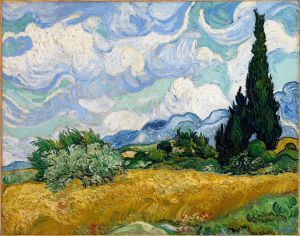 Everyone loved Van Gogh’s Wheat Field with Cypresses
 (Metropolitan Museum of Art; Wikipedia Commons)
As we scurried from gallery to gallery, I paused inside the doorway to scan the room. I then pointed to the “most important painting”–often the one that caught the girls’ attention.
We approached and I quickly explained its significance.
It didn’t matter what I said. They nodded sagely and we hurried to the next room.
(I wasn’t exactly cheating. I’ve visited art museums all over the world and took several classes in art history in college.)
How I would have liked to spend more time really looking and thinking about the paintings.
But the point was to introduce the girls to great art. If they found it interesting, it was interesting.
Asking them questions helped engage their interest.
Laughing at paintings helped, too.
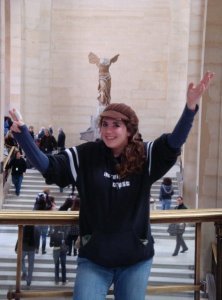 You just have to make it fun;
Years later at the Louvre.
We decided that if the artist couldn’t title their own painting, they must not be able to explain it, so we didn’t bother.
Like Rick Steves always suggests, I assumed I would return to the museum someday and I could appreciate the paintings at my leisure.
That has proven to be true at all the art museums I’ve visited with my children.
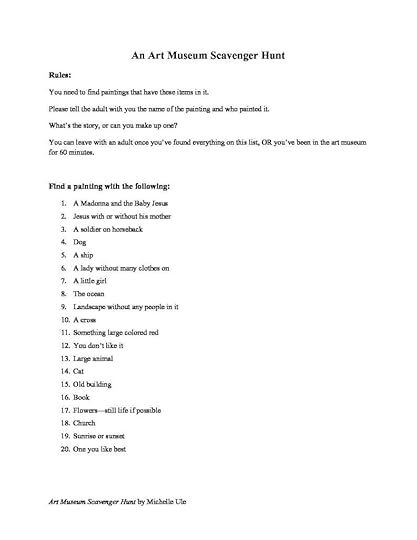
What about the scavenger hunt items?
If you like art, you may already know what’s in the art museum you’re visiting.
(You can also visit the museum’s website before you go and make a list of what they think is important in the galleries).
Or, make up a list of the type of paintings you would prefer to see!
If you need help, check out a list here:
But, no matter what, make sure you enjoy visiting art museums, or there’s no hope for your children!
Does visiting an art museum as a child increase enthusiasm for art?
I’d like to think so.
When my son called to describe one of his first dates with the woman he married, he took her to an art museum.
That’s my boy!
Tweetables
How to get kids to enjoy visiting art museums. Click to Tweet
An art museum scavenger hunt for kids! Click to Tweet
Visiting an art museum with kids: how to make it fun! Click to Tweet
The post Art Museums and Kids: How? appeared first on Michelle Ule, Author.


June 4, 2019
US History is Closer than You Think

Our connections to early US history, aren’t really all that distant.
Each day, they take one more step into the future, but really, our country isn’t very old.
We’re within just a few generations of the beginning of American democracy.
For example, my father’s great-grandfather was born in 1809.
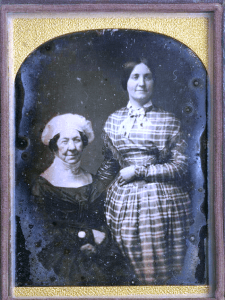 Speaking of Madison, here’s his wife Dolley in an 1848 photo (National Portrait Gallery)
James Madison had just taken the reins of the US government from Thomas Jefferson when James Steele Hanks was born.
That seems like such a long time ago.
But in terms of generations, it’s not.
Civil War Connections
We know that for some people, the War Between the States may never end.
And why should it?
People with personal connections to the war have only recently died.
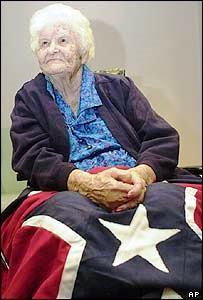 CSA widow, 2003 (BBC News)
My same father met a Civil War veteran in 1936 when dad was in first grade.
I asked my friend Jo, born in 1918, if she had heard any Civil War stories while growing up in Virginia.
“My uncle told them all the time,” she said. He fought for the Confederate States of America (CSA).
The Army was still paying a Civil War pension as late as 2004 when the final widow of a CSA veteran died, nearly 140 years after the war ended.
Personal Connections with History
I’ve written about my maternal grandfather’s experiences in World War I here.
Born in 1890 in a Sicilian fishing village, he emigrated to the United States in 1908.
He lived to nearly 103.
Realizing he was 28 in 1918, I asked him if he remembered when the Russian Tsar Nicholas II died.
“Yes, that was very sad. They shot him and his family,” Grandpa answered.
I was 28 years-old when I asked the question. Of course he would remember.
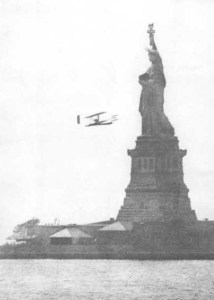 He said he saw the original on exhibit at Chicago’s Field Museum. (Public Domain photo)
 The first airplane he ever saw was the Wright Brothers’ original plane at Chicago’s Field Museum.
Queen Victoria sat on the throne when he was born. The incandescent light bulb hadn’t been invented yet.
But Grandpa lived long enough to have good conversations with my husband–a naval officer on a nuclear submarine.
Such a long, yet short, expanse of time, technologically speaking.
US history felt so close, I did touch it!
Prairie Life
My paternal grandmother grew up in a small town in Utah.
As a child, her grandmother (who had emigrated to the US from Denmark and then walked across the Mormon Trail to Utah), sent her to the local store to buy kerosene with an egg.
She carried a small pitcher for the kerosene, which now sits on the organ I inherited from her.
But what caught my attention was her remark about being careful with the “Indians around.”
I’d been reading Laura Ingalls Wilder stories and her comment shocked me.
It wasn’t the local Native Americans who posed a problem.
Her grandmother had never quite gotten over the fear when she crossed the great plains. She warned my grandmother (who lived with her) on every trip to the store.
Adventures in US History
My Sicilian grandparents entered the United States through Ellis Island.
My grandmother smuggled a bottle of champagne through customs in my mother’s diaper–it was during Prohibition.
Other relatives made alcohol in the bathtub during the same time frame. They delivered it to customers in a baby carriage.
My paternal grandfather helped build the Alaskan Highway. He told of being stuck for two weeks in the woods and having to build a bridge before they could continue.
My uncle lost his hearing from serving on a bomber in England during WWII. My father arrived in Korean waters on an aircraft carrier the day the US signed the armistice ending the Korean War.
And, of course, my father-in-law helped save Apollo 13.
How to hear the stories
They’re all around us, we just need to be open to asking the questions and hearing the answers.
US history isn’t all that very old.
Many veterans, in my experience, don’t much like to talk about what happened during their wars.
But their stories are important–for us and for them.
Try asking other family members what they were doing during an historic period of time.
Or ask about your ancestors.
The founding periods of US history are closer than you may think.
Tweetables
How short a time span is US history? Here’s a photo of Dolley Madison. Click to Tweet
Family stories in US history–they’re closer than you think. Click to Tweet
The post US History is Closer than You Think appeared first on Michelle Ule, Author.
May 28, 2019
Who Wrote “Jesus Loves Me?”

“Jesus Loves Me,” is one of the most familiar songs in the Western world.
But who wrote it?
And why?
Until a friend recently told me the story, I’d never wondered about it. I guess I assumed it was like the “ABC” song, something we all knew.
But, the song began from a poem, a composer added the music, and children and adults have been singing it ever since.
Anna Warner wrote it, however, during events leading up to the American Civil War.
Who were Anna Warner and her sister Susan?
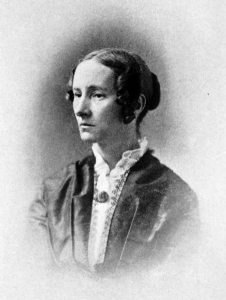 Anna Warner
The daughters of a New York City investor who lost his fortune in 1837, Anna and Susan Warner (born in 1822 and 1819) lost their fashionable mother at an early age.
The two women–who never married–were devoted to each other and shared literary talent. They began writing for publication in 1849.
Between them, they ultimately published 106 novels and children’s books. They collaborated on eighteen books, writing under pen names Elizabeth Wetherell (Susan) and Amy Lothrop (Anna).
Susan’s first novel, The Wide Wide World was translated into other languages and went through fourteen editions in two years. It was the most popular novel of the time after Uncle Tom’s Cabin.
(Jo March mentioned reading the book in Little Women! You can examine it yourself here)
In addition to thirty-one novels of her own, Anna published two collections of verse in 1858’s Hymns of the Church Militant.
The West Point Connection
As the family fortunes declined, Anna and Susan moved with their father to Constitution Island, up the Hudson River and directly opposite the US Military Academy at West Point, in 1838.
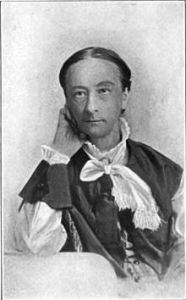 Susan Warner
(Wikipedia Commons)
Their uncle, Reverend Thomas Warner, was the Army chaplain at the Academy from 1828-1838.
The two women had long been devout Christians and determined to lead a Bible study for the cadets.
Anna wrote a fresh hymn for her Sunday School class each month.
According to blogger Norma Lee Liles:
Anna realized that if the southern states made good on their threat to withdraw from the Union many of the boys she knew could be killed or wounded in the war that would follow.
While it broke her heart to consider the dismal fate for those too young to have experienced the many blessings of life, she also fully comprehended the importance of leading each of them to Jesus now.
With an urgency brought about by a nation on the brink of dividing, sharing Christ’s love became her mission in life.”
Jesus Loves Me: the poem
Anna wrote the poem, “Jesus Loves Me,” at the request of her sister. Susan needed a poem to console a dying child in her 1860 novel Say and Seal.
The original verses in the novel were these:
Jesus loves me—this I know,
Say and Seal pages 115-116
For the Bible tells me so;
Little ones to him belong,—
They are weak, but he is strong.
Jesus loves me—loves me still,
Though I’m very weak and ill;
From his shining throne on high,
Comes to watch me where I lie.
Jesus loves me—he will stay,
Close beside me all the way.
Then his little child will take,
Up to heaven for his dear sake”
Jesus Loves Me : The Song
The choirmaster of New York’s Baptist Tabernacle, William Batchelder Bradbury first encountered the poem in 1862.
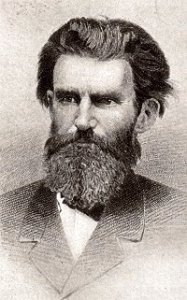 William Bradbury
(Wikipedia Commons)
He was a composer and publisher of such hymns as “Saviour, Like a Shepherd Lead Us;” “He Leadeth Me;” and “Just as I am.”
Bradbury also encouraged Fanny Crosby to devote her talents to writing songs and even took down via dictation the first of her hymns. (She ultimately wrote 9,000 hymns!)
Bradbury loved the sound of children’s choirs and when he read Anna’s poem, decided to put it to a simple tune suitable for children.
He also added the now-familiar chorus: “Yes, Jesus loves me. Yes, Jesus loves me. Yes, Jesus loves me; the Bible tells me so.”
The combination song and poetry first appeared in his hymnbook Original Hymns in 1862.
According to blogger Norma Lee Liles:
Through the publisher’s established distribution network, the new children’s song quickly worked its way across the North and South.
In the face of the most horrible fighting this nation had ever known, both sides were singing about a Savior who died, yet had risen and still watched over everyone with equal love and compassion.
It was an ironic message for a very ironic time.”
Soon, even West Point cadets sang the song while on military duty.
Many soldiers on the battlefields during the War Between the States sang the song for comfort.
Some people believe President Dwight D. Eisenhower, USMA ’15, may have attended Anna’s Sunday School class.
What happened to Anna and Susan?
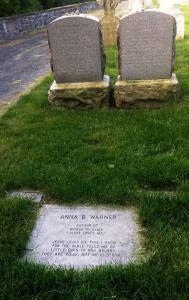 Photo by Linda Montgomery
Susan died in 1885 and was buried, at the cadets’ request, at the West Point Cemetery. Anna joined her there in 1915.
The two women are the only civilians buried in the military cemetery.
Anna willed their home, Good Crag, to the Academy and it is now a museum in their honor.
A Lasting Legacy
The song has a lasting legacy.
I wrote it about, myself, here.
Is it Scriptural?
Yes, according to the Berean Text website.
In 1944, writer John Hersey wrote an article for The New Yorker Magazine entitled, “Survival.”
Based on interviews with Lt. John F. Kennedy, it tells the harrowing story of the PT 109 crew’s survival in the South Pacific.
Landed safely on an island, the rescue story ends like this:
With the help of the natives, the PT made its way to Bird Island. A skiff went in and picked up the men.
In the deep of the night, the PT and its happy cargo roared back toward base. . . .
[One of the enlisted men] retired topside and sat with his arms around a couple of roly-poly, mission-trained natives.
And in the fresh breeze on the way home they sang together a hymn all three happened to know:
Jesus loves me, this I know,
For the Bible tells me so;
Little ones to him belong,
They are weak, but He is strong.
Yes, Jesus loves me; yes, Jesus loves me . . . “
And, as a matter of fact, Jesus loves you, too.
Tweetables
Who wrote “Jesus Loves Me?” And why? Click to Tweet
The surprising history behind a song you know so well: “Jesus Loves Me.” Click to Tweet
“Jesus Loves Me,” encouragement from the Civil War. Click to Tweet
The post Who Wrote “Jesus Loves Me?” appeared first on Michelle Ule, Author.
May 21, 2019
An Elderly Friend: the Joy and Value
My elderly friend Jo died two weeks ago.

She was only ten days shy of her 101st birthday.
I only knew her the last 15 years (15%) of her life, but our friendship was joyous and valuable to me.
An elderly friend can do that for you.
Sharing interests
Jo had attended my Bible study for a few months and displayed her spiritual insight and wisdom on numerous occasions.
But it was her answer to my “ice-breaker” question that cemented our friendship.
“Who has met a US president?” I asked one day as I bustled around preparing to teach.
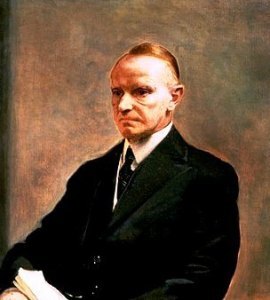 Honestly–who has ever met Calvin Coolidge?!
Several women had met President Bill Clinton, someone met one of the Bush presidents and a former Orange County resident once shook President Richard M. Nixon’s hand.
“I met Calvin Coolidge once,” Virginia native Jo said.
“Get out of here, Jo,” I laughed. “No one’s ever met Calvin Coolidge!”
“I was a little girl. I remember walking up the steps of the White House with my father to meet him. He had bright red hair.”
My jaw dropped. She had met Calvin Coolidge!
An elderly friend with a fascinating history
If Calvin Coolidge’s handshake wasn’t enough to catch my attention (it was), there was also her former life in Washington DC.
She’d moved to the city to attend Strayer College and earn a degree in stenography prior to World War II.
A model on the side, Jo landed a fascinating job: in Naval Intelligence–the Far East Division.
She once briefed a young Lieutenant headed to his first command on the PT boat #109.
His name?
John F. Kennedy.
 Find out the rest of the story here!
“I didn’t much like him,” she drawled in her distinctive voice. “He was a womanizer.”
She also had a surprising experience when her boss plunked an odd machine on her desk and asked her to decode it.
“I wasn’t trained for that,” she said.
It was the Enigma machine.
Perhaps you’ve heard of the OSS?
An elderly friend with real-life wisdom
She left government service in her 40’s. A single woman, she wanted to finish her education–which she did.
After earning a Bachelor of Arts degree at Meredith College, she obtained a master’s at the University of Denver and ultimately became a psychoanalyst.
(Why not? Surely she had plenty of experience with odd characters after her war work!)
Jo worked at Napa State Hospital for many years. True to her profession, she never talked about her patients.
She also never psychoanalyzed any of us in Bible study–which is probably for the best.
Occasionally, she’d point out someone must have been a narcissist–but it was always someone in the news, not one of us.
Jo had lived through and seen so much, I valued her opinion when something about life confounded me.
An elderly friend and genealogy
Of course she’d be interested in genealogy–she knew most of those people.
(A friendly joke between us).
I put together Jo’s genealogy when I learned about her unusual middle name: her godfather’s surname.
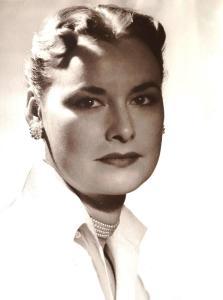 Model beautiful–wouldn’t you want to be related to her?
Three of my godsons had a grandfather with the same name as Jo’s godfather–from the same part of Virginia.
I loved the thought the men might be the same person–except the grandfather was born two months after Jo.
Still, Jo and I had fun tracing the lines, discussing the Huguenot past of our ancestors (all in Virginia three hundred years ago, but not related).
I demonstrated how her line went all the way back to Switzerland–which delighted her. She loved Switzerland’s beauty.
Shared Interests
Older than my mother, Jo reminded me of my mom’s love of travel.
We swapped stories of her past trips and my current ones.
She loved hearing about our adventures, particularly when they involved classical music in Europe, and enjoyed knowing my family.
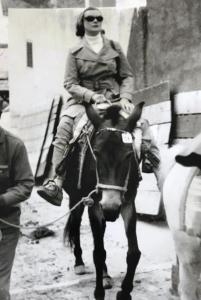 My mother never looked this glamorous while traveling!
Jo had nieces and nephews whom she adored–and we heard her pride in their achievements during Bible study–but her heart was always open to others.
We’re not sure she ever met a stranger.
Jo had a knack for striking up conversations with people on the bus, in waiting rooms and in her apartment complex.
She loved our church and invited everyone to visit.
The elderly woman, whose mind held strong all the way to the end, had no qualms about advising young people she met around town.
No one seemed to mind–because Jo was always so charming.
The last personal link to WWI
Jo was my last personal link to World War I.
Born six months before Armistice, she didn’t remember the war, but she was fascinated by my work on A Poppy in Remembrance.
As my years of research and writing stretched, I feared she’d never see the book.
When I finally received a copy, I took it right to her.
She loved the cover and the inscription, but her eyesight wouldn’t allow her to read it.
Somehow the war didn’t seem so far in the past when someone I knew had been alive during the final year.
The value of an elderly friend
My life is so much richer because of my friend Jo.
It’s also richer because of all the other people I know older than me.
They help me put my life and experiences into perspective.
They charm, cajole, encourage and pray for me.
I’ll always miss Jo’s presence, but I’m thankful I’ll see her again someday.
Pay attention to your elderly friends–they still have plenty to show, teach and give us.
Tweetables
The value of an elderly friend: living history. Click to Tweet
The last touch with WWI: a woman who met Calvin Coolidge! Click to Tweet
The post An Elderly Friend: the Joy and Value appeared first on Michelle Ule, Author.
May 14, 2019
Offended? Choosing NOT to Be

Are you easily offended and nurse the angry emotions as a result?
Why?
Not, “do you get offended,” but how do you react at the slightest suggestion of conflict?
“Wow,” a friend said after someone spoke dismissively to me. “I can’t believe you just took that.”
Oh, I heard the “polite” slap; I just didn’t see any point in getting worked up about it.
It wouldn’t change her mind and would only cause me spiritual grief.
In the grand scheme of life, it was easiest to just let the comment go.
What does it mean to offend?
The dictionary is clear. To offend means, “cause to feel upset, annoyed, or resentful.”
It’s the resentful that’s a problem for me.
Resentment can often lead to bitterness.
I’ve spent too much of my life dealing with bitterness, as explained here, here, and here.
It’s easier for me to nip bitterness in the bud by choosing not to take careless words or actions personally.
Why not be offended if it’s justified?
Who’s to say if it is justified or not?

The remark above had elements of truth in it. It wasn’t said with charity, but I knew her intention was not to insult me.
I could protest my innocence, but it wouldn’t change the woman’s opinion.
So I let it go.
Scripture is the reason why.
The Lord’s servant must not be quarrelsome but must be kind to everyone, able to teach, not resentful.”
2 Timothy 2:24 NIV
Nothing would be gained by arguing about it.
A person’s wisdom yields patience;
Proverbs 19:11; NKJV
it is to one’s glory to overlook an offense.”
How to deal with an offensive remark
Obviously, the first step is to analyze the legitimacy of the comment.
Was my friend trying to insult me? Did it matter?
I may not be able to control what she said, but I could control my response to her words.
The Apostle Paul has good advice in this type of situation:
Live a life worthy of the calling you have received. Be completely humble and gentle; be patient, bearing with one another in love. Make every effort to keep the unity of the Spirit through the bond of peace.”
Ephesians 4:1-3 NIV
To have protested her remark’s unfairness would have embarrassed her and me.
It would have harmed our friendship and the body of Christ.
I cared more about our future relationship than her remarks.
What if it burns years later?
At my mother’s funeral, a family friend approached me and said, “You know, I was more of a daughter to your mother than you were.”

Nasty retorts zipped through my mind.
But there’s a numbness in your soul during grief and the need to be polite–which my mother would have insisted upon–rose above my offense.
I nodded–as in “Yes, I hear you,” but wore a non-committal smile that could be taken many ways.
That day, and this day, I recall that well-meaning people say stupid and irresponsible things to friends going through grief.
No one really knows what to say, and so they blurt out the first thing that crosses their minds. I knew the family friend loved my mother. My mother worried about her.
I also knew my mother loved me. The “friend” did not threaten my mom’s love for me. So I let it go.
(Someday I may understand how unfair it is that the people most in need of consolation are often the ones providing it during a funeral, but I’m not there yet.
(I just apply my nodding non-committal smile and move onto the next person!)
The verse describing the why is more nuanced, and one I try to live out in my life every day:
If it is possible, as far as it depends on you, live at peace with everyone.”
Romans 12:18 NIV
But The Message Bible has a fuller take on the subject:
Don’t hit back; discover beauty in everyone. If you’ve got it in you, get along with everybody. Don’t insist on getting even; that’s not for you to do. “I’ll do the judging,” says God. “I’ll take care of it.”
Romans 12:17-19 MSG
What if you can’t free yourself from bitterness?
I gained a lot of perspective about myself and bitterness many years ago after a talk by Community Christian Ministries teacher and blogger Jim Wilson.
The most excellent booklet, How to be Free from Bitterness, is available, free, here.
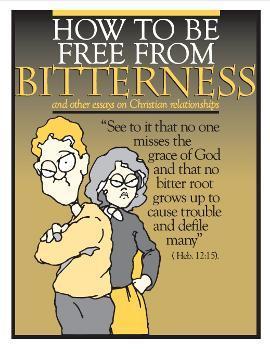
It’s an excellent tool–which I’ve used often myself–to help me remember not to be offended.
Tweetables
How to choose not to be offended. Click to Tweet
Offense, bitterness, resentful? Bible verses to choose not to be. Click to Tweet
Using the Bible to avoid bitterness, resentment, and feeling offended. Click to Tweet
The post Offended? Choosing NOT to Be appeared first on Michelle Ule, Author.
May 7, 2019
The Late Great Planet Earth and Me

I read The Late Great Planet Earth shortly after I began reading the Bible.
Unfamiliar with both books and new to the concept of knowing Jesus as a personal savior, the book frightened me into the Kingdom of God.
I’d been raised in a church tradition that did not emphasize Jesus as our Savior, though we certainly knew about Him.
Starting to read the New Testament on my own in a paperback Good News Bible, introduced me to many new religious ideas.
When presented with this story of the Rapture and what Lindsey believed would come, I was frightened.
In January, 1973, I decided that I did not want to risk ending up left behind, and gave my heart to Christ.
God can and will use anything to reach us.
Learning more in college
In the late 1960s and early 1970s, former Campus Crusade for Christ staff member Hal Lindsey, the author of The Late Great Planet Earth, ran JC Light & Power House ministry near the UCLA campus.
When I arrived at my assigned dorm room in 1974, my room was the only one on the long white corridor featuring a psychodelic painting above the door.
It read “Houses of the Holy,” in colorful fat lettering.
“I thought we got her out of that,” my father muttered to my mother. They were not enthusiastic about my commitment to Christ.
The painting delighted me–a welcoming presence and an easy way to find my room!
It turned out the previous year’s occupants attended Bible study at the JC Light & Power House ministry!
I didn’t visit, though I thought of it, but the connection encouraged me at the enormous campus. Lindsey still taught there at the time. The Jesus Movement was in full swing.
Maturing in my faith
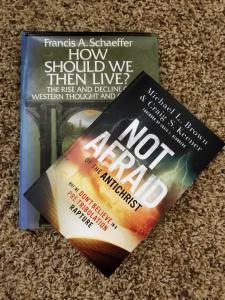
I read several more Lindsey books, in particular, Satan is Alive and Well on Planet Earth, but by my second year in college, my spiritual interests morphed.
The breathless-sounding prose didn’t inspire me any longer. I preferred Francis Schaeffer’s video series How Should We Then Live? which I saw with InterVarsity Christian Fellowship friends.
Schaeffer’s reasoning made more sense to me.
More than the Schaeffer film series, however, my own Scripture study led me away from Lindsey’s interpretations.
The concept of a pre-tribulation Rapture didn’t make sense to me anymore.
As I read the Old Testament more closely, Believers clearly endured terrible trials. All of Jesus’ disciples except John were martyred.
Why would God whisk Believers out of the world when they were most needed?
How do you deal with warnings from Jesus, that
in the world you will have tribulation, but be of good cheer, I have overcome the world?”
John 16:33 NIV
Jesus provides what we need to endure whatever trials arise. I can’t see him snatching away Believers when non-Believers suffer and need help.
Like other issues, however, Lindsey’s last days interpretation was not a matter of my salvation. I read it more as an interesting possibility but one I could wait to experience rather than worry about now.
Left Behind or Not Afraid ?
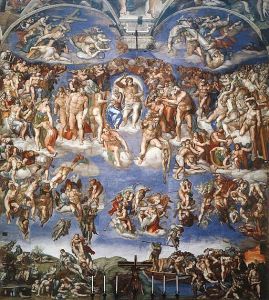 This is how Michelangelo saw the Last Judgement.(Wikipedia Commons)
Like many others in the late 1990s, I read Tim LaHaye and Jerry Jenkins’ novel Left Behind.
It reminded me of those early years in my faith walk when The Late Great Planet Earth was so popular.
I read the first one and didn’t bother with any others. The Bible itself spoke to me far more clearly than those novels.
While the books meant nothing to me, I have friends for whom they meant a great deal.
Since I believe God can use any tool to His glory, I left it at that.
If reading one of the Left Behind books sent people to Scripture and a deeper walk with Jesus, they had value.
Recently, I listened to a podcast interview on the Eric Metaxas Show with author Michael L. Brown discussing his recent book Not Afraid of the AntiChrist.
Like me, Dr. Brown and his coauthor Dr. Craig S. Keener were influenced by Lindsey’s book.
Now seminary professors, Not Afraid of the AntiChrist provides plenty of information to consider in light of both The Late Great Planet Earth and the sixteen books in the Left Behind series.
How, then, should we live with these books?
The Late Great Planet Earth sold more than 28 million copies.
Who knows how many copies of the various offshoots of the Left Behind series have sold?
None of the products are the Bible. They’re three men’s thoughts on Biblical eschatology, not the Gospel itself.
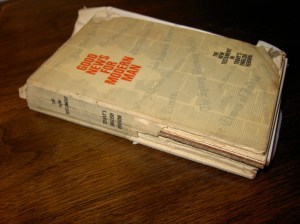 This is where The Late Great Planet Earth sent me
If they send people to searching the Scripture for truth, amen.
If they delude people into thinking they know how Jesus will return, with absolute certainty, they’re wrong.
But about that day or hour, no one knows, not even the angels in heaven, nor the Son, but only the Father.”
Matthew 13:32, NIV
I’m thankful my reading of The Late Great Planet Earth took me to the God of all Creation who knows the beginning and the end.
But, I don’t ever need to read it again.
God used it to point me to Jesus–which is exactly what I need any book to do.
Tweetables
The Late Great Planet Earth and me. Click to Tweet
How God can use a book with questionable theology to point to Jesus. Click to Tweet
The post The Late Great Planet Earth and Me appeared first on Michelle Ule, Author.
April 30, 2019
Suffragettes in “A Poppy in Remembrance”

The story takes place between 1914 to 1918. Suffragettes were active and busy throughout that period.
Our heroine, Claire Meacham, had mixed feelings about them at the start of the war.
But, as she made her way in a male reporting world, her feelings changed.
Attitudes in the upper class family
Claire was a product of her family, which didn’t really approve of women’s rights at the time.
In the novel’s opening pages, she tried to figure out how to explain to her father why she wanted to be a reporter. Driving through Trafalgar Square on August 5, 1914, the day the war began, she glimpsed women exhorting citizens to enlist.
Shortly thereafter, trying to impress him about her skills, she pulled up the “color” information he needed for a story.
“Suffragettes manned tables at the base of Lord Nelson’s column in Trafalgar Square. Transport crowded the streets as men answered their king’s call to enlist in the BEF.”
“By Jove, the young woman’s a reporter,” said a journalist seated not far away.
A Poppy in Remembrance page 19
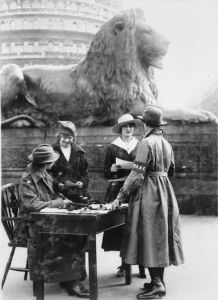 Enlistment stand, Trafalgar Square (IWM photo)
Several days later, her society-focused cousin Sylvia sneers when Claire voices a desire to work for the newspaper.
Her journalist father, Jock Meacham, allows Claire into the office to help with dictation and shorthand.
But Meacham knows what a good story. needs When he takes off to cover military action at the war’s front, he tells Claire to gather information.
” Keep your eyes and ears open wherever you go. Be careful if you attend a suffragette meeting; we don’t want you to get arrested.”
“Suffragettes? What are you asking me to do?”
“Take notes, of course.” He lowered his voice. “It’s time for you to learn how to spy like your mother. The best leads often come from innocent sources who don’t realize the importance of what they’ve told us.”
A Poppy in Remembrance
What did suffragettes do in WWI?
Prior to WWI, suffragettes aggressively confronted the government about their right to vote.
Women were arrested, staged hunger strikes, and participated in acts of civil disobedience–some violent. One woman attacked a painting at the National Gallery of Art in the name of women’s rights.
But after the war began, many shifted their focus from the right to vote to support for the soldiers.
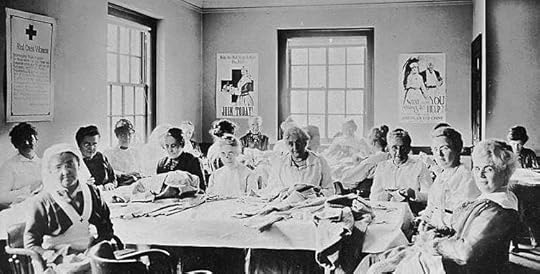 Bandage rolling 1914
In A Poppy in Remembrance, Claire follows her father’s orders and visits a meeting to roll bandages.
The hearty suffragettes were determined to help the war effort any way possible.
A dozen women of varying ages rolled the immense pile of muslin in an hour, all the while debating how to get the vote before war’s end. Far more educated than Sylvia’s set, they applauded Claire for holding a job.
Of course, the only reason she could attend the meeting was Conroy’s refusal to allow her in the newsroom, Claire thought bitterly.
Claire avoided personal questions, but the suffragettes fueled her determination to earn a byline as a bona fide reporter, no matter what her parents thought.
Attending meetings such as these and writing up notes afterward was part of her training. She’d win over her father by demonstrating her skills.
A Poppy in Remembrance
Equal to men
My mother believed, as I do, that women deserve equal pay for equal work and they should have an opportunity to use their talents.
Claire reached the same conclusion and explained why to her mother and aunt.
The two women shook their heads over the suffragette meeting. “I doubt the BNS would be interested in their ideas. Have you become a radical?” Anne teased.
“They make sense. Women should use their talents. I’m as competent in the newsroom as Nigel and Jim. Why shouldn’t I work? War causes social upheaval, often for good reason.”
A Poppy in Remembrance
“I wouldn’t let your stenography skills go to your head.”
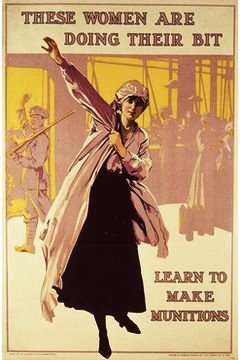
Frustrated, but determined, Claire eased her way into a secret internship with her father. She paid attention, took notes, worked around the disapproving editor Mr. Controy, and seethed.
Anger surged at both him [her father Jock Meacham] and Mr. Conroy. Maybe the suffragettes had the right attitude about patronizing men.”
A Poppy in Remembrance
Like many suffragettes, she could understand being passed over because of inexperience or lack of skill, but the assumption her sex determined her ability infuriated Claire.
As it would any thinking woman.
So what happened?
With so many men overseas, of necessity, professions opened up for their much-needed hands. Women built munitions, ran streetcars, delivered the mail and some even wrote for the newspapers (though not many).
Two million women went to work.
By war’s end in 1918, Parliament passed the Representation of the People Act. Women over the age of 30 who owned property could vote–only 40% of women in the country, but a start.
In 1928, they reduced the voting age for women to 21.
You’ll have to read A Poppy in Remembrance to learn what happened with Claire’s quest for a byline.
And now you can, for a mere $1.99 ebook–until May 12.

Tweetables
Suffragette attitudes in A Poppy in Remembrance. Click to Tweet
Writing about WWI must include suffragettes! Click to Tweet
How a male newsroom drove a female reporter to suffragettes. Click to Tweet
The post Suffragettes in “A Poppy in Remembrance” appeared first on Michelle Ule, Author.
April 24, 2019
Suffragettes in “A Poppy in Remembrance”
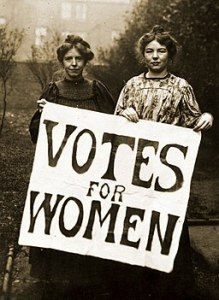
The story takes place between 1914 to 1918. Suffragettes were active and busy throughout that period.
Our heroine, Claire Meacham, had mixed feelings about them at the start of the war.
But, as she made her way in a male reporting world, her feelings changed.
Attitudes in the upper class family
Claire was a product of her family, which didn’t really approve of women’s rights at the time.
In the novel’s opening pages, she tried to figure out how to explain to her father why she wanted to be a reporter. Driving through Trafalgar Square on August 5, 1914, the day the war began, she glimpsed women exhorting citizens to enlist.
Shortly thereafter, trying to impress him about her skills, she pulled up the “color” information he needed for a story.
“Suffragettes manned tables at the base of Lord Nelson’s column in Trafalgar Square. Transport crowded the streets as men answered their king’s call to enlist in the BEF.”
“By Jove, the young woman’s a reporter,” said a journalist seated not far away.
A Poppy in Remembrance page 19
Imperial War Museum photoSeveral days later, her society-focused cousin Sylvia sneers when Claire voices a desire to work for the newspaper.
Her journalist father, Jock Meacham, allows Claire into the office to help with dictation and shorthand.
But Meacham knows what a good story. needs When he takes off to cover military action at the war’s front, he tells Claire to gather information.
” Keep your eyes and ears open wherever you go. Be careful if you attend a suffragette meeting; we don’t want you to get arrested.”
“Suffragettes? What are you asking me to do?”
“Take notes, of course.” He lowered his voice. “It’s time for you to learn how to spy like your mother. The best leads often come from innocent sources who don’t realize the importance of what they’ve told us.”
A Poppy in Remembrance
What did suffragettes do in WWI?
Prior to WWI, suffragettes aggressively confronted the government about their right to vote.
Women were arrested, staged hunger strikes, and participated in acts of civil disobedience–some violent. One woman attacked a painting at the National Gallery of Art in the name of women’s rights.
But after the war began, many shifted their focus from the right to vote to support for the soldiers.
1914 bandage rollingIn A Poppy in Remembrance, Claire follows her father’s orders and visits a meeting to roll bandages.
The hearty suffragettes were determined to help the war effort any way possible.
A dozen women of varying ages rolled the immense pile of muslin in an hour, all the while debating how to get the vote before war’s end. Far more educated than Sylvia’s set, they applauded Claire for holding a job.
Of course, the only reason she could attend the meeting was Conroy’s refusal to allow her in the newsroom, Claire thought bitterly.
Claire avoided personal questions, but the suffragettes fueled her determination to earn a byline as a bona fide reporter, no matter what her parents thought.
Attending meetings such as these and writing up notes afterward was part of her training. She’d win over her father by demonstrating her skills.
A Poppy in Remembrance
Equal to men
My mother believed, as I do, that women deserve equal pay for equal work and they should have an opportunity to use their talents.
Claire reached the same conclusion and explained why to her mother and aunt.
The two women shook their heads over the suffragette meeting. “I doubt the BNS would be interested in their ideas. Have you become a radical?” Anne teased.
“They make sense. Women should use their talents. I’m as competent in the newsroom as Nigel and Jim. Why shouldn’t I work? War causes social upheaval, often for good reason.”
A Poppy in Remembrance
“I wouldn’t let your stenography skills go to your head.”
 Imperial War Museum poster
Frustrated, but determined, Claire eased her way into a secret internship with her father. She paid attention, took notes, worked around the disapproving editor Mr. Controy, and seethed.
Anger surged at both him [her father Jock Meacham] and Mr. Conroy. Maybe the suffragettes had the right attitude about patronizing men.”
A Poppy in Remembrance
Like many suffragettes, she could understand being passed over because of inexperience or lack of skill, but the assumption her sex determined her ability infuriated Claire.
As it would any thinking woman.
So what happened?
With so many men overseas, of necessity, professions opened up for their much-needed hands. Women built munitions, ran streetcars, delivered the mail and some even wrote for the newspapers (though not many).
Two million women went to work.
By war’s end in 1918, Parliament passed the Representation of the People Act. Women over the age of 30 who owned property could vote–only 40% of women in the country, but a start.
In 1928, they reduced the voting age for women to 21.
You’ll have to read A Poppy in Remembrance to learn what happened with Claire’s quest for a byline.
And now you can, for a mere $1.99 ebook–until May 12.
On sale here
Tweetables
Suffragette attitudes in A Poppy in Remembrance. Click to Tweet
Writing about WWI must include suffragettes! Click to Tweet
How a male newsroom drove a female reporter to suffragettes. Click to Tweet
The post Suffragettes in “A Poppy in Remembrance” appeared first on Michelle Ule, Author.
April 23, 2019
Emmaus Road Surprise!

The two pilgrims, of course, didn’t know it was Easter Sunday–they were just headed seven miles home after celebrating Passover in Jerusalem.
They recalled confusing events. Such things they had heard and seen!
Perhaps they had waved branches as the exciting rabbi Jesus entered Jerusalem?
Certainly they had spent time with his apostles and were familiar with Jesus’ teachings.
But nothing seemed to come of so many people’s hopes, so they headed home, talking about what they had seen and heard.
What did it mean?
Incognito on the road to Emmaus
A friendly man they didn’t recognize caught up with the travelers before they reached Emmaus and asked them about their conversation.
He’d heard something, but was curious–what happened in Jerusalem that Passover? Why were they so sad?
(I’ve always loved this song by Michael Kelly Blanchard about that encounter. You can listen to a short clip here).
His question startled the pilgrims. How could he have not heard?
Cleopas, the only pilgrim named, asked
“Are you the only one visiting Jerusalem who does not know the things that have happened there in these days?”
New International Version Bible, Luke 24:18
So they told him.
“The things concerning Jesus of Nazareth, who was a Prophet mighty in deed and word before God and all the people, 20 and how the chief priests and our rulers delivered Him to be condemned to death, and crucified Him.
But we were hoping that it was He who was going to redeem Israel. Indeed, besides all this, today is the third day since these things happened.
Yes, and certain women of our company, who arrived at the tomb early, astonished us. When they did not find His body, they came saying that they had also seen a vision of angels who said He was alive.
And certain of those who were with us went to the tomb and found it just as the women had said; but Him they did not see.”
New King James Version Luke 24:19-24
I bet Jesus incognito smiled the entire time.
Jesus in the Old Testament
How do you think God would explain Jesus’ 33 years walking the earth?
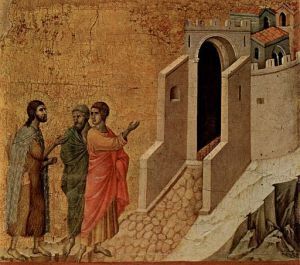 Duccio di Buoninsegna, Duccio
(Wikipedia Commons)
Cleopas and his friend soon found out.
Jesus explained his role throughout the Old Testament.
The men and others like him, including the apostles, assumed Jesus was going to redeem Israel. They thought he’s overthrow Rome.
The Messiah explained otherwise.
In Luke 24: 17-24, Bible teacher David Guzik made a list of what Jesus might have told them about his role in redemption.
Here are just some of the ways Jesus could be found in the Old Testament
Jesus was the seed of the woman whose heel was bruised.High priest after the order of Melchizedek.The man who wrestled Jacob.The Lion of Judah.Passover Lamb.A prophet greater than Moses.Captain of the Lord’s army to Joshua.Ruth’s ultimate kinsman redeemer.Psalm 23’s good shepherd.Isaiah’s suffering servant.
Lists like this abound. Here’s another one.
Or, you can read an entire book, like Nancy Guthrie’s The One Year Book of Discovering Jesus in the Old Testament.
Imagine what this was like for the two pilgrims.
A stranger approaches them between Jerusalem and Emmaus and explains exactly what they’d wondered about.
In Emmaus
When they reached home, their fascination continued. “Wouldn’t this stranger join them for dinner?”
Middle Eastern hospitality may have played a role in their dinner invitation, but, really, they wanted to hear more from this obviously learned rabbi.
Recognizing the rabbi’s spiritual authority, Cleopas may have indicated Jesus should say the pre-meal blessing.
Jesus broke the bread, blessed it and served the men.
At that moment, everything changed.
They recognized the Messiah.
Perhaps he smiled first, but then Jesus vanished.
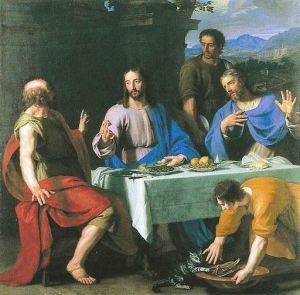 I love how surprised the men are while the cat chooses this moment to steal a fish! Painting by Phillipe de Champaigne; Museum of Fine Arts, Ghent, Belgium (Wikipedia Commons)
“Did not our heart burn within us while He talked with us on the road, and while He opened the Scriptures to us?”
Luke 24: 32 NKJV
They weren’t tired anymore. They rose and hurried back to Jerusalem. Someone needed to let the disciples know Jesus was alive!
Now what?
Meanwhile, back in Jerusalem, Jesus apostles had experienced an extraordinary day.
Nothing was clear except that Jesus was not in his tomb.
The disciples had first fielded a bewildering excitement in the women who had gone to dress the body.
Then Peter and John raced to the tomb where an angel questioned them:
“Why do you seek the living among the dead? He is not here, but is risen!”
Luke 24:5-6 NKJV
John, the disciple whom Jesus loved, understood immediately. It took longer for Peter–who spent his time marveling at the words.
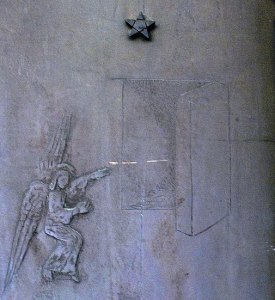 Photo: Andreas Praefcke [Public domain]
That night, two men broke into their gathering with breathtaking information. They had seen and spoken with the risen Jesus on the road to Emmaus!
Before the shocked disciples could begin to process or discuss this information, Jesus himself appeared among them.
He showed them his hands and feet.
Had the Emmaus pilgrims not noticed those facts earlier in the evening?
No matter. They, and everyone else, believed from that moment on, in Thomas’s declaration: “My Lord and my God!”
Have you had a road to Emmaus moment?
Tweetables
An extraordinary day walking home to Emmaus–but what did it mean? Click to Tweet
What men did the resurrected Jesus greet first on Easter Sunday? Click to Tweet
Jesus appeared in the Old Testament–as he explained to pilgrims on the road to Emmaus. Click to Tweeth
The post Emmaus Road Surprise! appeared first on Michelle Ule, Author.
April 16, 2019
Ants: The Horror
I hate ants.

Oh, I know they’re useful for scavenging and cleaning up the forest floor.
I understand they serve a purpose in God’s world.
I don’t even mind seeing them outside. In fact, that’s where they belong.
Outside.
But for me, as for many, ants in the house drive me crazy!
Do they bother you?
Ants= Them , or even The Naked Jungle
The horror, for me, may have come through my father.
As a child, I could spend time with my father when he (rarely) sat down to watch a movie.
He was young, I was younger, and I don’t believe he thought through parenting well when we watched 1950s horror movies.
Them started it all.
 Why subject a child to Them?
It’s a “B movie,” that doesn’t wear well. It’s laughable to watch it now.
But, as a kid attending elementary school when we practiced dropping and covering during nuclear attack drills, the film terrified me.
The film’s premise: nuclear testing in the desert takes place near an ant colony.
The ants grow to giant size–bigger than a man–and set up a new nest in the tunnels along the Los Angeles River–which you can see from I-5 on the way to my grandmother’s house.
They had a cicada-type metallic sound in the movie and the whole thing scared me.
During this time we visited a friend’s cottage in the desert. Lying awake at night, I heard the same metallic sound. I was terrified.
But I never said anything. (Why don’t children say anything?) Instead, I feared insects, ants in particular.
Later, we watched Charleton Heston in The Naked Jungle.
The army ants in that movie devoured people, knocked down trees and stripped houses bare.
Yikes!
Ants in the Kitchen: California and Connecticut
Growing up in California, ants in the kitchen were a common problem.
We’d wipe down the counters with vinegar, shudder, and anticipate the next invasion.
We also set up ant stakes around the house in an attempt to keep them out.
I have no idea if that worked.
One of my relatives had a terrible problem and routinely sprayed down the entire kitchen with Raid.
 Not the most effective way to kill them; we prefer
Terro
.
Not the most effective way to kill them; we prefer
Terro
.Whenever I worked in that kitchen, I wiped down the counters first. Still, I shudder remembering all that poison.
Okay, the Connecticut variety was not as big as Them, but they sure seemed enormous. Especially when they crunched when you stepped on them.
“Carpenter ants,” my husband explained. “Completely understandable since the trees overhang the roof.”
We couldn’t cut down the trees, but at least they didn’t swarm like the California small black sugar ants.
Hawai’i: The horror returns
Ten years later we lived in Hawai’i with all sorts of insects.
Our Navy housing unit was a single wood plank deep–if you hammered a nail into a wall, it came out on the other side.
Jalousie windows lined all the outside walls.
It almost felt like we lived outside–which was fine in balmy weather.
However, the first thing we did was seal all the windows and cracks to keep the insects out.
We used 37 tubes of caulk on a 1400 square foot house.
And still the ants invaded.
We eventually traced it down. Because we had no drywall, the electrical outlets were boxes hammered onto the wall. The electrical lines to the outlets went through narrow square wooden tubes.
Those were highways for ants.
Somehow they came into the house with the electric lines and followed them until they exited at the outlet box.
Surprise!
All over the counters.
At one point we had seven different varieties of ants in our kitchen.

You’re beautiful. Please stay outside.
(Photo by Sian Cooper on Unsplash )
We had “microscopic ants,” tiny creatures you could hardly see.
Crazy ones were slightly larger and often ran in circles.
They came in red, fat and fuzzy, big and crunchy, grease and garden variety sugar ants.
Vinegar, spray, wash, scrub, clean–I was busy trying to keep the insects at bay.
Speaking of bay, I’d leave bay leaves out, hoping that would help.
It didn’t.
Drawing chalk lines around food? Didn’t work.
It was horrible.
How about a nest?
Someone in my community described how awful it was to find an ant nest in her house.
She couldn’t seem to describe it, however, well enough to make sense to me.
How could a nest be built in her kitchen without her knowing it?
“It happened over night, a mass of ants just appeared.”
I didn’t think about it again until I reached into the cupboard above the telephone to pull out the phone book.
But, instead of seeing the book, I saw a roiling dark moving ball in the very place I’d returned the book the night before.
They had built a nest in the phone book.
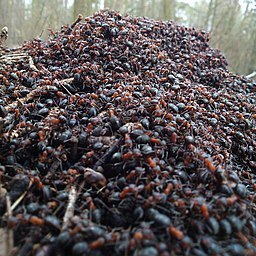 Imagine finding this instead of your phone book! (Wikipedia Commons, photo by
Jakub Młynarczyk
)
Imagine finding this instead of your phone book! (Wikipedia Commons, photo by
Jakub Młynarczyk
)Screaming, I grabbed the book and ran outside where I flung it into the trash can.
The vacuum cleaner cleaned up the rest–and then the bag went into the trash.
I scrubbed, cleaned, cried and made sure to destroy any ant I saw.
I had never seen an insect in that part of the kitchen. Where did they come from?
Who knows?
A year later, I opened the pantry before dawn and pulled out a box of Cheerios.
And dropped it in horror.
Screaming hysterically, I bolted from the house into the yard, shaking.
My teenager ran out, bat in hand. “What’s happened? What is it?”
I couldn’t speak, I was crying too hard. I could only point.
What a guy. He pulled everything out of the pantry, vacuumed and cleaned.
“It’s safe to come in now, Mom.”
I never trusted the pantry again.
What does God think?
Proverbs 30:20:
The ants are a people not strong,
Yet they prepare their food in the summer.”
Proverbs 6:
6 Go to the ant, you sluggard!
Consider her ways and be wise,
7 Which, having no captain,
Overseer or ruler,
8 Provides her supplies in the summer,
And gathers her food in the harvest.”
You know what? I don’t care.
I just want them to stay out of my house.
How about you? How do you deal with ants?
Update: Last night in northern California the horror continues– I discovered them crawling out of the kitchen wall outlet. Perhaps that’s why the line has been tripping off?
As I used to tell the children: “Please. Just go outside.”
Tweetables
Ants: the horror and in real life. Click to Tweet
Them, The Naked Jungle and a horror of ants. Click to Tweet
Ants and the kitchen–why don’t they just stay outside? Click to Tweet
The post Ants: The Horror appeared first on Michelle Ule, Author.