Michelle Ule's Blog, page 36
April 9, 2019
What is an Intercessor?
Why do we need an intercessor?
The definition is basic: an intercessor is someone who prays, petitions, or begs God in favor of another person.
It’s a Biblical concept that appears often.

The most famous case probably is when Abram barters God down from the need to find 50 righteous men to 10 righteous men in order to spare Sodom and Gomorrah.
Abram’s intercession worked–God agreed–but they were unable to find 10 lovers of God and the cities were destroyed.
(Archaeologists, by the way, believe they’ve found the site. See my friend Latayne Scott’s book with Steven Collins: Discovering the City of Sodom: The Fascinating, True Discovery of the Old Testament’s Most Infamous City.)
Famous Intercessors
Other well-known intercessors include Moses, Samuel, Noah, Job, Jeremiah and a host of others.
Several women also interceded for Israel: Zipporah, Hulda, and certainly Esther.
Jesus often prayed for his people.
In all cases, they desired people to know the one true God and to trust Him.
They recognized how far the Israelites had traveled from the true faith and they begged God to intervene.
The lack of an intercessor caught God’s attention as well.
In Isaiah 59: 15-16, God himself asked,
Then the LORD saw it, and it displeased Him
That there was no justice.
He saw that there was no man,
And wondered that there was no intercessor.”
If God looks for intercessors on our behalf, surely we need them?
Intercessor and Prayer
When someone prays for another, they’re called intercessors and they practice intercessory prayer.
Oswald Chambers spoke about intercessory prayer and the need for intercessors on several days in My Utmost for His Highest.
In a response to that Isaiah passage, Chambers observed:
Worship and intercession must go together; one is impossible without the other. Intercession means raising ourselves up to the point of getting the mind of Christ regarding the person for whom we are praying.”
To “get the mind of Christ regarding the person,” means to see them through Christ’s eyes.
While praying for someone recently, I realized it did no good for me to ask God to help them in a given situation if they had no concept of Jesus as savior.
If that person has no interest in worshipping God or Jesus, an answer to prayer ultimately wouldn’t mean anything to their spiritual health.
The person needed to know Jesus more than s/he needed to have something in her life “fixed.”
Viewing the prayers of the Biblical intercessors listed above, their prayers were for the salvation of their people–that they would come into a worshipful relationship with God.
Chambers went on:
When we lose sight of God, we become hard and dogmatic. We throw our petitions at His throne and dictate to Him what we want Him to do.
“We don’t worship God, nor do we seek to conform our minds to the mind of Christ. And if we are hard toward God, we will become hard toward other people.”
How does one intercede in a case like that?
By keeping our eyes on God, not on our opinion of our friend’s need.
Intercessor = Standing in the Gap
One way of understanding intercession is to imagine “standing in the gap,” between a person and God.
Jesus, of course, is the one who stood in that gap and connected people with God by his death on the cross.
He and the Holy Spirit intercede on our behalf before God.

But sometimes people lack the faith they know they need to pray.
I’ve volunteered more than once to pray for a friend because the situation was so difficult, they just couldn’t pray.
Perhaps their anger was too strong toward another person–even as they recognized they needed to pray.
“Let me do that for you. I don’t carry your frustration. I can pray.”
Or perhaps their circumstances were so difficult, they couldn’t imagine what to pray or if God would hear them. (He would hear them, they just felt too broken to remember that).
That’s what being an intercessor means.
Intercessor led by the Holy Spirit
Intercessory prayer often is the result of a prompting by the Holy Spirit–a sudden understanding or insight into someone else’s life.
Oswald Chambers also discusses this concept in the My Utmost for His Highest March 31 reading.
One of the most subtle and illusive burdens God ever places on us as saints is this burden of discernment concerning others.
“He gives us discernment so that we may . . . form the mind of Christ about them (see Philippians 2:5).
“We should intercede . . . to bring God into contact with our minds, that we awaken ourselves to the point where God is able to convey His mind to us regarding the people for whom we intercede.
In other words, the Holy Spirit gives us insight into another’s life (perhaps of their sin), and our task as an intercessor is to pray for that individual within the will of God.
It’s not to judge them for their failings.
We need to have God’s view of their situation when we pray.
I like to tell friends who gain this knowledge from God that, “He’s just drafted you into His prayer army.”
And since Chambers likes to point out, “Prayer is the greater work,” praying God’s will into their lives is often the most effective action we can take.
Tweetables
What is an intercessor and what do they do? Click to Tweet
Have you ever been drafted into God’s prayer army? Click to Tweet
Even God sees the need for intercessory prayers. Click to Tweet
The post What is an Intercessor? appeared first on Michelle Ule, Author.


April 2, 2019
Spiritual Retreat: Why You Should Attend One
If you’re looking to learn things about God and your own relationship to Him, a spiritual retreat can be a help.

Here are five reasons why.
1. A dedicated time away to reflect and listen
Webster’s Dictionary defines a retreat as an
“act or process of withdrawing especially from what is difficult, dangerous, or disagreeable.”
In terms of a spiritual retreat, it’s a time away from the “front lines” of living in the world without opportunities to reflect.
Ideally, retreats serve as a time to ask yourself–and God–questions about your life.
Sometimes we need to get out of our normal activities to make sure they’re what we, and God, really want to do.
2. Quiet and reflection at a spiritual retreat
The most profound retreats I’ve taken were more than 30 years ago at Ender’s Island in Mystic, Connecticut.
I was physically, emotionally, and spiritually exhausted when my wonderful church invited me to a women’s retreat held in that tranquil island in Long Island Sound.
 Contemplation takes place best in silence. (Photo by Jon Tyson on Unsplash)
The wise women in my church led the retreat and it involved intense prayer, but also an entire afternoon of silence.
Our leader gave us a question to contemplate and then the admonition to say nothing for five hours.
(It may be the only five hours I said nothing in my entire life).
I walked around the island many times that afternoon, quiet and listening.
I needed solace and silence before returning to life as a stressed mother and leader of our submarine wives.
(Friends took the children one year so I could attend–my husband was out to sea, of course).
It was an important respite. The spiritual retreat helped me recognize what I alone could do and what I needed to let go.
I’ve sought a similar retreat ever since to no avail.
3. Thematic Teaching
Most retreats have a theme and retreat leaders arrange the teachings around that topic.
Our local Christian camp is sponsoring a women’s retreat next week on the subject of “Interrupted: By Design.”
They’ll be examining “what happens when expectations of our future collide with God’s plans.”
This is an opportunity to bring a hurt–perhaps a disappointment with the way your life has gone–into a weekend of exploration with women who understand.
I attended a retreat last month for women who lead. Cheryl Broderson and Sally Lloyd-Jones brought thought-provoking and encouraging messages.
4. Worship at a spiritual retreat
Every retreat I’ve attended features periods of heartfelt worship–usually singing and community prayer.
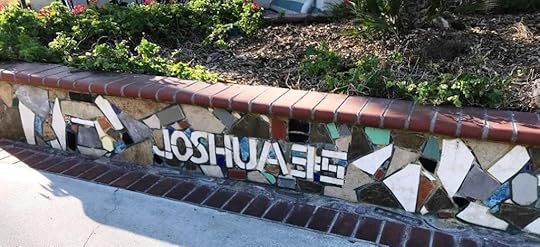 ”
” Joshua told the people, “Consecrate yourselves, for tomorrow the Lord will do amazing things among you.”
Even when you don’t know the songs, you can close your eyes and listen/pray to the lyrics and how they praise God.
The Holy Spirit will interpret your heart to God, anyway.
Because many retreats involve an emotional release, being able to worship God in a group is pure joy.
5 Personal Prayer
Christian retreats are marked by prayer.
The leadership prays long before participants arrive.
They want a retreat to be a true time away from normal life to an opportunity to touch the face of God.
Once at the retreat, opportunities to pray with others are part of the activities.
At last month’s spiritual retreat, I didn’t know a soul.
I signed up, along with many others, for personal prayer.
It was such a blessing to sit down with two women who didn’t know anything about who I am back home.
They laid hands on me and prayed as the Holy Spirit spoke into their soul.
Without any preconceived notions, they had to listen hard to what God was impressing upon them for me.
Their words surprised and yet . . . I could see the applicability to me.
I attended the retreat looking for direction.
Their prayers had something to say.
Afterward, they anointed me with oil.
I haven’t been anointed with oil since Ender’s Island all those years ago.
I’m so thankful I had an opportunity to attend a retreat.
Fun and activities?
Many retreats I’ve attended included fun activities like sports, shopping, manicures, swimming, boating or crafts.
Other than hiking in solitude, I prefer prayer and spiritual conversation during the “down” time.
I don’t attend a retreat to get away from my family or hobbies.
For me, a spiritual retreat is an opportunity to get closer to God.
Silence helps me hear Him better.
What about you?
Tweetables
5 reasons to attend a spiritual retreat. Click to Tweet
Why attend a spiritual retreat? Click to Tweet
The post Spiritual Retreat: Why You Should Attend One appeared first on Michelle Ule, Author.
March 26, 2019
Do the Next Thing
I first encountered the advice to “do the next thing,” from writer Elisabeth Elliot on her radio program Gateway to Joy.

Elisabeth explained that we often find ourselves at a crossroads, not sure what to do next.
In my case at the time, that involved an overwhelming amount of laundry, demands from children, a busy husband, desire to write, chores and greater family obligations.
“When you’re not sure what to do next,” she advised, “pray, look around you and do the next logical thing.”
What great advice!
It’s helpful advice if you’re a procrastinator–not because of laziness, but out of too many tasks demanding action. How do you choose?
According to Elisabeth, God gave us a brain and a job to do. Why not ask Him which one He suggests we do?
I’ve used the concept ever since.
(It also works well when your boss gives you a list of things to accomplish for the day. I’ve learned to ask, “Can you put them in order of importance?” I’ve never had a boss say no.)
An Oswald Chambers concept
Elisabeth Elliot was an Oswald Chambers fan, so it came as no surprise to me when I encountered him saying the same thing.
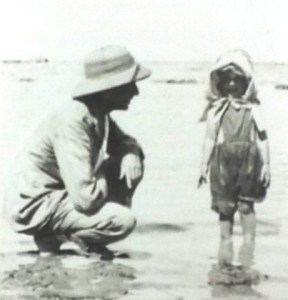 Sometimes doing the next thing means playing with your toddler. (Wheaton College Special Collections Library)
The February 17 reading from My Utmost for His Highest includes the line:
When the Spirit of God comes He does not give us visions; He tells us to do the most ordinary things conceivable. . . .
The inspiration which comes to us in this way is an initiative against depression; we have to do the next thing and to do it in the inspiration of God. “
This is not exactly the same concept except for those who get in a dither about what to do next–and then don’t do anything.
When people in this situation reach the end of the day, they’re often discouraged they accomplished nothing.
Oswald’s advice, to do the most ordinary things or the one most in want of doing, is a step against depression because it encourages folks to start.
Simple? Yes.
Does if work?
Overcoming inertia often requires a small action simply to get things moving. Even having just one small success can redeem a day.
Susie Spurgeon
Reverend Charles Spurgeon’s widow Susie, also knew this concept. In Ten Years After! the story of her life following her husband’s death, she recounted how she overcame her initial grief:
When I returned from Mentone [where Charles Spurgeon died in January 1892] to my beautiful but desolate home . . . wondering what the Lord would do with me . . . I found that to “do the next thing” was earnestly to set to work at the Book Fund.”
In this case, Susie returned to the task she’d already spent years doing: preparing boxes of books to be donated to poor preachers throughout England.
The task filled her days for the rest of her life and accomplished much good for not just the pastors, but also for their congregations.
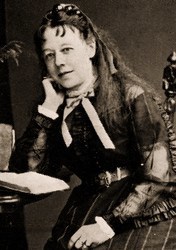 Susie Spurgeon (Photo from The Spurgeon Center)
While she grieved Charles’ death in Victorian severity, she did not lock herself away from ministry. For the remaining ten years of her life, she served God with a relatively simple task that reaped enormous spiritual results.
But where did the idea to “do the next thing” come from?
All three of the above seem to have found inspiration in an old poem, whose original author I’ve not been able to determine.
From an old English parsonage down by the sea
There came in the twilight a message to me;
Its quaint Saxon legend, deeply engraven,
Hath, it seems to me, teaching from Heaven.
And on through the doors the quiet words ring
Like a low inspiration: “DOE THE NEXTE THYNGE.”
Many a questioning, many a fear,
Many a doubt, hath its quieting here.
Moment by moment, let down from Heaven,
Time, opportunity, and guidance are given.
Fear not tomorrows, child of the King,
Thrust them with Jesus, doe the nexte thynge.
Do it immediately, do it with prayer;
Do it reliantly, casting all care;
Do it with reverence, tracing His hand
Who placed it before thee with earnest command.
Stayed on Omnipotence, safe ‘neath His wing,
Leave all results, doe the nexte thynge
Looking for Jesus, ever serener,
Working or suffering, be thy demeanor;
In His dear presence, the rest of His calm,
The light of His countenance be thy psalm,
Strong in His faithfulness, praise and sing.
Then, as He beckons thee, doe the nexte thynge.
How do I do the next thing?
I learned long ago to obey Elisabeth Elliot!
When I’m flummoxed and uncertain about my next actions, I close my eyes and pray. (Much like King Hezekiah did in 2 Kings 19:14,though rarely in such dire circumstances!)
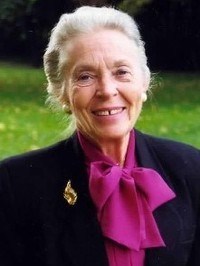 Elisabeth Elliot
 I tell Him what I know and ask Him to make my way clear.
Then I say “amen,” open my eyes, look around and just do the next logical thing–whether it’s cooking dinner, folding laundry or even taking a walk.
Often, the most simple activity–the one that hardly seems important–makes all the difference in the world.
What’s stopping you?
Tweetables
What does it mean to “do the next thing?” Click to Tweet
Where did the concept originate of “doing the next thing” when you’re procrastinating? Click to Tweet
What plan of action did Susie Spurgeon, Oswald Chambers, and Elisabeth Elliot, all appreciate? Click to Tweet
The post Do the Next Thing appeared first on Michelle Ule, Author.
March 19, 2019
Visiting Phoenix’s MIM (Musical Instrument Museum)
Total joy!
I’ve been a musician since I received a piano for my fifth Christmas.
It’s still with us all these years later (my father insisted the piano was my dowry–my husband had to take it with him when we got married!).
But all musical instruments caught my interest and I’ve since added flute, percussion, clarinet, bassoon, alto saxophone, alto recorder and eventually, oboe, to my repertoire.
The same husband outlawed bagpipes.
(You can see how well I play a borrowed set here).
He and I both sing in the choir–a bass and a soprano.
The MIM was a natural choice for us on a free day.
MIM displays instruments from all over the globe
The exhibits are on the top floor and highlight musical instruments from all over the globe by hemisphere.
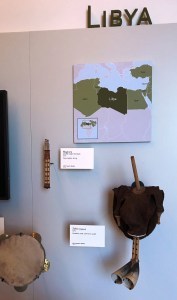 Tambourine and flutes, sure, but who knew Libya had bagpipes?
Divided into individual countries (and providing a map so we can pinpoint them), the musical instruments are both displayed and we can hear them played.
The MIM admittance fee provides visitors with a walkman-type set of headphones and a “tape”–which immediately begins when you step close enough to an exhibit.
A flat-screen shows people playing their native instruments–and you can hear the music through the headphones.
Often, the instruments on display are the very ones being played.
We began in Africa then moved to Asia
Drums and flutes seemed to make up the majority of instruments in most of the African nations, with bagpipes showing up from time to time.
As a former percussionist, I loved watching the folks playing their instruments and drawing such unique sounds from them.
We laughed at the happiness expressed by the drummers, singers, and watchers!
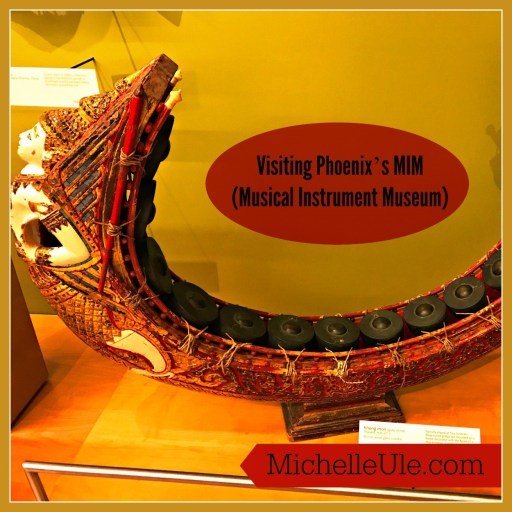
 The bridge of a Yatga Mongol plucked zither. Beautiful, isn’t it?
It’s a large room, but the headphones worked well and I could differentiate the music being played on the flat screens as I moved among the countries.
At the far end, we entered Asia–which, like all the countries, included flutes and drums. Asian nations seemed to have more sophisticated stringed instruments.
The hemisphere is large with many variations of sound.
Because I have a western-music-trained ear, much did not sound familiar to me.
Again, with the instruments in front of us and the demonstrations on the screen, we learned a lot as we slowly shifted from country to country.
Antarctica is the only continent without a musical tradition, though the whales sing and the penguins squawk.
The Western Hemisphere brings more familiar sounds to me
MIM collected musical traditions and instruments from everywhere, which was fascinating, but I began to dance and enjoy the music more when we reached Oceania.
Hawai’i turned up first and while Hawai’ian music sounded odd when we first moved to Hawai’i years ago, by the time we departed, I loved the sound of the ukelele, drums, conch shells, and haunting melodies.
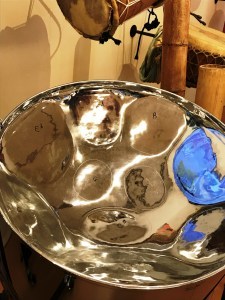
“It’s time to go home to Hawai’i,” I told my husband.
He laughed and moved away from my hula hands.
The Latin countries of South America also called forth movement.
MIM divided them up well, but my Zumba classes don’t care what country the music comes from.
I couldn’t help myself! Forward, backward, turn!
My husband hurried away and several people laughed.
But how could anyone’s feet stay still when a salsa beckoned?
The USA
We walked through MIM exhibits demonstrating how manufacturers made saxophones. Fascinating.
We listened to Appalachian music, the Carter family with their autoharp, enormous drum sets, and the ever-popular collegiate marching bands.
(My husband rolled his eyes and hurried away while I watched the Ohio band scroll out OHIO in a 1936 video–the same scroll I watched from the sidelines in the 1976 Rose Bowl game. You can read about it here.)
Drum sets, the Beach Boys (with three middle-aged women giggling, “how could we not stop to listen to this?”), and a host of other American rock bands filled one section–noisily.
All sorts of guitar varieties were on display from the clever and beautiful harp guitar to your basic “gitter” electric guitar (demonstrating you don’t need anything besides frets, strings, and a plug to make music).
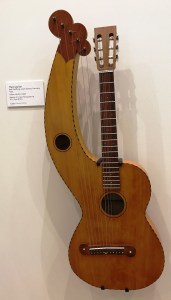
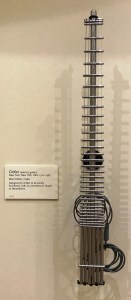
MIM also included an exhibit of the world’s most popular instrument: the air guitar.
Or, at least it’s “empty” case.
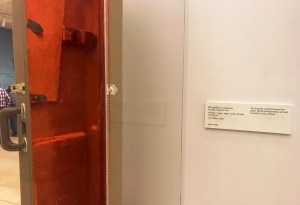 The number of air guitarists in the world is unlimited!
European instruments
I felt most at home in the European instrument settings.
Of course, bagpipes were displayed, but we also saw clever variations on other instruments, like the walking stick fiddle and the serpentine tuba–a predecessor, in the evolutionary sense, of the modern tuba.
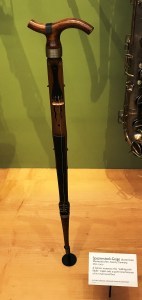 The walking stick fiddle
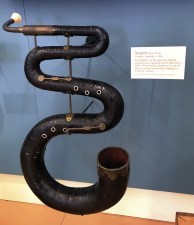 The serpentine tuba
Above the serpentine tuba, MIM provided the everpresent flat-screen to demonstrate how to play the instrument.
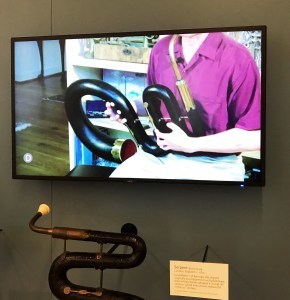
MIMs curators are clever and some of their descriptions invited smiles.
Here’s a harmonicum, a “parlor instrument” popular in the 18th and 19th centuries, made up of lead glasses filled to various levels with water.
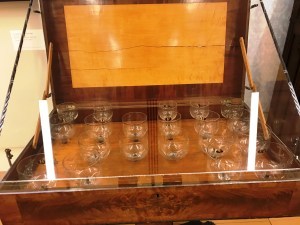
The caption noted:
The glasses were blown to pitch and played by rubbing their rims with moistened fingers.
Musical glasses saw a decline around 1860 with rumors that playing the instrument, and the ethereal sounds it produced, caused madness.
At the time, it was thought that the vibrations resulted in nervous system decline, but it may be that touching the glasses and their painted rims, both of which contained lead, contributed to lead poisoning over time.”
MIM ended with fun
Our final stop was an instrument room downstairs where you could play instruments to your heart’s content.
I strummed a harp, clattered through various xylophone-like instruments, and pounded drums.
What a glorious visit to Phoenix’s Musical Instruments Museum!
I love MIM. Anyone who loves music would, too.
Tweetables
What’s MIM–Phoenix’s Musical Instrument Library? Click to Tweet
Learning about global musical instruments at Phoenix’s MIM; fun for musicians of every age! Click to Tweet
Does every country boast bagpipes, drums, and flutes? Click to Tweet
The post Visiting Phoenix’s MIM (Musical Instrument Museum) appeared first on Michelle Ule, Author.
March 12, 2019
How to Find Family Photos
Or, the photo albums on the shelf if they’re so lucky.
Or, their computer.
But what about obscure family photos of people you’ve never seen?
How can you find those?
Asking helps.
So does Google.
Asking
You’d be surprised how many people have photos of your family members.
I started by asking relatives if they had a picture of my great-grandfather.
He died before my father was born. My grandmother never met him.
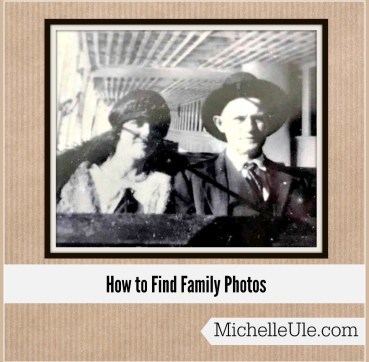
But a distant relative turned up the above photo taken in 1923 on the ferry to Catalina.
That’s Ballard Duval with his daughter Louise beside him.
I can’t tell if he looks like anyone I know. I’m intrigued by the cleft in his daughter’s chin–I don’t see it in my relatives.
But there he is and now he and Louise hang on my wall.
I’ve given you his name because someday someone, like me, may google his name.
You can find all sorts of family photos in search engines.
That’s where I first saw the photo of Ballard’s wife Permelia.
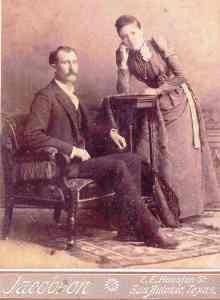
Late one sleepless night, I googled Permelia Hanks Dunn Duval
This photo turned up.
I screamed. I’d sought her photo for 20 years.
When I cropped it, a woman peered out who looked just like my aunt.
It turned out someone had found an old photo album in Anderson County, Texas.
Not knowing what else to do with it, they donated the album to the East Texas Genealogical Society.
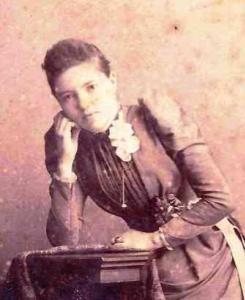 The most thrilling find of 2013: a photo of my great-grandmother!
The society posted the photos on their website with the names they read off the back of the photos.
(Hey! Write the names on the back of your family photos or label them on your computer/phone.)
Ancestry.com
One of the features provided by Ancestry.com when you’re putting together a family tree, is “gallery.”
Users can post photos there, which are helpful if you find a tree that matches yours.
However, Ancestry.com also has passport photos.
I found my grandfather’s 1919 passport photo during a routine search.
I’d never seen a photo of him that young.
Ancestry.com also allows you to contact distant kinfolk and you can ask them.
I had great luck obtaining photos for my Mrs. Oswald Chambers, though helpful relatives.
Family pages on Facebook
Last week I saw a photo of Permelia’s mother in a Facebook family group.
It turns out I had another one of her (on left, circa 1880), but I so much enjoyed seeing a more “glamorous” family photo of Louezer Cunningham Dial Bell Hanks Ezell!
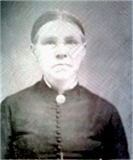 This is probably what she looked like circa 1880
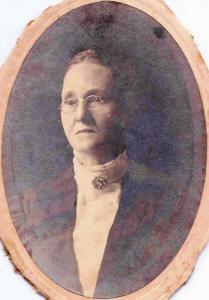 I’m guessing this photo was taken circa 1900
It’s fun to work up through the generations, from Louezer to her daughter Permelia to her daughter Louise, looking for family resemblances.
I posted the recent Louezer photo on Facebook when I found it.
Several people thought they saw a resemblance between us.
I don’t see it–except we’re wearing the same glasses!
I don’t have many family photos from this side of the family–this is almost all of them.
But they’re precious and I’m always happy to see one.
Tweetables
How do you find obscure family photos? 3 suggestions. Click to Tweet
A late night Google search turns up long-sought family photo. Click to Tweet
The post How to Find Family Photos appeared first on Michelle Ule, Author.
March 5, 2019
The Lenten Research Surprise
Several years ago during the Lenten season, I experienced a research surprise.
Hard at work on my novel, A Poppy in Remembrance, I spent Mardi Gras that year at my writing desk trying to compose a difficult chapter.
I’d reached the point in my story that noted Bible teacher Oswald Chambers–a real person in my historical novel–was going to die.
I knew how he died–David McCasland explained it in his fine biography Oswald Chambers: Abandoned to God–-but since I was writing a novel, I needed to expand the scene.
Told from the point of view of my heroine Claire, the novel needed description, emotion, tension and truth.
Getting the scene right
To help describe what took place that dreadful November 15 and 16, 1917, I studied three photos from Wheaton College’s Oswald Chambers papers from the Special Collection Library.
The photos had come from his student Eva Spink Pulford’s personal collection and her daughter, who donated them to the library, thought the pictures were from Oswald Chamber’s burial service.
But no one knew for sure.
Nearly 100 years after the burial, I tried to picture the scene represented in those old black and white photos on the day they were taken.
Was it a gray day? Did the sky ever get gray in 1917 Cairo, Egypt?
I wrote the story of Oswald’s death and his burial as Claire would have experienced it.
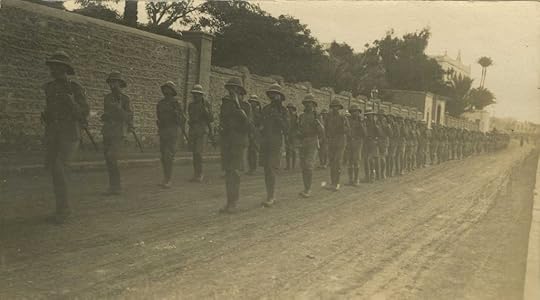 Riflemen, officers all. Cadbury Research Library photo
When I finished the chapter, I turned off the computer feeling so very, very sad.
Oswald Chambers was dead.
It wasn’t a surprise, but in the fifteen months I’d spent up to that time writing A Poppy in Remembrance, he’d become real.
With his death, I felt black grief.1
Ash Wednesday’s surprise
The day following Mardis Gras, of course, is Ash Wednesday–the first day of the Lenten season in my Lutheran Church.
All the emotions I’d expended the day before writing about Oswald’s death and burial remained with me that morning–so I dressed completely in black.
I went to work and then to the church Lenten dinner.
But I still mourned. I couldn’t shake it. So, I excused myself early from dinner and went up to the choir loft. There, I could be quiet, think and prepare for the service to come.
However, I could also check my email.
And there I saw a surprise from bigpond.au–which I knew meant a correspondent from Australia.
The subject line: “Looking for Information about Oswald Chambers in Egypt.”
Are you as surprised as I am to get an email like that out of the blue–the very day after I wrote about Oswald Chambers’ death in Egypt?
Of course I read it!
My correspondent, Peter, is the grandson of a man who served as a YMCA chaplain in Egypt during World War I.
His grandparents married in Egypt during the war and his aunt was born there. The family used to call her Biddy.
Peter wondered if his grandparents might have known Biddy Chambers.
He knew they didn’t know Oswald because his grandfather arrived in Egypt three days before Oswald died.
His grandfather did, however, attend Oswald Chambers’ burial and he had photos.
Eight photos.
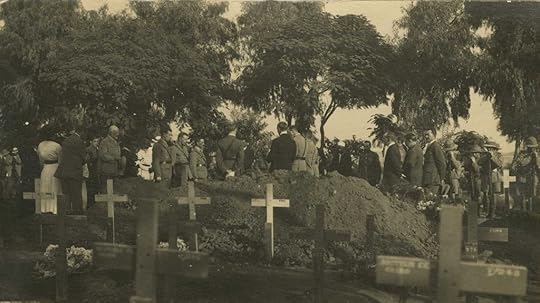 Biddy is beside Lord Radford, the man on the left with white hair. Peter’s grandfather is on the right looking straight at the camera. (Cadbury Research Library)
Research Serendipity, yet again
I’ve been the recipient of research serendipities before. You can read about several here, here and here.
(If you have something you think I’d like to see, send it along!)
But this serendipity, eight photos of Oswald Chambers’ burial out of the blue, was the most shocking of all.
If you’ve read my posts and Mrs. Oswald Chambers, you’ve seen some of those photos.
But they were brand new to all of us that Lenten season several years ago.
Indeed, when journalist Eric Metaxas heard the story, he declared it “a miracle, Michelle.”
As I wrote here, when I blew up the high-resolution photos–Peter found them in the WWI YMCA collection at the Cadbury Research Library at the University of Birmingham, England–I saw what I believe is a photo of Biddy Chambers at her husband’s graveside dressed in black.
Peter pointed out his grandfather on the right side behind a cross. I know that’s Lord Radford with white hair standing beside Biddy.
The other photos don’t shed a great deal of new information on what I knew, but I returned to my manuscript and made a few alterations.
A Mardi Gras surprise, a Lenten miracle, research serendipity?
Or maybe the reverse?
That year, Mardi Gras was the sad and sober day, with Ash Wednesday bringing a surprising joy.
Perhaps it’s more true to say, that’s the life of a writer trying her best to honor God with her computer keys.
And to tell and honest story on a curious day in the liturgical year.
Regardless, thanks be to God–and to Peter, too!
Tweetables
A shocking research serendipity on Ash Wednesday. Click to Tweet
Previously unseen photos of Oswald Chambers’ burial turn up the day after a writer describes his death. Click to Tweet
All told, some dozen research serendipities occurred while I wrote Mrs. Oswald Chambers and A Poppy in Remembrance
I wrote about them in my Ebook Writing about Biddy and Oswald Chambers: Stories and Serendipities–available for free when you sign up for my monthly newsletter here.
 Sign up for the newsletter at: http://eepurl.com/2l7F9
The post The Lenten Research Surprise appeared first on Michelle Ule, Author.
February 26, 2019
The Family Writer: a Ministry
Are you a family writer?
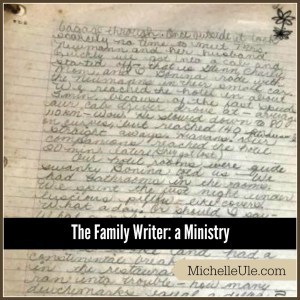 The fat rounded handwriting and flower make me laugh!
You know, the person the family turns to if they need something written down.
I’m that person and here are the ways my family has tapped me to tell the stories.
I’ve come to see it as a ministry.
Keeping Track of the Journey
“You’re the writer,” Mom said, handing me a binder filled with paper. “I want you to write about our trip.”
Mom had saved her teacher salary for an entire year. She wanted to take her children, then aged 14, 11, and 9, to Europe for the summer.
We needed to learn about culture, see new places, and visit her Sicilian birthplace.
My job, along with rolling up sleeping bags every morning and being available for other chores, was to write about the trip.
I accepted the vinyl folder with awed gratitude. Mom had recognized my desire to be a writer. This was my opportunity.
I began at the airport, sitting on the floor as we awaited our flight.
Reading my fourteen-year-old reflections in this faded notebook as an adult makes me cringe.
I spent a lot of time complaining about my eleven-year-old brother.
I have since edited the travel diary into a story my extended family enjoyed.
The glimpse of my mother, frankly, is priceless twenty-three years after she died.
Write your stories.
Needed: a family writer to commemorate historic events
My grandparents celebrated their 50th wedding anniversary about this same time.
“You need to write a poem about your grandparents,” the same mother ordered.
“Really?”
“You’re the family writer.”
Since my English teacher assigned writing a poem for our homework about this time, the job became a two-fer.
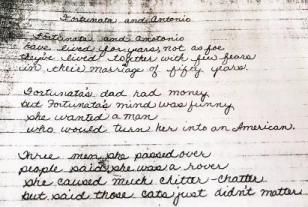 i”Fortunata and Antonio” an epic love story that challenged family ties and crossed oceans!
I won’t bore you with the poem, but suffice it to say I got an “A” and had a lot of fun rhyming words with “Fortunata and Antonio.”
The other big family event was Antonio’s 100th birthday party.
Since I lived in Washington State at the time and my family lived in southern California, my volunteered task was to write my grandparent’s biography.
I interviewed my family members via letter or phone and researched 100 years of history.
We drew family trees, included old photos, and everyone got a copy of the final book.
I edited the book last year by adding all the new family members and scads of color photos. By turning the project into an Ebook, everyone got a copy.
It’s important to maintain our common heritage.
Write your family’s stories.
Family history
My paternal grandmother loved attending my maternal grandfather’s 100th birthday party.
I noticed how much she enjoyed her copy of the family biography, wistfully turning the pages.
Several years later, Grammy moved into a nursing home.
As the family writer, I got all her family papers–including a photo album I’d never seen before.
I spent the next year writing her story, The Rose of Mayfield.
I’m not sure she lived long enough to fully appreciate her biography–though her children and grandchildren did. Her headstone reads “The Rose of Mayfield.”
Writing the stories helps families remember, grieve, and laugh–together.
An entire family history project!
During a research trip to Utah–where Grammy grew up–I happened on the LDS family history computers.
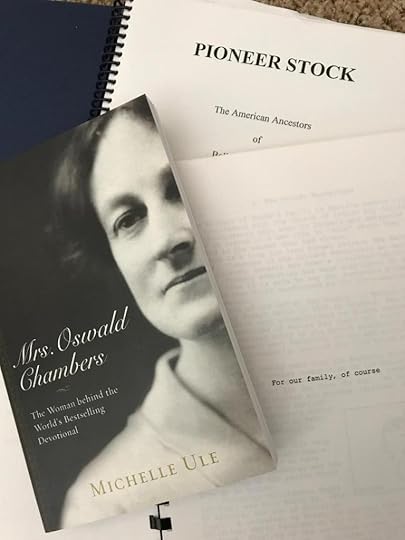 One project’s research led to another.
For the first time, I wondered about my mysterious paternal grandfather’s family tree.
We knew he was vaguely related to Abraham Lincoln through Nancy Hanks.
But how?
I spent the next five years consumed by a genealogy hunt.
Pioneer Stock is available through the LDS Family History Library in Salt Lake City (I’ve seen it on the shelf), the Library of Congress (I’ve seen it in the catalog), and a variety of genealogical libraries around the country.
That writing project launched me into obscure corners of the Internet, hunting Colonial homes in Maryland, DNA sampling sites, and a career as a writer of historical fiction and biography!
All in all being the family writer has been a joy. It enables me to use my interests and gifts to benefit my family.
It also means when someone’s got a question like, “Where did this family name come from?” I have an answer.
Or, as my brother recently said after I traced a family name back 8 and 11 generations, “Thanks for the history lesson.”
Who’s the family writer in your family?
Why not you? Write your families stories.
Tweetables
Why families need a family writer–if only to personalize events! Click to Tweet
What are the tasks of a family writer beyond genealogy? Click to Tweet
Who would you ask to write a poem for your grandparent’s 50th anniversary? Click to Tweet
The post The Family Writer: a Ministry appeared first on Michelle Ule, Author.
February 19, 2019
Dr. Zhivago and Me
 recently, the first time in twenty years.
It hasn’t worn as well as I expected, but I suspect I’ve changed, not the movie.
We have a long history together.
I have no idea how many times I’ve seen the film since my first viewing at age thirteen.
But it caught and fired my imagination and propelled me in ways that surprise me now.
The memories and things I learned from watching Dr. Zhivago all those times played a part in who I am today.
As a teenager
Back in the Dark Ages where I was a teenager, you had to see a movie at the movie theater.
I saw it several times while in seventh grade.
That summer, my family toured Europe–camping in a Volkswagen van for 10 weeks.
Reading options while traveling overseas in the 1970s were limited by what you could find in a bookstore.
While in Paris, I found a mass market English paperback copy of Dr. Zhivago and immediately pounced on the book.
I knew the story from the movie and I waded right in,
It’s a tough read, particularly when you’re barely fourteen.
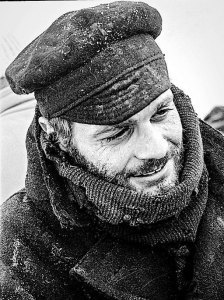
Who can ever forget all that snow?
But I became so engrossed, that when I felt ill during out one day touring Versailles, I stayed in the car and read!
(I’ve never returned to see Louis XIV’s palace.)
In hindsight, I’m not sure how much I got out of the complex novel.
But I felt a lot warmer reading about the snowy train trip than watching it at the movie theater.
During one viewing with a friend, we devoured an entire pound of M&Ms.
In High School
Returning from Europe with the story in my ears–along with many others–I began to read Russian history books.
My favorite authors quickly became Robert K. Massie and Suzanne Massie.
Nicholas and Alexandra, Peter the Great, Land of the Firebird–they all captured my imagination.
The drama of that land seemed so exotic compared to my Los Angeles life.
Teenage girls are like that.
I even thought about studying the Russian language, perhaps in college?
During the Cold War that sounded like a possibility.
But when I examined the Cyrillic language and its complexity, I took a different route.
As an Adult
Still, the drama of Russia intrigued me.
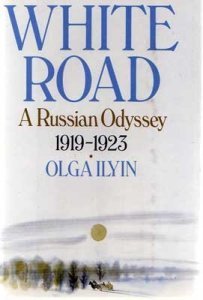
I like White Road better than Dr. Zhivago
I fell in love with Olga Ilyin’s dramatic White Road–liking it better because it lacked the moral issues I recognized by then in Dr. Zhivago.
I continued reading a variety of Russian history books, practically everything I saw about the doomed Romanov family.
And one day, I began writing a World War I novel.
I was surprised by how much I knew about the era–in part because of Dr. Zhivago!
Viewing the movie many years later
So we watched the film the other night.
I remembered everything very well.
I could play solitaire on my Ipad and look up when the dialogue indicated a scene I appreciated.
“Lara’s Theme” is as interminable and annoying as ever.
Robert Bolt wrote the screenplay from Pasternak’s difficult Russian novel.
It’s got holes in the plot line I can now see.
I’ve been happily married long enough, I thought some of the behavior ridiculous.
As a friend recently said, “Why not be satisfied with your wife?”
Drama, horror, Russia, snow, turmoil.
Moral ambiguities and poor choices.
It’s all the stuff of great drama.
But I’m so glad I don’t have to live a life like Dr. Zhivago.
The teenage me standing on the brink of life and romance wouldn’t have understood that, but I’m far wiser now.
Enjoy the movie, but live your life differently.
Tweetables
Dr. Zhivago hasn’t aged well but inspired a love of Russian history. Click to Tweet
Not a fan now, but grateful for what Dr. Zhivago inspired. Click to Tweet
Is there anything more romantic for a teenage girl than a Russian novel? Click to Tweet
The post Dr. Zhivago and Me appeared first on Michelle Ule, Author.
February 12, 2019
DNA and Genealogy
 Having your DNA sampled is the latest tool in the Genealogy toolbox.
It’s an opportunity to connect with kinsfolk you’d never heard of before.
And among my genealogy pals, it’s a way of tracing lines that have reached a dead-end or to prove a connection.
Some people hope their DNA sample will lead them to relatives. This is particularly poignant for adoptees.
Stories abound of people who send in their spit or swabs and then discover they aren’t related to the people they love.
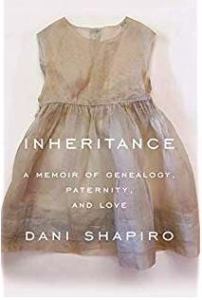
Inheritance: A Memoir of Genealogy, Paternity, and Love
Dani Shapiro’s recent memoir, Inheritance: A Memoir of Genealogy, Paternity, and Love, falls in the latter camp.
Raised in an orthodox Jewish household, she had her DNA sampled as a lark.
The results shocked and changed the way she viewed herself within her family and sent her on a mission to find her “bio dad.”
It’s an interesting story. Shapiro’s parents were Jewish.
Her DNA results, however, reporter her as only 52% Jewish. Since she had a half-sister, she quickly learned the science did not err.
The father she adored was not biologically her father.
I read Shapiro’s book in one sitting. Her absorbing tale of trying to understand is compelling.
She’s also fortunate to have been able to track down the sperm donor within 48 hours. It doesn’t happen that way for most people.
What does DNA really have to do with our genealogy, anyway?
Nothing and everything.
 For medical reasons, it’s extremely important–particularly if your family carries a genetic disorder.
For cultural reasons, it’s interesting but doesn’t have to mean anything at all.
My Sicilian uncle got surprising results from his DNA test. Rather than 100% Sicilian, he turned out to be 52% Greek.
We learned this during a family gathering and laughed.
Several were delighted to discover they had Greek heritage hundreds of years in the past. “I’ll need to take another trip to Greece,” one said. “I need to soak in my heritage now that I know.”
I puzzled over this change in our genetic history. I’ve not been to Greece and I don’t care for Greek food. Yet, my uncle’s “number,” suggests that I am not 50% Sicilian, but only 24%. How could I, fair skin, hazel eyes, light brown hair, and Valkyrie height be 26% Greek?
It’s not computing for me.
My family has visited Agrigento in Sicily–the site of the finest Greek ruins in the world. We ate pasta for dinner that night.
My non-Greek nor Sicilian father used to tell stories of how often poor Sicily was overrun by conquerors. It served as the “break basket” of southern Europe for centuries.
We shouldn’t be surprised Greek DNA runs through our Sicilian line.
For us, it’s a source of laughing stories.
Maybe shared DNA doesn’t mean you’re related?
Shapiro initially denied the DNA test results. She knew and adored all her Orthodox relatives.
Except, she didn’t look like any of them.
A fair-skinned blonde, she’d been challenged since childhood that she couldn’t possibly be Jewish.
When she first saw her “bio-dad” on a YouTube video, she was transfixed. He not only looked like her, but he physically moved as she did and, according to her husband, “ran a question and answer sessions the same way.”
How could the late father who raised her not have been her father?
And yet, how could she deny the pull and the recognition she, as a 54-year-old woman, immediately saw in the bio-dad?
In my own family, as the result of DNA testing, we wrote to someone with a surname five generations back in our genealogy.

Sicilian or Greek? (Photo by Daniel Fazio on Unsplash)
I wanted to know what they could tell us about the Cunningham line and where it may have intersected with ours.
The wife of the man on our list wrote back to say she didn’t recognize anyone’s name on the family tree I included.
Therefore, she reasoned, we couldn’t be related.
I laughed. Why did her husband’s DNA so closely match that of one of my relatives?
Could that DNA connection be lying?
Of course not. But I wrote a kind thank you and let her go.
The relatives we know provide plenty of entertainment, I saw no reason to get involved with distant ones.
Our family’s experience
When I examined the highly scientific DNA results from another family member, I puzzled over all the Scandinavian names.
Why were we connected to a Sven Sorenson, or an Inger Bjorklund, much less an Anastasia Molotov?
(Not the exact names).
I didn’t remember the Norse or Russians conquering Sicily to leave behind their DNA in our hapless ancestors.
It made no sense.
But then I saw my great-grandmother’s maiden name and remembered we had another side of the family!
That side of the family traces back to the founding of the United States on one side and pioneers from Denmark four generations back.
It also explains why some of the children look like their Sicilian cousins and others don’t look like they belong at all.
DNA will do that to you. Siblings who don’t share a skin color.
Should you have your DNA done?
It depends what you’re looking for.
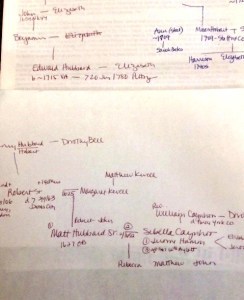
Scribbling your own family tree is a start.
If you’re adopted and wondering about where your birth family came from, maybe.
Perhaps, like Shapiro, sperm donation played a part in your conception (You might consider watching this film: Anonymous Father’s Day.)
Perhaps you’re a genealogist trying to tackle a confusing family line.
Do you have a genetic disease your family doesn’t know anything about?
Maybe you’re just curious.
Consider privacy issues and do your research. Should you get one done?
Know why you’re looking at your DNA results.
If you have questions, ask a professional to explain.
If you’re shocked by the results, don’t be hasty with your assumptions. Talk about the results with people who can help you interpret them.
And if you get a surprise without any consequences–like you’re more Greek than Sicilian–take it with a grain of salt and laugh.
Tweetables
Thoughts on DNA, Genealogy and Dani Shapiro’s Inheritance. Click to Tweet
DNA and Sicilian heritage. What do you mean we’re Greek? Click to Tweet
The post DNA and Genealogy appeared first on Michelle Ule, Author.
February 5, 2019
Memorabilia and the Biographer
 What’s the importance of memorabilia to a biographer?
It depends on what it is.
In this period of non-hoarding “sparking joy,” collecting, do I need to own anything that belonged to Biddy Chambers?
I thought about this question early in my research gathering.
When I first visited Wheaton College’s Special Collections Library to investigate Oswald Chambers’ papers, I thought I’d only see paper items.
A library would house photos, letters, and personal papers; maybe a diary.
I gave no thought to physical objects like Oswald’s Bible.
When archivist Keith Call rolled out a cart with Biddy’s typewriter on it, I was puzzled.
Why would a library own household objects? Surely a typewriter belonged in a museum?
“Would you like to touch it?”
What an odd question.
I had no idea.
Do I need to touch memorabilia?
I don’t collect things. Too many Navy moves taught me I didn’t need to own items I didn’t use regularly.
But this was the typewriter on which Biddy wrote My Utmost for His Highest!

If Biddy owned a typewriter, she must have been real!
Wouldn’t I like to run my fingers over the keys?
Shrugging, I drew closer. “I don’t really need to touch things they owned,” I tried to explain, sounding pathetic in my own ears. “It’s just an object.”
When I visit museums, I don’t yearn to run my fingers through the jewelry or pick up Native American artifacts.
Just seeing is sufficient.
(Though, now that I think of it, I do own a small pile of pebbles I’ve picked up around the world).
When Keith brought out Oswald Chambers’ Bible, I looked through it and took photos.
I did the same with Biddy’s.
This memorabilia connected with my life, that very Bible had changed my life because Oswald’s ideas came from it.
That book was worth holding in my hands and marveling.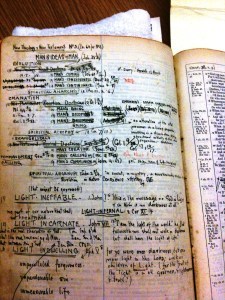
But I didn’t spend a lot of time with Oswald and Biddy’s personal possessions. I examined the notes and the information. I jotted down my impressions.
My imagination provided the rest for my writing projects.
(I did think it odd Oswald gave Biddy a leather purse with her name embossed on it in gold lettering.)
But to each his own. I know Oswald liked to buy his wife hats, too, but there aren’t any at Wheaton College’s library!
Fast forward six years
Recent correspondence with a kind woman from Tasmania, however, sparked a desire for Biddy memorabilia.
My new friend down under wrote to tell me she’d purchased a used book written by Oswald Chambers from Christian Value Books in Christchurch, New Zealand.
To her delight, when she opened the book, she saw Biddy Chambers had inscribed it to a friend.
She included a photo. I recognized Biddy’s handwriting immediately.
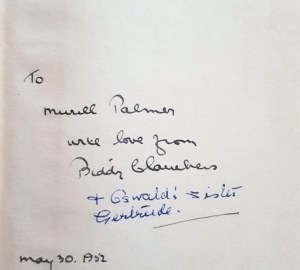
To my shock, the inscription also included a signature from Oswald’s favorite sister, Gertrude.
I’d never seen Gertrude’s signature before.
I marveled at the photo and then rose to pace around the house. Biddy mailed packages of books all over the world.
Fancy how many used bookstores on the planet could have copies inscribed to friends by her!
And then the collector’s rush hit me. “Wouldn’t it be wonderful to have a copy of a book Biddy signed? Just one?
Ah, jealousy. I shrugged and let it go.
But I did write a note to thank my Tasmanian correspondent for the photo.
The kindness of strangers
She was one step ahead of me and already had contacted the owner of Christian Value Books.
He returned to his shelves and found another Oswald Chambers book, Knocking at God’s Door.
Biddy inscribed that book to “Mary and Eric with love from Biddy Chambers.”
She sent Knocking at God’s Door to Mary and Eric in 1957.
The kind woman from Tasmania and the bookstore owner in Christchurch made arrangements and sent it to me!
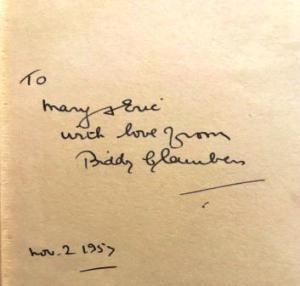
Do I need to own this piece of memorabilia?
No. But I’m so thankful to pass my hand over a book Biddy once held in her hands.
It makes her feel a little closer.
This one book is enough.
My profound thanks to two kind strangers living in Tasmania and New Zealand.
This is the only time I’ve wished my name was Mary.
Tweetables
Biddy Chambers’ biographer owns a book her subject inscribed. Click to Tweet
How much memorabilia does a biographer need to own? Click to Tweet
The post Memorabilia and the Biographer appeared first on Michelle Ule, Author.