Michelle Ule's Blog, page 38
December 11, 2018
Another Look at the Advent Stories
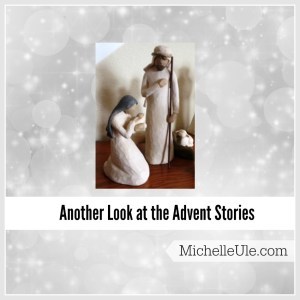 I try every December to read the Advent stories with a fresh eye.
Every year I’m surprised by something I learn about the Christmas story.
After examining Mary and Joseph, Jesus’ birth and the characters surrounding it, something always seem different.
Why?
Advent stories as part of a living book
Hebrews 4:12 reminds us “the word of God is living and active,”
That doesn’t mean the Bible and the stories change.
I’m what changes year to year.
For that reason, stories I once read over without a second thought look different.
My experiences, Bible study or life makes the stories more poignant or touching.
The year I gave birth, for example, gave me far keener insight into Mary than I’d ever had before.
Jesus’ childhood didn’t end in Bethlehem
Rich Mullins wrote a song one Christmas that changed how I thought about Jesus’ childhood.
I’d studied the book of Exodus that year and realized Jesus lived in Egypt.
Mullins’ song, “My Deliverer,” talks about Jesus’ experiences in that country in a poignant way.
“Joseph took his wife and her child and they went to Africa
To escape the rage of a deadly king
There along the banks of the Nile, Jesus listened to the song
That the captive children used to sing
They were singin’
My Deliverer is coming, my Deliverer is standing by
My Deliverer is coming, my Deliverer is standing by.”
Somehow, I’d never realized Jesus was a refugee who didn’t live his whole life in Israel.
Traveling and Elizabeth
I knew Mary rode a donkey to Bethlehem while great with child.
But I hadn’t thought much about her hike down to the same area as a young girl to see Elizabeth.
We often have a picture of her running carefree over the hillsides to her cousin’s house.
But Elizabeth lived a distance away. Mary must have cleared that trip with her family.
She stayed six months–long enough to learn what it was to be pregnant. She may even have been there for John’s delivery.
What about Joseph?
I had not seen the parallels between Joseph the carpenter and the Joseph of the Old Testament.
Both men loved their God. Both men were inspired by divine dreams.
They were both in Jesus’ lineage.
Another Look at the Advent Stories
Several years ago, I wrote a series of Advent stories based in Scripture.
I’ve put them together in a PDF for Christmas:
Another Look at the Advent Stories
I hope you enjoy them, and they give you a fresh insight into the Christmas season.
A blessed Advent to you!
Tweetables
Why not try a fresh look at the Christmas story? Click to Tweet
Are you sure you know the Advent stories? Click to Tweet
A free PDF: Another Look at the Advent Stories. Click to Tweet
The post Another Look at the Advent Stories appeared first on Michelle Ule, Author.


December 7, 2018
A Christmas Letter Tutorial

I’ve written about Christmas letters often over the years.
They’re one of my favorite parts of Christmas.
I’m struggling a little this year and may have to delay sending the letter until New Year’s.
We’ve got some significant events to tell our friends and the answer isn’t here yet.
In the meantime, I’m circling around what I know, wondering how to explain and hoping intuition will strike soon.
You don’t have to be like me.
Here are six Christmas letter tutorial tips.
1. Remember to whom you’re writing the Christmas letter.
I mail about 100 Christmas cards and letters each year to friends and family.
 Many of them are also my Facebook friends, so there won’t be many surprises.
But many are military friends whom we don’t see very often.
We lived in each other’s pockets for several years, through the highs and lows of submarine deployments and other agonies.
Some taught my kids in Sunday school or served as their scout leaders.
I want to know about their kids and I assume they’ll want to know about mine.
So, I tailor the letter to them.
2. Hit the highlights for your family simply.
The people who want to know all the details will call or write.
Each of my four children gets their own paragraph.
Half my kids are married with children and their paragraph is long!
I just tell what they’re doing, where they live and anything noteworthy.
We have several noteworthy events this year so I may have to use a small font!
3. Include photos!
I feel like I’ve been cheated if I don’t see what everybody looks like!
That’s why my letter may seem a little cluttered as I place photos throughout it.
I try to have one large family photo, but the kids are so cute!
You know your friends better than I do!
4. Be careful with sad news.
This is always so tricky.
When significant deaths occur–like my parents whom many friends knew–I feel an obligation to tell them.
But I need to be careful how I place that news.
My friends and family who care about me want to know about that sadness.
I tend to put it toward the end of the letter and then finish with a positive paragraph.
I’m willing to consider other ideas.
5. State what you’re thankful for this year
Be careful not to brag–I’d never mention a new car, though I do need to provide a new address if we move.
I learn toward the intangibles–our family, friends, visits, books, Jesus.
I want my friends to be smiling when they get to the end.
6. If you have business news to share–say you’re a writer?
Use another page.
I’ll be writing a Christmas letter for my newsletter on December 15–including a recipe and a funny family photo.
If interested, sign up here: http://bit.ly/UleNews
Tweetables
There’s still time! A Christmas letter tutorial. Click to Tweet
6 pointers for writing a Christmas letter. Click to Tweet
The post A Christmas Letter Tutorial appeared first on Michelle Ule, Author.
December 4, 2018
Why Not Join a Book Club?
 Have you considered joining a Book Club?
Once you’re done with school and no longer required to write book reports, why would you gather with others to discuss a book?
Here are four reasons to join a book club–and where to find one.
The love of literature, of course.
Have you ever read a book you loved so much you wanted to talk about it?
Perhaps it was the language, the story, the conflicting ideas it provoked.
Where would you find someone to discuss it with any knowledge?
A book club can do that.
Confusion
What if you simply don’t understand why anyone would read a book like this?
More than once I’ve read a long book highly recommended by a friend or a book review.
Something about it didn’t click and I read on, desperate to discover why people loved it.
When I got to the end I threw it against the wall.
Having others to ask your questions–or share your disgust–can help.
A book club can do that.
To work out tangled theology
A man in our Bible study wanted us to read Ninety Minutes in Heaven.
 He was dying and needed to know if the book matched our understanding of heaven.
We worked through it together and left him in peace.
I also led a book club discussion of The Shack.
My copy was marked up with post-it notes and questions.
We had a lively discussion.
A book club can do that.
To hash out what really happened and what it means to you.
A music educator likes to relive a performance with his students by discussing what they learned.
As the students talk about their experience, their voices become more animated and excited.
Iron sharpening iron in their assessment and amplifying what the work meant to them.
A book club can do that, too.
Isn’t it wonderful when you find people who love the same book that you do?
Why not try book clubs to amplify your understanding and appreciation?
Where can you find book clubs?
My local library sponsors many, as does the local independent bookstore, Copperfield’s.
offers eight different groups in my area.
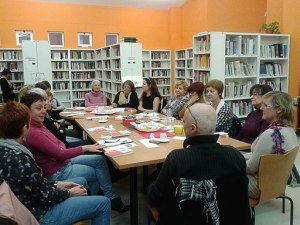
Groups often meet in libraries
Ask your friends. I have several friends in book clubs.
Start your own. I ran a “periodic book club” at my church for several years.
You can even participate in Facebook groups like the Bible Cafe Book Club.
Interested in giving book clubs a try without leaving your home?
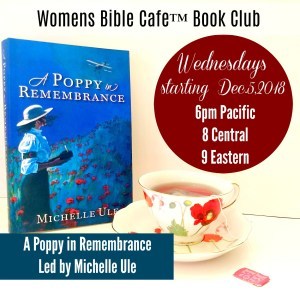
I’ll be leading a four-week discussion of my novel A Poppy in Remembrance on the Bible Cafe Book Club FB page beginning December 5.
You need to join the group (free) here
(It’s easy. Just click Want to Join in the top left box under the banner photo).
I’ll be live at 6 pm PST on Wednesday nights through December for one hour.
I’ll post questions and you type in your response–or just read others’ answers if you’re shy or unsure.
The first week we’ll be discussing the first 12 chapters of A Poppy in Remembrance. (England).
On December 12 Chapters 13-24 (Goodbye England, hello Egypt).
December 19 Chapters 25-36 (Egypt).
December 26: Chapters 37-end (France).
You can join any time. The discussions will remain up on the FB page, so they can be reviewed at later times if you can’t meet us live.
Tweetables
4 reasons why you should join a book club. Click to Tweet
How do you find a book club? Click to Tweet
Why not try a Facebook book club in your own home? Click to Tweet
The post Why Not Join a Book Club? appeared first on Michelle Ule, Author.
November 30, 2018
How Do You Celebrate Advent?
How do you celebrate Advent and what does it mean?
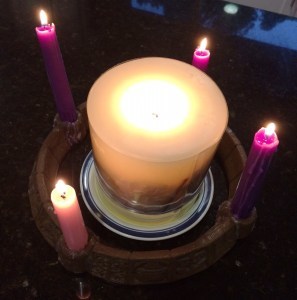
Many Christians light candles to celebrate Advent on the four Sundays before Christmas.
Advent is the season in the liturgical church leading up to Christmas.
The word is a shortened form of adventus Domini, meaning “the coming of the Lord.”
Advent anticipates three events.
The celebration of Christ’s birth this year.
His resurrection celebration in Easter next year.
His promise to return–anytime.
Many people prepare an Advent wreath with evergreens and four candles that they light on the four Sundays of Advent, lighting all four candles to celebrate Christmas.
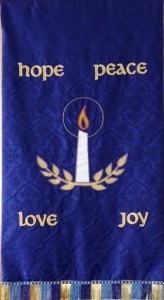
The four candles represent different aspects of Advent.
The first candle celebrates Advent hope.
According to Pastor Dennis Durham of St. Mark Lutheran Church
“Hope is mentioned 50 times in the New Testament–and all those verses are connected to God and the certainty we have in Him.”
In American English, hope is almost like a superstition, “I hope something will happen,” with a wistful expectation.
“But Christian hope does not take its cue from circumstances,” Durham explained, citing Romans 5:5:
“Now hope does not disappoint, because the love of God has been poured out in our hearts by the Holy Spirit who was given to us.”
The second candle, lit on the second Sunday of Advent, represents peace
“Peace on earth, good will toward men,” the angels sang that wonderful night outside of Bethlehem. “Great news, a Savior is born.”
Jesus is the Prince of Peace.
What did that mean, a prince of peace as found in Isaiah 9:6 and sung about in Handel’s Messiah?
Prince is easy to define: the son of the king, chieftain.
Peace comes from the Hebrew word shalom: completeness, soundness, tranquil, calm, friendship, health, and prosperity.
We celebrate Advent peace: peace with the Creator of the Universe because sin reigns no more.
It’s the peace in our hearts when we recognize that prince.
We light three candles on the third Sunday for Joy
Isaiah 9:2 prophesied about the Messiah God would send into the world someday. Looking forward from a grim time, Isaiah encouraged the Israelites:
The people who walked in darkness
Have seen a great light;
Those who dwelt in the land of the shadow of death,
Upon them a light has shined.
The light shone on the world with Jesus’ birth–which is why those angels sang.
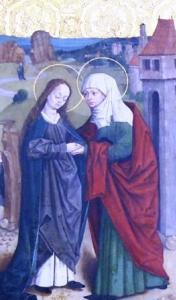
from St. Mary Church Gdansk (Wikipedia Commons)
Imagine Mary’s wonder, awe, and joy at the Angel Gabriel’s news in Luke 1:46-47:
“My soul magnifies the Lord,
And my spirit has rejoiced in God my Savior.”
When she visited her cousin Elizabeth, even the baby in the old woman’s womb leaped for joy!
And once Jesus was born, the skies about Bethlehem exploded with rejoicing angels!
What a splendid way to celebrate Advent!
Four candles represent Christmas love
What does love have to do with the expectation of Christ coming?
Everything.
Jesus coming to earth is all about love, as he explained in John 3:16:
“For God so loved the world, He sent his only son that whosoever believes in Him should not perish but have eternal life.”
What better way to express love than to come into the world, walk the road of suffering and free us all from sin and death?
Celebrating Advent
My family lights a candle on the Advent wreath each Sunday night in the weeks leading up to Christmas.
We open a window on an Advent calendar (their favorite was always the one with chocolate behind the window).
We sing Christmas songs with gusto throughout December.
I write a Christmas letter, we decorate a Christmas tree, my daughter hosts a Christmas cookie party.
I remember the Christmas I first understood Jesus’ reason for coming into the world.
Emmanuel. He’s with us.
I wish you hope, peace, joy and love this Advent season.
 For more information, check out these posts:
Looking for the Biblical Advent stories? Start here
If you have children, you might appreciate Karen Whiting’s book: Christmas is Coming! But Waiting is Hard!
Tweetables.
How Do You Celebrate Advent? Click to Tweet
What do the four candles of Advent represent? Click to Tweet
What is Advent? Click to Tweet
The post How Do You Celebrate Advent? appeared first on Michelle Ule, Author.
November 27, 2018
Peter Kay– a Post-BTC Oswald Chambers Student
 Peter Kay entered the Australian Army like many young men when the Commonwealth went to war in 1914.
A hard-living, hard-riding horseman who chased women in his spare time, he did not suspect spiritual changes were coming in WWI Egypt.
But his life changed in a most unexpected way.
He met Oswald Chambers and heard the gospel.
Peter Kay’s life was never the same.
Who was Peter Kay?
Kay was one of many men who enlisted in the Australian army.
I have not been able to trace exactly who he was or what became of him after WWI ended.
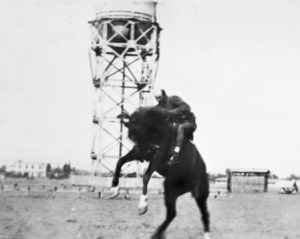
Peter Kay in a buck jumping competition at Heliopolis (Australia War Memorial)
A trooper, he probably came from New South Wales, where he worked as a horse wrangler.
Kay was a member of the 2nd Australian Remount unit stationed at the Heliopolis racecourse, just north of Zeitoun and Cairo proper. The unit arrived in late December 1915.
There he worked with other horsemen preparing mounts for the Desert Mounted Rifles, as well as mules and draught horses.
Their job involved training horses for military use by the light horse units. The sergeant in charge, Jack Dempsey, chose “some of the very cream of Australian horsemen.”
He participated in competitions like others in the Remounts, including buck jumping!
When did he meet Oswald Chambers?
Peter Kay met Oswald Chambers in spring 1916 at Zeitoun where Chambers ran a YMCA hut.
A wild-looking man who preferred to wear an Outback slouch hat on his head and a scarf around his neck, Peter Kay soon became a believer, explaining
“When I realized what Almighty God had done for me, I realized I would be a cad if I didn’t own Him as my Lord and Master.”
He spent a lot of time at Zeitoun, in particular, doting on the Chambers’ toddler daughter Kathleen.
She, in turn, thought him the “cat’s whiskers.”
Off into the Desert
The Remounts eventually moved up near the Suez Canal at Moascar and eventually on to Kantara and elsewhere in the Sinai Desert.
Kay went with them and the Chambers family didn’t hear from him for some time.
However, when others soldiers visited Zeitoun on leave, they approached Oswald with concerns.
“You think Peter Kay’s a Christian, don’t you? He may know God, but he’s doing the same things he did before.”
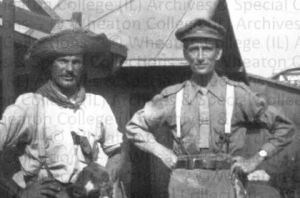
Kay and Chambers (Wheaton College Special Collections)
Oswald and Biddy both believed people don’t always change completely when they become believers in Jesus Christ. Sometimes it takes more living and time for people to recognize what they really believe.
Oswald listened to Kay’s friends and said, “the Holy Spirit will teach him and by degrees, those things will drop off like dead leaves, and he won’t do them anymore.”
The soldiers kept an eye on Kay after they returned to the unit and on their next visit, admitted Oswald was correct.
Out in the desert, the Remounts worried about horse health, how to feed them six pounds of hay a day and keep them watered.
They continually shuttled horses between Heliopolis, Moascar, and Kantara–working hard to keep the mounts in top shape for the difficult desert work.
A donkey for Kathleen
Peter Kay returned to Heliopolis in late 1916 and brought Kathleen a small donkey in early 1917.
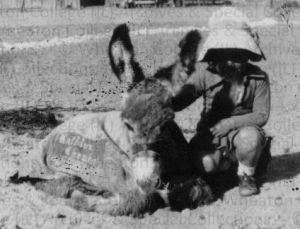
A gift from Peter Kay (Wheaton College Special Collections)
He supervised the three and a half-year-old kicking the donkey’s sides as she rode around the compound.
Biddy and Oswald watched the riding lessons and ordered another animal pen to be built. They posted a sign: “Eshat el Homar” (Hut of the Donkey).
It may have been the last time Kay saw Chambers as he soon rejoined the Remounts and ended up in the Sinai Desert
He was with the Australian Remounts and Desert Mounted Riders at the Battle of Beersheba on October 31, 1917.
He undoubtedly was one of the men helping water the horses after the fantastic cavalry charge.
A final tribute to Oswald Chambers
Before he sailed back to Australia with the 2nd Australian Remounts, Peter Kay visited Zeitoun to pay his condolences to his comrade Kathleen and the rest of the Zeitoun assistants.
To show his appreciation for Chambers and Kay’s faith, he carved a stone Bible to lie at the foot of the cross bearing Oswald Chambers’ name and date of death.
The stone Bible was open to the verse Chambers posted at the Zeitoun hut, Luke 11:13:
“If ye being evil know how to give good gifts to your children, how much more shall your heavenly Father give the Holy Spirit to those who ask him.”
Then Peter Kay, a disciple of Jesus, sailed for home in Australia.
I don’t know what became of him after that, but his life in Egypt was a testament to the power of the Holy Spirit as taught by Oswald Chambers.
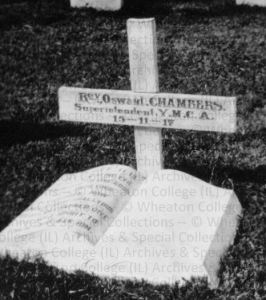
A gift from a grateful student (Wheaton College Special Collections)
Tweetables
How Oswald Chambers changed the life of a hard-drinking man. Click to Tweet
A buck jumping horseman becomes a believer thanks to Oswald Chambers. Click to Tweet
Horses, donkeys, and the gospel; WWI Egypt. Click to Tweet
And he gets a mention in A Poppy in Remembrance, too!
The post Peter Kay– a Post-BTC Oswald Chambers Student appeared first on Michelle Ule, Author.
November 23, 2018
2018 Books I’m Thankful I Read

This is a list for those of you hunting Christmas book gifts.
I’ve reviewed them on my Goodreads page here and written about them on my monthly newsletter here.
Maybe some will appeal to the readers on your Christmas list?
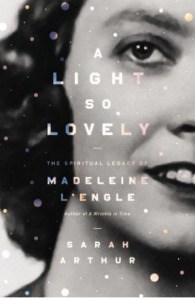
A Light so Lovely: The Spiritual Legacy of Madeleine L’Engle by Sarah Arthur
A lovely book.
Part biography, but more a look and discussion of L’Engle’s work and how it integrated with her faith.
Arthur’s splendid descriptions and insight reminded me, yet again, of why I fell in love with the L’Engle canon so very long ago.
I’ve written about my own experiences with Madeleine L’Engle’s work here, here, and here.
This one of the 2018 books would be an excellent choice for a Christian who loves L’Engle’s writing or who is a writer.
This book is my favorite–so far.
Everything Happens for a Reason and Other Lies I’ve Loved by Kate Bowler
Bowler’s memoir was significant for so many reasons.
A professor of divinity at Duke University, Bowler wrote her dissertation on the “prosperity gospel.”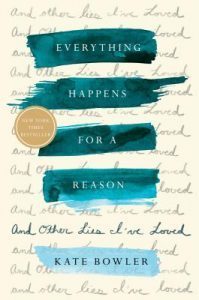
35 years-old when she came down with cancer, this story is still being lived out.
She confronts the tragedy of her life with emotions of disappointment and humor.
I was laughing one minute and crying the next.
Most important for me, a well-meaning pray-er, was to read the appendices where Bowler provides two important lists.
One was what NOT to say to a person in crisis, the other what TO say and do.
It’s probably the most personally helpful among the 2018 books I read.
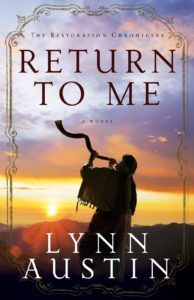
The Restoration Chronicles by Lynn Austin
Austin wrote a three-part series about the Israelites returning to rebuild Jerusalem following their Babylonian captivity.
 The books were written several years ago, but I just found them in 2018.
I wrote an entire blog post about my enthusiasm for the series–which I used as fictional background for a study I taught on the book of Nehemiah.
Fiction for a Bible study leader provides context for the text.
While I always keep in mind it is an author’s imagination, I find it helpful to consider Biblical passages from a different angle.
I like to contemplate the whys of behavior and Austin provided me with interesting insight.
Maybe Nehemiah really was the security head in the Babylonian palace?
The three books are Return to Me, Keepers of the Covenant, and On This Foundation.
All highly recommended.
Jesus Through Middle Eastern Eyes: Cultural Studies in the Gospels by Kenneth E. Bailey
Oh, my, the gospels don’t look the same after reading this book!
Bailey, a Bible professor who lived in the Middle East for many years, brings a unique perspective on the Biblical stories I’ve studied for years.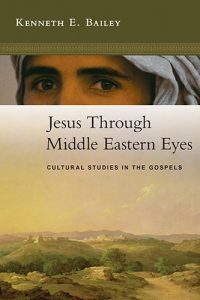
I was shocked by several of his interpretations.
His explanations for well-known parables helped me see them in entirely new lights.
I’ll never look at the Good Samaritan the same way again.
I recommended this book to a friend currently teaching through Matthew, and he loves it.
If you’re interested in Bible study and cultural interpretations, Jesus Through Middle Eastern Eyes is an excellent place to start.
While it’s among the 2018 books for me, it was published in 2008.
Did I read any fun 2018 books?
Of course.
Here are a few:
Sarah Sundin’s The Sea Before Us.
Part 1 of a three-part trilogy telling the D-Day landing stories of a trio of brothers.
I love Sarah’s writing and books; this was the best one she’s written.
Laura Franz’ The Lacemaker
I read everything Laura writes. She’s a fiction specialist in colonial America.
I particularly enjoy her stories when they touch on my personal genealogy!
Which this one does.
Katherine Reay’s The Austen Escape
Reay writes contemporary versions of Jane Austen stories.
Some are better than others, but I love picking out the literary allusions and the stories generally are fun.
Other 2018 books I particularly enjoyed in no order or category
Always be Ready by Hugh Ross
Hour Unspent by Roseanna White
Breaking Cover: My Secret Life in the CIA by Michele Rigby Assad
The Complete Guide to the Prayers of Jesus by Janet McHenry
Praying with Jane: 31 Days Through the Prayers of Jane Austen by Rachel Dodge
And who could forget my favorite book this year? A Poppy in Remembrance!
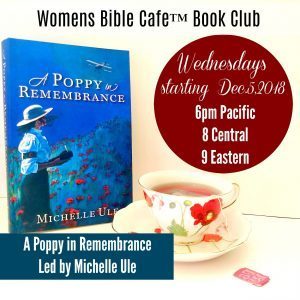
Interested in a book club discussion of A Poppy in Remembrance?
Join me on Wednesday nights at 6/8/ 9 pm in December.
You’ll need to join the Bible Cafe Book Club Group on Facebook, but I’ll be there live with questions about the book.
The first batch of questions will be on Wednesday, December 5, 6 pm Pacific time and will cover the first 12 chapters in the book.
Join us!
Tweetables
Great reads for 2018 Christmas Lists! Click to Tweet
A bestselling author lists her favorite 2018 books. Click to Tweet
Book suggestions for Christmas 2018. Click to Tweet
The post 2018 Books I’m Thankful I Read appeared first on Michelle Ule, Author.
November 20, 2018
Gratitude Lessons Learned through Fire
 Our houses did not burn. Thirteen days of evacuation were a small price to pay for that mercy to us.
Many friends, however, did lose their homes and we continue to grieve with them.
We also grieve with people in Butte County and in southern California this 2018 fall as they struggle with loss.
I’m not grateful for everything
I struggle with bitterness and anger that arises when injustice takes place in my community, particularly toward the fire survivors.
But 1 Thessalonians 5:18 in the Bible I study reminds me
“in everything give thanks; for this is the will of God in Christ Jesus for you.”
If I turn my attention away from the trials I cannot control and hunt for things to be thankful for, my life goes better.
My attitude also improves which enables me to be more helpful for those who have no control.
It encourages my children to look beyond the challenges for the good.
Mr. Fred Rogers, of course, led the way with his reminder:
“When I was a boy and I would see scary things in the news, my mother would say to me, ‘Look for the helpers. You will always find people who are helping.'”
That’s a great place to start–for all of us.
Thanksgiving
We’re always encouraged to express what we’re thankful for during Thanksgiving week.
But I wrote a blog post for the AllMomDoes.com website last week and it expresses what I’ve learned far better than me writing it again.
The eight lessons on gratitude I’ve learned are these:
Gratitude can sweep away fear.
Gratitude can soothe emotions.
Small things are just as important as large.
Our gratitude can bless others.
Simple things can bring you to tears of thankfulness.
People are more important than things.
“Love you.”
Count your blessings.
A fuller explanation can be found on the AllMomDoes blog post from November 14, 2018.
You can read it here:
Happy Thanksgiving!
Tweetables
Eight lessons on gratitude for Thanksgiving. Click to Tweet
Fire Lessons on gratitude for Thanksgiving. Click to Tweet
The post Gratitude Lessons Learned through Fire appeared first on Michelle Ule, Author.
November 16, 2018
DNA, Genealogy and Who ARE We?
 My uncle had his DNA “done” recently and to the shock of my Sicilian relatives, we’re Greek.
Oh, not 100% Greek.
He’s only 53% Greek, but it shocked us, none the less.
That means my generation is “only” 26.5% Greek, but that’s higher than the others for me.
“You don’t really take that seriously, do you?” My sister-in-law asked.
Of course not.
But it’s interesting.
Family stories
I’ve been an amateur genealogist since I wrote my first family history in 1990.
We celebrated my maternal grandfather’s 100th birthday that year.
Since I lived far away, I interviewed relatives and wrote a joint biography of him and my grandmother.
It was my first venture into historical writing.
As a lover of history and with a strong inclination to put facts into context, I read up on the Sicilian experience.
My grandfather came to the United States in 1908, when he was 18 years old.
His mind was intact until his death at the age of 102 years, 11 months.
Grandpa wasn’t much of a talker, but he had so many stories!
I’m an American citizen because of his service in the US Army during World War I, for instance.
He remembered seeing his first airplane (the Wright Brothers’ plane in Chicago), remembered when the Russian Czar Nicholas II was murdered (1918) and voted in every presidential election.
He was a proud American and only returned to Italy in 1956 when he inherited property that needed to be sold.
What does DNA have to do with it?
Nothing.

No one in my family can do this! (Photo by Nikos Kawadas via Unsplash)
Something.
My Sicilian mother had “untypeable blood” according to the UCLA hospital in the 1950’s.
“What does that even mean?” she asked her doctors.
“We don’t know. We’ll mark “O” and hope you never need a transfusion.”
She never needed one.
My father, a history lover, would have loved to hear about the Greek DNA.
As he explained long ago, “Sicily was overrun by so many marauders, her blood easily could be a mixture of many races.”
Sicily was the breadbasket of Greece a long time ago. My Sicilian great-grandfather farmed for a wealthy landowner who lived far away.
All sorts of nationalities took advantage of that strategically placed island continually booted about by the Italian mainland.
DNA results
My distant cousins in the genealogy world encouraged us to have our DNA tested several years ago.
They were hunting for confirmation of specific lines from colonial Virginia and Maryland.

The Danes win in my gene pool! (My great-grandmother)
This particular test gave me the names of distant cousins.
Searching through the very lengthy list, I was shocked to see Russian and Scandinavian names.
I puzzled over the results for quite some time.
HOW were the Russians involved? Would these have been sea traders who visited Sicily?
But that didn’t make any sense, particularly when I didn’t see any names that looked Italian.
And why wasn’t I seeing the names of third and fourth cousins whom I actually knew?
When I asked the fifth-cousin who had urged me to do the testing, he laughed.
“We obviously inherited more genes from the non-similar family lines.”
But Russian and Scandinavian?
Oh, wait!
We always said I took after my Danish grandmother more than my Sicilian one!
Her family left Denmark circa 1870, yet similar DNA threaded through my lines and that of people far, far away.
So what?
It means nothing to my everyday life.
Except I look like the Sicilians! (Or are they Greeks?)
I don’t like ouzo or even olives.
I’ve only a cursory knowledge of Greece, though we certainly admired Agrigento in Sicily!
But knowing my family comes from all over helps me look at the world differently.
At the moment, family members have married people from Columbia, Italy, Germany, Indonesia, and of Hungarian, Slovenian and Pakistani descent.
It means a piece of my heart belongs to lands and cultures I’ve never visited (Pakistan and Indonesia at the moment).
I love people from those countries, or at least their descendants. I can’t be xenophobic about my own land.
So, this Thanksgiving we’ll embrace a new window into who we are: a “mutt” mixture, as my father used to say.
It’s not the nationality which is important–it’s who we are as a family.
No matter what the DNA says!
Hey! Make sure you take family stories to Thanksgiving celebrations this year! You never know what you’ll discover!
Tweetables
DNA and Genealogy: something to discuss at Thanksgiving! Click to Tweet
Do you really know where your ancestors came from? DNA surprise! Click to Tweet
The post DNA, Genealogy and Who ARE We? appeared first on Michelle Ule, Author.
November 13, 2018
Armistice Day in Paris; November 11, 1918
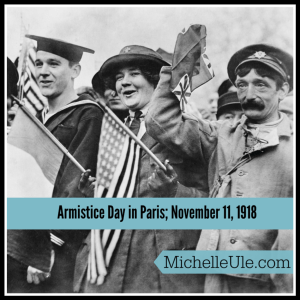 Can you imagine what Paris was like on Armistice Day in 1918?
Delirious with joy would work as a description!
Sobered, but relieved.
Triumphant yet mourning.
It was all those things and more.
That chapter, the final one, was the easiest and most fun to write in A Poppy in Remembrance.
11 in the morning on the 11th of November, 1918
Representatives of the Allied forces and the Axis forces met in the allied supreme commander’s private railcar near the forest of Compiègne less than 40 miles north of Paris.
For the Allies, the personnel involved were all military, according to Wikipedia. The two signatories were:
Field Marshal of France Ferdinand Foch, the Allied supreme commander and First Sea Lord Admiral Rosslyn Wemyss, the British representative
For Germany, the four signatories were a civilian politician, Matthias Erzberger, Count Alfred von Oberndorff (de), from the Foreign Ministry plus an army and navy captain.
They signed the extensive documents at five o’clock in the morning.
The Armistice went into effect at 11 o’clock in the morning, Paris time, throughout the theaters of war.
Here is an astounding recording of the last minute of the war--stopped in silence and followed by the glorious sound of hope.
From the top of the Eiffel Tower came the first “shot of peace,” at 11 on that foggy morning in Paris and then the church bells began to ring.
The last casualties
The six-hour time delay between the official signing and the start of the Armistice did not mean soldiers put down their arms.
In some cases, firing from the Allied side went on the rest of the morning at German targets as they tried to use up their spare ammunition.
The Allies also needed to make sure that should the Armistice not hold, they would remain in strategic positions.
More than 2700 soldiers died on the final day of the war and more than 8,000 were injured.
The last soldier killed before the Armistice was an American.
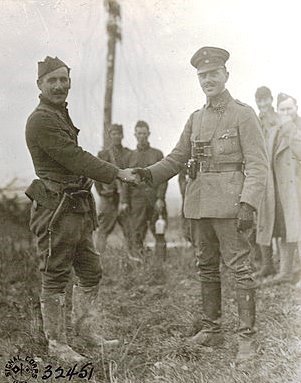
No one was happier to see the end of war, alive, than the soldiers.
He died at 10:59 while deliberately charging a German trench, apparently in an attempt to salvage his honor after a recent demotion in rank.
The US Navy fired the final gun at 10:57:30, “timed to land far behind the German front line just before the scheduled Armistice.”
Some troops marched across “No-Man’s Land,” at the signal to shake hands, but for most, it was a quiet, sober reflection that day.
Thankful to be alive, no one knew better than a soldier the high price so many had paid for the world to reach an Armistice.
From A Poppy in Remembrance
In the final chapter of A Poppy in Remembrance, Claire Meacham trained to Paris in time to celebrate with her parents.
Here’s a taste from the final scenes.
The French newspapers splashed EXTRA! above the fold. Boys sold papers on the street, crowds gathered, and the bells of Paris began to toll, chime, clang, and ring at eleven o’clock.
A large gun fired from the top of the Eiffel Tower and flags flew from every building.
Shouting and singing “La Marseillaise” began spontaneously and as they walked the streets, Anne and Claire saw few dry eyes.
People crowded the boulevards, walking arm in arm.
Soldiers danced among the Parisians, exchanging hats and singing. Women and children tossed flowers and handheld flags flourished.
Anne and Claire couldn’t resist laughing and singing with the excited crowds.
So many people swarmed the street, cars could not move.
Biplanes flying over the city dropped slips of paper. Claire read one aloud: “Congratulations to France on the recovery of her lost children.”
They pushed through the throngs to reach overflowing Notre-Dame Cathedral. High above, the big Emmanuel bell rang continually.
“They say it will toll for eleven hours,” a priest told them. “God is good. We are so thankful.”
Claire wrote it down, but knew she’d never forget.
The Great War was over. Now, the world needed to put itself back together.
It was harder than anyone ever dreamed.
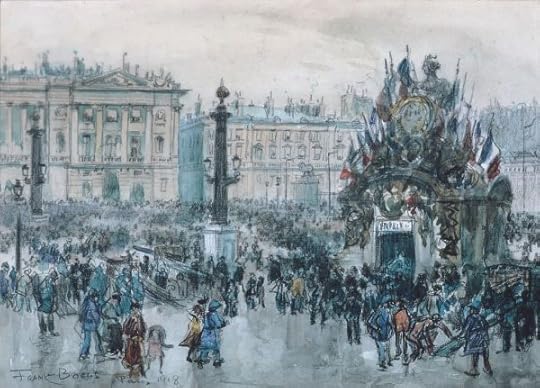
Armistice Day, Paris, by Frank Myers Boggs; Metropolitan Museum of Art (Public Domain)
Tweetables
Paris on the WWI Armistice Day. Click to Tweet
What happened in Paris at 11 o’clock on November 11, 1918? Click to Tweet
Celebrating the end of the Great War in Paris. Click to Tweet
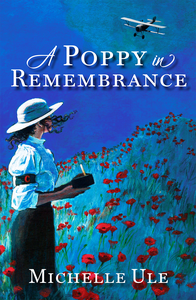
You can purchase the book here
An article about the same day in England.
The post Armistice Day in Paris; November 11, 1918 appeared first on Michelle Ule, Author.
November 9, 2018
Why Write about the Great War?
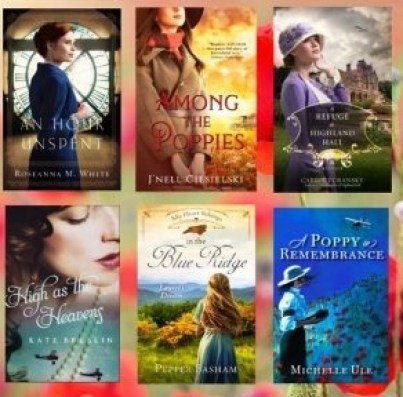
Bestselling novelists Carrie Turansky, Pepper Basham, Kate Breslin, J’Nell Ciesielski, Roseanna White, and Michelle Ule all released a WWI novel during 2018-2019.
Why?
For many reasons.
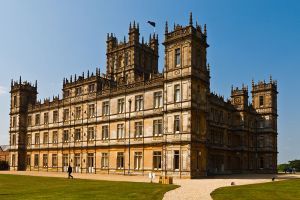
The Downton Abbey home
Downton Abbey inspired several writers.
Kate Breslin
“My interest in WWI and the early 1900s was sparked a few years ago watching the PBS series, Downton Abbey.
I’d already written about WWII in my debut novel, For Such a Time, but there seemed little written about the Great War.
“As I researched my first WWI-related novel, Not By Sight, I found the era’s history fascinating. It also provided an opportunity for fresh new stories.”
Roseanna White‘s agent asked her if she had written anything from the Downton Abbey or Edwardian period for possible publication.
“I had an idea that would work well in that period, and wrote a series set in 1910-1913 for Bethany House.
Of course, then I realized war was on the horizon, and I decided it would be fun to continue my exploration into the next stage of history, as England entered the Great War.”
Carrie Turansky simply followed the timeline for her Edwardian Bride series, which started in 1911.
As her series followed the Ramsey family all the way into WWI, it was natural to include the war in her third and final book, A Refuge at Highland Hall.
“When I took a research trip to England and visited Tyntesfield, the estate that inspired Highland Hall, I found the war-time diary of a woman in the bookstore on the estate. It was so interesting to read how people on the home front in England were impacted by the war. I took many true incidents from that diary and used them in the story.”
A Refuge at Highland Hall is a standalone story with a hero and heroine unique to the series. Readers may enjoy reading all three books to get a better feel for the impact the war had on lives.
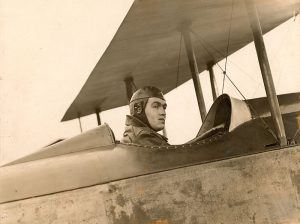
Frank Dixon of the RAF (Public Domain)
Others were drawn to the unique era in publishing or the drama of the times.
Pepper Basham loved “the age of change and discovery in the WWI era,” that she wrote about in My Heart Belongs in the Blue Ridge.
“There’s so much going on. There’s something about the WWI era–where the “gentleman’s war” became much less gentlemanly. It shows the devastation of the human condition and the need for hope more than some other eras.”
J’nell Ciesielski enjoys reading about chivalrous men and feisty women. WWI gave her the perfect opportunity to describe such a romance!
Michelle Ule wrote numerous blog posts about how she went to work one day and ended up five years later an expert on WWI!
All that information played a role in her A Poppy in Remembrance.
“I wrote about a specific story: Oswald Chambers’ revival among the ANZAC troops in Egypt during the war–the one inspirational story out of a horrific slog.
“I enjoyed learning and writing about a young woman’s attempt to become a foreign correspondent in a man’s world.
“In addition, a visit to New Zealand inspired a hero because of the 58% casualty rates that country experienced during the Great War.”
Different angles on the Great War
A variety of heroines find their lives complicated by the Great War.
The stories include a female ambulance driver falling in love with an army captain. (Among the Poppies)
A clockmaker’s daughter tangles with a thief-turned spy. (An Hour Unspent)
The trials of a widowed British nurse falling in love with a flyer. (High as the Heavens)
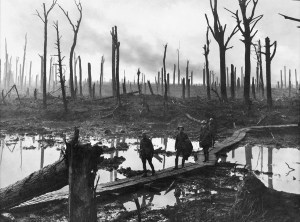
An iconic photo of WWI by Frank Hurley (Public Domain)
A debutante who returns home to assist with orphans and meets a flyer. (A Refuge at Highland Hall)
Journalism captures the attention of a would-be foreign correspondent who can’t decide if she really loves a New Zealand soldier. (A Poppy in Remembrance)
And one story set in the American Appalachians featuring a teacher and a missionary. (My Heart Belongs in the Blue Ridge)
The women are all resourceful in the face of a devastating war.
Why can modern readers learn from World War I?
All the authors found the war fascinating.
Several fashioned their stories around hope and how to see God at work amid the horrors of war.
“In any time period, people need to know there is hope. I think it felt more poignant in this era when the world suddenly expanded and all sorts of people were thrust together.
“When you get a bunch of people together who need Jesus, you’re bound to need a lot of hope,” explained Pepper Basham.
Michelle Ule agreed.
“Since A Poppy in Remembrance is a coming of age story, spiritually, emotionally and professionally, Claire needs to have hope to survive the four miserable years.
“Her spiritual discovery mixes with her life and provides her with a conviction that her journalism needs to provide hope to a broken world following the war.”
The timeless importance of individual character
“The lessons of courage, trusting God, and taking a stand against evil are timeless, and I hope they will be inspiring to readers,” said Carrie Turansky.
Photo by Thomas Quaritsch on Unsplash
In her writing, Kate Breslin discovered,
“Those who lived a hundred years ago weren’t all that different from us today. They worked hard, had their dreams, and experienced the same joys, fears, hopes, and sorrows.
“They were ordinary people who in times of crisis could rise beyond themselves to accomplish the extraordinary.”
Roseanna White agreed:
“We all know history repeats itself–or “at least rhymes,” as one author said.
“In a lot of ways our modern world is mirroring the way things were before the outbreak of the Great War, which is scary.
“But I tend to focus more on individuals than sweeping history.
“In my stories, I really want to explore how the least of us can have huge, lasting impact upon our world when we do the extraordinary, ordinary things God calls us to.”
Among the Poppies grappled with a woman refusing to let social status or gender prevent her from serving her country.
How did writing the books change the authors’ perspectives on WWI?
“The roots of the war and the end result of the Great War were more complicated than I expected,” Michelle Ule said.
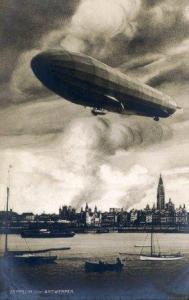
Zeppelin bombing of Antwerp (Wikipedia Commons)
“Many of the catastrophic events of the 20th century, especially WWII and the growth of Communism, were directly linked to the war.
“I really don’t like Woodrow Wilson. I’m shocked American banks ultimately paid the reparations bill.”
The technological advances surprised several people.
Carrie Turansky learned a great deal about aviation.
“It was so interesting to see how developments in aviation moved forward quickly to combat this challenge and protect England.
“I learned about the Zeppelins coming from Germany and bombing England, and this was the first time airships had been used like this.”
Several of us recognized the Great War planted the seeds for World War II.
“Until I really began studying this era, I was much more familiar with World War II,” Roseanna White said.
“Much of the technology, methods, intelligence, and even mindsets that we know from that later war had their start in the first World War.”
Kate Breslin hoped her readers learn about history without feeling like they’ve received a history lesson!
“I love weaving historical facts into my fictional stories.
“It still surprises me how much of the innovation we employed during WWII had its roots in WWI. Our ancestors were extremely inventive and clever!”
Pepper Basham perhaps said it best:
“Spiritually, I loved delving into the aspects of forgiveness from various perspectives.
“Time-wise, I enjoyed researching the indomitable reach of the human spirit to love, sacrifice, and adapt to change.”
All six found great fodder for telling wonderful stories about a difficult time in history.
Why not take a look?
The post Why Write about the Great War? appeared first on Michelle Ule, Author.