Michelle Ule's Blog, page 34
August 6, 2019
Moving: 10 Things to Love
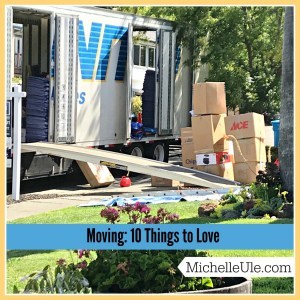
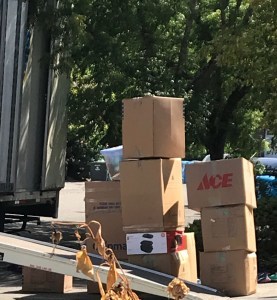
A moving van sits in front of my house today.
It’s for our next-door neighbors headed across the country.
Yesterday we visited for the last time, and I told them how I envied their move.
“I love starting over,” I explained. “We’ve only moved fourteen times, but I wouldn’t mind doing it again except my family lives here.”
They nodded politely and hugged me goodbye.
Here’s my list of 10 things I love about moving
You get to start over.
Every move involves a new place with opportunities to begin again.
I don’t usually know anyone and this is a chance to be a different person than my current style.
It never works to become different, but the possibility is there!
You can better bond as a family
Moving always has its challenges, but it can be a good opportunity to focus on what’s important within your family.
We asked the children what type of house they’d like to live in, for example.
(And laughed over some of their responses).
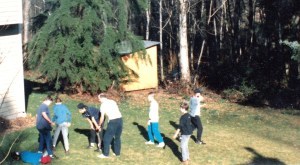 Plenty of yard after being in a townhouse!
Talking about the new place, imagining a new life, helping them learn about letting go of old toys, friends, and school can help deal with the challenges to come.
We usually took a trip in conjunction with our move (okay, four moves across the US and one overseas means a big trip), and that was a marker of fun and adventure.
It reminded us we were a cohesive unit as we explored a new life in a new place.
In promoting family unity, we were able to help each other through the challenges all moves entail.
We had to talk, talk, talk, and within a family that’s always a positive.
You can purge your possessions
It’s a great opportunity to go through what you own and discard what you no longer need.
If you haven’t used it in a while, get rid of it. There’s no point in paying to move something you won’t use at the next location.
That includes culling the books! (I gave away 400 before one move).
(Just don’t donate your children’s castoff toys to a friend’s yard sale and then stop by to visit.)
(If you are moving to Hawai’i, you do not need winter clothes. We cached those in LA at my parents’ house since LA would always be the first stop on the Mainland).
You get to find a house that may fit your family better
Ours were military moves and each one enabled us to find a house that fit our growing family better than the last house.
(Other than Hawai’i; but that’s always a different story).
Pregnant with a third child when we moved to Monterey, I was happy the Navy granted us a four-bedroom house.
Moving to Washington with three rambunctious boys meant we found a simple house with a big yard, running stream and plenty of room for a garden.
Perfect.
Moving to a new residence can increase your creativity
Each new house had its own peculiarities and the furniture placement can be a challenge.
This is where you get to use your creativity to figure out how to use what furniture where.
We have a dresser that has been a dresser, a bookcase, a sewing stash, and a business center.
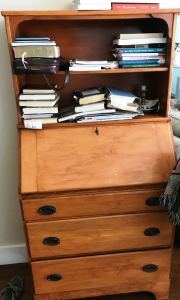
It all depended on the house and where the furniture fit best.
The piano served as a room divider in one townhouse.
You get to learn a new place
I love to travel and each move is an opportunity to learn about a new part of the country.
We’ve lived in Florida, New England, up and down California, Washington State, and Hawai’i.
Each place has its own culture and I’ve enjoyed learning about them.
I’ve also picked up local twangs–New England’s flattened “a,” Washington’s “eh?” and the lyricism of Hawai’i’s words when correctly pronounced.
(Yes, get all those “i”s in there properly!)
You get to try out a new library and thus a new library collection
I’ve benefitted in all my moves because I get to explore a new library collection.
I’ve picked up books in one part of the country I’ve never seen in another.
I learned all about the Pacific Northwest when I lived in Washington, and that included Alaska.
I’ve not seen many of those books since!
You discover new recreation opportunities
The kids learned to sail in Hawai’i, hunt for gemstones in northern California, camp in the rain in Washington, and the joy of apple picking in New England.
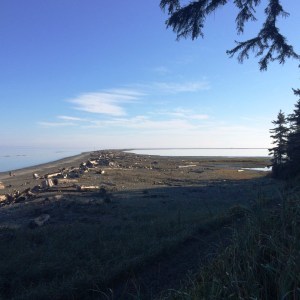
I learned how to grow different varieties of flowers and vegetables in each location.
We savored the trade winds, shook our heads over the distant seal barking, ate strawberries from the bushes and learned how to cut down trees.
Get a guidebook for the new area and plan outings.
We’ve got a hiking book for our current location and mark them off as we go.
Local foods increase your palate
My sons may love spam musubi, but not me.
New England enlarged my food choices to lobster and blueberries–I’d never tasted them before.
Oh, and Dungeness crab out of Washington!
Corn eaten twenty minutes after picking in upstate New York!
Moving all over the country introduced us to so many terrific foods we’d never encountered before.
And then, of course, there are all the new restaurants to explore!
New Friends
Sure, we love our old friends and moving away means saying goodbye.
But in the age of social media, we’re a lot closer than we used to be.
Each new location enables us to make new friends– though it’s easier if you move with children.
We’ve attended all sorts of different churches around the country.
There are wonderful people everywhere.
Moving fourteen times has shown me that.
And, of course, it means when you travel you always have someone to visit!
Saying Goodbye
The hardest part of all is saying goodbye, and I’ll be waving as the neighbors, and other dearly loved friends, head to their new homes.
Moving is a growing experience. It can be a positive one.
Our attitude is at the heart.
Besides, you can always move back, right?
Tweetables
10 things I love about moving. Click to Tweet
Finding positives in a move, for kids, families, and adults. Click to Tweet
The 10 best things about moving. Click to Tweet
The post Moving: 10 Things to Love appeared first on Michelle Ule, Author.


July 30, 2019
The Best Apollo Movies

With Apollo 11’s 50th anniversary of the moon landing behind us, my family spent the week watching Apollo-related movies.
This is our list of favorites and why
October Sky
The music, the times, the story. Homer Hickam’s memoir of growing up in Coalwood, WV echoes throughout.
I love the acting, the wit and the determination of one young teacher to make sure some of her students escape working in the coal mines.
The rocket videos and the trouble the boys went through to make rockets that worked (the book is called Rocket Boys and it’s wonderful, too), are winsome, funny and dramatic.
It’s about a young man growing up, determined to make something of himself, who takes his friends with him.
Ultimately, Homer Hickam became a NASA engineer and bestselling author.
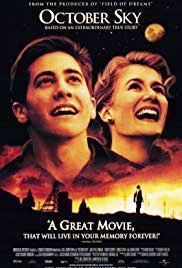
October Sky is the first on this list because it so well displays the determination of so many (including my own father-in-law) to be part of the US space program.
All their work contributed to the Apollo flights–as Neil Armstrong himself said after he walked on the moon.
The astronauts knew their fame, safety and success was the result of so many people, more than 400,000, working together in the aerospace program.
The Right Stuff
Of course, The Right Suff is the perfect lead-in to the Apollo program!
I saw it with friends when it first came out in the movie theater.
My husband was out to sea on a submarine, so I drove myself home, zooming our stick-shift Celica as quickly as possible up Route 3, until I realized I didn’t want a speeding ticket!
This movie is perhaps longer than it needs to be, but it, too, highlighted the efforts and work of the people behind the space program.
I loved Chuck Yeager’s amazing daring-do with those fast jets, so much so that I read his biography, Yeager, shortly thereafter.
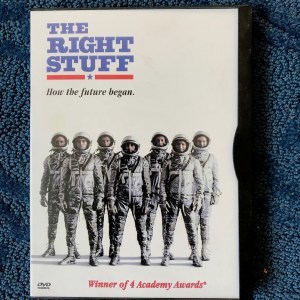
I fell in love with his wife, Glynnis, a strong-willed military wife who loved her husband but didn’t let him get away with anything.
As I was a military wife at the time, her example and that of many others was a great encouragement.
Tom Wolfe’s book, The Right Stuff, is also fabulous, but as a military wife, I found the first chapter chilling and terrifying.
First Man
Wow, quite an impact this one had on us!
First Man released in 2018 and we saw it in the movie theater.
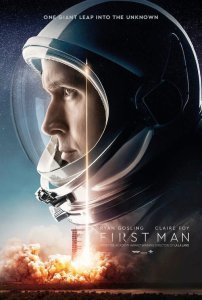
We couldn’t get over how noisy the movie was as it included the deafening background noise of traveling into space.
It’s a complicated portrait of Neil Armstrong that neither my husband nor I knew.
Mrs. Armstrong was another strong wife, determined to make her husband be a father as well as a hero.
It helped us remember how fragile those Apollo orbiters were as well as the courage of the men who flew all the space ships
The Dish
Quirky, funny, entertaining, poignant, Australian!
What could be a better point of view to learn about the near-failure of our ability to watch one giant step on television?
Based on a true story–though slightly embroidered–The Dish is the funniest film of the bunch.
It has an almost tongue-in-cheek attitude about a group of Australians and one NASA guy tasked with providing the satellite dish that bounced the moon television video to the world.
We wouldn’t have seen Armstrong and Aldrin on the moon without this dish–still working and based out of sheep paddock down under.
It’s got tension, pathos, humor, clever dialogue, irony and the theme song from Hawaii 5-O masquerading as the US national anthem!
Sam Neill plays a straight man to a series of characters, all of whom earnestly strive to do their job for the good of the world.
Apollo 13
We watch Apollo 13 all the time.
(It ranks up there with The Hunt for Red October as a great science-related film)
Obviously, it’s about what happened to a subsequent Apollo flight after Armstrong and Aldrin walked on the moon, but it’s a telling story of American engineers rising to get the job done and the astronauts returned safely to earth.
My father-in-law was an aerospace engineer and one of those men who figured out how to make the air filter work.
My husband remembers him not coming home for three days while they figured out.
When the movie came out, we took my father-in-law to see it.
He enjoyed the film but did wonder why some of the switches in the command module were not in the right place.
The rest of us looked at each other. We hadn’t noticed a problem.
After all,” Louis said, “They could have used the command module in the Smithsonian Institute.”
Apollo 13–Jim Lovell’s book
I can’t resist a funny story about Jim Lovell’s book, Apollo 13.
My husband and I attended the 50th anniversary of the end of World War II party on a Navy aircraft carrier in Pearl Harbor.
The honored guest was Jim Lovell.
When we stepped up to introduce ourselves to him and ask for his autograph on our programs, I had something to say.
While we loved the movie, I really enjoyed the book more.
I appreciate how you traded chapters with your wife Marilyn.
As a Navy wife, I enjoyed hearing her side of the story.”
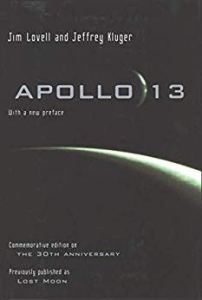
A huge grin spread across Jim Lovell’s face and he called down the table, “Hey, Marilyn! Come meet a Navy wife who liked my book!”
Marilyn broke off her conversation, frowned at her husband, nodded at me and shook her head.
Who can blame him? Writers are always excited someone liked their book!
We’re just thankful we can watch such terrific stories about the US space program, particularly Apollo.
What’s your favorite space movie?
Tweetables
The 5 best Apollo-related movies. Click to Tweet
5 terrific Apollo space program-related films, and books, too! Click to Tweet
What’s your favorite US space program movie? 5 thoughts. Click to Tweet
The post The Best Apollo Movies appeared first on Michelle Ule, Author.
July 23, 2019
Frank Hurley’s Enduring Photography
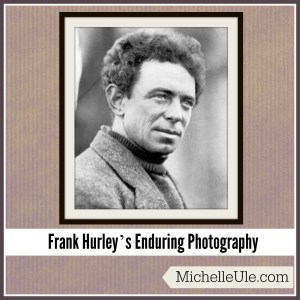
Frank Hurley was a fantastic photographer who took his greatest pictures between 1913-1918.
My family first met him in conjunction with Sir Ernest Shackleton’s expedition to Antarctica on the good ship Endurance.
It was the most extraordinary true adventure story we’d ever heard, and we’ve loved revisiting it ever since!
Frank Hurley’s photos are a magnificent part of the brave story.
The place to start is with Alfred Lansing’s book Endurance.
You can follow it up with Caroline Alexander’s The Endurance: Shackleton’s Legendary Antarctic Expedition.
It doesn’t matter which edition of these books–they’ve all got a Frank Hurley photograph on the cover.
Who was Frank Hurley?
Born in 1885 Australia, Hurley bought his first camera a box Brownie at the age of 17 and set himself up as a photographer.
In 1911, he talked his way onto an Antarctica expedition led by Douglas Mawson. He convinced the local Kodak representative to provide him with equipment and off they went.
Frank Hurley returned in 1914 with a movie he made of the expedition: Home of the Blizzard.
Frank Hurley and the Endurance
Not long afterward, he joined Shackelton’s expedition for the experience of a lifetime!
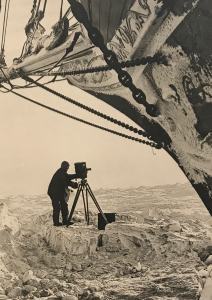
The Imperial Trans-Arctic Expedition was an extraordinary undertaking.
The original plan involved Shackelton’s crew landing on one side of the Antarctic continent and traveling by dogsled overland to the other.
(Few people know another expedition launched from the opposite side of the continent to store caches of food for Shackleton’s dogsledders to finish their cross-continent trip.
(The story of The Ross Party is as unbelievable as the fate of the Endurance crew. You can read it in The Lost Men: The Harrowing Saga of Shackleton’s Ross Sea Party by Kelly Tyler-Lewis.
(A Coast Guard friend of ours visited the site ten years ago. “It was amazing to walk through the hut, which looked as though the Ross Party had just stepped out.”)
Meanwhile, when the Endurance was iced in on the other side of the continent, Frank Hurley climbed into the riggings, skied away from the ship and took fabulous photos.
With his engineering mind, Hurley loved to tinker and fix things.
As the expedition continued, particularly after the ice crushed and sunk the Endurance, his skills kept the men alive.
An able hand-man, he kept continually busy with self-imposed tasks, such as creating an efficient “thaw box” for frozen seal meat . . . his stint as an electrician . . . enabled him to run the Endurance’s little electric plant.”
Caroline Alexander’s “The Endurance.”
(These photos are all from Wikipedia Commons or are in the public domain).
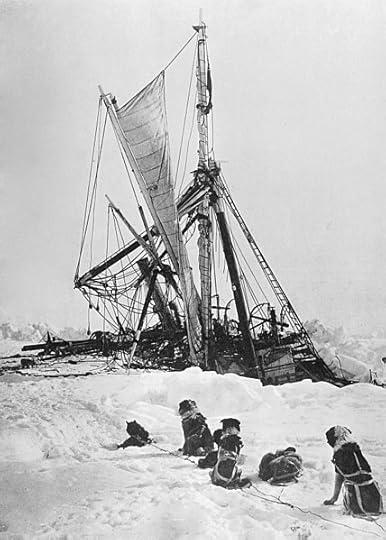
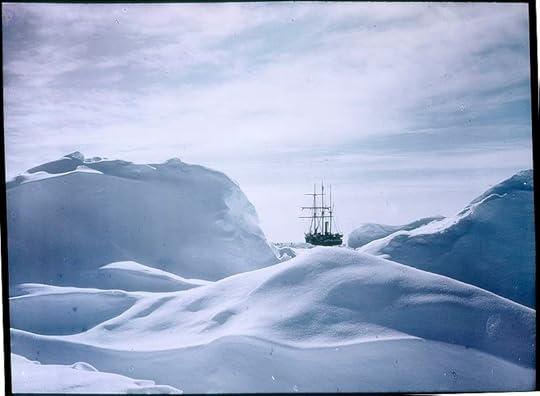
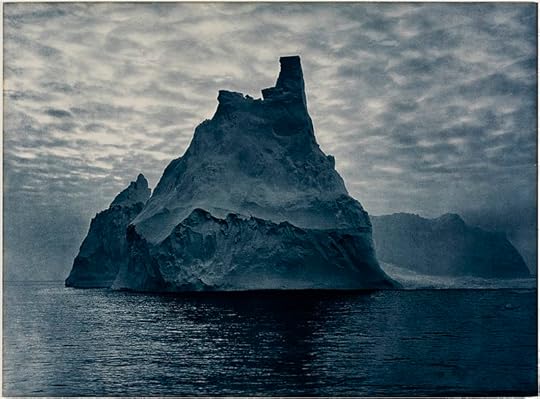
Saving the photos
Throughout the horrific conditions, Hurley protected his photographic plates, compiled notes about the photographs, and even dove into frigid waters when several plates fell through the ice.
The negatives were located beneath four feet of mushy ice and by stripping to the waist and diving under, I hauled them out. Fortunately they were soldered up in double tin linings.”
Frank Hurley quoted in “The Endurance: Shakelton’s Legendary Antarctic Expedition.
He also kept a meticulous diary.
When the time came to abandon the ice floe on which they’d sheltered after the ship went down, the men had to jettison most of their possessions.
But Shackleton and his crew recognized the photographs’ value.
He and Hurley examined all the photographs taken since their departure from civilization. Hurley resoldered 120 into lead-lined tins and dumped nearly 400 photographic plates.
Fortunately, he had an album of photos already printed which were much lighter to carry.
In addition to the most fabulous photos, Hurley made another movie, too.
You can view his photos in the National Library of Australia online digitized catalog here. (also in the public domain).
Frank Hurley and World War I
Hurley would have gone into history for his Endurance work, but he didn’t stop there.
Once returned to civilization, he joined the Australian army as a photographer and immediately to the battlegrounds of France.
He also spent time the last year of WWI in Palestine–where he produced photos of the Australian Light Horse brigades!
He shot the most famous photos of the Great War.
You know these photos (also in the public domain and available through Wikipedia Commons):
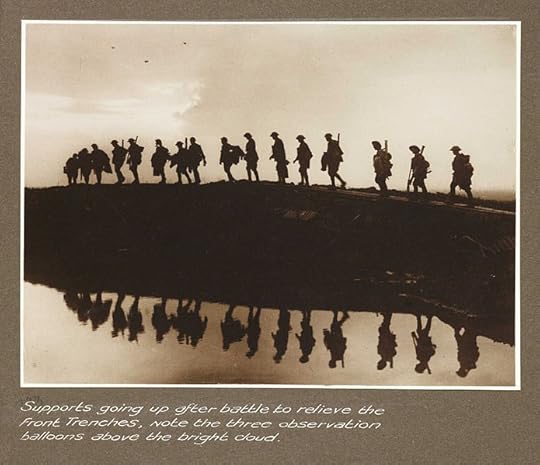
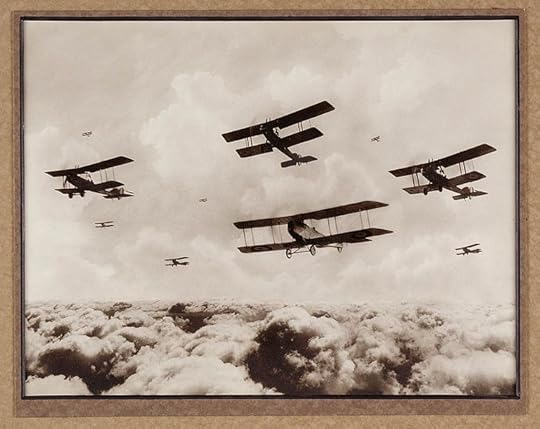
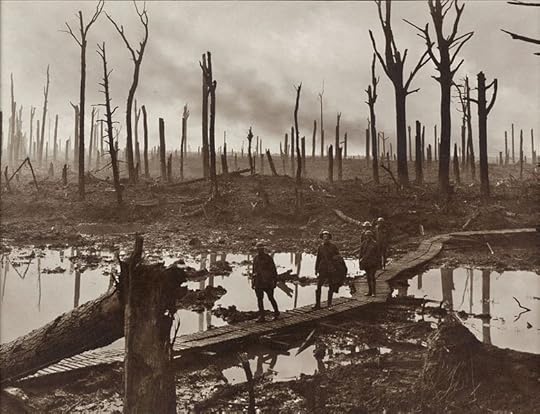
His goal?
To illustrate to the public the things our fellows do and how war is conducted”
It got tricky because of the question–how does a photographer take battle pictures without getting killed himself?
Hurley devised a system of “composite” photos, basically photoshopping several photos into one.
The Australian Army didn’t like that idea, but after Hurley resigned in protest, they allowed him to do. They asked, however, that he mark the composite photos.
You can read more about Hurley’s career in Showman, here.
After the war
Frank Hurley married and returned home to Australia. His career flourished, he helped make movies, went on my expeditions and took photos during World War II as well.
Truly, his was an enduring photographic legacy!
Tweetables
Frank Hurley: An Enduring legacy of great photos. Click to Tweet
Who shot the greatest historic Antarctica photos? Click to Tweet
The post Frank Hurley’s Enduring Photography appeared first on Michelle Ule, Author.
July 16, 2019
Lions in Charleston
Lions are everywhere!
Even in Charleston.
The King of the Jungle is not roaming the streets, of course.
S/he is merely being used as a decoration all over town.
I laugh whenever I see lions depicted “in the wild” so to speak, of civilization. I’ve written about seeing them in Europe here and here.
Here are photos of them in Charleston, South Carolina.
Guard Lions
They’re everywhere.
They guard entrances to homes.
(Don’t you love the blue faced one before the mailbox?)
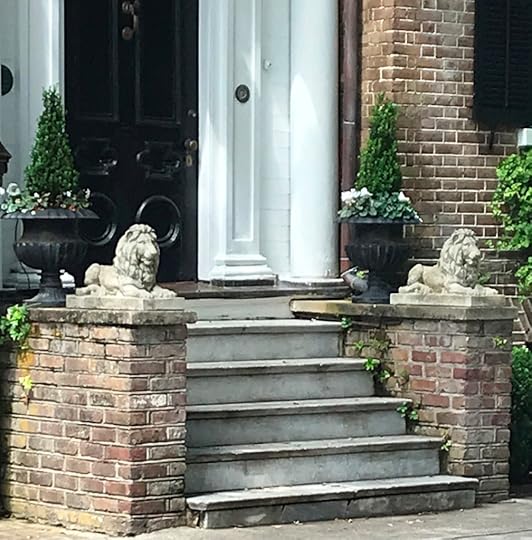
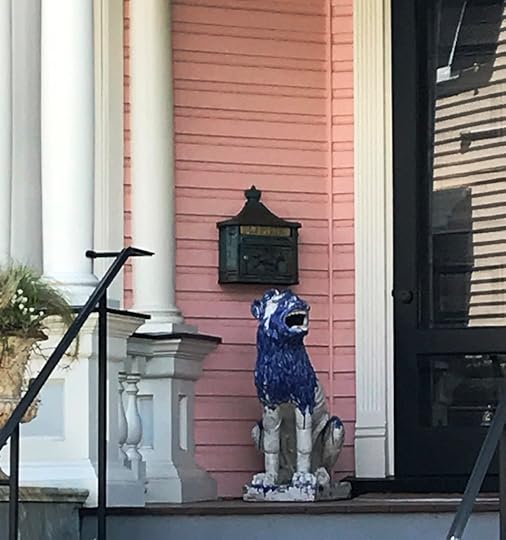
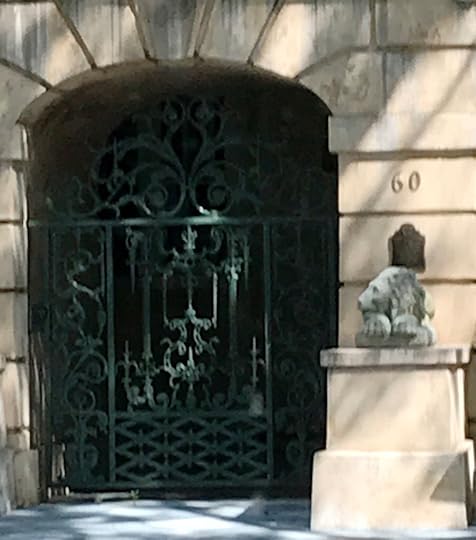
They protect gardens and mazes, too.
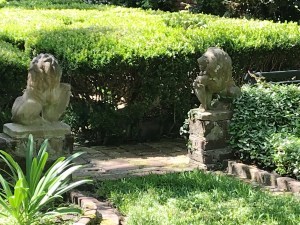
They like to surprise
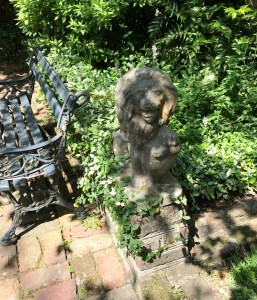
Inside historic homes as decorations
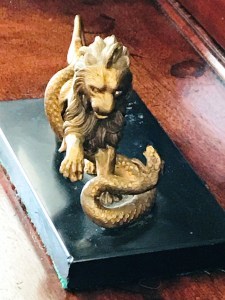
This depiction of the lion destroying the dragon/snake, was sitting on a desk inside one of the oldest houses in Charleston.
The symbolism is a reminder that the lion (England) would dominate the dragon/snake (China) during a time of trade.
Charleston has always been one of the major Atlantic sea ports in North America. A lot of trade between colonial America and China came through here.
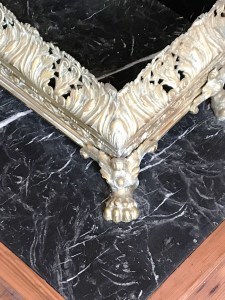
The same house also included a beautiful fireplace with a brass screen standing before it.
Lions left their mark there, as well, in the fender decoration.
Why lions in Charleston?
Lions are often depicted in statuary to symbolize strength, honor, majesty and power.
“The Lion of Judah,” is a title for Jesus–who is amply represented in the many churches in the city.
The mercantile class looked to England for fashions during Charleston’s antebellum splendor. The lion represented England in art.
Historically, people admire big cats.
Plus, they look splendid lounging around, don’t they?
The only local lion is the Eastern Cougar, eight feet long and weighing around 200 pounds, but they are mostly extinct now.
They don’t look much like the lions you see in Charleston today.
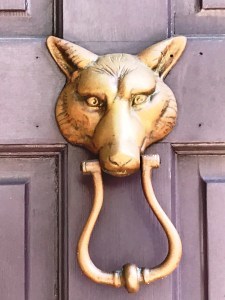
Door Knockers, too
Door knockers are for use and simple decorations–aren’t they?
Or would encountering a lion as you entered a home remind you to honor the owner?
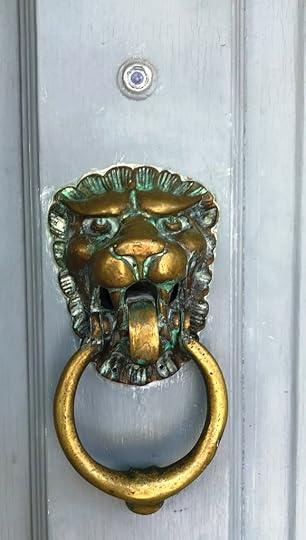
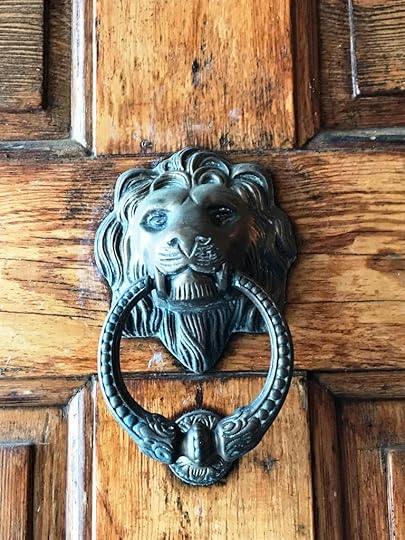
Such a historic town as Charleston, however, is not about to forget it’s most lionized Revolutionary War figure.
Not exactly a cat, but certainly wily: the Swamp Fox.
Tweetables
Spotting lions in Charleston, South Carolina! Click to Tweet
Heraldry, guards and lions in Charleston. Click to Tweet
Lions in Charleston–you can see them all over. Click to Tweet
The post Lions in Charleston appeared first on Michelle Ule, Author.
July 13, 2019
A Folly Island Visit
We visited Folly Island, South Carolina recently and enjoyed a splendid respite.

I’d helped run a writer’s conference in Charleston.
The day after it ended, I needed to sit on Folly’s Island’s sandy beach and stare out to sea.
I was exhausted.
The May weather soothed my tired soul with just a touch of sea breezes and the blue ocean rolling in and out.
I don’t remember the last time I lounged on a beach under an umbrella.
Lovely.
Folly Island is more than the beach
Only a dozen miles from downtown Charleston, Folly Island felt much further away.
It’s a beach town, yes, but it also has a fishing pier and long stretches of empty beach in the early mornings.
I loved the early morning.
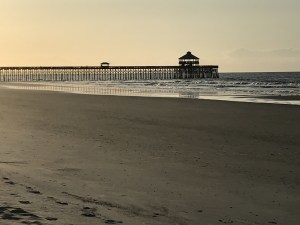 My morning walk was as heavenly as it looks
I saw only a handful of people when I left the Bed & Breakfast at 7 am.
My husband was still out jogging– I never saw him.
Instead, I savored the ocean views, shells, and birds.
Strolling the sand, I could think for the first time in a week.
I felt fresh and gloriously alive. Singing with the birds flying past made perfect sense that morning!
Morris Island tour
Along with enjoying the beach and resting, we wanted to see the flora and fauna of the South Carolina lowlands.
Early our second morning, we traveled with Charleston Outdoor Adventures and four women along the river north of Folly Island headed east.
We’d never visited an estuary like this before and it charmed us.
The boat stopped to visit with a shark fisherman–who showed us a freshly cleaned skull.
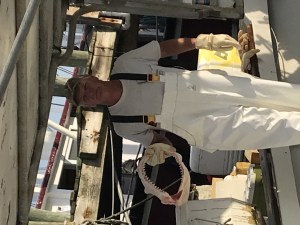 The morning’s catch already processed
The only time I’ve heard of oyster beds was in Alice in Wonderful:
“Oh Oysters, come and walk with us!”
The Walrus did beseech . . . .
The eldest Oyster winked his eye,
And shook his heavy head–
Meaning to say he did not choose
To leave the oyster-bed.
The Walrus and the Carpenter poem from Through the Looking-Glass by Lewis Carroll
I got to see oyster beds as we sailed to Morris Island–they cluttered the low tide shoreline nearly the entire route.
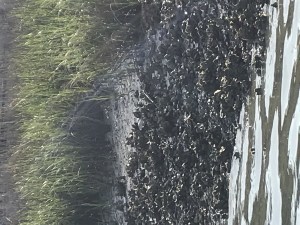 These oyster beds don’t look comfortable!
We also saw crabs and lots of dolphins!
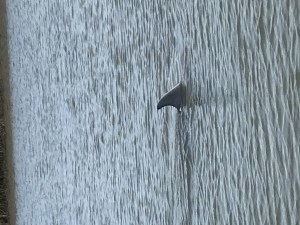 They go underwater at the sight of a camera
All sorts of birds wheeled overhead; pelicans perched on docks and gulls were everywhere. Reeds lined the waterway.
And yet, we were so near Charleston, we caught glimpses of the top of Ravanel Bridge in the distance!
Morris Island Lighthouse
The Morris Island Lighthouse, originally established after the Revolutionary War but rebuilt following the Civil War, once stood on the shore.
Time, waves, erosion and even an earthquake, have moved it a quarter-mile offshore, now.
The beach opposite is beautiful and strewn with shells.
The view is splendid.
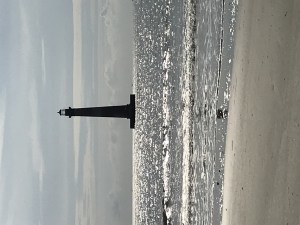 Morris Island Lighthouse on a stunning morning
Folly Island proper is just across a narrow river mouth.
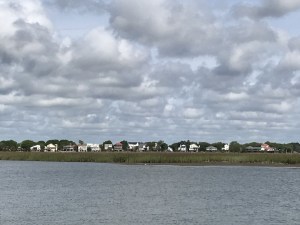 The north side of Folly Island
Our eco-tour took two and a half-hours, with narration and plenty of questions (mine) answered.
In the summer, insects and tourists can be a problem.
But on a May morning, before the crowds arrived, we cherished our visit to Folly Island.
Tweetables
A visit to Folly Island, South Carolina. Click to Tweet
Oyster beds, dolphins, a shark and more on a Morris Lighthouse tour. Click to Tweet
Folly Island, Morris Lighthouse and the lowland’s flora and fauna. Click to Tweet
The post A Folly Island Visit appeared first on Michelle Ule, Author.
July 9, 2019
Oswald Chambers & the Oriental Missionary Society

Oswald Chambers first encountered the Oriental Missionary Society when he met a Japanese evangelist in 1905 Perth, Scotland.
Many people considered that Japanese evangelist, Juji Nakada, “the D.L. Moody of the Orient.”
The two became fast friends and traveled through the United Kingdom speaking on Holiness Movement issues.
The 19th century Holiness Movement was based on the teachings of John and Charles Wesley:
At its heart, the theology of John Wesley stressed the life of Christian holiness: to love God with all one’s heart, mind, soul, and strength, and to love one’s neighbor as oneself.
Wesley’s teaching also stressed experiential religion and moral responsibility.”
Commonplace Holiness: Wesley & Methodism
The Oriental Missionary Society (OMS) and Holiness
As explained in Bridge Across the Century by Edwin W. Kilbourne:
No one can long be associated with any church of the OMS-related holiness churches in Asia without hearing the phrase: ‘the Fourfold Gospel.’
“In simple terms, this is a belief in the biblical teachings of (1) the new birth or regeneration.
(2) Sanctification, sometimes referred to as the fulness or baptism of the Holy Spirit. It’s a second work of God’s grace wrought by the Holy Spirit subsequent to regeneration.
(3) Divine healing, and
(4) The Second Coming of Christ.
These were the emphases of the holiness movement of which OMS was born.”
Kilbourne quoting from Dr. John Merwin’s dissertation: A History of the OMS Holiness Church of North America.
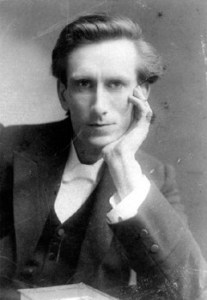 About the time Oswald Chambers traveled to Japan. (Wheaton College Special Collections Library)
This teaching resonated with Oswald Chambers and he spoke on similar issues for the Pentecostal League of Prayer.
Nakada encouraged Chambers to visit the OMS Bible Training Institute in Tokyo, Japan:
“You must come to Japan . . . We need a man like you to teach at our pastors’ Bible Training Institute.”
Bridge Across the Century
Chambers yearned to either serve as a missionary or encourage missionaries, he wanted to go.
In late 1906, Nakada (and the Holy Spirit) encouraged Chambers to travel to the United States to speak and to teach at God’s Bible School.
Upon arrival, Nakada spoke at camp meetings to raise funds for the Oriental Missionary Society.
Chambers taught a semester at God’s Bible School. He received a stipend sufficient to pay for transportation to Japan.
I wrote about the Nakada-Chambers trip here.
The Oriental Missionary Society in Japan
Oriental Missionary Society founders Charles Cowman and Ernest Kilbourne met the boat when it arrived in Japan.
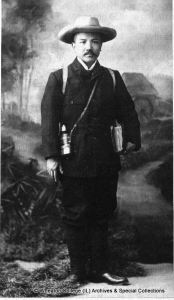 Juji Nakada (Wheaton College Special Collections)
The enthusiastic Chambers described the visit:
We took a train and what a reception we had at the station on arrival.
All the Bible School students were there, and they escorted us to the premises and we had a welcome meeting. . . God was mightily present.
I spoke through an interpreter. It was splendid but restraining.”
Oswald Chambers: Abandoned to God by David McCasland
Chambers quickly recognized the value of the Oriental Missionary Society in proclaiming the Gospel.
I cannot hope to state the impressions and sensations of the place. It is unbearably pathetic to see the temples with their god of healing. The idol is worn quite smooth with the hands of the people.
Oswald Chambers: Abandoned to God
Chambers and Nakada both spoke at the YMCA and he thought everything interesting.
As he wrote in his diary, the eagerness of the people to hear what the missionaries said, “is simply wonderful, one sees nothing like it in the homeland.”
He appreciated the OMS ministry. “I never expected such an elaborate, splendidly organized work as it is.”
A lasting Impression
Chambers ended his trip to Japan when Charles and Lettie Cowman realized they needed to travel to England to raise funds.
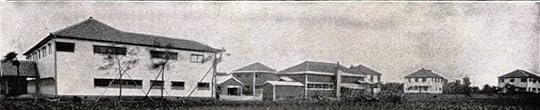 Bible Training Institute circa 1911 (from Missionary Warrior by Lettie Cowman)
Because Chambers did not speak Japanese, they invited him to join them on their trip, rather than try to teach at their Bible Training Institute.
They felt he could better help the mission by talking about it in the United Kingdom.
Ultimately, Chambers did not speak on their behalf, but what he observed affected him deeply.
In 1911, he opened a Bible Training College in London.
He never forgot his fondness for the Cowmans, Juji Nakada, and the OMS.
Long after Oswald Chambers’ death, his widow Biddy and the Oswald Chambers Publication Association donated funds to Lettie Cowman and the Oriental Missionary Society.
(The Oriental Missionary Society changed its name in 1973 to One Mission Society).
Tweetables
Oswald Chambers and the Oriental Missionary Society. Click to Tweet
How observing a missionary organization influenced Oswald Chambers. Click to Tweet
The post Oswald Chambers & the Oriental Missionary Society appeared first on Michelle Ule, Author.
July 5, 2019
A Charleston Tour
We visited Charleston, South Carolina this spring and took a fantastic tour.
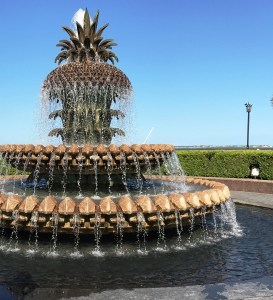
Led by Charleston native Laura Hipp, we wandered the streets, homes, and gardens of the town.
Founded in 1670, Charleston has seen much American history played out in its streets.
Hipp, of Charleston Tea Party Private Tours, took us through the historic parts of town and even into a few private homes and gardens.
Seemingly everything we laid eyes on was beautiful!
Especially some of the private gardens.
Visiting private gardens on our Charleston Tour
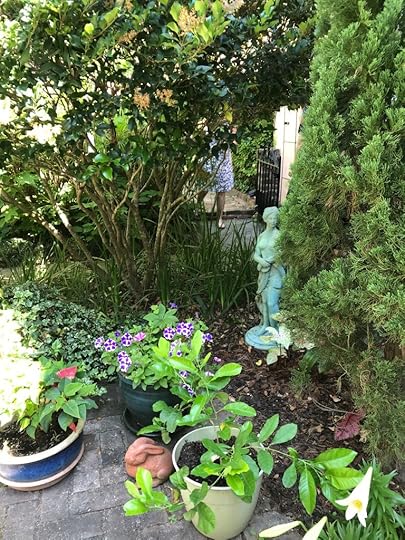
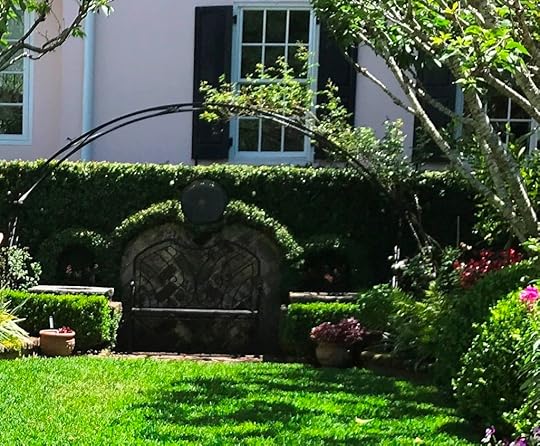
We stopped at several gardens as we explored old Charleston.
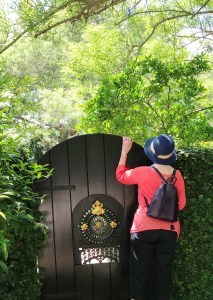
The imagination, the history, the beauty, scents, and peace we saw in those gardens, were lovely.
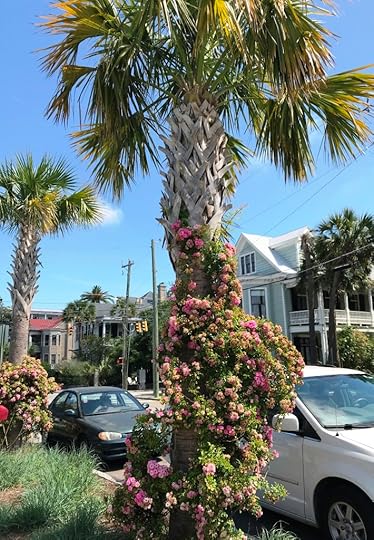
I was impressed to see Palmetto Palms entwined with pink roses.
In one garden, we spied a dovecote–I’d only read about them before!
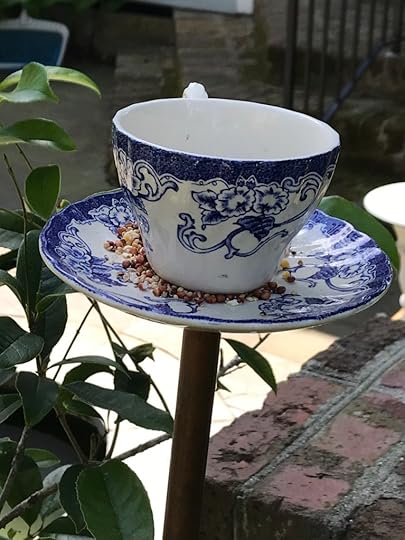
A clever teacup served as a bird feeder and water elements added a distinct feature more than once.
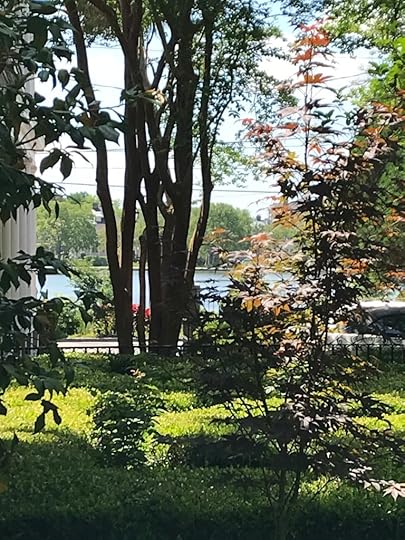
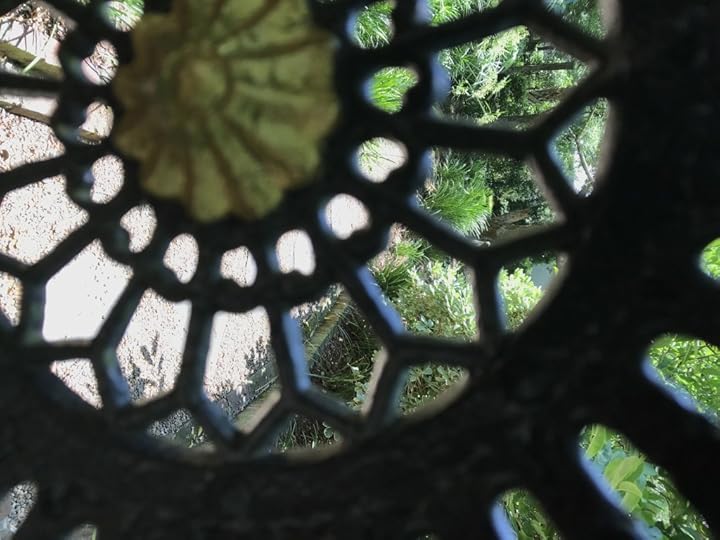
So often, I stopped to glimpse through a gate into a world of greenery, sunshine and birdsong.
The gardens alone would have been sufficient to view on this tour!
Details made a difference
Hipp suggested we read Gwen Bristow’s novel Celia Garth for a sense of the town.
I thought of the book often as we walked down the very streets described in that Revolutionary War-era story!
As noted elsewhere, I spied lions all over Charleston, but I often paused to take photos of unexpected, yet historic, items.
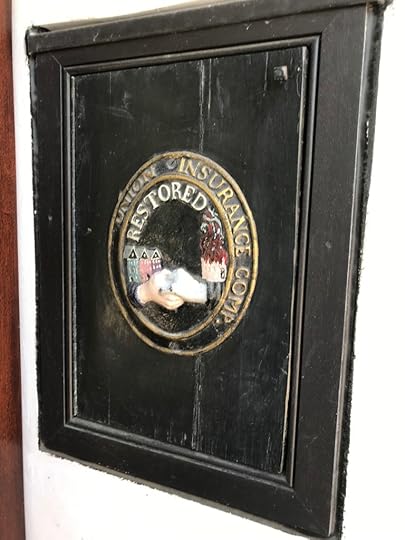
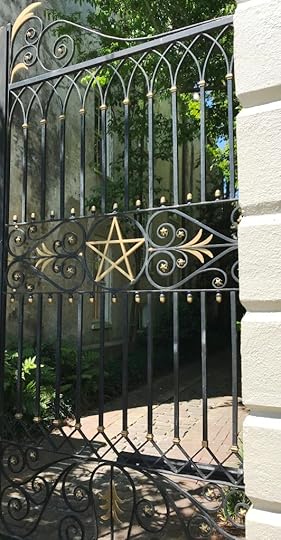
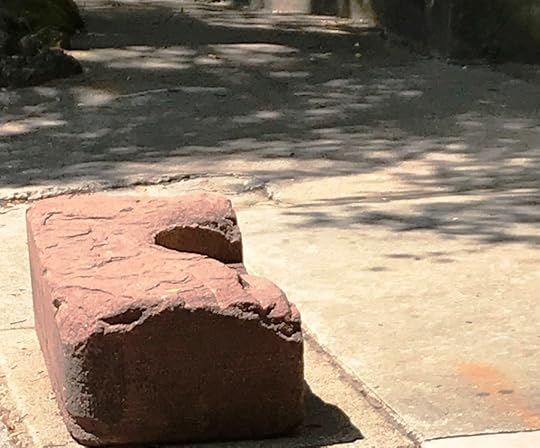
In the photos below are a symbol that the house was insured against fire–circa the Revolutionary era–and a gate was made about the same time.
Do you think that was a mounting stone for folks climbing into a carriage?
A pre-Revolutionary War house
Down along the waterfront facing the Atlantic Ocean, our Charleston tour took us to a house build before the Revolutionary War.
Still privately owned, the house left us oohing and ahh-ing.
Hipp provided historic explanations for the details we admired.
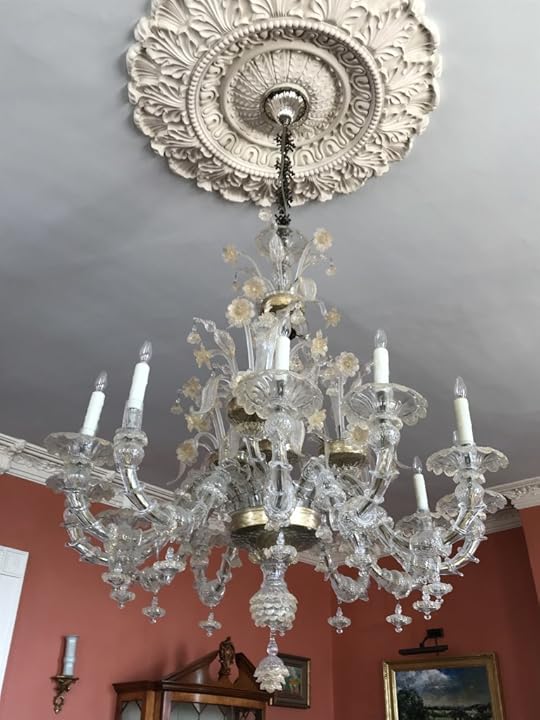
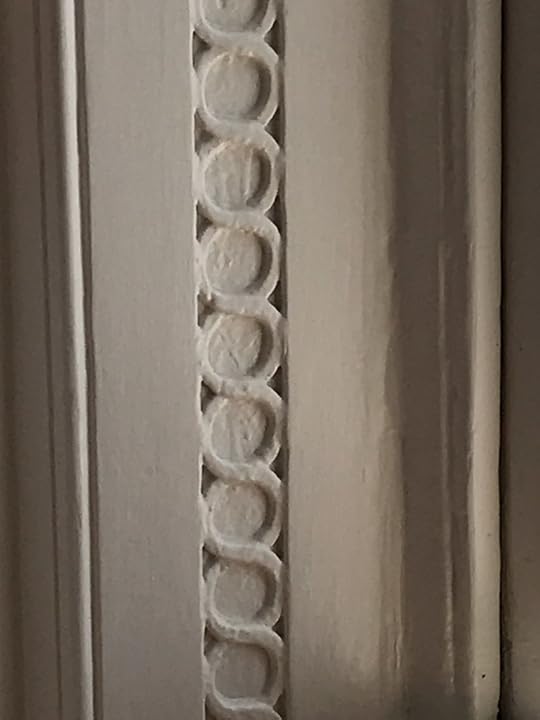
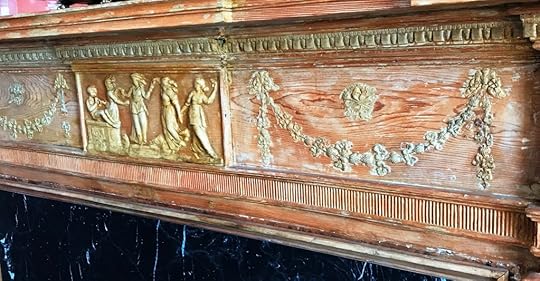
I stood outside the house and tried to imagine the view more than 300 years ago.
It would not have been different looking to the ocean, but in Charleston proper?
The local painted ladies may look the same!

I love observing local idiocyncracies when I visit a new place.
During our Charleston tour, we saw houses with open air porches, many stories high.
Tthe outdoor porches served as hallways. Inside, the rooms opened into each other.
Depending on how the house placement, direction-wise, air could circulate easier without an interior hallway.
Hipp noted, too, that the ceilings of those porches tended to be painted blue–to confuse insects into flying up toward the sky rather than down.
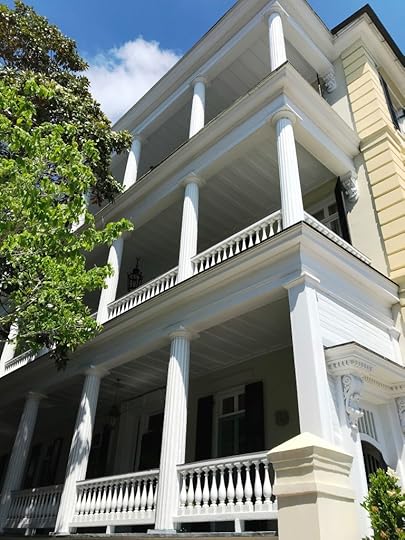
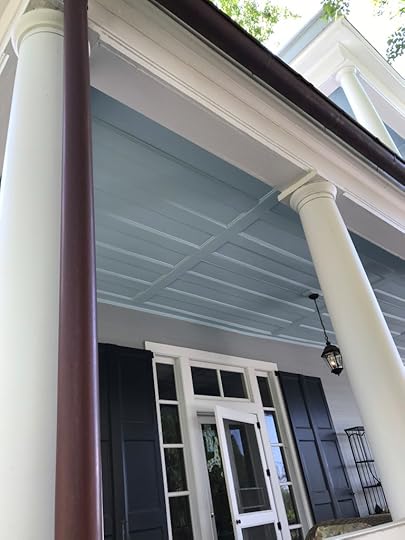
Taking a Charleston tour, hearing the stories, having a guide to answer my questions, meant a splendid May afternoon in a beautiful part of the world.
I knew little about Charleston before our visit–but the history, beauty, gardens and warmth of the people made us appreciate the city a great deal.
Tweetables
A May Charleston tour: historic, beautiful and oh, so interesting! Click to Tweet
Visiting Charleston on a guided tour: houses, gardens, history, and beauty. Click to Tweet
The post A Charleston Tour appeared first on Michelle Ule, Author.
July 2, 2019
A Fort Sumter Visit
The firing on Fort Sumter marked the beginning of America’s Civil War.
While not particularly interested in the fort– basically a rock island at the entrance to Charleston harbor–I recently visited it with my husband who loves them.
The National Park Service is in charge of the island, and we picked up a ferry on the east side of downtown Charleston, about a mile from our hotel.
On a beautiful May afternoon, the half-hour trip out to the island provided plenty of sites to see along the Charleston waterfront.
Fort Sumter National Monument
Visitors get one hour on the island–which is nearly enough to see all you want.
Park guides began our visit with a ten-minute overview of the fort’s history.
We were then free to roam wherever we liked.
I loved the peeks at Charleston proper, not really very far away.
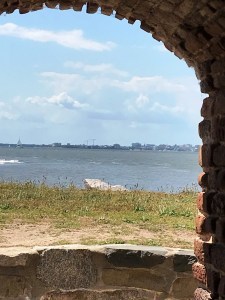
Made of brick, as was the fashion and knowledge in the nineteenth century, the fort encircles the island.
A surprisingly small parade ground is inside the walls, with most of the living spaces from that era in the walls themselves.
The fort houses a small bookshop and a museum with authentic artifacts.
We hiked first to the outer walls facing the ocean–which is where the magnificent flag flies.
The wind blew strong and we watched large cargo ships make their way into the harbor.
The views also swept along the coast past Sullivan’s Island to the north, and to Morris Island and Folly Island to the South.
We could not help thinking of the movie Glory, which depicts Northern soldiers trying to take Charleston during the Civil War.
They fought along the beach to the south of Fort Sumter.
Fort Sumter Museum
Of course we visited the museum which detailed the fort’s history, including how it was built.
This is a photograph of the battle flag that flew above Fort Sumter on April 12-13, 1861, when the Confederate Army fired on the fort.
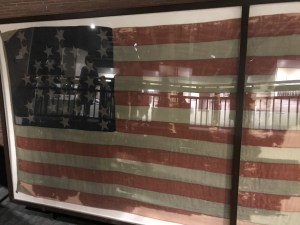
One of their projectiles broke the flagstaff and the flag fell to the ground.
Union soldiers scurried to retrieve the flag, even as more shells exploded around them.
When they abandoned the fort, Confederate General P. G. Beauregard allowed the Union commanding office, Major Anderson, to take the tattered flag with them.
His family returned the flag to Fort Sumter in 1954.
The museum featured many photos of the fort’s history before, during and after the American Civil War.
If it’s history you’re looking for, go straight to the museum. The hour we spent on the island wasn’t enough time for me to read everything!
Harbor Ride
We enjoyed the afternoon we spent riding out to the fort and back.
Along the way, we enjoyed seeing the Charleston fountain from the waterside!
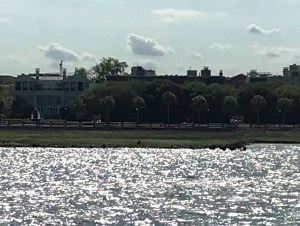 The fountain is to the left
We passed a submarine, an old aircraft carrier, and watched a huge cargo ship sail past the soaring Ravanel Bridge on the Cooper River.
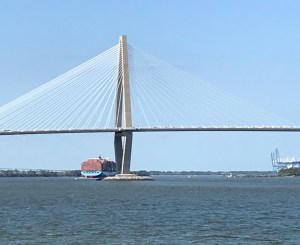
It was a glorious day to visit the past.
But more than anything that caught our attention was the mesmerizing American flag flying in the stiff breeze.
Tweetables
Where the American Civil War began, today. Click to Tweet
The American flag flying over Fort Sumter, South Carolina. Click to Tweet
What’s to see at Fort Sumter National Monument? Click to Tweet
The post A Fort Sumter Visit appeared first on Michelle Ule, Author.
June 25, 2019
VBS Recreation–2019
I’ve just finished a week of VBS Recreation and thought I’d pass along my observations.
Whether you’re in charge or Vacation Bible School (VBS) or have a group of elementary-aged school kids who need activities, here’s what worked for me.
It helps to have a theme
I don’t know how many years I’ve done VBS Recreation, but I know having a theme and the recreation book that comes with the program helps.
This year we worked with an international theme, The Incredible Race, and the recreation booklet had numerous suggestions for the five days.
I used few of them, for a variety of reasons.
One idea I liked in particular, however, including warming up with jumping jacks–and counting them in a different language each morning.
Monday was easy–most of the kids already knew how to count in Spanish, which is the main language of South and Central America
On Tuesday, we performed Jumping Jacks Japanese. I already knew how to count to five, so I was halfway there!
Wednesday required Swahili. I already speak Italian so that was Thursday’s language.
Which brought us to Friday VBS Recreation: North America.
“What’s the original language people spoke?
All the children shouted English! Followed by Spanish after I shook my head.
“Here’s how to count to ten in a Native American language: Algonquin!”
I couldn’t pronounce Apache or Navajo!
To drive home the language, I would count to three in whatever the day’s tongue and then blow my whistle for relays.
You should have seen them trying to play “steal the bacon,” in Japanese . . .
Make sure they know VBS Recreation rules
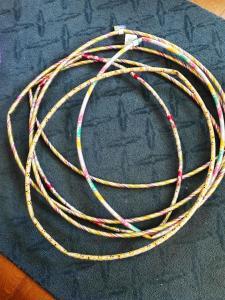 We wore out the hula hoops!
I kept the rules to four:
Do not get hurtDo not dieIf you think someone will get hurt or die, tell an adultHave fun.
Two of those rules are silly (who expects to die at VBS?), but the kids laughed every time they recited them back to me.
They were careful.
One even approached me in sorrow. “I broke the first rule and got hurt.”
I commiserated, asked him how he felt then, and sent him back out to play.
It worked.
It also totally shocked the next class when I told them someone broke the first rule!
On the day we played with water balls, I explained “if you do not want to get wet, stay on the sidewalk. If you don’t care, run on the grass.”
No one complained and no one got wet who wanted to stay dry.
VBS Recreation is for action
The point is to keep the kids moving for 20 minutes.
 Mom’s whistle was essential!
We always started with the aforementioned jumping jacks and then fell into teams.
We then ran relays.
Some of the younger grades had trouble organizing themselves into teams in a timely manner. We helped them.
Checking out sites on Pinterest and simple searches, brought up plenty of easy relays and activities.
Simple, silly, easy, relays any kid in sandals could probably do (though we asked them to remove shoes that might cause them to get hurt).
Here are a few suggestions:
Toss the beach ball through a hula hoop, pick it up, run to the line, come back, toss the ball through again, run around, hand it off to the next in line. Run down, climb through hula hoop, run back the same way. Toss pool noodle through hula hoop, etc.Run down to the line front, turn around and run back backward.Run down to bucket, pick up water ball, return. Hand water ball to the first person line, who hands it over their head, and over and over, to the end of the line.
We then had some sort of all hands play like SPUD, Elbow Tag, or the ever-popular Steal the Bacon.
The younger kids tried bouncing a ball in a sheet–how many times can you keep it up in the air?
What about water balloons?
I hate water balloons.
They’re hard to fill, only last through one toss and can hurt kids.
That doesn’t include having to pick up all the tiny pieces of rubber afterwards.
Instead, I always buy water “splash balls.”
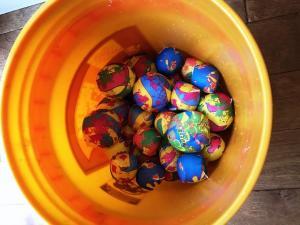 Just add water!
They’re basically, ball-shaped sponges with a nylon cover.
I buy them at the local Dollar Store.
This year, I could buy two baseball-sized water balls, or four smaller balls, for a dollar.
Nobody cared because they worked just fine.
The secret: being a little organized
You don’t have to be super organized for VBS Recreation, but it helps to have some sort of plan.
I started each day by running through the planned relays and group activities with my “trusted” assistants. (This year, my adult son with an occasional teenage helper as needed).
This was particularly important on Friday, which is water day for our VBS program.
I brought towels and other, non-water related games, for those who needed them.
This gave them options–they could build with cups, play hopscotch, hula hoop or cheer–while everyone else happily got wet.
First, though, we started with water-related relays.
Then we played a water splash ball variation of the “egg toss” game.
Along with Jumping Jacks Algonquin, that took up 15 of the 20 minutes.
The last five minutes–throw the water splash balls at each other with abandon!
(Except, the cardinal, very important, do not dare break this rule: don’t throw them at someone’s head).
They only needed five minutes to get sufficiently wet.
Perfect.
How about you? Any great VBS Recreation ideas?
Tweetables
How to run a VBS Recreation program. Click to Tweet
Don’t get hurt, do not die, have fun and other VBS rec rules. Click to Tweet
Secrets to successful VBS rec programs. Click to Tweet
The post VBS Recreation–2019 appeared first on Michelle Ule, Author.
June 18, 2019
The Hunley and a Submariner
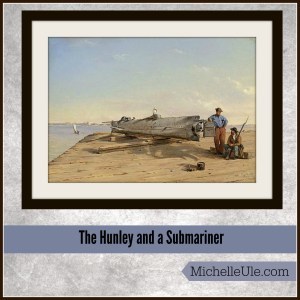
My husband, a US Navy (retired) submariner, visited the Hunley in Charleston recently.
The Hunley is famous for being the first submarine to sink an enemy vessel in wartime.
It happened February 17, 1864, just outside Charleston, South Carolina.
After damaging the USS Housatonic, which immediately sank, the boat vanished for 131 years.
You can see it now on weekends in Charleston.
So we paid our respects.
What happened to the Hunley?
No one knew, but it wasn’t for lack of trying.
People onboard that wild dark night thought they saw “something” slinking away.
In the chaos of people in the water, ships coming from shore to help, the Hunley needed to escape as quickly as possible.
Theories abounded as to where it went and Confederate sailors anticipated rendezvousing with it later that night or the next day.
But it never showed up.
(This is a submarine family’s horror. See my post on the USS Scorpion).
Searchers began hunting the next day and it went on until 1995 when someone looked towards the ocean, rather than land.
They found her buried 30 feet deep in mud.
An historic treasure trove!
Well-preserved by the mud, the Hunley was intact and, according to one naval historian, “probably the most important find of the century.”
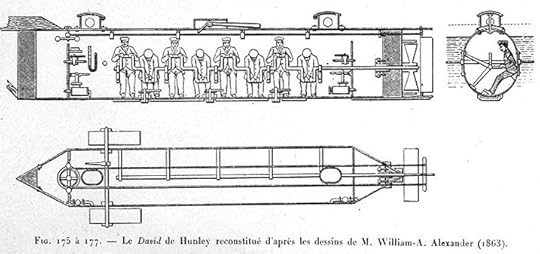 US Navy drawing of the interior. (Wikipedia Commons)
Five years after discovery, and following extensive research as to how, researchers raised the boat and have been examining and restoring her ever since.
It lives in a bath of sodium hydroxide
Visitors can see her on weekends at the Warren Lasch Conservation Center near the now-closed Charleston Naval Shipyard.
Researchers are busy restoring and working on the Hunley during the week. Volunteers run the center and provide tours of the boat on Saturday and Sunday.
A fine exhibit explains how they raised the boat, theories on why she never surfaced, and stories about her crew.
Numerous interactive exhibits, great for kids and adults alike, fill the warehouse leading to the boat itself.
Not knowing anything about this sub prior to our visit, I learned a great deal and enjoyed it!
But it was even more fun touring with my naval engineer husband–who could explain everything.
The boat itself
The Hunley spends the weekend in a specially-built 70,000-gallon tank filled with sodium hydroxide liquid.
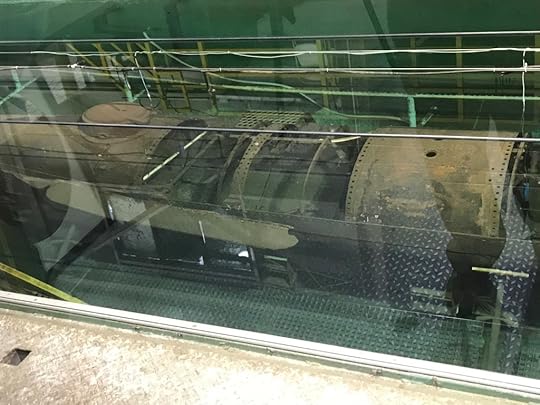 Midsection of the boat under water
When first pulled up, the Hunley was coated in a mixture of sand, mud, shells and dead sea life as hard as cement.
The sodium hydroxide loosens the accumulation so researchers can get it off.
They’re pretty much done, now, but the submarine is never allowed to completely dry; she’s always soaking in solution or damp.
We were surprised at how small she is: 17 feet between front and back hatches.
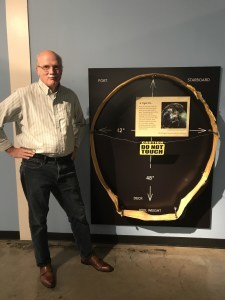 Imagine him fitting in that interior to turn a crank!
My 6′ 1″ husband stood beside an example of the boat’s circumference: 48 inches high by 42 wide.
Imagine a six-foot tall man cramped in the interior turning a crank!
The eight-member crew was all volunteers.
Inside the Hunley
The boat contained the skeletal remains of the crew.
Researchers pierced together their identities and found a few surprises, including a former sailor from the northern Navy and at least one foreigner.
They recognized the skipper, Lt. George Dixon, by a gold coin found among his bones–which confirmed both who he was and a story told about the coin saving his life at the Battle of Shiloh!
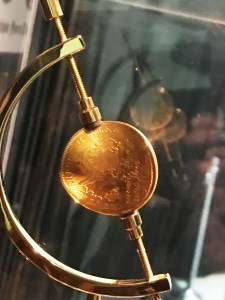
An oil can still held oil.
The exhibit invites visitors to imagine what happened to the crew after they successfully sank the Housatonic.
The remains show no sign of panic, all lying where they would have sat. There’s no indication they tried to escape from either hatch.
My professional submariner believes that with a candle burning as they sank into the depths following the Housatonic’s sinking, they ran out of oxygen and didn’t realize it.
There’s far more to this story than I can write in a short blog post, but we both found the visit intriguing.
If you’re in Charleston, stop in. No matter which side of the you favor, the Hunley made naval history.
More than anything, however, I’m glad my favorite submariner wasn’t on it!
Tweetables
A visit to the Hunley: the first sub to sink an enemy vessel. Click to Tweet
Naval history made off the coast of Charleston: the Hunley. Click to Tweet
A nuclear submariner visits a Civil War submarine. Click to Tweet
The post The Hunley and a Submariner appeared first on Michelle Ule, Author.