Michelle Ule's Blog, page 28
September 29, 2020
Streams in the Desert and Grief
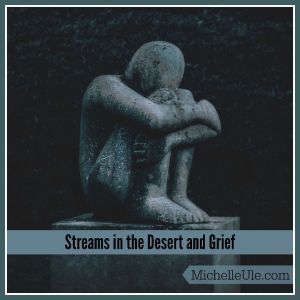
Grief and the devotional Streams in the Desert go hand in hand.
When a friend’s husband died, she received six copies as gifts from people.
They wanted to console her. They knew she loved to read. Streams in the Desert’s value seemed utmost at that time.
But why does a devotional make such a difference?
The author’s personal perspective
Lettie Cowman compiled the sayings, poems, and ideas that formed Streams in the Desert during a time of personal grief.
Worn out from their missionary work in Japan, Charles and Lettie Cowman returned to Los Angeles for his health.
The two, like so many others, had poured themselves into their evangelism efforts. They “specialized” in fundraising efforts for the Oriental Missionary Society and often traveled overseas.
When in Japan, they worked tirelessly.
But in 1917, they were 49 and 47 years old and both had weak hearts. Charles had near-debilitating angina. The doctor sent him home to the United States, to rest or die.
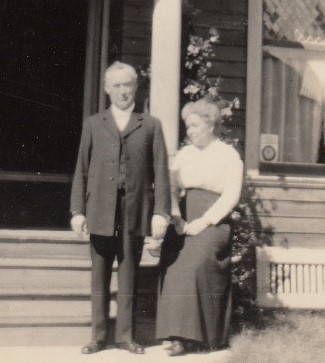 The Cowmans 1919, Hollywood, California OMS)
It took him seven years of pain, agony, and spiritual sorrow.
Lettie sat beside him night after night trying to help. She sang, prayed with him, and read aloud.
Scouring used bookstores all over Los Angeles, she purchased any material that might encourage her suffering adored spouse.
Lettie marked the encouraging passages. She clipped the newspaper, magazine, or church bulletin articles that would help.
Since she was fighting grief, confusion, and discouragement, Lettie gravitated toward encouraging lines that uplifted both of them.
Streams of the Desert’s value is it speaks to such sorrow.
How does it speak to grief and sorrow?
By the quoted selections and how Lettie framed them.
Here’s a sample written by Lettie from the March 20 reading:
As sorrowful, yet always rejoicing (2 Cor. 6:10).
The stoic scorns to shed a tear; the Christian is not forbidden to weep.
The soul may be dumb with excessive grief, as the shearer’s scissors pass over the quivering flesh; or, when the heart is on the point of breaking beneath the meeting surges of trial, the sufferer may seek relief by crying out with a loud voice.
But there is something even better.”
As above, Lettie chose a specific Bible verse as her theme.
We don’t know which came first, the theme verse or the particular clipping she used.
But Lettie put into words the emotion a grief-stricken person felt.
She knew very well to which verse a person overwhelmed by grief might cling.
Hope from Grief
Lettie acknowledged grief but did not wallow in it.
They say that springs of sweet fresh water well up amid the brine of salt seas; that the fairest Alpine flowers bloom in the wildest and most rugged mountain passes; that the noblest psalms were the outcome of the profoundest agony of soul.”
 Photo by Gardner Wheeler (Unsplash)
 Grief is part of life. How we respond to it depends on us.
We need hope it will get better–albeit loss will always hurt.
Streams in the Desert reminds readers that life often grows out of difficulties. Hardships, death, changes, need to be grieved, yes. But hope is always there.
Nature often provides physical examples of hope triumphing over difficulties.
Take me to Jesus
Lettie, however, did not just end with nature’s example in her attempts to soothe.
She took readers to the only truth: Jesus.
Be it so. And thus amid manifold trials, souls which love God will find reasons for bounding, leaping joy.
Though deep call to deep, yet the Lord’s song will be heard in silver cadence through the night. And it is possible in the darkest hour that ever swept a human life to bless the God and Father of our Lord Jesus Christ.”
It does no good to leave a person sorrowing without pointing them in a direction where they can find healing.
Through a life already lived with much sorrow, fear, and uncertainty, Lettie Cowman knew the hope was in God.
2 Corinthians 6 includes a long list of the trials, pains, and sorrow the Apostle Paul went through on behalf of the Gospel.
To Lettie, these are just as pertinent to the person in grief, which is why she chose it.
Poetry
The rest of the March 20 Streams in the Desert reading is a poem, “Trial as by Fire,” by the anonymous “S. P. W.”
Poetry is a branch of literature “designed” to provoke emotions. It often uses lyrical imaginary to describe feelings as if “painting” them.
Raised on the McGuffey Readers of the nineteenth century, Lettie Cowman adored poetry. The lyricism, musical sense that can come of poetry, intrigued her and she read it often.
In Streams in the Desert, Lettie used poetry to touch the soul.
I will be still, my bruised heart faintly murmured,
As o’er me rolled a crushing load of woe;
The cry, the call, e’en the low moan was stifled;
I pressed my lips; I barred the tear drop’s flow.”
The poetry paints grief in anthropomorphic words and the rhyme slips the meter into the reader’s heart.
But, Lettie uses the poem to lead the reader to hope:
But God is love, so I will bide me, bide me–
We’ll doubt not, Soul, we will be very still;
We’ll wait till after while, when He shall lift us
Yes, after while, when it shall be His will.
What sets the devotional apart?
She puts all the pieces together into a relatively short devotional that touches emotions and uses them to take the reader home to God.
100 years of reading proves Streams in the Desert helps.
Tweetables
Why are people still reading Streams in the Desert 100 years later? Click to Tweet
Why is Streams in the Desert such a loved devotional? Click to Tweet
Poetry, Bible verses, and wisdom: Streams in the Desert. Click to Tweet
The post Streams in the Desert and Grief appeared first on Michelle Ule, Author.


September 22, 2020
Becoming Elisabeth Elliot
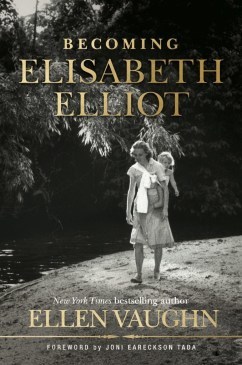
Becoming Elisabeth Elliot is the title and subject of Ellen Vaughn’s new authorized biography.
This is my official reaction:
I am undone.
Ellen Vaughn’s Becoming Elizabeth Elliot is the best book I’ve read in a long time.
I’m an admitted fan; I’ve written half a dozen blog posts about Elliot’s influence on my life, but this biography is so beautifully and intelligently written, I can only sigh with thanks.
Vaughn’s wise insight elevates Elliot’s oh-so-interesting life into applicable counsel for any believer struggling with “whys?” and “where is God?”
So rich. So valuable.”
Why did I love Becoming Elisabeth Elliot? Let me count the ways.
Use of journals
Vaughn had access to all of “Betty” Elliot’s journals and used them beautifully through the biography.
They enabled us to read the passion behind her disciplined face and demonstrated how she grew in her Christian faith.
The journals gave an “at the time,” sense of what Betty endured from her young years until this volume one ends in 1963.
She poured her doubts, uncertainties, fears, longings, and hopes into the journals making her more “relatable.”
A paragon of faith?
Not always.
Obedience and sacrifice
Under Vaughn’s deft skill, Becoming Elisabeth Elliot provides an opportunity to review all the deaths in Betty’s life.
 The jungle where the Waodani lived.
 ( Ellen Vaugh photo )
Yes, she lost her husband Jim in a brutal martyrdom. Yes, she lost her second left in a slow miserable death. (Her widower outlives her).
But she experienced other difficult losses along the way.
Most of her linguistics work was for naught. The nine months-worth of material she diligently recorded and worked on the Southwestern Ecuadoran “Indians” (Called the Colorados), disappeared when someone stole her suitcase.
Her linguistics work with the Waodoni did not amount to much owing to issues with her missionary partner. (See Kathryn T. Long’s God in the Rainforest. My post about the book is here.)
Time and again, Betty writes about discipline and obedience–core teachings.
She also revealed doubts and emotions about a variety of subjects which she wisely explored in her journal.
Love and Longing
Becoming Elisabeth Elliot is the story of her younger years, long before she became a paragon of staunch virtue.
It reminds older readers of their youth and shows younger readers their desires are not unique.
Some of this we knew from her daughter Valerie Elliot Shepherd’s recent Devotedly. Shepherd described her parents’ courtship through letters and journals.
Vaughn took some of the same material and crafted it into context from a different point of view.
This is not a work of hagiography. Betty’s biographer did not explain away her decisions. Vaughn takes a step back and reviews Betty’s life sympathetically, but clear-eyed.
The biographer and the biography.
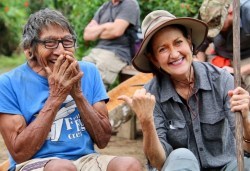 Vaughn with Minyahe
 (Ellen Vaugh photo)
When you “live” with another person’s life for an extended period of time, you start to feel like you know her.
She’s never far from your mind–something like an errant child. At odd moments, you ask yourself how she might have reacted in a given situation.
The subject’s choices and decisions spring to mind at odd moments–often having nothing to do with real life.
But you get to know the subject well. You try to understand even the most puzzling choices.
Vaughn occasionally steps out of Betty’s story along the way to refocus and remind the reader of the political and religious setting at the time.
Occasionally, Vaughn makes an observation–which usually made me laugh.
This is an affectionate story of a life. The biographer has years of her own spiritual experience to sometimes better explain than Betty could what was happening around her.
Vaughn concludes the book with a chapter of her own experiences in writing the biography and how it influenced her life.
As a “sister” biographer, I appreciated that chapter!
What did I learn about Becoming Elisabeth?
I liked her better after reading this biography.
I respected her before, but like many, found her intimidating.
It’s been a running joke in my life for nearly thirty years. “Me? Feeling self-pity? I wouldn’t dream of it, Elisabeth!”
(The one time I met Elisabeth –not Betty–Elliot, I made a fool of my introduction. She just looked at me with a tightening of her lips and a curt nod.)
But in this biography, I recognized questions I had in my twenties–about worth and value and the agonizing, “what am I doing with my life?”
Vaughn explained this was a portrait of Elisabeth Elliot in her youth, not the mature accomplished woman I first learned about when I was a young woman.
Far more erudite and spiritually mature than I at the same age, but just as full of questions for our Savior.
I loved this book.
Final Takeaway
Becoming Elisabeth Elliot contains so many valuable quotes; my Ebook version is marked up.
This one stays with me because I’ve been reading through Exodus this summer as well.
As Jim pointed out to me years ago,” Betty journaled, “God led Israel to Marah. He could have led them directly to Elim, but He has chosen to lead His people into difficulties in order that they may know Him, and He may know them.
Further, she noted the detail in the story that the tree that made the water drinkable in Marah was right there, but God had to show it to Moses. Often the solution to our problem is right at hand, but we must be shown it. And the very cause of complaint can be made sweet.
The queston was not “why?” but “what?” God, what would You have me do? For Betty, whether God told her to go confront Pharoah or to go live among the Waodani, she determined to do it, regardless of results.
Which is good, since Betty’s obedience in such matters did not lead to stunning results that she could see.”
From the end of Chapter 38
I learned a lot about Elisabeth Elliot, yes, but I also learned a great deal about spiritual maturity and honesty in our frailties before God.
But then, Elisabeth Elliot taught me that a long time ago, as well!
Thank you, Ellen Vaughn, for a splendid book.
Tweetables
Oh, the many ways I loved Becoming Elisabeth Elliot! Click to Tweet
Spiritual growth gained through a tough missionary experience. Click to Tweet
The post Becoming Elisabeth Elliot appeared first on Michelle Ule, Author.
September 15, 2020
Spiritual Memoir: Why Write One?
Have you considered writing a spiritual memoir?
Or, if writing isn’t your skill, how about recording one on your phone?
I think everyone should compose one.
It’s important. Here are five reasons why.
Write to examine your spiritual life
I wrote a spiritual memoir a dozen years ago after an accusation on a web forum.
Someone who had been posting with us for several years took umbrage about my comment.
Her scathing remarks concluded with, “If that’s what you think, I don’t believe you could possibly be a Christian.”
I learned long ago not to respond aggressively to someone I’d never met.
But this was a strike at my character.
So, I did the only sensible thing. I stood up and walked away.
But her words rankled. Could the Holy Spirit be pointing to something about me I hadn’t realized?
I broached the question to two spiritual authorities in my life. They both dismissed her remarks.
But, I didn’t.
Maybe I’d gone “wobbly” somewhere? If I wrote a spiritual memoir, I might find out if I had strayed from my first love.
I’m happy to report she was wrong.
You can best see God’s will in your “rearview mirror.”
I came to see that interpreting God’s will for your life often cannot be seen at the moment.
What seems like a tragedy today, may seem in the future as the hinge that changes everything for the good.
Writing a spiritual memoir can provide insight.
Those terrible moments when I thought everything was ruined?
In writing and reflecting, I could see they’d actually been changes of direction.
I didn’t see those tragedies as anything but horror at the time, but now I know that in the grand scheme of my life, they were important and for the good.
The memories don’t hurt anymore.
Spiritual memoir and your friends
I wrote my book in chapters linked time-wise to places where I lived.
Several chapters focused on the power of specific books, both Christian and secular, to change my thinking or understanding of God.

Different denominations affected me in positive ways–important for that time.
Para-church ministries also made a difference.
But, the most important value for the manuscript came from our friends’ reactions.
One of our former churches was in the middle of a terrible lawsuit. The pastor felt discouraged, though relying on God’s mercy.
I sent him the chapter which detailed my experiences there but also describing his positive influence on my family.
He loved reviewing the past so much, he called us on the phone, and we spoke for an hour.
The spiritual memoir encouraged other friends who did not realize how they, too, had changed my spiritual life.
It was wonderful to hear from everyone. But even better that we all came away encouraged by the memories.
Write to draw closer to God
The more I wrote, the more astonished I became at God’s clear hand in my life.
I saw mercy, grace, amazing “coincidences,” and, time and again, love.
I came away so thankful for the God who plucked me safe for His kingdom.
Asking God to reveal the truth of situations I didn’t understand at the time, helped.
Remembering moments when I was particularly dependent on God, strengthened my appreciation.
Recognizing that what I thought was abandonment, really was His patience.
I came away humbled, grateful, and so thankful.
A spiritual memoir for your family
Consider writing a spiritual memoir for your family.
You won’t always be here to explain your decisions to your children and grandchildren.
Your “witness” to God’s work in your life can disappear if you don’t leave the stories.
If you have family members who don’t acknowledge your faith, this can be a tool.
And when your children read about their childhood through your spiritual eyes, it can change them.
Suddenly, all your seemingly ridiculous decisions make sense.
You might even consider having copies shared at your funeral–a final statement, as it were, on your life.
Writing a spiritual memoir was one of my biggest spiritual blessings.
Examples of how?
If you’re interested in writing any sort of memoir but aren’t sure where to start, consider Everything Memoir with Susy Flory.
It’s a Facebook group loaded with instruction–and free.
If you’re looking for examples, consider a few of my favorites:
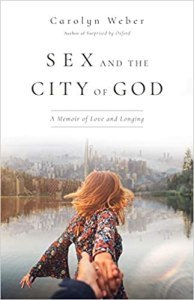
Surprised by Oxford by Carolyn Weber (as well as her recent release, Sex and the City of God ) Waiting for Snow in Havana by Carlos Eire Angry Conversations with God by Susan Isaacs.
Tweetables
Why write a spiritual memoir? Click to Tweet
5 reasons why writing a spiritual memoir can bless you–and others. Click to Tweet
The post Spiritual Memoir: Why Write One? appeared first on Michelle Ule, Author.
September 8, 2020
What is a Camp Meeting?
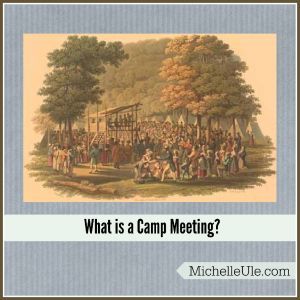
A camp meeting was a seminal feature of Protestant Christianity for a time in the United States.
But what were they?
Opportunities for Christians in a community to gather and worship God. Folks would come together to hear Biblical teachings, to mingle, and to be refreshed.
They were particularly important in frontier days.
Early camp meetings
The first camp meeting in Georgia took place in 1803 on Shoulderbone Creek. The concept had become popular during the Second Great Awakening as preachers like George Whitefield and Charles Finney gathered folks together.
Camp meetings lasted up to five days and featured revival preaching day and night. Whites, blacks, men, women, and persons of all denominations took turns exhorting would-be converts.
Repentant sinners were asked to approach the “anxious bench,” where they sat with all eyes on them until they were converted to Christ’s cause.
During the so-called Second Great Awakening, from about 1790 through 1830, camp meetings became one of the most popular ways to preach the revival message.
Revivals and Camp Meetings
A camp meeting in The Dogtrot Christmas
One such meeting played a role in my first novella, The Dogtrot Christmas.
Set in 1836 Texas when Protestant gatherings were actually illegal, I used it as an opportunity to bridge cultural differences.
Here’s what our heroine, Molly, thought about attending one.
Molly loved camp meetings. The sweet hymns sung by the women reminded her of her own mother’s songs. The Bible stories captured her imagination and made her feel closer to God.
Camp meetings were opportunities to fellowship and swap stories; “sparking” often went on between young couples.
“The Dogtrot Christmas” from A Log Cabin Christmas Collection
There was also Biblical teaching, singing, meal sharing, and basically, a group of like-minded people camping for as much as a week together.
Particularly for those living far from town, a camp meeting often provided the majority of their social interaction.
God’s Bible School’s annual Camp Meeting
Oswald Chambers’ and Lettie and Charles Cowman attended summer meetings in the early 20th century..
All three spoke at the annual God’s Bible School “Mount of Blessing” camp meetings held, not out in the country, but on the lawn of the Cincinnati school.
Chambers attended as a speaker in 1907-1910. The Cowmans stopped in as part of their “deputation tours” (fundraising trips) between 1904 and 1920. Lettie continued visiting over the years, enjoying her time with friends and supporters.
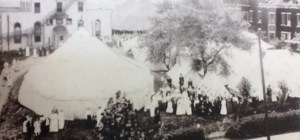 Early 20th-century camp meeting at God’s Bible School
The five days provided a time of refreshment and encouragement; the highlight of the summer for many attendees.
Meeting locations
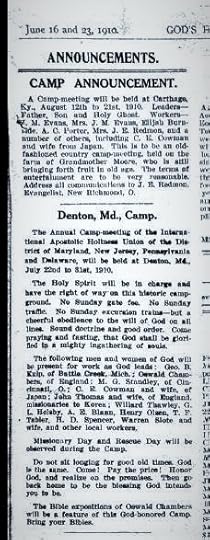 Notes in God’s Revivalist
Meetings took place throughout the frontier areas and up and down the eastern seaboard of the United States.
Chambers himself traveled the circuit, preaching at a variety of spots from the Denton, Delaware camp meeting all the way up to Old Orchard Beach, Maine.
(Oswald and Biddy Chambers attended the Old Orchard meeting while on their honeymoon in 1910!)
God’s Revivalist Magazine posted the locations of Holiness meetings in their magazine in the early 20th-century.
They continue to this day, but in improved facilities–more like a family camp experience.
A Northern New England Conference held a virtual camp meeting in 2020.
Modern Revivals?
Camp meetings were the predecessors of revival meetings and the gospel crusades led by Billy Graham.
Retreats or church-run family camps may be of a similar nature. They all share the same goal: becoming closer to God.
And maybe having a good time along the way.
Tweetables
What is a camp meeting and how was Oswald Chambers involved? Click to Tweet
Camp meetings and Lettie Cowman; revival again? Click to Tweet
The post What is a Camp Meeting? appeared first on Michelle Ule, Author.
September 1, 2020
Challenges and Responses

“What challenges have you faced recently and what did you do?”
Our Sunday school teacher read the question from the book and then glanced up at the seven Zoom frames.
I looked around, too, from my spot top center, waiting.
I’m usually the Bible study teacher, but in these strange times, I’ve stepped down and am attending classes.
It’s a challenge for me–because I talk, sometimes too much.
But, as the silence grew longer, I started to laugh and then unmuted myself.
“My life is full of challenges. Non-challenging days are the surprising ones. Please! Tell me. I’d like to hear about boring days.”
They all laughed and several people smiled before telling their stories.
What’s the deal with challenges?
Do you have them often?
Long ago, our Connecticut pastor stopped during a sermon to reveal a truth about challenges.
As Christians, you should expect challenges, trip-ups, craziness, all the time.
You should constantly have trouble with minor issues: lost keys, dead batteries, missing glasses.
But, take heart. That’s a sign that God is working in your life.
If nothing ever went wrong, Satan would have no reason to try to trip you up with petty nuisances.
So, the next time you face some sort of challenge, be thankful. That means you’re in the center of God’s will and someone is trying to thwart you.
Thanks, Ron. That helped.
 The keys have got to be here somewhere, right? Photo by Muhammad Putra Arienda (Unsplash)
 But, how many times have I appealed to that higher authority?
Lord, what could I possibly be doing (making lunch, say) that Satan doesn’t want me to do?
He doesn’t usually say anything, but it helps, me at least, put events into perspective.
But, what are challenges?
Merriam-Webster’s Dictionary has a simple definition: “stimulating task or problem.”
But there’s another one: ” the act or process of provoking or testing physiological activity by exposure to a specific substance.”
Or, in many cases, normal everyday life.
Anything, really, that sets up a hurdle to your normal way of life or causes you to veer off your planned course of action.
There’s a difference between taking part in ice bucket challenges, for example, and minding your own business when someone throws a bucket of ice water at you.
You’ve mentally geared up for the first, and are totally surprised by the second.
So, how do you respond?
Three Possible Responses
I see three ways people respond to changes in their expectations.
Anger. “Now how will I go to work? I’m sopping wet!”Laughter. “This is ridiculous. I’m choosing to laugh about it.”Godly. “In everything give thanks for this is the will of our Father for you.” (1 Thessalonians 5:18)
I usually fall into the laughter category. The ridiculous things that have happened to me, can only make you laugh. Most of the time there is simply no other explanation.
What if the surprises are bad?
Nuisances, minor harassments, lost keys, surprises, wet clothing, are annoyances more than anything.
Catastrophe is a completely different situation.
Or is it?
Yes.
However, I’ve come to think that the challenges we face are really “skirmishes” in the battle for our souls.
This is where we practice how to respond to difficulties.
 Photo by Tamas Pap (Unsplash)
When our child spills his glass of milk for the fifteenth time, we have a choice.
Are we going to berate the boy or choose to see this as a teaching moment–for both of us?
Are we going to toss our arms in the air, laugh, shake our heads and think, “what else could go wrong?”
Or, will we choose to destroy his confidence with anger?
Deliberate malice is one thing. A foolish mistake is another.
Challenges and Choice
I’ve been mopping up milk for a very long time.
But it doesn’t bother me as much anymore.
I see it as a teaching exercise, not an opportunity to vent irritation.
When my new car was in three minor accidents in the first six months, I could condemn or choose to recognize the truth.
It’s a car. No one was hurt. No one meant to damage the car.
Sure, it was a hassle to take it to the repair shop, but in the grand scheme of things, it was still just a car. No one was hurt.
The third time it happened, I shook my head–and redirected my emotions.
Nothing would be gained by screaming at the man who hit the car.
Jesus reminds us,
In the world you will have tribulation. But be of good cheer. I have overcome the world.
John 16:33
That’s good news. But, it’s also a reminder to expect challenges.
The question is not when will these surprises come. It’s “how will I respond?”
So what?
These are interesting times.
I live in Northern California where we’re experiencing our fourth year of catastrophic fires.
We’re weary from dealing with challenges, surprises, and catastrophes.
Some of my close friends have moved away.
Many who remain are struggling.
On that Zoom meeting, we could acknowledge the hard events several have endured. Most of us had been praying for each other through them.
Reading and discussing Daniel 2, reminded us that difficulties beset many in the Bible.
 Félix-Joseph Barrias: The Temptation of Christ by the Devil (Wikimedia)
Their circumstances boggle my mind.
Yet the stories draw me back to one thing: the God who leads me on this life knows me.
He planned the events and challenges specifically for me.
I often don’t like them. But, I ask myself, do I trust God, or do I give in to Satan’s taunt?
Even when I don’t understand, or it all looks crazy, I choose God.
It’s the only response, and often a hard one, that ultimately takes me to love, joy, peace–and sometimes laughter–along the way.
Thanks be to God.
Tweetables
Dealing with challenges from a God perspective. Click to Tweet
The three responses to challenges: Anger, Laughter, Praise. Click to Tweet
The post Challenges and Responses appeared first on Michelle Ule, Author.
August 25, 2020
The Rubber Band & Christy Hoss

The Rubber Band is a new children’s novel by my friend Christy Hoss.
It’s the story of a makeshift third-grade musical group that enters a contest. They call their group “The Rubber Band.”
But The Rubber Band has more important things to show us than just a group of precocious musicians trying to win a contest.
Christy’s book features a multi-ethnic cast of characters with astonishing techy skills. The four boys and one girl face physical and family challenges along the way with warmth and grace.
Full of elementary school humor, poignancy, and life lessons, it’s a wonderful gift for the older elementary school students in my life.
What’s the story about?
A third-grade boy gets in trouble one day by firing a rubber band at the smartest girl in class.
He missed, yes, but that propelled them all into a musical adventure.
Eddie, the lead character, learns lessons about friendship and not judging by what you see.
 Photo by NeconBrad (Unsplash)
He has to practice forgiveness. He learns about grace and that wealth doesn’t mean happiness.
All without preaching!
While I have a savvy third grader in my life, I asked Christy about their ages.
I assisted in second and third grade, taught art for the entire school, produced two plays and published the yearbook. All those experiences plus observing and listening to children all day have given me

August 18, 2020
Denounced from the Pulpit
I’ve been denounced from the pulpit twice in my life.
It was difficult both times.
However, it wasn’t personal to me.
It was a blanket denunciation by two very different clergymen on two different coasts about two different subjects.
But it stung both times and I had to decide how to respond.
Denounced from the pulpit in a big church
The big church denunciation happened more than 20 years ago.
One weekend we visited a former church home and heard an appeal to pray for the national church.
They were having a large meeting in the upcoming weeks and had set up a 24-hour a day prayer vigil on behalf of the challenging issues being discussed.
I wanted to sign up–but we were only there for the weekend before moving along.
But I prayed when I remembered.
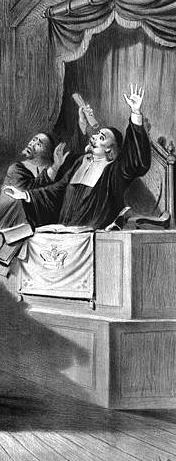 It wasn’t this bad
To my surprise, two weeks later, I attended church with friends in the same denomination.
I enjoyed singing the hymns, participating in the liturgical worship and settled down happily for the sermon.
The visiting pastor explained he had come to the United States to participate in the same large meeting.
It soon became clear thoughts of a prayer vigil were far from his mind.
In fact, he announced from the pulpit that anyone who came from a “traditionalist” background and thought the Bible was important, should leave the denomination to the progressives.
They/we were not welcome.
Did I hear that right?
That hardly sounded like a welcoming message to be thundering from the pulpit.
I wondered, “Have I just been denounced from the pulpit?”
I asked my teenager.
He nodded. “It sounded like it to me.”
Fury coursed through me. How dare he?
But what should I do?
I considered standing up and exiting the pew into the big central aisle with a swirl of my skirt. I’d then stomp out of the church and slam the door.
Except, I had four children with me–would they follow?
And what about my friends? Would I cause trouble for them?
“What should I do, Lord?” I whispered.
Stay put.
I didn’t have to say or do anything.
At the end of the service, the big pipe organ high in the back blasted the proper response.
“The Church’s One Foundation,” we all sang with gusto, “is Jesus Christ her Lord.
I practically shouted the verses as I stomped out of the church at the end of the service!
Thank you, Samuel John Stone, for proving my point!
Denounced from the pulpit in my own church
Years later, I taught in a specialized Bible study in my own church–a different denomination than the above.
In this particular Bible study, the pastor read a sermon about the text from the pulpit to a group of women.
We then decamped into smaller groups with individual teachers–class size 10-12.
As the “facilitator,” I oversaw the discussion of questions we worked on during the week.
I wasn’t exactly the teacher, but I was in charge.
That particular day, the sermon read from the pulpit discussed creation.
The well-meaning pastor followed the script into a comment that denounced “long-day creation.”
The implication was, those who believed such Biblical doctrine did not belong in the church.
Denounced for creationism this time.
Before we joined this denomination, my husband examined the website to make sure our beliefs in long-day creationism wouldn’t be a problem.
The website specifically stated that denomination allowed people leeway in terms of creationism.
So we joined.
Now I, as a teacher, was being told I could not hold such a belief.
Once we were dismissed to our classes, I marched to the pastor’s office.
“What’s up?” He asked.
“Judging from what you just said from the pulpit, you’ll need to teach my class.”
Puzzled, he asked why.
“I come from a family of scientists. We believe in long-day creationism.”
(Don’t know what it is or why we would believe in long-day creationism? See Reasons to Believe.)
We went back and forth several times, me desperately trying to be polite, he trying to calm me down.
Finally, we agreed to disagree.
“I’ll go into class and explain what the issue is, what I believe, what the lesson teaches and then point the members to the Bible to draw their own conclusions.”
My pastor, a good man, agreed that was the most honest way to handle the situation.
No one in my class particularly cared.
Except me.
It’s just an uncomfortable feeling to be denounced from the pulpit–especially when you are trying so hard to stay true to the Bible.
The good news?
“Come now, let us reason together, says the Lord.”
Isaiah 1:18
My heart before Jesus was clear, my devotion known, my desire for truth absolute.
I’d rather, however, not live through it again!
Tweetables
Ever been denounced from the pulpit? I have, twice. Click to Tweet
On being denounced from the pulpit: twice. Click to Tweet
The post Denounced from the Pulpit appeared first on Michelle Ule, Author.
August 11, 2020
God’s Bible School & Oswald Chambers

God’s Bible School (GBS), still operating today in Cincinnati, Ohio, welcomed Oswald Chambers in 1907, 1908, 1909, and 1910.
He first visited with his Holiness Movement friend Juji Nakada and stayed for six months.
Chambers returned several times in the years to come to teach at camp meetings.
They loved each other–GBS and Chambers.
God’s Bible School
Martin Wells Knapp founded God’s Bible School in 1900.
A leader in the American Holiness Movement, Knapp decided a school was in order for more teaching of the principles.
It will be a school for the study of the Bible and preparation for engagement in soul-winning work.
The Bible will be studied topically and much of it memorized. . . . It is unsectarian and for believers of every name.
Tuition is free.
The Revivalist, July 19, 1900
The first enrolled students (of 72 total that first year) were Charles and Lettie Cowman on their way to the mission field. A stint at Bible school tided them over until their departure.
Chambers in 1906
Oswald Chambers was a noted speaker for the League of Prayer in Great Britain at this time.
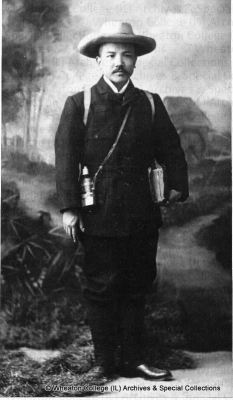 Juji Nakada
 (Wheaton College Special Collections)
He met Japanese evangelist Juji Nakada in 1906 and the two traveled together on the speaking circuit.
They got along famously. In one exchange over their difference in height,
Juji remarked, “you are long like a poker.”
Oswald countered with, “you are short like a shovel. And it takes both to make a fire.”
Oswald Chambers: Abandoned to God, p. 98
Nakada invited Chambers to join him in Japan where the Oriental Missionary Society’s five-year-old Bible Training Institute could use a good Bible teacher.
Chambers demurred; he was committed to the League of Prayer.
But the more he prayed and thought, Chambers decided God had opened the door. He laughed, however, after Nakada met his parents.
This small Japanese is very good at stealing hearts and minds. He stole mine, and then visited my home and stole the hearts of my father and brother, and he made them willing to send me to Japan.
Oswald Chambers: Abandoned to God, p. 97
The two sailed to America in November 1906. Chambers loved the entire trip.
Chambers at God’s Bible School
The two travelers stopped at GBS in January and Chambers joined the faculty for the spring term. The student body at the time numbered about 200 students.
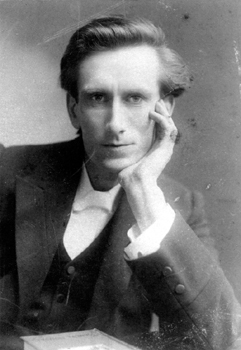 About the time Oswald Chambers traveled to GBS (Public domain)
Prior to joining the League of Prayer speaking circuit, Chambers taught at Duncan McGregor’s Bible College of Dunoon.
He always believed in the importance of clear thinking and careful study of the Bible.
It’s not clear if the idea to open his own Bible Training College came from visiting GBS and then the Bible Training Institute in Tokyo. But Chambers wanted to see what evangelism looked like overseas. That’s why he traveled with Nakada.
Students at GBS soon discovered Chambers was
a demanding teacher who insisted that his students not substitute sentimental piety for seious study.”
A Century on the Mount of Blessings, p 125
Eight days after he began teaching, he surprised his Biblical Theology students with an examination!
An exacting teacher
According to biographer David McCasland,
If Chambers had a pet peeve, it was, in his words, “intellectual slovenliness, disguised by a seemingly true regard for the spiritual interests.”
The solution?
“Examination by honest, hardworking, sanctified students of God’s Word.”
God’s Clock Keeps Perfect Time p. 41
That wasn’t all. According to McCasland, Chambers’ course outline delineated “bedrock convictions about the importance of diligent study and sound learning.” He had advice for his students.
More than half the sidetracks and all the hysterical phenomena that seize whole communities of people, like a pestiferous epidemic, from time to time, arise from spiritual laziness and intellectual sloth on the part of so-called religious teachers.
There are a host of Holiness adventurers whose careers would end, if vigroous sanctified saints were abroad.”
Ibid
Chambers truly enjoyed his six months at the school.
GBS paid him a $500 honorarium for his service when the semester ended in June. After that summer’s camp meetings, he continued with Nakada on to Japan. He wanted to see the Oriental Mission Society‘s work in Japan.
God’s Bible School Camp Meetings
Chambers returned to “the Mount of Blessings,” to speak at their annual ten-day camp meetings the following years. He wrote about the 1907 meeting, which he and Nakada attended before leaving for Japan.
Words fail completely to give adequate expression to the time of blessing on the “Mount of Blessings.’
One thing that will remain with us as long as we live was not the preaching, not the meetings, nor the marches, but testimonies (these were grand), but the splendid, supereffacing service of the students who waited at tables, washed the dishes, erected tents, pulled them down, and did the drudgery.
Their lives for ten days were one unbroken testimony to the blessing of God and to one at least, the impression grew strong, that if our Lord was here, He would still again be hidden and obscure as ONE WHO SERVED.”
The Revivalist Jan-Feb 2017 p 19
It appears he brought his bride Biddy back with him in 1910. Peer closely. Are they in this photo with Charles and Lettie Cowman?
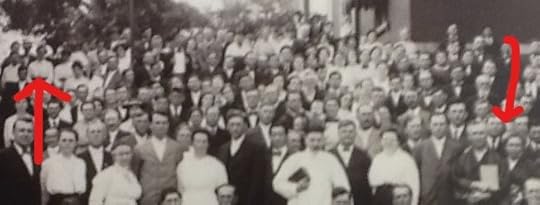 That looks like his hat on the far left and that might be Biddy. (OMS Archives) Current Revivalist editors don’t think so–Oswald would have been in front, and they’ve not found any mention of Biddy in attendance.
 Chambers and The Revivalist
Oswald Chambers’ first article in The Revivalist appeared two weeks after his arrival, on January 17, 1907.
He wrote many articles for the magazine and the Revivalist Press ultimately published his first two books–the only ones he ever saw in print.
(Biblical Psychology in 1912, and Studies in the Sermon on the Mount in 1915).
During their years in Egypt, Biddy often composed articles from Chambers’s talks and mailed them for publication in The Revivalist.
In February 2017, Revivalist Magazine devoted an entire edition to Oswald Chambers. You can read it here.
God’s Bible School dedicated the room where Chambers taught as “the Oswald Chambers room.” It contains a painting of him along with photos and memorabilia from his life and ministry there. Chambers’s writing desk is on display (a donation from the Oswald Chambers Publications Society) and copies of all his books.
Truly, the school and Chambers were blessed by his visits to God’s Bible School.
Tweetables
Oswald Chambers and God’s Bible School. Click to Tweet
Oswald Chambers as a teacher in America. Click to Tweet
Why did Oswald Chambers spend six months in Cincinnati? Click to Tweet
The post God’s Bible School & Oswald Chambers appeared first on Michelle Ule, Author.
August 4, 2020
Exodus and Cecil B. DeMille
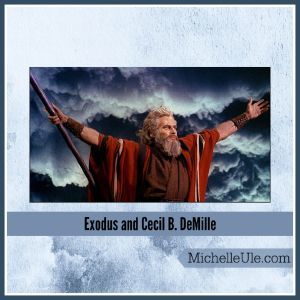
What does the book of Exodus have to do with the late Hollywood film director Cecil B. DeMille?
More than you may think.
For many American Christians, and possibly others around the world, their knowledge about the original ten commandments is influenced by his films, The Ten Commandments.
(Films is correct. He made the movie twice: in both 1923 and 1956).
The Bible’s book of Exodus
Exodus 1-15 describes Moses’ involvement with Egypt.
I’ve been reading through this portion of Scripture in summer 2020. It’s not only part of my morning quiet time, but I also reviewed it when I wrote our VBS 2020 script.
How many times have I read about Moses’ life? Why didn’t I remember these points?
Aaron was only three years older than Moses.Moses was a shepherd for 40 years (like David and Joseph, to name a few strategic men in the Bible).The plagues God sent against Egypt demonstrated His power over Egypt’s gods. (See the list at Enduring Word Commentary here).Moses and Aaron confronted Pharaoh most of the time at the Nile River.Many of the plagues did not touch the Hebrews in Goshen.The ninth plague of darkness enveloped everything and could be felt.The Egyptians paid the Hebrews to leave. (400 years of reparations paid).The pascal “lamb” could also be a goat.A shrine near the Sphinx in Egypt implies the assumed Pharaoh at the time may not have been succeeded by his firstborn son. Many Egyptians went with the Hebrews when they followed Moses into the desert.The phrase “out of Egypt” appears 56 times in the Bible after this account.
Guzik’s Enduring Word commentary on Exodus 12 also noted:
Apparently the Exodus from Egypt began on the same calendar day as the 430th anniversary of Israel’s time in Egypt. It’s remarkable evidence that God often fulfills promises on anniversaries of prior or prophesied events.
Enduring Word, Exodus 12
What did DeMille know?
Cecil B. DeMille actually knew the Bible.
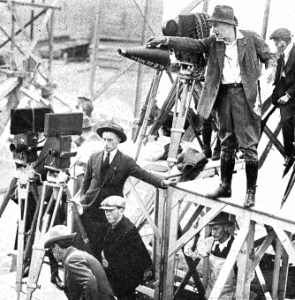 The director in the 1920s.
(Wikimedia Commons)
His Jewish mother converted to Episcopalian upon her marriage to Henry DeMille. DeMille’s father read first a Bible passage and then a work of literature to his children every night.
First a playwright, then encouraged to make movies, DeMille soon grasped the power of film.
By 1921, DeMille was the most successful producer-director in America. He had surpassed the legendary D. W. Griffith by tackling the issues of the decade: Prohibition, materialism, women’s rights, sexuality, and divorce.
When scandals rocked Paramount, DeMille answered critics with a mammoth morality tale, The Ten Commandments.
Cecil B. DeMille biography
If interested in comparing the silent film with both the book of Exodus and the 1956 version of the movie. Here it is:
The Charlton Heston Effect
Charlton Heston, however, comes to mind for most of us when we think of Moses.
We mentally remember Heston/Moses combating Pharaoh Ramses in the movie. He moves through the film with grace and thundering demands.
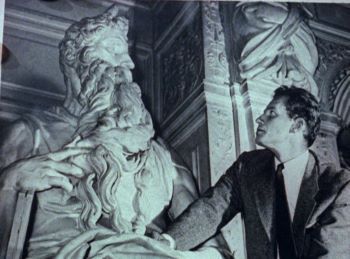 Do these two men look alike?
 (Wikimedia Commons)
It’s a marvelous performance. (And his infant son, Fraser Heston, played Moses in the bullrushes).
DeMille specifically chose Heston, believing he resembled Michelangelo’s version of the Great Lawgiver.
But, former playwright DeMille oversaw many dramatic alterations to the true story God told in the book of Exodus.
Among the most egregious:
The love story between Moses and NefretiriA power struggle between Moses and the young Ramses Lilia, a love interest of Joshua. Actually, almost everything about Joshua isn’t correct.
The Red Sea Parting?
I believe it happened–and lots of people have tried to find where.
I like to leave those questions in God’s more-than-capable hands.
In the meantime, know that in the 1923 movie, DeMille used jello.
By 1956, he had learned more advanced photography, trade secrets, and had access to large water tanks.
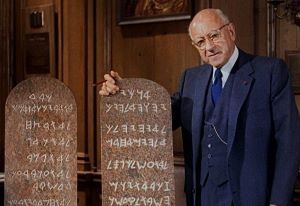 Director and props from the 1956 movie
(Wikimedia Commons)
The last time I visited Universal Studios, I took a tram through the Red Sea.
That’s not in the book of Exodus, either!
Tweetables
The Bible’s Exodus and Cecile B. DeMille. Click to Tweet
Didn’t Moses look like Charlton Heston? Click to Tweet
Everything I know about the Exodus–didn’t come from Charlton Heston. Click to Tweet
The post Exodus and Cecil B. DeMille appeared first on Michelle Ule, Author.
July 28, 2020
VBS 2020: Escape from Egypt

VBS 2020 required far more meetings, usually via Zoom, than ever in the past.
Our church loves presenting VBS. We know the kids enjoy it and certainly, this year, everyone needed an outlet.
But who wanted another online meeting, no matter how clever, for VBS 2020?
We wanted the kids outside in the fresh air. How to do it? How to keep them safe?
Where I live, the official advice ranged all over the place. But our COVID advisor figured out how to make it work.
Family groups worked best in this time of COVID. One teacher taught her children and nieces; her co-teacher brought her grandchildren; six children total.
They met outside with strict protocols.
But, we also came up with an Adventures in Odyssey-type skit retelling on audio for home.
“Escape from Egypt” for VBS 2020
Our St. Mark Lutheran Church did a fun VBS program in 2002 called “Escape from Egypt.”
Written by our church’s pastor at the time, Rev. Dennis Durham, one of our chief musicians, Gregg Campbell, and our VBS director Ardys Jones, the program covered the Exodus story from Moses in the bullrushes to building the tabernacle.
All in five days.
We decided to use it again this unusual summer.
Durham, Campbell, and Jones all headed to their files.
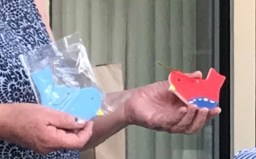 Quail arts and craft for Day 3
Jones, also in charge of BSF area personnel, went to work updating her curriculum, the games, and the directions.
Since our church created the program, it was ours to adapt, alter, and update as much as we wanted. The copyright is ours.
Jones sent the curriculum to the ‘arts and crafts” ladies. They were in charge of inventing ideas to match the story for VBS 2020.
Kids need arts and crafts to help them process crises and challenging times.
(Our community, which has gone through four years of fire, blackouts, and now COVID, did this well at school.)
Each VBS 2020 student received an individual bag with their own arts and crafts supplies–no sharing.
Snacks were individually wrapped. The games were designed to keep them apart.
VBS 2020 audio skits
Campbell updated the music and recorded it with new voices, more complex harmonies, and a fuller sound.
(He’s my friend, yes, but he’s a terrific musician and extremely skilled).
Our church’s board of education had decided that in addition to offering small backyard programs, we would provide the usual skits in an audio version.
Sina Williams, our minister of youth, recruited the teenage actors and coordinated a number of activities.
 Aaron and Moses recording Day 2
Pastor Durham is at a different church now, so he sent me what he had.
Eighteen years ago, the skits were not as elaborate as they’ve been the last several years.
To record the material as originally written wouldn’t result in kids and families having a greater understanding of the Bible passages.
The Board of Education wanted an audio-version of the usual daily skits to do the following:
Review that day’s Scriptures for the kidsIntroduce parents to what their child had learnedEntertainProvide simple questions to invite family discussion
What worked in the past wouldn’t work for VBS 2020.
So, I rewrote the skits.
Moses, Exodus, and Me
I’d never written a “radio” type drama before.
Fresh off writing a biography, something creative appealed to me.
Since I’ve taught Bible study since I graduated from college and I just happened to be reading the book of Exodus at the time, I plunged in.
These were the stories converted into skits:
Moses in the BullrushesThe Plagues Grumbling in the DesertWritten in StoneBuilding it God’s Way
Using the Bible stories, Jones’ curriculum, and everything I’ve learned over the years, I rewrote the skits.
They take about 10 minutes to listen to and, again because of COVID restrictions, have a small cast.
(Campbell recorded them; we had to meet in small groups for our parts.)
Our “Escape from Egypt,” VBS 2020 skits are told from Miriam‘s point of view.
In the first episode, she’s a child. She’s an adult and grandmother in the last four.
Three of my family members acted in the recorded skits.
Campbell mixed it. Williams added questions, our church administrator Leah Warren edited and wrote transitions.
It went online in time for the first classes.
A free gift
“Escape from Egypt’s” skit and music are free. (But please link to our site if you share; it’s copyrighted)
You can listen, download, enjoy, St. Mark Lutheran Church’s “Escape from Egypt” audio skits here.
The website includes VBS 2020 songs and music, too, written by Dennis Durham and Gregg Campbell:
Escape from Egypt The Plague Upon Our Back The Grumble Song Rules God Loves You
A gift to all, from St. Mark Lutheran Church.
Tweetables
How one church presented VBS 2020. Click to Tweet
How to “Escape from Egypt,” in five free audio skits. Click to Tweet
The post VBS 2020: Escape from Egypt appeared first on Michelle Ule, Author.