
Michelle Ule's Blog, page 22
November 23, 2021
Kids, the Sistine Chapel, and Me.

I always visit the Sistine Chapel with kids.
(Including the time I was a kid.)
Last weekend we took a ten-year-old to San Francisco’s St. Mary’s Cathedral to see lifesize high definition photographs of the frescoes up close.
While I’ve been to the actual Sistine Chapel in Rome four times, this was an opportunity to really see what Michelangelo painted.
Michaelangelo’s work up close amazed me–and charmed both the child within and the one standing next to me!
Running through the Vatican Museum–to see what?My family spent the summer camping through Europe when I was fourteen.
Since this was a cultural trip, Mom determined we should visit seemingly every art museum on the continent.
Italy, of course, produced museums everywhere we turned. She had her sights set on “the big one,” the Vatican Museum, and particularly, the Sistine Chapel.
Someone told us the best way, the very best way, to see the gem of a chapel was to get there first.
 Ezekiel looked the happiest of the prophets!
So, we rose early, arrived at the museum doors with the first dozen visitors, paid for our tickets, and ran.
Three children, fourteen, eleven, and nine, sprinted along the painted lines to the chapel.
Mom and the family friend traveling with us were gym teachers. They moved quickly.
Dad brought up the rear, laughing as he followed, though I’m sure he paused to contemplate the mosaics in the room of maps.
My siblings and I knew nothing about what we hurried to see. We burst into the 15th-century jewel right behind a young couple.
We gasped and stood with mouths agape, looking up.
Even all those years ago before the Vatican (finally) cleaned the frescoes, the vibrant colors and painted stories amazed us.
And we didn’t have much context to understand what was happening 60 feet above our heads.
Visiting as a MotherI’ve been the mother on all my subsequent visits and know far more about preparing the children beforehand.
 One of Jesus’ ancestors–I’d never noticed the nurslings from 60 feet below!
My boys were two and four, so we did not arrive early, and we did not run through the Vatican Museum. (Which now is sensibly outlawed).
We took our time following the same lines painted on the floor. I could explain and tell them a lot more about what they saw and we paused so they could ask questions. (“Why doesn’t that lady have any clothes on?” Sigh.)
By the time we entered the chapel (a 15-minute sprint in my prime; a much longer stroll if you examine museum exhibits!), crowds filled the parquet floor.
I drew the boys to the side of the chapel and we sat on the floor to admire the frescoes overhead.
 The ancestors of Christ in a spandrel: Jesse and a pensive mother.
The precocious four-year-old identified God, Adam, Eve, Jesus, snake, Noah, and a few others.
But then a guard approached, chastened me in Italian, and I realized we were not allowed to sit on the floor. (Not that the height made much difference for the two-year-old!)
My husband hoisted one, I held on to the other, we pointed out what they could see, and then left.
Subsequent visits were with college students. They prepared ahead and told me things!
Sistine Chapel in San Francisco?An ad caught my eye several months ago announcing a photographic, life-sized exhibit of the Sistine Chapel in San Francisco.
It was a lot cheaper than returning to Rome, so I purchased four tickets. We wanted to get a closer look.
Nothing about the afternoon disappointed me.
 You can see the scale of the high-resolution photographs. Normal-sized man in from of The Last Judgment
With excellent descriptions both beside the large photographs and through the headset audio explanation ($5), I learned a lot!
I saw even more!
These were the frescoes in bright living colors, the figures enormous in front of my eyes, and easy to admire.
Finally, I had explanations for the Sibyls and their order in the chapel. But more importantly, I could see the details.
I didn’t realize that was Judith and Holofernes.
 See the flayed and thus skinned man?
I’m studying the book of Jeremiah right now. Being able to view his tragic face up close helped me reflect even more on his weeping.
And how interesting to learn Michelangelo empathized with the prophet.
We discussed the Last Judgement on the way home. None of us had ever noticed the flayed figure below Jesus, much less knew it bore Michelangelo’s face.
Sobering.
Startling.
Glorious.
What about the most recent kid viewing the Sistine Chapel? From the story of the snakes sent in Exodus; the Bronze Serpent.
She had no problem identifying the same characters her uncle recognized all those years before.
When we pointed out details in the other photographs, she immediately saw them.
But unlike her father, she could sit on the floor and admire the artwork!
It makes so much more sense when you can put the figures and stories into context.
Who wouldn’t recognize Adam and Eve, or Noah and his ark?
(She made no comment about the many naked figures, having looked through Susie Hodge’s illustrated book Why is Art Full of Naked People? the night before.)
I don’t know if she’ll ever get to the actual Sistine Chapel in the Vatican Museum.
But, you can never start them too young on appreciating art.
 Detail–the Bronze Serpent now much clearer
(Michelangelo’s Sisting Chapel: The Exhibition will visit 36 cities around the world. For more details, see the website www.chapelsistine.com. It will run in San Francisco until early 2022.)
Tweetables
Kids, the Sistine Chapel, and Me–a wonderful opportunity to view up close. Click to Tweet
A novel way to view the Sistine Chapel frescoes–up close. Click to Tweet
The post Kids, the Sistine Chapel, and Me. appeared first on Michelle Ule, Author.


November 16, 2021
Celebrating Christmas: Joy, Art, & Reflections
I’ll be Celebrating Christmas with this new book in hand. It’s lovely.

The writer and artist team of daughter and father, Amy Boucher Pye and Leo Bucher, have produced a beautiful meditative reflection on the Christmas season.
Twenty-five readings provide fresh looks at the Christmas or Advent season.
Each day includes a short reflection from Amy’s life or that of a historic figure, along with a spiritual point, and a prayer.
I learned a few things about Christmas traditions I didn’t know
Joy, art, AND reflections?I interviewed the authors recently about the book, and here are their thoughts.
Which came first, the paintings or the words?In 2018, Amy used her father’s paintings for her website series on the 12 Days of Christmas. (In this series, the 12 days begins on Christmas Eve–considering looking it up yourself for this year).
 Leo Boucher and Amy Boucher Pye
(photo by Daniel Mick)
Her editor read through the series and suggested a book on the same idea using Leo Boucher’s paintings and Amy’s reflections.
Amy and Leo loved the idea.
“My dad is super easy to work with, ” Amy said. “Some of the paintings were already finished. Others were those he created many versions of until I and the publisher were happy.”
The task became easier once Amy had the four themes in place (one theme for each week). They are:
Christmas symbols Joys and sorrows of Christmas“He is Jesus!The journey to Bethlehem.From there, Amy explained, “I slotted in the existing paintings my dad had already created for the Advent and Christmas seasons.”
Since Amy lives in England and her father lives in Minnesota, they “talked, zoomed, and emailed about how to fill out the missing gaps.”
(You can watch Amy’s interview with Leo about the project here.).
What does Celebrating Christmas mean–with reflections as well as art?Leo’s art is sprinkled through the book. Amy provides 25 thoughts about Christmas based on her life, or that of others.
I never knew the idea of a nativity scene came from St. Francis of Assisi in 1223.
Longing that those in the Italian village of Greccio would experience the wonder of the story of Jesus’ birth, he created a cave scene with hay, an ox, and a donkey. Welcoming the villagers to gaze on the scene, he told the story of Mary and Joseph arriving in Bethlehem without anywhere to stay.”
Celebrating Christmas, p. 35
 Painting by Leo Boucher. Used by permission, all rights reserved.
Amy reflected on the value of why a creche:
“The imperfect things we create, such as nativity sets, can give us insights into the real. That is, as we gaze on them, perhaps in an attitude of praying to God, we can understand more deeply the mystery of the God who came to earth as a baby.”
That reflection, and other thoughts, appeared on Day 6, and ended with a short prayer asking readers to focus on Jesus–“that we might never lose our sense of wonder, awe, and gratitude.”
The 1-2 page-long readings are clear and simple enough to be read as a family, perhaps starting December 1 and read daily until Christmas.
Amy also suggested readers “pour a favorite beverage on Boxing Day (December 26) when things are feeling more relaxed and read a couple days’ entries under the glow of the Christmas lights.”
However you read, Celebrating Christmas with this book is a pleasure.
Who is Amy Boucher Pye?Amy Boucher Pye is an American writer living, spiritual director, and retreat leader who lives in England with her British husband and children. A frequent contributor to Our Daily Bread, she’s the author of four books and a great lover of Christmas and Advent.
Indeed, she has an entire shelf of books about Christmas–where she spent a lot of time researching to write this lovely book. “I’m often thinking about Christmas at odd times of the year.” The idea to write Celebrating Christmas, for example, came in April.
About Leo Boucher Painting by Leo Boucher. Used by permission, all rights reserved.
Leo Boucher painted his first oil painting when he was seven years old. “It was of a large tree in my grandparents’ yard. I have been drawing and painting off and on all my long life.”
He took a correspondence course in basic drawing, watercolors, and perspective when he was in high school. In addition, Leo took art classes in college.
Today he paints in a tidy art studio he built for himself behind the family home.
For Celebrating Christmas, Amy explained, “art is subjective and my dad has loads of styles that he likes to create with. so my publisher and I went for a style that she called “smudgy, soft, and evocative.”
When Amy asked Leo how he felt about having to repaint his paintings for the book, noting how easy it is for her to edit her writing, he smiled. “It’s called work. Just a little bit of work.”
But it looked like a lot more joy to me.
Jesus is the reason for the season, let’s celebrate His coming this year!
Tweetables
Celebrating Christmas–Lovely art and splendid reflections for this holiday season. Click to Tweet
Advent beauty: Celebrating Christmas by an artist and daughter in 25 short reflections. Click to Tweet
The post Celebrating Christmas: Joy, Art, & Reflections appeared first on Michelle Ule, Author.
November 9, 2021
Wendy Lawton & Daughters of the Faith
Wendy Lawton and Moody publishers have reissued her Daughters of the Faith series with a new look!

Historical fiction/biography designed for school-aged children, Daughters of the Faith tells stories from nine childhoods.
All the girls portrayed did something significant for the Kingdom of God during their girlhoods.
“Faith is the key element,” Lawton explained. “All were girls who actually did what they did because of the relationship they had with Jesus.”
They may not all have talked about a “relationship with Jesus,” she added. “That’s our 21st-century eyes. But their lives revolved around honoring God.”
Why did Lawton write fictionalized biographies of girls?“My whole life, I’ve been interested in girls, dolls, stories,” she said.
A noted and honored doll designer before she wrote the Daughters of the Faith series, Lawton created with a specific story in mind.
 Mary Chilton doll
Each doll I created had a story behind it. Alice, from Alice in Wonderland, was the first one.”
“When I spoke at stores about my dolls, I always retold the story behind the doll. I looked at customs, the Legend of the Poinsettia for example.
I’d design that doll and when I spoke, I’d tell all those stories of wonderful people that no one remembered anymore.”
Her tagline is “telling stories in porcelain and painting pictures in words.”
As to the importance of writing her books for girls, Lawton’s own daughter learned to love history through reading fiction.
“It’s important for children to connect to people who feel like them, that connects them to history. I hope they’ll love the girls [in this series] because they were girls like them, and that will interest them in history.”
The girls in Daughters of the Faith books lived between 1607 in England, to the 1950s in the United States.
They did not necessarily do anything special, or marry famous men.
But they left a mark on history while they were still young.
As Lawton explained:
“History tends to record the stories of men. Sometimes we come across the historical account of a woman.
Once in a while, we even read of boys’ exploits, but the hardest to find is the young girl’s story. Growing up, I craved stories of real girls.”
Welcome to Wendy Lawton.com
Some are familiar–Pochahontas, for example– others not so well-known.
But they all lived lives worth knowing.
Deliberate research and attention to detailWhile Lawton’s stories are historical fiction, she spent weeks learning and studying both the girls’ lives and the times in which they lived. She personally interviewed one of her subjects, Holocaust survivor Anita Dittman.
“While writing Shadow of his Hand, I spent an entire week at a hotel with Anita. She told me stories and we both cried. I got her story right from her mouth.”
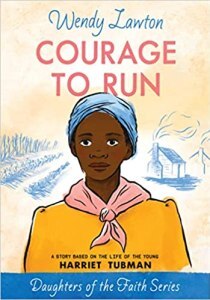
While writing Courage to Run about Harriet Tubman, Lawton listened to all the slave testimonies gathered in the 1930s by the Works Progress Administration (WPA).
“I wanted to hear what they had to say, the rhythm, and cadence of their language. I listened to a lot of the music of the time, the chants, and the “Ring Shout” form of worship.”
Lawton particularly worried about writing Almost Home, the story of Mayflower traveler Mary Chilton.
The Mayflower Society pays close attention to everything written about the 102 people who sailed from England in 1620. “They know how every pea or oat was packed on the ship, including who bunked where,” Lawton explained. “I had to get it all right.”
Lawton’s historian author brother, James Smith, took on the genealogy task and did original research for the novel, as well.
Lawton constructed a lengthy chart from her brother’s genealogy work to ensure accuracy while writing. She used the chart when discussing the story in elementary classrooms.
Ultimately, the Mayflower Society endorsed the book. “That made me feel very proud,” Lawton said.
Mixing Fiction, Faith, and HistoryLawton’s care could be seen in the way she mixed fiction and history.
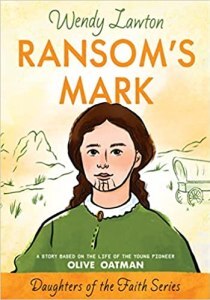
“There’s always a note in the back of the books explaining what is true and what is imagination. I tell the reader who really lived or who was a made-up friend, for example.”
Readers can find that information in the epilogue or the notes, along with several suggestions for further reading. Many of the books provide a glossary for historic terms pertinent to each girl.
When Lawton described the tattoo marks on Olive Oatman’s face, for example, she used the correct Native American terminology: ‘ki-e-chook.” Her clear explanation and assurance that, “It did not hurt as much as Olive supposed,” helps younger readers understand what happened.
Lawton also carefully explained the Native American tribe’s name in Ransom’s Mark.
The Captive Princess tells a version of the Pocahontas story and Christianity’s influence on her actions.
The Tinker’s Daughter describes how Pilgrim’s Progress author John Bunyan’s daughter cared for him during his time in prison.
Freedom’s Pen, based on the life of freed slave poet Phillis Wheatley, opens in The Gambia, Africa about 1761.
The Hallelujah Lass is about Eliza Shirley and her solo journey as a 16-year-old to the United States where she founded the Salvation Army. I’d never heard this story before!
Little Mission on the Clearwater, describes the life of Eliza Spalding, the first non-Native American girl to grow up in Oregon Territory.


 Which girl would Lawton like to meet first?
“I long to meet Harriet Tubman when I get to heaven. I love what she had to say:
 Read more about Wendy Lawton at wendylawton.com
“When someone congratulated her on her bravery, she would always answer,
‘Don’t, I tell you, Missus, ‘twan’t me, ’twas de Lord! Jes’ so long as He wanted to use me, He would take keer of me, an’ when He didn’t want me no longer, I was ready to go; I always tole Him, I’m gwin to hole stiddy on to you, an’ you’ve got to see me trou.”
Courage to Run, p 142
Wendy Lawton laughed. “You can’t take Jesus out of her story. ‘Twas the Lord.'”
Lawton emphasized more than once, these girls didn’t necessarily grow up to be big leaders. She wants her readers to know, you don’t have to be a grown-up to do significant things.
Amen.
Tweetables
Wendy Lawton’s reissue of Daughters of the Faith novels for girls: splendid! Click to Tweet
Girls don’t have to be grown up to do significant things for God. Click to Tweet
The post Wendy Lawton & Daughters of the Faith appeared first on Michelle Ule, Author.
November 2, 2021
Why Would Anyone Live in California Now?

“California? Tell me why you still live in California,” wrote a friend during the last natural disaster. “Especially now?”
An understandable question given we’d been evacuated (again) for a week (shorter the second time) from a wildfire.
I could count the ways, but they work out to these:
Nearly all my relatives live here.I’m a California native.I’m even the second of three generations of University of California graduates.This is where God has us for right now.There are other reasons, of course, but I’d forgotten the sheer beauty of my state until a recent trip took us from our home in “NorCal” to “SoCal.”
Blue and Gold means CaliforniaSure, I grew up knowing the “blue and gold,” meant UCLA (and also Berkeley, but dark blue), but I never thought about why until recently.
A photo like this one gave it away:
 See the blue and the gold?
Ever since (finally) noticing the beauty of the blue sky against golden hills, I marvel whenever I see it.
But it’s not just hillsides like above.
California, of course, has many earthquakes, which cause fascinating ripples in the land. (When you’re not worrying about feeling them start to shake).


 The folds and the light: magnificent!We have plenty of other magnificent natural features in California
The ocean, the mountains, the awesome carvings.
I once flew over Yosemite Valley on my way to San Francisco.
The almost hidden green valley, stunning mountains, and narrow roads were part of my camping childhood.
These stunners are within four hours of my home.


 Lost Coast in Mendocino County, on the way to Lake Tahoe, Half-Dome from Glacier Point.Bodies of Water
Two Chinese teenagers stayed with us one summer. Their young teacher stayed nearby while other students were sprinkled throughout our community.
They lived in the Chinese interior and had never seen the ocean before they flew across it to San Francisco.
We took the boys and their teacher to the beach.
The teenagers yawned, the teacher sat upright and polite.
When we pointed toward a sand dune separating us from the ocean, they obediently trudged west.
Then we heard the gasp.
Enormous rolling waves crashed onto the beach sending spray high into the air.
The teacher’s eyes went wide. When she finally could speak, she spoke in a whisper: “There are not enough words to describe beautiful.”
We stopped at Armstrong Grove on the way home. None of the three could get over how high those redwoods rose into the sky!


 Lake Tahoe, Armstrong Grove redwood trees, the local Spring Lake (with a pelican!)Manmade features, too!
There’s something about coming across extraordinary features that also can capture your eye in California.
Many of these structures were not designed to necessarily spark beauty across the landscape.
But they manage to do so anyway.
We always laugh when we cross the Golden Gate Bridge. So many tourists come from around the globe to admire it.
For us, it’s just a shortcut to the airport . . .


 They look like art to me! Getty Center Museum, LA; Golden Gate Bridge from Marin headlands, 2 windmills just before I-5It’s home
I’ve lived in seven states–in all four corners of the country plus Hawai’i–but I’ve spent most of my life in California.
I could tell you her faults (many) and complain (for good reason) about her.
But every place has its challenges.
The only perfect place is heaven.
And I’m going there relatively soon.
For the time being, we’re still in California, doing what He has called us to do in this place.
Will it change?
Maybe.
But, until then, I’ll appreciate what my eyes tell me about beauty–why God bestowed on California.
Enjoy my photos!


 San Pedro fog; Sonoma mustard fields; Santa Monica cracking
Tweetables
Why do people still live in California? Click to Tweet
A native shows the beauty of California in recent photos. Click to Tweet
The post Why Would Anyone Live in California Now? appeared first on Michelle Ule, Author.
October 26, 2021
Where is Sodom (of “& Gomorrah” Fame)?

Do you know where Sodom was/is?
I do.
I’ve known for years. It’s located northeast of the Dead Sea.
How can I be so sure?
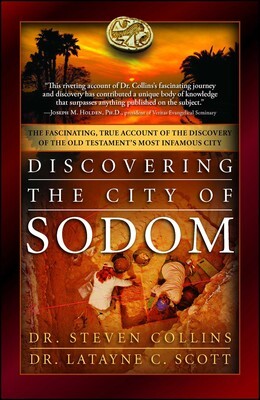
I read the book Discovering the City of Sodom by Dr. Steven Collins and Dr. Latayne Scott.
I know one of the authors.
Nature Magazine recently highlighted the where and the how.
What? Was Sodom a real place?Why yes.
For the longest time, the site has been known as Tall el-Hammam.
 That’s Tall el-Hammam in front and the city of Jerico in the distance.
 (Wikimedia Commons)
But the idea it might be Sodom only occurred to archaeologist Dr. Steven Collins of Trinity Southwest University, during a Biblical tour in 1996.
As he read Genesis 10-19, describing the Biblical story, he was struck by a description of the
 Dr. Collins on site
“great city of Sodom located on a ‘bread-disk’ in the well-watered Jordan Valley.
The original language spoke of a fertile breadbasket, a circular setting.
A place that was as lush as Egypt’s ever-green Nile Valley, and as prolific and luxuriant as the very Garden of Eden.”
Discovering the City of Sodom p 20-21
This sounded to Dr. Collins more like the Kikkar of the Jordan, the “breadbasket of the Jordan Valley” just north of the Dead Sea.
The Jordan River often overfloods its banks and the valley “widens into an almost circular area.” It even has its own microclimate.
Tall el-Hammam sits off to the side of the valley, where Collins, based on his reading in the book of Genesis, expected to find Sodom.
He’s been leading expeditions there ever since.
But how was Sodom destroyed?How indeed?
When archaeologists examined Tell el-Hammam over the years, they noticed an unusual (in thickness) 5-foot layer of jumbled charcoal, ash, melted mudbricks, and pottery.
Obviously, a very hot fire burned the massive city, but the amount of burned debris and the material destroyed was incomprehensible. How could such a fire have occurred?
Science has now verified what Dr. Collins has argued for years.
As explained on “The Conversation” website, 3600 years ago, an “unseen icy space rock” sped toward the earth at 38,000 mph.
Once it encountered the earth’s atmosphere, It exploded into a “massive fireball” about 2.5 miles above the Kikkar of the Jordan. Temperatures rose to above 3600 degrees Fahrenheit in a blast more powerful than 1000 Hiroshima atomic bombs.
“Clothing and wood immediately burst into flames. Swords, spears, mudbricks, and pottery began to melt. Almost immediately, the entire city was on fire.
Moving at about 740 mph, a massive shockwave smashed into the city [Tall el-Hammam]. It was more powerful than the worst tornado ever recorded.
The Conversation, September 20, 2021
No one–animals or humans–survived, of course, and the winds leveled every building.
(The article noted that a minute later, the walls from the blast traveled 14 miles west to the biblical city of Jericho. Jericho’s walls came tumbling down and the city burned to the ground.)
Did this only happen once?
No, a similar but smaller asteroid knocked down 80 million trees in Siberia in 1908.
So what?As author Eric Metaxas argues in his new book, Is Atheism Dead? science increasingly demonstrates the oft-maligned truth found in the Bible about the origins of life, and Biblical miracles in general.
Inspired by Dr. Collins’ work and nanotechnologist Dr. James Tour, Metaxas wrote the book telling stories of scientific discoveries pointing to God. He discussed the ideas behind the book here.
(Or, you can listen to his discussion with my friend Chase Replogle on the Writer-Pastor podcast.
(Dr. Tour explains his understanding of the Bible and science on his Youtube channel).
(Here are two podcasts Metaxas did with Dr. Tour).
And, of course, it never hurts to review all the material available at Reasons to Believe.
S/he who has ears to hear, let them hear–what science really confirms about the Bible.

Tweetables
Is Atheism Dead? Gone underground with the discovery of nanotechnology and Sodom? Click to Tweet
Why yes. Scientists have discovered–and proved–Sodom’s (of Gomorrah fame) location. Click to Tweet
The post Where is Sodom (of “& Gomorrah” Fame)? appeared first on Michelle Ule, Author.
October 19, 2021
Singing about God’s Manna for My Soul
 I love the song “Manna for My Soul.”
Many of you probably have never heard it because friends wrote the song in 2004.
We sing it at our church frequently thanks to Gregg Campbell’s (music) and Craig Hermsmeyer’s (lyrics) generosity.
I shiver every time Gregg plays the opening chords.
CommunionWe sing it during the communion portion of our service.
The music shimmers and the poignant lyrics always draw me back to what communion is all about.
The lyrics for “Manna for My Soul,” are based out of Exodus when God arranged for manna to arrive each morning–six days a week–for the Israelites.
They were to trust God to provide for all their needs–every day. If they “hoarded” manna and kept it over night, it turned into a worm-infested mess the next morning.
The Israelites had to depend upon God to provide their food every single day–except the Sabbath, the day of rest.
In our Lutheran Church, communion remembers Jesus’ body and blood spilled on the cross to take away our sins.
[image error]The Gathering of the Manna, by James Tissot (Wikimedia Commons)
RemembranceOur church has a corporate confession of sin in the liturgy.
We recognize our sins need to be forgiven before we can approach God.
We stand together, speaking out loud, all the times we have sinned against God, “whether in thought, word or deed.”
The pastor makes the sign of the cross, speaking on behalf of God: “your sins are forgiven.”
We then move into the communion service which features a review of the last supper and Jesus’ words from Luke 22: 19-20:
And he took bread, and when he had given thanks, he broke it and gave it to them, saying,
“This is my body, which is given for you. Do this in remembrance of me.”
And likewise the cup after they had eaten, saying, “This cup that is poured out for you is the new covenant in my blood.”
Our pastor then turns to the congregation:
“The table is ready, Christ invites you to commune with Him. Come receive the gifts He offers. The peace of the Lord be with you always.”
We sing as the congregation slowly moves up the aisle to the altar.
Walking to the altar for communion is a step in humility.
I love watching the members of my church body line up and approach the altar.
Many are deeply moved; their sins forgiven and now they partake of a oneness with God.
I love going forward myself.

Nave ceiling Sulzberg, Austria by Anupail (Wikimedia Commons)
Manna for My SoulHere are Craig’s words, reflecting communion’s meaning:
Lord we eat in remembrance of Your body that we broke,
Through Your pain You rain forgiveness
In the words You spoke.
How You set aside Your glory
And You took away our sin.
You wrote a brand new story
And in You we live again.
Chorus:
Broken for me. Poured out for me,
Your body given just to make me whole.
Marvelous love, Strength from above.
Manna for my soul
Lord, we drink in remembrance of Your blood that we spilled,
All of heaven You surrendered at Your Father’s will
We’re the thieves on either side of You,
Yet You made us each Your own,
We’re joining here with You, Lord, till we dine with You at home.
Chorus

Tintoretto’s image of manna gathering (Wikimedia Commons)
How does it end?We remember the why as we sing each line:
I need that manna, daily, too.
Lord, we eat in remembrance.
Lord, we drink in remembrance,
Lord we eat in remembrance,
Lord, we drink in remembrance.
Manna for my soul.
Every day, I turn to God in my prayers.
I read the Bible, think, pray, repent, ask and yield my heart and day to God.
Every day, like the Israelites in the desert oh so long ago, I receive God’s manna.
I’m not collecting anything in a basket; in my case God provides the spiritual food I need for the day.
I remember Jesus’ sacrificial death on the cross on my behalf–and yours.
My soul is fed.
But it has to be renewed everyday.
Here’s a recording of the words and music together. Manna for My Soul
Rejoice! God daily provides manna for all our souls.
Tweetables
What is manna for my soul? Click to Tweet
A modern communion hymn of remembrance. Click to Tweet
The post Singing about God’s Manna for My Soul appeared first on Michelle Ule, Author.
October 12, 2021
Flat Stanley, Mango Monkey, & What Now?
 I first met Flat Stanley many years ago while living in Hawai’i.
My neighbor opened her mailbox and pulled out a manila envelope, sent by her niece.
According to the directions, Flat Stanley was visiting the world and would like to spend a week with her.
Her simple task: take Flat Stanley around and photograph him in different spots.
My neighbor groaned.
But, she then composed a story, included pictures, and mailed Flat Stanley back to her niece.
I was envious.
I could have SO much fun with such an invitation.
Flat Stanley comes to my house!Several years later my niece mailed me a Flat Stanley and my kindergartener and I went to work
Stanley had a very busy week at our house.
We photographed him overseeing dinner preparation, visiting the yard, enjoying the tire swing.

Flat Stanley in Nigeria (Wikimedia Commons)
He joined me at Walmart, the library (where he accidentally got shelved!), and the grocery store.
My daughter introduced him to her class and escorted him to visit her grandfather at a nursing home.
My father-in-law had seen many mysterious things in his time, but Flat Stanley confused him.
The nurses in the nursing home, however, stopped to pose with our guest.
We had so much fun writing up Flat Stanley’s adventures!
We mailed back four typed pages detailing his experiences–told from his point of view.
When my niece turned in her project, the teacher looked it over and said, “You must have a very imaginative aunt.”
Well? What do you expect when Flat Stanley visits a novelist?
Mango MonkeyUnfortunately, I never had a chance with another Flat Stanley but then I met Mango Monkey!
 When I picked up my Adorable kindergartener and her sister, we discovered L had been chosen “Superstar of the Week!”
(“Great,” her mother said. “Now I have homework.”)
Since we’d already planned a trip to Baskin Robbins, I thought I’d help.
It had been so long since I had such an imaginative adventure thrust into my hands!
Mango Monkey isn’t flatOf course, this new generation of the experience wasn’t quite the same.
Unlike Flat Stanley, Mango Monkey was three-dimensional and came with his own matching backpack and assorted paraphernalia.
L wanted to change his clothes immediately, but I explained he’d need a sweater before we were done with him.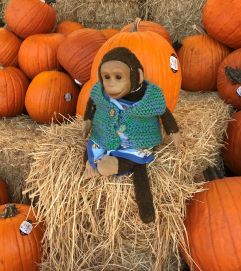
The girls eyed me–but went along with the game.
We stopped at the grocery store, where Mango got his picture taken lounging among the pumpkins.
He sat in a grocery cart and stopped to smell the flowers.
He wasn’t much interested in ice cream but did examine himself in a mirror.
Inside the grocery storeInside the grocery store, Mango Monkey “went a little wild,” when we introduced him to mangoes and bananas.
He probably was a little warm with his sweater on, so I suggested he cool off in the freezer.
The girls shrieked with laughter.
As we stood in line to check out, I suggested my Adorable show the cashier the monkey on her back. (Mango rides in his backpack.)
The cashier loved it.
By the time we got home–and L finally could change Mango’s clothes–we had plenty of photos for the project.
Mango came with a composition book telling of his adventures with other students.
We read of his adventures with a girl we knew from last year.
I printed out my pictures and handed them to Mango’s surrogate caregiver. “Do you have enough to write a story about Mango Monkey?”
The Adorable kindergartner nodded yes.
“Great,” her mother said. “Now, all I have to do is help her make a poster for Monday.”
Tweetables
Got a Flat Stanley? Now what? Click to Tweet
Ideas for dealing with Flat Stanley or even Mango Monkey! Click to Tweet
Spurring imagination in a kindergartner–using a silly prop. Click to Tweet
The post Flat Stanley, Mango Monkey, & What Now? appeared first on Michelle Ule, Author.
October 5, 2021
Patricia Raybon and a New Mystery Series
Noted author (and friend) Patricia Raybon introduces a new detective in a mystery series this week.
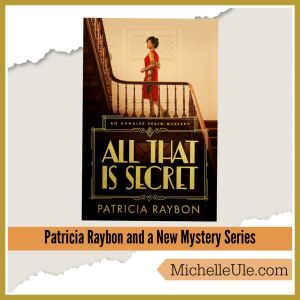
Our heroine is an African American seminary professor in the 1920s.
Annalee Spain is a feisty woman living in Chicago poverty when All that is Secret opens. Her father’s shocking death brings her home to Denver in time to deal with historically accurate corruption in that town.
It’s a surprising mystery in many ways, and it opened my eyes to situations I’d never contemplated before.
Thank you, Patricia.
An unusual heroine–or not?Was an African-American female theology professor unusual for the time? As Raybon explained,
“Unusual, yes, but not totally unlikely. Even before the Civil War, enslaved Blacks hungered for opportunities for learning, so progressive denominations and philanthropists launched colleges for “Negroes” known now as Historically Black Colleges and Universities (HBCUs). The African Methodist Episcopal (A.M.E.) denomination, formed in 1816, had two seminaries, graduating young Black theologians from the onset.”
Annalee Spain would have come from that world.
Raybon also pointed out colleges like Oberlin had accepted Black students as early as 1835.
While most white colleges in the U.S. didn’t enroll Black students in Annalee’s time, she would’ve found a place to study and wouldn’t be “the only” young Black woman in her age cohort to earn a college degree. Her study of theology would be rare, but not impossible. Meantime, HBCUs are a priceless treasure in the U.S.
I thought Annalee Spain was an original, clever, determined detective–which she needed to be, given the situation thrust upon her!
What about Spain’s “irregular” sidekick?The mystery opened on a snowy November night in 1923 when Annalee Spain finished a paper owed in 45 minutes to a theological magazine. With little left to eat in her small boarding room, she worried how to deliver her paper in time to earn a much-needed stipend.
Then a knock came, and Spain discovered an impoverished, street-wise, half-starved, 11-year-old orphan.
 A telegram made the difference.
 (Wikimedia Commons)
Eddie didn’t come to pick up the paper. Instead, he delivered a telegram which changed everything. Abandoning her paper, Spain traveled to Denver to learn what really happened to her late estranged father.
But first, she fed the boy her last bit of food.
And so, an irregular partnership began between the brilliant African American professor and a hungry, street-smart, white boy.
As Raybon recounted:
“I loved Eddie immediately, and I loved the tension he brought to every scene where he appeared. As with Annalee, he was searching for answers about his missing father, a onetime preacher.
In that way, Eddie and Annalee mirrored each other in their determination to resolve their “Daddy issues.” They also shared a theological awareness.
But I didn’t “create” him. He just showed up when Annalee opened the door!
That’s one of the truly fun things about writing fiction—watching for who shows up, then letting them come to the party. I’m totally humbled by how this happens because I know it’s God at work, not me. Thus, we have Eddie.”
I loved Eddie, too.
1920s Denver–tensions of all sorts1920s Denver was awash with racial tensions and political corruption. Raybon looked no further than her own church to discover a historical nugget worth investigating.
Raybon’s church burned to the ground in 1925; an unproved arson believed to have been the work of Klan members.
In a surprising turn of events for the time, a local white Presbyterian church invited the African-American African Methodist Episcopal Church (A.M.E.) to worship with them.
 The historic church from 1925
 (Photo courtesy Patricia Raybon from the church newsletter).
The two congregations shared the building for a year until the AME congregation rebuilt their church in 1926.
My hope was to introduce a faith character in Colorado, my home state – a beautiful “sunshine” place, but during one of its darkest times, the 1920s.
Good fiction needs a threat element. So, that’s how I used the Klan in my mystery—as background tension for my lead character’s sleuthing. The threat was real in Colorado, however. So, I wanted readers to encounter history that they might not have known, but that also heightened narrative tension.”
While Raybon obviously had a personal connection, she did her research to explore the broader community.
I started by reading histories about Colorado’s Klan. Then, I found myself poring over old Colorado newspapers from the 1920s, the era of my book.
With thanks to Denver Public Library’s amazing Western History Digital Collections, I listened to oral histories, scoured old phone books, street maps, vintage photos, church bulletins.
Meantime, small story details demanded attention: How much was a train ticket from Chicago to Denver in 1923? What perfumes were women wearing? Aftershave scents for men? Car models? Hit songs? Popular movies? Maid’s uniforms. Buttons vs. zippers on clothes?
I love history, so pouring over this material never got old.
From the city’s history and her own family, Raybon wrote a compelling story.
Where did her characters come from?Raybon patterned Spain after her own mother,
“a firecracker–feisty and nearly fearless. I borrowed my mother’s spunk to give Annalee a bright, brave spark. Readers love proactive protagonists. My late mother, for inspiration, filled that bill. In life, my mother took no prisoners. I enjoyed writing some of that same attitude in Annalee.”
As to Jack, the WWI veteran/pastor who aids and abets Spain and Eddie?
Raybon didn’t say, but I’ve met her splendid husband, Dan!
A new genre for RaybonRaybon, a reporter and nonfiction author of many books, decided to try her hand at a “clergy mystery” during the COVID pandemic.

I’d started working on a mystery some 10 years ago but put it on a shelf. During the pandemic lockdown of summer 2020, however, I was desperate for something to take me away from the horrible daily news. So, I went back to my mystery.”
She laughed,
“What had changed [during those 10 years] was me. Older now, I worried less about what people might think or say about prim Patricia Raybon writing a romantic historical mystery. No reaction could be worse than a pandemic. So, I let her rip and gave it my best.”
A long time Sherlock Holmes fan, Raybon also enjoys a host of historical clergy mysteries like
Father Brown and Grantchester, and I deeply love Agatha Christie’s Hercule Poirot mysteries.
I also love mysteries set in other countries including Vaseem Khan’s Baby Ganesh mysteries in India, Harriet Steel’s Inspector De Silva mysteries in Ceylon (now Sri Lanka), Rhys Bowen’s “Her Royal Spyness mysteries” in the U.K. (and her stand-alone novels), and Alexander McCall Smith’s No. 1 Ladies’ Detective Agency mysteries in Botswana.
In the U.S. I admire the American Girl History Mysteries for children and, for adults, William Kent Krueger’s “Cork O’Connor mysteries” in the north woods of Minnesota (and, especially, his excellent stand-alone mysteries such as Ordinary Grace).
Raybon obviously wrote what she loved!
Who is Patricia Raybon?Raybon grew up under Jim Crow segregation in a family of faith in Denver, much later than All that is Secret.
I’ve always asked hard questions of God but listened for answers. Thus, I’ve been writing almost since I could read. Half a minute past first grade, I started writing stories–but also looking for life insight. That journey led me, past college, to newspaper reporting at my hometown paper, The Denver Post.
I met Patricia Raybon and her husband at the 100th anniversary of Oswald Chambers’ death. She presented a thought-provoking talk.
Her writing has appeared in many periodicals, won awards (including a Pulitzer Prize nomination), and taught college writing courses. In addition, she’s published many personal essays on faith and family in several well-known periodicals and authored seven books (including two memoirs).
Reflecting on her first novel, Raybon said,
All That Is Secret, my first novel, is my seventh book, but also personal in many ways. Why tell such personal stories? The reward and journey of discovery changes lives, starting with my own. My goal? To inspire readers to bridge their divides, love God and one another, and choose peace.
My Annalee Spain Mysteries series is inspired by that same goal. I love what Dr. Brenda Salter McNeil said about Annalee. “This story of an amateur sleuth has the potential to change our perspectives.” In fact, I was going for that. May God help it to happen.
Watch for All that is Secret published the first week in October 2021, with two more mysteries to come.
Tweetables
Introducing an African-American female theology professor confronting Denver’s 1920s Ku Klux Klan. Click to Tweet
A new detective, a unique location, and much to ponder: Annalee Spain in 1920s Denver. Click to Tweet
The post Patricia Raybon and a New Mystery Series appeared first on Michelle Ule, Author.
September 28, 2021
10 Classic New England Kid Books
“I need a list of New England kid books,” my brother-in-law wrote.

He’d booked a trip to his native corner of the US, and wanted to take his 10-year-old granddaughter.
A reader himself, Brian knew a good book would introduce my great-niece to a wonderful place.
He’d asked me about New England kid books just before COVID struck, so I resurrected the list.
My thoughts hadn’t changed.
Neither had the books.
A New England reading childhoodWhile I am a native of Southern California, I grew up reading children’s books set in New England.
During those years, many children’s stories were written by authors in that northeastern corridor.
I didn’t realize how New England kid books influenced me until I moved to Connecticut and could recognize things I’d never seen before. (Blueberries, snow, crashing waves in Maine, cobblestone Boston streets, and historic personalities!
I knew them from the books I savored–and they make up most of this list.
10 Great New England Kids Books–for all ages.Picture Books Still making way in Boston!
(Photo by Lori Pottinger)Make Way for Ducklings by Robert McCloskey
The classic. And you can still visit the Boston Gardens–where the ducklings are immortalized in bronze.
My friend Lori just visited them!
Blueberries for Sal by Robert McCloskeySurely you expected this one?
Too young for a 10-year-old, but a classic, nonetheless, along with the One Morning in Maine and Time of Wonder, sequels McCloskey wrote about his daughter.
I don’t think I’d ever eaten a blueberry until I discovered them growing on bushes in my yard.
But I love them now–and so do my two New England-native children!
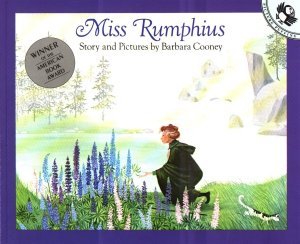
Miss Rumphius by Barbara CooneyWho knew the story of Maine’s lupine flowers?
Gorgeous illustrations to match.
And like all these picture books, it’s a true story.
Other “local” picture books my children loved included Donald Hall’s Oxcart Man, and Virginia Lee Burton’s Mike Mulligan and His Steam Shovel (Who could forget Mary Anne!) along with Katy and the Big Snow.
Colonial and Revolutionary War Era-storiesThe Witch of Blackberry Pond by Elizabeth George Speare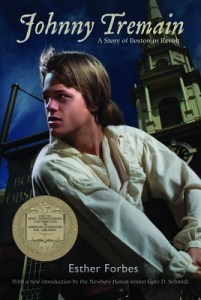
I loved this story set near the Connecticut River in the 17th century. We lived not far in the 20th!
The novel gives a sense of life during that era, through the eyes of an innocent young woman.
At ten years old, my daughter finished this book in one plane ride!
Johnny Tremain by Esther ForbesSet in Paul Revere’s silversmithy, this novel provided a wider understanding of Boston events leading up to the American Revolution.
Reading this book at about the same age as Johnny, made the Revolution more real–even kids were involved.
Other favorites (Photo by Lori Pottinger)
Many friends liked Carry on Mr. Bowditch by Jean Lee Latham.
Lori visited Mr. Bowditch’s grave this month, too!
I loved Elizabeth of the Mayflower–which taught me a lot about that voyage and the Pilgrim’s life. It’s not in print, but I found it years ago in a used bookstore.
Imagine my delight when I learned my friend Beth is a descendent of that very Elizabeth Tilley Howland. (She loved the book, too, when I gave it to her!)
19th Century New England Kid BooksLittle Women by Louisa May AlcottEveryone talks about this quintessential New England kid book–whether they liked it or not.
The perennial argument, of course, remains “Should Jo have married Laurie?”
My friend Rachel Dodge wrote a devotional based on the novel, which is perfect for Christian lovers of the book.
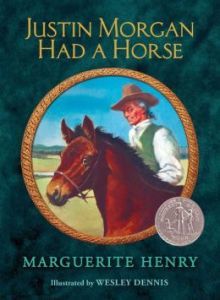
Justin Morgan Had a Horse by Marguerite HenryDid you know anything about the history of the all-American Morgan horse?
They “developed” the breed in Maine.
(Any book by Henry, of course, is excellent. They’re all about horses!)
20th Century New England Kid BooksWell, sort of. Some of these books started in the 20th century, but then moved on . . .
 The Diamond in the Window by Jane Langton
One of my all-around favorite children’s novels, it tells the story of orphans hunting a family mystery in modern-day Concord.
But the mystery takes them back in time to local historical spots where I learned all about Transcendentalism (without knowing it!)
When my husband and I visited Concord several years ago, I knew exactly where I was because I’d read this book. “Let’s go visit Emily Dickinson’s house! She lived just around the corner . . . “
The Time Trilogy books of Madeleine L’Engle.The star-gazing rock from A Wrinkle in Time and the other books in this series stood in L’Engle’s Connecticut backyard.
L’Engle centers most of her stories in her neighborhood, and I loved them all.
Other familiar books include E. B. White’s Charlotte’s Web (Vermont) and Stuart Little (Boston, again), as well as Oliver Buttersworth’s The Enormous Egg and The Trouble with Jenny’s Ear.
And the thing about classic books? They’re always good–and this list will introduce the children in your life to a beautiful, heritage-rich part of the United States.
Note for fall, 2021: Shipping is backed up. Buy now for Christmas! Many of these classic books are available at your local bookstore.
Tweetables
10 wonderful children’s books set in New England. Make way for ducklings and blueberries! Click to Tweet
10+ classic children’s books introducing New England–past and present. Click to Tweet
The post 10 Classic New England Kid Books appeared first on Michelle Ule, Author.
September 21, 2021
Spiritual Mentors–Do You Have Some in Your Life?
One of my spiritual mentors died last month.
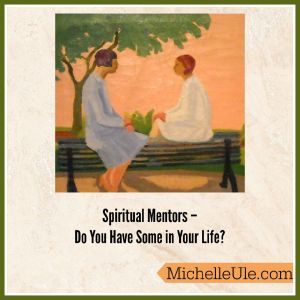
In thinking about Liz’s life, I reflected on how important spiritual mentors are for all of us.
Not just for what they do for us, but also for how their influences pour into us and over into others.
We all need mentors, especially spiritual mentors, for the good of our society.
What is a mentor?Actually, we need all types of mentors to grow into responsible adults.
As children, we need our parents and teachers. They teach us how to do basic things: eat properly, be mannerly, study, make the bed (you do make your bed?), and so forth.
It’s a prescribed role that comes with the job.
Teachers are paid to do it.
Parents–well, we love our children, right?
(And if we honor them, God promises length of days. See Commandment #4:
““Honor your father and your mother, that your days may be long in the land which the Lord your God gives you.”
Exodus 20:12
But, mentors are people we specifically chose.
Or, in my case, fall into a friendship while not paying close attention.
Blogger Nicola Cronin explains it this way:
How does such a relationship develop?
A mentor is a person who can support, advise and guide you. They typically take the time to get to know you and the challenges you’re facing, and then use their understanding and personal experience to help you improve.
This relationship is additional to a manager or boss, and benefits from a more personal and confidential structure. Mentors have the potential to become lifelong friends, or the relationship might only last until you’ve achieved a goal, there’s no one size fits all.
What is a Mentor?
Liz and I did not start out with the intention of her being my spiritual mentor.
I was a young Navy wife (whose husband was always out to sea, of course), with small children, living in a cranky house with a large yard.
 “A treasure” mimosa tree.
 Photo by Emily Bernal (Unsplash)
I knew nothing about either subject–mothering small children or managing a yard.
So, I invited Liz over to walk through the yard and tell me what was growing there.
I took notes while she pointed out pertinent plants: “Those are lilacs, azaleas, oak trees, blueberry bushes, rhubarb.”
I scribbled quickly, describing where they were planted since not everything was blooming yet.
Then she gasped and pointed at what looked like a forest of green trees to me. (I couldn’t tell them apart).
“Look, you have a treasure! A mimosa tree.”
I peered over her shoulder and saw the feathery leaves topped with a pink frill of flowers and hummed, “a mimosa.”
(And ever since, I’ve smiled at those treasures when I see them–including two months ago when I pointed one out to a friend on a walk through Northern California.)
Liz taught me about reflecting on God’s bounty and beauty in both the trees and flowers and the vegetable garden.
I needed her help.
Six years of mentoringDuring my husband’s years on three submarines, I saw Liz and her husband weekly at our Bible study.
She always answered questions quietly and thoughtfully.
I admired how she paused to think, before beginning: “Well, Michelle . . . “
Liz challenged me where my Biblical interpretation didn’t agree with hers.
(Sometimes I “won,” but more often I bowed to her greater expertise).
She generously shared her husband’s expertise when I needed help with my car, house, septic system, well, lantern lighting, and dog training.
Often her mentoring included simply demonstrating things I’d never learned.
Her table always looked beautiful. Flowers appeared almost effortlessly.
Liz opened her house to countless visitors.
She taught Bible studies individually and always was willing to pray.
Mostly, though, she loved this raw-boned California girl often overwhelmed by raising toddlers.
Watching Liz walk through the woods with my boys, asking them questions and pointing out things they overlooked.
I started doing that, too.
What’s a spiritual mentor?The Holy Spirit seemed to infuse many of our interactions.
We talked about the things of God.
She gently nudged me into asking God some of my questions, often reminding me of what the Bible said.
We talked about books we’d read about God. We shared some of our favorite Christian writers–several of whom became my “book spiritual mentors.”(See Elisabeth Elliot, Edith Schaefer, Madeleine L’Engle).
I know she prayed for me–and since I often needed prayer, that was helpful.
During those years we participated in Officer Christian Fellowship Bible studies, Liz served as a spiritual mentor to several of us.
We admired her, yes, and our eyes grew wide when we suspected she wasn’t perfect.
But we loved her just the same.
How do you find one?Ask God to send you a spiritual mentor.
Or, as in my case, join a Bible study and watch for someone you “click” with.
In my case, they all started in friendship–and then blossomed into a deeper connection based around Jesus.
Becoming a spiritual mentorAs I prepared my eulogy for Liz’s memorial service, I realized that her nurturing me served as an example for my later life.
Liz has spiritual granddaughters–and not just through me.
Her coaching, her gentle nudges, her loving smile, and her patience rubbed off on me.
God has sent young women into my life for me to serve as a spiritual mentor, too.
I hadn’t seen that before.
I just saw them, as Liz saw me, as a fellow woman traveler on this road of life.
Our tasks are to help, encourage, pray, and cheer on those whom God puts into our lives.
It’s been an honor and a delight.
But none of the joy of spiritually mentoring in my life would have been possible without Liz’s example.
Not to mention the other women: Jean, Gina, JoAnne, Nora, Sarajane, Debbie, (another) Liz, and Jo.
God blessed me with a perfectly good “natural” mother.
But He also knew I needed more than one spiritual mentor to guide me through life.
And I can hardly wait to see whom He brings next.
Tweetables
What is a spiritual mentor and why do we need one? Click to Tweet
What does a spiritual mentor do? How do you find one? Click to Tweet
The post Spiritual Mentors–Do You Have Some in Your Life? appeared first on Michelle Ule, Author.



![[image error]](http://commons.wikipedia.org/wiki/File:Tissot_The_Gathering_of_the_Manna_%28color%29.jpg)