Jennifer Flanders's Blog, page 10
April 1, 2024
EP 38: Making the Most of Your Child’s Learning Style

Modern lists of learning styles are much lengthier than the one I learned in school. And — after raising 12 children — I can think of a few additional learning styles I’ve never seen on any chart. So in this episode of Loving Life at Home, we’re discussing how to make the most of your child’s learning style and what to do if you can’t figure out which it is.
Show NotesVERSES CITED: Galatians 6:9 – “And let us not grow weary while doing good, for in due season we shall reap if we do not lose heart.”James 1:5 – “But if any of you lacks wisdom, let him ask of God, who gives to all generously and without reproach, and it will be given to him.”Proverbs 22:6 – “Train up a child in the way he should go, And when he is old he will not depart from it.”Deuteronomy 11:18-21 – “Therefore shall ye lay up these my words in your heart and in your soul, and bind them for a sign upon your hand, that they may be as frontlets between your eyes. And ye shall teach them your children, speaking of them when thou sittest in thine house, and when thou walkest by the way, when thou liest down and when thou risest up. And thou shalt write them upon the door posts of thine house, and upon thy gates….”RELATED LINKS:Laying a Foundation for Learning – my best recommendations for early learningKeeping Toddlers Occupied – good activities for distracting your little go-gettersCultivating Creativity in Young Children – fun and easy projects for preschoolersAge Appropriate Chores for Children – chores are a great way to teach life skillsTech-Free Fun for Kids – 10 things your older kids can do while they’re unplugged50 Picture Books Every Child Should Read – just a few of our family’s favorites50 Chapter Books to Read Aloud – wonderful stories to share as a family Your Child’s Learning Styles
Hello, friend. And thank you for joining me for Episode 38 of Loving Life at Home. A couple of weeks ago, I was asked to address a local moms group on the topic of Learning Styles. They figured, with 12 children and 20+grandchildren, I probably have experience dealing with all different kins of learning styles – and they’re right!
So today, I thought I’d share on the podcast some of the things I told that room full of young mothers about children’s various learning styles and how that knowledge should affect the way we parent.
Well, back when I was first starting my family, we only ever talked about three learning styles: visual, auditory, and kinesthetic.
1. Visual LearnersVisual learners retain information most easily when they can see it with their own eyes and study it in detail. So if you have a visual learner, you’ll want to provide plenty of picture books and graphs and maps and other resources they can look at and read and observe visually and pour over to their heart’s content.
As it happens, I’m very visual. If I can study something long enough and closely enough – whether it’s a picture or a math problem or a crocheted doily or a quilt block or a painting style, I can usually recall and recreate it.
That’s why, whenever I’m introduced to new people, I’ve learned to ask them to spell their name for me. If I can picture it in my mind’s eye, I can usually remember it. Whereas, if I only hear their name during a brief introduction, it will likely go in one ear and out the other and I’ll have forgotten it before they even finish their first sentence.
The second classic learning style is…
2. Auditory LearnersUnlike me, auditory learners learn and retain information best when they can hear it. Their ears, not their eyes, are the fastest route to the memory centers in their brains.
So, for auditory learners, you’ll want to provide lots of verbal explanations. Let them listen to audio books, use repetitive poems, songs, and language CDs. Read aloud with them, explaining as you go.
I have several kids who are great auditory learners. I remember one in particular, Benjamin, who as a very young child would play quietly on the floor at my feet while I was reading history and literature books to his older siblings. He’d be involved with his Lincoln logs or duplo blocks and not appear to be paying a lick of attention, but afterwards – even months later – would be able to quote clearly and accurately and often verbatim the facts and dates and concepts we were discussing. He remembered a lot of that information as well or better than I did – and I was the one who read it out loud in the first place!
3. Kinesthetic LearnersKinesthetic learners prefer hands-on activities and lessons that involve movement (clapping, stomping, sign language). So if you want to help a kinesthetic learner excel, give them lots of manipulatives and puzzles and thinking games, give them tools and teach them a variety of handicrafts, take them nature hikes and let them play sports, do science experiments with them, sign them up for gymnastics or wood working or dance or music lessons, go on walks, ride bikes, climb trees, and let them burn off energy running and playing.
These are all good things to do with your children, whether they are kinesthetic learners or not. But the kinesthetic kids will especially benefit from a more hands-on approach.
For years and years, those three classic learning styles were all we talked about. But as I was preparing for my recent talk, I learned that old pie chart has been expanded since the last time I looked at it.
4. Reading & Writing LearnersOne of the charts I found had four categories of learners. The three we’ve already talked about – visual, auditory, and kinesthetic – plus one more, labeled reading/writing. But if you think about it, Reading & Writing are really just sub-categories of visual & kinesthetic.
You read with your eyes. You write with your hands. So they’re kind of just splitting hairs here. They’re separating kids who learn best from looking at pictures and graphs and maps from those who learn by looking at the written word.
5. Aural Learners and 6. Verbal/Linguistic LearnersThen somebody else came up with the bright idea of splitting Auditory learners into similar categories: So now you may see learning charts that differentiate between kids who learn through sounds like music and rhythm and other noises (which they label as Aural Learners) from those who learn by listening to lectures and audio books and verbal explanations (which they label as Verbal or Linguistic Learners).
7. Logical/ Mathematical LearnersAnd, of course, if we’re separating out kids who learn by reading books and kids who learn by hearing words, we have to acknowledge the fact that some children don’t do either of those tasks very well – their brains are more wired for math and logic. So now you’ll see charts on learning styles that also list Logical or Mathematical Learners as one of the options.
8. Social Learners
Then, somebody else noticed some kids learn best in group settings. They want to be around people, they’re extraverts, and so now you will sometimes see a Social Learner segment on the Learning Styles pie chart.
And if we add Social Learning to the chart, we have to acknowledge the fact other kids are introverts and prefer to do their learning alone where they won’t be distracted by what everyone else is doing, so some charts now list Solitary Learners right next to the Social Learners.
10. Natural LearnersI even saw one chart that included Natural Learners. These are the kids who live to be outdoors.
I’ve definitely had a few of those. They are born adventurers. My thirdborn David would definitely fit into that category. “Outside” was one of the first words he learned how to say. By age 2, I had to watch him like a hawk. In the blink of an eye, he could scramble over our fence, dart down the alley, and climb the fence into a neighbor’s yard to pet their dog.
He grew up to be an army dentist, but is still and adventurer who loves being outdoors. When he was stationed in Germany, he climbed the highest peak, went on a 100-mile march, and skied the Alps in every country that mountain range bordered. In Hawaii, he went scuba diving and snorkeling to his heart’s content.
11. Oral LearnersAnd, as long as we’re getting super specific with these learning styles, after raising 12 children, I can suggest even more categories — categories I’ve never seen on any list. The first one would be Oral Learners.
These would be those children who put everything in their mouth. Have you ever seen – or raised – one like that? Our Rebekah definitely fit into this category. She nearly choked to death before she ever learned how to walk because she found a tiny little plastic propeller from one of her siblings’ toy helicopters on the floor and got it lodged in her throat. Her father saw her gasping for breath and turning blue on the floor and – snatched her up and somehow, by God’s grace, managed to dislodge the thing.
When Bekah was a baby, I had to sweep multiple times a day and vacuum under all the sofa cushions and clean out every corner and crevice and keep our kitchen trash behind a locked door, or else she would be swallowing every crust and crumb and disgusting piece of refuse she could get her hands on.
We really had to watch her closely whenever we went out to eat, or she would glean the used chewing gum from underneath the restaurant tables. Rebekah is now a nurse. She seldom ever gets sick and credits her robust immune system to all that early germ exposure!
12. Orderly LearnersAnother learning style is the Orderly Learner. Have you ever seen one of those? They are born organizers. They line up their match box cars. They sort their legos by color and style. They fold and file their T-shirts in tidy rows in their drawers.
That was my Samuel to a T. He squirreled away the outfit he wanted to wear for his birthday eight months in advance. He was very strong in math. He was an early riser and would get up at 5 am to do math drills beside me. By high school, he was doing violin at 5, then calculus.
He’s now an anesthesiologist, where his meticulous attention to detail is put to great use.
13. Competitive LearnersCompetitive Learners turn everything into a contest or game. This would be our son Ben. Lots of fun. He would’ve made a great coach, because he’s so good at motivating people to give 110%.
He loved playing tag and told his siblings if they could catch him, he’d give them candy or do their chores. Great at inventing games and leveling the playing field so all ages can play together. I remember a couple of times in grade school, he came and tried to get me up at 3 or 4 AM to do lessons, so he could finish in time to be on the tennis court at dawn.
Ben is now an ICU Nurse but still loves to play games and make up contests. He works nights, so he can spend the rest of the day playing with his wife & kids.
14. Inquisitive LearnersThese are the kids who are constantly asking Why? Why? Why? Why is grass green? Why do birds fly? Why do stars shine?
My Isaac is an Inquisitive Learner — and he’s still asking lots of questions. Only now he’s in college studying chemical engineering, so his questions are considerably more cerebral.
15. Limit Testing LearnersTesting Limits is also a way of learning. This was our Joseph. He could take anything apart and unlock any door. We put flip locks high on the doors in an effort to keep him inside, but he learned to push a ladder back chair against the door and climb the rungs to reach the lock.
When he was a baby, he slid a penny behind a flat night light, shorted our electrical circuits, tripped the breaker, and left a big black smoke blotch on our wall. All through his childhood, it seemed like angels were constantly tapping me on the shoulder, just in the nick of time to save Joe from utter ruin.
Now (surprise!) he is an electrician, but moonlights as a handiman. He’s very resourceful and can fix anything.
16. Combination LearnersGuess what? Most children are best described as having a Combination of Learning Styles. So even if you’re not sure what your child’s predominant learning style is, you should just do your best to expose your kids to multiple learning styles. And that is okay, since even if they are predominantly one, there will be some things your children won’t necessarily be able to learn in their preferred style. Some things they can’t learn by singing songs or playing games or putting things in their mouths.
At some point, your children will have to learn how to read and write. How to do math. How to listen. How to get along with others.
The nice thing about trying to give your child exposure to multiple learning styles is that doing so comes in handy for teaching multiple children at once. So use as many channels for teaching your children as you can simultaneously.
I do this with the monthly memory challenges I sponsor for my grandchildren. For whatever scripture verses I assign each month, I include printable coloring sheets, craft activities, songs, links to sign language videos for the verses, etc.
Tackling such material from a variety of learning styles helps make it sticky. It’s like throwing spaghetti at the wall and seeing what sticks.
There are several ways I’ve found that help children have an easier time remembering the things I teach them:
Modeling/ Mirroring – live a good example in front of your children; exemplify the traits you want them to developMusic – you can use songs to teach Bible verses, states and capitols, US presidents, parts of speech, and all sorts of other information to your childrenMultiple Channels – again, use a variety of approaches to help cement the information in your children’s brainsMistakes – give your children an opportunity to fail frequently while the stakes are low; they can learn valuable lessons by making mistakesMuscle Movement – let them work with their hands as often as possibleThe post EP 38: Making the Most of Your Child’s Learning Style appeared first on Loving Life at Home.


March 25, 2024
EP 37: Our Favorite Easter Traditions
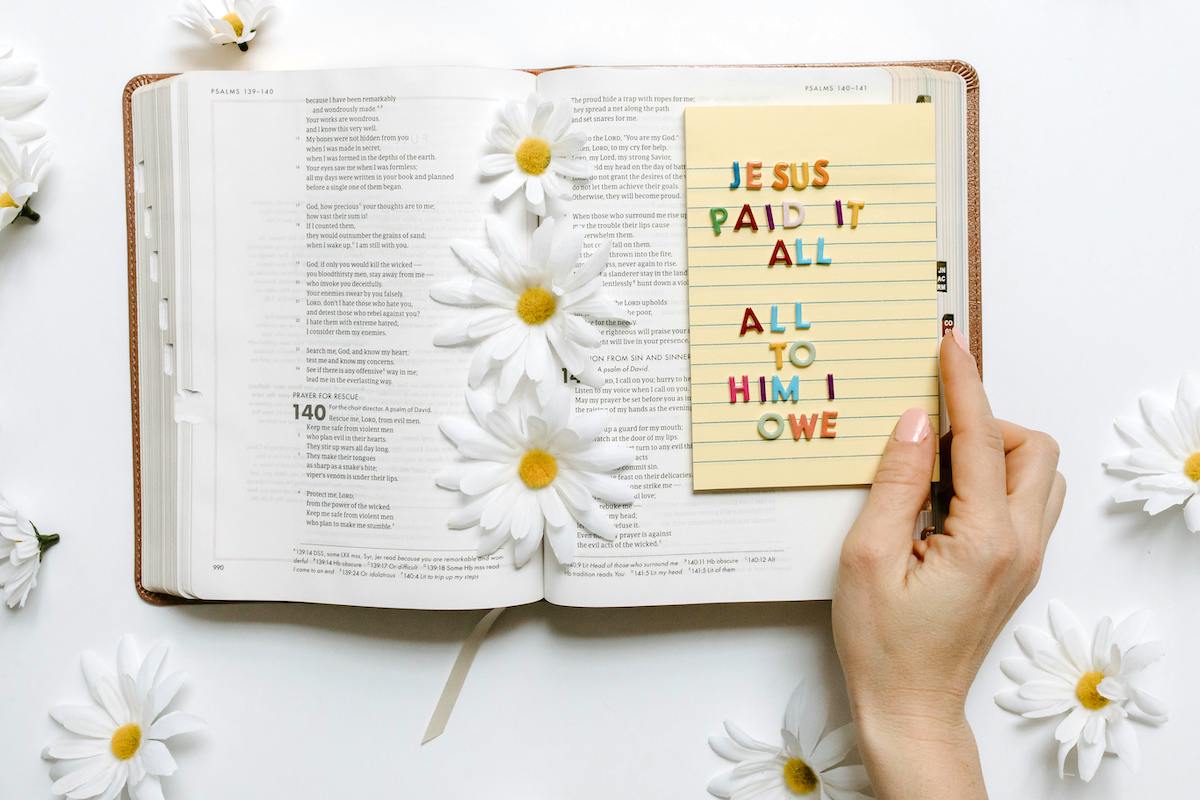 PHOTO SOURCE: Tara Winstead via Pexels
In honor of holy week, I ‘m sharing a few of our family’s favorite Easter traditions today.
Although I love baskets and bunnies and colorful candy as much as anyone, we’ve always tried to place the main emphasis of this season on the sacrificial death and bodily resurrection of Jesus – and on what Christ’s finished work means to those who put their faith in Him.
For specific ways to do this, listen in this week’s episode in full or scroll past the show notes to read the transcript.
Show NotesRELATED LINKS:Scripture Chain for Lent (free printable)The Easter Story by Carol Heyer (children’s picture book)Passion Week Trivia Quiz (free printable)Easter Coloring Pages (and other free resources)Empty Tomb Craft (super easy craft for children)Resurrection Cookies (recipe)Resurrection Rolls (recipe)Jelly Bean Gospel (free printable)More Gospel Tracts for Easter (free printable single-fold tracts)DIY Resurrection Eggs (free printable)Scrambled Egg Puzzles (free printable)Finger Lights (for glow-in-the dark egg hunts)“Let Them Know” (parody of Disney song from Frozen)“All About God’s Grace” (parody of Meaghan Trainor song)“Never Enough” (parody of song from The Greatest Showman)SCRIPTURES CITED:Matthew 27:26 – “… he had Jesus flogged, and handed him over to be crucified.”Matthew 26:12 – “When she poured this perfume on my body, she did it to prepare….”Luke 23:36 – “The soldiers also … mocked him. They offered him wine vinegar…”1 John 4:9 – “God loved us and sent His son.”Matthew 28:6: “He is risen just as he said.” Romans 6:20-23 – “…you were slaves of sin…”Ephesians 2:1 – “You were dead in your trespasses and sins.”Ephesians 4:18-19 – “They are darkened in their understanding and alienated….”Psalms 14:1-3 – “They are corrupt; their acts are vile. There is no one who does good….”Isaiah 59:9-13 – “We hope for light, but there is darkness….” Jeremiah 17:9 – “The heart is more deceitful than all else and desperately wicked….”Mark 7:21-23 – “For from within, out of the heart of men, proceed evil thoughts…”Romans 3:10-18 – “There is no one righteous… no fear of God before their eyes.”Romans 5:8 – “…while we were yet sinners, Christ died for us.”Isaiah 53:5-6 – “But he was wounded for our transgressions, he was bruised….”Romans 6:23 – For the wages of sin is death, but the gift of God is eternal life….”John 3:16-17 – “For God so loved the world, that He gave His only begotten Son….”1 John 1:9-10 – “If we say that we have not sinned, we make him a liar….”Romans 10:9-10 – “if you confess with your mouth Jesus as Lord, and believe….”Ephesians 2:8-10 – “For by grace you have been saved through faith….”STAY CONNECTED:Subscribe: Flanders Family Freebies -(weekly themed link lists of free resources)Instagram: follow @flanders_family for more great contentFamily Blog: Flanders Family Home Life (parenting tips, homeschool help, printables!) Marriage Blog: Loving Life at Home (encouragement in your roles as wife, mother, believer) PHOTO SOURCE: Ylanite Koppens via PexelsOur family’s favorite Easter Traditions1. We read together.
One of our favorite Easter traditions involves reading aloud. First of all, we read scripture. We read the gospel account of Jesus’s death, burial, and resurrection, but we also read Old Testament prophesies — like Isaiah 53 – that were fulfilled in Christ.
Several years ago, at the request of one of my subscribers, I put together a scripture chain that incorporates many of those prophetic passages together with the gospel accounts, which families can read through during the season of Lent.
I suspect the reader who requested that resource was Catholic. I’m not, but I’m certainly in favor of reading and meditating on Scripture all year long, and the weeks leading up to Easter is a perfect time for focusing our thoughts and attention on what Jesus accomplished by giving His life for us.
I’ll put a link in the show notes for that free printable resource. It may be too late to do all 40+ readings for Lent, but I made it in such a way that the first page can stand alone and covers the passion week. So if you’re interested, you could print it out today and read just those last 7 verses during this week leading up to Easter.
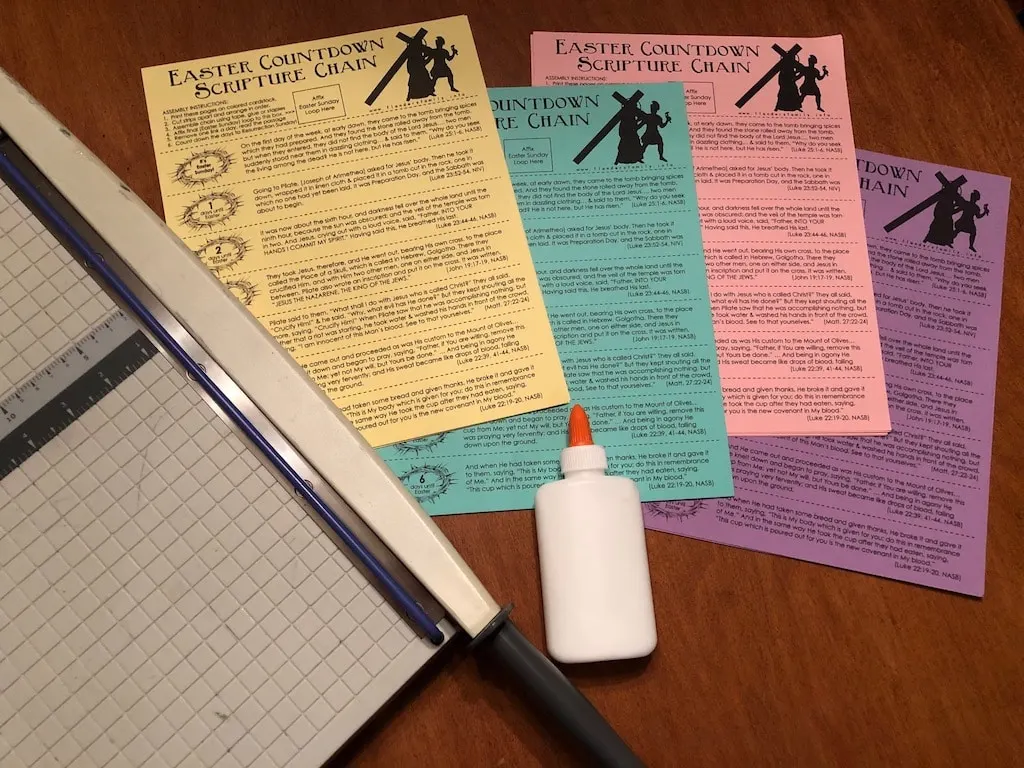
Also, we have several free printable Easter-themed coloring pages and other resources on our family website that feature many of these same Bible verses. I’ll try to remember to link those in the show notes, as well.
In addition to Bible readings for Easter, we own several picture books we’ve traditionally read with our children this time of year. One of my favorites is a book written and illustrated by Carol Heyer called The Easter Story. My copy is about 30 years old, but I’ll look and see if it’s still in print and link it in the show notes if it is.
There are two things I especially love about this book. First, the text is short and simple and does a good job of following the Biblical account of the passion week. And second, I love the illustrations. They are very realistic – not cartoonish – and they are designed in such a way that Jesus’s face is never shown. You see his hands, or his back, or the hem of his garment, but never his face.
2. We bake together.Another thing the children and I traditionally do at Easter time is make resurrection rolls.
For several years, we tried making meringues. I found a recipe on Pinterest that had a scripture verse to read with the addition of each ingredient. For instance, while whipping the egg whites, you read Matthew 27:26 about Jesus being whipped.
While pounding the pecans to bits, you read Isaiah 53:5 about Jesus being crushed for our inequities. When adding vanilla, you let the kids smell how fragrant it is, then read Matthew 26:12 about the woman who anointed Jesus’s feet with perfume before His arrest. And when mixing in the vinegar, read about how the Roman soldiers offered Jesus a drink of wine vinegar while He was hanging on the cross. (Luke 23:36)
You mix all the ingredients together and put them in a warm oven (which is symbolic of the tomb). Then you’re supposed to switch off the heat and seal the oven with masking tape. The next morning, when you take the resurrection cookies out of the oven and bite into them, you’ll discover an empty hole in the center of each meringue.
 PHOTO SOURCE: Mommyhood Essentials (click for recipe)
At least, that’s how it was supposed to work. Ours meringues always looked more like flat pancakes than empty tombs. We failed miserably at this endeavor for several years running before giving up and making resurrection rolls instead.
For those, you just need a bag of large marshmallows and a package of crescent roll dough. The marshmallow symbolizes the body of Jesus. You’re supposed to roll the marshmallows in cinnamon and sugar (to symbolize the spices with which they anointed Christ’s dead body) then wrap them in the crescent roll dough (like wrapping his body in linen cloths for burial).
Then you bake according to package directions. When the rolls are baked and cooled, you’ll find that the marshmallow melted away and the roll is now empty – just like Jesus’s tomb was empty.
3. We hunt eggs together.Yes, our kids hunt Easter eggs, but we put a Biblical spin on that practice, too. One of the ways we do this is by hunting Resurrection eggs. You may have seen these in stores. There are a dozen eggs, eleven of which contain tiny objects somehow connected to Jesus’s death, burial, and resurrection:
A small jar of perfume, symbolic of the one the woman used to anoint his feet. A miniature whip, reminiscent of the cat of nine tails the Roman soldiers used to flog Jesus. A few pieces of silver, a reminder of the price for which Judas betrayed the LORD. A small rock, to signify the huge stone that was placed in front of Christ’s tomb. And, of course, the last egg is empty – just like his grave on Easter morning.You can buy ready-made Resurrection Eggs online or in Christian bookstores, but I made my own miniatures out of clay and other household materials. Also, I expanded the set to include more details so I accommodate more children. After the first few grandchildren were born, I bumped it up to eighteen eggs, then – as even more grandkids joined us – I expanded my set further to 24 eggs. That way every child would be able to hold a numbered egg and crack it open to see what was inside when we got to that point in the story.

If you would like to make your own set of resurrection eggs, we actually offer a set free printables on our website to help you do it. I’ll link that resource in today’s show notes. Just print out the tiny pictures, cut them apart, and put one in every egg (except the last one, which is supposed to remain empty, and your good to go.
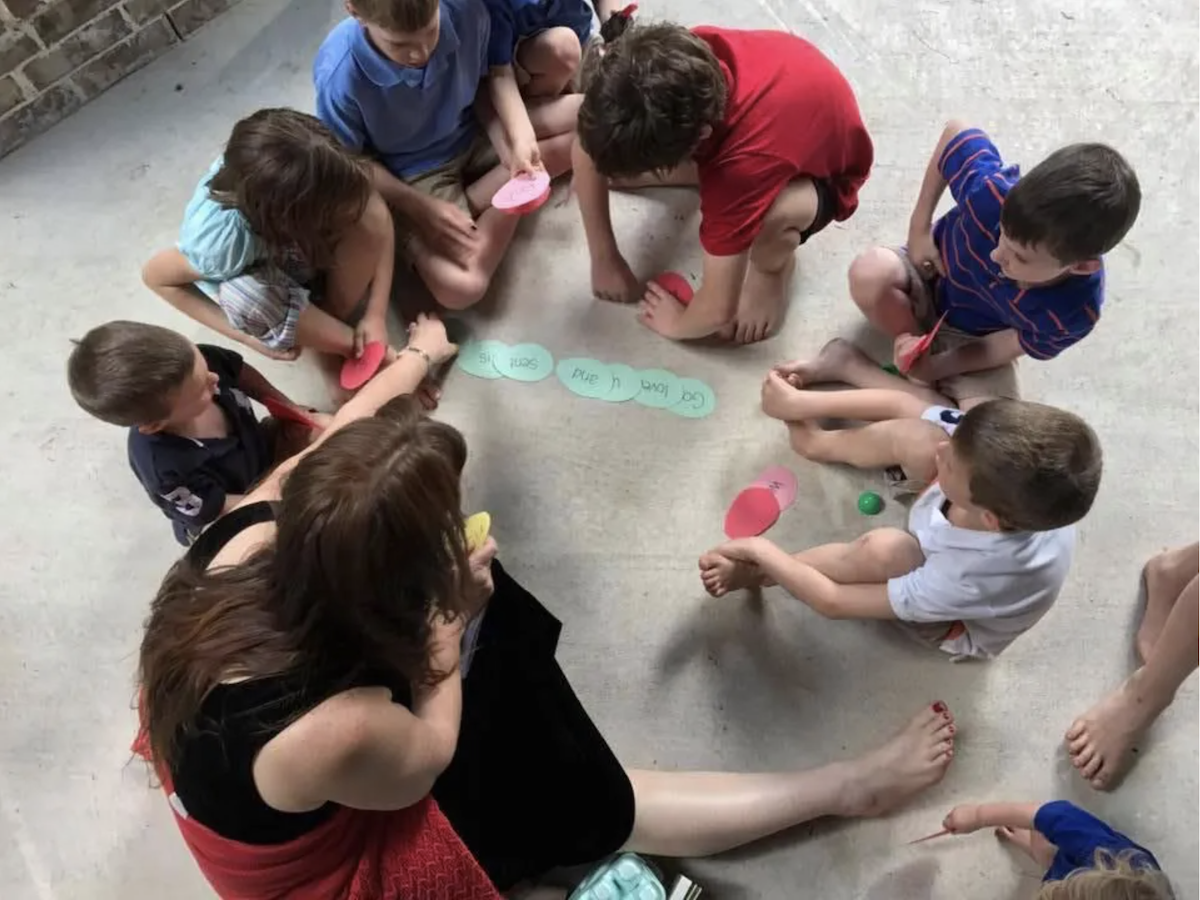
Another thing we’ve done – and another free printable resource I’ll link in the notes – is putting together Scrambled Egg Bible Verses. I cut out a set of egg shaped cards and print one or two words to a particular Bible verse on each card, then hide them. When the kids gather all the little egg shapes, they work together to put them in order of the Bible verse.
We work on several verses simultaneously by printing each verse on a different color of egg—so all the yellow eggs might spell out 1 John 4:9 “God loved us and sent His son” and the green eggs might spell have Matthew 28:6: “He is risen just as he said.” And the pink eggs would have another verse and the blue ones yet another. You get the idea.
Then the last kind of eggs we hunt are glow -in-the-dark eggs. I bought a dozen dozen – isn’t that called a gross? – 144 of those tiny little finger lights several years ago for this purpose. Glow sticks would work, too, but would not be reusable – you’d have to get new glow sticks every year, whereas we’ve used the same finger lights every year for nearly a decade.
Anyway, we turn on each finger light and place it in an egg to be hunted by the children after dark. Then we talk about the fact that Jesus is the light of the world and read several verses related to that. The eggs look so pretty all lit up, and they’re pretty easy to spot after dark, even when they’re hidden in flower pots or under bushes or in the branches of small trees. And once the kids gather all the eggs, they can exchange each finger light inside for a piece of candy of their choice.
In fact, we seldom ever put candy inside the eggs anymore, we just hunt the empty eggs and let the kids select a piece of candy for each egg they find. That way, every one gets the kind of candy they most like and the chocolate doesn’t get all melty in the Texas heat, because down south its already pretty hot in early spring – at least hot enough to melt a chocolate egg or bunny and make it pretty messy to eat without first cooling in off in the freezer.
4. We sing songs together.Another of my favorite Easter traditions is singing the songs of the season. This includes all the beloved Easter hymns I grew up singing: “Lo in the grave he lay, Jesus my Savior. Waiting the coming day, Jesus my Lord. Up from the grave He arose with a mighty triumph o’er his foes. He arose a victor from the dark domain and He lives forever with his saints to reign. He arose! He arose! Halelujah! Christ arose!”
Or how about this one: “Christ the Lord is ris’n today Alleluia! Sons of men and angels say, Alleluia!”
Or maybe you prefer this one: “He lives! He lives! Christ Jesus lives today. He walks with me and talks with me along life’s narrow way. He lives! He lives! Salvation to impart. You ask me how I know He lives. He lives within my heart!”
Although, I would interject, we have far more proof than just the indwelling of Christ’s spirit within us that He conquered death and the grave and was resurrected in the flesh.
Or perhaps you share my father’s favorite: “Because He lives, I can face tomorrow. Because He lives, all fear is gone! Because I know He holds the future, and life is worth the living just because He lives.”
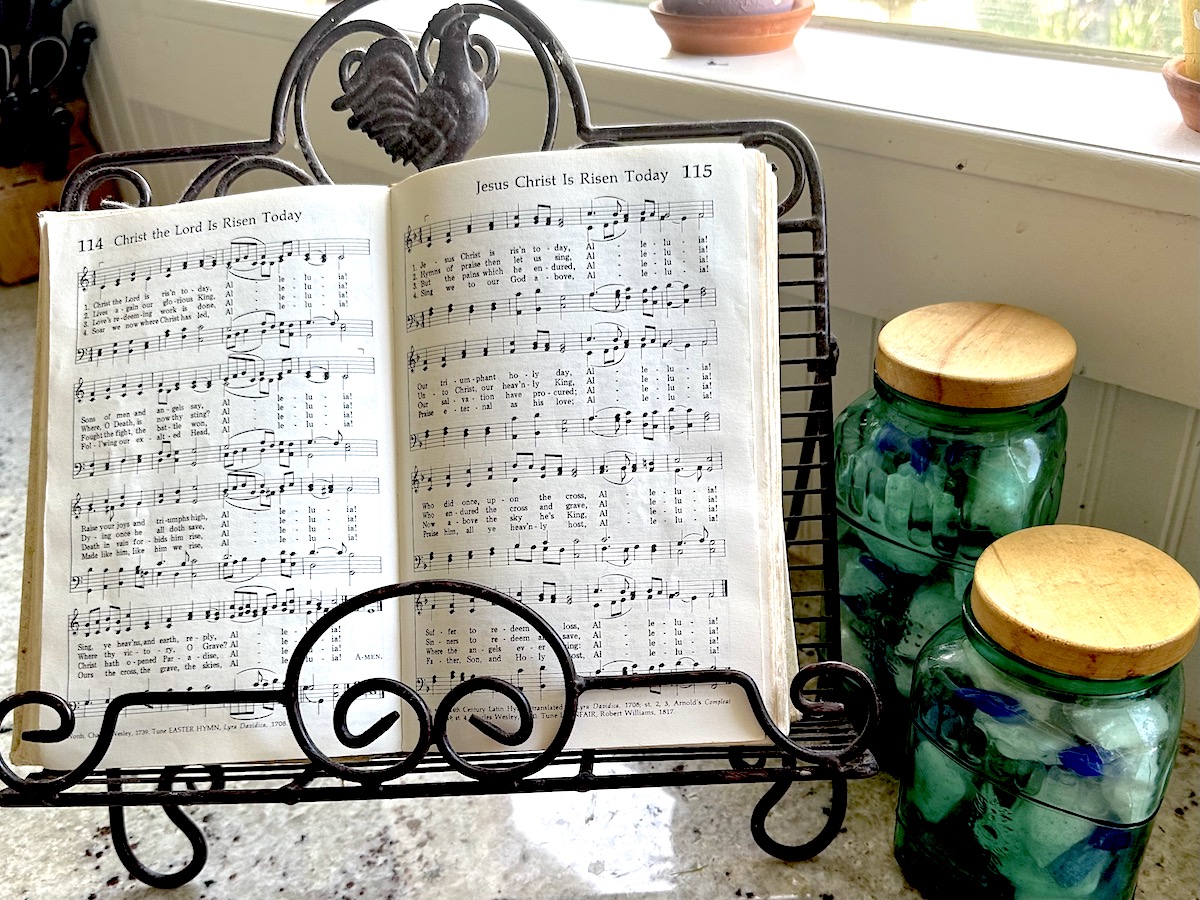
There are some other, lesser-known Easter hymns I enjoy singing, as well. I keep an open hymnal by my kitchen sink. It’s a little yellowed and a little watermarked from so many years of use there, but this time of year, I open it to the Easter section and belt out these beloved praises to my Savior at every opportunity.
Another kind of Easter anthem we’ve enjoyed in years past is our family’s own original music videos. For several years running, the kids and I made a new music video every Easter to post on You Tube as a way of sharing the gospel with those who’ve never heard.
The first one we recorded was entitled “Let Them Know.” That one featured a parody of the immensely popular Disney song “Let It Go” from Frozen, which of course had such a catchy tune, but some truly atrocious lyrics I couldn’t bear to sing around the house – or hear anybody else sing either.
Have you ever listened to the original words? “It’s time to see what I can do, to test the limits and break through. No right, no wrong, no rules for me – I’m free!” Let me tell you, the moral relativism those lines describe is not freedom at all. It’s utter bondage.
The fact is, we are all going to serve something. Romans 6:20-23 tells us we will either be a slave to sin and free in regard to righteousness – where the end of that arrangement is death – or we will be set free from sin, and become slaves of God, produces fruit to holiness, and the end, everlasting life. For the wages of sin is death, but the gift of God is eternal life in Christ Jesus our Lord.”
So I penned new words: “It’s time to see what God can do. In every test he’ll see me through. My debt’s been paid, no guilt for me. I’m free! Let them know. Let them know: Christ alone has the power to save. Let them know. Let them know. He has triumphed over the grave…”
Anyway, you get the idea. You can look it up on YouTube if you want to hear the rest of it or see any of the other Easter music videos we’ve made. I’ll include a link in the show notes to help you find it.
We also made a parody cover of Meaghan Trainor’s “All About that Bass” called “All About God’s Grace.” Again, the tune is so catchy, but the words to the original were not anything I wanted to hear my little girls singing around the house.
And the last one was a parody of “Never Enough” from The Greatest Showman, only my lyrics read “All the strength of a thousand armies, all the pow’rs of evil and darkness, will never be enough to sever Jesus love for me. Never Never. Never enough. Never never. To sever his love, for me, for me, for me! For me.”
I’ll put links in today’s show notes to those songs, too.
5. We go to church together.And the last of our family’s favorite Easter traditions is attending church together (something we do every other Sunday, as well).
In addition to going to regular worship services on Easter Sunday, we’ve occasionally participated in sunrise services held at the crack of dawn.
And we usually also attend a Good Friday service, as well. Both are wonderful ways to focus our hearts and minds on the ultimate sacrifice Jesus made on our behalf, and I highly recommend them.
We usually go to the Good Friday service held at our own local church, although one year we were traveling over Easter weekend, so we attended a huge outdoor worship service on Good Friday where a popular author we liked was scheduled to speak.
His talk, much like his books, was filled to overflowing with heart-warming stories and funny anecdotes. And I’m pretty sure he made reference to at least a couple of Bible verses during his talk.
But do you know what was conspicuously absent from his remarks that day? Any mention whatsoever of sin.
Bear in mind that the whole purpose of a Good Friday service is to remember the fact that Jesus died – and yet this author failed to explain why Jesus’s death was even necessary in the first place.
As I stared out over the immense crowd gathered for the occasion … there had to be at least 13 or 14,000 people in attendance that day… I could only think , “what a missed opportunity!”
 PHOTO SOURCE: Josh Sorenson via Pexels
And I don’t think his neglect to mention sin was a nervous oversight. I believe it was intentional and calculated.
It seems like a lot of believers these days are so afraid of hurting people’s feelings that they are willing to water down the gospel.
SO instead of talking about sin and rebellion and our dark, evil hearts that desperately need the grace of God and a Savior to do for us what we are utterly helpless to do for ourselves, they talk about mistakes and miscalculations. About blunders and brokenness.
They soften the language so it sounds like we merely slipped up every now and again. That we made an error in judgement. That we misunderstood or got confused.
They would never suggest that we willfully rebelled against a righteous God and stubbornly clung to going our own way rather than humbly submit to following Him.
But those euphemisms are not consistent with the picture God paints in his Word of our position apart from grace.

And until we have an accurate view of our own wretched sinfulness, we will never fully appreciate our desperate, desolate need for a Savior.
Ephesians 2:1 – “You were dead in your trespasses and sins.”Romans 3:23 – “All have sinned, and fall short of the glory of God.”Eph 4:18-19 – “They are darkened in their understanding and alienated from the life of God because of the ignorance that is in them due to the hardness of their hearts. Having lost all sense of shame, they have given themselves over to sensuality for the practice of every kind of impurity, with a craving for more.”Psalms 14:1-3 – “They are corrupt; their acts are vile. There is no one who does good. The LORD looks down from heaven upon the sons of men to see if any understand, if any seek God. All have turned away, they have together become corrupt; there is no one who does good, not even one.”Isaiah 59:9-13 – “We hope for light, but there is darkness; for brightness, but we walk in gloom. Like the blind, we feel our way along the wall, groping like those without eyes. We stumble at midday as in the twilight; among the vigorous we are like the dead. We all growl like bears and moan like doves. We hope for justice, but find none, for salvation, but it is far from us. For our transgressions are multiplied before You, and our sins testify against us. Our transgressions are indeed with us, and we know our iniquities: rebelling and denying the LORD, turning away from our God, speaking oppression and revolt, conceiving and uttering lies from the heart.”Jeremiah 17:9 – “The heart is more deceitful than all else And is desperately wicked; Who can understand it?”Mark 7:21-23 – “For from within, out of the heart of men, proceed evil thoughts, adulteries, fornications, murders, thefts, covetousness, wickedness, deceit, lewdness, an evil eye, blasphemy, pride, foolishness. All these evil things come from within and defile a man.”Romans 3:10-18 “There is no one righteous, not even one. There is no one who understands, no one who seeks God. All have turned away, they have together become worthless; there is no one who does good, not even one. Their throats are open graves; their tongues practice deceit. The venom of vipers is on their lips. Their mouths are full of cursing and bitterness. Their feet are swift to shed blood; ruin and misery lie in their wake, and the way of peace they have not known. There is no fear of God before their eyes.”Dead in sin. Blind. Full of darkness and corruption. Foolish. Deceitful. At enmity with God. Vile. Venomous. Worthless. Miserable. Rebellious and Ruined. The Bible says this is man’s natural estate before God.
Which sounds a lot more serious than just being a little mistaken or slightly confused, doesn’t it?
 PHOTO SOURCE: Pixabay
But that is what makes the good news of Jesus substitutionary death so marvelous and miraculous and rich in mercy!
Romans 5:8 – “But God demonstrates His own love toward us, in that while we were yet sinners, Christ died for us.”Isaiah 53:5-6 – “But he was wounded for our transgressions….”Romans 6:23 – “For the wages of sin is death, but the gift of God is eternal…”John 3:16-17 – “For God so loved the world, that He gave His only begotten Son, that whoever believes in Him shall not perish, but have eternal life. For God did not send the Son into the world to condemn the world, but that the world might be saved through Him.”1 John 1:9-10 – “If we confess our sins, he is faithful and just to forgive us our sins, and to cleanse us from all unrighteousness. If we say that we have not sinned, we make him a liar, and his word is not in us.”Romans 10:9-10 – “if you confess with your mouth Jesus as Lord, and believe in your heart that God raised Him from the dead, you will be saved; for with the heart a person believes, resulting in righteousness, and with the mouth he confesses, resulting in salvation.”Ephesians 2:8-10 – “For by grace you have been saved through faith; and that not of yourselves, it is the gift of God; not as a result of works, so that no one may boast. For we are His workmanship, created in Christ Jesus for good works, which God prepared beforehand so that we would walk in them.”And that, friend, is my prayer for you: That, if you’ve never the free gift of salvation Jesus offers that you will do so without delay.
 PHOTO SOURCE: Cottonbro Studio via Pexels
And that if you have, you will join me in marveling over the magnificent love of God who would send His son to die for such a wretch as I! And will proclaim with me the good news that Christ is risen. He is risen, indeed!

The post EP 37: Our Favorite Easter Traditions appeared first on Loving Life at Home.
March 18, 2024
EP 36: The Wrong Way to Propose Marriage

Today’s the anniversary of the day my husband proposed to me, so I’m taking a little walk down memory lane during this week’s podcast. Listen in as we discuss the right — and the wrong — way to propose marriage.
One thing I’ve learned through more than three and a half decades of marriage? Endings are far more important than beginnings. That’s true of our service to God and our service to our family.
Show NotesVERSES CITED:Matthew 21:28-32 – “There was a man who had two sons. He went to the first and said….’RELATED LINKS:Expensive Weddings Linked to Higher Divorce RatesSTAY CONNECTED:Subscribe: Flanders Family Freebies -(weekly themed link lists of free resources)Instagram: @flanders_family for more great contentFlanders Family Home Life (parenting tips, homeschool help, lots of free printables!) Marriage Blog: Loving Life at Home (encouragement in your roles as wife, mother, believer)The Wrong Way to Propose MarriageMy husband and I met in college, 38 years ago next month. He strolled into my life about two weeks before I graduated and swept me completely off my feet. I’ll tell you more about how that happened in April when we celebrate the anniversary of the day we met.
But for now, all you need to know is that God’s timing for our first meeting was impeccable.
That’s because my father had always told me I would NOT be allowed to marry until I’d earned my bachelor’s degree.
Now, I was also bound and determined that Dad’s degree-requirement would not stand in the way once Mr. Right showed up.
So I studied hard. I CLEPped out of lower level classes (including calculus). I took as many as 27 hours a semester — at two separate colleges, since neither would approve that many hours at a time otherwise – in order to finish my bachelor’s ASAP. But I was really hoping to get my M-R-S degree while I was at it.
As a math major, I took some fairly rigorous courses: differential equations, abstract algebra, number theory, Euclidean proofs. Even the electives I chose were challenging: Greek, hermeneutics, pathophysiology, and the like.
I was the only girl in the vast majority of the classes I took, which theoretically should have increased the odds significantly. But despite that fact, finding Mr. Right proved difficult.
The problem was that – on the small Christian campus I attended — my reputation preceded me. Frustratingly few of my classmates seemed keen on dating a nearly-six-foot tall freckled redhead. Especially one whose stated life goal was to have and homeschool a houseful of kids.
Complete DisinterestMost of the guys I knew were completely disinterested in making that dream come true.
Nevertheless, as surprising as it may sound, my wonderful husband was actually not the first man to ask for my hand in marriage. Technically, that distinction goes to another college chum of mine. One I’d known for nearly three years, spent most of my spare time with (before meeting Doug), and loved like a brother.
That friend began his marriage proposal with this showstopper: “Jennifer, I’ve never found you the least bit attractive, but….” He hurried on to explain that he’d lately become convicted I was the kind of girl he ought to marry.
I suppose I should’ve felt flattered. Being “the kind of girl a guy ought to marry” is high praise, indeed.
But I found myself fixating instead on Prince Charming’s introductory remarks. To my sensitive ears, they sounded something like this: Jennifer, I’m repulsed by the very sight of you. But I’m willing to choke down my vomit long enough to exchange vows at the altar.
Can we all agree that hurling that kind of insult at your intended bride is the wrong way to propose marriage?
But the would-be groom wasn’t finished. “So I prayed that God would give me an unquenchable love for you,” my friend continued. “And that’s exactly what He’s done, so… how about getting married?”
“You should’ve prayed God would do the same for me,” I countered, “because the love I feel for you is brotherly, not matrimonial.” (Did you know in Greek there’s a completely different word for each kind of love?)
Irresistible SimplicityMany men pour a lot of thought into how they’ll pop the question to their beloved. Sadly, my candid friend wasn’t one of them.
My husband and I have sat on the sidelines now for five of our own sons’ marriage proposals. Proposals that included such painstakingly planned details as candlelight dinners, secluded picnics, sunset strolls along the shore, blindfolded visits to rose gardens, exploding boxes, treetop kisses, hidden photographers, helicopter rides, and heartfelt declarations of everlasting love.
One of our sons, together with his bride-to-be, came home to an engagement party immediately after she said yes, and it took the happy couple nearly three hours with microphones in hand to walk their party guests step-by-step through all the events leading up to and including the elaborate proposal that had taken place earlier that evening.
My dear Doug’s proposal was not nearly so flashy as all that. In fact, if it weren’t for his grandparents, I may never have gotten a formal proposal from him at all.
We had figured out fairly early in our relationship that we wanted to spend the rest of our lives together, so by the time Doug took me to Corpus Christi to meet his Nanny and Poppie, we’d been making wedding plans for months.
As soon as Doug mentioned to them that we were planning to marry, his tiny little blue-eyed, dark-headed French grandmother reached over and patted me on the knee and chirped enthusiastically, “Well then… we’d better get the rings sized!”
So that very afternoon – the day before Saint Patrick’s Day – she slipped the wedding set off her own finger and dropped it at Taylor Brother’s where it could be expanded to fit mine.
When we returned two days later to pick up this beautiful family heirloom, Nanny was the one who determined Doug needed to make a formal proposal of marriage before slipping that dazzling diamond engagement ring on my finger.

So he bent the knee and asked me proper in his grandparents’ living room that evening. Nanny and Poppie were right there, critiquing and correcting as he went, insisting that he back up and start again at several key points.
Of course, this was long before Pinterest or YouTube or Instagram, so my engagement expectations weren’t unrealistically high to begin with. But my other friend’s bungling attempt lowered the bar in my mind even further as to what constitutes a good proposal.
To me, the most notable difference between the two was the sense of yearning that accompanied the request. If there’s an opposite of choking down vomit, that’s what I saw in Doug’s eyes when he looked at me that evening. What I still see when he looks at me today.
 Unwavering Commitment
Even more importantly, he backed up his yearning with unwavering, whole-hearted commitment.
This commitment, this sense of determination, this willingness to put my needs ahead of his own is driven by yet another kind of love (one with yet another Greek word to identify it).
It’s this kind of steadfast, self-sacrificing love – together with the God who exemplifies and supplies it – that has kept us happily married for over three and a half decades now. It fortifies Doug’s love for me (and mine for him) even when life gets hard or money gets tight or health goes south or schedules get crazy or either/both of us feel momentarily angry or annoyed with the other.
When it comes to elaborate engagements and fairytale weddings, my husband and I discovered early on that endings matter more than beginnings.
How you start your life together isn’t nearly as important as how you finish (although if you want to get off on the right foot, you should probably avoid insulting your beloved while proposing marriage).
In Matthew 21:28-32, Jesus tells the story of a man who had two sons whom he asked to work in his vineyard.
The first son initially refused, but he later thought better of it and went to the vineyard and did the work his father asked him to do.
The second son agreed readily. “Yes, sir, I will!” he replied, but he never followed through.
The question Jesus asked His listeners was this: Which son did the will of His father? We could ask the same thing of married couples:
Lots of couples make grand promises, pledging life and love to one another in elaborate and costly ceremonies on their wedding day. But they don’t always follow through. Later, when the going gets tough, many of them bail.
Others manage to build happy marriages despite less-than-ideal beginnings.
During WWII, lots of couples tied the knot mere hours before the groom was shipped overseas into combat. Brides wore borrowed dresses and carried bouquets of flowers gathered from neighborhood gardens. They had to scrape together sugar and flour rations to bake a small cake for the wedding reception.
But they were committed.
They stuck to their vows and put in the necessary work — the love, sweat, and tears — to build solid marriages that went the distance.
Incidentally, I once read – and I’ll link the study in the show notes — that the more a couple spends on the engagement ring and/or wedding, the more likely their marriage will end in divorce! (https://bestlifeonline.com/expensive-wedding-divorce-news/ ) Isn’t that interesting? And sad?
Of course, that doesn’t mean you’re doomed if you had a big, beautiful wedding. Ours was beautiful and felt plenty big at the time, but it didn’t break the bank.

Rather, we economized everywhere we could: I sewed my own wedding gown and made bouquets and boutonnieres for the entire wedding party. My mom talked church friends into serving spaghetti in the fellowship hall for our rehearsal dinner and created all the gorgeous fruit trays and charcuterie boards herself for our wedding reception. And forty of my friends from the Dallas Symphony Chorus provided live music at the ceremony – for free, since I, too, was a chorus member during that season of my life.
What’s more, we have lots of happily married friends who spent even less on their weddings than we did. Some could only afford a small family ceremony. A couple had shotgun weddings. Others got married in front of a justice of the peace.
Again, how you start out is not nearly as important as how you finish.
If you’re married, you’ve undoubtedly stored up a lot of memories, just like I have. Memories of how you and your husband met. Memories of how he proposed. Memories of your engagement, your wedding day, and your honeymoon.
Hopefully, most of these memories are pleasant ones (and relatively free of insults). But even if they aren’t, you can purpose to change the tone going forward.
Stay committed. Love selflessly. Forgive freely. Do the work your Father asks you to do. And finish strong.
Thanks to God’s enabling grace, it isn’t too late to live happily ever after.
 Bible-Based Marriage Advice
Want more tried and true marriage tips that are Biblically-based and backed by science? Then get a copy of my book Love Your Husband, Love Yourself. Learn how and why embracing God’s purpose for passion in marriage is essential to a strong, vibrant life together.
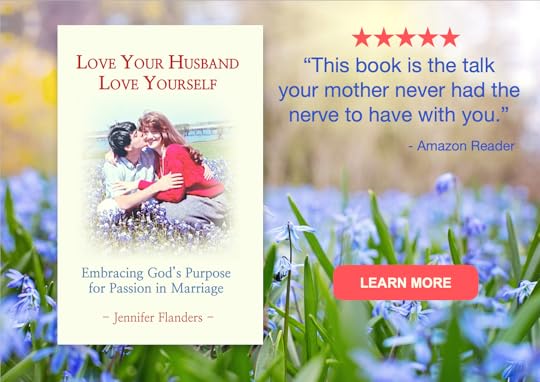
The post EP 36: The Wrong Way to Propose Marriage appeared first on Loving Life at Home.
March 11, 2024
EP 35: How to Disagree Respectfully

I worked a 14-hour shift at the polls last week for Super Tuesday. And every passing week takes us deeper into an election season that is looking more and more like a repeat of 2020. Which makes me think now would be a great time to review an important concept that seems to have been lost in our current cultural climate:
And that is the ability to discuss differing opinions in a civil manner. We’ve forgotten how to respectfully disagree.
This skill is of vital importance, not only in discussing politics, but in dealing with anybody who believes differently than you do: friends, relatives, neighbors, co-workers. Chances are, you have SOMEBODY in your life with whom you don’t see eye-to-eye 100% of the time.
So, how should we respond when those differences threaten to divide us? To isolate and alienate us? That’s the topic of discussion for this week’s episode of Loving Life at Home. The material is taken from a blog post in 2020. I called it 25 Ways to Disagree with Dignity, and you can read it in its entirety below today’s show notes.
Show NotesVERSES CITED:James 1:5 – “If any of you lacks wisdom, let him ask God, who gives generously to all…”Ephesians 4:32 – “Be kind and compassionate to one another, forgiving each other….”Gal. 5:15 – “If you bite and devour each other, watch out or you will be destroyed ….”Romans 14:5 – “One person considers one day more sacred than another….”James 1:19 – “Let everyone be quick to listen, slow to speak and slow to become angry.”Prov. 19:11 – “A man’s insight gives him patience; his virtue is to overlook an offense.”Matthew 12:36 – “…everyone will have to give account on the day of judgment….”Proverbs 13:3 – “Those who guard their lips preserve their lives….”Colossians 3:12 – “Clothe yourselves with compassion, kindness, humility, gentleness.”Ephesians 4:26-27 – “Be angry, and yet do not sin; do not let the sun go down on….”Proverbs 29:11 – “A fool gives full vent to his rage, but a wise person holds it in check.”Proverbs 14:29 – “Whoever is patient has great understanding….”Romans 3:23 – “For all have sinned and fall short of the glory of God.” Romans 3:10 – “As it is written: “There is no one righteous, not even one….”1 Peter 3:10 – “For whoever would love life and see good days must keep his tongue….”Romans 12:3 – “Do not think of yourself more highly than you ought….”James 4:6 – “God resists the proud, but gives grace to the humble.”Philippians 2:3 – “Do nothing from selfishness or empty conceit, but with humility….”1 Corinthians 13:1 – “If I speak in the tongues of men or angels, but do not have love….”Ephesians 4:15 – “Instead, we will speak the truth in love, growing in every way….”1 John 1:9 – “If we confess our sins, he is faithful and just to forgive us our sins…..” Isaiah 1:18 – “Come, let us reason together.” Proverbs 3:21 – “Do not let wisdom and understanding out of your sight….”Proverbs 16:4 – “The LORD has made everything for its purpose….”Hosea 14:9 – “Let those who are wise understand these things….”Matthew 7:12 – “So in everything, do to others what you would have them do to you….”Deuteronomy 12:32 – “So be careful to obey all the commands I give you….”James 5:12 – “But above all, my brethren, do not swear, either by heaven or by earth….”Proverbs 10:19 – “When there are many words, transgression is unavoidable….”1 Peter 2:1 – “So put away all malice and deceit and hypocrisy and envy and slander.”1 Timothy 4:12 – “Be an example to all believers in what you say, in the way you live….”Daniel 4:17 – “The decision is announced by messengers, the holy ones declare….”Proverbs 21:1 – “The king’s heart is like channels of water in the hand of the LORD….”Romans 8:28 – “God works all things together for good to those who love Him….” Genesis 50:20 – “…what you intended against me for evil, God intended for good….”1 Cor. 10:31 – “whether you eat or drink or whatever you do, do it all for the glory of God.”Ephesians 6:12 – “For our struggle is not against flesh and blood….”1 Peter 5:8 – “Be alert and of sober mind. Your enemy the devil prowls around….”Ephesians 6:13-18 – “Therefore take up the full armor of God, so that….”RELATED LINKS:EP 34: #1 Rule for Building a Happy Marriage – more on living by the Golden Rule9 Ways to Diffuse a Disagreement – how to calm strong emotions in yourself & othersHow to Stop Arguing with Your Spouse – advice for cultivating a peaceful homePraying for My Enemies – a free printable prayer guide to help in this area 25 Ways to Disagree with Dignity
May I just state what should be obvious? Treating someone with dignity and respect does not necessitate agreeing with everything that person thinks. Loving somebody does not mean endorsing everything he does. Leave room for differences by learning how to respectfully disagree.
We can speak civilly to each other, even when we don’t see eye-to-eye. We can treat one another with courtesy and kindness, even when we’re on opposite sides of an issue. Anybody who has ever been married or parented a child or canvassed a neighborhood for a political candidate has had to confront this universal truth.
There was a time in this country when two people with opposing viewpoints could discuss their differences rationally and respectfully. But that kind of exchange is becoming rarer and rarer these days. Instead, we act as if it’s impossible to coexist. How did the cancel culture gain such a foothold? When did bullying, brow-beating, and blocking out anyone with an opposing viewpoint become the norm?
I have lots of like-minded friends and family members. That’s a blessing I don’t take for granted! But I also have lovely friends whose moral, political, and social beliefs and practices differ dramatically from my own. And do you know what? I’m profoundly grateful for those precious people, too, and for the friendships we’ve forged.
Sadly, one such friend informed me recently that, if I chose to vote Republican in this election, she would consider me her enemy and unilaterally end our friendship.
I tried to respectfully explain my reasons for supporting the candidate she detests. (Say whatever you will against our president, he has proven himself a friend to the unborn). And I noted that, if she were going to be a “single issue friend,” she shouldn’t fault me for being a “single issue voter.”

To her credit, my friend eventually reconsidered and buried the hatchet. We’ll see whether she digs it up again if this election does not go her way. I suspect she will hold me personally responsible should Trump win a second term.
In the meantime, as long as she’s still willing to communicate, I will keep listening to her objections, weighing their merit, and replying with as much grace and dignity as I can muster. And when I must differ with her, as inevitably will happen, I’ll continue to abide by the following rules of engagement, so as to do it as respectfully as possible.
25 Ways to Disagree with DignityApproach every conflict prayerfully.Our gracious God is able to bridge the most expansive divides, so enlist His help in dealing with people who don’t share your beliefs. Pray for wisdom, discernment, and understanding.
“If any of you lacks wisdom, you should ask God, who gives generously to all without finding fault, and it will be given to you.” (James 1:5)
View others with compassion.Try to see things from their perspective. What do they value? What makes them tick? Consider their background and presuppositions. What life experiences have led them to the conclusions they’ve drawn?
“Be kind and compassionate to one another, forgiving each other, just as in Christ God forgave you.” (Ephesians 4:32)
Separate what they think from who they are.Dismantle dangerous ideas without tearing down the people who hold them. Expose lies and corruption without labeling your opponent a corrupt liar. Hate the sin, but love the sinner. Assault your opponent’s faulty thinking, not his character.
“If you bite and devour each other, watch out or you will be destroyed by each other.” (Galatians 5:15)
Assume others have what they consider good reasons for their beliefs.Those reasons may not make sense to you. But, at some level, their reasons make sense to them. Don’t assume they believe as they do simply because they haven’t given a matter sufficient consideration. They may’ve thought through things just as deeply as you have, but arrived at a different conclusion.
“One person considers one day more sacred than another; another considers every day alike. Each of them should be fully convinced in their own mind.” (Romans 14:5)
Be quick to listen.Active listening is a lost art. Don’t be so eager to give others a piece of your mind that you fail to hear what the opposition is saying. Instead of using the time they spend talking to mentally rehearse how you’ll respond, try attending to their words and asking questions to make sure you are hearing them correctly. Rightly understanding those who oppose you is foundational to disagreeing with dignity.
“My dear brothers and sisters, take note of this: Everyone should be quick to listen, slow to speak and slow to become angry.” (James 1:19)
 Try not to take offense.
Some people are rude. Some use words as weapons, intentionally trying to do harm. You have no control over whether a person with whom you are conversing says something insulting. But you do get to choose how you respond. Do you take offense? Respond in kind? Or let it slide, like water off a duck’s back?
“A man’s insight gives him patience, and his virtue is to overlook an offense.” (Proverbs 19:11)
Place a guard on your lips.Measure your words. Don’t run at the mouth or say something you’ll likely regret. Remember that you must one day give account for every idle word. (Matthew 12:36) So control your tongue. Speak calmly. Don’t resort to cursing or calling names.
“Those who guard their lips preserve their lives, but those who speak rashly will come to ruin.” (Proverbs 13:3)
Extend common courtesy.Courtesy never goes out of style. Good manners are always welcome. Treat others with civility and respect.
“Therefore, as God’s chosen people, holy and dearly loved, clothe yourselves with compassion, kindness, humility, gentleness and patience.” (Colossians 3:12)
Don’t give full vent to your anger.Don’t lose your head — or your temper. Learn to reign it in, instead. To “be angry, yet sin not.” (Ephesians 4:26-27) To control yourself. And to hold your tongue.
“A fool gives full vent to his rage, but a wise person holds it in check.” (Proverbs 29:11)
Balance righteous indignation with patience.Yes, some of the issues that divide us are matters of life and death. They represent treasured liberties vs. trampled rights, free speech vs. suppressive censorship, law and order vs. anarchy. While it is only right that we would feel passionate about such things, we must be patient with those who think differently. Stand firm, yes. Speak boldly for what we believe in, certainly. But resist the urge to treat those who disagree with us as idiots and imbeciles.
“Whoever is patient has great understanding, but one who is quick-tempered displays folly.” (Proverbs 14:29)
 Avoid generalizations.
Some generalizations are true: “All have sinned and fall short of the glory of God.” (Romans3:23) “None is righteous, no, not one.” (Romans 3:10) But those statements were inspired by an omniscient God. Mere mortals should avoid using phrases like “you always” or “they never.” Such generalizations are generally untrue and serve only to weaken your argument and inflame your opponent.
“For whoever would love life and see good days must keep his tongue from evil and his lips from deceitful speech.” (1 Peter 3:10)
Hold your opinions in humility.Don’t think more highly of yourself than you ought. (Romans 12:3) “God resists the proud, but gives grace to the humble” (James 4:6), so put away all arrogance and self-conceit.
“Do nothing from selfishness or empty conceit, but with humility of mind regard one another as more important than yourselves.” (Philippians 2:3)
Speak the truth in love.Be precise in your words. Season them with grace. Always and only speak the truth in love. Both are vitally needed. Compromise the truth to appear more loving, and you rob the gospel of its transformative power. But hammer home the truth without wrapping it in love, and you become as harsh and irritating as a noisy gong or a clanging symbol. (1 Corinthians 13:1)
“Instead, we will speak the truth in love, growing in every way more and more like Christ, who is the head of his body, the church.” (Ephesians 4:15)
Admit when you’re wrong.If you misunderstand, misspeak, or make a mistake of any kind, own up to it immediately. If you’ve been rude or prideful or misrepresented your opponent in any way, don’t double down on that bad behavior. Instead, apologize, seek forgiveness, and purpose to do better going forward.
“If we confess our sins, he is faithful and just and will forgive us our sins and purify us from all unrighteousness.” (1 John 1:9)
Use sound reasonA logical argument may not win your opponent, but that’s no cause to abandon clear thinking. The Lord says, “Come, let us reason together.” (Isaiah 1:18). Shouldn’t we use the same approach?
“Do not let wisdom and understanding out of your sight, preserve sound judgment and discretion.” (Proverbs 3:21)
 Value opponents as image bearers of God.
The Bible teaches that God created mankind in His own image. Yes, we are fallen, sinful creatures. But He created each of us for a purpose, and we would do well to remember that fact and treat one another accordingly.
“The LORD has made everything for its purpose, even the wicked for the day of trouble.” (Proverbs 16:4)
Differentiate between moral issues and matters of preference.Another way to disagree with dignity? By realizing everybody is entitled to his own opinion. So stand boldly on issues where the Bible speaks clearly, but give grace where God’s Word is silent.
“Let those who are wise understand these things. Let those with discernment listen carefully. The paths of the LORD are true and right, and righteous people live by walking in them. But in those paths sinners stumble and fall.” (Hosea 14:9)
Treat others as you wish to be treated.The golden rule is as golden today as ever, though perhaps not as popular or as universally applied. Still, “How would I feel if the tables were turned?” is a telling question. Don’t want people to yell at you, slander you, condescend to you, or spew venom at you? Then don’t do those things to them.
“So in everything, do to others what you would have them do to you, for this sums up the Law and the Prophets.” (Matthew 7:12)
Stick to the facts.Don’t go beyond what you know. Separate what you can substantiate from what you merely suspect. You may be correct in your assumptions, but you should not treat them as a proven reality until they are. Don’t spread rumors or slander your opponent with innuendos. Don’t be blinded by bias.
“So be careful to obey all the commands I give you. You must not add anything to them or subtract anything from them.” (Deuteronomy 12:32)
Economize your words.Be concise. Don’t drone on and on or lecture your opponent. Don’t beat your point into the ground and break it off, as my parents used to say. Get to the point.
“But above all, my brethren, do not swear, either by heaven or by earth or with any other oath; but your yes is to be yes, and your no, no, so that you may not fall under judgment.” (James 5:12)
 Walk with integrity through every conflict.
Keep your heart and mind pure. Be upright in all your dealings. Rid yourself of all malice and deceit. (1 Peter 2:1) Guard against hypocrisy.
“Be an example to all believers in what you say, in the way you live, in your love, your faith, and your purity.” (1 Timothy 4:12)
Recognize God’s sovereignty over the affairs of men.No matter what happens in this dark and fallen world, God is still upon His throne. No matter who occupies the Oval Office. Regardless which party controls Congress. No matter which justices sit on the bench, our God reigns. He raises up rulers. He establishes kings. Nobody rises to a position of authority apart from His allowing it.
“The decision is announced by messengers, the holy ones declare the verdict, so that the living may know that the Most High is sovereign over all kingdoms on earth and gives them to anyone he wishes and sets over them the lowliest of people.” (Daniel 4:17)
Be mindful of His ability to use even bad things for good ends.The Bible assures us that “God works all things together for good to those who love Him and are called according to His purpose.” (Romans 8:28) Nothing that we suffer takes Him by surprise. Men may persecute, slander, and do us all manner of wrong. But none of that is beyond God’s ability to utilize for our growth and His glory.
“As for you, what you intended against me for evil, God intended for good, in order to accomplish a day like this—to preserve the lives of many people.” (Genesis 50:20)
Do all things for His glory.Sure, it’s nice to win an argument, but our chief aim should not be convincing others of our rightness and their wrongness. Rather, our highest goal should be glorifying God in the process. Our words are important, but the manner in which we say them matters, as well.
“So whether you eat or drink or whatever you do, do it all for the glory of God.” (1 Corinthians 10:31)
Remember who your real enemy is.The Bible tells us our struggle is not against flesh and blood, but against spiritual forces of evil and powers of darkness. (Ephesians 6:12) In other words, you DO have an enemy. But the argumentative coworker who seems constantly at odds with you? That’s not him.
“Be alert and of sober mind. Your enemy the devil prowls around like a roaring lion looking for someone to devour.” (1 Peter 5:8)

That’s it for my 25 Ways to Disagree with Dignity. Can you think of any tips you’d add? If so, sound off in the comment section below.
Keep ReadingTo read more posts in this series, check out the following links:
25 Ways to Communicate Respect for Your Husband. Build up your marriage by building up your man.25 Ways to Express Love to Your Wife. Don’t just say the words. Show her by what you do.25 Ways to Raise Confident, Capable Children. These principles will help prepare your children for success.25 Ways to Encourage Literacy. Ditch the video games and raise a new generation of readers.Or, better yet, order one of our books!

The post EP 35: How to Disagree Respectfully appeared first on Loving Life at Home.
March 4, 2024
EP 34: The #1 Rule for Building a Happy Marriage

In Episode 34 of The Loving Life at Home Podcast, we’re discussing the #1 Rule for building a happy marriage. Can you guess what it is? Listen in to find out!
Or scroll down. The material for this week’s show comes from a post I wrote over 10 years ago, which you can read in its entirety below today’s show notes. Enjoy!
Show NotesVERSES CITED:Luke 6:31 – “Do unto others as you would have them do unto you.”Mark 12:31 – “Love your neighbor as you love yourself.”Philippians 2:3-4 – “…regard one another as more important than yourselves…”Matthew 12:36 – “…everyone will have to give account on the day of judgment ….”Romans 14:12 – “So then, each of us will give an account of ourselves to God.”Ephesians 4:2 – “… be patient, bearing with one another in love.” 1 Peter 2:17 – “Show proper respect to everyone….” Ephesians 5:33 – “… and the wife must respect her husband.”Ephesians 4:32 –“Be kind to one another, tender-hearted, forgiving each other…”1 Thessalonians 5:18 – “In everything give thanks….”Proverbs 15:1 – “A gentle answer turns away wrath…. “Philippians 2:3-4 – “Do nothing from selfishness or empty conceit…”Song of Solomon 1:16 – How handsome you are, my beloved! Oh, how charming.”RELATED LINKS:The #1 Rule for Building a Happy MarriageEnough with the Excuses25 Ways to Communicate Respect Love Your Husband/ Love YourselfSTAY CONNECTED:Subscribe: Flanders Family Freebies -(weekly themed link lists of free resources)Instagram: follow @flanders_family for more great contentFamily Blog: Flanders Family Home Life (parenting tips, homeschool help, lots of free printables!) Marriage Blog: Loving Life at Home (encouragement in your roles as wife, mother, believer)The #1 Rule for Building a Happy MarriageYou don’t have to dig very deep to discover the #1 rule for building a happy marriage. Jesus spelled out our standard in the Sermon on the Mount: “Do unto others as you would have them do unto you.” (Luke 6:31)
Confucius taught a similar principle: “Never impose on others what you would not choose for yourself.”
As did Buddha: “What is hateful to you, don’t do to others; what is delightful to you, do for others, too.”
And Muhammad: “Seek for mankind that of which you are desirous for yourself.”
In fact, every major religion promotes some version of The Golden Rule.
In marriage it boils down to this:
“Treat your spouse the way you wish to be treated.”That’s it. The #1 rule for building a happy marriage. It doesn’t get simpler than that. To build a marriage that will go the distance, you just need to treat your spouse…
with patienceWould you like for your husband to be patient and understanding? Then extend an extra measure of patience and understanding towards him.
“Be completely humble and gentle; be patient, bearing with one another in love.” (Ephesians 4:2)
with respectDo you want him to honor you as a respected colleague? Then be faithful and deliberate in the way you communicate respect to him.
“Show proper respect to everyone, love the family of believers, fear God, honor the emperor.” (1 Peter 2:17)
with mercyDo you hope he’ll be quick to forgive and forget when you’ve done something to offend him? Then don’t harbor grudges against him. Give no place to bitterness or resentment in your heart.
“Be kind to one another, tender-hearted, forgiving each other, just as God in Christ also has forgiven you.” (Ephesians 4:32)
with gratitudeWould you like for him to show appreciation for the many things you do to make his life more pleasant? Then always make a point to say thank you to him. Cultivate an attitude of gratitude, and don’t take your man for granted.
“In everything give thanks; for this is God’s will for you in Christ Jesus.” (1 Thessalonians 5:18)
with sweetnessDo you prefer kind, encouraging words over angry tirades? Then remain positive and upbeat yourself and resist the urge to nag or quarrel.
“A gentle answer turns away wrath, but a harsh word stirs up anger.” (Proverbs 15:1)
with considerationDo you want him to prioritize things that are important to you? Then don’t make excuses to avoid what’s important to him.
“Do nothing from selfishness or empty conceit, but with humility of mind regard one another as more important than yourselves. Do not merely look out for your own personal interests, but also for the interests of others.” (Philippians 2:3-4)
with admirationWould you like for him to take notice of you and compliment your appearance? Then show him the same courtesy. Admire him and praise his manliness. Your husband wants to know that you still find him attractive.
“How handsome you are, my beloved! Oh, how charming! And our bed is verdant.” (Song of Solomon 1:16)
So that’s the key. Treat your spouse as you wish to be treated if you want a built-to-last, happily-ever-after sort of marriage.
The Golden Rule is a great principle to live by. How will you put it into practice, starting today?The Word of God is full of wisdom for every facet of life, but we’ve found it especially helpful in building a happy, healthy marriage. For a fascinating look at how science has confirmed the superiority of God’s design, check out my book Love Your Husband/Love Yourself.

The post EP 34: The #1 Rule for Building a Happy Marriage appeared first on Loving Life at Home.
February 27, 2024
EP 33: Run with Endurance

The Bible has a lot to say about running with endurance, and the half-marathon I completed over the weekend really helped drive those truths home. I’m sharing those lessons (which you can read in the transcript below the show notes) in this week’s episode of Loving Life at Home.
Show NotesVERSES CITED:“Do you not know that in a race all the runners run, but only one receives the prize? Run in such a way as to take the prize. Everyone who competes in the games trains with strict discipline. They do it for a crown that is perishable, but we do it for a crown that is imperishable. Therefore I do not run aimlessly; I do not fight like I am beating the air. No, I discipline my body and make it my slave, so that after I have preached to others, I myself will not be disqualified.” (1 Corinthians 9:24-27)“The first shall be last and the last shall be first.” (Matthew 20:16)“Therefore we also, since we are surrounded by so great a cloud of witnesses, let us lay aside every weight, and the sin which so easily ensnares us, and let us run with endurance the race that is set before us, fixing our eyes on Jesus, the author and finisher of our faith.” (Hebrews 12:1-2)“Let us hold fast the confession of our hope without wavering, for He who promised is faithful; and let us consider how to stimulate one another to love and good deeds, not forsaking our own assembling together, as is the habit of some, but encouraging one another; and all the more as you see the day drawing near.” (Hebrews 10:23-25)“Two are better than one because they have a good return for their labor. For if either of them falls, the one will lift up his companion. But woe to the one who falls when there is not another to lift him up.” (Ecclesiastes 4:9-10)“But you, O man of God, flee from these things and pursue righteousness, godliness, faith, love, perseverance, and gentleness. Fight the good fight of the faith. Take hold of the eternal life to which you were called when you made the good confession before many witnesses.” (1Timothy 6:12)“But the fruit of the Spirit is love, joy, peace, patience, kindness, goodness, faithfulness, gentleness, and self-control.” (Galatians 5:22-23)“If we live by the Spirit, let us keep in step with the spirit.” (Galatians 5:25)“Not that I have already obtained it or have already become perfect, but I press on so that I may lay hold of that for which also I was laid hold of by Christ Jesus. Brethren, I do not regard myself as having laid hold of it yet; but one thing I do: forgetting what lies behind and reaching forward to what lies ahead, I press on toward the goal for the prize of the upward call of God in Christ Jesus.” (Philippians 3:12-14)“Well done, my good and faithful servant… enter into the joy of thy master.” (Matthew 25:21)“I have fought the good fight, I have finished the course, I have kept the faith; in the future there is laid up for me the crown of righteousness, which the Lord, the righteous Judge, will award to me on that day; and not only to me, but also to all who have loved His appearing.” (2Timothy 4:7-8)Related Links:Cowtown Half Marathon Photos – mother/daughter pics at all 13 mile markers“May All Who Come Behind Us Find Us Faithful” – touching song by Steve Green“Do the Next Thing” – poem written by Mrs. George A. Paull and quoted in a book by Eleanor Amerman Sutphen called Ye Nexte Thynge STAY CONNECTED:Subscribe: Flanders Family Freebies -(weekly themed link lists of free resources)Instagram: follow @flanders_family for more great contentFamily Blog: Flanders Family Home Life (parenting tips, homeschool help, lots of free printables!) Marriage Blog: Loving Life at Home (encouragement in your roles as wife, mother, believer) Running with Endurance
Our family spent last week in San Antonio visiting our fourth-born who lives there with his family, then we swung through Fort Worth on our way back home to celebrate the birthday of our third-born and visit his family.
And while we were in Fort Worth, we ran – no, ran is too generous a word – we participated in the Cowtown Half-Marathon with our second-born who’d asked us months ago if we wanted to train for that race and do it with her.
So three of us did – her father and I and our youngest son, Gabriel.

Anyway, long story short, we didn’t get home until late last night, and were so sore and stiff and tired from the run, we went straight to bed, and I’m only now sitting down to record this week’s podcast.
So since that race is still on my mind, that’s what we’re going to talk about today. Because 13.1 miles of slow plodding gave me a lot of time to think and learn and reflect. And I want to share some of those thoughts and lessons with you.
Paul used running analogies a lot. In 1 Corinthians 9:24 he writes:
“Do you not know that in a race all the runners run, but only one receives the prize? Run in such a way as to take the prize.”Just to be clear, none of us were running in a way that would take home any prizes, although the stats told Doug he finished first in his age group. Which sounded pretty impressive until we realized I’d made a typo on his registration when entering his birthday, and they thought he was 94 years old. Oops!
Needless to say, he didn’t come in first. But neither did he come in last.
It was Bethany and I who brought up the rear. Only one little old man finished behind us. We passed by him around Mile 10 as he was resting at the side of the road. He looked about like we felt: plum tuckered out.

I’m sure he he’d fallen so far behind he was contemplating giving up, but when he caught sight of us still shuffling along, and so slowly, it gave him a second wind. So he struggled to his feet, fell into step behind us, and had no problem keeping our pace through the rest of the course. We didn’t lose sight of him again until the last two-tenths of a mile when we came in view of the finish line and stopped looking behind to make sure he was still with us.
But back to 1 Corinthians 9. Paul continues in verses 25-27:
“Everyone who competes in the games trains with strict discipline. They do it for a crown that is perishable, but we do it for a crown that is imperishable. Therefore I do not run aimlessly; I do not fight like I am beating the air. No, I discipline my body and make it my slave, so that after I have preached to others, I myself will not be disqualified.”That “training with strict discipline” is the stickler. Running a race takes grit. But training for a race takes even more grit.
Of the four of our family members who ran the Cowtown, Gabriel trained the hardest and most consistently. And – not surprisingly — he finished way ahead of the rest of us (partly because he is much younger and stronger, but also because he put in the work ahead of time and was consequently better prepared once the starting gun went off).

My husband trained less than Gabriel but more than his wife and daughter. And he finished long before we did.
Bethany and I consoled ourselves with the knowledge that, in God’s economy,
“The first shall be last and the last shall be first.” (Matthew 20:16)Nevertheless, the important thing is, we all finished! (I’ll be sure to link a few photos in today’s show notes to prove it).
Six Tips for Running with EnduranceAnd, since finishing is exactly what we set out to do, we’re all so happy — and relieved! — to have that race behind us now. Which is the first point I want to impress on you: It’s important to…
1. Keep your goal in mind.Hebrews 12:1-2 reads,
“Therefore we also, since we are surrounded by so great a cloud of witnesses, let us lay aside every weight, and the sin which so easily ensnares us, and let us run with endurance the race that is set before us, fixing our eyes on Jesus, the pioneer and perfecter of faith.”The first words of that verse, “Therefore we also” is referring back to chapter 11, which is sort of a hall of fame for the faithful. It gives accounts of old testament saints who maintained their faith through great adversity, trusting that God would be true to His promises. And the example of those saints that went before us should be an encouragement to us to keep on running with endurance and to remain faithful to our God and Savior, as well.
As Hebrews 10:23-25 reminds us,
“Let us hold fast the confession of our hope without wavering, for He who promised is faithful; and let us consider how to stimulate one another to love and good deeds, not forsaking our own assembling together, as is the habit of some, but encouraging one another; and all the more as you see the day drawing near.”Which brings me to my second point. We need to…
2. Encourage others along the way.It’s interesting that at big races like the Cowtown Marathon, the streets are lined with spectators cheering and waving signs and offering water and Gatorade and sometimes cookies and other treats.
When my husband and I ran our first (and only) full marathon, there was a precious woman standing in the crowd about mile 15 holding out a huge mixing bowl filled with M&Ms to all the runners who passed by.
And do you know what? By that point in the race, it didn’t even matter to us that 5000 other people had already thrust their sweaty hands into that bowl before we ever got there, we just grabbed a handful with a heartfelt thank you and kept right on running.
For yesterday’s race, there were bands playing upbeat music all along the root, and folks dressed up in cow costumes ringing their cowbells, and lots of drink stations staffed by volunteers and even an Elvis impersonator who posed for a quick selfie with me and my daughter – we made an Elvis sandwich – as we trotted past.

So when I read in Hebrews 12:1 the part about our being surrounded by a great cloud of witnesses, it’s tempting to picture the angels cheering us on in life the way all those spectators cheered us on during our half-marathon.
But the word translated “witnesses” gives us a more accurate view of what the author really means by that phrase. It’s the Greek word martyres, which sounds just like our English word, martyrs. And that word probably does a much better job capturing the intent behind this verse than the idea of cheering crowds of onlookers.
The author is reminding us that we have a long list of believing predecessors who have gone before us – many of whom have given testimony with their own blood – and we should find encouragement in their example to take the torch of faith and purposefully carry it forward and pass it on to those who come after us.
Steve Green sings a song I love that beautifully embodies what I’m talking about. The lyrics are:
“O may all who come behind us
Jon Mohr
Find us faithful,
May the fire of our devotion
Light their way.
May the footprints that we leave,
Lead them to believe,
And the lives we live
Inspire them to obey.
O may all who come behind us
Find us faithful.”
Isn’t that beautiful? And it has certainly been my prayer, especially with regards to my children. And I’ve told them as much. They know that I pray God will keep me faithful to the very end, and that He would take me home before he’d allow me to deny the faith or to do anything that would one of these little ones to stumble.
And I’ve always told my kids that — even if it means I die young — as long as I stay faithful until my dying breath, they should rejoice in the knowledge that God answered my prayer and that I’m at peace.
But let’s back away from my deathbed right now and get back to yesterday’s race – although by mile 12, it felt like those two things might be one and the same! Which is why my third tip is so helpful:
3. Run with a buddy.Ecclesiastes 4:9-10 tells us:
“Two are better than one because they have a good return for their labor. For if either of them falls, the one will lift up his companion. But woe to the one who falls when there is not another to lift him up.”My running buddy for yesterday’s race was my daughter Bethany. There’s a very good chance I would’ve thrown in the towel before crossing the finish line if it weren’t for her sticking with me through the entire 13.1 miles. And the crazy thing is that she says the same thing – “Mom, I don’t think I would’ve finished if you hadn’t been with me every step of the way.”
I kept apologizing for slowing her down, but she assured me she didn’t mind and claims she might’ve hurt herself if she’d run faster. “Besides,” she told me, “This is a rare opportunity. How often do I get to have so many hours of my mom’s undivided attention?”

Which brings me to my fourth lesson:
4. Remember life is a journey.This is something our family has always kept in mind when traveling: that the journey is an important part of our vacation, too. So whenever we take a road trip, we make lots and lots of stops along the way at museums and state capitols and national parks and historic sites and whatever else of interest we pass along the way. We also listen to audiobooks in the car and discuss them as a family.
Traveling this way means it often takes us a little longer to get to where we’re going, but we build lots of lasting memories with our children along the way.
And that’s what I did yesterday with my daughter Bethany. It took us a little longer to get to the end of the course, but we stopped for a photo at every mile marker and talked a lot along the way and took selfies with spectacularly dressed spectators and made a lot of great memories together.

So, yes, the destination is of undeniable importance, and we should keep the goal in mind. But we should never forget that the way we get to our destination matters, as well.
If my only goal was crossing over the finish line yesterday, I could’ve saved myself a lot of trouble and sore muscles and stiff joints and blistered feet by jogging directly to the finish line from my starting position and by forgoing the 13 miles in between.
But that would’ve disqualified me from the race because the route matters, too. The end doesn’t justify the means. We want to run the good race, and that means running with integrity.
Paul’s advice to Timothy is good for us, as well:
“But you, O man of God, flee from these things and pursue righteousness, godliness, faith, love, perseverance, and gentleness. Fight the good fight of the faith. Take hold of the eternal life to which you were called when you made the good confession before many witnesses.” (1Timothy 6:12)There’s something else that should characterize our journey as much as faith, love, godliness, and the other qualities Paul mentions in this passage. We can find them in Galatians 5:22-23, 25:
“But the fruit of the Spirit is love, joy, peace, patience, kindness, goodness, faithfulness, gentleness, and self-control.... If we live by the Spirit, let us keep in step with the spirit.”The Holy Spirit is the one who should be setting the pace for us.
Bethany was my running – or I should say walking – buddy yesterday. And Gabriel ended up sticking with one of Bethany’s co-workers throughout the race. She loves to run and is very fast, but was on call the day before the race and had been kept up past midnight doing a case that same morning, so she was happy to hang back and keep pace with Gabriel.

But Doug was on his own. He told me later that there was an older woman wearing an Irish kilt in his corral, and he noticed that if he ran, he’d pass her up, but if he walked, she’d pass him. So he tried to pace himself by her, walking until she was almost out of sight then running until he passed her up again.
5. Recognize slow progress is still progress.As Elisabeth Elliot was so fond of charging her readers, we just need to “do the next thing.” That advice came from a favorite poem of Elisabeth’s which was written by Mrs. George A. Paull and quoted in a book by Eleanor Amerman Sutphen called Ye Nexte Thynge:
“From an old English parsonage down by the sea
There came in the twilight a message to me;
Its quaint Saxon legend, deeply engraven,
Hath, it seems to me, teaching from Heaven.
And on through the doors the quiet words ring
Like a low inspiration: DO THE NEXT THING.Many a questioning, many a fear,
Many a doubt, hath its quieting here.
Moment by moment, let down from Heaven,
Time, opportunity, and guidance are given.
Fear not tomorrows, child of the King,
Trust them with Jesus, DO THE NEXT THING.Do it immediately, do it with prayer;
Do it reliantly, casting all care;
Do it with reverence, tracing His hand
Who placed it before thee with earnest command.
Stayed on Omnipotence, safe ‘neath His wing,
Leave all resultings, DO THE NEXT THING.Looking for Jesus, ever serener,
Mrs. George A. Paull
Working or suffering, be thy demeanor;
In His dear presence, the rest of His calm,
The light of His countenance be thy psalm,
Strong in His faithfulness, praise and sing.
Then, as He beckons thee, DO THE NEXT THING.
This reminds me a little of Paul’s words in his letter to the Philippians:
“Not that I have already obtained it or have already become perfect, but I press on so that I may lay hold of that for which also I was laid hold of by Christ Jesus. Brethren, I do not regard myself as having laid hold of it yet; but one thing I do: forgetting what lies behind and reaching forward to what lies ahead, I press on toward the goal for the prize of the upward call of God in Christ Jesus.” (Philippians 3:12-14)So keep putting one foot in front of the other. Don’t give up or grow discouraged. Just do the next thing, remembering as you do my last point:
6. You’ll have the rest of your life to say you did it.This sentiment was printed on a lot of the posters spectators were waving at us along the way, but it’s true.
For years, my husband talked of running a full-marathon. Every January, he would go into training. He’d run three times a week, slowly increasing his distance, but every year it was the same: he’d build up to ten miles, then quit. He’d quit not because he was tired or because he was injured or because he had changed his mind about this particular goal. No. He’d give up training, because the longer distances were just so time-consuming, and he felt bad about being separated from his family for those long hours when his schooling and work required him to be away so much of the day already.
Still, the dream wouldn’t die. When he began training again in 2001 for perhaps the dozenth time, I suggested he might stick with it longer if the rest of us just joined him. That way, he wouldn’t need to choose between working toward his goal and spending time with us—we’d all be together anyway.
Doug was gung ho for the idea. Never mind that I could scarcely trot ten yards without getting winded; my husband, eternal optimist that he is, insisted my past 14 years of childbearing counted as “surreptitious training” and put me in prime cardiovascular condition. He encouraged me to start out by running only between every other lamppost, and it took me an entire month to build up to a mile. The older kids ran or skated or rode their bikes ahead of us, and we all took turns pushing the babies in a jogging stroller.
Slowly, slowly, we made progress. We stayed faithful. We stuck with it. After six months of training, we packed up our PowerBars and headed to Austin for the Motorola Marathon. I don’t imagine what Doug and I were doing could properly be called running—it was more of a 20-mile jog plus a 6-mile cool down—but we nevertheless managed to cross the finish line, hand-in-hand, before they stopped the clock!
I can assure you that those last few miles were by far the hardest. Our legs were shaky, our stomachs were empty, and our resolve was weakening by the minute. Had we spotted a taxi in that home stretch, we’d have been sorely tempted to hail it, but I’m glad now we didn’t. Instead, we just kept putting one foot in front of the other until we completed the course. Now for the rest of our lives we can say we finished a marathon—and nobody can take that away from us.

I don’t know what your particular “marathon” is – you may be dealing with a difficult marriage or intense persecution. Maybe you are coping with a terminal illness or raising a child with special needs. Or maybe you’re just trying to stay grounded in Scripture amid a culture that scorns it. To stay faithful amid a faithless generation. To live a life that remains true to the gospel.
Your progress may be slow and painful. You may take two steps forward and one step back. But don’t give up! Finish the course God has set before you, and you’ll have all of eternity to rest and recuperate and celebrate in heaven with Christ. To hear the words,
“Well done, my good and faithful servant… enter into the joy of thy master.” (Matthew 25:21)And to say with Paul,
“I have fought the good fight, I have finished the course, I have kept the faith; in the future there is laid up for me the crown of righteousness, which the Lord, the righteous Judge, will award to me on that day; and not only to me, but also to all who have loved His appearing.” (2 Timothy 4:7-8)The post EP 33: Run with Endurance appeared first on Loving Life at Home.
February 19, 2024
EP 32: How to Get Stuff Done

Today I’m pulling back the curtain on habits that have helped me be more productive. I hope you’ll find them helpful for getting stuff done, as well.
Most of the material for today’s podcast is taken from a blog post I published over ten years ago called 19 Tips for Booting Productivity. I’m still living by the vast majority of this tips today (and doing this week’s show has motivated me to get back to doing the few I’ve let slide).
You can read the that original post in its entirety below today’s show notes.
Show NotesSCRIPTURES CITED:“Pray without ceasing.” – 1 Thessalonians 5:17“Teach us to number our days, that we may apply our hearts to wisdom.“ – Psalm 90:12“Therefore, to one who knows the right thing to do, and does not do it, to him it is sin.” – James 4:17“What sorrow awaits you teachers of religious law and you Pharisees. Hypocrites! For you are careful to tithe even the tiniest income from your herb gardens, but you ignore the more important aspects of the law—justice, mercy, and faith. You should tithe, yes, but do not neglect the more important things.” – Matthew 23:23“As they traveled along, Jesus entered a village where a woman named Martha welcomed Him into her home. She had a sister named Mary, who sat at the Lord’s feet listening to His message. But Martha was distracted by all the preparations to be made. She came to Jesus and said, ‘Lord, do You not care that my sister has left me to serve alone? Tell her to help me!’ ‘Martha, Martha,’ the Lord replied, ‘you are worried and upset about many things. But only one thing is necessary. Mary has chosen the good portion, and it will not be taken away from her.’” – Luke 10:38-42“Where there are no oxen, the manger stays clean.” – Prov. 14:4“I will set no worthless thing before my eyes.” – Psalm 101:3“Therefore, since we are surrounded by such a great cloud of witnesses, let us throw off everything that hinders and the sin that so easily entangles. And let us run with perseverance the race marked out for us….” – Hebrews 12:1“The mind of man plans his way, But the LORD directs his steps.” – Proverbs 16:9“Six days you shall labor, but on the seventh day you shall rest; even during the plowing season and harvest you must rest.” – Exodus 34:21“…forgetting what lies behind and reaching forward to what lies ahead… press on toward the goal for the prize of the upward call of God in Christ Jesus.” – Philippians 3:13-14RELATED LINKS: Flanders Family Freebies – Sign up for my weekly newsletter through this linkLove Your Husband, Love Yourself – the marriage book my listener mentionedBible Reading Plan – a good guide for reading through the Bible in a yearPretty Printable Prayer Guides – verses to pray for different people and in different situationsEpisode 5 – In Defense of MultitaskingEpisode 28 – Bible Memory TipsThe Problem with Perfectionism – a blog post I wrote about this common tendencyAge Appropriate Children’s Chores – the free printable I mentioned in today’s show 19 Ways to Boost Productivity
Do you start every new year like I do, with a long list of things you want to accomplish in the following twelve months? Wouldn’t you love to look back on the passing year next December, having actually completed a large portion of that list? What follows are nineteen habits that can help those dreams become a reality.
Stop procrastinating.We tend to over-estimate the time required to do a dreaded task, and under-estimate the amount of work we can accomplish in incremental units. Stop putting it off and just do it. (James 4:17)
Make a schedule.This needn’t be rigid and inflexible, just a barebones game plan for your day, a general idea of what you plan to do and when you plan to do it. As Alan Lakein so sensibly observed, “Failing to plan is planning to fail.” (Proverbs 16:9)
Eat breakfast.Never skip the most important meal of the day, as it will provide the energy you need to greet the day’s responsibilities with vim and vigor. Be sure to include complex carbohydrates, for staying power that will carry you till lunchtime. (John 21:12)
Exercise regularly.Aerobic exercise increases your energy reserves, so boost your productivity by getting your heart pumping. You’ll expend a little effort upfront, but you’ll build your endurance and ward off fatigue in the long run. (1 Timothy 4:8)
Preserve margin.Don’t pack your schedule so full that you leave yourself no time to rest and reflect and recharge. Such times of relaxation are vital to our health and well-being, which is the whole concept behind Sabbath observation. Margin also leaves room for unexpected interruptions and unforeseen emergencies. (Exodus 34:21)
Review your goals.Zig Ziglar once said, “Don’t count the stuff you do, do the stuff that counts.” Make sure the goals you’re pursuing line up with your core priorities and values. Remind yourself of these things often, and stay focused on what’s really important. (Philippians 3:13-14)
Work fresh.If you’re a morning person, get up early and tackle important tasks then. If you do better in the evening after little ones are in bed and the house is quiet, then be a productive night owl. When your energy starts to sag, take a break (or take a nap). Go for a jog, grab a cup of tea, or catch forty winks, then return to work with renewed vitality and clear thinking. (Proverbs 31:15-18)
Rethink perfectionism.Perfectionism is often at odds with productivity. In fact, sometimes perfectionism can be downright paralyzing. I’m all for pursuing excellence, but some of our responsibilities warrant less attention to detail than others. We must tend to trivial tasks quickly and efficiently if we want to have the time and energy we’ll need to do our most important work well. (Matthew 23:23)
Put On Some Music.For physical labor, tune into something upbeat and energizing; if you’re doing mental work, try something calming and classical. Listening to music in the OR improves surgeons’ job performance, and the same principle may hold true for you. (2 Chronicles 5:13)
Forgive those who wrong you.Don’t harbor bitterness or nurse grudges. You’ll waste a lot of valuable time perseverating over past offenses. Fully forgive offenders: just let it go and move on. (Colossians 3:13)
Turn off the T.V.The average American watches five hours of television a day. If you fall into that category, flip the switch. You can pack a lot of productivity into five hours a day. When you’re on your deathbed, I guarantee you won’t be lamenting, “Why, oh why, didn’t I ever watch that last season of Survivor?” (Psalm 101:3)
Work offline.I don’t know about you, but I find it terribly distracting when I’m trying to work to receive a constant stream of bells, whistles, dings, and other alerts notifying me about new emails, texts, tweets, and Facebook messages. I make a lot more progress on my writing when I turn off the wireless connection to do it. Likewise, anytime I need to focus on a task at hand (like schooling my children) with minimal interruptions, I leave my iPhone on my nightstand, my laptop on my desk, and let the answering machine deal with any calls that come across the land line. (Hebrews 12:1)
Brainstorm.Got a problem? Don’t be afraid to think outside the box. If something isn’t working, try a new approach. Don’t just keep doing what you’ve always done, expecting better results next time. (Wasn’t that Einstein’s definition of insanity?) What are you trying to accomplish? How can you make it happen? Unleash your creativity. Dream big. Then come up with a plan to accomplish those dreams. (Proverbs 16:1)
Set a timer.Overwhelmed by the sheer volume of work that needs to be done? Boost your productivity by breaking it down into manageable chunks. Set a timer for ten (or twenty or thirty) minutes, delve in with gusto, and see how much you can knock out before the buzzer sounds. (Proverbs 13:4)
Work ahead.If looming deadlines stress you out, pace yourself. Start early and give yourself plenty of time to finish the task without rushing. My sister has successfully used this strategy since grade school, and I’ve seldom ever seen her flustered. (Luke 14:28-30)
Harness adrenaline.If you work well under pressure, capitalize on that fact. Tack as many extras onto your “to do” list as you can think of, then race the clock to see how many you can finish before time is up. I do this whenever we host a party. My “must do’s” (send invites, clean house, prepare food) are invariably followed by a slew of “want to’s” (paint kitchen, redo landscaping, sew curtains, clean attic). I never finish everything on the extended list before the guests arrive, but I usually accomplish far more than those few items on my short list. (Philippians 4:13, Ephesians 3:20-21)
Multi-task wisely.Sometimes doing two things at once is smart and efficient: If you have a long daily commute, it makes good sense to listen audio-books or language tapes while driving. If you’re facing a long wait at the doctor’s office, by all means bring along a book to read or some knitting to do or some papers to grade. At other times, however, multi-tasking is foolish, dangerous, or just plain rude: Texting while driving? Not smart. Checking stocks in the middle of church services? Don’t do it. Perusing Facebook during family dinners? Think again. Pocket your phone and connect with the people seated around your table instead. (Deuteronomy 11:18-19)
Be Polite.Show kindness and consideration to everyone. Be as helpful to others as possible. Be generous with your time and money. It may sound counterintuitive, but showing uncommon courtesy is not only right and good from an ethical standpoint, it is also smart and savvy from an efficiency standpoint. Sure, it requires a little extra time and effort upfront, but it pays off in the long run. When you are terse and rude and cold toward others, not only are they disinclined to help you, but they’ll often work actively against you. You will be thwarted at every step, and everything you try to accomplish will be undermined by your own insolence. By contrast, when you are warm and caring and helpful toward others, that kindness will neither go unnoticed nor unrewarded. What goes around, comes around. We reap what we sow. (Proverbs 19:17; 2 Corinthians 9:6)
Say a prayer.Although I’m ending my list with this, prayer should really be our starting point. Martin Luther’s approach to an unusually busy day was not to skimp on his quiet time with the Lord, but to extend it: “I have so much to do that I shall have to spend the first three hours in prayer.” He knew his only hope for accomplishing everything on his agenda was divine empowerment. I don’t think in all my life I’ve ever spent three continuous hours on my knees, but I can testify that my days do go more smoothly, and far more gets done by the end of them, when I begin my mornings with Bible study and prayer. (1 Thessalonians 5:17)
Those are my tips for being more productive. What helpful hints would you add to this list?
[image error] [image error]The post EP 32: How to Get Stuff Done appeared first on Loving Life at Home.
February 13, 2024
EP 31: How to Love Your Husband Well

Jesus calls us to “love your neighbor as yourself,” and what closer neighbor do you have than the spouse who shares your bed each night? Loving your husband is something wives need to do not only on special occasions like Valentine’s Day and wedding anniversaries, but every minute of every hour of every day, all year long.
On this week’s podcast, we’re looking at 1 Corinthians 13 and seeing how what it says about love affects how we communicate love to our spouse. You’ll find a more detailed outline of the podcast in the post following today’s show notes.
Show NotesVERSES CITED:“Older women likewise are to be reverent in their behavior, not malicious gossips nor enslaved to much wine, teaching what is good, so that they may encourage the young women to love their husbands, to love their children, to be sensible, pure, workers at home, kind, being subject to their own husbands, so that the word of God will not be dishonored.” – Titus 2:3-5 “The second is this: ‘Love your neighbor as yourself.’ There is no commandment greater than these.” – Mark 12:31“A new command I give you: Love one another. As I have loved you, so you must love one another.” – John 13:34“Why do you look at the speck that is in your brother’s eye, but do not notice the log that is in your own eye? Or how can you say to your brother, ‘Brother, let me take out the speck that is in your eye,’ when you yourself do not see the log that is in your own eye? You hypocrite, first take the log out of your own eye, and then you will see clearly to take out the speck that is in your brother’s eye” – Luke 6:41-42“If I speak with the tongues of men and of angels, but do not have love, I have become a noisy gong or a clanging cymbal. And if I have the gift of prophecy, and know all mysteries and all knowledge; and if I have all faith, so as to remove mountains, but do not have love, I am nothing.” – I Corinthians 13:1-2“In the same way, faith also, if it has no works, is dead, being by itself.” – James 2:17“…We know that ‘We all possess knowledge.’ But knowledge puffs up while love builds up.” – 1 Corinthians 8:1 “And if I give all my possessions to feed the poor, and if I deliver my body to be burned, but do not have love, it profits me nothing.” – 1 Corinthians 13:3“…fixing our eyes on Jesus, the pioneer and perfecter of faith. For the joy set before him he endured the cross, scorning its shame, and sat down at the right hand of the throne of God.” – Hebrews 12:2“For even the Son of Man did not come to be served, but to serve, and to give his life as a ransom for many.” – Mark 10:45“If I then, your Lord and Master, have washed your feet; ye also ought to wash one another’s feet.” – John 13:14“Love is patient, love is kind, and is not jealous; love does not brag and is not arrogant…” – 1 Corinthians 13:4“By this everyone will know that you are my disciples, if you love one another.” – John 13:35 “If therefore there is any encouragement in Christ, if there is any consolation of love, if there is any fellowship of the Spirit, if any affection and compassion, make my joy complete by being of the same mind, maintaining the same love, united in spirit, intent on one purpose. Do nothing from selfishness or empty conceit, but with humility of mind let each of you regard one another as more important than himself; do not merely look out for your own personal interests, but also for the interests of others.” – Philippians 2:1-4“[Love]does not act unbecomingly; it does not seek its own, is not provoked, does not take into account a wrong suffered; does not rejoice in unrighteousness, but rejoices with the truth.” – 1 Corinthians 13:5-6“Above all, keep fervent in your love for one another, because love covers a multitude of sins.” – 1 Peter 4:8“bears all things, believes all things, hopes all things, endures all things. Love never fails; but if there are gifts of prophecy, they will be done away; if there are tongues, they will cease; if there is knowledge, it will be done away. For we know in part, and we prophesy in part; but when the perfect comes, the partial will be done away. When I was a child, I used to speak as a child, think as a child, reason as a child; when I became a man, I did away with childish things. For now we see in a mirror dimly, but then face to face; now I know in part, but then I shall know fully just as I also have been fully known. But now abide faith, hope, love, these three; but the greatest of these is love.” – 1 Corinthians 13:7-13 RELATED LINKS:Love Your Husband, Love Yourself – a compelling book for wives, no matter how long they’ve been married30-day Respect Challenge – sign up for this free email series that offers tips for communicating with your husband in a way he understands and appreciatesMore Precious than Gold – a good name is of great value… how does your husband’s reputation fare in your hands? A Plea for Perseverance – because our most important declarations of love are not made on Ferbruary 14th, but in the days and weeks and months that followSTAY CONNECTED:Subscribe: Flanders Family Freebies -(weekly themed link lists of free resources)Instagram: follow @flanders_family for more great contentFamily Blog: Flanders Family Home Life (parenting tips, homeschool help, lots of free printables!) Marriage Blog: Loving Life at Home (encouragement in your roles as wife, mother, believer) How to Truly Love Your Husband
Valentine’s is only a couple of days away, and everything is coming up hearts and roses, which makes today the perfect time to discuss Loving Your Husband, and what exactly God’s kind of love should look like in the context of marriage.
I’ve written extensively on this topic in my book Love Your Husband, Love Yourself but for today’s discussion, I want to begin by noting that there are four different words used for love in the Greek New Testament:
Storge describes familial love, like that a mother has for her childEros denotes a romantic, passionate, sexual lovePhilia means brotherly affection, as between equals or friendsAgape is the word the Bible uses for the kind of divine, sacrificial love God has for usInterestingly, in Titus 2:3-5, when older women are commanded to teach the younger women to love their husbands and love their children, the root of the words translated “love” in both instances is philia. And that kind of warm affection and thoughtfulness is a key ingredient for building a happy home and bonded family, to be sure.
But when Jesus calls all of us to “love your neighbor as yourself” and when he proclaims, “As I have loved you, so should you love one another,” the word He uses for love is agape.
Agape is also the word used throughout 1 Corinthians 13, the LOVE chapter — which is what I’d like for us to go through today.
As we do, I’d encourage you to consider whether or not you are living up to this description. Satan may tempt you to dwell on all the ways you feel your husband is falling short in this department, but don’t let your mind go there.
We need to remove the plank from our own eye before addressing the speck that is in our brother’s eye — or in the eye of our spouse, as the case may be. ( Luke 6:41-42)
God gives us a pattern for love1 Corinthians 13 gives us ample opportunity to identify those planks. It teaches us the following truths about love:
1. Love gives substance to our words.Verse 1 reads: “If I speak with the tongues of men and of angels, but do not have love, I have become a noisy gong or a clanging cymbal.”
Without love, our words are hollow. Empty. Devoid of meaning.
If this passage had been written in the 21st century, it might read, “If I’m all smiles and sugar and speak glowing praise for my spouse in social media posts and reels, but I treat him with contempt when I’m offline and the cameras are no longer rolling, then the very sound of my voice (or the sight of my Instagram feed) becomes intensely irritating and painful.”
I can tell my husband, “I Love You” all I want, but unless my actions underscore and support my words, he’ll have a hard time believing I speak the truth.
 2. Love gives meaning to our beliefs.
1 Corinthians 13:2 reads, “And if I have the gift of prophecy, and know all mysteries and all knowledge; and if I have all faith, so as to remove mountains, but do not have love, I am nothing.“
A modern day application of this verse might be, “If I have a shelf full of marriage books and have read and understand them all, and if I have full faith in God’s ability to transform my marriage into the one-flesh union He intended it to be, but I never bother to cultivate the kind of love He calls me to demonstrate, then I’m completely wasting my time.”
James 2:17 declares, “Faith without works is dead,” and 1 Corinthians 8:1 tells us, “knowledge puffs up, but love builds up.”
The Living Bible translates that last verse, “But while knowledge makes us feel important, it is love that strengthens the church.” And it’s love that strengthens our marriage, as well.
3. Love gives purpose to our sacrifice.The third verse of 1 Corinthians 13 reads, “And if I give all my possessions to feed the poor, and if I deliver my body to be burned, but do not have love, it profits me nothing.”
Let that sink in: Sacrificial service apart from love does not profit. You can wash dishes and cook meals and clean house and fold laundry all day every day, and you can get up every hour on the hour all night long to nurse babies or care for sick children or check on an elderly parent, but if you grouse and grumble and complain about these tasks instead of doing them from a heart filled with love and compassion, then you are missing out on the joy God intends for you to take in serving others.
When it comes to sacrificial love, Jesus sets the standard: “the author and perfecter of our faith, who for the joy set before Him endured the cross, scorning its shame, and sat down at the right hand of the throne of God.” (Hebrews 12:2)
That old acrostic that spells JOY (Jesus – Others – You) got it right. “For even the Son of Man did not come to be served, but to serve, and to give his life as a ransom for many.” (Mark 10:45)

And in John 13:14, He bids us to follow His example: “If I then, your Lord and Master, have washed your feet; ye also ought to wash one another’s feet.”
Which brings us to the next point…
4. Love improves our behavior toward others.1 Corinthians 13:4 tells us, “Love is patient, love is kind, and is not jealous…”
Back when we were first married and living on a shoestring budget, my husband asked me what I wanted for Christmas, and I suggested he just give me a pretty Christmas ornament. I knew he could get a really nice one at Hobby Lobby for $2 or $3, especially if he used one of those 40% off coupons they used to publish weekly in the Sunday paper.
But instead Doug went to Hallmark and paid ten times that price for a Precious Moments collector’s ornament. And he has continued to do the same thing every Christmas since. So now, 36 years’ worth of those sweet little porcelain ornaments can (and do) fill their own Christmas tree – a little slimline tree I put up in the corner of our bedroom every year.
It looks so pretty there that I hate taking it down after Christmas is over. So this year, I didn’t. Instead, I swapped out the Precious Moments ornaments for a bunch of red and white hearts and have been enjoying a Valentine’s tree for the past few weeks.
Most of the heart ornaments the children and I made in the past, but I added some cute little paper hearts with the words of 1 Corinthians 13:4-8 on them: Love is patient. Love is kind. Love is not jealous. Etc.
They serve as a beautiful reminder that true love affects the way we treat others. It improves our behavior toward one another.

In John 13:35, Jesus says it is by our LOVE that everybody will know we are His disciples. That kind of love is demonstrable in the way we treat those around us. And the same is true within marriage.
When I treat my husband with patience, kindness, and admiration, I am demonstrating the fact I love him. Such virtues are characteristic of love.
But the contrapositive is also true. If I’m impatient or unkind toward my husband, it is evidence that I do not love him – at least not in the way that Jesus calls me to love in this passage and many others.
So take inventory: Are you behaving in a loving way toward your spouse? Or in a way that indicates you really don’t love him?
If your interactions are marked by impatience or frustrated annoyance, if you snap at him irritably or act put out with him or use your words to tear him down or ridicule him, then you are in sin and need to repent and – in God’s strength and through His empowering grace – bring your behavior in line with what the Bible says is characteristic of love. Including our next point…
5. Love is rooted in humility.Verse 4 continues, “love does not brag and is not arrogant…”
Pride and arrogance are the polar opposites of love and compassion. Pride is inwardly focused: It’s self-centered, self-promoting, self-absorbed, and selfishly motivated. But love is outwardly focused: it concerns itself with the welfare and well-being of others.

That’s why Paul admonishes us, “If therefore there is any encouragement in Christ, if there is any consolation of love, if there is any fellowship of the Spirit, if any affection and compassion, make my joy complete by being of the same mind, maintaining the same love, united in spirit, intent on one purpose. Do nothing from selfishness or empty conceit, but with humility of mind let each of you regard one another as more important than himself; do not merely look out for your own personal interests, but also for the interests of others.” (Phil 2:1-4)
Which dovetails nicely with my next point:
6. Love puts others first.Verse 5 tells us “[love] does not act unbecomingly; it does not seek its own, is not provoked, does not take into account a wrong suffered…”
Love doesn’t harbor grudges or nurse resentments. It never gives bitterness an opportunity to take root. Love doesn’t turn a cold shoulder or subject anyone to the silent treatment. It keeps no record of wrongs. It doesn’t keep score, nor is it easily offended. Love forgives freely.
Can the same thing be said of you in the way you relate to your husband? How many marriages have been destroyed by a bitter and unforgiving spirit?
 7. Love alters the way we think.
In 1 Corinthians 13:6, we learn that love “does not rejoice in unrighteousness, but rejoices with the truth.”
Have you ever been around somebody who is given to gossip? They seem to take great delight in airing the shortcomings of others. They can’t seem to be happy unless they’re stabbing somebody in the back and clicking their tongues and raising their eyebrows at the moral failure of another person.
Sadly, I’ve known women who, every time they get together, it is to malign their husbands and try to outdo one another with stories of whatever idiotic thing he did last.
I’m not talking about a wife who is trying to deal with a serious failure on the part of her spouse and is seeking the help of an advisor or discretely asking a trusted friend for counsel and prayer. I definitely believe there is a place for that in grave situations.
Rather, I’m talking about a woman who takes pleasure in airing her husband’s dirty laundry and ridiculing him in front of her friends or making him to out to be an idiot or a baffoon and seeking attention and sympathy from others at his expense. This kind of woman would be disappointed if her husband’s behavior actually changed, because then she would have nothing to grouse about behind his back.
That’s what it means to rejoice in unrighteousness. Love doesn’t do that. Instead, love covers a multitude of sin (1 Peter 4:8). “Rejoicing in the truth” means taking pleasure in the opposite of unrighteousness. It means love delights in virtue and faith and goodness. It builds up and encourages and shares the good things instead of highlighting the bad.
Love focuses its attention and dwells on whatever is true and honorable and right and pure and lovely and excellent and praiseworthy (as Philippians 4:8 instructs all of us to do).
 8. Love endures to the very end.
True love never stops loving. 1 Corinthians 13:7-9 bears out this fact. It tells us that love “bears all things, believes all things, hopes all things, endures all things.
“Love never fails; but if there are gifts of prophecy, they will be done away; if there are tongues, they will cease; if there is knowledge, it will be done away.
“For we know in part, and we prophesy in part; but when the perfect comes, the partial will be done away.”
So love and keep on loving. Love perseveres, whether it is ever reciprocated or not. Don’t wait until your spouse loves you with the love of Christ before offering such love to him.
Jesus commands you to love your neighbor as yourself, and you will one day answer to him concerning how faithfully you followed his command and example. You can’t make your personal obedience contingent on somebody else’s performance.
God doesn’t give partial credit for good intentions. Telling him, “Well, I WOULD have loved my husband the way you commanded if he’d have shown me that kind of love. But he didn’t, so I guess that means I’m off the hook, right?” Wrong.
 9. Love ultimately leads to more intimate understanding.
Paul wraps up this great chapter with 1 Corinthians 13:11-13 , “When I was a child, I used to speak as a child, think as a child, reason as a child; when I became a man, I did away with childish things.
“For now we see in a mirror dimly, but then face to face; now I know in part, but then I shall know fully just as I also have been fully known. But now abide faith, hope, love, these three; but the greatest of these is love.”
Isn’t that the kind of love we all should aspire to cultivate toward our husband? Not just on Valentine’s Day, but every day of the year?
 More Biblical Marriage Encouragement
The Word of God is full of wisdom for every facet of life, but we’ve found it especially helpful in building a happy, healthy marriage. For a fascinating look at how science has confirmed the superiority of God’s design, check out my book Love Your Husband/Love Yourself.
The post EP 31: How to Love Your Husband Well appeared first on Loving Life at Home.
Loving Your Husband Well
Jesus calls us to “love your neighbor as yourself,” and what closer neighbor do you have than the spouse who shares your bed each night? Loving your husband is something wives need to do not only on special occasions like Valentine’s Day and wedding anniversaries, but every minute of every hour of every day, all year long.
On this week’s podcast, we’re looking at 1 Corinthians 13 and seeing how what it says about love affects how we communicate love to our spouse. You’ll find a more detailed outline of the podcast in the post following today’s show notes.
Show NotesVERSES CITED:“Older women likewise are to be reverent in their behavior, not malicious gossips nor enslaved to much wine, teaching what is good, so that they may encourage the young women to love their husbands, to love their children, to be sensible, pure, workers at home, kind, being subject to their own husbands, so that the word of God will not be dishonored.” – Titus 2:3-5 “The second is this: ‘Love your neighbor as yourself.’ There is no commandment greater than these.” – Mark 12:31“A new command I give you: Love one another. As I have loved you, so you must love one another.” – John 13:34“Why do you look at the speck that is in your brother’s eye, but do not notice the log that is in your own eye? Or how can you say to your brother, ‘Brother, let me take out the speck that is in your eye,’ when you yourself do not see the log that is in your own eye? You hypocrite, first take the log out of your own eye, and then you will see clearly to take out the speck that is in your brother’s eye” – Luke 6:41-42“If I speak with the tongues of men and of angels, but do not have love, I have become a noisy gong or a clanging cymbal. And if I have the gift of prophecy, and know all mysteries and all knowledge; and if I have all faith, so as to remove mountains, but do not have love, I am nothing.” – I Corinthians 13:1-2“In the same way, faith also, if it has no works, is dead, being by itself.” – James 2:17“…We know that ‘We all possess knowledge.’ But knowledge puffs up while love builds up.” – 1 Corinthians 8:1 “And if I give all my possessions to feed the poor, and if I deliver my body to be burned, but do not have love, it profits me nothing.” – 1 Corinthians 13:3“…fixing our eyes on Jesus, the pioneer and perfecter of faith. For the joy set before him he endured the cross, scorning its shame, and sat down at the right hand of the throne of God.” – Hebrews 12:2“For even the Son of Man did not come to be served, but to serve, and to give his life as a ransom for many.” – Mark 10:45“If I then, your Lord and Master, have washed your feet; ye also ought to wash one another’s feet.” – John 13:14“Love is patient, love is kind, and is not jealous; love does not brag and is not arrogant…” – 1 Corinthians 13:4“By this everyone will know that you are my disciples, if you love one another.” – John 13:35 “If therefore there is any encouragement in Christ, if there is any consolation of love, if there is any fellowship of the Spirit, if any affection and compassion, make my joy complete by being of the same mind, maintaining the same love, united in spirit, intent on one purpose. Do nothing from selfishness or empty conceit, but with humility of mind let each of you regard one another as more important than himself; do not merely look out for your own personal interests, but also for the interests of others.” – Philippians 2:1-4“[Love]does not act unbecomingly; it does not seek its own, is not provoked, does not take into account a wrong suffered; does not rejoice in unrighteousness, but rejoices with the truth.” – 1 Corinthians 13:5-6“Above all, keep fervent in your love for one another, because love covers a multitude of sins.” – 1 Peter 4:8“bears all things, believes all things, hopes all things, endures all things. Love never fails; but if there are gifts of prophecy, they will be done away; if there are tongues, they will cease; if there is knowledge, it will be done away. For we know in part, and we prophesy in part; but when the perfect comes, the partial will be done away. When I was a child, I used to speak as a child, think as a child, reason as a child; when I became a man, I did away with childish things. For now we see in a mirror dimly, but then face to face; now I know in part, but then I shall know fully just as I also have been fully known. But now abide faith, hope, love, these three; but the greatest of these is love.” – 1 Corinthians 13:7-13 RELATED LINKS:Love Your Husband, Love Yourself – a compelling book for wives, no matter how long they’ve been married30-day Respect Challenge – sign up for this free email series that offers tips for communicating with your husband in a way he understands and appreciatesMore Precious than Gold – a good name is of great value… how does your husband’s reputation fare in your hands? A Plea for Perseverance – because our most important declarations of love are not made on Ferbruary 14th, but in the days and weeks and months that followSTAY CONNECTED:Subscribe: Flanders Family Freebies -(weekly themed link lists of free resources)Instagram: follow @flanders_family for more great contentFamily Blog: Flanders Family Home Life (parenting tips, homeschool help, lots of free printables!) Marriage Blog: Loving Life at Home (encouragement in your roles as wife, mother, believer)
How to Truly Love Your HusbandValentine’s is only a couple of days away, and everything is coming up hearts and roses, which makes today the perfect time to discuss Loving Your Husband, and what exactly God’s kind of love should look like in the context of marriage.
I’ve written extensively on this topic in my book Love Your Husband, Love Yourself but for today’s discussion, I want to begin by noting that there are four different words used for love in the Greek New Testament:
Storge describes familial love, like that a mother has for her childEros denotes a romantic, passionate, sexual lovePhilia means brotherly affection, as between equals or friendsAgape is the word the Bible uses for the kind of divine, sacrificial love God has for usInterestingly, in Titus 2:3-5, when older women are commanded to teach the younger women to love their husbands and love their children, the root of the words translated “love” in both instances is philia. And that kind of warm affection and thoughtfulness is a key ingredient for building a happy home and bonded family, to be sure.
But when Jesus calls all of us to “love your neighbor as yourself” and when he proclaims, “As I have loved you, so should you love one another,” the word He uses for love is agape.
Agape is also the word used throughout 1 Corinthians 13, the LOVE chapter — which is what I’d like for us to go through today.
As we do, I’d encourage you to consider whether or not you are living up to this description. Satan may tempt you to dwell on all the ways you feel your husband is falling short in this department, but don’t let your mind go there.
We need to remove the plank from our own eye before addressing the speck that is in our brother’s eye — or in the eye of our spouse, as the case may be. ( Luke 6:41-42)
God gives us a pattern for love1 Corinthians 13 gives us ample opportunity to identify those planks. It teaches us the following truths about love:
1. Love gives substance to our words.Verse 1 reads: “If I speak with the tongues of men and of angels, but do not have love, I have become a noisy gong or a clanging cymbal.”
Without love, our words are hollow. Empty. Devoid of meaning.
If this passage had been written in the 21st century, it might read, “If I’m all smiles and sugar and speak glowing praise for my spouse in social media posts and reels, but I treat him with contempt when I’m offline and the cameras are no longer rolling, then the very sound of my voice (or the sight of my Instagram feed) becomes intensely irritating and painful.”
I can tell my husband, “I Love You” all I want, but unless my actions underscore and support my words, he’ll have a hard time believing I speak the truth.
2. Love gives meaning to our beliefs.1 Corinthians 13:2 reads, “And if I have the gift of prophecy, and know all mysteries and all knowledge; and if I have all faith, so as to remove mountains, but do not have love, I am nothing.“
A modern day application of this verse might be, “If I have a shelf full of marriage books and have read and understand them all, and if I have full faith in God’s ability to transform my marriage into the one-flesh union He intended it to be, but I never bother to cultivate the kind of love He calls me to demonstrate, then I’m completely wasting my time.”
James 2:17 declares, “Faith without works is dead,” and 1 Corinthians 8:1 tells us, “knowledge puffs up, but love builds up.”
The Living Bible translates that last verse, “But while knowledge makes us feel important, it is love that strengthens the church.” And it’s love that strengthens our marriage, as well.
3. Love gives purpose to our sacrifice.The third verse of 1 Corinthians 13 reads, “And if I give all my possessions to feed the poor, and if I deliver my body to be burned, but do not have love, it profits me nothing.”
Let that sink in: Sacrificial service apart from love does not profit. You can wash dishes and cook meals and clean house and fold laundry all day every day, and you can get up every hour on the hour all night long to nurse babies or care for sick children or check on an elderly parent, but if you grouse and grumble and complain about these tasks instead of doing them from a heart filled with love and compassion, then you are missing out on the joy God intends for you to take in serving others.
When it comes to sacrificial love, Jesus sets the standard: “the author and perfecter of our faith, who for the joy set before Him endured the cross, scorning its shame, and sat down at the right hand of the throne of God.” (Hebrews 12:2)
That old acrostic that spells JOY (Jesus – Others – You) got it right. “For even the Son of Man did not come to be served, but to serve, and to give his life as a ransom for many.” (Mark 10:45)
And in John 13:14, He bids us to follow His example: “If I then, your Lord and Master, have washed your feet; ye also ought to wash one another’s feet.”
Which brings us to the next point…
4. Love improves our behavior toward others.1 Corinthians 13:4 tells us, “Love is patient, love is kind, and is not jealous…”
Back when we were first married and living on a shoestring budget, my husband asked me what I wanted for Christmas, and I suggested he just give me a pretty Christmas ornament. I knew he could get a really nice one at Hobby Lobby for $2 or $3, especially if he used one of those 40% off coupons they used to publish weekly in the Sunday paper.
But instead Doug went to Hallmark and paid ten times that price for a Precious Moments collector’s ornament. And he has continued to do the same thing every Christmas since. So now, 36 years’ worth of those sweet little porcelain ornaments can (and do) fill their own Christmas tree – a little slimline tree I put up in the corner of our bedroom every year.
It looks so pretty there that I hate taking it down after Christmas is over. So this year, I didn’t. Instead, I swapped out the Precious Moments ornaments for a bunch of red and white hearts and have been enjoying a Valentine’s tree for the past few weeks.
Most of the heart ornaments the children and I made in the past, but I added some cute little paper hearts with the words of 1 Corinthians 13:4-8 on them: Love is patient. Love is kind. Love is not jealous. Etc.
They serve as a beautiful reminder that true love affects the way we treat others. It improves our behavior toward one another.
In John 13:35, Jesus says it is by our LOVE that everybody will know we are His disciples. That kind of love is demonstrable in the way we treat those around us. And the same is true within marriage.
When I treat my husband with patience, kindness, and admiration, I am demonstrating the fact I love him. Such virtues are characteristic of love.
But the contrapositive is also true. If I’m impatient or unkind toward my husband, it is evidence that I do not love him – at least not in the way that Jesus calls me to love in this passage and many others.
So take inventory: Are you behaving in a loving way toward your spouse? Or in a way that indicates you really don’t love him?
If your interactions are marked by impatience or frustrated annoyance, if you snap at him irritably or act put out with him or use your words to tear him down or ridicule him, then you are in sin and need to repent and – in God’s strength and through His empowering grace – bring your behavior in line with what the Bible says is characteristic of love. Including our next point…
5. Love is rooted in humility.Verse 4 continues, “love does not brag and is not arrogant…”
Pride and arrogance are the polar opposites of love and compassion. Pride is inwardly focused: It’s self-centered, self-promoting, self-absorbed, and selfishly motivated. But love is outwardly focused: it concerns itself with the welfare and well-being of others.
That’s why Paul admonishes us, “If therefore there is any encouragement in Christ, if there is any consolation of love, if there is any fellowship of the Spirit, if any affection and compassion, make my joy complete by being of the same mind, maintaining the same love, united in spirit, intent on one purpose. Do nothing from selfishness or empty conceit, but with humility of mind let each of you regard one another as more important than himself; do not merely look out for your own personal interests, but also for the interests of others.” (Phil 2:1-4)
Which dovetails nicely with my next point:
6. Love puts others first.Verse 5 tells us “[love] does not act unbecomingly; it does not seek its own, is not provoked, does not take into account a wrong suffered…”
Love doesn’t harbor grudges or nurse resentments. It never gives bitterness an opportunity to take root. Love doesn’t turn a cold shoulder or subject anyone to the silent treatment. It keeps no record of wrongs. It doesn’t keep score, nor is it easily offended. Love forgives freely.
Can the same thing be said of you in the way you relate to your husband? How many marriages have been destroyed by a bitter and unforgiving spirit?
7. Love alters the way we think.In 1 Corinthians 13:6, we learn that love “does not rejoice in unrighteousness, but rejoices with the truth.”
Have you ever been around somebody who is given to gossip? They seem to take great delight in airing the shortcomings of others. They can’t seem to be happy unless they’re stabbing somebody in the back and clicking their tongues and raising their eyebrows at the moral failure of another person.
Sadly, I’ve known women who, every time they get together, it is to malign their husbands and try to outdo one another with stories of whatever idiotic thing he did last.
I’m not talking about a wife who is trying to deal with a serious failure on the part of her spouse and is seeking the help of an advisor or discretely asking a trusted friend for counsel and prayer. I definitely believe there is a place for that in grave situations.
Rather, I’m talking about a woman who takes pleasure in airing her husband’s dirty laundry and ridiculing him in front of her friends or making him to out to be an idiot or a baffoon and seeking attention and sympathy from others at his expense. This kind of woman would be disappointed if her husband’s behavior actually changed, because then she would have nothing to grouse about behind his back.
That’s what it means to rejoice in unrighteousness. Love doesn’t do that. Instead, love covers a multitude of sin (1 Peter 4:8). “Rejoicing in the truth” means taking pleasure in the opposite of unrighteousness. It means love delights in virtue and faith and goodness. It builds up and encourages and shares the good things instead of highlighting the bad.
Love focuses its attention and dwells on whatever is true and honorable and right and pure and lovely and excellent and praiseworthy (as Philippians 4:8 instructs all of us to do).
8. Love endures to the very end.True love never stops loving. 1 Corinthians 13:7-9 bears out this fact. It tells us that love “bears all things, believes all things, hopes all things, endures all things.
“Love never fails; but if there are gifts of prophecy, they will be done away; if there are tongues, they will cease; if there is knowledge, it will be done away.
“For we know in part, and we prophesy in part; but when the perfect comes, the partial will be done away.”
So love and keep on loving. Love perseveres, whether it is ever reciprocated or not. Don’t wait until your spouse loves you with the love of Christ before offering such love to him.
Jesus commands you to love your neighbor as yourself, and you will one day answer to him concerning how faithfully you followed his command and example. You can’t make your personal obedience contingent on somebody else’s performance.
God doesn’t give partial credit for good intentions. Telling him, “Well, I WOULD have loved my husband the way you commanded if he’d have shown me that kind of love. But he didn’t, so I guess that means I’m off the hook, right?” Wrong.
9. Love ultimately leads to more intimate understanding.Paul wraps up this great chapter with 1 Corinthians 13:11-13 , “When I was a child, I used to speak as a child, think as a child, reason as a child; when I became a man, I did away with childish things.
“For now we see in a mirror dimly, but then face to face; now I know in part, but then I shall know fully just as I also have been fully known. But now abide faith, hope, love, these three; but the greatest of these is love.”
Isn’t that the kind of love we all should aspire to cultivate toward our husband? Not just on Valentine’s Day, but every day of the year?
More Biblical Marriage EncouragementThe Word of God is full of wisdom for every facet of life, but we’ve found it especially helpful in building a happy, healthy marriage. For a fascinating look at how science has confirmed the superiority of God’s design, check out my book Love Your Husband/Love Yourself.
The post Loving Your Husband Well appeared first on Loving Life at Home.
February 5, 2024
EP 30: Balancing Marriage and Motherhood

Can a woman nurture her children without neglecting her husband? Is it possible to be a loving wife and a devoted mother? How do we strike a balance between marriage and motherhood?
That was the heart of the question I’m answering this week on my Loving Life at Home Podcast. You can read the original message along with my response below the show notes.
Show NotesSCRIPTURES CITED:“Come to Me, all who are weary and heavy-laden, and I will give you rest. Take My yoke upon you and learn from Me, for I am gentle and humble in heart, and you will find rest for your souls. For My yoke is easy and My burden is light.” – Matthew 11:28-30 “…walk in a manner worthy of the calling with which you have been called, with all humility and gentleness, with patience, showing tolerance for one another in love, being diligent to preserve the unity of the Spirit in the bond of peace.” – Ephesians 4:1-3 “Therefore if there is any encouragement in Christ, if any consolation of love, if any fellowship of the Spirit, if any affection and compassion, make my joy complete by being of the same mind, maintaining the same love, united in spirit, intent on one purpose. Do nothing from selfishness or empty conceit, but with humility consider one another as more important than yourselves; do not merely look out for your own personal interests, but also for the interests of others. Have this attitude in yourselves which was also in Christ Jesus, who, as He already existed in the form of God, did not consider equality with God something to be grasped, but emptied Himself by taking the form of a bond-servant and being born in the likeness of men. And being found in appearance as a man, He humbled Himself by becoming obedient to the point of death: death on a cross.“ – Philippians 2:1-8“But if you harbor bitter jealousy and selfish ambition in your hearts, do not boast in it or deny the truth. Such wisdom does not come from above, but is earthly, unspiritual, demonic. For where jealousy and selfish ambition exist, there will be disorder and every evil practice. But the wisdom from above is first of all pure, then peace-loving, gentle, accommodating, full of mercy and good fruit, impartial, and sincere.” – James 3:14-17 Why do you look at the speck of sawdust in your brother’s eye and pay no attention to the plank in your own eye? How can you say to your brother, ‘Brother, let me take the speck out of your eye,’ when you yourself fail to see the plank in your own eye? You hypocrite, first take the plank out of your eye, and then you will see clearly to remove the speck from your brother’s eye.” – Luke 6:41-42 “The husband must fulfill his duty to his wife, and likewise the wife also to her husband. The wife does not have authority over her own body, but the husband does; and likewise the husband also does not have authority over his own body, but the wife does. Stop depriving one another, except by agreement for a time so that you may devote yourselves to prayer, and come together again so that Satan will not tempt you because of your lack of self-control.” – 1 Corinthians 7:3-5 “But if any of you lacks wisdom, let him ask of God, who gives to all generously and without reproach, and it will be given to him.” – James 1:5“But they that wait upon the LORD shall renew their strength; they shall mount up with wings as eagles; they shall run, and not be weary; and they shall walk, and not faint.” – Isaiah 40:31“Be anxious for nothing, but in everything by prayer and supplication with thanksgiving let your requests be made known to God.” – Philippians 4:6“The heart of her husband trusts in her confidently and relies on and believes in her safely so that he has no lack of honest gain or need of dishonest spoil. She will comfort, encourage, and do him only good as long as there is life within her.” – Proverbs 31:11-12“The husband must fulfill his duty to his wife, and likewise the wife also to her husband. The wife does not have authority over her own body, but the husband does; and likewise the husband also does not have authority over his own body, but the wife does. Stop depriving one another, except by agreement for a time so that you may devote yourselves to prayer, and come together again so that Satan will not tempt you because of your lack of self-control.“ – 1 Corinthians 7:3-5Teach us to number our days, that we may apply our hearts to wisdom.” – Psalm 90:12“I know that you cannot tolerate those who are evil, and you have tested and exposed as liars those who falsely claim to be apostles. Without growing weary, you have persevered and endured many things for the sake of My name.” – Revelation 2:2“But I have this against you: You have abandoned your first love. Therefore, keep in mind how far you have fallen. Repent and perform the deeds you did at first. But if you do not repent, I will come to you and remove your lampstand from its place.” – Revelation 2:4-5“Wives, submit to your husbands as to the Lord. For the husband is the head of the wife as Christ is the head of the church, His body, of which He is the Savior. Now as the church submits to Christ, so also wives should submit to their husbands in everything. Husbands, love your wives, just as Christ loved the church and gave Himself up for her to sanctify her, cleansing her by the washing with water through the word, and to present her to Himself as a glorious church, without stain or wrinkle or any such blemish, but holy and blameless. In the same way, husbands ought to love their wives as their own bodies. He who loves his wife loves himself. Indeed, no one ever hated his own body, but he nourishes and cherishes it, just as Christ does the church. For we are members of His body. ‘For this reason a man will leave his father and mother and be united to his wife, and the two will become one flesh.’ This mystery is profound, but I am speaking about Christ and the church. Nevertheless, each one of you also must love his wife as he loves himself, and the wife must respect her husband.” – Ephesians 5:22-33 “This people honors Me with their lips, but their heart is far away from Me.” – Matthew 15:8-9Related Links:To the Tired Mom with the Neglected Husband – my response to the woman who published an open letter to the husband she’d been denying for 4 ½ yearsWhy I Keep Saying Yes to Sex – women should say no to sex before marriage and yes to sex with their husbands afterwards. Sadly, lots of girls get this backwardsSTAY CONNECTED:Subscribe: Flanders Family Freebies -(weekly themed link lists of free resources)Instagram: follow @flanders_family for more great contentFamily Blog: Flanders Family Home Life (parenting tips, homeschool help, lots of free printables!) Marriage Blog: Loving Life at Home (encouragement in your roles as wife, mother, believer) Q: How do I nurture my marriage when kids require so much time & energy?
Dear Jennifer,
I have a request for a future podcast! I was wondering if you could do one about prioritizing your marriage when having kids.
I am personally so guilty of choosing my kids needs over my husband’s, not like their health needs or anything like that, more like sometimes I catch myself choosing to listen to my kids talking to me over my husband, which causes problems as to be expected.
I usually feel like sometimes being mom is more important than anything and I know that’s not true but it is a struggle to prioritize my husband sometimes.
Also I am finding it hard to make time for just us, especially when it comes to intimacy due to being exhausted at the end of the day. I would love to hear your opinion on this topic!!!
Torn between the Two
 A: Lean on the LORD & follow His lead
For moms who already recognize the importance of nurturing their marriage, but don’t know how to do so when so much of their time is consumed by caring for young children, I offer the follow six practical guidelines:
1. Request God’s helpPray about all of it: your relationships, your conflicted emotions, your lack of energy or interest. You can bring all those matters to God.
He offers wisdom to all that ask (James 1:5). He promises to renew our strength and enable us to run without growing weary or fainting (Isaiah 40:31). And He bids us to “be anxious for nothing, but in everything by prayer and supplication with thanksgiving make our requests known unto God.” (Philippians 4:6)
 2. Recognize your responsibilities
Becoming a mother does not absolve you of your duties as a wife. You took a vow when you promised to love and honor your husband and live in harmony with him. So keep that commitment.
Let be said of you what was said of the virtuous woman in Prov. 31, who loved her husband and did him only good while still managing her household and raising her children. I love the way the Amplified version translates verses 11-12: “The heart of her husband trusts in her confidently and relies on and believes in her safely so that he has no lack of honest gain or need of dishonest spoil. She will comfort, encourage, and do him only good as long as there is life within her.”
And part of the good she does him is attending to his physical needs, because she understands what Paul wrote in 1 Corinthians 7:3-5, “The husband must fulfill his duty to his wife, and likewise the wife also to her husband. The wife does not have authority over her own body, but the husband does; and likewise the husband also does not have authority over his own body, but the wife does. Stop depriving one another, except by agreement for a time so that you may devote yourselves to prayer, and come together again so that Satan will not tempt you because of your lack of self-control.“
 3. Review how you manage your time
Audit your schedule. Keep track of how you are spending your time. Check for time sumps. Psalm 90:12 reads, “Teach us to number our days, that we may apply our hearts to wisdom.” That’s a great prayer to pray as you evaluate where exactly your time is going.
It might be you need to let some things slide during the season of mothering young children, but I promise you, your relationship to your husband is not one of them. You may have to relax your housekeeping standards a bit or scale back on time spent on entertainment or hobbies or develop new ways of multitasking (such as listening to audiobooks while driving or doing chores instead having your nose glued inside a book when your spouse and kids need your attention).
My own mother enjoyed sewing before she had children, but I remember her saying she found it frustrating to try and sew once babies came along, because she couldn’t stand the constant interruptions.
Knowing my Mom as I do now, I suspect it wasn’t so much the interruptions that drove her crazy — she was always so patient and attentive to me and my sister — but the mess an unfinished sewing project created that she couldn’t stand. So she set her sewing aside and pursued smaller craft projects (such as decoupage) that weren’t quite as time-consuming and that my sister and I could do alongside her.
The point is, as you track where your time is going, you can make more informed decisions about what needs to change to free up time for nurturing your marriage, even as you are nurturing your children.
 4. Remember your first love
 In the book of Revelation, when Jesus is speaking to the church at Ephesus, he commends her for her labor and perseverance. In chapter 2 verse 2, he says, “I know that you cannot tolerate those who are evil, and you have tested and exposed as liars those who falsely claim to be apostles. Without growing weary, you have persevered and endured many things for the sake of My name.”
Those are all good traits, right?
Yet in verses 4-5, Christ continues, “But I have this against you: You have abandoned your first love. Therefore, keep in mind how far you have fallen. Repent and perform the deeds you did at first. But if you do not repent, I will come to you and remove your lamp-stand from its place.”
I know these verses were not written to wives, per se, but to the church: the Bride of Christ. Yet in Ephesians 5, when Paul admonishes wives to respect their husbands and husbands to love their wives, he makes it clear that part of the reason we should be careful to do those things is that God designed marriage to be a picture of the relationship Jesus has to the church.
The Ephesian Christians demonstrated the fact that right things can be done with wrong motives (and vice versa). I’m not sure what was driving the church of Ephesus to persevere in their good works, but it wasn’t springing from their love for Jesus. And the same thing can happen in our homes today with regard to our husbands and children.
Part of the reason I love and honor and persevere in my relationship to my husband is out of love and respect and obedience to Christ, because I want our marriage to accurately reflect what it was meant to mirror: Christ’s love and devotion to us and our loving and obedient response to Him.
So I’d encourage you to do everything you can to keep the spark alive between you and your spouse. Remember: You were his wife and lover before you were the mother to his children. Read the Song of Solomon for inspiration.
And acknowledge the fact that we find time to do the things that truly are most important to us.
In Matthew 15:8-9, while speaking to the pharisees, Jesus quotes Isaiah, “This people honors Me with their lips, but their heart is far away from Me.”
Let’s do better than that in our marriage by not just telling our husbands, “I love you” but showing them in the way we respond to them and prioritize our relationship in a world of distractions.
 5. Repent of wrong attitudes
If — as was the case for me on those early years of marriage — you discover contemptuous attitudes and prideful thoughts or just spirit of indifference, then confess and repent and ask the LORD to help you do better going forward.
Philippians 2 sets a high standard for us to follow: “Therefore if there is any encouragement in Christ, if any consolation of love, if any fellowship of the Spirit, if any affection and compassion, make my joy complete by being of the same mind, maintaining the same love, united in spirit, intent on one purpose. Do nothing from selfishness or empty conceit, but with humility consider one another as more important than yourselves; do not merely look out for your own personal interests, but also for the interests of others. Have this attitude in yourselves which was also in Christ Jesus, who, as He already existed in the form of God, did not consider equality with God a thing to be grasped, but emptied Himself by taking the form of a bond-servant and being born in the likeness of men. And being found in appearance as a man, He humbled Himself by becoming obedient unto death, even death on a cross.“
I doubt God is calling any of us to actually die for the sake of our husband, but He might be calling us to be inconvenienced. Are you willing to do that? You’ve likely put your own needs and desires on the back burner on account of your children. Can you do the same for your husband? Can you consider him to be more important than yourself? Can you put his needs ahead of your own?
This isn’t an idea I came up with. This is the clear command of scripture. So if you don’t like it, don’t shoot the messenger. Take up your case with God.
The fact is, Motherhood should enrich your marriage, not detract from it.
Watching the way my husband relates to our children –from the time they were babies through adolescent and teen years and into adulthood — has only served to increase my love for him all the more.
I would encourage you to never use your children as an excuse to be Inattentive or unresponsive, distracted or preoccupied, distant or indifferent toward your spouse.
Instead, work as a team.
I realize not every husband is the involved father that mine is. But they are more likely to be involved if you do not set up a false “him v. them” dichotomy. By making sure my husband’s cup is brimming with my love and attention, he has far more love and attention to invest in our kids than he would have if I created an adversarial relationship between them or marginalized his needs to attend to theirs.
 6. Reserve some time & energy to devote to your spouse daily
Carving out regular time for him, giving him your full attention, and prioritizing intimacy will go a long way toward reassuring your husband the children don’t have a monopoly on your affection.
Again, Proverbs 31 provides a great example of a mother who does this well.
If, like the listener who asked me to address this topic, you feel too exhausted for intimacy by the end of the day, I recommend taking a nap or getting up early to spend time with your husband. Think outside the box. I have a lot more to say about this topic, but will save it for another episode.
I think I’ve probably given you enough food for thought today. I hope you’ll chew on it and make whatever changes are necessary to send a clear message to your spouse that you love him and are prepared to demonstrate that fact as often as necessary to get your point across.
The Word of God is full of wisdom for every facet of life, but we’ve found it especially helpful in building a happy, healthy marriage. For a fascinating look at how science has confirmed the superiority of God’s design, check out my book Love Your Husband/Love Yourself.
The post EP 30: Balancing Marriage and Motherhood appeared first on Loving Life at Home.