Rosa Say's Blog: Managing with Aloha, page 11
August 3, 2016
Teaching ‘Ohana Values
‘Ohana: “Family, and those you choose as family.
‘Ohana is a human circle of complete Aloha.”
—Managing with Aloha, Second Edition, page 97
“Parenting lessons can help you be a great manager.”
—Managing with Aloha, Second Edition, page 26
Tina Roth Eisenberg, who I previously introduced you to here: “Trust Breeds Magic” pointed me to this article on the Washington Post:

Five things that can make you a better parent right now.
Cultivate a family value system.
Prioritize self-care.
Create strong but kind boundaries and routines.
Don’t take your child’s behavior personally.
Take the time to connect, and know how to laugh, play and not take yourself (or your children) too seriously.
You can click through to read those “five things” in full, however I could not resist highlighting number 1 here on the blog:
“1. Cultivate a family value system. “Well, jeez, who doesn’t have values?” you may ask, and the answer is that yes, when asked, all parents profess to having strong values. But Americans don’t have a common parenting culture that has been passed down to us. Our wonderful mix of religions, ethnicities, worldviews and customs means that we are able to create our own parenting and family mores.”
“This is both freeing and problematic. How do we feel about faith, busyness, education, puberty, sex, romantic love, marriage? The questions can go on and on. But rather than seeing this as a problem, parents have the power to create their own family values, and that’s spectacular.”
“You wanted more faith growing up in a family that didn’t practice anything? You can choose a religion for yourself and your children. You feel that travel is an important way to understand the world and how others live? You can hit the road with your family at every opportunity. You grew up volunteering and giving to others, and you loved it? You can continue it in your family.”
“But it’s not enough to just say something is important, or to do something without thinking about or explaining your choices. Effective parents consciously choose their value systems, talk about those choices and make sure that they are practicing them in their everyday lives. Parents know that if they don’t create a value system for their family, our society will, and, frankly, we don’t want society raising our children.”
— article author Meghan Leahy
Image credit: Gwen Keraval/for The Washington Post
Let’s reframe for management:
Leahy nails this in her summary, the bold reframing mine:
Effective managers and leaders consciously choose their value systems, talk about those choices and make sure that they are practicing them in their everyday work. These Alaka‘i Managers know that if they don’t create a value system for their ‘Ohana in Business, our society will. The influence of sense of place is inevitable.
We prefer to have our ‘Ohana in Business influencing our society in a values-centered way, as the positive role model we know it has the potential to be.
“Values only matter if you use them.
Using them makes all the difference in the world.”
—Rosa Say, The Mission Driven Company
Make your values specific.
Make them specific, and give them teeth.
“…it’s not enough to just say something is important, or to do something without thinking about or explaining your choices.”
—Meghan Leahy
As long as I am able to, I will incessantly talk to you about defining, exploring, aligning, curating, and setting highly visible in-real-life examples with your values, because to manage and lead with Aloha we must make our values practical, relevant, and useful.
Invisible, wimpy values cannot be the catalysts they are meant to be. Characterless, lackluster values are boring and uninspiring, and as long as they remain unremarkable, they will not equip us.
The mistake I see so many companies make, is that they allow their values to be generic, politically correct, unemotional and whitewashed. They are far too general: Executive teams will adopt values like “Excellence. Service. Teamwork. Responsibility. Integrity.” without digging into those words and making them truly mean something relevant to company mission and vision.
Don’t leave your values up to generic interpretation— It is lazy, and it is irresponsible.
Light a fire within your values. Talk about them constantly, and expect them to happen throughout your workplace and in all your business interactions.
— Rosa Say
Related Reading in our Aloha Archives:
To Manage with Aloha is to Hack Behavior
Management Style by Habit
Curating Value Alignment
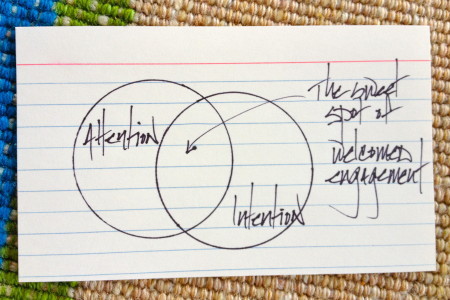
Our #AlohaIntentions value for the month of August, 2016 is Aloha.
Subscribe for our weekly newsletter:
Talking Story with the Ho‘ohana Community.


August 1, 2016
August Aloha
Aloha mai kākou, and Aloha to the month of August!
Are you someone who adopts a value of the month? As you probably know, I’m a big fan of doing so, for culture-building organizationally, and as a habit of self-coaching: Value Your Month for One — You.
“Values equip us;
they are a source of renewable energy,
grounded in what we truly believe in.”
Let’s give some Aloha to August, shall we?

Ua ola loko i ke aloha.
Love gives life within.
“Love is imperative to one’s mental and physical welfare.”
 ALOHA is the value we are currently working on within our #AlohaIntentions program hosted by Ke Ola Magazine, within which we devote two months time to each value immersion:
Series Kick-off: Aloha Intentions: Ke Ola Series 2
July 1st: Aloha ~ “for real.”
We will revisit Ho‘ohana, the value of worthwhile work, on September 1st.
As quick review, our “Aloha Attentions” are the five actionable verb phrases: Living with Aloha, Working with Aloha, Speaking with Aloha, Managing with Aloha, and Leading with Aloha.
For an Aloha reboot in the month to come, I turned to Mary Kawena Pukui’s ‘Ōlelo No‘eau, Hawaiian Proverbs & Political Sayings. We find that ALOHA is truly a testament to love in these proverbs.
Ua kuluma ke kanaka i ke aloha.
Love is a customary virtue with man.
“Man encounters love daily.”
He pūnāwai kahe wale ke aloha.
Love is a spring that flows freely.
“Love is without bounds and exists for all.”

He manu ke aloha, ‘a‘ohe lālā kau ‘ole.
Love is like a bird—there is no branch that it does not perch upon.
“Love is an emotion shared by all.”
and;
He ‘ohu ke aloha, ‘a‘ohe kuahiwi kau ‘ole.
Love is like mist—there is no mountaintop that it does not settle upon.
“Love comes to all.”

A aloha wale ‘ia ka ho‘i o Kaunuohua, he pu‘u wale no.
Even Kaunuohua, a hill, is loved.
“If a hill can be loved, how much more so a human?”
He ali‘i ka la‘i, he haku na ke aloha.
Peace is a chief, the lord of love.
“Where peace is, there love abides also.”

He ali‘i ke aloha, he ‘ohu no ke kino.
Uttered by Hi‘iaka in a chant to the sister of Lohi‘au.
“Love is chiefly, an adornment for the person.”
He ‘e‘epa ke aloha, he kula‘ilua.
Love is peculiar; it pushes in opposite directions.
“Love goes two ways—to love and to be loved.”

I ho‘okāhi kāhi ke aloha.
Be one in love.
“Be united in the bonds of affection.”
Kama ‘ia ke aloha a pa‘a i loko.
Bind love that it may remain fast within.
“Be a person who knows love.”

O ke aloha ke kuleana o kāhi malihini.
Love is the host in strange lands.
“In old Hawai‘i, every passerby was greeted and offered food whether he was an acquaintance or a total stranger.”
‘Ono kāhi ‘ao lū‘au me ke aloha pū.
A little taro green is delicious when love is present.
“Even the plainest fare is delicious when there is love.”
There are many lessons within the poetry of these sayings, and much coaching for we who are managers seeking to create and foster places of Aloha at work.
These proverbs aren’t about romantic love; they speak to our basic sense of belonging and worth. Thus, I think they help us better understand how we can make love’s common sense and grace part of the workplace, and without any touchy-feeling squirming whatsoever.
In each of our Aloha Intentions, we recognize that the Aloha Spirit resides within us, and within every other person we will encounter, as ALO, their presence, and HA, the very breath of their life. When I read these proverbs collectively, they strongly evoke our 9th Key Concept for me, the unlimited capacity of Palena ‘ole.
In these sayings, I read of life-giving, of virtue in character, of emotion as one’s right, of human dignity, of peaceful environments, of adornment as the demeanor of Aloha presence. I think about reciprocity, about unity and harmony, about generous hospitality, about nourishment through work, about sense of belonging, and about intention.
I read of so many avenues we can take with experiencing Aloha, and offering those experiences to others, becoming better as we do so.

What do you read within them? What do they affirm for you? What do they inspire you to do?
May your August be filled with Aloha.
Value your month, and within Aloha you will value your life.
Rosa
Subscribe for our weekly newsletter:
Talking Story with the Ho‘ohana Community.


July 29, 2016
Could Pono Politics lead the way to Pono Business?
Pono: The Hawaiian value of balance and rightness. Many think of Pono as the value of ethics.
“It’s herstory!”
No matter your political persuasion, you must acknowledge that July 28th, 2016 was a very historic day for America:
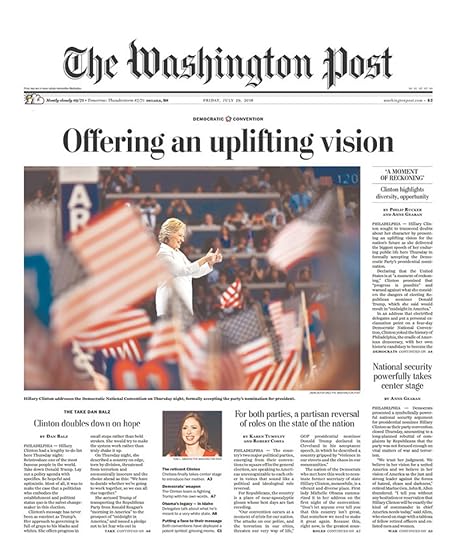 Headlines for the history books:
How newspapers across the country are commemorating Hillary Clinton’s historic nomination
It was fun to read the reactions on Twitter as Hillary Clinton spoke, accepting her historic nomination to be POTUS;
“When any barrier falls in America, it clears the way for everyone.” — @HillaryClinton
“Forget gender, forget appearance, forget delivery (if those are concerning). I want that resume, that fight, that resolve running the USA.” — @JustineBateman
“A woman is the center of the world’s attention at this moment and her sexuality and desirability as a sex object has nothing to do with it.” — @xeny
“The girl who always does all the goddamn work in the group project and doesn’t get credit HAS FOUND REVENGE!” — @faineg
“Watching the women around the room crying reminds me how important this moment is. I remember that feeling in 2008. I don’t take it lightly.” — @NYStrategist
Gotta admit, I was one of those tearing up as I watched!
glass ceil·ing
noun: glass ceiling; plural noun: glass ceilings
an unofficially acknowledged barrier to advancement in a profession, especially affecting women and members of minorities.
I remember far too many conversations in my tenure as a businesswoman employed by others, when there was absolutely no doubt whatsoever there was a glass ceiling in the room. In each case, it felt like that glass ceiling would always be there, and I wondered why I bothered fighting it, yet I could not stop trying.
They were conversations — for lack of a better word at the moment, for they weren’t really conversations, and they certainly weren’t discussions — about unequal pay, unequal promotability, and the unequal expectation of reasonableness.
Sadly, I had those conversations with other women too, and not just with men. Some are easier to remember at the moment, simply because how appallingly recent they have been, as I’ve been given “the lay of the land for managers here” in workplaces I visit, being there to introduce executives to Managing with Aloha.
I remember having an argument with an executive about how a newly married woman would not get a promotion, because she was “the impending certainty of a disruptive maternity leave one day.”
I also remember how thankful I was that I myself ‘carried small’ and was able to hide my first 7 months of pregnancy when I had my son. Once my secret was out, my own team members stopped telling me about meetings which were scheduled, feeling my opinion would not matter, “you know, hormones and all Rosa. Just take advantage of it, and take it easy.”
In so much of business today, women feel they must simply make the best of it. Put up and shut up. Yet make no mistake, it is NOT taking it easy!
Is it possible, that starting with Hillary Clinton, politics — the politics we scorn, belittle, and complain about — will actually give business a long overdue, better example to follow?

Hillary R. Clinton, Democratic Nominee for President of the United States
In full disclosure, I will be voting for Hillary Clinton this election year. It’s not because she is a woman, it is because I believe she is the best PERSON for the job.
There is absolutely no doubt she is the best qualified in the field of nominees who will be on the ballot for POTUS, and I feel she will be the one to represent our best values. I believe she is the one who has our best interests in mind and in her intent, and I feel she can introduce our U.S. Congress to the art of a better conversation again.
As she said last night in her nomination acceptance speech: “Our economy isn’t working the way it should, because our democracy isn’t working the way it should.”
We have much to do. We. I also agree that “it takes a village” and that, as I have written before, we must participate. Her assertion, that we are stronger together, is a Kākou point of view.
“We share this basic belief: Do all the good you can and serve one another. That’s what this election is about.” —Senator Tim Kaine, U.S. senator from Virginia and Democratic candidate for vice president.
Gender Dynamics, here we come.
That said, I’m eager to see the ‘woman card’ in play. Look at what it does for us as mothers, and yes, as managers too.
As the song lyric goes, “I am woman, hear me roar!”
The #DemConvention in sketches by @PostOpinions & @AnnTelnaes #DemsinPhilly https://t.co/q7pzbD0IWq
— Twitter for News (@TwitterForNews) July 29, 2016
About MWA Conversation 101:
1 — Converse daily. Come up for conversational air.
2 — If you can talk about it instead of writing about it, do.
3 — Did you listen? What did you hear?
4 — Seek an agreement in each and every conversation you have.
5 — Enjoy it. Relish conversations and never dread them.
Read more: Conversational Catch-up ~ with Aloha.
Subscribe for our weekly newsletter:
Talking Story with the Ho‘ohana Community.


July 17, 2016
It’s Time We Stop Withdrawing, and Get Involved Beyond Protest
Too easy.
In last week’s newsletter, I mentioned that I have a tendency to opt out of social and broadcast media when the current news of the day turns particularly tragic and explosive in human casualty and anger-filled emotion. Sadness, alarm and despair are emotions running rampant lately, and I want no part of them.
I withdraw, and I focus on ‘my own.’ My family. My partnership agreements. My work with Managing with Aloha. I tell myself that I serve our world best, by doing what I know I do best—culture-building in the workplace, with Aloha.
Hawai‘i makes my withdrawal pretty easy. We are, after all, living on the most remotely populated islands on the face of the earth. We have challenges, however we have been able to maintain our civil peace—so far. My brand of so-called white privilege is what we describe as “locals living in paradise.”
Yet there are times when residuals of the global news of the day linger, and nag at me. We are geographically remote, yet we are virtually connected. We are not oblivious to the world, and we remain fellow humans, compassionate for our distant neighbors. We empathize with their pain.
Thus, opting out alone is ineffective, and it is no longer easy. My values challenge me, saying, you can do better; you know you can.
This is one of those times.
When my curiosity gets the best of me, and I do opt back in to media bombardment, I learn more, and my discomfort grows.
I take the time to navigate the political and dogmatic clutter carefully, and read more by independent citizen publishers who are thinking out loud as they explore their own values: I read articles, essays, and blog posts written by thoughtful, intelligent, caring people who will not be quieted.
Thank goodness they won’t.
Thank goodness, that people with good values, and strong beliefs in better hope for our world, won’t be quieted.
Thank goodness, that they call for what we know as Ho‘oponopono problem solving, calling for it on a societal scale.
Left unsolved, problems do not disappear on their own accord.
Our civil problems may be temporarily put aside, and even forgotten as their precursors become less explosive or timely, however they do not disappear.
Problems become smoldering issues.
In recent weeks for instance, one news event, has flamed the fires of another, and yet another:
“It’s been another bad week. Coming on the heels of shootings by police in Baton Rouge and Minnesota, the killing of five police officers in Dallas, the intentional mowing down of dozens in Nice, France, and the unrest in Turkey, one could perhaps be excused for being a little worn out by the whole thing.
But the tragedies seem to keep coming.”
—Edwin Aoki, Make it Stop
For an unsolved problem to disappear, and go away forever, we have to solve it. That means we have to solve its root cause, or its single point of combustion.
“…to tackle any large problem, you start by looking for a single point of failure. In any broken system there is usually one main issue, a fulcrum around which all other breaks and faults emanate.
So what is the one thing that you can trace these problems back to?”
—Dain Saint, We Can Be Better
Fear is an untamed fire.
Fires start, because three elements are present: Heat, oxygen, and fuel—something to burn. What are the elements of our present societal unrest?
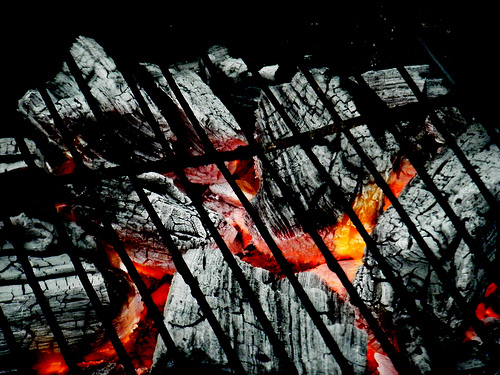
Smoldering embers, by Rosa Say on Flickr
In his article, Dain Saint says our ‘single point of failure’ is fear, and that “People hate what they fear, and kill what they hate.” He offers a solution—hope—yet I think he does an admirable job in trying to be more pragmatic, suggesting actions to make hope materialize, to make it real.
In his article, Edwin Aoki advocates gun control, and writes, “the ready availability of firearms in this country makes any spark far more explosive.”
“We may not be able to make short work of the very real systemic issues that divide us, and certainly reducing the number of guns on the streets will not be a panacea that reduces gun violence to zero. But we must recognize that our current policies really do turn guns into weapons of mass destruction, capable not only of tearing apart families and communities, but potentially our very values and societies. We must have a true conversation on gun control that does not instantly resolve into personal attacks and hardened battle lines. We must allow research into gun violence to make firearms safer to own and use. And we must create the conditions that allow people to feel safe in their communities and have trust in their leaders.
We must get away from police vs. blacks; the left vs. the right; us vs. them. We must make this stop.”
—Edwin Aoki
We need an entire movement focused on Ho‘oponopono problem solving.
Count me among the advocates for tighter gun control, yet I think we must dig deeper into those “very real systemic issues that divide us” and work diligently to solve them.
My deduction, from these readings and more, is that our current fire burns with these three combustibles:
1. Fear which results in people feeling they have no control over what’s happening. When filled with fear, people succumb to the victim mentality, and feel they cannot buck ‘the system,’ just survive within it, somehow.
2. Inequality and exclusionary thinking. There is a lack of Kākou Aloha, the all-inclusive unconditional love and acceptance of our fellow human beings. We feel we don’t need everyone, we just need ‘our own.’
We do not gain diversity’s benefits when there is inequality either; we align with either the haves or have nots and perpetuate exclusivity’s damaging effects.
3. Lack of involvement from those of us who are ‘comfortable enough.’
Honestly? We have no reason, no right, to remain comfortable in any privilege we may have.
I think that addressing number 3, and becoming better humans who get involved with civic engagement, can move us closer toward curbing our fears and embracing diversity as well. By getting involved, we seize more control of what happens in our world, and allay our fears. By getting involved, we enlarge the conversations which need to happen, and trigger more problem-solving.
Our Ho‘ohana Community can better engage, using what we know to be true.
Not dogma we know to be true; value-aligned lessons learned.
There are two things, relevant to this discussion, that over a decade of working within the Managing with Aloha philosophy has taught us.
Lesson One, is how good we really are. Inherently good.
People will always find a way to fix broken systems and processes. We excel at it, when we are free to tackle problems without baggage (i.e. without being blinded or shackled by ideology, politics, compromise), and we do so with courage.
The very best systems and processes however, do not ‘fix people,’ especially when their spirit has been broken, and their hope flickers and dims.
People fix themselves: All values work their magic via Kuleana, when people take full, personal responsibility for all the circumstances of their lives, and refuse to be anyone’s victim. Yet these people do not go rogue and go it alone: They engage and participate.
Lesson Two, is that we build from bottom up.
We see this over, and over again: The most effective culture-building —and by extension, society-building— happens in a groundswell on a grass roots level. Leaders may come and go, moving onto their next big idea, however those invested in sustaining a culture remain, and they work to make that culture grow and flourish—they are the community builders, and they are the convicted ones who stand tall for shared values.
To think about our world on a ‘societal scale’ is daunting, I know. However, everyone you may now think of as a major player started with a small entry point, and then steadily enlarged their circle of influence. It’s something every single one of us can do, and we can do it with Aloha.
Protest is not enough.
I have never considered protest a very good form of civic engagement. Protest lulls us into thinking we are exercising our voice, however we normally are demanding action from others, and not from ourselves.
We rarely take the next step, and get personally involved with intensive problem-solving. Worse, protest saps our resources: Police and the National Guard engage to stop riots instead of being deployed to the more noble pursuits of building culture, not knocking it down.
One of my old bosses had a favorite saying, one I’m sure you’ve heard before: “Don’t be part of the problem. Be a part of the solution.”
It rubbed off on me, and I believe it too. If you don’t want to contribute to a problem, you must be a part of that problem’s solution. If more involvement and more courage is required, so be it.
I know Ho‘oponopono starts with me.
I started this essay admitting to my own withdrawal, and as I write this, I am deliberating about how I will get involved. Will it be in my neighborhood board meetings? Will it be in one of the town hall sessions scheduled between the primary and general elections? Will it be with a specific community initiative championed by my business, Say Leadership Coaching?
I write this, to walk my own talk as my first step: To commit to not withdrawing into my comfortable island shell anymore, and be more involved.
As civil rights leader Mahatma Gandhi had said, “Be the change you wish to see in the world.”
As I myself had written in Managing with Aloha, “Speaking your own good word, will force you to make it so.”
Will Ho‘oponopono start with you too?
People are more apt to invest in and be committed to their own decisions, than they are to following the marching orders of a leader—even a leader they admire and trust to make decisions for them.
Please; honor your Kuleana, and decide to get personally involved. People are wailing, that “Thoughts and prayers are not enough!” and I have to agree. Define what civic engagement means to you, and get involved, starting with your own community.
We can erase hate, when we promote the Kākou beliefs within ‘Ohana, for a global ‘Ohana is what we are.
Related reading:
Issues, Actions, Opinion, and Self-Managing with Aloha (April, 2015)
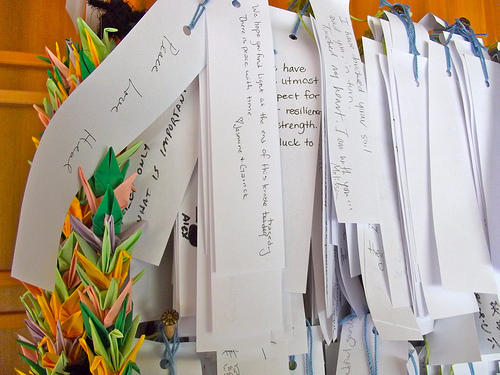
Peace, Love, Heal
A modest memorial for the Sendai Earthquake and Tsunami victims in Japan
—by Rosa Say on Flickr
The Definition of Civic EngagementExcerpts from Civic Responsibility and Higher Education, edited by Thomas Ehrlich, published by Oryx Press, 2000 (source):
“Civic engagement means working to make a difference in the civic life of our communities and developing the combination of knowledge, skills, values and motivation to make that difference. It means promoting the quality of life in a community, through both political and non-political processes.
– Preface, page viA morally and civically responsible individual recognizes himself or herself as a member of a larger social fabric and therefore considers social problems to be at least partly his or her own; such an individual is willing to see the moral and civic dimensions of issues, to make and justify informed moral and civic judgments, and to take action when appropriate.
– Introduction, page xxvi”
Subscribe for our weekly newsletter: Talking Story with the Ho‘ohana Community.


July 12, 2016
Bring Back the New: Revise to Value Ho‘omau
We’re almost there.
My “twelve years later” 2nd edition of Managing with Aloha is with the printer, and their galleys are on their way to me for final proofing. Thus the book should be released later this month!
I will briefly preview my 2nd edition just for you, my wonderful MWA blog subscribers, at post’s end with a sneak peek of the new cover, placed there because I don’t want to bury the lead with my true intention in writing this particular posting: Let’s talk story, about what we gain from working with value alignment.
Future forward!
When you edit something, as I’ve been doing with Managing with Aloha over the past year, whether it’s your writing, your conversational style, your habit stacking, your approach with handling performance appraisals— editing work invested to revise just about anything, really— the act of editing packs quite a punch.
Inherent in revising anything, is your intention to make something better.
Good editing will bring the best within past practices back to mind, and it will challenge you in ways that help you value something at the very heart of Ho‘omau— you cause the good you created in the past to be long-lasting. You carry that good into your future, making it newly relevant. From our 19 Values of Aloha:
Ho‘omau is the Hawaiian value of perseverance and persistence. In practicing this value, we become more tenacious and resilient, and thus, more courageous. Ho‘omau also means to perpetuate, and to continue in a way that causes good to be long-lasting. Those who ho‘omau do not give up easily, and they consider mistakes and failure to be temporary conditions from which to learn and move on from.
When you reflect on past good, past successes come to mind, and any mistakes or failures have softened with time, turning into cautionary measures. You’re wise to ask yourself, “Hmmm…how can I keep using this?” When you’re a manager, your team invariably comes to mind, and you ask yourself, “How can we keep using this?”
When I think about Managing with Aloha— future forward, I can get overwhelmed with the possibilities. Thinking about value alignment as our core, repetitive, and ever-strengthening practice however, quickly calms me down and gives me focus.
Let’s talk Value Alignment
To edit, is to correct, check, improve, emend, polish; modify, adapt, revise, rewrite, reword, rework, redraft; shorten, condense, cut, abridge; clean up, cross out, red-line and blue-pencil.
To edit your own past work, is to brush away the cobwebs, welcome the light of a new day, and add your best improvements from more recent learning. At times, you will even “kill your darlings” or *gasp* change your mind.
Value alignment comes back into these editing processes with a rather straightforward question. You ask yourself, do I still believe in this?
With Managing with Aloha, my own answer has been a resounding, yes, I absolutely do! and I instantly return to my Why?
On the one hand, editing a book is a long and very detailed process, and I’m wallowing in that feeling of accomplishment one gets after finishing a major project, and being able to throw your hands up in the air, push your chair back, and scream, “I’m done!”
On the other hand, I feel like I’m at the cusp of a new beginning: MWA’s first edition is twelve years old, however the revision we put into MWA’s second edition makes it feel quite new again.
When I think about our next-stepping once the book is out in the wild on its 2016 wings, so much possibility becomes far easier for me to imagine. This second edition says to me: No more same-old, same-old: Managing with Aloha is brand new again.
A significant part of my feeling this way, is that I have learned so much from investing my time and energy into this project, both from doing the work itself (which has been quite challenging at times), and from others who’ve been working with me — as we have repeatedly said about ‘Ike loa, the value of learning, we learn best from other people, and we stretch; “long (loa) on knowledge (‘ike)”
Recharge your Ho‘omau with New Relevance
This fact of intensive work, that newness awaits you at the end of any project you’ve value-driven with Ho‘omau, is what I want to convey to you.
In our past studies of Ho‘omau we have tended to focus on persistence, tenacity, and resilience. We have talked about the continuity of Ho‘omau quite a bit, repeating the phrase, “cause the good to be long-lasting” until it is woven into the very fabric of what we understand Ho‘omau to be about— continuity.
However, when I reflect back on what we’ve done together, I see our concentration on finishing well as an ending, opposed to recharging and starting anew.
I believe we should always finish well, especially in regard to conversations being super-sensitive about necessary follow-up. What I am newly experiencing for myself, and talking about here to share with you as encouragement, is that when value-aligned with Ho‘omau, finishing well serves to recharge and renew you.
An old standard, becomes a brand new approach. (…and so does this standard, and that one…)
A tribe’s insiders’ language, becomes a brand new Language of Intention.
Old partnerships, find new energies in their collaboration and corroboration.
Respecting history and legacy doesn’t feel museum-like or mythical; it becomes mission-possible.
A preview of Managing with Aloha, Second Edition
As promised, here is a brief summary of the key changes made to Managing with Aloha 12 years later.
—the book is now softcover, 308 pages long, and looks like this:
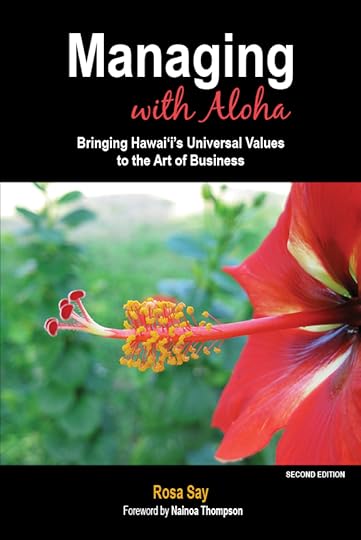
—every single chapter has been newly revised and edited, from a little to a lot! The book’s setting, if you will, my expertise, has expanded from my history in Hawaii’s hospitality industry, to diverse fields, thanks to bringing MWA to others via Say Leadership Coaching. I have had the best clients! They teach me more every day in very lively workplace laboratories, think tanks and task forces. When I assert something will work for you in the book, I am doubly, triply sure of it.
—Those summary boxes which ended each chapter in the first edition are gone, replaced with more new content. For example, you will find that I have substantially rewritten the chapter on Alaka‘i, the Hawaiian value of leadership.
—in my personal point of view as author, I intended Managing with Aloha to convey a few key themes that would complement its central thesis of values-centered management, and its presentation of the 19 values of Aloha. In the second edition, you will find I have taken more care to highlight those themes:
Sense of place and universal values function together in worthwhile work.
Healthy workplace culture-building happens with the ‘Ohana in Business model.
Managing with Aloha is more than being thoughtful and gracious; it takes intentional work coupled with a Language of We intention of inclusiveness.
Our most important constant to never lose sight of: Managing others is a profound responsibility. Second, the courage to lead is critical, and desperately needed in today’s world.
To become an Alaka‘i Manager, learn to manage first, lead second. Kūlia evermore, with the 5 Aloha Intentions: Live, work, speak, manage and lead with Aloha. Do this for yourself, so you will have it to share with others as your Ho‘ohana.
—there is a brand new Epilogue, which shares the Managing with Aloha Ethos, and discusses culture-building. Ka lā hiki ola, which had been the subject of the first edition Epilogue as “the dawning of a new day” is now Chapter 19, as our value of optimism, hope and promise.
—what we think of as our Managing with Aloha creed, A Manager’s Calling, the 10 Beliefs of Great Managers, now has a section of its own in the book—it is the Addendum which follows the Epilogue.
—the book now has a self-coaching complement to it, so the reader may use it as resource and journal. The blank Notes pages previously ending the first edition, are now placed throughout the book with coaching prompts in their relevant places, with more instruction on how to use them in the How To Read This Book section of the Introduction. Alternately, these prompts can be used for workplace book clubs.
—the traditional Index that was in the first edition has been changed, reformatted into a Story Index, and a new Concept Index which includes quotation credits and the Footnote Index.
—altogether, we (this project took a village!) feel we’ve put much added value into the Second Edition, yet we have left the price the same: $24.95 is the book’s suggested retail price.
Here is a look at the back cover:
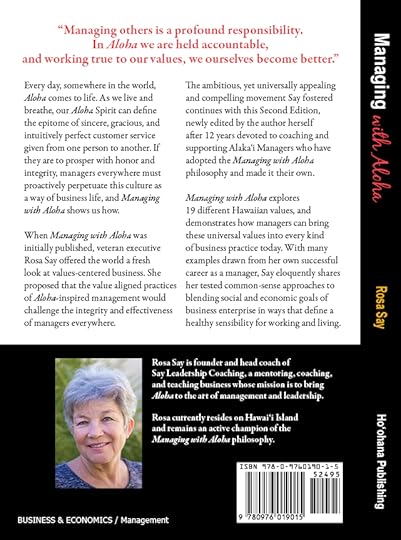
Stay tuned for the date the book is released!
Meanwhile, have you subscribed to our new Talking Story newsletter? We’re having a lot of fun with it.
Back to you: What project are you working on, which could use value alignment in the spirit of Ho‘omau?

July 3, 2016
Sunday Mālama: Remembering our Elders
Death delivers a strange blessing.
When elders die, we newly appreciate them, often more so than while they lived, and were still able to teach us.
We miss them, when we could have remembered them in a far less disconnected way.
Does our hindsight help us live differently?
Two famous elders died recently: New York Times fashion photographer Bill Cunningham, and Holocaust survivor, Nobel laureate, and renowned author Elie Wiesel, who had become an activist against racism and discrimination.
As I remarked on Twitter when first hearing that Elie Wiesel had died,
Whenever Elie Wiesel’s name came up, I would think of this quote. He stood for Pono, Kuleana, and Ho‘ohanohano to me:
“We must always take sides. Neutrality helps the oppressor, never the victim. Silence encourages the tormentor, never the tormented. Sometimes we must interfere,” he said. “When human lives are endangered, when human dignity is in jeopardy, national borders and sensitivities become irrelevant. Wherever men or women are persecuted because of their race, religion, or political views, that place must—at that moment—become the center of the universe.”
— Elie Wiesel

Elie Wiesel in his office in 2012. Photo by Bebeto Matthews / AP
Tributes have been flooding in for both men, and I’ve read a generous lot of them, thinking about how interesting and fascinating they were, each in their own way, and thinking about their signatures on Leading with Aloha over and over again.
These were two of my favorite reads about Bill Cunningham and his enchanting life:
“Bill on Bill,” a New York Times autobiographical essay published in 2002. I wondered: What if I had read that back in 2002 when it was first published? He had such a storied life! Would I have looked for Cunningham on his bicycle (take a look at this Google search!) when I went to New York soon thereafter?
Or, I could have looked for him at Stage Star Deli: Every Christmas, Bill Cunningham Had a Special Gift for These Deli Workers. We might have had coffee together…
Who are your elders?
Bill Cunningham and Elie Wiesel were not in a circle of elders I personally knew, and could approach for conversations over a glass of wine, or as we walked our dogs in a public park —though you can bet I certainly would approach them to say, Aloha, and, Mahalo for all you have given to our world, if I did in fact see them in that park, and I recognized them!
However, their passing makes me think about the elders I do know — those we call Kūpuna in Hawai‘i. They are elders we should be appreciating alive while we can, and learning more from.
“As I approach my 75th birthday, I find myself often thinking about mortality. I’m in the last part of my life, and that’s reality. This is the time when we must fulfill our most important duty: to reflect on a lifetime and then sift through the detritus of experience, observation, and thought in order to winnow out lessons to pass on to coming generations.”
—
“I’m lucky to have arrived at a time in my life when I am freed from the encumbrances of making money, seeking fame and power, and showing off. We elders have no hidden agenda and can speak the truth. One of the most influential groups in the peace movement was the Retired Admirals and Generals Against Nuclear War, warriors who had played by the rules through the military ranks, but once retired, could speak openly and honestly.”
—
“During the ’80s and ’90s when battles raged over forestry practices, one of my most formidable opponents was the CEO of a large forestry company. Arguing that dioxin production in pulp mills was minuscule and that his clear-cut logging was allowed by government, he bellowed, “My job is to make money for my shareholders. If you don’t like the way my company operates, your complaint is with the government because everything we do is within the law.” On retiring and being freed from the corporate game, he became a generous supporter of my foundation. Maybe someone should start a Retired Corporate CEOs and Presidents for the Environment.”
— Geneticist and environmentalist David Suzuki writes, We have much to learn from our elders.
If you would, please think about that on this Sunday, and converse with your elders too.
Postscript

Click on the image for the Sunday Mālama index of articles.
Sunday Mālama has been when I will share my off-the-workplace-highway scenic route kind of posts. Not as a normal weekly feature, but whenever they seem to be writing themselves.
You can access the Sunday Mālama archives via this category link, also residing on the right-hand sidebar.


July 1, 2016
Kākou Communications and Our Tribe
Happy July 2016!
Let’s dig in to 2 bits of vocabulary we use in our Language of Intention (Key 5): Kākou Communications, and Tribe as the notion of a community larger than team — I refer to our Ho‘ohana Community as a tribe.
Let’s also talk about how the two go together.
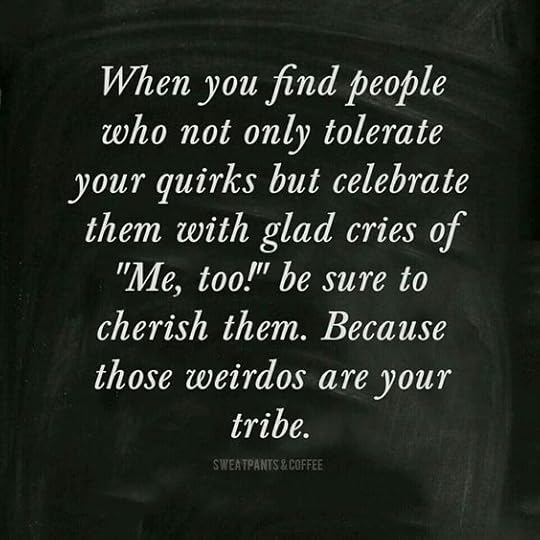
In our tribe, we think of those ‘quirks’ and those ‘glad cries’ of “Me, too!” as the wonderful trademarks of having shared values.
As a brief preface, Kākou Communications is the specific Language of Intention, along with how it’s used in culture-building, that an Alaka‘i Manager will employ in managing his or her messages.
That’s right, savvy managers manage communication. They must.
I curate our Language of Intention particular to this site on its Conceptual Index, and had written about our vocabulary and ‘tribal dialect’ here: Managing with Aloha’s Lexicon Morphology
We are a Global Tribe
As a shortcut name for the Ho‘ohana Community of Managing with Aloha readers and leaders — which while descriptive, is quite a mouthful — ‘tribe’ entered our vocabulary about 8 years ago when we were talking about Seth Godin’s book: Tribes: We Need You to Lead Us.
The book intrigued me, and it annoyed me greatly. If you’re interested, you can read the book reviews I posted on GoodReads and on TalkingStory.org in regard to my intrigue (good ideas are scattered throughout) and annoyance (he bashes management). Regardless, I do give Godin credit for inserting ‘tribe’ into our vocabulary so effectively, and so pervasively in our extended networks as well.
“A tribe is a group of people connected to one another, connected to a leader, and connected to an idea. For millions of years, human beings have been part of one tribe or another. A group needs only two things to be a tribe: a shared interest and a way to communicate.”
― Seth Godin, Tribes: We Need You to Lead Us
He gave a TED talk on Tribes here.
We use ‘Team’ within an ‘Ohana in Business
‘Team’ is smaller, and more intimate in our ‘Ohana in Business (Key 6) model for culture-building. For instance;
‘7 Strong’ is the group batching we have adopted for larger teams within the MWA workplace. This batching has been developed through the years in my first-hand experience, where a group of no larger than 7 people has consistently proved to be the best possible size of a team assembled for project work. We think of “7 Strong!” as the mantra for any and all focus groups, task force teams and pilot projects, and the coaching here is that collective strengths are in play: Each person is expected to, and challenged to bring their specific strengths into the work at hand as their tangible contribution. The bonus in this approach, is that when a project pilot is over, team members value each other with added significance — they have learned more about each others talents, and they connect a teammate’s personality and character to their values and strengths going forward.
— Managerial Batching: 1, 2, 5 and 7
In contrast, our ‘tribe’ is connected to Managing with Aloha as a philosophy. We are a community of lifelong learners who subscribe to employing values-centered management for a diverse assortment of teams in different industries, who are scattered across the globe. We primarily communicate virtually, with this blog as ‘MWA Central’ post-book.
Thus, we fill those tribal requirements Godin articulated: “A group needs only two things to be a tribe: a shared interest and a way to communicate.”
My recent decision, to publish Talking Story with the Ho’ohana Community in addition to this blog, was a result of my questioning myself: Have I been communicating with you enough, and in the right manner?
Kākou Brings Inclusiveness to Communication
In my first writing of Managing with Aloha, I did not explicitly refer to Kākou as the value of good communications, yet these 12 years later, that is definitely how I think of it, particularly in culture-building and fostering the communicative environment of our tribe.
With Kākou in mind, you constantly question how and when you communicate your messages, and to whom:
—Does everyone know about this? Is everyone aware?
—Have I left anyone out?
—Who was on vacation/ on leave/ temporarily mia when we went over this?
—Who else has to know? Who else may have more input for us, or feedback on early results?
—What about our suppliers and vendors? What about our staff’s families?
—Does this affect our customers? Our clients? Our Board of Directors or owners?
…and the exquisitely wonderful, How should I be following up?
There is definitely an Aloha attitude and Mālama stewardship inherent in those questions, however there are 2 other factors connected to the value of inclusiveness that every manager and leader can love:
When you embrace inclusiveness and diversity, you get complete input and thorough feedback. Kākou promotes synergy as a habit of creation which seeks additional solutions and alternatives.
Cohesively shared information-giving will increase the amount of responsibility and buy-in others accept as their own because you included them. The person possessing Kuleana, the value of responsibility, will be quick to say, “I accept my responsibilities, and I will be held accountable.”
As Jan Carlzon has said, “Giving someone the freedom to take responsibility releases resources that would otherwise remain concealed.” and, “An individual who is given information cannot help but take responsibility.”
Do I want you to feel more included by what I freely publish here, and do I hope you take more personal and professional responsibility for it?
You bet I do.

Image credit: Hunter Pence by Thomas Hawk on Flickr
As Kākou reminds us, we are in this together. “Together we are stronger. We are better.”
Relevant Reading in the Archives:
In Culture-building, Start with Communication
Language of Intention Feeds the Culture Beast
Talking Story is Thriving. It’s What We Do.
The Language of We


June 27, 2016
6 Month Review: Give yourself Space for Better and an Energy Audit
July 1st is this coming Friday. It’s time for a 6-month review.
Here’s what I suggest:
Make space for better in the 6 months of 2016 to come, and
Give yourself an energy audit.
Over the weekend I checked in with photographer and creative Chase Jarvis, and he got me thinking about energy. Ours. Human-powered energy for getting stuff accomplished.
Energy has a solid foothold in the Language of Intention (Key 5) of our Role Reconstruction for Managers (Key 4). Energy also factors into Strengths Management (Key 7).
In a nutshell,
The amount of human energy found within a workplace
is, without question, the manager’s most valuable resource.
We’ve mostly talked about energy as pertains to the workplace in general, and in regard to how managers affect energy levels within the workplace. Chase Jarvis was focused on personal productivity instead — how do you manage your own energy? — and he had a valid rant: “Busy isn’t success, it’s a lack of priority.”
I agree.
Are you busy, or are you productive? Do you feel accomplished?
Make Space for Better
As reference, remember these? Better Managers are Better People followed up by Better Person, Better Manager, Better Leader. Alaka‘i Batch 24.
When we, at Say Leadership Coaching, work with managers directly, we don’t zoom directly into Key 4, The Role of the Manager Reconstructed, until we do some groundwork first. We don’t start with the MWA Jumpstart program either (though we do as soon as possible). We get to know the manager, and his or hers working habits first, as a means of doing an energy audit.
We know we will be adding new learning and new practices to whatever that manager is already doing, and we cannot do so successfully unless they have space and energy;
a) the space to fit in what we’ll be offering them — space for ‘Better’
b) the energy to make immediate, practical use of those offerings.
When you think about it, this common sense approach applies to everyone you might manage, teach, or coach as well, doesn’t it. They may truly love what you offer, yet not have the energy to deal with it. To assume they are lazy or unmotivated for not immediately getting on board with you, is usually a big mistake and it’s best to dig deeper. They need energy to draw from, especially when they’ll need to work on adding what you offer them, by using it to replace something else already in play.
Energy, not time. Time IS always available: It’s a matter of what we choose to do with our time, or how we squander it away or procrastinate.
Going back to Chase Jarvis, he put together a terrific post + video I want to share with you, one that can get you thinking about this too. It gives you a good basis for making space no matter how busy you feel, while framing your own energy audit.
Introducing Strategic Renewal
Here is a pointer to Chase Jarvis explaining his approach to getting things done while cultivating healthy energy deposits at the same time, and on a daily basis.
The way Chase works, is adapted from a concept Tony Schwarz made popular, called strategic renewal. To pull from the sentence above, Chase “gets things done” by batching in context, and prioritizing his To-do lists in 90-minute chunks, while “cultivating healthy energy deposits” in 30-minute breathers in between those 90-minute chunks.
It looks something like this:
Morning routine (similar to what we covered here)
90-minute work block 1
30-minute breather for renewal
90-minute work block 2
30-minute breather for renewal
90-minute work block 3
… and so on until you call it a day and head home.
You start with your most important work each day to get it done, and not succumb to distraction or procrastination. A quick lunch could fit in a 30-minute breather, while a luncheon meeting with others could fill in a 90-minute block around noontime.
Chase offers a link to a 2013 article Schwarz wrote about it for the New York Times, however it’s a longer read about the intellectual science behind strategic renewal; save it for later if you’re interested — Chase cuts to the chase (smile): read his post first, then speed up the video clip to the 2:44 mark.
Strategic Renewal is adaptable, whether you’re a creative (like Chase), self-employed (like me), or employed to work for hire.
I work in a similar way, and I teach strategic renewal to the managers I coach as well.
The 90-minute chunking may work out differently for you. There is good brain science behind that 90-minute suggestion, yet you may not find it practical in the working environment you happen to be in. In the corporate world for instance, it’s often a matter of scheduling “my real work time” in between meetings, appointments and other events you have no scheduling control over.
The key to strategic renewal is that 30-minute renewal time. When I was in the corporate world, I used to call it ‘bookending appointments.’ I made sure I did not schedule back-to-back commitments of anything, having 30 minutes in between the commitments I did have, for debriefing what just happened, catching my breath, fortifying my energy with a healthy snack, then preparing for myself for the commitment I’d scheduled next. My bookends were sacred; I did not allow my commitments to go overtime into them.
Value align Strategic Renewal with Nānā i ke kumu
Those 30-minute breathers are also connected to what we know as Nānā i ke kumu, and looking to our source to boost our spirit. The 30-minute is indeed breather, and not just a buffer, creating the energy deposits you can then use in your 90-minute batching of work. As a cool fringe benefit, I find they help to curb distractions very effectively: You can defer a lot of distraction and attention-scattering to those 30-minutes book-ending each session of focused work.
Another tip: Keep social media out of those 30-minute breathers. Consider the approach Austin Kleon takes with his Daily Dispatch.
As I’ve said before, I consistently find managers and leaders are trying to do too much, and need less to be more for them. More is about cultivating and respecting your own energies, before you can possibly expect to manage and Mālama others: To Manage with Aloha is to Hack Behavior.
Start the second half of your year in a newly freshened way. Whatever your project targets, make space for better, and invest smartly in your energy — they will serve you as reserves, and as enthusiasm.
Here’s a handy index to our talk stories About Energy as found in the Archives:
Jan.15,2015: Speaking with Aloha: Energy, Managing, Leading
Aug.07,2013: Managing Energies: Struggle & Ease
Jan.17,2013: Alaka‘i Managers are the new Energy Bunnies

~ Posted on Instagram by @shockabraddah ~
Much Hawaiian kaona in this depiction,
with energy flowing from taro, heart of the island diet in old Hawai’i nei
Have you signed up for the newsletter yet? Join us!
The newsletter is where I will point you to more resources like Chase Jarvis, when not specifically devoted to a MWA blog post like this one.


June 24, 2016
Brexit, Elections2016, and Witnessing History in the Making
June 23, 2016 will go down in history as Brexit, the day the British voted to leave the European Union.
I have been fascinated with Brexit as the voting has happened. Glued to my laptop’s delivery of online news which reported and analyzed the results throughout yesterday evening, I was unable to contain myself, and more vocal on Twitter than normal…
Precisely. Demagogues is the perfect word, they are NOT the leaders we need. https://t.co/ok7Pjg5v75
— Rosa Say (@rosasay) June 24, 2016
I eagerly tuned in again this morning for more. I’m someone whose favorite college courses turned out to be American History, and then European History; my actual bachelor’s degree was for Travel Industry Management — practical, and suited to my internships in business, but honestly not as interesting then!
However, you can be someone who hated history altogether, and still be as fascinated as I am with what is occurring globally as I write this.
Those who bother to, are witnessing history in the making.
Sadly, it’s history which is somewhat like watching a train wreck. The global economy is going bonkers in the financial markets, and there’s generational mud-slinging and blame. Many Britons woke up this morning with a horrible case of “What in the world have we done?”
1. In the Washington Post:
The British are frantically Googling what the E.U. is, hours after voting to leave it
2. From Slate:
Why young Britons embraced the EU — and their parents resented it
3. Timothy Garton Ash for The Guardian:
As a lifelong English European, this is the biggest defeat of my political life
It is so thoroughly instructive. Brexit does matter, and it does affect us —just as Elections2016 in the USA matters, and just as we are affected by the painful machinations of our Congress (I don’t know about you, but the recent gun-vote sit-in ridiculousness infuriated me).
This is not just about politics and global affairs.
It is about how humanity operates, and how we live with it.
My morning is filled w/reading #Brexit analysis. Hope Americans are taking notes and rethinking their assumptions and loyalties. Be smart.
— Rosa Say (@rosasay) June 24, 2016
As managers and leaders ourselves, I don’t think we should miss out on our opportunity to be globally informed, while learning lessons we can apply in what we do.
There is so much we can be better aware of in regard to society, governance, and economics. In particular, are the live-action case studies we are witnessing on what Alaka‘i leadership is, is not, and can be.
David Cameron was a historic and disastrous failure, writes @alexmassie https://t.co/MKdiEPhaCu
— Foreign Policy (@ForeignPolicy) June 24, 2016
…especially if “The referendum is not legally binding.” as @JHWeissmann writes: https://t.co/eiOxJtpcoR
— Rosa Say (@rosasay) June 24, 2016
The greatest danger to our future, is apathy.
“The world will not be destroyed by those who do evil,
but by those who watch them without doing anything.”
— Albert Einstein
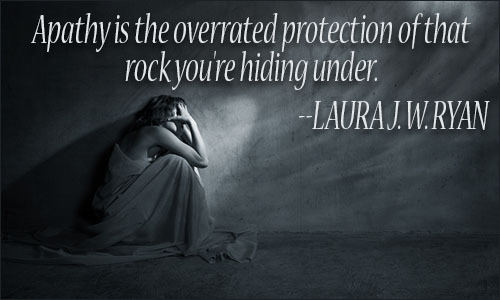
In times like these, we have a tendency to be watchers, and then turn off our attentions with a sad finality of “Well, what in the world could I do about it? I’m not a world leader with a large circle of influence.”
That’s another kind of resignation, and an equally damaging one. Stoic forbearance slips down into sad acquiescence, compliance, and passivity. Yuck.
We need more courage than that.
Don’t give away the power and influence you DO have. Own it.
Here is where we have defined Circle of Influence in the mana‘o of our Language of Intention: Hana ‘eleau: Working in the Dark.
One of my favorite things about Managing with Aloha, with Ha‘aha‘a, the value of humility to keep me in check about it, is that it has given me a platform, and a voice-in-context I am comfortable with, and quite proud of.
I can watch what happens in governance and the global news, and I can apply it to all I have learned about values, and values-driven behaviors. I can put what I see, hear, and learn about to good use in healthy workplace culture building, where I consider my own circle of influence to reside.
I can expect my learning, and my applications of what I learn to be effective. I can even change my mind.
Very well written. I’ve never liked our partisan politics in the USA, yet Rauch gets me to challenge my own thinking https://t.co/2nXZAq336A
— Rosa Say (@rosasay) June 23, 2016
I can Ho‘o in different ways, and make things happen as I can, and where I can. I can contribute to better, and to the common good.
So can you.
Hō, Ho‘o, and Hō‘imi:
Palena ‘ole Positivity is Hō‘imi— look for it
This post is going to be a work-in-progress for me today, even if for my own learning curation: I will add links to articles I find interesting down in the comment section.
Let’s be global citizens. It’s our Kuleana.
Related post in the archives: Issues, Actions, Opinion, and Self-Managing with Aloha: Snippet ~
Human nature is both reactive by impulse, and proactive by choice. To be human, is to be emotionally reactive, and it is sometimes very difficult to turn that off. However, we can turn it off. We can channel our impulses and reactions: To be human is also to have the ability to think before acting, to choose right from wrong, and to solve our ills rather than stopping at justifying one wrong with another one.

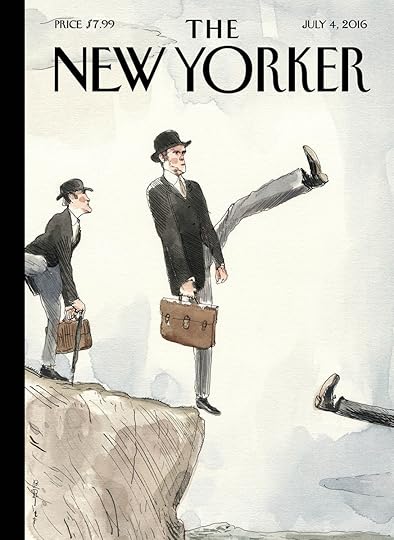
Sneak peek at Barry Blitt’s “Silly Walk Off a Cliff” for the New Yorker


June 23, 2016
The Comeback Kids of Communication: Email and the Newsletter
Hana hou as we say in Hawai‘i ~ let’s do this again.
By “this,” I mean Talking Story with the Ho‘ohana Community via email.
I’m Walking my Talk
In the spirit of my recent articles (June 13th, and June 16th) about good communication strengthening relationships and building healthy culture, I have an announcement to make: Drum roll please!
I’m bringing back our Ho‘ohana Community email newsletter.
The first one will be mailed on Thursday, June 30th.
Something else we’ve talked about recently, is that Alaka‘i Managers Make Plans. Therefore, I’m posting this message now to bring you into my planning for it, should you have any feedback for me as our newsletter takes shape. The subject matter will differ from the original — more on that in a moment.
First, I’d like to share my why with you. (Managing: Learn how to ask “Why?”)
Are you in, and already know you are? The rest of this post shares more of my decision process with you. If you want to skip it, you can click here for the subscription box. You will also see a red link there to View Letter Archive, so you can preview a sample edition.
A Quick History
Talking Story with the Ho‘ohana Community was the first email newsletter I published, making its debut shortly after I released Managing with Aloha in November of 2004. It was delivered on the 1st of every month as an announcement of what we would work on as our Value of the Month. As such, the newsletter doubled as both launchpad and follow-up coaching, for all the articles I would post on my blog thereafter until the month ended.
It was very successful for that place and time in our history, and then two things happened, which made it rather easy to discontinue the newsletter:
Nothing stays the same forever — nor do we want it to! The blessings of our success with both Managing with Aloha and Say Leadership Coaching came with a mixed bag of change. That change was overwhelmingly good, evolutionary for us, however our newsletter did become a casualty. Writing for a virtual, global value of the month program was a very intensive proposition, and I became much too busy to keep up with it, and do so well.
A new trend was taking an increasingly anti-email world by storm: Social Media. Newsletter reading was steadily decreasing. Not only email was quickly falling out of favor, so were (gasp!) phone calls, replaced by texting. Then came a flood of new smartphone apps, hooking us in to our screens and thumb-typing even more.
Text Messaging Explodes in America
~ a CBSNews CNET headline, September 23, 2008
I became a columnist for publications in print and online, and felt I wasn’t overly disappointing our community of subscribers in discontinuing our newsletter; how much could I reasonably expect them to read? New technologies were exciting. Why not get on board?
Get on board, we did.
Returning, Full Circle
“No matter the deviation, all things come full circle. You begin and end your journey in the same place, but with a different set of eyes.”
~Jennifer DeLucy
We don’t always end in the same place, however we do feel we have that different set of eyes as time goes by. We see anew, having learned new things, and grown into change. That adage that “hindsight is 20 – 20” also rings true, and we arrive in our current place feeling “all the wiser” for the journey.
Everyone seemed to be A-ok with my decision to end my newsletter, for we are indeed a community of lifelong learners. We got on board with Facebook, Flickr, Twitter, LinkedIn, Instagram and other social media venues. We dabbled, ‘lifestreamed’ and tumbled. We experimented. We designed our new spaces and places. We played. We shared.
Through it all, we did talk story.
Well, kinda. Something else happened. We scattered amid the myriad of choices we had, and we could no longer count on truly being Kākou— together.
Broadcasting is not Conversing
Sound familiar to you? We were sharing in abundance —update! chat! tweet!— however we could no longer say, or feel secure in knowing, that we had all caught the same news, and were on the same page.
When attention scatters, so can intention.
I, for one, have missed that knowing, and that comfortable assumption of sharing something in common. I’ve missed us, as us. A big part of my own personal why I will publish a newsletter again is simply that I’ve missed the Ho‘ohana Community we associated with the newsletter.
I still believe Conversation is King:
“When it comes to relationship-building you must focus on only one kind of communication, the one that trumps all others — person-to-person conversation. Trust me on this: When you nail a great relationship via person-to-person, face-to-face, in-real-life conversing, all those other vehicles of communication fall into their rightful place as the secondary options they are supposed to be.”
That said, we are a global community now, and I do believe our Talking Story with the Ho‘ohana Community will fill another need. We cannot share the same geographic place, yet we can be a global tribe.
I have been encouraged to hear that many of you agreed. Were we ready to come back together?
Witnessing the Comeback
Several of you had forwarded a New York Times article to me, written by David Carr, that initially made the rounds in June of 2014: For Email Newsletters, a Death Greatly Exaggerated. A snippet:
“Newsletters are clicking because readers have grown tired of the endless stream of information on the Internet, and having something finite and recognizable show up in your inbox can impose order on all that chaos. In fact, the comeback of email newsletters has been covered in Fast Company, The Atlantic and Medium, but I missed those articles because, really, who can keep up with a never-ending scroll of new developments? That’s where email newsletters, with their aggregation and summaries, come in. Some are email only, others reprise something that can be found on the web. At a time when lots of news and information is whizzing by online, email newsletters — some free, some not — help us figure out what’s worth paying attention to.”
“An email newsletter generally shows up in your inbox because you asked for it and it includes links to content you have deemed relevant. In other words, it’s important content you want in list form, which seems like a suddenly modern approach… It helps that email, long dismissed as a festering petri dish of marketing come-ons, has cleaned up its act.”
You attached notes that encouraged me, “Bring back Talking Story Rosa!”
The timing was not good for me then, however the summer of 2016 brings open space I’m eager to fill in this way. The technology has vastly improved, and I do feel I can recommit to a newsletter with much more ease. No more fancy; I’ll be taking a rather stripped down, minimalist approach, for my goal is strictly communication, and not business analysis.
I may have initially lagged behind some of you in reboarding the email train, however there has indeed been change in my personal experience as well.
I’m finding that I too, welcome email conversation back into my life, just as that NYT article described. Over the last year or so, I’ve been subscribing to newsletters more often myself, as reader. I fully empathize with the need those missives fill for me in communicating with their authors, and in feeling I am “in the know” and “in the flow” with the relationships and communities I’m choosing to remain better connected to.
Having someone give me their email address is like receiving a gift. It conveys, “Yes, I do want to be connected to you!” waaay more than having them accept a ‘friend request’ or become a media ‘follower.’
Social media has been fun. It still is, though it’s become more of an occasional option. While I’ve bid goodbye to any other dabbling I’ve done, you will still be able to find me on Twitter, LinkedIn and Instagram. However my 2016 promise-to-self, is that they will remain my pleasant periphery, and never be my priorities.
Newsletter Content: Less is more, evolved for our time
First of all, I promise you, that the new-and-improved Talking Story with the Ho‘ohana Community will never be as long as this post or any of my articles here. Less is more, short and sweet. I’m going for airy, and limiting myself to one page/500 words or less.
Second, it will be different from this blog and the original, primarily taking the form of a link digest and bulletin board. It may point you to some of my writing here and elsewhere, but it will never duplicate it. …Therefore, if you got this article via email now, and are presently an email subscriber to ManagingWithAloha.com to print and share my articles, you may not want to cancel your subscription!
Third, I see this newsletter as a gathering place for all our communication as the Ho‘ohana Community, collected and resourced on a more timely basis. It will be the place I share my current finds in value alignment, and thus it will not be restricted to me and my writing.
Therefore and fourth, it will be dispatched weekly instead of monthly, and mailed every Thursday morning. It will be free, and remain that way. I have no plans to ever monetize it.
Fifth, as overall framing, the Ho‘ohana Community exists to support the calling of Alaka‘i Managers. While I may share personal tidbits, my publishing objective will remain true to Managing with Aloha as a philosophy and our vision, with value alignment and uplifting management practice as our mission. That said, our Aloha Intentions cover a lot of ground, and you will find we cover quite an assortment of topics.
What?!! No Value of the Month?
No, not for the newsletter, not exactly. However, me, abandon value of the month programs? Never! Surely you know me better than that! My current writing-work-in-progress has to do with an update of Value Your Month To Value Your Life… stay tuned.
Meanwhile, we continue to devote our attentions to #AlohaIntentions as hosted by Ke Ola Magazine: Catch up with us here if you missed it. For our immediate future, our newsletter will get on board ‘valuing our month’ in that way.
Sign up! Let’s talk story
Again, Talking Story with the Ho‘ohana Community relaunches on Thursday, June 30th.
You excited? I am! You can see a sample of what I’m working on here, and then sign up in the box below.
Or go to: https://tinyletter.com/Hoohana_Community
Enter your email address

Save