Rosa Say's Blog: Managing with Aloha, page 14
February 4, 2015
Decisions in Waiting
I was listening to an old CD while driving to deliver a workshop, one of my favorites: Seth Godin’s Survival is Not Enough (Amazon.com link).
This time listening, what Godin said about decision-making stuck with me: I may have missed transcribing a word or three or four … but this is the gist of it:
“The speed at which we make decisions is now the factor that limits the speed of business. It’s our decisions that are on the critical path for getting things done.
…everything in the company waits – not for a shipment or a process, but for a decision.”
So true. I see it in each workplace I visit, every time. Every single visit, with no company immune. Decisions are waiting to be made at ALL levels of a company, not just in the big-wigs office, and work stalls. People wait, trying to busy themselves with other things they know are less important. Frustration mounts, for they are people who would greatly prefer to do good work.
Think about this where you work:
Who is waiting for YOU to make a decision, and what are you waiting for?
Are you an Over Thinker?
A common reason, is that we managers tend to over-think everything.
“Over-thinking ruins you. Ruins the situation, twists things around, makes you worry and just makes everything much worse than it actually is.” ~ Sarah, SpirituallyThinking
Lists of suggestions can be found to cure over-thinkers, with entries like, “Stop waiting for perfection,” “Ask yourself the right type of questions,” and “Create a plan and totally commit to it,” which all sound good – at first… do you notice the common flaw within them? Whatever the issue, these suggestions add to your own mental gymnastics, burdening you with even more over-thinking as you go it alone.
Here is what I have found works best:
Get a sounding board. Have a conversation about the decision you feel best be made, talking it over with someone you trust will be open and honest with you.
In addition, have that conversation as soon as your gut instincts tell you to. Fact of the matter is, that we all make decisions pretty quickly at first pass, and managing well as a professional discipline adds the solid weight of past experiences to those decisions. We are much better at decision-making than we think we are: We simply get tripped up in getting our decisions out – in putting words to decisions, speaking them, and sharing them to activate them.
To opt for conversation with a sounding board first, and then follow up with your directional sharing of the decision as an immediate second, greatly speeds things up, especially when your conversation has polished that decision with the early feedback you deem trustworthy – your best decision was choosing someone as your sounding board!
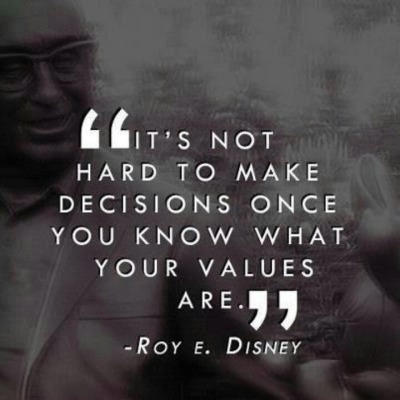
Our values drive our thoughts first, and our behavior second.
Someone who lives, works, manages, and leads with Aloha has it even better. By Managing with Aloha definition, they live, work, manage and lead by merit of their values, coupled with their core beliefs as Alaka‘i Managers.
In other words, the ethos of our chosen values become our gut instincts by default. At the heart of values-based management, are value-aligned decisions and choices. They have become what you trust in, when you trust your instincts.
More often than not, the people you choose as your sounding boards help just a little in shaping your decisions: Where they help most, is in prompting your speed with speaking them out loud and sharing them – they help warm up your voice so your decision can be spoken with confidence.
Choose your sounding board. Start a conversation RIGHT NOW.
Again: Who is waiting for YOU to make a decision, and what are you waiting for?
Related Reading: Nothing’s Final in the Managed with Aloha Workplace.


January 28, 2015
The difference between Should and Should-ing
‘Should-ing’ isn’t a word that’s made it into the dictionary yet, far as I know.
Yet should-ing is probably one of the most useful words I know, part of my vocabulary for a dozen years or so, thanks to Marcus Buckingham, the gentleman who champions the strengths management movement.
Should-ing is a cautionary word about what not to do.
Should-ing
As Buckingham defined it, should-ing is living your life by working within others’ expectations, instead of within your own.
Most of us are beset by the should-ing expectations of others while still in school and in new jobs. We’re vulnerable then, extremely unsure of everything, and we’re starting to realize we live by this ticking clock which counts off the years until we’re “all grown up” and have become “valued contributors.”
Being a grownup is a scary prospect, even to a so-called adult. We haven’t had many experiences to draw from yet, so rather than make our own choices, we listen to our parents and teachers, our coaches and clergy, our bosses, our peers and others — all very well-meaning and genuinely sincere — who give us direction and their counsel. We allow them to do our thinking for us and chart our course.
“Follow in our family footsteps: It’s your destiny.”
“There’s a reason people say you should be a doctor or lawyer.”
“Go to college, and you can figure things out there.”
“Find one of those jobs that still offers a pension, or at least a 401k plan with maximum matching and vesting.”
“We’ve always done it this way, and it’s worked: No one expects you to reinvent the wheel.”
This one is usually within the cacophony too: “Do what you love, and the money will follow.” [If you still believe that, I highly recommend you read this.]
All that direct advice, bluntly telling us what to do, robbed us of crucial practice in telling ourselves what to do, or what to try, or how to dream our impossible dreams. We ran out of time for dabbling or learning the ropes (or so we think) and we just listened to others and buckled down to whatever the task at hand, believing we simply had to learn to do those things better.
‘Whatever’ is pretty yucky stuff. Well-intentioned advice turned into unfortunate limits.
We earn our chops, we do, yet we find we’re saddled with “being reasonable” or “being responsible” when we should do the exact opposite, and push the envelope as hard, and as relentlessly and creatively as we can now that we’ve arrived in our next places. However, we discover that we can’t work within our own expectations, because we haven’t really set any to begin with. No wonder goal-setting is so tough for so many!
And that’s where ‘Should’ comes in.
Should
There is a definite place for “Should” in our vocabulary, when Should means we’ve finally broken free from what others think. We have arrived at the understanding that we are adults now — we’ve become the grownups — and we work on what matters because we can.
We work on what matters.
Deep down in our gut, we know we should, and so we do.
It hasn’t been easy, but that makes it all the more sweet.
Sometimes, this sweet spot in work isn’t necessarily what we’d say we love to do… we work on it because we want it to get done, or we want something catalytic to happen. We have picked ourselves for handling what we deem most important.
We genuinely, and passionately want to accomplish this work of our Should. We want to be able to say we nailed it, and it made some kind of difference in our lives, or the lives of others, because we were the ones courageous or smart enough to do it.
I wouldn’t call it a passion or purpose; not exactly. It may not be a career, or a person’s final destination. Sometimes it’s not that big and all encompassing, but it’s a key part of something else — your Should is tipping point work, or your connector to your next important step.
The key difference between Should and Should-ing is this: The work of Should is the work of personal insight, and self-propelled choice. It can be tough if others don’t like it, or they want to remain connected to you, and likely won’t if you pursue it, but you know you must forge ahead. You must if you’re ever to be true to your own spirit, and your own gifts.
Ho‘ohana and Pa‘ahana
In Managing with Aloha, we call this work our Ho‘ohana: It is the intentional work of what a person has deemed to be important and worthwhile — to them, to their values, and to their Aloha Spirit, no matter what anyone else might think about it. Yet it’s about way more than personal satisfaction: The work itself matters.
Ho‘ohana can often require pa‘ahana — the diligence and perseverance of really hard work, and work where progress doesn’t come easy. Pa‘ahana is often a crucible, a personal test or trial that serves to make people stronger and better for having achieved it. There is growth and reward in the striving.
An affirmation to remember and repeat – loudly!
“I will Ho‘ohana:
I am stronger than this challenge, and
this challenge makes me stronger.”
January is drawing to a close, and like you, I’ve read a lot about resolutions, goal-setting, and list-making. As I’ve previously shared with you, I’ve done coaching on mission and vision as well, weaving what I know to be good business practices into these early weeks of the new year. When I put it all together, this is what I want to leave you with, and have these waning days of January propel us forward with:
Absolutely no more Should-ing.
Do your Should, even if a list of small-kine practice Shoulds for now: They will steadily make you stronger and more confident in the weeks to come, and your goals will grow.
Let’s stop Should-ing all over ourselves, and be selfish in the best of ways.
Let’s define the Should of our Aloha Spirit, and go for it in the months to come.
Then, and only then, will 2015 be the year you’re genuinely hoping it will be for you.

Related Reading: Banish your Possibility Robbers.

January 23, 2015
Seek Bigger Visions
Funny how the world will conspire.
When I posted Seek A Better Mission just before this, I did not anticipate sharing this as a followup. Yet sometimes, something you cannot fathom in one day, will become overwhelmingly obvious the next.
Yes, we need better missions.
We need bigger visions too.
Not bigger in the sense of being more ambitious or grandiose, but bigger as without blinders or shallow sight: We need to work at seeing how our visions of the possible (and probable) future are connected to other happenings in the world. We need to do a better job at seeing their variables, many of which have to do with change we can see right now.
For instance, climate change.
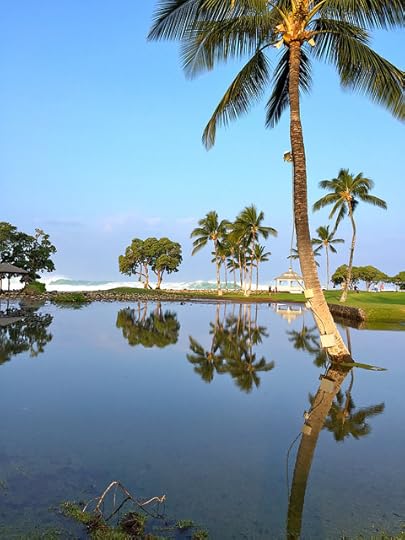
This is not a photo of tropical skies and pretty resort pond reflections. Look in the foreground and you see the landscape rubble. Look in the distance, and you see winter surf roaring. Those tiny people at the shoreline near the gazebo, are watching a Hawai‘i island Fire & Rescue copter drop a basket to a foolish surfer who thought he’d take on the big surf challenge, and failed.
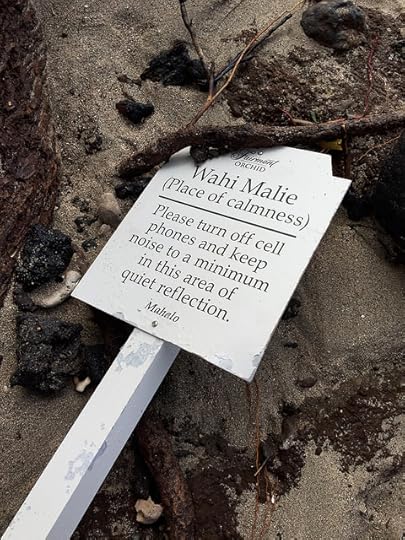
Coupled with seasonal winter surf, the ever-rising, climate-changed high tide at 5:30am the morning of January 22, 2015 brought saltwater inundation, beach erosion, landscape and property destruction to the grounds of the Fairmont Orchid, Mauna Lani, including the historic Keanapou fishpond at Coconut Grove.

My husband works there, and he called in the morning, saying, “Wait until you see the pictures; you won’t believe this.” Patience has never been my strong suit, and he was about to pick up a shovel and pitch into the clean-up effort, so I hopped in my car and drove down to take a look.
In the picture above, I am standing on a grass stage. A huge puddle of seawater covers the green lawn where an audience up to a thousand people strong will often sit, and nearby, a Convention Sales Manager is grilling the hotel’s Landscaping Manager for an answer: “How long before the lawn can be set again? Just how much damage can saltwater do?”
She didn’t like his answer. Having been in her shoes once, I could easily imagine the difficult phone call she would have to make to the meeting planner scheduled to bring guests here next.
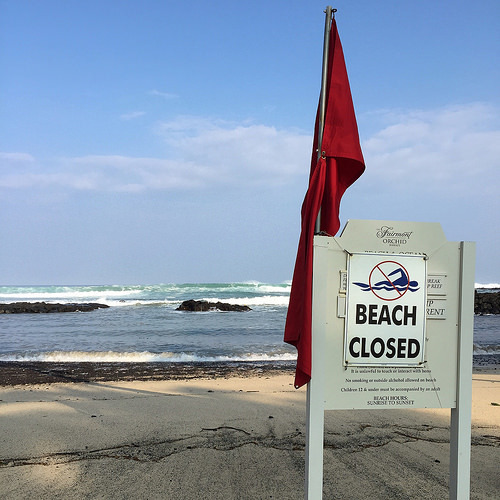
The place is a mess. It can be cleaned up, but healing the land itself takes time.
This beach is normally covered in row upon row of beach chairs, and the wrap-around sidewalk is covered with as much as a foot of sand in parts:

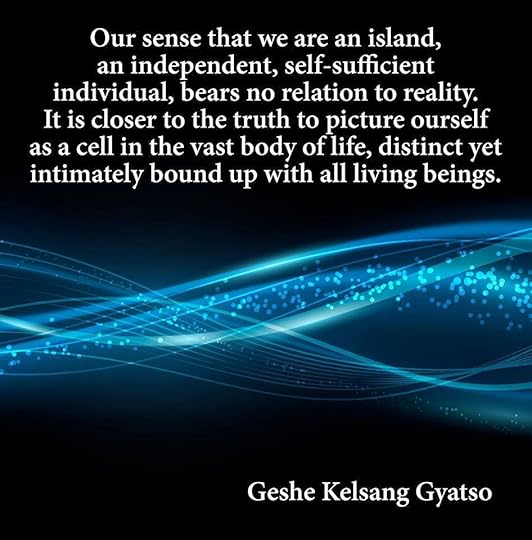
Winter surf can be a problem every year, but this is the worst hit I’ve seen on this stretch of shoreline since we opened this hotel for Ritz-Carlton 26 years ago, even worse than the tsunami that shuttered Kona Village in March of 2011. The difference was wrap-around wave action then, while yesterday was a direct hit and the ever-rising high tide. We simply cannot deny climate change; it is very real, and shoreline developers best take heed in whatever new visions they begin to concoct. Existing landowners have growing challenges ahead, for “sea level” is no longer a fixed variable.
How costly must a deterrent to the broken business model be?
At the Hualalai Resort farther up the coastline, just south of the still-closed Kona Village, shovels had been useless after winter surf since their opening in 1996. They invested in large heavy machinery to move the sand, soil, coral and rock which scatters each winter, and covers guest walkways with rubble. The dunes human labor creates in dealing with the erosion, and in trying to protect their seaside anchialine ponds, are now more than 8 feet deep. I can think of many other ways to use that money, and to direct all the labor expended winter after winter. The initial decision to be so close to the shoreline was faulty to begin with, and costs continue to rise.
A few years later, the developers of the neighboring Kūki‘o residential resort ignored these lessons, and maee the very same mistakes, all to sell “white water real estate” — home sites or amenity buildings close enough to see the waves break near shore.
It was heartbreaking to watch the hotel staff scramble after this latest seawater inundation, and not just landscapers. Banquet staff, engineers, security guards, admin assistants… anyone available picked up a shovel and pitched in. The camaraderie and their “we’ll do what it takes” attitude inspired, as did the kindness of several hotel guests who felt concerned rather than inconvenienced, however it also illustrated just another way the resort hotel development business model has been broken, and has failed to readjust itself.
Bigger visions cannot wait. Fact is, we’re already late in making them happen.
Sidenote and related links:
When these weather calamities hit our southwest shoreline, my soft spot of concern are the anchialine ponds in light of all I have learned about them. I go to check on them first.
If my tone here is a bit direct, the fragility of our limited natural resources are a big part of the reason why. I am wearied by their damage, even after trying my best to see it as Mother Nature’s way. In comparison, our human action, or inaction, cuts to the bone.
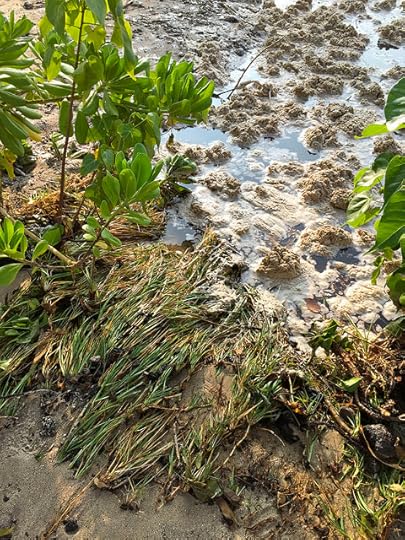
When weather opens a pond up to the sea, they essentially can no longer be considered true anchialine ponds: These are defined as ponds with brackish water having no surface connection to the sea, yet exhibiting tidal rhythms due to a subsurface connection through cracks and crevasses. Anchialine ponds are exposed portions of the groundwater table, and a window into the vast underground realm where virtually nothing is known about numerous creatures that inhabit the earth’s darkness below us. Rare and unique groups of aquatic creatures inhabiting this subterranean realm will come to the pools of the anchialine ponds to feed.
This is a trio of blog postings I had written for Talking Story after the Sendai tsunami of March 2011 reached our shores:
March 13, 2011: Waiakauhi Pond will heal. We will too.
March 15, 2011: What Hawai‘i’s seaside fish ponds can teach us
March 16, 2011: Nature’s watery treasure chestThis is what a large amount of turbulent seawater will do to them:

January 22, 2015
Seek a Better Mission
We’ve been talking about MISSION lately:
1. Here: Speaking with Aloha: Called on a Mission.
2. On LinkedIn Pulse: It’s Time to Affirm your Mission — or Change it.
We often run into a misconception about mission: We think we have to begin anew and start from scratch, coming up with a mission that’s brand spanking new.
Not necessarily. In fact most times, we don’t need new at all. We need to tweak, to adjust, or in drastic cases, apply a defibrillator to it, because our mission has shown the symptoms of being too common, too blah and boring.
The test of a mission is rather simple: Does it get you to jump out of bed in the morning, eager to start your day’s work, or not?

Image courtesy of Front Porch Republic
We all know that a great mission is a meaningful cause. A reason for working on something you feel is important and worthwhile. But beyond the cause, and I would argue even more important, is that a great mission is vibrant, dynamic, exciting, and buzzing with barely restrained energy. It is entirely possible to have a cause that has lost its luster, but remains vitally important, say poverty, or climate change or noble management, and attach a mission to it that gets the luster back, jump starting new work with turbo-charged intentions.
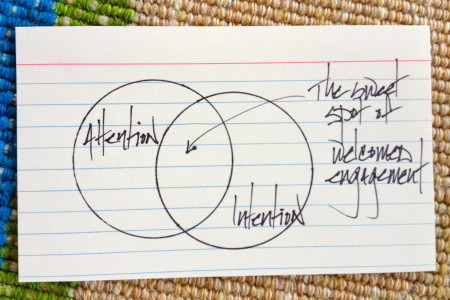
Intention and fresh, highly attuned attention are the operative words — they are what we want to gain when we work on our mission statements. In our current value immersion, it is very easy to apply the value of Ho‘ohanohano to mission as a tweaking and readjustment: What gives your mission the dignity and respect it deserves to command?
Creative types love pointing out that most of what we need as human beings has already been invented, and that those inventions and creations simply need to be better, opening up a whole spectrum of possible work on them.
They’re right. If you think your mission evokes little more than a “meh.” reaction to it, I’ll bet that making it BETTER is what you need to do.
The Mission~Vision Connection is Vital
Second, you must be sure that your refreshed Mission statement does serve this purpose: Working on your mission, day in and day out, will get you to the bundle of accomplishments your vision represents.
To revisit our basic definitions:
Your mission is what you do best every day, and your vision is what the future looks like because you do that mission so exceedingly well.
For remember: Vision is not static and stodgy either. By design, a great vision will get progressively better and better as well.
As you have read, I’m a coach who applies the word ‘cause’ to mission, because I champion getting small wins on a daily basis, not waiting for the too-distant future. Yet the future is bright, and we are optimistic about arriving there: In our Managing with Aloha vocabulary, vision is about the future, and mission is about daily work.
Mission is like an arrow: It points toward the vision it’s working to attain. Once it gets close, and most of the work that mission represents is done, leaders start working on revising or renewing the vision: They reassess what the work has discovered, visualize their next vision, and value-map their next mission.
If they don’t, their company is done.
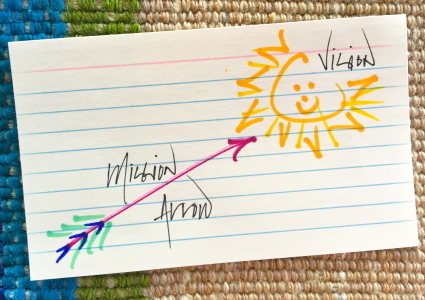
In two words, the vision of Managing with Aloha when published a decade ago, was responsible management. To achieve our vision, we chose value alignment as our mission, and we constantly re-energize with our value immersion focus, as can you: Value Your Month for One — You.
Does that excite everyone? No, but it lights a fire in the eyes of people destined to be Alaka‘i Managers, and they, and those they serve, are the people we (at my business, Say Leadership Coaching) are committed to.
Your Managing with Aloha Resources:
In the book, mission and vision are covered with the value of ‘Imi ola, “to seek life.” In a re-reading, I would suggest you follow it up with a review of chapter 2 on Ho‘ohana as well (book excerpt): Flip-flopping the reading of those two chapters has proven to be helpful to several people I know.
My best advice to you is this: Don’t get overly intellectual about mission and vision, for the best ones are highly emotional — give in to what you want and what you dream of. That simple test — Do they make you jump out of bed every morning? — is the only test you really need.
So go with your gut: Trusting Your Intuition. As personal affirmations, great missions and visions have nothing to do with competing with anyone else — they are only about you and what you want: The instinctive, natural selection of Wanting.

January 19, 2015
Speaking with Aloha: Called on a Mission
In Speaking with Aloha, articulate the mission you feel called to as your affirmation for today.
How does the work you have currently chosen to do, and have scheduled for the day ahead, connect to getting a mission accomplished?
In Managing with Aloha, you start to learn Hawaiian words for values. In essence, they are new labels for values you want to reaffirm or learn in a fresh way. Well, we mostly use English words in Speaking with Aloha, and we want to define them clearly in the English vocabulary we have chosen to use as well. Mission is one of those words, and it’s a biggie.
Remember that an affirmation will energize your self-talk: Your mission is what you do best every day, and your vision is what the future looks like because you do that mission so exceedingly well.
Give this just 5 minutes of your morning:
We agreed to keep these short ~ everything below the photo is optional.
About this Coaching Series for those newly joining us — welcome!
Introduction: Speaking with Aloha: Affirmations for Alaka‘i Managers, and Project Index.
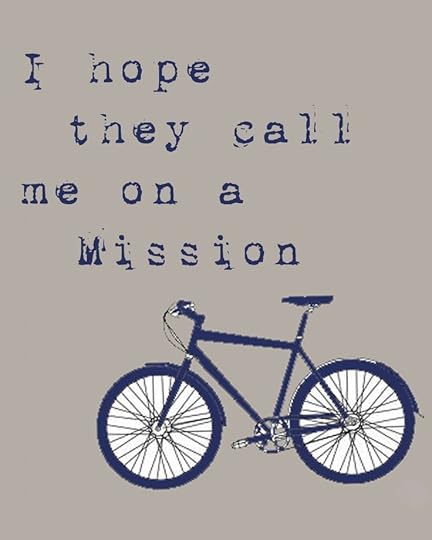
Image: Capturing Joy with Kristen Duke.
Think about this if you’re a manager: Your staff wants you to excite them,
by articulating mission as a calling they can feel compelled to answer.
Optional Archive Aloha resources complementing today’s affirmation:
The Mission Driven Company: Read this essay on RosaSay.com for more on mission and vision in the context of business strategy.
In Managing with Aloha, ‘Imi ola helps us craft our best possible life in business as the value of mission and vision: Review Chapter 3 in your copy of the book, or skim the site index.
Ask the ‘Imi ola questions of a courageous life: ‘IMI OLA: To seek life and strengthen your faith.
You are an explorer.
Your mission is to observe and document the world around you as if you’ve never seen it before. Take notes. Collect things you find on your travels. Document your findings. Notice patterns. Copy. Trace. Focus on one thing at a time. Record what you are drawn to.
~ An affirmation on mission by jrjorgens, as shared by Katie Rodgers

January 17, 2015
Reprise: This January, Slow Down ~ Be a Champion
When I started to queue up this week’s Saturday Archive Aloha, this instantly popped up in my memory though it was written two years ago: This January, Slow Down.
I have been trying to do just that. Maybe you have too? January has this tendency to zoom ahead with a lot of impatience, not all of it the good kind of impatience, and we need to do what is most reasonable for us.
You probably noticed that this past week’s Speaking with Aloha affirmations trickled down to just two postings,
Be an ~INGer on Monday, and
Energy, Managing and Leading on Thursday.
I slowed them down purposely, for each one felt weighty to me: These turned into a review of our basics, as much as being an affirmation. It’s felt great to review our basics, so that’s not a bad thing, not at all. I think it is better to take time when we need it, stretching some affirmations over a day, or two, or even three.
To save you the Reprise click, I’ll repeat the relevance of This January, Slow Down here:
Here’s what I know: An opportunity needs a champion to own it completely before it can amount to anything worthwhile.
And not just any champion. A devoutly committed, singularly devoted and passionately vocal champion, not someone who dips their toes in the water of one opportunity while looking around for the next one.
Meaningful convictions are kind of rare. However they aren’t rare due to limited availability, they’re rare because we human beings are so fickle and impatient; we flit and flutter from one thing to another and don’t execute as well as we’re able to.
If you were to choose one opportunity — perhaps one value, or one key concept [or one affirmation] — and be its champion, looking no further than that for now, you can wallow in the joyful exploration of all its connections. You can foster all the partnerships it can reveal for you, and you can be inspired by every single facet of its character, fascination, and potential for learning. You can see, hear, and otherwise sense that opportunity for all it is, and all it can be.
That’s what I’m going to do.
~ This January, Slow Down (original article link)
So may I suggest something?
If you miss seeing a new Speaking with Aloha affirmation prompting in our project, return to one of the previous ones and recharge it for the day ahead. Be a champion of the affirmations you have already come up with. Speak them again, and commit to them again, for repetition can be a very smart practice (it adds to a manager’s credibility with reliability). Wear them again, and wear them well.


January 15, 2015
Speaking with Aloha: Energy, Managing, Leading
In Speaking with Aloha, managing and leading (ref: Be an ~INGer) are not interchangeable words / verbs for Alaka‘i Managers: We define managing and leading in terms of energy, and we believe that great managers do both every single day.
Human energy is the primary asset in any workplace, any discipline, any industry: Human labor, and the ingenuity of human thought, will create all the other assets we conventionally think of, like time, financing, tools and equipment.
Alaka‘i Managers Channel (M) Good (L) EnergyWorkplace energy functions the same way batteries do for your favorite electronics: You can have the most high tech smartphone or camera in the world, and it will do absolutely nothing if its battery is dead.
Alaka‘i Managers look at their daily Managing / Leading complement through this energy comparison, creating (L) and then channeling (M):
LEADERSHIP is the workplace discipline of creating energy connected to a meaningful vision.
MANAGEMENT is the workplace discipline of channeling that mission-critical energy into optimal production and usefulness.Great managers cannot channel good energies they are unaware of, or energy which doesn’t exist.
Said another way, inspired by the cool art of Tang Yau Hoong seen below, in leading we find our light source, finding the best lights possible, and in managing we turn those lights on and harness their brilliance.
Energize your self-talk with an affirmation based on our energy/ managing/ leading distinctions: What is your current source of leading energies? What is your affirmation (what will you do) with managing those energies in the best possible way? The answer is not just “my people” or “my team” — be more specific. It’s when your team does what? When? How? Why? and as connected to what mission and vision?
Give this just 5 minutes of your morning:
We agreed to keep these short ~ everything below the photo is optional.
About this Coaching Series for those newly joining us — welcome!
Introduction: Speaking with Aloha: Affirmations for Alaka‘i Managers, and Project Index.

Optional Archive Aloha resources complementing today’s affirmation:
There is a powerful 9-word affirmation tucked into this article! Getting the Old to Become New Again: “Most of us relish the newness of January, when the calendar conspires with us to ramp up energies again. And that ramping-up is very inclusive (2015 link update), corralling all energies, whether personal, professional, or randomly inspired. Then we go back to work…”
Alaka‘i Managers are the new Energy Bunnies: 3 tips with more on human energy as a resource ~ We used to call it “Continuous Improvement.”
Extra credit: How does the Energy/ Managing/ Leading affirmation you’ve come up with, relate to our current Value Immersion (humility and dignity)?
A site-navigational tip: Take note of the 3 tags in the post footer for your future reference.

~ Posted on Instagram by @shockabraddah ~
Much Hawaiian kaona in this depiction,
with energy flowing from taro, heart of the island diet in old Hawai’i nei

January 12, 2015
Speaking with Aloha: Be an ~INGer
In Speaking with Aloha, we continue to be ~ingers.
An ~inger is a doer. The magic sauce of Managing with Aloha is in connecting our values to dynamic verbs that will drive better behaviors, our actions of Aloha. For instance, that is essentially what our recent year-end / year-begin exercise was all about.
Our constant ~ingers are the with Aloha verbs that were inspired by Kūlia i ka nu‘u, the value of accomplishment and achievement. We have referred to them as “the 4 Peaks of our mountain climbing” which is the visual of the book’s chapter 5 on Kūlia i ka nu‘u. They are, Living with Aloha, Working with Aloha, Managing with Aloha, and Leading with Aloha.
Speaking with Aloha, is our core ~inger for Key Concept 5: Language of Intention and our “Language of We.”
Energize your self-talk: Ho‘ohana with the ~ing words of your own choosing: What are your favorites right now, the ones that keep you going? For example, READING is currently one of my hot buttons. Write yours in your journal, and turn them into funky drawings or image stamps like the one below. Doodle them everywhere to value-immerse with them. Use them in your affirmations.
Or you can start to be an ~inger with our core constants as Alaka‘i Managers, for these give you a 5-batch of them! Just fill in these blanks: They will create a journal page you can revisit and revise on a weekly basis.
In Living with Aloha, I will _____.
In Working with Aloha, I will_____.
In Managing with Aloha, I will_____. (how do you channel workplace energies?)
In Leading with Aloha, I will _____. (how do you create workplace energies?)
In Speaking with Aloha, I will_____. (how do you walk your talk?)
Give this just 5 minutes of your morning:
We agreed to keep these short ~ everything below the photo is optional.
About this Coaching Series for those newly joining us — welcome!
Introduction: Speaking with Aloha: Affirmations for Alaka‘i Managers, and Project Index.

Optional Archive Aloha resources complementing today’s affirmation:
You can see our funky drawing for the 4 Peaks here: Holiday Zing-ing, inspired by Kūlia i ka nu‘u.
What does the phrase “with Aloha” mean to us? Read more here: Start with two words: “with Aloha”
For even more on verbs, this post will give you a deeper study, as relates to the productivity distinctions in the box copied below: Desk time, Face time, Ho‘o time.
1. Desk time: Engage your brain
_____% Included here, are intellectual verbs like
Planning, Organizing, Thinking, Writing to Learn
2. Face time: Open up, and Be a Good Receiver
_____% Included here, are social verbs like
Watching and Noticing, Listening, Conversing
3. Ho‘o time: Act and Do. Ho‘o means make it happen
_____% Included here, are movement verbs like
Doing, Taking Action, Hands-on Working (verb-specific to the type of work you do)

January 11, 2015
Sunday Mālama: Gandhi’s 7 Dangers To Human Virtue
I have seen this graphic on Pinterest and Tumblr several times:
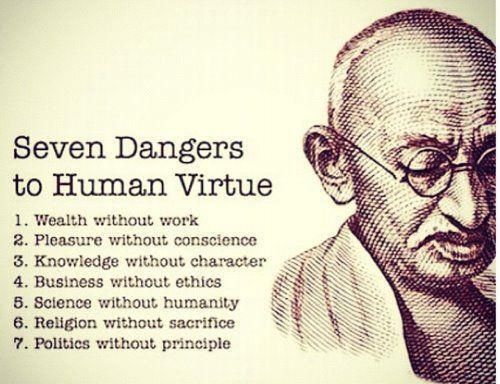
Dangers to virtue? I had to know more.
The Seven Social Sins, sometimes called the Seven Blunders of the World, is a list that Mohandas Karamchand Gandhi published in his weekly newspaper Young India on October 22, 1925. Later he gave this same list to his grandson, Arun Gandhi, written on a piece of paper on their final day together shortly before his assassination.
Another interesting tidbit on Wikipedia, is that Gandhi was editor, but not the author of the list:
Gandhi wrote that a correspondent who he called a “fair friend” had sent the list: “The… fair friend wants readers of Young India to know, if they do not already, the following seven social sins,” and the list was then provided, after which Gandhi wrote that “Naturally, the friend does not want the readers to know these things merely through the intellect but to know them through the heart so as to avoid them.” This was the entirety of Gandhi’s commentary on the list when he first published it.
Gandhi’s grandson Arun is said to have added an eighth social ill: Rights without responsibilities, which I would say is a good addition. We see things like this and think, “Interesting. Good list.” or “That’s cool.” or even, “He was right.” but to add to lists, to disagree with them, edit them or annotate them in some way is much more useful to us as learners and curators if we are to know things well — so good on Arun!
And good on others, as the decades of commentary have obviously shifted these Seven Social Sins to the Seven Blunders of the World, and in current popularity to Seven Dangers to Human Virtue, which is how it grabbed my attention. Context, constraints and connective windows… they make a big difference.
As does readiness. There’s been a delay in my own learning curation, for I pinned this a year ago with the note that, “It would be an interesting exercise to expand these thoughts with our Twelve Aloha Virtues.” Thus, post Christmastide 2014-15, here we are in a Sunday Mālama.
As is my habit, I tend to look at lists like this through 3 different lenses and filters, often mixing them together in pleasing combinations, and in contrary ones: Values, Virtues, and our 9 Key Concepts. Let’s start with a drill-down of everything above this, distilled.
Wealth without work.
Pleasure without conscience.
Knowledge without character.
Commerce without morality ~ “business without ethics” in the graphic.
Science without humanity.
Worship without sacrifice. ~ “religion without sacrifice” in the graphic.
Politics without principle.
Rights without responsibilities. ~ added by Arun Gandhi
1. Wealth without work.
At first take, wealth implies financial assets to most people. As the years have gone by, I’ve preferred to define wealth as well-being: A Sense of Place Delivers True Wealth.
That said, I absolutely agree that achieving wealth in a virtuous way, demands character-building work. There can be extraordinary strokes of luck in life (i.e. good fortune) like a slot machine pull for the megabucks jackpot, but well-being does not happen by accident (ask any lottery winner).
2. Pleasure without conscience.
I think of conscience as our moral compass: It’s the inner voice of our sense of right and wrong. As an inner voice, we achieve no wisdom in fooling ourselves and trying to gloss things over when it comes to ethical matters.
Simply said, it is indeed pleasurable to tell ourselves our truths, because we have asserted those truths with virtuous actions.
3. Knowledge without character.
Boy oh boy, this is a loaded one for me when weaving knowledge into ‘Ike loa, our value of learning, and our preoccupation with “know well.” When I bring it back to a study of virtue, I recall this distinction: Character and personality are not the same thing ~ character is who you are when nobody is looking.
4. Commerce without morality ~ business without ethics
Must say, I like both phrases, for they imply slight differences to me. Within commerce, I think of specific transactions between people (akin to buying and selling, but also in networking), whereas business is a much larger word, encompassing a plethora of complications within business strategy and modeling.
I also tend to think of morality in spirit-spilling (source and beginnings), whereas ethics is what results from deliberate choices made with our ethos… sometimes its good to just look up these words, define them well, and then sit with them, giving in to where they will take you…
ethos |ˈē θ äs|
noun
the characteristic spirit of a culture, era, or community as manifested in its beliefs and aspirations.
ORIGIN mid 19th cent.: from modern Latin, from Greek ēthos ‘nature, disposition,’ (plural) ‘customs.’
5. Science without humanity.
When I think of science and humanity together, I tend to think of our human biology, and how our very physical nature can affect our spirit. Quick link to explain: Scroll down to the subtitle, “Believe in your biology.”
6. Worship without sacrifice ~ religion without sacrifice
Again, I keep both phrases in musing about them here, mostly because I do think worship is a very good verb for religion, congruent to the way I think about it.
Since I largely discard religiousness in favor of spirituality, I take this as my direct route of reflection: What kind of sacrifices become necessary at times, so our Aloha Spirit can achieve its virtuous character? For after all, What is the Aloha Spirit? It’s you!
7. Politics without principle.
Politics, and especially partisan politics, frustrates me like crazy. Can’t speak to it internationally, but American politics and Hawai‘i’s politics on both the state and county levels, are so broken and in need of reinvention.
I vote religiously (guess I can use that word sometimes :) yet I know my Circle of Influence is so small in regard to politics, and that’s my frustration — how does a citizen enlarge their circle effectively, without being an insider and getting into the system via elected office?
8. Rights without responsibilities.
Kuleana shouts for our attention in this one, doesn’t it? Yep.
As in number 7. above, citizenship, civil engagement, and our assorted social contracts come to mind. The argument can be made there are less frustrations here, for the opportunities aren’t all systemic — there are more entry points for us, different ways we can get involved and engage should we choose to.
The villain is an attitude of entitlement, something completely contrary to the notion that virtue stems from our individual actions in earning our character.
The virtues you choose to practice are chosen by your “moral excellence” and by your courage. Character-building, and keeping our virtues free from danger, is not for the faint of heart.
Once he saw a youth blushing, and addressed him,
“Courage, my boy; that is the complexion of virtue.”
~ Laertius Diogenes

Postscript
Traditionally, Sunday Mālama has been when I will share my off-the-workplace-highway scenic route kind of posts. Not as a normal feature, but whenever they seem to be writing themselves.

January 10, 2015
On Batching: The Fewer the Better
For this week’s Saturday Archive Aloha, I had queued up Managerial Batching: 1, 2, 5 and 7 as our article for reviewing/ remembering/ repeating. Batching is a productivity key in the ‘Ohana in Business model of MWA workplace basics (Key 6).
Then I realized, that my suggestion immediately follows an article that was not a good example of that: Goals Change. Values are Forever.
Not only are the values of Aloha a book-batch of 19, I just made them a Hō‘imi-batch of 20.
That’s way, way too much.
Too much to work on at any given time. Please remember my book-written batch of 19 Values, and now, our Hō‘imi-batch of 20, is meant to guide us all year long, and possibly all career long if you seek to be an Alaka‘i Manager prescribing to this calling and these beliefs. These larger batches are outlines, and not really a batch at all. They are reference points, guideposts, and resources.
Values are jam-packed with an abundance of possibilities. In fact, each of the 19 Values of Aloha has an index of its own — click on any one of them in the grey navigational bar atop this page and take a look. [Hō‘imi is not there, to keep the site true to the book, but it has a steadily-populating index now too: Our Hō‘imi tag.]
My coaching business entity, Say Leadership Coaching, can be used as an example. We coach on all the precepts of the Managing with Aloha philosophy, and teach all 19 values, considering these things to be our coaching curriculum. However in the business model of SLC, we focus on just 5 values as our Values Statement:
1— Aloha, 2— Ho‘ohana, 3— Hō‘imi, 4— Alaka‘i, and 5— ‘Ike loa
No matter the batch, batch with fewer.
In our Language of Intention, batching is about grouping like-items together because they complement each other in accomplishing the task at hand. Our Saturday Archive Aloha article, Managerial Batching: 1, 2, 5 and 7 talks about 4 different tasks that benefit from this strategy of complementary batching.
What does that tell us? That we should clearly define the task at hand, before we assemble a batch designed to work on it. Within that batch which results, the fewer the moving parts, the better our focus is likely to be.
Batching is much, much smarter than multi-tasking — or trying to. Study after study has shown that multi-tasking is usually not a good idea. The professed multi-tasker is fooling themselves into thinking they can handle more than one thing at a time with much focus or efficiency: Our brains just don’t work that way.
On to our Saturday Archive Aloha review:
Please read: Managerial Batching: 1, 2, 5 and 7 .
Get a task in mind, one you have scheduled to accomplish in the week to come. As we said above, define it well first: What is your best possible outcome?
Now think about what you will need to do, and see if we can make this useful and practical for you:
Batch of 2, including you — Is there someone you will partner with on that task?
Batch of 5 — What kind of ‘Take 5’ listing might be most relevant in your next-stepping in getting the task done?
Optional Bonus Link, because it’s the weekend and Managers are Readers:
Umair Haque is one of my favorite essay writers, and in the best article I have read in this January’s whirlpool of New Years compositions, he suggests a 1-word batch of 3 good questions to inspire our efforts all the year through:
How to Have a Year That Counts, a 6-minute read on Medium.