Rosa Say's Blog: Managing with Aloha, page 15
January 9, 2015
Goals Change. Values are Forever.
Preface: I must start by giving credit where credit is due ~ I copied my title from Matt Cheuvront because I loved it so much, to the point of jumping out of my chair when I first read it, yelling “Yes!” and smiling the biggest smile of super-charged energy and happiness. I will joyously grab my “with Aloha” alignment parallels from wherever they catch my notice and tug at my spirit, all part of my long-standing habit of running with it.
May I tug at you too? We Hō‘imi kākou, together.
What follows, are my own results with the self-coaching exercise I suggested to you back in November, using the 19 Values of Aloha: Looking back to Hō‘imi Forward. We go forward together.
As a bit of introduction, I’ve found myself emerging from Ho‘omaha 2014-2015 (my holiday biz work sabbatical) feeling tugged by a theme I wish to color 2015 with here on the blog: ALAKA‘I, the value of management and leadership, specifically as leading by merit of one’s good example.
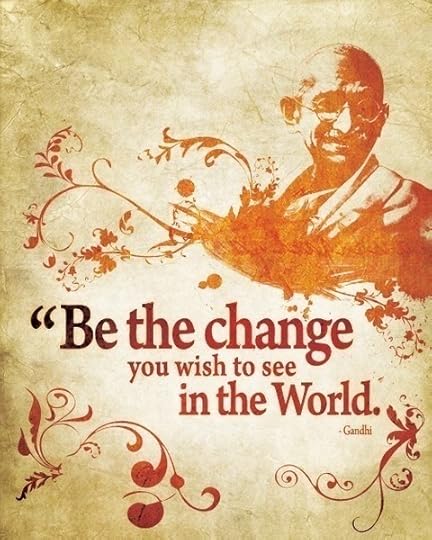
To borrow from Gandhi, let’s be the change we wish to see in our world. Let’s BE in a highly visible way. Let’s be vital to the rest of the world, with Aloha.
I want to focus on the manager as a very unique individual and potentially great boss, one with that ‘profound sense of responsibility’ I had often talked about in my book, and one who has a circle of influence that is much larger and more encompassing than he or she readily imagines.
Several things have collided and blended, making me feel this tug. The Christmastide Project was a big influence on me this year, and our new affirmations were their willing accomplices. There were glorious wins and accomplishments begging me to start new ones.
And yet… the world is getting more complicated, and it could be said, more dangerous — more difficult to navigate with much confidence. We turn off the news because it’s too negative and depressing, and we prefer not to know over knowing well, genuinely believing ignorance can be our bliss, and choosing to dwell in our self-protective shells. There are too many young people hesitating to start families because they worry about the perilous world they dare to bring new lives into, or how the cost of living keeps escalating. There are too many in my own generation who say, “Goodness, I’m glad we’re not parenting children these days [or starting a new business, or applying for a job, or… ] it’s far too dicey a proposition.”
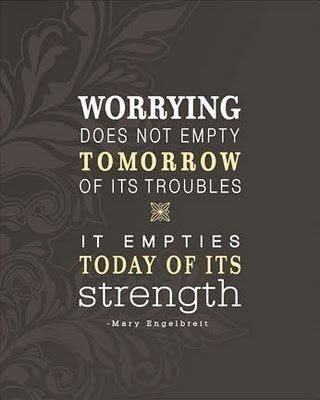
Probable Truth:
We do not see things as they are. We see them as we are.
What we should say, is “What a wonder-filled world we live in… it is so good to be alive! What else can I do to enjoy more of it? Where can I be next?”
Those optimistic words, and the marvelous feelings that go with them, are what we who live, work, manage and lead with Aloha, can give. We can give it by demonstrating it, by speaking it, and by doing everything we can to create a more healthy, virtue-abundant sense of place within each place we touch — each place we grace with our Aloha Spirit.
So after sitting with, playing with, and sleeping on drafts of my Hō‘imi exercise in the weeks since I shared it with you, this is what I came up with. It’s my version of Ka lā hiki ola and Alaka‘i in a thematic 2015 value pairing wherein I fully recognize and embrace this certainty in life: Goals change, values are forever.
If you are new to the blog and our tribe, click back to Looking back to Hō‘imi Forward before you proceed: You will read about the objective of our exercise, and see the template that we started with.
2015, we embrace you wholeheartedly, with Aloha.
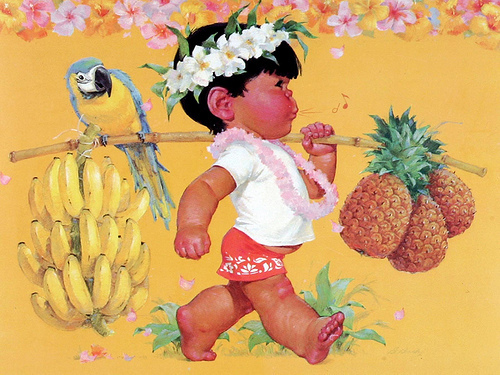
One of the Dole Hawaiian Kids, by Barbara Bradley
1. Aloha ~ Spilling one’s Aloha Spirit
I intend to keep talking story about ‘spirit-spilling’ — about my core belief that everything we need to be happy and successful is within our own spirit’s capacity. When we live with Aloha we spill it out in a sharing with others that is uniquely, and magnificently our own. Personal signature. Professional branding. Call it the spirit’s DNA — humanity is the most wondrous magic which exists, and my hope is that we cease to fear any part of it.
2. Ho‘ohana ~ Worthwhile Work of choice
I intend to bring this assertion back into our attentions: Jobs are too small for people. In our vocabulary, ‘work’ is a big word, a multi-faceted, all-encompassing word, and a generous word worth celebrating and worth dwelling in. We shine in work as the beautiful expression of whatever we choose to focus on and labor in, to produce the deliciously nourishing fruits of that labor. To ‘work hard’ is to Ho‘ohana in a highly intentional way, knowing how important our work is to us, and to others.
Inspiration exists, but it has to find you working.
— Pablo Picasso
3. ‘Imi ola ~ Personal Vision in Professional Mission
I intend to keep talking about how exciting and promising vision can be, and how mesmerizing and fulfilling the mission to attain vision can be. We gain our ‘best possible life’ by creating it — we make our futures happen rather than standing still and letting some indiscriminate fate happen to us. We are assertive, we are confident, and we are courageous. Thus we choose vision and mission purposely as our trusty tools.
4. Ho‘omau ~ Tenacity, Persistence and Resilience
I intend to be stubborn in the best of ways: I intend to be tenacious, persistent, and resilient in our beliefs and our calling, our values and our virtues, for they are the ingredients of our character, and the building blocks of our workplace cultures. We will be stubborn about the goodness and grace of Aloha as our brand of perseverance.
5. Kūlia i ka nu‘u ~ Striving in Adventurous Work
I intend to strive with you. We can merit from the striving even when we can’t quite articulate the accomplishment or achievement we aim for, until we have more experience within the doing. Let’s seek more adventure. It often helps to ‘Begin with the End in Mind,’ a coaching that has given us past success, but that foresight isn’t always necessary. Think about Ho‘ohana again: We ‘dwell in working’ within the striving, allowing our work to forge previously unseen pathways and uncover unexpected beauty. We pause on cliffs, summits and peaks when trailblazing simply to enjoy the view, and to see the wonder surrounding us.
6. Ho‘okipa ~ Being of Service in Aloha
I intend to be of service to others in whatever way I can, with Aloha. Equally important, I intend to notice it more, when I receive the service of Aloha from others. I do believe that a very big part of being the change we wish to see in the world, is taking the time to seek it out, notice it appreciatively and more proactively, coaxing it out of hiding. I intend to catch people when they do something right and anything good, to celebrate them, to congratulate them and cheer them on, and to thank them.
7. ‘Ohana ~ Good People surround us
Back in 2013, we started talking story about ‘Ohana as ‘rallying the tribe’ and the vocabulary stuck: I fully intend to be tribal — to dwell in our Ho‘ohana Community and ‘Ohana in Business as a very gregarious sense of place, and not solely as a business model. In ‘Ohana we find our sense of belonging, our sense of camaraderie, and our sense of wanting to share our service with others as Mea Ho‘okipa. We find constant, yet uplifting challenges to be our better selves for others.
A small group of thoughtful people could change the world.
Indeed, it’s the only thing that ever has.
— Margaret Mead
8. Lōkahi ~ Standing up for individual role, Collaborating with strong teams
I intend to manage with Lōkahi. This one is strongly connected to a value pairing with Ho‘okipa, where we look for the strengths in others, allowing them to lead us with the merit of their good example. We become purposeful followers and conspirators within the team fabric of individual strengths, and we stand tall by strengthening the thread we ourselves represent, knowing others count on us.
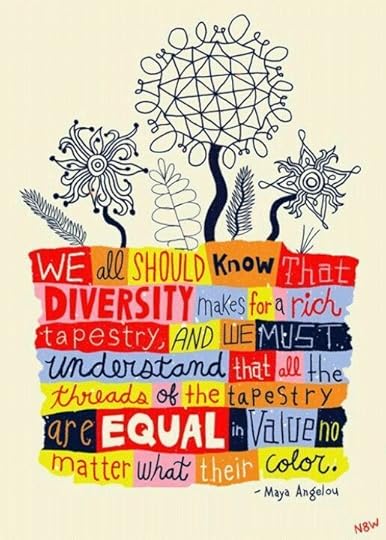
9. Kākou ~ Speaking with Aloha in all communications
I intend to think twice before I speak (and sleep on whatever I write before I publish it!) so I can be absolutely certain I am speaking with Aloha, and from the sense of place Aloha is creating for us. I intend to focus on the inclusive coaching of Kākou, and on our Language of We. The tagline of Managing with Aloha cites the universal nature of our values, and practicing inclusive thinking helps us appreciate our universality, something so crucial in sharing Aloha, and speaking it.
10. Kuleana ~ Taking on responsibility, New readiness in accountability
I intend to play with edges, and seek the ‘adjacent possibility.’ When I reflect on “goals change, values are forever” I quickly recognize how much Kuleana has changed for me over the years in such great ways. It’s changed me. We tend to think of responsibility as quite restrictive in its focus, believing such concentration will help us own accountability more completely, but the truth of the matter is that choosing Kuleana for oneself enlarges capacity — it makes us bigger receptacles for whatever life can offer us.
“Adjacent possible” is an environmental condition we learned about in Steven Johnson’s book, Where Good Ideas Come From: The Natural History of Innovation:
“The phrase captures both the limits and the creative potential of change and innovation… the adjacent possible is a kind of shadow future, hovering on the edges of the the present state of things, a map of all the ways in which the present can reinvent itself” — if you, as manager, are willing to take that leap into a better future, bringing your workplace with you.
“The strange and beautiful truth about the adjacent possible is that its boundaries grow as you explore them,” wrote Steven Johnson in the Wall Street Journal, “Each new combination opens up the possibility of other new combinations. Think of it as a house that magically expands with each door you open. You begin in a room with four doors, each leading to a new room that you haven’t visited yet. Once you open one of those doors and stroll into the room, three new doors appear, each leading to a brand new room that you couldn’t have reached from your original starting point. Keep opening new doors, and eventually you’ll have built a palace.”

Know this: Your path of adjacent possibles has led you to a unique moment in time, and it’s all yours for the taking.
11. ‘Ike loa ~ Lessons Learned, and the 2015 Study
Lessons-learned beg repetition, and our faithful practice if we wish to retain them. However I intend to have ‘Ike loa help me stay flexible — to bend with change, being open to changing our minds, yet bending without breaking, fortified by the sinewy strength and constancy of our values. When we choose change, we shift toward more value alignment. We can streamline in our Palena ‘ole way of unlimited capacity, embracing our adjacent possible. These are not opposing concepts, but harmonious ones.
12. Ha‘aha‘a ~ Humility opens us up, triggering Initiative
I intend to continue exploring how humility pairs with initiative. I had written my new essay on Ha‘aha‘a for our Ke Ola partnership as a bit of a challenge, and I think it is a good essay for us to periodically revisit as we look ahead to so many fresh starts in 2015: As I explain there, we can think of Ha‘aha‘a as an invited abundance. I intend to be a really good receiver of that abundance, more than I’ve ever been before.
13. Ho‘ohanohano ~ Distinctive behaviors in Dignity and Respect
These reflections on our 19 values of Aloha, stemmed from our “Looking back to Hō‘imi Forward.” In my looking back, I tried to simply recall our keeper words, those words that have worn certain values as their Sunday best suit of clothes. For Ho‘ohanohano a trio locked arms, very likely to our current value pairing with Ha‘aha‘a: Demeanor, behavior, distinction. I intend to embrace their usefulness. Dignity and respect should not be elusive concepts in any workplace.
14. Alaka‘i ~ Managing or Leading in All we Do
My intention is to color 2015 with Alaka‘i specifically as ‘leading by merit of one’s good example.’ Let’s BE the change we wish to see in our world. Let’s BE in a highly visible, and tangibly good way, bringing more hope and wonder into our circles of influence. Let’s be vital to the rest of the world, with our Aloha signatures stamped everywhere with a flourish. Let’s set the best possible example we can as managers and as leaders in all the work we do.
15. Mālama ~ Defining one’s Stewardship
After a decade of doing what I do, my reflections surrounding the 10th birthday of Managing with Aloha would consistently end in some variation of this question: What kind of steward of this philosophy for worthwhile work will you continue to be going forward? It’s been a question of intention for me, for sure, but also a gentle, encouraging proposition; an invitation to renew and reinvent. Think about the care-filled stewardship of Mālama in your own circle of influence: What kind of steward and champion do you intend to be?
16. Mahalo ~ Appreciation, Thankfulness, and Gratitude with Action
I intend to connect Mahalo with many more visible actions: On the one hand, we all can take the time to notice more, and say “thank you” more than we do. Combining all our senses, hands, head, heart and soul, we certainly can demonstrate Mahalo through more evident and meaningful actions. We can add so much to our words in what we do, and what we choose to give, having our actions speak volumes on our behalf.
17. Nānā i ke kumu ~ Sense of Place and Best Health
When we “look to our source,” sense of place and healthy well-being is prominent — as they should be. In looking back at our recent discussions here, I’ve recharged my intent to further develop our tribal ecosystem as connected to Sense of Place. In ‘seeing forward’ I think about the concept of Ma‘alahi — places of contentment at our sources, and their inherent ‘persuasion of calm.’ I know Hawaiian kaona can sound somewhat mystical, and this year we will make these concepts more practical.
18. Pono ~ Sense of Balance and Integration
I intend to work on my Pono muscle mass. I used to think that attaining balance was a fast track to everything Pono. Well, I’m less naïve about that with each passing day. Attaining the well-being of Pono in rightness and balance takes constant work and value intention, and you know what? That constancy in attention is a good thing. We achieve Pono in doing what it takes while we reach for it, and as we work on it. Pono is a muscle that must be continually exercised and strengthened — it’s exercise in being able to receive and deal with whatever adversity comes our way.
19. Ka lā hiki ola ~ Sense of Hope
I intend to keep reminding myself, and you can bet I’ll remind you too, that practicing the self-leadership in the value of Ka lā hiki ola, is our sense of hope — it’s what gets us out of bed each day, ready and willing, eager and excited about greeting the dawning of each brand new day. Many of those wake-up moments loom ahead of us in the dawns within 2015, and we’ll be poised to receive them with Aloha, and step into them, up close and personal.
20. This year, we add Hō‘imi ~ Looking forward with Positive Expectancy
Knowing that goals may change, but values are forever, I intend to keep this entire exercise foremost in our attentions! As 2014 drew to a close, I resisted penning another of those year-end recaps so many writers and bloggers will do, because I was weaving our own into this instead, our Hō‘imi going forward.
I intend…, I intend…, I intend…
I wrote these value-inspired paragraphs this way with deliberate purpose. Intention is an old favorite in our vocabulary because it begs for a constant influx of new energies, and Managing with Aloha is not a sitting still kind of endeavor!
On the one hand, I don’t want to bombard you with my missives, but I fully intend to continue with our affirmations for managing better as well — they help me be better too. I hope they are lighting small fires for you in the way they are doing so for me!
So now I must ask you: What do you intend in your Managing with Aloha practice? How did our exercise, Looking back to Hō‘imi Forward manifest its positive expectancy for you?
Please understand I share all of this with you to be clear on my intentions up front, for as a subscriber you have every right to know what you can expect here, but also to follow-up, to walk my talk, and give you an example of how the exercise I asked you to consider played out for me — I did it too, and I’m so glad I did!
We are going to have a very, very good year. I feel it, and I welcome it, with Aloha, and with you.
I know this was a long one, thank you for reading,
~ Rosa


January 8, 2015
Speaking with Aloha: Circle of Influence
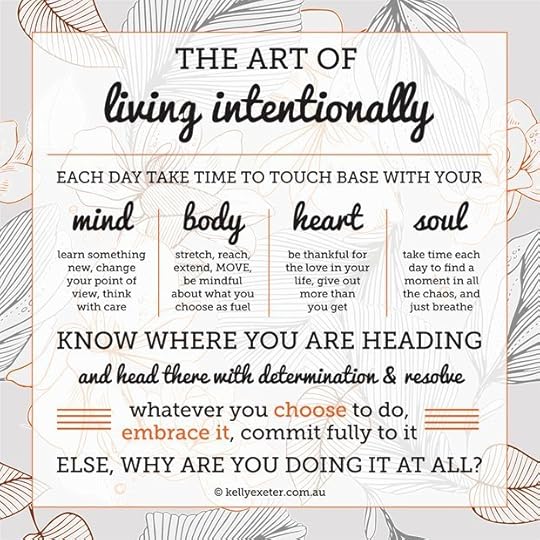
In Speaking with Aloha, articulate your Circle of Influence in your journal.
Said another way, what do you consider to be your current lay of the land and what possibility there can affirm the day’s efforts? Trust me, you DO have influence. How so?
Energize your self-talk: End your journal entry by phrasing it as an “I will___” affirmation which affirms your eagerness and excitement with owning your circle, with the dignity of distinctive demeanor — this will then be part of your personal value immersion with Ho‘ohanohano as well!
Give this just 5 minutes of your morning:
I promised to keep these short ~ everything below the photo is optional.
About this Coaching Series for those newly joining us — welcome!
Introduction: Speaking with Aloha: Affirmations for Alaka‘i Managers, and Project Index.
Optional Archive Aloha resources complementing today’s affirmation:
You will find the definition of Circle of Influence in this article: Hana ‘eleau: Working in the Dark.
Visit this page on RosaSay.com to see our Say Leadership Coaching examples of “I will___” affirmations.
We currently “value our month” with Ha‘aha‘a and Ho‘ohanohano, the values of humility and dignity. Could you weave humility into this affirmation as well, perhaps as a refining edit?
“Proactive people focus their efforts in the Circle of Influence. They work on the things they can do something about. The nature of their energy is positive, enlarging and magnifying, causing their Circle of Influence to increase.”
“Reactive people, on the other hand, focus their efforts in the Circle of Concern. They focus on the weakness of other people, the problems in the environment, and circumstances over which they have no control. Their focus results in blaming and accusing attitudes, reactive language, and increased feelings of victimization. The negative energy generated by that focus, combined with neglect in areas they could do something about, causes their Circle of Influence to shrink.”
— Stephen R. Covey, The 7 Habits of Highly Effective People: Powerful Lessons in Personal Change (25th Anniversary Kindle Edition)

January 7, 2015
Speaking with Aloha: Affirmations for Alaka‘i Managers, Round 4 with Markers
Looking back: If we put all the holiday stuff aside, as joyful as it has been, we primarily had 3 things going, and still do.
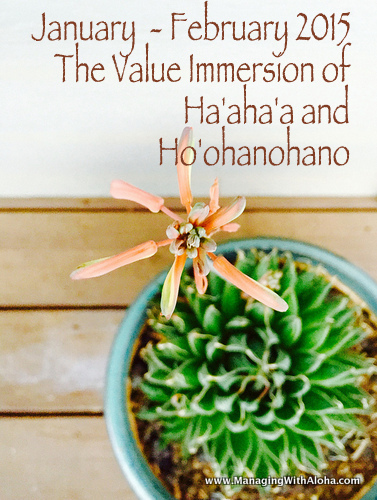
1st our values constant: we have shifted to The Value Immersion of Ha‘aha‘a (humility) and Ho‘ohanohano (dignity) as our value pairing for January and February — we’ve updated our Value of the Month program with a pairing we work on every 2 months. 2nd, we were talking story about piloting projects and this as one suggestion. The 3rd thing was an optional, but very highly recommended self-coaching exercise: Looking back to Hō‘imi Forward.
Going forward:
On our value pairing, just stay tuned (subscribe!) and continue with your own immersion (Start). In case you missed it, here’s the link to my complementary essay just published January 1st: Ha‘aha‘a, the value of humility.
I have the follow-up on our Hō‘imi Forward exercise queued up to publish here Friday, January 9th.
There will be more on the goodness of piloting projects, as we demonstrate how projects can be much easier to tackle than we often anticipate they will be. If you wish to, you can skim the archive tag to see what it’s already populated with. Our current project together, builds a habit of using daily affirmations to inspire us, as the Alaka‘i Managers we aspire to be. Read on, for that is what the rest of this post is about.
As Preface to the Affirmations:
This was Round 1, a beginning of our efforts to be better managers. This was Round 2. I’m counting our Christmastide 2014-2015 project as Round 3, and this is a new category link: Project: Affirmations.
It’s fun to change it up, don’t you think?
Our Daily Affirmations, Round 4
You will often hear/read me say, If we are to walk our talk, we better have a good talk.
Our Language of Intention (Key 5) is crucially important. The language we choose, and the vocabulary we use, compels us to quicker, more confident decision-making in self-leadership. And while quick, those decisions are not impulsive, for within Managing with Aloha culture-building, we cultivate a language based on values and on intentional value alignment.
“Once you’ve mastered a particular language, you’ve also mastered a means of thinking. You understand how to decompose a problem into knowable units, and you learn how to intertwine those units into pleasant and functional flow. Perhaps you’ve figured out how to get that flow to perform at Herculean scale. There is no doubt in my mind that this is an essential and valuable skill for anyone to learn and master. However, there is a language you could master that teaches many of the same lessons, appears far more forgiving in terms of syntax, and has immediate broader appeal. The language you can learn is your own.”
~ Please Learn to Write, the Language You Can Learn is Your Own
– Michael Lopp, Rands in Repose
In the affirmations we begin 2015 with, we will concentrate on our language and our vocabulary. We will revisit, freshly learn, and newly affirm how we as Alaka‘i Managers Speak with Aloha.
Our 2015 Kick-off: Speaking with Aloha
We start tomorrow.
For a preview today, and even if you’ve read these before, please review:
Managing with Aloha’s Lexicon Morphology.
Conceptual Index. This is our resident Resource Page. Just read the intro and skim to be familiar with it, I do not expect you to take all those links, nor do I suggest it, for essentially, Round 4 of our affirmations will cover them in small daily bites.
Just as a navigational reminder: Remember you can read more articles on Key 5, indexing Language of Intention, by taking the category link found in the right column of the blog. If you normally read our updates via RSS, please click in to see how that entire column has been updated recently.
I do have a formatting update to tell you about as well. In the feedback I have received on Rounds 1 – 3 of our affirmations, several people have told me they much prefer having them here on ManagingWithAloha.com rather than on Ho‘ohana Aloha, our Tumblr. Your wish is my command! My caveat to granting that wish however, is that the affirmations might not continue to be daily… I truly do not wish to bombard you, and I will skip those days I have other meaty articles set to publish.
The affirmations will be kept short, promise! I will also continue to add them to Managing with Aloha’s LinkedIn group page for the sharing and talking story done there.
Affirmations and Speaking with Aloha
To affirm something, is to articulate it clearly in your own mind, and then state it with confidence as your intention. We affirm our intentions with our actions.The affirmations which result, get more and more effective in commanding your attention to them, when they are repeated with some regularity.
What I love about affirmations most, is the way they contribute to, and constantly will reinforce our values, and thus, our ethos of behavior: Ethos: Be true to your Values. Affirmations themselves, as practice, will directly reinforce the values of Ho‘ohana (our actions), ‘Ike loa (our learning), Ho‘ohanohano (our demeanor), and Mālama (what we are stewards of).
And let’s not forget Kākou (how we communicate): As an effective manager, you cannot “walk the talk” (a common expectation from your staff I’m sure you’ve heard before) until you talk that talk first. Make your talk the speech driven by good affirmations. Speak with Aloha.
“As a parent and as an employer, you really need to know what you stand for, know your values — and not only know them, but also be able to articulate them. … I have the same values at home that I have at work, and I think it’s important that there is no distinction … you need to be truthful, you need to be the same person, you need to live your values.”
~ Tina Roth Eisenberg, a.k.a. Swiss Miss, “an epic design maven who creates fascinating cultures and conversations.”

January 6, 2015
On the 6th Day of January: Epiphany
And Christmastide 2014-2015 comes to an end. I do hope you enjoyed it these last 12 days! This final post in our mini project pilot, gives us a sort of virtuous baker’s dozen.
If you ever wish to reflect back on these virtues, the quickest way to find it in the archives is via the new “Project: Christmastide” category link now in residence within the right-hand column of the blog.
Project Christmastide: Christmas 2014 – Epiphany 2015Project introduction: Values or Virtues? Both!
On the 1st day of Christmas: Wonder
On the 2nd day of Christmas: Prayer
On the 3rd day of Christmas: Grace
On the 4th day of Christmas: Gratitude
On the 5th day of Christmas: Faith
On the 6th day of Christmas: Peace
On the 7th day of Christmas: Humor
On the 8th day of Christmas: Hope
On the 9th day of Christmas: Vitality
On the 10th day of Christmas: Freedom
On the 11th day of Christmas: Trust
On the 12th day of Christmas: Joy
Project Index Page and origins: The Twelve Virtues of Aloha.
Epiphany? It’s a bookend of sorts.
I don’t consider myself a religious person, and I’m no longer the ‘practicing Catholic’ I was raised as, which thankfully, my parents and siblings understood and embraced as my own choice in the matter after they’d done their part in introducing me to the option. That said, there’s no denying their ‘introduction’ was quite effective: While I try to temper them, I readily recognize the Christian tendencies in a lot of my writing, and you probably do too.
10+ years later, this still applies, as I’d written in Managing with Aloha within Chapter 1 on the value of Aloha:
“As you read on, I ask you to keep something in mind whenever I use the words “spirit” or “spirituality.” Where I say spirituality, I refer to the spirit within; you could call it the breath of your life, the voice of your soul. For me, the individual religions of the world are merely different expressions people have for their own spirituality within them, and they have made a choice as to who they will honor in their gratefulness. I am not suggesting religiousness; that is your own choice. However I do believe that we should acknowledge our own spirituality and get comfortable with it. One’s inner spiritual power is assumed in the Hawaiian culture, and it is celebrated. In many ways Managing with Aloha is about tapping into the spirit that is inside of you; it embraces your intuition and gut level feelings.”
I admire intuition so much; I think about it as human magic woven into our beautiful biology. For more… Trusting Your Intuition and Intuition x9.
Today, the celebration of Epiphany is one of my Christian keepers primarily as a calendar marking: ‘Epiphany’ has been noted on January 6th for as long as I can remember, as Three Kings Day, and the morning dawning after the 12th Night. My mom calls it “Ka lā hiki ola for Jesus.” January 6th was the day the nativity créche was put back in keeping for a year, and the Christmas tree was undecorated, chopped up, and put at the curb. Thus Epiphany is the bookend of our project this season, and tomorrow I will have another post up on what we start with next.

For now, and for anyone who wishes to know more about Epiphany from a worldly perspective, I thought this write-up from the Huffington Post last year was quite well done, and as brief as many of the stories and legends will allow. You can read more and see a very interesting slideshow of universal practices here: Epiphany 2014: Dates, Customs, Scripture And History Of ‘Three Kings Day’ Explained with photos. A link-free excerpt:
The Feast of the Epiphany, marking the end of the 12 Days of Christmas and the new season of Epiphany, is observed on Monday, January 6, 2014.
Epiphany — which is variously known as Theophany, Three Kings Day and El Dia de los Tres Reyes — is a Christian celebration of the revelation of the birth of Jesus to the wider world. This is embodied most in the story of three wise men visiting a newborn Jesus with gifts, found in the Gospel of Matthew 2:1-12.
In this story, Magi (wise men) from the east follow a star to Jerusalem, where they ask the presiding king, Herod, what he knows about a newly born “King of the Jews.” This sounds like a challenge to Herod, who gathers his priests to learn where and who is this king. They relay a prophecy that Messiah will be born in Bethlehem, and Herod sends the Magi there, saying: “Go and search carefully for the child. As soon as you find him, report to me, so that I too may go and worship him.” The wise men — Gaspar, Melchior and Balthasar — eventually find Mary and her son, Jesus, to whom they bow and worship. The Magi give Jesus gifts of gold, frankincense and myrrh, and then return home, for a dream told them to bypass Herod.
While Roman Catholic and Protestant Christianity focuses on the story of the Magi, Eastern Christians, like the Greek Orthodox, celebrate the baptism of Jesus on Epiphany and consider the day to be more important than Christmas.
Update: Found this morning, wherein Pope Benedict XVI, Epiphany Homily (2011) explains the significance of those Gifts of the Magi:
“They had brought gold, incense and myrrh. These are certainly not gifts that correspond to basic, daily needs. At that moment, the Holy Family was far more in need of something different from incense or myrrh, and not even the gold could have been of immediate use to them.
But these gifts have a profound significance: they are an act of justice. In fact, according to the mentality prevailing then in the Orient, they represent the recognition of a person as God and King, that is, an act of submission.”
This is probably something I did learn a long time ago as a child, but I had forgotten it, and as an adult this has much more meaning to me. I cannot think of a current instance where an act of submission is thought of as a good and glorious event worth so much celebration.
Yet this is our world, and we are the ones who can make it ever better.
Ka lā hiki ola ~ it’s “the dawning of a new day.”

Myrrh was used as a spice in ancient times,
and frankincense was nearly as costly as gold.

January 5, 2015
On the 12th Day of Christmas: Joy
Aloha nui my friends,
It is the 12th Day of Christmas, and this evening is widely known as 12th Night, a festival night for many.
I invite you to celebrate the virtue of Joy with me: We have so much Joy to look forward to in this shiny new year!
JoyHappiness with more than contentment.
Happiness with bliss and euphoria.Silliness without self-consciousness.
The holidays are so perfect for splashes of joy in color, in song, in tinsel and texture, even in the scents that fill the air. But most of all, in people’s faces.
~ Twelve Aloha Virtues

Values or Virtues? Both.
What small actions can you take today, to feel the virtue of joy surge in your every fiber of well-being?
Which values help you feel more joy or give joy to others when you practice them?
Project Christmastide: Christmas 2014 – Epiphany 2015Project introduction: Values or Virtues? Both!
On the 1st day of Christmas: Wonder
On the 2nd day of Christmas: Prayer
On the 3rd day of Christmas: Grace
On the 4th day of Christmas: Gratitude
On the 5th day of Christmas: Faith
On the 6th day of Christmas: Peace
On the 7th day of Christmas: Humor
On the 8th day of Christmas: Hope
On the 9th day of Christmas: Vitality
On the 10th day of Christmas: Freedom
On the 11th day of Christmas: Trust

January 4, 2015
On the 11th Day of Christmas: Trust
Aloha nui my friends,
It is the 11th Day of Christmas, and I invite you to celebrate the virtue of Trust with me:
TrustWe can have a sense of wonder because we can trust.
People tend to be kind of needy, and that’s okay. When we need others we learn to trust and be trustworthy in our relationship building.
We learn to love more, and play more.
We learn to have faith in each other.
We cultivate magnetic attractions to good intention.
“The knots of two souls are stronger than the knots of two hearts.”
— Shar Daula

Values or Virtues? Both.
What small actions can you take today, to feel the virtue of trust strengthen you and your capacity for belief?
Which values help you feel either trusted or trustworthy when you practice them?
For a virtue to become a true character trait, it must happen.
There must be self-propelled actions which stemmed from our values to produce the kind of moral character we will be proud to call our own, as we recently spoke of here: Values are Shaped by a Heritage of Doing.
Project Christmastide: Christmas 2014 – Epiphany 2015Project introduction: Values or Virtues? Both!
On the 1st day of Christmas: Wonder
On the 2nd day of Christmas: Prayer
On the 3rd day of Christmas: Grace
On the 4th day of Christmas: Gratitude
On the 5th day of Christmas: Faith
On the 6th day of Christmas: Peace
On the 7th day of Christmas: Humor
On the 8th day of Christmas: Hope
On the 9th day of Christmas: Vitality
On the 10th day of Christmas: Freedom

January 3, 2015
On the 10th Day of Christmas: Freedom
Aloha nui my friends,
It is the 10th Day of Christmas, and I invite you to celebrate the virtue of Freedom with me:
FreedomFreedom is something we take for granted much too much.
Think of all the ways you are unshackled and free to make your choices, and it becomes clear that most of us know no other way to live.
Within virtue, we set our hearts free.

Values or Virtues? Both.
Set yourself free: Can you remember who you were before the world told you who to be?
What small actions can you take today, to feel the virtue of freedom liberate you?
Which values help you feel truly free when you practice them?
Project Christmastide: Christmas 2014 – Epiphany 2015Project introduction: Values or Virtues? Both!
On the 1st day of Christmas: Wonder
On the 2nd day of Christmas: Prayer
On the 3rd day of Christmas: Grace
On the 4th day of Christmas: Gratitude
On the 5th day of Christmas: Faith
On the 6th day of Christmas: Peace
On the 7th day of Christmas: Humor
On the 8th day of Christmas: Hope
On the 9th day of Christmas: Vitality

January 2, 2015
Start
January is for starting.
You can start at any time, really, (and in these parts, we do) but in January the world conspires, we recharge with heritage and our values, and energy flows more than it ebbs.
So go for it.
“Start now. Start where you are. Start with fear. Start with pain. Start with doubt. Start with hands shaking. Start with voice trembling but start. Start and don’t stop. Start where you are, with what you have. Just … start.”
—Ijeoma Umebinyuo (source)
Start with the value of Ha‘aha‘a as initiative with an invited abundance.
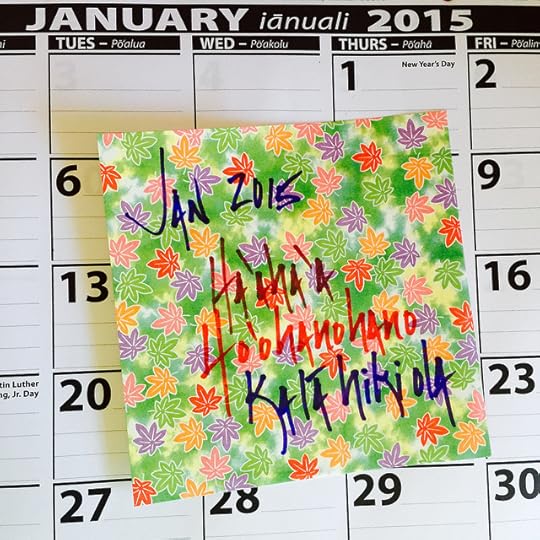
One of the ways I will start simply, but very effectively, is to hand-write my chosen value immersions (currently hope/Ka lā hiki ola, Ha‘aha‘a and Ho‘ohanohano) on slips of paper everywhere I am sure to see them, and continually be reminded of them. Colorful post-it notes work really well for this, as do notes on my smartphone, and being an analog/tactile/handcrafting kind of girl, I write reminders on origami papers.
It’s all spirit-spilling: Indulge in your own habits and hobbies to connect them to your values, and celebrate who you already are, as well as who you intend to continue being.
Yes, we are excited about our prospects with everything shiny and new.
No, we do not discard the old which has proven to be so good to us, and good for us.
~ January~February 2015: The Value Immersion of Ha‘aha‘a (humility) and Ho‘ohanohano (dignity)
Need a bit more? Try one of these:
Start with two words: “with Aloha” ~ good read if you are just getting started with a focus on values, and value alignment.
Great Managers Start Great: An ALOHA Rite of Passage ~ good read if you are a new supervisor or manager, or are newly promoted or transferred (congratulations!)
Back to the Beginning ~ good read just before your holiday vacation ends, and you prepare to get back to work.
“Begin with the end in mind” ~ read this one when you feel ready to adopt the Daily 5 Minutes.
Begin, or Regroup with Ka lā hiki ola ~ read this one if you are new to our tribe, have already read New Here? and want a more recent pathway to what we’ve been up to here on the blog.

On the 9th Day of Christmas: Vitality
Aloha nui my friends,
It is the 9th Day of Christmas, and I invite you to celebrate the virtue of Vitality with me:
VitalityThere is a fire that burns within us during the holidays.
Give in and let it burn up any stress, replacing it with enthusiastic and eager energy.
Zip. Zeal. Zest. All vitally and dynamically virtuous.

Values or Virtues? Both.
What small actions can you take today, to feel the virtue of vitality burn within you as strong new energy?
Which values help you feel your natural sense of vitality when you practice them?
Project Christmastide: Christmas 2014 – Epiphany 2015Project introduction: Values or Virtues? Both!
On the 1st day of Christmas: Wonder
On the 2nd day of Christmas: Prayer
On the 3rd day of Christmas: Grace
On the 4th day of Christmas: Gratitude
On the 5th day of Christmas: Faith
On the 6th day of Christmas: Peace
On the 7th day of Christmas: Humor
On the 8th day of Christmas: Hope

January 1, 2015
January~February 2015: The Value Immersion of Ha‘aha‘a (humility) and Ho‘ohanohano (dignity)
Yes, we are excited about our prospects with everything shiny and new.
No, we do not discard the old which has proven to be so good to us, and good for us.
Chief among that good in our Managing with Aloha practice, is value immersion — we eagerly succumb to having our values continue to guide us:
Ethos: Be true to your Values.
From our values vocabulary: 4. VALUE IMMERSIONIMMERSION means to go ‘all in.’
When you choose a value for your workplace culture, you align it completely — in everything you do (you make it your constant). When confronting change, you realign and audit your value integrity in every strategic juncture.
VYMTVYL = Value Your Month to Value Your Life
Gain Focus, Constancy, Results“Working within a value of the month program gives you focus, it gives you habit-building constancy — value alignment gets woven into your normal m.o. versus degrading into occasional practice, aka ‘flavor of the month’ flip-flopping — and it gives you tangible results in seemingly small, but meaningful ways, as those results get naturally connected to the seasonality of your working progressions.”
— Change it up with Value Pairings
In our Value Pairings way recently, we have updated our monthly pattern with a 4-month immersion per value, with a new pairing every 2 months in partnership with Ke Ola Magazine. This past November and December were dedicated to the Managing with Aloha values of ‘Ike loa (the value of learning) and Ha‘aha‘a (the value of humility).
For January and February, we will continue with Ha‘aha‘a, with the new essay I have written for Ke Ola on that value, and move on to its pairing with Ho‘ohanohano (the value of dignity) here at ManagingWithAloha.com.
Ho‘ohanohano is thought of as the value of respect and self-respect, for it teaches us to honor the dignity of others, while we conduct ourselves with distinction, honor, and integrity as well.
Hanohano is a glorious dignity, and to Ho‘o is to make it happen! We honor the intelligence of others, and we seek to learn from them. We ourselves aspire to be as upright in character and as trustworthy as we can possibly be.
Short and sweet, this is the value of good, and noble behavior.
Just starting? Welcome!
If you are just getting started with your own Managing with Aloha practice, I encourage you to visit this article, for it will help you jump in very quickly! It is easy to start from exactly where you are, both personally and professionally ~ Change it up with Value Pairings: Here is what you will find there…
Value Your Month to Value Your Life: 3 different approaches — which is best for you?
Connective Windows, and Strength-building Constraints
A Cheat-sheet on our MWA values vocabulary
Our Value Pairings calendar for the 1st 6 months of 2015
Give some thought to your own “connective windows” and “strength-building constraints,” and write me if there is anything in particular you’d like to chomp on these next two months with Ha‘aha‘a and/or with Ho‘ohanohano. For as Ha‘aha‘a teaches:
Ha‘aha‘a helps us understand that no individual can satisfy every need. All in the ‘Ohana are needed. All are to be respected and supported for the talent and uniqueness they offer.
 For those without access to a Hawai‘i island newsstand, here is the RosaSay.com copy of the essay published for Ke Ola magazine’s January/February 2015 issue: Ha‘aha‘a, the value of humility. In it, I talk story about the peculiar hesitation we can have in what many in Hawai‘i think of as our ‘the local way.’ If you live elsewhere, think about what ‘being local’ might mean for you, for I have found our “peculiar hesitation” to be rather universal. I think it is a good essay for the New Year, when we look ahead to so many fresh starts, for as I explain there, we can think of Ha‘aha‘a as an invited abundance.
Postscript:
How my Ke Ola partnership came to be: The 19 Values of Aloha ~ continuously learned and shared, including an index of the first 6 articles, beginning with, Why Values? And Why “Manage with Aloha?”