Rosa Say's Blog: Managing with Aloha, page 7
June 21, 2017
Ho‘okipa, Time, and Attention.
I pulled up to one of our Hawai‘i Island resort hotels the other day, to valet park my car.
The parking valets were out parking the cars of those who had arrived before me, leaving only the doorman to welcome me.
That ‘welcome’ however, never happened.

Oh, he did approach my car. He opened the passenger door first, not noticing there wasn’t anyone sitting there, and without any acknowledgment or other sign he’d even noticed I was driving, he shut the door again with a look that easily betrayed his disappointment and resignation —no valets returned within that time he could lazily hug the curb closest to his Post of A Doorman’s Uppityness, and delay his need to walk around the front of my car to open my door for me. So looking around first, to make doubly sure his valets weren’t rushing back, he slowly came around to my side of the car to do so.
His greeting to me, pen poised above his stack of parking tickets, and looking down at them ready to write, was, “What are you here for please?”
Being me, I could not resist a little white lie to test if I could break through to him, and through these perfunctory mechanics of his job, and so I replied, “I’m here for an appointment with your General Manager.”
It didn’t work. Completely unfazed, he handed me my half of the parking ticket, left my car running, and walked back to his post without another word or look at me. He wasn’t going to bother with impressing me or his boss.
Normally, I enter my destination without another look at my car, fully trusting the system works. I knew it did, and that it would there, having been there before, however I couldn’t help myself this time; I stood at the front entrance waiting for a valet to return as well, just because I wondered how long my car would just sit there, door open and engine idling.
It wasn’t busy. The doorman hadn’t done ‘just enough’ with me because he was pressured, or otherwise rushing. He did notice that I hung back, however he didn’t question why, or wonder if I still needed to be served. He just ignored me.
I took the five-dollar bill I’d been holding in my hand to tip my greeter, and tucked it back into my pocket.
This entire scenario took less than 3 minutes, yet it has stayed with me up to writing this to share it with you. You might think the doorman picked the wrong person to leave an un-impression with, especially given that Ho‘okipa hospitality is the value immersion we are currently working on, but I’d beg to differ. I think any other guest would’ve shared in my reaction, thinking to themselves, “Well that was a letdown… guess we’ll keep looking for that Aloha Spirit thing people talk about.” or “Jeez, what a grouch. He must be having a bad day.”
The manager in me came to a short and certain conclusion —that guy is in the wrong job. He is not Mea Ho‘okipa, and he certainly should not be handling a guest’s first impression at this resort. It’s a job where having a bad day just doesn’t cut it. Furthermore, I doubt mine was an isolated incident—this is probably this doorman’s m.o. each time he’s on shift.
More broadly, the incident brought back a memory to me of another Ho‘okipa value immersion we’d done years back, about Ho‘okipa, Time, and Attention, and about the ‘Rule of 3’ they create:
Time is required to deliver true Ho‘okipa service. Not a lot of time, but well-managed, un-pressured, fully caring, ‘all in’ attentive time.
Relevant to our current focus, business-modeling Ho‘okipa, is making sure there is time for the little things —those little things guests and customers relate to as attentiveness, as being interested in them, and as caring about the quality of service they do, or do not receive.
The doorman I encountered had ample time, and he was not pressured. He simply wasn’t ‘into it’ and the attention part was completely missing —his Ho‘ohana job intention wasn’t connected to Ho‘okipa at all.
Business-modeling Ho‘okipa for managers, may mean working on MWA Key 4: The Role of the Manager Reconstructed, for it is making sure managers have the time to address each and every breakdown in service which happens:
Beauty in the Work: “Things Occur to You.” —Learn about Mr. BIV: Mistakes, Rework, Breakdowns, Inefficiencies, and Variation.
Managing Basics: Study Their Work —We do certain tasks every single day, and repeat our actions instinctively, but chances are we could, and should, newly study those tasks and actions so we can improve upon them.
Hana ‘eleau: Working in the Dark —Work is our enabler, and it delivers our livelihood as we earn our keep. However… work can have its’ dark sides to overcome.
Managers need time to catch people doing right, AND catch people doing wrong, handling both outcomes in different ways with their Ho‘okipa, Time, and Attention. “Management By Walking Around” is not cutesy theory — it is vitally necessary.
I wonder how long that doorman has worked there, in that position, doing his job as he sees fit to do it, and completely devoid of Ho‘okipa and his true Ho‘ohana passions, whatever they may be. What a pity. It’s a pity for him, for that business, and for their guests.
Image Credit: Thomas Hawk on Flickr.
 Subscribe for our weekly newsletter:
Talking Story with the Ho‘ohana Community.
Preview the updates in Managing with Aloha, Second Edition, released July, 2016
Managing with Aloha, Bringing Hawai‘i’s Universal Values to the Art of Business
Our value immersion study for the months of May and June 2017:
Ho‘okipa is a Game Changer in Service.


June 13, 2017
In Managing, Do You Balance ON and IN?
I truly hope you’ve been having the same experience I’ve been having with our current value immersion, wherein we’ve tackled a review of the business model we currently work within:
“[what] I am encouraging you to target these two months to come, is your business model. By extension, you will be working on your financial literacy, and your basic understanding of how your business model affects so much in your workplace culture.
Your business model affects everything. It affects your assumptions of what you can, and cannot do. It affects the level of your influence, and your consequential learning. It affects how readily people are willing to share their ideas, which are all worthy of voicing, both good and bad. It affects how connected you are to your industry and community, and how disconnected you are.”
—Ho‘okipa for May-June2017
My experience, has been an unexpected delight at giving myself the permission to question, and even contradict myself with fresh updates (after all, in my case, I am the founder and owner of Say Leadership Coaching).
Second, that sentence above, “Your business model affects everything.” has proved to be somewhat of a self-fulfilling prophecy: I’ve discovered how true it really is.

Balancing Act on Flickr by Jill Clardy
In Managing, Do You Balance ON and IN?
One of the things we’ve done together (via the Aloha Intentions of our Value Your Month to Value Your Life programming in our Talking Story newsletter), was revisiting a short story called Loved by Bernadette Jiwa of the Story of Telling. Here is a quote that’s a direct hit on the importance of a business model:
“The business expanded. They extended their premises. The owners started working ‘on’ the business not ‘in’ the business. Their new systems and processes changed the whole feel of the place and wiped the smiles off the faces of the staff.” —Loved
I understand her point, yet in my coaching career with executive-level clients (particularly those who are the business owners as well), what I run across more often, are the ones who predominantly work ‘in’ the business, and not ‘on’ it nearly enough.
To work IN a business is to be involved with it, participating as you need to
To work ON a business is to see it with fresher eyes, and the perspective of healthy distance
The slide deep into a workplace’s machinations, often starts with micromanaging, and the failures to delegate to others, and/or trust in others… managers will work deep “in the trenches” of the workplace, and don’t come up for a gulp of fresh air often enough, even though they know they really should be doing so.
It’s far better, to constantly self-coach yourself with a “get above this!” be-better affirmation, such as, “I refuse to be indispensable; not nut, not bolt. Instead, I will be helpful; I’ll be the grease on the wheels.”
Managers need to work ‘on’ a business and ‘in’ it —both are important, and it’s a matter of learning how to balance them as necessary.
Model IN — Plan ON
As you continue your work on our May/June value immersion (Ho‘okipa is a Game Changer in Service) and Ho‘okipa by Design business modeling, this ‘on’ and ‘in’ balancing act can be a very helpful lens and filter for you.
A fairly straightforward way to apply this balancing act, is to weave it into the vocabulary we’ve committed to keeping more precise with business models versus business plans: Your model is your IN, and your plan is your ON.
Business Model—“the mechanism through which your company generates its profit—and the day-to-day busyness you’ll fall into as your how-to routine.” —Think of it as your What, Where, and How-to.
Business Plan—“complements your business model, by outlining your company’s strategy and expected financial performance over time.” —Think of it as your Why and When, and as a kind of Insurance Plan.
“Designing model and plan in a complementary manner, is what we refer to as ‘business savvy’ in Managing with Aloha. Without their harmony and strategic business sense, it’s unlikely you’ll be able to afford unparalleled service and the hospitality of your Ho‘okipa by Design.”
—Ho‘okipa is a Game Changer in Service
If you’ve spent any time with Managing with Aloha at all, you also know that the values we choose become the glue holding everything together. They serve as our Why in important ways, blending our mana‘o and our morality in business, and kicking mendacity to the curb. Value Alignment (Key 3) serves as our evergreen How-to.
Take the Long Term View
Determining your balance with ON and IN can be helpful in nearly every time frame; e.g. for today (with sense of urgency), in this coming week (reasonable foresight in planning), over the next month (useful in habit-building), over two months (as we do with our #VYMTVYL value immersion), quarterly (sensible with pilot projects), for the coming year (with mission), and so on, into the future (an ever-evolving, perceptive and adaptive vision).
My hope, with the work we embark on together as a Ho‘ohana Community, is to inspire and initiate through value immersion practices, and with the value curation we do here on the blog, continuing to populate it as a resource. This blog is essentially the sequel to my book, with #VYMTVYL its’ engine, keeping our efforts constant and fresh.
The follow-up timeline of any value immersion we’ve triggered will always be up to you. With business model and business plan follow-up in particular, it is likely that you’re in for a longer term view; you want to carefully consider the adjustments you may make, and take your time with implementing them. You’ll be wise to involve others who are on your team.
This is certainly happening for me, and as for that “permission to question and contradict myself” I mentioned earlier, I’ve loved exploring my own business with the attitude that nothing is sacred, untouchable, or unmanageable —including both model and plan for Say Leadership Coaching, for Ho‘ohana Publishing, for Talking Story, and for everything I decide to take on and do.
Working ON and IN can be a riot — it really can be fun and not a chore. Be a fan of the pilot project: Test your ideas. Experiment. Assess and Re-mix. And as always, write me if you think I can answer a question or help you in any other way.
Subscribe for our weekly newsletter:
Talking Story with the Ho‘ohana Community.
Preview the updates in Managing with Aloha, Second Edition, released July, 2016
Managing with Aloha, Bringing Hawai‘i’s Universal Values to the Art of Business
Our value immersion study for the months of May and June 2017:
Ho‘okipa is a Game Changer in Service.


June 12, 2017
The Attentions of Others Matters to Us
Do you know why we love quotes so much?
Because they have power, the power to hit you and pierce through to your core like a bolt of lightning — a bolt that will not damage you like real lightning will, but will keep you lit up, warmed, or energized with new resolve to BE.BETTER. or CHANGE. or GET.IT.DONE.

Image: Thomas Hawk on Flickr
The Attentions of Others
That just happened to me with this quote from Alain de Botton, shared in his book Status Anxiety:
“The attentions of others matter to us because we are afflicted by a congenital uncertainty as to our own value, as a result of which affliction we tend to allow others’ appraisals to play a determining role in how we see ourselves. Our sense of identity is held captive by the judgements of those we live among. If they are amused by our jokes, we grow confident in our power to amuse. If they praise us, we develop an impression of high merit. And if they avoid our gaze when we enter a room or look impatient after we have revealed our occupation, we may fall into feelings of self-doubt and worthlessness.”
It hit me as a HO‘OHANOHANO lightning bolt:
Ho‘ohanohano is thought of as the value of respect and self-respect, for it teaches us to honor the dignity of others, while we conduct ourselves with distinction, honor, and integrity as well. Hanohano is a glorious dignity, and to Ho‘o is to make it happen! We honor the intelligence of others, and we seek to learn from them. We ourselves aspire to be as upright in character and as trustworthy as we can possibly be. Short and sweet, this is the value of good, and noble behavior. “Conduct yourself with distinction” is significant as our Ho‘ohanohano expectation within Managing with Aloha.
Botton’s quote took me all the way back —15 years! — to the story I shared with you in Managing with Aloha about unintentional neglect. In part,
“About a year before I left Hualalai, I discovered that as self-defining as dignity and respect seemed to be, it wasn’t always a simple matter to uphold them. I could continually learn about Ho‘ohanohano and treating people better with foresight and intention. It was a very difficult and painful lesson about unintentional neglect.”
“An employee became very angry with me for not continuing to involve her in my work, and she became very bitter about the organization as a whole in the process. She felt that I had made her an outcast, because in reassigning her to another manager I severed the line of communication we previously had.”
“As my own job evolved, I found I no longer needed the service she had once provided me with. I recognized her past contributions, and wanted her to have a new role in our company, and I felt we had agreed upon a reassignment as the best course of action. I truly believed that her new role would be much better for her, that it would undoubtably be more satisfying and fulfilling.”
“I felt this change was expected, understood and fully explained, however I was wrong thinking she was okay with it. I hadn’t fully considered how she truly felt, and I totally missed seeing the hit to her dignity.”
—Managing with Aloha, 2nd Edition page 180
The story is about the deterioration of a boss-employee relationship over the course of several months, however as managers, we must be aware of how much our small, everyday actions —‘that look’ here, ‘that response’ there… can affect those who work with us.
The Improvisational Art of Response and Reaction
One description we hear about management, is that it is ‘an improvisational art.’
Stuff comes up, and comes at us in rapid fashion over the course of our day, and we respond, we react. We’ll respond directly, and we’ll react with an aside —a facial expression, or another change in body language that we fail to keep as in-check as the response we were more careful to say.
Well guess what; people ‘hear’ both from us. Response and reaction.
There might be a delayed reaction too, a later action we see as follow-up, but the other person involved receives it as unexpected. Not out of the blue, but with a gravity they are surprised and bewildered by —the very reason the best follow-up is always done in person… for this can become a case of unintentional neglect as well.
Tough skins are for rhinos, not humans.
Since publishing my unintentional neglect story, I’ve had several readers try to help me feel better about it over the years. They tell me not to assume total responsibility for what had happened, stating that every employee has to speak up for themselves, and be more assertive when they need to be, and that they should have a tougher skin, for that’s what’s required in the workplace.
I appreciate their kindness, and I agree with most of what they say about KULEANA, accepting one’s personal responsibility in all circumstances. However, when you’re a manager, the greater responsibility will always lie with you, to ‘be the bigger person’ and to fill any void an employee does not fill as they should —voids and uncomfortable silences suck life out of far too many workplace circumstances, and it’s the manager’s responsibility to assure they don’t.
Tough skins are for rhinos, not people.
The care and compassion of MĀLAMA and HO‘OHANOHANO are for people.
To Mālama is to take care of, to serve and to honor, to protect and watch over. Thus Mālama is thought of as the benevolent value of stewardship with compassion. In business it refers to the utmost care of all business assets, with particular caring for the most important ones, our human assets… Acts of caring drive us to high performance levels in our work with others: In giving we become unselfish. We forge stronger partnerships because we elevate others.
Managing with Aloha is effectiveness achieved intentionally and directly, yet we always work on being tactful, polite, and civil.
We can manage well, and still check those opinions we have that are uncalled for, and need not be said.
I encourage you to read the quote from Alain de Botton again. This time, think about your workplace partnerships as you do so —get their faces in your mind’s eye, and think about some of the recent interactions you’ve had. In the improvisational art of management, we play back those scenes, and we become better next time.
“The attentions of others matter to us because we are afflicted by a congenital uncertainty as to our own value, as a result of which affliction we tend to allow others’ appraisals to play a determining role in how we see ourselves. Our sense of identity is held captive by the judgements of those we live among. If they are amused by our jokes, we grow confident in our power to amuse. If they praise us, we develop an impression of high merit. And if they avoid our gaze when we enter a room or look impatient after we have revealed our occupation, we may fall into feelings of self-doubt and worthlessness.”
The role we managers play, in determining how others may see themselves, whether we intend for that to happen or not, is profound. Please, let’s always be aware of it.
This cannot be said enough:
“Managing others is a profound responsibility.
In ALOHA we are held accountable, and working true our values,
we ourselves become better.”
—
Managing with Aloha
Thank you for reading, and mahalo to Charles Chu for sharing Alain de Botton’s quote with me.
Rosa
Subscribe for our weekly newsletter:
Talking Story with the Ho‘ohana Community.
Preview the updates in Managing with Aloha, Second Edition, released July, 2016
Managing with Aloha, Bringing Hawai‘i’s Universal Values to the Art of Business
Our value immersion study for the months of May and June 2017:
Ho‘okipa is a Game Changer in Service.


June 7, 2017
A Stranger Only For A Day
Preface: Our value immersion study for the months of May & June, 2017 is HO‘OKIPA, the Hawaiian value of service and hospitality.

A Stranger, Only For A Day
This proverb, speaks volumes of the Hawai‘i I grew up in, and taught my children to engage in as well:
Ho‘okāhi no lā o ka malihini.
A stranger only for a day;
After the first day as a guest, one must help with the work.
—‘Ōlelo No‘eau, proverb 1078
If you were the guest of extended family, which happened a lot with the island hopping we would do —my mom was from Maui, my dad from O‘ahu, and after I married we would move to Hawai‘i Island— you didn’t even get the full day as a guest: Before it ended, you were expected to be in the kitchen doing the dishes for the dinner which had been prepared for your arrival. If there were younger children, you played with them and included them in your attentions, to give their parents, your hosts, a welcomed break from their care-giving responsibilities.
Over the following days of our stay, there was much more visiting than touring or sightseeing—talking story to catch up was more important. We weren’t entertained by our hosts, as much as we were woven into how they lived—and their lives weren’t put on hold for us. During our ‘visiting’ we watered their plants and pulled weeds; we helped wash their cars, and went along wherever they walked their dogs; we made our beds, and laundered our sheets and towels before we left. It was the ‘work’ of being a good guest, and it was work that was easy to participate in without being asked to.
As for hosts, whether they were extended family or not, they did not have unreasonable expectations of us. On the contrary, we considered them to be lokomaika‘i—possessing the generosity of good heart in welcoming us into their home so inclusively.
The Temporary Guest
I wouldn’t think much about this in business, until I started working at the Hualālai Resort in 1996. That would mark my 27th year of being employed in tourism and “the hospitality business,” yet it was the very first time I had a boss seek to reframe the customer service conversation I was accustomed to. In shaping our mission and then-vision, he wanted us to include what we expected of our guests —Who did we want them to be? As time went on, what would our polite, subtle-yet-intentional training of their behavior be, by merit of how we engaged with them?
*If you have my book, you can read more about the decisions we had come to at Hualālai within Chapter 7 on ‘OHANA.
This possibility of ‘the temporary guest’ was pretty radical thinking to me, for up to that point, I thought of hospitality as something you offered in a very unqualified and unconditional way, and from start to finish. We accepted all comers, whether we actually favored them or not. You just sucked it up, took them in, and dealt with it— whatever ‘it’ turned out to be, and working to keep all customer transactions as painless as possible.
And that was the rub; before Hualālai, I had primarily been trained to think of customer service as a transaction, instead of as the values-centered journey a new acquaintance will take, from visitor and guest, to customer or client, to a new to-be-named relationship worth keeping— a relationship of some sort of deeper expectation, involvement, and inclusion, until the stranger had become “one of us now.”
Even with The Ritz-Carlton Hotel Company, with whom I truly felt well-taught in the myriad ways of exceptional customer service, it was only about serving others, and not including them in a more participatory, and possibly, more meaningful way… The Ritz-Carlton opted for the utmost respect of ‘professional distance and decorum’ instead, and giving service meant we served.
A Guest’s Work, is the Work of Discovery
Up until Hualālai, I would only rarely experience how giving and rewarding it could be, to let a guest into our world, with our “deeper expectation, involvement, and inclusion.”
It differs now, however at inception, having a hotel on the resort was for temporary guesting, allowing visitors to imagine what it would be like to live there—we considered ourselves in the residential real estate business; our business model was not that of the hotel business. Thus, with Hualālai, ever-after relationship building became our normal way of doing business, and it was a win-win on all counts: Our guests, who were soon to be our residents, were treated as such, and they thrilled to it.
HO‘OKIPA hospitality is not just welcoming a guest TO your place, it’s welcoming them IN to your place.
Does anyone really want to remain only ‘a stranger’ when the ‘work’ the proverb refers to, is the work of discovery in a guest’s ‘locational experience?’
Thus, the HO‘OKIPA questions I pose to you this week, are:
What do you expect of your guest and customer?
Who would you like them to be for you going forward?
Are those wants also part of your business model’s Ho‘okipa by Design?
How is the service you give, conducive to encouraging your customer’s behavior, in ways they welcome and enjoy?
Subscribe for our weekly newsletter:
Talking Story with the Ho‘ohana Community.
Preview the updates in Managing with Aloha, Second Edition, released July, 2016
Managing with Aloha, Bringing Hawai‘i’s Universal Values to the Art of Business
Our value immersion study for the months of May and June 2017:
Ho‘okipa is a Game Changer in Service.


May 28, 2017
Sunday Mālama: Your Willpower Versus Your Environment
Way back when I went to college, technology didn’t lend itself to the easy publishing it enables today. Now, you can write down your thoughts, theories, and questions and send them out into the world for near immediate feedback. A very cool thing, indeed.
Benjamin P. Hardy, who is pursuing PhD in Organizational Psychology just published such an essay, called, Willpower Doesn’t Work. Here’s How to Actually Change Your Life.
He made some good points, primarily agreeing with Helia’s assumption that “Willpower is for people who are still uncertain about what they want to do,” thereby coming to the conclusion that if you want to get something done, or make a change of some kind, what you must work on isn’t your willpower, but the strength of your commitment.
It’s a valid point, but not as the always-definitive answer, just one possibility. I think our battles with harnessing willpower can be more complicated than that.
It’s entirely possible to feel totally committed to something, yet find you are not in a very good position to achieve it.

Seen on one of my trips to Portland: What’s behind this walled garden? Or, might you be happy enough seeing the interestingness of this tree from this outside view?
I see the struggle of willpower as more of a journey, where you’ve made a solid decision—and it can be one you have fully committed to—only to find you’re on this road to achieving it where you must overcome the obstacles which may stand in your way.
Those obstacles, can be a variety of issues, and often, they turn out to be a variety of other people.
Thankfully, Hardy does eventually arrive at this conclusion as well, when he ends his essay with a section on, “Creating conditions that make success inevitable” and leveling his sights on environmental factors, He writes;
“No matter how much internal resolve you have, you will fail to change your life if you don’t change your environment.
This is where the willpower approach fails. The willpower approach doesn’t focus on changing the environment, but instead, on increasing personal efforts to overcome the current environment. What ends up happening?Eventually you succumb to your environment despite your greatest efforts to resist.
The environment is more powerful than your internal resolve. As a human-being, you always take on the form of the environments you continually place yourself.”
“The addict only needs to change one thing… their whole damn life.”
— Ben Hill, Ph.D.
These environmental factors are what we speak of, when we talk story in Managing with Aloha about sense of place and its effects, and when we remind each other of what our parents used to say; “you are the company you keep.”
When you feel your willpower is faltering, get some clarity for yourself on what the real issue is:
—Might it be your level of commitment, and that you’ve fallen prey to ‘shoulding’ instead of truly believing in your decision to proceed?
[ Reviewing this Archived Article might help: The instinctive, natural selection of Wanting ]
—Or are there other environmental factors, whether people, place, or things, which stand in your way? Identify what those factors are, and deal with them.
Banish all of your possibility robbers, and the amount of willpower you have may surprise you.

Sunday Mālama has been when I will share my off-the-workplace-highway scenic route kind of posts. Not as a normal weekly feature, but whenever they seem to be writing themselves.
You can access the Sunday Mālama archives via this category link, also residing with my site footnotes.
Subscribe for our weekly newsletter:
Talking Story with the Ho‘ohana Community.
Preview the updates in Managing with Aloha, Second Edition, just released Summer, 2016
Managing with Aloha, Bringing Hawai‘i’s Universal Values to the Art of Business
Our value immersion study for the months of May and June 2017:
Ho‘okipa is a Game Changer in Service.


May 26, 2017
We’re Only Broken When We Stop Believing
I saw a tweet today, which said, “I think we have to come to the realization there is no changing the minds of middle America. This country needs to be split in two.”
I’m not adding the writer’s name in credit, because I know this was said out of frustration, and not because it is something he truly believes, or wants.
Or does he? Can I know that for sure? Can he?
In the Gloom and Doom of “Trump’s America”
Others, are publishing more decisively, wanting to be quoted about what they’re seeing in Trump’s America these days.
Conservative blogger Jennifer Rubin published this in the Washington Post:
“No week has matched this one in revealing the moral and intellectual rot at the center of the GOP. Pandemic intellectual dishonesty and celebration of uncivilized conduct now permeate the party and its support in the conservative ecosystem.”
She summed up her 11 bullet points as evidence of the week’s news, with,
“This is the state of the GOP — a refuge for intellectual frauds and bullies, for mean-spirited hypocrites who preach personal responsibility yet excuse the inexcusable.”

Ivanka Trump, First Lady Melania Trump, and President Donald Trump stand with Pope Francis during a meeting on May 24, 2017 at the Vatican (AP Photo/Evan Vucci)
Over on Medium, Umair Haque, whom I have quoted here before with his thoughts on leadership, published Bye Bye America;
“It’s quite clear now that America is in the initial stages of collapse. Let me be clear about what that means.
It doesn’t mean that the rapture happens tomorrow, that people turn into Morlocks, and so on. It doesn’t mean you should build a bunker or pack a bug out bag (they’re not gonna help you, anyways). Life will go on.
Collapse means that America is broken in nearly every conceivable way. Go ahead, and pick an “indicator”, as the Vox types like to call it — any simple fact of social reality. Here are three of my favorites, because they determine people’s quality of life. Life expectancy, income, trust. All three are falling now.
You can try the flip side, too. Go ahead and name a way, a human dimension, in which America is improving. Can you find one? I’ll bet that if you can, it’s either trivial, easily debunked, or insignificant.”
Yes, it’s gloomy out there if you track any vein of the news media at all. Even those who might feel they’re winning, celebrate it with trolling those they disagree with, or with renewed fighting, and not within the true merits of their win…if any of those merits are to be found.
Sadly, Humanly, Commiserating for Release
I admit to you that I’ve found myself going there as well. I think I’ve gotten better about keeping my negative feelings to myself for the most part, yet I still must work on it. It’s hard; I do not like what’s happening, and my tendency is to fight it.
When I feel like a rising dam about to burst, I only use Twitter as my outlet, thinking of it as my overflow spillway when I fail at containing the anger and frustration I must release. A recent tweet I posted there, reacting to those 11 bullet points Jennifer Rubin reminded me about, was this one;
“We know Trump, GOP are deplorable. The pain of ‘Trump’s America’ is reckoning w/our fellow Americans, whose insidious hate is destroying us.”
I want to stop, and ignore it all, but I can’t do that either—for I don’t feel I should, and metaphorically speaking, “just give up, lay down and die.”
Do Fight. Just be sure to Fight with Goodness.
To fight with goodness, is to fiercely protect your values, and reside sitting squarely astride your moral compass.
In “Trump’s America”—I’m sorry, I don’t know what else to call it right now—there are two sets of values you have to fiercely protect: Your own (and I give thanks every single day for the 19 Values of Aloha), and those you would define as American Values— even if you’re not American, for you have to come to your own clarity about what, and who, you want America to be in the future, beyond Trump and his legacy. As Stephen R. Covey so aptly put it, you have to “Begin with the end in mind” and know that an “after this” always comes, whether in your lifetime or the next.
It’s fashionable to say you “live in the moment” and common wisdom tells you to strive for that Ma‘alahi contentment of presence, however I think it’s more realistic to live for the future, and prepare for the world you want to both experience and leave behind, as part of a legacy you contributed to, while you still could.
Both During, and “After this” you will have what you Believe In.
I’ve been talking to myself a lot recently, with the self-talk of Belief. In addition to my values, my beliefs are what I’m most grateful for.
When things get ugly, I may indeed succumb to my humanness, and waiver a little bit, but I can definitively tell you this: My beliefs have not changed, including this one:
1. Great managers believe that people are innately good — they must. Without this core belief and faith in people, great management is not possible.
— The 10 Beliefs of Great Managers
I still believe that people are innately good — I have to believe that to do what I do, to work as I work, to share as I share, to influence toward being better, however I can possibly manage to do so.
Without this core belief and faith in people, it’s not just ‘great management’ which becomes impossible; for me, tolerable living would become impossible.
I refuse to believe that people are bad to their core, though I accept that people will behave badly.
I must believe that people are always capable of returning to their Aloha Spirit, and in doing so, they can return to their source of eternal, foundational, spirit-fed, innate good, if only they will set that as their intention — I must believe it, and I will always believe it.
It takes a lot of work for that to happen sometimes.
It takes Ho‘ohana work and determination.
It takes Ho‘omau persistence, resilience and tenacity.
It takes Kuleana responsibility.
It takes Mālama caring and compassion.
And it takes Aloha most of all: In “Being Human” we Relate with Aloha.
We’re Only Broken When We Stop Believing
So is America really broken?
These days, it often feels like it, more than I can ever remember it feeling in my own lifetime, a full 63 years long. This feels worse to me than the Viet Nam War felt, and worse than when John F. Kennedy was assassinated. It feels much worse than sending my baby brother to fight the war in both Afghanistan and Iraq, and burying my first husband when he was only 28 years old.
It even feels worse to me, than the dire straits of having the Great Recession coincide with my two children’s college graduations, where record levels of unemployment and a housing crisis waited for them, and I was forced to redesign my business to adapt to our family’s dwindling income streams. Remember the “Sense of Workplace” initiative we worked on in our Ho‘ohana Community back then?
Still. What my 63 years of living has proved to me, is that I survived through all of that by merit of my values, and my beliefs. I’ve done it before— We’ve done it before, and we will always do it again, no matter what.
We are only truly broken beyond repair, when we stop believing in our innate goodness. Thus, we are always worth repairing, and becoming better again, as we’re meant to be.
I’ll end this with two more of My Beliefs:
7. Great managers believe the people they manage are more than capable of creating a better future, and will when given that chance. They hold great faith and trust in the four-fold human capacities of physical ability, intellect, emotion, and spirit.
8. Great managers believe in the power of positive, affirmative thinking, and they have a low tolerance for negativity. They are confident, consistent, and eternal ambassadors of HOPE.
So let’s get to work.
Trump’s America is a toughie. I wish I could promise you that from this day forward I will not post another negative, reactive tweet, but my truth is I know I’m not there yet.
I can however, promise you that I refuse to stop working on it. I’ll keep working on being better, and returning to ‘reside sitting squarely astride my moral compass’ just as I ask you to do. Na ‘Ohana Kākou: We know that together, we are stronger.
Subscribe for our weekly newsletter:
Talking Story with the Ho‘ohana Community.
Preview the updates in Managing with Aloha, Second Edition, released July, 2016
Managing with Aloha, Bringing Hawai‘i’s Universal Values to the Art of Business
Our value immersion study for the months of May and June 2017:
Ho‘okipa is a Game Changer in Service.


May 3, 2017
ChangeThis: Revisiting the manifesto
Digging into our Ho‘okipa-inspired value immersion, I couldn’t help but think about the manifesto I wrote for the ChangeThis initiative about 9 months after Managing with Aloha was initially released:
 In presenting my case on ‘why’ manage with Aloha in that manifesto, my focus was on my 2nd target in writing the book in the first place: broken business models. (My 1st target: The Calling, and Kuleana of Managers.)
You can still read the 28-page manifesto here; it downloads as a PDF. ChangeThis is now powered by 800-CEO-READ, and Issue 152 was just published last month.
Yes! I’ve read Rosa’s manifesto on “Managing with Aloha” and I heartily agree with it. It’s a people-first approach to management, one that probably goes against the bottom-line ideology of corporations today, but makes so much sense when you just apply a bit of common sense.
If businesses started looking at people as the biggest investment made rather than the biggest cost incurred, they’d start to experience balanced growth. This is the kind of approach Say is advocating, using aloha – far more than just a Hawaiian greeting – to provide a positive, productive atmosphere at work, wherever that is.
—Simon Young, on Leadership
Your business model affects everything.
It affects your assumptions of what you can, and cannot do. It affects the level of your influence, and your consequential learning. It affects how readily people are willing to share their ideas, which are all worthy of voicing, both good and bad. It affects how connected you are to your industry and community, and how disconnected you are.
What our Ho‘okipa immersion these two months is intended to do, is laser focus on the service you deliver, because you believe you should, and feel you can.
In Ho‘okipa is a Game Changer in Service, our Aloha Intentions address the basic business model question, of what that model will allow us to do, because we feel we can afford to do it.
Here’s an excerpt from the ChangeThis manifesto:
“Before I got a job in the ‘executive suite’ myself, I never thought too much about overall business plans. Looking back, I’m now pretty mortified that I worked for companies with such blind faith and trust that they had a good plan, and knew what they were doing. I wasn’t that involved in company strategy, and what’s more, I didn’t even think about it. I just did my job description plus some, striving to be an exceptional employee, and I assumed my bosses had paid their dues enough to have some credibility.
I found out that as an employee you need to be better informed than that. I found out the hard way — when I got promoted to a position where I had to be the one to fix it. The people at the top are not always right, and they often get mired in too much ‘other stuff’ to even notice any signs that they may be wrong. I like to believe that most of the time they do have good intent; I’ve learned that I just shouldn’t assume they have all the answers just by virtue of being in charge.
When you manage with Aloha, you don’t have employees who are followers; you work with like-minded people who are business partners.
In the aha! moment I realized this, I had more than three hundred employees reporting to me, working hard within a business model that was seriously flawed: When I crunched the numbers I knew there was no way the business could succeed and sustain everyone working within it. The changes we had to make were painful, and that kind of crisis management is something I never want to go through again.”
Do we take our How-to for granted more than we should?
When I wrote the manifesto, I was referring to the hotel business, however, working with several different industries these past 13 years via Say Leadership Coaching, I have learned how universal to business the problem of ‘business model ignorance and illiteracy’ can be. Case in point, the airlines:
Congress is right to be upset with America’s airlines:
“But its focus is too narrow:
a lack of competition, not bag charges, is the problem.”
—The Economist
There are many who whittled at their business model during the Great Recession which hit us in 2008, and their whittling was done in survival mode; reactionary at best, with band-aids stuck on here and there, and without the further intentional revisions which should have been no-brainers.
It’s time to correct course. In fact, it’s long overdue.
Engage, and do your revisions in the camaraderie of our Ho‘ohana Community.
1. Read the full Managing with Aloha manifesto here.
2. Then, return to your own Aloha Intentions for our Ho‘okipa-inspired value immersion, as you had first drafted on May Day, to work with it a second time, and narrow in on your specific targets.
We Ho‘ohana Kākou!
~ Rosa
Subscribe for our weekly newsletter:
Talking Story with the Ho‘ohana Community.
Preview the updates in Managing with Aloha, Second Edition, released July, 2016
Managing with Aloha, Bringing Hawai‘i’s Universal Values to the Art of Business
Our value immersion study for the months of May and June 2017:
Ho‘okipa is a Game Changer in Service.


May 1, 2017
Our Value Immersion for May & June, 2017: Ho‘okipa
The hospitality of complete giving
Welcome guests and strangers with Aloha
Do you ever get the feeling the world is conspiring somehow, to reinforce circumstances or issues you’ve had on your mind?
It’s not uncommon, especially in a world so crazily over-connected, as ours seems to be these days. You get some kind of drip, drip, drip into the hazy part of your consciousness, and suddenly water pools; it begins to swirl around you; you find you’ve no choice but to take notice of it before the water level gets too high, or a dam breaks. You’ve got to find that leak, and stop it!
There are times the premonitions you’ve had can be eerie, and downright spooky. When that happens, the pragmatist in me will tell myself there wasn’t anything eerie about it at all—you were simply meant to pay attention, so stop questioning yourself, and do so.
That happened for me recently with the service debacle of United Airlines. To be more accurate, there was no ‘service’ to speak of, just a policy fiasco, and that unfortunate event was my dam nearing breaking point in a flood of customer service disappointments.
As our #AlohaIntentions value immersion in May and June 2017, I’m hoping you’ll decide to help me find all our customer service leaks, and stop them.

“All paths lead back to the same source.”—quote and image by Chris Burkard
Here’s the thing about water leaks: To stop the flow, you’ve got to find its’ source.
In the case of United Airlines, some have said the source is bad policy. Others have said the source isn’t policy as much as poor management coupled with a lack of training. Others, have said the airline industry as a whole doesn’t really value customers to begin with, pitting those customers in class warfare to boost profits. All those theories point to the fact that United Airlines has a LOT of work to do —in my Ho‘ohana Community newsletter, my focus was on the United Airlines staff: Fly the Friendly Skies or Fly the Coop?
I suspect, as do still others, that the true source has to do with the basics of the airline industry’s business model, and how it has become so badly broken in several places, not just one. Fixes, like their settling with passenger David Dao, are reactionary, and have become very costly and difficult.
As for my premonition, the drip, drip, drip started for me long before the April 9th incident hurtling United Airlines into these discussions. Further back than that, it happened about two weeks before my March 10th deadline to submit my value essay on Ho‘okipa, the Hawaiian value of service and hospitality, to the Ke Ola Magazine editors.
Far as I can pinpoint it, my first drip was a question someone asked me in one of my Managing with Aloha workshops: “What’s a manager supposed to do, when he knows he just can’t afford to give the customer the level of Aloha service that customer should be given?”
In this particular case, it quickly became clear the question was about labor costs, and bare-bones staffing levels, so that’s the challenge we talked about. However the drips wouldn’t stop, as I continued to think about his question afterwards, and asked myself the related question:
How else is Aloha-caliber delivery sabotaged in customer service, because people feel they simply cannot afford to give it?
The dripping seemed to increase when I got into another conversation, with a business owner who passionately informed me that raising the minimum wage in Hawai‘i would sink his business—paying his people more, even though he felt they deserved it, and should get an increase, was simply something he could not afford.
He did not like my answer for him: “If that’s truly the case, your business model has to change, so you can feel better about it.”
It was becoming very clear to me what my Ke Ola essay had to be about, and the United Airlines fiasco hadn’t even happened yet!
Drip, drip, drip… In my final proofing of my new essay on Ho‘okipa, I added that last line which always previews what will follow in two months time. As you will see, it says: “Next issue, July & August, 2017: We revisit ‘Ohana, the value-driver of the Managing with Aloha ‘Ohana in Business model.” Getting started before then, with a Ho‘okipa essay about business plans, and business models which make service sense, made perfect sense.
Yes, the world conspires sometimes, and we need to pay attention. When the world conspires, it also means we can work together better, in sync with our current attentions.
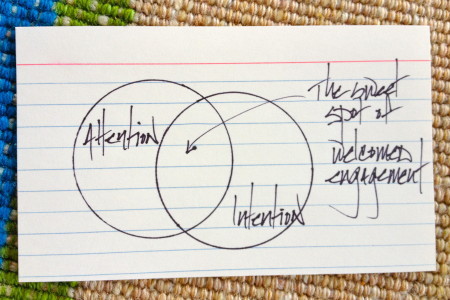
Begin May with me, over at RosaSay.com for our #AlohaIntentions with Ho‘okipa:
Ho‘okipa is a Game Changer in Service
Our Ho‘okipa Value Immersion
Once you have read the essay, ask yourself this question: “Does my/our business plan make Ho‘okipa service and hospitality ‘affordable’ and easy to deliver for us?”

Write it down! It is an easy way to begin a new month of value-aligned focus on Aloha Intention.
Prepare for the next two months’ value immersion with Ho‘okipa:
1. Pull out and examine your current business model. If not immediately accessible to you, write it down in your own words, as you understand it.
2. Second, analyze it: Is your business model conducive to the exceptional delivery of Ho‘okipa inspired service and hospitality? If not, what’s the problem? Is the problem fixable for you, in whole or in part? What can you do, and what can you do with the assistance of others?—Who?
3. Third, set your Aloha Intentions: What do you hope to achieve in the next two months time? Answer as relates to your delivery of service and hospitality, and thus, can be supported by our value immersion here on ManagingWithAloha.com with the Ho‘ohana Community.
NOTE —If you are reading this posting through completely first:
My new essay for Ke Ola and RosaSay.com clarifies the difference between business models and business plans.
Don’t skip it or forget!
Ho‘okipa is a Game Changer in Service

Be Congruent with a focus on our Aloha Intentions.
To review what ‘value immersion’ is all about:
“Immersion means to go ‘all in.’ When you choose a value for your workplace culture, you align it completely — in everything you do. VALUE IMMERSION is flexible and adaptive when it has your constant attention: When confronting change, you realign and audit your value integrity in every strategic juncture. Remember: You can change your values too, growing them as your culture grows.”
—Via our value alignment vocabulary here: Curating Value Alignment.
I look forward to sharing these next two months with you, as we delve into Ho‘okipa to learn more, know well, and work on our service delivery together.
We Ho‘ohana Kākou!
~ Rosa
Subscribe for our weekly newsletter:
Talking Story with the Ho‘ohana Community.
Preview the updates in Managing with Aloha, Second Edition, just released Summer, 2016
Managing with Aloha, Bringing Hawai‘i’s Universal Values to the Art of Business
Our value immersion study for the months of May and June 2017:
Ho‘okipa is a Game Changer in Service.


March 1, 2017
Our Value Immersion for March & April, 2017: Kūlia i ka nu‘u
Kūlia i ka nu‘u is the Managing with Aloha value of accomplishment and achievement.
The literal translation for Kūlia i ka nu‘u is “strive to reach the summit.” Those who have this value continually pursue improvement and personal excellence. For them, the most satisfying competition is with their previous selves: They consider their life and everything within it to be a work in progress, and they enjoy the effort. ‘Hard work’ is good work when it employs the energies of striving and reaching higher.
From Managing with Aloha, 2nd Edition (Chapter 5 preamble):
Kūlia i ka nu‘u
Achievement and accomplishment
Pursue personal excellence
Be your best
“Strive to reach the summit”
 Take note of how Kūlia i ka nu‘u (as Chapter 5) builds upon the values we have already learned of in chapters 1 through 4:
—Kūlia i ka nu‘u. Define what achievement is for you, and strive to the highest summit of accomplishment there is.
—Pursue personal excellence. Be the best you can possibly be.
—Seek achievement which allows you to Ho‘ohana, work with purpose and intent, within ‘Imi ola, a life lived for its highest form.
—You will find you Ho‘omau; you persist in a way that will cause the good to last, for in striving for the best, you have become your best. As you grow, your Aloha has captured more abundance to be shared with others.
With Kūlia i ka nu‘u, We Strive
As has been our habit, we kick off the month with a brand new Kūlia i ka nu‘u essay shared with Hawai‘i Island’s Ke Ola Magazine. It is titled, With Kūlia i ka nu‘u We Strive, and can also be found on RosaSay.com.
 The essay shares why I had chosen Kūlia i ka nu‘u as this value name and Language of Intention for Managing with Aloha:
“There are three different Hawaiian words used for the value of excellence and achievement in Hawai‘i today: Kela, Po‘okela, and Kūlia i ka nu‘u. It’s a very good example of how kaona, the hidden meanings often employed in ‘Ōlelo Hawai‘i, our language, affects what we do, by extension of what we actually mean when Speaking with Aloha, our 3rd Aloha Intention.
Kaona, however, can be tricky. Good business takes fewer chances.”
—Click through to read more: With Kūlia i ka nu‘u We Strive
Our Kūlia i ka nu‘u Value Immersion
Once you have read the essay, ask yourself this question: “How do I strive?”
Journaling is an easy way to begin a new month of value-aligned focus on Aloha Intention.
As a journaling/self-coaching exercise to prepare for the next two months’ value immersion with Kūlia i ka nu‘u:
1. Answer the question, “How do I strive?” in whatever your stream-of-conscious way, with whatever initially comes to mind, be it personally or professionally, just for you, or with your team at work.
2. Second, if not clear in your initial response, ask yourself why, “What is behind this for me; why do I strive in this way?”
3. Third, set your intentions: What do you hope to achieve in the next two months time? Answer as relates to your striving, and thus, can be supported by our value immersion here on ManagingWithAloha.com with the Ho‘ohana Community.
NOTE —If you are reading this posting through completely first:
My new essay for Ke Ola and RosaSay.com suggests a 4-Peak progression you can consider. Alaka‘i Managers are encouraged to kūlia sequentially and consequentially.
Don’t skip it or forget! With Kūlia i ka nu‘u We Strive
Be Congruent with a focus on our Aloha Intentions.
To review what ‘value immersion’ is all about:
“Immersion means to go ‘all in.’ When you choose a value for your workplace culture, you align it completely — in everything you do. VALUE IMMERSION is flexible and adaptive when it has your constant attention: When confronting change, you realign and audit your value integrity in every strategic juncture. Remember: You can change your values too, growing them as your culture grows.”
—Via our value alignment vocabulary here: Curating Value Alignment.
I look forward to sharing these next two months with you, as we delve into Kūlia i ka nu‘u to learn more, know well, and strive higher together.
We Ho‘ohana Kākou!
~ Rosa
Postscript: Anxious to jump ahead this coming weekend? 1. Be sure to take the related links embedded above, then 2. Discover more connections by reading our Kūlia i ka nu‘u Archives.
Subscribe for our weekly newsletter:
Talking Story with the Ho‘ohana Community.
Preview the updates in Managing with Aloha, Second Edition, just released Summer, 2016
Managing with Aloha, Bringing Hawai‘i’s Universal Values to the Art of Business
Our value immersion study for the months of March and April 2017:
With Kūlia i ka nu‘u, We Strive.


February 22, 2017
From Internal Chatter to Language of Intention
When culture-based slogans catch on in a workplace, think of it as the tacit approval of verbal agreement.
People are voicing agreement to a value-based feeling or practice, and they are nominating it for your company’s Language of Intention — our essential Key 5 in the Managing with Aloha philosophy — to lend approval to how they will subsequently behave.
Culture building happens even when you aren’t looking. We call it “grassroots movement.”
When you see this happening, the decision you must make as an Alaka‘i Manager is simple: Do you agree and validate the slogan in your company’s lexicon and dialect, or do you work to diligently and effectively change the narrative to what you prefer as more value accurate?
This can be exciting—the former decision, or it can be concerning—the latter decision. Either way, I’d coach you to consider it a good thing: Your workplace is actively engaged, and they need you to engage with them.
This is exactly what’s happened with the Washington Post.
Let’s keep learning: Managing with Aloha through the Lessons-Learned from Current Events
I caught this via Twitter Moments:
WaPo has adopted a conversation-sparking new slogan
US News
The new tagline reads “Democracy Dies in Darkness,” which a spokeswoman for the paper said has been a mantra internally for a “long time.” Seen by some as a reaction to Trump’s relationship with the media, it set off a variety of commentary.

… and as is the way of Twitter, it became a meme spun in both evangelism and cynicism. It happened quickly, because the Washington Post made the ‘validate’ decision very visibly with a new tagline.
A tipster pointed it out on Friday, and Kris Coratti, a spokeswoman for the paper, confirmed that we’re going to be seeing more of this slogan. Jeff Bezos used the phrase at a Post event last year.
“This is actually something we’ve said internally for a long time in speaking about our mission,” Coratti said. “We thought it would be a good, concise value statement that conveys who we are to the many millions of readers who have come to us for the first time over the last year. We started with our newest readers on Snapchat, and plan to roll it out on our other platforms in the coming weeks.”
What is being said with more frequency in your company?
How did it start?
Has it affected your mission-driven work yet? How so?
What value does this internal mantra seem to be invoking?
Do you agree with that value alignment opinion?
Ignoring it isn’t an option: Decide what you will do in managing and leading with Aloha.
Revisit Key 5: Language of Intention, and Culture-building via this Take 5:
9 Key Concepts in Managing with Aloha, and Why these 9?
Language of Intention and The Language of We
Vocabulary, lexicon and dialect: Managing with Aloha’s Lexicon Morphology
Language of Intention Feeds the Culture Beast and Speak to Your Intent
There is no Vacuum in an Aloha workplace and Dear Manager, Don’t let me get bored.
Let me know if I can help you,
Rosa
Subscribe for our weekly newsletter:
Talking Story with the Ho‘ohana Community.
Preview the updates in Managing with Aloha, Second Edition, just released Summer, 2016
Managing with Aloha, Bringing Hawai‘i’s Universal Values to the Art of Business
Our value immersion study for the months of January and February 2017:
HO‘OMAU; Love the one you’re with.