Rosa Say's Blog: Managing with Aloha
March 30, 2021
Lokomaika‘i, the value of generosity
“No beauty shines brighter than that of a good heart.”
—Kāvya Agarwal
E ‘ōpū ali‘i
‘Be as kind and as generous as a chief should be.’
—Dr. George Kanahele
Lokomaika‘i means “of good heart” and it is often considered the value of generosity. Rather than listing it separately in Managing with Aloha, we weave Lokomaika‘i into the value of Ho‘okipa, hospitality—the value of complete giving.
See: The 19 Values of Aloha.
To best explain the thinking behind my decision to do so, I offer this excerpt from Kū Kanaka, Stand Tall, by my mentor in the Hawaiian values, Dr. George Kanahele. As you read the following passage, take note of how the allied values of generosity and hospitality relate to leadership as well;
“In Hawaiian society the willingness to give was all-important. This, in turn, was related to two allied values: generosity and hospitality, because both meant sharing one’s possessions with others. To the Hawaiian mind the leader of a group, particularly a chief, set the standard of generosity. No Hawaiian would have been unaware of that high standard: ‘E ‘ōpū ali‘i,’ or ‘Be as kind and as generous as a chief should be.’ If this was common knowledge, common expectation also led commoners to believe that a chief would be generous because he had the means to do so, and his honor and prestige depended on it. From the political point of view, generosity was employed in part to win the hearts and minds (or stomachs) of the people, lest they desert the chief. Economically, generosity helped to redistribute goods and services, and to invest in communal enterprises for the overall development of the realm. If generosity was a source of satisfaction to chiefs, it also served as a powerful motive toward acquiring wealth. A poor chief after all, was a poor leader.”
Extra credit study: Relate the above passage to our recent discussion regarding America’s dysfunctional distribution of wealth here: In favor of Wage Equity as our Core Standard.
“Hospitality, the warm and liberal entertaining of guests, was as much a quality as a function of the chief-leader. So prized was a reputation for ho‘okipa that sometimes ali‘i went to extraordinary lengths to provide food and other offerings of kindness. On the other hand, when a man was known for being inhospitable or stingy, he drew upon him a social and political stigma of the worst kind. Thus, any leader who valued his good name and mana had to make sure that he could provide the appropriate level of welcome at any time and place. We must remember that hospitality included inseparable political, economic, and sociopsychological values that together affirmed the fact of one’s leadership.”
My goodness, there are so many lessons in those passages for standards of hospitality in business, aren’t there?
Read: Ho‘okipa is a Game Changer in Service.
To be generous, is to give and to serveIn my working experiences, I have often found this Lokomaika‘i / Ho‘okipa connection to be far more useful to me than the concept of servant leadership, though I admire that as well. To be generous, is to be reminded that you are capable of generosity, and you have the ability to give and to serve readily available to you. There isn’t the slightest hint of subservience about it, just the goodness of generosity. You may not be a chief, however we give and we serve simply by merit of being human, drawing our abilities from whatever we can do, and sharing the talent we were blessed with, and the skills we have learned: Strengths Management with Aloha: Our Talent, Skills and Knowledge.
Dr. Kanahele continues with this;
“While the leader-chief would have set unreachable standards for generosity for those of lesser means, that did not relieve the maka‘āinana (commoners, populace) of any obligations of their own. Giving was always a reciprocal process, and hence involved the commoner in giving back generously in time, labor, surplus production, and the several forms of ho‘okupu (tributes to chiefs). The only difference between the leader and the people, as far as generosity was concerned, would have been one of degree.”
 Photo by Elaine Casap on Unsplash
Dr. Kanahele further explained, that “two principles are at the heart of the Hawaiian values system: reciprocity and the mastery of one’s destiny. Reciprocity may be compared with a gigantic spider web, whose threads represent the mutual obligations that each member of society bears toward others. As long as each person fulfills his or her responsibilities, the web holds together in beautiful symmetry; when individuals fail to live up to those responsibilities, the threads are broken, the web weakens and eventually falls apart.”
 Photo by Jack van der Spoel on Unsplash
When I wrote Managing with Aloha, I debated on whether or not to include reciprocity in my list of values, for in my viewpoint then, it certainly brought us up to date with modern Hawai‘i, as compared to the Hawai‘i of old Dr. Kanahele describes: In the early 2000s reciprocity was a hot topic in a variety of social conversations. Today unfortunately, (17 years after I published my book), we too often find reciprocity misconstrued, articulated as “acquiescence” by millennial sovereignty activists who demand “colonists give back and get out,” a sentiment very far removed from the hospitality and sharing our ancestors spoke of, and far from the Aloha I promote and hope to see. Should you choose Aloha as your core value, as I am known for asking all managers and leaders to do, you choose to self-manage with love and mutual respect for other human beings—all of them, the distinction which defines what Aloha is all about.
Read: Kaʻana i kāu aloha: Share your Aloha, and A Stranger Only for a Day: “Ho‘okipa hospitality is not just welcoming a guest TO your place, it’s welcoming them IN to your place.”
In my mind (and as I was taught), I imagine reciprocity to be like adding energy and momentum to a flywheel of generosity;
“The Flywheel effect is a concept developed in the book Good to Great. No matter how dramatic the end result, good-to-great transformations never happen in one fell swoop. In building a great company or social sector enterprise, there is no single defining action, no grand program, no one killer innovation, no solitary lucky break, no miracle moment. Rather, the process resembles relentlessly pushing a giant, heavy flywheel, turn upon turn, building momentum until a point of breakthrough, and beyond.”
There was another saying for this in old Hawai‘i, one I learned during my time working at the Hualalai Resort: “Hāpai ka pōhaku aka mai hāpai ke kaumaha.” which means, “Lift the rock, but not the weight; don’t carry the burden.” When all of us are together, and all hands grab hold of a boulder, it does not take as much individual effort to move it. The weight of the rock is the same, but it is not as heavy. The burden is no longer too great to bear, for no one person alone need do so. We are Kākou, we are all together, and so we lift together. Any burden can be lighter if we tackle it together.
To triage ho‘okipa, lokomaika‘i and reciprocity is immensely powerful.
To be generous, is to be kākou—inclusiveCirca 2021, when we sadly experience the strife of racial discord and xenophobia, I feel the need to talk about human morality more than I ever have before. If not morality, the widely accepted definition of what a good heart is: kind, generous, considerate, caring and compassionate. Therefore, I also think about how generosity, and intentionally practicing the value of Lokomaika‘i more than we do, connects to the value of Kākou—inclusivity. Truly, we are in this together.
We must want to be generous. We must return to hospitality as a quality and value we admire, and hold in high esteem. When elevated as a core value, Ho‘okipa is driving force, and Lokomaika‘i is action step.
This is not about compassion for the less fortunate and disenfranchised. This is about all of us, and about kindness, generosity, consideration and courtesy, caring and compassion as universal gifts we can give to each other simply by merit of being human.
We need constant reminders that we are more alike than different, and we will readily find shared bonds, and feel our commonality when we try to do so. The societal order of civility and mutual respect is one we MUST work on, and it is essential that we feel more inclusive, regarding every other human being as our equal—not more, not less, and certainly not an adversary or competitor, for there is enough abundance in the world for all of us.
Economists like to talk about scarcity, but its logic doesn’t always hold up in the realm of human emotion. Gratitude, in particular, is a currency we can spend freely without fear of bankruptcy… Social scientists have been studying gratitude intensively for almost two decades, and have found that it produces a remarkable array of physical, psychological, and social changes. Robert Emmons of the University of California at Davis and Michael McCullough of the University of Miami have been among the most prolific contributors to this effort. In one of their collaborations, they asked a first group of people to keep diaries in which they noted things that had made them feel grateful, a second group to note things that had made them feel irritated, and a third group to simply record events. After 10 weeks, the researchers reported dramatic changes in those who had noted their feelings of gratitude. The newly grateful had less frequent and less severe aches and pains and improved sleep quality. They reported greater happiness and alertness. They described themselves as more outgoing and compassionate, and less likely to feel lonely and isolated. No similar changes were observed in the second or third groups. Other psychologists have documented additional benefits of gratitude, such as reduced anxiety and diminished aggressive impulses.
—Robert H. Frank, author of Success and Luck: Good Fortune and the Myth of Meritocracy
“I have been taught that if your were called Mea Ho‘okipa in old Hawai‘i, it was a compliment of the highest possible order. It meant that the person who accorded you that recognition [of character] felt that you embodied a nature of absolute unselfishness. With the compliment they were also saying MAHALO (thank you), appreciative of the hospitality you extended to them with complete and unconditional ALOHA (the outpouring of your spirit)… The Mea Ho‘okipa were those who already seemed to radiate well-being, with an inner peace and joy that came from the total satisfaction they received from their acts of giving.”
— Managing with Aloha, chapter 6
I must admit that I have never thought of myself as Mea Ho‘okipa by nature, but as aspiration, truly wanting to “get a lot of joy from giving to others” as the experience of my working life. I’ve spent a great deal of time working in customer service, but I’ve long sensed I can, and should do more, being able to say I’ve been in service to others all in.
I honestly don’t know that I’d understand people in pursuit of service at all if not for seeing them through my learning about the value of hospitality: It has been my handle on the empathy required by my Managing with Aloha viewpoint. I will be eternally grateful to Dr. Kanahele for teaching me that hospitality is a higher calling rooted in Lokomaika‘i — an allied value which is the ‘generosity of good heart.’
Others have told me they see age or tenure connections to the pursuit of being of service, and that this is a stage in life we grow toward. I don’t think aging is necessary, for there are many cases where our youth will serve, setting magnificent examples for all of us. To serve is simply another calling, one more pressing to a person than others currently are, and they are in that sweet spot of readiness for it.
So if “the Mea Ho‘okipa [are] those who already seemed to radiate well-being,” where does the manager step in to support and serve them? By giving them ample opportunity to be the givers they thrive in being. There is an abundance of possibility, whether with customers or co-workers.
I think we come closest to seeing service potential as Mea Ho‘okipa (both in ourselves and in others) when we think about this question: “What will I joyfully volunteer for?” In the managerial view of this, compensation, leverage, positional power and advancement get eliminated as motivators or as the means to other ends, and we are reminded that our Mea Ho‘okipa give for the pure joy and delight of the giving. In my book, I talk about the notion of putting people on stage so they can give their best performance at work, and thrill to work.
Another useful question we can reflect on, is “How do I wish to be seen?” Hurtful and exclusionary labels spoken today, like ‘racist,’ ‘misogynist,’ ‘obstructionist,’ and perhaps even ‘person of color’ and ‘white supremacist’ need to be struck from our voices and our impulses, and replaced with the commendable qualities we see in others, such as kind, generous, and caring.
As we often remind ourselves in Managing with Aloha, recognize and elevate the behaviors you wish to see repeated. Have them start with you.
Read: To Manage with Aloha is to Hack Behavior.
When you first read through my 10 Tenets for an ‘Ohana in Business it is quite clear that I am asking you to share your business in ways you have never shared it before. I ask you to compensate people well, and consider those people your partners. I ask you to minimize your ‘executive decisions’ in favor of more transparency and inclusion. I ask you to consider your business model and business plan to be works in progress, works subject to a team approach. I ask you to share your financial information for increased learning and engagement, and to work toward some form of profit sharing. To sum these up more precisely, I ask you to let go of your ownership, control, and direction more than you presently may do so.
Read: The Alaka‘i Benefactor: Sharing in the ‘Ohana in Business.
 Subscribe to our monthly newsletter:
Talking Story with the Ho‘ohana Community
Preview Managing with Aloha, Second Edition, released Summer 2016:
Managing with Aloha, Bringing Hawai‘i’s Universal Values to the Art of Business


March 7, 2021
In favor of Wage Equity as our Core Standard
As debate heated up on the pros and cons of Joe Biden’s $1.9 trillion COVID-19 relief bill, also known as the American Rescue Plan, I was challenged to defend my stance in favor of the $15 minimum wage while dipping into the shallows of Twitter;
“[Are you] unaware that raising [the] minimum wage hurts young minority uneducated workers the most? This fact is nearly universally accepted by economists.”
I’ve been wanting to update some of my older blog posts here on compensation, the minimum wage, and a ‘living wage’ for a while now, so let’s have at it—into the depths we go.
I appreciate the results that economists broadcast in an effort to clarify them for us. The sociologist in me prefers to study the root causes, and says, so let’s change things, and make them better.
The nonpartisan Congressional Budget Office found in a 2019 study that raising the federal minimum wage to $15 an hour by 2025 could cost 1.3 million Americans their jobs. The same study found the higher level could boost the pay of about 27 million workers and lift 1.3 million Americans out of poverty.
—Google citation, Feb 3, 2021.
I understand the argument that a higher minimum wage is potentially a job killer; so is automation, out-sourcing and innovation. A higher wage may be an opportunity obstacle as short term effect, but I don’t buy it as our long-term certainty if we look at adjusting and improving the root causes which give us societal detriment as a whole, as now testified by economists’ measurements. Let’s address issues like access to education, racial and gender discrimination, and non-friendly small business regulation as well, so that “a rising tide lifts all boats.”
This is why my usual soapbox here, has to do with designing better business models. For instance;
—The ‘Ohana in Business Model: Our Economy Done Better, November 2020
—My Vision of A Living Wage, August 2019
—Financial Literacy Revisited: You and Your Income, January 2019
We in business can effect positive change, if only we choose to, leading by merit of our own good example (the value of Alaka‘i). This ability we have, to be change agents more readily than other pursuits, is a primary reason I remain a proponent of smart, operated with Aloha businesses.
For instance, profit-driven-only capitalist enterprise is not the only game in town: Antidotes to Brutal Capitalism? Some are Hidden in Plain Sight.
“Across the country, Americans in all walks of life are creating companies with business models driven by social purpose, not just their own pocketbook priorities.”
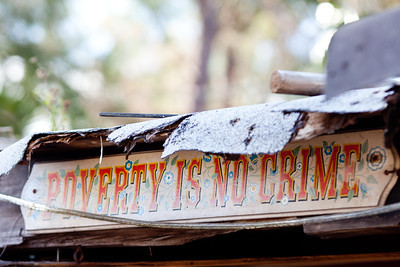 Image by Thomas Hawk on Flickr
Raising the minimum wage is certainly better than our status quo, where the rich get richer, and more people move into, or remain in poverty. America’s middle class, normally defined as professionals and semi-professionals with economic security, is shrinking, and we are experiencing the sharpest rise in poverty in more than 50 years.
A 2019 Hawaii Business Magazine series caught my attention with their CHANGE Report: “…because Hawaii cannot continue on its current path. We need to change. We face many significant problems but the biggest may be that half of Hawaii’s people are struggling financially today despite a booming tourist economy and full employment…” Half of Hawaii Barely Gets By. I’d say “half” is a generous assessment. The magazine estimates that “The average working family of four in Hawaii needs to make at least $36.17 an hour to stay out of poverty. But that same family would have to almost double their earnings ($69.44) to become financially stable.” That was 2 years ago, and our legislature is debating about mandating a $15.00 per hour minimum wage?
To be clear, I don’t begrudge the wealthy, or wealth as an incentive for work well done. That said, we live in a time where obscene wealth demands our attention as another result demanding the adjustment of its root causes.
Read: A Sense of Place Delivers True Wealth.
Money is not inherently evil, but the way it is presently distributed and circulated in society is dysfunctional—that is the core issue we must address. Money can work for the benefit of all society much more than it presently does.
Plainly said, the economic rules by which we now live (barely), are not working for us, and we must change them. We have spoken about this before (President Obama’s American Recovery and Reinvestment Act of 2009 comes to mind), and while a stimulus was given, no real institutional change was triggered. Is this, i.e. the circumstances of our pandemic-altered present, going to be another opportunity we allow to pass us by?
It’s not politics; it’s a business life livedLast summer, as America’s electioneering ramped up for the 2020 presidential election, one of my newsletter subscribers wrote to me saying, “I can see that you favor the Socialist points of views,” the first time someone actually used the word ‘socialist’ to describe me. It gave me pause, yet I understand why I give that impression… I speak up, and my evefr evolving beliefs about equity in society, about capitalism and Pono business models, and about what we need to be healthier as community, are some of the effects learning the values-centering of Managing with Aloha has had on me—within the context of being a businesswoman. I continue to learn more every day, and I don’t compartmentalize it with managing alone, for you cannot manage with Aloha in a vacuum.
I was actually raised Republican, adhering to very conservative views——ideals like free markets that generate economic opportunity for all, limited government, personal responsibility based in strong work ethic, individual liberty, justice, the centering of family life, Christianity, and equal access to freedom and “the American dream” for everyone in our communities. Working it out for myself did change me; we choose our political persuasions same as we choose our values, or perhaps it’s because we choose our values.
However, my 50+ years as a working adult (and as someone who has voted in every election since I was 18) have provided me with more than enough evidence that free markets do NOT generate economic opportunity for all without some degree of government intervention or a benefactor’s generosity and compassion; it simply doesn’t happen that way any longer, despite the fervor of the ideal, or how well a passionate disciple attempts to articulate it. Ideas don’t always morph into effective actions. We can “work harder” yet find it’s just not enough: we need some element of luck as well. Chance plays a far larger role in life outcomes than most people realize.
Read: Why Luck Matters More Than You Might Think, The Atlantic: “When people see themselves as self-made, they tend to be less generous and public-spirited.”
I for one, am tired of waiting for old theories to work. Let’s give the new ones a shot, especially those proven to be working in other global economies. Call them socialist or progressive if you must, though I prefer the word experiment.
 Image by Thomas Hawk on FlickrWe can learn from each other
My experiences in business have shaped my current views much more than politics have, yet I have always been fascinated by what the private sector can learn from the public sector, and vice versa. Lately, I find myself thinking about core standards, a concept most organizational gurus swear by for the baseline expectations of a company, and for the consistency those standards will contribute to operations, to sales and marketing, to finance, and to human resources.
When a business is well aligned, its core standards evolve as a natural rule-making which stems from a company’s core values. In American government, the closest thing we have to core standards is the U.S. Constitution, which is arguably more subject to partisan interpretation than it should be. In governance, we also juggle the differences in state law and jurisdiction.
The Khan Academy has a good primer on the relationship between the states and the federal government: Who rules when? For instance, “The states and the federal government have both exclusive and concurrent powers, which help to explain the negotiation over the balance of power between them.”
Core standards can be changed over time (and they should be audited on a regular basis), but in business they are considered fixed givens on a day-to-day operating basis; they aren’t variables left to team or individual discretion. The problem in most business models, is that wages, compensation, and labor cost are all considered variable expenses we have the discretion to ‘play with,’ or worse, take advantage of. We shouldn’t have that choice in an egalitarian society: Fair compensation, wherein an equitable minimum wage is a given, should be a fixed cost we must factor into our models if we are to be a business at all.
‘Should’ doesn’t carry enough weight though. When we don’t regulate ourselves, government has to step in or we will never progress. I honestly don’t want to say that, but I cannot discredit my own learning, observation, and experiences. We need a certain degree of governmental mandate as a core standard which we follow.
I will say, that witnessing the Covid19 pandemic’s death blow to thousands of small businesses over the past year has tempered my expectations though. I had been in favor of throwing a grenade into the mix and forcing the issue with the one-time increase to $15.00 per hour right now. I am now okay with indexing it gradually, but let’s please start immediately and not throw out any increase altogether.
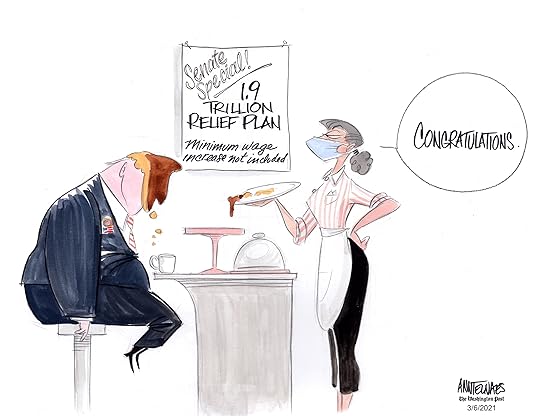
For now, I take comfort in knowing it is never too late to do the right thing, and that people like me, in politics and business, and in all walks of life, will continue to speak up until positive change happens.
Read: Change, Congruency, Critical Thinking.
This past February, Hawaii lawmakers took a preliminary step toward increasing the minimum wage to $12 by July 2022. The Senate Labor, Culture and the Arts Committee unanimously agreed to move forward with a measure to increase Hawaii’s minimum wage for the first time in four years. Hawaii’s wages last increased to the current $10.10 an hour in 2018. Senate Bill 676 does not make any further step increases, and labor advocates also urged the lawmakers to raise the minimum wage to $17 in the next five years.
—Honolulu Civil Beat, February 8, 2021
 Subscribe to our monthly newsletter:
Talking Story with the Ho‘ohana Community
Preview Managing with Aloha, Second Edition, released Summer 2016:
Managing with Aloha, Bringing Hawai‘i’s Universal Values to the Art of Business


March 3, 2021
The Thrill of Work
Preface: We’ve been “sheltering in place” for most of the past year, due to the Covid19 pandemic. The layoffs and business shutdowns which affected so many hit home for our family in mid March, 2020.
My husband headed back to work this week, albeit a temporary, no idea for how long kind of work schedule. I have a few issues with his employer and his union, truth be told, feeling one is a bad actor in their pandemic responses, and the other is largely ineffective, compassion and mālama for staff sadly m.i.a. on both fronts. While his own admiration and respect for them has taken dramatic hits, my husband remains loyal and as supportive as he possibly can. I’ve urged him to retire; he says “no, not yet” and his similarly mistreated boss begs him not to. He was considered, and was treated dispensable through most of the past year despite his 30-year history with the company. Yet now, he knows they need him.
Why does he persist, pushing away disillusion and any pull of disgruntlement?
He likes to work, and he wants to work.
We need to workI’ve heard more back-to-work stories from others, and while much in our pandemic riddled, forever altered world has changed, each story has given me the same reflective pause in response: I think about how much work encompasses. I am reminded just how much the ability to work means to us no matter the obstacles, and despite how much we might whine about needing work-life balance in better times.
My husband is not alone, not by a long shot. We humans like to work, and I daresay, we need to work to feel complete.
We thrive in the industriousness of work, and we prosper as we grow in our mastery. We welcome the partnerships, networking and social interactions work will push us into, for more often than not, we’ll stretch and make strides in those too, helping us to thrive even more.
Read: Sunday Mālama: We Learn Best From Other People, and Lōkahi Teaming: Who do you work with?
It was more than 5 decades ago (yep, I’m that old), yet I can still vividly, fondly, and thankfully recall when I got my first job, because my dad allowed it to happen. I was considered ‘still too young’ for that decision, and for a lot of other things back then…
Every manager has a story. This is mine.
I began my working career on O‘ahu behind Fort Street Mall’s F.W. Woolworth lunch counter when I was 15 years old. That was when Woolworth’s drugstore design included diner type service, but there were no booths or tables. Customers would sit on red vinyl-topped swivel stools bolted to the floor and set around U-shaped bays of counters, one bay with 12 seats for each waitress. The menu was in a laminated card held by this metal grid at the far end of the counter in front of you, a grid curved in at each end to corral your salt and pepper, sugar shaker and ketchup bottle. To your back was the rest of the store, with racks of greeting cards, sewing notions, fishing tackle, or baby food nearly within arm’s reach.
There weren’t any hostesses. Customers walked right up and sat wherever there was an empty stool, the counter was wiped clean, and the waitress looked calm and sorta friendly. Job performance was really easy for the boss to measure. Back then your tips went into a locked box, and he’d count them out for you when you clocked out; good tips meant happy customers. If your bay was usually busy and you were found to be honest, you were an employee he was going to keep. It didn’t take me too long to learn my early lessons on satisfying repeat customers, and keeping the balance between making them happy and turning each stool for more money in the till.
—from the Introduction to Managing with Aloha
I was an example of a child going to work to help the family, catching the bus to my job after school and doing my homework on my dinner break and late at night. I was often called in on weekends as well, and I had to give up after-school sports (I had played softball, and volleyball as a setter) yet I was the envy of my siblings and many of my friends, for I was a wage earner; I had newfound independence and a smattering of young adult credibility they could only imagine—I worked.
After that, school changed for me as well, because my attitude about it shifted. Subject matter, like math, suddenly became relevant; useful. My teachers seemed to treat me differently, with new regard, maybe because I asked better questions.
To be a worker was turning into quite the profound experience. It didn’t even matter that I never saw a paycheck—my boss made it out to my dad, adding in any tips I earned and dutifully turned in to him at the end of my shift. Still, I knew I was earning my keep in a certifiable way, and that was more than good enough for me. I was becoming a true adult.
I started acting like one.
We work on work here, fully understanding how important that is: The work we devote our time and attention to will spill over into every other aspect of our lives. It’s personal, and it’s pervasive, so we work on making it good.
—the mission of the Managing with Aloha philosophy
That first-job thrill of work never wore off for me. I don’t think I was misled or charmed in any way, nor did I win any workplace lottery, for I’ve had bummer jobs and bad bosses since then as well, enough to well experience the differences, and constantly seek better.
I did seem to win some blessed-by-fate lottery when it came to my parents and upbringing, yet I daresay that most of our life skills are learned at work. If not first learned, they surely get honed there, sharpened and focused into our most useful and trusted tools. Tools which will serve us well, just as life skills are supposed to.
Read: Skills for a Lifetime of Work, and Sunday Mālama: Self-development hits home.
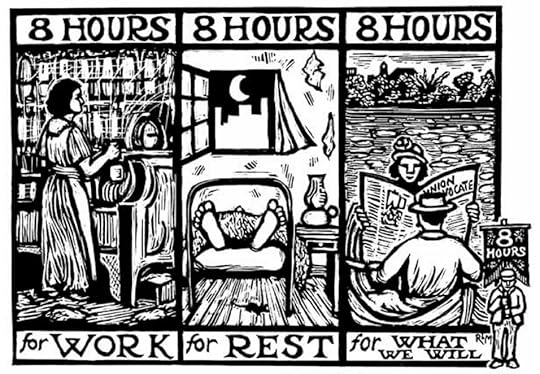 Image courtesy of How to do nothing, by Jenny Odell.
Work looms large in nearly everyone’s rites of passage, because work matters to us.
It matters for our livelihood—for earning our keep, and for feeling assured we have a way to rise up and get ahead. It matters in a major way when we marry and start a family, committing to supporting others as well. It matters in our friendships, in our reputations, and in our credibility with our chosen communities: To be a “functioning member of society” is no small thing.
Much more important, once our basic sustenance need are met, work matters in giving us the feeling that we are accomplished, and we factor into something which is important. Meaningful, and maybe even larger than ourselves.
The values we speak of here, are in part, and without doubt, our biggest workplace takeaways of all, for our convictions and beliefs happen in context. We don’t inherit our values, we choose them: Values represent the good in your life.

Ten years or so into the run of Managing with Aloha, I sat down with a brand new journal I had been gifted. I don’t remember the exact trigger, but faced with those blank pages, I started to make a list of what I felt I had accomplished at work besides my book.
Read: Core 21: About the Book.
I still have that journal, and as I look at those pages now I remember: I started slowly, in a halting, start and stop kind of way, and as my dated entries now testify, that particular listing and writing episode took more than a week of my morning pages before I moved on to something else. It turned out to be quite an affirmation for me, and I highly recommend the exercise to anyone feeling the slightest twinge of impostor syndrome—you are so much more of a working machine than you realize! Beyond your present worth, you are also an ever-evolving work in progress.
At first take, all accomplishment roads seemed to lead to Managing with Aloha for me, factoring into it, and culminating into my Ho‘ohana, my workplace culture philosophy as a whole, and the strong feelings I have, and assertions I make, about managers, managing well, and creating an ‘Ohana in Business. My journey to Managing with Aloha all made sense. It was sequential, and it was certainly consequential.
Read: Ho‘ohana: The Founder’s Mindset.
“I think most of us are looking for a calling, not a job. Most of us, like the assembly-line worker, have jobs that are too small for our spirit. Jobs are not big enough for people.”
― Studs Terkel, Working: People Talk about What They Do All Day and How They Feel about What They Do
At this stage of my life though, you know what interests me most about that list of my working accomplishments? The outliers, and random forays separate from Managing with Aloha. In my particular case there are fewer of those, but boy are they interesting. And they may be unfinished—there is so much potential there, should I choose to pursue it.
Retire? Not me.There’s a popular saying which goes, “If you love what you do, you’ll never work another day in your life.” I think we should update it, and shift popular belief to, “When you love working, you keep doing it.”
We do speak differently about retirement these days; retirement is considered an archaic concept by many, however I fear it’s for the wrong reason—we feel we have to work, rather than wanting to, and with a get to attitude.
We need to thrive in work. Everything is better when we do.
Good work is the work of personal performance and not of situations others create for you. If they do, consider it icing on the cake. You’re the cake, and you’re quite tasty all on your own. You have ALOHA, and you work on your HO‘OHANA.
HO‘OHANOHANO: You conduct yourself with dignity and distinction.
KULEANA: You take personal responsibility for the work you have chosen to do.
MĀLAMA: You take care of whatever you have to take care of.
ALAKA‘I: You are the leader of your own performance, and thus your work, and thus, your life.
Leading your life is something you were born for, and meant to do. The good work of making it happen is something you will not relinquish, nor should you: No one gets to be leader of your life but you.
Read: more here: People Who Do Good Work
So let’s ho‘o and get on with it.
My husband knows exactly what he’s doing. He knows he’s needed, and he knows he can make a positive contribution, for he does good work. He’s skilled, he’s confident and self-assured, and for him, work is a thrill. His attitude about it is highly contagious in the best sort of way.
I’m proud of him.
Subscribe to our monthly newsletter:Talking Story with the Ho‘ohana Community
Preview Managing with Aloha, Second Edition, released Summer 2016:
Managing with Aloha, Bringing Hawai‘i’s Universal Values to the Art of Business


February 28, 2021
Evolve into a manager
Recently caught this nugget of management goodness on Jessica Livingston’s blog:
Be able to evolve into a manager
Early on, starting a startup is all about the product. But that changes when a startup gets really big. A founder who wants to keep running the company has to become a manager. You don’t need to have management ability initially. There’s plenty of empirical evidence to show that you can learn this on the job. But you do have to be able to learn it. You probably even have to like it.
Designing cool products and managing people are very different things. Most people who like building things dislike the idea of being a manager. It’s a rare person who can be great at both. But you have to be to create one of the really big startups.
—Jessica is a cofounder and partner at Y Combinator. She is also the organizer of Startup School, the big annual startup conference, the Female Founders Conference, and is the author of Founders at Work, a collection of interviews with successful startup founders.
Be able to evolve into a manager. Yes.
In Managing with Aloha I assert that management comes first, and leadership second—and only after self-leadership. However it absolutely can happen the other way around;
—when you catch or give birth to a great idea, nalu it—go with the flow, and make it happen by indulging in every leadership instinct you may have, leading by merit of your good example (Alaka‘i), and infecting others with the contagions of your excitement and enthusiasm.
—in other words, Experiment!—Do it!
—when you enroll others in your cause (that thing about being driven by mission and vision), select those you want to be your partners—they are others you know you will love working with, and others you can mentor or will mentor you. Select others you care deeply about, in that you care deeply about seeing them succeed too.
—have that caring desire evolve into your being the best boss they have ever had. Want it, because you want to be a better person. A better person who also happened to have had a great idea, and ran with it.
It all goes together.
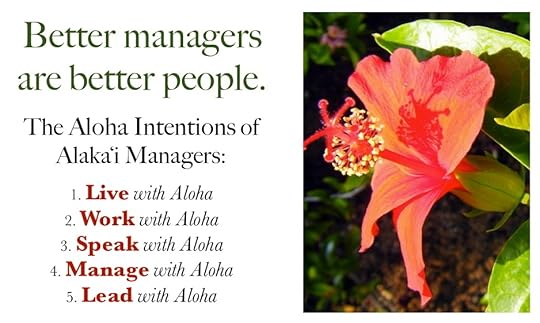 Be Congruent with a focus on our Aloha Intentions.
Managing matters. However, you have to believe that for yourself before anyone else will.
Would you like to read more? Try this one: “I’m a manager.”
We Ho‘ohana Kākou,
Rosa


January 28, 2021
Self-Coaching Exercises in the Self-Leadership of Alaka‘i
Preface: A shorter version of this post was originally shared in my weekly newsletter—subscribe, and join our Ho‘ohana Community of Managing with Aloha practitioners.
When I’m asked for a quick definition of the value of Alaka‘i, I’ll regularly respond that “it’s leadership which starts with self-leadership.” In my view, you cannot presume to lead others until you practice self-leadership first and foremost, leading by merit of your own good example. Only then, will you gain the following which allows you to lead with your ideas and initiatives.
(Related Reading: Purposeful Following).
The 3 Cs of self-leadership are Curiosity, Clarity, and Courage.
It is often said that great managers don’t manage people; they lead people and manage the work they collaborate in. It’s a view I hold as well, and we often talk about how smart managers manage human energies, for it’s the most valuable asset they can tap into.
To accomplish this, managers must learn to stay above the fray—they cannot get swallowed up work, and must participate in it wisely, taking advantage of the team approaches of Lōkahi, the value of collaboration.
A heightened, ever-awake sense of curiosity helps the manager be hyper-aware of the possibilities which may be at hand, or easily accessible with a bit more visionary reach.
“Our lives don’t have to be dominated by ‘the daily grind.’ Curiosity can be harnessed to transform mundane, unsatisfying tasks in everyday life into something genuinely interesting and enjoyable… two simple processes—triggering intrigue and sustaining interest—are at the heart of a fulfilling life.”
—Todd Kashdan, Ph.D., author of Curious? Discover the Missing Ingredient to a Fulfilling Life
Having a self-leadership practice gives you clarity—clarity that boosts your confidence and courage when it’s time to lead others. By practice, I mean a regularly recurring action which hones your craft.
One of the best ways I’ve found to coach myself and others in self-leadership, is with our month end practice of Rapid Fire Learning. If you aren’t doing it yet, let 2021 be the year it becomes your habit.
(Related Reading: You are Your Habits, so Make ‘em Good!)
Rapid Fire Learning is magnificent in revealing clarity, for it asks you to reflect on “what happened?!?” so you can be clear on why it happened.
 Because some things are meant to be, and LEARNING is one of them!
In Rapid Fire Learning (RFL);
a) You reflect on what you learned during the month, and
b) You decide what you’ll do about it.
[Click here if you need a primer: Rapid Fire Learning.]
Walt Whitman talked about his writing this way;
“The secret of it all, is to write in the gush, the throb, the flood, of the moment…to put things down without deliberation…without worrying about their style…without waiting for a fit time or place. I always worked that way. I took the first scrap of paper, the first doorstep, the first desk, and wrote, wrote, wrote… By writing at the instant the very heartbeat of life is caught.”
(Related Reading: Carry, and Use, Pen and Paper.)
If only writing could be that way for all of us!
People who balk at keeping journals seem to struggle the most in grooming the Rapid Fire Learning practice, telling me that sitting in front of the blank page is too daunting for them. If that sounds like you, here are a few suggestions, all which bypass that intimidating blank page with a bit more structure.
—Start by listing the 5 personal values which are top-of-mind for you. Next, write a sentence after each one, which describes how that value may have manifest itself in your behavior or experiences during the past month. Alternately, you might write a sentence on why it seemed to be missing.
Here’s why: Fact of the matter is, that we possess a multitude of personal values, and they show up in a hierarchy of personal need. You could conceivably read through all 19 Values of Aloha and feel, “these are my values too!” AND you could come up with a list of several more. Our values can change over time, and they will feel stronger and more prevalent to us at any given time in context—that is, they bubble to the surface of our interactions and current experiences because that’s when we need them to.
(Related Reading: Let’s Define Values and Values represent the good in your life.)
Approaching RFL in this way has the added benefit of strengthening your skill with diagnosing values in activities. To look at values as root causes helps you learn why people do what they do—it’s the people-reading skill managers need most of all.
(Related Reading: Skills for a Lifetime of Work).
—Instead of listing 5 personal values, list communally-relevant ones. By that I mean, if work felt intense for you in the past month, start with a list of 5 company values, and get clear on your alignment (or lack of alignment). If community issues felt intense, start with a list of 5 community and/or sense-of-place values (here is one of my published RFL examples: A Serenity Prayer for Maunakea). If family circumstances felt the most pressing, concentrate on family values.
—Instead of listing values, pull out your calendar, and list the 5 most significant events or interactions which occurred: Why do you think they happened in the way that they did? If presented with a similar circumstance in the future, would you handle it the same way or differently? Why?
I remember how this turned out to be where nearly all of my aha! moments came from when I sat down to write Managing with Aloha years ago. Now that I had studied value alignment more intensely, I could look back at the crucible moments of my career and have the light bulb shine—oh my goodness, so that’s why that happened that way!
You might include something you weren’t directly involved in, but feel you’d like to capture your own reaction and/or future commitments to. For instance, this calendar reflection was the approach I took this month with my own RFL draft: One of the events I included was the insurrection on America’s Capitol on January 6th, to come to more clarity on how I felt about it, as opposed to all the media bombardment about it. I thought about the arrests and censures people are demanding, and asked myself what the accountability of Kuleana personally means to me.
—My favorite RFL approach, is the relational one, aimed at people-powered learning: I start by listing the 5 people I care about most in the world, or by listing the members of my current work team. What did I learn from them this past month? How can I use that learning, even if just about their quirks or other preferences, so that we can continue to improve upon our relationship and/or our current partnership? What do they probably need from me, and how can I provide it?
(Suggested Reading: Sunday Mālama: We Learn Best From Other People.)
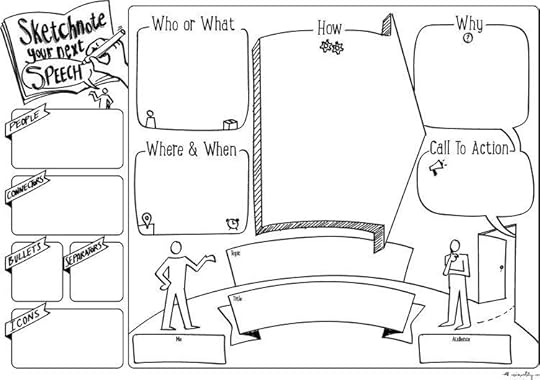 Image Source: Pinterest
—Toss the journal. Sometimes, the magic of RFL is found in other mediums. One manager I coached preferred typing into Evernote, because he likes the search feature in digital documentation. Another story-boarded with sketch notes—there are oodles of free templates like the one above when you image-search online. Yet another manager told me she uses Post-it notes on her refrigerator door as an impulsive first draft she can keep seeing and thinking about. Do what works for you.
One of the best ways to build a habit is to add an element of fun to it, and Rapid Fire Learning should definitely be something you look forward to—tweak it in some way if you ever start to think of it as a chore; shift your approach and get creative.
Feed your curiosity about yourself. Self-reflect and self-coach, and practice Rapid Fire Learning for YOU. Do it at the end of each and every month, and you will begin to find that self-leadership seems to come to you more naturally and more instinctively. I guarantee it.
In “leading by example” a 4th C comes to mind in self-leadership: your Connection to others.
Due to the pandemic, 2020 will forevermore be known as “our Zoom year,” when remote work became necessity more than choice.
Are you one who is suffering from Zoom fatigue?

—Design your remote work more efficiently, by communicating better. Communication is how our connection happens.
While in the self-coaching zone of RFL, try this, another self-coaching exercise which helped me greatly with getting some of my virtual work sanity back. Quickly outline your purpose when you do each of the following things:
I text when…I chat when…I call when…I leave a voicemail when…I email when…I send a photo or diagram when…I initiate a conference call when…I FaceTime or Zoom when…“Your purpose” will be things like: I have a question; I need feedback; I’m giving someone a reminder; I’m sharing a contact or phone number; people will prefer my information in writing (or illustrated); we need to come to a mutual decision; I need to do my Daily 5 Minutes remotely; etc. You may think you already do much of this instinctively, but trust me on this—taking a few moments to do the exercise can be very helpful.
When you think you have exhausted your thoughts about purpose, switch to thinking about the outcome you want, especially if you have a specific work process in mind. Are you familiar with the POP Model? (Shorter read: POP Everything! Strategic Planning in 30 Seconds or Less.)
Pro-tip: Suggest the exercise to your work team, so you all get in the same flow. When to FaceTime or Zoom will likely always be the last-case scenario, allowing everyone to sigh in relief! One of the downfalls of Zoom, has been how it has pushed people into group interactions which should have been done one-on-one instead.
(Related Reading: Conversational Catch-up ~ with Aloha.)
Last, do keep this in mind: we managers do not work the same way everyone else does! This is the essay I periodically read in my own litany of constant self-coaching: Maker’s Schedule, Manager’s Schedule, by Paul Graham.
Postscript: If you have read this far, you get the ultimate free resource in self-coaching, a link to Ed Batista’s public course done for Stanford Graduate School of Business: The Art of Self-Coaching. Anyone can take it at any time; all you need is a partner.
Subscribe to our weekly newsletter:
Talking Story with the Ho‘ohana Community.
Preview of Managing with Aloha, Second Edition, released Summer 2016
Managing with Aloha, Bringing Hawai‘i’s Universal Values to the Art of Business


December 18, 2020
Do it—Experiment!
Preface: For the last two years, we have adopted ALONUI: In Full Presence as our theme of the year, as added punch to our value of the month practice. Prior to that, it was GOOD: January’s Beginnings are in Our Good.
I haven’t been consistent in selecting a theme of the year, however 2021 seems to be begging for it. In fact, I’ve thought about adopting this theme since this past September, when we delved into Hō‘imi, the value of positive expectancy.
Our Ho‘ohana Community theme for 2021 will be Experiment!
Not ‘experimentation,’ for that’s more past tense, and can be about other people. Experiment, as in NOW, and as in for YOU, and as Go for it!
Try things against your grain to find out just what your grain really is.
—Irwin Greenberg
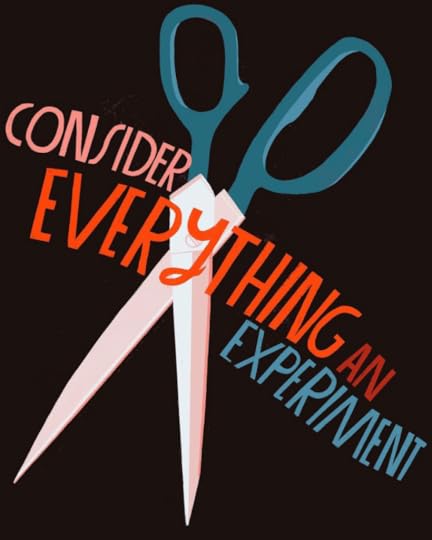 Art by Lisa Congdon
Silver Linings and Silk Purses
We have all been born with our Aloha Spirit, and with a wealth of human talent. Much as we admire the work ethic which activates spirit and talent however, we aren’t guaranteed opportunity and must usually search for it. There is also no denying that luck and good fortune play a part in how blessed our lives become.
2020 could rightfully be dubbed the year all the rules changed. Those changes were a mixture of the good and the bad, and as Hō‘imi has taught us, we always have a choice in what our reactions will be, so the good outweighs the bad, and that good perseveres (as in the value of Ho‘omau)—so we make that proverbial silk purse out of a sow’s ear.
If not now, when?
When I think about the good which came out of 2020, I see the rule-changing packaged with a whole lot of permissiveness.
The Covid-19 pandemic has affected us dramatically. It has been more than okay to change, whether in our habits, our work and how we did it, or even with where we decided to live—change and adaptation has been expected and encouraged. Still is.
Several stigmas, such as with being furloughed, laid-off and fired, have lessened. All kinds of professionals have been okay with being considered “unessential workers” this past year—I’ve been one of them, putting my business on hiatus indefinitely last March, and reworking my business plan to better adapt to an uncertain future. As one of my coaching friends put it when we compared notes, “The humility called for in these times has been an exceptionally good teacher.”
We have felt a new and different kind of camaraderie in our shared experiences, tough as they may be. We’ve “all been in this together” as a society-pervasive sorting out, streamlining, and shifting of priorities, examining a lot of variables we largely took for granted before, such as school and in-person learning.
Not for a second do I imply that any of this has been easy, yet this fact stands: We’ve done it, and we continue to forge ahead.
We can do so much more. The pandemic has exposed much more than our shortfalls in healthcare and governance, hasn’t it. Entitlement remains an ugly word and uglier presence—as it should, in any community which values equality and equity, and the benevolence of those who are more fortunate.
Do it—Experiment!
In 2021, let’s continue to be rule-changers.
Let’s continue to question the essential and non-essential.
Let’s continue to strike through old assumptions, worn out traditions, and previously unchallenged conventions.
Let’s make more change—more good change—with our willingness, and stigma-free encouragement to experiment.
Does a part of you envision a mad scientist when you say “experiment?” Or maybe you’re remembering being back in school, and having a science fair entry go miserably wrong. I thought about both those things too, but as I said before, I’ve sat with the word for several months now, and here’s what I keep coming back to:
When you take on an experiment, it’s okay to make a whole mess of mistakes. It’s actually smart to expect outright failure, so you’re more careful and proactive with laying out all your variables and options.
What’s NOT okay, is not trying. What’s NOT okay, is hesitation, doubt and pessimism—you’ve got to go through the motions of the experiment and do them, praying for an element of surprise and your breakthrough moment.
I didn’t think; I experimented.
—Wilhelm Roentgen
How absolutely wonderful, when we apply those same experimental elements to the course of our own lives! Our habits. Our work and how we get it done. Where we live, and why we choose to live there. Experiment with all of it in 2021, and see what happens…
I bet it will be GOOD.
All life is an experiment. The more experiments you make the better.
—Ralph Waldo Emerson
Postscript: When I write entries for this blog, it forces me to categorize them —where would I put Experiment!? With Palena ‘ole, definitely;
Key 9. PALENA ‘OLE:
Palena ‘ole is the Hawaiian concept of unlimited capacity. This is your exponential growth stage, and about seeing your bigger and better leadership dreams come to fruition. Think “Legacy” and “Abundance” and welcome the coaching of PONO into your life as the value it is. We create our abundance by honoring human capacity; physical, intellectual, emotional, and spiritual. When we seek inclusive, full engagement and optimal productivity, any scarcity will be banished. Growth is welcomed and change is never feared; enthusiasm flourishes. PALENA ‘OLE is an everyday attitude in an ‘Ohana in Business, assuming that growth and abundance is always present as an opportunity. Given voice, Palena ‘ole sounds like this: “Don’t limit yourself! Why settle for ‘either/or’ when we can go for the ‘and’ and be better?”
Site category for Key 9: Palena ‘ole
Subscribe to our weekly newsletter:
Talking Story with the Ho‘ohana Community.
Preview of Managing with Aloha, Second Edition, released Summer 2016
Managing with Aloha, Bringing Hawai‘i’s Universal Values to the Art of Business


September 24, 2020
Hō‘imi to Curate Your Life’s Experience
From my email:
“Rosa, is Hō‘imi a value you created? I’ve been trying to do more research on it, and can’t find anything more than what can be traced back to you and your writing.”
The short answer, is yes, as far as I know, and am aware of —so if you find anything more, please share it with me and let me know!
When I wrote Managing with Aloha in the summer of 2003, Ka lā hiki ola was the value I’d referred to, and relied upon most, as the value of optimism and hope. I loved that its literal translation, ‘the dawning of a new day’ was a promise of the future, rooted in the certainty that the sun always rises in the morning no matter what may have happened the day before. Indeed, there would always be hope. There was always the opportunity to make new, different, and better choices come dawn once you’d literally put your old choices to bed, and slept on them.
Up to that point, I had also been steeped in historical research to validate the authenticity and precedence of the Hawaiian values—I had no interest in ‘messing with them’ or straying from them in any sort of creative way. Discovering and understanding the kaona (hidden, storied meanings) of different value-holders’ interpretations occupied most of my research time, and I was much more focused on the workplace as the subsequent receptacle of my findings, that is, in how historical kaona could be specifically applied to modern management.
At first, a Hawaiian value was a value simply because the kūpuna told me so. With management and the workplace now in the mix, I soon concentrated on the definition that values drive behavior: Let’s Define Values.
“Hope is not a strategy.”
Hō‘imi came to be after I sent my finished book off to Island Heritage as my first publisher, and had turned my attentions to the creation of Say Leadership Coaching. What would the core values of my business be?
My first choices were easy: Alaka‘i for management, Ho‘ohana for intentional work, ‘Ike loa for lifelong learning, and Aloha as the core spirit of them all. However I needed something more, something about the attitude and expectation that accompanied everything we did, something that could be relentlessly applied to the problem-solving a management consultancy was sure to face, and the possibility robbers we would inevitably encounter. Something to theme our drive.
That something else, would be Hō‘imi, to have positive expectancy, and always look for better and best. Hope and optimism needed a more proactive edge… I didn’t see my company as being disruptive, but I wanted to be sure we were persistent—we weren’t too easily satisfied, asked good questions, probed courageously, and always looked for exemplary results.
In my mind, the core values of a company—any company—should be more than visionary; they should proactively curate the experience of that company, by directing its work in an expectant way: those values must drive the most desirable behaviors a company can emulate, so optimal outcomes result.
“Revolution doesn’t happen when society adopts new technologies.
It happens when society adopts new behaviors.”
— Clay Shirky, Here Comes Everybody: The Power of Organizing Without Organizations
In my case, I wanted my company to reconstruct management (ALAKA‘I), elevate intentional work (HO‘OHANA), learn constantly to keep curiosity and creativity in play ( ‘IKE LOA), and respect the dignity of a human being’s worth and spirit (ALOHA). Hō‘imi would become our commitment, our outlook, our tenacity, and yes, our stubborn insistence that “…but we can’t.” was never an acceptable answer. We’d never settle.
What are the behaviors your company values encourage in you?
Do they push hard enough, constantly and insistently?
You can read more about my company values here: Values in Healthy Work.
…and about the origins of the 19 Values of Aloha here: Like it? Might love it? Run with it!
Do yourself a favor, and spend the next 3 minutes watching this wonderful video of Jason Silva: He describes optimism as a self-amplifying feedback loop:
Let’s Review: The Possibility Robbers
Possibility Robbers don’t belong in your life. Get rid of them.
In the eyes of your boss, or any coach or mentor who’s frustrated with you, Possibility Robbers are the villains who have robbed you of having a good attitude. They can muck up your other relationships too.
There are 5 Possibility Robbers which haunt our workplaces:
1. “Yeah, but…” — the throwing up of justification and excuse
2. Should-ing — working within other’s expectations, instead of within your own
3. My way or the highway — resting on your laurels and/or refusing to collaborate with others, neglecting to make room for them
4. “Not meant for me” — self-doubt, self-limiting behavior, and the problem of low self-esteem
5. “I can’t” when you really mean, “I won’t”, and/or “I don’t want to talk about it.” — this is a ploy to delay, or outright denial, and a lack of courage
Possibility Robbers are the enemies of HO‘OHANA (doing the worthwhile work of your most passionate intentions) and ‘IMI OLA (creating your best possible future in a rewarding and visionary way).
Read more here: Banish your Possibility Robbers.
Subscribe to our weekly newsletter:Talking Story with the Ho‘ohana Community.
Preview of Managing with Aloha, Second Edition, released Summer 2016
Managing with Aloha, Bringing Hawai‘i’s Universal Values to the Art of Business


November 6, 2019
Kaʻana i kāu aloha: Share your Aloha
I’ve had several reminders lately, of how good it can be to return to one’s basic essentials, and the clear intention of sharing the spirit of Aloha is unquestionably one of mine; it feels good and right to bring 2019 to it’s conclusion with ALOHA as our Ho‘ohana Community value immersion for the months of November and December.
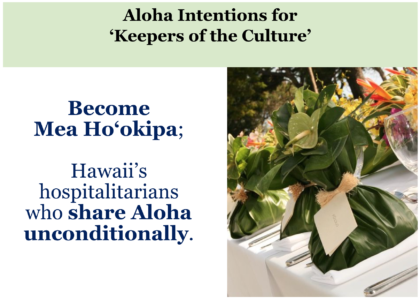 Above: A slide from my recent presentation to the Maui Visitors & Convention Bureau’s 35th Annual Meeting in Ka‘anapali, Maui.
Kaʻana i kāu aloha: Share your Aloha
As we grow in our careers, we tend to seek a certain sophistication in our explorations of new learning. We strive for better and for different to change things up, and to simply feel like we are growing, and we aren’t resting on our laurels.
There’s a big difference however, between resting on your laurels and reaffirming the basic values and beliefs which got you to where you are, especially when those values and beliefs were foundational, and remain so critically essential to your Ho‘ohana, your intention for worthwhile work, and for earning your keep in life in the best possible way (‘Imi ola: We are meant to be Seekers).
In Managing with Aloha as my personal and professional philosophy, Ka‘ana like Aloha—Sharing Aloha—is the essential nature of my “basic value and belief.” Sharing Aloha is the reason you will often hear me talk about intention.
With the benefit of hindsight as 20-20, a lifetime living in Hawai’i studying our sense of place and values, and my ahem, advanced age (someone introduced me as “Kupuna Rosa Say” recently, and I must admit it startled me) this is what I can clearly see:
Every time we have societal challenges here—and we’re in one now with the Maunakea movement spreading fear into other developmental advancements—some try to ‘protect Aloha’ instead of doing what the value itself implores us to do: share Aloha.
I gained this clarity of understanding for the first time in 1989 when I studied the organizational dynamics of hospitality in our islands with Dr. George Kanahele—I had already lived my native-to-Hawai‘i life for 35 years! As I wrote in my book, “Aloha was just a background color of sorts” then, and I didn’t even think of it as a belief or conviction.
What I learned beyond Aloha’s definition as a value, was that Aloha is unconditionally connected to, and essential for Ho‘okipa, the value of hospitality as complete giving. It therefore follows—it undeniably, and unquestionably follows—that Aloha is meant to be shared, even with strangers.
Aloha is meant to be shared—I cannot say it, remind myself to do it, and ask for it from every single person I can, whether they live in Hawai‘i or not, for they are of Aloha and with Aloha too.
Aloha is meant to be shared with people who do not agree with you most of all. Without the sharing of Aloha, your disagreements cannot be reconciled and healed, so that everyone involved can move on in the best possible way, that is, with their spirit completely intact, and ready to be shared with the very next person they encounter.
The second essential understanding of Aloha clarity I received from Dr. Kanahele, was that Aloha and business DO mix well, mix honorably, and mix with magnificent results for people—IF we work our businesses that way, in the ways of sharing Aloha, and being Mea Ho‘okipa as our mana‘o: be the good host. It’s all on us as individuals of Aloha, and no matter what other forces are at play.
We learned this in the Hawaiian Renaissance of the 1970s. We learned this in the aftermath of 911, when Hawai‘i begged for more tourism to get our economy back on the road to better economic health (see Chapter 5 in Managing with Aloha on Kūlia i ka nu‘u). We learned this in the downturns and backward steps of the Great Recession of 2008, when we wondered how our youth could possibly make any strides in American life without a single job to be found.
We must learn this now too, in the disgruntled and fearful shadows of the Maunakea-inspired ‘protection’ movements, and wherever we in business are tip-toeing through eggshells, and being hesitant when we should be the Alaka‘i Managers who lead. If there was ever a time for us reaffirm Aloha, Ho‘okipa, and how both inform the Aloha Spirit of our sense of place here in Hawai‘i, it’s now (RFL: A Serenity Prayer for Maunakea).
If we are to “protect” something, let’s protect these points of ALOHA clarity by demonstrating them better than we ever have before:
—Aloha is meant to be shared.
—Aloha and business CAN and DO mix. Be the good host.
—It’s all on us as the Mea Ho‘okipa of Aloha we are meant to be.
Will you do this with me, please? We are more than capable. We are Aloha.
 “If and when tourism in Hawai‘i dies, it will start from within, not from outside forces.”
—Dr. George Kanahele, Critical Reflections on Cultural Values & Hotel Management in Hawaii, 1991
Related Reading:
I humbly ask to you visit these reminders in the Managing with Aloha blog archives:
Our Beautiful Basics. “The beautiful basic of Managing with Aloha is living a good life with great work. That’s what I wish for you in every single day to come.”What is the Aloha Spirit? It’s you! “This is a belief a person can choose to have: You need not be of Hawaiian blood or ancestry to believe in the goodness inherent in humanity.”The Language of We. “A different language is a different vision of life.”— Federico FelliniA Stranger Only For A Day and “The Temporary Guest.” Ho‘okipa hospitality is not just welcoming a guest TO your place, it’s welcoming them IN to your place.Ho‘okipa, the Value of Complete Giving “ Identify your Mea Ho‘okipa, employ them well, so they radiate their joy, and allow them to teach you.”
…and in case you have not read it yet, The Aloha Spirit in Business at Ke Ola Magazine, our value immersion for November and December.
 “Every single day, somewhere in the world, Aloha comes to life. As it lives and breathes within us, it defines the epitome of sincere, gracious, and intuitively perfect customer service given from one person to another.”
—Managing with Aloha, Bringing Hawaii’s Universal Values to the Art of Business
Strong values are not just those beliefs and convictions you already have. They also represent goals and objectives, as the values you want to grow into. Grow into them in foundational, back to your basics way—you know what to do.
Subscribe to our weekly newsletter:Talking Story with the Ho‘ohana Community.
Preview of Managing with Aloha, Second Edition, released Summer 2016
Managing with Aloha, Bringing Hawai‘i’s Universal Values to the Art of Business


October 18, 2019
Managing Basics: The Good Receiver
Preface: Originally posted for an October edition of our weekly newsletter, this addresses our Key Concept 5 within the Managing with Aloha philosophy; better communication via our Language of Intention.
I always felt that “she’s a good listener” was one of the best compliments I could get. With Managing with Aloha I ramped that up, hoping to hear my staff say “she’s a good receiver.”

Alonui Hana Hou
As I’ve thought about finishing well in 2019, and using the month of October to do so, I’ve repeatedly been drawn to the theme we adopted for the year, Alonui;
Alonui~Presence
You know ‘Alo’ as our inner word pairing for Aloha: Alo + ha.
Alo, demeanor and presence + ha, the breath of life, combines into the uniquely personal Aloha Spirit we each can share with the world.
‘Nui’ is an amplifier. It boosts, expands, and lengthens concepts, to mean ‘much’ or ‘more.’
Alonui will have our 2019 kaona (hidden meaning) of full presence. Wherever we are, we’ll make sure we’re completely, intentionally, and generously there.
With every value immersion we undertake this year as a Ho‘ohana Community, my first question will be, how can I be fully present within the goodness of this value?—How do I receive? My second question will be, how does this value make me interact with others, and communicate better?—How do I give?
I’ve switched those two questions at times throughout the year, finding I could also be more fully present in my giving, and communicate in a more engaging way with receiving.
The notion of the Good Receiver originated in our Managing with Aloha lexicon with the Daily Five Minutes, (D5M), the short, daily conversational practice we teach managers so they will be better listeners, and as a consequence, devote more of their efforts to following up on requests of them.
Being a Good Giver was initially for the manager’s direct reports—those the manager gives the D5M to—so they would simultaneously learn to improve shaping their conversational agendas for their managers; exactly what do they talk to managers about, and when is it best to do so? There are logistical considerations to effective conversations, though we normally don’t think of them that way, and those logistics are easy to learn as part of culture-building.
Related Reading: All Conversations Are Not Created Equal.
 Is it easy to see when you are open to conversing? Can people tell when you are open to taking 5 minutes to speak with them, and are ready to be a good receiver of whatever they have to say?
Image by JuniperPhoton@juniperphoton on Unsplash.com
Alonui has reminded me how much purposeful intention is involved with being a Good Receiver, and being the manager, and the kind of person, whom others will never hesitate to approach, talk to, ask questions of, and confide in—especially after we have encouraged our people to speak up more!
As managers, we need to cultivate our presence with calm, and with a stillness that conveys we are ready to engage. We need to know how to successfully turn our attentions completely toward people who approach us, while we turn off everything else. We need to deliberately practice it: How do we put aside whatever else we were doing without losing momentum or forgetting, and how do we turn off all distractions? How do we hone into signal, and turn off the noise?
Managers heads are full of the stuff we deal with and must handle. In my earliest practice of D5M at The Ritz-Carlton, Mauna Lani, I learned to carry and use one of those 3″x5″ field notebooks and a pen with me wherever I went, ready when someone approached me to talk. I had learned to appear approachable, ready in body language though my brain was still firing ahead, and I would often have to say, “Give me 3 seconds to write something down [to bookmark my brain] and you will have my full attention; I’m glad we can talk now.”
When someone approaches them, the Good Receiver conveys, “Talk to me, I’m ready to listen, and I’m ready to be here for you” in their expression, in the stillness and calm of their body language, and in their readiness to engage. Full attention. An eagerness to listen. Unwavering patience. As Alonui reminds us, “Full presence. Wherever we are, we’ll make sure we’re completely, intentionally, and generously there.”—in that moment, with that person.
It
can be harder to do than it sounds, can’t it. The people we should be
listening most to, often become the ones we take for granted because we
are around them so much, and feel we already know them, or know our
shared working environment so well.
Well, being ‘around someone’ is not the same as knowing them well, and knowing what’s newly influencing and affecting them.
Much of it comes back to our intention. Wanting to listen to someone and freshly connect with them on a regular basis must be our influence, steeped in our Aloha Intentions to live and work with Aloha in the company and complement of others.
When we want to be Alaka‘i Managers, we give good receiving our purposeful intention, so we will deliberately practice it. At the end of each day, we reflect on how well we may have done with the intention we set, and how we might improve tomorrow, for that is how we Hō‘imi—go forward with more positive expectancy.
The Daily Five Minutes appears in Chapter 11 of Managing with Aloha, “To know well. To seek knowledge and wisdom.” We learn from the people who surround us, and as managers, we learn from our staff most of all.
“In the process of learning to better converse, better listen, and self-develop this habit [of the Daily Five Minutes], people greatly improved their own approachability. Managers nurtured a circle of comfort for their employees to step into and talk to them whenever time presented itself, and conversations were elevated in how people regarded them—they worked!”
Resource pages for D5M are on the blog here:
1. Revisiting the Daily 5 Minutes: Lessons Learned.
2. Learning Paths: Prepping for The Daily 5 Minutes.
Bonus Link: How to Listen.
Take some time to review the benefits of Alonui.
I’ll repeat them here, and save you the click further back within the blog: Turn this into your end-of-day reflection checklist —did you receive well today, and feel any of these benefits because you did so?
With presence;
We hurry less, scurry less, and chill more, curbing anxiety.We learn to enjoy patience, which helps us learn to savor.We
still ourselves by tuning into all 5 senses: We hear, we see, we smell,
we touch, we taste. We begin to separate those sensations and
appreciate each one individually, and new experiences and challenges no
longer overwhelm us.We learn to concentrate and focus our attentions better; less scatter-brained distractions, less feeling out-of-touch.We
make personal connections faster and more intimately; we broaden our
professional connections with more complementary curiosity.We give the gift of ourselves to others, and find they reciprocate in kind.We
take more initiative, because we’ve learned to rely on our own talents,
strengths and intuition more than we had previously—we’re no longer
watchers; we’re doers.We learn more inclusiveness, and
experience a greater willingness to share what we have, because we have
the empathy of what we’ve just felt like through our own immersion.With
all this new learning, we also experience unlearning, for we discard
convention in favor of more personal freedom. We don’t settle; we
welcome in experimentation.We ask more questions, and we listen better to more fully understand the answers we may be given.
We have been good receivers, and humans who are being instead of doing.
 Image by Bewakoof.com Official on Unsplash.com
“Stillness is to be steady while the world spins around you. To act without frenzy. To hear only what needs to be heard. To possess quietude—exterior and interior—on command. Stillness is that quiet moment when inspiration hits you. It’s that ability to step back and reflect. It’s what makes room for gratitude and happiness. It’s one of the most powerful forces on earth. We all need stillness, but those of us charging ahead with big plans and big dreams need it most of all.”
—Ryan Holiday
Subscribe to our weekly newsletter:Talking Story with the Ho‘ohana Community.
Preview of Managing with Aloha, Second Edition, released Summer 2016
Managing with Aloha, Bringing Hawai‘i’s Universal Values to the Art of Business


October 14, 2019
What do executives do, anyway? They do values.
My title is borrowed from a blog post I recently read and felt compelled to share with the readers of my Ho‘ohana Community newsletter: What do executives do, anyway? by Avery Pennarun, Apenwarr.
Pennarun chews on the question by means of a book review: He offers up the answer given by Andy Grove (of Intel fame) in his book High Output Management, and writes;
“To paraphrase the book, the job of an executive is: to define and enforce culture and values for their whole organization, and to ratify good decisions.”
“That’s all.”
“Not to decide. Not to break ties. Not to set strategy. Not to be the expert on every, or any topic. Just to sit in the room while the right people make good decisions in alignment with their values. And if they do, to endorse it. And if they don’t, to send them back to try again.”
I actually jumped up, shot my arms into the air, and shouted “Yes!” when I read that. Then I sat back down, and downloaded High Output Management to my Kindle.
I kept reading Pennarun’s article, and you know I loved this next part, sending me here to my own blog to recapture it so I, and hopefully you, will read it often;
Enforcement of culture and values
“According to the book, which makes a pretty compelling case, the only other responsibility of an executive is to enforce company values.”
“What does that mean? It means if someone in the company isn’t acting “right” – not acting ethically, not following the conflict resolution algorithm above, playing politics – then they need to be corrected or removed. Every executive is responsible for enforcing the policy all the way down the chain, recursively. And the CEO is responsible for everyone. You have to squash violators of company values, fast, because violators are dangerous. People who don’t share your values will hire more people who don’t share your values. It’s all downhill from there.”
“Real values aren’t what you talk about, they’re what you do when times get tough. That means values are most visible during big, controversial decisions. The executive ratifying a decision needs to evaluate that decision against the set of organizational values. Do the two leads both understand our values? Is the decision in line with our values? If not, tell them so, explicitly, and send them back to try again.”
Pennarun goes on to explain why values will always be important than strategy. Do businesses need strategy? Yes, but strategy will follow as the result of the exceptional teamwork—also key to Grove’s management philosophy—a values-centered and values-aligned workplace culture operates within;
“Employees, including executives that report to you, follow company values first and foremost. (This is by definition construction. If they don’t, you fired them, see above.) Of course, they’re human, so as part of that, they’ll be looking out for themselves, their friends, and the people in their organization.”
That sentence essentially reminds us that employees will always keep their personal values in play as well. What we’re hoping for, and planned for in assuring we assemble the right group of people, is that personal values and company values become shared values. And the exec? He, or she, does everything within their power to make that happen, by brokering meaningful, value-aligned decision-making within the ranks.
We speak of this in Say Leadership Coaching:
We humans hold and apply our values in at least three ways:
Individually — what you believe in as your personal valuesOrganizationally — company values you enroll in and agree to uphold as your professional values, sharing them with others in company cultureIn Living History — community values, as represented by its heritage, traditions, conventions, and active culture. These are largely determined by your sense of place, and community sense of belonging.
Pennarun continues;
“Why will employees embrace whatever weird organizational values you set? Because in every decision meeting, you enforce your values. And you fire the people who don’t line up. Recursively, that means executives lower down the tree will do the same, because that itself is one of the values you enforce.”
“Unless it’s somehow impossible to hire people who agree with your values, you can assemble an organization that aligns with them. It might be a terrible organization that ruins your business, but then… well, those values weren’t a good choice.”
“I can’t believe nobody told me this before. It’s all so simple, and it’s all been documented since the 1980s.”
Yep, it’s all so simple.
The Managing with Aloha Ethos: Please, Be true to your Values.
 Subscribe to our weekly newsletter:
Talking Story with the Ho‘ohana Community.
Preview of Managing with Aloha, Second Edition, released Summer 2016
Managing with Aloha, Bringing Hawai‘i’s Universal Values to the Art of Business