Rosa Say's Blog: Managing with Aloha, page 10
November 11, 2016
We don’t inherit our values: We choose them.
I have been on a reading overload on Twitter these past few days, i.e. Pre and Post Elections2016, and would like to share a few of my findings there with you.
Let’s instead ‘accept’ that this election result wouldn’t have happened in a healthier, inclusive, good America, and work to get whole again
— Rosa Say (@rosasay) November 10, 2016
[Direct link to Twitter page.]
To preface the rest of this posting, Twitter can be shockingly ugly, however I continue to engage there for two reasons: First, it’s amazingly quick and timely; I learn of ‘the news’ there faster than through any other medium. Second, my experience there as a blessedly not-famous person, amounts to who I choose to follow and read; having used it for a while, I know how to filter it well, and I instantly block the haters and spammers. To this second point of curation, I give in to my impulsiveness and change it up there frequently too, e.g. I followed different people while watching the World Series than followed now, while Elections2016 pervades so much.
If there’s one thing Twitter is exceptionally good with, it’s tearing down the walls of my comfort zone. It’s an empathy challenge, entreating me to understand more about the rest of the world than I presently do. It’s similar to having the benefits of travel, including travel to perilous places — sort of like a Sense of Place Machine in comparison to a Time Machine.

Black lava, white coral, golden algae: Being Home is being welcomed by your Sense of Place.
For example, I shared two experiences there I thankfully cannot imagine having while living in Hawai‘i, those shared by Shaun King and Patrick Thornton;
The stories @ShaunKing is tweeting about “emboldened white Trump supporters” are frightening: Please stand against this behavior (safely).
— Rosa Say (@rosasay) November 10, 2016
[Read the above on Twitter: King is tweeting a chronicle of disturbing accounts of racist violence and harassment, including of children, in the name of perceived Trump-inspired permissiveness.]
Update: Shaun King has followed up with an article on the DailyNews: No, we should not wait and see what a Trump administration does. We should organize our resistance right now.
Read this thread: @pwthornton does his best to explain the rural American story #SenseOfPlace https://t.co/UfW1N37bYx
— Rosa Say (@rosasay) November 10, 2016
[Read my tweet on Twitter, and/or Patrick Thornton’s thread.]
Patrick Thornton lives and works in Washington DC now; he grew up in Ohio. His tweet storm description, of what growing up was like for him, got me to think about our values again, in this respect:
We choose our values. Make no mistake about that.
Take 5: A values-centered journey down Managing with Aloha’s memory lane:
March 2012 (our Basics): Let’s Define Values
November 2012 (Election Day 4 years ago; includes a MWA book excerpt): Our Values and our DNA
February 2013 (as our President-elect is a businessman): The Rub of the Business Model is Solved by your Values
August 2016 (the influence of family): Teaching ‘Ohana Values
In honor of Veterans’ Day, November 11th each year: “They know how to lead — and be led.”
“This Too Won’t Pass” — @davepell and his mom, say, become an activist for your #values. https://t.co/QuQ2rdZxas pic.twitter.com/VWTpIB6LFp
— Rosa Say (@rosasay) November 11, 2016
[Read the above on Twitter if the image quote does not load properly for you.]
Later, Patrick Thornton fleshed out his tweet storm in an opinion article for Roll Call: I’m a Coastal Elite From the Midwest: The Real Bubble is Rural America. An excerpt:
The first gay person I knew personally was my college roommate — a great man who made me a better person. But that’s an experience I would have never had if I didn’t go to college and instead decided to live the rest of my life in my hometown.
That was when I realized that not supporting gay marriage meant to actively deny rights to someone I knew personally. I wouldn’t be denying marriage rights to other people; I would be denying marriage rights to Dave. I would have to look Dave in the eye and say, “Dave, you deserve fewer rights than me. You deserve a lesser human experience.”
When you grow up in rural America, denying rights to people is an abstract concept. Denying marriage rights to gay people isn’t that much different than denying boarding rights to Klingons.
That really resonated with me: My first complete and true LGBTQ experience of any kind, was living with my gay roommate Neal too, fresh out of college and in the early years of my hotel career before I was married. Decades later, I would have to hold Neal’s hand when he died of HIV/AIDS and his partner sobbed uncontrollably in the next room; they would never get to experience marriage.
Hawai‘i is much smaller geographically, yet there are certain microcosms of experience here as well. One we often talk about, for example, is what it’s like when you grow up/live on O‘ahu (more urban) versus on a neighbor island (more rural), each its own generality. I’m often grateful I’ve had the benefit of both.
All to say, each of us is similar to Patrick Thornton in some way: As we grow, we change as a consequence of our choices. When we choose where we’ll live, we’re choosing what we will—or won’t experience—as a consequence of that choice. Living somewhere, anywhere, is a Sense of Place immersion in community-based value systems.
Once you move from home (or choose to stay), making your own choices about being there in the first place, is part of becoming an adult. You stay, willing to have your surroundings influence you, or you stay, wanting to be the one to influence others:
Those who feel #NeverTrump shouldn’t move out of Ohio, Florida, North Carolina & Wisconsin —they need to move IN. https://t.co/GaBevQyXoa
— Rosa Say (@rosasay) November 9, 2016
When Thornton tweeted his article update, he introduced it with this: “Perhaps predictably, fittingly, the people who have given me the grief on this piece are my parents.”
Me? I grew up with a mostly-liberal mom and a mostly-conservative dad, both who were highly religious in my younger years, and then became increasingly and openly in disagreement with Catholicism as time wore on. I couldn’t believe it when they said we no longer needed to go to church; they only asked that my siblings and I make a totally informed decision (and this became Managing with Aloha’s Learning Landscape: “Know well”). I was blessed with open-minded parents willing to change, and willing to allow me to make my own choices earlier than most young adults got to do so back then.
College, a corporate career, and my good fortune in being able to travel quite a bit, made me much more liberal in some ways (e.g. my very strong beliefs in Kākou diversity and inclusion), and much more conservative in others (e.g. Entitlements of any kind have never sat well with me, and I’ve had to work very hard to understand any good within our welfare system). I have become absolutely fierce about the foundation of having ‘good intent’ and a sense of personal responsibility within any practice of the Managing with Aloha philosophy.
Hawai‘i has a long history of being predominantly blue, and I married into a family as Democratic as they come. I have voted in every election since I was old enough to register, and I have never voted along party lines; I award my votes to individuals I respect no matter their party alliance. If called upon to identify, I’d probably describe myself as a left-leaning centrist more often than not, especially in current American context, where in my view, there is such an identity crisis happening in both of our major parties.
Here are some good definitions on Quora: Politics: What is the difference between Conservative, Liberal, Centrist, Leftist, Right Wing Parties in the modern world?
Be willing to explore who you are, and what you believe in. Social issues aside, you may discover a renewed purpose, or your calling.
Be bold by being self-assured: Make your own choices, work to self-identify, gaining your own values clarity, and then stand up for your values. Elections 2016 may be over, but our American Experiment with the change to come, is just beginning. Know where you stand, and also know what you have to learn.
I really like Patrick Thornton’s prescription of empathy coupled with an insistence that we try harder:
“We must start asking all Americans to be their better selves. We must all understand that America is a melting pot and that none of us has a more authentic American experience… I love the Midwest, but it’s not representative of modern America. We cannot fetishize it as “real” America. It’s part of America — a great, big, beautiful, messy republic — but just a part… We are all real Americans, and it’s time we start empathizing with one another more.”
I remain steadfast about the Managing with Aloha Ethos, and hope you will too:
Ethos: Be True To Your Values.
Subscribe for our weekly newsletter:
Talking Story with the Ho‘ohana Community.
Our value immersion study for the months of November and December:
‘IMI OLA: We are meant to be Seekers.


November 9, 2016
Our Values and the American Experiment
Wow, what a roller coaster week! As the dust starts to settle, I am dismayed and fascinated by what just happened in America as we elected the 45th President of the United States, and I bet you are too, whether you’re an American or an America-watcher.
I am dismayed, because I was wrong in projecting that Hillary Rodham Clinton would win. I feel much sadness in realizing we will never know the kind of president she could have been for us; it could have been revitalizing. Given the agenda President-elect Trump has promised, it is also unlikely we will witness progress on President Obama’s legacy, unless he manages to champion them via his own newly chartered foundation.
However, my life in business has taught me this lesson several times over:
When you’re wrong, say so, and move on as quickly as possible— allow your curiosity about “Why?” and your fascination to set in; learn what you can about whatever just happened.
The strength of American goodness survives today: #Election2016 is the day we reject the intolerance of blatant fascism —we reject Trumpism pic.twitter.com/KSZunWSsrk
— Rosa Say (@rosasay) November 8, 2016
I was so wrong about this. We can’t call #Election2016 a true election: We’ve just experienced an uprising. A new American experiment begins https://t.co/OTS9VTh9UG
— Rosa Say (@rosasay) November 9, 2016
[Link to Twitter if these images do not display correctly for you.]
I am fascinated, as someone who is ever the student of cultural and social anthropology, tuned into the roles our values play: Values in Healthy Work. Given what I do as a workplace culture coach, whenever we experience a shift in culture and in our society, my first instinct is to ask myself;
What role did our values play in this? How so?
Sometimes, the question is;
Our values sat this one out—why?
The latter question started to form for me this time, then I reminded myself of something else I’ve constantly learned to be true:
Our values never sit things out.
They may have just worked in a way we have yet to fully understand…
I still don’t understand this, but as someone who teaches values-centered working (and living w/Aloha) I’m trying to… https://t.co/fCRs9PqX9H
— Rosa Say (@rosasay) November 9, 2016
So, we work to understand this, and we move on.
Giving up on one’s country, is simply not an option.
I see today, November 9, 2016, as Day 1 of our newest American experiment.
Pundits are going crazy right now in their quest to be our master explainers… as recently as a week ago, they spoke of how the Republican party is imploding amidst a dearth of truly conservative values; now they are focused on the uncertain future of Democrats and all things liberal. As I write this, Clinton won the popular vote, and Trump won the Electoral College, and the validity of our very messy ‘democracy’ is again being questioned:
“[Ours] is not a democratic system. It is a constitutional republic. ‘Democracy’ is a misnomer.”
—Dan Zak, newspaperman at The Washington Post
We have much to learn, and much of the truth is quite simple: A new experiment IS beginning, and we will have to wait and see.
This much is certain: People voted for change, and they, we, will get it.
Move forward: Put one step in front of the other, and trust in Ka lā hiki ola, ‘the dawning of a new day.’
Know too, that having faith and trust in the future is easier when you are involved and participating in it, and not satisfied with being a bystander… just ask anyone now regretting that they did not vote.
Need more? Related reading in the MWA Archives:
KA LĀ HIKI OLA is the value of optimistic beginnings, and it can stay with you moment by moment. Ka lā hiki ola is a brand of self-leadership, and a Sense of Hope:
October, 2013: Tough Times are Rough Draft Times
January, 2014: Ka lā hiki ola and Leadership: A Sense of Hope
…and a reminder that motivation is an inside job: Life’s 3 Stops in Motivation: Happiness, Meaning, Service

Subscribe for our weekly newsletter:
Talking Story with the Ho‘ohana Community.


November 7, 2016
‘IMI OLA Freedom: A Self-Coaching Exercise for November
Our value immersion study for the months of November and December, is:
‘IMI OLA: We are meant to be Seekers
‘IMI OLA can be heady stuff at first take, whether we choose to define it as the value of mission and vision or ‘seeking our best possible life.’
In the exercise I’ve taken with it —which I told you about on November 1st— I’ve discovered my current mood to be much lighter though, and I encourage you to be open to that possibility too.
To pen an ‘IMI OLA list,
is to create a near future you eagerly look forward to.
What do you expect to gain from your attention?
‘IMI OLA is freeing when that is the expectancy you bring to working with it.
‘IMI OLA gives you the option of not having a specific answer, and indulging in the search itself, as you look for one. The only decision you really have to make, is if you will commit to taking the time to do.
Then do it.
“Don’t ask yourself what the world needs.
Ask yourself what makes you come alive.
The world needs more people who have come alive.”
— Jonathan Harris

Best practice: Keep a notebook, if only for the sake of getting out of your own head once in a while.
I’m a fan of simple thought-provoking exercises, the analog ones done with;
Paper, preferably a blank page in your journal
Pen or Pencil, whichever helps you enjoy writing by hand
A Good Question or two you’ll need to answer (and often, we need to clarify those questions so we understand their prompting)
A block of Undistracted Time we award to our own thinking, and the process of writing to learn about ourselves
The intention to follow-up on what you discover— to do the work on it.
Assembling these bullets as an exercise is indeed ‘simple’ and it’s amazingly effective. The critical requirement: Just decide you’ll do it.
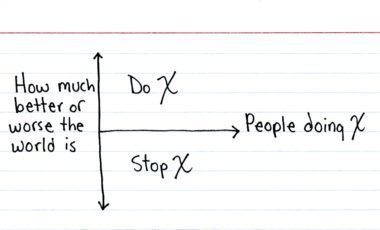
X = an activity with a consequence (so, um, practically everything) — Jessica Hagy
Our Aloha Intentions with ‘IMI OLA
The #AlohaIntentions hashtag we have adopted for our value immersion, is our shortcut packaging of the 5 actions we want to take, when studying a value to deliberately apply it: 1—Living, 2—Working, 3—Speaking, 4—Managing, and 5—Leading, each and every one with Aloha.
Here is some help with the 3rd bullet point above, “A good question or two you’ll need to answer…” with examples of how “…often, we need to clarify those questions so we understand their prompting.”
If you are participating in our Ho‘ohana Community’s value immersion for November 2016, and want to stay on track with it, complete this exercise before Thanksgiving week—you know the holiday will distract you soon, and Thanksgiving is a good distraction to enjoy in the spirit of MAHALO.
Our #AlohaIntentions with ‘IMI OLA
This could be a single weekend exercise in the penning of it. To do the work involved with the decisions you come to, can then be the actionable steps of your next-stepping all through the rest of November and December:
Living with Aloha —How do you define your necessary sustenance in living the good life of ‘IMI OLA? Are there any changes you should make to keep your ‘best possible life’ at hand right now? Identify small steps: Consider ‘IMI OLA a constant work in progress, and NOT a someday/maybe luxury.
Working with Aloha —How can you Be a Reinventor in the work you do right now? One of the objectives employed by ‘IMI OLA reinventors, is to eliminate work which drains you (tedium, drudgery, boring process) by transforming it into work which recharges you with new possibility, more positive in-process prospects, and better outcomes.
Speaking with Aloha —What are the ‘IMI OLA conversations you want to have in the next 2 months? An ‘IMI OLA conversation is one which creates a more favorable comfort zone within any given partnership —it represents progress in how you relate to someone.
Bonus Link: Review SLC Conversation 101 in this article: Conversational Catch-up ~ With Aloha.
Managing with Aloha —Think of managing as optimizing existing energies, through organizing and planning: What is the ‘Imi ola work you have been wanting to do on your MISSION?
Leading with Aloha —Think of leading as creating new energy: How can you Be a Seeker in the work you do right now? Is there study, research, or new learning involved? Is there a new partnership or new network to be explored for added inspiration? What is the ‘IMI OLA work you have been wanting to do on your VISION?
Bonus Link on RosaSay.com: Be clear on the difference between mission and vision, to be clear on how you will work on them, managing versus leading. Review The Mission Driven Company.

Don’t miss links included within in this posting:
Our November/December 2016 Value Immersion: ‘IMI OLA: We are meant to be Seekers
About Next-stepping: Next-Stepping and other Verbs
Mission or Vision? Gain clarity: The Mission Driven Company
Managing or Leading? How we define them: Speaking with Aloha: Energy, Managing, Leading
Related Reading with more Analog Goodness:
Carry, and Use, Pen and Paper.
Curate and Be Curated.
Long Read on Fast Company: 10 Ways To Rescue Handwriting From The Grave. In his book The Missing Ink, Philip Hensher argues that handwriting is good for us and one of the defining behaviors that make us human. Here is his guide to help you reclaim the written word.
This one, number 7. on his list, resonated with me as true of my own learning habits, and because I consistently experience it with managers who attend my Managing with Aloha workshops: After witnessing the differences Hensher speaks of, I am now sure to give participants in-workshop time to write answers into special handouts I have designed for the purpose:
7. When something important that you need to understand and remember is being said to you, make a note of it by hand.
“To be able to write down a summary with pen and paper is, I’m convinced, a quite different and superior skill to making notes in any other way. I talk regularly to a lot of students on academic themes, and, despite institutional pressure, don’t use anything like Powerpoint to get my argument across. I write with a marker on a white- board. It forces everyone into a more active engagement.
From the other side, the students who make no record, but stare astonished into space, wishing they were still on the ski slopes, do worst in the end. The second worst are the ones who plonk a tape recorder on the desk in front of them and record everything you say with the firm and honorable intention of listening to it again later. The worst ones after that are the ones who get out their laptops, and type furiously as you speak. Those, I have to say, are often still pretty bad students, because typing as someone talks encourages transcription without much thought. That’s great if what you are hoping to do with your laptop is to transcribe a stretch of overheard dialogue, not so great if you are trying to understand what people say.
The very best students are the ones who take out a piece of paper and a pen, and write down the things that they think are interesting as you talk, making sense of it as they go. Those are the good students. Yes, you should make notes of anything important, because that’s how the mind works.”
—Philip Hensher
Subscribe for our weekly newsletter:
Talking Story with the Ho‘ohana Community.


November 1, 2016
‘Imi ola: We are meant to be Seekers
‘Imi ola is “to seek life.”
Our purpose in life is to seek its highest form.
Fourth in Series Two on Managing with Aloha | By Rosa Say
It’s time for ALOHA woven into our autumn of 2016.
Finishing well, and Leaping ahead
At this time of year, my thoughts tend to go in two different, yet very complementary directions. With one, I think about finishing well. With the other, I think about getting a head start on the New Year to come.
It just so happens, that our #AlohaIntentions value for the months of November and December frames these two complementary directions perfectly: Our value is ‘IMI OLA, subject of chapter 3 in Managing with Aloha, which is “to seek life.”
You will find my kick-off essay published on RosaSay.com:
‘Imi ola: We are meant to be Seekers
Self-coaching with Value Guidance
Before you click over to read it my essay, take a moment to ask yourself a simple question: What am I looking for?
As one of our Aloha Intentions, “managing with Aloha” entails two parts, self-managing our own behavior, and managing the behavior of others. If not a “manager” explicitly by title and responsibility, we manage the behavior of others by acting in full awareness of our ability to influence others.
Thus the question of what you may be looking for, asks those two things as well:
What are you looking for, for you?
What are you looking for, for others who surround you, those living and working with you?
Be a seeker, and support those who are your seekers.
Asking Good Questions
Asking a good question of ourselves is always a good way to start working within any value-of-the-month program.
“What am I looking for?” relates to the ‘imi of ‘IMI OLA —to look, to hunt, to search, to seek. To take notice. To observe with intent. To explore. To discover. To have an aha! moment of wonder:

My Girl Sasha Looking Good on the Street by Thomas Hawk
Wonder
To have an inner capacity that can always make room for awe and wonder is such a blessing.
To return to child-like innocence and acceptance, to be rendered speechless, and have it feel good and right, never helpless.
To not have all the answers but feel it is perfectly fine not to, to just have wonder.
~ Twelve Aloha Virtues
To ask yourself, “What am I looking for?” is to ask yourself what you hope to gain from the next two months, and to clarify exactly what it is you want to happen: The Instinctive Natural Selection of Wanting.
However ‘IMI OLA is freeing as well; it gives you the option of not having a specific answer, and simply indulging in the search, as you look for one.
To Seek, and To Ask, is to Be Open to Discovery
An answer can surprise you.
I myself have sat with the question, “What am I looking for?” for a few weeks now, for so goes publishing schedules (Ke Ola needs my essay a full two months in advance to prepare for their magazine’s printing).
Ever the pragmatist, my own answers started off logically and predictably. Then I challenged myself to keep asking: Every weekend, I have written, “What am I looking for?” atop a new journal page, then folded the page into 2 columns, “For me (self-managing)” on the left, and “For others (managing intention)” on the right.
I push myself, so each column of notes capturing my thoughts will not duplicate what I wrote the weekend before.
It’s been an interesting exercise so far, and I intend to continue it for the remaining weekends in 2016, both to finish well and to leap ahead.
Join me. Value your month, to value your life. Our Aloha Intentions seek to bring good to us, if only we let them.
Related Reading:
Alaka‘i Managers Make Plans
To Manage with Aloha is to Hack Behavior
Better Person, Better Manager, Better Leader. Alaka‘i Batch 24
Subscribe for our weekly newsletter:
Talking Story with the Ho‘ohana Community.


October 4, 2016
Our Beautiful Basics
I started a new client on my Alaka‘i Manager’s one-on-one coaching program this week, and it’s one of those new beginnings which always get me thinking about — and revelling in — Managing with Aloha’s ‘beautiful basics.’
When you are all-in, and deep into the throes of any philosophy, it can be so good to look back to your roots, taking the time to be certain they are still nourished by fertile soil— you, your core values, and your ground level intentions for good.
Among those basics, is the spirit-spilling of ALOHA as our MWA rootstock, our “kalo value.”
“The life of Kanaka Maoli, the indigenous Hawai`i people, is linked closely with kalo, also known as the taro plant. Kalo is believed to have the greatest life force of all foods. According to the Kumulipo, the creation chant, kalo grew from the first-born son of Wakea (sky father) and Papa (earth mother), through Wakea’s relationship with his and Papa’s daughter, Ho`ohokulani. Haloa-naka, as the son was named, was stillborn and buried. Out of his body grew the kalo plant, also called Haloa, which means everlasting breath.” —Canoe Plants of Ancient Hawai`i
—a fabulous online resource site you must visit and bookmark if you are not yet aware of it.
Every coaching program I do, starts with identifying the personal and professional values important to that manager, and talking story with them about how their values connect to Aloha.
Our Language of We
A second basic, is our “Aloha Intention” of Speaking with Aloha. In our new beginning working together, we start to speak the language of Managing with Aloha, using its’ vocabulary and kaona (hidden meanings).
As most of you know, I don’t actually speak the Hawaiian language conversationally, and am myself a student, still learning to do so. Ever since I started practicing MWA however, years before the book was written about applying it to management in business, I have used Hawaiian values and selected Hawaiian vocabulary as our “Language of We.”
You can’t “walk the talk” when there is no good talk to walk.
For instance, in my Alaka‘i Manager’s one-on-one coaching program, personal responsibility becomes Kuleana, one’s work as defined by one’s mission becomes their Ho‘ohana, and the growth we seek in that manager’s self-development plan becomes their ‘Imi ola.
This is so important: Strong values are not just those beliefs and convictions you already have. They also represent goals and objectives, as the values you want to grow into.
Always remember: You choose your values.
Remember too, that values equip you: They define your WHY and they help you in your HOW as you tackle your decision making. Going back to the “spirit-spilling” part of it, our values serve us, by weaving self and spirit, mana and mana‘o, into the work we do with Aloha.
The “beautiful basic” of Managing with Aloha is living a good life with great work. That’s what I wish for you in every single day to come.
Go back, and check on your roots:
What is the Aloha Spirit? It’s you!
Ethos: Be true to your Values
The Language of We
Language of Intention Feeds the Culture Beast
Bookmarks to keep:
Managing with Aloha’s Lexicon Morphology and Our Conceptual Index
The Managing with Aloha Glossary
Values in Healthy Work

“A different language is a different vision of life.”
– Federico Fellini –
Key 5. LANGUAGE OF INTENTION:
Language, vocabulary, and conversation combine as our primary tools in business communications, just as they do in our lives: What we speak is fifty times more important than what we read or write. The need for CLEAR, intentional, reliable and responsive communication is critical in thriving businesses — and in learning cultures, for we learn an extraordinary amount from other people. Drive communication of the right cultural messages, and you drive mission momentum and worthwhile energies. Communication will factor into every single value in some way as its primary enabler. The Managing with Aloha language of intention is inclusive, and is therefore defined as the “Language of We” with the value of KĀKOU as guiding light.
Read more: The 9 Key Concepts of Managing with Aloha
 Our #AlohaIntentions value for the month of October, 2016 is Ho‘ohana as our Work Ethic.
Subscribe for our weekly newsletter:
Talking Story with the Ho‘ohana Community.


September 21, 2016
The Ethos of Elections2016: Vote Your Values, or Vote Your Party?
As someone who coaches value alignment for a living, upholding the Managing with Aloha Ethos, “Be true to your values” I was fascinated by an interview I saw on television the other night.
Sadly, we may have the most unpopular candidates ever running for the office of President of the United States in Hillary Clinton and Donald J.Trump, and the segment I watched illustrated how people of both major parties, Republican and Democrat, are torn between party loyalty and their own personal values.
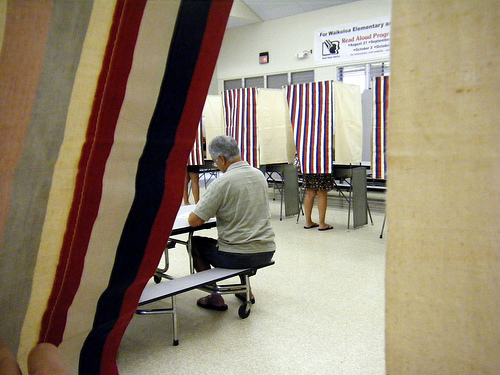 If you’re someone in that same quandary, what do you do?
I would agree with Shakespeare’s Polonius, “Above all else, to thine own self be true.”
My advice is mostly pragmatic: Party persuasions are largely out of your control. You can work hard to be a person of positive influence, and I would encourage you to do so, however no single person will ever be able to control a party (or a team, or an organization).
On the other hand, you, and only you, are in control of your own decisions and own actions. You can cite other influences, and deny it all you want, however ultimately, what you decide, and what you do is all on you. Own it. As we say in Hawai‘i, “Be kū.”—Stand up for yourself and what you believe in.
ethos |ˈē θ äs|
noun
the characteristic spirit of a culture, era, or community as manifested in its beliefs and aspirations.
ORIGIN mid 19th cent.: from modern Latin, from Greek ēthos ‘nature, disposition,’ (plural) ‘customs.’
From a personal standpoint, your ethos is your values-based character, and you are ‘true to your ethos’ with every decision you make which affirms your personal values.
Indeed, those decisions include who you vote for, as much as any decision on which team you participate in, and any decision to back causes you believe in. The values of your convictions determine your choices, and ultimately, establish your ethics.
“Selling out is usually more a matter of buying in. Sell out, and you’re really buying into someone else’s system of values, rules and rewards.”
~ Bill Watterson, creator of Calvin and Hobbes, in his 1990 commencement address at Kenyon College
And I do hope you WILL vote. Our political system is far from perfect, I know, however inaction does not serve you better, nor does it serve our country and our future. To not participate, as driven by your values, is not to decide. To not decide, is to fail in the strengthening of your ethos, your character, and your ethics.
Postscript: The Managing with Aloha Ethos is one of the new additions to the newly released Second Edition of Managing with Aloha, and can be found in Chapter 19 on Ka lā hiki ola.
Related reading at RosaSay.com: Values in Healthy Work.
A place to begin: Start with two words: “with Aloha”
Our #AlohaIntentions value for the month of September, 2016 is Ho‘ohana as our Work Ethic.
Subscribe for our weekly newsletter:
Talking Story with the Ho‘ohana Community.


September 11, 2016
Sunday Mālama: Darting Fish
“We are made to persist. That’s how we find out who we are.”
—Tobias Wolff
Wonderful quote for our value of Ho‘omau, isn’t it?
Sunday Mālama: Darting Fish
We humans run so many thoughts through our brain… it’s astounding when we’re actually able to focus on them.
I used to be one of those people who would say, “I’m just not an idea person, though I wish I were.” until a mentor challenged me, saying, “Don’t you ever say that to yourself again.” She was emphatic in pointing out human beings get ideas all the time, and that our challenge is in netting them and hauling them in, because there are so many idea connections vying for our attention, and “ideas are like darting fish.”
I loved the picture she painted for me: Some ideas are big fish, and if we’re truthful, we admit they intimidate us and we hope they escape our net. Some ideas are smaller, and not quite ready for us, and they escape through the open weave pukas (holes) of the net, however they stay in the swirling water, where they’ll grow up.
On most Sundays, I go fishing
Sometimes, I’ll run across an article online, that makes me stop and consider; “I used to think about this very issue, why didn’t I go anywhere, or do anything with it?”
That was the case this morning, when I read this from Yes! Magazine:
6 Ways We’re Already Leading an Economic Revolution
From the “buy local” movement to public banking, we’re well on our way to a more democratic, cooperative, and people-centered economy.

Photo by vgajic / iStock via Yes! Magazine
You’ll have to read the article first, to know what I’m talking about in the rest of this post. Or you can just keep the darting fish in your mind’s net, stop reading, and ‘go fishing’ on your own with another topic.
1. āholehole (the Hawaiian flagtail fish)
It’s funny being an American, ‘funny’ being the only descriptive word I can think of at the moment. I like to tell myself I can be a bit more objective than subjective about all-things American, because I was born in the Territory of Hawai‘i and we weren’t the 50th State yet. It is another one of those self-fulfilling affirmations I coach myself in though, for I was all of 5 years old when I became an American.
Anyways, “the very issue” I used to think about, which the article first brought back to mind for me, was my agreement with author Gar Alperovitz’s assertion that America’s dominance isn’t necessarily something we should be proud of:
“Many years ago, while researching the history of the U.S. decision to use atomic weapons on the people of Japan, I came to understand something: There was something deep at work in the American political and economic system driving it toward relentless expansion and a dangerous, informal imperialism. I began thinking about how to fundamentally change America out of concern with what America was doing—and is still doing—to the rest of the world.”
This one is tricky for me —a big fish— because we in Hawai‘i largely feel we were conquered by sneaky governance while a U.S.Territory. We didn’t become Americans by choice, though I speculate my parents would have voted in favor of statehood… my dad was an army veteran proud of his time served in the Korean War in the years just prior to marrying my mom and my birth.
I do think, all these years later, that we Americans are “too big for our britches” an ironically American phrase. We are so presumptuous, in thinking our problem-riddled democracy will prove to be the one right answer for everyone else.
2. ʻupāpalu (the Hawaiian cardinal fish)
Gar Alperovitz continues with:
“Many experiences since—especially working in the U.S. House, Senate, and at upper levels of the State Department trying to resist the war in Vietnam; and thereafter with activists in the antiwar and civil rights movements—taught me something important: It wasn’t enough to stand in opposition to the injustices America inflicted on the world and its own people. It was equally important for these movements to operate with an idea of what they want instead.
Could we imagine a system that undercuts the logic responsible for so much suffering at home and abroad?”
This applies to so many things, doesn’t it? We bemoan something we don’t like, loudly and with deep emotion, without first having the clarity of knowing what we want instead.
A good question to add to your self-coaching arsenal, a question triggered each and every time you’re upset about something, should be: What exactly, do I want instead? And further: What can I offer, and suggest?
Or the uncomfortable one, to push you out of your comfort zone and into the frying pan:
How can I be leading, or at the very least, participating?
For instance, far as I’ve been able to research it, options with self-determination eluded us while the U.S. Territory of Hawai‘i… it was either the old monarchy or statehood, and no other compelling ideas emerged. That was the fish which got away.
I wonder what the self-determination temperature is like right now in Puerto Rico? I also read morning, that the self-determination fervor boils at a fever pitch in Spain’s Catalan region: Catalan independence: Hundreds of thousands rally for break with Spain

AFP: A Catalan demonstrator with her face painted in the pro-independence colours in Barcelona
3. mahimahi (the Hawaiian small dolphinfish)
So Gar Alperovitz put his thoughts into what he wanted instead, sketching out the idea of a “pluralist commonwealth.” He gave the fish he would keep in his net a name.
We have talked about naming ideas before; it’s a smart thing to do. Vocabulary and lexicon rocks. Everyone in the fish-eating world today knows what mahimahi is.
In naming one of your ideas, even when still a smaller sized fish, it’ll grow into it’s name. It certainly helps in getting that clarity with what you really want instead. I mean a fish is a fish, yet just think of all the different ways it can be prepared when you need it to be the meal that feeds you.
Plus when you name something, you can more easily talk story about it, and make smart videos about it too.
4. hapuʻupuʻu (the Hawaiian black grouper)
So, after I watched the video, and read the rest of Gar Alperovitz’s article, outlining the 6 Ways We’re Already Leading an Economic Revolution, and about how “From the ‘buy local’ movement to public banking, we’re well on our way to a more democratic, cooperative, and people-centered economy.” I tweeted out:
“This should be required reading before your next pow wow to update/innovate your business plan we can do better.”
Followed by;
“Business 2016 is not Trump, is not Wall Street: The rest of us must stand up for ourselves, demonstrate how we excel and contribute.”
This is a fish I’ve kept alive in my fishing bucket lately. I am a manager, and I am a businesswoman, and I get pretty bothered by the news reported on business —Case in point, Fortune: Customer Disservice Is the World’s Hot New Business Model, just plain wrong on so many levels.
We aren’t all that bad! I understand how media boosts the negatives to secure more attention for their broadcasts, turning so many of us into frenzy-feeding piranhas, yet that begs the same question, doesn’t it? What do we want instead?
I really need fresh water in that bucket. Poor fish.
5. wekeʻā, kumu, moano, wekeʻula… (the Hawaiian goatfish)
I will leave you to read more about Gar Alperovitz’s 6 Ways We’re Already Leading an Economic Revolution: They’re good, and they’re encouraging.
I was serious about my suggestion that we in business can benchmark them, and chum the waters wherever we fish for a fresher catch in our business plan nets.
So many more fish in the sea.
Postscript:
My Sunday reading has become the primary reason I still use Twitter as one of my social media preferences. The linkage that streams by will point me to several reading sources I never would have sought out on my own. Instagram is similar, though slightly different:
“There is power in picking up a camera each day, saying yes to creativity. It reminds us to explore where a story might lead, to stretch in the direction of the honest and the curious, And with that art, comes questions — why’s, what’s and how’s.”
—@artifactuprising on Instagram
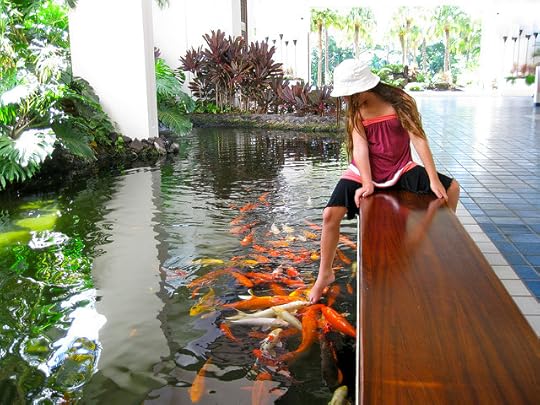
Click on the image for the Sunday Mālama index of articles.
Sunday Mālama has been when I will share my off-the-workplace-highway scenic route kind of posts. Not as a normal weekly feature, but whenever they seem to be writing themselves.
You can access the Sunday Mālama archives via this category link.
Our #AlohaIntentions value for the month of September, 2016 is Ho‘ohana as our Work Ethic.
Subscribe for our weekly newsletter:
Talking Story with the Ho‘ohana Community.


September 7, 2016
The “I said I would… (and when)” Trace File
I have a suggestion for you…
Let’s talk story about a vital managerial skill: FOLLOW UP.
What if it was your superpower?
If I were a fairy godmother, and could wave a magic wand above the heads of supervisors and managers in the trenches, I would (no pumpkins into golden carriages there either).
I would instantly give them a wonderful superpower to have and to hold forevermore:
My magic wand would give the gift of precise memory recall exactly when managers need it.

Mary Blair Cinderella concept painting, 1950
My intention, would be to have supervisors, managers, and leaders follow-up without fail.
My wish, it that they take action with doing whatever they said they would do.
In my magic wand waving, the memory of promising to do something for someone else would never fade or be forgotten until the follow-up gets done. Magic comes with a price (or so they say on Once Upon a Time) and inaction would haunt. Relentlessly.
The manager who faithfully follows up, making good on promises he or she has made, is the manager well on their way to “best boss I ever had” status: Be the Best Boss
The “I said I would… (and when)” Trace File
Without that magic wand, we managers need good tools instead—basic tools like pen and paper, and our commitment to actually using them, habitually.
Thus one of my favorite tools, proving its worth to me throughout my management career, is my “I said I would… (and when)” Trace File.
Hot tip: It’s very useful as a spouse/parent/sibling/friend needing to follow up as well.
I have 2 Trace File versions, 1 analog, 1 digital.
To be more precise, my analog handles my inputs, and my digital handles my alerts.
My iPhone handles the digital with the native apps it comes with:
I use the Reminders app primarily for the follow-up I want a specific date-and-time pinging with, to prompt my action-taking.
I use the Clock/ Alarms app on the phone for reminders in the next 24 hours, and those which have a weekly occurrence until a new habit gels for me.
Isn’t the technology we have at our fingertips wonderful?
Pen and paper never gets old though, and every manager needs an analog notebook for instant capture — Getting Things Done guru David Allen calls pocket notebooks UCTs, ‘ubiquitous capture tools’ and it’s an apt description. To save you searching time, Leo is a good short-and-sweet explainer.
The crux of it, if I may repeat myself, because this is important, is that analog gathers your inputs, and digital prompts you with alerts.
Coaching tip No. 1:
When people see you doing your capture —they see you log down a reminder to keep your promise to them— writing with pen or pencil is more polite and acceptable.
We talked about Smartphone Ho‘ohanohano in early August, i.e. Conducting oneself with distinction in how and when we focus on screens instead of people, and capturing your intentions is definitely part of that distinction. Smartphones come with assumption baggage: If you don’t specifically tell someone, “I’m making a reminder for myself to follow-up on our conversation,” they assume you’ve tuned them out the moment you look at your screen. In fact, they may not believe you even when you say you otherwise.
Pen and paper, on the other hand, does lend itself to more believable transcription. Something else I’ve noticed, when I’m openly taking notes within a conversation with someone, is that they try to explain better, and give me more information to write down —they do a better job with actually helping me take future action; they coach me, and will more readily own their part.
You are an Alaka‘i Manager: Please share your own tips.
How do you make sure you follow up, and do what you will say you’ll do?
Let’s please get rid of laptops and other screens in our meetings too! Opt for pen and paper for similar effect: The speaker will be pleased and honored to see you are taking notes, and not checking in with social media. Bored in a meeting? Participate and change its pace.
Report back, finish well, and invest in a better relationship.
Coaching tip No. 2:
When you do follow up, do not neglect finishing well. The most important part of finishing well, is to report back to the person who initiated your taking action, even when they don’t expect you to, and may not have a vested interest in what you’ve done.
They will feel respected and listened to — a Ho‘ohanohano distinction again!
Crazy, how often we managers actually take action, then lament that nobody noticed.
Related goodness in the archives:
On Ho‘ohiki: Keeping your promises
Jumpstart: The Simplest and Best Managing with Aloha Toolkit there is
Managerial Batching: 1, 2, 5 and 7
Curating Value Alignment
Managers make promises they can keep

Our #AlohaIntentions value for the month of September, 2016 is Ho‘ohana as our Work Ethic.
Subscribe for our weekly newsletter:
Talking Story with the Ho‘ohana Community.


September 4, 2016
This September we ‘nalu it’ ~ Let’s talk story
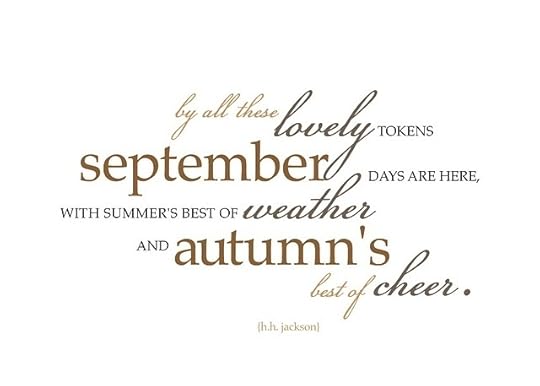
Wonderful thought, isn’t it? (Found it on Pinterest.)
I do hope you are collecting and appreciating your own “lovely tokens” this 3-day weekend too… wouldn’t it be great if each and every month ended and newly began on a 3-day weekend holiday? We’d have no excuse for not making each of those weekends a Ka lā hiki ola opportunity.
Happiness coach and author Gretchen Rubin has been fond of saying that “September is the other January” because our back-to-school habits have programmed us that way:
Even though I haven’t been in school for a long time, for me, September marks the beginning of a new year. Orange is the new black, breakfast is the new lunch, Monday is the new Thursday, pork is the other white meat, and September is the other January. (And yes, it’s still September, even though most schools start in August nowadays — and of course, this is true only in certain parts of the world.)
I tend to agree; September does seem to be one of those times the calendar conspires, and we all don’t fight it — we nalu it — we go with the flow. School may be over for us working stiffs, yet we are more than happy to grab the chance we have with a January-like reboot.
This particular September however, is not of new beginnings for me. Rather, it’s a checking in with you on what I feel we are in flow with as the Ho‘ohana Community circa 2016.
We are Talking Story
You may have noticed that I’ve slowed a bit with my posting on the blog. There are various reasons… my coaching work, the release of my Second Edition, summer vacation time. However it has become quite clear to me that the primary influence on my publishing habits of late, is our revamped newsletter, Talking Story with the Ho’ohana Community.
Since June 30th, I have dispatched eleven newsletters, one every Thursday morning, and I can see where this is going:
Newsletter first, religiously.
Blog second, and maybe, as time and content may deem feasible.
That every-Thursday deadline for the newsletter does make a difference!
Newsletter, short updates and link-love pointers to what I find elsewhere online.
Blog, longer reads to flesh out whatever I’m writing about, continuous additions to our 9 Key Concepts categories, and features like Sunday Mālama.
I have always considered the MWA blog to be the sequel to my book, given my current laboratory of workplace culture-building and management coaching.
Newsletter, more timely, date-aware.
Blog, keepers I hope are more timeless, and will remain resource-worthy for you; articles which are more subject-matter searchable.
I am keeping them separate, doing as little duplication between them as possible. I tend to be more personal with the newsletter, and more professional with the blog, although I will never be one to separate those two dimensions consciously.
I wish to be very transparent with you: Yes, I write this hoping those of you who have not subscribed to the newsletter will reconsider it, though re-reading what I just wrote above still makes the blog sound much better! I feel like we cover a lot in the Talking Story newsletter, though it is in much shorter form, and I want to be sure I’m not unintentionally excluding you from anything.
For example, it was in the newsletter this time, that I pointed our Ho‘ohana Community to our #AlohaIntentions focus on Ho‘ohana as our value for the months of September and October: Ho‘ohana as our Work Ethic.
I’m fully aware how protective we are of our email inboxes, and I thought twice, thrice actually, about writing this up at all. Yet I still have Kākou Communications and Our Tribe on the brain —remember it from July 1st? If I may repeat it in part:
In my first writing of Managing with Aloha, I did not explicitly refer to Kākou as the value of good communications, yet these 12 years later, that is definitely how I think of it, particularly in culture-building and fostering the communicative environment of our tribe.
With Kākou in mind, you constantly question how and when you communicate your messages, and to whom:
—Does everyone know about this? Is everyone aware?
—Have I left anyone out?
—Who was on vacation/ on leave/ temporarily mia when we went over this?
—Who else has to know? Who else may have more input for us, or feedback on early results?
—What about our suppliers and vendors? What about our staff’s families?
—Does this affect our customers? Our clients? Our Board of Directors or owners?
…and the exquisitely wonderful, How should I be following up?
There is something else about email… I have noticed that people hit reply and talk story back so much more, something I thoroughly welcome from you! Your feedback helps me serve you better in connection with Managing with Aloha, something I do feel responsibility for in my Kuleana.
If you would, take another look at the TinyLetter Archives now that it has been populated more since I first announced the newsletter to you. Perhaps you can subscribe for a few weeks and just try it out?
You can always unsubscribe thereafter if you find it’s not for you, and you prefer to stay connected to the blog instead— for that I will remain very grateful.
Happy September, more blog-worthy postings soon,
—Rosa
Calendar update!
Will you be on Hawai‘i Island Tuesday evening, September 6th? If so, please join us at Kona Stories Words & Wine event in Keauhou, where I’ll be talking story about Managing with Aloha’s Second Edition.



August 7, 2016
Smartphone Ho‘ohanohano
At Say Leadership Coaching, we’re taking radical measures with our smartphones.
We’re putting them away.
A Value Review
Ho‘ohanohano is thought of as the value of respect and self-respect.
It teaches us to honor the dignity of others, while we conduct ourselves with distinction, honor, and integrity as well.
Hanohano is a glorious dignity, and to Ho‘o is to make it happen!
We honor the intelligence of others, and we seek to learn from them.
We ourselves aspire to be as upright in character and as trustworthy as we can possibly be.
Short and sweet, this is the value of good, attentive behavior.
“Conduct yourself with distinction” is our Ho‘ohanohano expectation within Managing with Aloha.

Good morning Austin, by Thomas Hawk on Flickr
Screen life, is not Real life.
I recently became familiar with Sherry Turkle, a clinical psychologist and sociologist who teaches at MIT, because of several excellent interviews, and the reviews being given to her book, Reclaiming Conversation: The Power of Talk in a Digital Age. I have it queued up on my Kindle for reading during a long flight scheduled this week.
Meanwhile, reading those interviews and reviews has definitely caused me to better notice, and question the habits I have fallen into with my smartphone, my tablet, and my laptop, knowing that I must start with me, in setting a better example using them, for my business and my family.
I feel a kindred spirit to Turkle, for I am always harping about how we need to talk to each other more than we do, with talking story, MWA Conversation 101, and the Daily 5 Minutes.
“I am not anti-technology. I am pro-conversation.”
— Sherry Turkle
Like Turkle, I love technology, however I am a much bigger proponent of conversation. As Turkle points out, technology is great for connectivity, but we cannot be fooled into thinking that our technical connection translates to a complete and fulfilling human connection. For that to happen, we have to learn more about each other, and not edit out and censor our vulnerabilities.
In our managing with Aloha words for it, we must not edit out or censor the Aloha Spirit which thrives when we converse face to face.
“We let digital devices dictate our daily life at great cost.
They are an assault on compassion.”
— Sherry Turkle
“Conversation is the most human and humanizing thing that we do. It’s where empathy is born, where intimacy is born—because of eye contact, because we can hear the tones of another person’s voice, sense their body movements, sense their presence. It’s where we learn about other people. But, without meaning to, without having made a plan, we’ve actually moved away from conversation in a way that my research was showing is hurting us.”
“In the workplace, you need to create sacred spaces for conversation because, number one, conversation actually increases the bottom line. All the studies show that when people are allowed to talk to each other, they do better—they’re more collaborative, they’re more creative, they get more done.”
“It’s very important for companies to make space for conversation in the workplace. But if a manager doesn’t model to employees that it’s OK to be off of their email in order to have conversation, nothing is going to get accomplished.”
— Sherry Turkle with Jill Suttie for Greater Good
;
How Smartphones are Killing Conversation
Knowing as we do, that our values drive our behavior, I look to those values for help when I seek to reshape my habits: You Are Your Habits, So Make ‘em Good! In this case, Ho‘ohanohano spoke to me loud and clear: “Conduct yourself with distinction.”
During the month of August, I am making the concerted effort to put my smartphone away whenever I find myself in the company of another person, giving them my full attention. I will work on making it comfortable for them to talk to me, and I will work on having more interesting face to face conversations. I will work on NOT getting lost in my internal monologues. Full attention, better listening, complete respect.
Will you join me, in adding this specific, smartphones-away connection to Ho‘ohanohano during August, coupling it with our work on Aloha?
— Rosa Say
TED Talks: Connected but Alone?
As we expect more from technology, do we expect less from each other? Sherry Turkle studies how our devices and online personas are redefining human connection and communication — and asks us to think deeply about the new kinds of connection we want to have.
Our #AlohaIntentions value for the month of August, 2016 is Aloha.
Subscribe for our weekly newsletter:
Talking Story with the Ho‘ohana Community.