Rosa Say's Blog: Managing with Aloha, page 12
June 20, 2016
Jumpstart: The Simplest and Best Managing with Aloha Toolkit there is
Aloha nui, happy 1st day of summer 2016! Let’s talk story,
Every manager has work-related adages and mantras they’re fond of, and so do I. One of my favorites which has weathered the test of time and weathered it well, is “Doing the Drill Down: Less is More.”
Less is More
This is particularly true for my business, Say Leadership Coaching, in a) coaching an individual manager’s productivity and managerial style, and b) in workplace culture-building.
What I consistently witness in workplaces that operate in crisis mode or teeter on that precipice, is that everyone (leadership, middle managers, rank-and-file, —everyone) is trying to do too much. A little done exceptionally well, will trump a lot juggled in mediocrity every time. Every, single, time.
With b) culture-building, we ask and answer the question: What will give us our bang for the buck in value-alignment?
In coaching clients, there is a set of diagnostics we count on for clues — we customize. We take note of the scattered attentions, and we look for their root causes to nip stuff in the bud, however we always zoom in to focus on the biggies. When you choose the right targets, they tend to reveal their domino effects, and the small stuff will soon fall into place, particularly when good communications are in place — good communication is highly conducive to continued momentum.
Jumpstart: The MWA Toolkit
For those who cannot work with us personally, yet do want our self-coaching tips for Managing with Aloha, we have a set of recommendations we’ve long referred to as the MWA Jumpstart, a toolkit with just 3 tools.
As with any good tool, these are meant to be used. Leave them in your toolbox and they no longer are tools, they are dusty, forgotten storage.
The Book – Read it, then select the top 5 values you wish to work on.
Extra credit: Start a book club, with MWA as the first book you tackle.
A Value of the Month Program – Start one, and stick with it.
The Daily 5 Minutes – Mandate it throughout your entire organization.
A mandate is “an official order or commission to do something.”
These 3 tools are the LESS which will get you MORE than you can now imagine. They are listed above in order: Do 1., then 2., then 3.
Thereafter, the book becomes reference and resource. Your Value of the Month program creates and fosters your culture’s Language of Intention, and curates value alignment. The Daily 5 Minutes becomes your managers’ forever m.o. in becoming good receivers, and your culture’s forever m.o. in Speaking up.
A few more comments on each one:
The Book – Read it.
Reading Managing with Aloha first, is the quickest way to learn the philosophy. Believe me, this is not a sales pitch, for it is what it is. We’ve now had twelve years to compare the self-coaching results between book readers and those who go the route of trying to cobble together the information I publish on my websites and elsewhere. Reading the book is your best possible beginning in sending you on your way well.
Reading the book is LESS. It is the smartest approach;
the book is designed for sequential learning in the way it is written.
Cobbling together online info tries to be MORE, and often fails;
there is a lot on this site alone, and reading it can be very scattershot, not optimally in-context.
The biggest benefit you’ll gain from reading the book, is in learning how selected values drive specific behaviors. You will better understand which values you will eventually choose to focus on, in the value alignment you begin to tackle thereafter.
On-site Reference Page for more.
A Value of the Month Program – Start one.
If monthly sounds daunting to you, have a quarterly program. Either way, keep it alive and well, i.e. talked about often, and relevant to your day-to-day work. The pitfall of a quarterly program, is that people will try to cram initiatives at the last minute, just as they tried to do in school.
My best tip to you, is: Don’t get elaborate and fancy in your program design — Less is More!
 This is how we usually start a program in workplaces we coach; we commandeer 20 minutes of their weekly staff meeting on a 6-week value rotation as follows;
Week 1: Value 1 – What are the desired behaviors we want to associate with this value? Why?— how does it connect to company mission and vision?
Week 2: Value 1 – the #AlohaIntentions connection to Speaking with Aloha.
Week 3: Value 1 – the #AlohaIntentions connection to Working with Aloha.
Week 4: Value 1 – the #AlohaIntentions connection to Managing with Aloha.
Week 5: Value 1 – the #AlohaIntentions connection to Leading with Aloha.
Week 6: Value 1 – the #AlohaIntentions connection to Living with Aloha.
Week 7: Value 2 – What are the desired behaviors we want to associate with this value? Why?— how does it connect to company mission and vision?
…and so forth.
By “commandeer” I simply mean we facilitate a Talk Story group session, and then set our follow-up expectations. Action is expected of all session participants: They must follow-up on whatever they specifically choose to do before we reconvene the following week. They become our Value Focus Leaders, and our Managing with Aloha champions.
On-site Reference Page for more, and about #AlohaIntentions.
The Daily 5 Minutes – Mandate it.
I get a lot of feedback about the Daily 5 Minutes, and this wonderful nugget is one of my favorites:
“You know what I love about the Daily 5 Minutes Rosa? It respects my intelligence.”
When I say “Mandate it throughout your entire organization” I also mean that everyone is in on it: They understand the what, when, where, who and why of the practice completely — don’t assume all of that, because you got them into the how.
We managers have this very annoying, and highly condescending way of communicating selectively, treating others on a need-to-know basis. How disrespectful! There is no TMI (too much information shared) in full-engagement workplaces. Information is shared enthusiastically and completely, with utmost generosity in the teaching and coaching of that information.
In the book, I describe how we went all-in when starting our Daily 5 Minutes practice at The Hualalai Resort:
Employees were brought into the plan and openly told about the program: they were asked to prepare something, and be ready to fill the silence when a manager approached them and said, “How about a break from the action here, let’s step away and Take 5.”
When you begin the Daily 5 Minutes, be sure you go all in too. To respect a person’s intelligence, is to convey to them, “I believe in you, and I know you have a lot to offer.”
On-site Reference Page for more.
If you have questions about any part of the MWA Jumpstart, please comment here or write to me — I’d love to hear from you.
Save
Save
Save
Save
Save
Save
Save
Save


June 16, 2016
Language of Intention Feeds the Culture Beast
In case you missed it, this post is a follow-up to this one: In Culture-building, Start with Communication
Within that article we talked about 2 things:
1. A healthy culture is an enthusiastic receivership for meaningful work.
2. People within that culture — your peeps — receive best, when good communication practices are in place. Those practices will foster good relationships simultaneously.
What follows is;
3. Language of Intention is the Managing with Aloha way of keeping your culture talking, speaking desirable language.
This is why we are so dedicated to Language of Intention as one of our 9 Key Concepts, “the ‘bone structure’ in how we apply Managing with Aloha in our business thinking.”
As we’re fond of reminding ourselves,
You can’t walk the talk when there is no talk to walk.
Language of Intention feeds the Culture Beast
After I hit “Publish!” on my last article, I started thinking, “they probably want some examples… I would.” So here you go…
When I look back at what we have archived in our Key 5. Language of Intention category, I find 32 different articles, and I keep dipping into The Role of the Manager Reconstructed and our ‘Ohana in Business modeling as well. In addition, we have a reference page dedicated to the Language of Intention of our Ho‘ohana Community of learners:
Conceptual IndexWhen we say, Speak with Aloha, we mean, Get the values of Aloha into your language and all your communications. Talk the talk. …read more here.
If I were to narrow all that content down for you, as the best examples of Language of Intention goodness we actually use in Managing With Aloha cultures day in and day out, the index to follow captures my reading (or rereading) suggestions for you.
What does Good Communication mean to you?
Before you dip in however, let me stress that I’m about to offer you my examples. Of course I’d be thrilled if you adopted them as your own as an Alaka‘i Manager —as you read these you will quickly sense I write them in that spirit, hoping you will!
However, the true beauty of Language of Intention is that magic word Intention. Effective language in any culture is intentional: It is purposeful and never trite or careless. It is never parroted memorization; it is instantaneously spoken with genuine feeling.
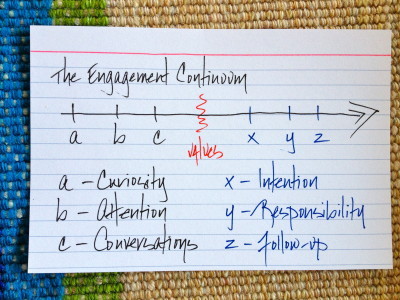
Make your Language of Intention as a manager what you want it to be, and with the dreams of your best results in relationship-building in mind. Think of the words you speak as part of your personal and professional signature, and your management style —for it is!
“There are as many cultures in an organization as there are managers.”
— strengths management guru Marcus Buckingham
You know this to be true: Building a good working relationship with another person must be genuine and sincere. It also has to be somewhat natural to you, so it will be easy for you to initiate and flow with. You cannot choose a best practice in communication to adopt, and then hesitate and procrastinate with it.
So take liberties. It’s your culture, and you need not follow my best practices to the letter. I am hoping they will simply inspire you to have an idea or tweak of your own, for remember what we said last time: Consistently means Daily.
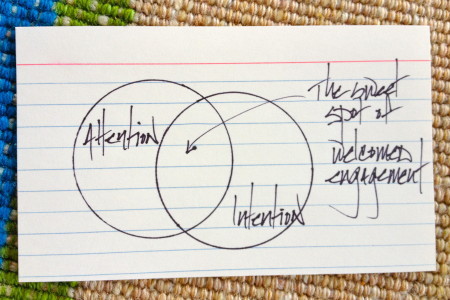
“Just 5” is how we roll…
It actually wasn’t hard for me to choose these, despite the variety of all we talk about here. Best practices will indeed be the practices you truly invest in, constantly repeating them.
1. D5M: The Daily 5 Minutes.
Absolutely, positively, the BEST communication practice I recommend to managers and leaders, bar none. I guarantee you it will change your workplace relationships for the better, for I have witnessed its effectiveness again and again and again.
2. Talking Story: Talking Story is Thriving. It’s What We Do..
Talking Story is a genesis concept for our Ho‘ohana Community… you can even introduce a foreign language (Hawaiian values? Oh my.) and sense of place localisms, welcoming them into your culture and finding true universal resonance. Take note of its definition here as a succession of talk.
3. The Big Rocks Metaphor: Next-stepping and other Verbs.
This post talks about how Language of Intention gets constructed. No language came together on Day 1 as like-minded people gathered and sat around a camp fire. A culture’s language develops over time in this fabulous as-needed manner: You apply new learning as time goes by, and you internalize it.
4. Conversation is King: All Conversations Are Not Created Equal.
Managers will often bring up technology when communication is discussed, launching into the challenges of email, texting, the new language of app communication (for it is indeed a new language) and the big black hole of assorted written communications.
However please, PLEASE remember: When it comes to relationship-building you must focus on only one kind of communication, the one that trumps all others — person-to-person conversation. Trust me on this: When you nail a great relationship via person-to-person, face-to-face, in-real-life conversing, all those other vehicles of communication fall into their rightful place as the secondary options they are supposed to be.
5. Batching: Managerial Batching: 1, 2, 5 and 7.
Language of Intention double-dips into productivity — a lot. We use 4 types of “managerial batching” in MWA culture-building:
“1 by 1”
“2 by 2”
“Just 5”
“7 Strong”
Bonus Links for your Weekend Reading: It’s also good to review how managers can be good receivers: 1. Speak up, I’m listening. 2. How to Listen.

Save
Save


June 13, 2016
In Culture-building, Start with Communication
I’ve been immersed in our Say Leadership Coaching projects since returning from my summer vacation, to find that culture-building is the desired darling of the training objectives we hear.
Energies are high. People feel ready to accomplish more, and they want to feel some traction. They’re stirring with a good impatience for more momentum.
I do agree that culture-building is a good objective as the means to achieve those things.
When a business is personified by a healthy working culture, that culture will essentially grab hold of all business initiatives and run with them in dynamic, unifying ways. The work of a vibrant working culture is essentially Ho‘ohana (as worthwhile work) and ‘Imi ola (the pursuit of mission and vision) on fire, and as such, it is work which is more likely to be value-aligned:
What is culture?Great managers know that CULTURE is simply a group of people who share common values, and operate within those values.
Culture is learned. Culture represents a series of agreements based on value alignment, and results from honoring those agreements.
The great manager, and the great PERSON, manages their own behavior by tapping into their values as their source of human energy. It’s the way they “lead by example” conducting themselves with ALOHA distinction, and it’s the way they inspire the culture they operate within.
Source: Collect stories. Dispel myths.
Where to start?
The definition of culture is rather straightforward, however it encompasses quite a lot. Or so it seems.
Managers are often overwhelmed, and unnecessarily so. When calling for some coaching assistance, they’ll share their To-Do wish lists with me, and it’s easy to see that overwhelm in the variety of tasks and projects they wish to tackle.
They will ask me, “What do you recommend we work on first?”
My answer is always the same, no matter the company, no matter the kind of business, no matter the manager —and it is rarely found anywhere on their list:
“I suggest we work on your communications, and identify your best practices within them. Tell me how you achieve your Language of Intention.”
The #AlohaIntention I strongly suggest we immediately work on, is Speaking with Aloha, and we need a common understanding of what that means, and what it encompasses as a manager’s m.o.
Managers need to rally their troops, and not go it alone. They need to operate as part of a team culture, and not as solo mavericks. An important distinction here, is that cheerleading alone doesn’t cut it.
“A different language is a different vision of life.”
— Federico Fellini —
Key 5. LANGUAGE OF INTENTION:
Language, vocabulary, and conversation combine as our primary tools in business communications, just as they do in our lives: What we speak is fifty times more important than what we read or write. The need for CLEAR, intentional, reliable and responsive communication is critical in thriving businesses — and in learning cultures, for we learn an extraordinary amount from other people. Drive communication of the right cultural messages, and you drive mission momentum and worthwhile energies. Communication will factor into every single value in some way as its primary enabler. The Managing with Aloha language of intention is inclusive, and is therefore defined as the “Language of We” with the value of KĀKOU as guiding light.
Read more: 1. The 9 Key Concepts of Managing with Aloha — 2. The Language of We
Speaking with Aloha is Less about Technique, More about Feeling
In I Know Why the Caged Bird Sings, Maya Angelou famously wrote, “I’ve learned that people will forget what you said, people will forget what you did, but people will never forget how you made them feel.”
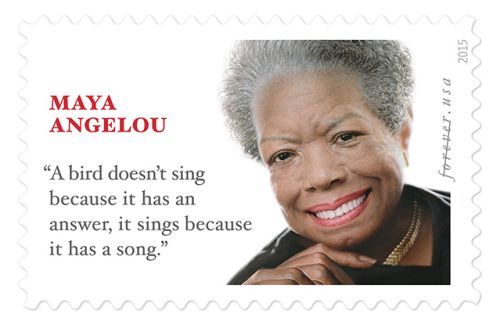 Such a wise insight, and one I have always associated with Speaking with Aloha as the workplace bridge of connection. I hope you will begin to make this association too.
Just as Angelou describes it, the how-to of fostering good feelings is something we learn given the context of each relationship we find ourselves in.
Therefore, wise Alaka‘i Managers make sure they make time for investing in communications to achieve the relationship-building that is always the precursor to culture-building. They remind themselves to focus on person first, task second, doing so consistently.
Consistently means Daily
You will not connect with everyone daily, I know; we managers juggle so many relationships! However connecting with someone daily can absolutely be your habit when it is your Aloha intention. Over time, I guarantee you that having a daily relationship-building habit will assure that you connect with more people more often than you otherwise would. It can be as easy as scheduling one conversation per day, similar to what you do with The Daily 5 Minutes.
Make no mistake: The well-functioning relationships wherein people who work together feel good about it, represents the strong glue of healthy culture.
Think of a healthy culture as a kind of enthusiastic receivership for meaningful work:
—Without a good relationship in place to best receive training and direction, you can’t train, and you can’t direct well.
—Without a good relationship in place to best receive thoughtful questions, you won’t hear any of them.
—Without a good relationship to receive delegation, you can’t delegate well.
—Without a good relationship in place to stimulate self-motivation, you can’t motivate anyone, nor can you inspire them to share their ideas with you.
—Without a good relationship in place to receive partnership or award promotion, you can’t partner well, and you’re unlikely to promote.
The key? A good relationship is a trusting one.
Trust requires several emotional connections wherein “people will never forget how you made them feel.”

Related Reading: Be the Best Boss


May 25, 2016
Being Home is being welcomed back by your Sense of Place
I will have to share a few of my vacation pics with you once I’ve sorted them out (there are a few on Instagram if you’d like a preview). Meanwhile, my VacationSTRETCH is now in its 7th day back home — crazy how fast it goes!
On one of those 7 mornings, I had my coffee down the hill with a walk at Holoholokai Beach Park. It was such a beautiful day, that I couldn’t help but think about one’s Sense of Place, and how much it can define what we think of as ‘home.’

A May 2016 morning at Holoholokai Beach Park
As Dr. George Kanahele had said, sense of place is the feel of a place, and just as importantly, your feel for a place.
To take VacationSTRETCH, or just a nature break, briefly walking outside in the middle of a busy day, is to remember what you have so close at hand, and keep its nurturing spirit close to you.
It’s pausing to invest in the value of Nānā i ke kumu, and it’s very good for your Aloha Spirit.

Walk this way

Maiapilo, the Hawaiian caper bush

Beach Heliotrope at Holoholokai Beach Park

Black lava, white coral, golden algae
It only took me about 15 minutes, these captures done with my smartphone, however I could have easily spent my entire morning there.
Site category for Key 7: Strengths Management
Key 8. SENSE OF PLACE:Think “working in my neighborhood” for no culture exists in a vacuum. Sense of Place is both the feel OF a place, and the feel FOR a place. Sense of Place is about greater community locally and connectivity globally. It is saying a “thank you” with stewardship, and engaging at a higher level with those places which have gotten you this far, and continue to nourish you daily in a multitude of tiny ways that collectively are absolutely HUGE factors in your success. It is giving back, recognizing that place nurtures and sustains us; it shapes our experiences and lends cultural richness to life. Always will.

Marking history, saying, “I was here!”

Come back soon!


May 9, 2016
Alaka‘i Managers Make Plans
This is on page 61 of Managing with Aloha, and I’ve been thinking about expanding on it for a while now. To be frank, its absence is driving me crazy:
Ho‘omau demands managers have a planHo‘omau challenges managers to have a carefully crafted workplace plan that makes good business sense.
You cannot have a strategy that will both motivate and support your staff without sound business objectives to ground you.
Working hard is not good enough. You have to work smart. Employees expect it of you.
You need a great plan with evolving dynamics of its own, responsive to the ever-changing needs of your business.
It’s a significant part of your responsibility as both leader and manager.
It also ensures that your business will not fall prey to apathy, boredom, or complacency.
In the book, I continue to talk about how no paddler would even consider getting into a 6-man outrigger canoe headed out in rough seas, with a steersman (the captain) who does not have a plan. It may not be boring, however it certainly would be foolish.
Expect intention, not blind obedience.
Unfortunately, the norm in far too many businesses, is that managers go through the motions of company plans they did not co-author or totally buy in to. Even worse, these managers may work, and thus manage others blindly— with no plan at all.
To have a good plan, is to have intentional effort, with all workplace attentions being where they should be— on mission, on vision, and on purposeful growth.
To have a good plan, means you don’t waste much time, and you don’t waste human energy, the most important resource any manager has.
I have more on this going through some mental gymnastics in my brain, and I need to exercise it all out before spilling it on the page and sharing more with you. Meanwhile, I stumbled across an article written by Tim LeRoy that presents his Five Point Manifesto for Doing Better Business with Businesses, and I think his point number 4 is spot on:
4. Make plans.“Make no little plans; they have no magic to stir men’s blood.”
If you don’t have a clear and realistic plan no one can hope to know where you’re going, so the first question should always be ‘where do we want to go?’ And once you know that you can make a map to get there.
It needs to be written collaboratively and written down. It doesn’t count if it is sitting in the head honcho’s head and it doesn’t count unless it takes in everybody. What role will the accounts department play and what do tech support have to do? You can get it all down on two sheets of A4. No more.
If you want to grow your company in any way, I’ve found that it’s best to make a plan in three simple steps; know, know and be known.
You have to know yourself — what’s our real proposition and why will our tribe come with us? This is the brand rock upon which you can build your reputation.
You have to know your audience — who are they, who will make the decisions, where do they work, what do they like and how do they want to hear about us? Who holds the cash and what will it take for them to hand it over willingly?
And you have to be known — how do you ensure that your reputation precedes you? How do you get the right messages to the right people at the right time in the right way?
Finally make a calendar — who is going to do what and when — and a budget. Then just stick to it.
The internet is littered with short-cuts and hacks to instantly get what you want and to avoid the slog, but all of them have to admit that any success takes time and damn hard work. Alas there’s no substitute, so it’s all the more important that you love what you are doing and your team loves it too.
Don’t think it happens any other way.
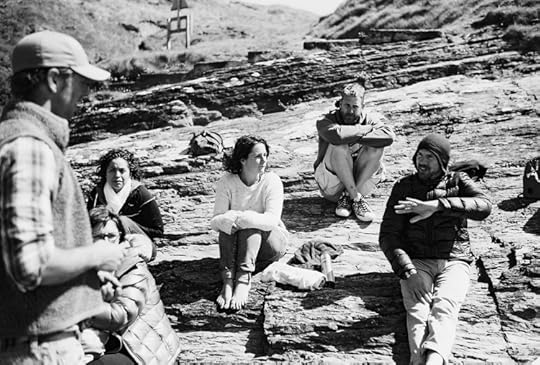
It was no surprise to me that he followed up with point number 5 as “Never Ever be Boring” and that point number 3 had been, “Everybody in” as in all in. You can read the entire manifesto here.

A—Plan. B—Communicate. C—Execute and Manage.
Managers often think they need exceptional people skills to “Rally the troops.” True, that you certainly must groom those skills, however reality is usually that you need a good plan first, you need to be able to communicate that plan second, and the people skills of managing the work kicks in third.
Amazing isn’t it, how often we reverse that order.
Your plan may not be perfect, and it’s almost guaranteed to change along the way, however please do start with a plan. Trust me on this, you will take good work much farther on the get-go.
Execute and Manage as the work kicks in;
People Who Do Good Work
Beauty in the Work: “Things Occur to You.”
Managing Basics: Study Their Work and Managing Energies: Struggle & Ease
PC: Images taken from A Five Point Manifesto for Doing Better Business with Businesses


May 8, 2016
Sunday Mālama: On Mothers and Mothering, Fathers and Fathering

Becoming a mother was wondrously life-defining for me, worldview shattering in every good way. I give thanks for my two children every single day. I may have given birth to them, however they became the ones who would make me.
Commonality
One of the things I love most about Mothers Day, and about Fathers Day as well, is their universal community — we all have them in common. The simple fact that we spend any amount of time on this earth as human beings means we each have a mother, we each have a father, and we are all capable of being parents ourselves should we choose to be.
Now I know our experiences (and our true ability to parent) have their imperfections as well as their joys. Some experiences are all too short, and may be largely unknown. Others can be much too intrusive, for family can overwhelm us, to the point of our walking away from them deliberately. However, there is indeed that guaranteed commonality of our biological humanity. Simple maybe, yet quite profound.
I certainly think about the connection of our family experiences a lot when it comes to Managing with Aloha, for so many of the beliefs and convictions, philosophy and morality of our values have their roots in family. Again, it is quite profound. Thoroughly telling, yet equally mysterious.
Choices of connection, Choices with celebration
When we speak of the ethos of Managing with Aloha, we talk about three choices within our ethos of “Be true to your values” — Values, relationships, and intentional work.
Whether for Mothers Day, Fathers Day — and there’s a National Siblings Day now too — I think about relationships as a choice we make, even with the family we are given, or if feeling cynical or burdened, the family we feel we may be “stuck with.” The character, and thus the pleasure, of those relationships in tone, in generosity, in appreciation, in compassion, in forgiveness, in trustworthiness, and in so many other values-driven dimensions, is indeed the result of the choices we make.
We may hold a value dear, supposedly, yet how do we manifest it?
We choose our degree of connection. We choose our distance in separation, and in “giving space.”
Then, when holidays like Mothers Day arrive, we choose how, or even if, we will celebrate.
Choose wisely; take leaps of faith
In making our choices, we choose how to manifest our Aloha Spirit, and we ourselves determine our degree of well-being. I think that’s a good thought to hold close, holding it at the surface of our consciousness. It’s good knowledge to have, for it’s an assurance of how much control we have on the quality of our own lives.
To be a parent is utterly courageous. Choosing to be a parent is an ardent, dedicated leap of faith, for you can’t really know exactly what you’re getting into, no matter how much you watched, learned from, or judged your own parents. Parenting is the classic case of learning by doing.
Parenting, is also being open to becoming a different person.
However, I think the choice not to be a parent is extremely courageous as well. People who make that choice know themselves well enough to chart another course, and maybe, to rededicate themselves to who they already are, and want to continue being. They take a leap of faith too, I think, just a different one.
Celebrate lokomaika‘i— generously
My mother is healthy and well: She is 82 years strong and we are blessed to celebrate this day with her.
My husband’s mother and father both passed away 9 years ago. When Mothers Day was soon to arrive the following year, my husband and I literally had a “Hallmark moment.” We stood at a rack of Mothers Day cards offered for sale in a local store, looking for a card for my mother from both of us, when my husband picked up a card similar to this one (which we bought this year) and started reading it out loud:
“On Mothers Day,
we think about the women who make a difference in our lives,
the ones who want the best for us,
the ones who keep on caring, no matter what.
That’s why I’m thinking about you today,
and I want you to know how lucky I feel to have you in my life.
Happy Mothers Day.”
~ A message offered by Carlton Cards
Then he said, “I want to send this one to my Aunty Amy.”
He has bought a card for Aunty Amy every Mothers Day since, and he started a new habit for us. We buy about a half-dozen cards with similar sentiments for more of the women in our lives, hand-write in our own added messages, and mail them out.
We do the same thing before each Fathers Day. We have both lost our fathers, but there are men in our lives who are our elders and mentors, and fathers to us in nearly every sense of the word.
We have children of our own, and we feel so blessed that we do. Our son and daughter will sometimes slip and call us “old,” usually when asking us not to act “that way,” but you know what? We still get mothered and fathered too, so we can still learn to be better for them.
Lucky us. Getting mothered, and fathered, is something you never grow too old for.
Postscript

Click on the image for the Sunday Mālama index of articles.
Sunday Mālama has been when I will share my off-the-workplace-highway scenic route kind of posts. Not as a normal weekly feature, but whenever they seem to be writing themselves.
There are some fabulous holidays on Sundays as well, when it seems the whole world conspires in grabbing your attention, saying, “I will not be ignored!” and I don’t mind a bit.
You can access the Sunday Mālama archives via this category link, also residing on the right-hand sidebar.
Bonus link: Here is a mother-daughter story I enjoyed reading recently, writing by Leah Pearlman, the artist and creator of Dharma Comics.


May 6, 2016
Video Review: Tina Roth Eisenberg “Trust Breeds Magic”
I promised myself I would watch more videos that are of the TED Talks variety — storytelling ones which are more biographical in nature, and about small ideas which became big deals for people.
One thing I’ve come to know is this: Seemingly small ideas are usually personal values looking for some way to help you express them more freely, or more completely. Learning to listen to those inner, telling voices may be the best skill we ever cultivate.
Values are creative forces
If we classified video features in the same way as books, the ones I gravitate toward would be tagged as short stories, and as non-fiction. The best ones, are when values come out to play, and people tell us about their aha! moments in learning to listen to them. It is indeed inspiring when real life meets fulfilling results. “Real people” are those we relate to, and see our own possibilities in— if it can happen for them, it can happen for us!
Yes, it certainly can. Therefore, I loved this lecture, featuring “the Swiss Miss” Tina Roth Eisenberg for The Do Lectures. There’s a small bit early on, when she tells how her husband asked her if it was possible to have her sabbatical never end, for that’s when her true calling seemed to be revealing itself with wonderful effects on their whole family.
Usually, my challenge with videos is my impatience, and my inability to sit still enough to see them through without being pulled to something else. I have a bad case of distractionitis. Once a video gets to the 20 minute mark I’ll start fidgeting unless the speaker managed to hook me earlier, and in this one, Eisenberg did so at about the 7:11 mark when she explicitly started to talk about her values, and how they serve her as a parent and as a boss.
Just as they did for Eisenberg, your values will map out the career you’re meant to have, if only you start relying on them, and trust enough to follow their guidance. Learn to listen when your values speak to your spirit. You can still question them, by being suspect of your ideas in the best possible way— wonder how those ideas are trying to give voice to your values, and why.
“We need a gentle revolution”
I may not have transcribed every word, however this is the gist of what Eisenberg said at that 7:11 mark, something we talk about a LOT within Managing with Aloha:
“I do think a lot about, How did I get here? …As a parent, and as an employer as well, you really need to know what you stand for, you need to know your values, and not only know them, you need to be able to articulate them.
7:48…I have the same values at home that I have at work, and I think it’s important that there’s no distinction between them. You need to be truthful [in how you live] you need to be the same person. You need to live your values… especially in the business world, I think we need a gentle revolution… Many people put on a different hat when they go to work, and there’s a lack of human spirit, and lack of using your heart, and leading with the heart.”
This review I offer you, is a [very] partial transcript, for I encourage you to dismiss any case of distractionitis you may have as well, and schedule some time to watch all 32 minutes of the lecture. Eisenberg shares some great quotes in addition to her own message, and I wrote them down for you so you need not keep pausing the video as I did, and because I wanted to connect some MWAisms (the links I have added) creature of habit that I am that way.
Eisenberg surmises that she is an unusual boss, yet you and I both know differently, and that she doesn’t have to be. Alaka‘i Managers are smack dab in the middle of the ‘gentle revolution’ she suggests.
Value Alignment will curate your Core Principles
Eisenberg has 4 core principles that she bases her decisions on at work, as a boss, and at home, as a wife and parent: Create, Play, Trust, and Respect. In the video she talks about each one, and gives examples. A few quotes I captured:
Create ~
“I have a personal rule, that if I find myself complaining about something I have two options: Do something about it, or let it go.”
“The best way to complain is to make things.”
~ James Murphy
“I think it’s very cool, when people come in with this enthusiasm, this ‘grounded optimism’ as we said, and just trust that we can figure this out, [they can come in from different industries, and challenge convention very successfully…] Never underestimate your side projects, and never be afraid to challenge the status quo.”
Play ~
“Are you having fun?” Confetti drawers, growth charts, and prop boxes… you are watching the video, right?
“The best ideas come as jokes. Make your thinking as fun as possible.”
~ David Ogilvy
“You have to give your employees a working environment where they feel completely safe, so they can let loose!”
“I care a lot about being a good boss. I think about it all the time. And I care about my team being happy.”
Trust ~
“If I’ve learned one thing, it’s that trust breeds magic.”
“Decide that you want it more than you are afraid of it.”
~ Bill Cosby
“Life shrinks or expands in proportion to one’s courage.”
~ Anais Nin
“We systematically overestimate the value of access to information, and underestimate the value of access to each other.”
~ Clay Shirky
Respect ~
“When people honor each other, there is a trust established that leads to synergy, interdependence, and deep respect. Both parties make decisions and choices based on what is right, what is right, what is best, and what is valued most highly.”
~ Blaine Lee
“Who you hang out with determines what you dream about and what you collide with. And the collisions and the dreams lead to your changes. And the changes are what you become. Change the outcome by changing your circle.”
~ Seth Godin
Tina Roth Eisenberg concludes;“I poured my heart into creating a working environment I now call my happy place.”
“I believe in labors of love. I look at my life as the biggest design project I have; I have an intense doer gene. […] I’m not rich, but I have a rich life. A labor of love will always pay off.”
The primary skill of an Alaka‘i Manager is value alignment:
Doing it; curating it; and listening for values speaking out loud in what other people will say, particularly those that manager will manage.
Throughout her lecture, Eisenberg often says, “That’s important to me.” or “That makes me really happy.”- those are statements of someone who needs to live and work with their values, and who is learning to recognize them. I have two follow-up suggestions for you:
Eisenberg explains what her values are, and in watching this video you can hear the voice of values and spirit talking out loud. After you watch it, think about your own team, and consider how you can use your Daily 5 Minutes practice to listen for their values in voice.
Second, take note of the project connection, what we have tagged on this site as piloting projects: In detailing her core principles, Eisenberg explains that, “These are things that started as side projects, were never intended as businesses, yet now define my career.”
Relating Reading in the Managing with Aloha Archives
Values are Shaped by a Heritage of Doing
Life’s 3 Stops in Motivation: Happiness, Meaning, Service
Find much more by clicking on the links I have inserted, and on the tag indexes below. Meet more inspirational storytellers at The Do Lectures. They bill themselves as The Encouragement Network.
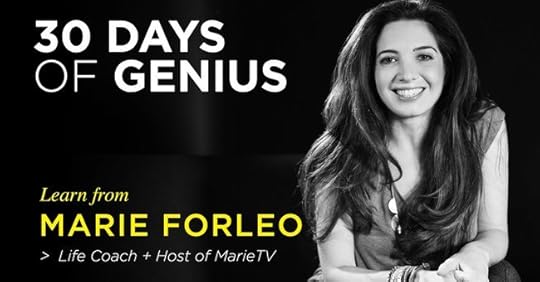
Above: This was another video I thoroughly enjoyed listening to this past week.
Read a synopsis about it here, and while there,
Read about the exceptional 30 Days of Genius series hosted by Chase Jarvis.
These are longer interviews, yet well worth the time you carve out for them.

May 4, 2016
Aloha Intentions: Ke Ola Series 2
The newest issue of Ke Ola Magazine was just published on May 1st, and I thought I would share it with all of you subscribed for this blog as well, for it kicks off the 2nd series on Managing with Aloha I will be writing for the business column of the magazine.

Click on the cover image for Ke Ola Magazine’s online reader
As you will read, this kick-off article serves as a reorientation of sorts, and it made me think about going back to the basics as a business owner and workplace coach too, and not only as a columnist. Perhaps it will help you do so as well.
Repeating some of the instruction and inspiration we seek to give during orientation for onboarding, can serve our seasoned partnerships exceptionally well as refresher courses… what should you reflect back on, revisit, and repeat with fresh intentions?
Aloha Intentions
“Your mission is what you do best every day.
Your vision is what the future looks like
because
you do your mission so exceedingly well.”
Aloha mai kākou,
Last issue I wrote, “Prepare to grow. Should there be a Phase II to your business? Decide on the tone for it, and have your vision illustrate your dawning of a brand new day, Ka lā hiki ola.”
This issue, we do so. After speaking of 19 Hawaiian values inherent to our sense of place, values aligned with our mana‘o in business and workplace health, we imua, and move forward with Managing with Aloha’s Series 2 within this, our Ke Ola ‘Ohana in Business conversation. Mahalo nui, thank you for continuing to welcome me as your Alaka‘i ka ‘ike, your guide in our learning together.
Our ethos, that characteristic spirit of a culture or community as manifested in its beliefs and aspirations, remains the same — we work on being true to our values.
Within our ethos we make three crucial choices: we focus on the values of Aloha to guide our behavior and our decisions; we focus on our relationships and partnerships, defining ‘Ohana as the ‘human circle of Aloha’ and company we keep; and we focus on the work you devote your efforts to, knowing that your work ethic will sustain you physically, intellectually, and emotionally. We Ho‘ohana — we work with purposeful intention as people who do important work; work which matters to our families and our community.
Those foci center any Managing with Aloha practice — values, relationships, intentional work.
Values are first, because values drive the other two as well, and they equip us. Values come packaged with morality and our good intentions; they drive us to be our best selves. Aloha, ‘Ohana and Ho‘ohana will be our core values in Series 2, and with each issue to come we will revisit all 19 values as first introduced to you in Series 1.
Going forward, think of Series 2 as our value of the month program, in our case, fresh value inspirations for the coming two months, as framed by each new Ke Ola issue.
Let’s name our Managing with Aloha practice of value alignment “Aloha Intentions.” These Aloha Intentions are those 5 active phrases we’ll constantly study, verbs I’ll coach you to practice contextually:
Living with Aloha
Working with Aloha
Speaking with Aloha
Managing with Aloha
Leading with Aloha
Each has a personal and professional complement to them, such as self-managing one’s behavior and managing others.
As all business owners and company founders know, it’s much too easy to get mired in the day to day routine which businesses are chock full of, without an unwavering focus on values, mission and vision.
Frankly, without mission and vision, businesses are boring. Our distinction between the two appears at the top of the page, and I encourage you to co-author Series 2 with me. Take a few minutes to decide for yourself the reading and learning relevance you seek, whether it be personally in the mana‘o of your Aloha spirit, as a working professional, or as a business person articulating your community connection to the Ke Ola mission to ‘celebrate the arts, culture, and sustainability of Hawai‘i Island.’ The Life is our life.
Values, mission and vision have something in common: They only matter if you use them. This commonality is significant, for using them makes all the difference in the world.
Make this personal, for work is personal. In Managing with Aloha’s language of intention, we refer to mission and vision as our ‘Imi ola, which we also know as the value guiding us “to seek your best possible life.” Leaders wise with humility know people are more apt to invest in and be committed to their own decisions regarding mission and vision, than they are to following the marching orders of a leader, even one considered founder —and I do believe that is how it should be!
If you would like to share your mana‘o with me as a reader of this column, please write me at the contact page of my website for I would love to hear from you.
Live, work, speak, manage, and lead, all with the bountiful Aloha Spirit I know is within you.
Next issue: We revisit Aloha, our genesis value.
Rosa Say is a workplace culture coach, a zealous advocate of the Alaka‘i Manager, and the author of Managing with Aloha, Bringing Hawai‘i’s Universal Values to the Art of Business. Contact Rosa at www.RosaSay.com, and discover more about the Managing with Aloha philosophy at www.ManagingWithAloha.com.

Postscript: Ke Ola is published 6 times a year, and distributed in print on Hawai‘i Island and by subscription. I have therefore made a practice of archiving the articles on RosaSay.com for any within our Ho‘ohana Community who may want to read them: You can access all 20 articles I had written for Series 1 via this index.
Series 2 will also be archived there, or you can look for the hashtag #AlohaIntentions on social media, as seen on Twitter and on Instagram.


May 2, 2016
Money isn’t evil
…We can learn from our mistakes, and get into a brand new relationship with money. “Accept what is. Let go of what was. Have faith in what will be.”
Sometimes, when things are falling apart, they are actually falling into place. One of the great things about the life we are given, is that it will flex and bend without breaking us.
This posting is a reprint of an article I had written in 2009, and in the throes of the recession of that time. It was originally published on Say “Alaka‘i”, a column I wrote for The Honolulu Advertiser. I remembered it after publishing Where VBM falls short, VCM intercepts, improves, and reinvents business, and after reading a courageous cover story Neal Gabler has written for The Atlantic, The Secret Shame of Middle-Class Americans.
I know that many people still feel the way this reader had felt. Do you?
There is a new ending for this posting, where we focus on the value of ‘IMI OLA. At any given time, that is what I hope Managing with Aloha will do for you — be a resource, whether times are good or bad, where you can look at its list of Aloha-inspired values, and ask yourself— which of these can help me right now?
Goals will change. Values are forever.
From the Say “Alaka‘i” mailbox:
“I’m ready to put all my blog reading on hold: I know you try to keep us in the positives versus the negatives, but I get very frustrated when I read articles by you and other business coaches these days, for all I can focus on is making money and keeping it. I don’t think I’ve ever been so scared about being able to make a living than I am right now. The prospects are so terrible and my savings have run out. It all seems completely out of my control. Your advice about better management and leadership practices may be great when there’s money in the bank, but until then, I can’t be bothered with reading about what I cannot work on. That old saying that money is the root of all evil is so true, isn’t it.”
This wasn’t exactly a question, but it was a heartfelt frustration that I felt compelled to answer both privately and on this column, for I am fully aware that times are tough, and I suspect many people have similar feelings.
Believe me, I share your concern. I will openly admit to all of you that these recessionary years will be trying times during which I will struggle to keep my own business alive and well too. To do so, I must reinvent it a bit, keeping what works and discarding what doesn’t, and replacing those discards with newly promising strategies. That’s exactly what I’m doing.
The Hawaiian value I call on most right now is Ho‘omau, that of persistence and perseverance, seeking to perpetuate the good in my life, and continually reminding myself that adversity can make me stronger, wiser, better. It’s an energy-creating self-talk I cannot allow to falter. Neither can you.
“I don’t care how hard this period is. You have to have the combination of believing that you will prevail, that you will get out of this, but also not be the Pollyanna who ignores the brutal facts. You have to say that we will be in this for a long time and we will turn this into a defining event, a big catalyst to make ourselves a much stronger enterprise. Our characters are being forged in a burning, searing crucible.”
—Jim Collins, in an interview with Jennifer Reingold
I agree, yet I understand the frustration… chances are Jim Collins has much more in his bank account and as revenue stream potential than we do!
Ho‘ohana: Shift intention to where attention is
We all must focus on the basics of “making a good living” before we work on things that are the greater pursuits of legacy-focused work that is ‘affordable’ when times are better for us. In the spirit of Managing with Aloha, we turn to the value of ‘Imi ola, and seeking one’s best possible life. Matching up your Ho‘ohana (intention with worthwhile work) to wherever your attentions doggedly must remain is usually a wise strategy. If you need more money, you need more money; that’s the fact of life your intentions must be set toward improving in your favor.
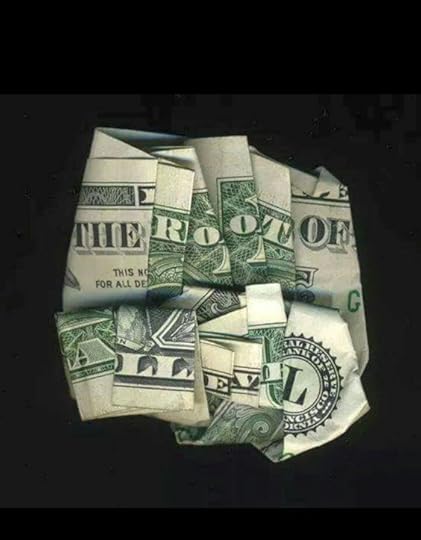
The apostle Paul, in his first letter to his young disciple, Timothy, had this to say: “For the love of money is a root of all kinds of evil. Some people, eager for money, have wandered from the faith and pierced themselves with many griefs” (1 Timothy 6:10) — this is the bible verse often misquoted as saying, “Money is the root of all evil.”
However, believing that “money is evil” isn’t going to be very harmonious with that intention to make more of it. That’s like trying to make a nightmare come true instead of a dream. You want every one of your pursuits to be a noble effort you believe in. Your need for more money (and our need for money as a more sustainable society), isn’t going away, so turn money into your dream enabler instead of your nightmare creator. Money by itself is neither evil nor saintly, but you are.
Money is simply currency. Any “evil” that may be associated with it has to do with bad behavior securing, or using money in an ill-conceived, uneducated or unfortunate way. When the behavior improves —with philanthropy for example, and with social entrepreneurship, so does the reputation of money as the tool which enables those more admirable behaviors. Then we give money a different name: donations, funding, or venture capital. We make the choice, whether money will be spent for good, noble causes, or otherwise.
What we are all being reminded of right now, both as individuals and as businesses, is that “times are better” when we have a substantial contingency fund that we have ready access to when a storm rages. That may be our first lesson in financial literacy.
Being ‘broke’ is a mistake, not a failure
I think the biggest mistake we make with money is failing to become better educated with using it. The good news is that correcting that mistake is not that difficult. We simply need to redirect our attentions (and intention) with doing so, i.e. with becoming more financially literate.
Money is our basic transactional currency. We all need it, and we all need to be sure we have enough of a contingency fund available (an emergency fund) when circumstances in our world spin out of our control. A contingency fund finances our basic living requirements when everything else goes haywire.
If your savings have run out, you simply made the mistake of not having a contingency fund in addition to your savings (or one which was large enough). And you are not alone: Many of us are getting quite a reality check with which of the two is ultimately more important (contingency or savings) and which must take first priority, and by how much of a margin. We are learning that non-liquid assets do not readily convert into cash flow. We are learning that some conditions we once thought of as ‘fixed’ can be very volatile, and actually are ‘variables.’ We are learning several financial lessons that the present recession has pulled from back burner to front.
All we did not know, before learning it the hard way, are fixable mistakes, and not outright failures.
Log your lessons learned in precise measurements that will give you the structure for a new personal financial game plan. Then, articulate them more positively, by turning them into the new goals of your intentions. Correct your past mistakes, and make your goals dreamy.
Learn with a good teacher
I encourage you to seek the help you may need with learning the lessons you must now learn. Great teachers and coaches hold you accountable and shorten learning curves. I am not implying you must hire someone: You aren’t alone in relearning a newly emerging financial literacy for these times; we’re all doing it. Team up with those who have similar learning goals, and seek those willing to teach you and help you learn what they know, as you do the same for them. Collaborate; barter your knowledge.
If my blog is not the one giving you the answers most relevant to your situation right now, I absolutely agree that you should read the ones which are instead: Match up your attentions to your new intention. Get offline for a little while so you can better focus: Redirect your monthly internet payment into your new contingency fund goal, and read the coaching of financial authors available at your library or local bookstore.
When you are ready to study and participate in Managing with Aloha again, we will be here to welcome you. Take a look at the tags in the footnote of this particular posting, i.e. abundance-thinking, business modeling, financial literacy, problem solving — perhaps there is more in the archives to help you. An example follows, from May, 2013.
From the Managing with Aloha Archives:
‘IMI OLA: To seek life and strengthen your faith ~
Personally, ‘IMI OLA is the value of self-created, purpose-full living.
Professionally, ‘IMI OLA is the value of mission and vision.
An individual mission statement is HO‘OHANA in writing; it’s the visionary work of livelihood aligned with personal purpose via the pathway of company mission. The stories I share with you in Managing with Aloha, are meant to help illustrate examples of how that happens.
Julia Cameron, play writer, director, and author of The Artist’s Way, points out that “any act of creativity is an act of faith” and there’s a virtuous circle there: “As you strengthen your faith, it strengthens your ability to create.”
Faith however, can’t be wholly satisfied if reduced to an intellectual exercise. You’ve got to make your answers come alive somehow — you’ve got to make them real through your own creative applications, and you’ve got to strengthen your faith so you’ll keep at it.
How do you strengthen your faith?
Figuring it out, would be a very worthwhile goal to work on!
I believe Cameron is right about this: “As you strengthen your faith, it strengthens your ability to create.” Your faith in your own abilities, will strengthen through ‘IMI OLA when you do create their possibilities for your own life; we each create our own potential — if you don’t do it, who will?
“Don’t dig up in doubt what you planted in faith.”
—Elizabeth Elliot



April 29, 2016
Where VBM falls short in business, VCM intercepts, improves, and reinvents it
VBM is Value Based Management.
Business models can be better.
VCM is Values Centered Management.
Far better.
This is an important distinction about Managing with Aloha, and a hot button with me; I will do my best with staying off my soapbox about it! In terms of value alignment, this article relates to ‘Ike loa (learning), Ho‘ohanohano (dignity), and Pono (integrity).
“Is Managing with Aloha about ‘value based management’?”
No, it’s not. Not if you’re referring to the VBM business philosophy where the primary objective is optimizing monetary value for shareholders.
Managing with Aloha was written to promote values centered management: Our primary objective, is to optimize the values which capsulize the Aloha-inspired convictions and beliefs within how we manage, and why. Our mission, is to teach VCM to managers and leaders, so they become better.
To be rather blunt, shareholders are rarely our concern at all, other than as pertains to having a realistic and feasible business model.
VBM drives profits above all else, often to the detriment of workplace health, social issues and ethics, and sometimes, even to the detriment of the shareholders it seeks to serve. (There is more about this in the footnote.)
The VCM of Managing with Aloha drives Aloha-intentioned behavior above all else, and seeks to bring more humanity to business in particular. We define our success much differently, with our focus on thriving workplace culture and customer service.
As a philosophy applied to the business environment, MWA’s ‘Ohana in Business Model does include profitability and a decent return to founders, owners, and stakeholders as a necessary objective: It is right to honor those who finance your mission.
Those ‘returns’ however, hold their descriptive adjective of ‘decency’ to task: our ‘Ohana in Business Model ensures the costs associated with profits are not too high, or detrimental to the core values of Aloha in any way whatsoever.
In addition, the way I see it, participating in the work of a business, is just another vehicle in financing it— the currency is sweat equity. I strongly believe that a profit-sharing component should be designed into every business plan. Every business plan, without exception. Far better that we honor all STAKEholders, and not just SHAREholders.
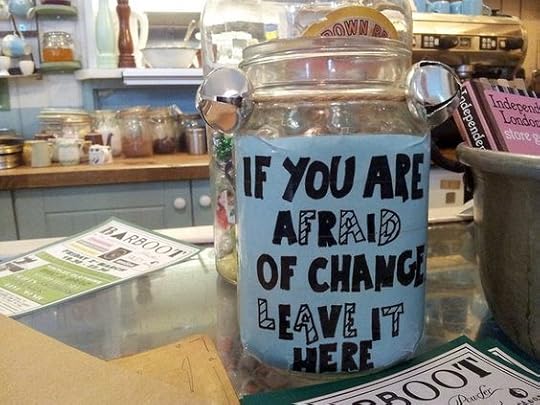
Those beliefs were solidified in me because I experienced the alternatives the hard way. In my corporate history, I worked for companies which I now realize were often operating with broken, half-hatched business models. Ill-conceived business models make the work so, so frustrating, and they sabotage good people! Today, after studying, and working within both good models and bad ones, I see plowing through business within a bad model to be extremely irresponsible and unethical.
You may have noticed, that within last week’s bring-back posting, New to Management: A Learn-the-Ropes Checklist, I started with The Business List before launching into The Managing People List— that became a key learning sequence for me as well. This is important:
If you do not share an organization’s values, and
You do not buy in to the ethics and integrity of their business model, Leave.
I mean it. Choose another company to work for where
You will be an ambassador of their values, and a champion of their business ethics.
Honor your personal values, and you honor your integrity.
As within our listing of Alaka‘i 24 Affirmations:
2. Practice discretion constantly, and lead with the example of how your own good behavior does get great results. Otherwise, why should anyone follow you when you lead?
11. Don’t be a victim or a martyr. You always have a choice, so don’t shy from it: Choose and choose without regret. Look forward and be enthusiastic.
If you have chosen business for how you will make a living, understand the business model you will operate in first, and then grow within your particular area of expertise second— especially if you aspire to be an Alaka‘i Manager. You cannot drive new visions without a feasible business model to support you.
‘Decent Returns’ starts with paying people well when they work for you.
My current campaigns, connected to the integrity of having an ‘Ohana in Business Model, and walking the talk in even daring to say “we manage with Aloha,” are highly focused on equitable compensation.
I am a dedicated proponent of:
Increasing the minimum wage
Removing all tipping assumptions from any hourly or salaried compensation calculations
Ending overtime abuse (most often inflicted by employers trying to avoid paying for benefit packages which accompany full-time and part-time employment)
Eliminating gender wage gaps and other discriminatory payment practices
Doing away with unpaid internships – pay them!
Doing away with paid-by-commission only business models
Cleaning up the ‘volunteering expectations and assumptions’ of non-profit business models
Reinventing the old, unrealistic pension plans of crippling short-term thinking with new, sustainable profit sharing plans
I have very little patience for business owners who claim these innovations will put them out of business. They may say “we can’t” yet what I always hear, is “I won’t.” They aren’t trying hard enough, and I won’t relent on debating them, teaching them, and holding them to task, until they do.
Business plans will always shake out in mathematical equations; I get that. However, morally decent, ethical, and responsible business plans are composed of sound, sustainable mathematical equations as well. Thankfully, there are a multitude of good ones we can learn from.
Business may be complex, yet we also tend to over-complicate it. Having the integrity to do business the right way is not as difficult as people too stubborn to change make it out to be.

Own your influence. Managers can take a much bigger role in designing business plans than they think.
Your fingers are on the pulse of the work. Managers in the trenches of any business are much closer to the operational machinations of that business than most founders, owners, and shareholders are—much, much closer.
We managers need to be the ones who articulate the campaigns I’ve listed above, and show how they can become possible and practical. We must tweak existing business plans in realistic ways—in value-aligning Managing with Aloha ways—which can be successfully sold to our corner-office leadership teams, helping them in turn, to sell positive change to founders, owners, boards of directors, and shareholders.
On a more basic level, we managers need to have a healthier respect for the value associated with work, and the human energies required in the performance of worthwhile, meaningful work: Managing Basics: Study Their Work.
Overtime abuse, for example, is a direct result of the week-to-week work schedules managers down to the supervisory level are responsible for designing and implementing. Do NOT be a manager who says, “I can’t get my boss and H.R. office to approve the change to up my staffing pars.” You abdicate your influence, and I don’t buy it, not for a second.
The last 3 paragraphs describe a reinvented, better-articulated financial literacy for business that is the best managing up we can possibly do. Please join these campaigns with me, and use the influence you have in your own workplace.
Business plans can be so much better. Let’s focus on making that happen. Compensation is just one variable, and perhaps you can affect the others, like asset securities, pricing, marketing, or supplier partnerships and vendor certification. Learn the ropes wherever you are, having the objective of continuous improvement, one small iteration at a time— they add up to positive change.
 Own your influence. 1. Learn the dollars and sense where you work, and 2. Choose values-centered management as your practice.
Here is some related reading on my compensation campaigning:
On Increasing the minimum wage: America, it’s time to get Decent, and be Pono: Raise the Minimum Wage.
On Ending overtime abuse: Mālama, the value of Stewardship written for Ke Ola Magazine.
Related to “I won’t.”: An Attitude of Scarcity or an Expectation of Abundance: Choose Palena ‘ole.
On the responsibility of citizenship: On November 4th, your Civic Duty calls. Answer, and answer well.
And more philosophically: The Rub of the Business Model is Solved by your Values .Mission and Vision aren’t viable without Value Alignment.
Longer read, well worth your time. Mahalo Neal Gabler, for your courage in writing this. #FinancialLiteracy #money https://t.co/cT0Zau2GvY
— Rosa Say (@rosasay) April 20, 2016
Footnote: On VBM, Value Based Management
Found this interesting, when looking back at the history of VBM (from Wikipedia):
History:
“On August 12, 1981, Jack Welch made a speech at The Pierre in New York City called ‘Growing fast in a slow-growth economy’. This is often acknowledged as the dawn of the obsession with shareholder value. Welch’s stated aim was to be the biggest or second biggest market player, and to return maximum value to stockholders.”
“In March 2009, Welch criticized parts of the application of this concept, calling a focus on shareholder quarterly profit and share price gains ‘the dumbest idea in the world.’ Welch then elaborated on this, claiming that the quotes were taken out of context.”
Criticism and Disadvantages of the shareholder value model:
The sole concentration on shareholder value has been widely criticized, particularly after the late-2000s financial crisis. While a focus on shareholder value can benefit the owners of a corporation financially, it does not provide a clear measure of social issues like employment, environmental issues, or ethical business practices. A management decision can maximize shareholder value while lowering the welfare of third parties. Shareholder value coupled with short-termism has also been criticized as lowering the overall rate of economic growth due to reduced business capital accumulation.
It can also disadvantage other stakeholders such as customers. For example, a company may, in the interests of enhancing shareholder value, cease to provide support for old, or even relatively new, products.
Additionally, short term focus on shareholder value can be detrimental to long term shareholder value; the expense of gimmicks that briefly boost a stocks value can have negative impacts on its long term value.
Shareholder value may be detrimental to a company’s worth. When all of a company’s focus and strategy is concentrated on increasing share prices, the practice and ethics of the firm can become lost because of the following problems with the shareholder value model:
Lack of transparency
Increased risk
Short-term strategy