
Chris Abouzeid's Blog, page 34
September 3, 2013
Daring to Own an Icon: Writing Historical Fiction
I’ve always been fascinated by historical fiction. I marveled at the guts of Michael Cunningham, setting out to re-imagine the grand Virginia Woolf in The Hours. I crept nervously into The Master by Colm Toibin, because Henry James is one of my favorite writers and I was afraid Toibin would ruin him for me. I was amazed—and relieved—to find that the opposite was true. Toibin nailed James; the writer was alive and so improbably, wonderfully real on the page. Instead of taking Henry James away from me, the novel offered the gift of time with him.
As much as I loved these books, though, I never thought I’d write a historical novel myself. Simply writing a good novel was hard enough. When I thought about the kind of book I wanted to write, the genre never came into it. I wanted to capture some kind of truth and meaning through telling a fictional story, and I wanted to write a book I loved as much as the novels of my favorite writers. Some of my most beloved books have real people in them, but most of them don’t. And what I admired most about the work of Cunningham and Toibin was not that they had recreated literary figures, but that they had captured magic on the page. It’s the magic that I’m after; I don’t particularly mind how I, or any other writer, get there.
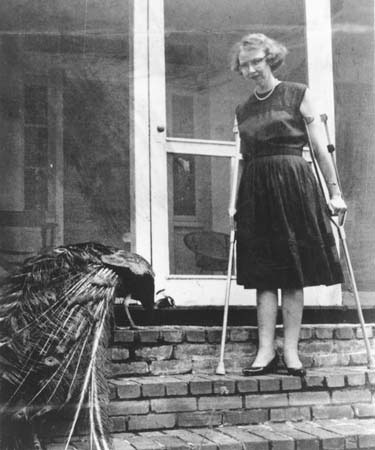
When I wrote the first draft of my novel A Good Hard Look, I was interested in writing about the way people live their lives—specifically, the idea of a “well-lived life.” My protagonist, Melvin Whiteson, was a very wealthy man who’d been given every opportunity, but didn’t know what to do with those opportunities. The novel wasn’t working, though; I think Melvin was more of an idea than a character. I was about a year into the book when Flannery O’Connor showed up as a guest at Melvin’s wedding. I didn’t see her coming—creatively speaking—though in hindsight, I can see that Flannery embodies for me this idea of a life “well-lived.”
At the time of her arrival, though, I was basically terrified. Flannery was an intimidating, fiercely intelligent woman, and a writer whose sentences lashed like whips. She glared at me from the pages of my novel and I blinked back, feeling faintly nauseous. Was I really going to attempt this? Did I have to? Every time I opened the file on my computer, she was there, her gaze sharp and piercing. Melvin was stirring to action beside her, which was an intriguing development. Something was growing between my protagonist and the writer—I glimpsed a shared hunger on their faces. So, I took a deep breath and tried to separate the strands of my trepidation. There were two main components: one, that I would portray Flannery inaccurately, and two, that I would do her a disservice by writing a mediocre book.
To conquer the first fear, I did research. I read everything by and about Flannery that I could get my hands on. I visited Andalusia, her farm in Milledgeville, Georgia. I read about the early1960s, when this novel would need to be set (Flannery died in 1964). I took notes, haunted libraries, and used mimeograph machines. When I finally sat down at my computer, I wrote slowly. I could feel Flannery’s eyes trained on me while I typed. I couldn’t bear to misrepresent her, so I under-represented her. She appeared in scenes, but she didn’t do much. I lacked the temerity to “go into” her thoughts. I portrayed her as always in control, and never vulnerable. I suppose I was trying to please her, or at least not make her mad, which is ridiculous because I knew then—and I know now—that Flannery was a private person who would have preferred not to be written into a novel, no matter how winning the portrayal.
The turning point occurred when I submitted the first draft to my writing group. They told me, in no uncertain terms, that I needed to either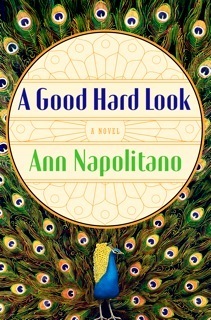 commit to Flannery being in the novel, or cut her completely. I knew at once that they were right. I also knew that Flannery couldn’t be removed—her integrity and moral strength had become the spine of the novel—so I radically changed my approach. I turned off the editor in my head, tried not to make eye contact with my imaginary Flannery, and rarely checked the facts I had so fastidiously written down. I also came up with a historical/fictional divide that I was comfortable with (or as comfortable as I could ever be).
I would stay true to the chronology of Flannery’s life. For instance, she works on one novel and several short stories over the course of my book, and they are in the order she actually wrote them. I never altered either the content or the timeline of her fiction. The chronology of her struggle with lupus is correct as well—her symptoms, her remissions, her final decline. Her peacocks are as plentiful and dominant at my version of Andalusia as they were at the real farm. Flannery only leaves Milledgeville once during the book, and that’s for a trip she actually took to Lourdes, France. And the only other living person in A Good Hard Look is Flannery’s mother, Regina. I realized it was impossible to depict Flannery without her mother; they lived together and Regina both cared for and exasperated her daughter daily. Regina was a structural pillar in Flannery’s life that could not be removed.
The metaphor I used to help navigate writing about a historical figure was Flannery’s home. I thought of all the subjects I needed to leave untouched—her work, her travels, her illness, her relationship with her mother—as the front porch and the grounds of Andalusia. It was public knowledge and could not be modified. But what happened behind the closed front door of the house: the conversations, the worries, the desires, the friendships and losses that were never documented—those were fair game. Creatively, I needed to fill in those gaps. Morally, I had to tread carefully; I needed to base my fiction on what was known about Flannery’s character, about her habits, about her voice. My great responsibility was to imagine a private life for Flannery that felt as true as the documented facts.
I spent seven years writing A Good Hard Look in order to make sure Flannery was believable, and that the book that contained her was not appallingly bad. Even after all that time and effort, I still don’t think of myself as a historical writer. I am simply a novelist who struggles—sometimes mightily—to meet the demands of each book. It is difficult (and also thrilling) to imagine who or what might rise out of my next novel that could possibly rival Flannery O’Connor.

Ann Napolitano is the author of the novels A Good Hard Look and Within Arm’s Reach.
She received an MFA from New York University; she teaches fiction writing for New York University’s School of Continuing and Professional Studies and for Gotham Writers’ Workshop.
She lives in New York City with her husband and two children. She can be found on Twitter at @napolitanoann.
Originally appeared on Beyond the Margins July 11, 2011.



September 2, 2013
Koalas, Blowback and Ick Factor: Why It’s Hard to Write From the Heart
At a reading many years ago, Tobias Wolff (award winning author of In the Garden of the North American Martyrs and This Boy’s Life) talked about the fear factor in writing. Good writing, he said, the best writing, should make the author nervous. Actually, he didn’t use the word nervous. He said “scared”—as in, “Do I really want to know this about myself? Do I want the world to know this about me? Oh my god, is it too late to buy up all the copies and burn them?!”
As an example, he cited a story he’d written recently, in which the main character, a father, discovers he hates his children. I don’t remember the circumstances of this discovery, but I remember Wolff describing how hard it was for him to write the scene, that in the process of uncovering his character’s hatred for his children, he had had to confront the same feelings in himself. He thought of himself as a moral, loving, caring father who would give his life for his children. And yet, he hated them. Not all the time. Not even most of the time. But sometimes. It unnerved him.
Now, with all due apologies to Tobias Wolff, I didn’t see anything monumental or horrifying in this discovery. Based on an informal sampling of conversations on playgrounds and in coffee shops, most parents seem to hate their children at some point. A lot of parenting humor, in fact, revolves around the tyrannical, exhausting and parasitic nature of kids and how much easier everything would be if we could just treat them as pets or plants or appliances we bought on a whim and now are ready to return. It’s gallows humor, meant to express what is most painful—the very real resentment and exhaustion parents feel—in a way that both releases the tension and emphasizes the momentary nature of it. But it’s also true: Sometimes—like it or not—we wish those kids weren’t there.
Even if I didn’t share Wolff’s great revelation about parental ambivalence, though, the discussion rooted deep inside of me. For one thing, he had offered a simple, elegant rule of thumb for anyone hoping to write serious fiction: If you are comfortable with what you’re exploring, then you’re not exploring. You’re just taking a walk around the block.
For another, he had inadvertently demonstrated how tricky these kinds of explorations can be. We all have our high crimes and misdemeanors. We all have aspects of ourselves, our lives, our actions, that we would just as soon not face, secrets we would die of shame or embarrassment to have revealed. And, of course, we all have our passions and point-of-views, our wishes and our prejudices. This is the wide territory we’re supposed to explore. But, as my reaction to his discovery showed, what scares one author may seem like a matter of course to another. So even what constitutes “exploring” isn’t as clear as it should be.
Here are a few of the issues that come up every time I try to invest myself more fully in my writing, take more risks, do more than just walk around the block:
Honesty vs. the Ick Factor – At what point does my writing go beyond honesty and fall into ick territory? How much can an author reveal about himself/herself without losing the reader? David Shields once gave a reading at Bread Loaf in which he discussed this very question—why there is this invisible line and what happens when we cross it. It was a brilliant reading, but as his work was very autobiographical, the mood slowly shifted from quiet admiration to awkward silence as the personal details grew too much for the audience.
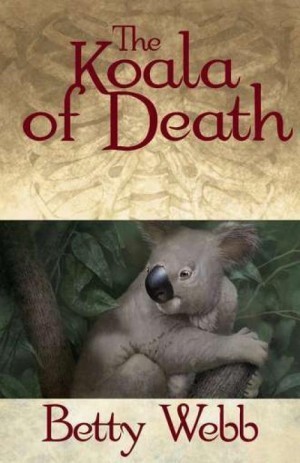
The Koala Problem – Real koalas are smelly, bug-ridden, drugged out beasts with claws long enough to pull your liver out. Doing a Melville on them (i.e. describing the inside of their skulls, reproductive organs, etc.) may give the most honest picture, but it’s not going to help that story about a girl in the Australian outback adopting a koala as a pet. The same goes for people. So if I want to explore the complexities of the human heart, how do I do it without making every character seem poisonous, doomed or repellent? If my characters don’t scare me (and everyone else), am I just “taking a walk around the block?”
The Blowback – I want to write a book about the sufferings of a German woman at the hands of an SS officer in World War II. Will people think I’m a Nazi sympathizer? I want to write about a pedophilic manny who lusts after the girl in his charge. Will it make everyone wonder if I’m a closet pedophile? Wait! What if I am a closet pedophile? Why else would I want to write something like that? Living in the age of kitchen psycho-analysis makes it hard to think of risky stories, risky themes and characters, without immediately wondering what they say about you, and what others will say about you.
Personal vs. Universal – However many risks I take, however much of myself I pour into a story, there’s no guarantee it will speak to other people. What if my experience is unique to me? What if no one else shares the same experiences, the same feelings? There is no worse feeling than finding out you’re the only one who loves your character, the only person who finds the story compelling, the only person who’s ever felt they way you feel.
What about you? How do you feel about taking risks, writing about things that scare you? Have you ever been surprised that something you thought was unique only to you reverberated with many other people? Or maybe didn’t?
Originally appeared on Beyond the Margins May 6, 2011.
September 1, 2013
A Reluctant Novelist’s Confession
No matter how often I fly, there’s always a moment, in the middle of the night before a flight, when I think: Impossible! Those things can’t possibly stay up in the air.
I had the same feeling years ago when I delivered my only child. I was supposedly “ready,” but had been lingering in the pre-delivery room for hours when a savvy nurse came on duty and asked me straight: Are you having a hard time imagining that you can really deliver this baby?
Yes, I realized. That was it. It seemed impossible that a big old baby could possibly fit through such a small space. Maybe I had been unconsciously holding myself back, but as soon as that nurse helped rid me of the mental block, Caitlin Elizabeth came barreling into the world.
I think of that when people compare the process of birthing a book to birthing a child. Here’s why: For a long time, I had no desire to write anything but short stories. I wrote them, published them, and even became a short story editor—reading and evaluating hundreds per year for the literary journal Ploughshares.
I had zero interest in writing a novel. Zero. But then some short story ideas began to come together—they demanded the longer form. I reluctantly decided to give novel writing a try.
Did I unconsciously make it hard for myself? I think I did. I gave myself a lot to study: the Great Depression, New York City during the New Deal era, art in Paris in the 1920s, art in New York in the 1930s, politics, reservoir construction, the build-up to World War II, theater production, Shakespeare. As I researched, I gave the actual writing of the novel bursts of attention only now and then, and continued to work on short stories.
I thought I was afraid of the commitment a novel required, of the fact that I might toil for years with no guarantee of publication. But one night in early 2010, I was watching the Academy Awards. They were awarding the prize for best adapted screenplay when the phrase, “based on the novel by Walter Kirn….” hit me.
I had a revelation. I was avoiding exposure. I was dreading all that would come with a novel’s publication. I was afraid.
Writing and publishing short stories had been, for me, a quiet process. Sometimes I would get feedback on a story—a rare email or letter from a reader which was always insightful, appreciative, and complimentary.
But a novel would be out there in a way I couldn’t protect. It would be available anywhere: on bookshelves, online. It would be reviewed. I would have to go around to bookstores and libraries and give readings, and maybe no one would show up at those readings. I would have to speak on the radio.
There was only one thing to do, once I realized all this: I had to suck it up. I resolved to finish the book that year, and I did, in late December.
And guess what? Since the book came out, I’ve been pleasantly surprised to find I have a ham inside of me. I love reading in public. I love meeting readers, and I’ve even enjoyed talking on the radio.
And the funniest Freudian thing? All my life I had dreams I could fly, but in those dreams, I always started to go too high, too fast. I would wake up in a panic. Right after we sold Cascade, I had a flying dream, but this time I was soaring high and offshore, barreling out over the ocean.
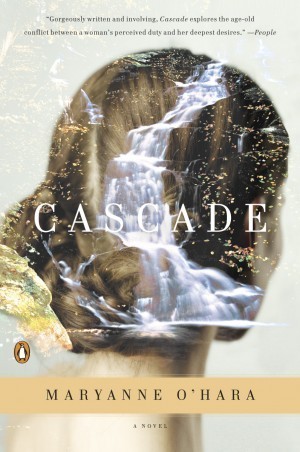
 Maryanne O’Hara is the author of a novel, CASCADE, which is a Slate magazine Best Books of the Year Staff Pick, People magazine “People Pick,” Boston Globe “Best of the New,”Library Journal ”2012 Best Bet,” named to the Massachusetts Must-Read List for 2013 and a finalist for the Massachusetts Book Award. She was a longtime editor at Boston’s renowned literary journal, Ploughshares, and her short fiction has been widely published.
Originally appeared on Beyond the Margins on March 27, 2013.
August 29, 2013
What It Means When Your Reviewer is Mean, Unfair, and Totally Doesn’t Get It

You’ve been hit over the head: the totally unfair review. On Goodreads, on Amazon, at a job performance evaluation. It’s hard to feel that the fault is really the reviewer’s, but it is. Believe me, I know: I once gave the worst review in the world.
It was 1995, and I wasn’t reviewing a piece of fiction. I reviewed, at a medical department conference, an article in the New England Journal of Medicine. The article that introduced metformin, now one of the medications most widely used for Type II Diabetes, to the United States. And yes, I trashed it. In an oral presentation, for about thirty or forty minutes. Oy.
So I am well qualified to represent the baselessly unjust reviewers of the world. Ask me a question, any question.
You: How could the reviewer trash my baby, my so obviously beautiful work?

Me: Excuse me, the actual piece of work is irrelevant. The reviewer is coming from a place of deep insecurity. In my case, I was feeling at that time in life particularly insecure about my lack of research background. Heck, I was a literature major masquerading as a medical student. I somehow thought that criticizing the study was the way to show myself and everyone else that I knew what I was doing. A psychologist might say I was projecting—seeing lack of scientific rigor everywhere I looked because I feared that lack in myself. I came to the work looking for faults and was blinded to its (many, important) merits. If I had been handed the Hippocratic Oath itself, it would have gotten trashed. You don’t even want to know what I would have done to Ulysses.
You: Was the reviewer trying to hurt me? Ruin my life?
Me: Now, you are assuming that the reviewer thought way more of you than he/she actually did. She did not actually think of you as a person. In fact, she was only thinking of herself and how she may not have chosen the right career path. She was additionally distracted by recently having been dumped by a man three years her junior. 
She was desperate to improve her own life by showing her cleverness and create the kind of camaraderie that sometimes arises in group censure. (P.S., it didn’t work.)
You: Didn’t the reviewer notice my awards, my blurbs, my prestigious publishing house?
Me: Possibly, but she was too ignorant of the system and blinded by her own needs to understand what that meant: that people way more knowledgeable than her had already vetted your work. Insecurity and arrogance are two sides of the same coin. Keep in mind that the reviewer has never, and will never, be able to produce any work comparable to your own.

You: Why couldn’t the reviewer look at my work with a positive attitude, looking for merits instead of flaws?
Me: Because that would have required maturity, self-confidence, and lack of personal agenda.
You: Will I ever get over this?
Me: Oh, yes. A few more positive reviews and you’ll be fine. As for your reviewer? It’ll take her, say, seventeen years or so to live down her review.
Originally appeared on Beyond the Margins April 24, 2012
August 28, 2013
The Curious Other: Confronting Racism In Our Work

Here’s the plot summary of Date Night, as provided by the film’s official website: Phil (Steve Carell) and Claire Foster (Tina Fey) are a sensible, loving couple with two kids and a house in suburban New Jersey…In an attempt to take date-night off auto-pilot, and hopefully inject a little spice into their lives [they go to Manhattan’s] hottest new restaurant and steal a couple’s no-show reservations. The real [couple], it turns out, are [thieves] who are being hunted down by pair of corrupt cops….Phil and Claire realize their [date] has gone hilariously awry, as they embark on a wild and dangerous series of adventures to save their lives…and their marriage.
Here’s the plot summary, provided by me: Two sheltered white people venture into the city for the night, see a lot of non-white people and get scared.
To me, this movie is about race. Not consciously. Not directly. But what else do you call a story where the heroes are white, all their friends are white, and the people in their book club are white. It is only when the heroes leave their comfy suburb to go into New York City that they encounter other races, namely a handful of African-Americans and one Italian guy (who eats spaghetti while bossing around his hit men.) When you enter the city, the movie seems to be saying, you meet The Ethnic Other. And the world of the Ethnic Other is filled with violence, danger, and corruption.
When, at the end of the film, a newly loving Phil and Claire return to their clean suburb unscathed, the viewer is expected to exhale a sigh of relief. Oh, thank God! They’re safely back among rich, white people!
What interests me about this problem is not only the issue of racism itself, but how screenwriter may not have seen the racism. And, for that matter, none of its editors, sound mixers, producers or actors may have seen either. This led me to wonder: To what degree does a writer need to set her own moral and ideological cards in order before crafting a story?
I was once in a writing workshop with a man who wrote stuff that I found downright offensive. All the poor people toted guns. They drove pick-up trucks. They didn’t read and they drank cheap beer. When I suggested that this writer flesh out his “working-class” characters a little more, he looked at me with a shocked stare that all but said, “But that’s how these people are.”
The funny thing was, apart from his ignorance, he was actually a fine writer. He perceived the nuances of human interaction, the drama of daily life, and articulated these things beautifully. Yet he had a particularly narrow-minded view in regard to the working poor. He could not see anything wrong with his portrayal of these “simple folk.”
At the time I thought he needed to go out and get himself a social education. But I also turned the question onto myself—what beliefs might I harbor unwittingly? What sorts of –isms might I be promulgating through my work? Not because I believe them necessarily, but because I’ve absorbed cultural ideas without properly challenging them. A black boy playing basketball. A gay man wearing designer clothes. A liberal going to a museum.
The list goes on. The stereotypes go on. The commercials we see embodying these stereotypes go on and it can be frightening to realize how frequently these stereotypes, and the dangerous ideologies behind them, can appear in one’s work. Equally frightening is to see how potential plot points might hinge on the very –isms we are trying to avoid. (See Judith Butler’s brilliant feminist critiques of Hemingway for more on this topic.)
Perhaps the only way to avoid narrow thinking in our writing is to avoid narrow thinking in our lives. And maybe, as writers, when confronted with cultural difference, it’s in our best interest to get closer, rather than run away.
Originally appeared on Beyond the Margins May 3, 2010
August 27, 2013
Finish What You Started: How To End Your Story

Do you struggle to finish your writing projects? You are not alone: many writers have problems finishing what they started. Junot Diaz spent five years on a novel that he eventually scrapped before writing The Brief Wondrous Life of Oscar Wao. In Michael Chabon’s The Wonder Boys, his protagonist, aging author Grady Tripp, continues writing the same novel, page after page, with no end in sight.
Not being able to finish a story, novel, or memoir takes on many different manifestations. Some writers have trouble coming up with a proper ending to a story, constantly reworking the final pages or chapters. There are others who don’t have the stamina, patience, or attention to reach the finish line, leaving rat-eared first draft caskets in desk drawers and hard drives.
Then there are those writers who cannot bring themselves to literally stop writing. Afflicted with a condition called hypergraphia (the compulsion to write), they tally thousands of pages of writing. Finally there are writing conditions so deadly that the scientific community has given them nasty little names: laziness and boredom; these two states are common afflictions, making it doubly hard for writers to sit down to write, or even contemplate the act.
Aside from hypergraphia, (which I admit I wouldn’t mind suffering from, although it is associated with epilepsy and bipolar disorder) I’ve suffered from all of these conditions at one time and to one degree or another.
When I first started writing seriously, I wrote hundreds of first draft pages across a number of different novels. I wrote on an electric typewriter; as easy as it was to type page after page of these drafts, I very seldom went back and revised them. I thought first drafts were all there was to this writing thing. I was too impatient to move on to the next story to revise my current project. This attention deficit was a form of laziness and boredom.
Plus, I didn’t know enough about writing to know how to revise. It turns out my idea of revising a novel was to start over. I have three drafts of what eventually became my first novel—each has different characters, situations, and plot.
So what did I do to snap out of it? I joined a writing group. This gave me immediate and diverse feedback for the short stories and chapters I handed out. Deadlines worked wonders for me. Every two weeks I cranked out another story for my group. It was a wildly productive time—I had a form of hypergraphia where every time I sat before a new word processor file I started another story. But I was still lazy about revising; it just sounded like a drag—like I was moving backward instead of continuing ahead, where, apparently, I was a better writer.
I knew I had a problem. I was getting pretty tired of myself and my writing ways. What kind of writer doesn’t finish anything? Maybe that was part of my problem: I still didn’t consider myself a writer. Because I didn’t think I could get published. Because I hadn’t finished anything. When my writing group disbanded, I had a couple dozen short stories, some better than others. I revised a few of the ones I thought were decent and started sending them out.
Then I finished my first novel, revising with the speed and efficiency of a human word processor, and sent it to an agent. The agent’s assistant gave it a thorough read, and sent back a two page letter talking more about my typos, bad grammar, and malapropisms than whether the story was successful (it wasn’t). But this letter was good—made me see that I still had to embrace revision as a necessary part to writing.
Cut to a couple novels later. I still have a major problem with endings—I can write to the end, but don’t always know how to wrap up my story. So what have I done to snap out of it? I recently took a great Novel in Progress class at Grub Street with Tova Mirvis where she covered some of the fundamentals of how to start my novel, incorporate flashbacks and character history, and outline my story to help as a guide to write the novel (including the ending) that I envision. Having learned these basics will help me lay a solid first draft foundation on which to build my future drafts. I want to finish my novel in a way that honors the rest of the story and won’t short change the reader.
And hopefully she won’t get bored and lazy, and stop reading before she finishes.
Have you struggled with ending/finishing your writing? Have you spent years on a project that you just couldn’t finish the way you envisioned?
Originally appeared on Beyond the Margins September 9, 2010
The Incredible Lightness of Metapages

By Bethanne Patrick
Last month I was fortunate enough to be invited to present at Grub Street’s The Muse and the Marketplace Conference in Boston. As is almost always the case (at least for me), the most valuable part of the event had nothing to do with the panels in which I participated, but rather with one that I attended. Since I’d been using the two days in Boston as a sort of mini-retreat, I hadn’t planned to take part in any of the other panels–but after my social-media pal Ann Bauer came to one of mine, I wanted to go to hers.
I am so glad I did, because I learned something–and it was not what I expected to learn. Bauer’s Writing Boot Camp session was focused on teaching writers of all levels about how to create and stick to a daily schedule, and she had some great stuff to share about that, which I’ll cover in a future post (right after I get around to creating and sticking to my own version of a daily schedule). What has stayed with me in the month since The Muse is something Bauer brought up in her workshop’s second half: The idea of “metapages.”
It took me months as an undergraduate to get up the courage to figure out what “meta” meant, since it was being tossed around with such frequency in my classes (“metaphysical,” “metacritical,” “metamorphosis” — these were just a few): It simply means a thing that refers back to itself. Thus, Bauer’s “metapages” are something quite simple, too: They are pages a writer pens about the writing she’s already done.
Bauer suggests a daily schedule that involves two spates of writing time, with the first being a morning chunk of pure creativity–new pages on the work in progress, or freewriting of some kind–and the second being an hour or two on “metapages.” In these, she told us, “You write about what you have written. You can write about how you feel about what you wrote in the morning, write about what you need to research next, or anything else–as long as it relates to the pages you wrote that day.”
As a writer who is struggling with the perfect daily routine, the idea of “metapages” was revolutionary. I already know that I can’t write new material for, say, eight hours straight. Usually I can write for two to four hours and I’m done with fresh ideas. But that doesn’t mean I’m done with writing, and I often spend another hour or two at the day’s end making notes (read: scrawling bits of detail down on a napkin at Starbucks).
What I like about metapages so much is not simply that they provide a structure for my day’s writing, but that they also forge a kind of conversation between my right and left brains. Since I began using this idea, I’ve been freer during my early (not, alas, always first thing, but…) morning writing time, because I don’t try to answer all of the little questions that come up, or address all of the ideas I have. Those things become sort of a “cook’s treat” for the afternoon, when I allow myself to dig in to what I’ve accomplished and see how it relates to the rest of my novel.
You may, of course, already do metapages–maybe I’m the last writer to discover this concept–or maybe you don’t use the term “metapages” but you already use the idea. I’d love to hear about your particular balance of free writing and self-referential writing in the comments.
Originally appeared on Beyond the Margins June 11, 2013.
August 25, 2013
Writers Wearing Costumes, Baking Cookies, & Other Mad Men Tricks

Nobody can buy a book they never heard of. M.J. Rose, bestselling writer and former advertising madwoman.
Why does someone pick up a book? Smashing cover? Reviews so good they’ve been memorized? Stunned by The Most Memorable Title Ever?
Is it on that all-important front table in the bookstore? In the store at all? In the city?
Feeling anxious yet? Welcome to launch world, where nightmares form and agents get midnight-whisky-calls. Some hide in the closet eschewing all promotion & marketing in the name of literacy—swearing it’s all up to God or the publisher (often conflating the two.) Others write checks for as high a number as possible, buying book tours, advertising, publicist’s time, and soothsayer’s wisdom. And some put on costumes dressed as their characters and sneak into Disneyland.
Everyone hates having to promote and market. Me. You. I bet Stephen King hates shaking his moneymaker. But, back to the axiom: Nobody can buy a book they never heard of.
Book world is filled with the good (free food!) the bad (wandering the streets with a sandwich board) and the ugly (cornering people with non-stop self-praise.) Who knows what works? I wrote a small story-filled cookbook giveaway for my particular shtick—hoping that offering revelations & food might encourage folks to buy my new novel, The Comfort of Lies (releasing Feb 12, 2013.) And then I looked out outward—seeking comfort in other’s best and worst writer shticks. Because, say it again with me, Nobody can buy a book they never heard of.
Ripping Up One’s Book Award: “I took apart a copy of my first novel and taped or tacked individual pages onto hydro poles and bus stop shelters in New York and Toronto. The pages had my name and the novel’s title in the header, so anyone who found the excerpt intriguing could look me up. I hid for a while to see if anyone would read them, and was tickled to see New Yorkers reading one side of the pages through the glass of their bus shelter then going outside the shelter to read the other side.” Ania Szado, author of Studio Saint-Ex
Best Chutzpah Award: “My co-conspirator in crime, Libby Fisher Hellmann, and I tour together when our books come out. We’d been booked for an event in Cincinnati at a Joseph Beth bookstore for a noon-time event. All set with tons of chairs our books displayed and not a person in sight. Disappointed we smiled at the wonderful display of our books and wished even one person was in the store. The events person was embarrassed and we’d wished we knew what to do apart from accosting an occasional browser in the aisle. She said in desperation ‘There’s a Jewish Bookclub group upstairs, they’re here every month…” Libby and I piped in ‘would they like a flash author visit?’ Turns out they did. We walked into a big meeting room with 35 book reading women who seemed delighted to hear our abridged talk – they’d give us 15 minutes and we ended up there more than 30, tons of Q+A and selling quite a few of our books. Who would have thought, eh?” Cara Black, whose next book, Paris is For Murder newest book comes with a pre-order chance to visit Paris. Now that’s some serious shtick stuff.
Most Outdone by Someone Else Award: “My husband went to Denver on a work-related trip and ducked into a bookstore to ask them to order my book. That might be unusual enough, but outside the store a guy was parading up and down the block, wearing a placard. My husband asked him what he was doing. He said, ‘Trying to sell my novel!’ “ Kate Ledger, author of Remedies
Best Use of Food at an Event Award: “My ability to concentrate on a reading improves when I’m eating. And that’s why I brought a few pounds of rugelach to the very first reading of my novel, “The Singles.” The cookies, which I bought from Zaftigs in Coolidge Corner, kept my Brookline Booksmith audience (and me) awake. They made my reading feel more like a party. My faith in food is also why I planned my second book event at a restaurant.” continued Meredith Goldstein, author of The Singles
Please Let This End Award: “I adore dressing up as my character, but the first time was indeed humiliating, standing at a table in front of a chain bookstore in an impoverished rural shopping mall. People gave me very wide berth. The only person who talked to me was selling her own book, which I bought.” Sandra Gulland, author of Mistress of the Sun
Worst Use of Botox & Belly-Dancing Award: “After my first book came out, my publisher booked me into the “Women’s Show of Northern Virginia” to give a talk on stage and man a table selling copies of my book. It was held at Dulles Expo Center, and was a zoo of vendors selling jewelry, Botox, facial creams, etc. I was the only writer there. I also was scheduled to give my talk on writing on a giant stage immediately following a belly dance performance (I am not making this up), and before a fashion show of prom dresses. The belly dance performance ran over its scheduled time, the entire crowd then left, and I stood on stage in front of a sea of empty chairs, talking about writing, until they shooed me off for the parade of prom dresses. I have sworn never to leave my garret ever since.” Kathleen McCleary, Author of A Simple Thing
Mother of the Year Award: “My very proud mom put The Painted Girls postcards in her many, many Christmas cards.” Cathy Marie Buchanan, Author of The Painted Girls
Shrine in a Hair Salon Award: “I left my book at my hair guy’s salon. He then created a little shrine for it, and his huge clientele saw it and many (many) of them bought the book. This in turn led to a slew of book club invitations.”Therese Walsh, Author of The Last Will of Moira Leahy
Yes, what we do for love. What others who love us do. And I pray Atria doesn’t ask me to wear a costume.
Originally appeared on Beyond the Margins on January 3, 2013.
August 22, 2013
When Tragedy Calls: Not My Lemonade To Make

By Ann Bauer
The day after the Newtown, Connecticut, massacre, my phone began to ring.
The Huffington Post wanted me to do a live forum with autism experts and other mothers. Salon wanted my 2,000-word take on the shooter’s reported Asperger’s diagnosis. Elizabeth Cohen, chief medical correspondent at CNN, was wondering if we could talk on air.
For about two minutes, I felt excitement. I had arrived! A midlist author who writes quiet literary novels and fails, over and over, to seize media attention—I suddenly had the opportunity to get my name out, maybe even slip in the title of my latest book. Because that’s the rule in publishing, right? You use whatever platform you can find to promote your work.
Oh, so so wrong.
Because in the third minute—I was still holding the phone, mind you; Cohen’s familiar television voice echoing in my brain—I felt sick. And deeply ashamed. Twenty tiny children and six teachers were dead, along with a disturbed young man and his mother. This was not the time to market my book.
In advertising—which is my day job, the one that supports my quiet non-media hyped books—we have a rule against “piling on.” Here’s what it means. Say we’re sitting, seven of us from the agency, with the bigwigs and investors for some very important, multi-gazillion dollar company. A point is raised and two people from the agency speak to it. This is the time to be careful. Do notchime in unless you have something utterly new and enlightening to say. Because if you’re making a point that’s already been covered, if you’re talking just because you’re there and you want to be important, too? You’ll get fired on your way out the door.
What my agency knows — and regulates — is that wherever there’s power at stake, it’s human nature to want to be heard. In exciting, high-pressure situations, people draw attention to themselves even when they have no particular knowledge or wisdom. This is how embarrassing mistakes happen in client presentations. Worse, it’s how tragedies get commoditized, packaged and cheapened by writers like us.
True, we’re just following the lead of the media outlets that hire us — for increasingly smaller and smaller fees. We’re trained by the overworked publicists at our publishing houses that we must do anything, anything we can to make our names known. It’s easy to get caught up in the whirlwind of coverage and feel like you’re the only one whose voice is missing. But there’s a price to piling on. At worst, you violate people suffering from something unspeakable by using it as a platform to sell your work. At best, you risk being a fool.
The reason people were calling me in the wake of the Newtown shootings was that back in 2009, I published a personal essay about violence and autism. That’s it. That’s the thread. When the Adam Lanza — the 20-year-old who murdered 27 people then shot himself — was revealed to be “on the spectrum,” I became an instant media expert on his motives. Only here’s the thing: I’m not.
And this is what I told the editors and PR people and correspondents who called. I don’t know this family, I don’t know this town. I have little understanding of the gun culture; I know even less about violent video games. This seems to be an incredibly complex situation involving divorce, school failure, mental illness, psychotropic medications, a lonely mother, a missing father, and one individual’s broken brain. I’m just not qualified to comment on that.
But over the next 48 hours, I watched myriad writers weigh in on the Newtown tragedy via Facebook, Twitter, blogs, in newspapers and on TV. Some of them I knew personally, many I knew only by name. Then there was the group I found most chilling: Writers I’d never heard of prior to their finding an angle on the tragedy and becoming instantly marketable.
The most specious example was a woman who wrote a blog post with the gonzo click-through headline, “I Am Adam Lanza’s Mother.” It was she who eventually appeared on CNN, not with Elizabeth Cohen (who, like me, decided not to attach herself to the story) but with OutFront host Erin Burnett. Her blog stats went through the roof.
It was, I’ll admit, irksome. I sat in my lonely office, the phone no longer ringing. Writer friends I told looked startled that I let such an opportunity pass. A few were disappointed I hadn’t used the platform to defend individuals with autism. An editor I trust wrote to say she was sure I could contribute something unique to the conversation. So despite my initial conviction, I tried.
For eight hours one day, I wrestled with a piece about single mothering and autism, the perils of anti-psychotics, violence and the hormone levels of young men. My essay tilted from one fuzzy perspective to another. At the end of the day, I had a ragged piece of writing that contained nothing — except a lot of the same wondering, uncertain, histrionic and probably wrong suppositions that had been circulating for days.
I called my editor and said I was sorry. In fact, I had nothing to unique to say.
When Andrew Solomon’s “Anatomy of a Murder-Suicide” appeared in the New York Times on December 23, eight days after the massacre, I think I finally understood. His piece actually did enlighten, it contained something new and fresh told from the point of view of someone who was mournful but objective, whose authority on this issue was clear.
Six months later I’m terrifically relieved that I didn’t rush in. I suspect if I had, I’d be cringing over whatever self-serving words I spoke or wrote. It’s made me more aware of the risks of immediacy, especially for we who are always seeking to scratch the publishing itch. So in the spirit of the ad agency, I made my own set of “don’t pile on” rules.
Wait 24 hours to post and 48 hours to publish — Our ability to reach a wide audience through Facebook or vehicles such as the Huffington Post makes on-the-spot publishing too easy and dangerous. If it’s genuinely worth saying, it’ll be worth it in a day…or two.
Avoid the meta — God knows skewed analysis has been a great model for Slate.com, but a) they do it very well and b) about 75% of the time I’m still offended and/or turned off. Most of us don’t have the skills or resources to take a new angle on a hot topic—unless we’re willing to get dirty.
Don’t get dirty — It may feel good to write a cleverly snarky, salacious, or macabre headline in the moment, because people will click on it like screaming crazy. But remember, this is part of your legacy. Immediate gratification isn’t worth your reputation. Just don’t go there.
If you don’t have anything to say, STOP — This, believe it or not, is the toughest rule to follow. Because not having a clear, insightful position can make you (OK, me!) feel small and dumb. Let it happen. Think through. Examine what you know. If you have nothing new or illuminating to offer, close your laptop and go for a walk.
 Ann Bauer is the author of two novels, The Forever Marriage and A Wild Ride Up the Cupboards, and co-author of the culinary memoir Damn Good Food.
Her work has appeared in the New York Times, the Washington Post, The Sun, Redbook, Ladies Home Journal, ELLE Magazine and Salon.com.
She and her husband split their time between Boston and Minneapolis, where their three adult children reside.
You can find her online at annbauer.com or on Twitter @annbauerwriter.
Originally appeared on Beyond the Margins May 29, 2013.
August 21, 2013
When Bad Meditation Inspires Better Writing

By Juliette Fay
I’ve tried meditation off and on since my twenties, and I love the concept: quieting the mental noise, clearing away the chatter for a period of time, inviting stillness. With four kids and their friends coming and going from our house like it’s a train station on the Green Line, meditation seems deliciously luxurious, like going to a spa for the mind.
But I am so bad at it.
I took it up again about two years ago when I started writing my newest novel, THE SHORTEST WAY HOME. One of the principal characters is a massage therapist who practices yoga and meditation. I wanted to get to know her better, so I took out a bunch of yoga and meditation DVDs from the library.
There is quite a range out there, from the childishly simple to the impossibly difficult, with practitioners who range from bouncy cheerleaders to bearded older men. There was even one guy who had two attractive women on either side of him for every pose. I starting calling them Tony Orlando and Om. Made it very difficult not to giggle, which I assure you, is not yoga appropriate. You may smile beatifically, but you may not titter derisively or the yoga police show up.
After sampling all of those DVDs, I bought the ones I liked best. My favorite is narrated by a lovely middle-aged French woman. She describes the poses in the most luscious French accent, occasionally mispronouncing words, which always makes me smile. Here I am struggling to get into proud warrior pose without toppling over, and she’s saying the word “soothes” in two syllables: “sooth-es.” It makes me feel just a little less hopeless.
After the yoga portion, she guides you through a meditation, murmuring in her blissfully peaceful Frenchness, about “sitting at the center of all things” and “wrapping your energy around you like a shawl.” Let me tell, you I am down for that. I am on board.
And yet I can’t hold it together for more than about eight seconds before my unruly mind wanders off like a squirrel contemplating the possibility of a nut buried in the next yard. My brain will not behave. There is all this lovely gonging music and soothing talk about blowing thoughts away like feathers, and I’ve got a whole swan’s worth swirling around me like a blizzard.
What I’ve found is that some of the thoughts are random and useless. Other thoughts, however, have purpose. Those purposeful thoughts are generally on the topic of whatever story I’m working on. And they are like fireflies blinking their little thought lights at me, illuminating things about the plot or characters that hadn’t been able to slow down enough to ponder.
Sometimes it’s something ridiculously simple, like using the word “ricochet” instead of “bounce” in that scene I wrote three weeks ago. And I’m sitting there in my darkened basement with the lovely French woman cooing encouragingly from the TV, and I’m thinking, “Of course! Ricochet is worlds better than bounce!” and wanting to write it in spit on my yoga mat so I won’t forget. I have actually considered bringing a pencil and paper to my meditation sessions. Yes, I am that bad of a meditator.
But I keep doing it and here’s why: first, it’s just so pleasant. I feel all mentally shiny and nice afterward. I’m better at not yelling when I find that wet bathing suit on top of the basket of clean laundry, or that teenager-pillaged pie I was supposed to bring to a dinner party. I’m naturally peaced-out.
Also, I am in the zone to write. I’ve got bits of dialogue and plot fixes and descriptions of clothing. I’ve got stuff I never even knew I needed. In fact, I try to schedule my meditation when I know I have at least an hour free afterward to capture all the little pieces of story that moved in when I was supposed to be mentally cleaning house.
Weirdly, there’s still a small part of me that thinks meditation is a waste of time. After all, I’m not actually experiencing what it’s supposed to be all about—the oneness, the quietude, the stillness—so does it even count? Did it even happen? Shouldn’t I be engaged in more tangibly beneficial pursuits, like checking to see if that fascinating link I posted got re-Tweeted? (Twitter. So important.)
A mind like mine needs all the quietude it can get—even if it’s only dull-roar-itude. So I’ll keep meditating. Feel free to join me. I promise not to smirk if you bring a pencil and paper.
Originally appeared on Beyond the Margins September 11, 2012.
Chris Abouzeid's Blog

- Chris Abouzeid's profile
- 21 followers

