
Chris Abouzeid's Blog, page 31
October 15, 2013
Are We Losing Our Minds?

By Laura Harrington
It’s ironic to be blogging about this topic, but here goes.
I have effectively dropped out of social media for the last two months. And I’m not sure I can go back.
Recently, my husband and I took our first vacation in two years. We had both been working too hard for too long and were in rather desperate need of R & R. I had just delivered a major revision of my new book. We had had a lot of family visiting for a solid month. We were frazzled and exhausted.
We not only left the country, we left all of our electronic devices behind. Three weeks completely unplugged.
When I mentioned this to friends they were either frankly envious or else broke out in a cold sweat of imagined withdrawal.
In the first few days we literally twitched when someone else’s phone rang or beeped with a text message, or simply reached for our own, missing, phones.
First thoughts: That’s funny, right? Second thoughts: Are we all Pavlov’s dogs? Insight: I have been trained to leap when my master beeps. As if every message is essential. Even though, if you’re anything like me, it’s just as likely to be my phone company trying to lure me to upgrade.
In the days and weeks that followed I didn’t even hear any ringing phones. I was at the end of the earth in Finistère, Brittany. I didn’t consult Yelp to find out where to have dinner, I asked the desk clerk or the apple seller at the local outdoor market. I didn’t consult an app to see which was the best bakery in town; I tried them all.
We used paper maps. Remember those? The kind you buy in a Tabac – one of France’s greatest inventions – where you can buy everything from a detailed hiking map to a cool pen to a best selling book. Did we find our way? Most of the time. But remember how much fun it can be to get lost? And discover something new?
We rode bikes, walked beaches, visited small towns and tiny café’s; strolled through markets, walled cities, ruined abbeys. I also read six books and played a lot of Scrabble. Wrote in my journal. Recovered from my blessed but often over stimulated life. And reconnected to my own mind and body.
My enjoyment level went up. My own thoughts began to emerge. I was actually musing and daydreaming. My body’s knots from too much time spent at the computer began to dissolve. My world – both internal and external – expanded.
I even began to imagine my next book.
It felt as though my thought patterns were different. I stopped thinking about what I should post on Facebook or Twitter or even what I should blog about. I sat on a porch and watched the sun go down. I didn’t take photographs in order to share them somewhere. I enjoyed good food and conversation. No photo could have captured the entirety of that experience, but it could certainly have interrupted the moment, or made my partner feel that sharing our experience virtually was more important than having our experience in real life.
I realized how hungry I am for genuine, undiluted, unmediated experience; how much I have been longing for the kind of silence or slowness or intimacy that the gods of efficiency and hyper-connectedness will not tolerate.
I began to think about what the writer’s true purpose is – what my true purpose is. I thought about what it would feel like to take care of my writer self. What, exactly, is my job as a writer? And what do I need in order to be able to write as well as I hope to? Time, space, books and more books, great writers to read and learn from, good food and conversation, a lively physical life lived outdoors if at all possible, and some care and attention paid to my spiritual self. Being mentally and emotionally present: seeing, feeling, daydreaming, it all feeds my writing.
The social media and marketing that most writers have taken on recently, in addition to writing their books – Facebook, Twitter, blogging, engaging with readers – are all considered very important, even essential. I watch fellow writers, some with families and young children, seeming to juggle it all with tremendous grace and energy. I admire them. I have tried to emulate them. But I struggle to find balance, and honestly, don’t feel that I have ever even come close to achieving it.
The twin pursuits of writing and social media, the double duties most of us are attempting, are, for me, incompatible. And I am coming to the conclusion that this is not just an inconvenience or a tricky new skill to be mastered, but something more fundamental. What is the impact on the brain of constant distraction? Do our brains get into a pattern of quick starts and stops and is this quickness; pleasurable as it may be, the exact opposite of what a writer needs for his or her work?
I can say with absolute certainty that these other jobs, important as they may currently be, are not feeding my work. I am struck by Virginia Woolf’s remark that she was glad when the “splash” was done after the publication of Jacob’s Room. Which lasted a few weeks. And during the “splash” she was working on Mrs. Dalloway, quite uncertain about it, and planning an ambitious program of reading the Greeks.
No doubt, I am overly romantic, but Woolf’s pursuits – her deep immersion in reading and writing – are calling to me. This kind of immersion only occurs when we can truly focus, when we can fully enter a fictive world by leaving our own hectic lives behind. This is what I love about reading; it is what I love about writing.
Is my inability to go deep into my work and skate on the surface of unlimited distractions at the same time, a strength or a weakness? I am sure the answer to this question is as varied as the writers among us. And equally sure that we need to be able to give ourselves permission to ask these questions and do what is best for us and our work, whatever that might be.



October 14, 2013
Hidden Gems: Publishing Novel Excerpts

Are you too busy working on a novel (or blog post) to devote time to revising and sending out that stack of unfinished short stories? Fear not: You may already have a few almost-ready-for-publication stories sitting idle on your hard drive and not even know it.
“How can this be?” you say. “I’ve been too focused on my paranormal romance ‘Surf Zombies Must Die’ to bother with mere short stories?” Focus people! I’m talking about harvesting stories from your long-form narratives. Lots of literary magazines publish novel excerpts, as long as they are stand-alone pieces that have a distinct beginning, middle, and ending.
Getting an excerpt published from your forthcoming zombie opus gives you literary credibility where before you had none. It’s great product placement for your novel-to-be and makes killer query fodder when your novel is ready for an agent (“Chapter 3, The Summer of my German Surf Zombie, was published in the fall issue of Surfing Zombie Quarterly.”)
So, how to tell when you have a worthy gem to polish? What chapters or sections of your novel make better stories than others? Use the following guidelines and best practices, my tried and true process for creating an excerpt that any self-respecting lit mag editor will be happy to publish:
Look for the good parts—scenes that feature a major event in your protagonist’s life. Maybe a moment where she makes a life-altering choice to leave her abusive husband. Or she leaves her child with distant relative knowing she will never be back. Or she eats a rival zombie who is up for the same job.
Consider flashbacks, character history, or back-story. Sometimes these sections have their own little story arc amid the clatter of your novel. These can often be extricated whole (using a sharp boning knife) without too much blood loss.
Don’t discount your discards. Sometimes your slaughtered darlings make the best stories. Case in point: Fiction Magazine was interested in a story of mine that originated as a novel outtake. It was a good chapter, and I hated having to cut it, but it didn’t fit comfortably within the structure of my novel. I removed it safely with no ripple effect to the other chapters, lowered my bloated word count, and Fiction Magazine will publish the story in its spring issue.
Spiff up that ending. Often excerpts lack a cohesive finish. For example, the story mentioned above was a completely stand-alone piece, covering one summer in the life of a young man as he falls in love for the first time. The story had an ending, but it was abrupt, with no satisfactory payoff. So I added texture with a couple of well-placed sentences explaining why the protagonist and his lady love had to part ways at the end.
Revise excerpts with an eye to cutting overt mentions to other parts of your novel. Leaving in that flashback of your protagonist as a freshman at Zombie High will only confuse readers and is probably unnecessary to the mini-arc you’re trying to finesse in the excerpt.
Don’t worry about spoiling major plot points or divulging secrets from your novel. Even after you get your excerpt published, chances are your novel still has more (often much more) revision coming its way before it catches a publisher’s attention. And then there will be more rewrites. Before it hits the shelves your band of hungry NC-17 zombies will be a happy-go-lucky pack of PG-13 robot snowboarders.
Have you published a novel excerpt? What was your experience? What did you find yourself cutting or adding?
Good luck and happy mining!
October 11, 2013
Friday Faves — Smile
Thanks to appallingly bad behavior of our elected officials, it’s been a root canal of a week. Feeling down? Discouraged about the future? In pain? I’ve compiled this special percocet-and-ice-pack edition of Friday Faves to get you past all that.
1. Think Alice.
It’s always good news for somebody when the Nobel Prize is awarded. When it’s awarded to a widely beloved author as it was this year, it makes a lot of people happy. Here’s Munro Country, a beautiful piece about Alice Munro written by Cheryl Strayed in 2010, and this from The Guardian in 2008: an appreciation of Alice Munro from Margaret Atwood.
2. Go lose yourself in a book.
If you’re reading this, then you are almost certainly a book lover. Here’s a slide show that will make you oooh, ahh and smile: 20 Magnificent Places to Read Books.
And, speaking of books, even if we don’t judge a book by its cover, there are covers we’ll always remember. Check out this collection of the 20 Most Iconic Book Covers Ever.
3. Stay true to your vision.
Hey writers and artists, two from 99u, a site where you can always find something that inspires: Emerson on maintaining a steadfast artistic vision and 25 Insights on Becoming a Better Writer .
4. Some Whole Food for thought.
In her wise and honest post The People of Whole Foods, Jane Roper talks about crossing the line in humor and not kicking anyone who’s down.
5. Keep the faith.
And last but not least, take a look at these Six Amazing Bridges and you might feel that anything is possible.
October 9, 2013
Turning the Tables on a Bad Writing Day
By Juliette Fay
You can tell when it’s stacking up to be a bad writing day.
You look at the list of non-writing stuff that needs to get done, throw up your hands and think, No possible way.
Or the thought of whatever project you’re working on ignites that gnawing insecure feeling that hisses, YOU HAVE NO IDEA WHAT YOU’RE DOING. TURN BACK NOW.
Or you’re in a foul mood, perhaps after a miserable morning with kids who do not feel like going to school, or making their lunches or picking up the wet bathing suit they left in the hallway last night. Parent-child skirmishes ensue: “That’s not my bathing suit – Yes, it is, it’s your favorite – I’ll get it later – Please get it now before it goes brown with mildew and stinks up the place – Don’t freak out! – I’m not freaking out! – Yes, you are! You always freak out about little stuff! – Well, now I’m freaking out about how disrespectful you’re being!”
(Please tell me I’m not the only one who has these brain-singeing early morning conversations with offspring.)
On the days when, for whatever reason, you’ve determined that All is for Naught, here are some suggestions that are guaranteed to get you back on track.
Open the file. The babiest of baby steps, true. But just do it. Then walk away if you need to, but if it sits there waiting for you like a sad puppy with a leash in its mouth, silently begging for you to take it out for a puppy tinkle, you’ll feel that much more inclined to wander back to it.
Lay off the Joe, Joe. Yes, okay, coffee is “writer’s little helper,” and it’s tempting to think another cup or six will sling you by your jangled nerves toward productive land. A little extra can be good, but too much and you may find your characters are suddenly threatening one another in all-caps.
Get out. Are you sick of hearing exercise is the solution to everything? Yeah, me too. However, even a quick spin around the block can get the blood oxygenated and the synapses firing and other science-y stuff like that. (Damn it, Jim, I’m a writer not a doctor!) Here’s the twist: go alone and go gadget-less. Let your thoughts flow unimpeded by any input other than the sight of falling leaves and your neighbors’ garbage cans.
Write somewhere strange. And I don’t mean Starbucks. The end of a dock, the lobby of a museum, a friend’s kitchen table (ask first, though, because being there when they wake up in the morning is intrusive and weird). Change of venue can spark new and unusual ideas.
Be the ball, Danny. Get in your character’s head. If your protag likes to cook, pick a recipe he would like and make it for dinner. Ruminate on what he’s thinking as he prepares it. If you’ve got a character who clog dances or paints on velvet, do those things as him or her. For bonus points, do it in costume.
Set a timer—egg, hourglass, mental or otherwise. Start with 20 minutes, park yourself in front of that file you opened (see above), and write just one really crappy paragraph. Giving yourself a time limit and permission to be mediocre can stifle the internal critic and get the gears whirring. At a minimum, you’ve got one more paragraph than you had before. Yeah, it’s crappy but you can fix it later.
Reward/Punish Yourself “If I write X number of words, I get to fly to Luxembourg for dinner. If not, I have to clean the bathroom in my senior prom dress, film it and send the video to my high school boyfriend under the caption I Really Miss You.” You get the idea. Be creative.
Self Shaming. Okay so this suggestion is probably not endorsed by the American Psychological Association, but let’s get serious here. You say you can’t write because you have so much to do or your insecurities are getting the best of you—or because (melodramatic sigh) you’re not in the mood? Well, boo freakin’ hoo. Not all obstacles are minor, but here in the First World, many of them are. So get your whiny hiney in that chair and produce some verbiage, you big baby.
What are your favorite ways to turn a bad writing day around?
October 8, 2013
Galleys in Stores? Unfinished Work For Sale
Last weekend while I was traveling, I stopped into a bookstore I’ve always wanted to visit. Folks I know in the area adore the store, and many an author friend has been excited to read there. I walked through room after room; I bought coffee; I admired the unique shelving and helpful salespeople. I kind of wanted to move in, or at least curl up and take a nap somewhere near Toni Morrison.
When I went to the shelf that held my debut novel, I saw something I hadn’t seen before in a bookstore. There, beside the hardcover and paperback copies of my book, was a galley copy for sale. (Galleys, also called Advance Reader Copy, or Advance Reader Edition, are uncorrected proofs which are sent out to give industry folks a preview of the work for their decision-making purposes, but can change significantly in the final product.)
At first I thought it was a mistake — it’s a large bookstore, it was possible that someone accidentally shelved a galley. But I turned it over and the store’s price tag was on the back, offering it for $8.95.
Curious, I asked a salesperson, and was referred to the manager. I identified myself as the author, and asked about the sale of a galley with a smile (the last thing you want to do as an author is leave a bookstore with a poor impression of you). I smiled so hard I think he interpreted my curiosity as admiration for the store’s resourcefulness.
“Oh sure, that’s no accident!” the manager said. “Lots of people like to collect them.”
“But….is it okay to do?” I asked. “I mean, on the cover it says, ‘UNCORRECTED PROOF, Not For Sale’. Does the publisher mind?”
“No, it’s fine,” he said. “Once a galley is sent to a bookstore, we can do whatever we’d like with it. People buy and sell them on ebay and Amazon all the time. Some fans really get a kick out of collecting them.”
In the abstract, I can see that. When I’ve visited literary exhibits with edits of famous authors, I’ve pored over the handwritten comments in the margins, the crossouts of entire sections, even the choice of one word over another — all intriguing, that sense of the minutiae that mattered to this person whose writing you’ve admired.
But I have trouble feeling the same thing applies to today’s galleys, and to contemporary writers who aren’t having their liner notes pored over in museums. For starters, uncorrected proofs have no handwritten notes or crossouts; they pretty much read like an ordinary paperback. So there’s no way anyone can see, say, the evolution of a piece of writing. For anyone who cared to compare the galley to the hardcover line by line, there might be omissions and additions that could be detected. As I said, interesting wonky details, possibly, in the abstract.
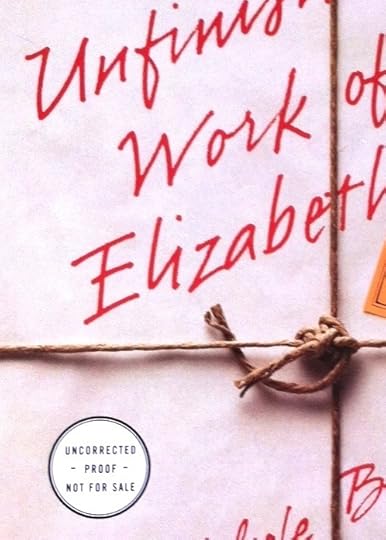 Except my feelings about my own incomplete work are anything but abstract. I know all too well what typos are in my galley, many of which were electronic hiccups resulting in made-up words, mash-ups of two sentences and omissions of others. I know which sections continued to change and evolve until the final version. And there are two passages that exist in the final book that were not in the galley at all, both cut early in the editing process to save space. One of them contained an unconventional use of a word; the other was an entire paragraph, an important (to me) emotional conclusion of a plot point. At each subsequent editing pass I felt their loss but didn’t speak up until the eleventh hour, and my editor agreed to restore them, for which I’m endlessly grateful. Galley readers will never see those.
It might sound silly, but these are the minutiae that matter to writers, and make us cringe about having copies of an incomplete work floating around. Incremental changes in drafts might be interesting to some readers, if changes were visible on the page. But in the electronic age, with no crossouts in the margins, they’ll never see the author’s progression. Someone buying a galley will see only inferior writing.
Galleys are great for many things — mostly, for letting bookstores and reviewers get a preview when they need it for their purchasing decisions and deadlines. But it’s not the copy any author wants to make a lasting impression with. (I didn’t show it to my parents in galley form, for example.) Yet there mine was, at half the price of the paperback and a third of the hardcover. What price-conscious customer wouldn’t choose it instead?
Another point that hardly bears making is that when the customer buys the galley, the author is in no way credited for the sale: not financially and not in sales tallies. In fact, the unsold “real” copy that cools its heels on the shelf while the galley is bought could end up being returned to the publisher by the store for a refund — and count against the author’s ability to qualify for royalties.
I’d never begrudge a bookstore the $8.95 profit, because Lord knows bookstores today need all the help they can get. And I appreciate that there are some creative charitable uses for galleys.
But someone’s going to pick up that proof instead of a finished copy and think that’s the best I can do. Misspellings, mash-ups of make-believe words. And an emotional plot development doesn’t get its denouement, just another missing period in a rough draft.
— What do you think, readers? Should galleys be available for sale?
Unfinished Work For Sale
Last weekend while I was traveling, I stopped into a faraway bookstore I’ve always wanted to visit. Folks I know in the area adore the store, and many an author friend has been excited to read there. I walked through room after room; I bought coffee; I admired the unique shelving and helpful salespeople. I kind of wanted to move in, or at least curl up and take a nap somewhere near Toni Morrison.
When I went to the shelf that held my debut novel, I saw something I hadn’t seen before in a bookstore. There, beside the hardcover and paperback copies of my book, was a galley copy for sale.
At first I thought it was a mistake — it’s a large bookstore, it was possible that someone accidentally shelved a galley. But I turned it over and the store’s price tag was on the back, offering it for $8.95.
Curious, I asked a salesperson, and was referred to the manager. I identified myself as the author, and asked about the sale of a galley with a smile (the last thing you want to do as an author is leave a bookstore with a poor impression of you). I smiled so hard I think he interpreted my curiosity as admiration for the store’s resourcefulness.
“Oh sure, that’s no accident!” the manager said. “Lots of people like to collect them.”
“But….is it okay to do?” I asked. “I mean, on the cover it says, ‘UNCORRECTED PROOF, Not For Resale’. Does the publisher mind?”
“No, it’s fine,” he said. “Once a galley is sent to a bookstore, we can do whatever we’d like with it. People buy and sell them on ebay and Amazon all the time. Some fans really get a kick out of collecting them.”
In the abstract, I can see that. When I’ve visited literary exhibits with edits of famous authors, I’ve pored over the handwritten comments in the margins, the crossouts of entire sections, even the choice of one word over another — all intriguing, that sense of the minutiae that mattered to this person whose writing you’ve admired.
But I have trouble feeling the same thing applies to today’s galleys, and to contemporary writers who aren’t having their liner notes pored over in museums. For starters, galleys have no handwritten notes or crossouts, so there’s no way anyone can see, say, the evolution of a piece of writing. For anyone who cared to compare the galley to the hardcover line by line, there might be omissions and additions that could be detected. As I said, interesting wonky details, possibly, in the abstract.
Except my feelings about my own incomplete work are anything but abstract. I know all too well what typos are in my galley, many of which were electronic hiccups resulting in made-up words, mash-ups of two sentences and omissions of others. I know which sections continued to change and evolve until the final version. And there are two passages that exist in the final book that were not in the galley at all, both cut early in the editing process to save space. One of them contained an unconventional use of a word; the other was an entire paragraph, an important (to me) emotional conclusion of a plot point. At each subsequent editing pass I felt their loss but didn’t speak up until the eleventh hour, and my editor agreed to restore them, for which I’m endlessly grateful.
It might sound silly, but these are the minutiae that matter to writers, and make us cringe about having copies of an incomplete work floating around. Incremental changes in drafts might be interesting to some readers, if changes were visible on the page. But in the electronic age, with no crossouts in the margins, they’ll never see the author’s progression. Someone buying a galley will see only inferior writing.
Galleys are great for many things — mostly, for letting bookstores and reviewers get a preview when they need it for their purchasing decisions and deadlines. But it’s not the copy any author wants to make a lasting impression with. Yet there mine was, at half the price of the paperback and a third of the hardcover. What price-conscious customer wouldn’t choose it instead?
Another point that hardly bears making is that when the customer buys the galley, the author is in no way credited for the sale: not financially and not in sales tallies. In fact, the unsold “real” copy that cools its heels on the shelf while the galley is bought could end up being returned to the publisher by the store for a refund — and count against the author’s ability to qualify for royalties.
I’d never begrudge a bookstore the $8.95 profit, because Lord knows bookstores today need all the help they can get.
But someone’s going to pick up that galley instead of a finished copy and think that’s the best I can do. Misspellings, mash-ups of make-believe words. And an emotional plot development doesn’t get its denouement, just another missing period in a rough draft.
— What do you think, readers? Should galleys be available for sale?
Writing Out of Middle Age
By Kim Triedman
We’re very pleased to have Kim Triedman posting with us again. Her debut novel, The Other Room, launches today.

So apparently I’m what you call a “bloomer.”
An about-to-be-debut-novelist at 54, I’ve been tripping across this term more and more lately, much the way a mom-to-be starts noticing that all of a sudden pregnant women are everywhere. I’m quite sure the moniker didn’t exist a decade ago, and now apparently there’s a whole website devoted to us (bloom-site.com), not to mention recent column inches in the likes of The New Yorker and The Guardian. In any case, it’s a stunning discovery. Apparently, in some critics’ estimation, by the time we hit our 40s we “writing-elders” are creative dust bowls: any real contribution to the world of letters we might have made would have been written ten years ago.
So yeah, I’m a bit of an outlier, falling somewhere between the MFA-bearing-hipsters and the…well…deceased. But while I’m still here, and I can still grab the microphone, I’d like to say a few things about what it is to start making art in the middle.
I didn’t actually write a creative word until I was approaching my fifth decade. Throughout high school and college, I gravitated toward courses which afforded me the opportunity to select right from wrong, true from false; multiple choice over essay. I was not a comfortable public speaker; I was terrified of venturing any opinion that might provoke incredulity in my peers or even outright dismissal. When given the choice I shied away from English and history and philosophy, preferring the safer terrain of the social and physical sciences, subjects one could master given the basic ingredients of time and will. Years went by, and I did this with life, too. I lived it safely. I mastered it. For nearly two decades I felt like I ran a marathon every day just trying to keep all the right balls in the air.
I was nearing 40 when it all came tumbling down, the weight of all that “rightness” suddenly too much to bear. One Sunday afternoon I sat out on my front stoop and forgot how to breathe and watched my life snap cleanly down the middle. A nervous breakdown, in old-timey parlance; a severe depression, I would learn soon enough. The best piece of advice from that time? “Write it down,” my mother said.
And I did.
So for me, writing came not so much as a choice as an imperative. Once entered, it was a place I found I couldn’t leave. My guess is that this applies to many late bloomers: people who’ve somehow found it necessary to step away from the harsh geometry of their constructed lives – which no longer seem to fit or sustain – in favor of something which yields and bends, carries life’s ambiguities in flexible arms. There is urgency to this kind of writing. There is a sense that there is so much to say and not enough paper in the world to say it on and not enough time in which to say it. Once I started, it became the most real of places: the most authentic, the most heady and, in its way, the most life-giving.
I expect for younger writers it’s hard to conceive these days that a person could just pick up writing in the middle of life. For me it was not only that simple, it was an answer I didn’t know I was looking for. I’d already accumulated a lot of life behind me: I’d married, had a career, raised three children most of the way up. I had felt my way through 40-odd years of living but never allowed myself a place to process all that life-stuff: to unwrap it, sift through it, hold it up to the light of day. Writing gave me that space. That stillness. And what a bounty – like discovering an old box of photographs you never knew existed. Suddenly, worlds opened up to me, my own worlds, distilled and exquisite. At just that stage when so much in life seemed to be receding, it was like looking up and seeing things in color, for the first time.
Writing very quickly became my default method of processing my world, something I hadn’t previously built into my life. I was happier, and saner, for it. It created a need for itself, and the act of capturing a thing in words – pinning it down precisely – became my way of accommodating it in my mind and in my life. Interestingly, my identity was not at all wrapped up in this. I didn’t have anything to prove. It was just mine, more privilege than responsibility. Perhaps we late-stage writers may be somewhat less caught up in wanting to be writers than our younger brethren. Many or most of us have already had (or continue to have) other careers. Our identities may not be so tied to the idea of being authors as are those who’ve gone through graduate school (often at great expense) with that specific goal in mind. The writing itself, coming often as a complete surprise in middle life, is its own best reward, giving us a vital new piece of ourselves which never before seemed within reach.
Whatever it was that I somehow couldn’t find in myself in my earlier years – eyes; wings – I have been able to reclaim here, now, in the desert of the long-middle, where I can savor it like a tall glass of cold water. There is joy in it. There is celebration. There is an unmitigated sense of possibility. And during the long haul that is the latter half of the journey, there is perhaps nothing more welcome than that.

Kim Triedman is both an award-winning poet and a novelist. Her debut novel, The Other Room, and two full-length poetry collections, Plum(b)and Hadestown, release in 2013. The Other Room was one of four finalists for the 2008 James Jones First Novel Fellowship, and Kim’s poetry has garnered many awards, including the 2008 Main Street Rag Chapbook Award and the 2010 Ibbetson Street Poetry Award. Her poems have been published in numerous anthologies and literary journals including Prairie Schooner, Salamander, and Poetry International. Following the 2010 earthquake in Haiti, Kim co-organized and co-chaired a collaborative poetry reading at Harvard University to benefit Partners in Health and the people of Haiti. The reading was featured on NPR’s Here and Now with Robin Young and led to the publication of a Poets for Haiti anthology, which Kim developed and edited. A graduate of Brown University, Kim lives in the Boston area.
October 6, 2013
ANNOUNCING: BEYOND THE BLURBS – THE BTM BOOK CLUB!!!!!
By Robin Black
Today I am thrilled to introduce a new Beyond the Margins regular feature. It’s called Beyond the Blurbs and it’s an online Book Club. After all, what are writers if not readers? And what should we be talking about if not – at least sometimes – books?
Here’s how it will work. One of us BTM regulars will announce the selected book to read and also a date, about a month later, on which she or he will write a post on some craft aspect or aspects of the book. Our hope is that commenters will keep the conversation going beyond that initial post. And we’ll stayed tuned in too that day to keep chatting. . .
What this is:
- A chance to look at books through a craft lens and join in that conversation.
- A chance to share books we want to discuss – and to share them with our favorite readers in the world. (BTM readers!)
- A way to give Beyond the Margins an active role in encouraging that more books be bought and read.
What this isn’t:
- An exercise in shameless self-promotion. (We aren’t going to feature any BTM authored books.)
- A club for which an author can suggest his or her own book. We aren’t going to feature any books suggested by their own authors. Some of the books we read may be a couple hundred years old, some may be brand new, but they’ll all be ones that interest us from a craft perspective.
- An opportunity for reviewing. We really aren’t looking for “I loved it” or “I hated it” responses – either from ourselves or in the comments. (Heaven knows there are enough places online for that!) We’re hoping to engage with what choices the book’s author made and what lessons those choices might teach us, as writers.
My choice for our first outing with Beyond the Blurbs is The Burgess Boys, by Elizabeth Strout. 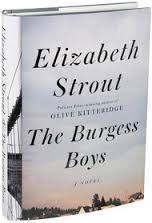 I’m about 2/3 of the way through it myself right now and frankly I’m choosing it because I want to talk about some aspects that interest me. . . .The point of view. . . The structure. . . The relationship it bears to current events. . .
Please be sure to tune back in on Monday, November 11, for my exploration of these things or maybe some others depending on how the rest of the book goes. And I will tune in to hear your thoughts too. I’m looking forward to it!
Buy The Burgess Boys locally if possible! And Happy Reading!
October 3, 2013
Friday Faves: Spanking, Stoning, Coining and Typing

It’s been a week of turmoil, an entire government shutdown because the moderate majority continues to allow a radical minority to control its every move. We here at Beyond the Margins have an easy solution: spankings. Yes, line the intransigents up, bend them over, and let every single federal employee who is currently furloughed take a swat at them. Maybe after the 700,000th smack, some of them will start to see reason.
In the meantime, while we wait for our very sensible plan to be enacted (it may take some time to find 1,000,000 paddles), here are a few links to other important, educational or just downright fascinating stories you may have missed. (I left out the one about the giant deadly wasps terrorizing China. Believe me, you do not want to see that picture.)
Enjoy!
20 Essential Words from Literature
Sometimes words evolve out of ancient roots, and sometimes they’re just made up. Here’s a fascinating look at 20 words coined by such luminaries as Edmund Spenser, Lewis Carroll, Dr. Seuss and others.
Tom Clancy, author of the classic spy thriller The Hunt for Red October and over 100 other novels, died this week, at age 66. Clancy is credited with popularizing a new genre of spy novel and had 17 #1 bestsellers on The New York Times Bestsellers list. Here is The New York Times’ tribute to the intriguing if not very liberal-minded author.
The Hidden Costs of the American Way of Healthcare
Author Marie Myung-Ok Lee’s very personal and poignant look at the choices America’s healthcare system forces artists (and people in general) to make—and how much is lost because of it.
Stereotypes bad? Not always. Author and agent Donald Maas looks at the way “typing” your protagonist can help you deepen his/her character.
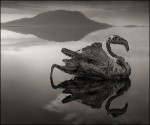
Photo by Nick Brandt
Some of the eeriest and most fascinating images you will ever see. A lake in Tanzania turns any animal it touches to stone. Photographer Nick Brandt captured them for his book, Across the Ravaged Land.
October 2, 2013
What Writing the Second Novel Is Really Like

A lifetime ago you stood on a hill looking at a clearing on the horizon and said, I wonder what it would be like to live there. So you walked all the way there, rejecting all the wondrous places you passed by. The clearing in the forest looked pretty hospitable, so you thought you’d build a house. Having never built any kind of shelter before, you just started cutting down branches and small trees and gluing them together and after a long, long time, you had what you thought was a pretty decent looking house.
People walked by. You called out to them all and said, “Hey, come live in this awesome house with me!”
But when they stopped by to tour the house or even stay overnight, they soon left, complaining about the draft or the extremely leaky ceiling, or the fact that the whole second floor intermittently collapsed and needed to be re-glued.
You called a bunch of builders who came by and told you your house wasn’t a proper house at all. You needed a blueprint. You needed a proper foundation. You needed a frame, beams, supporting walls. You couldn’t just glue stuff together and call it a house.
You could have stopped there and said the builders sucked and were jealous because your house was better than theirs. But you didn’t. You realized they were right, and you sat down and read some architecture books. Heck, you practically got a degree in architecture. Then, though it made you sick, you tore down your house. You sat down and drew out some plans and measured and even did a little math to make sure it would all come out right. Then you got a shovel and dug a hole the size of Virginia.
You mixed your own concrete and poured your own foundation. You built a sawmill to create even wooden planks. You apprenticed as a blacksmith to forge your own nails. You baked your own bricks. You blew your own glass windows. And as you were finishing up your house, people started stopping by. And staying.
“I love this house,” they said. “I’d like a balcony, though.” You thought a balcony would be terrific, and you put one in.
“I’d love it if it had a bigger kitchen,” they said. “There’s not enough room for all my friends.”
You expanded the kitchen, and it was a huge improvement. And when someone else commented that the kitchen was too big, you told them to go find another house. Because now you knew what was good for the house, and what was not.
You moved in, and so did all your new friends. You furnished and decorated the entire house. As they all grew up and had children, you modified the house. You added nurseries, dens, a mudroom, a garage.
You added and subtracted and renovated, because by the time you added some new features of the house, the old parts were obsolete.
And then one day, finally, finally, the house was perfect. Everyone loved it. Everyone was happy with it. You had a huge party. People came from far and wide to admire your house, and to compensate you for all the hard work you did over the years, they each paid you about two cents.
Your friends said, “Thank you so much for this stupendous house!”
And then you walked up onto a hill and looked at the horizon. There was desert. You said, “Hey! That would be different, living in the desert.”
So now you’re digging a hole in the sand for a foundation for your new house, but the sides keep falling in and there are no trees around so how are you going to find lumber? And a bunch of desert building specialists at your side are shaking their heads, saying, “That’s not how you build a house . . .”
***
My writer friends have many analogies for writing the second novel. Timothy Gager agrees that it is like “buying and selling a house.” Jessica Keener similarly describes it as “trying to define a new universe.” There are some nightmarish swimming analogies: “swimming in mud,” from Anne Barnhill, and “Drowning in a river you thought you knew,” an image from Melanie Thorne that rings true with many. Continuing the nightmare, Ellen Marie Wiseman compares the experience to “moving a mountain with a dentist’s drill.”
A couple of writers compare writing novel two to having amnesia—“a rare form . . . where you remember everything except how to do your job,” says Julie Kilber. Amy Nathan describes it as “seeing someone you are sure you know well, but not remembering her name, where you met her, or what your connection is to her. And then, trying to figure out how to say hello without revealing any of that to anyone.”
Some compare the experience to aspects of family life—Marya Zilberberg urges us to “have your second (child) first.” Chuck Leddy compares writing the second novel to “getting married for the second time. You’re optimistic but ready to tackle (all the expected) problems along the way.”
Some writers are more straightforward—Lisa Borders instructs us that writing the second novel is “completely different from writing the first one. Each novel is unique and poses its own challenges to the writer.” Priscille Sibley describes the second novel as “ecstasy and agony,” Sara J. Henry simply as “hell,” while Chris Abouzeid describes it as “volunteering for the second time to be part of an unpaid electroshock experiment.” Most profane is Lydia Netzer, whose response involves a raw chicken and cannot be printed here.
Lest we get too depressed, let’s remember why we’re writing the second novel at all. Bethanne Patrick reminds us that for some it’s just “a dream right now.” Anne Mini describes the second novel as “the moment of liberation when a recent graduate realizes that just because she got a degree in Subject X, she need not necessarily engage in X every day for the rest of her life.” And Susan Spann likens the experience to “having dinner with old friends at a fabulous new restaurant.”
Let’s face it: despite the Sisyphean pain of it all, most of us are writing a second novel because we want to. So we should enjoy it. After all, as Nancy Bilyeau informs us, it’s “a dream compared to writing the third novel.”
Chris Abouzeid's Blog

- Chris Abouzeid's profile
- 21 followers

