
What Writing the Second Novel Is Really Like
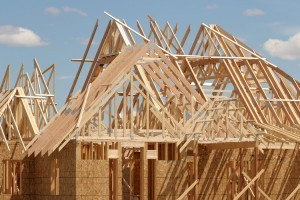
A lifetime ago you stood on a hill looking at a clearing on the horizon and said, I wonder what it would be like to live there. So you walked all the way there, rejecting all the wondrous places you passed by. The clearing in the forest looked pretty hospitable, so you thought you’d build a house. Having never built any kind of shelter before, you just started cutting down branches and small trees and gluing them together and after a long, long time, you had what you thought was a pretty decent looking house.
People walked by. You called out to them all and said, “Hey, come live in this awesome house with me!”
But when they stopped by to tour the house or even stay overnight, they soon left, complaining about the draft or the extremely leaky ceiling, or the fact that the whole second floor intermittently collapsed and needed to be re-glued.
You called a bunch of builders who came by and told you your house wasn’t a proper house at all. You needed a blueprint. You needed a proper foundation. You needed a frame, beams, supporting walls. You couldn’t just glue stuff together and call it a house.
You could have stopped there and said the builders sucked and were jealous because your house was better than theirs. But you didn’t. You realized they were right, and you sat down and read some architecture books. Heck, you practically got a degree in architecture. Then, though it made you sick, you tore down your house. You sat down and drew out some plans and measured and even did a little math to make sure it would all come out right. Then you got a shovel and dug a hole the size of Virginia.
You mixed your own concrete and poured your own foundation. You built a sawmill to create even wooden planks. You apprenticed as a blacksmith to forge your own nails. You baked your own bricks. You blew your own glass windows. And as you were finishing up your house, people started stopping by. And staying.
“I love this house,” they said. “I’d like a balcony, though.” You thought a balcony would be terrific, and you put one in.
“I’d love it if it had a bigger kitchen,” they said. “There’s not enough room for all my friends.”
You expanded the kitchen, and it was a huge improvement. And when someone else commented that the kitchen was too big, you told them to go find another house. Because now you knew what was good for the house, and what was not.
You moved in, and so did all your new friends. You furnished and decorated the entire house. As they all grew up and had children, you modified the house. You added nurseries, dens, a mudroom, a garage.
You added and subtracted and renovated, because by the time you added some new features of the house, the old parts were obsolete.
And then one day, finally, finally, the house was perfect. Everyone loved it. Everyone was happy with it. You had a huge party. People came from far and wide to admire your house, and to compensate you for all the hard work you did over the years, they each paid you about two cents.
Your friends said, “Thank you so much for this stupendous house!”
And then you walked up onto a hill and looked at the horizon. There was desert. You said, “Hey! That would be different, living in the desert.”
So now you’re digging a hole in the sand for a foundation for your new house, but the sides keep falling in and there are no trees around so how are you going to find lumber? And a bunch of desert building specialists at your side are shaking their heads, saying, “That’s not how you build a house . . .”
***
My writer friends have many analogies for writing the second novel. Timothy Gager agrees that it is like “buying and selling a house.” Jessica Keener similarly describes it as “trying to define a new universe.” There are some nightmarish swimming analogies: “swimming in mud,” from Anne Barnhill, and “Drowning in a river you thought you knew,” an image from Melanie Thorne that rings true with many. Continuing the nightmare, Ellen Marie Wiseman compares the experience to “moving a mountain with a dentist’s drill.”
A couple of writers compare writing novel two to having amnesia—“a rare form . . . where you remember everything except how to do your job,” says Julie Kilber. Amy Nathan describes it as “seeing someone you are sure you know well, but not remembering her name, where you met her, or what your connection is to her. And then, trying to figure out how to say hello without revealing any of that to anyone.”
Some compare the experience to aspects of family life—Marya Zilberberg urges us to “have your second (child) first.” Chuck Leddy compares writing the second novel to “getting married for the second time. You’re optimistic but ready to tackle (all the expected) problems along the way.”
Some writers are more straightforward—Lisa Borders instructs us that writing the second novel is “completely different from writing the first one. Each novel is unique and poses its own challenges to the writer.” Priscille Sibley describes the second novel as “ecstasy and agony,” Sara J. Henry simply as “hell,” while Chris Abouzeid describes it as “volunteering for the second time to be part of an unpaid electroshock experiment.” Most profane is Lydia Netzer, whose response involves a raw chicken and cannot be printed here.
Lest we get too depressed, let’s remember why we’re writing the second novel at all. Bethanne Patrick reminds us that for some it’s just “a dream right now.” Anne Mini describes the second novel as “the moment of liberation when a recent graduate realizes that just because she got a degree in Subject X, she need not necessarily engage in X every day for the rest of her life.” And Susan Spann likens the experience to “having dinner with old friends at a fabulous new restaurant.”
Let’s face it: despite the Sisyphean pain of it all, most of us are writing a second novel because we want to. So we should enjoy it. After all, as Nancy Bilyeau informs us, it’s “a dream compared to writing the third novel.”



Chris Abouzeid's Blog

- Chris Abouzeid's profile
- 21 followers

