
Chris Abouzeid's Blog, page 38
July 10, 2013
A Taxonomy of Writer’s Block: The Good, The Bad, and The Necessary

By
Robin Black
When I started writing, at the age of thirty-nine, after twenty years of doing so only occasionally then giving up, I suffered from whatever we call the opposite of writer’s block. I couldn’t stop writing. It was very much as if a lid had been blown off a pot of boiling water – or boiling words, a sentence soup – and it was spilling, spilling, spilling. My husband and I would go out for dinner and often he would recognize that my thoughts had drifted, and would ask, You’re writing aren’t you? And the answer was always a sheepish Yes. The hours when my children were at school flew by. The weekends when I could not just sit alone in a room stewing over imaginary people and their imaginary problems seemed endless.
And I didn’t believe that would ever change.
But over the years it has changed; and in more than one way; and for more than one reason. Since I know I’m not the only one to go through non-writing periods, I thought I would share a very brief taxonomy of those times in my own life, along with my understanding of what distinguishes each, when and how to fight the silence, and when to just – as they say – let it be. These categories may not correspond to your experiences, but maybe they’ll help someone out there who is feeling a little empty or frustrated right now.
The Pause Before The Leap Forward
I’m starting with this because it’s my favorite kind of so-called writer’s block – if that isn’t too much of an oxymoronic concept. Here’s how it goes: I have ideas for what I want to write, but then, when I sit down to write, I feel like I can’t find an inroad. I get tangled up immediately in questions of point of view, good starting places, structure – tangled up sooner than it makes sense to be. It’s as though I have forgotten everything I have ever learned, or as though I don’t know how to handle what craft knowledge I have. Yet the idea persists, as does the desire.
And, though I hate the feelings that go with that clash of desire and ability, I almost always love the experience in retrospect, because it so often means that once that tangled feeling fades, I find myself better at some aspect of writing than I was before. I understand something more clearly, or, without consciously understanding anything differently, I find myself doing things in new ways, to better effect. The sense of blockage was a plateau, but not a shut door of any kind.
The key here, the way to see this for what it is, is that the idea for the piece and the desire to write it don’t fade. The execution feels a little challenging, maybe daunting, in a technical way. But this can be a productive and important pause in your work, as you learn how to do things you couldn’t do before. As opposed to . . .
The Longer Pause When You Feel Like You Should Be Writing and You Want to Write but You Are Drawing a Complete Blank
This one is the pits. This is the worst. Let me say that more clearly: This is bad. And this is the one where I always suspect that some non-craft-related inhibitor is getting in the way. It could be self-consciousness, or fear of failure – or for that matter fear of success. It could be that some vestigial internalized taboo is at work. In my experience, this kind of “I want to write but have nothing to write” sensation almost always has more to do with psychology than with anything about writing skills – to the extent that it makes sense to separate those strands.
Through the years, I have found myself at this point because I have frozen in the face of a contract I was afraid I couldn’t fulfill; because I was afraid of discovering that no one would ever publish a word I wrote; because I was afraid people close to me would disapprove of what I had to say; because I had been burned by a rejection; because I was afraid people would think my fiction was autobiographical – and on and on and on.
In each of those cases what has helped me is figuring out what the underlying worry is and trying to deal with that – as opposed to making myself sit at the keyboard and bang my head against it. Other things that have helped have been writing about something silly for a time, something to which I have no real emotional commitment. That experience can become a reminder of why you write in the first place, why it’s a pleasure to put words on a page, and it can reinforce your connection to writing, a security you can bring back to the more serious projects when you return.
When I believe the blockage comes from a fear of being “no good at writing” I’ll often write a few poems – all of which are terrible and all of which I have known from the start were going to be terrible. Again, there’s something about reestablishing a connection to written language with no pressure to do so skillfully that can be extremely liberating.
I will also sometimes forbid myself to write for more than five minutes a day for a while, a sort of tantric approach, building the desire to do so until, instead of it feeling like something I should do but can’t, it feels like something I’m not allowed to do but must.
This insidious, psychological sort of blockage is what kept me silent for so many years, through my twenties,through my thirties, despite how very much I wanted to write. I understand now what subconscious forces were at work. I only wish I had understood my own demons better then.
The Season When The Well Is Empty And You Simply Need To Take A Break
I suppose there are people who want to write all the time. I’m not one of them. It hasn’t happened often, but it has happened occasionally that I just have nothing much to say. Or maybe it’s more accurate to put it this way: I have said enough for the time. My imagination –necessary even to nonfiction – has no new fodder. I’m not really blocked, because I’m not interested in writing. And I’m not about to make any great leaps in ability, it seems, because there isn’t something I’m trying to do but haven’t yet learned how to do. I’m just out of material and also, maybe sated in some sense. Or, to put it less optimistically, maybe spent. But this is okay, though disconcerting – disconcerting, because it’s one thing to feel like you don’t know how to write what you want you to write, or even that you want to write but can’t think of what to write, but it’s a different and potentially more frightening thing to feel like you may not even ever want to write again.
But I’m convinced that for many of us this is normal too. Even inevitable. No panic necessary. Once you are a writer, the overwhelming odds are that you will always be a writer – even if not one who wants to write on every day or even every year.
Having very recently finished writing a novel, I am in such a period now. And here is what I plan to do. I plan to take a month – or two – off and paint pictures, cook elaborate meals, finish choosing tile for my home. I plan to take care of a relative who is facing surgery. I plan to throw my creative energies – including those involved in caregiving – into projects having nothing to with words on the page. And I plan not to panic about whether or not I’ll ever feel like writing again, much less be unable to concentrate on doing anything else.
Because it makes sense, doesn’t it?
It took me nearly four decades to build up all that pressure, all that strange urgency about expressing myself with these little black words, on that big blank sheet of paper, urgency about creating and conveying the lives of people who don’t themselves exist. Surely it’s not too much to give myself another few weeks now to return to that peculiar state.
Let the simmering begin.
I will see you back on this blog in the fall. Have a wonderful summer – in which you write or do not write; but in which you understand your own process enough not to panic when it shows signs of changing, and know your demons well enough to fight them, and recognize your possible need to take a break.



July 9, 2013
John Grisham, My Neighbor and Muse

File photo by Coy Barefoot, The Hook, Charlottesville VA
Guest Post by Tony Vanderwarker
Twenty years ago I left the advertising business to write. Not even sure what I wanted to write, whether it would be fiction or nonfiction, I started out doing a madcap, impressionistic take on advertising. An attempt to salve my creative ego bruised and battered from twenty years pitching my ideas in the ad biz, it died a quick and well-deserved death at the hands of the few publishing people I showed it to.
I turned to humor next, figuring I’d brighten the world with some good laughs. It was a whim, yet it sustained me for ten years and three novels that made people laugh and came close to selling. Stung by each rejection slip, however, and by an agent who folded too quickly, I caved.
Trip and fall, get up again. I decided if my third novel, Say Something Funny, didn’t land a publishing deal, I was going to switch gears and try writing thrillers instead. A big thriller fan, I was already toying around with a few ideas.
Turns out, my timing was fortuitous. Just as Say Something Funny was getting shot full of holes by the agents I queried, my friend and neighbor John Grisham, whom I’d known since our sons played football together in high school, offered to mentor me in writing a thriller.
You could have scraped me off the ceiling. Expecting he was going to give me the magic formula to creating bestsellers, my imagination fired up visions of auctions with publishing houses vying for my book, six-figure advances and movie deals. I was on cloud nine and ready to crack open the champagne.
Little did I know that John’s own success had nothing to do with tricks and techniques and everything to do with details and drudgery, cunning, craft and merciless self-editing after years of bumping up against brick walls.
I pitched him three stories and he liked the third. Off we went on a two-year escapade, Tony writing and John critiquing.
Working with John was a journey in and of itself. To say he was a taskmaster would be a new level of understatement. First thing he told me: “The best advice is based on brutal honesty.”
And brutal he was. As a friend, John’s chummy and jovial, but as a mentor he pulled no punches, let me have it smack in the face when he saw fit. He set me to work drawing up an outline then rejected my first one right off the bat, “Throw it out, start over.” he told me.
He put me through a year of writing outlines before I could write Word One of the novel. I’d drop off each new attempt with his assistant then stew and fret waiting to hear back. John sent back outline after outline with comments like, “Too much ink to get the plot going, won’t work,” and “add this, take out that, don’t go there, watch out for this, don’t waste time with that, slow down.”
When John said over lunch 12 months later, “I think you’re there with the outline,” I was ecstatic. But just as I was about to jump out of my chair, he added, “Now write a chapter outline.”
Seeing the What the F? look on my face, he explained that a chapter outline “keeps you on track when you’re writing the novel. When you spin off a subplot, you revise the chapter outline, kind of keeps you honest.”
Outline after outline, meticulous plot planning, deliberate construction of each story’s beginning, middle and end: John really put me through the ringer. It’s the same process he goes through when he writes. Making conscious, exacting decisions about pacing, length, tension-building and the role each element plays in relation to the story’s core. Six hours a day, at least five days a week, year round.
He savaged my first draft. Tore it to pieces, didn’t even read the whole thing. The manuscript he returned to me looked like a flock of chickens with inked feet had tromped over it, whole sections deleted, errors pointed out and a gross plot malfunction that John held up and openly mocked. He’d cut dozens of pages — sections that dragged — killed off characters, advised me to work on my dialogue. He pointed out dozens of potholes writers can fall into. The two that plagued me most: “detours,” and “roadblocks.” Detours are mind-stopping sections of expository writing that halt the action cold and put the reader to sleep, like the story of someone’s grandmother that isn’t germane to the plot. You either kill off grandma or find a way to make her relevant. Roadblocks are what script supervisors in the movies are for: a character is holding a beer and a page later the writer describes him as “taking another sip of Coke,” leaving the reader puzzled.
It stung, but John told me it’s all part of the process. “When my wife or my agent mark my stuff up,” he said, “I want to punch them in the nose. But the problem is, usually they’re right.” Yes, John Grisham, too, throws away as much stuff as he writes.
Two more years went by and finally, I had a completed thriller, Sleeping Dogs. It landed in a market glutted with similar thrillers and didn’t get picked up even though its plot had gone directly through the Grisham machine..
Looking back at this and my previous, fervid efforts to write the book that would crack open the door to the inner sanctum of published authors, I realize that one reason I kept tripping was that my vision was constantly riveted on the end-goal of publication. I stumbled over each rejection slip, giving up too easily on some pretty darn good work just because the door wouldn’t budge. Taking each and every “no thank you” as a sign of failure made me lose faith in myself and my writing. But I realize now that my only real failure was giving up.
Ultimately, I gave in and hung up the laptop. Devoted myself to environmental causes instead, becoming chair of a regional land conservation and public policy organization.
And wouldn’t you know it — when I was least expecting it, the right idea came to me. In the midst of my conservation work the writing itch returned, this time the idea of writing a book about writing a novel with Grisham. Taking what I’d learned from working with John and applying it to the tale of us collaborating, I took a few stabs at a memoir that finally came together. Treating it as a narrative made it work—he said this, I said that, I wrote this and he wrote that—the way it actually happened. I asked John for permission to use his notes and critiques, he said yes, and I was off to the races.
The memoir, Writing With a Bestseller, will be published by Skyhorse in January 2014. Grisham said after reading it, “You’re much better at writing non-fiction than fiction.”
Why didn’t I learn that lesson earlier? Wisdom doesn’t appear on schedule but hides and comes out when it wants. A lot of writing is falling down and picking yourself up.
The only thing a writer can be sure of is that if you sit down at the keyboard every day for a good amount of time, something will happen. Good or bad you can’t control, but if you allow ideas to work their magic without sweating the longer-term outcome, you’ll suddenly find yourself writing words you never imagined in a voice that’s all yours.
 Founder of one of Chicago’s largest ad agencies, Tony Vanderwarker is author of the memoir Writing With a Bestseller (Skyhorse, January 2014) about his experience being mentored by John Grisham while writing the thriller Sleeping Dogs, which he is releasing himself in 2014.
July 8, 2013
Top 10 Things You Didn’t Sign On For When You Married A Writer
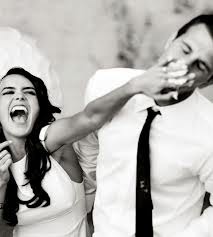
Last week, for our 15th wedding anniversary, my husband and I had a bookstore event — saw some old friends, met some lovely folks, talked books — then went out to dinner, just the two of us.
I thought it was kind of romantic, representative of the way our marriage thrives and survives with our self-employment passions bubbling up around the edges, but recognized he might not see it that way. I mean, they call the 15th the Crystal Anniversary, the first good one after years of Paper, Wood, Tin, etc. They don’t call it the Go-Hear-Your-Wife-Talk-About-Her-Book-Yet-Again-iversary.
To make him feel special — and more importantly, to show him I appreciated that it wasn’t always a walk in the park being married to a writer — I gave him a little roast, followed by a pop of champagne (thank you, Brooke at Westwinds Bookshop!)
“The Top 10 Things You Didn’t Sign On For When You Married A Writer.”
10) Coming home to find a moody wife not because you both have a fight, but because the main character and her husband did.
9) Having your kids want your wife to come for Parents’ Career Day instead of you because… What is it you do, anyway?
8) You go to a lot of parties with writers. Which can be a little like watching a roomful of people talk about the same Scrabble move for hours.
7) Having people constantly say to you — because your wife’s novel has a husband hiding his smoking — “I didn’t know you were a smoker!”
6) Finally getting to play golf at Pebble Beach, because your wife writes about golf for a travel magazine, and ending up with a bag tag that reads [Your first name] [Her last name] .
And having to show the bag tag to your older brothers.
5) A very full fantasy life… that isn’t sexy.
4) Fifteen years of having your grammar corrected. And now your kids are starting to do it to you too, because they have her DNA.
3) Reading in bed.
2) More reading in bed.
1) Every time you have a marital spat, that t-shirt that says — “Careful or you’ll wind up in my novel!” — becomes a little less funny.
July 7, 2013
BTM’S Fast and Furious Guide to Creating Your Very Own Writing Blog

So you’re thinking of starting your own writing blog. Maybe because you’ve done your market research and you know that the three things the internet sorely lacks are porn sites, social networks and writing blogs. Or maybe because all your friends have their own and you’re feeling left out. Or maybe because the ones that already exist seem about as literary to you as a Kanye West fan site. You could do better, right? You could make HuffPo look like HillaryDuffPo. All you need is the time and money and technical know-how.
Well, we can’t help you with the time and money. But for technical know-how, you’ve come to the right place. Here, in print for the very first time, is Beyond The Margins’ Fast and Furious Guide to Creating Your Very Own Writing Blog (Revised Edition). Follow these 9 super-easy steps and you’ll be up and annoying the hell out of your friends and family in no time.
STEP 1: Settle for a Get a Domain Name
Don’t bother looking for a name that has anything to do with writing. They’ve all been taken. Look for things like “chipmunkrodeo.com,” “panties-stuck-in-my-butt-cheeks.com” or if you’re really desperate “AntoninScalia-gets-me-so-hot.com.” You can always figure out how to make it seem literary later. And avoid anything that has “margins” in it. (SO overdone.)
STEP 2: Find a Spanish Inquisition Provider Hosting Service
First, try to figure out what the difference is between WordPress.org and WordPress.com. Give up. Second, do a search for “hosting services.” Write down the first 10 that come up and label them “Hosting Services Run by Satan.” Throw this list away. Third, ask all your blogging friends what service they use. Label this list “Hosting Services More Hated Than the IRS.” Sign up with one of them anyway, because really, what difference does it make? They’re all going to fail you at the worst possible moment.
STEP 3: Agonize Over Pick a Theme/Design
If you’re running this blog solo, coming up with a design is super-easy. You flip through the dozens of WordPress themes available, realize they’re all pretty lame, then close your eyes and pick one. But if you’re collaborating on a blog, beware. Choosing a mutually acceptable design is harder than picking whom to eat while stranded on a desert island. One strategy: Sneer at every suggestion until the group gets sick of you and lets you choose. Another strategy: Quit in a huff and start your own blog. (See Step 1.)
STEP 4: Create Your Fabricated Identity “About Us” Page
This is not the place to be honest. You’re creating an on-line resume, a page that says “Here are all the reasons why my rants, raves and ramblings should matter to you.” If people find out you’ve never actually published anything and only started writing because your Etsy crochet-Spanx business tanked or you wanted a hobby you could do with no pants on, they might not flock to your site. So pad, pad, pad.
STEP 5: Upload Your Vanity Author Photo
There are two schools of thought on this. The first is to look as much like an author as possible. Do the standard headshot with chin in hand, get a photo of you sitting behind a desk, drunk, or walking the moors with your retriever—whatever seems writerly to you. The second school of thought is to find an image that shouts out your personality: a kitten hanging from a tree, a naked zombie dancing gangnam style, a unicorn with all of the Kiss band tattooed on its rump—whatever screams “This is me!” A newer school of thought is to put up that pic you used for eHarmony and Match.com because damn, you look good in it, and if it fooled all those people…
STEP 6: Create & Publish Your Pablum Content
If you are just beginning your blog, you will have dozens of ideas begging to be put on virtual paper. Enjoy the moment. After the first 3 posts, you will be banging your head against your laptop trying to come up with a new idea.
Your first post should be warm, welcoming, humorous, literary, insightful, surprising and, most important of all, not plagiarized. Posts about the craft of writing usually do well. No one knows why, since every conceivable topic has already been written about ad nauseum. But there are evidently many people who still don’t know the difference between dialogue and plot. Avoid book reviews. The author will leave a nasty comment and you will end up in a blood feud that will go viral on Twitter within the hour and crash your server. Also, avoid posts on the future of publishing. You will be wrong no matter what you say. Last but not least, avoid satirical posts (like this one). They scream “Couldn’t think of a real idea!”
STEP 7: Annoy People Spread the Word
The minute you publish your post, tweet it out to the world. Post it on Facebook. Do a dramatic reading on YouTube. Hand out printed copies to everyone on the subway and scream it in line at Starbucks. Do all of this four or five times an hour, because, gosh, what if someone actually missed your post?
STEP 8: Reply to Snark Comments
If you forgot to install a spam-filtering plugin in WordPress, your first 350 comments will be about mail-order brides and pharmaceuticals. That being said, nearly every blog, no matter how new, gets a few legitimate comments. Why? Because there are a lot of people willing to go to any length to avoid work. Regardless of your readers’ motives, you should always reply to comments promptly and courteously.
Some examples of appropriate replies:
Thanks, Esmeralda! It really helps to have all the typos pointed out.
Wow, Pavlos! If you hadn’t put that link to your website in your comment, I might have missed your self-published memoir “Deductible Dreams: My 40 Years in the Madcap World of Insurance Claims Adjustment.”
Dear Mr. Raskolnikov, I’m so sorry my post offended you. I will never refer to “Victims of Accidental Lessor Mismemberment” as “landlady hackers” again.
Some examples of inappropriate replies:
Dear Mr. Smeagol, No, I do not think my argument is “precious.”
Jane, you stupid cow—you missed the point again.
Dear Fezzik, I do not think that word means what you think it means.
Dear Stinky English Type, Your mother was a hamster and your father smelt of elderberries.
STEP 9: Obsess About Check Your Stats
Do this every thirty seconds. It won’t change the fact that barely 100 people found your deep thoughts worth reading, but it will give you something to do while you’re stewing. Also, it’s fun to try to figure out how a search for “red hot mega tatas” or “zombie skin care secrets” led 12 people to your site.
That’s it! Now get out there and start blogging!
July 4, 2013
Everything I Needed to Know About Living with a Writer I Learned by Living with a Writer
Guest post by Liz Smith
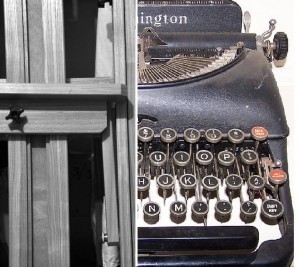
I’m an artist. When I met my future husband, I thought his creative lifestyle would be similar to mine. I might have had easel-side-by-typewriter romantic notions of our life together. But being married to a writer turns out to be an, um, interesting experience. If you recently joined up with a writer, maybe I can give you some idea of what to expect.
The smell of coffee at 6 am.
He doesn’t leave for work until 8:00, but my writer gets up at an unreasonable hour to work on his writing. I stay in bed until at least 7:30, a generous gesture on my part that gives him the space and silence he needs to get his work done. Otherwise I’d be up early too, yep, I sure would. Maybe your writer stays up long after you’ve fallen asleep with your iGadget on the counterpane. Either way, your writer is going to be more tired than you during the day.
Deadlines make my writer super focused, I mean crabby.
That curt answer your writer gave to a simple question about what he wants to do for dinner? That odd way he lies on the floor moaning? Don’t take it personally; that’s deadline malaise. If you find your writer acting out of character, check his Google calendar to see if his blog post’s due tomorrow. Now give him some coffee and leave the house. When you get back, he’ll either be ready for you to proofread or you’ll need to start all over again with the coffee.
Those people your writer’s talking about? Yeah, they don’t exist.
I’m not one to judge, I have imaginary friends too. They live in my Twitter. Oh they are probably real but I will never know for sure unless I do some stalking and that would require planning and travel, so that’s out. But the people my writer talks about? They are really imaginary.
Scene: We are in line at a coffee shop. My writer looks around and says “A. works in a place like this. Not exactly like this, but very similar.” I think: who is A.? I run through a list of his coworkers in my mind, then friends, then old schoolmates he accidentally reconnected with on Facebook. Nothing. I ask “Are you writing fiction right now?” My writer snaps out of his 1,000 yard stare, admits “Yeah.”
However, be prepared to find some familiar scenes in your writer’s “fiction.”
How exciting! Your writer finally has pages to show you. You’ve been so careful not to ask “How is it coming along?” Your writer doesn’t look good crying. But now there is proof that your writer’s not been typing All work and no play makes Jack a dull boy for six months straight. You settle into the throw pillows with a chapter and start to read.
Hey, that character is named after your best friend, how fun! And there’s the car you once owned, cute! Hmmm, that fight about the-mother-in-law sounds really familiar. And um, that thing the main character does on the first date? Uh oh. It’s at this point you realize that, like a magpie, your writer has been collecting shiny bits of your life together and blinging out his fictional nest with them. Ensues a delicate discussion of what is and isn’t appropriate to appropriate.
Writers like to get together.
Sometimes when I get together with my artist friends we make stuff, that way we can enjoy each other’s company while being productive. But what does my writer do when he gets together with other writers? It’s mysterious. I know they don’t sit and quietly write. I imagine they talk about agents and queries and contests and publishing. Or maybe they just drink. All I know is my writer doesn’t bring home writing from his get-togethers. Your writer might come home smelling like beer, but don’t worry, that email address scrawled on a crumpled slip of paper you found in his pants pocket? It belongs to an agent.
Well, there is so much more to warn…I mean, tell you about. But hopefully this will give you some notion of what it’s like to have a writer in the home. Despite all his idiosyncrasies and the stacks and stacks of books everywhere, I enjoy having a writer around. Especially when I need someone to proofread my blog posts.
Liz Smith is the maker behind the craft business Made in Lowell. She is married to the writer behind the blog Unreliable Narrator, Beyond the Margins’ own Dell Smith. They live in a romantic attic apartment in Paris, France…actually, a condo in Lowell, MA with their irascible cat, Chester. This piece originally ran on Beyond the Margins on July 25, 2011.
Photo credits:
Typewriter: http://www.flickr.com/photos/31693711...
Easel: http://www.flickr.com/photos/allyaubr...
July 2, 2013
O, Say Can You Recite the Words?

It’s the Fourth tomorrow. If you’re like me, you’ll be relaxing with the kids, barbequing with family, and enjoying some fireworks. At some point, you’ll hear the Star-Spangled Banner over some speakers or on the radio and try to mouth along with some of the words, pausing at the end of each phrase to hear what comes next, because let’s face it, all those lines after “Whose broad stripes and bright stars . . . ” seem pretty interchangeable.
When my father first came to this country, he was shocked that the majority of Americans did not know their national anthem–that singers at sporting events would mess it up in public. My father had grown up in Taiwan, where he was forced to attend flag raising and lowering ceremonies every day, and where the anthem was played not just at these ceremonies, but before every movie at the theater, at every sporting event, and between programs on TV. He couldn’t forget the words to that anthem if he tried.
I experienced a bit of this culture a myself when I visited Taiwan in 1990, just after the repeal of martial law in 1987, but before the abolition of Article 100 of the National Security Act, which still restricted civil rights. I was there as part of a program sponsored by the Taiwanese government, the Republic of China, for “Overseas Chinese”—second generation Americans like me. It was the cheapest way for me to get there, but I paid for it in many ways. We were kept in a compound guarded by armed soldiers and had a strict curfew. We were required to learn Mandarin Chinese, the official language of the Republic of China. We had early morning flag raising ceremonies, at which attendance was taken and we were required to stand in salute to a flag that was not even ours while an anthem played that I did not understand.
For our Mandarin classes, I was grouped with other children of families who spoke Taiwanese, the dialect spoken in the majority of Taiwan’s households before Taiwan became the Republic of China. Our Mandarin teacher shook her head when we used Taiwanese words by accident and scolded us for the little bits of Japanese that we had learned from our parents, who had grown up while Taiwan was occupied by Japan. Even in my dorm room, my Mandarin speaking roommate laughed and said I sounded “wrong” when I used Taiwanese on the telephone. She called out Mandarin phrases for me to use instead and considered me ridiculous for ignoring them.
We were all American, though, which meant that at night that same roommate, undaunted by the machine-gun-toting guards, climbed over the compound wall in a cute white dress to go disco dancing with friends, and an awful lot of kids skipped the flag raising ceremonies, despite getting personal “demerits” and even more severe looking marks that were posted in the lobby of our dormitory for all to see. “What are they going to do to us?” One kid said. “We’re American.” At one event in which government officials gave us a highly censored and unabashedly biased account of the Republic of China’s economic miracle, a few firebrands even got up to the microphone to rankle the officials by citing Japan’s development of Taiwan’s infrastructure as a chief engine of its economic success, and by referring to the February 28th massacres in 1947, in which the government killed 10-20,000 unarmed civilians in cold blood.
I never did get up, myself, to the microphone to protest, and I only skipped a couple flag raising ceremonies toward the end of the program. I’d like to say I was a rebel, but I was too conscious of being a guest of the government and did not share the sense of impunity some of my fellow Americans obviously had. Maybe they weren’t aware that six years before, journalist Henry Liu, author of an unflattering biography of Chiang Ching-Kuo, had been assassinated in his suburban Californian home by thugs hired by the Republic of China. I was aware, and I didn’t want to get into trouble.
And if I, an American visiting after the repeal of martial law, was afraid to speak up or disobey, what would it have felt like to hear that propaganda and salute that flag, day and night, through all the years of martial law, having no civil rights, as a citizen of the Republic of China?
For my father, who grew up thus, an American’s lack of familiarity with his own national anthem was mind blowing. It evidenced a distinct lack of flag worship, a paucity of indoctrination. And it meant that America truly was a free country.
Tomorrow, I will enjoy my barbeque, my family, and my fireworks. This country is not perfect by any means, and not all of us agree on exactly what freedom comprises. But at the very least, the United States is a country that we can choose to celebrate or not celebrate, in whatever manner we choose. We can choose to learn the words to its anthem. Or, we can just wing it.
July 1, 2013
Matching Books to Readers: A view from the command center of “Paperback To The Future”
Frequently, I’d say at least twice a month, I will stumble into RiverRun Bookstore for my shift, drape myself dramatically across the counter, and say to my co-worker and bestie, Gwen, “Holy cats – you have got to read __________. It’s sooooooooo good!”
To which she always says: “No, I don’t. I don’t have to do anything.” (Smart cookie, my Gwen. She also says other wise things, like “Don’t worry about things that are beyond your control,” and “Stop picking that.”)
Not that her response stops me from doing it again a week or two later, when I read another amazing book that I think she absolutely needs to experience for herself. “OKAY, BUT SERIOUSLY,” I always reply. I need her to understand how good it is!
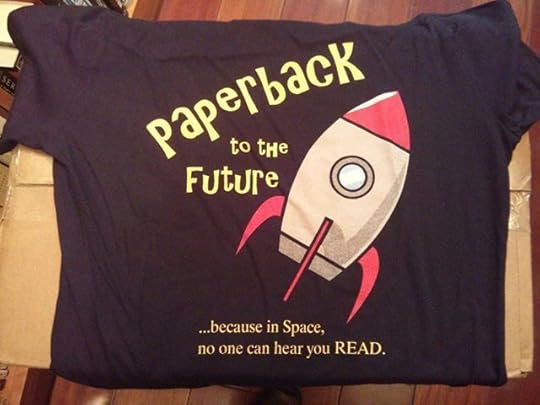
Paperback to the Future, my personalized book subscription service in affiliation with RiverRun Bookstore, is my way of sharing those “OKAY, BUT SERIOUSLY” books with the world. (Okay, with the United States, but only because shipping is so damn expensive.)
Here’s how the program works: People can sign up for one, six or twelve months ($22, $120, or $200, respectively). When a person subscribes, I ask them a series of questions to get an idea of their taste in books. Then, using their answers, I choose a book I think they would love. Most likely one from a small press, to lessen the chances that they’ve already read it. Then I send it to them. Yes – actual mail. What’s better than getting actual mail? Getting a surprise book in the actual mail! I started Paperback to the Future in April of 2012, and I now have about two hundred subscribers. That’s a lot of books to pick out!
I started the program for selfish reasons: I love to talk about books. Which is good, because I work in a bookstore and work for a book site, so it’s more helpful than if I loved to talk about, say, tractors. I never get tired of talking about books. That’s why the internet has been such a wonderful invention for book lovers. Because reading is such a slow medium. You can go outside and throw a rock and probably hit someone who watched the latest episode of “Game of Thrones,” but could you find someone who read “Zazen?” Probably not. But you can find hundreds, if not thousands, of people online to talk to about “Zazen!
The other reason is because I love to recommend books to people. Not just books I love, but books I think they will love. Books that will resonate with them. Just because I loved “The Idiot’s Guide to Teaching Neurosurgery to Your Pet Raccoon,” it doesn’t mean everyone will. I want to give each person their own “OKAY, BUT SERIOUSLY.”
Here’s how the recommendation engine works (and by ‘recommendation engine’ I mean ‘my brain’): Say I ask someone what their three favorite books are, and they respond with “Salvage the Bones” by Jesmyn Ward, “The Light Between Oceans” by M. L. Stedman, and “The Language of Flowers” by Vanessa Diffenbaugh. (Fact: Hardly anyone ever responds with just three. Also, thank you to Nichole Bernier for the hypothetical titles.) First, I look for common denominators. Both “Salvage the Bones” and “The Language of Flowers” have young protagonists. And all three of these books were written by women. Sometimes I also notice what isn’t there, like the fact that none of these books are non-fiction, and none of them are thrillers.
Based on these facts, I search my mental book bank for a title. My choice would be the excellent “Getting Mother’s Body” by Suzan-Lori Parks, about a pregnant, unwed young girl in the 1960s, who is searching for jewels that were supposedly buried with her mother. It’s a fantastic book. If you haven’t read it, go, get it, read it right now. I’ll wait here.
A big help with running Paperback to the Future, and to my book-related jobs in general, is that I read 200 – 300 books a year. My friends call me the Velocireader, because I read so much. I read all different types of books, which is beneficial when it comes to making recommendations. It’s good to know what you’re serving. If a subscriber notes that they don’t like violence, I don’t want to send them a thriller I haven’t read, and have it turn out that everyone in the book gets chopped into pieces with a spork and fed to a dog. I want to be sure I’m sending them a cozy. (A cozy is a mystery with very little violence or sex.) I want people to be happy.
That’s the whole spirit of the program: to have people read books they love, so they’re happy. Because reading something that you love is an amazing feeling. Recently, a woman actually took the time to send me an email that said, “I just wanted to let you know that I will not be signing up for your service because my tastes are very eclectic and you probably couldn’t pick something I’d like.” And I wrote back, “You are absolutely correct.” Because this isn’t a game of Stump the Bookseller! I want to get books to people that they will love and share and fall on the floor and say “Holy cats – you have to read this.”
The program has had great success! The best part of Paperback to the Future is not just the emails I get from subscribers saying how much they love the book I sent, but how many of those people also mention that it was a book they would never have thought to pick up on their own. I’m like the Sorting Hat of booksellers – I match people up with the perfect fit. And I love it.
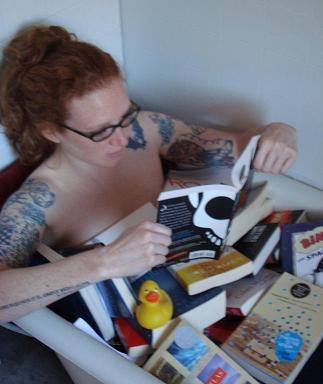 Liberty Hardy is The Demon Bookseller of Fleet Street at RiverRun Bookstore in Portsmouth, N. H.
She is also a contributing editor for Book Riot, and the curator of Write Place, Write Time.
She lives with her cats Millay and Steinbeck, and can’t hardly wait for the new Donna Tartt book to be released.
Keeping Your Revisions Fresh

I’m writing the first draft of a novel. Recently I was revising the same chapter a number of times. I found the act a little stale, a little repetitive. Revision itself is vital for finishing any story, so the idea of revising my first draft when it’s ready is not anathema, in fact I can’t wait to finish this draft so I can start that very revision process. But I admit there are times when I’m a little bored with the process, especially when I’m revising the same pages multiple times. How do I sustain interest without glazing over and sending my brain into standby mode?
Here are some suggestions I’ve come up with that might help keep your interest up and your brain active during the revision process:
Get away from your laptop. The sameness of your writing may be due to always looking at it the same way. Those same words staring out of the same illuminated screen. It becomes hard to discern what’s good and what’s bad writing. Does this sentence need revision? I can’t tell!
Print out your pages and go over them. Reading words on paper feels different than reading words on a screen. And seeing your story on the page can do wonders for your spirit. It’s like back in the day, there was nothing quite like rolling page after page of Xerox paper through my typewriter, seeing the finished pages stack up on the right side of my desk. Text gives the page structure, sets off an atavistic reaction to words that makes you want to read on. And read on you will, approaching your same old sentences with a new interest. Like playing dress up. It will make you feel you are one step closer to finishing your story.
Get out of your house. Routine is good for a writer. It can feel repetitive, but it’s also usually the only way a writer can make progress. Still, writing at the same time in the same spot every day can lead to that sameness feeling. That déjà vu of, Hey, wasn’t I revising these same pages yesterday?
So, shake things up a little. Take your writing utensils and get thee out of the house. Go to the coffee shop, go to the park bench, to the library. The new surroundings, the stimulation of different senses, hearing different sounds and experiencing new smells can trigger a new perspective on your writing.
Case in point: Throughout my writing life, every time I returned to visit my parents on Cape Cod, I would get inspired. I don’t know if it was being around them (the comfort of youth?) but I always thought of new ideas and ended up scribbling notes in long hand if I didn’t have a typewriter, word processor, or laptop.
Take your pages with you. As a combination of the above two points, move about the cabin with your printed pages. Seeing your work out of context, and even out of order, can give you fresh perspective. Does a page stand on its own, out of context of your story? Place pages of your story around the house and read them over as you do your daily tasks. Read page 10 while you brew coffee. Check out page 15 while brushing your teeth. Having trouble with your opening? Bring it along to work.*
Read your story like it’s a movie. Okay, you’ve tried all of the above, and your words still feel a little stale, and working on them is starting to feel as disheartening as washing the dishes and taking out the garbage (oh, but what lovely garbage!). Here’s another angle—if your story were a movie, how would it play? Read that stale scene with the eyes of a director; imagine your point of view a camera. Are you revealing too much, too soon? Is your point of view muddled?
How about dialogue? Can’t tell if it’s any good? Is there dialogue missing? Is there too much dialogue? Read it out loud to hear the words of your characters as if they were in a movie version of your book. This way you can tell if the dialogue is superfluous or maybe not quite there yet. Are you feeding too much of the plot through dialogue? This type of “reader feeder” should become more obvious.
Incorporate the language of filmmaking into your editing techniques. Film editors often move shots around within a scene to see if this helps pacing, structure. You can do the same thing. If you’re reading over the same paragraphs and you can’t tell if they’re working, cut and paste my friend, cut and paste. You can always hit undo. Remember, in a movie a well-placed look changes how you feel about a character. Same goes for your story. Have you revealed a vital piece of information too soon? Or, not soon enough? You know which piece—the gun, the dark secret, the ancient love. Try playing with these elements and see if you can’t shake up the repetitive malaise of your writing.
Okay, your turn. What do you do to shake it up? Make it interesting?
*Originally suggested by Chris Offutt in his fiction writing workshop.
June 27, 2013
Friday Faves: Too Hot To Think Edition

By Bethanne Patrick
Yours truly is dogsitting in Manhattan this week and it is so terribly, terribly hot here, both outside and in, that my brain feels cooked. Thus there is no particular theme to this week’s Friday Faves, but I think you will enjoy my picks nonetheless.
Speaking of brains, here’s how writing affects ours as humans. Great factoid about why we must avoid cliches!
My brain was blown wide open by this news about Shakespeare’s plays being reissued as novels by Hogarth Books:
“Among the first up for adaptation, Pulitzer Prize-winning author Anne Tyler (Breathing Lessons, The Accidental Tourist) will take on The Taming Of The Shrew—though good luck outdoing 10 Things I Hate About You—while Jeanette Winterson will take on The Winter’s Tale. Discussions are underway with other writers for subsequent entries in the series that amounts to the literary equivalent of a reboot.”
If your own brain needs a little daily inspiration, what could better than this infographic Ultimate Literary Calendar from Flavorwire?
Those with big brains often have spouses with pretty big brains, too; author Lily Koppel (The Astronaut Wives Club) chooses her Top Five Books for Wives of the Famous here. Koppel told Goodreads that “the most interesting, tantalizing stories are often those about women waiting in the wings of history.”
June 26, 2013
The Joys of Workshops
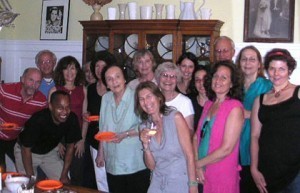
My writing workshop, pictured above, has been a valuable sounding board for all my novels.
Guest Post by Sally Koslow
Writing my first novel was almost an accident. The circumstances were dreary. I’d been booted out after a long run as an editor-in-chief of an iconic magazine just as I was starting to plan a special 125th anniversary issue. Following my dismissal, I retreated, whipped. My termination’s timing was inauspicious, not that there’s an optimal time to be fired: since my youngest son was in college, the statute of limitation on fulltime motherhood had run out, and recession tremors were rumbling in my industry as digital magazines had started to appear and publishers were scratching their heads, wondering how they could monetize them. Print jobs were coming on the market with the frequency of Houseplant Appreciation Day but were far less beguiling. Any opportunities offered to me were also thousands of miles away. Which wasn’t appealing.
Knowing it would take a while to land the right job, more than one friend urged me to augment my search by indulging in a hobby. The carpe diem approach sounded sensible, until I realized that I’d been a wife, mother, and a worker bee who’d dragged home manuscripts every evening and weekend and… had no hobbies. This is how, by default, I joined a writing workshop. Fiddling with words was the interest that had led me to become an intern on my hometown newspaper, and after college graduation to join a magazine staff in an entry level position where I put my English major to use by answering questions such as “Do you file from the front or the back?” Yet the higher I climbed editorial mastheads, the less time I had to devote to write. I missed it.
While the workshop I picked was intended for non-fiction and filled mostly by memoirists, with the teacher’s blessing I knocked out a breezy “chapter” of a “novel” and held my breath. The first time my work was discussed, one attendee seemed aghast that my submission was part of a potential “beach book” and another, who’d been laboring for years retelling the history of her multiple medical crises, hissed aloud about why she was “trying to roll her boulder up a hill” when I, slacker, was submitting this. As if humor and breeze are easy.
For the most part, however, the comments I received were helpful and inspirational.
Week after week, I kept going, and it did not take long to learn the value of a workshop. The group I joined had a few spoilsports—every workshop does, I later learned–who fail to read other people’s manuscripts or if they do, make even one comment, but overwhelmingly, the atmosphere leaned far more toward bonhomie than indifference or spite. Even better, those who commit time to a workshop, even if they may be novice writers, are often close readers. I quickly discovered that when you review another writer’s continuing work, you become invested in his or her intentions and if you’re half- a-mensch, instinctively want to help them succeed.
The payoff for the investment of time and energy in another person’s work is that your own writing improves, almost by osmosis. You learn, for example, to identify common mistakes other writers make that in your own writing fly by unnoticed–that the essay begins after the three paragraphs it took you to clear your throat, or that you use the word really in every third sentence. Really. You get a line on which members give you the most constructive criticism as well as participants’ special talents. One member may be spot-on at suggesting ways to tweak your dialogue while another is the grammarian you are not, if you are anything like me, since in my editing days I had the good fortunate to be tailed by a copyeditor, the equivalent of the sanitation police at the end of the Thanksgiving Day Parade. If you are lucky, at least one writer will have a meticulous memory—he’ll recall and remind you that in an earlier version, the cousin was named Hortense, not Harriet. Another one or two may be engineers of gorgeous sentences. Someone else’s marginal comments might make suggestions that add wit to your work, another might have the gift of sensing what’s left out of your pages, and some are simply warm-hearted cheerleaders. Collectively, the whole is vastly more valuable than the sum of its parts.
Once I became actively engaged in a writing workshop, I began giving birth to characters in my growing manuscript as if they were litters of kittens, developing messy plot lines, inserting too many brand names and metaphors. But I listened to the feedback I got, cut, pasted, read aloud, and rewrote, endlessly. At a friend’s book party, with uncharacteristic hubris, I approached her editor and asked for a meeting. She agreed. When I presented my elevator pitch about my project, a story about a magazine that gets taken over by a celebrity, the editor perked up and suggested agents. After I’d polished a hundred pages, the second agent I approached offered to represent me. A year later, she sold my completed novel.
I’d never expected to write a second novel. I had joined a workshop as a diversion, and thought that within two years I’d be fully employed again. But not only was I still only working here and there for short stints, I loved the workshop so much that to leave it would have left an emotional pothole in my life. Many of the participants had become good friends, people who were refreshingly different from my former magazine colleagues—equally smart, without the stilettoes and attitude. So I said what the hell, and started another book. It sold quickly in a two-book deal. I workshopped both of these novels with the same group, and somewhere along the way, forgot to job-hunt. Soon the leader of our group recommended that I lead writing workshops myself, at the Writing Institute of Sarah Lawrence College and through the New York Writers Workshop at a Manhattan community center. I found that leading a workshop is just a gratifying as belonging to one. I love seeing the week-to-week improvement and camaraderie within the groups.
If there is one thing I’ve learned from being a magazine editor, it’s that everyone needs deadlines. If for no other reason than this, joining a writing workshop offers exactly that—clear, crisp and sometimes non-negotiable terms that make you commit to finishing work every few weeks. Knowing that it’s your turn to submit a manuscript to a workshop may be the exact incentive you need to actually produce twelve pages, double-spaced.
At least it is for me.

Sally Koslow is the author of five books, including her recently released novel, The Widow Waltz and a work of non-fiction, Slouching Toward Adulthood. Her previous books are With Friends like These and The Late, Lamented Molly Marx, chosen by Target for it Emerging Writer and Book Pick categories, and her debut, Little Pink Slips, inspired by her years as the editor-in-chief of McCall’s Magazine. Her essays have been published in the anthologies Wedding Cake for Breakfast and DIRT: The Quirks, Habits and Passions of Keeping House, as well as magazines including More, O the Oprah Magazine, Real Simple, Psychology Today.com and The Huffington Post. She invites you to read her essays and excerpts from her books on www.sallykoslow.com, to follow her on Twitter (@sallykoslow) and to join her FB fan page xx.
Chris Abouzeid's Blog

- Chris Abouzeid's profile
- 21 followers

