
Chris Abouzeid's Blog, page 36
August 6, 2013
He Wrote, She Said: The Interpretive Dance of Audiobook Narration

By Juliette Fay
How do your words sound when someone else speaks them? Okay, how about words that you agonized over?
Personally, I can blow an entire morning thinking and rethinking an absurdly small detail of text. Should the character say, “Thank God” or “Thank goodness!” And how will that exclamation point “sound” in the reader’s mind? Will it be too loud or overly enthusiastic? Maybe “Thank goodness” is better, the italics communicating the gratitude at a lower volume yet with more sincerity …
It’s not lost on me that while others spend their days performing life-saving surgery or prosecuting violent criminals, I spend mine obsessing about italicization. But there you have it. And books are important, too, right?
So take the average writer with the average level of word obsession, and add a narrator who might say those words in not quite the same way the writer hears them in his head, and well, we’ve got ourselves a crisis. After polling a number of my author friends, a high percentage have not listened to their novels in audio at all, or for only a few pages worth, because it just doesn’t sound “right.”
I think it’s the dialog that really throws us. So much of how people communicate is not about the words themselves. It’s about the tone, pitch, cadence, emphasis and mood. The “sound” of a character, in conjunction with their words and actions, is like a signature. For the author, an unfamiliar character voice can feel like identity theft.
But not all authors have a negative reaction.
Cathy Buchanan says, “I must admit, for the first chapter or so of THE DAY THE FALLS STOOD STILL I was dismayed. But after hanging in for a bit, I changed my mind. The narrator told me she took forever recording the last chapters because she couldn’t keep herself from bawling, and readers have said how beautifully emotional her reading was in the final pages.”
Allie Larkin says, “I adore the audio version of STAY. The director asked me about word pronunciation and I had a discussion with the narrator. When I first heard the sample audio clip, I got choked up, because it was like actually hearing my main character. I’ve since listened to the whole thing, and I think it’s helped me with my own public readings.”
Having a say in the choice of narrator seems to lead to a much happier author experience.
Adrienne McDonnell says “My publisher was kind enough to send me audio clips of five actresses who auditioned to read THE DOCTOR AND THE DIVA. I knew immediately who had my vote. I’ve rarely heard such a versatile voice. She’s a virtuoso of dialects and accents, and alternates with ease between genders.”
M.J. Rose told me “It felt horrible when I didn’t know to ask for a narrator of my own choosing. Since then I’ve chosen the narrator and I love listening. I wish I could have him read it before I do my last draft, to fix things. I have a really special relationship with him since he’s done all 7 books.”
Melanie Benjamin gives this advice: “I think most audio book producers are open to working with the author, but only when the author makes that happen. With THE AUTOBIOGRAPHY OF MRS. TOM THUMB, they asked me about the pronunciation of some word, and that’s when I voiced a concern about the narration. This one email opened the door to them sending me some audio clips of actresses and letting me decide. Moral of the story—always ask!”
My own experience of listening to the audio books of my novels SHELTER ME and DEEP DOWN TRUE were more along the lines of disorientation. They weren’t bad—the narrator of SHELTER ME actually received a Publisher’s Weekly Starred Review for it. But the characters just didn’t sound like they did in my head.
After polling my author pals for this article, I was emboldened to ask if I could be involved with choosing the narrator for my next book, THE SHORTEST WAY HOME. The publisher sent me a clip of the woman they were thinking of using. She seemed great, but the main character is a man! How would it sound for a female voice to express his inner thoughts? I communicated this concern to the publisher. Within 24 hours, they had sent me a clip of a male reader, and he sounded perfect. He recently contacted me to set up a time to talk about it.
That said, I still anticipate having some disorientation. After all, narrating is a vocal interpretive dance, and just as with visual acting, no two actors will perform it the same. It’s even less likely that the actor will perform it precisely the way the author intended.
But having had a hand in the choice of the narrator and talking with him ahead of time, I hope I’ll be more open. I hope I’ll accept that my way isn’t the only way to hear it, and that the narrator can contribute his own interpretation to the listener’s experience. I hope that with a little luck, it won’t feel like identity theft so much as identity gift.
Originally appeared on Beyond the Margins July 24, 2012



August 5, 2013
Doctor-Writers and Patients: Whose Story Is It Anyway?

“When faced with the opportunity to read a book by someone who isn’t by profession a writer, I always go for the doctor.” —Stephen J Dubner
(And can I just say here, Mr. Dubner, doctor-writers everywhere — and their publishers — thank you.)
I write fiction, most of the time, because that’s what I like to write, but also because writing about my work raises all kinds of complications. Every once in a while, though, I am so moved by my experience with a patient, that his or her story becomes my story, too. Several years back I wrote a piece about a patient of mine. Mr. Z. was an elderly man who bragged about his Nazi past but otherwise kept lots of secrets. He had a family he had driven away from him, a house he wouldn’t leave, a dog he couldn’t care for, and a loaded gun on his kitchen table. (Perhaps because this is real life, Dr. Chekhov, and not one of your carefully crafted stories, the gun was never fired.)
I had been Mr. Z’s primary care doctor for years and had tried unsuccessfully to help as dementia overtook his life. One day he came into clinic saying he planned to destroy everything in his home of value, then kill his wife and himself. He was very calm as he related this to me. I contacted his family, told them of his threats, then escorted him to the ER. After evaluation by a psychiatrist, he was “sectioned” (admitted to the hospital against his will) and confined to his bed with elephant doses of haldol and soft restraints. When I went to see him that evening, he raised his head, spit at me, and turned away.
Of course there was the high drama of his war crimes, dementia-induced paranoia, a loaded gun. But that was his ugly and unfortunate story. For me there was this: his hatred toward me, his complete sense of betrayal, my professional certainty — and personal discomfort – with the the role I had played. It felt important to me. It changed me as a physician. I was a writer long before I was a physician, so I did what writers do — I wrote it down. His story, my story, the whole thing. And then put it away. (Actually, it was on my computer – but you get the idea.)
A year or two later, I was asked to give a reading, and I pulled out the story of Mr. Z. I could have chosen one of the stories I had published or an excerpt from my novel-in-progress, but instead, I picked Mr. Z. Afterward, a member of the crowd approached me to ask, “Have you published that yet? It’s a wonderful piece.”
I hadn’t published it, of course, and even had second thoughts about reading it in front of a small crowd. It felt like a violation. I protected his privacy in a superficial sense – changed names, locations, etc. – but still, writing this story of betrayal felt like more betrayal. The complication – or the loss — for me was that it felt like my story, too. I wanted not just to WRITE the story, but to have someone read it, hear it, share it.
Which brings me to my closing thought. We all want to own, or at least share, the narrative. It has power. We see it in politics. We see it with husbands and wives, between siblings and among friends. And, of course, between doctors and patients.
Robert Coles, in his book The Call of Stories, talks about the importance of giving patients the opportunity to tell their story. The book came out when I was a medical student. I read it and took the message to heart. (It continues to cost me an awful lot of time in clinic, but still may be the best doctoring advice I’ve ever gotten.) He also advocates for doctor’s sharing their stories with patients, because storytelling, he suggests, is how we enter each other’s lives.
As unlikely as it seems, Mr. Z’s story had a not-so-bad ending. He was transferred to a psychiatric hospital, did well with medication and therapy, and moved away to live with one of his children. I never got to tell him my story – to let him know how the experience had affected me. It would never have occurred to me at the time, but maybe I should have. Maybe that’s something doctors should do more often.
As one of Dr. Coles’ patients instructed him: “You tell me your story, and I’ll tell you mine.”
Originally published on Beyond the Margins February 9, 2010
August 4, 2013
Writer’s Block: On The Persistence of Demons

By Robin Black
When I was a twenty year old undergrad at Sarah Lawrence, back in 1982, I had a dream – an actual sleeping dream – in which Leonard Woolf and Vanessa Bell escorted Virginia herself into my dorm room and announced that she was mine now, to take care of. She was very delicate, they told me. Tending her wasn’t an easy job, they said – while she only glanced downward from beneath the great rim of her hat. Being all of twenty years old and thinking myself a writer, I took this to mean, not that I had best watch out lest I have a mental breakdown (which was true and might have been helpful advice at the time) but that I was to inherit the mantle of genius.
Within months of having that dream, I dropped out of school for a bit, moved back in with my parents, had the aforementioned mental breakdown, eventually became engaged to (later marrying) a man I barely knew and stopped being serious about writing for the next twenty years.
Genius!
In my life it has been an ugly word. My father, gone eleven years now, was a bona fide genius. He was the sort of genius for whom even the people who roll their eyes at the word genius make an exception. And the fact that he was also one of the unhappiest, most personally dysfunctional people I have ever known did little to protect me from the message he delivered, both explicitly and also in more poisonous, potent forms, that to be anything other than a genius – anything less than a genius – was to be, well, at best, a little sad. Pitiable. Pathetic.
My knowledge of his private miseries may have done little to protect me from this view, but his death in combination with more therapy than I’ll ever admit to did quite a bit to diminish its power, which is why, at the age of thirty-nine, just about two decades after having the dream that amplified my misguided conviction that genius should be my goal, I was finally able to write.
And write I did, mostly short stories but some essays too. None of which either caused anyone to use the G-word, or caused me to feel that they should, or even to long that they would. I felt, for the first time in my life, that I was doing something as well as I could, which was all that seemed to matter. I had frustrating days of course, but overall the writing made me happy. Happier than I had ever been. Maybe it was the deceptively unambitious-seeming nature of short forms that let me relax. Maybe it was the gusting exhilaration of finally stepping out from within the dark of my father’s shadow and from under the weight of the tragic standards by which he measured his own lonely, unhappy success. Whatever the cause, I was productive and I was enjoying it.
A happy ending, yes?
Well, yes; and also, no.
Because now there is the novel. The novel! Unfinished. And often uncooperative. And just look at what a big thing it is – a novel. Look at how huge an impression it might make. How excellent a vehicle it could be for being declared a you-know-what. . . or, more realistically, how clear it will certainly make it that one is not. And look at what sustained faith it requires. How difficult a task! What room that massive task leaves, within those frustrating days and all those inevitable missteps. . . Look at what space is created for the demons to creep back in.
If it isn’t to be a work of genius, it isn’t worth writing, you know. . .
I find myself struggling again with this thought – as I realize that I am not in fact writing Mrs. Dalloway. Or Ulysses. Not reinventing the form. Not revolutionizing literature. As I understand very well that my personal best is not Virginia Woolf’s best – and never will be. At nineteen, at twenty I dreamed it was. At nearly fifty, I know better. And if I am to believe my poor father, that makes this whole writing pursuit pretty pointless.
If it isn’t to be a work of genius, it isn’t worth writing, you know. . .
Ugly. As I said. But that was the message I was given, loud and clear. Quiet and clear. At every imaginable volume – and always clear.
Sometimes, when I have tried to explain the damage this viewpoint has done in my life, the difficulties it has newly caused while writing this new book, I have struggled without success to define the distinction between this sort of blind drive for admiration on the one hand, and a healthy ambition for excellence on the other. The best way I have found to parse the two is to say that in the emotional landscape of a person like my father, doing one’s best is only a meaningful goal if one’s best is better than everyone else’s best. Otherwise, the knowledge of having achieved a personal best is a sorry consolation, at most.
If you think about it enough, that is one of the saddest possible ways to look at life. Certainly, one of the loneliest. And had you known my father, you could have traced that sorrow, that solitude in his every gesture, every glance.
It is difficult for me sometimes, this writing thing. As it is for us all, I know, in our different ways. I am haunted daily by that other idea, not my own, of what my goal should be. It takes up my brain and crowds away the reason that tells me what dangerous nonsense it is; then it bullies my lyrical side into babbling doubt. I become a study in blockage, in self-sabotage. Never mind the questionable wisdom of taking life advice from one person whose misery I witnessed daily for almost forty years, and longing to follow in the footsteps of another who did, after all, walk into a river and drown herself. . . Demons are not creatures of logic. Demons are no geniuses. They don’t need to be. They are just persistent as hell.
And if you think about that there’s the seed for optimism right there.
Because it turns out that persistence is a powerful thing. One of the most powerful allies any one of us has. Directed demonically, it can shut you down for decades at a time. But it can also be the engine that keeps you daily typing, that causes the clattering keys to drown out the voices that would have you stop. Persist, persist. Be more stubborn even than your own demons are. Persist. Persist. Not for any reason other than that you promised yourself you would. Just for long enough to get it all out on the page.
For my father, bona fide genius and eternally unhappy man, it took that kind of fortitude to face the business of living through every day. I would study the pain of it settling into his bones, beaming out from his light brown eyes. I would watch him scrap and cobble his broken self through many an hour, often ungraceful, sometimes unkind, occasionally memorably generous, startlingly empathic. But always in profound psychic pain.
Our stories are strange things, all of ours. And the logic through which our own narratives unfold is often both obvious and paradoxical. Even as I battle the toxic standards of success that my father breathed into my dreams, I find myself grateful for his example of how fiercely one can fight a demon down.
Persist. Persist.
(Originally appeared on Beyond the Margins on March 16, 2012.)
August 1, 2013
But I Digress

You’re writing a tense scene, really in the thick of it: An aging actress is holding a handful of pills. She’s been offered the role of the star’s mother, rather than that of the star.
She lifts glass of water toward her mascara-streaked face, pills cupped in her other hand. She will miss the feel of crystal. The reader is with you, waiting for that actress to throw back her head, give a final cry of hopelessness and say goodbye to all that.
But suddenly, you’re off.
You, the writer, cut away to backstory. And the reader, instead of getting the big gulp, gets an overdose of the actress’s memories of her grandfather’s pharmacy. The tactile joy of powders and jars, the unyielding grind of mortar and pestle. The social stress of classmates seeking free candy. Even a short rant on the demise of the neighborhood mom-and-pop pharmacies. By the end of the four-page digression, your reader has had a lovely romp through the economic rise of CVS, but can barely remember the actress and her pills.
Of course I’m not speaking from experience. I mean, it’s not as if I’ve had “Stay in the moment!” or “TOO MUCH DESCRIPTION” ever written in the margins by my agent or editors.
But let’s say, for the sake of argument, you do have a digression problem. I see you chafing at the word “problem,” so let’s call it a gift, instead. The first step, then, is admitting you have a gift.
In skilled hands, a digression can be an effective thing, lovely and looping and brilliant. It can reinforce a theme by juxtaposing a related event, and add depth to a scene by linking to an episode in a character’s past. It can offer poetic observations, scholarly extras, and sometimes just a nice break in the action. Moby Dick is chock full of them; whether or not you’re a fan of those leviathan asides, without them, Melville’s masterpiece would be just another fish tale (and probably half the length).
The best writers layer scene upon scene so well we’re not even aware that we’ve been diverted to another path. Less well done, and you need a truckload of breadcrumbs to lead you back into the flow of the story.
But know this: No matter how lyrical your prose or how insightful that jewelbox of an anecdote, when you cut away from the forward pace of the story, you do break the narrative tension.
So what’s the difference between a digression that’s effective, and one that isn’t?
Start by asking yourself some tough questions.
1) What does this really add to the story, and is it necessary HERE?
2) Do you use too much digression throughout the book? The last thing you want is the reader ticked off by yet another lengthy plot interruption. (“Oh, great. Just when it was getting good.”)
3) Is it appropriate in this situation to cut away from the action? If a character stumbles upon something disturbing, he probably isn’t going to pause to provide a lengthy mental riff on the pictures on the wall. Unless, of course, you intend to make a statement about the character’s dissociative state.
4) Be honest: As a reader, would you be tempted to skip ahead through this “boring part” and find out what happens next? Or, worse…
5) By the time the digression comes in for a landing, were you so distracted by mortars and pestles that you forgot the actress was even about to do herself in? If so, goodbye, narrative tension.
So many authors make great use of digression, but in the end, I suspect it comes down to a matter of taste; some readers are just more willing than others to be led through the maze as a part of the story experience.
Originally appeared on Beyond the Margins on February 17, 2010.
July 31, 2013
“Honey, I Deleted Your Novel!”: An Author’s Guide to Avoiding Disaster

Several years ago, in trying to transfer some files, I accidentally deleted my wife’s novel. The fact that I’m still alive says more about the lack of loaded weapons in our house than about my wife’s forgiving nature. (She did forgive me, eventually. I think. Maybe.)
Once I got past that horrible, “Oh god, I am so totally cut off from the marital bed!” feeling, the first order of business was to make sure nothing like this ever happened again.
Having come up with a handful of habits and strategies that have so far protected me (and, more importantly, my wife) from any more data disasters, I thought I’d put them into a simple guide for any other authors out there who might have careless partners, overeager toddlers, or keyboard-strolling pets wandering around the house.
Lifesaving Tip #1: Copy, Copy, Copy
The simplest way to make sure you never lose your manuscript, or any version of it, is to make copies. Every time you go to edit your work—whether it’s an entire novel, a chapter, short-story or poem—save a copy first.
To distinguish one copy from another, put the date in the filename (e.g. GreatAmericanNovel_02_01_10), or number it (e.g. MyLifeStory_backup1, MyLifeStory_backup2, etc.) or add your own special code (e.g. MyBestseller_DanBrown, MyBestSeller_ToniMorrisson, etc.) This prevents you from overwriting one copy with another, and makes it easier to find a previous version when you need it.
Lifesaving Tip #2: Auto-Backup — It’s On!
Most word-processing programs have an Auto-Backup feature that you can turn on or off in the Options or Preferences panel. One option makes a backup of your file every time you open it. If later that day you discover your creative instincts were complete crap, you can get your original un-mangled version back instantly.
Another option, Auto-Save, saves your open files at regular intervals. If your computer crashes while you’re riding a creative tsunami, you’ll only lose as much work as you did between the last auto-save and the crash.
Turn both of these on. Now!
Lifesaver Tip #3: Drive, Baby, Drive
Backup drives are cheap, easy to use, and come in a variety of formats and sizes—from huge, networkable disk arrays to tiny thumb drives that fit on your keychain. My suggestion? Get one thumb drive, and one external hard-drive.
Thumb Drives
Also known as “flash drives,” they come in everything from black rectangles to colorful animal shapes. There’s even a SpongeBob Squarepants version, if that’s what you’re into it. The smaller sizes (e.g. 2 gigabytes) are fairly cheap, but big enough to hold everything you’ve ever written. The larger sizes (e.g. 16 gigabytes or more) will hold everything you’ve ever written, plus your book trailers, author photos, and favorite time-wasting games.
Since thumb drives are small and easy to lose, they’re best suited for temporary storage. When you finish that climactic scene in your murder mystery, stick a thumb drive in your computer’s USB port, copy the files and voila! Your laptop can crash, a coffee-shop bandit can make off with it, you can spill RedBull into your keyboard—it doesn’t matter. You’re backed up.
External Hard Drives
Storage sizes range from about 250 gigabytes (big) to a terabyte (ginormous!), and physical footprints can range from little bricks to cubes the size of your bread machine. Most of them connect via USB or FireWire, but some are networkable.
Choose an external drive that is reliable, easy to set up, and has enough room to hold whatever you’re going to backup. A 100 gigabyte drive can easily hold all your scrivenings. If you want to backup your entire computer, you’ll need an external drive about the same size, if not bigger, than your internal hard-drive.
Once you’ve got the new drive connected, look for software to perform regularly scheduled backups for you. The Mac (OsX 10.5 and above) comes with Time Machine already installed. Not only does this program work beautifully, it’s incredibly easy to setup. For PCs, there are a world of options, from Microsoft’s own backup program, to software included with external hard-drives and third-party software.
Lifesaver Tip #4: Here, Hold This For Me
So what happens if your house catches fire or sinks into a swamp one night and all your disk drives go with it? The best backup is always an off-site backup (meaning someplace other than where your computer is), and the two easiest and cheapest (i.e. free) ways to achieve this are web-based email and on-line document storage.
If you have a web-based email account such as Yahoo or Gmail, you can email your files to yourself every day. They’ll sit on those nice, big, conveniently remote servers for as long as your account is active, and if you ever need to retrieve them, it’s as simple as flipping through your in-box from any computer, anywhere.
For an even simpler solution, take advantage of the free on-line file storage offered by DropBox, Google Drive, Google Docs, Windows Live SkyDrive, and other services. Just create an account, upload any documents you want to store online (up to whatever their maximum is), and presto! Free off-site backup.
Lifesaver Tip #5: Fortress of Certitude
There are a lot of things you won’t get with free on-line storage: unlimited space, security, encryption, version control, automatic backups, etc. So for the ultimate in safety and convenience, consider using one of the paid backup services. These companies will let you backup whatever you want, whenever you want to their servers. If your computer crashes, you’re covered. If your house burns down, you’re covered. If there’s a nuclear attack—well, some of these places might even survive that.
Look for a service that works with your operating system (Windows services, Mac services, DropBox, etc.), and has an easy to use interface. Incremental backups (i.e. where the software tracks changes between one backup and another) should also be a priority. That way, if you decide to ditch your third-person narrative and go back to the first-person version you had three months ago, you can get the exact versions of your files from that day, or any day.
So there you go: the secret to creative (and possibly marital) survival.
Stay tuned for the next installment: What to do (or not do) when disaster strikes.
Originally appeared on Beyond the Margins in Feb, 2010
By Chris Abouzeid
Several years ago, in trying to transf...
Several years ago, in trying to transfer some files, I accidentally deleted my wife’s novel. The fact that I’m still alive says more about the lack of loaded weapons in our house than about my wife’s forgiving nature. (She did forgive me, eventually. I think. Maybe.)
Once I got past that horrible, “Oh god, I am so totally cut off from the marital bed!” feeling, the first order of business was to make sure nothing like this ever happened again.
Having come up with a handful of habits and strategies that have so far protected me (and, more importantly, my wife) from any more data disasters, I thought I’d put them into a simple guide for any other authors out there who might have careless partners, overeager toddlers, or keyboard-strolling pets wandering around the house.
Lifesaving Tip #1: Copy, Copy, Copy
The simplest way to make sure you never lose your manuscript, or any version of it, is to make copies. Every time you go to edit your work—whether it’s an entire novel, a chapter, short-story or poem—save a copy first.
To distinguish one copy from another, put the date in the filename (e.g. GreatAmericanNovel_02_01_10), or number it (e.g. MyLifeStory_backup1, MyLifeStory_backup2, etc.) or add your own special code (e.g. MyBestseller_DanBrown, MyBestSeller_ToniMorrisson, etc.) This prevents you from overwriting one copy with another, and makes it easier to find a previous version when you need it.
Lifesaving Tip #2: Auto-Backup — It’s On!
Most word-processing programs have an Auto-Backup feature that you can turn on or off in the Options or Preferences panel. One option makes a backup of your file every time you open it. If later that day you discover your creative instincts were complete crap, you can get your original un-mangled version back instantly.
Another option, Auto-Save, saves your open files at regular intervals. If your computer crashes while you’re riding a creative tsunami, you’ll only lose as much work as you did between the last auto-save and the crash.
Turn both of these on. Now!
Lifesaver Tip #3: Drive, Baby, Drive
Backup drives are cheap, easy to use, and come in a variety of formats and sizes—from huge, networkable disk arrays to tiny thumb drives that fit on your keychain. My suggestion? Get one thumb drive, and one external hard-drive.
Thumb Drives
Also known as “flash drives,” they come in everything from black rectangles to colorful animal shapes. There’s even a SpongeBob Squarepants version, if that’s what you’re into it. The smaller sizes (e.g. 2 gigabytes) are fairly cheap, but big enough to hold everything you’ve ever written. The larger sizes (e.g. 16 gigabytes or more) will hold everything you’ve ever written, plus your book trailers, author photos, and favorite time-wasting games.
Since thumb drives are small and easy to lose, they’re best suited for temporary storage. When you finish that climactic scene in your murder mystery, stick a thumb drive in your computer’s USB port, copy the files and voila! Your laptop can crash, a coffee-shop bandit can make off with it, you can spill RedBull into your keyboard—it doesn’t matter. You’re backed up.
External Hard Drives
Storage sizes range from about 250 gigabytes (big) to a terabyte (ginormous!), and physical footprints can range from little bricks to cubes the size of your bread machine. Most of them connect via USB or FireWire, but some are networkable.
Choose an external drive that is reliable, easy to set up, and has enough room to hold whatever you’re going to backup. A 100 gigabyte drive can easily hold all your scrivenings. If you want to backup your entire computer, you’ll need an external drive about the same size, if not bigger, than your internal hard-drive.
Once you’ve got the new drive connected, look for software to perform regularly scheduled backups for you. The Mac (OsX 10.5 and above) comes with Time Machine already installed. Not only does this program work beautifully, it’s incredibly easy to setup. For PCs, there are a world of options, from Microsoft’s own backup program, to software included with external hard-drives and third-party software.
Lifesaver Tip #4: Here, Hold This For Me
So what happens if your house catches fire or sinks into a swamp one night and all your disk drives go with it? The best backup is always an off-site backup (meaning someplace other than where your computer is), and the two easiest and cheapest (i.e. free) ways to achieve this are web-based email and on-line document storage.
If you have a web-based email account such as Yahoo or Gmail, you can email your files to yourself every day. They’ll sit on those nice, big, conveniently remote servers for as long as your account is active, and if you ever need to retrieve them, it’s as simple as flipping through your in-box from any computer, anywhere.
For an even simpler solution, take advantage of the free on-line file storage offered by Google Docs, Windows Live SkyDrive, and other services. Just create an account, upload any documents you want to store online (up to whatever their maximum is), and presto! Free off-site backup.
Lifesaver Tip #5: Fortress of Certitude
There are a lot of things you won’t get with free on-line storage: unlimited space, security, encryption, version control, automatic backups, etc. So for the ultimate in safety and convenience, consider using one of the paid backup services. These companies will let you backup whatever you want, whenever you want to their servers. If your computer crashes, you’re covered. If your house burns down, you’re covered. If there’s a nuclear attack—well, some of these places might even survive that.
Look for a service that works with your operating system (Windows services, Mac services), and has an easy to use interface. Incremental backups (i.e. where the software tracks changes between one backup and another) should also be a priority. That way, if you decide to ditch your third-person narrative and go back to the first-person version you had three months ago, you can get the exact versions of your files from that day, or any day.
So there you go: the secret to creative (and possibly marital) survival.
Stay tuned for the next installment: What to do (or not do) when disaster strikes.
Originally appeared on Beyond the Margins in Feb, 2010
Diary of a Writing Retreat
By Laura Harrington

Breaking down the book into an outline for the musical
Last week I was in Rhinebeck, NY at the Rhinebeck Writer’s Retreat. Over the course of nine weeks this summer, nine different musical theatre teams will each spend a week working on their new musicals in a house in the woods.
Freed from distraction, my collaborators and I are working on our adaptation of my novel, Alice Bliss. Jenny Giering is our composer; Adam Gwon is our lyricist. This is our third residency this year and we hope to finish our first draft.

Jenny Giering (composer) and Adam Gwon (lyricist)
I thought I’d share my diary of the process in order to break open the writing – and re-writing – process. The revising that is such an enormous part of my theatre work has been a huge help in writing my novels. I have a lot of faith in the process as well as a great deal of respect for just how much work is involved.
I’ve tried to keep these notes focused on the writing process, but occasionally, for clarity, I go into a bit more detail about a scene. So here is a brief synopsis for those of you who are not familiar with my book. Alice Bliss is a coming of age story about a 15-year-old girl whose Dad is in the Reserves and deploys to Iraq. The musical, which has been commissioned by Playwrights Horizons in NY, will be small, with a cast of 7, and very intimate.
Sunday. Day 1. Drive 250 miles to Rhinebeck in the Hudson Valley. Grocery shop, unpack, make dinner. This day is nothing but transitional. No work gets done.
Monday. Day 2. Walk at Bulger Park. Gorgeous views over the Hudson River. Read through and sing through script and score that we have finished: 9 out of 10 scenes in Act 1 and 4 out of 10 scenes in Act 2. Act 1 looks solid. We have finally figured out what Act 1 Scene 1 should be, but we will write that last.
We identify and discuss revisions that need to be made in Act 2, Scenes 1, 2, and 3. Overwhelmed by these rewrites, I spend the rest of the day circling the wagons, thinking, pacing, anxious, and not getting much done.
Tuesday. Day 3. Early morning outing to Poet’s Walk near Red Hook. Gorgeous walk and views, marred by trying to outpace the swarms of bugs. I settle in to work on revisions. The work is very detailed and exacting and slow. It is not fun. I’m feeling very resistant. By the end of the day I have not made much progress and am feeling crabby and irritated. And homesick.
Wednesday. Day 4. How can it be Day 4 already? Head down, I never leave the desk and manage to finish revising the 3 dreaded scenes. Again, this is tedious because I am adding exposition, and it’s always difficult to make exposition fun and interesting, unless you’re in a courtroom. I’m also doubtful about this approach. We’ve been through this once before with Act 2 Scene 1.
By the time I finish I realize we have made a serious error. In trying to clarify so much, our scenes have become bloated and repetitive. Not only have we repeated information, we have repeated emotional beats. We gather at 9 pm to read through the scenes. All of us are too tired to discuss much after that, but the problems are clear. I remind myself that this is a typical part of the process. You overwrite and then cut back, sometimes over and over again.
Thursday. Day 5. Wake up very early. Writing in my journal I realize what we need to do to these scenes. In our effort to be clear we have been emotionally false. The family has just learned that Matt is MIA. We have them burying their feelings and moving directly into a kind of chipper or hyper – “We can handle this.” I don’t buy it.
I take a walk and then propose the following changes to my collaborators:
Scene 1: In the moments after they learn that Matt is MIA, the family is stunned, anguished, can’t talk. Alice falls into a memory with her dad – Song.
Scene 2: 3 days later. Family is starting to pull together. We see this in action rather than exposition. They get a letter Matt mailed before he was captured: Song.
Scene 3: Alice is fully invested in magical thinking: If I do this and this and this, then Dad will be okay. Again, actions carry us. Alice’s magical thinking song will wrap around this scene.
Jenny and Adam especially love the idea of beginning Act 2 in silence. A bold move.
I’ve got my work cut out for me today. But I think that once these scenes are solid, the rest of the act will be easier to write.
Later: Broke the ice by writing a scene I thought would be fun: Act 2 Scene 7: a re-imagining of the school dance scene, which is surprisingly funny.
Went to a coffee shop craving a change of venue. Wrote an entirely new opening to Act 2, much of which occurs in awkward, painful silence. Remarkably, it is a much better launching pad to the flashback and song that follows and the song is now full of emotional subtext. Read and sang through it with Jenny and Adam. Everything about it feels right. A huge sigh of relief. We’ve earned a glass of wine tonight.
Friday. Day Six.
I couldn’t sleep last night. My mind just wouldn’t shut down. Truly on overload.
In the morning I jump ahead to Act 2 Scene 8 where Alice finds the letters from her dad in the workshop. Through the magic of musical theatre, he appears as she reads one of the letters. This duet for Matt and Alice is complex. It has a double “hook” and is the emotional climax of the show. This is where Alice growing up and Alice losing her father collide. I write to the song and then hand it off to our lyricist.
I am now racing to finish the last few scenes. Tomorrow is our last day. There will be a reception tomorrow night where we will share two songs from the show.
I push on and finish another scene. As I had suspected, once we got the opening of the second act right, the rest of the act, while emotionally difficult, is easier to write.
We go out to dinner. Too tired to be very festive.
Saturday. Day Seven. Last Day.
Another night without much sleep. Get up early. Walk to clear my head. Make a pot of coffee. (I usually drink tea.) This is now a race to the finish line. I write the funeral scene, which is almost entirely visual, with the sounds of the 21-gun salute and Taps wrapping around it. Then move on to write the second to last scene: the denouement leading us to the final scene. The clock is ticking.
Adam is working steadily on the Letters Song – the duet that is the climax of the show. Instead of sitting down for lunch together as we usually do, each of us grabs something to eat at our desks. We pause when Adam completes the lyrics and gather at the table where he reads them to us. It is the first time I have seen Adam in tears. Things are “landing.”
Jenny and Adam practice the two songs from the show we will present tonight at a cocktail reception for friends and board members of the Rhinebeck Writer’s Retreat. Remarkably, given our slow start, we’ve written everything except the first and last scenes, which are bookends. This I can do on my own.
We get cleaned up and head to the reception. Kathy Evans, the artistic director of the Retreat, hosts us all in her home. She interviews the three of us about our process. Adam and Jenny perform two songs: one for Alice, one for her mom, Angie. Our audience is in tears. There are many questions and best of all people stick around to talk with us, and each other. (The hasty retreat to the exit generally means things didn’t go too well. Lingering signals something else altogether.)
Jenny’s husband Sean has driven up to join us, as has my husband David and our friends, the composer Mel Marvin and his wife Angela. Mel and I have written two musicals together (Joan of Arc and The Perfect 36). Mel also teaches in the musical theater graduate program at the Tisch School at NYU, and was Jenny’s teacher and mentor when she went through the program.
Our group heads out to Red Hook for Gigi’s Agriturismo dinner on the farm. Under a white tent with views of working farm fields and distant mountains, we eat food that couldn’t get more local and drink good wine. Jenny proposes a toast I wish I could quote, it was so lovely, about her joy to have so many people she loves at this one table. We lift our glasses one more time: To Alice Bliss.
As night falls and the crew begins to break down the tables around us (it feels like they are striking a set), Jenny begins to sing a few jazz standards. Mel and I join her.
It doesn’t get any better than this.
July 30, 2013
One Good Deed
A Guest Post by Meg Waite Clayton
Recently, I gave a shout out to a fellow author whose birthday it was, mentioning her book. The day before, I hosted another author on my blog. I’ve posted about friends’ new books (still) caught in a squabble between publishers and Barnes & Noble that found books in limited quantities on the chain’s back shelves. I’m mentoring a University of Chicago student/aspiring novelist. Today, I responded with a longish, encouraging email to an aspiring writer who connected with me over a piece of mine in the Los Angeles Times.
In my New Years’ resolution box: ✓ ✓ ✓ ✓
A few years ago, pondering fifty years of failure to lose ten pounds or get to the gym every day, I decided on a smaller approach: Pushups. I can do 20 now, and I do them pretty much every day.
Flush with that success, I decided the next year to try turning outward: One Good Deed. Little things, like the pushups. It’s easy enough to do in this interconnected world. I can hold open a door. On a particularly busy day, I can retweet a bookstore post about their reading that night or a friend’s book release news while waiting in the grocery check-out line.
The little deeds I do are all things I might have done anyway, but like with the push-ups, adding the New Year’s resolution box to check each day has helped build it into my routine. Like with the pushups now, if my head hits my pillow and I haven’t done my one good deed that day, I have to get up and do it or I simply can’t sleep.
I find my help tends often to go out to other writers, perhaps because my own first novel was ten years in the making by one measure: the time I first put pen to paper to the time it hit bookstore shelves. Some of my good deeds are routinized now: Almost every Wednesday, I host a fellow author on my blog. I pay the toll for the person behind me every time I cross the Dumbarton Bridge because once, when I’d accidentally left my wallet behind at a bookstore twenty miles back, someone in the next lane paid mine. I host a monthly writer’s chat on SheWrites.com, where I also try to greet new fiction writer members and invite them into my novelist group.
But much of it is random. I buy coffee for the person in line behind me. I share news about a first novel by someone I have no connection to, because first novels are so tough. I set down the Margaret Atwood novel at Books Inc. or Keplers even though I’m dying to read it, and instead look for first novels, and buy them instead, or too, because Margaret Atwood is going to sell well whether I buy her or not, and a first novel is always a tough sell.
And in the end, it benefits me at least as much as the recipients of my good deed-dom. It lifts my spirits whether I can see the confused smile on the person in the coffee line or not. And as the summer approaches and I’m not making it to the gym or fitting into that yellow dress, I see that I can do the things that are really important. And I can look forward to the second half of the year with my resolutions intact.

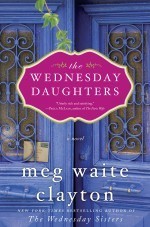
Meg Waite Clayton is the nationally bestselling author of The Four Ms. Bradwells, The Wednesday Sisters, and The Language of Light—all national book club picks—as well as the newly released The Wednesday Daughters (July 2013). Her first novel was a finalist for the Bellwether Prize (now the PEN/Bellwether), and her novels have been translated into languages from German to Lithuanian to Chinese. She’s written for The Los Angeles Times, The San Jose Mercury News, Writer’s Digest, Runner’s World, The Literary Review, and public radio. Her “After the Debate” on Forbes online was praised by the Columbia Journalism Review as “[t]he absolute best story about women’s issues stemming from the second Presidential debate.” An Order of the Coif graduate of the University Michigan Law School, she lives in Palo Alto, California.
July 29, 2013
On Revision: Retrofitting a Spine
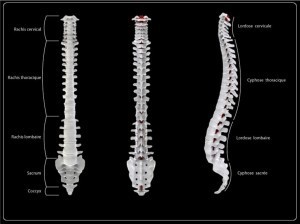
Just for discussion purposes, let’s pretend you’re one of those writers who doesn’t start with an outline. Maybe you’re even one of those writers who doesn’t have a plot in mind when s/he starts writing, just begins and hopes that the plot will appear beneath her like a magic carpet.
Eventually, you finish something that might be called a novel. EXCELLENT. Congratulations.
However…. When you read it over — and perhaps this is even after several revisions, and perhaps with the kind editorial comments of a trusted reader or two — you recognize that something is missing. Just to be old-fashioned, let’s call it structure. Bones. Whatever. Yes, you’ve written something moving and lovely and it’s a work you care about. But still. When you look at it, you are reminded of a jellyfish.
In considering jellyfish, you observe that although invertebrates have had lots of success in many ways, they are still to be found mostly in mud or water or living in your food.
Is this what you want for your novel? The existence of a slug or a mollusk or a… sponge?
No. Your novel’s place in the animal kingdom is graceful gazelle or gliding eagle or killer whale. Jaguar, maybe. Even kitten. But not helminth.
Fortunately, having had some experience with this, I’m here to tell you that it’s never too late to give your story a backbone.
What follows is my 12 step program for elevating your novel’s spot in the evolutionary tree.
1. Acknowledge that you are not, in fact, powerless over this problem. That’s right — you are your own higher power.
2. Lay out your entire work in front of you. This could be using pixels on a screen or using paper on a flat surface. (Remember, if you lay it out on a table, you may have to deal with bits dripping off the sides.)
3. Poke it gently in search of the areas of greatest life and responsiveness. Make note of these. Also make note of the areas of LEAST life. Consider making two lists, one titled Working/Compelling/Alive and one titled Not Working/Uninspired/Possibly Dead. (There may, of course, be large chunks that you consider neither dead nor alive.)
4. Identify your plot points. You’ve heard of these, right? Look at your story and pull out as many of these as you can find. Here’s an example from a story you might know.
Little Red Riding Hood (LRRH) is the beloved granddaughter of a woman who lives alone in a cabin in the woods.
LRRH’s grandmother has fallen ill.
LRRH’s mother sends her off to bring some wine and cake to her ill grandmother.
LRRH’s mother warns her of the dangers of the woods and advises her to stick to the path and go right to grandma’s.
Etc.
6. Take your plot points and develop these into a simple outline.
For example:
Opening:
–Intro LRRH and mother
–Ill grandmother, off in the woods alone
–LRRH beloved by everyone, but esp by Grandma
–LRRH’s mother somewhat ambivalent about sending LRRH off by herself – maybe it’s the first time she’s gone alone, maybe the mother is very worried about the grandmother but cannot go herself, etc.
–LRRH’s mother deals with her anxiety by giving LRRH lots of instruction
LRRH sets out:
–Pleased that her mother trusts her to go alone
–fully intending to follow mother’s instructions
ETC.
7. Read through your manuscript. Either by physically/electronically cutting and pasting or by using post-its, highlighters or other favorite tools, assign your text to the appropriate place in the outline. If you have text that doesn’t fit into the outline, leave it out for now.
8. All sections that fit somewhere in the outline and fall into the “Alive” column are staying. These are your first vertebrae. All the sections that don’t fit into the outline and have been categorized as “Dead” are cut.
9. Sections that are “Alive” but don’t fit into the outline should be set aside – you can come back to these later and determine what their function is (e.g. character development, scene-setting vs. just a beautiful bit of prose). Maybe they’ll be a place for them, or maybe there won’t.
10. Read over sections that are “Dead” or otherwise not alive but fit neatly into the outline. What’s missing? Make notes on your outline with ideas about how to fix these. If they seem unfixable, get rid of them and make a note that you’ll have to write new scenes there to keep your plot moving along.
11. Areas where there is a plot point or an important piece of information identified in your outline but no text with it will need to be… written. These are your missing vertebrae.
12. With outline and text in hand, use your own musculoskeletal system to sit yourself down in the chair and get to work.
Any other ideas out there for adding a little bit of spine to a project?
July 26, 2013
Friday Faves – Post Heatwave Ahhh
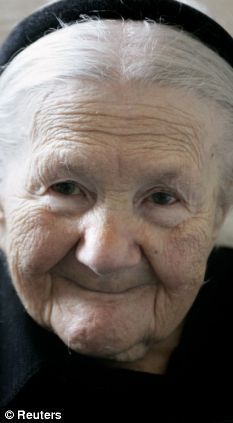
Her finest hour: Irena Sendler rescued thousands of Jewish children
Here in the Northeast, we are letting out a collective sigh that the week’s of 100 degree days and 100 percent humidity are behind us (for now). Hope this Friday finds you in good weather — meteorologically or mentally — wherever you are.
And now for some of the weeks most interesting links:
Here’s how Amazon self-destructs at Salon
“If Amazon puts bookstores out of business, it will destroy the main way readers learn about new books to buy”
E-BOOK VS. P-BOOK at The New Yorker
“When Barnes & Noble announced, a couple of weeks ago, that its Nook division lost almost five hundred million dollars last year and that its C.E.O. was resigning, there was one obvious conclusion: the company was doomed … But the hastily written obituaries left out some important facts.”
40 Inspiring Workspaces Of The Famously Creative at Buzzfeed
“From tiny writing desks to giant painting studios, the only thing all of these creative studios have in common is that they inspired their successful inhabitants to create greatness.” (Including Mark Twain, Charlotte Bronte, Jane Austen, and Rudyard Kipling. Which space looks most like yours? Which space do you wish looked most like yours?)
Inspiring link of the week:
The ‘female Schindler’ who saved 2,500 Jewish children but died wishing she’d rescued more at The Mail (UK)
“She smuggled out the children in suitcases, ambulances, coffins, sewer pipes, rucksacks and, on one occasion, even a tool box.”
Bravery and decency incarnate. May we all be inspired to do something really kind today.
Chris Abouzeid's Blog

- Chris Abouzeid's profile
- 21 followers

