Amy Julia Becker's Blog, page 27
February 13, 2024
Reimagining Lent
Today is the first day of Lent, the church season of preparation for Easter. It’s a good time to reconsider this faith.
For me this year, that means I’m reading John Mark Comer’s latest book, Practicing the Way, and asking myself what it really means to follow the way of Jesus and not the way of materialism, consumerism, or hyper-politicization. I’m also planning to read Brian Zahnd’s The Wood Between the Worlds. Zahnd’s interview with Skye Jethani on The Holy Post podcast last week invited me to reimagine the cross.
Lent is a season in which any of us who want to follow Jesus are invited to walk with him and imagine new possibilities for our lives and for this world.
MORE WITH AMY JULIA:
Two Resources for the Season of LentWhat Are You Giving Up for Lent?Lent Is Not About Sacrifice. It Is About Desire.An Embodied Lent for Kids and GrownupsSubscribe to my newsletter to receive regular updates and news. You can also follow me on Facebook , Instagram , Twitter , Pinterest , and YouTube , and you can subscribe to my Love Is Stronger Than Fear podcast on your favorite podcast platform.
The post Reimagining Lent appeared first on Amy Julia Becker.


Why I Think the “He Gets Us” Ads are Helpful
“He gets us.” For the 2nd year in a row, millions of people watched ads that invited us to get to know Jesus in a new way. There’s a good debate over the worthiness of these ads—the millions of dollars it cost to produce and broadcast them could go in the direction of feeding, housing, and clothing people, for instance. But in general, I’m a fan.
In the midst of the politicization of faith, in the wake of decades of oversimplifying the gospel, and in a climate of people longing for something beautiful and good and true without the trappings of legalism or moralism or shame, we need to reimagine Christianity. Ads like “He gets us” could play one small part in helping us envision a different way to walk with Jesus.
Today is the first day of Lent, the church season of preparation for Easter. It’s a good time to reconsider this faith.
For me this year, that means I’m reading John Mark Comer’s latest book, Practicing the Way, and asking myself what it really means to follow the way of Jesus and not the way of materialism, consumerism, or hyper-politicization. I’m also planning to read Brian Zahnd’s The Wood Between the Worlds. Zahnd’s interview with Skye Jethani on The Holy Post podcast last week invited me to reimagine the cross.
Lent is a season in which any of us who want to follow Jesus are invited to walk with him and imagine new possibilities for our lives and for this world.
MORE WITH AMY JULIA:
Two Resources for the Season of LentWhat Are You Giving Up for Lent?Lent Is Not About Sacrifice. It Is About Desire.An Embodied Lent for Kids and GrownupsSubscribe to my newsletter to receive regular updates and news. You can also follow me on Facebook , Instagram , Twitter , Pinterest , and YouTube , and you can subscribe to my Love Is Stronger Than Fear podcast on your favorite podcast platform.
The post Why I Think the “He Gets Us” Ads are Helpful appeared first on Amy Julia Becker.
February 12, 2024
Reimagining the Good Life Podcast
This podcast has a new name: Reimagining the Good Life. If you’re asking, “Why a name change?” and “Why now?”—I have answers! Author and teacher Patricia Clarke talks with me about:
How disability challenges assumptions about the good lifeAccepting limitations and finding freedom within themHow faith and culture shape our understanding of the good lifeThe power of reimagining what’s possibleWhat all of this has to do with changing the podcast name! /*! elementor - v3.19.0 - 07-02-2024 */.elementor-toggle{text-align:left}.elementor-toggle .elementor-tab-title{font-weight:700;line-height:1;margin:0;padding:15px;border-bottom:1px solid #d5d8dc;cursor:pointer;outline:none}.elementor-toggle .elementor-tab-title .elementor-toggle-icon{display:inline-block;width:1em}.elementor-toggle .elementor-tab-title .elementor-toggle-icon svg{margin-inline-start:-5px;width:1em;height:1em}.elementor-toggle .elementor-tab-title .elementor-toggle-icon.elementor-toggle-icon-right{float:right;text-align:right}.elementor-toggle .elementor-tab-title .elementor-toggle-icon.elementor-toggle-icon-left{float:left;text-align:left}.elementor-toggle .elementor-tab-title .elementor-toggle-icon .elementor-toggle-icon-closed{display:block}.elementor-toggle .elementor-tab-title .elementor-toggle-icon .elementor-toggle-icon-opened{display:none}.elementor-toggle .elementor-tab-title.elementor-active{border-bottom:none}.elementor-toggle .elementor-tab-title.elementor-active .elementor-toggle-icon-closed{display:none}.elementor-toggle .elementor-tab-title.elementor-active .elementor-toggle-icon-opened{display:block}.elementor-toggle .elementor-tab-content{padding:15px;border-bottom:1px solid #d5d8dc;display:none}@media (max-width:767px){.elementor-toggle .elementor-tab-title{padding:12px}.elementor-toggle .elementor-tab-content{padding:12px 10px}}.e-con-inner>.elementor-widget-toggle,.e-con>.elementor-widget-toggle{width:var(--container-widget-width);--flex-grow:var(--container-widget-flex-grow)} SHOW NOTESGUEST BIO:
Patricia Clarke is a speaker, teacher, and writer who brings people from different backgrounds together to talk about faith. She holds a master’s degree in English Literature, a Barnabas Counseling Certificate, and is currently enrolled in the Master of Theology program at Fuller Theological Seminary. In her new workbook, Lifted by Love, Clarke weaves her personal faith, love of storytelling, and teaching skills together to bring the wisdom of the Bible into daily life. She currently lives in Richmond, Virginia with her husband and four children. For up-to-date information, follow her on Instagram @patriciaclarkestudies or visit her website to subscribe to her updates: patriciaclarke.org.
_
On the Podcast:
YouTube Channel: video with closed captions
TRANSCRIPTNote: This transcript is autogenerated using speech recognition software and does contain errors. Please check the corresponding audio before quoting in print.
Amy Julia (5s):
This is Amy Julia Becker, and I’m here today with a bonus episode that includes a special announcement. So here’s the announcement. This podcast is getting a new look and a new name. For those of you who’ve been around for a while, you know that I’ve been podcasting. You might not know this for four years now, and the name of this podcast has been Love is Stronger, Than Fear, and we have decided to make a change. So from here on out, this podcast will be called Reimagining, the Good, Life And I have asked my dear friend patriciaclarke to be here today to interview me about why we are making this change and what it might mean for this podcast and for my work in general.
Amy Julia (47s):
So first I’ll start just by saying Patricia welcome, Thank you for being here.
Patricia (50s):
Happy to be here.
Amy Julia (53s):
So I’m usually the Host of this podcast, And I, get to ask lots of questions, but Today I have asked you to come on here and ask me questions, but I’m gonna introduce you first and then I’ll hand over the microphone, so to speak. So we have been friends for I think about 25 years now, and you have been one of the most faithful companions to me in my work throughout those years. Again, for some of you who are listening, you may not know that I had an early self-published book that I wrote over the course of five years, And I. Really think Patricia might have read 10 drafts of it, like over the, those many years and was just a huge, huge encouragement to me. And that’s continued in so many ways.
Amy Julia (1m 34s):
Patricia also is an accomplished leader and teacher in her own right. She’s got a master’s in English Literature. She’s working towards a master’s in Theology from Fuller Seminary right now. And she is the author of a, it’s a book, but it’s also a Bible study called Lifted by Love, which I highly recommend. I worked through it with two different groups last year and we all really appreciated it. Patricia also is one of the people who has just walked most closely with me in recent years as I have been growing as a writer and speaker and starting this podcast. So that’s my introduction for you And I. Now just wanna turn everything over to you and you can say whatever you wanna say and ask me questions about what is happening on this podcast and in my, you know, kind of writing work in general.
Patricia (2m 20s):
Great. Well I’m happy to be here. And it’s funny that you brought up that first book you wrote because you were not a writer at that point. It was just such a risk and you started writing this book, And, I. Remember, I, you know, I was just out of graduate school reading all these literary books, And I remember thinking, hmm, there’s some struggle points here. Like I can see you’re a new writer, but even back then it was just, it was so good. And I was so excited for you. So yeah, we have been together on your writing journey and through lots of ups and downs in life. So, but most recently, I feel like we’ve been talking about this shift in what you’re doing both on your podcast and your blog and renaming everything.
Patricia (3m 5s):
And I’d love to hear more about what brought that about, like what, what, what brought about the new name for the podcast.
Amy Julia (3m 12s):
Thanks. Yeah, I, I think for the past couple of years I’ve honestly been trying to figure out like what is it that I’m doing not, I know that I like to write about certain topics, but how do they weave together? I think people look at the books I’ve written and say, whoa, you’re all over the place. Like what are you doing? And I’m like, I’m talking about what it means to be human. That to me is a through line. And. I obviously often do that by writing about family, by writing about disability, by having interviews here, On the Podcast about those things. But I have not been able to like succinctly say, here’s what I’m trying to do. And I have a social media assistant named Amber who is a wonderful companion and she, And I have been like brainstorming together and you’ve gotten to process a lot of those brainstorms too.
Amy Julia (3m 60s):
And then you actually introduced me to Steve Perkins, who is a coach and the leader who helps people. And he introduced me to someone named Chris Payne to help come up with like a tagline to say, okay, what is Amy Julia Becker? What are you doing? And we went through this long process that was really, really helpful to identify who is your audience, who are you writing for, who are you podcasting for and what are the topics and, and what really makes the work that I do distinctive from other people’s? And it was through that process that we came up with this idea of Reimagining, the Good Life, because I didn’t wanna be only focused, I guess originally we had two other names as a possibility.
Amy Julia (4m 48s):
One was perfectly human and the other was everyone beloved. But they, neither one was quite as easy to kind of hang your hat on to be like, I’m not exactly sure what that means, but I, I wanna know more. And I’m curious, And I, think I have an idea, I don’t know. So we landed on Reimagining, the Good Life and yeah, that’s where we’re moving from here.
Patricia (5m 12s):
Well I really like the name. I mean I liked it so much when you said it. I remember thinking this is it. Because a lot of what you do is talking about your experience in the disability community, but it goes so much farther beyond that And I personally have benefited so much from your thinking about disability. And so you don’t want it to be a misnomer where people are thinking you are a voice for and about the disability community because it really is so much bigger than that. And so this Reimagining, the Good Life, I’m curious how you like the process of how you landed on it, because I do think it captures so much of what you’re doing.
Amy Julia (5m 51s):
Yeah, I think you’re absolutely right. I wanted to, I didn’t want there to be some sort of bait and switch where it doesn’t, where disability is not included in any way. Like the people know that’s a part of what I’m doing. And yet, as you know, I mean for, I am not a person with a disability, at least not at the moment, And I also have my, the emphasis of my work is not advocacy, which I think often is the case for people who are in like the disability space for good reason. I’m very glad for the advocates, but it really is to try to invite people like me who are not, don’t have a disability, but to actually say, how does this help us to actually think about what it means to be human and be connected to each other even more.
Amy Julia (6m 36s):
And so that was part of the process was even literally asking the question, should disability be in the tagline? Is that gonna be the center point? And I should say, we’ve kind of on my website, what it will say is Reimagining, the Good Life disability faith culture to try to just be a little bit, I don’t know, evocative with the Reimagining, the Good Life idea, and then very concrete with disability, faith culture. Like you kind of know more concretely what you’re gonna get. And the process was really, there were four of us, Steve and Chris Amber, and me doing like a virtual whiteboard session of putting lots of different words and concepts up there. I’ve named some of them.
Amy Julia (7m 17s):
We for a while had some phrases like from exclusion to belonging, from Merit to belovedness, maybe something along those lines or from striving to belovedness, something like that, which I really liked that idea of like movement. But we, in the end and some of those we kind of captured in terms of yes, these are helpful and things that I will continue to write about and think about. But it was really just a process of elimination. We got it down to those three that everyone, beloved Perfectly Human and Reimagining, the Good Life. And honestly some of it was having conversations with our children, Amber And I went and just asked them with like, what do you think about these things?
Amy Julia (7m 58s):
And with everyone, beloved, they were like, beloved, it sounds like dearly beloved, like an old minister at a wedding. And we were like, yeah, we, that’s not what we’re trying to convey at all. And then with Perfectly Human again, it just was like, what does that mean? Like what, there just were too many questions And with Reimagining, the Good Life, they were like, yeah, I want the Good Life and I’m curious why you would want me to Reimagine it.
Patricia (8m 22s):
Yeah. When, when I heard you were using the phrase the Good Life, my first thought went to back in the day when my kids were younger, the name brand that they really wanted and they wanted to like spin the extra money on was Vineyard Vines. All the boys wanted like the Vineyard V Little Preppy Boys. And that was the tagline was The Good Life at Vineyard Mines. Right. And it would be a, and then they imagined it for you, you know? And it was sort of a classic like beautiful people and beautiful pa places in the Sun, And I love the idea of Reimagining, the Good Life. Because if the good life you’re imagining and you’re kind of climbing this ladder of the Good life and the ladders against the wall that you get to the top and you’re like, whoa, this wasn’t really that good.
Patricia (9m 12s):
You are inviting everyone to Reimagine the good life. So I’m just curious, what is, what do you think it actually means to Reimagine? Like how, how would you lead us into that?
Amy Julia (9m 24s):
Yeah, that’s, that’s something actually I was invited, I mean a really long time ago, maybe 15 years ago, to give a talk in Richmond at the Y. And it was about And. I was asked to speak about hope, And I remember kind of learning about or thinking about the idea of the spiritual imagination for the first time with that talk and saying And, I remember saying like, the spiritual imagination is a vehicle for hope. When I’m talking about imagination, I used to think that that was like fantasy, like something that could never happen and that you would just dream about as If. you know, you weren’t living in reality. But I think that imagination, I mean literally the word image is in there, right?
Amy Julia (10m 6s):
It’s like being able to envision something different or new. And so when I talk about like the spiritual imagination or the social imagination, it is envisioning something that could be true. And for me, so much of my life with Penny, with a daughter with Down syndrome has been reimagining the future, Reimagining what’s possible, reimagining what matters, reimagining what makes life good and valuable and meaningful. And so that’s where the idea of reimagining came from is just that idea of like wanting to be able to envision a good future, but maybe in ways that are unconventional or that challenge the assumptions that I at least had as like a, you know, educated white affluent person who has not struggled with, you know, health issues, who doesn’t have a disability for the most part.
Amy Julia (11m 8s):
That kind of stuff is what has allowed me to think about reimagining
Patricia (11m 13s):
And how, I mean, I know that when you were younger, you know, I knew you, we met before we had children and you were always known for, you know, your intelligence and what you produced and what you contributed to the world. And then when Penny was born, was that difficult because you had imagined your life being good because of these things? Did that, was that difficult? I mean, is that how you imagined it before?
Amy Julia (11m 43s):
I think what was, I mean, you’re right that it was difficult when Penny was born. I don’t think it’s because I, I think it was because I couldn’t imagine a good future for our family. Hmm. Because I didn’t know other families that had kids with Down Syndrome. And the way that my imagination had been shaped up to that point when it came to intellectual disability was that the, that things were sad and hard. Yeah. You know, and, and so I remember getting a coffee table book when Penny was a couple months old that had like beautiful full page photographs of children and adults with Down syndrome just living Ordinary lives, like, you know, sipping from a straw or like riding a bike or holding someone’s hand, whatever.
Amy Julia (12m 29s):
And it literally was the first time I was like, oh my gosh, I can imagine a good life for our family. And I realized I needed to meet older people with Down syndrome. I needed to talk to parents, I needed to just, yeah, have like a really different view that I, that I didn’t have. I mean, I literally didn’t have. And that’s actually part of why we decided to go ahead and like, you know, have a blog and ultimately social media and show pictures of our family and write so transparently about it because we wanted to be a part of like re helping other people Reimagine what family life might look like.
Patricia (13m 5s):
Yeah. It’s interesting to think about how our imaginations are shaped and whether our imaginations are telling us the truth or not know. Like I think about that Vineyard Vines ad and that Vineyard Vines ad may be lying to us. You know, it, it’s shaping our imagination that If, you have this If, you are on a boat in this bikini and look this way you will have the good life. And you have to question, is that the truth? And I think, you know, you talked about how your imagination was shaped and then when Penny was born, your love for her pushed you to challenge that, you know, that that narrative that that that your imagination up till then was telling you and to challenge it and say, is this actually true?
Patricia (13m 52s):
Can I have a good life for my family? And I love that you have invited all of us in your new podcast to imagine wherever we are to Reimagine what the narrative of the good life we’ve believed and is it true? And in some ways I feel like whatever we imagine can be very limiting to us.
Amy Julia (14m 15s):
There’s so much I think, I mean I think there’s even like research around this and you And I talk about this often that like the stories we tell ourselves, which I think includes the like future we envision very much can limit what we believe is possible and therefore what becomes possible. I also would say that I had kind of a, an understanding of the good life that once I tested it was like, wait a second, I’ve always assumed that my life is the good life because I have, you know, relative stability and wealth and education and all of these things. And yet as I, I mean I wrote a lot about this in white Picket fences as you know, that then I looked at my demographic population and was like, the rates of anxiety, depression, substance abuse and you know, a Host of other problems are really high in this population.
Amy Julia (15m 6s):
Like the population that we kind of imagine is living the good life essentially because of money is not living the good life according to happiness And. so it should at the very least cause and it certainly did for me questions of like, wait, what, what is the good life and why do I think that it’s this kind of American success story as you said, like climbing the ladder to the top and then being like, wait a second, is this where I’m meant to end up? Like and yet now that I’m here, I guess I’ll pretend that this is a good life or something.
Patricia (15m 39s):
Yeah. Or you just think, oh, maybe I need to climb higher and then you get on this treadmill. So I think that is the typical thing that happens as well. So what kind of guests will you have On the Podcast to help us Reimagine?
Amy Julia (15m 53s):
Yeah, I’m actually really excited about some of the guests that I know I will have this season. And I, I, I’m gonna name three that all are actually disability related, but again because it’s just a helpful way to do some of this cultural reimagining. There’s a guy named Andrew Leland who is going blind, like he’s in the process of losing his eyesight, which started in high school. He’s now in his forties. And he wrote amazing book called The Country of the Blind about just again, reimagining his life knowing that he is not going to have his eyesight. And so what does it mean?
Amy Julia (16m 33s):
What’s the sadness involved in that? What’s, what are the possibilities that it opens up? What are the stereotypes about people with who are blind and what are the things that are real? And anyway, he does a really great exploration, I think of some of these types of questions like can I imagine a good life when something that has seemed really crucial gets taken away? And then I’m also gonna be talking with Micah Boyett who has a son also with a dual diagnosis of down syndrome and autism. And she has written a book called Blessed Are the Rest of Us. It’s like a meditation on the beatitudes through and and kind of a memoir of her experience as the mother of a child who was not who she expected and again, how has that reshaped and formed her way of thinking.
Amy Julia (17m 22s):
And then the final one I’ll note I know about right now is I’m talking to Katherine Wolfe, I think her book is Treasures in the Dark, I think that’s what it’s called. And Katherine also is someone who had a brain stem stroke when she was in her twenties and had to Reimagine what life would look like for her and for her family. So those are the types of guests I’ve, again, I’ve named all people with disabilities, but I’d love to be talking to people who are just asking these types of questions and saying what are the possibilities that a meritocratic, you know, kind of strive until you make it?
Amy Julia (18m 2s):
Culture cuts us off from like what are the, what are the possibilities if we actually live with a different set of assumptions about what makes a good life? And actually I’ll say one of the things that happened in the process of like doing this rebranding tag lining, whatever, one morning I woke up and it just was kind of clear as day that I was like, oh, I do three things or at least I want to do three things in my work. Challenge assumptions about what makes life good, proclaim the belovedness, the inherent belovedness of every human being and envision a world of belonging. Like that’s what I wanna do is challenge proclaim and envision And I. Think that’s something I would want this podcast to do too, is have conversations with people who are helping me to do those things.
Patricia (18m 49s):
Yeah. You know, those people you listed, it’s interesting because I know they do all communicate in the disability community, but If you typically on a pod podcast, we bring in experts, you know, on topics. And if your topic is learning how to thrive as a human being, you know, it’s like people who have had to come up against extreme limitations or overcome hard things. In a sense they’re experts at learning how to thrive and imagine a good life and actually live a good life within, within the limitations of humanity.
Patricia (19m 30s):
And the way that that speaks to me, and I’ve experienced this personally with you and spending time with Penny, is that when I bump up against my own limitations, rather than accepting them, I often just push myself harder or beat myself up or think, If, you don’t overcome this. You won’t be what you wanna be. People won’t, you know, love you as well or like you as much And I think people who have operated in these spaces, like, I mean, I even think about the time I spent with Penny, it speaks to me that when we accept our limitations and allow people to love us within those limitations, there’s some freedom there.
Patricia (20m 12s):
And so you’re bringing in experts to teach us how to do that wherever we’re coming from. Totally.
Amy Julia (20m 17s):
Yeah, that would be my hope. It’s certainly what I have. Like I, I mean I’m still learning this, you know, Penny’s 18 years old, And, I feel like I got kind of set on this track a long, long time ago. And I still have to do a lot of work to think, okay, how can I live in a place of yes, accepting my limits and assuming possibility. You know, there’s a balance there of like assuming that we live in like the expansive love of God that like that is actually the truest thing about reality. And so what does that mean for who I am, for how I relate to myself and to others and for what is possible in my life and in the world?
Patricia (21m 4s):
Well you, you have the three words, disability, faith, and culture. And. I’m curious what you’re, we’ve talked about disability a lot, but why those other two words that, why did you include those?
Amy Julia (21m 17s):
Yeah, I mean again, some of it is like I don’t want people to get a bait and switch in the sense that I do. I mean even what I just said, like the expansive love of God. Yeah. And it’s like, oh wait, we’re talking about God now, you know? Yeah. So I have a master’s of divinity as you know, from Princeton Seminary. I am someone who really, really loves the Bible and learning from, I think, you know, from a non-religious perspective, the Bible is definitely a book of ancient wisdom no matter what, you know. But from my perspective, it’s also like a living document that has given me tools to Reimagine a good life. Actually. Like looking at the Beatitudes and saying these words of Jesus who talks about the poor and spirit and the people who mourn as being Blessed.
Amy Julia (22m 3s):
And I’d recently heard actually people on the Bible project talking about the beatitudes and they translated instead of like Blessed or the poor in spirit, they said the good life belongs to the poor in spirit. And so that idea of the Christian Theology and scripture being one way in which I am certainly like Reimagining, the Good Life and kind of checking my own assumptions. So that’s I’d say where why the faith part is in there. And then the culture is essentially also saying like, and all of this is relevant to our everyday lives and we see things.
Amy Julia (22m 46s):
So for example, this past week I read an essay in the New York Times by John McWhorter who is a linguist and a columnist for the Times. I really respect him. I read him all the time and he, in his column mentioned that it is a silly thing when to say that someone has a disability. We really should just say they suffer from a disability because he said Suffering is baked into disability, which I firmly disagree with him about. And so that was an example of And I think actually back to this idea of the good life. If we assume that disability and Suffering are the same, then it is hard for us to imagine someone with a disability having a good life.
Amy Julia (23m 29s):
It doesn’t mean suffering’s not a part of disability, but to just conflate it and reduce it to that. There’s so many things I think are problematic about that. So I wrote just like a little, you know, Facebook post about why I disagreed with John McWhorter and that to me is something that I wanna keep doing to like engage the cultural messages that we receive about what a good life is, and sometimes to challenge those or push back on them.
Patricia (23m 58s):
Yeah, I I I can see how they’re all interrelated. You know, the faith piece, the Bible piece is a way of bringing ancient timeless wisdom to challenge and shape how we think of the good life. And then culture is always telling us and shaping te saying this is the good life and you’re challenging that. So I, I really like that. So tell me about what you have coming up are, what are you offering?
Amy Julia (24m 25s):
Yeah, so the, I think one of the other things that has come out of this process has been me imagining what, what I might have to offer that goes beyond social media and podcasts and, and essays and you know, talks. And one of those things, the one I’m excited about is actually creating a webinar that’ll I will be teaching and inviting people to attend called Reimagining Family Life with Disability. So it is really designed for family members, probably it’ll be mostly parents of children with disabilities to say, okay, what are the myths and models around disability that we have in our culture and how can we Reimagine and push back against challenge some of those assumptions and live towards belovedness and belonging.
Amy Julia (25m 16s):
And then there’ll be some like pragmatic tools of how each family can actually make a plan, like an action plan and take steps towards having a team of people to be in just friendship and support for their family. And then also moving towards the a good future and really believing that that’s possible and taking steps towards it. So that’s the thing I’m the most excited about is that webinar, which I think is gonna be offered in early May. I’ll certainly be making announcements here about that as it comes closer. And I have a book idea that is, you know, simmering. So hopefully that that will also be in the works and we’ll see how the webinar goes. My hope is that that would, would lead to more teaching along those lines.
Patricia (26m 1s):
Great. And so if I wanna listen to your podcast, And I am subscribed to this, will I automatically be converted to the new tagline or do I have to resubscribe? Let’s just talk about the practical
Amy Julia (26m 14s):
Great question. Yes, you’ll automatically be just, you know, all we’re doing is changing the name and the logo, but this If you are already a subscriber. You will stay one and please invite your friends.
Patricia (26m 27s):
Okay, great. And if I want to Reimagine the Good Life, And I, don’t qualify for your webinar. You know, if, if I’m not in the disability community, although I would say I think we all are in some ways, how can I access information about Reimagining, the Good Life?
Amy Julia (26m 47s):
Yeah. I mean, in some ways like, yes, just follow along. So whether that’s being here on this podcast or I have a newsletter that I’m now sending out almost weekly with different thoughts and you know, telling people about podcast guests and things like that. So you can sign up for that. We’ll put in the show notes a link to sign up for the newsletter. But then I also have been thinking about like how do we use our imaginations to Reimagine And I think one thing is you do it with other people. It’s hard alone because we wonder whether we’re just fantasizing. But I think other people who are in a similar place can help us to use our imagination.
Amy Julia (27m 28s):
I, again, use scripture as a guide and especially the words of Jesus because he said a lot of things that were countercultural. And he, I think really invited people to imagine a different way of being and a different future for themselves. I also think part of reimagining is recognizing the things that we say. I’m not even gonna think about that ’cause it could never happen. And where we feel a sense of like aching sadness that it’s, that that might be true. That’s a place I think to pay attention to and to really ask is that true, that it’s really not possible for that good thing to happen, whatever it is.
Amy Julia (28m 10s):
And then finally, and this has been so crucial for me, I mentioned this earlier, but finding people who are living the life that you want to Reimagine. So again, for me, having a daughter with Down syndrome, finding parents and friends who are in both a current similar situation and living into a future that I couldn’t imagine. So actually going and saying, wait a second, I met a young man with Down syndrome who has a job and who lives independently. I didn’t even think that was possible. Now I can imagine it. So finding those people, you know, finding the communities that have had stories of hope and resurrection and renewal within them and really saying, well what would it take for us to live into that as well?
Patricia (29m 0s):
Well that’s great. I mean, one of the things that I appreciate, appreciate about our friendship is you really love to read and that’s a part of your job. And so And I think you just read such an interesting spectrum of material. And one of the reasons I love even just being your friend or following what you’re doing is it’s like you’re a curator for me of culture, of topics, of faith of things. You’re reading, books, movies, you, everything, you name it, And I, it’s, it’s like I get to go to your blog or to your website and get curated content. So I appreciate that and I’m looking forward to having this tagline really shape what you’re doing, whether it’s books or webinar.
Patricia (29m 42s):
So yeah, thanks for having me on. Any other thoughts?
Amy Julia (29m 47s):
I think that’s it. I thank you for doing this and thank you all for listening and at the end of every show I’ve always said, I hope and pray that you know, you who are listening or whatever, can believe that love is Stronger, Than, Fear. So I have to come up with my new closing line. So come back next week and you’ll also be able to hear whatever the new closing line of the podcast is. But for Today, I’ll just say thank you.
Patricia (30m 11s):
That’s great, All. right, thanks.
[image error]Apple Podcasts[image error]Spotify[image error]CastBox More!
More!
Learn more with Amy Julia:
To Be Made Well: An Invitation to Wholeness, Healing, and Hope S7 E4 | Breaking Down Bias: Prenatal Diagnoses and Comprehensive Care with Stephanie MeredithS6 E17 | Questions for a Life Worth Living with Matt CroasmunIf you haven’t already, you can subscribe to receive regular updates and news. You can also follow me on Facebook, Instagram, Twitter, Pinterest, YouTube, and Goodreads, and you can subscribe to my Love Is Stronger Than Fear podcast on your favorite podcast platforms.
The post Reimagining the Good Life Podcast appeared first on Amy Julia Becker.
February 11, 2024
If You’re a Parent Who Has Received a Hard Diagnosis About Your Child
If you are a parent who has recently received a hard diagnosis about your child, I have three thoughts that I want to offer.
One, feel your feelings.When we received word 18 years ago that our daughter Penny had been diagnosed with Down syndrome, I had a lot of feelings, and I was afraid to feel them. I eventually realized that the only way forward involved moving through those feelings. When I allowed myself to feel the grief and fear and guilt and anger and confusion and shame, I realized those feelings were not about Penny. They were about her diagnosis. They were about an uncertain future. They were about me. And once I could feel those feelings, I was able to work through them and move towards love and joy and hope.
Two, find your people.There are people who have walked this road before you and they would love to walk with you. These might be people in an online support group. They might be other moms or dads who live nearby. Whoever it is, you will benefit from having someone who can understand how you’re feeling right now, and who can tell you it won’t always feel this way, and who will stay with you for the journey.
Three, receive care.Now is not the time to be a hero. Now is not the time to bring anyone a baked chicken. It is the time to let people love you and take care of you and hold your hand and wipe your eyes and take care of your child alongside you and whatever else you need. Now is the time to receive care.
So: feel your feelings, find your people, receive care. It won’t be fast, and it might be messy, but in time, you will move from hurt to hope.
More with Amy Julia:
Free PDF: 5 Things I Wish I Had Known When Our Daughter Was Diagnosed With Down SyndromeThe Disability Community Needs Grandparents Like TheseDisability and Suffering Are Not the SameSubscribe to my newsletter to receive regular updates and news. You can also follow me on Facebook , Instagram , Twitter , Pinterest , and YouTube , and you can subscribe to my Love Is Stronger Than Fear podcast on your favorite podcast platform.
The post If You’re a Parent Who Has Received a Hard Diagnosis About Your Child appeared first on Amy Julia Becker.
February 8, 2024
The Disability Community Needs Grandparents Like These
I spoke with the Massachusetts Down Syndrome Congress Grandparents support group this week by Zoom, and what struck me most was that they all just want a good future for their children and grandchildren.
They don’t care about meeting milestones. They are so happy to show up and spend time with their grandkids. They don’t need them to conform to societal expectations or make lots of money. They just want their kids and their grandkids to know that they are loved, and to live into a good future.
We could have talked about all sorts of things, but the biggest topic became our experience with person-centered planning, which has been offered to us for the past seven years through our school district. Ours is called MAPS/PATHS. Others are called Charting a Life Course. In either case, the idea is that a team of people—friends, family, teachers, therapists, other supporters from within a child’s community—gather together to plan for their future.
Penny started down this path in middle school when she said she wanted to work at Chipotle and go to college and live with friends in an apartment. As a team, we’ve all taken steps. Learning to do laundry. Spending time on Sunday afternoons looking at Google classroom to anticipate homework for the week ahead. Working in a local cafe over the summer. Step by step, together, we’ve not only walked towards the future she hopes for. We’ve also believed she can get there.
All of us can be a small part of a large network of support for the young adults (with and without disabilities!) in our midst. I’m grateful for these grandparents who reminded me that we aren’t alone, and that we are headed towards a good future.
Here are some more resources:Our PATH journeyLifecourse FrameworkThe ARC of MASS Support BrokersMORE WITH AMY JULIA:
5 THINGS I WISH I’D KNOWN WHEN OUR DAUGHTER WAS DIAGNOSED WITH DOWN SYNDROMEPenny in Her Own Words: The PATH Process and Planning for the FuturePenny’s PATH Process: Planning for Life After High School
Subscribe to my newsletter to receive regular updates and news. You can also follow me on Facebook , Instagram , Twitter , Pinterest , and YouTube , and you can subscribe to my Love Is Stronger Than Fear podcast on your favorite podcast platform.
The post The Disability Community Needs Grandparents Like These appeared first on Amy Julia Becker.
February 7, 2024
When Gratitude Interrupts
Last week, everything fell apart. Marilee got Covid, which came with a fever approaching 105. The car broke down and needed to be taken in for a two-day repair an hour away with no loaner car available. We had a school delay. It was slushy and wet outside. Oh, and it was also Marilee’s birthday. And Peter’s birthday. And we were supposed to be going away with extended family for a weekend I had been responsible for planning for the past six months.
So I didn’t get any work done and I worried and worried about Marilee and spun around and around in my head about the future and how I will never get anything done if the weather and the appliances and the children always need my attention.
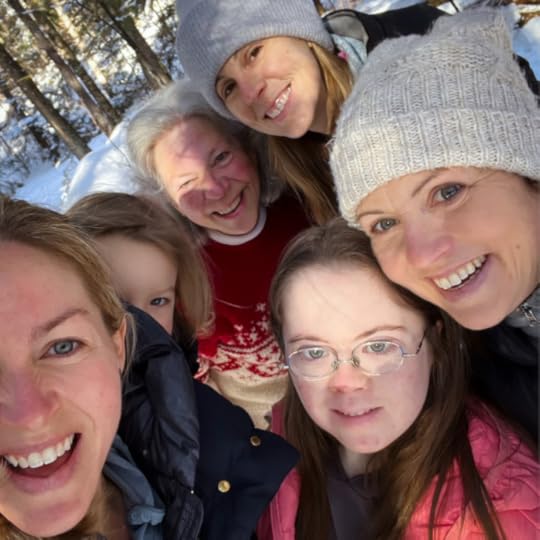
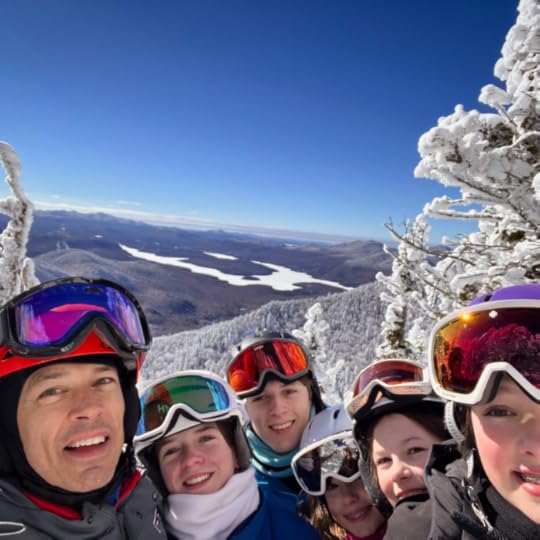
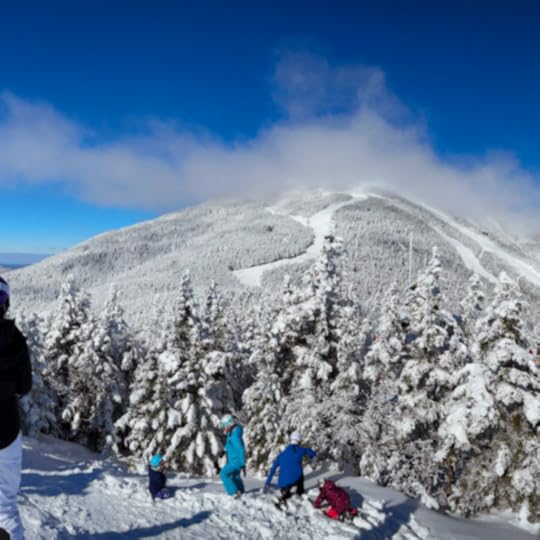
And then Marilee got better. And I got the car back. And we drove up to Lake Placid and met up with my mom, and one of my sisters and her family, and Peter’s brother and his family. And I remembered all sorts of reasons to be thankful.
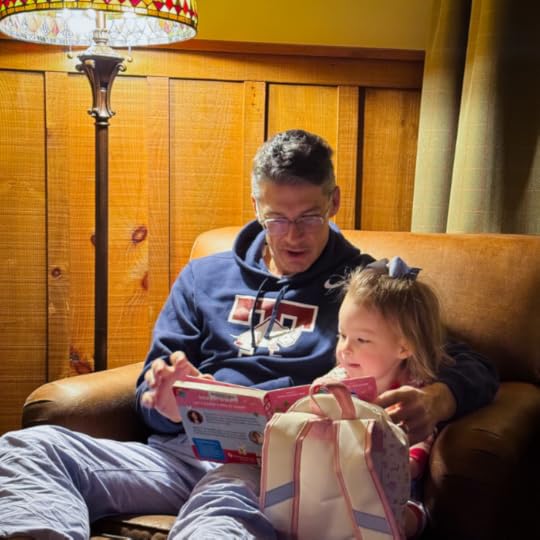
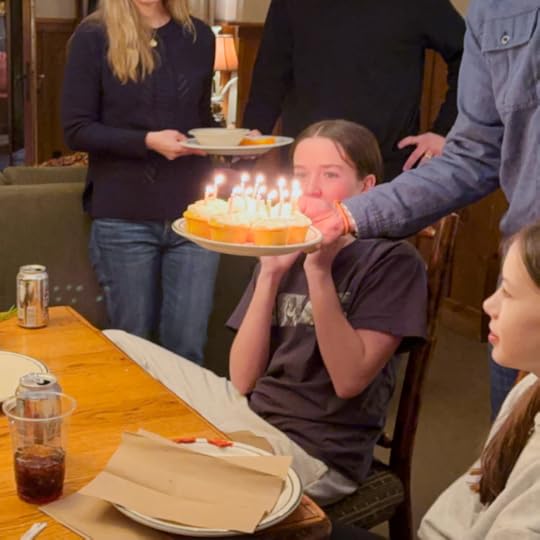
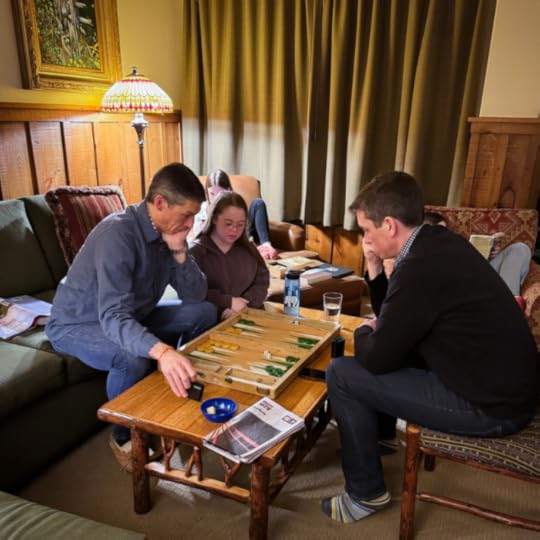
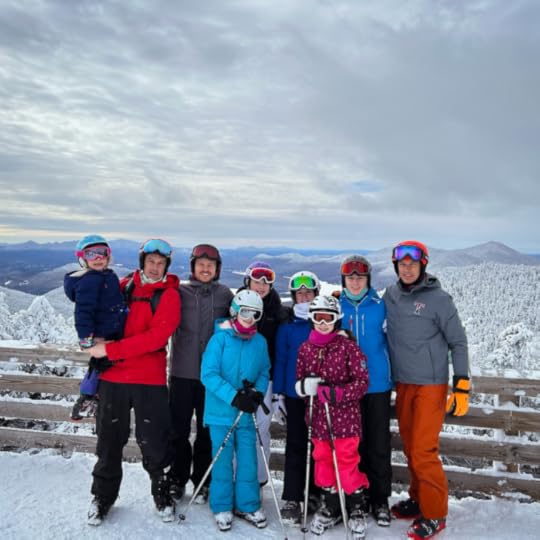
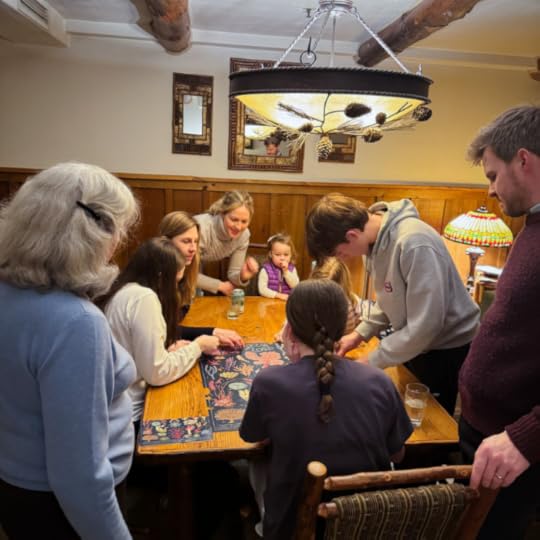
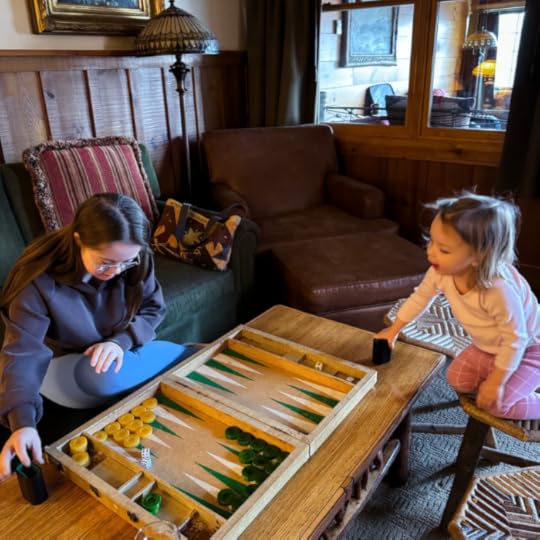
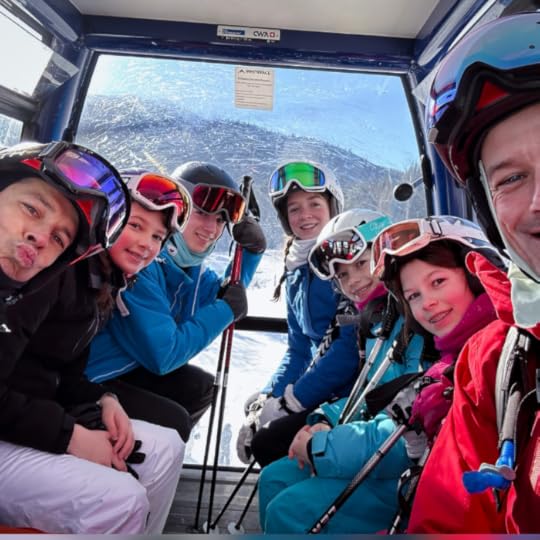
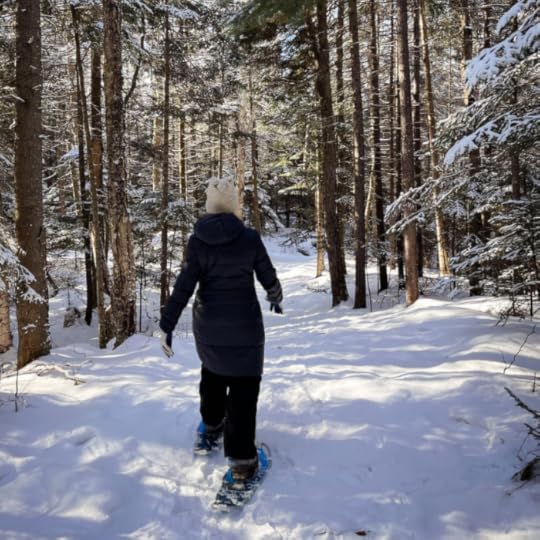
Snowshoeing in fresh powder.Driving through a valley with walls of snow and ice towering overhead.Watching Penny take care of her two-year-old cousin Cora.Celebrating Marilee’s birthday with lemon cupcakes her brother baked.Starting a good book. (Mary Louise Kelly’s It. Goes. So. Fast. )Three generations working on a one-thousand piece puzzle together.Listening to my sister and sister-in-law talk about their lives. Watching William ice skate for the first time in years. Introducing our cousins to Scattergories.Sleeping late. Seeing the world through the eyes of a two-year-old.My ordinary life will always have the frustrating interruptions of illness and weather and broken things. But this weekend was a reminder that it could also have the delightful interruptions of wonder and beauty and joy.


MORE WITH AMY JULIA:
It’s Always Too Much | Four Thousand WeeksRetreating and ReimaginingRecap of Holiday FunSubscribe to my newsletter to receive regular updates and news. You can also follow me on Facebook , Instagram , Twitter , Pinterest , and YouTube , and you can subscribe to my Love Is Stronger Than Fear podcast on your favorite podcast platform.
The post When Gratitude Interrupts appeared first on Amy Julia Becker.
February 4, 2024
Being Heumann
Can you imagine being denied the chance to even apply for a job? A job that you’re qualified for and that you’ve studied for and that you’re ready for, but being denied the chance to even apply because you have a disability? I just read Judith Heumann’s memoir, Being Heumann: An Unrepentant Memoir of a Disability Rights Activist, and her story of being denied the opportunity to teach is only one among many appalling and illuminating stories she tells.
I loved this memoir because it gave me a history of the disability rights movement. But I loved it even more because it gave me that history through the lens and the voice and the stories of one particular, remarkable woman. Heumann had polio when she was a young child. She used a wheelchair for most of her life, and she paved the way for families like ours to have access to education and to employment and to so many other rights.
For anyone who likes memoirs and who might be interested in learning—without feeling like you’re really learning too much—I recommend Being Heumann as an entry point into disability history disguised as a memoir.
MORE WITH AMY JULIA:
Favorites and AJB RecommendsMy Favorite Books of 2023Subscribe to my newsletter to receive regular updates and news. You can also follow me on Facebook , Instagram , Twitter , Pinterest , and YouTube , and you can subscribe to my Love Is Stronger Than Fear podcast on your favorite podcast platform.
The post Being Heumann appeared first on Amy Julia Becker.
February 1, 2024
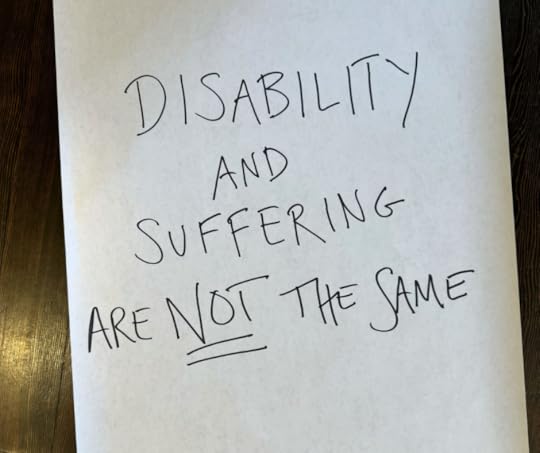
Disability and Suffering Are Not the Same
Disability and suffering are not the same. I was so disappointed to read John McWhorter’s misunderstanding of disability in the NYT. He wrote:
“To say that someone “has” a disability hardly distracts us from the fact that the person, inherently, suffers because of it — this is baked into the very concept of disability whether we utter the verb or not.”
Let me start out by saying I respect and admire John McWhorter and I benefit from his column regularly. My respect for him made me all the more concerned by his words.
There are a few problems, as I see it. One, many people have disabilities without suffering from them, our daughter Penny included. Penny was a healthy baby from birth. She got 8 out of 10 on her APGAR score, came home from the hospital after two days, and still gets sick the least often of all our kids.
Two, when people with disabilities do suffer from physical ailments, if we conflate that suffering with their disability, we run the risk of thinking that just as their disability is not changing, nor will their suffering. We should seek to alleviate suffering, which does not mean we are seeking to alleviate disability.
Three, when people with disabilities suffer from non-physical means, it is often from the attitudes of people around them. Disabled people suffer from exclusion. They suffer from loneliness. They suffer from discrimination. These social issues are not as a direct result of their disability but a direct result of bigotry within our culture.
Four, language both reflects reality and shapes reality. Disability and suffering are not the same, and our language should reflect that distinction.
MORE WITH AMY JULIA:
Helping Kids With Disabilities Move Toward IndependenceDisability and Self-Care Skills: Nail ClippingTurning 18 and Guardianship DecisionsSubscribe to my newsletter to receive regular updates and news. You can also follow me on Facebook , Instagram , Twitter , Pinterest , and YouTube , and you can subscribe to my Love Is Stronger Than Fear podcast on your favorite podcast platform.
The post Disability and Suffering Are Not the Same appeared first on Amy Julia Becker.
January 31, 2024
Helping Kids With Disabilities Move Toward Independence
For the moms who feel like they aren’t doing enough to help their kids (with disabilities) move toward independence, here are a few things I’ve learned:
“Not enough” is never a helpful narrative.You are doing and giving more than enough for your kids.
Supporting your child’s growth takes time.
Lots and lots of time. And even more time if your child has a disability. Time is a scarce commodity. Often, you will need to enable your child in some way (zip up the coat, tie the shoelaces, cut the fingernails, brush the hair, etc.) in order to get the family out the door. That’s not you having bad boundaries. That’s you taking care of the whole family.
BUT supporting your child’s growth does matter.
Instead of feeling overwhelmed by the endless list of things you could be doing, choose one or two things that really matter to you–and your child–and work on those. For us, that included learning to sip from a straw back in the early days and putting medication in days-of-the-week containers and doing laundry in recent years. We’ve decided not to tackle buttons, ponytails, or nail-clipping, at least for now.
You aren’t alone.
If you (and your child) pick one thing to work on, be clear about it with the other people in your child’s life too.
Remember that independence looks different from one child to another.
In our family, for Penny to participate in unloading the dishwasher, we needed to change where we keep some of the dishes. Otherwise, everything was out of reach for her.
Use shortcuts when you (and your child) need them.
There are lots of adaptive tools out there for all sorts of things, whether that’s a stool to help put things away on high shelves or a device that helps increase the ability to grip firmly.
Your child can probably do more for themselves than they do right now. BUT it also will take more of your time and attention in order for them to develop those skills. Your time and attention is in short supply for good reason, so just be gracious to yourself in only looking for one or two things to shift, ideally things that are meaningful to your child and to you.
(Thanks to the reader who prompted this post with her question!)
MORE WITH AMY JULIA:
Disability and Self-Care Skills: Nail ClippingI’m Working on a Video Teaching Series About Disability and FamilyTurning 18 and Guardianship DecisionsSubscribe to my newsletter to receive regular updates and news. You can also follow me on Facebook , Instagram , Twitter , Pinterest , and YouTube , and you can subscribe to my Love Is Stronger Than Fear podcast on your favorite podcast platform.
The post Helping Kids With Disabilities Move Toward Independence appeared first on Amy Julia Becker.
January Favorites 2024
Subscribe here!
Right now, my desk (and floor and bedside table) are overflowing with books. I order way too many books online. I receive way too many from other authors. And then there are the ones I asked for (and received) at Christmas. I’ve also got a list of shows and movies to watch. And a podcast queue that holds more than I can handle as well.
Lucky for you, I’m only going to share the ones that I’ve loved, in hopes that you’ll find something here to watch, listen to, or read and enjoy:
1. Movie: The HoldoversI loved this story of disruptive grace between a curmudgeonly teacher and a wayward student. (More of my thoughts about the movie here)
2. Memoir: Being Heumann by Judith HeumannI’ve heard Judith Heumann’s name for years because she was such a significant member of the disability rights movement. Her memoir is funny, witty, and infuriating. She details the barriers she faced as a disabled young woman seeking equal standing within our culture. I’m so grateful for this overview not only of Heumann’s life but of the disability rights movement in general.
3. Fiction: Touching Spirit Bear by Ben MikaelsenFifteen-year-old Cole is banished to an island after he severely injures a classmate at school. This survival story is about reckoning with his family, and with himself, on a path to greater self-awareness and acceptance. That all makes it sound kind of fluffy and vague, but I loved the way it embodied themes of resilience and the need for a mind/body/spirit integration. (When I finished this book, I gave it to both William and Marilee. Peter then stole it, and read it too. Penny read it in school a few years ago. In other words, it is a YA novel, but I recommend it for everyone. Disclaimer: there are a few super violent scenes in the beginning of the book.)
4. Podcast: NPR Code Switch: Everyone wants a piece of Martin Luther King Jr.’s legacyI’m grateful for this conversation about the lasting legacy of Rev. Dr. Martin Luther King Jr., the ways it has been distorted, and why it still matters…
5. Podcast: The Bible Project: What Does “Blessed” Mean?I’m thinking a lot these days about what makes a good life, so I loved hearing these thoughts from the Bible Project on how to understand the Beatitudes as an unexpected portrait of the good life.
6. Podcast: NPR: Facing Death, A Poet Searches For MeaningThis is a beautiful and haunting conversation about faith and despair and what gives life beauty and meaning with Christian Wiman and Terry Gross.
7. NYT Opinion: A Terrible Phone Call and What Came Next“The word ‘shared’ implies participation. When you share a meal, you are not merely one of two people eating. You are eating together. And so it should be with sorrow and joy.” What a touching, beautiful, and honest call to become people of true compassion.
Get my favorites delivered to your inbox each month!Subscribe here!
More with Amy Julia:
Favorites and AJB RecommendsMy Favorite Books of 2023Subscribe to my newsletter to receive regular updates and news. You can also follow me on Facebook , Instagram , Twitter , Pinterest , and YouTube , and you can subscribe to my Love Is Stronger Than Fear podcast on your favorite podcast platform.
The post January Favorites 2024 appeared first on Amy Julia Becker.