Amy Julia Becker's Blog, page 23
May 3, 2024
Penny in Her Own Words: Senior Trip
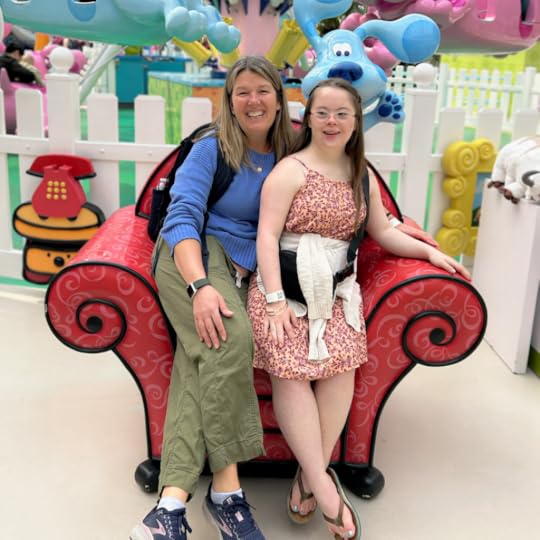
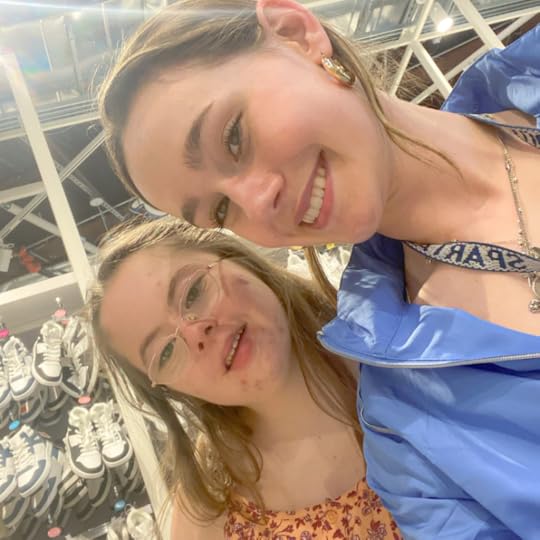
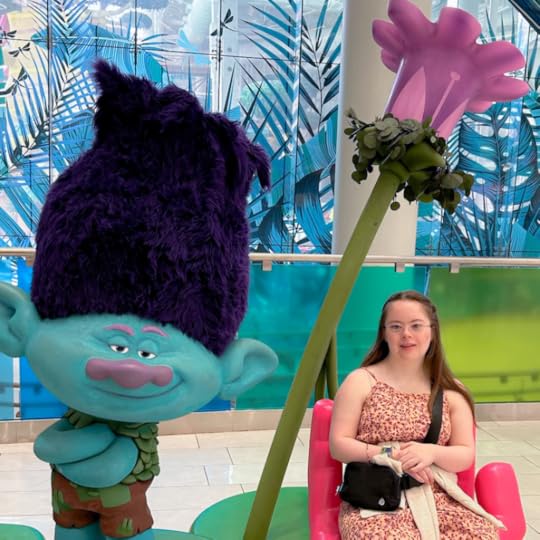
Life for our 18-year old with Down syndrome isn’t perfect, but it is good. Penny just spent three days with her class on their senior spring trip. I asked her to reflect on that time and on her experiences in high school. Here are her (unedited) words:
What were some of the activities you did on your trip?
Some of the activities on the trip were: Six Flags, Dave and Busters on day 1
Day 2- American Dream Mall and Medieval Times
Day 3- South Street Seaport New York
I know sometimes you haven’t felt totally included in activities with your classmates—did you feel included on this trip?
Great question and the answer is yes.
What can people do to help you know that you are welcomed?
People could fill me In on their daily conversations and or acknowledge me and include me In some way.
What was your favorite moment of the trip?
My favorite moment of the trip was probably either American Dream or Six Flags.
How did you feel when you returned?
I felt the bittersweetness because as much as I would have loved to connect more with friends, it was good to be back and see family again.
How have you been able to build friendships this year as a senior?
I feel like this year has been the easiest year to make friends, because, not only did I connect with friends on the Senior trip I have also been praying to make more friends and God has answered the prayer by helping me make even more friends.
How do you feel about your upcoming graduation?
I feel excited but also a little sad because even though I would like to still be at Shepaug with all of my friends who are younger than me, I also am ready to begin the next chapter of my life.

More with Amy Julia:
Penny In Her Own WordsPenny in Her Own Words: What I Want You to Know About My LifePenny in Her Own Words: Inclusion and High School Senior ProjectPenny in Her Own Words: Dear Parent, Congrats!Penny in Her Own Words: What I Thought About Netflix’s Down for LovePenny in Her Own Words: Working at The Po CafeSubscribe to my newsletter to receive regular updates and news. You can also follow me on Facebook , Instagram , and YouTube , and you can subscribe to my Reimagining the Good Life podcast on your favorite podcast platform.
The post Penny in Her Own Words: Senior Trip appeared first on Amy Julia Becker.


May 2, 2024
Our Love for Each Other Matters Most
What matters most is our love for each other.
Yesterday I had a chance to meet with two different groups of people from around the nation and around the globe—California, Canada, Georgia, Connecticut, Germany, New York, Vermont, Wisconsin, and more—for the inaugural session of Reimagining Family Life with Disability. Most of them were parents of children with Down syndrome or autism (or a dual diagnosis of both). Some of their kids were toddlers; others were navigating the transition to adulthood.
I was so grateful for all the different responses to the material we covered about the cultural messages and scholarly models of disability and what can be helpful and harmful about them. But what struck me most was the importance of our relationships and how we treat each other.
I shared an article with the evening group from the New York Times about “super-agers,” people who have not experienced the typical cognitive decline as they age. The researchers were surprised when they could only find one thing that linked these super-agers together.
“Some exercised regularly, but some never had; some stuck to a Mediterranean diet, others subsisted off TV dinners; and a few of them still smoked cigarettes. However, one consistency among the group was that they tended to have strong social relationships…”
The same is true for us as parents, and neighbors, and siblings, and friends. The health of our bodies and minds and spirits begins and ends with relationships. Yes, the advice of the experts can help our kids with disabilities. The visits to therapists and the latest trends in research matter. But what matters most is the social connections within our families and our communities. Friendship, love, connection—we don’t need to be experts to give these to one another. I was grateful to be reminded of that simple truth.
MORE WITH AMY JULIA:
The Highs are HigherPrioritize RelationshipsFree Resource: Missing Out on Beautiful: Growing Up With a Child With Down SyndromeSubscribe to my newsletter to receive regular updates and news. You can also follow me on Facebook , Instagram , and YouTube , and you can subscribe to my Reimagining the Good Life podcast on your favorite podcast platform.
The post Our Love for Each Other Matters Most appeared first on Amy Julia Becker.
Relationships Matter Most
What matters most is our love for each other.
Yesterday I had a chance to meet with two different groups of people from around the nation and around the globe—California, Canada, Georgia, Connecticut, Germany, New York, Vermont, Wisconsin, and more—for the inaugural session of Reimagining Family Life with Disability. Most of them were parents of children with Down syndrome or autism (or a dual diagnosis of both). Some of their kids were toddlers; others were navigating the transition to adulthood.
I was so grateful for all the different responses to the material we covered about the cultural messages and scholarly models of disability and what can be helpful and harmful about them. But what struck me most was the importance of our relationships and how we treat each other.
I shared an article with the evening group from the New York Times about “super-agers,” people who have not experienced the typical cognitive decline as they age. The researchers were surprised when they could only find one thing that linked these super-agers together.
“Some exercised regularly, but some never had; some stuck to a Mediterranean diet, others subsisted off TV dinners; and a few of them still smoked cigarettes. However, one consistency among the group was that they tended to have strong social relationships…”
The same is true for us as parents, and neighbors, and siblings, and friends. The health of our bodies and minds and spirits begins and ends with relationships. Yes, the advice of the experts can help our kids with disabilities. The visits to therapists and the latest trends in research matter. But what matters most is the social connections within our families and our communities. Friendship, love, connection—we don’t need to be experts to give these to one another. I was grateful to be reminded of that simple truth.
MORE WITH AMY JULIA:
The Highs are HigherPrioritize RelationshipsFree Resource: Missing Out on Beautiful: Growing Up With a Child With Down SyndromeSubscribe to my newsletter to receive regular updates and news. You can also follow me on Facebook , Instagram , and YouTube , and you can subscribe to my Reimagining the Good Life podcast on your favorite podcast platform.
The post Relationships Matter Most appeared first on Amy Julia Becker.
April 30, 2024
S7 E15 | Bringing Politics Under the Power of Love with Michael Wear
We are heading into another contentious Presidential election. For people of faith, for people who care about character and gentleness and values, for people who are inclined to disengage from politics altogether, what are we to do? Michael Wear, author of The Spirit of Our Politics, joins Amy Julia Becker to talk about:
His work as a staffer in the Obama White House How political anger and polarization malform individuals, families, churches, and communitiesHabits and practices for gentle, hopeful political engagementStewarding political influence for the good of our neighborsPolitics and identityWorkshop with Amy Julia: Reimagining Family Life With Disability
SHOW NOTESGuest Bio:
“Michael Wear is the Founder, President and CEO of the Center for Christianity and Public Life, a nonpartisan, nonprofit institution based in the nation’s capital with the mission to contend for the credibility of Christian resources in public life, for the public good. For well over a decade, he has served as a trusted resource and advisor for a range of civic leaders on matters of faith and public life, including as a White House and presidential campaign staffer. He is the author of The Spirit of Our Politics: Spiritual Formation and the Renovation of Public Life, a paradigm-shifting book that advances a vision for spiritual formation in the context of political life, and the author and co-author of several other books.”
_
Connect Online:
_
On the Podcast:
_
YouTube video with closed captions
_
Let’s Reimagine the Good Life together
Note: This transcript is autogenerated using speech recognition software and does contain errors. Please check the corresponding audio before quoting in print.
Amy Julia (5s):
We are heading into another contentious Presidential election. And I know that many of us are people of faith, and many of us are people who care about character and gentleness and values. Some of us are people who, in light of the divisions in our culture and our politics, are inclined to disengage altogether. Today we’re asking the question, whatever category you fall into, what are we to do? This is Amy Julia Becker, and you are listening to reimagining the Good Life A podcast about challenging the assumptions about what makes life good, proclaiming the inherent belovedness of every human being and envisioning a world of belonging.
Amy Julia (48s):
Today I am talking with Michael Wear, the founder, president, and CEO of the Center for Christianity and Public Life, which is a nonpartisan nonprofit institution based in the nation’s capital, and with the mission to contend for the credibility of Christian resources in public life for the public good For. Well over a decade, Michael has served as a trusted resource and advisor for a range of civic leaders, including President Obama on matters of faith and public life. He is the author of The Spirit of Our, Politics Spiritual Formation, and the Renovation of Public Life. And we get to talk about that book specifically today. One more thing, if you’re listening to this on the day that it actually came out and landed in your podcast feed, I want to remind you that the first session of my Reimagining, Family Life With Disability Workshop starts tomorrow.
Amy Julia (1m 41s):
And that means that there is still time to register. We’ll put a link for this Workshop in the show notes, and if you can’t make it this time, but you’re interested in taking it personally at a later date, if you’re interested in offering this Workshop to your group in the future, subscribe to my email list and you will be the first to know when the next Workshop is offered. All right, here is my conversation with Michael Wear. Michael, thank you so much for being here today. Thank
Michael (2m 9s):
You so much, Amy Julia. It’s so great to be with you. Yeah.
Amy Julia (2m 12s):
Well, I want to start with some backstory because I know that you were a staffer in the White House under President Obama, so we’re now going back in history, even though it’s like so much a part of my adult life. Yeah. But will you tell us about your time in the White House? Like what was your role there? How did you end up in that position? Because I do think it sets up what we’re gonna talk about in some ways that might be helpful.
Michael (2m 34s):
Yeah, so, so my role in the White House, I was in something called the the White House Office of Faith Based and Neighborhood Partnerships. And you know, I think a lot of people, you know, a lot of people will say, oh, you know, you worked at the, the White House, you saw politics up close, you know, you, and you saw like religion up close and religious leaders, you must be so, you know, disenchanted and this and that. I left the White House feeling more hopeful about the future of the country and the church than I was when I came in because my, my role was working with Christian organizations and leaders along with others who were serving those in need and that were doing good work around the country and and around the world.
Michael (3m 25s):
And so I met some of the most incredible people, you know, that I, that I’ve ever known during that time. And it was, you know, the, the, the, the office helps to connect organizations that are serving those in need with, with, with the government, with, with, with federal resources and seeks to partner with them in all kinds of ways. Hmm. And so, so that was my role for three and a half years. It wasn’t all sort of holding hands and sort of you, you know, but I, I don’t think there has been a time in my life in which I’ve been more prayed for Hmm.
Michael (4m 7s):
Than those those years in the White House, and they were really, really, you know, precious. It was a, it was a wonderful season. Yeah.
Amy Julia (4m 15s):
Oh, I love that. So what, I mean, this is really broad strokes, but if you were to say a couple of things that you learned from that experience that have shaped your understanding of both faith and politics, you know, how are you carrying forward that time as you think about both faith and politics now?
Michael (4m 32s):
Yeah. One, the conversation about politics is so often detached and removed from the work of politics. Hmm.
Amy Julia (4m 43s):
Can you say more on that? Like, tell me what that means.
Michael (4m 46s):
Yeah, I mean, one way to think about it, in, in, in the spirit of our politics in the new book, I, I share a term and concept that was developed by this political scientist, AAN Hirsch called Politicalism. Right? And a political hobby. Political, a political hobbyist as someone who, you know, might consume a lot of news. He a political hobbyist following all the latest sort of political gossip. They never actually get around to doing the work of politics. They never, they are both burnt out by politics and in some ways totally removed from it.
Michael (5m 31s):
Okay. Think of this as sort of politics as entertainment. And yet the actual work of politics is often not entertaining. It is often, it is often not splashy. And, and so, so, so that, that was something that was something I, I learned and, and that can, that can be specific people and organizations like learning, like yeah, there are some people who talk a lot about politics and some organizations that talk about politics a lot, but they, they aren’t really actually getting anything done.
Michael (6m 11s):
But, but, but, but it also like individuals, there, there are some individuals and organizations that, for a, an array of reasons when they’re communicating publicly or when they have a particular sort, when they’re in a particular setting might have one affect or might say one set of things. But then when you’re actually working with them, it’s a whole other story. So, so I just learned a lot about the culture of our politics and the work of our politics. You can be involved in political life and not submit to the logic of our politics.
Amy Julia (6m 53s):
Hmm. Yeah. So, again, will you say a little more about what you mean? That’s a great statement. Yeah.
Michael (6m 60s):
So one way I talk about it in the book is this, this idea, this term political sectarianism, which describes the kind of polarization we have today. And this political sectarianism doesn’t describe everything that’s wrong with our politics. It, it does help inform quite a bit of what’s, what’s what’s happening in our political life today. And the social scientists who developed it said that it’s made up basically of three parts, the tendency of aversion, which is the tendency to dislike or distrust. Those are who are politically different, the tendency of othering.
Michael (7m 41s):
So, so the tendency to other those who are politically different, and then the tendency of moralization or what I call a misplaced moralization, which is to elevate political difference to the level of dogma, to the level of inequity. And that the, the logic of that kind of politics, which is pervasive in our politics today, leads to some really drastic and destructive places, both for politics itself. So the social sciences lay out all the ways in which th this has links to governance and governmental dysfunction.
Michael (8m 22s):
But I think what’s closer, even closer to my heart is the, the ways in which the toxicity of our political culture is spilling over into and affecting and shaping the lives of our families, our churches, our communities, and individuals. And so, and, and so let me give you a concrete example. I, I, there’s a chapter in, in the book about gentleness, and I talk extensively about anger. And one of the things that I’m sorting through about how best to, how best to engage this thought.
Michael (9m 6s):
So, so, so in the chapter, I, I reject our sort of high esteem for anger and what it can accomplish in our politics. I have, I have been a bit confounded, I understand why, and I, I gave a talk on Capitol Hill to over a hundred congressional staffers on this topic. I understand why they have challenges understanding how they might be able to go about their work without promoting or, or seeking to, to steward or incite anger.
Michael (9m 47s):
There’s a professional sort of, there’s a, there’s a capital. What I’ve been really struck by is those with no political responsibility outside of being a citizen, you know, outside of who have real trouble contemplating what it would be like for them to engage in politics without anger.
Amy Julia (10m 12s):
Yeah. So, in other words, it is, can I make sure I’m understanding? Like, if you’re on the inside and you’re working for a politician, you’re going to say things that might incite anger, whether or not you intend to, but if you’re on the outside, like me, for example, like to assume that anger has to be a part of politics is like, well, just not true if nothing else. Like,
Michael (10m 39s):
Well, well, and also congressional, you know, one of the things that’s happening in our politics right now is that politicians are being asked to reflect the anger of voters. Okay. Yeah. And so, you know, it’s like a
Amy Julia (10m 53s):
Cycle
Michael (10m 53s):
Too, know. Yeah. Right. And so there’s this saying, you know, if you aren’t angry, you aren’t paying attention. Mm.
Amy Julia (10m 59s):
Right.
Michael (11m 0s):
As if, okay. The best thing that your attention could, the, the highest, the the highest response that one could offer to paying attention is their anger. Which
Amy Julia (11m 12s):
Is so interesting when we think about, I don’t know, I’ve thought a lot about the way in which love and attention are related. Yes, yes. That like, you can’t love something or someone you don’t pay attention to. Yes. And so I just wonder about even like, like having, and I actually, I think your book does this, but the contrast between like, if you’re not angry, you’re not paying attention to, and like, if you’re not loving, you’re not paying attention. Like, yes. And I, I’m sure there’s some people who would say that the anger and love are actually connected, but at least in terms of what we’re seeing in our country, that does not seem to be the case. So yeah,
Michael (11m 47s):
That’s helpful. Thank you. Right. And that should cause us to write, ask some, some questions about if, if we, so if we so often see anger disconnected from love, maybe that’s not a coincidence. Right. You know, like, like maybe anger doesn’t trend towards love. Yeah. Particularly, particularly a cultivated anger. So not anger as an initial reaction to, I think that’s a ne and Dallas Willard, and maybe we’ll talk about Dallas a bit. Yeah. My, my, my book is very much drawing on his work.
Michael (12m 28s):
You know, Dallas talks about, you know, anger as a natural impulse is not by itself sinful, but we need to be very well. So a, there’s a very clear scriptural admonition to be slow to anger, and it’s not be slow to unjustified anger, it just be slow to anger. And there’s like, we should, we should think about that. What, why, why is that? Why might that be? And we could look to scripture, we could also look to Augustine, to Howard Thurman to Dallas will, like, there’s long, rich history and resources are drawn here. But, but the real, I mean, Augustine writes, you know, we need to be careful about even opening the doors of our heart to even justified anger.
Michael (13m 15s):
Because once you let it in anger, confessor and twists and compound and take over. And that’s a lot of what we see in our, in our political life today. And what’s very important for folks to understand is that it is perhaps not even originating from our politics. So it’s one thing to say, oh, tho our, those politicians, we need to get those those bums out. And yeah, we need to get people of higher character in, and I’m all, I’m all for that. But if we think that the, the problem is solved just by changing the cast of characters involved, that that actually they’re responding to the incentives that the people provide.
Michael (14m 2s):
I’m
Amy Julia (14m 2s):
Giving. Yeah. Well, this actually, I wanna quote you as a part of exactly what you’re saying. You write, if we were a different kind of people, our politics would be different. And I wanted, I noted that because I just wanted to ask you to reflect a little bit about like, well, what kind of people are we and what would it take to become a different kind of people, which in some ways is asking you to like recap your whole book. But Yeah. At the same time, like, just in general, I love that if we were a different kind of people, our politics would be different, which I think is what you’re saying. But can you speak to Yes, yes. Who are we as a people and what would it take for us to change?
Michael (14m 35s):
Yes. So a contention of the book and of the Center for Christianity and Public Life, which is the organization I’m involved with, is that spiritual formation is central to civic renewal. That the, that the kind of people we are has much to do with the kind of politics and public life that we have. Now, it’s not a perfect one-to-one. So like there are a lot of problems with translating the will of the people into politics. But at the end of the day, our, the state of our politics as a reflection of the state of our souls. Hmm. And, and if we had a different kind of people, our politics would be different.
Michael (15m 16s):
Another way of saying that is that our democracy, both the beauty and the weakness of it, our democracy cannot get around the kind of people we are. TTSE wrote the, the, the sort of great human endeavor, which he thought was a fool’s errand. So this is an observation, not him saying this is a great idea. He said, you know, the, the, the, the great human endeavor has been to try to create a system so perfect that people no longer have to be good. Mm. And I think that is the primary political concede of our day that we could create a system so perfect. That we could have a system that pursues justice or reflects justice or Mm.
Michael (15m 60s):
Or without being a just people. Mm. We so often want our politics to do the work of being good for us instead of our politics reflecting our, our our, our own goodness. And, and so, so, so that’s what this, that’s what this book is about for people to take res, you know, we have a politics right now. They ask people to take responsibility for things that they have so little responsibility for who’s who, who, who wins the presidential election. And, and, and totally evades the responsibility, including the political responsibility that people, as Willard would say, is within the range of their effective will.
Michael (16m 40s):
Yeah. Like, are the things that they actually have say over. And so
Amy Julia (16m 44s):
Like, like she is on your local school board. I mean, if we’re talking politics, right? Like, I mean, local politics being one part of that.
Michael (16m 50s):
Well, it’s certainly, that’s certainly closer to, but it’s also when you’re in a political discussion, do you do, do you twist the truth? Do you lie Mm. Yeah. In order to win the argument. Yep. Are you willing to belittle people or intimidate people with expressions of anger to get yourself out of a sticky situation? Right.
Amy Julia (17m 21s):
Well, and you give some examples towards the end of the book, like practices of reading wisely and widely and trying to actually come up with arguments against your own political perspective, assuming there are actually good ones out there, even if you won’t end up agreeing with them, you know, so, and those are really helpful. But I wanna, before I keep going, I do wanna ask you to just give the Dallas Willard, you know, 1 0 1 because he is clearly so influential in this book. And I’m someone who’s read probably, probably three books by Dallas Willard, and I’ve listened to some of his talk, so I do have some background. I’m assuming many listeners do not. Yeah. So could you just tell us about Dallas Willard and why he is so prominent in what you’re doing in this book and in general?
Michael (18m 4s):
Yeah. So Dallas, he passed just over a decade ago. He was a philosopher. He taught at the University of Southern California for almost half a century. He was chair of the philosophy department for a time. He was also, so USC is a, is a secular state school. UUSC. Willard was also a Christian teacher, author, pastor at various points during his life. And I came across his work within my first six months of working at the White House, I was, someone sent me a copy of The Divine Conspiracy.
Michael (18m 46s):
And at first I didn’t think I had time to read it. And then for a number of reasons, I decided to pick it up. And it, it was like a second spiritual awakening in my life. And I could talk quite a bit about why, why that was Dallas thought Jesus’s gospel was the announcement of the availability of the kingdom of God in the here and now for, for whoever would stumble into it. Yeah. And he thought that he wrote a book, the Great Omission. Hmm. Which is about the, the omission of the making of disciples from the Great Commission. Hmm. And he thought dec, he thought discipleship was about, and really the Christian life, like the point of life is to learn from Jesus how Jesus would live your life if he were you.
Michael (19m 41s):
And this vision of formation is more than intellectual head knowledge. It’s more than what you do on retreats or what you do in your quiet time. It’s for all of life. And this, this book draws on Willard A just because my, my own views are just so informed by, by Dallas, again, going to the beginning of our conversation, when people hear about politics, a whole range of, I think, unhelpful assumptions and dispositions are brought to mind. And this, this book is about how do we place politics and our political lives within and under the life we’re living with Jesus.
Michael (20m 28s):
Hmm. And so I think people who pick up this book will be, might be surprised to find that it’s a spiritual formation book first. Right. Not a political, not a political book. And Willard was someone who taught during the eighties and nineties and two thousands very complicated times in American public life when it came to religion. And he was someone who never took his eye off the ball. There, there, there wasn’t a season of Dallas’s life where, you know, he, he sy anonymized following Jesus with supporting, you know, political candidate or a particular policy issue.
Michael (21m 10s):
And, and, and so Dallas is, I mean, a conversation partner for me just in living my life, but also has just greatly informed my views in on, on a number of things, including, including politics.
Amy Julia (21m 23s):
I love that so much, and I think it plays right into a question I have for you. This is another quotation. The crisis today is not from your book. The Crisis today is not that Christians are politically homeless, but rather that they ever thought they could make their home in politics at all. And I’ve heard so many people describe themselves as politically homeless, and we could, you know, think about why that is. And yet I’d love to hear you talk about the problem with thinking that we can make our home in politics.
Michael (21m 53s):
Yes. Politics, I, I advance some, some principles for thinking about politics in the book. One of them is that politics is not ultimate, but penultimate politics is prudential not dogmatic. And, and, and if we get, if we get these things confused, if we treat politics as a grantor of identity,
Amy Julia (22m 26s):
Right,
Michael (22m 27s):
Then we will find ourselves subject to its logic, which is not the logic of the kingdom of God.
Amy Julia (22m 37s):
So can you, I wanna ask you about two things there. Like what, tell me the difference between the logic of politics and the logic of the kingdom of God.
Michael (22m 45s):
I think Dallas’s primary concern with politics is its ability to create a sort of pseudo reality. A a kind of pseudo set of knowledge. So, you know, how how political decisions are made in a democratic society is not by knowledge, but but by advocacy. Hmm. By by, by winning a vote. Yep. And for Christians, I if, if we are, if engaging in politics, not with our feet planted in the gospel, but with our feet planted in politics saying, well, politics is its own sort of, you know, we need to make sure that we’re effective in politics.
Michael (23m 28s):
And so that means sort of not just playing by its rules, but by, by taking on the tools of politics, all of them, including those that, that, that I don’t think Christians would, would, would pick up that then we are making discipleship, we are making faithfulness the, the, the possibility of it incoherence. Hmm. But what we often tell ourselves is like that politics doesn’t count, just like we tell ourselves. Other areas of our life doesn’t count. Well, you know, running a business, you know, everyone who runs a business like mine end of the year comes up, you know, the numbers aren’t quite making sense, but I I, I know the business down the street.
Michael (24m 17s):
I I know that he, you know, he moves some numbers around. Yeah. And, and that’s just the way things go. That’s just, that’s just how things operate. So I’m not, I’m not any, I’m not, I’m not operating by anything other than the status quo of my field. And people go into politics, which with much the same sort of rationalization, which is like, yes, I wouldn’t talk to people in my, in my real life or in my normal life, the way that I talk to people when politics is sort of on the table. But, but it, this is politics. Politics ain’t beanbag. And what’s amazing to me is, I mean, just to, people will say politics ain’t beanbag who don’t have any who, who aren’t press secretaries for politics.
Michael (25m 4s):
You know, they’re just living their lives. Right. But that’s how pervasive and how powerful sort of the political logic can be that we actually take it on for ourselves when instead Christians have resources to draw on that we can bring with us to politics. Hmm. That, that, that we can actually, that would, if we took them up, change the incentive structure that our politicians are responding to. But too often we’re in the place of actually sacrificing the, the knowledge that we have in favor of a, a political knowledge, which has failed in its own right. But, but has certainly failed in light of, in light of what we know to be true about the kingdom of God, about the kind of people we need to be, to be successful in politics.
Michael (25m 52s):
Hmm. And that, that just has to be rejected. And just one note here, Amy Julia, which is, I, I hope, I hope, I hope folks, this does not just apply to politicians. Th this is, this is for you in the life that, that you are living, that I’m living. We, we want to place all of it under the jurisdiction of love. So, so, so God’s kingdom is the range of his effective will. Okay. Where what he wants done is done. Willard would say each of us have our own sort of, our own kind of little kingdoms where the range of our effective will, where what we want to be done is done.
Michael (26m 42s):
And at least in this context, the American context, Canadian context, democratic societies, politics, falls within the range of our effective will. Not everything that happens in politics, but our votes, our, our, our political participation, however far that extends and what it means to follow Jesus, is that we are learning from Jesus how to place that which is within the range of our effective will within and under his will. Right. And his reign. And, and, and there is knowledge available about what that we, we, we don’t just make it up with the, it’s righteousness and justice, gentleness and kindness.
Michael (27m 25s):
Yeah.
Amy Julia (27m 26s):
Well, and that leads to, I have a couple of different questions, but I I think I’ll skip ahead in my own notes to the idea of spiritual formation as something that really shapes and forms our political engagement. So I’m curious if you could just speak to some of the habits or practices that could lead us towards a different type of political engagement, because we’ve been spiritually formed in a different way because we’ve been becoming those types of people because we’ve been actually seeking to participate in the logic of the kingdom of Jesus instead of the Yeah. The kingdom of Yeah. Political superiority.
Michael (28m 5s):
Yeah. So, so in the book I offer, I, I do two things. I seek to connect historical practices of the faith that have served the church well, that we find in the life of Jesus, and connect how they might relate to our political lives. Okay. So these are things like celebration and worship and study. And I think particularly important in this time and place, silence and solitude, and I’ll, I’ll just, just a couple words there. What we are, we are just inundated with messages and grasping and people vying for our attention and our affections.
Michael (28m 53s):
Hmm. And what silence and solitude can do is they can help remind us that we are more than just the sum of the various inputs that we’re receiving. Willard said, you may find that you have a soul and be conscious of, of that. You, you, you may find that what you were so sure of when you were in the to and fro of our public life, you know, you don’t even realize it, but you know, you get news updates on your phone and they’re communicating something. But in silence and solitude, you may realize that maybe your political enemies aren’t exactly what you had built them up to be.
Michael (29m 39s):
In your mind. The, you know, maybe they’re failed imperfect human beings just like you and Right. Maybe they have, or a mixture of motivations and that kind of thing. And so, and so I I I talk a, a, a good deal about silence and solitude, prayer. It’s, and, and so fasting. Then I also offer kind of what I, what I call sort of 21st century disciplines that are for this particular moment. A as you said there, there are things like, there’s a section about how we consume news and thinking about how to approach news.
Michael (30m 20s):
There are things like breaking group think. There are things like bearing one another’s burdens and what that might look like in our political life. Yeah. And, and so these, these practices and what’s really important, I think sometimes when people hear about practices, they think all, gosh, another checklist of things that I need to do to, to qualify as a good Christian. And that’s not what this is at all. What it is is, you know, assess your own life and what, what are the, when you are in a political discussion or when you are, when you are thinking about voting, what are the things that happen in and through you?
Michael (31m 8s):
And disciplines can be sort of off the spot training so that we can, so that we can act when we’re on the spot in a way that is consistent with Yeah. And, and has integrity with the kind of person that we’re seeking to become. Yeah.
Amy Julia (31m 31s):
Yeah. I have a couple questions. This is backing up a bit in what you said, because I’ve also been thinking about the way, and I think this is actually, well, sorry, I am thinking about some studies that have shown that parents are more, are concerned now about their children marrying someone from the opposite political party Yeah. In a way that they used to be about race or religion, right? Yes. Like it used to be like, oh no, you can’t marry someone who’s not from our church essentially, or you can’t marry some, so, and which I think is an in indication of the ways in which politics has become a form of identity in a different way than it was in the past. Yes.
Amy Julia (32m 11s):
So I’m curious why that is the case. Like why has politic politics and identity become more enmeshed or whatever it is, than, than it used to be? Where do you think that’s coming from?
Michael (32m 24s):
Yeah. I, I think there are a number of reasons. One of them is just the increasing sophistication reach and financial resources behind. And in our politics it is political parties do not need to be treated as brands or as sources of identity. There is another conception of a political party, which is a vehicle for mediating difference, political difference, not just between the parties themselves, but within the parties. And, and if you think of political parties in that way, then it’s, it’s quite foolish to be treating political parties as a source of identity.
Michael (33m 16s):
’cause the whole point of them, well, I mean in just what we see in history and like not re look at the party platforms for either of our parties from 2020 to 2008. And there are some through lines that you could find, but also massive changes just over the course of 12 years. Right. That, that there are two political, there are two platforms in between those, those platforms. Y you know, and, and so, but here, here’s the thing. If, if, if, if, if we can be made to treat our political parties as brands, as, as things we identify with, as things that we take our marching orders from, that does make the job of political parties so much easier.
Michael (34m 7s):
So if their job is actually to mediate difference internal to the party, but instead what, what the actual practice is, whatever the party decides actually filters down as opposed to difference being reconciled and filtered up Hmm. Then, then that, that, that really, like, that’s really convenient for political parties. Right. But that’s not the way it has to be. It’s not the way it, it should be. It’s not even a, a sensible, sensible way of approaching things. There are other things, I mean, right. Amy, Julia, we could talk about people are increasingly going to politics to fill and meet spiritual and emotional needs.
Michael (34m 50s):
They typically could have met elsewhere. But, you know, and this goes into, you know, without having time to go deeper, it’s, it’s, it gets in the language of tropes, but I mean, all the, we have an individualized atomized society, mediating institutions, which have long been a distinctive of American culture are still there, but they’re thinning out the church attendance is plummeting. Right. The rise of religious disaffiliation is, or the, the level of religious disaffiliation is rising. So like all of these tectonic shift plates contribute, contribute to that as well.
Michael (35m 31s):
So it’s, it’s multi-variable, but I, I think it’s, it’s clear that it’s happening and, and that’s part of what political sectarianism is, is trying to put a framework around and trying to, trying to categorize.
Amy Julia (35m 44s):
Yeah. Thank you so much for that. And I’m, so, I’m curious, I I have a couple other things here like trying to dig down. One is just that I have a lot of people in my life who are basically like, okay, this is a mess. It’s, there’s so much divisiveness, there’s so much vitriol. I just wanna check out of it. Yeah. Like, isn’t that the right, like, isn’t just walking away, given our current situation the best thing to do, what would you say to those listeners, to the ones who want to disengage entirely?
Michael (36m 11s):
Yeah. As you know, assuming these are, you know, Americans, right. You know, you know, as a citizen, you do not choose to have political influence. You already have it. Hmm. The only choice you have, the, the real choice you have is not whether you have political influence or not. And not even whether you’re using your political influence or not. But, but, but how, Hmm. Are you stewarding the influence that you have as is what is driving you the level of emotional satisfaction you do or do not get from our politics?
Michael (37m 1s):
Or is there something else? I’ve, I’ve argued that politics is an essential forum in which we can love our neighbors. Not the essential forum, not the only, but an essential forum. And so what we just wanna steward the limited influence that we have towards the good of our neighbors as, as an, as an outflow of and originating from the love that we have for God. Hmm. One thing I would just encourage people to consider is, you know, we’re now multiple decades into institutional disengagement, including from our political institutions.
Michael (37m 44s):
So the, the, the, the number of political, the percentage of political independence in our country. So you, so some people would think, well, you know, we’re, we’re more divided than we ever have been. The political parties seem to be more extreme than they ever have been. I I am sure that this means that the political parties are stronger than they ever have been. No, they’re actually weaker than they ever have been. We actually have the highest percentage of Americans who identify as politically independent as ever before.
Amy Julia (38m 16s):
Oh, fascinating. I didn’t
Michael (38m 17s):
Know that ever before. So a plurality of Americans identify as politically independent. And so one thing we need to consider is whether the very kind of people who want to withdraw from our politics because it’s too divisive, too angry, too, too trivial. Our, our political culture is too trivial, are the very kinds of people that our politics needs. Right. The very kinds of people our politics needs. And what I would argue has been ha one of the things that’s happening is that the, the actors who make our politics so toxic are driving people are who I like, I don’t, I don’t have time for this.
Michael (38m 60s):
I don’t want, and so they, they drive them out and then they just claim more and more territory. Right. And so our politics just gets more and more toxic, not because they’re even necessarily winning, but just because others are just vacating the the playing field. Right. That I hate to use that sort of, but, but, you know, they’re, they’re vacating our, our, our political life. Hmm. And so, you know, we should, so, so that, that might be something to motivate a healthy, healthy engagement as opposed to a withdrawal, which is, you know, like the cavalry isn’t coming. Like you, you actually, what you identify as wrong in our politics is actually spot on.
Michael (39m 46s):
But the beauty and weakness of our democracy is that our democracy can’t get around the kind of people we are.
Amy Julia (39m 55s):
Right.
Michael (39m 56s):
And, and so who, who’s, who’s, who’s there, who’s showing up?
Amy Julia (40m 2s):
Well maybe that’s a good place to kind of land this conversation. I was wondering, you know, this is a podcast about reimagining the good life, kind of using our imaginations to say, is it possible for things to change or for or to be different in ways that are hard for me to imagine? And I was thinking about one of the ways that I do, I’m able to imagine things that seem impossible is by seeing other people who’ve either done it or are doing it. And so I was curious whether there are examples of people of faith who’ve engaged politics in the past or in the present in ways you at one point called politics. Like something we can do as an act of loving service.
Amy Julia (40m 44s):
Like who, who has done this or who is doing this? Can you share that with us?
Michael (40m 48s):
Yeah, yeah. I mean, I think in some ways count, you know, countless people, I talk in my book about the experience of Ruby Bridges, and I won’t sort of recount that No. Here. But I, I think that’s a, a really valuable and challenging witness. I mean, I think as you look through history, I mean right. Like you think about the Wilber forces, the, the, the kings, the Fannie Lou Hamers. But I, I think what I’d like to point out to folks is like, most of how this happens is, you know, relatively like unnamed people who are just faithful.
Michael (41m 33s):
Like I I have a friend who spent the last couple of years doing hard thankless work around issues involving the, the community pool in his town. Yeah. He is someone I think of because, because there, there’s a real need. He, he identified a real need, a civic need Yep. That involves self-governance, that is a, a, a, a, the product of and requires community decisions, civic decisions. And he said, I’m not just gonna be a bystander.
Michael (42m 15s):
I’m gonna, I’m gonna be a part of this. Even though like it gets, it gets political because if the money is being spent on the community pool, well, where isn’t it getting spent? Right. And then he has to ask himself, well, I got involved in this because of the community pool, but that doesn’t necessarily mean that I oppose, you know, now, now I’m, you know, as a hypothetical, you know, that doesn’t necessarily mean I oppose the, the tennis court. Right. Or, or raising the pay of the county clerk. You know, like it’s so all you know, you get and it’s, it’s messy and it’s, but, but, but that’s, that’s okay. Politics is a prudential area of life. God is not looking over our shoulder ready to discipline us for a poor political judgment.
Michael (42m 58s):
We are just seeking to, in, in the place and the time in which he’s called us to use what we have and to steward what we have in a way that reflects our love of him and love of neighbor. And I could tell you countless, countless stories of seeing that in our public life. I see it. Our, the organization I I’m involved with, we serve young professionals, we serve elected leaders, and these are people who are imperfectly seeking to learn from Jesus how he would live their life if he were them. And it’s, it’s a beautiful possibility.
Michael (43m 40s):
And if we were, if we were able to gain an imagination for it and live into that imagination, like, like the eunuch and a, in Acts eight, if we were able, if we were, if we were people who were so captured by the gospel that as we were Dr. Riding in, in our chariot, we saw water and said, what, why, why, why shouldn’t I get baptized? Yeah. Is isn’t this the next thing that Jesus is calling me to do? What if we went through our public life, our politics, and said, look, look at that. I, I mean, and actually I, I’ve never, in the case of my friend, he literally saw a pool of water and said, you know, maybe, maybe the Lord is calling me to get involved here.
Michael (44m 28s):
Mm. And and, and that’s not the whole of life. That’s not that, that’s not the only area of life to which we’re called to do this. But that’s, that’s kind of the point. We’re, we’re living a life with Jesus with the whole of our lives. And for, for all of us listening, I, I would venture that includes politics.
Amy Julia (44m 52s):
Hmm. Michael, thank you so much for your time, but also for your book and for your work, just your ongoing faithfulness to this calling. And I haven’t said this already in this conversation, we didn’t get a chance to talk about it, but I just wanna also emphasize the fact that this is not a book for the right or the left, which perhaps has been evident by the conversation and that we haven’t been running down kind of rabbit trails of, you know, but what do you think about this issue? Because yeah, I think so much of what you’re writing about is the posture of the heart and the ways in which we can actually engage issues that have good arguments on the left and the right with a different posture and actually have a new imagination for where we might end up as a people.
Michael (45m 38s):
Yeah. Thank you. Thank you for That’s exactly right. And I just so appreciate you and your work and really lovely to have a conversation. Hmm.
Amy Julia (45m 47s):
Thank you. Thanks as always for listening to this episode of re-Imagining the Good Life. I’d love for you to take a minute to rate or review or share it with others. Don’t forget to subscribe to get email updates, learn more details about this Reimagining Family Life With Disability Workshop. And I would love to hear from you. My email is Amy Julia Beckerwriter@gmail.com. I wanna end with thanks to Jake Hanson for editing the Podcast to Amber Beery, my social media coordinator, who does everything else to make sure it happens. And thank you for being here.
Amy Julia (46m 28s):
I hope this conversation helps you to challenge assumptions, proclaim the belovedness of every human being, and envision a world of belonging. Let’s reimagine the good life together.
[image error]Apple Podcasts[image error]Spotify[image error]CastBox More!
More!
Learn more with Amy Julia:
To Be Made Well: An Invitation to Wholeness, Healing, and Hope S7 E 13 | When Your Church and Political Group Turn on You with Nancy FrenchS7 E1 | The Hope and Hurt of Being Black in America with Esau McCaulleyIf you haven’t already, please subscribe to receive regular updates and news. You can also follow me on Facebook, Instagram, Twitter, Pinterest, YouTube, and Goodreads, and subscribe to my podcast on your favorite podcast platform so you don’t miss an episode.
The post S7 E15 | Bringing Politics Under the Power of Love with Michael Wear appeared first on Amy Julia Becker.
April 26, 2024
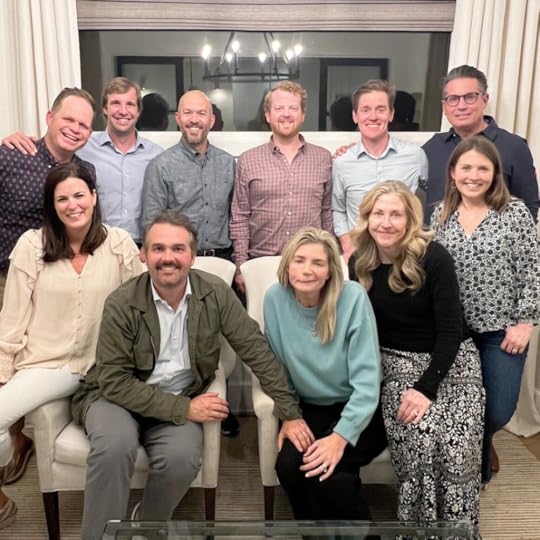
Hope Heals Board Retreat
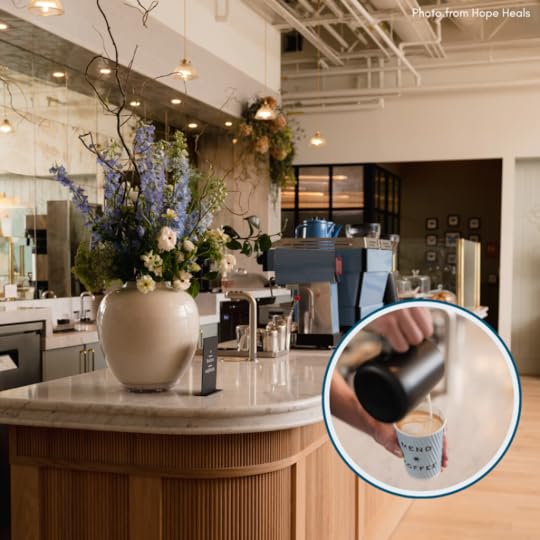
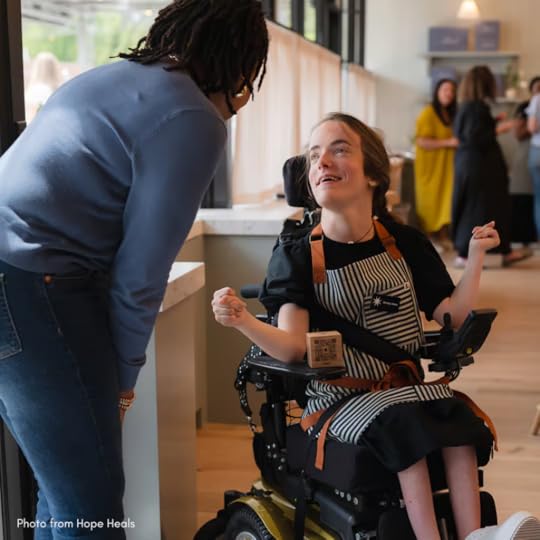
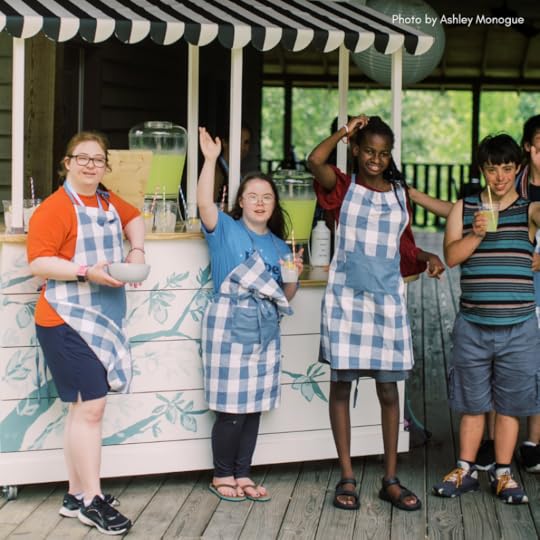
I have the great honor of serving on the Board of Hope Heals. What a gift to spend 36 hours with these fellow Board members as well as members of the Hope Heals staff. I am so encouraged to celebrate the opening of Mend Coffee and Goods and the launch of Treasures in the Dark, while also looking forward to four weeks of camp this summer.
We were reminded of Hope Heals’ mission in our time together, which includes an emphasis on “inter-ability spaces.” In other words, Hope Heals is not a disability advocacy group, per se. It’s not a disability ministry, per se. It’s a ministry to all of us who want to live with one another, who want spaces of true belonging that extend beyond the social hierarchies and barriers we so often erect.
I hope many of you who read this post can come to camp some day (as a camper or as a volunteer), or drink a cup of coffee at Mend, or even just subscribe to the Hope Note. All of these different sacred spaces give people of all abilities a seat at the table, including me.
MORE WITH AMY JULIA:
Prioritize RelationshipsCOMMENT MAGAZINE | The Blurring Is Part of the BeautyTell Your StorySubscribe to my newsletter to receive regular updates and news. You can also follow me on Facebook , Instagram , and YouTube , and you can subscribe to my Reimagining the Good Life podcast on your favorite podcast platform.
The post Hope Heals Board Retreat appeared first on Amy Julia Becker.
April 22, 2024
The Highs are Higher
“The highs are higher and the lows are lower.”
Peter and I used to say that a lot about having a child with Down syndrome. In recent years, the emotions around Penny’s experience haven’t been as extreme as they were in the beginning. I’ve never felt totally comfortable sharing the “lows are lower” experiences, and that is all the more true as Penny becomes an adult.
Still, the “highs are higher” days are worth sharing, and we just had one of those.
As a backdrop, I’ve kind of been dreading going prom dress shopping with Pen. I don’t particularly like shopping. I’m not good at it. And Penny’s petite frame makes it hard to find dresses that fit. Not to mention, who wants to shop for prom dresses with their mother?
But we had a plan. Over spring break, once we returned from a quick trip to Atlanta, we would find a dress.
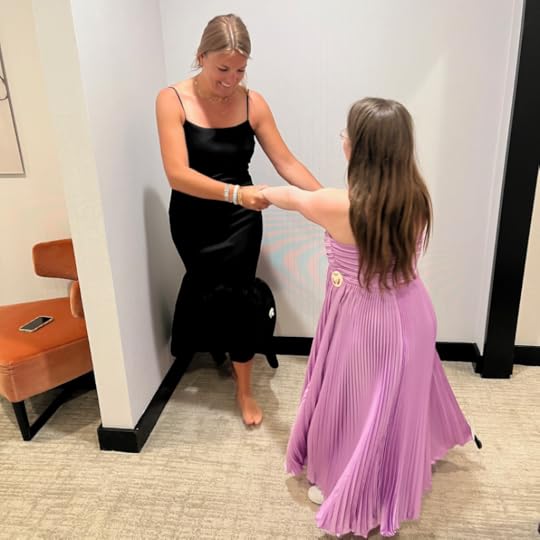
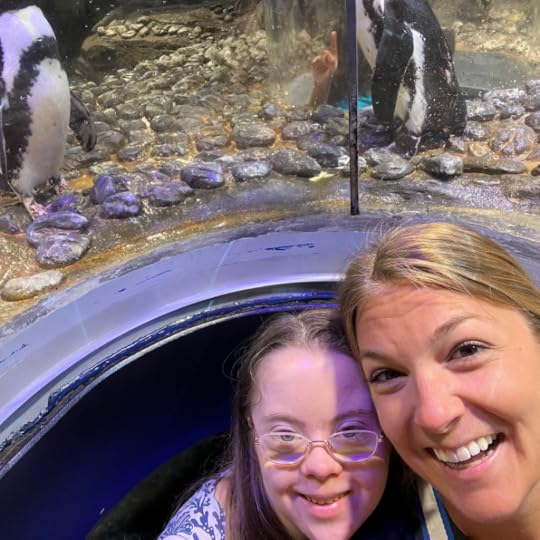
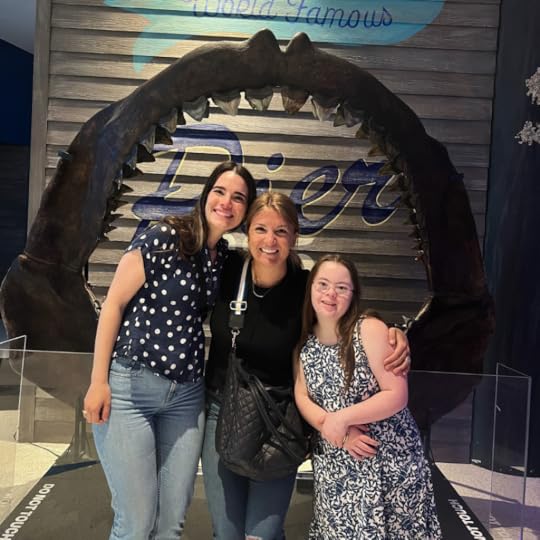
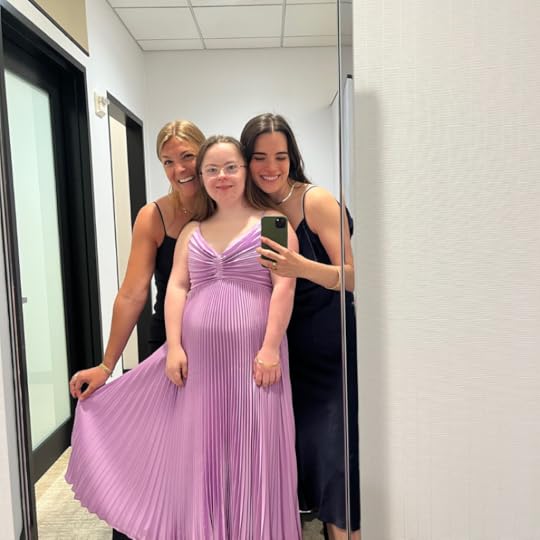
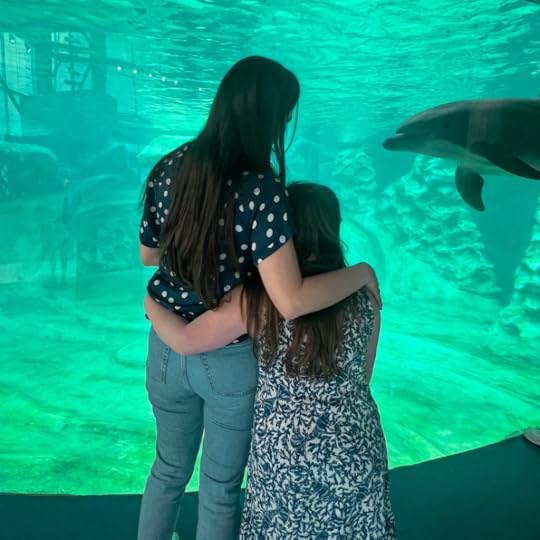
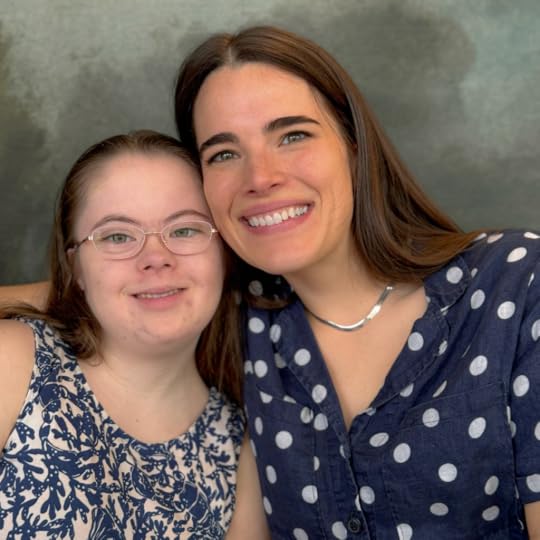
Then, when we were in Atlanta, we mentioned the prom dress shopping plan to two young women who are friends and mentors for Penny. Alex and Caroline are both staff members of Hope Heals, and they were planning to spend an afternoon with Penny, with a trip to the aquarium and the ferris wheel and then head over to Caroline’s house for a girls’ night. It was already a dream-come-true moment, and then they lit up with the thought that perhaps I would be okay with them taking Penny dress shopping instead.
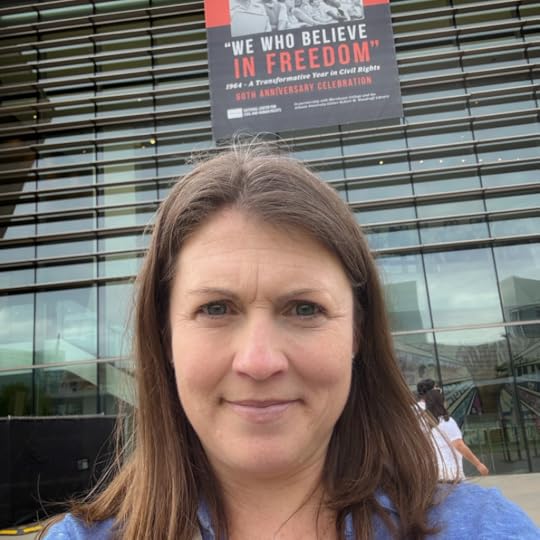
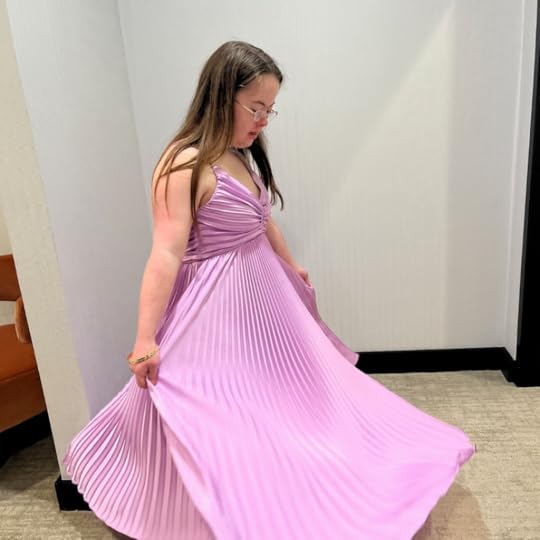
So. I went to the Civil Rights Museum, and they went to the mall. Not only did they spend the next three hours trying on dresses, they found the perfect dress. It is lovely and it fits and it met our budget and Penny felt celebrated and seen.
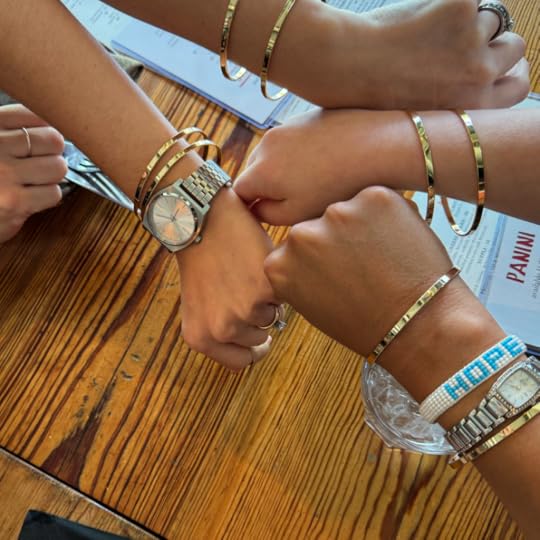
I saw the photos of them together and could have cried with joy and gratitude.
Yes, sometimes, the lows are lower. And sometimes the highs are higher too.

MORE WITH AMY JULIA:
Workshop: Reimagining Family Life with DisabilityPrioritize RelationshipsSubscribe to my newsletter to receive regular updates and news. You can also follow me on Facebook , Instagram , and YouTube , and you can subscribe to my Reimagining the Good Life podcast on your favorite podcast platform.
The post The Highs are Higher appeared first on Amy Julia Becker.
April 21, 2024
Denied Treatment and Education?!?
“People with developmental disabilities were granted the legal right to treatment in 1974…”
–Exhibit Traces ‘Unfinished Journey’ Of Those With IDD
Okay, wait. I know a lot about disability rights and their history. I knew that kids with Down syndrome weren’t guaranteed an education until my lifetime. I know that discrimination still exists in the workplace and so many other spaces.
But I had no idea that it was once perfectly legal to deny medical treatment to people with developmental disabilities until I read this article about an exhibit in Minnesota.
We’ve come a long way. We’ve got a long way to go.
That’s one reason I’m offering my brand new workshop: Reimagining Family Life with Disability. I want our imaginations to be shaped by possibility rather than by fear or inaccurate assumptions as we take steps toward a good, connected, purposeful future for our families. Join me!
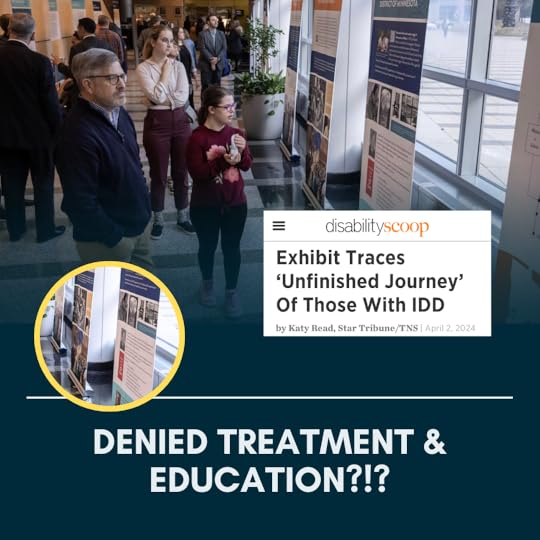 Top graphic is a screenshot of disability scoop’s cover photo: Lee Shervheim, left and his daughter Emie Shervheim 20, look over the exhibit “An Unfinished Journey” in the Federal Courts lobby of the U.S. Courthouse in Minneapolis. (Jerry Holt/Star Tribune/TNS). Below is text that says: Denied Treatment & Education?!?
MORE WITH AMY JULIA:
Workshop: Reimagining Family Life with DisabilityHonoring Women’s Hard ChoicesAssume That I Can, Maybe I WillSubscribe to my newsletter to receive regular updates and news. You can also follow me on Facebook , Instagram , and YouTube , and you can subscribe to my Reimagining the Good Life podcast on your favorite podcast platform.
The post Denied Treatment and Education?!? appeared first on Amy Julia Becker.
April 18, 2024
Prioritize Relationships
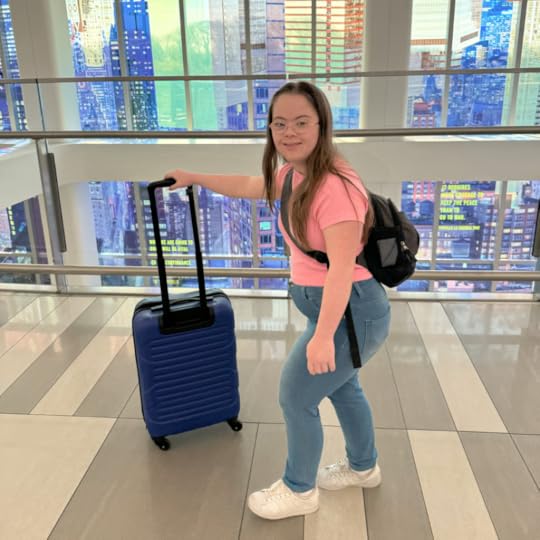
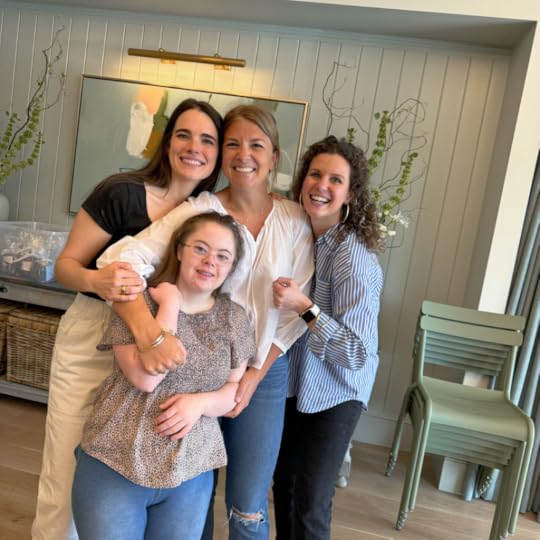
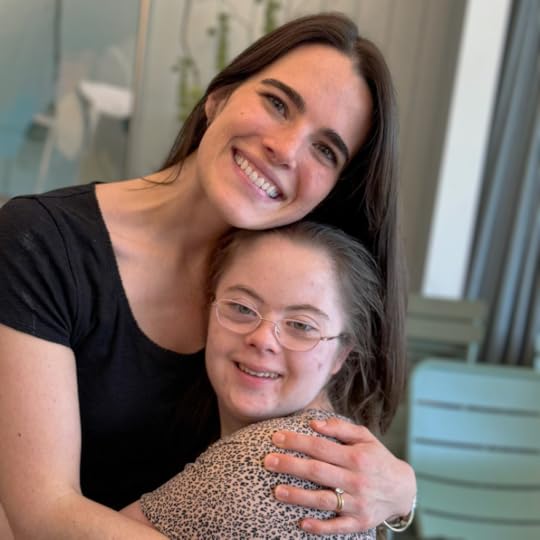
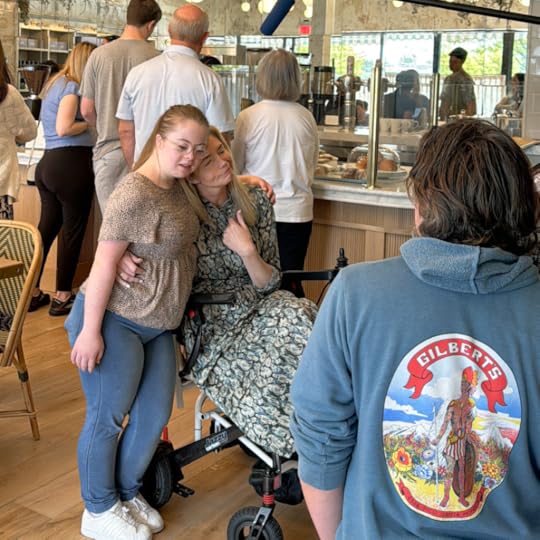
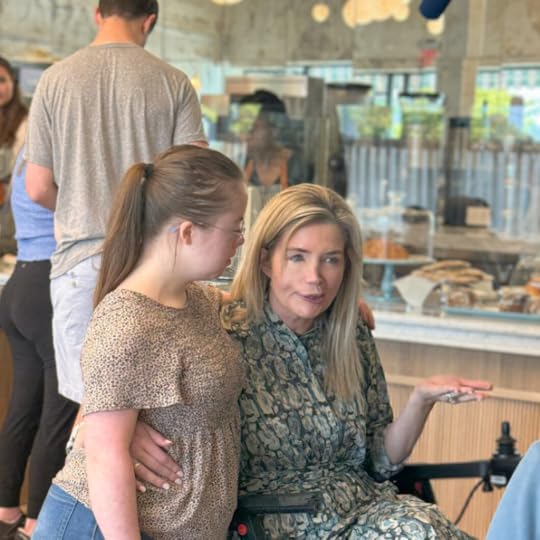
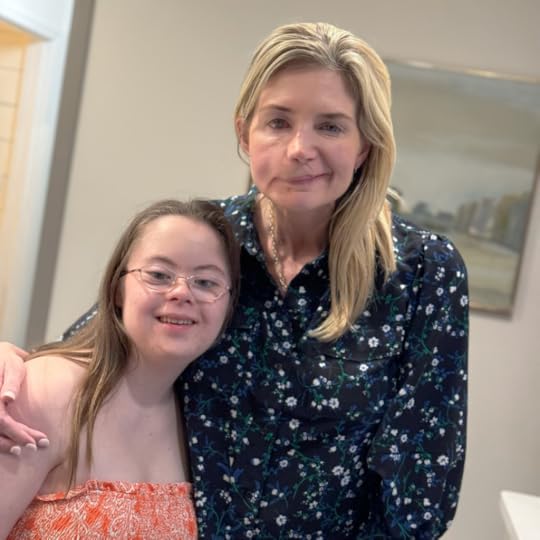
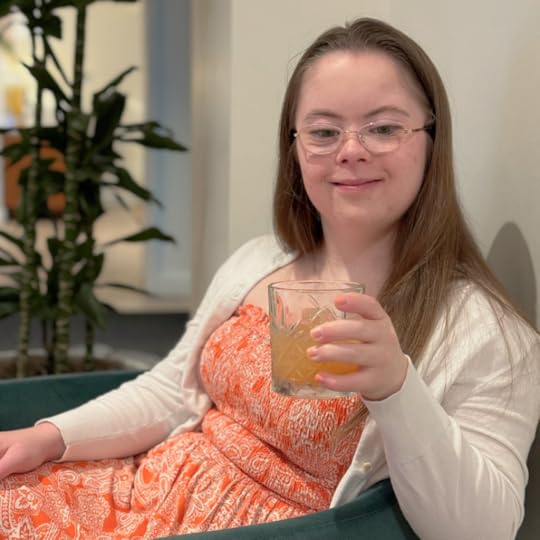
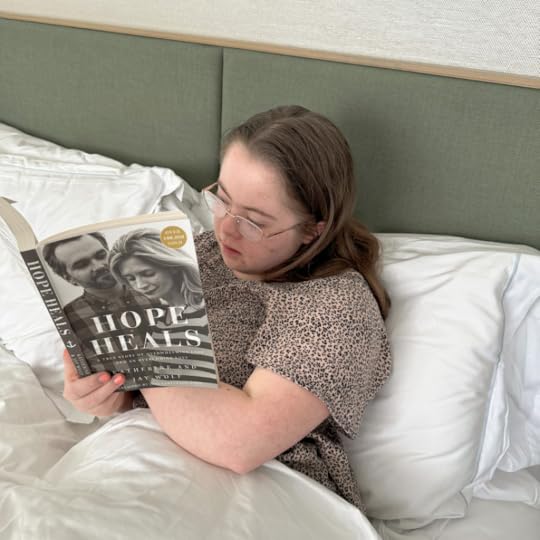
I gave our daughter Penny two choices for her senior year spring break—the Bahamas (where she has always wanted to go) or Atlanta. She chose Atlanta because going to Atlanta meant hanging out with—and interning with and enjoying—friends from Hope Heals Camp.
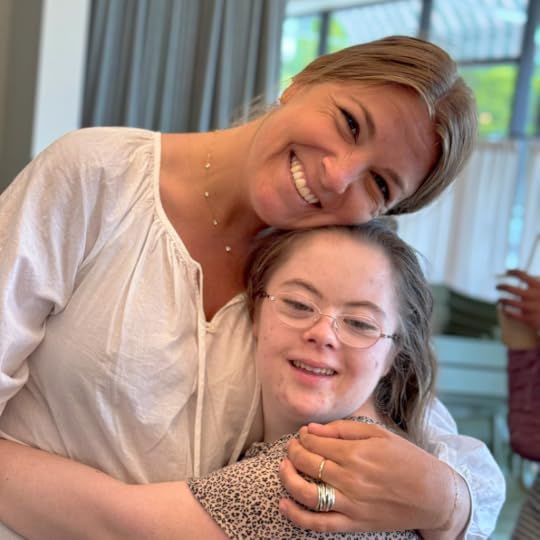
The past few days in Atlanta have reminded me that the most important gift we can give ourselves and our children is relationships. Relationships matter.
I don’t have lots of regrets as a parent, but when I look back on these past 18 years of parenting Penny, I do wish we had done more on a regular basis to connect our family to other people. That could have been inviting kids over to our house when Penny was younger, volunteering to host class gatherings, or making time just to walk around in our community and engage with people.
I’m so grateful for the relationships we do have, and I see now that those relationships matter even more than the skills Penny was developing by going to therapist appointments or doing her homework or practicing piano. All of those things are great, but with limited time, I’ve learned to choose relationships first.
We’re going to talk about this and all sorts of other things in my upcoming (live, virtual) workshop, Reimagining Family Life with Disability. I’d love to see you there.
MORE WITH AMY JULIA:
Workshop: Reimagining Family Life with DisabilityBook: A Good and Perfect Gift: Faith, Expectations, and a Little Girl Named Penny Provide Opportunities, Assume PossibilitySubscribe to my newsletter to receive regular updates and news. You can also follow me on Facebook , Instagram , and YouTube , and you can subscribe to my Reimagining the Good Life podcast on your favorite podcast platform.
The post Prioritize Relationships appeared first on Amy Julia Becker.
April 16, 2024
Connecting With People in Real Life | Festival of Faith & Writing
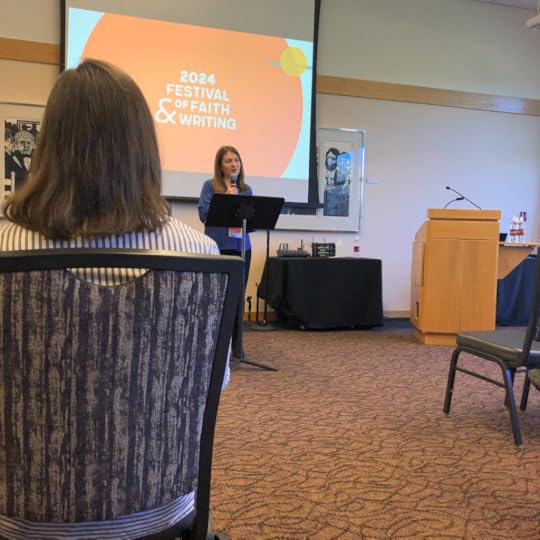
I don’t know how to capture the experience of the Festival of Faith and Writing last week. Of course, I listened to compelling speakers. And I loved preparing and offering my own words—first in conversation with Hilary Yancey and Kevin Timpe about writing about our children with disabilities, and later in a talk about intellectual disability in literature.
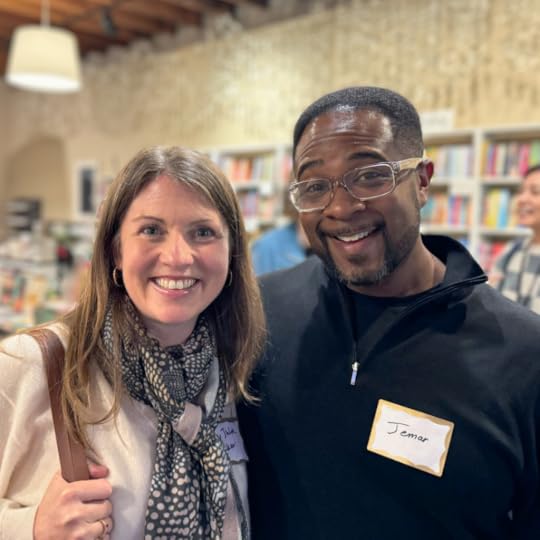
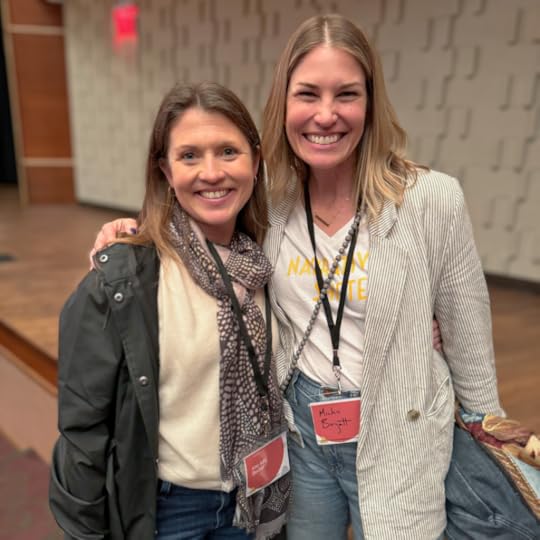
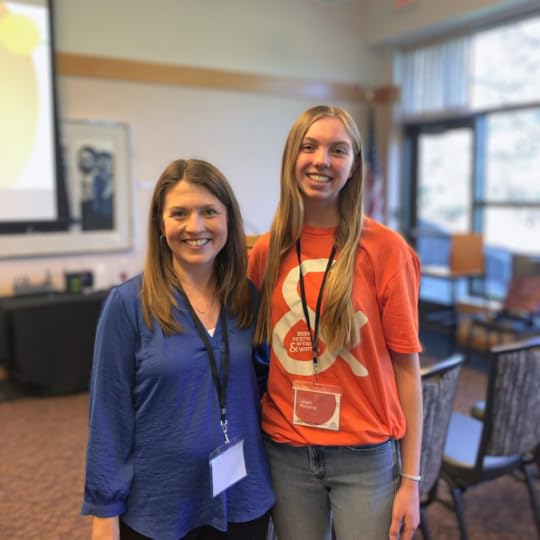
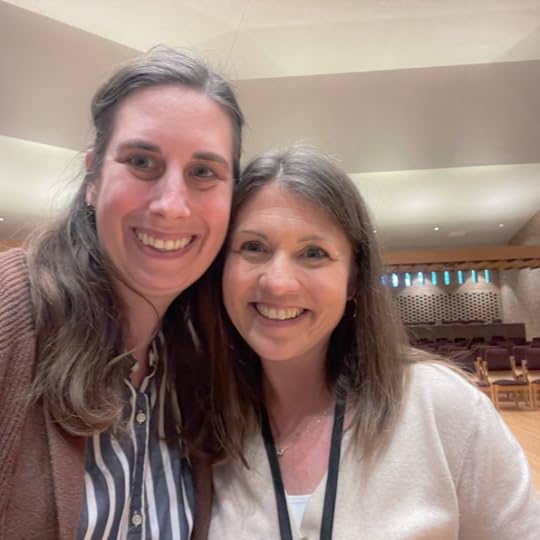
But what really mattered about being there was connecting with people in real life. I have worked with Amber Beery—my indomitable, faithful, unbelievably helpful, perceptive, fantastic social media coordinator—for four years now. But last week, I met her in person. It’s strange how much joy it brings to walk and talk side by side rather than through a screen.
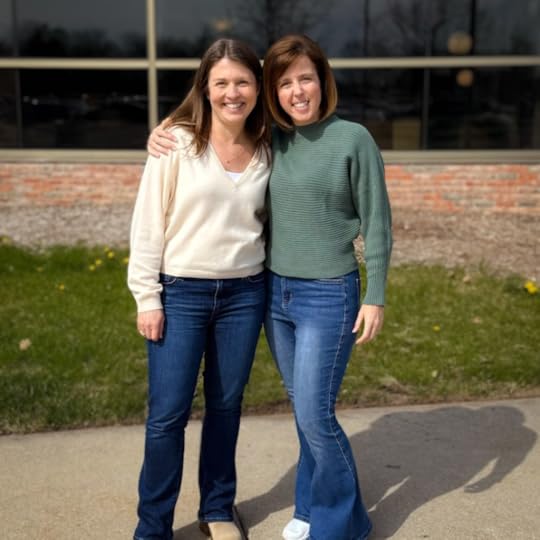
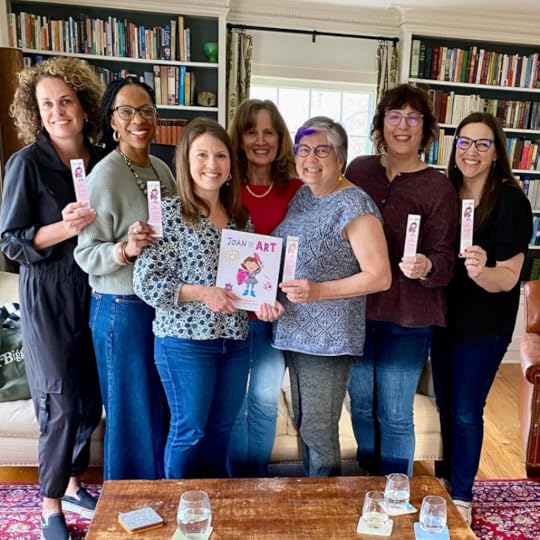
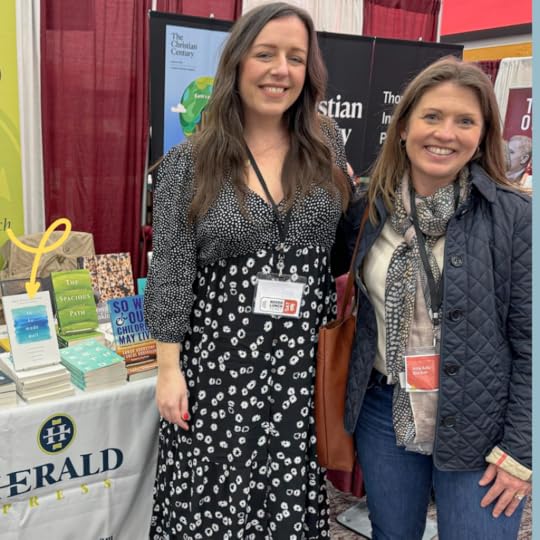
The same was true with meeting Jemar Tisby in person for the first time. We’ve talked multiple times over the years, but face to face brought a different experience of joy. Not to mention getting to eat cheese and prosciutto and drink wine and share stories with my old friend Micha Boyett. Or the women who used to write for her.meneutics together, or the women in INK. Or the men and women who have read my work over the years and wanted to talk about it, or thank me for it. What joy.
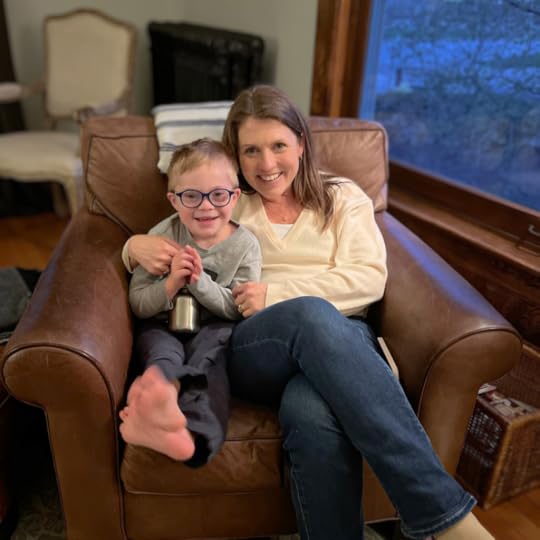
As it happens, I also have a friend who has a son with Down syndrome who lives in Grand Rapids, where the Festival was held. I met Bo when he was an infant, but this was the first time I’ve seen him since. Getting to snuggle up next to his sweet five-year-old self felt like all that joy might bubble over.
The publishing industry is changing. It’s hard to know whether I’ll ever feel stable as a writer or speaker. So in the midst of that, I’m grateful to remember that books matter, that stories change lives, and that connecting with people fills me up.
MORE WITH AMY JULIA:
Workshop: Reimagining Family Life with DisabilityBOOK: To Be Made Well: An Invitation to Wholeness, Healing, and Hope Make Time for Grown-Up FriendshipsSubscribe to my newsletter to receive regular updates and news. You can also follow me on Facebook , Instagram , and YouTube , and you can subscribe to my Reimagining the Good Life podcast on your favorite podcast platform.
The post Connecting With People in Real Life | Festival of Faith & Writing appeared first on Amy Julia Becker.
April 14, 2024
Provide Opportunities, Assume Possibility
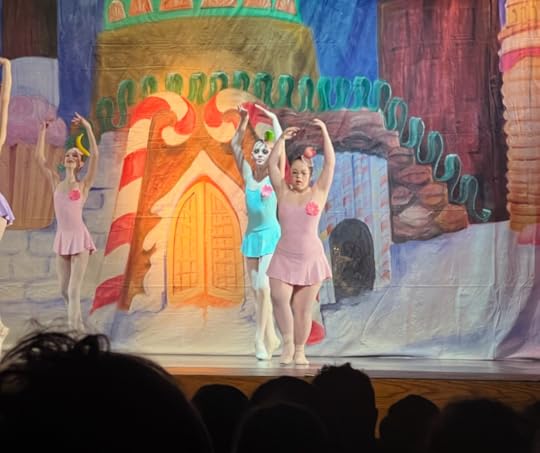
Penny fell behind in ballet earlier this year. During cheer season, she missed a lot of classes and rehearsals. She also (unbeknownst to me) started sitting out of the rehearsals even when she was there. At the end of cheerleading,her teacher emailed her to let her know she needed to start participating fully if she wanted to dance in her final performance this June.
For twelve years, Penny has danced at Fineline Theatre Arts. The teachers there know her. They’ve let her develop at her own pace. But they have also always expected her to learn and grow and—taking as much time as she needs—try the next thing.
Their ensuing email exchange shows why I am so grateful for people in Penny’s life who both want to accommodate her needs with kindness and expect her to push herself appropriately, who provide opportunities and assume possibility:
Penny:
Sometimes I feel like the steps are too challenging for me. I know I should speak up and just say that, but it’s hard to work up the courage to speak up. Basically, what I am feeling is, Intimidated by the older students who can do the harder steps.
Georgina:
Thank you for sharing your feelings so honestly! I appreciate knowing a bit more about what’s going on internally. I have seen you perform, and I have total confidence that with focus and rehearsal we can get you on the same page as everyone else! There’s nothing in the piece that you cannot do, so I’m sure we can make this work. I’m looking forward to digging in to the steps with you so you feel comfortable.
Penny:
You’re welcome. I am glad that you are more aware of what’s been happening. Thank you for your words of encouragement, they are really helpful. I want to be able to make this work as well. I am also looking forward to working with you.
Penny came home from dance last week and said, “Mom, I’m working on landing a double pirouette. I’m the last person in the class to be able to do it.”
I asked her how she felt about that.
She said, “I’m not discouraged.” She paused. And then she said, “I’m just determined.”
MORE WITH AMY JULIA:
Workshop: Reimagining Family Life with DisabilityOn Pointe, Step by Determined StepPenny’s Dance FestDance Like Everybody’s Watching (and Celebrating What They See)Subscribe to my newsletter to receive regular updates and news. You can also follow me on Facebook , Instagram , and YouTube , and you can subscribe to my Reimagining the Good Life podcast on your favorite podcast platform.
The post Provide Opportunities, Assume Possibility appeared first on Amy Julia Becker.