Amy Julia Becker's Blog, page 20
July 11, 2024
Creating Belonging Within Families
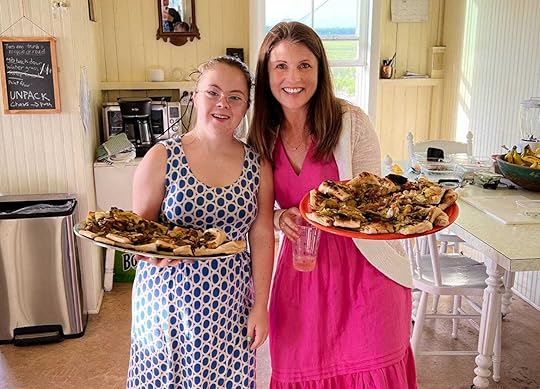
I wrote a few weeks ago about the difference between exclusion, tolerance, inclusion, and belonging. Generally, when I think about belonging, I’m thinking about institutional spaces. I’m wondering whether our daughter Penny, who has Down syndrome, will be welcomed into a new social setting. I noticed, for instance, when we visited a new church and a man spoke to me about Penny but didn’t address her directly. He wanted to let me know they offered a class for teens. He wanted her to be included. And yet he didn’t try to engage with her face to face, even though she was standing by my side and answering the questions he placed to me. It seemed like his assumptions about someone with Down syndrome got in the way of welcoming her.
 “Othering” in Families
Because I tend to think about belonging as it pertains to institutions, I haven’t always looked at families as places where we also can experience both exclusion and belonging and everything in between. But in her book, Design for Belonging, Stanford Professor Susie Wise writes that “othering” is the opposite of belonging and…
“for many of us, our first or most poignant experiences of othering are in familial spaces.”
We probably all have memories of exclusion from within our families, whether it is the “keep out” sign on our sibling’s bedroom door or being the butt of the family joke. For families affected by disability, that exclusion can take the shape of low expectations, frustration, or even separation.
Belonging in FamiliesAnd yet familial spaces can also establish a sense of belonging. If families live out belonging, then we can carry those same assumptions with us into institutions and communities.
Within my particular family, creating a sense of belonging for everyone means navigating differences in intellectual and physical ability. We also have big age differences. We were all together—three generations and three branches of the family—for the 4th of July, so it was an opportunity to practice and model belonging.
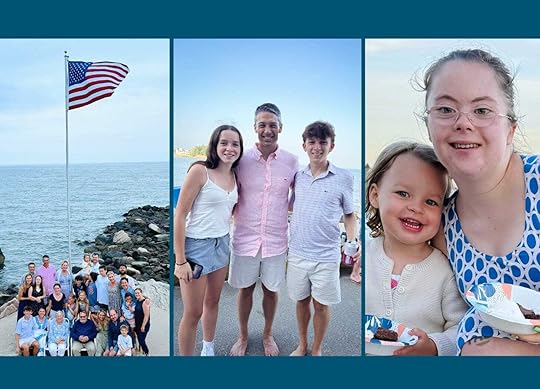 4th of July celebration: 1. three generations (not everyone is pictured!) 2. Peter in the middle with two of our teens, Marilee and William 3. Cousin Cora with Penny—the youngest and oldest cousins (for now!)
After many years of trying to work this out together, we had a few wins. Here are a few thoughts, based on our experiences, for how to create belonging as a family.
Communicate Belonging—in Activities:Is there an activity that everyone would enjoy together that just needs some rethinking in order to make it happen?
Here are a couple of ways we planned activities with belonging in mind last week…
Family Bike Ride: We figured out a way to take a family bike ride (go here for a great video!). Penny decided years ago that she didn’t want to learn how to ride a bike, and we didn’t think too much of it. But as our kids have gotten older, the ability to bike has become more and more of a dividing line in our family, especially when we’re on vacation. This year, we got a tandem bike, and Penny enjoyed a 10-mile excursion with our family to our mutual delight. In this activity, everyone participates. Everyone belongs.
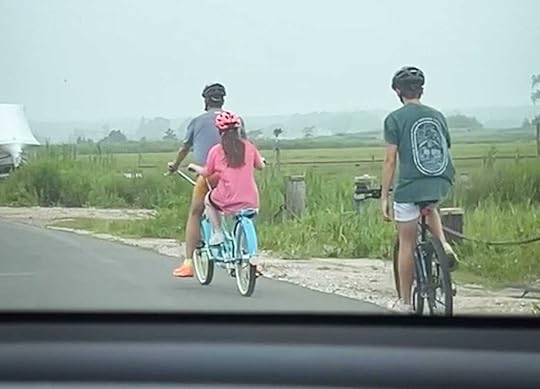 Peter and Penny riding a tandem bike, with William riding a bike behind them
The Name Game: I wrote about this game a few years ago because it became our favorite game of 2021. (You can access the details/rules .) What’s remarkable about this game is that everyone from a 7-year-old to a 77-year-old, from the hyperactive teenager to the bookish young adult, can enjoy it. It has competitive elements alongside collaboration. In this game, everyone participates. Everyone belongs.
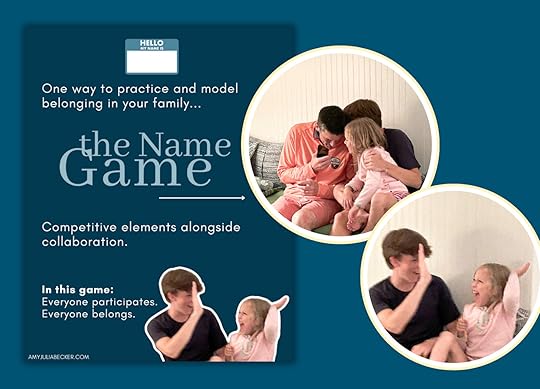 Really, everyone enjoys this game!
In your family, what is an activity that everyone could enjoy together? How can you rethink that activity in order to make it happen?
Communicate Belonging—Through Questions:Ask open-ended questions that everyone can answer. Two of the questions we ask around the table are:
What’s one word that describes your summer so far?What’s one thing you’ve watched or read or listened to that mattered to you in the past month?You may have family members who don’t use words to communicate. In that case, our table questions would need to expand to welcome gestures, or they might need to change altogether.
Communicate Belonging—Through Participation:Look for ways that everyone can help with setup or cleanup for family gatherings (even if it means that it takes longer—the point is participation, not efficiency). As Susie Wise writes, people…
Communicate Belonging—Through Food and Beverages:“knew they belonged to whatever community they were a part of when they felt they were making a contribution.”
Provide food and beverage options that communicate that everyone belongs. Take the time to think about each person who is present. Do you have family members with food allergies or who are practicing vegans or who don’t drink alcohol?
You might not be able to create every meal in a way that is safe/welcoming for those family members, but what if you decided to prepare one meal that everyone present could eat without any concerns, simply to communicate how much it matters that they are with you and how much you all want to be with them?
A Foundation of Belonging Creates Space for MoreWhen we create a foundation of belonging, it still allows space for one-on-one and small-group activities. For instance, we played the Name Game at our 4th of July celebration, and everyone was included. But we also enjoyed activities that weren’t for everyone. Our son, William, played Stratego with his uncle. Penny took a walk with her dad. Lots of people watched soccer together, and I opted out because I wasn’t interested. But in all of those cases, the overall experience of belonging prevented any sense of exclusion.
If you assume that everyone in your family belongs there, and then you begin to design gatherings accordingly, you will begin to discover ways to communicate that sense of belonging that still allow for individual desires and connections and particular abilities to flourish.
My hope for our family is that we continue to establish and experience the mutual benefit of belonging when we are together. And then, that we establish and experience the same in our communal and institutional spaces. I can only imagine what would happen if we assumed that everyone belongs in our classrooms and sanctuaries and offices.
Families can be a place of painful “othering.” But they also can be a beautiful place to practice and experience belonging.
I would love to hear from you. In what ways you have created or experienced belonging in your family?
MORE WITH AMY JULIA:
Reimagining the Dream of a Family Bike RideWhy Belonging MattersWhat Is Normal?Let’s stay in touch. Subscribe to my newsletter to receive regular updates and reflections. Follow me on Facebook , Instagram , and YouTube and subscribe to my Reimagining the Good Life podcast.
The post Creating Belonging Within Families appeared first on Amy Julia Becker.


Reimagining the Dream of a Family Bike Ride
(Scroll down for a great video!) Does it matter whether your child ever learns to ride a bike? Does it matter if your child never joins a family bike ride?
I used to think it mattered a lot. And then our daughter was born and diagnosed with Down syndrome and I realized that a lot of the things that seemed to matter weren’t as important as I once thought. She used training wheels when she was little, but Penny told us in no uncertain terms that she was not interested in riding a bike on her own.
No big deal.
But in recent years, it has felt like a loss to not be able to take a family bike ride. And so we started to wonder if the solution didn’t have to be Penny riding a bike on her own. We’ve learned that sometimes we need to let go of our hopes and dreams. And other times, we can imagine them taking shape in a new way.
Last summer, we rented a tandem bike, and it went well, so this summer we finally bought one. We rode for miles together, and it was fun.
It wasn’t an accomplishment. It was a dream come true. It was a connection. It was a joyful activity. It was a way to be sure everyone in our family knows they belong.
MORE WITH AMY JULIA:
Creating Belonging Within FamiliesWhy Belonging MattersWhat Is Normal?Let’s stay in touch. Subscribe to my newsletter to receive regular updates and reflections. Follow me on Facebook , Instagram , and YouTube and subscribe to my Reimagining the Good Life podcast.
The post Reimagining the Dream of a Family Bike Ride appeared first on Amy Julia Becker.
July 3, 2024
Teens, Screens, and Summer
When we turn the corner to summertime, I sink into gratitude for slower days and longer evenings, for hydrangeas and peaches, for more time together as a family. I also dread the constant conversation with our teens—or should I say, the constant conflict—over the use of screens/devices/phones.
Our kids are now 18, 15, and 13. All of them have their own iPhones and laptops. All of them drift quickly and easily into their own worlds of YouTube videos and shopping websites and relative isolation. The instinct to stare at the screen remains constant all year long, but in the summer, there’s just so much more time.
The Anxious GenerationI just finished Jonathan Haidt’s latest book, The Anxious Generation . Part of me wanted to avoid it, for all the reasons I just mentioned. And part of me wondered if it was even relevant to our household. None of our kids are anxious or depressed. I have listened to Haidt on half a dozen podcasts, so I already had the cliff-notes of his argument. Still, I’m glad I read it.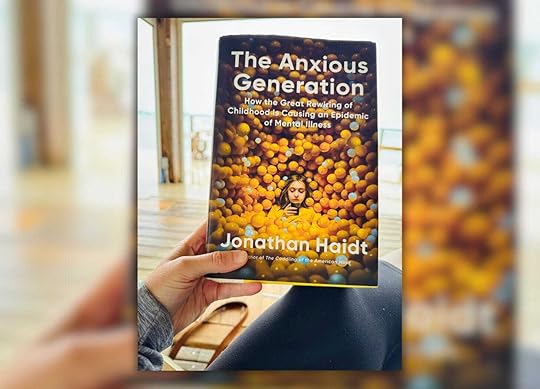
If you aren’t familiar with Haidt’s work, in a nutshell he offers data to suggest that a phone-based childhood (his phrase) leads directly to the steep rise in clinical anxiety and depression among teenagers that we’ve seen in recent years. He claims that we have:
overprotected children in the real world and underprotected them in the virtual world.
We have a collective problem, which requires a collective solution that involves parents and schools and governmental intervention.
Pulled Down or Lifted Up?Haidt’s analysis helps put data to our experience, but what was most helpful to me in reading this book is his insistence that a phone-based life does spiritual harm. Haidt calls himself an atheist, and yet he insists that humans are spiritual creatures in need of spiritual experiences, communities, and practices. The disembodied, asynchronous, self-centered world of social media and internet entertainment and material consumption pulls us away from some of our most crucial needs. Haidt uses the language of elevation. He says we need to be “lifted up”—through friendships and experiences of awe and moments of transcendence. But most of our experiences on screens pull us down instead.
If there is anything I want our kids to learn deep in their souls it is that they are loved, they have purpose, they belong. I want them to be lifted up. I want them to lift others up.
So. Am I taking away their phones? No. But we are implementing a number of practices as a family that both limit screen time and, perhaps more importantly, emphasize spiritual connection.
Family PracticesWe are bumbling our way into this, with no right answers about how much screen time is the right amount, with concern over micromanaging their lives, with blurred lines about when the phones are a pretty good means of connection with other people and when they are a pretty bad means of deadening our souls.
Jonathan Haidt offers four solutions:
No smartphones before high school (that ship has sailed in our household).No social media before 16 (again, missed that boat).Phone-free schools. (Two of our kids got that through middle-school.)Far more unsupervised play and childhood independence.It’s that last point that hints at our kids’ spiritual development. Last summer, I offered a list of five ways that our family is approaching the use of screens in the household. (I’ve revised that list here.) But that list had more to do with how to monitor phone usage, and Haidt’s book has convinced me that it is even more important that we:
encourage embodied, synchronous, communal experiencesgive our kids greater responsibility for themselves and our householdboth model and teach them contemplative practicesEmbodied, synchronous, communal experiences.This includes everything from summer camp to encouraging them to invite friends over to going to church on Sunday to going on vacation and serving at Hope Heals as a family.
Greater responsibility.In our family, this means lots of participation in household tasks: laundry, dishes, cat litter, and cooking. It also means encouraging them to bake muffins at 10:00 at night and use the ice cream maker that’s been on the high shelf for a year and cut flowers from the garden and try arranging them. It means William took his first flight by airplane and Penny is learning how to make enchiladas and Marilee packed for camp by herself.
Contemplative practices.Here, we aren’t making our kids learn meditation or sit in silence for 20 minutes or anything like that. We are just being intentional—at the dinner table, on walks, in the car—to ask questions that prompt reflection.
What was a time this week when you experienced gratitude?What are you looking forward to about the week ahead?What’s something you’re curious about?What was the best meal you ate last week?How have you grown up this year?Are there ways you want to grow more this summer?What mistakes have you made lately? Have you learned anything from them?Somehow, reframing my role as a parent to see it less as a police force and more as a nurturer has helped me feel a little less defeated and cynical when addressing the temptations of our life with screens. It has reminded me that we can still give our kids daily ways to know they are loved and that their lives have purpose.
It has given me hope that all of us can learn and choose ways of being—even in this digitized world—that lift one another up.
How have you handled the digital world within your family? What has been hard? What has worked?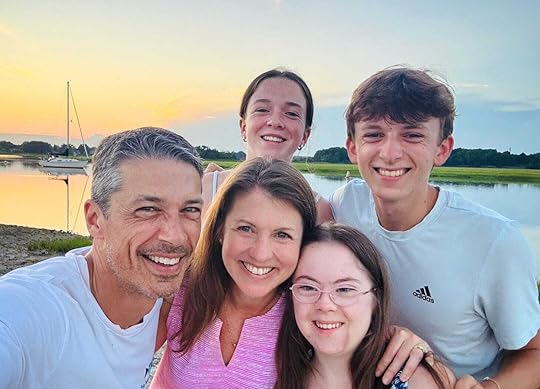
MORE WITH AMY JULIA:
FREE RESOURCE: 5 Screen Time Practices for Families | Summer EditionScreen Time Check-In7 Things That Happened During Our Week Without ScreensLet’s stay in touch. Subscribe to my newsletter to receive regular updates and reflections. Follow me on Facebook , Instagram , and YouTube and subscribe to my Reimagining the Good Life podcast.
The post Teens, Screens, and Summer appeared first on Amy Julia Becker.
June 30, 2024
Sometimes Holidays Are Hard for Kids With Disabilities
Public Service Announcement for friends and family members: sometimes holidays are really hard for kids with disabilities. There’s the problem of sensory overload, with crowded spaces and special foods and all the hype. And with the 4th of July in particular, there are the fireworks.
Fireworks can be seen as fun and beautiful and celebratory. They also can seem like unexpected and totally unpredictable blasts of terrible and terrifying noise. For all kids, but especially kids with intellectual disabilities or processing disorders, fireworks can be incredibly stressful and frightening.
When Penny was younger, she wouldn’t even go outside to look at fireworks in the distance because they provoked so much fear. She still has no interest in fireworks up close. But now—after many years of camping out in the kitchen—we sit outside with everyone else, at a considerable distance from the fireworks in our town, and we enjoy the show together.
So, if your child (or your grandchild, or your friend’s child) needs to stay inside for fireworks this week, that’s okay. You can just support that decision without judgment or shame, and ideally with some way to make sure that child doesn’t end up alone.
There are lots of ways to celebrate.
![photo from 2008 of Peter holding two-year-old Penny on his shoulders with the ocean in the background]](https://i.gr-assets.com/images/S/compressed.photo.goodreads.com/hostedimages/1719900093i/35685008._SX540_.png) 2008
2008MORE WITH AMY JULIA:
Ableism at the County FairWhy Belonging MattersHow Language Shapes Our ImaginationLet’s stay in touch. Subscribe to my newsletter to receive regular updates and reflections. Follow me on Facebook , Instagram , and YouTube and subscribe to my Reimagining the Good Life podcast.
The post Sometimes Holidays Are Hard for Kids With Disabilities appeared first on Amy Julia Becker.
June 27, 2024
Summer Reads + Life Hacks for Reading
I am one of those people who feels both peace and excitement simply in the presence of books. Independent bookstores literally help regulate my nervous system. Even the book racks in Target feel like safe harbor in the sea of home goods and exercise equipment. As a result, I buy more books than I can ever hope to read. Still, summer is a great time for reading, and I’m looking forward to many hours curled up (or stretched out) with a book in hand.
I’m going to offer a few recommendations for summer reading, but I will also offer a few life hacks about reading itself. People often ask me how I read as much as I do, so, to the degree that you want to consider new reading patterns and/or how to read more, here are my tips:
 Life Hacks for ReadingRead non-fiction in the morning. I personally have some sort of spiritual book that I read (in addition to the Bible) most days. Right now, it’s Jonathan Pennington’s
The Sermon on the Mount and Human Flourishing
.Read while you eat. Here, I also read non-fiction, and I keep a book in the kitchen (since I work from home) and engage with it over breakfast and lunch. Right now, that book is
Design for Belonging
by Susie Wise.Read while you are in the bathroom. Sure, sitting on the toilet. But I actually read magazines while brushing my teeth and drying my hair.Read novels (or memoirs, lighter fare) before bed. I just finished
North Woods
, which was great but depressing. I’m about to start
Go as a River
(see below).Remember that reading for ten minutes day by day is a great way to finish books.Read what you are actually interested in, not what you think you should be interested in.
Life Hacks for ReadingRead non-fiction in the morning. I personally have some sort of spiritual book that I read (in addition to the Bible) most days. Right now, it’s Jonathan Pennington’s
The Sermon on the Mount and Human Flourishing
.Read while you eat. Here, I also read non-fiction, and I keep a book in the kitchen (since I work from home) and engage with it over breakfast and lunch. Right now, that book is
Design for Belonging
by Susie Wise.Read while you are in the bathroom. Sure, sitting on the toilet. But I actually read magazines while brushing my teeth and drying my hair.Read novels (or memoirs, lighter fare) before bed. I just finished
North Woods
, which was great but depressing. I’m about to start
Go as a River
(see below).Remember that reading for ten minutes day by day is a great way to finish books.Read what you are actually interested in, not what you think you should be interested in.In addition to the books I mentioned above, here are a few that I am looking forward to reading this summer:
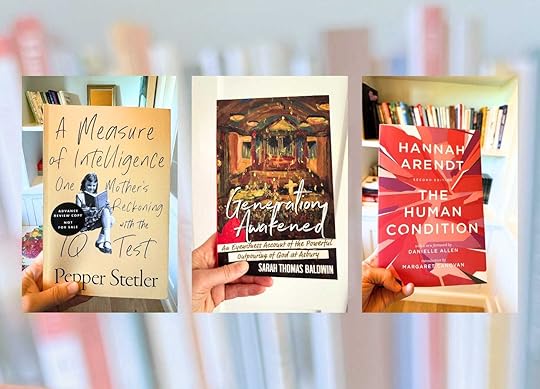
Non-Fiction Generation Awakened by Sarah Thomas Baldwin.I actually endorsed this one, so I’m including it here to recommend it. Here’s what I wrote:
“Generation Awakened is a riveting account of the ways God’s Spirit moved at Asbury University in February of 2023. Baldwin’s clear prose and excellent pacing give readers a front-row seat to the Spirit’s work. She tells a story of humility, struggle, grace, and transformation that will encourage and challenge anyone who wonders whether God still shows up with loving power among us.” Saving Time by Jenny Odell.
This reflection on the history of time-keeping and how we relate to time seems all the more relevant in a rushing world. A Measure of Intelligence by Pepper Stetler.
As the mother of a child with Down syndrome, I’m really interested in the history and application of the IQ test, so I’m curious to learn from this book. The Human Condition by Hannah Arendt. One of my intentions this summer is to read some of the books I wish I had read in college. Martin Luther King’s Where Do We Go from Here is also on this list. I’m basically wanting to ground myself in wisdom from my elders.
 Fiction
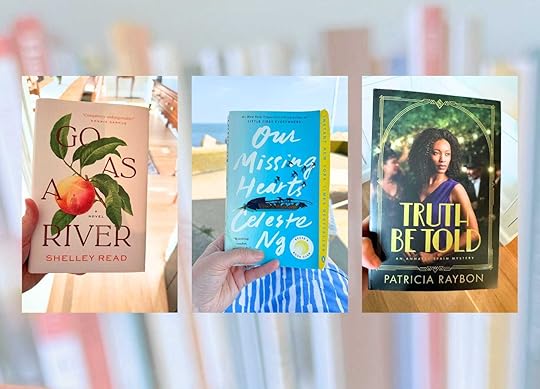
Go As a River
by Shelley Read
.
Fiction
Go As a River
by Shelley Read
.
I trust my friend Margaret to send me great fiction, and she just recommended this one, so I can’t wait. (She also recommended Tomorrow and Tomorrow and Tomorrow, The Rose Code, and The Paris Bookseller, and they are all easy to read but still give you something to think about.) Our Missing Hearts by Celeste Ng.
William has to read this for school, so it’s on my list too. Truth Be Told by Patricia Raybon.
I’m eagerly awaiting the third installment in the Annalee Spain historical-mystery series. The Voyage of the Dawn Treader by C.S. Lewis.
Okay, I’ve read this one before, but it’s here because I’m making our whole family read it together on vacation as a way to prompt conversation about our spiritual lives. I’ll let you know how that goes!
Of course I have to ask… What are you reading this summer? Share your favorites with me!
MORE WITH AMY JULIA:
Let’s stay in touch. Subscribe to my newsletter to receive regular updates and reflections. Follow me on Facebook , Instagram , and YouTube and subscribe to my Reimagining the Good Life podcast.
The post Summer Reads + Life Hacks for Reading appeared first on Amy Julia Becker.
June 24, 2024
Penny in Her Own Words: Dance and Dedication
What values are important to you? Penny recently thought about that question, and I love her answer—and that it’s connected to dance! How would you answer it? How would kids or teens in your life answer it?
Penny said:
I have been committed to dance for as long as I can remember. One of the values that is most important to me is dedication. I’ve been dedicated to a lot of things over the years. The one that was most important to me was dance. I’ve been dancing since I was two years old. I never stopped dancing. My dance teachers have always supported me in so many ways. I believe that dance is one of the ways to express yourself and your true feelings in all of the different types of dance. I believe that dance gives me a way to grow into a new life, and I’m grateful that dance will always be a part of my life.
MORE WITH AMY JULIA:
Penny’s Final Dance RecitalProvide Opportunities, Assume PossibilityOn Pointe, Step by Determined StepPenny’s Dance FestDance Like Everybody’s Watching (and Celebrating What They See)Let’s stay in touch. Subscribe to my newsletter to receive regular updates and reflections. Follow me on Facebook , Instagram , and YouTube and subscribe to my Reimagining the Good Life podcast.
The post Penny in Her Own Words: Dance and Dedication appeared first on Amy Julia Becker.
June 19, 2024
June 2024 Favorites
I’m about to offer some thoughts on content I’ve appreciated lately (and I would love to hear the same from you—the Mia Birdsong episode mentioned below came from a reader—I really do pay attention when you offer suggestions!), but first I’ll also say I’m loving June right now. Here in Connecticut we’ve got the end of spring flowers and the beginning of summer blooms, 73 degree days with no humidity, and clouds that shimmer with purple late into the evening as the sun sinks into the treeline. I hope you are also able to sink into the beauty of your surroundings and take delight in it right now.
And also, here are a few podcasts and essays that have stuck with me:
The Success Narratives of Liberal Life Leave Little Room for Having ChildrenWhile I should note that not all of us have decisions about “whether to have children,” for those of us who do face that choice I appreciated this reminder:
Biomimicry
“In deciding whether to have children, we confront a philosophical challenge: Is life, however imperfect and however challenging — however fraught with political disagreement and disaster — worth living?
“To be sure, having children is not the only way to address this question. But having children remains the most basic and accessible way for most of us to affirm the value of our lives and that of others. This is in part because becoming a parent represents one of the greatest responsibilities one human being can assume for another. And it is also because the perpetuation of human life is the condition of possibility for every other thing we care about.”
My favorite part of this conversation came when they talked about how, in the natural world, beauty points us towards goodness. Flowers point us towards fruit. True beauty should nourish us and sustain us. I recommend the whole episode as a prompt for what we can learn from the natural world all around us about how to be human.
“Matrescence,” and the Transformations of MotherhoodPeople in the disability space talk a lot about interdependence vs. hyperindividualism. I’ve come to see the benefits of relying on one another rather than striving for isolated achievement. But I was still astonished to learn that, biologically speaking, we exist within one another. In this New Yorker review, I learned:
“…how, during pregnancy, cells are exchanged between the mother and fetus via the placenta, in a process called microchimerism. Years after birth, fetal cells can linger in the mother’s body, migrating to her liver, heart, lungs and brain. They sometimes show up at sites of damage or disease, and have been found in C-section scars and breast tumors. The mother’s cells remain in the child, too, and sometimes a younger sibling carries the cells of an older child. We are all chimeras…”
My children’s cells live within me, and within each other.
We don’t just need each other. We don’t just identify with each other. We, in some unfathomable sense, are ourselves and each other at the same time.
Rethinking Success | Mia BirdsongThere was so much in this podcast with Mia Birdsong that resonated, and our experience with disability has only helped us to see the truth behind her words. We’ve become more vulnerable, which has led to greater trust, greater interdependence, deeper friendships, and greater freedom. Here are three of my takeaways:
Modern Western culture primarily operates through transactions rather than mutual giving and receiving. Because we don’t have deep interdependent relationships, we don’t trust anyone else to provide for us, so instead we rely on hyperindividualism to get what we need for ourselves“It is a kind of self-hatred to not ask for help, to be independent.”Friendship and freedom come from the same root, a Sanskrit word for belovedLongevity Secrets (And Controversies) From The Blue Zones | Dan BuettnerAgain, there’s so much rich information in this conversation, but the big takeaway is that when it comes to health and longevity, don’t try to change your behavior, but do try to change your environment. In keeping with some of the other items I’ve already noted, this podcast underscores the significance of both spirituality and community. It was a great way to enter the summer, with more opportunities to enjoy the people I love most in the world. I hope that’s true for you too!
Get my favorites delivered to your inbox each month!
Subscribe here!
MORE WITH AMY JULIA:
Let’s stay in touch. Subscribe to my newsletter to receive regular updates and reflections. Follow me on Facebook , Instagram , and YouTube and subscribe to my Reimagining the Good Life podcast.
The post June 2024 Favorites appeared first on Amy Julia Becker.
June 17, 2024
Fear of the Future and Finding Goodness
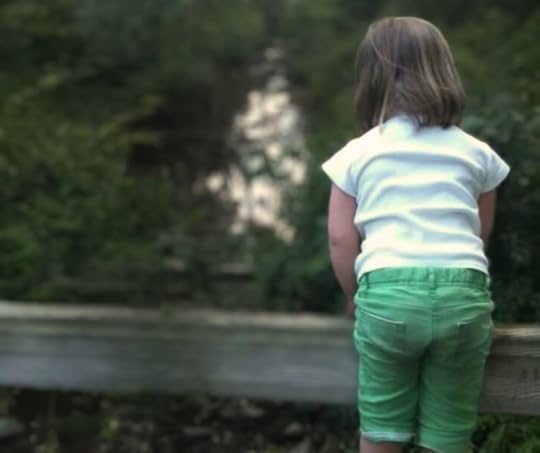
Have you ever feared the future so much that you couldn’t imagine goodness on the road ahead?
I remember when Penny was little, when I couldn’t think about the future because it catapulted me into fear. The thought of high school graduation was terrifying. I couldn’t even set goals for her upcoming year, even though we were asked to do so constantly. I didn’t want her not to meet those goals, and then for me to feel like we had failed her or that she didn’t measure up.
I expected to need tissues on the day Penny finished high school. I expected heartfelt, sorrowful goodbyes to teachers and friends. I expected a sense of deep loss, and perhaps even dread about what lies ahead. For many kids with Down syndrome and other disabilities, high school graduation is complicated by the uncertain and ambivalent path towards the future.
But her graduation didn’t bring tears or fear. Instead, I felt a sense of wonder, and gratitude, and celebration.
There are four practices that have slowly moved me away from a place of fear and shaped my imagination about the future. I’m writing about all this in my newsletter on Thursday. To read more, subscribe here.
I’d love to hear from you. What do you fear about the future? Have you found practices that move you from a place of fear to a place of hope?
MORE WITH AMY JULIA:
RESOURCE: 10 Way to Move Toward a Good Future (especially for families affected by disability)Making Hard Decisions With Love, Not FearWhat Having a Baby with Down Syndrome Taught Me About Distraction, Fear, and LoveLet’s stay in touch. Subscribe to my newsletter to receive regular updates and reflections. Follow me on Facebook , Instagram , and YouTube and subscribe to my Reimagining the Good Life podcast.
The post Fear of the Future and Finding Goodness appeared first on Amy Julia Becker.
June 16, 2024
The Distinction Between Brokenness and Limitations
When Penny was young, I was wrestling with questions like, “What does it mean to be human?”
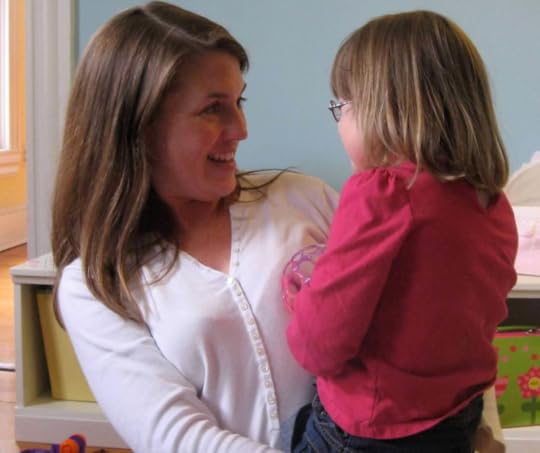
And a friend of mine said, “You know, brokenness and limitations are not the same thing.”
That was really helpful for me because I think I had put them in the same category in my mind without knowing it. So I was seeing disability as brokenness, which I knew wasn’t right, but I couldn’t figure out why it felt so tangled in my mind.
Adding some distinction between brokenness and limitations was really helpful for me.
For more on this distinction, listen in to my conversation with Micah Boyett.
MORE WITH AMY JULIA:
S7 E14 | How to Honor Limits in a World That Doesn’t with Micha BoyettDown Syndrome, Teenagers, and Holy LimitsBook: A Good and Perfect Gift: Faith, Expectations, and a Little Girl Named PennyLet’s stay in touch. Subscribe to my newsletter to receive regular updates and reflections. Follow me on Facebook , Instagram , and YouTube and subscribe to my Reimagining the Good Life podcast.
The post The Distinction Between Brokenness and Limitations appeared first on Amy Julia Becker.
June 13, 2024
Penny in Her Own Words: Graduation and the Future
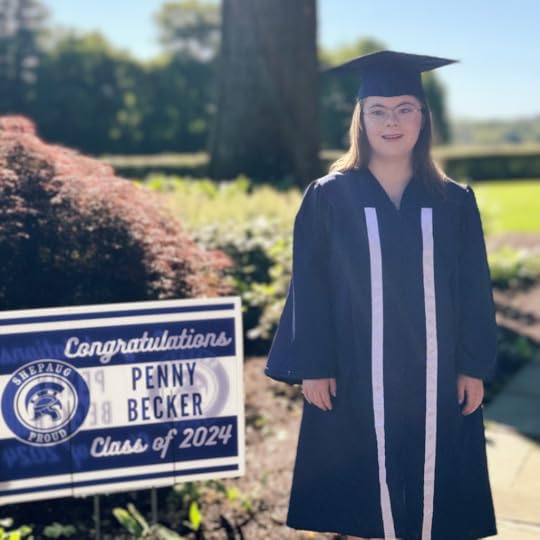
Penny is a high school graduate! Here are her reflections on graduation day and the future:
I can’t really believe you have finished your final year of high school! How does it feel?
I agree with you because I still can’t believe I have finished high school. It feels bittersweet, because even though I am relieved that high school has ended, I still wish I could re-live high school one more time.
Oh, now I’m curious to hear why you feel relieved that high school has ended?
Not being in school means freedom in my eyes. It also means you don’t have to wake up so early with the sound of your alarm.
What were some highlights from graduation day?
Some highlights from graduation day were:
The Speeches ( especially Faith’s)Cheering along with the rest of the class for others receiving their diplomasPictures after ceremony
Does anything stand out for you about Faith’s speech?
Faith made 2 speeches and I thought both of them were really good. In her last speech I liked how she thanked everyone In the senior class. She had to go through all 75 of us and I thought that was Impressive.
What part of the day made you feel the most celebrated?
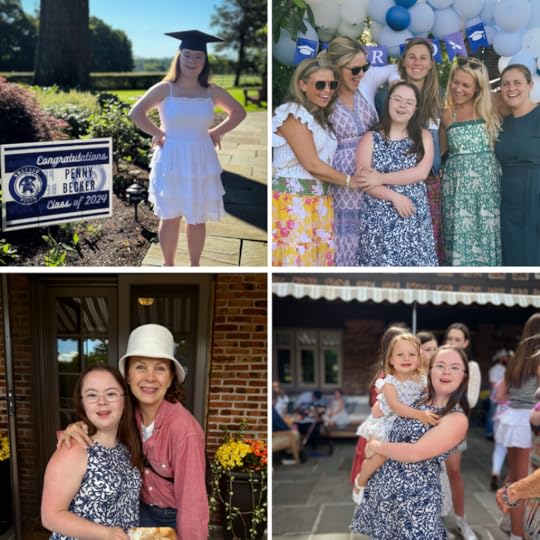
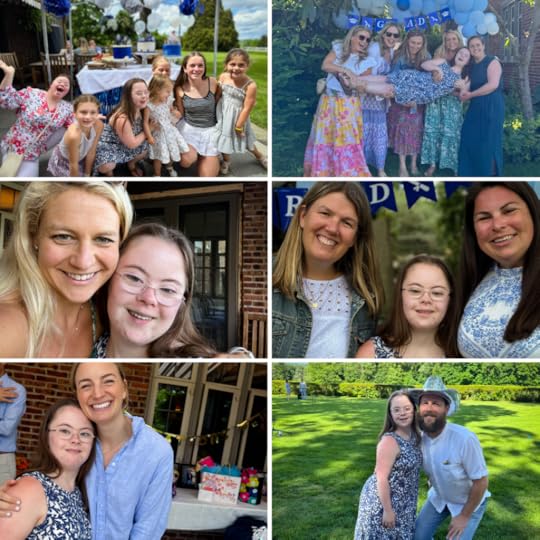
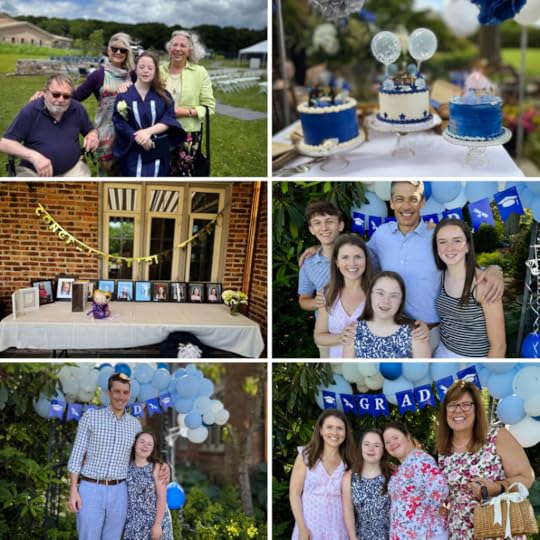
The party back at home made me feel the most celebrated because everyone wanted to be there celebrating me.
Who were the different people who came to your party? What was it like to have them all together?
Elizabeth (dance teacher)Rachel and Ginny (close friends from New Jersey)Maddie (best friend and old babysitter)Stephanie and her mom ( from church)And lots of family members and a few teachers from school
Are there things that you are sad about leaving behind?
Yes, some examples are:
All of my friendsPep RalliesShepaug DancesFineline (dance)Cheerleading
What are you excited about for your future?
I am excited for trying to locate a job and sticking with itI am excited for hopefully being on the cheer team againI am excited for a new adventure
MORE WITH AMY JULIA:
Penny in Her Own Words: Senior Project PresentationPenny in Her Own WordsPenny in Her Own Words: Senior PromPenny in Her Own Words: What I Want You to Know About My LifePenny in Her Own Words: Senior TripLet’s stay in touch. Subscribe to my newsletter to receive regular updates and reflections. Follow me on Facebook , Instagram , and YouTube and subscribe to my Reimagining the Good Life podcast.
The post Penny in Her Own Words: Graduation and the Future appeared first on Amy Julia Becker.