Amy Julia Becker's Blog, page 26
February 29, 2024
Changing Prepositions (from “for” to “with”)
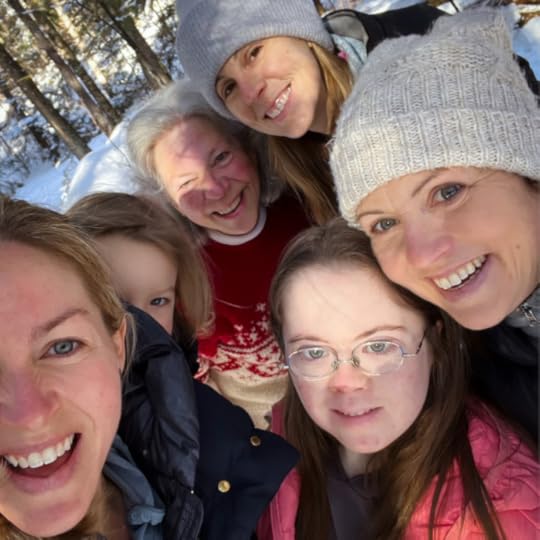
As a part of an ongoing desire to honor Penny’s capacities as an adult with Down syndrome, I’m learning to change my prepositions.
I keep catching myself talking about things that I will do “for” Penny. I’ll make an appointment for her. Or I will fill out a form for her. Make her lunch for her.
But the decision not to petition for guardianship for her served as a wakeup call. If the state is going to treat her as an adult, then I need to adjust my behavior—and my language—to acknowledge that she is indeed a capable young woman.
She still needs support, which is why we’ve cobbled together a form of supported decision making where she has protection and guidance, especially in the medical and financial realms. But the language I want to use to describe this depends on the word “with”, not “for.”
When I catch myself saying I will do something for Penny, I have started to ask whether instead I can do it with her, or whether she can do it for herself.
The simple adjustment of a preposition can make a big difference in how much agency we allow our daughter to live into.
(And honestly, this same adjustment is relevant in my relationship with all three of our kids! Just, as usual, a bit magnified when it comes to Penny.)
MORE WITH AMY JULIA:
Missing Out on Beautiful: Essays About Growing Up With a Child With Down SyndromePenny’s Senior Night as a CheerleaderTurning 18 and Guardianship DecisionsDisability and the Language We Use with Andrew LelandSubscribe to my newsletter to receive regular updates and news. You can also follow me on Facebook , Instagram , Twitter , Pinterest , and YouTube , and you can subscribe to my Reimagining the Good Life podcast on your favorite podcast platform.
The post Changing Prepositions (from “for” to “with”) appeared first on Amy Julia Becker.


February Favorites 2024
Here are nine of the books, movies, podcasts, and essays that helped me learn, think, and grow this past month…
1. Book: Practicing the Way by John Mark Comer.I loved this exploration of what it looks like not so much to believe a set of propositions about Jesus as to follow the way of Jesus. It’s filled with insights into Jesus’ life and ministry as well as practical steps about how to live as a follower of the way.
2. Book: It. Goes. So. Fast. by Mary Louise Kelly.For anyone with high school or college-aged kids, this is a great read about the years just before the empty nest.
3. Book: The Country of the Blind by Andrew LelandAndrew Leland’s exploration of his own story of blindness as well as the broader social and historical context of blindness was both poignant and fascinating. I learned so much, and I appreciated the way he wrestled with the beauty and hardship of life with a disability.
4. Movie: RustinI’ve never even thought about the amount of organizing that needed to happen in order for the march on Washington to take place. Rustin tells that story with intimacy and depth through the experience of Bayard Rustin, the lead organizer. In addition to the details of the march, we learn about Rustin’s deep Quaker faith and his commitment to non-violent resistance and about his experience as a gay man in the 1950s and 60s. All of the stories are powerful, hard, and prompted me to ask questions about what I believe and how I am willing to put those beliefs into practice.
5. Podcast: Why is there so much poverty in America? (with Matthew Desmond)I really appreciated this conversation about the idea of abolishing poverty in America. It brings to light both the desperation so many Americans experience as well as the possibilities of imagining a new way forward.
6. Mister Rogers, Countercultural ApologistThis is such a lovely profile of Fred Rogers with a reminder that gratitude, faith, and engaging with every other human as beloved has transformative power:
7. Scientists Find Genetic Signature of Down Syndrome in Ancient BonesWhat does it mean that the bones of infants with Down syndrome from thousands of years ago were cared for and honored? We don’t know for sure, but this discovery reminded me that the way cultures have viewed Down syndrome (and disability) has varied from rejection to reverence throughout time. (more of my thoughts here)
8. How Common Is Intellectual Disability Among Adults?Nearly 1% of all adults in America live with an intellectual disability. It’s a small percentage, but of the 258 million adults counted in the 2020 census, that amounts to 2.5 million adults with IDD in our nation.
9. Toxic Beauty Standards Can Be Passed Down“Mothers are both victims and perpetrators of a culture that sells women the lie that we aren’t enough exactly as we are. And yet, if a mother’s insecurity can fuel her daughter’s own self-loathing, a mother’s radical self-love might just protect and even heal her daughter from a toxic culture.”
What if, as mothers, we believed our own belovedness and passed that belief along to our daughters? (more of my thoughts here)
Get my favorites delivered to your inbox each month!
Subscribe here!
More with Amy Julia:
Favorites and AJB RecommendsMy Favorite Books of 2023Subscribe to my newsletter to receive regular updates and news. You can also follow me on Facebook , Instagram , Twitter , Pinterest , and YouTube , and you can subscribe to my Reimagining the Good Life podcast on your favorite podcast platform.
The post February Favorites 2024 appeared first on Amy Julia Becker.
February 28, 2024
Mothers Can Pass Along Belovedness
What if, as mothers, we believed our own belovedness and passed that belief along to our daughters?
I really appreciated Alexandra D’Amour’s essay for the New York Times about toxic beauty culture. She reminded me of the way my generation of women saw “fat” as the enemy, and how binging on SnackWells cookies and a high rate of eating disorders ensued. She also reminded me of the way our mothers talked about weight and fat and dieting poured right down onto us when we were teenagers.
Today’s version isn’t mothers talking about dieting and avoiding fat. Instead, it’s about anti-aging creams and botox and hair dye. The way we talk about aging and beauty matters. Not only for us, but also for our daughters.
D’Amour writes, “Mothers are both victims and perpetrators of a culture that sells women the lie that we aren’t enough exactly as we are. And yet, if a mother’s insecurity can fuel her daughter’s own self-loathing, a mother’s radical self-love might just protect and even heal her daughter from a toxic culture.”
I love her implied question: What if mothers can pass along belovedness, not just by loving our daughters but by loving ourselves? What if we can pass along a message of enoughness, of mattering, of beauty that comes from accepting our bodies and faces and hair and our gifts and abilities?
We have to believe in our own belovedness, and live out of that belief, if we are going to pass it along to our daughters.
 photo taken in 2018
MORE WITH AMY JULIA:
Chapter 3: BeautyIdolatry of IntellectWhat Would You Say to Your Teenage Self?Subscribe to my newsletter to receive regular updates and news. You can also follow me on Facebook , Instagram , Twitter , Pinterest , and YouTube , and you can subscribe to my Reimagining the Good Life podcast on your favorite podcast platform.
The post Mothers Can Pass Along Belovedness appeared first on Amy Julia Becker.
February 26, 2024
Finding Peace in the Midst of the Storm
When I’m home with a sick kid for the third week in a row, when Peter and I repeat the same conflict week after week, when there are too many things to do and I’m disappointing myself and others, when I find myself in the midst of the storm… I want peace and quiet and warmth and security. I want the storm to be over. But lately I’ve been wondering—what if God wants me to learn how to find peace in the midst of the storm?
There’s a story in Matthew 14 where the disciples are crossing the Sea of Galilee in the middle of a storm in the middle of the night. Jesus is also crossing in the middle of the storm in the middle of the night, but he is doing this by walking on water. Eventually he calls Peter to come to him on the water. Peter looks at Jesus and walks on water. But then he sees the wind and the waves, begins to sink, and cries out. Jesus pulls him up. They return to the boat. And then Jesus calms the sea.
In an ancient view of the cosmos, the sea is the realm of chaos and destruction. And all the more so when it is swirling and dark. In this story, Jesus is able to walk into the middle of the darkness, into the middle of the chaos. He holds the power to calm the sea, but he also can walk through the chaos without losing his step.
He invites Peter to do the same. I wonder whether he invites me to learn how to do the same. To learn how to stay in the storm and have peace. To learn how to bring that peace to others who are stuck in the swirling chaos of this world.
I’m like Peter, for sure. If I ever take a calm step in the storm, it is only because I am looking at Jesus, and it only lasts for a moment. I get distracted and panicked by the wind and the waves. But even then, even then, I cry out for help. And immediately he is there to save me from sinking, return me to the boat, and calm the sea.
MORE WITH AMY JULIA:
5 Ways to Experience God’s Love and Practice Peace4 Ways to Deal with BrokennessAnxiety and the Peace of GodSubscribe to my newsletter to receive regular updates and news. You can also follow me on Facebook , Instagram , Twitter , Pinterest , and YouTube , and you can subscribe to my Reimagining the Good Life podcast on your favorite podcast platform.
The post Finding Peace in the Midst of the Storm appeared first on Amy Julia Becker.
February 23, 2024
Down Syndrome Through the Ages
How did ancient cultures treat people with Down syndrome?
Researchers just discovered the remains of a few babies with Down syndrome from thousands of years ago, and they determined that these cultures or families held these babies in high regard. In one case, the remains were found within a house. In another, they were buried with necklaces and other special objects. In their death, it seems as though they had been honored in life.
We can’t draw too many conclusions from this sliver of human history. But it does reinforce the idea that over time, different cultures, in different historical eras, have both honored or really dehumanized people with Down syndrome.
We know from ancient Roman times that children with disabilities—and we would assume that includes children with Down syndrome—were often exposed to the elements and left to die when they were born. And we know that Christians played a large role in changing that.
Early church fathers like Augustine, writing about babies who are born with something like Down syndrome or other genetic differences, said these are the wonders of God’s creation. We need to assume that they have been created in the image of God. The culture up to that point had treated babies with disabilities as if they were a horror. Augustine turned that on its head and said, no, they are a wonder.
More with Amy Julia:
Disability and the Language We Use with Andrew LelandBeing HeumannHow to Talk With Siblings About DisabilitySubscribe to my newsletter to receive regular updates and news. You can also follow me on Facebook , Instagram , Twitter , Pinterest , and YouTube , and you can subscribe to my Reimagining the Good Life podcast on your favorite podcast platform.
The post Down Syndrome Through the Ages appeared first on Amy Julia Becker.
COGNOSCENTI | Why our family still makes time for church on Sundays
“These days, it’s rare that our family of five sits together in the pews come Sunday morning,” she explains. And she’s thought about when and whether to give her teenagers the freedom to sleep in on Sunday mornings. “I want them to know they have agency over their spiritual lives. But I also think if they walked away from church they would be more likely to experience the loneliness and disconnection felt by so many of their peers.”Last May, she points out, the surgeon general issued a report on the health effects of loneliness and isolation. He called for greater social connection and community as a matter of public health. “We are drifting away from one another, and, even more so, from the institutions that connect us — institutions like church — even as we are in desperate need of them,” writes Becker.
“In a world that is overpopulated with distraction, entertainment, productivity and busyness, our attendance at church invites us to create time and space to pay attention to each other and to transcendent truths embodied in real people,” Becker writes. “So we will continue to show up, even if erratically, on Sunday mornings.”READ MY COGNOSCENTI ESSAY HERE
MORE WITH AMY JULIA:
Christian Century: Worshiping at the church of Taylor SwiftRNS | Why do I still go to church?3 Ways to Find an Ordinary ChurchSubscribe to my newsletter to receive regular updates and news. You can also follow me on Facebook , Instagram , Twitter , Pinterest , and YouTube , and you can subscribe to my Reimagining the Good Life podcast on your favorite podcast platform.
The post COGNOSCENTI | Why our family still makes time for church on Sundays appeared first on Amy Julia Becker.
February 21, 2024
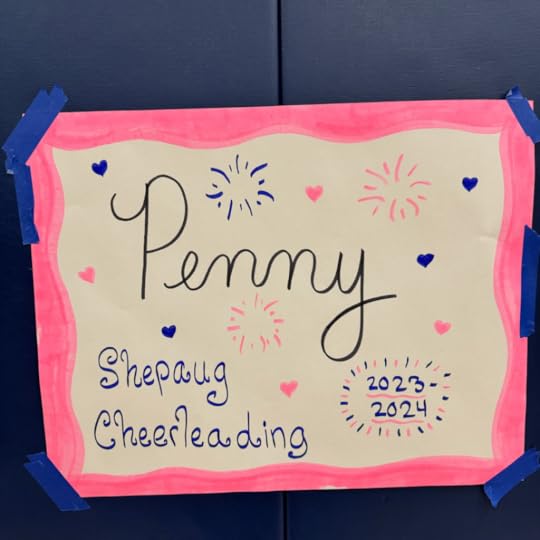
Penny’s Senior Night as a Cheerleader
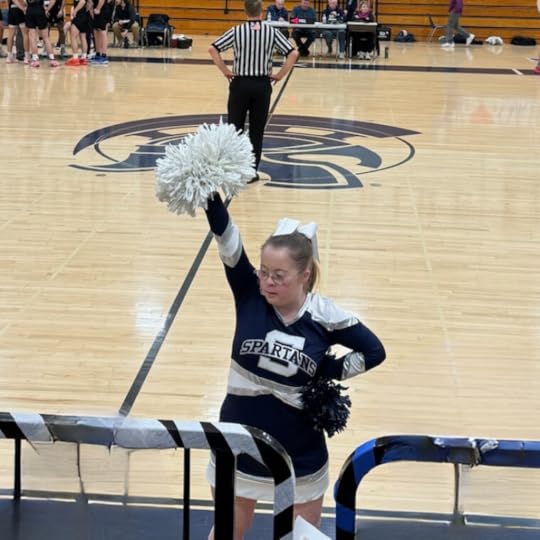
If you had told me when she was born that our daughter with Down syndrome would be a Varsity cheerleader at our local high school, I don’t think I would have believed you. Thankfully, I learned pretty quickly that my assumptions about what was possible for her were often wrong.
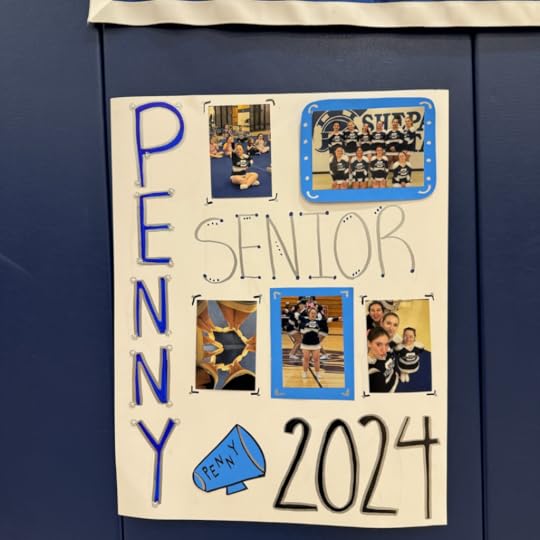
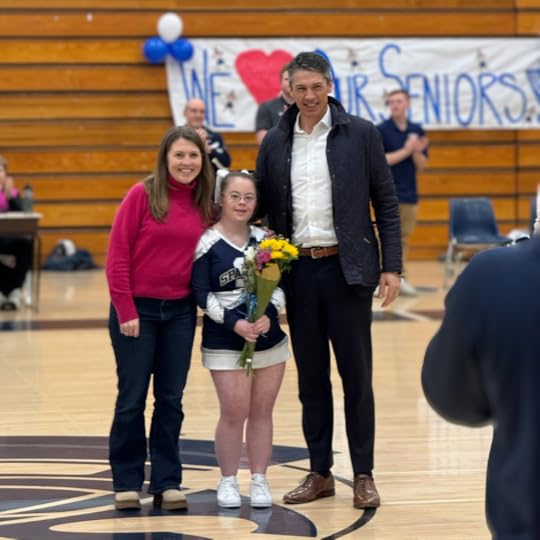
We just celebrated—with her team, with other parents—Penny’s senior night. We watched her do what she’s been doing for three years now—dance and cheer, sometimes taking the lead, sometimes following her peers. I tried to keep the thought that this was the final home game of her final year of high school in the recesses of my mind and just enjoy this moment. This delight. This excitement. This reason to celebrate.
I look back on it, and I realize this moment happened in part because she started taking dance when she was three. It happened in part because we believed in her. And in part because she goes to a school where the adults believe in her too. And it happened because she has worked really hard and loved being out there.
So many beautiful things can happen—for individuals, and for a community—when we assume possibility.
Penny, we are so proud of you and so grateful for all the people who have walked with our family every step of the way. (video below or on YouTube to watch some of this year’s clips)
MORE WITH AMY JULIA:
5 Things I Wish I Had Known When Our Daughter Was Diagnosed With Down SyndromeSome Thoughts on Down Syndrome and CheerleadingHope Heals: Everyone Lifted UpHow a Dance Performance Gave Me a Glimpse of a World Made RightSubscribe to my newsletter to receive regular updates and news. You can also follow me on Facebook , Instagram , Twitter , Pinterest , and YouTube , and you can subscribe to my Reimagining the Good Life podcast on your favorite podcast platform.
The post Penny’s Senior Night as a Cheerleader appeared first on Amy Julia Becker.
February 18, 2024
How to Talk With Siblings About Disability
How should I talk with my typically-developing kids about a brother or sister who has a disability? As the mother of an 18-year-old with Down syndrome with two younger siblings who are typically-developing, I’ve learned two things.
The first is to normalize and neutralize the language of disability.We don’t need to feel embarrassed or ashamed or worried about using words like disability or describing in factual terms what the disability means in our child’s life. We talk about the particulars of Penny’s experience of disability—whether that is low muscle tone or what we call her “challenge with flexible thinking” (others might call this stubbornness). Honest, non-judgmental conversation helps everyone to talk about disability as a natural part of what’s going on in our family.
Secondly, we use the language of challenges and gifts to describe each of us.Each one of us has challenges—we have certain things that we’re limited in and certain areas where we struggle. We also, each one of us, have gifts. We have things that we can offer. Using the language of challenges and gifts helps everyone in our family to recognize that we are different, that we have something in common, and that we need one another.
MORE WITH AMY JULIA:
If You’re a Parent Who Has Received a Hard Diagnosis About Your ChildThe Disability Community Needs Grandparents Like TheseHelping Kids With Disabilities Move Toward IndependenceSubscribe to my newsletter to receive regular updates and news. You can also follow me on Facebook , Instagram , Twitter , Pinterest , and YouTube , and you can subscribe to my Reimagining the Good Life podcast on your favorite podcast platform.
The post How to Talk With Siblings About Disability appeared first on Amy Julia Becker.
February 16, 2024
Applying to the Emerging Pathways Program
Penny just submitted her application for an “emerging pathways” program on a local University campus. She spent hours filling out the forms and working on short essays to describe her interest in the program and her goals for the future. We tour the school next week. It’s a program that would give her a lot of support, access to college classes for audit or credit, job training, and social connections with peers with and without intellectual disabilities.
There’s a waitlist for this program, so she may not get in. I hope she does, but if she doesn’t, we’ll apply again. We have time.
I don’t know what will happen for her next fall, but I do know that her future is filled with possibilities.
MORE WITH AMY JULIA:
The Disability Community Needs Grandparents Like TheseOur PATH journeyPenny’s PATH Process: Planning for Life After High SchoolSubscribe to my newsletter to receive regular updates and news. You can also follow me on Facebook , Instagram , Twitter , Pinterest , and YouTube , and you can subscribe to my Love Is Stronger Than Fear podcast on your favorite podcast platform.
The post Applying to the Emerging Pathways Program appeared first on Amy Julia Becker.
Reimagining the Good Life. Disability. Faith. Culture.
Reimagining the Good Life. Disability. Faith. Culture.
After months and months of conversation, that’s where we’ve landed as a concise way to invite people to explore the work I do.
In the midst of this process—which involved lots of sharpies and pieces of butcher paper rolled out across large tables and words scribbled and crossed out—I woke up one morning and had what felt like an epiphany. I want my work to:
Challenge assumptions about the good lifeProclaim the inherent belovedness of every human beingandEnvision a world of belonging
We decided that the best way to convey the work I do and welcome people to follow and engage with it was through the words: Reimagining the Good Life: Disability. Faith. Culture. (More about those three words later)
You’ll start to see signs of this tagline (and logo—the next step was a fun design process where we picked fonts and colors and “graphic assets”) on the header of my weekly newsletter, on my website, and on all the different social media platforms.
We also renamed my podcast, and I’m working on a webinar series (which you’ll hear about soon) called Reimagining Family Life with Disability. If that goes well, I’m also thinking about a webinar called Reimagining Church Life with Disability.
Thank you for all the ways you’ve helped me come to these realizations. Thank you for spreading the word about the work I’m doing.
I hope and pray that all of this work will ultimately serve you and people like you as we seek to challenge assumptions, proclaim belovedness, and envision belonging and reimagine the good life together.
MORE WITH AMY JULIA:
Reimagining the Good Life PodcastIt’s Always Too Much | Four Thousand WeeksI’m Working on a Video Teaching Series About Disability and FamilySubscribe to my newsletter to receive regular updates and news. You can also follow me on Facebook , Instagram , Twitter , Pinterest , and YouTube , and you can subscribe to my Love Is Stronger Than Fear podcast on your favorite podcast platform.
The post Reimagining the Good Life. Disability. Faith. Culture. appeared first on Amy Julia Becker.