Umm Zakiyyah's Blog, page 6
October 14, 2019
We Need Spiritual Honesty and Compassion, Not Saviors
There are endless waves of darkness, but only one noor (spiritual light of faith)…
When I found myself drowning in one of those waves of darkness and feared I couldn’t be Muslim anymore, I had no idea how I would find my way back to Allah. But I turned to Al-Haadee (The Guide) for help. Meanwhile I despaired of getting any support or compassion from humans, even those who professed Islam, amongst both worshippers and scholars.
At the time, it was such a lonely, emotionally isolating existence. I felt abandoned and alone, and there were moments when I felt angry that I could turn to no one for help. And those whom I tried to turn to scorned me for my questions, remained completely oblivious to my spiritual pain, or they berated me for the boundaries I’d put up in hopes of protecting what was left of the dying glimmer of emaan in my heart.
Till today, I struggle to find the words to convey what I was going through during that time, except that it was like being swept away under a wave of darkness, while the world looked on continuing their lives as if nothing was amiss.
Searching for Internal Peace, Not Clear Answers
My journey back to Allah was by far the most painful journey I’ve ever taken—and it was also the most rewarding.
Today, when I look back on all the questions that weighed me down during my spiritual confusion, I realize it wasn’t so much that I was looking for solid, clear answers to every single question I had, as I was looking for some internal spiritual peace that could put my heart at ease.
I was searching for sincerity and authenticity. I was searching for spiritual honesty. I was searching for empathy and compassion.
I was searching for humanity.
I know that not everyone’s spiritual turmoil will mirror mine—as there are endless waves of darkness, but only one noor—so I do not strive to speak for anyone else. At the same time, I’ve come to understand that no matter what wave of darkness is overtaking a soul, this pain is essentially a heart issue more than a “head” issue, no matter how much intellectual confusion is involved.
As for myself, I certainly had many pressing questions weighing on my heart, and I wanted answers so badly that it hurt. I have no idea if anyone could’ve actually said anything to help me, but at the time I felt that they should have.
But even if someone had answered my questions, I know for certain that I wasn’t seeking a scholar’s intellectual pontifications about “what if” possibilities in interpreting the Unseen realities of the Book of Allah and the prophetic Sunnah. As far as I was concerned, I could explore “what if” possibilities on my own.
But what was it that Allah, my Lord, wanted me to know? And what was I to understand from this? And what was I not to understand from this? And why?
So yes, while my mind was certainly overwhelmed with question after question, in the end, it was really my heart that was searching for peace.
You’re No One’s Savior
“You can’t save someone who doesn’t want to be saved,” we say. And it’s true. But when it comes to Muslims struggling in their faith and questioning Islam, it’s much deeper than that.
Here’s what I learned from my own spiritual turmoil, as well as assisting others on their path back to Allah: You can’t save someone who isn’t willing to do the painful internal work that it takes to even have a chance at being saved.
This means if we’re struggling in our faith, then we have to truly want to want the spiritual good (even if in our current space of darkness, there’s a part of us that really doesn’t care). We can’t just desire immediate answers to our burning questions, while putting the path of spiritual good to the side until we get them.
In this, we have to accept on some level that there will always be unanswered questions and spaces of pain and confusion in life. This is true for dealing with the unseen realities of our worldly lives, and it’s true for dealing with the unseen realities of our spiritual lives.
Accepting the Unseen Is the Only Path to Success
In our worldly pursuits, we accept the unseen and submit to it wholeheartedly, and it doesn’t distract us from pursuing the path toward worldly good. We enroll in colleges and universities and invest thousands and thousands of dollars in a “dream.” Meanwhile we have absolutely no idea if we’ll even graduate, if we’ll get a job after it’s all over, or if that career or business we’ve invested so much in will ultimate fail—or if we’ll just drop dead and never live to see the results of any of our worldly pursuits.
But you’ll rarely find any mature adult just sitting around wasting life away based on the “what if” failure possibilities in their worldly path. In colleges and universities, even students who are “undecided” in their majors remain in school and ultimately choose something to pursue, even if they’re still questioning parts of the path they’re taking. And even those who end up dropping out tend to leave school in order to pursue a specific path, not to just sit around endlessly pondering the zillions of “what if” failure possibilities in life.
Every mature adult knows you must do something with your life. As a result, they choose some worldly path, even if it’s not as glamorous as the one they envisioned when they were children and telling the world their “When I grow up…” stories.
If we are going to have any success in our spiritual paths, then we have to take a similar approach.
The Journey Is More Important Than Answers
When we understand that accepting the unseen is the only path to success, this doesn’t mean we don’t actively seek answers to the spiritual questions burning in our hearts. It just means that we have to understand that the answers are less important than the journey we are taking to pursue them. Thus, we have to decide where we want to be at the end of that journey, and then start walking that path while we are seeking answers to our questions.
And how do you know where to walk? Wherever you’re standing.
If the only foundation beneath your feet is that you know there’s a God but have no idea which path to Him is correct, then you continuously pray to Him, begging His guidance and assistance as you seek to have your questions answered.
If the only foundation beneath your feet is that you believe in the general principles of Islam but have unsettling questions about certain prophetic teachings or historical incidents, about specific verses in the Qur’an, or about aspects of the unseen that you just can’t reconcile with your modern intellect or emotions; then you continue to pray your five prayers, read Qur’an, and make consistent, sincere du’aa begging Allah for answers.
The point is that it’s never necessary to stop walking your path just because you have questions about what you’ll encounter (or be required to encounter) on that path. This is true for our worldly paths, and it’s true for our spiritual paths as well.
Overcome ‘Instant Gratification’ Addictions
When I struggling in my emaan, I often found myself in restless impatience and confusion because I felt so empty and lost, even when I was praying, so I wrote this personal reminder in my journal: Instant gratification can be an addiction. Beware of it affecting your faith and worship. Everything good and beneficial doesn’t always feel good right away. Sometimes it never feels good right away. But we don’t do what is right and necessary because it feels good. We do what is right and necessary because it is right and necessary.
And sometimes what is “right and necessary” is being patient for the answer to our deepest spiritual questions, instead of insisting that it comes when we feel we should get it.
As we are walking our personal paths in life, it’s also important to understand that finding meaningful answers to our questions sometimes means being willing to simply sit still in a space of pain and confusion, and allow that pain and confusion to just “be.” This emotional and spiritual stillness is necessary, even as you do everything in your power to cleanse your heart from the pain and confusion that is tormenting you—specifically through supplicating to your Creator for help.
The mistake we so often make when we are drowning in emotional and spiritual confusion is that we succumb to our addiction to instant gratification, more than we submit to the needs of our souls. Consequently, if our heart and mind have the question “Why?” or “How?” then we prioritize getting satisfactory answers to very specific questions before we do even the minimal work that is required for a lifestyle of faithful submission.
In other words, we want our emotions and intellects soothed before we agree to nourish our souls. This is a big mistake.
If we used this same approach on our path to achieving worldly success, no one would graduate from college or university; no one would even apply for a job, let alone get one; and no one would start—or sustain—a successful business.
That’s why it’s important to continue to walk the path toward the goal you want, even as you are weighed down by questions and confusion on that path.
If you insist on having clear answers to every question that weighs on you before you move forward in faith—whether in pursuit of your worldly or spiritual goals—you’ll be at consistent “stand stills” that could ultimately mean the death of your worldly success, and the death of your spiritual soul.
Be a Compassionate Support
If we are tested with being someone whom others come to for advice during their periods of spiritual confusion, it’s important that we tap into faith-mode more than savior-mode when we are assisting them. If you are a trusted imam, scholar, or spiritual teacher, this faith-mode instead of savior-mode is even more crucial for you.
Remember this: It is more important for you to walk in empathy and compassion with someone during their struggle than to seek to have the answer to every question they have during their struggle.
If someone is struggling to hold on to their faith, you need to understand that you can be a compassionate, empathetic supporter in their journey back to Allah and spiritual health. But you cannot be their savior, nor should you attempt to be.
Your job is to strive your level best, from the depths of your heart, to point them to that single noor, that single spiritual light of faith: the Siraatul-Mustaqeem, the Straight Path, which is the only path to Allah’s Pleasure and Paradise.
While pointing them in this direction, you have to allow people to navigate the dark waters of spiritual confusion in their own way, not in the way you imagine they need. This means pointing them continuously to Allah more than you point them to the intellectual pontifications of your own mind.
Be Patient with Our Scholars, They’re Struggling Too
If you’ve been tested with receiving (or witnessing) poor or harmful advice from someone you consider a scholar, particularly in addressing questions from struggling and confused believers, remember this: Scholars are imperfect, fallible humans just like you. It’s just that Allah has tested them with carrying the heavy mantle of spiritual teaching due to the knowledge they’ve been entrusted with.
This knowledge in no way takes away their own personal struggles in life. Thus, scholars and spiritual teachers go through emotional pain and confusion. They suffer from the wounds of childhood (or adult) trauma, and they even battle spiritual turmoil and deep dips in their faith. Thus, they go through time periods without opening the Qur’an, they get distracted in their prayers, and they even oversleep for Fajr at times. And yes, just like any other human being, when they are stressed, they get cranky and irritable with those around them.
This isn’t because they’re not real scholars. It’s because no amount of religious scholarship can take away their humanity. So they have to do the daily work for their souls just like the rest of us, and sometimes they fall short.
And each and every one of them will stand on the Day of Judgment and answer for their time on earth just like the rest of us.
So the best gift you can give a scholar whom you see speaking in a way that is harmful to others is to pray for them, make excuses for them, and then clarify to the people the truth, without fixating so much on, “What’s his problem?” As a general rule, what is wrong is more crucial to address than who is wrong (though there are times that “who” should also be mentioned even as our emphasis is on “what”).
As for scholars carrying the heavy responsibility of being a support to others, no matter what they’re going through, this is true and it is no small matter. At the same time, no one is superhuman. In this, here’s a personal reminder I wrote to myself in my journal: The one you are looking to for help and guidance needs patience and good treatment too. No Muslim is perfect, whether revert or born into a Muslim family, student or Islamic teacher, layperson or scholar.
As for facing the heartbreak and disappointment of witnessing someone you’ve benefited from and trust deeply, fail you or other believers in a very significant way, I share these reflections from my journal, some of which I share in my books Pain, Faith, and Broken yet Faithful:
I think disappointment in people is a mercy from God. It’s a reminder that we’ve lost focus and raised creation above the status that God has written for them. And in the process, we forgot where real greatness comes from—God alone.
• •
No matter how much you love, admire, or benefit from someone, they will inevitably say or do something that reminds you that they are merely human and all praise and greatness belong to God.
Yet even then, some of us miss the lesson entirely, as we try to interpret even their mistakes and wrongdoing as right and good. Or we feel betrayed and thus abandon them, saying, “They’re not who I thought they were.”
Who did you think they were?
From the children of Adam, God created only human beings.
• •
When we admire or benefit greatly from someone, they often hold a special place in our hearts and a lofty place in our minds. In this, we unwittingly ascribe to them high standards that they, naturally, know nothing about. And when they err or sin, like all children of Adam do, we become upset and disappointed, and we sometimes feel betrayed.
If they were a loved one like a spouse, parent, or favored child, our relationship is often broken or tense as a result. If they were an admired religious teacher or scholar, we often abandon them for their “hypocrisy” in standards they never claimed.
Shukr—gratefulness. This is what we lack when we fall into this. All good comes from Allah.
So be grateful for the good He has placed in those who are blessings in your life. But do not raise them to a level that Allah has not written for any of His slaves.
The most any of us can hope for is Allah’s mercy, so when someone you admire or benefit greatly from falls into error or sin, do not feel disappointed or betrayed. Rather feel grateful that you now can give back to them—by raising your hands in supplication and asking Allah to have mercy on them.
Don’t Overcomplicate Your Faith
Some things are not as complicated as they seem, no matter how distressing the questions are to your heart.
When it comes to matters of the Unseen, for example, such as the Signs of the Last Day and what will happen on the Day of Judgment—particularly when we witness our brothers and sisters in faith delving deep into what Allah has not made clear to us as of yet—we say only, as Allah describes in Qur’an: “We believe in it, the whole of it [the clear and unclear] is from Allah” (Ali ‘Imraan, 3:7).
If anyone wishes to go beyond what is clear, using human logic and science to refute certain unseen possibilities, you do not have to join the conversation. For the sincere believer knows that if Allah wishes to decree something, He says only “Be” and it is. End of discussion.
As for those who are struggling deeply in their spirituality such that their souls are troubled and they genuinely wish for more detailed answers than what Allah has made clear in the Qur’an and prophetic teachings, understand this: You cannot clarify for any soul what Allah Himself has not clarified to you or any of His creation.
Here is what I genuinely believe is best and most beneficial to any struggling soul looking for answers beyond what Allah Himself has offered (and I learned this from navigating my own spiritual trials): compassion, empathy, and spiritual honesty. Nothing more, nothing less.
And the highest level of spiritual honesty is to affirm what Allah has affirmed and remain silent on what He has not, and then compassionately invite your struggling brother or sister to make sincere du’aa for true spiritual understanding, particularly in the matters that are troubling them most.
Then trust and believe that anyone who is sincerely searching for spiritual guidance will be granted it, even if it’s not through you.
And dear soul, understand that there is no level of knowledge or wisdom beyond that—irrespective of whether you are seeking to help others as a scholar, spiritual teacher, or just a sincere worshipper.
If the struggling person you wish to help is unwilling to make peace with turning to Allah for guidance, while also accepting that some things will remain unclear to us in this life, then there is nothing—and I mean, absolutely nothing—you can do to help them.
For in the Qur’an Allah describes those who are “firmly grounded in knowledge” as affirming belief in both the clear and unclear, without seeking to search for hidden meanings in the unclear aspects of His revelation. And this, for the sincere, believing heart—even if it is a pained, struggling heart—is enough as an admonition. Allah tells us: “And none receive admonition except men of understanding” (Ali ‘Imraan, 3:7).
So the most any of us can do is strive and pray to be amongst these people of true understanding, and invite others to do the same.
There really is nothing more you can do for any hurting soul—even if that hurting soul is your own.

Umm Zakiyyah is the internationally acclaimed author of twenty books, including the If I Should Speak trilogy, Muslim Girl , and His Other Wife . In 2019, she launched UZ Soul Gear , a passion project fueled by her love of both art and inspirational reflections. UZSoulGear.com offers apparel, wall décor, and more, aimed at supporting and inspiring the soul-centered lifestyle.
Want to find or improve your writing voice? Join UZ University to learn how, so you too can share inspirational stories with the world: UZuniversity.com
Subscribe to Umm Zakiyyah’s YouTube channel , follow her on Instagram or Twitter , and join her Facebook page.
Copyright © 2019 by Al-Walaa Publications. All Rights Reserved.
The post We Need Spiritual Honesty and Compassion, Not Saviors appeared first on Umm Zakiyyah.


October 8, 2019
Does Your Pride Make You Honorable?
Once while I was teaching high school to young women in Saudi Arabia, some my Arab students were explaining how they felt about marriage. “Nobody wants to marry a prince,” one of them told me.
“Really?” I said, a bit taken aback by her comment. “In America, many women see marrying a prince as the ultimate fairy tale.”
She shook her head. “Not here.” Some of the other Arab girls nodded in emphatic agreement.
“If you marry a prince,” she explained, “you have no life. And if anything happens between you, and he divorces you, you can never get married again.”
“Are you serious?” I said, shocked. “Is there a law against it or something?”
“No,” she said. “But no man would touch you after that. It’s understood that once you marry a prince, you pretty much belong to him forever. It’s like an honor thing. No man would want to disrespect a prince by marrying his ex-wife. And if he did try to, the prince would get really angry with him, so most men wouldn’t do it, no matter how much he wanted her.”
We All Have Manmade Honor Codes
I don’t know how accurate my Arab students’ perception of a prince’s honor is in their country. Like most cultures, I imagine that it’s true for some Arabs, but not for others. I can’t be sure. However, even if this honor code doesn’t apply to all Arab culture, the fact that it exists at all is heartbreaking.
Many years have passed since that conversation with my Arab students, and I no longer live as an American expat in Saudi Arabia. But I think on that conversation often, and every time I recall it, I feel a bit saddened. Initially, my sadness was due to feeling sorry for Arab women. I couldn’t imagine how it felt being forced to live in such a repressive environment that even your options for marriage were severely restricted. However, today my sadness is due to realizing that this form of repression is part of nearly every culture in the world, including the United States of America.
In non-Muslim American culture, freedom of choice is celebrated as a basic human right, so much so that indulging in sex before marriage, having an “open relationship,” or even engaging in sexual promiscuity is viewed as “personal freedom.” However, when it comes to a person freely choosing to live in a plural marriage, American culture views this personal choice as unacceptable and backward, from a socio-political perspective. This form of socially repressing freedom of choice for people whose lifestyle many non-Muslims find distasteful is a manmade honor code in American culture—similar to my students’ description of the Arab honor code that restricts the ex-wives of princes from marrying other men.
In truth, varying versions of manmade honor codes can be found in nearly every culture in the world, even those that pride themselves in “freedom of choice.”
Muslims’ Manmade Honor Codes
The manmade honor codes that are part of American culture are not exclusive to non-Muslims. Manmade honor codes have also permeated Muslim communities in the United States. These honor codes include men taking pride in the “honor” of never marrying the divorced wife of a friend, even if the man and the woman are compatible for each other. They include women taking pride in the “honor” of never marrying the former husband of a friend, even if the woman and man are good for each other. These honor codes also include both men and women taking pride in their refusal to ever participate in plural marriage, or to support anyone who does.
These American honor codes are little different from the Arab honor code that prevents certain women from ever having the opportunity to remarry or to get married at all if the man she desires is not from her tribe or social class. Moreover, these honor codes are in direct opposition to how Allah and the Prophet (peace and blessings be upon him) taught believers to live and to how both the Prophet and his Companions actually lived.
In fact, inherent in the merciful, universal message of Islam is the dismantling of manmade honor codes, and the establishment of a soul-centered lifestyle that supports halaal freedom of choice for every child of Adam. Thus, it is nothing short of a spiritual tragedy that many Muslims today eagerly seek to reinstate repressive manmade honor codes while imagining this will bring about some greater good.
Had the Prophet (peace be upon him) and his Companions supported these repressive honor codes that prevent men and women from marrying the former spouses of friends or that attach shame to plural marriage, we would not have the merciful spiritual guidance of Islam itself. And we would not have a faith practice that supports the right of every believer to choose what is best for his or her own life and soul.
It is important to note, however, that it is perfectly acceptable in Islam to have a personal preference for a certain type of marriage or to make a personal decision based upon what you sincerely believe is wisest and best in your specific circumstance. This right to a personal preference remains even if it means deciding to not do something that is permissible for you while choosing something else that is also permissible for you. However, there is a huge difference between having a personal preference in your private life, and assigning honor and nobility to refusing to participate in or support something that the Creator has allowed for all believers.
Divine Mercy in Dismantling Manmade Honor Codes
In reflecting on our personal definitions of honor and uprightness, it is helpful to remember that it is Allah who defines nobility and honor, not the human being, no matter how convinced we are based on our cultures and emotions that something should or should not be done in a certain circumstance.
In the famous story of the divorce between the Prophet’s adopted son Zayd ibn Harithah and Zaynab bint Jahsh (may Allah be pleased with them), we learn how the believer should view any manmade honor codes that do not mirror the guidance of Allah. Regarding this, Allah says what has been translated to mean:
“It is not for a believing man or a believing woman, when Allah and His Messenger have decided a matter, that they should [thereafter] have any option in their decision. And whoever disobeys Allah and His Messenger has certainly strayed into clear error.
And [remember, O Muhammad], when you said to the one on whom Allah bestowed favor and you bestowed favor, ‘Keep your wife and fear Allah,’ while you concealed within yourself that which Allah is to disclose. And you feared the people, while Allah has more right that you fear Him. So when Zayd had no longer any need for her, We married her to you in order that there not be upon the believers any discomfort concerning the wives of their adopted sons when they no longer have need of them. And ever is the command of Allah accomplished.
There is no blame on the Prophet in that which Allah has made legal for him. [This is] the established way of Allah with those [prophets] who have passed on before. And ever is the command of Allah a destiny decreed” (Al-Ahzaab, 33:36-38).
When reading these ayaat and the historical circumstances of them, so many of us fail to fully comprehend the severe social pressure the Prophet (peace upon him) was up against in marrying Zaynab (may Allah be pleased with her) after her divorce from Zayd (may Allah be pleased with him). We also fail to fully appreciate the immeasurable mercy that Allah showed us by giving us in His Book this guidance and lesson from a very specific circumstance. In this divine revelation, we are given guidance and lessons to apply to our own personal circumstances, specifically when what is permissible and best for us is not culturally acceptable to our families, cultures, and communities because it violates their manmade honor codes.
Unfortunately, when looking at these circumstances of revelation, some Muslims seek to separate the life and choices of the Prophet (peace be upon him) from how we ourselves should live out our personal and social lives as Muslims. However, Allah says: “There has certainly been for you in the Messenger of Allah an excellent pattern for anyone whose hope is in Allah and the Last Day and [who] remembers Allah often” (Al-Ahzaab, 33:21).
Moreover, Allah tells us that the entire prophetic mission is rooted in the Messenger of Allah (peace be upon him) teaching us divine guidance that is a mercy to everyone in the world: “And We have not sent you, [O Muhammad], except as a mercy to the worlds” (Al-Anbiyaa’, 21:107).
Therefore, it is clear that there is no difference between how the Prophet (peace be upon him) lived and how we ourselves should live, as his entire purpose on earth was to be an example to us and to share a divine message to be applied to our lives until the end of time. The only exception to this is in those matters that Allah made specific for the Prophet and the Prophet alone. However, it is well-known that the right to marry anyone that Allah has made permissible for us is a general permission to all human beings—even if this choice offends our respective cultures and honor codes.
Seeking Honor in Rejecting the Prophetic Teachings
It is deeply unfortunate that so many of us wish to reject both the prophetic example and the merciful teachings that Allah sent him with, when his example and teachings do not support our personal feelings, cultures, and manmade honor codes.
It is ironic, however, that so many of us eagerly enjoy the mercy and blessings of Allah in our own lives but seek to restrict or forbid this same mercy in the lives of others. This contradiction is most prevalent when other people’s halaal choices violate the manmade honor codes that are closer to our hearts than the Book of Allah and the example of our Prophet Muhammad (peace be upon him). In this, we reject the truth of the divine guidance Allah has given us while looking down on people whose lifestyle does not align with our manmade honor codes.
Prophet Muhammad (peace and blessings be upon him) said, “No one who has an atom’s weight of kibr (pride) in his heart will enter Paradise.” A man said, “O Messenger of Allah, what if a man likes his clothes and his shoes to look good?” He said, “Allah is Beautiful and loves beauty. Pride means rejecting the truth and looking down on people” (Sahih Muslim).
In American Muslim communities, we see this eager rejection of truth and looking down on others in our view of plural marriage and those who choose it. We also see this kibr in the widespread social shame attached to marrying the former spouse of a friend, irrespective of whether or not these marriage choices are best for the lives and souls of the people involved.
Seeking Honor Through Social Acceptance
With regards to plural marriage in particular, a large part of our kibr—rejection of truth and looking down on others—is due to our desire to seek social acceptance amongst non-Muslims, or to make our religion appear more appealing to the elite power structure. A large part of our kibr is also due to a desire to live according to our own definitions of nobility and honor in marriage (i.e. uphold our manmade honor codes).
In defending this sinful anti-polygyny kibr that aligns with the disbelievers’ honor codes, we eagerly cling to the myth that a relationship that is not officially recognized in the United States for tax benefits and the like, is automatically illegal and criminal to choose in one’s personal life. In taking this kibr a step further, many Muslims align with the disbelievers as a united front against believers who have chosen the merciful option of plural marriage in their private life, thereby claiming that these believers do not represent true Islam or that they are violating the “laws of the land.” Yet Allah says what has been translated to mean: “Those who take disbelievers as allies instead of the believers: Is it honor, power and glory they seek among them? But indeed, honor belongs to Allah entirely”(An-Nisaa’, 4:139).
Sometimes the anti-polygyny “law of the land” argument by Muslims is due to a deep ignorance regarding legally permitted unofficial relationships in the U.S. (versus officially registered marriages), as well as the laws governing official contracts between individuals, in and outside of marriage. However, this “law of the land” argument amongst Muslims is most often due to a desire to attach honor, nobility, and “legality” to our own manmade honor codes—which are deeply rooted in our hearts, irrespective of how the United States or any other nation defines marital relationships.
Do You Accept Only Part of Islam?
In the Qur’an, Allah instructs us, “O you who believe! Enter into Islam kaaffah (completely and perfectly), and follow not the footsteps of Shaytaan (Satan). Verily, he is to you a plain enemy” (Al-Baqarah, 2:208).
The Arabic word kaffaah indicates an all-inclusive and all-encompassing submission. Thus, if we have entered into this merciful faith kaaffah, then we accept and obey all the rules, guidelines, and permissions of the religion, not just the parts we prefer in our own lives. Thus, anything short of a complete and all-inclusive submission to divine guidance—kaaffaah—is following the pathway of Shaytaan, instead of Islam.
Unfortunately, in our modern practice of Islam, many of us embrace the parts of Islam that bring us comfort, stoke our egos, and make us feel good about what we want and prefer in our own lives. However, we reject or trivialize anything in Islam that makes us feel uncomfortable, that offends our pride and egos, that threatens our social standing amongst disbelievers, or that causes us emotional pain.
For many of us, it is not enough that our Merciful Creator has given us the right to a personal preference of our own in our private lives; we become angry and frustrated that He has also given this same merciful permission to others. Thus, we seek to transgress His divine boundaries by attaching honor and nobility to only our halaal desires and choices, while attaching shame and wrongdoing to other believers’ halaal desires and choices. Sometimes this goes as far as outright forbidding what Allah has permitted and permitting what Allah has forbidden. Allah says:
“…So do you believe in part of the Book and disbelieve in [the other] part? Then what is the recompense for those who do that among you except disgrace in worldly life; and on the Day of Resurrection they will be sent back to the severest of punishment. And Allah is not unaware of what you do” (Al-Baqarah, 2:85).
Thus, there is no partial belief that is acceptable to Allah in this world or in the Hereafter.
What Happens to Our Hearts?
When we engage in any type of partial belief in Islam while fully committing our hearts to our own manmade belief systems, our hearts and souls begin to suffer, and the result becomes very noticeable in both our spiritual and social lives. Spiritually, our hearts begin to love our own “honorable” behavior codes and dislike those of the Qur’an and prophetic teachings, specifically when this divine guidance disagrees with our own behavior codes. Socially, we begin to use our tongues, friendship circles, and social media accounts to express commitment to our own codes of behavior, while expressing disagreement or distaste with any violation of our codes. In other words, our honor codes become a type of faith and spiritual lifestyle to which we commit ourselves kaaffaah.
Due to our kaaffah-commitment to our manmade honor codes, we instinctively attach goodness to our own codes of behavior, and evil to Allah’s codes of behavior when they do not align with our own codes. What this means for our hearts is this: If we hear, for example, of anyone participating in a marriage that fulfills Allah’s conditions but not our own, our heart’s default reaction is to assume the worst about the person’s motivations and intentions. On the other hand, if we hear of anyone participating in a marriage that fulfills our own conditions (irrespective of whether they fulfill Allah’s), our heart’s default reaction is to assume the best about the person’s motivations and intentions. This is no doubt a sign of deep spiritual sickness in the heart.
It is due to this sickness in the heart that we so quickly and easily accuse men and women who choose polygyny of marrying “only for sex” or of “home-wrecking,” even when we have no intimate knowledge of their personal circumstances that led to the decision. It is also due to this sickness in the heart that we so quickly and easily accuse men and women of backstabbing and betrayal if they marry the former spouse of a friend or family member.
For those of us who are suffering from this sickness but also wish to view ourselves as fully committed to Islam (particularly if we’ve assigned ourselves the role of spiritual teacher or imam), we use “evidences” from the Qur’an and prophetic teachings to prove that we do not have to accept the Qur’an and the prophetic teachings regarding halaal relationships we dislike. This becomes apparent in our use of part of the Sunnah (i.e. the Prophet’s marriage to Khadijah, and the story of Ali and Fatimah, may Allah be pleased with them) to “prove” that other (and more prevalent) aspects of the Sunnah (i.e. the plural marriages of the Prophet and the Companions) can be rejected.
In this way, we view our “selective submission” to Allah as a sign of piety, and even have “daleel” to support it.
Selective Submission Is Hypocrisy
Allah makes it clear that turning away from truth when it doesn’t favor you but accepting it willingly only when it is in your favor is a characteristic of the hypocrites. In the Qur’an, He describes this sign of hypocrisy:
“And when they are called to Allah (i.e. His Words, the Qur’an) and His Messenger, to judge between them, lo! a party of them refuse (to come) and turn away. But if the right is with them, they come to him willingly with submission” (An-Noor, 24:48-49).
When we are willing to accept the parts of Islam that support our manmade definitions of honor and nobility and right and wrong, but we reject the parts that force us to submit to the complete judgment of Allah, including when His judgment contradicts our own desires and opinions, we are suffering from a spiritual disease of nifaaq (hypocrisy) in our hearts. Allah says what has been translated to mean:
“Is there a disease in their hearts? Or do they doubt or fear lest Allah and His Messenger should wrong them in judgment? Nay, it is they themselves who are the wrongdoers” (An-Noor, 24:50).
For those with emaan (true faith) in their hearts, there is only the issue of becoming aware of what Allah or His Prophet (peace be upon him) has said on a matter and then accepting it completely and willingly. Allah says:
“The only saying of the faithful believers, when they are called to Allah (His Words, the Qur’an) and His Messenger to judge between them, is that they say: ‘We hear and we obey.’ And such are the prosperous ones (who will live forever in Paradise)” (An-Noor, 24:51)
It is this sincere and humble obedience to Allah that represents true nobility and honor in this world. In this noble and honorable lifestyle of true emaan, our personal feelings and manmade honor codes are completely irrelevant.
We Make Our Lives Unnecessarily Difficult
What we don’t realize is that when we begin to introduce our own definitions of honor and nobility and right and wrong, we are making life unnecessarily difficult for ourselves. We can already see this in how some cultural honor codes shame divorce so much that women (and men) feel compelled to stay in toxic and abusive marriages. Other honor codes prevent young men and women from getting married if they are from different cultural backgrounds, have a large age gap, have been previously married to a friend or family member, if the union involves polygyny, if the woman is older than the man, etc. …And list goes on and on.
In fact, there is no end to this list at all, because it is based on arbitrarily insisting that the Qur’an and Sunnah are reinterpreted or redefined to submit to what we desire in our lives. In this, adherence to our manmade honor codes is what we desire, instead of us seeking to purify our hearts until we find beauty in the faith as it is—and until we find hateful anything that opposes this beautiful faith (even if that hateful thing agrees with our cultures and honor codes). Allah says:
“And know that, among you there is the Messenger of Allah. If he were to obey you (i.e. follow your opinions and desires) in much of the matter, you would surely be in trouble, but Allah has endeared the Faith to you and has beautified it in your hearts, and has made disbelief, wickedness and disobedience [to Allah and His Messenger] hateful to you. These! They are the rightly guided ones” (Al-Hujuraat, 49:7).
May Allah write us down amongst the rightly guided.
Seek Understanding By Focusing on the Hereafter
In closing, it is relevant to share this reflection from my journal, which is a personal reminder to myself and other believers to stay focused on the Hereafter, as opposed fixating on the temporary comforts and types of happiness we seek through our pride, ungratefulness, and manmade honor codes in this world:
Understand this. If your heart and mind are not focused on the Hereafter, almost nothing that our Creator says will make sense, especially in times of trial. There is deep wisdom in Allah over and over again mentioning belief in Allah and the Last Day as a basic, foundational sign of emaan (true faith) in the human heart. Without this focus on the Last Day—the time of our ultimate Judgment and recompense in the Hereafter—we will live a life of self-delusion, hungrily chasing “dreams” and wealth and fleeting happiness, and become really confused when we suffer pain and loss in this world.
During times of ease and happiness, almost everything seems to make sense, because in these moments our hearts are focused on the life of this world. Thus, we bask in the blessings of Allah and might even tell the world that we received all of these worldly enjoyments due to our faith and patient trust in our Lord.
But when painful trials befall us, we become sad and confused, and some of us even become frustrated and angry, feeling as if our Lord somehow abandoned or betrayed us. However, for the believer, it makes no sense to rejoice in worldly blessings, enjoying what we feel Allah promised us by answering our du’aa, and then become frustrated and angry when we experience the other side of that same divine promise—loss of the fruits of our labor, loss of wealth, loss of loved ones, and other painful trials. It’s all part of what we are promised in this world—as a preparation for our ultimate reality in the Hereafter.
These worldly experiences (of both ease and hardship) are to test the human heart to see whose claim of faith is true. Allah says what has been translated to mean, “Do the people think that they will be left to say, ‘We believe’ and they will not be tried?” (Al-‘Ankaboot, 29:2).
In Surah Al-Kahf, Allah tells us, “Wealth and children are the adornment of the life of this world. But the good righteous deeds that last, are better with your Lord for rewards and better in respect of hope” (18:46).
Unfortunately, even with repeated divine reminders, our hearts still fixate on what we want in this temporary life, while largely ignoring the reality of the Hereafter. Though we express on our tongues belief in the Last Day, this claim is often completely disconnected from how we actually live out the details of our personal lives in this world.
Some of us go as far as to seek out imams and spiritual teachers who will forbid for us what Allah has allowed and allow for us what Allah has forbidden—if this allows us to enjoy a bit more worldly happiness in our wealth, marriages, and personal choices.
Undoubtedly, this spiritual tragedy exists only because we have turned this religion on its head, such that we prioritize this world over the Hereafter, instead of the Hereafter over this world. Thus, we feel we can sacrifice certain requirements of emaan in the Last Day if it means a more comfortable life in this world—instead of sacrificing certain worldly comforts and enjoyments if it means a more comfortable life in the Hereafter. And if anyone reminds us to fear Allah and prioritize the Hereafter over the worldly enjoyment we are fixated on at the moment, we argue with them and even use the religion of Allah to defend ourselves.
SubhaanAllah. Allah has certainly spoken the truth when He says, “And indeed We have explained in detail every kind of example in this Quran, for mankind. But, man is ever more quarrelsome than anything.” (Al-Kahf, 18:54).
 CLICK HERE. READ NOW
Umm Zakiyyah is the internationally acclaimed author of twenty books, including the If I Should Speak trilogy, Muslim Girl , and His Other Wife . In 2019, she launched UZ Soul Gear , a passion project fueled by her love of both art and inspirational reflections. UZSoulGear.com offers apparel, wall décor, and more, aimed at supporting and inspiring the soul-centered lifestyle.
Want to find or improve your writing voice? Join UZ University to learn how, so you too can share inspirational stories with the world: UZuniversity.com
Subscribe to Umm Zakiyyah’s YouTube channel , follow her on Instagram or Twitter , and join her Facebook page.
Copyright © 2019 by Al-Walaa Publications. All Rights Reserved.
The post Does Your Pride Make You Honorable? appeared first on Umm Zakiyyah.
September 25, 2019
We Are All Being Tested
“Do you believe that your struggle is more severe than the personal trials of every other Muslim? Why then do you say yours is ‘unfair’? Is it unfair because you are facing it, or is it unfair because you believe no other trial is at least as severe?”
— from the journal of Umm Zakiyyah
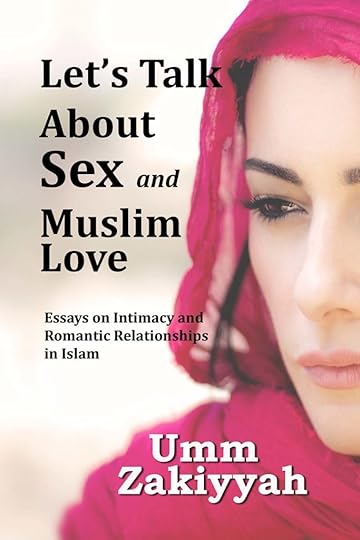
The following is an excerpt from the book Let’s Talk About Sex and Muslim Love by Umm Zakiyyah:
During the most difficult and confusing times of our lives, our faith is often shaken. We begin to question who we are and what we believe. Sometimes when there is no one around to hear us but the walls of our room and God above the heavens, we cry out, “Why me? Why is this happening to me?”
Our despair can be due to the death of a loved one, to a terminal illness diagnosis, or even the loss of a coveted career or educational opportunity. But regardless of the details of our individual trials, beneath each episode is the excruciating feeling of helplessness because we have lost—or we are at risk of losing—something that is dear to us or something that we believe is essential to our sense of self or the meaning of our lives.
No one is exempt from life’s trials, not even prophets and righteous people.
Allah says,
“Or do you think that you will enter Paradise while such [trial] has not yet come to you as came to those who passed on before you? They were touched by poverty and hardship and were shaken until [even their] messenger and those who believed with him said, ‘When [will come] the help of Allah?’ Unquestionably, the help of Allah is [always] near.”
—Al-Baqarah (2:214)
Can You Help Me?
Being in a position where I’m regularly contacted by people seeking advice during some of the most difficult and trying times of their lives is very humbling. Emails, phone calls, and whispered stories in which someone seeks help and guidance are parts of my daily life, as it is for many public figures, community leaders, and respected members in the Muslim community.
Though the details of each story are unique, many of those seeking advice have very similar (and sometimes identical) struggles. But not every narrative is shared for the purpose of receiving spiritual direction. Some people need only a shoulder to cry on or someone to listen with empathy and without judgment to their pain and confusion. For most of us, both are essential to getting through a difficult trial. Thus, it is a combination of both religious honesty and nonjudgmental compassion that we all need when we reach out to someone and say, “Can you help me?”
When We Don’t Care What’s Right
In facing the inevitable trials of life, sometimes we don’t care what’s right. We want what we want, even if it means displeasing Allah. In these circumstances, our reaching out and seeking advice is usually in hopes of someone saying that we don’t have to do what we know full well Allah asks of us.
What makes this spiritual trauma both crippling and self-destructive is that we are not always conscious of our impure intentions. It often takes an outsider looking in to point out the sometimes obvious contradictions in our words and actions, contradictions that go far beyond natural, inevitable human fault. Destructive spiritual trauma occurs when our trials worsen the darkness of our souls, when we are effectively throwing ourselves headlong into sin and, more tragically, disbelief.
The Prophet (peace be upon him said), “The believer is the mirror of the believer.” Thus, during these times, our entire perception of reality hinges on someone holding up a mirror in front of us and showing us our reflections, no matter how repulsive our image might be.
Spiritual Destruction
When our trial involves open disobedience to Allah, it is excruciatingly difficult to face ourselves, so we often lash out at others and blame them for holding up a mirror in front of us. We often become meticulously critical of and ultra sensitive to everything that is said to us or to even how people behave around us. In this way, we project our guilty conscience on others and interpret nearly every word of advice as a personal attack. Sometimes we become, quite frankly, pretty nasty people to be around. Loved ones may even tiptoe around us, afraid that even the innocent “How are you?” will be interpreted negatively.
Sometimes we even provoke discord so that we can accuse someone of being mean to us, especially those who are reminding us of Allah and pleading with us to repent and change our ways. We might rush to social media so that we can play victim behind our Facebook or Twitter accounts, cushioned by the multitude of “likes” and “followers” who will nearly always support our pity parties…because we craftily frame our posts such that we evoke the most sympathy and the least scrutiny, sometimes even hiding behind someone else’s words or blog that we share on our page.
Some of us make the spiritually tragic choice to use social media to not only publicize our sin, but also to openly promote it. This promotion is often carried out under the guise of some greater cause or “spreading awareness” about an issue that we claim is close to our hearts (an issue that conveniently allows us to continue our sin guilt-free while painting others as harassers and aggressors if they, publicly or privately, tell us that we are wrong).
If we are promoting our un-Islamic lifestyle of drinking alcohol or interacting inappropriately with the opposite sex, our “greater cause” will likely be “Don’t judge.” If we are promoting our non-hijabi status, we will likely—in addition to championing the “Don’t judge” cause—criticize and shame movements that praise or support successful hijabis who are athletes, journalists, or public figures. “So are the only real Muslim women those who wear hijab?” we might cry out indignantly, even as the pro-hijab movements claimed nothing of this sort.
Thus, when our response to our test is so spiritually destructive that we have moved from feeling shame for our sin to openly bragging about it or even promoting it, it’s not good enough to merely have multitudes of people being kind and empathetic due to our struggles in the faith. We feel the need to go a step further and tear down those who are being positively recognized for their strengths in the areas that we have refused to work on spiritually.
Whose Trial Is More Difficult? Mine or Yours?
In the short story, “The Invitation,” we learn the trials of two best friends, Faith and Paula. Faith is struggling with her attachment to her high school boyfriend, John, as she comes to terms with her spiritual obligations after becoming Muslim. And Paula is struggling with her faith and sexuality after she decides to come out as gay—and convert to Islam.
Whose trial is more difficult? Faith’s or Paula’s? Oftentimes, when pondering the answer to this, we use our opinions, experiences, and selfish perceptions to come to a conclusion. However, we have no way of knowing whose test is more difficult because, ultimately, the most excruciatingly difficult tests are faced by those with the most emaan (faith) in their hearts.
Prophet Muhammad (peace be upon him) was once asked, “O Messenger of Allah, who are the people who are most severely tried?” He replied, “The people who are tested the most severely are the Prophets, then the righteous, then the next best and the next best, and a man will be tested in accordance with his level of faith; the stronger his faith, the more severe will be his test” (sahih, Ahmad).
Thus, the level of difficulty a person faces through his or her tests is a matter of the unseen, as we have no way of knowing the level of righteousness in a person’s heart.
This Is So Unfair!
It’s difficult not to look at someone else’s life and think that they have it easier than we do. After all, we experience firsthand only our own trials, not anyone else’s. As such, we have intimate knowledge of the painful nuances and visceral realities of whatever trial [image error]we’re facing. We have no way of having that same level of knowledge regarding someone else’s life, no matter how close they are to us, in our hearts or circumstance.
“This is so unfair. This is so f—ing unfair.”
These are Faith’s angry words from “The Invitation” in response to her difficult trial—and they mirror how so many of us feel about the tests Allah gives us, even if we don’t speak these words aloud.
None of us is immune to the degeneration of the human spirit. We can all fall victim to the darkness of sin that mars our souls. And we can all fall victim to imagining that Allah is being unjust or “unfair” by giving us a trial that no one else has to face.
But ultimately, we are all being tested…and we can all pass our tests, with the help of Allah.
And, unquestionably, the help of Allah is always near.
READ MORE from Let’s Talk About Sex and Muslim Love by Umm Zakiyyah:
Umm Zakiyyah is the internationally acclaimed author of twenty books, including the If I Should Speak trilogy, Muslim Girl , and His Other Wife . Join UZ University to learn how you too can find your writing voice and share inspirational stories with the world: UZuniversity.com
Subscribe to Umm Zakiyyah’s YouTube channel , follow her on Instagram or Twitter , and join her Facebook page.
Original version published via MuslimMatters.org
Copyright © 2014, 2016 by Al-Walaa Publications. All Rights Reserved.
The post We Are All Being Tested appeared first on Umm Zakiyyah.
September 12, 2019
What Worldly Garden Are You Rejoicing In?
“It doesn’t matter how little or how much you have. In the end, all that will matter is what you did with it—and what you allowed it to do to your heart.”
—from the journal of Umm Zakiyyah
When my daughter was around five years old, I took her to a doctor’s appointment with a Muslim doctor I’d found listed in the local business directory. As soon as my daughter and I walked into the examination room, the doctor grimaced and turned her face away from us. “You shouldn’t make her wear all of that,” the doctor said us in disgust, referring to my daughter’s hijab. “It’s oppressive.”
“She likes to wear it,” I explained. “I don’t make her.”
“All these women walking around in hijab feel like they’re all pious,” the doctor continued, wrinkling her nose. “But what good are they doing in the world? You can be a good person without wearing all of that.”
Taken aback, I didn’t know what to say. I hadn’t expected this line of conversation when I’d booked my daughter’s appointment.
Grimacing, the doctor went on, “I don’t pray or wear hijab, but I do a lot more good than all these pious Muslims. Every year, I travel abroad to do medical work for free in poor countries. How many of these women in hijab do that? How many of these Muslims who pray do that? I’m better than they are.”
When the doctor noticed my uncomfortable expression, she said sarcastically, “Oh yes, and I’ll burn in Hellfire and have my skins roasted over.”
Her words sent chills down my spine. I left that doctor’s appointment unsettled. The way she had spoken of Hellfire as if it were a joke made my stomach churn. Yet she genuinely imagined she was better than the Muslims who took the reality of the Hereafter very seriously.
Our Worldly Gardens and Pride
Sometimes when I’m doing my Friday reading of Al-Kahf (“The Cave,” Surah 18 in Qur’an), I think of this doctor, particularly when I’m reading the part about the man who had been given two beautiful gardens. This blessing filled his heart with so much pride that it made him forget his Lord.
Allah says what has been translated to mean (18:32-42):
“And present to them an example of two men: We granted to one of them two gardens of grapevines, and We bordered them with palm trees and placed between them [fields of] crops. Each of the two gardens produced its fruit and did not fall short thereof in anything. And We caused to gush forth within them a river. And he had fruit, so he said to his companion while he was conversing with him, ‘I am greater than you in wealth and mightier in [numbers of] men.’ And he entered his garden while he was unjust to himself. He said, ‘I do not think that this will perish – ever. And I do not think the Hour will occur. And even if I should be brought back to my Lord, I will surely find better than this as a return.’
“His companion said to him while he was conversing with him, ‘Have you disbelieved in He who created you from dust and then from a sperm-drop and then proportioned you [as] a man? But as for me, He is Allah , my Lord, and I do not associate with my Lord anyone. And why did you, when you entered your garden, not say, “What Allah willed [has occurred]; there is no power except in Allah“? Although you see me less than you in wealth and children, It may be that my Lord will give me [something] better than your garden and will send upon it a calamity from the sky, and it will become a smooth, dusty ground, Or its water will become sunken [into the earth], so you would never be able to seek it.’
“And his fruits were encompassed [by ruin], so he began to turn his hands about [in dismay] over what he had spent on it, while it had collapsed upon its trellises, and said, ‘Oh, I wish I had not associated with my Lord anyone.’”
We’re Better Than They Are?
For the doctor, the worldly “garden” of charitable medical work made her feel superior to all other Muslims, even those who prayed five times each day. But what is it that makes us feel superior to others? As disturbing as the doctors sentiments are, this sort of kibr is not uncommon to the human heart. The truth is that unhealthy pride is something that any human being can fall into. In fact, if we are honest with ourselves, we’ll likely find traces of kibr in our own hearts. Thus, we have to be in a state of constant self-reflection and daily purification of our souls to guard against this disease taking over our hearts.
Prophet Muhammad (peace and blessings be upon him said), “No one who has an atom’s weight of pride (kibr) in his heart will enter Paradise.” A man said, “O Messenger of Allah, what if a man likes his clothes and his shoes to look good?” He said, “Allah is Beautiful and loves beauty. Pride means rejecting the truth and looking down on people” (Sahih Muslim).
Nearly all of us have something that we take pride in and that can make us feel better than others. Each of us also has the unhealthy human tendency to reject the truth, especially when it comes from someone we dislike, or when accepting that truth means that we have to face some painful truths about ourselves. For this reason, it is crucial that we are in the daily habit of guarding our hearts and souls from this destructive disease.
It Could Be a “Good Cause”
Ironically, pride often takes over our hearts while we’re aligning ourselves to a good cause. We can see an obvious example of this in the doctor declaring her superiority over practicing Muslims due to her dedication to the good cause of charitable medical work. However, falling into unhealthy pride is not always this apparent.
Often our unhealthy pride is manifested in the way we call others to a good cause, even if we don’t openly claim to be better than they are, and even if we don’t excuse ourselves from obeying Allah. In these cases, we can see signs of kibr in how we treat those who we feel aren’t doing enough to support the good cause, or in how far we go in insisting that others take a very specific action in addressing a social or political problem.
When our hearts are afflicted with kibr, we become blinded by self-righteous conviction until we begin to dictate the lives of others in the name of solving a social or political problem. We do this even though we have no idea of the ghayb, the unseen realities that Allah has decreed in this person’s life. Furthermore, in our blind conviction, we fail to see that there are multiple ways to address a problem, even in ways we ourselves cannot perceive.
More significantly, in our blind conviction, we fail to realize that Allah has placed on no human soul the obligation to solve every social and political problem that exists on the face of the earth, even those that affect our lives personally. It’s simply not humanly possible. Allah says what has been translated to mean, “On no soul does Allah place a burden greater than it can bear…” (Al-Baqarah, 2:286). It is unfortunate, however, that we place these burdens on ourselves and others. When we are faced with social and political trials in this world, the most that any of us can do is the best we can based on the knowledge and abilities that Allah has given us.
If Allah gifts us with the worldly blessing of knowledge and ability in addressing a social, religious, or political problem, it is our duty in front of Him to strive our level best to do what we can and humbly share with others how they too can help. However, under no circumstances should we dictate that a person either understands or addresses the problem in the exact same manner that we do.
In reminding myself of this, I wrote this note in my journal:
Never ever—and I mean never ever—guilt someone into speaking up or taking action based on your convictions. Even with the clearest and most obvious truth in the world, God tells us, “There is no compulsion in religion” (2:256). If this is God’s justice in allowing humans choice in following His way of life, how arrogant it is for us as humans to have less humility in calling to our own.
Once upon a time, activism meant standing up and giving a voice to the silenced and oppressed. But today it too often means standing up and oppressing the silent.
No one is ever obligated to speak without knowledge, and only the most ignorant and arrogant amongst us would demand that they must.
If you know something that others don’t, then here are two helpful rules of thumb:
Share, don’t shame.
Educate, don’t humiliate.
Then trust that God will inspire the hearts of those whom you need by your side in order to triumph over oppression in the end. Victory is not attained through numbers. It is attained through patience, sincerity, and adhering to truth.
Share, Don’t Shame
If there’s anything I learned in all my travels and being in the company of the religious, the political, and the activist, it is this: Those who respect people most, benefit people most.
Unless our only goal is to show how superior we are to everyone else, then there really is no point in shaming and humiliating people into taking a certain course of action or following a certain point of view. Conveying the actual, real life benefits of a particular approach or stance is more than sufficient—as opposed to calling people sinful, lazy, or ignorant if they don’t do what we think they should.
In the end, it is far more beneficial to share beneficial information instead of shaming and insulting people—if paving the road to a better world is truly our goal.
Is Your Pride Inspiring Harassment?
When we don’t properly understand our obligation to our Creator on earth, even when we are in the midst of furthering a good cause, we fail in our duty to our souls, and we fail in our duty to our fellow brothers and sisters in faith and humanity. This failure is manifested in the kibr we exhibit when we rejoice on our own “worldly garden” of community work, political activism, and religious knowledge; while our self-righteous conviction leads us to harass, humiliate, and even slander anyone we feel isn’t “stepping up” like we feel they should. Meanwhile, we are unaware that in our feeling superior to others, we are failing to “step up” to the spiritual work that our own souls need.
Whenever our internal spiritual work is lacking or abandoned, we often resort to harassment and cruelty in guilting people into doing what we feel they should; but we label it “standing up for justice.” When we are reminded to be conscious of Allah in respecting the personal and spiritual boundaries of others, the kibr in our hearts incites us to refuse to accept any critique or disagreement. In fact, we might even accuse the person of “hiding behind religion” as an excuse to abandon a good cause.
You are not always on the side of right. This is a personal note I wrote to myself as a reminder to my own soul, and I think it’s something that each of us should keep in mind—especially if we are involved in “necessary” social, political, or religious work. In this, it is very important to remember that success is not achieved through only one route. I reflect on this point in my journal:
Once upon a time, community work and activism was about encouraging every person to do his or her part in making the society a better place; and everyone had a role to play, whether it was the mother in her home, the father feeding his family, the preacher on the pulpit, or the protester in a peaceful march. No work was devalued, as activists understood that a community is made up of necessary parts of a complex puzzle—and each piece was respected, as both common sense and wisdom would demand.
Today, much “activism” has become a culture of public shaming, following the faults of others, and making public demands on people’s private decisions—and linking innocent people to the crimes of oppressors, for no other transgression than not fulfilling a random activist’s narrow definition of “supporting the cause.”
Other than witnessing the beauty of true activism amidst this troubling trend, the only thing that gives me peace in the face of this travesty of “social justice” is the reminder that there is a Day of Judgment, and the Master of that Day will call each and every one of us to account for the wrongs we inflict upon each other.
Beware of Pride in Your Heart
When we think of the destructive sin of kibr, we so often think of obvious examples like that of the arrogant doctor looking down on practicing Muslims, or Iblis refusing to prostrate to Adam (peace be upon him). However, we rarely reflect on how sinful pride will manifest in our own lives, especially if we think of ourselves as “conscious” citizens or activists calling to social, political, or religious improvement. In reflecting on the dangers of kibr overtaking our hearts while we are unaware, I wrote this note in my journal:
Pride will not introduce itself to you or warn you that it’s about to destroy your life and heart. It will come cloaked in whatever “good cause” is closest to your heart. If you feel you’ve been wronged or stripped of something that rightly belongs to you, it will come as your “voice of reason” in demanding what’s rightly yours—as it did with Iblis before you.
Be careful. Inflexible conviction in matters that permit, or even demand, flexibility is often a sign that it has settled in your heart.
Pride is the disease that turned the honored Iblis (who was worshipping Allah alongside angels), into the worst devil to ever walk the earth—and it is same sin that can reduce the greatest worshippers, most righteous believers, and celebrated scholars of this faith into the most arrogant, tyrannical people on earth.
Yes, this seemingly simple turning of the heart can cause that much damage.
Be careful.
The only way to protect your heart from pride is to fortify it against itself. And this fortification can only be achieved by constantly turning your heart over to the only One who can protect it from itself.
Don’t Harass the People of the Cave
Unfortunately, it is in the realm of addressing political and societal problems that we so often fall into kibr and forget our Lord and our own souls, as we make specific demands on others. In this, we forget that the Qur’an and the prophetic example have offered ample pathways to solving political and social dilemmas, especially when the believers are living in a state of political weakness and religious oppression.
Therefore, it is not our right to demand that any believing soul follow our chosen pathway to political and social improvement, no matter how convinced we are that we are on the side of right. As a reminder to my own soul and my brothers and sisters in faith, I wrote this note in my journal:
What right do you have to harass the people of the cave—when Allah praises them in Qur’an? On whose authority do you speak ill of those who retreat from corrupt social and political systems and opt not to participate at all—out of fear for their souls? Are you certain that those you call “lazy” or “ignorant” are not written down as beloved to Allah? Were the youth who retreated to the cave lazy and ignorant—or were they wise and faithful?
No, not every wise and faithful servant of Allah who is praised in His Book rushed to the shelter of a cave to worship Him. But the ones we are instructed to read about every Friday did retreat from a corrupt society over which they had no control. So consider carefully the Divine reason for this weekly reading before you harass those who only wish to worship their Lord in peace.
In the Qur’anic chapter entitled Al-Kahf (18:10-16), Allah says what has been translated to mean:
“[Mention] when the youths retreated to the cave and said, ‘Our Lord, grant us from Yourself mercy and prepare for us from our affair right guidance.’ So We cast [a cover of sleep] over their ears within the cave for a number of years. Then We awakened them that We might show which of the two factions was most precise in calculating what [extent] they had remained in time.
“It is We who relate to you, [O Muhammad], their story in truth. Indeed, they were youths who believed in their Lord, and We increased them in guidance. And We made firm their hearts when they stood up and said, ‘Our Lord is the Lord of the heavens and the earth. Never will we invoke besides Him any deity. We would have certainly spoken, then, an excessive transgression. These, our people, have taken besides Him deities. Why do they not bring for [worship of] them a clear authority? And who is more unjust than one who invents about Allah a lie?’
“[The youths said to one another], ‘And when you have withdrawn from them and that which they worship other than Allah, retreat to the cave. Your Lord will spread out for you of His mercy and will prepare for you from your affair facility.’”
Identifying Your Worldly Gardens
What worldly gardens are you rejoicing in? Your marriage and children? Your wealth and success? Your knowledge and intelligence? Your beauty and status? The “good cause” you are dedicating your life to—and insisting that everyone else joins in, lest you “expose” them for being inferior and uncaring?
Or perhaps there is some other blessing of God you are taking credit for?
Whatever it is that is causing our hearts to forget that we were created from dirt and will return to it—and will be called to account for every blessing we enjoyed in this world—let us reflect on what we have in common with the man in Al-Kahf who felt superior to his companion due to what Allah had given him.
And let us also reflect on what we should have in common with the youth in the cave—as well as with the Prophet (peace and blessing be upon him) and his companions.
“We’re nothing like them!” we so often say when we speak of the Prophet, his Companions, and other righteous believers praised in Qur’an and prophetic narrations. But why are we so eager to separate ourselves from them, when Allah Himself points to them as our example? And when Allah commands us in every obligatory Salaah to pray to be on the Straight Path that they adhered to in their lives?
What then do you think is the purpose of their example, and of this prayer?
Do we really imagine that our brothers and sisters who preceded us couldn’t possibly relate to the challenges we face today? Do we really imagine that we can find absolutely nothing in their lives to help us understand our own?
Yet we, like they did before us, face the believers’ timeless struggle of holding on to the truth while nearly everything around us—from our nafs to the oppressive society in which we live—seeks to pull us away from Allah’s Straight Path.
Or do we rush to separate ourselves from their faithful existence because, deep down, we know our dilemmas are no different? Yet the claim of separation allows us to ignore (or deny) our religious obligations, claiming we live in “modern times”? When in fact, every era of people lived in modern times, as there is no other possibility for those who are alive during a period in time.
I wonder then what we think we are supposed to learn—other than history—from reading about the youth of the cave, about the plight of those persecuted by Pharaoh, about the hijrah from Makkah to Abyssinia and then Madinah? And about every generation calling its people to Allah.
What do you think, dear soul? Are these merely “tales of the ancients”? Or is possible that, within these stories, there are solutions that our Lord wants us to implement today?
If so, then perhaps the “worldly garden” that is inciting within us kibr can instead inspire within us emaan—sincere, true faith—such that we use this blessing as a means to support ourselves and our brothers and sisters on the path to Allah’s Pleasure and the everlasting garden of Paradise.
Umm Zakiyyah is the internationally acclaimed author of twenty books, including the If I Should Speak trilogy, Muslim Girl , and His Other Wife . In 2019, she launched UZ Soul Gear , a passion project fueled by her love of both art and inspirational reflections. UZSoulGear.com offers apparel, wall décor, and more, aimed at supporting and inspiring the soul-centered lifestyle.
Want to find or improve your writing voice? Join UZ University to learn how, so you too can share inspirational stories with the world: UZuniversity.com
Subscribe to Umm Zakiyyah’s YouTube channel , follow her on Instagram or Twitter , and join her Facebook page.
Copyright © 2019 by Al-Walaa Publications. All Rights Reserved.
The post What Worldly Garden Are You Rejoicing In? appeared first on Umm Zakiyyah.
August 29, 2019
Everybody’s Preaching Something, Don’t Be Naive
Loss has a way of bringing so many things to light.
This is what I find myself pondering as I recall so much of what I learned from
my father, who passed away only a few weeks ago (may Allah have mercy on him).
When I was growing up, my father didn’t allow my
siblings or me to watch television and movies simply as a pastime, and we
weren’t allowed to read just any book or to listen to just any music. My father
and mother, who were raised Christian and converted to Islam the year I was
born, taught us to look at everything from the perspective of deep
understanding and comprehending the benefit and harm it could bring to us. They
also taught us to reflect on how circumstances could have transpired
differently from what we were seeing on the television screen or reading in a
book. Most importantly, they taught us to consistently reflect on our own
spiritual purpose in everything we did. I recall being as young as four years
old when I learned many of these lessons of self-reflection and spiritual
betterment.
On the rare occasion that my parents allowed any of
us to sit down in front of the television, we were required to take notes on
what we were watching and then submit a report afterwards. In our report, we had
to list the good and bad of we saw, and then make suggestions on how things
could have been handled better.
Looking back, I can appreciate the significance of
what we were being taught through this exercise. However, at the time, I honestly
found it irritating and unnecessary. I just wanted to relax and enjoy the television
show or movie, like “normal families” did.
Today, as a mother and striving believer, I
understand the profound wisdom that my father and mother were passing on. By
never allowing us to just passively accept what someone was teaching us or presenting
to us—even if it was in the name of “harmless” fun and entertainment—I learned a
deeper meaning of something my father would say often: “There is no vacation
for the Muslim.”
By this, he didn’t mean that a Muslim should never
rest, travel, or have fun. He meant that no matter what worldly activity you are
involved in, if you are truly someone who submits to God (i.e. you are truly
Muslim), then your internal spiritual consciousness is never “on vacation”—even
during moments of relaxation, enjoyment, and entertainment.
This
Isn’t About Love, It’s About Selling Ideas
“You think these people are paying a million
dollars for a thirty-second Super Bowl commercial because they love you?”
I recall my father saying to us once. “No,” he said with emphasis. “They’re
selling you something, and the question you need to ask yourself is what it is,
and why they’re willing to spend so much money for just thirty seconds of your
time.”
On many an occasion, my father would let us know in
no uncertainty of terms that television ads and other forms of entertainment
were just as much about selling you ideas and beliefs as they were about
selling you cars, food, beer, and other consumer products. “And
God-consciousness is not part of what they’re selling,” he’d say.
In my own studies in psychology, propaganda, and
the science of advertisement, I learned that even the experts in these fields
admit that there are foundational belief systems that guide all entertainment,
advertisements, and promotional campaigns. “Sex sells” is a rather popular
ideology in these industries, but it is not the only one.
These experts say that every image that is placed
in front of you, as well as every sound that you hear, is presented to you in a
very specific way, for a very specific purpose, and with the goal of having a
very specific effect on your mind and heart, specifically your emotions and
subconscious.
Regarding this deliberateness behind the
presentation of media content, political scientist, Andrew Hacker, said, “Every
time a message seems to grab us, and we think, ‘I just might try it,’ we are at
the nexus of choice and persuasion that is advertising.” Marketing expert and
motivational speaker, Marcus Sheridan, said, “Great content is the best sales
tool in the world.” Author and business executive, Seth Godin, said, “Facts are
irrelevant. What matters is what the consumer believes” (itsaugust.com, 2018).
In other words, in advertising, television production,
and filmmaking, nothing is trivial. Every image and sound is planned out to the
millisecond, and is guided by very specific goals and ideologies—and truth is
not necessarily part of the equation.
Nothing
Is Done Without Intent
When it comes to entertainment, broadcasting, and
even formal education, here is something that we need to understand very well if
we have even minimal spiritual sincerity and intelligence: Every single
television program, movie, and advertisement, as well as every book and magazine
you find in a curriculum or on a shelf, has a very specific purpose for why it
is in front of you, especially if you find it consistently celebrated, praised,
and awarded.
No, this reality doesn’t necessarily mean that all
television, media, and books are aimed at pushing you to do something evil or
immoral. In fact, there are several beneficial messages and goals in many of
them. Rather, understanding the reality of definite intent simply means we need
to be aware that everything we encounter in this world began with a very
specific intention. Sometimes that intention is sincere and good, and sometimes
it is not.
Prophet Muhammad (peace and blessings be upon him)
said, “Surely, all actions are driven by intentions; and, verily, every person
shall have what he intended” (Bukhari and Muslim).
As we come to understand the reality of intention,
we also need to understand that intention can be conscious or unconscious. Just
because a person is not aware of his or her intention behind doing something
doesn’t mean that the intent is not there. In fact, as human beings, we can
imagine that we intend something good whereas the truth of what is happening is
the exact opposite. This is a concept that Allah addresses over and over in the
Qur’an.
For example, Allah says what has been translated to
mean, “And when it is said to them, ‘Make not mischief on the earth,’ they
say, ‘We are only peacemakers.’ Verily, they are the ones who make mischief but
they perceive not” (Al-Baqarah, 2:11-12).
He also says, “Say, ‘Shall We tell you the
greatest losers with respect to [their] deeds? Those whose efforts have been
wasted in this life while they thought they were acquiring good by their work…”
(Al-Kahf, 18: 103-104).
Even the grave sin of shirk (attributing
divinity to other than Allah) can be unknown to us, even as it stems from our
own hearts. This is especially the case when it is hidden shirk in the
form of insincerity, which has been described as more inconspicuous than a
black ant crawling on a black rock on a moonless night. In one hadith, Prophet
Muhammad (peace and blessings be upon him) advises us, “O people, save
yourselves from shirk, for it is more inconspicuous than the creeping of
the ant.” Someone whom Allah willed [to speak] asked, “How do we save ourselves
from it while it is more inconspicuous than the creeping of the ant, O
Messenger of Allah?” He (peace and blessings be upon him) then said, “Say, ‘O
Allah we seek refuge in You from associating anything with You knowingly, and
we seek Your forgiveness for what we do unknowingly’” (Musnad Ahmad, 4/403;
Musnad Abi Shaybah, 6/70; Musnad Abi Ya’la, 1/60 and others. Graded saheeh
by Al-Albaani in ‘Saheeh al-Jaami’, 3/233, #2876).
Given these divine and prophetic teachings, it is
inconceivable that any of us could deny the reality of both the conscious and
unconscious motivations that are present in every human heart, and that drive
every human action.
The
Deliberate Intent Behind Much Entertainment
Just this past June, there was an article published
on msn.com entitled, “Celebrate LGBT Pride Month With 14 Moving TV
Moments and Milestones.” In the article, the author highlighted quotes and
scenes from popular television shows whose plots and objectives aligned with
the celebration of not only living a lesbian, gay, bisexual or transgender
lifestyle, but also living it “proudly.”
What
is so profound about this article is not only the highlighting of these
entertaining moments, but also the description of these scenes as being “moving.”
In other words, the author is pointing out how these portions of the television
script were written for the expressed purpose of evoking an emotional reaction
in the heart—and carrying out a very specific pro-LGBT intent.
Though many of us like to believe that
entertainment is just that—purely entertainment— articles such as this force us
to face the reality that millions upon millions of dollars are not being spent on
entertainment for the sole purpose of giving us an enjoyable “Netflix and
chill” night with our loved ones. Rather, we are being called to very specific
ideas and beliefs.
In this very deliberate purpose of most television
and movies, it is no accident that you will rarely if ever find major news
outlets or entertaining shows or films highlighting or producing “moving” scenes
that inspire viewers to submit to their spiritual purpose on earth, or to live
by the moral code that God has outlined for us in His revelation.
In fact, our subconscious programming from modern
media has been so effective that even if we do happen upon any form of
entertainment that is spiritually “moving,” you will find the vast majority of
people—even professed believers in God amongst Muslims, Christians, and Jews—calling
it “judgmental” and “preachy” instead of a labeling it as a celebration of spiritual
pride, or a “moving” display of a spiritual lifestyle.
One look at all the negative criticism that the
writer and producer Tyler Perry gets for his Christian-centered entertainment
makes this point painfully obvious. It’s as if the vast majority of people can
only enjoy a television show, book, or movie if they are being called away
from morality instead of toward it. What we don’t realize is that, either way
(i.e. whether the entertainment is secular or religious), we are being called
to something.
All actions have intentions behind them. Therefore,
every television show, book, or movie has been written for a very specific
purpose. The question is merely what that purpose is, not whether or not there
a purpose or message exists in it at all.
‘We
Want Entertainment, Not Religious Sermons!’
“If you want to send a message,” a Muslim filmmaker
told me once, “then use Western Union.” In other words, she was saying never
use a medium of entertainment for the purpose of teaching a moral lesson, advocating
a certain lifestyle, or sharing the spirituality of Islam. This was her
advice to me after reading my novel If I Should Speak and offering her own services in turning the book
into a feature film. She felt the book would make a really good movie if I
removed all the spiritual lessons from it—while I felt that there would be no
book or story left at all if spirituality was removed.
 CLICK HERE. READ NOW
As heartbreaking as the filmmaker’s perspective
was, it was not the first time I’d heard objections to using the creative field
to share a spiritual perspective. In fact, the most common criticism I hear of
my novels is that there is too much spirituality in them. These readers (who
are mostly Muslim) feel that sharing a spiritual message has no place in
entertainment, especially if a very obvious moral or religious message is
involved.
“I’m done with reading Umm Zakiyyah’s books,” one
woman said in a post online. “She’s too preachy. It’s like she can’t write a single
story without shoving Islam down our throats.”
Another woman remarked in a public review of my
novel His Other Wife, “I feel like she put that character in the book
for her own homophobic agenda.”
Another reader commented in a book discussion, “Oh,
are we all supposed to be okay with polygamy now? Is that her point? Novels
aren’t for teaching religion. They’re for enjoyment and entertainment. I wish
someone would tell Umm Zakiyyah that.”
These are just a glimpse of the type of comments
and public reviews—mostly from Muslim readers—that I come across on a regular
basis. And these types of reactions are not limited to only my creative work.
They are aimed at any person who uses creative writing or modern media to share
a spiritual message that is rooted in living a life of submission to God.
Ironically, these types of negative reactions
are largely absent from people’s reviews of popular television shows, movies,
and books that are quite unapologetic in their anti-God and anti-morality “preaching.”
In these programs, films, and literature, the anti-God preachy messages are
cloaked in wanton displays of pseudo-porn, full nudity, and open celebration of
fornication, adultery, and homosexuality—complete with follow up articles and
awards that that celebrate sinful lifestyles and call us to be proud of
dedicating our lives to disobeying our Creator.
Yet somehow we manage to view only the writers and
filmmakers who are reminding us of our spiritual purpose on earth as “judgmental”
and “preachy.” Meanwhile, we genuinely imagine that Netflix, Hulu, Amazon, and
satellite TV providers want nothing more than for us to relax and enjoy “pure”
entertainment.
Judging
the Judgmental, Preaching Against the Preachy
None
of us like judgmental people, I
wrote in my personal journal once. But we are all, to a certain extent,
judgmental people. After all, one must be judgmental to even judge others as
judgmental.
I wrote this reflection not to trivialize the importance
of being tactful and compassionate when we are sharing beneficial messages to
others, but to inspire us to self-reflect on the reality that passing judgment is
largely unavoidable. In fact, passing judgment is such a natural human tendency
that to even conclude that someone else is “judgmental,” we must first pass
judgment on them ourselves.
No, this does not that mean that it’s okay to
freely pass judgment on others and say whatever comes to our minds, with no
care or concern for compassion and empathy. However, it does mean that when we
observe others’ speech and actions, it is more about how we process and express
what we “judge,” as opposed to never having any feelings, judgments, or
reactions to them.
A similar concept exists in “preaching” about
something. The reality is that every human being has deep-seated beliefs that
they share with others. This sharing might be in the hopes of making the world
kinder, more tolerant, more spiritual, more accepting of “diversity,” more
understanding of other’s lifestyles, and so on. Whatever the purpose, all
sharing that is aimed at influencing someone’s thoughts, actions, or beliefs is
by definition “preaching.” Thus, the question should never be whether or not
someone is “preaching” to us. It is what they are preaching about—and how they
go about that preaching.
Preaching can be subtle, or preaching can be
apparent. It can be in the form of entertaining television and movies, or
“moving” books and magazine articles—or any host of advertisements and other
media. But the preaching is happening nonetheless.
Their
Goal Is To Take You Away from Allah
While the preaching in some entertainment is simply
about spreading love, empathy, and understanding in the world, other preaching
involves a deliberate attempt to make others disbelieve in God and live a life
that will harm their souls. This is especially the case when these people have
money, power, and a position of dominance over those who believe in God and the
Hereafter.
Allah says what has been translated to mean, “If
they gain dominance over you, they would behave to you as enemies and extend
against you their hands and their tongues with evil, and they wish you would
disbelieve” (Al-Mumtahanah, 60:2).
Even as these people’s own words and actions—on and
off-screen—testify to this fact, we still have so many Muslims imagining that
there is absolutely no negative intent behind most entertainment. Thus, it is
only their fellow brothers and sisters in faith whom they view as “judgmental”
and “preachy.” Meanwhile, Muslim writers and artists are merely doing with the
message of Islam what the disbelievers are doing with the message of anti-Islam.
Yet so many of us remain unaware of the deliberate anti-God and anti-morality
programming that is happening daily in so much of what we read, watch, and
listen to.
What is ironic is that our quick and automatic labeling
of believers as “judgmental” and “preachy” and our quick and automatic support of
obviously immoral television, films, and books is a clear testimony that the deliberate
anti-Islam programming is actually working. Consequently, for so many of us, it
is only the television, movies, and books of disbelievers that we can relax and
enjoy without passing negative judgment. In this, our hearts are filled with
love and admiration of those who oppose our faith, a love that we are not even
conscious of.
Allah says what has been translated to mean, “Here
you are loving them, but they do not love you…” (Ali ‘Imraan,
3:119).
But do we believe what Allah is teaching us in His book?
Or are we too busy enjoying the “innocent” books and entertainment of the
disbelievers to have any time to listen to such a “preachy” message?
Fight
Programming with Programming
The reality is that
for most of us, we are not intentionally consuming sinful entertainment for the
conscious intention of supporting un-Islamic messages. Many of us are simply
stressed out due to our personal struggles and are hurting emotionally. Thus, we turn to entertaining television,
movies, and books to escape the painful realities of life.
The unintended side effect
of our intentional escapism, however, is that we often do not wish to deal with
weighty issues such as our souls and spiritual realities in the same context as
entertainment and “taking a break from life.” Unfortunately, this often means
that we are consistently exposing ourselves to subtle spiritual programming
that calls us away from our souls, instead of exposing ourselves to more
obvious spiritual programming that calls us to remember our souls.
Repetition and
repeated exposure to anything ultimately affects the state of the human soul,
and this spiritual alteration happens whether we are aware of it or not. This
is what popular television, movies, and books achieve in their ostensibly
“relaxing” entertainment that programs our thoughts, feelings, and beliefs
without us consciously perceiving the spiritual changes we are undergoing.
So what’s the
solution? We need to fight this spiritually harmful programming with
spiritually nourishing programming of our own. In other words, we need to use
repetition and repeated exposure in a way that helps us instead of harms us.
How?
We can begin with Salaah
and Qur’an. In this, we make a conscious effort to establish the five prayers
every day on time, without exception. Additionally, we should make a conscious
effort to be more focused in our prayers and spend more time in rukoo’ and
sujood instead of rushing through the movements. We should make an
effort to pay attention to the meaning of what we are saying instead of
treating the words and supplications like a meaningless ritual.
Regarding Qur’an,
I’ll share this advice from my personal journal:
Read Qur’an every day, even if only for a few minutes, even if you
don’t feel like it, and even if your heart feels empty or distant from Allah.
Just as your body benefits from physical cleansing even when you’re not
fully “enjoying” the bath, your heart and soul benefit from spiritual cleansing
even when you’re unable to taste the sweetness of emaan. Yes, a bath you
enjoy refreshes you far beyond merely cleansing the skin, and a spiritual
practice you enjoy makes your heart come alive far beyond merely earning
blessings for uttering divine words.
But with or without enjoyment, your body needs daily cleansing—and with
or without “feeling faith”, your soul needs daily purification. So in addition
to praying your five daily prayers, read Qur’an each day, dear soul, even if
only a few lines or for only a short time. Your heart might not feel the
purification happening within you during prayer and reading Qur’an, but it is
happening nonetheless.
Use this as an opportunity to self-reflect and clear your mind and
heart, bi’idhnillaah, sincerely interacting with Qur’an. Do this by
taking time to think on the meaning and personal implication and lesson of each
ayah in your life. (If you can’t read in Arabic, listen to Qur’anic
recitation and read along in English or your native language).
Here are some ways to sincerely, from your heart, interact with each
ayah you read:
If you come across an ayah discussing those with whom Allah is
pleased, supplicate to Him and ask to be amongst them. If you come across an ayah
discussing right guidance, ask to be amongst the rightly guided. If you come
across an ayah discussing those who are disobedient or oppressive, ask for
protection from being amongst them (as the oppressor or the oppressed). If you
come across an ayah discussing Allah’s forgiveness and mercy, ask Allah
for forgiveness and mercy for yourself. If you come across an ayah
discussing Paradise, ask to be admitted amongst the companions of Paradise. If
you come across an ayah discussing Hellfire, ask for Allah’s protection from
it.
If you come across an ayah that you do not understand or incites
confusion, ask Allah to increase you in beneficial knowledge and understanding.
May Allah guide us
and forgive us and allow us to make the necessary changes in our spiritual and
personal lives such that we draw closer to Him in this world and in the
Hereafter. This, so that we are prepared to meet our Creator at any time, as
every breath we take is a countdown to this Meeting.
CLICK HERE. READ NOW
READ NOW. CLICK HERE
Umm
Zakiyyah is the internationally acclaimed author of twenty books, including the
If I Should Speak
trilogy,
Muslim Girl
, and
His Other Wife
.
In 2019, she launched
UZ Soul Gear
, a passion project fueled by her love of both art
and inspirational reflections.
UZSoulGear.com
offers apparel, wall
décor, and more, aimed at supporting and inspiring the soul-centered lifestyle.
Want to find or improve your writing voice?
Join
UZ University
to learn how, so you too can share inspirational stories with
the world:
UZuniversity.com
Subscribe
to
Umm Zakiyyah’s YouTube channel
, follow her on
Instagram
or
Twitter
, and join her
Facebook
page.
Copyright ©
2019 by Al-Walaa Publications. All
Rights Reserved.
The post Everybody’s Preaching Something, Don’t Be Naive appeared first on Umm Zakiyyah.
August 9, 2019
Emotional Pain Doesn’t Justify Changing the Religion
“Every trial that happens
to you in life is doing two things: pointing you to who your Lord is, and
bringing to surface who your ‘lord’ is in your heart. And everything you say or
do thereafter is either a testimony for you or against you—in preparation to
expose to you one last time the spiritual state of your soul. In this, some of
us are worshipping our Lord, and some of us are worshipping something (or
someone) else entirely.”
—from the
journal of Umm Zakiyyah
 READ NOW. CLICK HERE
Once
when I was around eighteen years old, I went to visit the home of one of my
brothers. He and his wife had invited me over to watch a movie and spend the
night. While watching the movie, I began to feel nauseated and lightheaded, and
I felt the beginning of a headache. Overcome with dread, I immediately realized
that I’d likely be battling a full-blown migraine though the entire night and
next day. I regularly suffered from the type of migraines that persisted for
days at a time, and often they didn’t respond to medication.
Head
pounding, I sat on the floor of my brother’s living room looking at the
television screen but feeling suddenly disinterested in the plot of the movie.
I contemplated leaving the room. I took one look at my brother then decided
against it. He was glancing back and forth between me and the television screen
with that familiar look of excitement in his eyes as he pointed out how I
should pay attention to this and that. He had told me about this movie earlier
and insisted that I watch it because of the depth and complexity of the plot.
He knew I liked thought-provoking movies and books, and he’d assured me that
this particular movie was one I’d like.
Usually
after I watched a movie my brother recommended or read a book he’d suggested,
he and I would discuss it in depth. I knew he was planning the same for
tonight. I myself generally looked forward to these discussions, but I feared I
wouldn’t even be able to make it through the movie. But I pushed myself, not
wanting to ruin the relaxed, enjoyable atmosphere.
When
the movie ended, I exhaled in relief, but my head was pounding worse than
before. My vision began to blur, and I found it difficult to stand upright
without feeling like I would pass out. I found my way to the couch and
collapsed on it, staring up at the ceiling, trying to be patient through the
pain. Concerned, my brother walked over to me and asked if I was all right. I
told him that I had a migraine and really just wanted to rest.
“You
should go to sleep,” he told me, concern in his voice.
“I
can’t,” I said, exhausted as I met his gaze. “I haven’t prayed ‘Ishaa
yet.”
There
was a pained expression on his face as he looked at me. It was as if he were feeling
my pain himself. “Ruby, get your rest,” he told me, empathy in his tone.
“You’re obviously not well. And Allah knows that. You don’t have to pray when
you’re sick. Allah doesn’t put that kind of burden on us.”
His
words comforted me, and for a fleeting moment, my heart felt at ease realizing
I didn’t have to worry about praying after all. I hadn’t yet studied any of the
Islamic rules surrounding Salaah, but deep inside me, I felt my soul in
unrest. It just didn’t feel right to go to sleep without praying, no matter how
terribly I felt.
“But
I sat through that movie even though I was sick,” I said, my voice strained in
self-rebuke. “How can I justify not pushing myself through Salaah?”
My
brother’s expression conveyed a mixture of disagreement and understanding, as
he hated to see me putting unnecessary stress on myself, but he also understood
my point. He said nothing in response and walked away and quietly prepared the
prayer mat for me.
It Hurts To See Loved
Ones Suffering
It’s
been nearly twenty-five years since that incident at my brother’s house, and
both he and I have grown spiritually since then. He no longer believes that you
can skip prayer when you’re unwell, and neither do I. But I’ve never forgotten
that fleeting moment as I lay on the couch, my heart being pulled toward sleep
instead of prayer, while my brother reassured me that Allah didn’t require me
to pray in that state.
I
think on this moment often because so often when we are inclined to leave off
spiritual requirements, it isn’t due to a desire to disobey Allah and change the
teachings of His Book or prophetic Wisdom. It’s due to a desire to make life
easier for ourselves and those we care about. It is human nature to feel hurt
when our loved ones feel hurt, and our natural response to this is to seek to
lighten their burden or remove their pain.
By
Allah’s Mercy, He has given us a complete and perfect guideline of how to implement
ease and mercy into our lives such that our burdens are lightened
significantly. In the Qur’an, Allah says what has been translated to mean, “Allah
does not intend to place you in difficulty, but He intends to purify you and
complete His favor upon you that you may be grateful” (Al-Maa’idah,
5:6)
It
is profound that this part of the ayah is being discussed in the context
of the obligation of Salaah and the permission to do tayammum
(ablution with clean earth) if we cannot find any water for wudhoo’.
From the Hikmah (Wisdom) that Allah revealed to Prophet Muhammad (sallallaahu’alayhi
wa sallam), we also learn of the permission to sit while praying, to combine
Dhuhr and Asr, and Maghrib and ‘Ishaa in certain
circumstances. This shows us that although formal prayer is always obligatory
upon the believers (except in the case of menstruation and postpartum bleeding),
even when we are unwell, this obligation is not intended as a burden, but as a
spiritual purification for our own souls.
In
emphasizing the inherent mercy and ease of the faith itself, Prophet Muhammad
(peace and blessings be upon him) said, “The religion is very easy, so whoever
overburdens himself in his religion will not be able to continue in that way.
So you should not go to extremes. But strive to be near perfection, and receive
the good tidings that you will be rewarded. And gain strength by worshipping in
the mornings, the afternoons, and during the last hours of the nights”
(Bukhari).
Our Hearts Need Fixing
Given
the inherent mercy of Islam itself, when we wish to lighten the burdens on
ourselves and our loved ones, we should look to the teachings of our merciful
faith itself to guide our choices and the advice we give others. While some
requirements of this merciful life path will certainly feel burdensome
at times, this is not due to the difficulty of the faith, but to the ailing state
of our hearts and souls. Once our hearts have khushoo’ (sincere and
humble submissiveness), the requirements of the religion begin to feel like the
mercy and blessing they are. However, this in itself is a jihaad-ul-nafs
(internal battle of the self against the self) and a daily struggle for the
soul.
Allah
says, “And seek help in patience and As-Salaah (the prayer), and
truly it is extremely heavy and hard except for Al-Khaashi’oon (the
humbly submissive)” (Al-Baqarah, 2:45)
In
this ayah we learn that when we are in any sort of difficulty, we seek
help through two means: sabr (patience and perseverance upon that which
nourishes the soul) and Salaah. If we find this path of sabr and Salaah
extremely difficult, then we should turn to Allah to ask Him to purify our
hearts and fill them with khushoo’—as we continue to have patience and
establish the prayer throughout this process.
We Are Hasty and
Impatient
It
is our unfortunate reality as human beings that we are hasty and impatient in
getting what we want, until we become frustrated and impatient with our Creator
Himself (may Allah protect us and forgive us). Allah says, “Man was created
of haste. I will show you My signs, so do not impatiently urge Me” (Al-Anbiyaa’,
21:37).
In
this impatience and haste, the hearts of some human beings have become so sick
that they seek to change the rules of religion and then claim that it is from
Allah. In the Qur’an, Allah discusses this when He says, “So woe to those
who write the ‘scripture’ with their own hands, then say, ‘This is from Allah,’
in order to exchange it for a small price. Woe to them for what their hands
have written and woe to them for what they earn” (Al–Baqarah,
2:79).
When
we knowingly following those who do this, we fall into kufr (disbelief)
ourselves. This disbelief can happen when an imam, sheikh or spiritual teacher
forbids what Allah has allowed or permits what Allah has forbidden, and we
knowingly following him in this.
Allah
says what has been translated to mean, “They have taken their rabbis and
monks as lords besides Allah” (At-Tawbah, 9:31). When ‘Adee ibn
Haatim, a Companion who’d converted to Islam from Christianity, heard this ayah,
he said, “We didn’t worship them.” The Prophet, sallallaahu’alayhi wa sallam,
responded, “Did they not make haraam (forbidden) what Allah had made halaal
(permissible) and you made it haraam [too]? And did they not make halaal
what Allah had made haraam, and you made it halaal [too]?” ‘Adee
replied, “Certainly.” The Prophet, sallallaahu’alayhi wa sallam, said,
“That was how you worshipped them” (Al-Tirmidhi).
One
of the areas in which we find the changing of the religion quite rampant today
due to our hastiness and impatience in getting what we want, is in Allah’s
merciful guidance He has given us in marriage. For so many of us, we accept
wholeheartedly the mercy of Allah in our own lives when it comes to the freedom
of choice in marriage (and divorce), but we seek to block this same mercy in
other believers’ lives when we fear we’ll face emotional pain due to their halaal
choices.
The Trial of Marriage
Today,
it is unfortunate that we find even those who are considered imams, sheikhs,
and scholars, seeking to change the religion to make life “easier” for others
in marriage. Some of these innovated teachings include the rejection of Allah’s
definition of marriage itself (especially where polygyny is concerned); the
denial of the validity of certain marriages; and the introduction of extraneous
conditions before a marriage is considered “valid.”
While
Allah has included in His perfect guidance the right of each individual to
place certain conditions on their own experience with marriage (even beyond
what is required); we need to understand that our own personal preferences and
limitations for our own lives cannot be made into general rules that others are
obligated to adhere to, even if they happen to be our own spouses or children.
When
we begin to deny the validity of others’ marriages and make new rules regarding
who can marry whom, then we are no longer in the realm of personal preference. Rather
we are in the realm of introducing a new deen (religion; way of life).
This is especially the case if we openly declare that someone is not really a
husband or wife or that they are living in sin, just because they’ve entered
into a marriage that we personally dislike yet fulfills the conditions of a nikaah
(Islamic marriage) in front of Allah.
One
of the cases in which we find a widespread social acceptance amongst Muslims
for changing the religion and denying the validity of others’ marriage is when
a man and woman have entered into polygyny. In this, many Muslims do not stay
within the bounds of Islamic guidance by outlining our own personal limitations
in what we are willing to live with. Rather we go a step further and claim that
another person’s marriage is invalid if we ourselves don’t agree with it. Even
when we are reminded that part of Allah’s mercy includes the option of divorce
if we sincerely cannot handle a certain situation, we claim that this option
itself is a dhulm (wrongdoing). We claim that this dhulm is “home-wrecking”
on the part of the person seeking polygyny, or on the part of the person
reminding us that divorce is an option.
In
other words, when it comes to our own marriage, we believe we should never be
faced with emotional pain and the natural trials of adult life, wherein we have
to make difficult choices that respect both our personal limitations and
others’ halaal freedom of choice. Thus, we frantically seek out “fatwas”
and new Islamic rules that forbid what Allah has made lawful, and that slander believers
who are benefiting from the same merciful free choice that we enjoy in our own lives.
Some
Muslims even go so far as to use the name of the Prophet (peace and blessings
be upon him) and the marriage of his beloved daughter Fatimah to Ali (may Allah
be pleased with them) to justify forbidding what Allah has allowed, and
slandering believers who live in or seek polygyny.
Self-Accountability: The
Lesson from Ali and Fatimah
In
Islam we find that self-accountability is at the heart of everything we are
taught about our lives and souls. As such, topics like who should (or should
not) marry whom or what type of marriage (monogamy or polygyny) someone should
(or should not) be in is largely centered around what is best for the lives and
souls of those involved. Even when we ourselves are directly involved because
it is our marriage, Islam points us to soul-care and self-accountability
instead of seeking to control our spouse’s life and choices.
Even
in the famous story of Fatimah and Ali (may Allah be pleased with them), we
find the Prophet Muhammad (peace and blessings be upon him) pointing both
Fatimah and Ali to soul-care and self-accountability, instead of controlling
the other person’s life and choices. Thus, it is quite ironic that this story
is often used to justify changing the rules of Islam itself (i.e. to forbid
what Allah made lawful regarding plural marriage).
In
truth, Prophet Muhammad (peace and blessings be upon him) did not ask Ali to
make a firm commitment to never marry in polygamy, but to rather divorce his
daughter Fatimah if he chose to marry the daughter of Abu Jahl, as it was a
marriage choice that Fatimah found very difficult to accept.
Fatimah
could not fathom how the daughter of the Messenger of Allah and the daughter of
the greatest enemy to Islam could be in a single household. The emotional pain
caused her so much distress that her father and wali—Prophet Muhammad
(peace and blessings be upon him)—intervened on her behalf. It was not polygamy
itself that burdened her, but the specific woman whom her husband, Ali, had
chosen to join their household.
The
following hadith on this incident was narrated by Al-Miswar bin Makhrama (may
Allah be pleased with him): “I heard Allah’s Messenger (peace and blessings be
upon him) who was on the pulpit saying, ‘Banu Hisham bin Al-Mughira have
requested me to allow them to marry their daughter to `Ali bin Abu Talib, but I
don’t give permission, and will not give permission unless `Ali bin Abi Talib
divorces my daughter in order to marry their daughter, because Fatimah is a
part of my body, and I hate what she hates to see, and what hurts her, hurts
me” (Sahih Bukhari 5230. Also narrated in Muslim 2449; Abu Dawood 2071;
Al-Tirmidhi 3868; and others).
This
declaration was not intended to forbid two people who were halaal for
each other from getting married, and it was not intended to introduce a ruling
that permitted the prohibition of polygyny, as no Prophet would ever seek to
forbid what Allah made lawful. In making this point crystal clear, the Prophet
(peace and blessings be on him) himself emphasized to the people: “I do not
make a legal thing illegal, nor do I make an illegal thing legal, but by Allah,
the daughter of Allah’s Messenger and the daughter of the enemy of Allah, (Abu
Jahl) can never get together [as the wives of one man] (Sahih Al-Bukhari
3110).”
In
other words, the story of Fatimah and Ali was a story of self-accountability,
in which a woman (with the support of her father and wali), owned her
own personal limitations and emotional pain, and was willing to be granted a
divorce to free her husband to do what was halaal for him. It was not a
story in which she insisted that her husband carry her emotional burdens and
personal limitations on her behalf. Moreover, the option of divorce was
presented as a permissible and justifiable alternative in their circumstance,
and not as a sin or as a sign of “home wrecking” on the part of Ali or the
woman he desired to marry.
Here
we find a message of self-accountability to both men and women: To men, we find
a clear message that their wives cannot be compelled to live in a type of
marriage that causes them undue distress and emotional pain, even if that
marriage is blessed and halaal for him. Thus, he should respect her
right to divorce and should not force her to remain married to him.
Furthermore, the woman should not be slandered, accused of sinfulness, and
warned that she won’t smell the scent of Paradise just because a halaal marital
circumstance is too emotionally difficult for her.
To
women, we find a clear message that we can only control our own lives and
choices, not our husband’s. In other words, we have full rights to the personal
limitations of our emotional pain, such that we can present to our husbands a
choice to either honor those limitations or set us free. However, we do not
have the right to say that two people who are halaal for each other can
never be married, or that their marriage is invalid if they do marry. But we
can say that we are not willing to be part of a certain type of marriage, or to
be joined in marriage with a certain person.
In
a sentence, both men and women have full rights to halaal marital
choices and personal limitations regarding what they are willing to live with,
but neither men nor women have the right to control others’ lives or change the
deen of Allah.
What If I’ve Been
Wronged?
In
front of Allah, dhulm (wrongdoing) is not a light matter, and anyone who
has transgressed the rights of someone else, especially their spouse, should
repent immediately and seek to right that wrong. If we ourselves are hurting
due to the dhulm of our spouse, we should understand all of our rights
in this regard, especially our right to draw clear limits and conditions
regarding what we are willing to live with, and our right to divorce if our
husband or wife does not fulfill these conditions.
At
the same time, it is important to remember that we ourselves have an obligation
to our Creator and our own souls at all times, even when we are in the midst of
emotional pain and turmoil due to a dhulm we have suffered (whether due
to the actions of our spouse or someone else). In this, here are three points
to keep in mind:
No matter what anyone says otherwise, when we have
been wronged, we are under no obligation in front of Allah to excuse or forgive
the dhulm we have suffered. I discuss this point in detail in my book, The Abuse of
Forgiveness: Manipulation and Harm in the Name of Emotional Healing .In seeking to heal from what we have suffered, we
cannot force someone to do anything specific to rectify what they have done.
The most we can do is make clear to them our own demands and limits, and if
they are unwilling to respect them, we have the right to remove ourselves from the
relationship or any further interactions with them. Though we can certainly
argue that they should do what we demand, we have no divine authority to
force them to.Someone wronging or
betraying us doesn’t cancel out all their rights as a fellow human being or
believer. Allah is their Lord, just as He is yours. Just like you can ask Allah
to forgive you for all the sins and wrongs you have done, they too can ask the
same from Al-Ghaffaar (The Ever-Forgiving).
Regarding this last point: Yes, you can certainly
demand your rights from the wrongdoer in this world, and even take from their
good deeds on the Day of Judgment. However, even if they suffer in this world
and in the Hereafter for what they’ve done to you, it is only kufr
(disbelief) that cancels out all good in a person. Yet even disbelievers have
the basic rights of a human being in this world. And marrying any person who is
not forbidden to you is one of the rights that all humans have, whether righteous
or sinful, or believer or disbeliever.
Nevertheless,
just because a wrongdoer maintains certain human rights on earth, this doesn’t
mean that they are safe from Allah on the Day of Judgment.
Islam Teaches
Self-Honesty, Even in Loss
What
all of this means is that everyone of us, male and female, must take personal
responsibility for what our own limits and demands, as well as choices and
preferences, will mean for us in life—even if that means losing a relationship
(or a type of relationship) with someone we love.
For
some of us, this self-accountability would mean accepting that divorce is our
best option if the person we are married to has found something that is best
for their life and soul but is harmful for ours. For others, this
self-accountability would mean accepting that we will need to reframe what we
are willing to live with if we are to remain married to the person we love. But
for all of us, this self-accountability would mean being honest with ourselves
and our Lord.
This
level of honesty requires a heart striving for spiritual sincerity and emotional
maturity, such that we never seek to control a soul other than our own—no
matter how much we think they are responsible for our happiness and
healing our emotional pain. It would also mean never trying to change the rules
of Islam to force a certain result in our personal life, even if we’ve been
wronged.
In
seeking to protect our souls from harm and to make the best decision for our
lives and souls, here is something else that we should keep in mind: Just
because something is allowed for us in Islam doesn’t necessarily mean that it’s
something we should do in our personal circumstance. At the same time, just
because we personally feel someone should or should not do something in their
personal circumstance (even if it’s our own spouse), this doesn’t necessarily
mean this is what they should do in front of Allah.
In
the end, all we can do is draw our own boundaries regarding what we are willing
to live with and hope and pray that the one we love will continue to join us on
that journey.
We Need No Protection
from Allah’s Guidance
Any time someone seeks to
change the rules of Allah to offer some benefit to you in this world, they are
effectively saying to you, “I am protecting you from the harms that will befall
you if you submit to the guidance of Allah.” I wrote this note in my journal upon witnessing the widespread
occurrence of spiritual leaders seeking to change the religion due to wanting
to relieve people from emotional pain.
When
we find imams, sheikhs and spiritual teachers changing the rules of Islam so as
to make life easier for others, what they are essentially telling us is that we
need to be protected from the “harm” of Allah’s guidance (and Allah’s refuge is
sought). In these instances, what we need to teach our hearts is that we do not
need protection from our Creator. Rather we need protection from those who are
putting themselves and their teachings in place of our Creator.
Even
when these men (and women) imagine they are making life less painful for us,
they are merely bringing pain and difficulty into our lives from a different direction
(which is ultimately more severe if it harms our emaan) because there is
no escaping pain and suffering in life. This is the case whether a person is a
believer or a disbeliever, or whether the person is righteous or sinful.
Allah says, “If a wound should touch you, there has already touched the [opposing] people a wound similar to it. And these days [of varying conditions] We alternate among the people so that Allah may make evident those who believe and [may] take to Himself from among you martyrs, and Allah does not like the wrongdoers” (Ali ‘Imraan, 3:140).
Allah
also says, “And if Allah should touch you with adversity, there is no
remover of it except Him; and if He intends for you good, then there is no
repeller of His bounty. He causes it to reach whom He wills of His servants.
And He is the Forgiving, the Merciful” (Yunus, 10:107).
Therefore,
to imagine that anyone has the ability to protect us from emotional pain and
suffering is a sign of deep ignorance and misguidance. When this imagination
reaches the level of changing the religion to meet this goal, then this falls
into the realm of kufr (disbelief).
Inherent
in emaan (faith; authentic spirituality) is the belief in Allah’s qadar
(divine decree; predestination), which includes both the good and the evil we
experience in this world. This is the sixth pillar of emaan itself.
When
we are not in the practice of prioritizing our Creator and our souls before
everything else, including our emotional pain, we can forget the very meaning
of emaan, especially when we are facing a difficult trial. It is in this
mental space of spiritual neglect that we can read a story pointing to
self-accountability (like that of Fatimah and Ali) and draw a conclusion that
points to the exact opposite of what is being taught. Thus, we begin to justify
controlling another person and even forbidding what Allah made lawful. Yet the
entire lesson in every story in the Qur’an and Sunnah is pointing us to our own
soul-care and self-accountability—and humbly accepting Allah’s qadar,
even when we experience something emotionally painful as a result.
Guard the Pathways of Your
Heart
Due
to the seriousness of the sin of changing the religion, we need to be extra
cautious in guarding our hearts from listening to any teaching about our faith
that does not directly align with what Allah revealed in the Book or prophetic
Wisdom. In guarding our hearts, we need to understand that we are most in
danger of falling into this destructive sin when what we are hearing appeals to
our deepest desires, frustrations, and unhealed emotional wounds—whether it’s due
to our laziness in consistently establishing Salaah, or it’s due to our
hurt feelings in marriage when we fear our husband or wife will make a halaal
choice that will cause us pain.
In
this moment, our ailing hearts make us emotionally and spiritually weak such that
we are willing to grasp on to anything that tells us what we want to hear, even
if it means knowingly supporting teachings that contradict the guidance of
Allah. Facing this temptation in our weakest and most vulnerable moments is the
very essence of a spiritual trial. When we are faced with personal trials like
this, we should bear in mind that spiritual trials of this nature are part of
Allah’s qadar in testing the believing soul, so as to make plain those whose
claim of emaan is true, and whose claim is merely ghuroor (self-deception).
In
fact, there are people whom Allah places in our lives for the sole purpose of
being a fitnah (a tremendous trial) for us so that we will learn sabr
(patience and steadfastness in submitting to Him). These people could be our
very own husbands, wives, children, and loved ones. Allah says what has been
translated to mean, “And We have made some of you as a trial (fitnah)
for others. Will you have patience?” (Al-Furqaan, 25:20).
In
warning myself against failing this inevitable trial that each believing soul
will face, I wrote this note in my journal: Pay attention to those things
that appeal most to your heart. They could be the very pathway Shaytaan is
using as an opening to help you destroy your soul.
CLICK HERE. READ NOW
 READ NOW. CLICK HERE
READ NOW. CLICK HERE
READ NOW. CLICK HERE
Umm
Zakiyyah is the internationally acclaimed author of twenty books, including the
If I Should Speak
trilogy,
Muslim Girl
, and
His Other Wife
.
In 2019, she launched
UZ Soul Gear
, a passion project fueled by her love of both art
and inspirational reflections.
UZSoulGear.com
offers apparel, wall
décor, and more, aimed at supporting and inspiring the soul-centered lifestyle.
The post Emotional Pain Doesn’t Justify Changing the Religion appeared first on Umm Zakiyyah.
July 23, 2019
No Calls, No Visits: A Bipolar Muslim Woman’s Story
Did
you know that July is Minority Mental Health Awareness Month?
The
following is an excerpt from the true story, No One Taught Me the Human Side of Islam: The
Muslim Hippie’s Story of Living with Bipolar Disorder:
READ NOW. CLICK HERE
Sakinah ‘The Muslim Hippie’ says:
My friend Halimah wasn’t the only one who overhead me being talked about negatively in the Muslim community. There were others too, and each came and confirmed that I was not being paranoid and that they had defended me in my absence. However, one woman whom I considered a friend called to say that I deserved to be talked about openly.
“You’re the one who’s wrong,” she said. “You made
the choice to do those things publicly, so it’s not backbiting if anyone talks
about you.”
As I held the receiver to my ear, I could hardly
believe what I was hearing.
“In Islam,” she explained, “it’s only backbiting if
we’re talking about something you did privately. And anyway, you need to
understand how difficult this is for the community.”
“What?” I said, unable to keep quiet any
longer. “Difficult for them?”
“Yes,” she said, as if it were the most obvious
thing. “It’s really hard for them because they expected so much from you. They
thought you were a good Muslim, and they can’t understand why you’re acting
like this.”
“So I’m supposed to feel sorry for them?” I
said in disbelief.
“You at least need to understand that no one’s
wronging you. Public deeds aren’t protected by the rules against backbiting.
You know that.” She spoke as if reprimanding me for even feeling hurt by the
public spreading of my faults.
Hearing these cruel words was like being punched in
the stomach. Here was a so-called friend confirming that I was indeed being
talked about publicly, but then blaming me for forcing the backbiters to
talk about me. According to her, I was the aggressor and the Muslim community
was the victim. My mere imperfect existence was a crime against the standards
they’d built for me. So I should take responsibility for the part I played in
harming them.
They
expected so much from you, Sakinah.
Long after I hung up, I kept replaying her words in my mind, and with each
replay, it was like being punched in the stomach over and over again.
There
are public deeds, I read online some time
ago. Then there are deeds done in public. They are not the same in Islam. In
other words, the author was explaining that in our faith, everything that
occurs in public is not considered a “public deed.” Some things that occur in
public are just deeds that happen to occur in public. In either case, both
intent and circumstance are crucial to drawing a conclusion.
Actions
are by intention is a famous prophetic
hadith, and this principle applies very much to the case of a person suffering
mania or psychosis, as I was during my so-called sinful “public deeds.”
However, even in cases of people not living with mental illness, everything
done in public is not “fair game” for public discussion, and it certainly is
not automatically removed from the category of backbiting.
For example, a Muslim might have a drinking problem
and become weak and go to the store to purchase alcohol. Though the store is a
public place, if another Muslim witnesses this purchasing of alcohol, this
purchase is not necessarily a “public deed” that can then be spread to others
without falling into the sin of backbiting. However, if a Muslim does a public
speech, publishes an online video, or posts a blog stating that drinking
alcohol is permissible, then other Muslims speaking up against this sinful
“public deed” is not considered backbiting. In fact, the Muslim community would
be obligated to clarify the true teachings of Islam regarding consuming
alcohol.
But
was it obligatory for them to talk about me? I wondered angrily. Were there some blessings they believed Allah
promised them if they spread my faults?
Despite there being neither obligation nor
blessings in the public spreading of my misdeeds, many Muslims in the community
were so excited to have a religious excuse to backbite me. Because I had
“chosen” to misbehave publicly, I allegedly no longer enjoyed even the basic
rights of being their Muslim sister.
I wondered why this excuse to backbite was so
readily embraced by them. It was as if they were waiting for an excuse to eat
someone’s flesh without falling into sin. And my flesh was what they enjoyed
without the least bit of guilt or regret.
And I was supposed to believe they were the
victim.
No
Calls, No Visits
I felt so abandoned and alone as I battled the ups
and downs of bipolar disorder with almost no support. [My friend] Halimah and
her husband lived in a different city that was about an hour’s drive from me,
so I was left in the care of Muslims who had made it clear that they didn’t
value me except insomuch as I gave them an excuse to backbite.
What hurt most about learning of their consistent
backbiting was realizing that they never really accepted me. I’d thought they
loved and cared for me like a Muslim sister, and it cut deep to realize that
they didn’t even love and care for me like a fellow human being.
As I battled feelings of rejection and abandonment,
I continued to visit my mother and help her around the house. Her cancer was
now in remission, and she seemed to be doing much better. This was good news,
but I myself was going through a difficult time. Dr. Saleem was the only Muslim
who seemed to understand my struggles and would respond compassionately and
appropriately each time. He never made me feel like a bad Muslim for having
depressive and manic episodes, and he didn’t try to convince me that ruqyah
alone would solve all my problems. However, he did remind me that I should stay
connected to Allah through prayer, du’aa, and reciting Qur’an to
supplement my mental health treatments.
I listened to his advice and supplemented my
medicine with du’aa and Qur’anic ruqyah, but I still battled
debilitating depression. On more than one occasion, I was hospitalized in the
psychiatric unit due to my suicidality and my fear that I would harm myself.
During my sickness, I spent day after day in the
hospital, and I felt the depths of my loneliness. While other patients received
calls and visits from loved ones, I received not a single phone call or visit
from anyone. This was deeply hurtful mainly because I knew of the numerous
prophetic narrations regarding the virtues of visiting the sick, and not a
single Muslim showed up to get those blessings. Moreover, it was hard for me to
reconcile their religiosity surrounding the alleged Islamic permission to
backbite me, with their lack of religiosity surrounding the clear Islamic instructions
to visit the sick.
When I was released from the hospital, I went home
in a state of melancholy. I was no longer suicidal, but I was still lonely. I
knew that no one would be there to greet me or welcome me or to say I was
missed. My children lived with their father, but it was adult companionship
that I longed. During this time, I wondered if I had even been mentally well
when I made the decision to get a divorce.
As I battled my depressive and manic episodes, the
mood stabilizer that Dr. Saleem had prescribed for me was helping tremendously.
But I felt that it wasn’t helping enough. Though I knew I wasn’t supposed to, I
began to increase my dosage of stimulants in hopes of feeling better faster and
more often. Unfortunately, this ultimately led to me becoming addicted and
suffering negative side effects. This addiction coupled with a sense of
rejection and abandonment by the Muslims ultimately led me to drifting back to
alcohol to comfort myself.
When I fell this far, I felt horrible and feared I
was no longer Muslim. Everything I’d learned about Islam said that Muslims
don’t drink, so I thought I couldn’t be Muslim anymore.
Sudden
Compassion
After being in remission for some time, my mother’s
cancer came back aggressively. The doctors didn’t understand why this was
happening, as she seemed to be doing fine previously. Facing this sudden bad
news was extremely difficult for me, as my mother and I had grown so close. It
was extremely difficult to see her so unwell. Though she herself had not become
Muslim, she had always been supportive of me personally and spiritually. She
had even become well-known in the Muslim community due to her frequent support
of the school and Muslim events.
Somehow the news of my mother’s deteriorating
health and hospitalization spread, and many women in the Muslim community
wanted to come visit her. Many of them were the same women who had abandoned
me, spread my faults, and said I’d effectively concocted a mental illness
diagnosis so I could do whatever I wanted guilt-free. They were the same ones
who’d felt they were given permission in Islam to backbite me because my manic
episodes were “public deeds.” They were
also the same women who hadn’t called or visited when I myself was unwell.
To add insult to injury, I felt it was at least
partially due to their abandonment that my depressive episodes were so severe
and that my suicidality landed me in the psychiatric unit of the hospital—where
these women didn’t even feel it was necessary to call to check on me. But now,
they wanted to visit my non-Muslim mother? Why?
“The sisters want to get blessings,” Halimah
explained to me on the phone. The apologetic tone in her voice told me that
even she saw the contradiction and hypocrisy in this.
“Blessings?” I nearly screamed into the
receiver, I was so irate. “Doing what exactly?”
“Visiting the sick,” Halimah said tentatively,
obligatory empathy in her tone. “Or maybe for da’wah?”
I grunted and rolled my eyes before responding
sarcastically, “I think they taught my mother all she needed know about Islam
with how they treated me.”
Halimah did not push the subject, and I appreciated
her for that. But I wondered if she expressed my hurt and offense to a few
other women because days later some sisters gave me a call to explain why they
hadn’t called or visited in so long.
“We thought you weren’t Muslim anymore,” one woman
explained, apology in her tone. She spoke as if she genuinely imagined that
this would make it all better.
But
you know my mother isn’t
Muslim, I responded angrily in my mind. But I was too upset to speak my
thoughts aloud. After talking with Halimah, I had a fairly good idea where this
sudden compassion was coming from. They wanted to show my dying mother how kind
and caring Muslims were in hopes of her converting to Islam.
The hurt and betrayal cut so deep that I couldn’t
even think clearly after I hung up the phone. I was reminded of how kind and
caring the community had been when I was the new Muslim, “Karen.” I recalled
how proud they were of me when I followed all the do’s and don’ts
they had outlined for me. I recalled how they put me on a pedestal and turned
me into “the model Muslim” who was their spokesperson and promotional model at da’wah
events. I recalled how good I felt about myself and my Muslim brothers and
sisters at the time. I recalled how I’d actually imagined that I was part of a
community, a faith family who would love and care for me no matter what.
We
expected so much from you, Sakinah,
I heard their condescending voices in my head. How could you do this to us?
Shame on you!
Thinking of these women coming to my mother’s
bedside sent me into dysphoric mania, followed by psychosis, I was so triggered
by what I felt was gaslighting.
READ the BOOK: No One Taught Me the Human Side of Islam: The Muslim Hippie’s Story of Living with Bipolar Disorder
READ NOW. CLICK HERE
Spoken in the voice of Sakinah herself, this story gives a glimpse into the life of one Muslim woman as she finds her way from the darkness of uncertainty to become a passionate mental health advocate, whose blogs regularly appear on patheos.com and whose insightful perspective has been shared in The Mighty and Teen Vogue.
Umm
Zakiyyah is the internationally acclaimed author of twenty books, including the
If I Should Speak
trilogy,
Muslim Girl
, and
His Other Wife
.
In 2019, she launched
UZ Soul Gear
, a passion project fueled by her love of both art
and inspirational reflections.
UZSoulGear.com
offers apparel, wall
décor, and more, aimed at supporting and inspiring the soul-centered lifestyle.
Subscribe
to
Umm Zakiyyah’s YouTube channel
, follow her on
Instagram
or
Twitter
, and join her
Facebook
page.
Copyright ©
2018, 2019 by Al-Walaa Publications. All
Rights Reserved.
The post No Calls, No Visits: A Bipolar Muslim Woman’s Story appeared first on Umm Zakiyyah.
July 19, 2019
Compassion Means Supporting Sin? Idols of Emotionalism and Sexuality
“Beware of emotionalism.
It is like a cheating spouse. Faithful to nothing except what excites it at the
moment. Follow it and you’ll find yourself constantly off balance, furious, and
confused, even if you’ve no idea why. Principles and morality are more
dependable. They remain faithful, no matter what excitement is happening in the
world. So choose principles and morality over emotionalism. They are the
cornerstones of faith.”
—excerpt of
FAITH. From the Journal of
Umm Zakiyyah
READ NOW. CLICK HERE
When I returned to America after living in Saudi
Arabia for seven years, I was facing a difficult time in my personal and
spiritual life. I was going through a divorce and struggling to hold on to my emaan.
I spent those first two years trying to come to terms with my new reality and
to find meaningful companionship with fellow believers. I hoped that through
connecting with other Muslims I’d find support and encouragement in practicing
my faith. I’d never planned on returning to the States to live, so I hadn’t
kept up with American Muslim communities while I was gone. So I really was
learning everything anew.
During this time of readjustment, three incidents
occurred that shocked and confused me: First, as I was reaching out to some
sisters to find out about sports activities and upcoming Eid events, some
refused to assist me because I was divorced and they didn’t want me around. Second,
there were a couple of online advice blogs that had gone viral in which Muslims
were told that drinking alcohol and wearing skimpy shorts was totally
acceptable and that it’s okay to not pray the five daily Salaah so long
as you intended to pray “eventually.” Third, two well-known hijabi Muslim women
came out as gay, got legally married, and announced their “marriage” online—and
many Muslims congratulated them with all the “mabrooks” and “May Allah bless
your marriage!” that are customary in response to Islamic unions.
These three incidents hit me hard, and I found
myself in a whirlwind of hurt, shock, and confusion. Not knowing where else to
turn, I sought advice from a group of online Muslim women writers and Islamic
teachers to gain a better understanding of the best way to address this
celebration of open sin and obvious changing of the religion, particularly
regarding Muslims’ understanding of sexuality and halaal relationships.
In response, I was attacked for even asking the question and was accused of
condoning the bullying of gay people. This sent me into even deeper hurt,
shock, and confusion.
What
is happening to us? I asked myself. I had no
idea what on earth was going on with the Muslims. It was terrifying, and I
begin to fear for my soul more than I had when I was in the deepest throes of
nearly leaving Islam.
Upon realizing that I wasn’t going to get any
helpful advice from this particular group of sisters, I left the online group
with no intention of ever returning.
I then decided to turn to the only one I could
right then: Allah, my Lord. I prayed to Him and asked His help in finding
righteous companions, in clarifying to the believers the truth regarding the
obligation of Salaah, and in clarifying to the believers the truth
regarding halaal and haraam sexuality.
My du’aa eventually led me to writing two articles:
“Gay and Muslim?” which is now featured in my book Let’s Talk About Sex and
Muslim Love, and “I’m Muslim and
Don’t Pray. What Should I Do?” which is now featured in my book, And Then I Gave
Up: Essays About Faith and Spiritual Crisis in Islam.
While there were many Muslims who thanked and
supported me for clarifying the Islamic truth on these issues, given the tragic
spiritual state of Muslims today, I naturally received an uproar of criticism
and opposition for writing these pieces. In nearly every criticism, there was
the accusation that I was being “judgmental” instead of “compassionate” to
Muslims who didn’t pray or who identified as gay, lesbian, or bisexual.
Supporting
Sin Equals Compassion?
This is a question that has weighed heavily on my
heart for some time. Why has showing kindness and compassion come to mean
openly supporting sin and wrongdoing? Why does it feel as if the ummah is
gradually becoming two camps—the “judgmental” and the “compassionate”?
No, I do not mean we are becoming these two groups
in front of Allah. I mean we are becoming these two groups in front of ourselves.
Just as we have divided ourselves into manmade sects regarding which “version”
of Islam we want to follow, we have divided ourselves into groups based upon
how we respond to open sin and wronging our souls. Sometimes these
transgressions go as far as to risk taking us outside the fold of Islam.
So
Now Praying Is Extremism?
When I wrote “I’m
Muslim and Don’t Pray. What Should I Do?” I received both private and public messages from Muslims expressing
their disagreement with my “strict” and “judgmental” position that a Muslim is
required to pray five times a day, no matter how difficult consistently praying
may become for us. One woman who I loved dearly wrote me an angry message
saying that she didn’t want to speak to me ever again and that reading my
“strict” perspective made her feel like she didn’t want to be Muslim anymore.
Yet the position I shared is not mine. It is
Allah’s.
I have no idea if I conveyed this position in the
best way, or if there was someone else who could have done a better job. But
because I am a human being who is full of faults, I would imagine that that the
answer is this: Yes, I could’ve conveyed the message in a better way, and
there is definitely someone else who could have done a better job.
However, as time goes on, I’m noticing that the
root of many complaints about Muslims who are “judgmental” is not in how
they’re saying what they’re saying; it’s that they’re saying anything about our
faith at all.
Some professed Muslims have even turned following
Islam itself into “religious deviance,” whereby Muslims who obey the rules of
Islam and remind others to do the same are labeled fundamentalists and
extremists. And they are vilified for no crime other than pushing a
“traditional” practice of Islam, which requires praying five times a day,
wearing hijab, adhering to the Islamic limits regarding sexual behavior, and
encouraging others to do the same.
They refer to this obedience of Allah as being
“rigid” and “judgmental.”
Sometimes
Being ‘Rigid’ Is Necessary
Here is my response to a commenter who criticized
my piece on Salaah for being traditional, rigid, and judgmental,
allegedly due to my lack of understanding for what it means to struggle in my
faith:
Some “traditional perspectives” are correct
perspectives, even though we might think of them as “rigid.” If you think of
the definition of the word “pillar,” it is by definition something “rigid,” in
that it must remain in place at all times. Some people think that the
requirement of Tawheed (believing in the Oneness of Allah) to get to
Paradise is rigid, and maybe it is. But it’s still an inflexible requirement to
enter Paradise.
As a general rule the foundations of any faith are
“rigid.” This is because they form the very definition and foundations of the
faith itself. It might appeal to our hearts and weaknesses to read posts and articles
that effectively tell you that the foundations of our faith aren’t really the
foundations of our faith, but that doesn’t make them true. Personally, I’d
rather risk sounding “rigid” than risk speaking falsehood about Islam because
it “sounds better.”
Obligatory
Prayer Isn’t My Opinion
Salaah is a foundational pillar of Islam, so it is not
subject to an opinion that says anything differently. As such, Salaah
can never be about “What works for one, doesn’t work for all.” However, if
what is meant by this is that one author’s method of explaining the truth may
be more appealing or more inspirational than another author’s way of explaining
the truth, then I agree wholeheartedly.
I claim no perfection in my ability to explain the
truth and beauty of Allah’s religion. Like all humans, I am deeply flawed and
will certainly say or write something in a way that another believer can do a
much better job. And for that, I ask Allah’s mercy and forgiveness; and I
pray more believers will help me and each other upon the lofty goal of speaking
the truth in the most beautiful manner.
In any case, what we share with each other must be
truth, and the claim that it’s okay not to pray if you intend to pray
eventually, is completely incorrect, no matter how “compassionate” and “non-judgmental”
it sounds.
Don’t
Judge Me Either
“If you haven’t struggled with faith beyond the
occasional dip,” the woman told me in her disagreement with my Salaah
article, “as much as you try to empathize, you won’t be able to understand the
struggles of someone who has struggled being Muslim from the get go. Don’t
judge nor condemn.”
This is very true. But remember, this goes both
ways. A part of not judging and condemning is recognizing that you have
absolutely no idea of anyone’s struggles, even people who appear to have it all
together. Personally, I definitely know how it feels to struggle with my
faith far beyond the “occasional dip,” hence my video “I Never Thought It Would Be Me” and my book and video series, I Almost Left Islam: How I Reclaimed My Faith in which I talk about thinking I could no longer
be Muslim.
CLICK HERE
And one of the things that consistently made
my spiritual struggles worse was hearing false information about my faith.
Constantly hearing this falsehood reminded me of my weakest points in which my nafs
and Shaytaan were pulling me away from being Muslim by using “step by step”
methods that sound nice at first but ultimately lead me to trivialize important
parts of Islam.
‘The
Problem Is Your Judgmental Attitude!’
I claim no perfection in conveying the truth.
However, I encourage each of us to sincerely reflect on the fact that our
reactions and opinions do not reflect reality. They reflect only our personal
feelings, emotions, and opinions. Thus, to use terms like “judgmental attitude”
indicate a very faulty path in communication and perception, as they imply that
our internal world reflects the reality of the world around us.
And how do we decide whose feelings and emotions
matter more (yours or mine)? Or are all of our feelings valid?
If so, then exactly what does “judgmental attitude” mean to us?
But more importantly, what does it mean to Allah?
So I caution us to be very careful with our words,
especially when they are casting wide nets of judgments on someone for no crime
other than conveying the truth of Islam in a way we don’t like.
Yes, it is helpful to share our personal struggles
and emotionalism from time to time, as this allows us to be more aware and
sensitive to those around us. However, the problem is when we process our personal
struggles and emotions as an external problem in someone else (i.e. judgmental
attitude) instead of an internal human experience that reflects only ourselves.
Our
Hurt Feelings Mean Nothing
Unfortunately, we are a generation that has been
raised upon narcissism more than righteousness. Thus, anything that hurts our
feelings or bothers us in any way is automatically viewed as wrongdoing or
lacking compassion.
Some of us have taken this so far that we now
believe that anything from Allah or His Messenger (sallallaahu’alayhi wa
sallam) that we find difficult, burdensome, or uncomfortable is
automatically viewed as “rigid” or “extreme” in the religion of Islam itself.
Thus, we can leave off the five prayers, deny the authority of hadith, violate
(or support violating) the limits Allah has put on sexual behavior, and remove
(or support removing) hijab; and then call this “compassion” and “moderation”
in practicing our faith.
Is
Being Compassionate a Means or a Goal?
We know that being compassionate and non-judgmental
is definitely rooted in the teachings of Allah and His Messenger (sallallaahu’alayhi
wa sallam). However, where things become befuddled is in answering the
question why. When we look at the actual divine teachings, we see that everything
in our faith—without exception—is rooted in calling ourselves and others to
the purpose of our creation, worshipping and obeying Allah.
Allah says what has been translated to mean, “And
I have only created jinn and humans, that they may worship [and serve] Me [alone]”
(Adh-Dhaariyaat, 51:56).
Thus, it is inconceivable that any divinely
instructed behavior or emotion, whether in rigidity or compassion, has a
purpose that deviates from this goal of servitude of Allah.
Every day in prayer we ask Allah to guide us on the
Straight Path. In supplicating to Him regarding this, we are asking our Creator
to allow the means (i.e. the roads we take in this life) to lead us to the
ultimate goal: pleasing Him and entering Paradise.
Therefore, to view showing compassion as a goal in
itself—instead of a means to take us to Paradise—is about as sensible as
viewing learning to drive on physical roads as having no relation to reaching
an actual destination.
So when we use the necessity to be “compassionate”
and “non-judgmental” as a license to abandon Salaah, to reject hadith,
to engage in or support haraam sexuality, or to remove (or support
removing) the hijab; then we must realize that this use of the terms has no
relation to the religion of Allah. Rather, it relates only to viewing
“compassion” and “non-judgmental” as supporting disobedience to Allah.
This attitude is not reflective of the religion of
Islam. It is reflective of the religion of emotionalism.
Our
Culture of Emotionalism
In the religion of emotionalism—where hurt feelings
equal wrongdoing and emotional desires equal ultimate good—I’m always amazed by
whose feelings we ultimately choose to measure wrongdoing, and whose feelings
we pretend don’t exist.
Naturally, every human has feelings, so a culture
of emotionalism is valid only insomuch as we measure right and wrong based on
the feelings of everyone equally. However, this isn’t what we do.
Instead, we assign ourselves and those we care about as the only humans on
earth. We then proceed with our self-serving principles of emotionalism to
accuse others of wronging us and those we care about.
That it never occurs to us to apply our principles
from the opposite vantage point (i.e. in the experience of those we accuse of
wrongdoing) suggests that it isn’t hurt feelings or emotional desires that we
are using to measure right and wrong. It is ourselves—whom we’ve effectively
placed as a god above everyone else.
Every nation has the one idol that they don’t want
to give up. Ours is human emotions and desires. And nowhere is this shirk
more obvious than in our practice of Islam (in how the rules change based on
how we feel), and in our personal relationships—whether in marriage (in how we
seek to control our husbands and wives) or in how we view sexuality when it
violates the Book of Allah.
Every argument we have boils down to how someone feels
or what they want—except when someone feels genuine emaan and wants to
obey Allah. Then and only then do we say feelings and desires should be
ignored. Because the religion of emotions and desires dictates that the most
unforgivable sin is to put God before anything else.
Idols
of Sexuality
Sexuality. It is now one of the idols of today, and
it’s scary how so many of us rush to worship it, along with the idols of
feelings and emotionalism, such that we cancel out God’s definitions of halaal
relationships, and even “male” and “female.” Yet we claim to believe in
Allah alone.
SubhaanAllah.
I shudder at how easy it is for so many of us
to shed our emaan and common sense in pursuit of the distractions of
this world—and of the approval of those who mock our faith. What fools we are
to trust their definitions of “science” and “orientations” more than we trust
our Lord, the One who created science and nature itself.
“Do
you wish to offer Allah open proof against yourselves?” Allah asks those who rush toward the love and
acceptance of disbelievers over those with emaan (An-Nisaa, 4:144).
Meanwhile these self-proclaimed “tolerant,
compassionate Muslims” viciously slander the believers who refuse to worship
the idols of sexuality and emotionalism, calling them extremists and saying
they have a “phobia” when they merely fear their Lord.
And no, our underlying desires, temptations, and
feelings do not define who we are. Our belief and actions do. “But where in the
Qur’an is it forbidden?” they ask boldly, hoping to hide that the correct
question is really, “But where in the Qur’an is it permitted?” For both the
Qur’an and Sunnah are undeniably clear that sexual relationships have the
general rule of prohibition, and only that which is specifically mentioned as
an exception is allowed in front of Allah.
Oh, but they wish to conceal what Allah has
revealed and purchase error and falsehood at the price of guidance, as Allah
tells us in the Qur’an. He says of them, “Ah! What boldness [they show] for
the Fire!” (Al-Baqarah, 2:175).
Your
Sexual Orientation or Spiritual Orientation?
Embracing your “sexual orientation” is what the
world will encourage in embracing “who you really are.” However, we are spiritual
beings more than we are sexual beings. It is our “spiritual orientation” that
defines us, not our sexual inclinations.
In a spiritually healthy human being, spirituality
guides sexuality; sexuality does not guide spirituality. If it did, morality
would be rooted in whatever we desire. Thus, a person who has sexual desires
for a young child could act on it freely based on the principle that human
connection is ageless and that love knows no bounds. However, even those who
champion sexual orientation over religious morality reject this on the
principle of “consenting adults.” Here is where they contradict themselves
quite obviously.
As I discuss in my book Let’s Talk About Sex and
Muslim Love: If you believe that
there is no sin in acting on any sexual orientation that (allegedly) defines
you, but you then apply the condition of “consenting adults,” then you are
agreeing to the same moral principle that defines religious guidance: Morality
trumps desire, always.
In this, the only question is: What is your
definition of “morality”? People who embrace authentic spirituality recognize
only one authority in defining morality: God. Those who embrace “freedom of
sexual expression” recognize only one authority in defining morality: the human
being.
And here again, they contradict themselves. Because
when one human being argues for sex with children (due to their “sexual
orientation” of pedophilia), these people claim that this is immoral. But why?
According to their own principles of sexual expression (i.e. human-defined
morality), acting on pedophilia is completely moral.
“But it’s unnatural and wrong!” they’ll say.
And here again, we find another contradiction:
Their words mirror precisely what people of faith say when they reject “sexual
expression” in same sex relationships. So we’re back to square one: We all
accept that the concepts of morality, “natural sexuality” and “wrong sexual
expression” exist. But it is only the people of God who manage to not
contradict themselves.
In any case, spiritual orientations are much more
difficult to battle than sexual orientations. While withholding yourself from
the sexual life your body craves can give you a difficult life in this world,
withholding yourself from a spiritual life your soul craves can give you not
only a difficult life in this world, but an unbearably difficult one in the
Hereafter. And no matter how much we argue for an easy life in this world,
nobody has an easy life in this world—no matter how things appear to an
outsider looking in.
But one thing’s for sure: We will not be punished
for fighting the urge to submit to our body’s sexual “needs”—or to our
emotional urge to disobey God. But we will be punished for fighting the
urge to submit to our soul’s spiritual need of submitting to God.
Thus, it is our spiritual orientations—not our
emotionalism and sexuality—that are most urgent at all times.
READ NOW. CLICK HERE
 READ NOW. CLICK HERE
Umm Zakiyyah is the internationally acclaimed author of twenty books, including the If I Should Speak trilogy, Muslim Girl , and His Other Wife . In 2019, she launched UZ Soul Gear , a passion project fueled by her love of both art and inspirational reflections. UZSoulGear.com offers apparel, wall décor, and more, aimed at supporting and inspiring the soul-centered lifestyle.
Subscribe
to
Umm Zakiyyah’s YouTube channel
, follow her on
Instagram
or
Twitter
, and join her
Facebook
page.
Copyright ©
2016, 2019 by Al-Walaa Publications. All
Rights Reserved.
The post Compassion Means Supporting Sin? Idols of Emotionalism and Sexuality appeared first on Umm Zakiyyah.
July 16, 2019
We Need Leaders Protecting Us, Not Their Pride
Where are the men?
They are scowling at me for my “wrong” hijab.
SubhaanAllah! Where are the men?
They are criticizing me for fearing Allah on my job.
O Allah! Where are the men?
They are making jokes about me and the suffering I’ve endured.
Yaa Rabb! Where are the men?
They are shaking hands and patting each other on the back.
Yaa Rahmaan! Where are the men?
They are putting up barriers in the House of Allah.
O my Lord, help me! Where are the men?
They are abandoning me when I need them most.
O Lord of ‘Aalameen! Where are my protectors in this world?
They are protecting and looking out for themselves.
O Master of the Day of Judgment! Where are the men?
“They are awaiting My judgment, dear soul, for how they treated you in
this world.”
—from the journal of Umm Zakiyyah
 CLICK HERE. READ NOW
“But why did you lie about what happened?” I asked,
getting choked up as I held the receiver to my ear. Tears welled in my eyes as
I recalled all the angry phone calls and emails I’d gotten from community
members who were livid after they heard the imam’s account of a disagreement he
and I had had. He had told them I’d verbally attacked him and called him foul
names, whereas in reality, I had merely told him that I believed that my
obligation was to obey Allah and His Messenger (peace be upon him) in religious
matters, not the senior imam. That was it.
In fact, it was the imam himself who’d become
enraged during our discussion and called me offensive names, even threatening
me physically. But I didn’t respond to these threats. Truth was, I was scared
to do or say anything that would incite him to actually physically attack me.
Thus, I kept my voice low, my eyes cast down, and was extra careful to speak in
a manner that he would deem respectful.
I’d known this man since childhood and was very aware of his unpredictable temper, which often resulted in physical violence, particularly toward his own children and family. From what I understood, he had been involved in “the street life” before converting to Islam, so I imagined that some of his extreme mood swings stemmed from that. One moment he would be calm and empathetic, and the next he would become enraged and threatening to publicly humiliate you, especially if you said the slightest thing to challenge him or disagree with him. I constantly felt anxiety whenever I was around him. Thus, I’d never in my life raised my voice in his presence, let alone called him offensive names. It simply wasn’t safe.
There was extended silence on the other end of the
phone, and I sensed that the imam’s heart was softening and he was beginning to
regret what he had done. He spoke softly to me as he tried to rationalize what
he had told others about me, but he kept stumbling over his words in a failed
attempt to convince even himself that his grossly exaggerated account of events
was justified.
We ended the conversation on a cordial note, and I
had hope that the whole misunderstanding would be cleared up. Though he didn’t
outright admit that he was wrong, he did allude to perhaps having not handled
everything correctly. I felt in that moment that I saw the goodness and
sincerity in his soul, no matter how difficult it was for him to contain his
arrogance and cruelty on most days.
Hours later my phone rang, and the caller ID
displayed the imam’s name. After I
picked up and offered salaams, I heard his angry voice through the receiver. “I’m
not even going to reflect!” he said, without even returning the salaams. “I’m
not going to spend a single moment thinking about anything I did wrong! I’m not
going to do that for you!”
I grew quiet as my heart filled with sadness. “I’m
sorry to hear that,” I said. “Because if you did self-reflect and think about
what you did wrong, it wouldn’t be for me. It would be for you.”
At that, he hung up on me.
This happened nearly twenty years ago, but I’ve
never forgotten how chilling it was to see someone strive so hard to reject
self-accountability in favor of pride and saving face. Moreover this imam was
so dedicated to defending his false teachings that he was willing to drag my
name through the mud as a cautionary tale to anyone who dared challenge him.
And the men in the community saw this happening and
did nothing to defend me or the truth of Islam. While some did call me
privately and admit that what he was doing was wrong, none stood up to him
publicly. Instead these men took every opportunity they could to be in this
imam’s good graces, thereby carrying on as if nothing had happened. Neither my
reputation nor the true teachings of Islam mattered to these men more than
having a good relationship with this imam.
It was my first lesson in how many men work
together to support wrongdoing and protect the pride and egos of abusive men,
while leaving innocent believers (especially women) out in the cold to fend for
themselves. In some circles, this toxic culture of “good men” protecting
“bad men” is called “the good ol’ boy network.”
It was tragic to learn that it exists amongst
Muslims.
And unfortunately, the scenario I faced with the
imam would be one I would see over and over again in life.
Men,
Help Your Brothers
Dear men, help your brothers become real men.
Because there are far too many little boys trapped
in men’s bodies playing dress-up in leaders’ clothes. How can you help them? Teach
them the difference between:
Controlling and leading. Pride and confidence. Cruelty and strength. Protecting their fragile
egos and “demanding respect.”Being passive aggressive
and “humble.”Being reckless and
“revolutionary.”And having toxic
insecurity, and protecting their energy and peace “at all costs.”
Because we don’t need more leaders protecting
themselves.
We need more leaders protecting us.
Not just some of us. Not just those they like. Not
just those they agree with. Not just those whose faults and sins they
can understand and relate to. All of us—every single believer striving for
Paradise.
This is what it means to carry the sacred mantle of
spiritual leadership.
And this mantle is not for little boys…
No matter how long their beard. No matter how
“perfect” their Arabic. And no matter how impressive their “religious résumé.”
Because real leaders are not made of beards,
Arabic, and Islamic paper. They are made of heart.
Being “made of heart” means you are willing to sacrifice
your ego for the greater good—not the greater good for your ego.
Yes, real men know when to “step up.” But more
importantly, they know when to step back. Yes, real men know when to “speak
up.” But more importantly, they know when to keep silent. And God help us when
we have leaders whose followers must tiptoe around their fragile egos and only
speak their pain, concern, and disagreement when they are “safe” from these
men’s earshot—and from the ire of these men’s wounded pride.
So real men, I ask you to help your brothers in
faith. Help them learn the meaning of manhood. Help them learn the meaning of
faith. Because far too many of us are suffering in silence out of fear of being
their next victim—should they ever learn that we value worshipping Allah over
worshipping them.
Why
Care What These Men Think?
Sometimes when I share the experiences I’ve had
with spiritual abusers in the position of Islamic leadership, particularly when
I’ve been slandered by them, I’m asked, “Why do you even care what they think?
Forget them. You know you are teaching the truth about Islam. That’s all that
should matter to you.”
However, I challenge us to think carefully about
this for a moment, even as it relates to our own lives and experiences.
When we say, “I don’t care what people think about
me,” are we being honest with ourselves? Because here’s the thing: It’s not
what people think about us that causes so many problems in our lives.
It’s what they say and do about those thoughts. Rarely do people’s opinion stay
in their minds. They talk about it and act on it.
So often we claim, “They can say what they want! I
don’t care!” But is that really true?
How many lives and relationships are brought to ruin due to someone’s
carelessness or cruelty with their tongues? Even the Prophet (sallallaahu’alayhi
wa sallam) himself was distressed and harmed by what people said about him
and those he loved, so much so that Allah Himself had to intervene. Think of
the slander of his beloved wife Ayesha (may Allah be pleased with her). Did he
and his family dismiss this and say, “We know who we are! Forget what people
say!” Moreover, did Allah respond in this way?
Rather Allah says what has been translated to mean,
“Behold, you received it on your tongues, and said out of your mouths things
of which you had no knowledge, and you thought it to be a light matter, while
it was most serious in the sight of Allah” (An-Noor, 24:15).
I know on a deeply personal level how it feels to
be slandered, and it’s not something I view as trivial. Nevertheless, there’s a
difference between caring about the harm that others cause with their tongues,
and obsessing over what others think about you until it negatively affects your
emotional and spiritual health.
But here’s what I find ironic in all of this: Those
who cause the most harm in slandering innocent people are often those who claim
to be strong-willed and revolutionary in “telling it like it is” when calling
out the wrongdoing of others—yet they tend to be involved in the most
wrongdoing of others. Why?
Because they are so obsessed with what others think
about them that even the slightest disagreement or criticism sends them into a
fit of paranoia. Someone can say in the most respectful manner, “This is wrong”
or “This makes me uncomfortable.” Then they immediately resort to silencing,
blocking, or defaming the person who highlighted their wrongdoing (as I
experienced with the abusive imam nearly twenty years ago).
When this trait is found in a self-proclaimed imam,
sheikh, or community leader, we are seeing chilling signs of the Last Days.
And when these “leaders” begin to lie on Allah, His
deen, or the believers; you’ll find that these “revolutionary” leaders are far
more strong-willed in defending themselves than they are in defending
divine truth.
If you say to them, “Fear Allah,” that’s when you
see their self-proclaimed “revolutionary” mask crumble to reveal their toxic
insecurity and false bravado for what it is.
Allah says what has been translated to mean, “When
it is said to him, ‘Fear Allah,’ he is led by arrogance to [more] crime…”(Al-Baqarah,
2:206).
Then they scramble to defend even this by claiming
they are only protecting their energy and peace “at all costs.”
Even at the cost of divine truth and the honor of
believers? SubhaanAllah.
Allah says, “The believers are only those who,
when Allah is mentioned, their hearts become fearful, and when His verses are
recited to them, it increases them in faith; and [they] put their trust in
their Lord” (Al-Anfaal, 8:2)
Prophet Muhammad (peace and blessings be upon him)
taught us: “The strong man is not the good wrestler; but the strong man is he
who controls himself when he is angry” (Bukhari and Muslim).
Guard
Your Tongues, Dear Believers
So often we defend harming others due to fixating
on some fault or sin of theirs. This is how spiritual abusers are able to get
away with so much crime. They shift the focus from their own cruelty and false
teachings to the apparent faults of those who disagree with them—or to the sins
of those they claim to be speaking out “strongly” against. In this, we are
distracted from these spiritual abusers’ own sins of the tongue and changing
the rules of Islam (because we are so focused on the faults of those who
disagree with them and the sins of those they’ve decided to publicly humiliate).
It was in observing this chilling phenomenon that
inspired this entry into my personal journal, particularly in relation to hyper-focusing
on the sin of zina (fornication or adultery) while ignoring the sins of
slander, spiritual abuse, and changing the rules of Islam:
O
dear soul overcome with rage because you see another soul sinning differently
from you!
You
are no better than they are.
You
are no better than they are.
You
are no better than they are.
While
they sin with that which is between their legs, you sin with that which is
between your jaws. And tell me dear soul, can you be absolutely certain that,
in front of Allah, your sins of the tongue are not worse? Or perhaps you
imagine that because your wrongdoing emanates from the mouth that your
potential place in Hellfire will be one of honor while their potential place
will be one of disgrace?
Lord
have mercy on our souls when we feel pride because we wrong our souls with a
different body part!
Lord
have mercy on our souls when we compete for the more “honorable” seat in the
flames!
Lord
have mercy on us when we use the tongue our Creator has given us to say others
have no right to His mercies or honor on earth—because our marring of the soul
with the “superior body part” fills us with so much pride that we actually
imagine that only *we* have the right to Allah’s forgiveness and an enjoyable
life in this world.
Abu Huraira (may Allah be pleased with him) reported
that the Messenger of Allah (peace and blessings be upon him) was asked, “What
admits most people into Paradise?” The Prophet said, “Fear of Allah and good
character.” It was asked, “What condemns most people to Hellfire?” The
Prophet said, “The mouth and the genitals” ( Sunan al-Tirmidhī 2004, sahih
by Ahmad Shakir).
Mu’adh ibn Jabal (may Allah be pleased with him)
reported that the Prophet (peace and blessings be upon him) said “…’Shall I
not tell you of the basis of all that (i.e. being admitted to Paradise and
protected from Hellfire)?’ I said: ‘Yes.’ He took hold of his tongue then said:
‘Restrain this.’ I said: ‘O Prophet of Allah, will we be brought to account
for what we say?’ He said: ‘May your mother not found you, O Mu’adh! Are people
thrown onto their faces in Hell for anything other than the harvest of their
tongues?’” (Sunan Ibn Majah 3973, hasan).
Prophet Muhammad (sallallaahu’alayhi wa sallam)
said further, “O you who have spoken the words of faith but faith has not
truly entered your hearts! Do not backbite about the Muslims, and do not seek
out their faults. For whoever seeks out their faults, Allah will seek out his
faults, and if Allah seeks out a person’s faults, He will expose him even in
his own house”(Ahmad, 19277; Abu Dawood, 4880; saheeh by
Al-Albaani).
He also said, “No person who spreads
nameemah (i.e. gossip, tales about others) will enter Paradise” (al-Bukhaari,
6056; Muslim, 105).
So be careful, dear soul. Be careful.
Choose carefully what you are begging from your Lord
in your speech about others, especially when you imagine yourself to be a
community activist, imam, or leader—or supporting one.
As Muslims, we know full well that we are not
allowed to harm or slander believers, and that we are not allowed to support
anyone seeking to change the rules of Islam, no matter how much we admire their
“revolutionary” methods in fighting against some sin (while indulging in
and supporting worse sin). But more than following truth of what Allah taught
us, so many of us love fitnah (problems, trials, and tribulations), which
makes us unnecessarily quarrelsome in the face of divine truth.
Allah discusses this tendency in us when He says, “And
indeed We have explained in detail every kind of example in this Quran, for
mankind. But man is ever more quarrelsome than anything” (Al-Kahf,
18:54)
At the same time, Allah reminds us that it is not
too late for us to repent to change our ways when He says what has been
translated to mean, “Say, O My slaves who have wronged their souls! Despair not of the mercy of Allah. Verily,
Allah forgives all sins. Truly, He is Oft-Forgiving, Most Merciful” (Az-Zumar,
39:53).
 CLICK HERE. READ NOW
Umm
Zakiyyah is the internationally acclaimed author of twenty books, including the
If I Should Speak
trilogy,
Muslim Girl
, and
His Other Wife
.
In 2019, she launched
UZ Soul Gear
, a passion project fueled by her love of both art
and inspirational reflections.
UZSoulGear.com
offers apparel, wall
décor, and more, aimed at supporting and inspiring the soul-centered lifestyle.
The post We Need Leaders Protecting Us, Not Their Pride appeared first on Umm Zakiyyah.
July 11, 2019
I Guess We All Need Someone To Blame
“And you have more knowledge than the imam, huh?”
she asked, mockery in her tone.
I said nothing to this question, which was more a
dare and a threat than it was a sincere inquiry. Whenever our conversations
devolved into pulling rank, I lost interest in continuing the discussion. She
knew just as well as I did that spiritual truth and falsehood were unaltered by
someone’s “superiority” over another person, whether due to their knowledge,
age, or worldly status. If it were, then she and her family would still be
Christian.
When she and her family had converted to Islam, did
she have more religious “knowledge” than the preacher of her childhood church?
Did she have more seniority than her now elderly Christian parents who had
raised her? Did she have a superior worldly status over all the wealthy friends
and loved ones who blamed Islam for all her personal and financial struggles?
Yet somehow amidst all her religious “ignorance”
and worldly “inferiority,” she was able to recognize the truth of Islam—despite
how much she respected her preacher, loved her parents, and recognized her
“inferior” worldly station.
Was I not able to do the same in the midst of
religious falsehood taught under the guise of Islam?
But I kept my thoughts to myself. There was no use
in saying anything further. At that point, it was clear that the aim of this
discussion wasn’t to ascertain religious truth. It was to assign blame—to me as
the “ignorant” troublemaker, and to her imam as the one to carry the burden of
her soul.
But I can’t lie. A part of me didn’t blame her. Submitting
to spiritual truth was much less pleasant than just pretending that the imam
had some special divine knowledge that gave him permission to change the rules
of Islam. It was the pretense that so many in our community carried.
I’d tried to find a way to agree with him myself. I
told myself that maybe his new rules on who could marry whom and who could
enter Paradise were just meant symbolically, like an allegorical story to teach
a lesson. But no matter how hard I tried, my soul would not allow my mind to
believe this lie.
The bottom line was that the imam’s new rules had
very real consequences on the marriages of so many struggling believers, mainly
women—and I had witnessed the negative effects of this personally. Not to
mention that his new rules on who could enter Paradise had very obvious
consequences on the foundational beliefs of Muslims. What could possibly be “allegorical”
about that?
Yet still, I understood my friend’s inclination to
go along with the imam’s false teachings. It was human nature, I suppose, to
find difficulty reconciling the apparent sincerity and humility of someone you
love and respect with the obvious spiritual falsehood they were living and
teaching. I imagined that when she, like myself, read the ayaat in the
Qur’an giving stern warnings to those who called people away from the path of
Allah and who believed in part of the Book and rejected other parts, she couldn’t
accept that they applied to personable and down-to-earth imam we all loved—despite
the obvious fact that his very teachings bore witness to the fact that he was
amongst them.
So it was easier to deny reality until he wasn’t.
Would
You Make Iblis Your Sheikh?
I was in my twenties at the time I had that
conversation with my friend. However, throughout my life I would continuously
meet Muslims who defended following teachings that contradicted the Qur’an and
prophetic Sunnah by pointing to the “superior knowledge” of the one they had
chosen to misguide them. This always confounded me because in each and every
case, these Muslims consistently rejected the teachings of other imams,
sheikhs, and scholars who were teaching the truth.
Why then did these self-proclaimed “ignorant”
Muslims not submit to the “superior knowledge” of the truthful imams, sheikhs,
and scholars?
And why then did they repeatedly try to compel me
and other believers to turn away from the teachings of these truthful men, and
blindly follow their teachers? Was this really about following someone
of “superior knowledge”, or was this about something else entirely?
It was while observing this puzzling phenomenon
that I wrote this entry into my personal journal:
Shaytaan has more knowledge than I do, but that
doesn’t mean I’ll make him my sheikh. And I certainly won’t be doing taqleed
(blind following) of him. So yes, it’s very possible to have much less
knowledge than someone and still recognize when they are wrong.
Even amongst scholars who profess Islam, there are
scholars upon truth and scholars upon misguidance; and both have more knowledge
than laypeople of either category.
Thus, it is not knowledge alone that qualifies
someone to be our spiritual teacher. First and foremost, their foundational
beliefs must be correct. But we won’t know what foundational beliefs are
correct if our own are incorrect, or if we lack knowledge of where to learn
them properly. As a spiritual teacher once said, “When your foundational
knowledge of Islam is correct, not even a scholar can misguide you, bi’idhnillah.”
May Allah protect us from misguidance, no matter how knowledgeable the teacher
or beloved the caller.
So ask Allah to increase you in knowledge and right
guidance. Because we are in the Last Days, and those carrying the title
“scholar” are many. And every group will come to you claiming that they are
right and the other groups are wrong. So be very careful whom you trust with
teaching you how to purify your soul (tazkiyyatun-nafs). Some are
actually teaching you how to corrupt it, may Allah protect us.
True scholars recognize that the Book of Allah and
the prophetic teachings take precedence everything—even a scholar’s knowledge.
In Islam the very definition of scholarly knowledge
is a detailed understanding of the Book of Allah and prophetic teachings, as
they were taught at the time of revelation and understood by the Prophet (sallallahu’alayhi
wa sallam) and his companions. For in his last sermon, the Prophet told
us: “I leave behind two matters, and as long as you hold to them, you will
never go astray: the Book of Allah and the Sunnah of His Prophet” (Al-Muwaṭṭa
1661, sahih by Ibn Abdul Barr).
And he spoke the truth.
So choose the spiritual teacher whose scholarly
knowledge is rooted in this authentic spiritual knowledge—not in esoteric
claims of “secret knowledge” possessed
by only a select few; of miraculous powers to heal the sick and answer prayers;
or of spiritual sainthood and religious infallibility. No spiritual teacher is
infallible in his understanding and teaching of Islam, except Prophet Muhammad
himself.
Yes, we need to learn our faith from people
of knowledge, as they are the inheritors of the prophetic knowledge.
But more importantly, we need to learn from people
of truth.
And real scholars come with both: knowledge of
prophetic teachings and adherence to spiritual truth. Because right guidance
and principles of truth carry more weight than random “mountains of knowledge”
any day—and always will.
The
Path to Paradise Isn’t the Path to Hellfire
Allah would never make the path to Paradise
something that is equally the path to Hellfire. So to believe you are obligated
to follow without question any religious personality other than Prophet
Muhammad (sallallaahu’alayhi wa sallam), not only violates divine
principles; it also violates common sense.
For how many religious personalities, past and
present, call their followers to misguidance and disbelief? How then is it
possible that our Lord would obligate us to follow someone without
question—then place us in Hellfire if we die upon misguidance or disbelief?
Your blind following of anyone is the result
of conscious, deliberate choice—while knowing full well you had other options,
for better or worse.
Own it.
Because on the Day of Judgment, you’ll have no
other choice.
We
Want What We Want, Period
One of the reasons that so many of us ignore this
obvious weight upon our souls is that we are fixated on having specific
outcomes in this world, not only in our spiritual practice but also in our
wealth, marriages, and families. Thus, we follow imams and sheikhs who tell us
what we want to hear—who tell us that we can “reinterpret” the guidance of
Allah until we get what we want.
In these moments, we are drawing dangerously close
to giving up the spiritual striving in the cause of Allah that is required by
every believer. Thus, in these weak moments, our hearts are in danger of coming
closer to disbelief than to emaan. This is a trait of nifaaq
(hypocrisy), and the tendency toward hypocrisy looms in the heart of every
human being—even the Muslim.
Whenever we profess belief on our tongues but our
hearts are fixated on disobeying our Lord while we knowingly submit to
falsehood and misguidance, we are falling into a type of nifaaq. Allah
discusses this grave error of the hypocrites in the Qur’an, when He says what
has been translated to mean, “…They were nearer to disbelief that day than
to faith, saying with their mouths what was not in their hearts. And Allah is
most Knowing of what they conceal” (Ali’Imraan, 3:167).
Unfortunately, we are in the Last Days, and many
Muslims have embraced nifaaq as a way of life (may Allah guide us back
to the proper practice and understanding of His deen).
It is this
grave error that I discuss in this personal journal entry:
You have to care about your soul more than you care
about the specifics of the temporary comforts and tests God will give you in
this world. That’s what it boils down to. The reason many of us rush to listen
to misguided imams and sheikhs forbidding what Allah has allowed (and
permitting what Allah has forbidden) is because our hearts are closer to
disbelief than to emaan. Thus, we want our Paradise here—whatever it
takes.
So if that means pretending riba is allowed,
so be it. If that means pretending divorce is always evil, so be it. If that
means pretending polygyny is forbidden or disliked, so be it. If that means
slandering a former mistress who has repented and is now a wife, so be it. If
that means emotionally manipulating our children and other believers until they
do what we say they must, so be it.
Whatever it takes.
Because our ailing hearts are so fixated on having
a specific outcome in this world that we are willing to sacrifice our Hereafter
to get it.
But the sincere believer knows you don’t need to
change or reject the guidance of Allah to get what you want from this world.
Do the work. Make du’aa.
These five simple words represent the believer’s
formula for success—in this world and in the Hereafter. Then they strive upon tawakkul
until their hearts submit to the decision of their Lord, even if His decree is
different from the outcome they desired.
This is what it means to have emaan. This is
what it means to have tawakkul.
This is what it means to be a believer. This is
what is means to be a Muslim, one who submits to the will of the
Creator—instead of seeking to “force” the Creator (and the believers) to submit
to you.
Prophet Muhammad (peace be upon him) said, “The
world is a prison for the believer and a paradise for the unbeliever”
(Ṣaḥīḥ Muslim 2956).
Allah says what has been translated to mean, “Whoever should desire the transitory things [of this life], We hasten for him from it what We will to whom We will. Then We have made for him Hell, which he will [enter to] burn, censured and banished. But whoever desires the Hereafter and exerts the effort due to it while he is a believer, it is those whose effort is ever appreciated [by Allah]. To each [category] We extend – to these and to those – from the gift of your Lord. And never has the gift of your Lord been restricted. Look how We have favored [in provision] some of them over others. But the Hereafter is greater in degrees [of difference] and greater in distinction” (Al-Israa’, 17:18-21).
May Allah help us choose the Hereafter over the
transient pleasures and comforts of this world.
Choose
Submission and Self-Honesty
In reflecting on how to protect our spiritual
practice from this severe trial of the soul, I penned this reminder to myself
and fellow believers:
But how do we protect ourselves? How do we keep our
hurting hearts from destroying our souls? By submitting to Allah, and being
honest with ourselves.
So let’s be real.
It’s not that imam’s or sheikh’s “knowledge” that makes
you support his teachings: That riba is permissible “in our times.” That a woman should be prevented from
divorce. That polygyny is forbidden or disliked “in modern times.” That a
former mistress is always an adulteress and a “dishonorable woman” and can
never be a real wife. That you have the right to control your children’s
thoughts, beliefs, and choices. That you have the right to dictate what your
spouse—and other believers—choose in their personal lives and marriages.
Because we know full well: That riba is
haraam, period. That divorce is a permissible option for men and women. That
polygyny—and every other halaal life choice written in the Qur’an—is
permissible until the end of time. That repentance, self-correction, and halaal
marriage is the right of every believer, irrespective of their past
sins. That our children belong to Allah and thus have souls, minds, and lives
of their own. That we are not Allah, and thus have no right to dictate how our
spouse—or any believing soul—lives out their life in this world.
So why then do we reject what we know from
Allah, then eagerly point to the “knowledge” of that imam or sheikh who is
lying on Allah and His deen?
Because it’s easier than pointing to ourselves. It’s
easier than pointing to our ailing souls. It’s easier than pointing to our
hurting hearts. And it’s easier than pointing to our own desires to do
exactly what that imam or sheikh is doing: changing the teachings of Allah and
His deen to suit ourselves.
But dear struggling soul, it’s not too late for
you. You can repent and self-correct now. So supplicate to your Lord for
forgiveness, right guidance, and protection from following misguidance—even
when it appeals to every hurting part of you. Then supplicate to Al-Kareem
(The Most Generous) for the life and marriage you desire in this world, for
there is no need to change the deen of Allah to get what you want from
life.
Then sit down in honesty and vulnerability and
sincerely reflect on how you can get the wealth and property you desire—without
riba. Sit down in honesty and vulnerability and pour out your heart to
your wife, telling her that you don’t want to lose her. Sit down in honesty and
vulnerability and pour out your heart to your husband, letting him know that
you fear your heart cannot handle polygyny.
Sit down in honesty and vulnerability and confess
that it’s hard to see a former mistress change her life and potentially reach a
spiritual and worldly status that is equal to or better than you. Sit down in
honesty and vulnerability and let your spouse and children know about the life
you hope and desire for them—and for yourself with them.
And sit down in honesty and vulnerability and admit
you have no right to tell another believing soul how to handle the blessings
and halaal options their Lord has offered them in this world.
Then ask Allah to help your ailing soul submit to
Him…
Especially when your anger, pride, and hurting
heart makes it so much easier to submit to yourself.
Soul-Work
Is No Easy Task
But don’t misunderstand. Detaching your heart from
being fixated on specific outcomes in this world is no easy task. Nearly every
one of us, at some point in our lives, becomes unhealthily attached to a
temporary comfort or test that God has given us in this world. For most of us,
this happens continuously. The human heart was created weak, so it’s a
tremendous task for this restless piece of flesh to submit to spiritual purity
with any consistency.
Our weak heart gathers strength only through
recognizing this ever-present weakness and then turning it over to the Creator
for guidance and strength. And we do this daily. This is the very essence of jihaad-ul-nafs
(the soul’s internal battle against itself).
Some days our soul wins. Some days it is overcome
by the nafs. Triumph is not achieved through avoiding this loss. It is
achieved through never giving up the internal fight.
Those who ultimately lose this battle are not “the
weak,” for we are all weak, as God tells us: ”…and mankind was created weak”
(4:28). Thus, these losers are either those who submit to their weakness and
thus give up the battle altogether, or they are those who imagine themselves to
have so much spiritual strength that they ultimately deny that there is an
internal battle to fight at all.
This latter category are those whose hearts are
covered with destructive pride because they have either abandoned spirituality
altogether, or they imagine that their self-assigned piety—whether due to their
“good deeds” or “religious knowledge”—grants them a spiritual station above the
“weak and ignorant” children of Adam. Yet the truth is that we are all, to some
extent, weak and ignorant children of Adam. And no amount of good deeds or
religious knowledge cancels out our humanity. Each and every human heart has
weakness and an ever-present inclination toward ignorance and self-deception.
Thus, amongst the most ignorant and misguided souls
are those who imagine that their “good deeds” and “religious knowledge” have
protected them from ignorance, self-deception, and misguidance.
…Or that by blindly following someone with the
lofty religious title of imam, sheikh, or scholar; we will not be held
accountable for our own ignorance, self-deception, and misguidance.
By Allah, not a single one of us will escape
accountability in the Hereafter by pointing to someone else and blaming them
for our own ignorance and voluntary choice to follow false teachings.
For our Lord has promised that no soul shall bear the burden of another. So
take full responsibility for bearing the burden of your soul now.
Because after you are lowered beneath the ground,
you’ll have no other choice.
Allah say, “And no bearer of burdens will bear
the burden of another. And if a heavily laden soul calls [another] to [carry
some of] its load, nothing of it will be carried, even if he should be a close
relative. You can only warn those who fear their Lord unseen and have
established prayer. And whoever purifies himself only purifies himself for [the
benefit of] his soul. And to Allah is the [final] destination” (Faatir,
35:18).
He also says, “…The last of them will say about
the first of them. ‘Our Lord, these had misled us, so give them a double
punishment of the Fire.’ He will say, ‘Double for all.’ But you do not know’”
(Al-‘Araaf, 7:38).
Allah further warns us against assigning piety or
spiritual purity to ourselves or others when He says, “…So ascribe not
purity to yourselves. He knows best who fears Allah and keeps his duty to Him”
(An-Najm, 53:32).
He also reassures the believers who are striving
upon right guidance while warning others to not go astray: “You can only
warn one who follows the Message and fears the Most Merciful unseen. So give
him good tidings of forgiveness and a reward most generous” (Yaa-Seen,
36:11).
O
Allah, Ar-Rahmaan! We beg You to make us amongst those who follow Your Message
and heed to warnings You give us in this world! And, O Allah, Al-Kareem! We beg
You to take us as believers and protect our hearts from becoming attached to
this prison while imagining we desire its temporary pleasures more than the
everlasting home near You in Paradise!
 CLICK HERE. READ NOW
Umm
Zakiyyah is the internationally acclaimed author of twenty books, including the
If I Should Speak
trilogy,
Muslim Girl
, and
His Other Wife
.
In 2019, she launched
UZ Soul Gear
, a passion project fueled by her love of both art
and inspirational reflections.
UZSoulGear.com
offers apparel, wall
décor, and more, aimed at supporting and inspiring the soul-centered lifestyle.
The post I Guess We All Need Someone To Blame appeared first on Umm Zakiyyah.