Umm Zakiyyah's Blog, page 9
May 24, 2018
Why Many ‘Good Muslims’ Aren’t My Friends
triggers.
gunshots
to the heart
when all is well
“Lol.” That was the response I received from a fellow believer whom I trusted enough to ask if I was understanding her emotionally triggering message correctly. After she “laughed out loud” at my pain, she told me how shocked she was that I would even think something like that. She also said I should know her better than that.
These words were more hurtful and triggering than even the worst interpretation of her original message (which I admit, I’d completely misunderstood). Though I’m sure she meant well and is a sincere Muslim inshaaAllah (and one I deem to be much better than myself), her words were gunshots to my heart, and I found myself grappling for spiritual life as I relived some of my darkest moments when I felt I couldn’t be Muslim anymore. I spent that night and the next day in tears and battling anxiety and self-doubt such that it was difficult to garner enough strength to even stand up and pray when it was time. That’s how bad the trigger was.
So once again, I’d fallen into that dark place that told me that Islam was not a compassionate religion that dealt gently with people’s faults and misunderstandings, but a private club with “Keep Out” signs erected for flawed and emotionally wounded people like me. The “real Muslim” never misunderstood another Muslim’s words; thus, there was never any reason or cause to ask for a clarification. In this club, feeling hurt by another Muslim’s actions was a sin, because “you should know better” than to imagine they would ever do something hurtful, even if they imagined it to be good.
I’m Not a Victim. I’m the Problem
Don’t get me wrong. I’m not sharing this story to paint myself the victim and my fellow Muslim sister the aggressor. In my view, she is innocent in all of this, even if her genuine surprise to my question wasn’t handled perfectly.
I know enough about emotional wounding to understand that there aren’t any victims or aggressors where triggers are concerned. It is what it is. If you’re still healing from years and years of harm and abuse, it doesn’t take much to incite deeper pain, even in the most innocent of interactions. Thus, if there is anyone at fault in the interaction between the sister and myself, it is I.
And by “fault” I mean the source of the problem, not the source of the wrongdoing. There was no “wrongdoing” in this interaction. It was just a “gunshot” to my heart that came from a place that I never expected (which is how most emotional triggers work, incidentally).
In other words, my emotional pain is my problem, not hers.
But the experience did highlight for me why many ostensibly “good Muslims” aren’t close friends of mine. I prefer the company of believers who know their brokenness, who know their emotional wounding, and who know their struggles. And by “know” I don’t mean that they are merely aware of their humanness and admit it out loud from time to time. I mean that they are in the habit of living in that humanness.
This means that they continuously show empathy to others instead of “laughing out loud” at their pain. This means that they take time to clarify what they meant by something instead of shifting the topic to how horrible the person is for even misunderstanding them in the first place—or to how they are such “good people” that it is the responsibility of the rest of the world to always know they’d never do anything wrong or hurtful.
But I Don’t Blame Them
I have to admit, I do understand how the emotional pain, “brokenness” and spiritual wounding of people like me can make us oddities to the world of “good Muslims.” So in a way, I don’t blame them for being shocked by our triggers and our confusion and our need for clarification on issues that the average “good Muslim” would understand automatically.
So I tell myself it’s not the responsibility of “good Muslims” to be kind, patient, and empathic with me. I imagine that someone like me might be a horrible nuisance to people like them who don’t have the human struggles that I do. I can’t imagine how it feels to be so unaccustomed to this side of human brokenness that you are genuinely shocked when you see it.
I sometimes wish I could know how that feels—to have so much spiritual and emotional wholeness that whatever faults you have never harm, confuse or shock anyone else. But my wounding makes it impossible. So I try to put “I’m sorry” and “Please forgive me” on my tongue often, as I know all too well how my own pain can inadvertently hurt someone else.
I’m imperfect in this. By Allah, I am. But I’m trying. God knows I’m trying. It’s sometimes a pathetic, almost laughable attempt, but it’s an attempt nonetheless. And it’s mine. So I’m trying to own my faulty, pathetic attempts at personal improvement without making anyone else pay for my pain. That’s why I believe I probably deserve the shock and “lol” that the sister gave me, my faults and struggles are so many. Only Allah knows the truth of my struggles, even beyond what I myself can perceive. So I try not to deny them, to pretend they’re not there, or to act like they’re easy for others to deal with. So I can’t blame the sister for “laughing out loud” at my question and confusion. If I weren’t so spiritually wounded, I’d probably be shocked by my ignorance and pain too.
But I’m on the journey of healing. I’m not “there” yet, and I doubt I ever will be, at least in the complete sense. So I’m just learning to live with the lifetime collateral damage of my pain. And I know part of this means that many “good Muslims” will never be my friends. They’ll probably never understand me, and I’ll probably never understand them.
And I’m okay with that, even if I’m deeply triggered at times by their shock at my irrational confusion and human struggles. But that’s not their fault. They just don’t understand how someone like me ended up like this.
Not Their Fault
It’s not their fault that I learned in early childhood that being a “good Muslim” meant there was always something or someone more important than me and my needs. It’s not their fault that those who harmed and abused me used passive aggressive tactics, as well as openly aggressive ones, to humiliate and shame me for my faults and sins. It’s not their fault that one of the signature traits of the “good Muslim” culture I was exposed to early on was pretending to care about you only so they could tell you all the things you’re doing wrong. It’s not their fault that many “good Muslims” I was exposed to would use cryptic, fault-seeking messages disguised as well-wishes, prayers, and inspirational Islamic quotes to tell you how screwed up you are.
It’s not their fault that I heard “I love you for the sake of Allah” more than I experienced meaningful presence and support from my Muslim brothers and sisters when I needed them most. It’s not their fault that I wasn’t on many Muslims’ radars until they felt I could do something for them, or until they felt the “divine obligation” to point out my faults and sins—or to backbite me when they disapproved of my personal choices in life.
It’s not their fault that, otherwise, I didn’t exist or matter to many Muslims.
Lingering Triggers
So today, when I receive an ostensibly innocent or inspirational message from a “good Muslim” that may or may not be intended to point out my faults, I honestly can’t tell the difference between what I’ve experienced in the past and what might be innocently (and even compassionately) happening now. So if I trust the person enough, I choose to ask what they mean instead of spiraling into that dark world of confusion and spiritual pain that nearly took me out of Islam.
It’s taking a chance, I know, putting myself out there like that, letting someone know that I even have this level of confusion. But my heart tells me that I need an honest, loving relationship with my Muslim brothers and sisters, so I go ahead and give trust and emotional safety a try.
And it just cuts that much deeper when they respond with shock, “lol” or “You should know me better than that.”
But they’re not wrong, technically speaking. It’s true that there is so much that I should know much better than I do.
But I don’t. Because I’m human, and I’m flawed—much more than the average person, and exponentially more than “good Muslims.” So I can’t blame them for their shock and humor at my pain. Because I don’t know how it feels in their world of spiritual and emotional wholeness to witness someone as flawed and as broken as me.
So I’m learning to keep my distance—for their sake and mine. I tell myself we can somehow support each other and love each other “for the sake of Allah.” But we can never be real friends.
Umm Zakiyyah is the internationally acclaimed author of twenty books, including the If I Should Speak trilogy, Muslim Girl , and His Other Wife . Join UZ University to learn how you too can find your writing voice and share inspirational stories with the world: UZuniversity.com
Subscribe to Umm Zakiyyah’s YouTube channel , follow her on Instagram or Twitter , and join her Facebook page.

Copyright © 2018 by Al-Walaa Publications. All Rights Reserved.
The post Why Many ‘Good Muslims’ Aren’t My Friends appeared first on Umm Zakiyyah | Author . Writer . Speaker.


May 20, 2018
Entitlement and Ungratefulness Ruin Lives and Marriages
“Sometimes getting lost is the only way to find your way back home. Because before then, you didn’t even realize what was home.”
—from the journal of Umm Zakiyyah
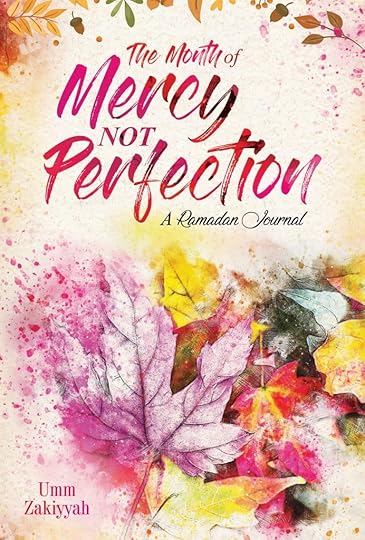
So often when we are recovering from a difficult trial, we focus on what we lost. In this, we are like survivors of a severe storm returning to our home to survey the damage, and we become devastated by what’s before us. We see our precious belongings destroyed, charred, or buried in debris, and we wonder how we’ll survive without the things we’d come to depend on for so long. Things we invested so much of our time and wealth into are gone in the blink of an eye, and we have no idea where to go from there.
When the severe storm of spiritual crisis hit my life, I had no idea what was happening to me. I found myself fighting for my emaan and fearing I could no longer be Muslim—despite the fact that my faith had been the very center of my existence.
After years of battling for my spiritual life, the worst of the storm passed by Allah’s mercy. I’m much better now, alhamdulillaah. But I’m still living with the collateral damage. Some of the things I no longer have today I didn’t imagine ever losing, at least not in this way.
Sometimes I sit and wonder how this could have happened to me, and till today I battle with feeling that so many things in my life didn’t go as they should. But then I catch myself. And I ask Allah to forgive me. For neither entitlement nor ungratefulness is the trait of a sincere, believing heart, and I want a sincere believing heart.
In reflecting on this spiritual goal, I think of the reflection I recently penned in my personal journal:
It’s funny how when things are going well for us in our marriages, families, careers, and wealth, we feel things are going how they “should.” But when we are facing difficult trials like divorce, family rifts, loss, and financial difficulty, we feel things are going “wrong.” Yet we were never promised perfect marriages, loving families, successful careers, and lots of wealth. But we were promised difficult personal trials, loss of the fruits our labor, and loved ones leaving us. Even prophets and the most beloved servants of God faced these trials.
Why then is there so much frustration and despair during difficult times? And when things are going well, why do we become so comfortable and self-satisfied, imagining the ease will (or should) last forever? And given our own helplessness before our Creator, why do we continuously take credit for His work when He decrees worldly success or personal happiness for us? And given that we are God’s servants—and not the other way around—why do we become frustrated, angry or even resentful of Him when He doesn’t give us everything we want or demand?
The truth is, things are always going as they should. Not a single one of us can escape what is written for us. This includes both the good and the bad that we taste in this world. Understanding this humbling truth isn’t just about embracing the reality of life. It is about embracing the reality of faith. It is in fact the sixth pillar of faith itself.
So if there is anything going “wrong” in our lives, it lies within our hearts and souls in how we react to the very realities God promised will reach us.
Disgraceful Blotches on the Heart
Entitlement and ungratefulness are among most disgraceful blotches that can come upon the human heart and soul. They turn the most beautiful blessings into causes of grief and disappointment, and they cause the soul to sink into the darkest bitterness, even when that life is tasting some of the sweetest of life’s treasures.
So often we pray for wealth, worldly success, and beloved companionship in marriage. And when Ar-Rahmaan bestows on us what we beg of Him, we feel grateful only for a fleeting moment. Then we begin to treat our wealth, worldly status, and beloved husband or wife as if they are our possessions instead of loans from our Lord. We then begin to look at them as our personal property, so we behave as if we can treat them as we wish.
And should we taste the slightest decrease in worldly wealth or status, or should our husband or wife make a single choice that reflects the fact that they have a life and soul of their own, we become enraged. Then we claim to be victims of some horrible disgrace or wrongdoing.
And if God decrees that divorce should be a subsequent trial in our lives, some of us even begin to treat our own children as soulless pawns in a game aimed at punishing our husbands or wives for bad behavior—i.e. for not living up to our expectation that their only role in marriage is to behave as a soulless object who was put on earth not to worship and obey their Lord, but to do our ever-changing selfish biddings.
Oh, but to see us before we had these divinely gifted treasures! Heads bowed humbly in prayer, hands raised in du’aa, and tears flowing from our eyes in humility, as we beg our Creator to bestow upon us wealth and beloved companionship in marriage.
Seek the Treasures of Heart and Soul
But what would be our case if, as we beg Ar-Razzaaq, Al-Wahhaab (The Provider and Bestower) to bestow on us the treasures of wealth and loving companionship, that we also beg Him to bestow upon us the treasures of heart and soul. And once we receive these divine gifts and loans—as so many of us do—perhaps we can supplicate to Him with even more fervor and tearful humility, asking Him to remove the stains of entitlement and ungratefulness from our hearts.
For by Allah! These two blotches upon the heart ruin every life they touch, and they ruin every relationship they touch—whether that relationship is with our own souls, with our beloved husbands or wives, or even with God Himself.
If only our restless hearts could understand that God owes us nothing—in this world or in the Hereafter—then perhaps we could get back to striving humbly and sincerely for what we could never deserve: blessings and companionship in this world, and eternal Paradise in the Hereafter.
And the latter comes only as a reward for God’s pleasure with you.
But God is never pleased with an entitled, ungrateful heart.
May Allah protect us from bringing harm upon ourselves, and may He heal our ailing hearts so that we are humble and grateful in times of difficulty and ease.
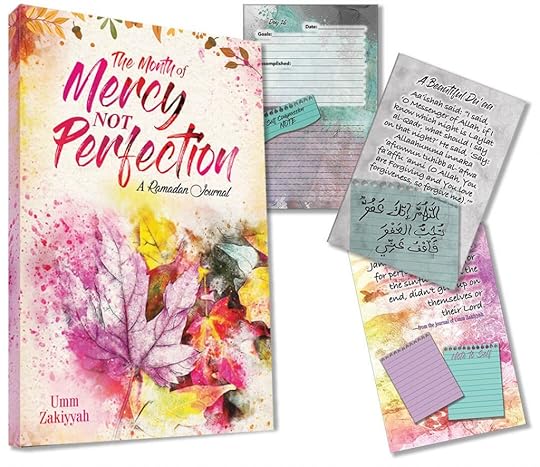
Umm Zakiyyah is the internationally acclaimed author of twenty books, including the If I Should Speak trilogy, Muslim Girl , and His Other Wife . Join UZ University to learn how you too can find your writing voice and share inspirational stories with the world: UZuniversity.com
Subscribe to Umm Zakiyyah’s YouTube channel , follow her on Instagram or Twitter , and join her Facebook page.
Copyright © 2018 by Al-Walaa Publications. All Rights Reserved.
The post Entitlement and Ungratefulness Ruin Lives and Marriages appeared first on Umm Zakiyyah Official Site.
May 18, 2018
Stop ‘Time Wasters’ in Ramadan?
“You criticize me for my faults and choices, saying, “You should stay away from doubtful!” But what you label as “doubtful” in my life just might be my best efforts in holding on to my faith at all. Yes, I know my imperfections can be cringe-worthy at times. Trust me, I cringe more from them than you. But if you only knew just how much effort it takes for me to be this flawed person that you see. If you only knew…”
—from the journal of Umm Zakiyyah
One of the most distressing things about Ramadan for the “imperfect Muslim” trained in religious zealousness is the conflicting feelings surrounding the “requirement” to abandon all worldly matters that we usually enjoy throughout the year. Whether it is reading a fiction book, watching a favored television show, playing video games, going to the movies, exercising to music, or even just relaxing at the pool or park, we often feel obligated to give up all of this in Ramadan if we are going to earn Allah’s mercy and forgiveness.
Naturally, if you know (or genuinely believe) something is definitely haraam, then no matter what month it is, you should strive to stay away from it (and repent whenever you slip up or indulge in it). However, when it comes to things typically labeled “doubtful” in Islam, the best course of action is often more confusing than clear when it comes to planning our approach to the holy month.
What Are “Doubtful Matters” in Islam?
When we make plans to stay away from “doubtful matters” during Ramadan, are we exaggerating what “doubtful” means?
Unfortunately, those of us trained to be overly zealous in our spiritual practice tend to label nearly everything of this world as “doubtful.” If something doesn’t have an overtly religious purpose, we automatically assume it to be haraam, doubtful, or a waste of time.
Furthermore, many religious classes teach us that anything that has legitimate disagreement amongst the scholars is automatically “doubtful” in Islam, particularly if you favor the more lenient view over the stricter one. Thus, we often feel forced to treat as haraam an ever-growing list of worldly matters, even if we ourselves are not convinced that they’re wrong or sinful.
Focus on What’s Clear
As I discuss in my book I Almost Left Islam: How I Reclaimed My Faith, it is well known that religion is defined by core beliefs and specific acts of worship. Hence, our greatest concern for religious safety must be in protecting our beliefs and worship. Worldly affairs, as a general rule, are not religious matters. Thus, humans are free to enjoy and benefit from anything of this world that they wish—unless Allah has expressly forbidden it (i.e. eating pork, drinking alcohol, or engaging in any sexual intimacy outside the God-sanctioned union between a man and a woman).
In other words, all matters of belief and worship have the general principle of prohibition unless there is clear proof for them in the Qur’an and Sunnah; and all matters related to our worldly life have the general principle of permissibility unless there is clear proof against them in the Qur’an and Sunnah.
Therefore, if you hear of a religious belief or mode of worship that incites doubt because you don’t know if it’s sanctioned in the Qur’an or the Sunnah, then you should stay away from it so as to “leave that which makes you doubt.” However, if there is a worldly matter that you have no justifiable reason to doubt the permissibility of, then you should assume it is allowed until you have proof otherwise from the Qur’an or Sunnah.
Let’s Be Real
You cannot live your entire life throwing every worldly issue into the category of “doubtful matters” just because you aren’t personally aware of its specific “ruling” in Islam. If you do, you’ll likely overburden yourself in the religion until you are paralyzed into inactivity, anxiety, and stress—and until you give up practicing Islam altogether.
Do What Works Best for You
Once there was a man who repeatedly asked the Prophet (peace be upon him) if Hajj was obligatory every year and the Prophet responded, “If I had said yes, then it would have become obligatory upon you [to perform Hajj every year], and you would not have been able to do so. Do not ask me about that which I have left [unspecified], for verily the nations before you were destroyed by their excessive questioning and their disagreeing with their Prophets. So if I order you with something, then do as much of it as you are able, and if I forbid you from something then keep away from it” (Muslim).
As I learned during my Islamic studies, the lesson we should gain from this hadith is profound, especially for those heavily influenced by the “super Muslim” and religious-OCD culture that is prevalent in many spiritual circles today.
So what should you do during Ramadan? Do what you’re obligated to do, and beyond that, do what works best for your own personal needs, emotional well-being, and spiritual health, irrespective of what someone else deems as “doubtful” or a “time waster” during the month. Also, don’t obsess over what you should or should not do regarding matters that have no clear (or unilateral) instruction about them in the Qur’an or Sunnah.
If you still find yourself distressed and confused, consult someone with a balanced understanding of spiritual, emotional, and personal needs; then pray Istikhaarah before moving forward with any decision (even if you imagine it to be “safest” for your soul).
Prioritize Self-Care Over Self-Denial
Here’s what works best for me year round: For my beliefs and worship, I stay away from doubtful by sticking to what is clear in the Qur’an and Sunnah. In Ramadan in particular, I do what is reasonable and realistic for me regarding extra worship and Qur’anic reading. I also engage in healthy self-denial by spending significantly more time in these spiritual activities at the expense of some worldly activities I might partake in.
However, when it comes to worldly matters that are part of my daily routine (and emotional well-being) throughout the year, I prioritize self-care over self-denial. In other words, to benefit most from Ramadan, I continue to do what I normally do, except what I leave off so that I can spend more time reading Qur’an and praying. Though many Muslims would label these non-religious activities “wasting time,” their perspective is neither truthful nor Islamic.
As we know from the prophetic teachings, actions are based on intentions. Furthermore, each person’s emotional and psychological needs are different. This is a fact confirmed in the most basic principles of fiqh. Furthermore, there is no universal category of “wasting time” that can be applied to every human being and every “non-religious” activity. What is wasting time for one person can be emotionally healing for another person, and what is emotionally healing for one person can be spiritually damaging to another person.
Therefore, what is upon us is to become acquainted with what is healthiest for our own emotional and spiritual health. Relying on blanket fatwas and religious advice that do not take into account the nuances and individuality of each person’s emotional and psychological needs causes more damage than good. Moreover, when they are relied on so religiously that they become standards in how all Muslims are obliged to participate in Ramadan, they run the risk of changing the teachings of Islam itself.
In trying to navigate and understand what is best for you in particular, I suggest engaging in honest self-reflection and praying Istikhaarah when you are uncertain.
Worldly Enjoyments Can Enhance Spiritual Health
As the personal story I share in I Almost Left Islam makes clear, I already know what unhealthy self-denial does to my mental, emotional, and spiritual wellbeing, and I’m not interested in putting myself through that torment again. Thus, if it’s Ramadan and I’ve already read my extra Qur’an and prayed my extra prayers for the day (according to my own personal improvement list), I go on with my life and enjoy the worldly activities that I normally do.
After weathering the spiritual crisis that nearly took me out of Islam, I know on a deeply personal level the spiritual benefits I gain from allowing myself time for permissible worldly enjoyments. So if I want to read a book, exercise to more than the sound of my own feet, or play a game I enjoy, I will, bi’idhnillaah. And I don’t give a second’s thought to what zealous Muslims label as “doubtful” or “wasting time” in my life or faith.
Yes, there are definitely controversial worldly matters that I still consider “doubtful” and thus stay away from for the safety of my soul. But this self-denial is based on my own emotional and spiritual needs, not anyone else’s. Thus, I believe it is unfair to suggest these personal boundaries to other believers under the unfair assumption that my limits have to be someone else’s limits too. Allah has already made clear the universal limits of our faith and the basic requirements of participating in Ramadan, and I have no right to add to this divine list, no matter how convinced I am that it’s best to stay away from something, and no matter how much it makes me or my favored sheikh uncomfortable.
So if you want to gain the most from this blessed month—while having emaan in your heart for the long term—I suggest you stick to Allah’s limits and guidelines for Ramadan, not those of human beings, no matter how sincere and knowledgeable. And beyond these divine universal guidelines, anything extra you do should be based on what’s best for your personal circumstance, not on the ever-growing list of what Muslims label as “doubtful” or “time wasters” in Islam.
Umm Zakiyyah is the internationally acclaimed author of twenty books, including the If I Should Speak trilogy, Muslim Girl , and His Other Wife . Join UZ University to learn how you too can find your writing voice and share inspirational stories with the world: UZuniversity.com
Subscribe to Umm Zakiyyah’s YouTube channel , follow her on Instagram or Twitter , and join her Facebook page.
Copyright © 2018 by Al-Walaa Publications. All Rights Reserved.
The post Stop ‘Time Wasters’ in Ramadan? appeared first on Umm Zakiyyah Official Site.
May 17, 2018
Ramadan for the Imperfect Muslim
“I know I am not perfect, but no matter how many mistakes I make, I will not give up, bi’idhnillaah. I know my Lord’s Mercy is greater than any of my faults or sins, so I place my trust in Him. I will strive each day to be a better person than I was before. If I should fall short in any of my goals, I will keep going, trusting in Allah’s Mercy over my efforts. And I’ll get right back up, having full faith that my Lord is Forgiving and Merciful.”
—Ramadan Pledge from THE MONTH OF MERCY, NOT PERFECTION (Ramadan Journal) by Umm Zakiyyah
Unfortunately, so many of us are students of books and classes that taught us to be obsessive about our religious life. Consequently, we learned to be paranoid about nearly everything we do. In our efforts at being religious, we imagine that even the most innocent of worldly enjoyments or pastimes are sinful or in the category of “doubtful matters.” This irrational paranoia leads us to fear even the possibility of doing something wrong. So in the name of being a “good Muslim” we commit to a life of self-denial wherein we don’t allow ourselves even basic pleasantries if we can’t find a fatwa or a sheikh to tell us that the act is “beneficial” in our faith.
Naturally, this mindset cripples us year-round, and when the month of mercy arrives, we feel unable to fully participate because “fully participating” means becoming even more super human—or super Muslim—than we were taught to be during other times of the year. As a result, we forget that Ramadan is about earning Allah’s mercy and forgiveness, not about never doing anything to need the mercy and forgiveness in the first place.
Super Muslims As Our Guide
In our classes, in addition to having been taught that we are helpless, ignorant laypeople incapable of worshipping Allah without a spiritual teacher by our side—and that practically everything we enjoy of this world is “doubtful”—we constantly learn about “super Muslims” of the past who, for all intents and purposes, committed no sins and whose greatest joys in life were praying and reading Qur’an all day and night without fail. We also hear of these same “super Muslims” greeting Ramadan by shutting themselves off from the world around them and spending the entire month in seclusion as they engage in even more praying and reading Qur’an than they normally did.
And while these “super Muslim” stories are indeed amazing and at times tear-jerking in their spiritual beauty, they do very little to encourage the average Muslim to worship Allah and trust that He loves us just as much as (if not more than) many “super Muslims.”
So as we greet Ramadan, we often feel like we don’t even have the right to participate, lest we corrupt the sanctity of the “super Muslim month” or lest we disrespect our faith and Lord with our mind-wandering prayers, grumpy moods, and miniscule Qur’an reading, which we barely fit into our busy, hectic schedules of work, school, parenting, and just living life.
How Do We Benefit from Ramadan As “Imperfect Muslims”?
As I mention in the Ramadan journal, The Month of Mercy, Not Perfection, the first thing we need to do in order to benefit from Ramadan as an “imperfect Muslim” is to focus on what Allah requires of us, then work from there. In other words, do what is obligatory (i.e. fast and pray your obligatory Salaah)—and then assess your own personal improvement needs, instead of looking at “super Muslims” (of past and present) for direction.
For example, if you are in the habit of missing obligatory prayers, then focus on praying all five prayers in Ramadan. If you are in the habit of delaying obligatory prayers, then focus on praying on time. If you are in the habit of not opening the Qur’an throughout the year, then read something from the Qur’an each day, even if it’s only a small section or for a few minutes.
But whatever personal improvement steps you take, don’t imagine you’ll stop being human during Ramadan. As I reflect in my personal journal:
No matter what month it is, you’ll never stop being human and making mistakes. All humans sin…but the best are those who constantly repent. This is what our faith teaches. So remember this: Your success lies in never giving up the struggle, not in having nothing to struggle against.
So repent, O child of Adam. The gates of Paradise are open for you—should you sincerely desire to enter.
Umm Zakiyyah is the internationally acclaimed author of twenty books, including the If I Should Speak trilogy, Muslim Girl , and His Other Wife . Join UZ University to learn how you too can find your writing voice and share inspirational stories with the world: UZuniversity.com
Subscribe to Umm Zakiyyah’s YouTube channel , follow her on Instagram or Twitter , and join her Facebook page.
Copyright © 2018 by Al-Walaa Publications. All Rights Reserved.
The post Ramadan for the Imperfect Muslim appeared first on Umm Zakiyyah Official Site.
May 13, 2018
Ramadan Is Coming and I’m Scared
“Jannah (Paradise) is not for perfect people. It is for the sinful who, in the end, didn’t give up on themselves or their Lord.”
—from the journal of Umm Zakiyyah
Ramadan is coming and I’m scared. I know many speak of Ramadan as a month they look forward to and are welcoming with eagerness and excitement. It’s not like that for me. Each year that I witness the blessed month, I discover a new unknown terrain being uncovered in my soul, and it terrifies me. What I see there isn’t something that I like, and I don’t look forward to uncovering yet one more dark crevice of my spirit-soul. It’s difficult to feel excitement about my heart shedding light on confusing, unchartered battlefields within.
But don’t get me wrong. I cherish the blessed month. It is like a thirty-day spiritual boot camp for my soul. And I need it. God knows I need it. The pensive reflection I feel during the day as I recite Qur’an, the humbling tranquility I feel during the night as I stand in Qiyaam. By Allah, nothing compares to it. The tears flow more easily. The regret comes more effortlessly. And my willingness to make the necessary changes in my life path is met with only minimal resistance. The hardening of my heart that had built almost imperceptibly earlier in the year softens, even if just a bit, day by day. Then I begin to feel unfettered. The suffocating anxiety begins to lift. And my heart begins to soar in hope and determination. I’ll be better. I’ll do better. I can do this, bi’idhnillaah. I will not give up.
And then, just like that, it’s gone.
Then the moon sighting wars begin. The incessant chatter about Eid and clothes and where to pray the Salaah and what festivities are going on where. Then my head begins to spin. What just happened? At that moment, it feels like something precious has been snatched from me. Just as I began to cherish her like she deserved, just when I began to imbibe her immeasurable benefit in my life, that Rahmah—that limitless Mercy that comes only once a year—is gone.
Then my heart falls in realization that, yet again, I didn’t take full advantage of all the Month of Mercy offered. I didn’t do everything I’d set out to do. I didn’t even do everything I was supposed to do. What does that say about me as a person? What does that say about me as a Muslim? Then the regret and shame set in, and I wonder what hope there is for me at all, no matter what month it is.
But then I stop myself. I remind my soul of the powerful spiritual lesson that I share in my book And Then I Gave Up about what Allah taught me during the Ramadan of 2008 when my younger brother died of cancer, may Allah have mercy on him. I remind my soul of the powerful spiritual lessons that I share in my book and video series I Almost Left Islam about how Allah saved me from myself when I was on the verge of giving up everything that mattered most for my life and soul.
Most importantly, I remind myself that ultimately, spiritual salvation isn’t about being perfect. It’s about earning Allah’s mercy and forgiveness. It’s about not giving up, no matter how far you have fallen from the path. It’s about realizing that Allah is here, always here, ready and willing to accept your repentance, no matter how imperfect your spiritual efforts seem to you. If you can hold on to this truth—despite the dark unknown terrain continuously being uncovered in your soul—then Paradise is yours.
It was this epiphany that led me on a path to approaching Ramadan from a point of self-compassion instead of self-blame, hence the birth of the interactive Ramadan journal: The Month of Mercy, Not Perfection:
Are you READY? For the “imperfect Muslim,” Ramadan can be overwhelming, as we feel so much pressure to perfect our lives overnight. In this full color, interactive journal, we are encouraged toward self-compassion instead of self-blame. With inspiring quotes and journal prompts on the backdrop of beautiful abstract art, we take it one day at a time, trusting that Allah’s mercy and forgiveness are for us too, no matter how many faults and sins we have—and will continue to have long after the month of mercy is over.
I know I am not perfect, but no matter how many mistakes I make, I will not give up, bi’idhnillaah. I know my Lord’s Mercy is greater than any of my faults or sins, so I place my trust in Him. I will strive each day to be a better person than I was before. If I should fall short in any of my goals, I will keep going, trusting in Allah’s Mercy over my efforts. And I’ll get right back up, having full faith that my Lord is Forgiving and Merciful.
—“My Pledge” from The Month of Mercy, Not Perfection (Ramadan Journal)
Get Yours:
USA: tinyurl.com/uzramadanjournal
Canada: tinyurl.com/uzramadanjournalca
UK: tinyurl.com/uzramadanjournaluk
India: tinyurl.com/uzramadanjournalin
Prefer a full-color printable eBook? Download here: uzauthor.com/product/ramadan-journal
Umm Zakiyyah is the internationally acclaimed author of twenty books, including the If I Should Speak trilogy, Muslim Girl , and His Other Wife . Join UZ University to learn how you too can find your writing voice and share inspirational stories with the world: UZuniversity.com

Subscribe to Umm Zakiyyah’s YouTube channel , follow her on Instagram or Twitter , and join her Facebook page.
Copyright © 2018 by Al-Walaa Publications. All Rights Reserved.
The post Ramadan Is Coming and I’m Scared appeared first on Umm Zakiyyah Official Site.
May 12, 2018
Journaling Helped Me Find My Voice
baggage.
everyone is carrying a story.
but only a few will allow the pen to break their souls
wide open.
I started my first personal journal when I was fifteen years old. The diary was an Eid gift to me from a friend I’d known since childhood. I still have the journal today. It has a pink, cushiony hardcover that bears the title A Writer’s Notebook. I’m not even sure my friend remembers giving it to me.
Written in my own handwriting opposite the inside front cover are my name, the date “April 16, 1991” and the number 1 with a circle around it. It has been more than twenty-five years since I penned my name on that first page and noted the date. But it was more recently that I encircled the number 1 with my pen. I wrote this number to mark the pink A Writer’s Notebook as my first. Now, each journal I’ve had since then has a similar notation, with my latest journal having the encircled number 17.
Seventeen journals. There is so much that the pages of those journals bear witness to. Some of it I recall. Some of it I’d rather not.
Sometimes when I have a free moment, I pick up one of the journals and open it to a page to read what I’ve written. Sometimes what I read makes me smile. Sometimes it makes me reflective or pensive. Sometimes it makes me cry. Sometimes the tears are happy tears, sometimes they are sad.
In my earliest entries, I write a lot about conversations and interactions with friends and classmates. I also write a lot about my worries about the state of the world. This always gives me pause. Because there is so little about me. But today, I can read between the lines and see what is not there: my need for an outlet, my need for a voice, my need for validation, even if I can’t quite find the words.
In a recent entry, I reflect on a moment of gratefulness:
Today I’m grateful for the very few friends and loved ones I have in my closest circle, who don’t punish me for my boundaries, who don’t scorn me when I’m in pain, and who don’t expect from me any more than I can give. And I’m especially grateful that they take full responsibility for their words and actions and never punish me for what they have said or done, expecting me to read minds and hearts beyond what is actually said or done. I’m also grateful that when they say, “I’m sorry,” they really mean it—and that they know when I apologize, I really mean it. But most importantly, I’m grateful that they see themselves as flawed human beings, and that they see me as a flawed human being, and we still love each other anyway…
It is journal reflections like these that inspire my writing voice. Reading these reflections often make me reflect on the real life situations that inspired them. Some of the situations I’ve penned in detail in my personal journals. This particular entry reminds me of an earlier entry when I was trying to make sense of everything that had happened between me and a friend who I now know was toxic. Little did I know, those journal entries about that toxic friendship would become the writing voice for my bestselling novel His Other Wife, which began as a short story series and led to nearly a million hits on my site. In this way, my simple journal reflections have become writing prompts for me and have helped me find and develop my writing voice.

Umm Zakiyyah is the internationally acclaimed author of twenty books, including the If I Should Speak trilogy, Muslim Girl , and His Other Wife . Join UZ University to learn how you too can find your writing voice and share inspirational stories with the world: UZuniversity.com
Subscribe to Umm Zakiyyah’s YouTube channel , follow her on Instagram or Twitter , and join her Facebook page.
Copyright © 2018 by Al-Walaa Publications. All Rights Reserved.
The post Journaling Helped Me Find My Voice appeared first on Umm Zakiyyah Official Site.
April 4, 2018
Who Are the Real Scholars Today?
righteous scholars.
you’ll know them
by their compass
that guides them
and you.
its needle has a single marking
and points to only two—
Allah and His Messenger
sallallaahu’alayhi wa sallam.
and
you’ll know them
by their mark
they leave
on you.
it is a heart
that carries the compass
they gifted to you.

There is a lot of talk today about our obligation to follow scholars and of caution against anyone who does not have a specific leader, sheikh, or scholar whom they answer to in all practical and spiritual matters. Believers who fear for their souls in these Last Days and strive to follow the Qur’an and Sunnah as their ultimate authority are vilified and painted as misguided or evil—even if they trust some scholars in learning about their faith. However, in the minds of those who call to the blind following of sheikhs and spiritual teachers, this isn’t good enough.
If sincere believers place the Qur’an and Sunnah above their sheikhs and spiritual teachers, they are painted as having sick hearts, arrogant dispositions, or intentions to follow their desires when they should be “humbly” obeying authority.
Meanwhile, Islam itself defines spiritual authority as the teachings of Allah and His Messenger, sallallaahu’alayhi wa sallam, and it defines scholars as those who inherit the knowledge of these teachings and point believers to this spiritual authority.
In discussing in more detail the topic of “real” scholars today, I’ve compiled (below) several of my own writings on this topic, as I’ve shared from my journal, blogs, and books over the years. These reflections are based on my more than fifteen years of traveling and studying Qur’an, the prophetic teachings, and how this topic was understood by the Companions, the earliest Islamic scholars, and our righteous predecessors.
The Role of the Scholar Is Clear
Religious knowledge is rooted more in the heart than in the mind. As such, when Allah speaks about the ‘ulamaa, people of knowledge, He speaks about their fear of Him, not their accolades and certificates from books, classes, and teachers.
Allah says what has been translated to mean, “It is only those who fear Allah, amongst His slaves, who are ‘ulamaa” (Al-Faatir, 35:28).
Thus, our classes and teachers—and accolades and certifications—benefit us only insomuch as our hearts benefit us. Reflect, O child of Adam, reflect! Then repent and self-correct.
Prophet Muhammad (sallallaahu’alayhi wa sallam) said, “Indeed, the scholars are the inheritors of the prophets, for the prophets do not leave behind a dinar or a dirham for inheritance, but rather, they leave behind knowledge…” (Abu Dawud, Al-Tirmidhi).
This is a well-known hadith, and from it we learn that the responsibility of the scholar is great, as he or she is entrusted with inheriting and subsequently passing on the wealth of knowledge left behind by the Prophet, peace be upon him.
Thus, when we “follow” trustworthy scholars, we are only being directed to follow the Prophet himself. For the job of the scholar is only to share authentic knowledge gained from detailed study of the original teachings.
And just as a trustee of an estate does not add or take away from the wealth with which he is entrusted, so does a trustworthy scholar leave the prophetic inheritance undisturbed—except to share the knowledge in full, as his or her role demands.
Quotes from Early Scholars About Obeying Scholars
“It is not permitted for anyone to accept our views if they do not know from where we got them from.” —Imam Abu Hanifah
“Indeed I am only a human: I make mistakes [sometimes] and I am correct [sometimes]. Therefore, look into my opinions: all that agrees with the Book and the Sunnah accept it; and all that does not agree with the Book and the Sunnah, ignore it.” —Imam Malik Ibn Anas
“For everything I say, if there is something authentic from the Prophet, sallallahu’alayhi wa sallam, contrary to my saying, then the hadith of the Prophet, sallallahu’alayhi wa sallam, comes first, therefore do not [do] taqleed of my opinion.”—Imam Muḥammad Ibn Idris al-Shafi’ee
“Do not follow my opinion; neither follow the opinion of Malik, nor Shafi’ee, nor Awza’i, nor Thawri, but take from where they took.” —Imam Ahmad Ibn Hanbal
What Is the Definition of “Scholar” Anyway?
Interestingly, for all these discussions, lectures, and posts I’ve seen on the obligation to obey scholars—even above the Qur’an and Sunnah itself—it is very rare that I’ve seen or read a clear definition of what is meant by the term scholar, practically or spiritually. This is very odd, given that Allah has made Islam itself very clear, and that He also told us in no uncertainty of terms that we will be questioned on the Day of Judgment about our adherence to this faith. In this, He taught us that if we knowingly turn away from this obligation, we run the risk of entering Hellfire.
So where is this clarity of truth from Allah regarding whom these scholars are and how we are to discern the trustworthy ones from the ones teaching falsehood? Before getting into answering that question, let’s clarify one thing about following anyone blindly and without question:
Allah would never make the path to Paradise something that is equally the path to Hellfire. Thus, to believe you are obligated to follow without question any religious personality other than Prophet Muhammad, sallallaahu’alayhi wa sallam, not only violates divine principles; it also violates common sense.
For how many religious personalities, past and present, call their followers to misguidance and disbelief? How then is it possible that our Lord would obligate us to follow someone without question—then place us in Hellfire if we die upon misguidance or disbelief?
Your blind following of anyone is the result of conscious, deliberate choice, while knowing full well you had other options—for better or worse. Own it. Because on the Day of Judgment, you’ll have no other choice.
So Who Is ‘Really’ a Scholar?
Firstly, let’s get one common sense point out of the way: Scholars are not scholars just because we call them “scholars,” and they are not scholars just because lots of people love and admire them in this world. Scholars are scholars because they fulfill that definition in front of Allah, even if people never recognize them as such in this world.
Just as there will be prophets who come on the Day of Judgment with little to no followers from this world, there will be righteous scholars who come on the Day of Judgment with little to no believers who recognized them as “scholars” in this world. Nevertheless, does this reality make those prophets and true scholars any less knowledgeable or trustworthy in front of Allah?
In the case of scholars, Allah bestows authentic spiritual knowledge on whomever He wills, however He wills, and from wherever He wills. And His decree is not limited to humans’ definition of religious scholarship—whether via “formal training,” university studies, or sectarian group membership.
So how do we know who truly has knowledge? Allah says, “Truth stands out clear from error” (2:256).
Thus, if you want to benefit from true scholars today, you’ll first need to have a firm understanding of spiritual truth and how it differs significantly from spiritual error and falsehood. Without this firm foundation in authentic Islamic spirituality, it really doesn’t matter who is or is not “really” a scholar. You wouldn’t have the ability to recognize them anyway.
Truth Is More Important Than Scholarship
“He’s not a scholar anyway!” we often say to dismiss someone’s Islamic perspective. But here’s my question: Does it even matter?
Our priority should be gaining the tools to distinguish truth from falsehood—for the sake of our souls—not obsessing over someone’s Islamic “qualifications.” It is counterintuitive to debate who is or who isn’t a scholar when it’s our lack of knowledge that makes us need a scholar in the first place. Exactly what knowledge are we using to draw a conclusion? And since scholars themselves are debating this question, the answer becomes a rather obviously moot point, practically speaking.
Here’s the bottom line: If religious truth comes from the mouth of a layperson, are we allowed to dismiss it? And if religious falsehood comes from the mouth of a scholar, are we obligated to follow it?
Allah placed us on this earth to worship and obey Him, period. And He didn’t make this obligation hidden in rocket science or brainteasers. So as long as your heart is sincere and you consistently turn to Him for guidance, He makes the truth clear so that you follow it, and He makes falsehood clear so that you avoid it. This is the case whether you’re a layperson or scholar. And no, there is no guarantee of guidance or misguidance regardless of which category you are in.
Thus, whether or not so-and-so qualifies to be called “scholar” really shouldn’t be our concern. But whether or not we are qualified to enter Paradise, this should be.
“But we need scholars to help us!” you say. And I agree.
On this, I share this lesson from our pious predecessors: Take your knowledge from those who have passed away [i.e. the Prophet (peace be upon him) and his Companions], for their knowledge and righteousness are well known. As for the men and women amongst you today, you do not know their affair in front of Allah, and you do not know in what spiritual state they will die. So take from them only what you recognize [as truth], and leave what you cannot verify [as truth].
And Allah is All-Forgiving, Most Merciful to His slaves.
Be Careful Whom You Trust With Your Soul
We are in the Last Days, and the rightly guided are few. Not everyone who carries the label Muslim believes in authentic spirituality, and not everyone who carries the label scholar teaches authentic spirituality.
The attitude of humility and fear for their souls is the trademark of authentic, righteous scholars. And most of them have passed away. So be careful whom you trust with teaching you the affairs of your soul.
It is true that no scholar is perfect, so we must take what is good and leave what is not. But we must be extra cautious when we find a person claiming to have authentic spiritual knowledge, yet he is more insistent on people praising and obeying him than he is on people praising and obeying Allah.
And let’s not forget that given the state of the ummah, who is or is not truly a scholar is a very subjective matter, as today, anyone who studies in a university or under a sheikh is deemed a scholar, even if they don’t fit the definition in front of Allah. But in true Islam, this subjective labeling is irrelevant, as our focus should be following truth and staying away falsehood, not putting “proper labels” on those teaching us our faith.
But where do we begin? many ask. Let’s start with understanding what it means to protect our souls from Hellfire.
How To Save Yourself From the Fire
Allah says what has been translated to mean, “O you who believe, save yourselves and your families from a Fire whose fuel is men and stones…” (At-Tahreem, 66:6).
During your lifetime, you’ll be invited to the Hellfire many times. For the sake of your soul, refuse every time. In guarding your heart from accepting the invitation, be sure to focus more on principles than people—and don’t be naïve enough to believe that this destructive invitation will always come in the form of obvious evil.
So how do we protect ourselves? Here are five points to remember:
Authentic Islam is based on the teachings of the Qur’an and Prophet Muhammad (peace be upon him), as understood by the Companions and earliest Muslims, as there is no new Islam. Bear in mind that believing that it is allowed to introduce new interpretations of foundational principles, obligations, and clear matters of halaal and haraam is what laid the path for the People of the Book making entirely new religions with no connection to the teachings of the Prophets Moses and Jesus (peace be upon them).
No human being other than the Prophet (peace be upon him) has authority to teach commandments or prohibitions in the religion or introduce concepts that promise specific reward or punishment in this world or the Hereafter—no matter how knowledgeable, righteous, or saintly we imagine them to be.
The role of the Islamic scholar is to teach what was revealed to Prophet Muhammad (peace be upon him) of the Book (Qur’an) and the Wisdom (the Sunnah), nothing more, nothing less.
No Islamic teacher or believer (other than the Prophet himself) has perfect knowledge of Islam, even if his or her foundational understanding of the religion is correct. Thus, when we are studying our faith, we must constantly supplicate to Allah to allow us to benefit from what is truthful and to protect us from what is mistaken, no matter who our teacher is and no matter how much we love, trust, and respect him or her.
Know that Allah has made the truth of His faith so clear that every human being who hears the message of Islam, whether illiterate or scholarly, has the capacity to recognize it as true. Likewise, every human being who accepts Allah’s religion has the ability—and the obligation—to recognize and reject religious falsehood being taught as Islam, no matter whom or where it comes from. In this vein, know that we will all be held accountable on the Day of Judgment for our beliefs and actions, and we will not be able to blame our spiritual teachers or scholars for our own misguidance.
When in doubt, pray for guidance. Allah hears and answers all prayers.
And remember this: Many who rejected the Messengers in history were resentful that the Prophet whom Allah sent to them did not have the qualities they felt made him honorable and worthy of such a noble role, whether it was wealth, power, or a certain lineage. And many who followed misguidance in history were pleased with the “noble” traits of the one leading them to Hellfire, whether it was because the inviter was a parent, a “righteous” person, or someone they deemed honorable in some worldly way.
Today, we find history repeating itself in Muslims rejecting obvious spiritual truths because the person speaking the truth does not have a lofty scholarly title, did not study overseas or in an Islamic university, or is not part of our favored group, sect, or culture.
Be careful.
Many times Allah tests us by placing the truth on the tongue of one who will reveal to us the very depths of our hearts—and our response to this divine truth will make plain to us whether it is Allah or our pride that is most beloved to us in this world.
O dear soul, be careful.
O Allah! Make us recognize truth as truth and make us follow it, and make us recognize falsehood as falsehood and protect us from it! And O Allah, purify our hearts from the destructive diseases of pride, hatred, and envy! And make Your pleasure with us our highest priority in this world!
Umm Zakiyyah is the internationally acclaimed author of twenty books, including the If I Should Speak trilogy, Muslim Girl, His Other Wife and the self-help book for Muslim survivors of abuse: Reverencing the Wombs That Broke You. Her latest novel His Other Wife is now a short film.
Read HIS OTHER WIFE novel now: CLICK HERE . Subscribe to Umm Zakiyyah’s YouTube channel , follow her on Instagram or Twitter , and join her Facebook page.
Copyright © 2018 by Al-Walaa Publications. All Rights Reserved.
The post Who Are the Real Scholars Today? appeared first on Umm Zakiyyah Official Site.
March 28, 2018
Can Muslims Take a Lesson from LGBTQ Groups?
labels and sects.
please
leave off your battle calls
and self praise
and your carefully crafted fiqhi art
and when I ask
who you are
I want
to be introduced
to your heart.
If you’re disheartened with the spiritual state of Muslims and would like to restore some form of meaningful unity and authentic practice, it’s important that you understand three faces of the Muslim identity today:
the Muslim brand
the Muslim ethnicity
the Muslim faith
Group One: The Muslim Brand
The first Muslim identity is heavily favored by the media and serves only the purpose of promoting a very specific soulless extremist “brand” of Islam. The foundational image of this brand is the Muslim “boogeyman” who wishes to harm innocent people, is intolerant of different faiths and lifestyles, and wants to force Islam down everyone’s throats.
By far, this is the most powerful and important identity for those who are pushing it. And it’s not only because of the widespread misinformation and harmful stereotypes that feed into “Islamophobia” and anti-Muslim bigotry, but also—and most importantly—because it replaces God Himself as the *focus* of Muslims themselves when defining Islamic spiritual practice, interacting with other Muslims, and sharing the faith with others.
Or to put it in the words of Hamza Abdullah, former NFL player and author of Come Follow Me, who recently tweeted: “If Muslims spent the same time, money, and resources into Mental Health, proper education of the Deen, and community building as we do in ‘combatting Islamophobia,’ our Ummah would be flourishing. Instead we’re playing on their side of the field. Punt that sh*t and build.”
Group Two: The Muslim Ethnicity
The second Muslim identity is favored by those who are born into Muslim families, who come from predominantly Muslim countries, or who have ostensibly “converted” to Islam, but have no meaningful connection to the faith as an authentic spiritual practice. Nevertheless, they are eager and happy spokespeople and “PR reps” for the Muslim identity in America and worldwide—with their only goal being that of achieving acceptance by non-Muslim society.
These are the Muslims who tirelessly tout the “We’re just like you!” mantra, even with the expense of abandoning foundational principles and bringing harm to other Muslims. This, because their Muslim identity is merely skin deep: “I am Muslim because I was born into a Muslim family or culture” or “…because I can freely claim some connection to others with the same ‘Muslim family’ name.” In this way, their Muslim identity is more a pseudo “ethnicity” than a bond of faith.
Naturally, the foundational ideology of those with only the Muslim “ethnicity”—yet are self-appointed PR reps for us all—is not the Islamic faith itself, but the religion of “combatting Islamophobia.” And those who ascribe to this empty religious identity have only one pillar of faith: “Nothing has the right to be worshipped except Western acceptance alone.”
Group Three: The Muslim Faith
The third Muslim identity is that of those who sincerely believe in “Laa ilaaha illaa Allah” as defined by the Creator and His Messenger, sallaallaahu’alayhi wa sallam.
This group’s primary focus is meeting Allah with emaan in their hearts and subsequently entering Paradise in the Hereafter. They understand that this spiritual path comes with continuous social suffering in this world, as they are perpetual strangers amongst both Muslims and non-Muslims alike. The foundational ideology of this group’s identity can be summarized in a single sentence: Saving your soul is more valuable than any worldly acceptance.
While the “Muslim faith” group is by far the smallest and least powerful (worldly speaking) of the three Muslim identities, they are the only group with whom any meaningful unity and spiritual support can be built during these difficult times.
But do not misunderstand. This group is not filled with sinless, perfect believers. It is not even comprised of Muslims who love and respect each other, and this group most certainly is not united amongst themselves.
Furthermore, and perhaps most significantly, they are not completely unaffected by the two other identities. In fact, for those of us who are in this third category, one of our biggest challenges in striving for meaningful unity and community building is convincing fellow believers in this group of two things:
Unity is not in achieved through recruiting more and more members to your favored group, sheikh, or fiqh view. It is achieved through loving and supporting each other despite our inevitable differences.
Worldly success is not achieved through gaining acceptance or “solidarity” in the spheres (public and private) dominated by the first two groups, but through building our own spheres independent of them.
‘But We Need To Work With Others!’
When I speak of building “independent spheres,” I don’t mean that we abandon working with others in an effort to build beneficial alliances with those of different faiths and worldviews. I simply mean that we must establish this independence without sacrificing the very identity we’re trying to protect.
Or to put it in the words of Khalil Ismail, a Muslim artist and community activist who said recently during a panel discussion: We need to take a lesson from the LGBTQ groups. They have garnered widespread support and alliances from the most unlikely places, and not through hiding who they really are and watering down what they believe in order to appear “just like” the groups they are working with—but through defining themselves by the *very thing* that others disagree with—that which represents the heart of their lifestyle itself. And then they made *this* their inflexible identity, and the condition that others must respect in order to be considered “true allies” to their cause.
They have been so successful with this, in fact, that droves of Muslims themselves are running from authentic Islamic spirituality to be labeled and celebrated as their allies. In this, many of us sacrifice the Muslim faith identity (as defined above) in hopes of being part of the media-celebrated “Muslim brand.”
Embrace Your ‘Muslim Faith’ Identity
We’ve obviously missed the point—and we’ve also missed the lesson in our own eagerness to join others’ causes:
Even in the realm of worldly success, you gain neither respect nor meaningful allies through apologizing for who you really are, watering down what you really believe, or eagerly pandering to others while saying, “We’re just like you!”
And you certainly don’t gain success by making your entire identity rooted in playing on someone else’s side of the field. If you do pour all your resources into building only the defensive, you ultimately exist only to respond to offenses thrown at you. Thus, even if you are successful, you have not a single win to your name.
Or to put it another way: Whether you are striving for worldly or Hereafter success, you need authenticity, integrity and self-respect. And you find these in embracing your own identity, not in hanging desperately to the coattail of someone else’s.
Umm Zakiyyah is the internationally acclaimed author of twenty books, including the If I Should Speak trilogy, Muslim Girl, His Other Wife and the self-help book for Muslim survivors of abuse: Reverencing the Wombs That Broke You. Her latest novel His Other Wife is now a short film.
Read HIS OTHER WIFE novel now: CLICK HERE . Subscribe to Umm Zakiyyah’s YouTube channel , follow her on Instagram or Twitter , and join her Facebook page.
Copyright © 2018 by Al-Walaa Publications. All Rights Reserved.
The post Can Muslims Take a Lesson from LGBTQ Groups? appeared first on Umm Zakiyyah Official Site.
March 7, 2018
Do Friends Need Prenup Agreements?
For years, I was a peacemaker to a fault. I would apologize even when I didn’t do anything wrong. I would apologize for things other people did wrong. I would even apologize when I saw someone hurting and had no idea if it had anything to do with me. I would even offer preemptive apologies, apologies issued before anything bad happened, in case something I would say or do in the future would inadvertently hurt someone. Also, I would not only apologize for hurting someone, but also for someone hurting me. I genuinely felt that my very existence was such a burden to the world that I owed people an apology for the inconvenience of them hurting me and having to even be irritated by seeing my hurt response.
Today I still struggle with the rushed apology, that anxious feeling that I need to make everything right in other people’s lives, even if it’s to the detriment of my own. But I’m learning to be better. I still strive to be a peacemaker, but I now understand I cannot sacrifice my own emotional and spiritual health in the process. In this, one thing that’s new and difficult for me is taking responsibility for only what I genuinely believe I did wrong. This is huge test for me because when someone is angry with me, my instinct is to blame myself and rush to make them feel better, even when they caused the whole problem to begin with.
There was a time that I sincerely imagined that offering an apology was like giving charity. Thus, I imagined that saying sorry was something that always earned you good deeds and reflected the greater good, even if you didn’t do anything wrong. Though I still believe there are certain moments that warrant that charitable “I’m sorry,” this is generally the exception, not the rule. Authentic relationships are built on trust, honesty, and empathy, not on one person consistently taking the fall for someone else’s wrongs, even if the wrong was a sincere oversight or accidental misstep.
What’s interesting is that my striving to have a healthier and more honest approach to my relationships, especially budding friendships where we’re still getting to know each other, has unveiled two scary realities that reflect many people’s psychology when nursing hurt feelings caused by their own misbehavior: toxic entitlement and playing victim. I’d never noticed this before because my rushed apology and eagerness to make everything better fed into both and thus allowed the unhealthy relationship to continue—on their terms.
Here’s something else I wasn’t aware of before my journey of self-honesty in budding friendships: the emotionally manipulative apology. This is the apology that is issued not to make peace or take responsibility for wrongdoing, but to garner just enough trust so that everything is turned around to blame the other person. In other words, it is issued only so that you let down your guard enough to stay in their presence until they have the opportunity to blame you for what they apologized for. In this way, the apology becomes the bargaining chip that allows them to claim that they took responsibility for their actions while you didn’t—even when they were the only guilty party.
This was an interesting and jarring discovery, as I learned that many people are utterly incapable of accepting responsibility for their behavior unless someone else shares in the blame. I also discovered that many people genuinely imagine that there is always a person to blame for their own hurt feelings and frustrations, even when triggered by their own misbehavior and selfish expectations.
In most cases, emotional manipulation and inability to take full responsibility for our behavior is not conscious or malicious. It is a result of unresolved trauma, unhealed emotional wounds, and unhealthy patterns of behavior in childhood and/or adulthood, usually due to having been unhealthily indulged by friends and loved ones whenever we are feeling entitled during a “temper tantrum.”
Witnessing this, especially in contexts of friendships and other casual relationships, reminded me of a question I pondered years ago while trying to navigate what I now know was an extremely toxic and abusive friendship: Do friends need contracts similar to married couple’s prenuptial agreements? Then I remembered that I’d actually written about this very topic years ago. Today as I re-read what I wrote, I realize I would probably write it differently given what I know now, but the heart of what I was trying to convey still rings true, especially when we are operating more from self-centered emotionalism than empathy and self-accountability in our relationships:

Zaynab’s Post to an Online Group
Nusaybah and I have been friends since we were kids, but I’m really starting to think she’s bad for me. Don’t get me wrong. She’s nice and fun to be around, but sometimes she can be really annoying. Last week she called and “surprised” me by stopping by my house unannounced to take me out to eat, and I had to defend my PhD thesis in the morning! And this isn’t the first time. She’s always making plans for me and my kids without asking first! And to top it off, she’s always telling me what’s wrong with my life. Sometimes I feel like telling her to mind her business, but I chicken out every time. I swear, I feel so small when she’s around.
Any advice for dealing with overbearing friends?
Nusaybah’s Post to an Online Group
Okay, I’m not one to discuss my life online, but since this is a private group, I wanted to know if anyone can help me out. I’ve known my best friend Zaynab since first grade, and we’re really close. But I don’t know if I should just break off the friendship. She’s not a bad person. It’s just that she thinks only of herself. Any time we go somewhere or have a party (even if it’s at her house), I’m always the one doing all the planning, driving, and paying! I give everything to this friendship, and she gives nothing. When I sense she’s stressed out but can’t talk about it, I give her advice or I try to surprise her by doing nice things. But it’s never reciprocated. And when I say never, I mean never. She’s caught up in her own life, and whenever I try to talk to her, she gets an attitude though she doesn’t say what she thinks.
Any advice for dealing with selfish friends?
Friendships Are Like Marriage
In a way, friendships are like marriage. Two people decide to come together because they share common interests and beliefs, because they enjoy each other’s company, and because they have “mutual feelings” for each other. And like becoming husband-and-wife, the commitment is voluntary.
But unlike husband and wife before marriage, friends generally don’t ask permission before deciding (and declaring) that a relationship exists. Moreover, even when friends mutually agree to friendship, they don’t openly discuss the seriousness of the relationship or the terms they will abide by.
Yet, strangely, we hold our friends accountable for not respecting the friendship or for not abiding by the relationship’s “terms”.
‘Will You Be My Friend?’
It’s a question children ask almost every day, and as I reflect on adult friendships, I’m beginning to wonder if we should take a lesson from our childhoods.
Just imagine how much heartache, hurt, and confusion we could save ourselves if we ask a potential friend “Will you be my friend?” and subsequently discuss what we expect of each other in the relationship. And what if we then draft a pseudo-prenuptial agreement before becoming “real friends”?
No, I don’t mean to suggest that we actually sign friendship contracts. But we can benefit from reflecting on what the lack of a such a contract means for our practical realities.
Without a signed “friendship contract”, there’s not much we can fault our friends for not knowing, understanding, or doing in the name of friendship.
‘But We’re Friends’
I remember when I learned that a close friend of mine had had a baby. A mutual acquaintance called to tell me, and I immediately prayed for the mother and the newborn.
Days later I got an angry call from my friend because she was deeply hurt that I didn’t come to visit her right away. I was genuinely shocked.
Growing up, my mother didn’t receive visitors immediately after having a baby; visitors would come only after a few weeks had passed. My mother felt it was unhealthy for a newborn to be exposed so early on to strangers—especially since the baby’s health and sensitivities are not fully known just hours after birth.
I honestly thought I was doing a good thing by waiting a few weeks before visiting. When I told my friend this, she said, “But we’re friends.”
Bad Friends, Friend Abuse, and Toxic Friends
Today, we are very blessed to have loads of books and research on human relationships. The fields of psychology and sociology have given us much insight into understanding the human experience on both the individual and the social level.
Now with a simple internet search, you can learn the latest expert information about dealing with bad friends, protecting yourself from friend abuse, and even ridding yourself of ‘toxic’ friends.
“A good friend can stand by us through thick and thin. But what if our closest friend brings us more problems than perks?” says Jen Weigel in the October 18, 2011 Chicago Tribune article titled “Are you a victim of friend abuse? How to recognize and cope with unhealthy friendships.” Weigel goes on to say:
According to a study conducted by the Today Show and Self magazine’s websites (www.today.com and www.self.com) in May of 2011, eight out of 10 people have had a toxic friend in their lives—yet 83 percent say they’ve hung onto them because it’s too hard to sever ties. So why is it so difficult to get rid of these people who make our lives miserable?[1]
Though these studies are helpful in their own right—not to mention that they stoke our egos (especially when we imagine that we’re the martyr in the relationship)—sometimes when I read blog after blog and article after article on this topic, I say to myself, We can’t be serious.
Keeping It Real
Yes, I realize that bad and toxic friendships exist. And I know there are so-called “friends” who actually do psychologically and emotionally abuse others. But if it’s true that 8 out of 10 people have had a “toxic friend” in their lives—and given that so many of us have multiple friendship circles—then in any given friendship, chances are that almost every single one of us is viewed as a toxic friend in somebody’s eyes.
Just look at Zaynab and Nusaybah.
Who’s the toxic friend here?
Close the Self-Help Book and Open Your Eyes
Unfortunately, we’re gradually becoming a “feel sorry for me”, self-proclaimed victim generation. And while we all need a shoulder to cry on when we’re hurting, it’s a very dangerous path to walk to automatically assume that because you are hurting—or to use Jen Weigel’s terms “getting more problems than perks” in a relationship—that there is a person to blame for all of this.
And while genuine abuse and “badness” does exist, I have a difficult time believing that 8 out of 10 of us have “toxic” friends in our lives. What’s more likely, in my view, is that 8 out of 10 of us have difficult, painful, or confusing friendships in our lives.
But there’s no need to point fingers. One or both of you might be going through a difficult time right now. You might be misunderstanding each other. And it’s also possible that you’re the problem.
Or you just aren’t meant to be friends.
So let’s not forget the obvious: Just like incompatibility exists in marriage, incompatibility exists in friendships too.
A Lesson from Istikhaarah: “O Allah if you know this affair to be good for me…”
Whenever I’m offering advice to someone struggling in a difficult marriage or friendship, I avoid the use of labels. While the terms “abuse” and “bad” are justifiable at times, these terms can cause more harm than good when our goal is to merely identify practical solutions to a complicated problem. In such instances, these labels are at best distracting, and at worst slanderous.
Thus, what we need to do is simply answer one question: Is this relationship good for me in this world and in the Hereafter?
If the answer is yes, then you have a marriage or friendship that is good for you. If the answer is no, then you have a marriage or friendship that is bad for you.
But this truth in no way reflects the ultimate good or bad of the person you are with.
Still Stressed? Get a Prenup
Imagine learning that your friend sat opposite someone saying, “She abuses me” or “She’s a bad friend.” While these accusations might be justified (at least in our heads), they are almost never unequivocally true. This is because, as any reputable social worker or psychologist will tell you, nearly all labels are subjective. Thus, labels generally are not intended to indicate a definite, unequivocal reality.
Just look at Zaynab and Nusaybah. Undoubtedly, both of them need to take a step back and be balanced, honest and fair in evaluating the true source of their problems.
…As we all need to do in our friendships.
But if we can’t avoid using damaging labels to navigate our friendship problems, then next time around, it’s probably best to regress to childhood tactics and ask, “Will you be my friend?”
If our potential friend says yes, then pull out a piece of paper and write down a prenuptial friendship agreement.
It’ll save you both heartache, stress, and psychologist bills later on.
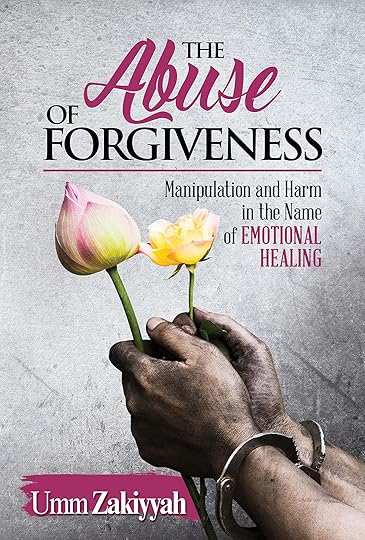
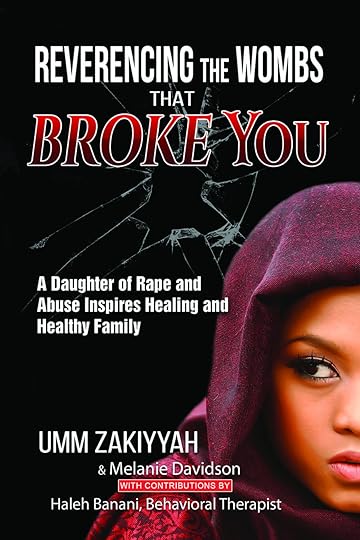
Umm Zakiyyah is the internationally acclaimed author of twenty books, including the If I Should Speak trilogy, Muslim Girl, His Other Wife and the self-help book for Muslim survivors of abuse: Reverencing the Wombs That Broke You. Her latest novel His Other Wife is now a short film.
Read HIS OTHER WIFE novel now: CLICK HERE . Subscribe to Umm Zakiyyah’s YouTube channel , follow her on Instagram or Twitter , and join her Facebook page.
Copyright © 2013, 2014 and latest version 2018 by Al-Walaa Publications. All Rights Reserved.
Original version published via onislam.net
[1] Retrieved April 14, 2013 from: http://articles.chicagotribune.com/2011-10-18/features/ct-tribu-weigel-friend-abuse-20111018_1_friend-abuse-negative-influences
The post Do Friends Need Prenup Agreements? appeared first on Umm Zakiyyah Official Site.
March 2, 2018
False Piety Causes Pain
Oh the script, that religious script,
the one handed to every student of books and classes,
who reads his lines carefully,
then takes the stage,
declaring what is right or wrong in the life of the
unfortunate souls who find themselves the unwitting
audience of their own lives.
—excerpt of PAIN. From the Journal of Umm Zakiyyah
I speak about my life’s deepest pain a lot, but let me tell you why: It is the gateway to our life’s deepest pleasures. Just as the closest you get to the Most High is in placing your head on the dirt of the earth, the closest you get to the deepest pleasures of life is in walking honestly and vulnerably through your pain.
Before I embarked on my healing journey, wherein I became honest about my emotional and spiritual wounding, I was living in the shadows of false piety and thinking it to be true faith. False piety is that sterile, rehearsed existence that so many of us learn in the religious books and classes that we imagine teach us all we need to know of spiritual life.
Don’t get me wrong. I realize the importance of books and classes, so I’m in no way suggesting that true piety is found in casting them off. What I’m saying is that the essence of true spirituality is the lived experience, not the book or class experience. In fact, by their very nature, books and classes can teach you nothing of experience, except the experience of a book or class itself. Yes, you can learn about others’ experiences through books and classes. But you can learn nothing of your own. Why? Because experience is its own teacher.
When we equate book and class learning with true spiritual knowledge, we get false piety. And then, tragically, we act out our spiritual lives as if reading from a script.
The Tragedy of False Piety
In false piety, empathy dies, so we fail to see, hear, and feel the human hearts of those in front of us. Instead, we observe their speech and behavior and respond according to what we’ve memorized from the book and class “script.” This is why it is so easy for us to declare that certain people have no love of Allah or Qur’an in their hearts, why it is so easy for us to speak so cruelly and dismissively about those who choose plural marriage, and why it is so easy for us to condemn divorce and praise the length of a marriage with no care or concern for what that relationship is doing to the human soul.
This is why it is so easy for us to openly criticize or mock a woman’s efforts in wearing hijab, why it is so easy for us to tell someone to give up a coveted life path or worldly enjoyment “for the sake of Allah” if it incites our spiritual doubt, and even why we can then walk away nonchalant, with not the slightest concern or feeling of accountability for how our tongue disrupted the very veins of someone’s personal and emotional life.
False piety wounds friendships, marriages, and even human hearts—sometimes irreparably.
False piety equates emotional impotence with patience, wherein showing no frustration or sadness in response to life’s gut-wrenching trials is the mark of the true believer. False piety equates suppressing your pain, smiling when you want to cry, and never speaking about what hurts you with the highest form of gratefulness. False piety equates the silencing of disagreement with anyone in authority—whether a parent, spiritual teacher, or religious scholar—with having adab and “showing respect.”
Heart Over Image
At the heart of false piety is the need to uphold a spiritual image over the need to live an authentic spiritual life. Thus, the biggest threat to false piety is the honest, sincere human heart.
Though I could not see it at the time, when I sank into the dark waters of spiritual crisis and almost left Islam, I was being unfettered from the doctrine of false piety so that I can begin, for the first time, to strive upon an authentic spiritual life. It was as if I was living the inherent negation that begins our testimony of faith, “Laa ilaaha illa Allah.” In this way, my spiritual crisis was the “Laa ilaaha…” of my shahaadah as a lived experience: I had to give up every definition of piety that I’d falsely equated with faith in Allah before I could come back to Him testifying, “…illa Allah.”
Now I know that vulnerability and honesty are at the heart of true faith, and that they form the very essence of all true love—of God, the self, and others.
So now, I am resting my head on the dirt of the earth and crying out to my Lord about the pain of my heart and soul so that I can draw closer to Him in this life and in the Hereafter, bi’idhnillaah.
Because I now know that a book or class cannot give me spiritual life. They can only point me in the right direction so that I can experience it for myself. Yes, I can recite from a prepared script and put on the face of false piety, walking in obligatory happiness and religiosity in front of people. But if your heart is hurting, your heart is hurting. And ignoring it will only make it hurt worse.
If there is anything my life has taught me, it is this: Pain demands to be addressed, and cries demand to be heard. So if we are denying our pain and muffling our cries—whether in the name of positivity, adab or gratefulness—we are not walking the path of faith, we are walking the path of denial. And denial will always be at odds with a healthy human heart.
Thus, if our books and classes teach us that denial and suppression are the essence of spiritual life and we subsequently embrace this as our expression of faith, pain itself will become our life path. Then our spiritual crisis will become a testimony to ourselves and the world that we have yet to learn the true meaning of faith.
Sadly, there are those who are so afraid of the life path of pain that they run from faith altogether imagining that this will erase from their lives the agony they’re suffering. (I almost chose this “easier” path myself). So they live in spiritual numbness while seeking happiness through worldly pleasures sans God, while never realizing that the “pain as a life path” that they’re running from was merely the gateway to life’s deepest pleasures and true faith.
Umm Zakiyyah is the internationally acclaimed author of twenty books, including the If I Should Speak trilogy, Muslim Girl, His Other Wife and the self-help book for Muslim survivors of abuse: Reverencing the Wombs That Broke You. Her latest novel His Other Wife is now a short film.
Read HIS OTHER WIFE novel now: CLICK HERE . Subscribe to Umm Zakiyyah’s YouTube channel , follow her on Instagram or Twitter , and join her Facebook page.
Copyright © 2018 by Al-Walaa Publications. All Rights Reserved.
The post False Piety Causes Pain appeared first on Umm Zakiyyah Official Site.