Umm Zakiyyah's Blog, page 10
February 15, 2018
Stop Recruiting Members and Start Saving Souls
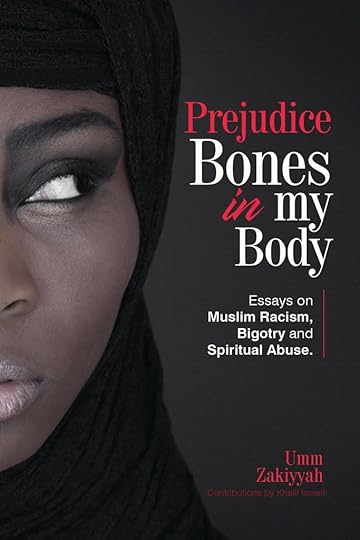
The following is an excerpt from Prejudice Bones in My Body: Essays on Muslim Racism, Bigotry and Spiritual Abuse by Umm Zakiyyah:
When I feared I could no longer be Muslim, I just couldn’t take it anymore, all the pressure from every side. It was unrelenting, and it eventually became a part of me. I felt suffocated in my own existence. I tried to be safe, staying away from every “doubtful” matter possible. But it was never enough. I was drowning in a religious environment rooted in an ideology that I now think of as the “fiqh of what if?”
On a personal level, this “fiqh of what if?” is the endless doubting and questioning oneself while fearing (or assuming) the worst about nearly everything you do, particularly when you’re committing no apparent sin. What if it is wrong to visit my non-Muslim family during the holidays? What if it is wrong to exercise to music? What if it is wrong to attend a “mixed” university? What if Allah is displeased with me for wanting to work outside the home? What if it is obligatory to cover your face? What if I am a bad Muslim for posting a picture online?
So as to not be misunderstood, this doubting and questioning oneself is completely different from being sincerely convinced one way or the other regarding these controversial issues. In fact, it is the very opposite of being sincerely convinced. It’s beating yourself up because you’re not. It’s like being overwhelmed with waswas (the whispers of Shaytaan) without feeling even the inclination to seek refuge in Allah, precisely because you believe the incessant self-doubt is itself a reflection of your mindfulness of Allah. However, this “piety” is making you stressed because deep inside, you’re not convinced that this level of strictness is required (or even recommended) by Allah.
On an intellectual (i.e. religious justification) level, this “fiqh of what if?” is reflected in three beliefs regarding your practice of Islam:
You have no right to decisions related to your own life, mind, and soul. This right belongs solely to those in authority over you, or those with more knowledge than you.
Any issue you are ignorant about must be automatically cast into the category of “doubtful matters” in Islam, and thus must be left alone “for the sake of Allah.”
Following the strictest scholarly point of view is always the safest point of view (i.e. religious strictness is synonymous with “staying away from doubtful matters.”).
I explain more about my personal experience with this concept in the blog “Walking Guilty: The Weight of Doubt and Sin.”
Religious Sincerity vs. “Following the Correct View”
The truth is, from an Islamic perspective, outside the foundational and clear matters about which our Creator permitted no differing views, there really is no such thing as clear “right” and “wrong” that can be applied to every believer in every circumstance. Even a rudimentary study of the Qur’an and prophetic teachings reveals that Islam inherently allows for personal circumstances, varying needs, and yes, diverse cultures and customs.
It is well-known amongst those who have studied even basic principles of fiqh that outside matters in which religious disagreement is not permitted, religious matters are not as black-and-white as many Muslims will have you believe. This is so much so that even scholars who strongly favor one point of view sometimes advocate for the exact opposite view depending upon the circumstances of the person actually living it. Therefore, debates regarding which point of view is correct, especially amongst laypeople, really have little place in environments rooted in encouraging believers to strive their level best to please Allah.
Naturally, a sincere believer would never trivialize the necessity of following what he or she believes is the correct point of view on any religious matter. Each of us has an individual responsibility in front of Allah to strive our level best to do what is most correct and pleasing to Him, even when there are varying permissible points of view. After all, we all have to stand before Him on the Day of Judgment and answer for our time on earth, and defending our actions by pointing to a “permissible” point of view is not going to save us in front of the One who knows the innermost secrets of our hearts.
Nevertheless, an essential part of authentic religious knowledge is not only respecting Allah’s clear limits, but knowing and respecting your own. In other words, the believer who knows the difference between Allah’s judgment and human judgment does not assume full knowledge of what another believer should and should not do—no matter how convinced we are that our point of view is correct.
In other words, in our dealings with other believers, our limit is pointing them to Allah’s clear limits. Outside of that, our greatest responsibility lies in encouraging religious sincerity, not in insisting that others follow every point of view that we do.
Yes, human disagreement is natural, healthy, and even necessary. However, there’s a distinct difference between sharing our point of view because we sincerely believe it will benefit someone, and implying that the person is a bad Muslim or bound for Hell if they don’t think or behave as we insist they should.
Censorship of the Soul
In the community I was part of as a youth, spiritual salvation was not a personal experience. It was a community experience, and it wasn’t an optional one. Either you showed complete allegiance to the group’s leader and community’s religious ideology, or you were punished severely. Even before I was mature enough to understand what any of this meant personally or spiritually, I was told who my religious leader was, what I was to think about myself in relation to him, and what I was to think about Muslims who didn’t follow him.
Unfortunately for me, I didn’t fully process the group’s rules until I had broken them. As a recompense for my “affront” (as one community member called it), I was publicly humiliated, warned against, slandered and ostracized before I even comprehended exactly what I’d done wrong. At the time, my crimes were wearing a full khimaar (displaying only my face and hands), not listening to music, and no longer celebrating non-Muslim holidays.
Apparently, these were all signs of religious extremism, so they had to “save my soul.” Thus, like the social terrorists who inflict hate crimes on Muslims under the guise of rooting out terrorism in the world, my fellow brothers and sisters in Islam subjected me to verbal, spiritual, and emotional abuse with the “honorable” goal of rooting out misguidance in me.
And due to my believing that I had no right to my own life, mind, and soul (the first and most fundamental religious belief of the “fiqh of what if?” ideology), I continuously subjected myself to their torment because I genuinely believed that Allah had given them authority over me. It took some time before I realized that they, like many tyrants in history, were merely trying to censor my soul.
The “Crime” of Obeying Allah
You’d think something as counterintuitive (and outrageous) as Muslims punishing a believer for obeying Allah would be an anomaly in Muslim communities. However, my experience in various religious communities (in America and abroad) suggests the opposite: You’re hard-pressed to find a community that does not seek to micromanage a believer’s relationship with Allah. In most Muslim communities, the Qur’anic teaching “Let there be no compulsion in religion” applies to only non-Muslims. It is only those who disbelieve in Islam who have the right to diverging religious beliefs, while still enjoying Muslims’ unwavering kindness, tolerance, and support (socially and financially)—even in projects and ideologies that are clearly sinful.
It is only when a person shows evidence of emaan (sincere belief in Islam) that we feel a religious obligation to withhold kindness, tolerance and support (socially and financially) if they hold as much as a different point of view on permissible disagreement.
Remarkably, even the most religious amongst us are able to effortlessly enter into mutually beneficial social and business transactions with those who do not even share our belief in Allah, yet we are utterly incapable of befriending or even working with fellow believers who have a different point of view on issues like music and women’s dress.
After going through my own spiritual crisis and realizing how these contradictory ideologies contributed to this personal tragedy, I fear standing before Allah on the Day of Judgment with this blatant hypocrisy on my record. Now, I do things differently. If anyone deserves my agreement to continuously overlook what I disagree with while still finding a way to work together (socially and financially), it is my brothers and sisters in Islam.
Today, I have no attention span for someone telling me I shouldn’t attend a Muslim event or enter into a business project with a believer just because the participants or organizers are not carbon copies of myself. Yes, I still seek Allah’s protection from participating in anything that I genuinely believe will harm my soul (irrespective whether the project is facilitated by Muslims or non-Muslims). However, I no longer refer to the “fiqh of what if?” to make that determination.
Spiritual Salvation vs. Group Membership
Personally, I believe the solution to many of these problems is simple: focus on cultivating religious environments in which Muslims are encouraged to take personal responsibility for saving their souls, instead of religious environments in which they are taught that someone else can do it on their behalf.
After Allah alone, no one can save anyone’s soul except the person himself. In fact, no one is charged with that responsibility except the one who will stand alone in front of Allah and answer for it.
Therefore, outside matters that Allah himself has forbidden diverging interpretations, we must stop viewing diverse points of views and religious practices as affronts and challenges to authority and authentic Islamic practice. And we must stop defining “building a religious community” as recruiting as many members as possible to commit to our personal ideology, leader, or group.
READ THE BOOK: Prejudice Bones in My Body: Essays on Muslim Racism, Bigotry and Spiritual Abuse
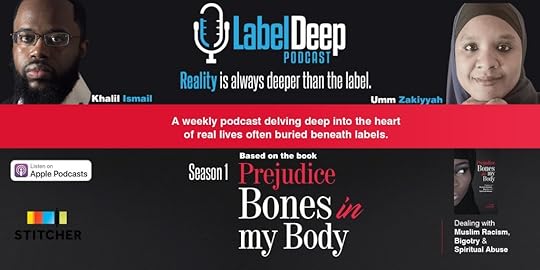
Listen to PODCAST: Label Deep, Season 1 Prejudice Bones in My Body
Umm Zakiyyah is the internationally acclaimed author of twenty books, including the If I Should Speak trilogy, Muslim Girl, His Other Wife and the self-help book for Muslim survivors of abuse: Reverencing the Wombs That Broke You. Her latest novel His Other Wife is now a short film.
Read HIS OTHER WIFE novel now: CLICK HERE . Subscribe to Umm Zakiyyah’s YouTube channel , follow her on Instagram or Twitter , and join her Facebook page.
Copyright © 2018 by Al-Walaa Publications. All Rights Reserved.
The post Stop Recruiting Members and Start Saving Souls appeared first on Umm Zakiyyah Official Site.


February 12, 2018
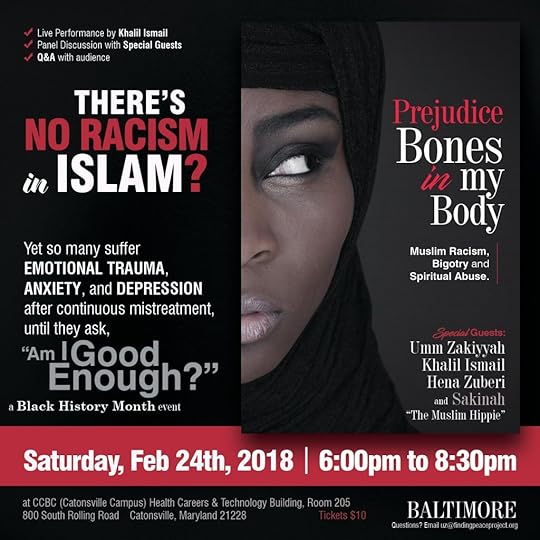
Prejudice Bones in My Body

alone.
it hurts.
I cannot lie
to be abandoned
by those who look like me
because I see the other as brethren too
and then
to be abandoned
by the other
my brethren
in faith.
because I look like me
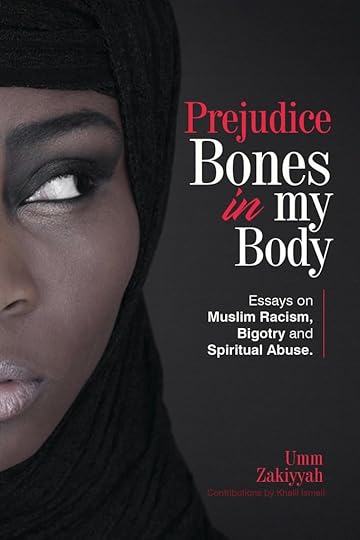
The following is an excerpt from the book Prejudice Bones in My Body: Essays on Muslim Racism, Bigotry and Spiritual Abuse by Umm Zakiyyah:
“Good,” she said so matter-of-factly that I was momentarily confused. Blinking, I held the phone’s receiver as I processed this simple response that held little connection to what I had just said.
It was months after the 9-11 attacks, and I had just shared with my friend my distress over Muslims being unjustly detained and imprisoned on charges of “terrorism,” an injustice that affected mostly immigrant Muslims.
“Now they’ll know how it feels.”
I felt weak as the cruelty of her words took meaning. Like myself, my friend had repeatedly encountered the sober reality that dulled any lingering dreams of the “universality of Islam.” Muslims worldwide were “brothers and sisters” in Islam, we had been taught, joined by a bond that transcended color, race, and ethnicity. And we’d believed it — until we met those “brothers and sisters.”
But my friend’s hurt was deeper than mine. While I had grown up Muslim because my parents had accepted Islam the year I was born, my friend had accepted Islam after the tumultuous confusion of disbelief. Part of her inspiration for embracing the religion was its universality — which was an antidote to the colorism and racism that had plagued her life since childhood. She had never imagined that while the “universality of Islam” was an authentic concept, the universality of Islamic brotherhood was not.
In that brief moment — as I held the phone, shocked at what she’d just said — I felt a host of emotions. Disgust, anger, and helplessness…
For years, my friend had been a mentor and confidante to me. I had admired her self-confidence, her remarkable intelligence, and her persevering strength. She would offer me a shoulder when I was despondent, and a patient, attentive ear when I was distressed. And always it was her optimism, even in the face of adversity, that I cherished most. But we had lost friends along the way, she and I. Some to disbelief, some to betrayal, and some to death…
Good. Now they’ll know how it feels.
At the reminder of her words, I understood the source of my pain.
Now, I had lost her too.
If I Were Rich…
“If I were rich,” I proclaimed earnestly one day while chatting with my sister, “I would give soooo much money to the poor.”
My sister nodded heartily in agreement. As we were in our early teens at the time, we were having a difficult time understanding all the “rich snobbery” in the world. There was plenty of wealth, but somehow there were still starving children, homeless people, and so many who did not have even the small conveniences of life.
And it hurt most that Muslims played a part in this injustice. In our very own hometown, my sister and I regularly witnessed the way affluent Muslims treated others — and how we ourselves were treated time after time. People behaved as if our not being wealthy was something that affected not only our material lifestyle but our personal character or likeability as well. And it didn’t escape us that this mistreatment was most pronounced by wealthy Muslims who did not share our brown skin and “Black American” status.
“People don’t change overnight,” someone interjected in response. My sister and I stopped talking and looked up to find our father walking toward us. We hadn’t realized he was in earshot.
“If you don’t share what you have right now,” he said, “you won’t share it when you have more.” He explained, “If you’re not willing to let your sister wear your new shirt” — the example touched on an argument my sister and I had just had earlier that day (I was upset with her for trying to wear my new clothes before I had a chance to) — “then don’t think anything’s going to change when you have a lot of money.” He paused. “The only difference will be that you’ll have a lot more that you’re not willing to share.”
It has been more than twenty years since my father spoke these words, and still, they stay with me. His simple insight incited in me a self-reflection that I had never engaged in. Before then, I hadn’t thought of myself as greedy or selfish. I hadn’t imagined that those whose stinginess I resented so thoroughly were merely a mirror image of myself at the time.
Yes, it’s true, I realized that day in silent self-reproach. I was not generous with my new clothes. In fact, I was not particularly generous at all. I’d argue with my sister about “my side” of the room. I’d taunt my little brothers and sisters “just for fun.” I’d even neatly tuck away some prized treat for the sole purpose of making sure I’d have it later — when no one else did. If I finished my chores early — oh, you better believe it! — I’d jump into my cozy bed and enjoy the fact that my sister couldn’t do the same!
If I were rich, I would give soooo much money to the poor.
My heartfelt proclamation returned to me as I settled under my covers for the night, and for some reason they didn’t seem so heartfelt anymore…
“It’s not their fault that they’re rich,” someone had said once. “Just like you can’t blame someone for being poor, you can’t blame someone for being rich.”
And these words gave me pause. So often I’d reflected pensively on the injustices inflicted on those who were underprivileged or poor (and, certainly, the injustices toward them were plenty), but I didn’t think of the injustices I may have inflicted upon those of privilege and wealth — even if my injustice would never reach them in any tangible fashion.
But the truth is, I realized sadly one day, we are all guilty of injustice. Whether consciously or unconsciously, we judge each other harshly, paint sweeping generalizations of “the other”, and keep our distance from those we view as “too different.” Yet, amazingly, we become frustrated and even perplexed by all the injustice in the world…
Self-Proclaimed Prejudice-Free
“I don’t have a prejudiced bone in my body,” I often hear my fellow Muslims say—with the same heartfelt earnestness that I’d proclaimed my generosity so many years ago.
Now, when I hear these words (that I’m sure I myself have uttered on many an occasion), my heart falls in sadness, and I grow pensive. Then we have no hope at all, I reflect.
I just can’t imagine how the Muslim ummah, let alone the world at large, will ever work to end classism and racism — and injustice itself — if we don’t openly and honestly acknowledge the magnitude of the job before us.
Yes, so many of us eagerly proclaim, “Our job is never done.” But we somehow imagine this ever-unfinished job is “out there” somewhere — and not inside our own hearts and souls. Yet, in truth, if there is any fight against injustice that is never done, it doesn’t have roots in an elusive “corrupt world.” Corruption does not sprout from the dirt of the earth; it sprouts from the dirt of our own souls.
And like so many evils around us (and within us), those of bigotry are continued most destructively by those who imagine they have within them no bigotry at all.
Allāh says what has been translated to mean,
“And when it is said to them, ‘Make not mischief on the earth,’ they say, ‘We are only peacemakers.’ Verily! They are the ones who make mischief, but they perceive not.”—Al-Baqarah (2:12)
How then can a believer imagine himself free of such evil when Allāh himself has described some evil as beyond the guilty one’s perception? Is it that Allāh himself has declared us pure from corruption?
Or do we ascribe such purity to ourselves?
“So ascribe not purity to yourselves. He [Allāh] knows best who fears Allāh and keeps his duty to Him.”—Al-Najm (53:32)
And the only way we can truly keep our duty to Allāh is by constantly engaging in self-reflection, never feeling safe from any sin. For surely, our righteous predecessors were known for their weeping in self-reproach and ever guarding themselves against evil — and no evil did they proclaim safety from.
Even Prophet Ibrahim (Abraham) prayed earnestly to Allāh to protect him and his children from the grave sin of shirk — joining partners with Allāh:
“…And keep me and my sons away from worshipping idols!”—Ibrahim (14:35)
Who then are we in comparison to Allāh’s Khalil — His devoted friend? Who then are we to imagine freedom from a sin more easily committed than the shirk about which Ibrahim prayed?
It is true that I detest classism, racism, colorism, and any other form of bigotry; for I myself have suffered many a time from these injustices, so I cannot imagine condoning them within myself. The Prophet, sallallaahu’alayhi wa sallam, himself advised us to stay away from the evils of racism and nationalism when he said, “Leave it, it is rotten” (Bukhāri and Muslim).
But my despising the putridity of these sins does not guarantee my safety from them — just as my abhorring entering the Hellfire does not grant me salvation from its torment.
So, yes, I detest the idea of having even a single prejudiced bone in my body, but that does not mean I am free from guilt. None of us are — even those who are frequent victims of prejudice.
***
Good. Now they’ll know how it feels.
Even now I shudder at my friend’s words. Indeed, it is terrifying to witness a victim of prejudice finding comfort in the very injustice that caused her pain.
But despite my shock and disappointment at these cruel words, I can’t help wondering why they truly affected me so…
Today, I know it is because somehow — amidst the prejudiced bones in my own body — I can understand what she meant. No, I certainly do not share her sentiments. But I do share her heart — her human heart.
And a human heart is never free from injustice.
Yet our greatest calamity is in feeling that ours is.

READ MORE NOW: Prejudice Bones in My Body: Essays on Muslim Racism, Bigotry and Spiritual Abuse
Umm Zakiyyah is the internationally acclaimed author of twenty books, including the If I Should Speak trilogy, Muslim Girl, His Other Wife and the self-help book for Muslim survivors of abuse: Reverencing the Wombs That Broke You. Her latest novel His Other Wife is now a short film.
Read HIS OTHER WIFE novel now: CLICK HERE . Subscribe to Umm Zakiyyah’s YouTube channel , follow her on Instagram or Twitter , and join her Facebook page.
Copyright © 2018 by Al-Walaa Publications. All Rights Reserved.
Original essay first published via muslimmatters.org
The post Prejudice Bones in My Body appeared first on Umm Zakiyyah Official Site.
February 8, 2018
I Didn’t Become Muslim To Be Abused, She Said
boundaries.
you give them an inch,
and they take your soul.
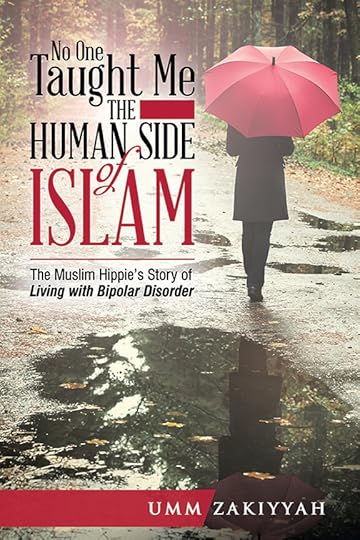
There were many moments that my heart hurt as I sat listening to Sakinah “The Muslim Hippie” recount the painful experiences that she shared with me for the book No One Taught Me the Human Side of Islam: The Muslim Hippie’s Story of Living with Bipolar Disorder. I often fought back tears and went home with a heart so heavy that I had to lie in bed until the strength came back to my limbs.
In one particularly emotional session, she said to me, “I didn’t become Muslim to be abused.”
These words were so profound that it took me a moment to regain my train of thought. The words hit a part of my heart that I didn’t even know was there. It was as if the words were spoken from my own wounded spirit.
The following is an excerpt from the book spoken in the voice of Sakinah, “The Muslim Hippie”:
“I’m sorry, Sakinah,” Halimah said again after explaining the reason for her apology. “I shouldn’t have accused you of being paranoid.”
Halimah explained how she had gone to the Muslim school for an event and when she walked inside, a well-known member of the community was talking about me to another woman, saying terrible things. Even though Halimah and others were present, they made no effort to conceal my identity or hide my faults. Halimah ultimately spoke up and defended me, saying, “You know, Sakinah has an excuse.” At that, one of the women was overcome with so much shame that she sat down and stared off into space as if the possibility had never occurred to her.
Halimah didn’t tell me what was said exactly, and she didn’t reveal to me who the women were. She had merely shared the story so that she could seek my forgiveness for accusing me of being out of touch with reality when I said people were backbiting me. Halimah herself was so disturbed by the incident that I started comforting her. From her reaction, I knew that whoever was involved were not just average community members. These were people whom she, as well as other community members, had held in high regard.
Halimah was having a difficult time reconciling their good reputation and high standing with the public discussing of my faults. It was one thing to backbite someone privately while venting to a friend (which in itself was sinful), but it was another thing entirely to use a place designated for the remembrance of Allah to publicly malign a believer. They already knew I was diagnosed with bipolar disorder, so what was the point?
Days later I was still infuriated by what had happened. Not only was I enraged at the audacity of their unapologetic backbiting of me, but I was also enraged at what they had done to my friend. In some ways, I felt worse for Halimah than I did for myself. I was long past my “honeymoon period” of imagining I’d found a spiritual family and a “model Muslim community” after converting to Islam. From everything that had happened when I was accused of using “bipolar” as an excuse to sin, I already knew that I was disposable and devalued by many members of the Muslim community. The hurt I had felt after I realized just how little I meant to them was excruciating, and I didn’t wish that suffering on anyone. So it was difficult to witness that painful realization sinking in through the suffering of my close friend.
Like myself, Halimah had converted to Islam and had no Muslim family, so having a Muslim community to call her own was crucial to her spiritual well-being and emotional comfort. I hated that this fairytale had to be destroyed through her overhearing fellow Muslims talk so horribly about a friend she loved and cared for.
Though I felt some sense of vindication in realizing that I was not being paranoid in imagining that the Muslims were talking about me, this realization only exacerbated my real paranoia. How could I ever know reality from imagination if I was continuously surrounded by people who didn’t care for me and who saw no problem with assassinating my character, both privately and publicly?
I Can’t Blame Them?
I didn’t become Muslim to be abused. This is what my heart said over and over as I fought the rage I felt at the mistreatment I experienced from the Muslim community during my bipolar episodes.
“You can’t blame them,” some friends have said in defense of the Muslims who abandoned me and spoke negatively about me during my illness. “They’re not doctors, so you can’t fault them for not knowing what was going on with you.”
I’ve thought on this point myself many times, but it offers me little solace and relief. I understand ignorance. I really do. I myself was ignorant of my illness for many years. But I honestly don’t believe ignorance is what inspired their mistreatment of me. Ignorance inspires a complete loss at what to do, not a deliberate decision of mistreatment. Ignorance might even incite some innocent carelessness, but it never incites cruelty.
Stigma. That’s what was underlying much of their mistreatment of me. Because I was suffering from behavior that allegedly took away my right to be treated kindly, they felt completely free to talk negatively about me and treat me harshly. It didn’t hurt that I was also an American convert (i.e. not one of them), so that made me doubly stigmatized.
Sakinah knows exactly what she’s doing. This is what I’d hear over and over in my mind as I struggled with manic and depressive episodes. Knowing the non-Muslim social worker’s positive conclusion about me helped tremendously, but unfortunately, it was not enough to silence the self-doubts incited by the Muslim community’s negative assessment of me.
When I stood before a judge who was to determine whether or not I was eligible for disability due to my mental health struggles, I began to explain to her some incidents that had occurred during my bipolar episodes. I started to tell her of some of my errant behavior and the things said about me in the community. I’d imagined that it was only fair that she heard all the perspectives concerning me. At the time, I was unsure whether or not the community had been correct in stating that I knew what I was doing.
However, the judge wanted to hear none of it. She was interested only in my medical records, my hospital stays, and what my doctors had said about me. Though today it seems a rather obvious approach, at the time, I was surprised that the judge wasn’t interested in the circumstantial accounts of those who had delivered their assessment on me for years.
It was at that moment when I was declared legally disabled by the judge that I think I began to really understand the significance of the gifts Allah had given me through Dr. Saleem (my Muslim psychiatrist), my closest friends, and the compassionate social worker who spoke well of me—and even through the book [about mental health in Islam] I’d found on Amazon. This understanding gave me a determination to remove the stigma surrounding mental illness in the Muslim community, and I would use this clarity and inspiration to inform my mental health advocacy work.
READ THE BOOK:
Follow Sakinah, “The Muslim Hippie”
Twitter: @TheMuslimHippie
Instagram: @The.MuslimHippie
Blog: patheos.com/blogs/themuslimhippie
Facebook (JUST LAUNCHED!): @The-Muslim-Hippie
Umm Zakiyyah is the internationally acclaimed author of twenty books, including the If I Should Speak trilogy, Muslim Girl, His Other Wife and the self-help book for Muslim survivors of abuse: Reverencing the Wombs That Broke You. Her latest novel His Other Wife is now a short film.
Read HIS OTHER WIFE novel now: CLICK HERE . Subscribe to Umm Zakiyyah’s YouTube channel , follow her on Instagram or Twitter , and join her Facebook page.
Copyright © 2018 by Al-Walaa Publications. All Rights Reserved.
The post I Didn’t Become Muslim To Be Abused, She Said appeared first on Umm Zakiyyah Official Site.
January 23, 2018
Speak To Me (HOW Story 21)

His Other Wife Short Movie | AVAILABLE ON DEMAND. LIMITED TIME ONLY. from ki creative studios on Vimeo.
It all began with this widely popular short story series:
As we countdown to the WORLDWIDE ONLINE PREMIERE of short MOVIE on January 27 & 28, 2018, we’re relaunching the 22-part series, one story per day:

Story 21: Speak To Me
Deanna dreamt that Jacob was in a lush green field walking toward her, a smile on his face. “Thank you, Deanna,” he was saying. “If it wasn’t for you, I wouldn’t be the man I am today.” She was overcome with tears as she said, “I’m sorry, Jacob. Forgive me for everything.” But he didn’t seem to hear her. He continued to walk toward her, a smile on his face, but with each step, the grassy field expanded and stretched, until he was far from her, out of reach… I don’t want to lose you, her heart cried as she lost sight of him. Then pray, she heard a voice in her head. Pray…
The stiff pillow beneath her cheek was moist from tears when Deanna opened her eyes. She squinted in the darkness, and her chest constricted as her eyes adjusted to reveal that she was not in her comfortable bed at home. The stale stench of the jail cell burned her nostrils, and she became nauseated as she lay in a fetal position. She clenched her teeth as her stomach heaved, and she swallowed to thwart the bile rising to her throat.
“I divorce you.” Anger flared in Deanna’s chest as she recalled Jacob pronouncing the blasphemous words that sealed her fate. If it hadn’t been for him, she wouldn’t be in jail right then. And if it hadn’t been for him, she would never have fought her mother. What had he been thinking enraging her like that? Why had he threatened to annihilate their relationship? Or was the divorce pronouncement his idea of a cruel joke?
Or maybe Aliyah had put him up to it.
The possibility was so enraging that Deanna sat up in bed, eyes narrowed indignantly. The more she thought about it, the more it made sense. It was just like Aliyah to pull a stunt like this. Perhaps Aliyah had even expected Deanna to fight with her mother and end up in jail.
Oh, if only it had been Aliyah and not her mother on the balcony stairs that day. Then Deanna wouldn’t be so racked with guilt about her lying in a coma. It would serve Aliyah right to be rendered practically useless after all of her surreptitious plotting to steal Jacob.
“This is why your life is so messed up. You’re selfish and immature. You have no regard for anyone but yourself. Even God means nothing to you.”
Deanna winced at her mother’s words. For a fleeting moment, she felt a pang of guilt, and she was overcome with shame at her spiteful thoughts. Was it true that even God meant nothing to her?
“Our Lord died for us and gave his blood,” Deanna’s mother had said. “And if you want to go to Heaven, you need to accept his sacrifice.”
Deanna recoiled at the thought of returning to the religion of her parents. Her mother’s words had only been a ruse to guilt Deanna back into joining the church. Ever since Deanna had accepted Islam, her parents had made it their life’s mission to get Deanna to recant her faith. Perhaps Deanna did belong in Hellfire, she considered bitterly. But she would be remiss to fall prey to the trappings of a man and woman who lived only in the peripheral of God’s Word. So how dare they judge Deanna for merely being a reflection of themselves.
But what kind of parents refused to help their daughter take revenge on the husband who had scorned her? What kind of parents would argue about religion, of all things, while their daughter needed their support? Where was the love? Where was the compassion? All Deanna had wanted was her husband to apologize and mend their relationship. But now she was in jail. I want Jacob back! her heart screamed. Aliyah cannot win!
Then pray, a voice said in her head. Pray…
The words from the dream tempered the fury in Deanna’s chest as she recalled Jacob smiling at her. If it wasn’t for you, I wouldn’t be the man I am today. Chin quivering as she was overcome with emotion, Deanna was reminded that Allah could help her get her husband back.
The supplication of the one who has been wronged is answered, even if it comes from a disbeliever. She recalled the words from an Islamic lecture she’d heard years ago, and they gave her peace of mind. She had been wronged, so her du’aa would be answered. Jacob belonged to her, she said to herself, emboldened by possessive pride. And no one could take what was rightly hers.
***
Thursday morning after Aliyah had finished the final session with the interns, she walked down the hall leading to her office. It had been two days since her uncle had suggested that she pray and get advice about marrying Jacob. Aliyah’s first thought had been to talk to Salima, but Aliyah had withheld, reminded that Salima had already offered her perspective. “If you’re trying to decide on whether or not to marry him, then there are only three things to consider,” Salima had said. “Allah, the man, and you.”
But that was easier said than done, Aliyah thought to herself.
“I barely even speak to Professor Thomas.”
Hearing someone mention her name distracted Aliyah from her thoughts, and she slowed her steps, curiosity piqued, wondering where the voice was coming from.
“Then be sure to keep it that way.”
Aliyah recognized the second voice just as she saw that Jacob’s office door was open.
“The last day of the internship is tomorrow,” the person said, impatient annoyance in his voice, “so you have nothing to worry about.”
“Dr. Stanley,” Aliyah heard Jacob say, his voice rising in upset, “you know full well this has nothing to do with One Plus One.”
“That’s the only project that I work on with Professor Thomas,” Dr. Stanley said.
“Then let me put it to you another way,” Jacob said. “If I so much as hear that you’ve looked at her the wrong way, or that you’ve said anything to make her uncomfortable, you’ll regret it.”
“Is that a threat?” Dr. Stanley said, disbelieving humor in his tone.
“I don’t issue threats,” Jacob said, his voice even and composed.
“You know what?” Dr. Stanley said in apparent aggravation. “I don’t have time for this. I have work to do.”
“Good,” Aliyah heard Jacob say just as Dr. Stanley stormed into the hall, grunting. Dr. Stanley halted his steps, a shocked expression on his face when he saw Aliyah. Aliyah’s eyes widened as they met each other’s gaze. Her heart raced as she realized that Dr. Stanley would think she was eavesdropping.
After a few seconds, Dr. Stanley huffed, shook his head, and walked past her, his face contorted in disapproval. Fearing Jacob would come out of his office soon, Aliyah hurried to her office and fumbled with the keys until she unlocked the door and pushed it open.
“Professor Thomas?”
Aliyah turned and saw Jacob standing behind her, a confused expression on his face.
“Were you outside my office the whole time?” There was a tinge of disappointment in his voice.
Aliyah opened her mouth to speak but had no idea what to say for how mortified she felt right then.
“Do you have a class right now?” Jacob asked, disappointment still in his voice.
“No…” Aliyah said.
“Then meet me in the first floor conference room in five minutes,” Jacob said, turning and walking away.
After Jacob disappeared behind the exit door, Aliyah exhaled in a single breath and bowed her head in embarrassment. She hoped she hadn’t angered Jacob. Sighing, Aliyah closed her office door and locked it. She started to walk toward the staircase then decided against it. She didn’t want to chance running into Jacob. As she made her way toward the elevators, she mentally prepared herself for an interrogation. Having a last minute meeting with her department head couldn’t be good.
In the elevator, Aliyah’s thoughts shifted to the conversation she’d had with her uncle about marrying Jacob. She had taken Benjamin’s advice and reflected on the underlying reasons for her objections. It was true that, as an American, she had an inherent cultural bias against marrying Jacob. Intuitively, Aliyah understood that this prejudice wasn’t rooted in her religion, but she still found it difficult to extricate herself from it.
It was one thing to know that something was wrong, but it was another thing entirely to do what was right. It was similar to the dilemma she’d faced when she was Christian and had learned about Islam for the first time. But this time, it wasn’t as simple as renouncing false religious doctrine and affirming what she knew God required of her. She wasn’t choosing between worshipping a prophet of God and worshipping God Himself. She was choosing between saying yes or no to marriage. And she didn’t have to marry Jacob.
But she wanted to.
And she hated herself for it.
The elevator doors opened, and Aliyah stepped onto the first floor. As she rounded the corner, she smiled and greeted the students and colleagues passing in the hall. Through the soundproof glass that ran the length of the conference room, Aliyah saw Jacob standing with his arms folded, a troubled expression on his face as he looked toward the whiteboard, eyes distant.
MashaAllah, Aliyah muttered instinctively, averting her gaze. It was the most irrational thing to notice right then, but Jacob really did look handsome in the three-piece business suit and tie, though his suit jacket was hanging on the back of the chair behind him. Her heart ached for how much she would regret not marrying him.
Jacob turned at the sound of the conference door opening, and Aliyah gave him a tightlipped smile before finding a seat a comfortable distance from him. The door slowly closed and sealed shut, and Aliyah felt trapped and exposed at once. Ironically, reflecting on her marriage dilemma had highlighted not only the depth of her American cultural prejudices, but also the depth of her feelings for Jacob.
For years, Aliyah had felt at ease in Jacob’s presence and found him easy to talk to, even in passing. But it was only in the last couple of days that she realized that this had never been the case with other men, even ones she’d dated or befriended before becoming Muslim. With other men, there had always been a grating discomfort, an invisible barrier that separated her from them. So Aliyah had made peace with forever being “socially awkward.” It was simply her lot in life, she had concluded, that she would be unable to express herself effectively or be properly understood. Her friends misunderstood her, her classmates misunderstood her, and even her own family misunderstood her. No matter how hard she tried, she always managed to confuse or offend someone.
“I didn’t intend for you to hear that,” Jacob said apologetically as Aliyah sat down. He was still standing in front of the room, but he was facing Aliyah, his gaze distant as he looked at something beyond her. “I had planned to be gone by the time the morning session ended. I apologize for that.”
Aliyah exhaled in relief as she realized that Jacob wasn’t upset with her. “I’m sorry that I overheard. I didn’t mean to h—”
“It’s okay,” Jacob said, waving his hand dismissively. “There’s nothing we can do about it now.” He coughed laughter. “Of course, now Dr. Stanley will think I planned it like that. I told him you didn’t even know I was coming.”
Aliyah chuckled. “Sorry about that,” she said good-naturedly.
Jacob laughed and shook his head in response. “Don’t worry about it,” he said. “I should’ve closed the door or met somewhere else.”
Assuming the best, Aliyah thought to herself, ticking off something else she’d come to like about Jacob. Whatever blunder she or anyone else made, he tried to put the best face on it. But it wasn’t like that with other Muslims she’d met. For them, if you didn’t speak a certain way, dress a certain way, or view the popular personality in a certain way, you were whispered about, made fun of, and cast out of social graces. Till today, it remained a confusing and frustrating experience for Aliyah. But she’d never felt that confusion and frustration around Jacob.
Even before Aliyah started working at the college (when she’d interacted with Jacob when visiting Deanna or attending one of their marriage workshops), she felt a sense of calm and safety in his presence. He was always unassuming and nonjudgmental. When someone spoke, he listened humbly and attentively. It was as if he actually valued what they were saying and wanted to understand their point of view. But with most others, their listening was merely obligatory and intermittent. And if a statement could be interpreted negatively, it would be interpreted negatively.
“Why would you say something like that?” Deanna often scolded Aliyah. “You have no people skills.” But do people have people skills? Aliyah often wondered in aggravation. If others truly had the people skills they prided themselves in, why was it so hard for them to understand Aliyah, a person?
Learn how to COMMUNICATE, Juwayriah had posted on Facebook some time ago. If you’re a grown a$$ man or woman and you STILL don’t know how to speak properly, then SHUT UP.
“Could this cost us our jobs?” Aliyah asked Jacob, concern in her voice.
Jacob drew his eyebrows together and shook his head. “No, insha’Allah,” he said. “If there’s anyone whose job is at stake, it’s Dr. Stanley.”
“He won’t tell Dr. Warren we ambushed him or anything?” Aliyah hoped her question conveyed the lighthearted humor she intended.
“Allahu’alam,” Jacob said, acknowledging that God knew best. “But the most you have to worry about is an uncomfortable professional relationship.”
“So he’s not trying to take your position anymore or get me fired?” Aliyah said.
“I don’t know about that…” Jacob said doubtfully. “I’m just saying that him seeing you outside my office won’t affect much one way or the other. But the important thing is that he’s going to leave you alone from now on, insha’Allah,” Jacob said. “I assume he hasn’t been a nuisance or anything?”
Aliyah shook her head. “No, alhamdulillah.”
“Good,” Jacob said, smiling to himself. “Then he got the memo.”
Aliyah drew her eyebrows together. “The memo?”
Jacob shook his head, the shadow of a smile still on his face. “Nothing.”
“But should I be worried about anything?” Aliyah said hesitantly.
“Here?” Jacob said rhetorically, humor in his tone. “Always. But after my meeting this morning, you shouldn’t have to worry about Dr. Stanley bothering you directly.”
There was an awkward pause as Aliyah debated whether or not to speak her thoughts aloud. “When will you be coming back?” she asked finally.
Jacob lifted a shoulder in a shrug. “I took off indefinitely,” he said. “But the way things are looking, I could be back as early as next month.”
“So everything is settled with Deanna?”
“No,” he said, frowning. “But it looks like they’ll keep pushing the trial date, so there’s no reason to stay on leave.”
“When is the trial supposed to be?” Aliyah said.
“For now, next May.”
“Next May?” Aliyah repeated in surprise. “Why so late?”
“Well, apparently, in cases like these,” Jacob said, “having a trial set for ten months later is the norm. And that’s best-case scenario, I’m told.”
“Best-case scenario?” Aliyah said, her face contorted. “And Deanna is just supposed to sit in jail until the court date?”
“That’s what it looks like,” Jacob said, a shadow of sadness in his eyes.
“What happened to innocent till proven guilty?”
“Did it ever exist?” Jacob said, lighthearted sarcasm in his tone.
There was thoughtful silence.
“So what will you do?” Aliyah asked, genuine concern in her voice.
Jacob shrugged. “Pray. Keep busy. Focus on Younus and Thawab.”
At the mention of the boys, Aliyah was overwhelmed with sadness. There was so much she wanted to ask but was unsure if she had a right to. “How are they doing?” she said quietly, picking up a pencil that was lying on the conference table. She toyed with the pencil before adding, “I mean, with everything going on?”
“Alhamdulillah,” Jacob said honestly. “They’re good boys, mashaAllah, so they’re taking it well.”
Aliyah glanced up at Jacob hesitantly. “Did you tell Deanna?”
Jacob furrowed his brows. “About what?”
Aliyah averted her gaze and tapped the eraser of the pencil on the table absentmindedly. “About what you asked my uncle.”
She heard Jacob sigh, and he was silent for some time. “I want to,” he said sincerely. “But she’s not well, and truthfully, I don’t know if she will be any time soon.”
Aliyah nodded, only slightly surprised to hear about Deanna’s condition. Over the years, there had been several moments when she’d sensed that something wasn’t quite right about Deanna. But Aliyah had brushed her suspicions aside, feeling guilty for thinking negatively about her friend. Aliyah didn’t know much about mental health issues, so she’d always felt that it wasn’t her place to pass judgment.
“Will she be getting help?” Aliyah asked.
“I’m working on it,” Jacob said. “But given the circumstances, it’s not easy. Involving psychiatrists at this point will complicate her defense,” he said. “But not involving them will complicate her mental illness.”
“So it’s confirmed?”
“Is what confirmed?”
“Her mental illness.”
He shook his head, a sad expression on his face. “She’s still undiagnosed at this point.”
Aliyah nodded, empathizing with the stress that Jacob must be going through.
“But I did talk to Younus and Thawab,” Jacob said. “Younus more than Thawab, of course.”
“About Deanna?”
“About everything.”
“Everything?” Aliyah couldn’t keep the surprise out of her voice.
“Yes.”
Aliyah didn’t know what to say.
“I didn’t mention you by name,” Jacob clarified, “but I talked about the different possibilities for our future.”
“You don’t think it’s too soon?” Aliyah said, worry in her voice as she looked at him. “I mean, with everything that happened with their mother?”
Jacob’s gaze grew distant, and he shook his head. “No,” he said thoughtfully. “I know this isn’t anyone’s idea of a perfect family. But this is what Allah has given us, and I’ve made my peace with it.”
“But won’t it be hard for Younus and Thawab to adjust?”
“I imagine so,” Jacob said. “But this is just one of many tests they’ll face in life. I’m not doing them any favors by pretending that life stops when trials happen.”
Aliyah’s thoughts grew distant as she doodled on the table then erased the penciling.
“But no one loves my sons more than I do,” Jacob said, “so I’ll be there for them every step of the way insha’Allah.”
“But what if they don’t like me?”
“Like you?” he said, surprise in his tone. “You’re practically family.”
Aliyah recalled the awkward looks that Younus had given her the last couple of times she had seen him. “Younus doesn’t speak to me anymore.” Aliyah felt stupid for sounding like a little kid, but she felt it was important for Jacob to know.
“What makes you say that?” Jacob said, concern in his voice.
“He used to be excited to see me,” she said. “But when I saw him at the basketball court, he was giving me strange looks.”
Jacob nodded as if understanding. “He saw some YouTube clips from Will’s Truth Hour when they were talking about the ‘crazy Muslim woman’ and ‘hot Muslim mistress’ rumors.”
Aliyah felt sick all of a sudden.
“So he had a lot of questions,” Jacob said.
“Did you answer them?” Aliyah said, barely finding her voice.
“Yes,” Jacob said. “Younus and I had a long talk, a few actually.”
Aliyah nodded, unsure what to say.
“But I don’t worry too much about Younus,” Jacob said. “Insha’Allah, he’ll be okay.”
“How can you be so sure?” she said doubtfully. “That’s a lot to digest.”
“How can we be sure about anything?” he asked rhetorically. “But I’m prayerful, and that’s what keeps me from worrying too much.”
Aliyah felt ashamed of herself momentarily. She wished she had that level of faith. “But what if we’re wrong?” she said weakly. “What if we’re about to ruin their lives?”
Jacob drew his brows together, vague amusement on his face. “Ruin their lives?” he said, a question in his eyes as he looked at Aliyah.
“This might traumatize them,” Aliyah said weakly. “One day I’m Aunty Aliyah and the next I’m their new mother.”
“Deanna will always be their mother,” Jacob said. “So I would never tell them you’re replacing her.”
“But won’t it be confusing?”
“In the beginning, yes,” he said thoughtfully. “But they’ll adjust insha’Allah.”
“I don’t think it’s that simple,” Aliyah said, casting her eyes to the side.
“Nothing is that simple,” Jacob said, “even if everything turned out the way the world says it should.”
Aliyah’s thoughts grew distant, and she began doodling on the conference table again.
“There’s no such thing as the perfect family, Aliyah,” Jacob said. “In this world, the most we can hope for is living a life that’s pleasing to Allah.”
“And how do you know what that is?” Aliyah asked.
“We don’t,” Jacob said. “That’s what self-reflection, naseehah, and Istikhaarah are for.”
Aliyah thought of how, still, after reflecting on what was best, getting advice from her uncle, and praying about everything, she remained indecisive.
“But I’m not naïve,” Jacob said. “I know we have a long road ahead of us. But as a father, what’s most important to me is that my sons understand their higher purpose in life. I don’t want to trivialize their struggles,” he said. “But I don’t want to exaggerate them either.”
“What if the community doesn’t accept us?” Aliyah felt self-conscious for worrying about what people think, but she couldn’t help voicing her thoughts aloud. “You saw what they did when they thought you wanted a second wife.”
“We either be patient,” he said, “or find a new community.”
“You’re willing to move?” Aliyah said, her voice rising in pleasant surprise.
“It’s something I’ve been thinking about,” he said honestly. “For the sake of my sons more than anything. But I’m still praying about it because there are a lot of good people here, mashaAllah.”
“But do you think it’ll be better anywhere else?” Aliyah said doubtfully. “From what I hear, Muslims are pretty judgmental no matter where you go.”
“People are judgmental no matter where you go,” Jacob said. “But there’s definitely something to say for a new start. People are most accepting when they aren’t given the opportunity to have an opinion.”
“What do you mean?”
“Do you really think we’d be the first blended family in this community?” Jacob asked. “It’s just that others came to the community already remarried,” he said. “Or no one knew anything about their former wives or husbands. So they were accepted for who they are, no questions asked.”
Aliyah nodded reflectively. “I never thought about it like that.”
“When people know anything about you,” Jacob said, “they feel they have a say in what you should do with your life. It’s just human nature.”
Aliyah rolled her eyes. “I don’t think so. It’s just minding other people’s business.”
“I agree,” Jacob said. “But that’s why Allah talks so much about avoiding suspicion, assuming the best, and guarding our tongues. Humans have a natural tendency to get involved in things that have nothing to do with them. I’m not saying it’s right,” he said. “But it is natural.”
Aliyah grunted. “Everyone is an expert in everyone’s life,” she said in lighthearted sarcasm. “Except their own.”
Jacob chuckled. “That’s the unfortunate truth,” he said. “But there’s not much we can do about it. All we can do is focus on our own lives and souls. People are people, and I don’t think they’ll be changing any time soon.”
“But it’s wrong,” Aliyah said, a tinge of aggravation in her voice. “We’re not just people. We’re Muslim.”
“And Muslims are people, Aliyah,” Jacob said. “I’m not saying it’s fair to have to move my whole family to another city just to live in peace. But this is the world we live in. If your life choices make people uncomfortable, they feel justified in mistreating you,” he said. “Even if you’ve done nothing wrong.” He shrugged. “It’s sad. But it’s really more their problem than yours.”
“It doesn’t feel like that,” Aliyah grumbled.
“Allah is the best teacher,” Jacob said. “Remember that.”
Aliyah was silent as she considered what Jacob had said.
“So don’t worry too much about people,” he said. “They have their lesson coming.” There was a thoughtful pause before he added, “As we all do when we focus on things that are none of our business.”
“Astaghfirullah,” Aliyah muttered reflectively, invoking God’s forgiveness.
“But if it weren’t for my sons,” Jacob said, “I wouldn’t even consider moving. Living your life based on people’s definition of right and wrong is exhausting,” he said. “Allah is my Lord, and that’s who I’m focused on, bi’idhnillah.”
Aliyah sighed. “I wish I had your resolve.”
Jacob nodded reflectively. “It took me a long time to get here,” he said. “But it’s natural to worry about what people think. I don’t think we can help it.” He paused thoughtfully. “But I suffered so much from trying to do what everybody thought I should, I just don’t have the capacity anymore.”
Aliyah rubbed the eraser of the pencil on the table, her thoughts distant.
“Now I see these tests as an opportunity for my family to draw closer to Allah,” Jacob said. “So I don’t put too much stock in the superficial ideals of the world. I’m going on with my life, with or without people’s approval.”
***
“Are you sure you want to do this?” Sayed asked, an uncertain expression on his face as he looked at his wife. He was dressed for work and holding up his mobile phone as he asked the question, and Reem was in front of their walk-in closet, nervously sliding clothes to the left and right as she looked for something comfortable to wear under her abaya.
“No,” Reem said without turning around. “But you already called in sick at work, so we should go ahead and do it.”
“Reem, I’m more than happy to just spend the day with you. With Hana and Muhammad at your mother’s house, we can do whatever you want.”
“I need to heal,” Reem said, still looking toward the closet.
Sayed creased his forehead. “Dr. Goldstein suggested this?”
“No,” Reem said. “But it’s something I need to do.”
There was an extended pause. “Why?” Sayed said.
Reem yanked a maxi dress from a hanger and turned to face her husband. “I don’t know,” she said, slight agitation in her voice. “It’s just the first thing that came to mind, so that must mean something.”
“I support you,” Sayed said tentatively. “I just don’t want you to do anything you’ll regret.”
Reem coughed laughter. “It’s a little too late for that,” she said. “Being born into this family has made me do a lot of things I regret.”
“But if your parents find out—”
“Mashael agreed to keep our names out of it,” Reem said. “I’m trying to heal, not ruin our lives.”
“What next though?” Sayed said. “I mean, if he agrees to become Muslim?”
“We plan a wedding insha’Allah,” Reem said matter-of-factly as she slipped out of her housedress and tossed it to the bed.
“You can’t be serious,” Sayed said, his eyebrows drawn together in concern. “Your father should be involved before it goes that far.”
Reem grunted as she pulled the maxi dress over her head. “He’s been involved the whole time,” she said. “Just in making sure it never happens.”
“But that’s his right,” Sayed said defensively. “I’d hate to wake up and find out Hana is married and I didn’t know anything about it.”
“Then wake up now,” Reem said, smoothing the cloth of the maxi dress with her hands. “Stuff like this only happens when parents go to sleep on their children and ignore their needs.”
“He’s trying to protect her.”
Reem met Sayed’s gaze with her eyes narrowed. “He’s trying to protect her?” Her tone conveyed disbelief. “He’s not trying to protect her, Sayed. He’s trying to protect himself. And our family image.”
“But we don’t know anything about Sheldon.”
“And why’s that?” Reem said, folding her arms challengingly. “Because he’s so mysterious?”
“You know what I mean,” Sayed grumbled.
“We’re losing Mashael. Did you know that?” Reem said. “Just like my family was losing me when I was in high school.” She huffed and shook her head. “Right now, she cares what we think. But one day that will change, Sayed. Everybody has a breaking point.”
Sayed nodded thoughtfully. “I just don’t want you stressed out any more than you already are.” He sighed. “And the truth is, I’m worried about Mashael. I wish she would just listen to your parents. What if Sheldon turns out to be a bad person? Then what?”
Reem drew in a deep breath and exhaled in a single breath. “I don’t know, Sayed,” she said, impatience in her tone. “There are a lot of what ifs. But what we do know is, Mashael thinks he’s a good person. The least we can do is be there for her. If he turns out to be a bad person, at least we’ll be part of her life when she finds out. If we turn our backs now, then she has no one to turn to when she needs help.”
“But you’re being impulsive,” Sayed said, his voice soft in rebuke. “And we agreed to avoid that,” he reminded her. “This decision has long-term consequences, so we have to be ready for everything that comes along with it.”
“I’m ready,” Reem said, walking to the closet and removing an abaya from a hanger. “If I’m going to rebel for the sake of anything, it should be this. I don’t want to lose my sister.”
“But you’re not in high school anymore,” Sayed said. “You have a lot at stake.”
“Like what?” Reem said, meeting Sayed’s gaze challengingly as she laid the abaya over the bend in her arm. “My parents’ good opinion of me? Because I think I lost that years ago.”
“It’s more complicated than that,” Sayed said. “There’s no way you can know how this will affect your family long-term.”
Reem was silent as she put her arms into the sleeves of her abaya and lowered her chin as she buttoned the front. “Did I tell you I tried to kill myself when I was seventeen?”
Sayed’s expression conveyed shock, concern, and confusion. He opened his mouth to say something, but closed it.
“Yes, I know,” she said sarcastically. “It’s not exactly what you expect to hear from a good Saudi girl, is it? But that’s how far this family drove me.”
Reem looked pointedly at her husband. “Do you know how it feels to think dying is better than living?” she said. “Even though you know you might end up in Hell?”
Sayed’s lips formed a thin line, but he didn’t say anything.
“So don’t tell me about risks and sacrifice and family,” Reem vented, eyes glistening in emotion. “I almost lost my life, Sayed,” she said, her voice becoming shaky. “And my soul. And you know what my parents did about it?”
Sayed didn’t respond.
“Nothing,” she said angrily. She turned and yanked a khimaar from a hanger before meeting his gaze again. “Because they had no idea. And you know why they were so oblivious?”
There was an extended silence.
“Because they didn’t even try to see me,” Reem said as her eyes filled with tears and her chin quivered. “I walked around like some stupid robot.” Her voice became high-pitched from emotion. “I smiled at everybody and pretended like everything was okay. Then one day I decided to just end it all, you know? Eff it. And you know who saved my life?”
Sayed didn’t know what to say.
“A group of friends who saw me down the pills at school,” she said. “They forced me to throw it all up. And when I came home later that day barely even walking straight, you know what my father said to me?” She huffed at the memory. “‘Be more careful about your appearance, Reem,’” she mocked in exaggerated falsetto, “‘because if you look like you don’t care, who will want to marry you?’”
Silence filled the space between them for some time.
“So yes, maybe this is impulsive,” Reem said, wiping her eyes with the palm of her hand. “And maybe it’s the stupidest thing I’ll ever do. But right now, my sister is alive, and she still believes her family cares about her,” she said. “And I don’t want her to ever find out she’s wrong.”
***
Aliyah’s cell phone rang just as she and Ibrahim walked into the apartment late that afternoon. After she closed the door and locked it, Aliyah looked at the display. It was a number she didn’t recognize. Aliyah’s thoughts went immediately to the conversation she’d had with Larry about Jasmine. For a fleeting moment, Aliyah considered letting the call go to voicemail, but she felt bad for trying to avoid her new Muslim sister. She pressed the green icon instead.
“Hello?” Aliyah said as she put the phone to her ear.
“Is this Aliyah?” a female voice said.
“Yes…”
“This is Yasmeen,” the woman said. “I met you at the mall the other day? You were with Salima.”
“Oh, Jasmine?” Aliyah smiled knowingly.
Aliyah heard Jasmine laugh good-naturedly. “Yes, that’s me,” her chipper voice said. “But I’m Muslim now.”
“MashaAllah,” Aliyah said, excitement in her voice, unsure what else to say.
“But I’m still trying to learn everything,” Jasmine said.
“Of course,” Aliyah said sincerely. “It takes time.”
“I want to start with the basics, you know?”
“I understand,” Aliyah said as she motioned Ibrahim to the kitchen and walked behind him. “You have to take everything step by step.”
There was an extended pause, and Aliyah sensed Jasmine was trying to figure out the best way to ask for her assistance.
“Can you help me learn everything?” Jasmine said in a small voice. “I mean, whenever you have time?”
Aliyah drew in a deep breath and exhaled as she opened the refrigerator and gazed absently inside for some time. “I’m really busy these days…” she said as she pulled out a glass casserole dish sealed with a plastic top. “So I’m not sure how much help I’d be.”
“Anything you can do is fine,” Jasmine’s voice said through the phone.
“The masjid has new Muslim classes,” Aliyah said as she set the casserole dish on the counter. “Maybe you can go to those?”
“I kind of wanted one-on-one, you know?” Jasmine said hesitantly. “I’d feel strange sitting in class with a bunch of strangers.”
“I see…”
“So do you think you can help?”
Aliyah kneeled down to remove a nonstick skillet from a lower cabinet. “Not much,” she said honestly. “But I can see what I can do.”
“I really appreciate it,” Jasmine said eagerly.
“When do you want to start?” Aliyah said, overcome with dread as she realized she was agreeing to precisely what she didn’t want to do.
“This weekend?”
Aliyah set the skillet on the stove and poured a tad of olive oil in it, mentally kicking herself for agreeing to help. “I’m busy most of this weekend, so I’m not sure if—”
“I don’t need much time,” Jasmine interjected.
“O-kay…” Aliyah was unsure what to say.
There was a thoughtful pause.
“How about this?” Aliyah said. “I can meet you this weekend insha’Allah, and then I can introduce you to some other sisters who might be able to help. How does that sound?”
“That’s fine…” Jasmine said tentatively.
“Good, alhamdulillah,” Aliyah said. “Which day is best for you? Saturday or Sunday?”
“Saturday,” Jasmine said quickly.
Aliyah wondered if Jasmine still planned to eat Sunday brunch with Larry’s family after they came from church. “How does ten o’clock sound?” Aliyah said.
“Ten o’clock is perfect,” Jasmine said. There was a brief pause. “Can you text me your address?”
Aliyah drew her eyebrows together and glanced sideways at the phone. She hoped Jasmine wasn’t expecting a personal invitation to her home. “I’ll text you the address to the masjid,” Aliyah said. “We can meet there for about thirty minutes insha’Allah. But I won’t be able to stay much longer because I have somewhere else to go.”
“The masjid?” Jasmine sounded disappointed.
“Unless you have somewhere else we can meet,” Aliyah said, trying to sound amiable. “I’m open.”
There was an extended silence. “I guess the masjid is fine…” Jasmine said finally.
“Good, then I’ll see you Saturday at ten insha’Allah,” Aliyah said.
After ending the call, Aliyah chatted with Ibrahim about his day as she stood at the stove, heating the leftovers. As she set Ibrahim’s plate of food in front of him and started to prepare her own, her phone chimed and vibrated from where it lay on the counter next to the refrigerator. Still holding her plate, she walked over to the counter and glanced at the screen.
Any closer to your decision about Jacob? Benjamin’s text message said.
Aliyah hesitated briefly before powering off the phone and joining Ibrahim at the table. She didn’t want to think about Jacob right then.
***
Friday evening Aliyah slowed her car to a stop in front of Salima’s house for the Muslim Marriage Monologues gathering. Aliyah was running late because both she and Ibrahim had fallen asleep that afternoon and slept longer than they intended.
Any closer to your decision about Jacob?
Aliyah thought about her uncle’s text message as she put her car in park. She still hadn’t responded. She was supposed to visit Benjamin and his wife Saturday afternoon, but she really didn’t know what to tell him. Aliyah couldn’t deny that there was a part of her that was ecstatic about the idea of marrying Jacob. Other than the social awkwardness they’d face if they remained in their Muslim community, Jacob seemed like the perfect match.
But Aliyah couldn’t bring herself to believe that this theoretical perfection would translate well into reality. As much as she shared Jacob’s and her uncle’s beliefs about doing things for the sake of Allah instead of for people, Aliyah wasn’t convinced that she was up for another round of bullying from Muslims. Not to mention the humiliation she’d face once Deanna found out.
“Will Younus and Thawab be here?” Ibrahim asked as he unbuckled his seat belt, his eyes glistening in excitement as Aliyah looked at him through the rearview mirror.
She forced a smile as she thought of Younus and Thawab being bona fide brothers to Ibrahim. Her son would probably bask at the idea. “I don’t think so, cookie monster,” Aliyah said affectionately, unbuckling her seat belt. “But I think Haroon will be, insha’Allah.”
“Yes!” Ibrahim said as he opened his door.
“Whoa…” Aliyah said, laughter in her voice. “Wait for me.”
“Sorry, Mommy,” Ibrahim said, his body halfway out the door as he waited for Aliyah. She opened the driver’s side door, and Ibrahim shot out the car and ran to the door before she could call him back to walk with her.
After joining him at the door, Aliyah grinned at Ibrahim and rubbed his head before ringing the doorbell. He smiled back at her with the excited innocence that only a child could have. The door opened less than a minute later, and after offering a hurried greeting, Salima ushered Aliyah and Ibrahim inside. Salima told Aliyah that they had just introduced the first sister; she then led Ibrahim to where the other children were.
“Speak to me,” Aliyah heard a voice proclaim from the living room seconds before she joined the crowd of women. “Tell me what’s really on your mind. On your heart.” The woman was someone Aliyah didn’t recognize, but Aliyah felt connected to her at once. “Because I refuse to believe that a simple wedding invitation could tear your life apart….
I know he’s not the man you thought he should be.
And I know he’s not the ‘prince charming’ you envisioned for me
Oh, and I know, I’m not the daughter I used to be
But we already knew that, didn’t we?
What was it? Six years ago, when I said I believe in God now?
And maybe a year after that when I said I believe in Heaven and Hell?
And then I became Muslim, but you already knew that too
So I’m trying to understand what my being happy will ruin for you
Is it that our children will have funny sounding names?
Or that having a bearded son-in-law fills you with shame?
But don’t worry. You don’t have to claim him. I accept him as all mine.
But I thought that’s what the invitation said. Did you look inside?
Or how about this? Maybe you can just call him your daughter’s weird friend
Because I’m no more excited to introduce you to him
It’s not easy to know your future in-laws are casting you out
Before you even had a chance to find something stupid to fight about
But I get it. My marriage is like my religion. It’s all wrong.
It challenges your superior notions of right and wrong
But I wonder. Can you even keep up with what you believe?
I mean, since there’s no God up there, and hence no rules, no clarity?
But you don’t need to answer that. There really is no point
Because with atheists, there’s only one possibility. Disappoint.
You have no critical thinking, or compassion, or an open mind.
You don’t even have your own human heart on your side
But that’s okay. The ceremony is still at end of June
Come if you like. But staying home is fine too.
But either way, we’ll be there. He and I.
Saying I do and all that, planning the rest of our lives.
But I don’t even know why I’m saying this to you
It’s not like you even opened the invitation I sent you
Or at least that’s what my mind keeps telling me
Since you don’t— and won’t
Speak to me.”
There was an explosion of applause, and Aliyah forced a smile as she brought her hands together and clapped along with the rest of the women. But there was a part of her that had left the room while listening to the woman’s words. The poem had touched Aliyah in a way that she did not fully understand. As the other sisters gathered around the woman to ask questions and compliment the poem, Aliyah excused herself and found the closest bathroom.
She stepped inside and closed the bathroom door softly then locked it. She stood still holding the handle, taking a moment to gather her thoughts. She then opened her purse and rummaged for her phone. She pulled it out and unlocked it before opening the text message conversation between her and Benjamin. For several seconds she stared at his words. Any closer to your decision about Jacob?
She hesitated briefly before typing her reply. I can’t marry him.
But before she pressed send, her legs grew weak and tears filled her eyes.
Speak to me, a voice said in her head, and she thought of her parents and siblings and how much she missed them. She thought of Matt and Nikki and how they were starting a family together. She thought of Deanna and how she would probably never know happiness again. She thought of Mrs. Michaels lying helpless in the hospital. She thought of Salima losing her husband and two of her children overnight. She thought of Younus seeing those horrible media clips about his mother. She thought of Thawab running up to her and saying “Aunty Aliyah!” before giving her a warm hug. She thought of Ibrahim shouting, “Yes!” whenever he got to spend time with his friends. She thought of Jacob taking his sons and moving to another city…
And she thought of how unbearable it would be to know she’d never see him again.
Speak to me. Tell me what’s really on your mind. On your heart.
Her gaze was fixed on the unsent message on her mobile screen. I can’t marry him. The thin cursor blinked back and forth after the last word like a heart beating in uncertainty. The right arrow icon that would solidify the message remained dutifully in place, as if waiting for her command.
“But I’m scared,” she muttered aloud as tears slipped down her cheeks. “I’m scared.”
But if you walk away now, a voice in her head said, you don’t even have your own human heart on your side.
There was a knock at the door, and Aliyah started, her thoughts interrupted.
“One second,” she called out as she quickly set her mobile and purse on the sink counter. She reached forward and turned a faucet knob before filling the palms of her hands with water then washed her face.
But I get it. My marriage is like my religion. It’s all wrong. It challenges your superior notions of right and wrong.
But I wonder… Can you even keep up with what you believe?
Hands shaking, Aliyah dried her face with a paper towel and tossed it in the small trashcan. She then picked up her cellphone and hesitated only briefly before pressing the right arrow icon. The swooshing sound confirmed that the message had been sent. Heart racing at the realization of what she’d just done, she averted her eyes from her reflection in the mirror as she picked up her purse and dropped the phone inside. She then pulled the straps of her purse over her shoulder before opening the bathroom door and rejoining the women.
Next: Story 22 of 22 (released daily as countdown to WORLDWIDE ONLINE PREMIERE of short movie).
Read the bestselling novel:

Watch the WORLDWIDE ONLINE PREMIERE:

…inshaaAllah
The post Speak To Me (HOW Story 21) appeared first on Umm Zakiyyah Official Site.