Umm Zakiyyah's Blog, page 2
May 15, 2020
Today I Feel More Peace in My Heart
“On the Day you shall see the believing men and the believing women their light running forward before them and by their right hands. [Their greeting will be]: ‘Glad tidings for you this Day! Gardens under which rivers flow (Paradise), to dwell therein forever! Truly, this is the great success!’”
—Qur’an (Al-Hadeed, 57:12)

Today I feel more peace in my heart.
More calm and less hurt.
And I’m grateful for that.
Today I feel my heart finding peace in the presence of itself instead of restlessly seeking to connect with those who cannot nourish its deepest needs.
Today I feel my heart finding peace in the presence of its Rabb instead of reaching for validation from those who are as spiritually helpless and needy as my own struggling soul—even if they are unaware of this fragility of their heart.
Today I find my heart more willing to say, “I’m sorry” if it’s done something wrong, without anxiously awaiting how the other person receives my words. I’m okay with owning my part in whatever has gone wrong, without distressing, wondering if the other person, too, understands what they’ve done wrong.
Today I understand that even if someone never forgives me for hurting them (even I sincerely didn’t mean to), the salvation of my soul does not rest in their hands.
Even if the worst should happen—and I meet them on the Day of Judgment and they take from my good deeds—I now know that my sincerity of worship, my humility in seeking forgiveness, and my daily striving to do good deeds can make up for all of that.
Yes. Because the Mercy of my Rabb is so immeasurably vast that His Love of me alone can earn me such a multitude of good deeds that even the “loss” of handing over some of them to another soul might not lighten my Scale by much.
And we can both enter the gates of Paradise without any hurt or resentment in our hearts.
Today this is what I understand of the Mercy, Forgiveness, and Compassion of Al-‘Afuw (the Pardoner and Forgiver).
So I find peace in doing the best I can, in crying out my heart to Him, in handing over my troubles to Him, and striving my level best to not only never trivialize my own faults and sins—but to also never (even more so) trivialize His Mercy, Forgiveness, and Compassion.
Because I know that this tremendous Gift from my Rabb is not only for the “perfect Muslims” of whom I fear I will never be, but also for my own imperfect, flawed and troubled soul, too.
Today, I also find my heart no longer seeking apologies from those who have hurt me deeply. I now know they have their journey in this world, as I have mine, and neither is dependent upon the other.
Today my heart understands that my healing and wholeness do not rest in the self-honesty (or lack thereof) of someone else’s troubled soul.
And today I am no longer seeking anyone’s permission, approval or forgiveness for choosing me.
So I feel no inclination to compare my wounds to someone else’s, to claim I’ve hurt more, or to convince the world that my wounds matter too.
Because as I sit in the presence of my heart and its Rabb, I already know with surety that this struggling soul matters too, even if no one in the world sees its silent striving for emotional wellness and spiritual peace.
In this quiet time with my soul, I find a heart more willing to accept that it’s okay to walk the path of emotional growth and healing alone.
It’s okay to speak and have no human soul listen or understand.
It’s okay to cry upon the path of spiritual struggle and have no human soul wipe away the tears.
Because today, I am finding peace in being alone, but in the company of my Lord.
This is sabr. This is shukr. This is tawakkul.
And I’m here for it, yaa Rabb.
So I beg Your assistance in never allowing my trials with Your creation—or within myself—to detract me from choosing the pleasure and company of You and You alone.
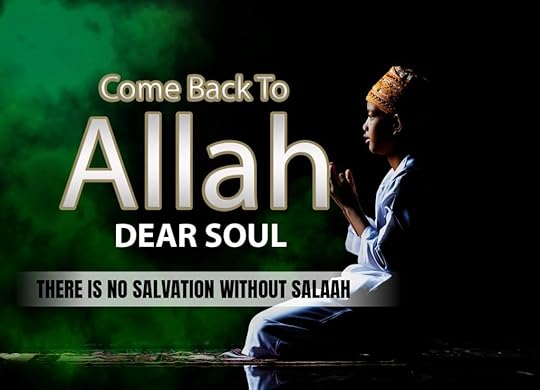
In this course Come Back To Allah, Dear Soul, our struggling souls are offered support in drawing closer to Allah in our Salaah (five foundational prayers).
So many of us struggle in our Salaah, whether our hearts feel distracted or empty, or we regularly neglect or delay our prayers. In this course, our hearts are reminded of the soul-nourishing connection between us and our Merciful Creator and of the weightiness of Salaah in our lives and souls—even when we are in the midst of emotional pain and confusion and feel “too weak” to pray.
We are also reminded to guard our hearts from “compassionate” messages that make us feel comfortable neglecting the Salaah during times of difficulty, under the assumption that we’ll build up to all five prayers “one day.” In this course we are reminded that, Salaah is the spiritual lifeline between us and our Creator, even when our hearts feel distant from Allah and our emotional pain overwhelms us.
Register now HERE: themeasuredpath.com/faith-foundations/come-back-to-salah-dear-soul-course-enrollment
Umm Zakiyyah is the internationally acclaimed author of more than twenty books, including the If I Should Speak trilogy, Muslim Girl , and His Other Wife . She recently launched her “ Choosing To Love Alone ” series via UZuniversity.com to support struggling believers seeking to nourish their emotional and spiritual health.
Join UZ University now.
Subscribe to Umm Zakiyyah’s YouTube channel , follow her on Instagram or Twitter , and join her Facebook page.
Copyright © 2020 by Al-Walaa Publications. All Rights Reserved.
The post Today I Feel More Peace in My Heart appeared first on Umm Zakiyyah.


May 4, 2020
Protecting Your Home and Soul from the Village
“It takes a whole village to raise a child.”
—African proverb
The more I heal emotionally and spiritually, the more my heart realizes that my healing journey is so much bigger than me. Yes, it’s a nourishment I owe my own soul first and foremost. But it’s also a nourishment I owe my loved ones and my sisters and brothers in faith.
This responsibility is weightiest toward those whom Allah has placed under my care. But the responsibility is also heavy toward those who trust me to be, at the very least, someone from whom they are safe from my tongue and hands—a responsibility that every Muslim man and woman carries toward the other.
The Prophet (peace and blessings be upon him) said, “A Muslim is the one from whose tongue and hands the Muslims are safe…” (Bukhari and Muslim).
And included in that safety is how we use our tongues when sharing our opinions privately and publicly, and when offering advice to others, whether solicited or unsolicited.
Stories We So Often Hear
I think now on true healing and emotional safety as I recall a day some time ago when a dear sister in faith reached out to me for advice. She’d contacted me because she was hurting deeply after confiding in a close friend about some struggles in her marriage. The sister (whom I’ll call Amatullah) shared how her friend basically told her that her husband’s decision to marry another wife meant that Amatullah was worthless to him.
Naturally, these words did nothing to offer Amatullah support in navigating her new trial of marriage. Instead, they incited in Amatullah a near emotional breakdown—as it would any sensitive soul already drowning deep in the dark waves of emotional pain and confusion—and thus put further strain on her marriage.
Listening to Amatullah share her heart with me nearly broke my own. Hers is a story I hear over and over, and it’s the flip side of another story I hear over and over. I’ll share both here:
Story 1
The first story goes something like this: If the marriage struggle involves a type of marriage we already hate or disagree with (i.e. intercultural, interracial, polygyny, huge age difference between husband and wife, etc.), then the marriage is disposable. So, if we get even a whiff of a problem happening in this type of “distasteful” marriage, we eagerly use our tongues and hands to help destroy an already struggling marriage. In this, we list all the things that are “inherently wrong” with that type of marriage, as well as all the problematic things we’ve (allegedly) seen or experienced with this marriage type ourselves.
So naturally, if we are ever tested with someone trusting us for advice, we jump at the opportunity to share with them our biased views, which will put even further strain on an already sensitive situation. But we frame our betrayal of trust as “I’m just keeping it real” or “I’m only looking out for you” or “I’m only speaking out of love and concern.”
However, our cautionary words have more to do with deep problems in our own hearts than with any deep problems in their marriage (irrespective of how very real their marriage problems actually are).
And if our words should incite the destruction of that actual marriage—whether directly or by contributing to its “death by a thousand cuts”—we sit back in smug satisfaction while feigning sorrow over the divorce. Meanwhile, we say to whoever will listen, “See? That’s why I advise against [insert distasteful marriage] because those marriages almost never work out.”
Yet all we’ve witnessed is a self-fulfilling prophecy more than any further “proof” of our original thoughts.
Story 2
On the flipside, the second story goes something like this: If the marriage struggle involves a type of marriage we already love, prefer, or agree with—especially if it also involves “two good people” we care about—then the marriage must be saved “at all costs.” So, if we get even a whiff of a problem happening in this “blessed marriage,” we eagerly use our tongues and hands to do everything we can to help save this struggling marriage.
In this “savior” mindset, we ignore, dismiss, or trivialize any serious problems or toxic dynamics being expressed to us. Instead we respond to their every heartfelt concern by listing all the marriages that survived similar or worse tests. So, we tell them about all the “happily ever after” stories we know about, wherein similar struggling couples ended up staying together even when they thought all was lost.
Then, after reminding them (again) that “all marriages have problems,” we feel quite proud of ourselves as we punctuate our advice with one final point: “If you’re really committed to making your relationship work, no problem is unfixable” (a perspective that was curiously absent from our mind and heart when offering our advice in response to the “distasteful marriage”).
If our words should incite the preservation of that actual marriage—whether directly or by contributing to an already existing culture of marital privilege or community that supports it—we sit back in self-satisfaction, taking full credit for “saving a marriage.” Meanwhile, we say to whoever will listen, “See? That just goes to show that we should never throw away our marriage, no matter what.”
Yet we fail to see that it’s also quite possible that we just guilted someone into staying in a toxic marriage just for the sake of “staying married no matter what,” irrespective of whether or not that actual marriage is good for their lives or souls.
Trust Those Who See Souls, Not Statistics
One thing I advise anyone who is struggling in their marriage (or in any life trial, for that matter) is this: Find a trustworthy, sincere advisor who will look at your difficult circumstance through the lens of what they genuinely believe (in front of their Creator) is best for your life and soul—regardless of what they themselves would like, prefer, or choose for their own.
And how rare these honest souls are. May Allah make us amongst them.
Most people we reach out to in our time of distress are operating based on their unhealed wounds, not their faith. This is the space where their personal fears, insecurities, and toxic biases guide their minds and hearts more than any genuine spiritual honesty, wisdom, or taqwaa (shielding the soul from displeasing Allah). But they imagine their thoughts and convictions to stem from faith, while failing to realize that their emotionality informs their spirituality more than their spirituality guides their emotions.
In this space of emotional and spiritual toxicity of the heart, they see you (and your problems) as merely a statistic. Thus, anything you share with them will just be used as “evidence” to add to an ever-increasing “score chart” they keep to support their personal view, which they had long before they ever met or spoke to you.
Choose Your Advisors Carefully
Due to the widespread existence of these “score charts” kept by those who see statistics more than souls, I wrote this heartfelt advice of self-protection to my own struggling soul:
Choose your advisors carefully, especially when it comes to important decisions like marriage.
In general, there are two categories of people who offer advice on marriage: those who trust Allah, and those who trust themselves.
Advisors who trust Allah will *always* encourage you to consult your Lord before making any decision, and they will openly acknowledge that only you, with the help of Allah, can ultimately determine what is best for you. Yes, they will also let you know the pros and cons of certain life choices so that you can, bi’idhnillaah, make an informed, wise decision that is best for your life and soul. But they will *never* seek to define marital happiness for you.
Those who trust themselves will list for you a million don’ts, many of which fall in the category of what is permissible and beloved to Allah. And their advice is almost always rooted in their own insecurities. They will tell you not to marry into a certain race, color or income bracket, and they’ll have a million opinions against “settling” for someone who’s divorced, in polygyny, has children…and the list goes on and on. Because their insecurities go on and on.
Yes, we all have insecurities. But unless you’re seeking to have someone else’s added your own, then choose the advisor who trusts Allah.
It will encourage you to do the same.
Stories We Want Others To Help Us Write
Everyone needs you to fit into their story, I wrote in my journal the other day. It helps to make their world make sense, and it helps to make their life make sense.
The plots and themes of our stories are drafted in the heart long before they even reach our conscious mind, and before they even have words or voice. By the time these stories do find release, we don’t even know where they came from. But we don’t know that we don’t know where they came from.
So we call our heart-scripted stories “truth.”
Then we gather evidence from the scraps of memories we used to create the stories, to prove that the stories themselves reflect the reality in which we all live. So we say, “I’ve seen such-and-such…” or “I’ve heard such-and-such…” to prove that the entire theme of our story is true.
But perhaps we’ve seen and heard nothing except what already resonates with the story of our ailing heart.
In Which Chapter Can We Find God?
We see with our hearts more than our eyes. This is something our faith has taught us over and over again, yet so few of us take heed. In the Qur’an, our Merciful Creator says what has been translated to mean, “Truly, it is not their eyes that are blind, but their hearts which are in their breasts” (Al-Hajj, 22:46).
But we are too busy writing our own personal stories to heed the one being told to us by God.
Divine guidance cleanses the vision of our hearts and then filters truth from falsehood. This spiritual cleansing allows for a genuine true story to unfold. Here is where we truly begin to imbibe the benefit of the Qur’an as a Furqaan (that which distinguishes truth from falsehood). In fact, this is one of the spiritual benefits of connecting to the Qur’an that Allah specifically mentions before advising us how to spend the blessed month of Ramadan:
“Ramadan is the [month] in which was sent down the Qur’an, as a guide to mankind, also as clear [signs] for guidance and Furqaan. So, whoever of you witnesses that month should spend it in fasting…” (Al-Baqarah, 2:185).
In our sincerity of worship, fasting, and connecting to the Qur’an, our Merciful Creator allows us to be guided spiritually and for our hearts to see truth and falsehood clearly. This, despite our ever-present flawed human perception that will always render us unable to perfectly understand or perfectly practice this divine faith. Yet as imperfect children of Adam, our flawed efforts are the best that our sincere, struggling human hearts can do.
But that is all our Merciful Creator asks of us—putting in the sincere effort, no matter how imperfect—as we live out our confusing life stories in this world.
Yet for so many of us, we need God Himself to fit into our story, instead of submitting to our soul’s need to fit into His.
They Quietly Keep Tallies Against You
After listening to Amatullah’s pain, I shared with her what I learned from my own painful life trials. I told her that I too had made the mistake of trusting those whom I’d imagined loved me for the sake of Allah. Yet I discovered that they were so entangled in their own emotional wounding that they had no space to care for me or my pain.
Except insomuch as my story allowed them to escape or deny their own.
In this space of denial, they quietly kept a tally of my personal struggles, which I naively revealed to them one by one while pouring out my distressed heart seeking comfort and advice. As I cried and confessed my challenges, they pretended to empathize, and they pretended to care. But this outward empathy and compassion was only for the quiet purpose of drawing out of me further “statistics” they were using to add to the “score chart” they were keeping against my “distasteful” life path.
But I didn’t discover this until much later—when they threw back in my face my own story to prove that theirs had a better and higher “score.”
It Takes a Village
It takes a village to raise a child, we are told. And that’s true. “But you know what life has taught me?” I told Amatullah. “It also takes a village to save a marriage.”
But today, if Allah has blessed you with a soul-nourishing relationship that others find distasteful—even if it is beloved by Allah—then that same village will work to destroy your marriage.
Thus, in these Last Days wherein even “the Muslim village” accepts only a very narrow idea of what a “good relationship” looks like, those who are gifted with unpopular yet blessed soul-companionship have no choice but to protect their homes and souls from that village.
This is a village filled with ostensibly “good people,” including respected aunties and uncles, venerated elders, and even celebrated sheikhs and spiritual teachers. Yet so many of them have unhealed hearts and misguided minds that work so tirelessly to keep only their own marriage stories alive.
Or only the marriage stories accepted by their Western masters, who are controlling the village land.
Paying Rent with Our Souls on Master’s Land
These Western masters are those whom the village elders beg—as if in prayerful supplication—for permission to have a “Muslim village” on their land. And part of being granted that permission is this silent agreement: Any parts of “village life” that disturb or offend the Western master must be done away with for “the greater good.”
Thereafter, this “sacred agreement” is fulfilled not only in our social circles but in our religious circles as well. Thus, village elders and spiritual teachers go as far as to issue fatwas attributed to God, but which are really for the sole purpose of seeking worldly comfort and keeping Western masters unoffended by Muslim village life.
Just today I read a thread on Instagram that demonstrated this toxic “village mindset” quite chillingly, as several Muslims openly criticized a post of a Muslim woman wearing an abaya and niqaab (face veil) while living in the West. One commenter, who identified as being originally from Yemen, said, “That’s cultural dressing. An extreme way of dressing brought upon women forced upon by men. There’s no extreme in Islam. Anything that sheds a negative light on the deen (i.e. Muslim way of life) should be cast aside, especially as we are living in the West and other non-Muslim countries.”
The Greater Good
In this toxic environment—whether due to personal insecurities or a religious inferiority complex (or both)—the people of the village work to destroy your marriage as a means of protecting their own. It is this toxic culture of social terrorism in “Muslim villages” that I discuss in my book even if:
terrorists.
their weapons of mass destruction are
the tongues in their mouths
and their collateral damage
is your flesh between their teeth.
innocent lives are lost
in their fight
in name of freedom.
niqaab.
divorce.
polygyny.
you.
anything that incites their insecurities
must die
in their war for justice.
and because they shouted Allah’s name
when they attacked you
they think
their destruction of life is for the greater good.
Surviving Toxic Village Culture
Unfortunately, as we are in the Last Days, today “the village” destroys more social life than it nourishes.
Yes, we can build our own little world behind the walls of our homes, insulated from the destructive village. But we were not created to thrive in isolation.
For our All-Wise, Merciful Creator says what has been translated to mean, “The believers are but a single brotherhood” (Al-Hujuraat, 49:10).
In further explaining the manifestation of this spiritually nourishing bond of faith, Prophet Muhammad (peace and blessings be upon him) said, “The parable of the believers in their affection, mercy, and compassion for each other is that of a body. When any limb aches, the whole body reacts with sleeplessness and fever” (Bukhari and Muslim).
But dear soul, what do you do when, in your village, that sleeplessness and fever is incited only when you and your marriage are doing well, not when you or your marriage is suffering? This is the daily dilemma of Muslims living in marriages blessed and beloved by Allah but hated and opposed by the people—people who are not only their neighbors and fellow villagers, but also their Muslim brothers and sisters in faith.
Thriving in Survival Mode
If you are blessed with a soul-nourishing marriage that your fellow villagers dislike—whether intercultural, interracial, polygyny, huge age difference, etc.—then you have no choice but to learn how to survive more than thrive in your village.
In this survival mode, you must protect your home and soul from the villagers’ daily harm—even if that harm comes from close friends, loved ones, or celebrated spiritual teachers whose hearts have been tested with a misguidance that harms not only their own souls, but your home and soul as well.
Sometimes this means having to remove your trust, friendship, and even presence from those you thought loved and cared for you, but are actually too unhealed emotionally (and spiritually) to even understand what true love for the sake of Allah means.
In your self-protective survival mode, you must seek to thrive as much reasonably possible, but you must also remain keenly aware of the toxic environment in which you live. If possible, you can continuously search for that very rare soul-nourishing Muslim village that is built upon the merciful principles of the brotherhood of Islam. Then you can make hijrah there.
But today, the believers who live upon these true principles of soul-care are most often scattered throughout the earth living and struggling in spiritually toxic village cultures like your own.
Build Your Own Village
If we are going to spiritually thrive in this world during these Last Days, then we must seek to build a village of spiritual brotherhood that is not defined or limited by the geographical boundaries in which we live. In this way, we can connect with soul companions all over the world and help each other survive this worldly prison. This is the prison about which Prophet Muhammad (peace and blessings be upon him) said, “The world is a prison for the believer and a paradise for the unbeliever” (Sahih Muslim).
In reminding each other of the true nature of this transient world, we can encourage and inspire each other on how to protect our homes and souls from the “prison villagers” who seek the paradise of this world more than the Paradise of the Hereafter—like their Western masters whom they love so deeply.
Meanwhile we can beg our Merciful Creator to grant us beautiful patience as we await release from this worldly prison.
Thereafter, we will find residence in an everlasting village of spiritual brotherhood in a world better than this, and in a home better than anything we owned (or hoped to own) in this world.
There, in the gardens of Paradise, we will have a joyous, blissful village life, where our Master is Allah and our home will be forever near Him and His Love.
You don’t have to struggle alone. Let’s work together: uzuniversity.com
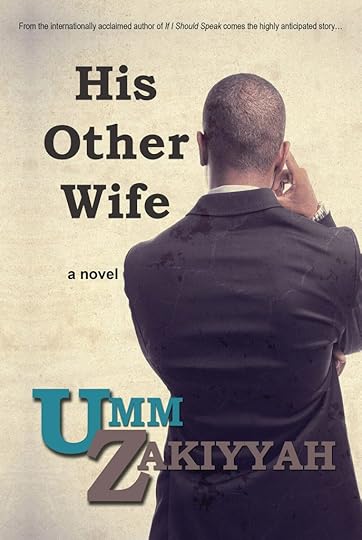
Umm Zakiyyah is the internationally acclaimed author of more than twenty books, including the If I Should Speak trilogy, Muslim Girl , and His Other Wife . She recently launched her “ Choosing To Love Alone ” series via UZuniversity.com to support struggling believers seeking to nourish their emotional and spiritual health.
Join UZ University now.
Subscribe to Umm Zakiyyah’s YouTube channel , follow her on Instagram or Twitter , and join her Facebook page.
Copyright © 2020 by Al-Walaa Publications. All Rights Reserved.
The post Protecting Your Home and Soul from the Village appeared first on Umm Zakiyyah.
May 3, 2020
Dear Survivor, Choose Yourself: Healing in Solitude (Day 8)
“Why is it always the ones inflicting the harm that trivialize the extent of the wound?”
—from the journal of Umm Zakiyyah
The “Healing in Solitude” reflections offer a glimpse into the heart of Umm Zakiyyah, as she continues her emotional healing journey during the social distancing lockdown amidst the coronavirus epidemic. Each journal reflection represents a “new day” in her healing journey and/or a new day in the mandatory isolation of social distancing. The following is Day 8:
I know this probably won’t make a lot of sense, but I’m going to put it out there anyway. So I apologize ahead of time if you get lost in the maze of my words. Or if you can’t seem to find your way to my point. It’s just that today, my heart is so heavy that it’s getting lost in the maze of itself.
It’s happening again, that restlessness of the heart. I can feel the untold story flailing about within it, agitating the soft walls of this throbbing piece of flesh. Though my nafs and I have had this conversation over and over again for many years, today, you’d think we’d never spoken about it at all, with the way it—she—is begging for release. She doesn’t understand why she must remain silent when she has every right to speak.
I know what she’s thinking about, because I’m thinking about it too. It’s where our Merciful Creator says what has been translated to mean: “Allah does not like the public mention of evil except by one who has been wronged. And ever is Allah Hearing and Knowing” (An-Nisaa, 4:148).
Yes, I know I was wronged, and I know what happened to me was an evil that has every right to be mentioned publicly. I even know that if I ever did speak it aloud—without this exhausting, overly cautious dance of speaking without speaking that I keep doing—so many people would likely benefit, bi’idhnillaah. And Allah knows best.
But that’s not my dilemma. At least not today.
Yes, there was a time that I kept silent because I thought the very expression of my hurt was sin. I thought—as my abusers had craftily taught me—that my Lord would strike me down and throw me in Hell if I even moved my tongue to upset or “disrespect” them. Or to sully the fragile worldly legacy they’d worked so hard to build.
Yes, there was a time that I was so completely under their spell that I genuinely imagined that serving them meant serving God. That pleasing them meant pleasing God. That honoring them meant honoring God. That sacrificing myself for them meant “more important” souls and legacies could live on.
But I’m not in that space anymore.
Nearly losing both my life and soul—and then choosing to live and heal—is what flung me off that self-destructive path and landed me where I am now.
It’s just that, I’m not always sure exactly where I am now.
But You Have the Right To Speak!
Here’s the thing. Today I’ve healed enough to understand that not everything is about right or wrong. Not everything is about what’s allowed or what’s forbidden. Not everything is about what I have the “right” to do.
And not everything can be solved by looking at divine texts and concluding you won’t be in sin if you do it.
This is something that being a wife and mother has taught me so profoundly—over and over again—and today I draw on it on my healing journey.
Because beyond the concepts of right or wrong and allowed or forbidden, there is the deeper concept of hikmah—wisdom.
It’s true that hikmah never requires you to do wrong or delve into sin. But it’s also true that, by its very definition, hikmah demands a closer examination than merely considering what you have the “right” to do.
So many hearts are crushed and relationships destroyed because someone was so fixated on their “rights” that they didn’t consider the other person’s deeper needs—or their own.
I’ve also observed the tragically common pitfall of those who focus only on technical “right” or “wrong” and allowed or forbidden when seeking to fulfill a desire or need of their own: When the divine texts don’t explicitly “command” the result they want, they go and create their own behavior codes to do it on their behalf.
These are people who are so emotionally immature that they can’t take full responsibility for the nuanced complexity of adult life. So they fling that responsibility onto someone else’s soul—and then sometimes claim their conclusion is a direct commandment from God Himself.
These are the parents who are so afraid of their children making a decision that will hurt their feelings—or tarnish their image—that they convince their sons and daughters that it’s a sin to have a life and mind of their own.
These are the men who are so afraid of their wives divorcing them that they convince these women that they’ll never even smell the scent of Paradise if they get a divorce for any reason that the husband feels is invalid.
These are the women who are so afraid of their husbands marrying another wife that they literally reinterpret the entire Qur’an and Sunnah until polygyny is outdated, forbidden, or reprehensible.
These are the community leaders and spiritual teachers who are so fixated on guaranteeing a certain result—or controlling the lives of others—according to their own definition of “the greater good” that they literally declare alternate points of views invalid, unjust, or sinful.
These are men and women who are unable to own their vulnerability, face their fears, or accept that there really is no need to control the lives of others or rewrite the laws of God in order to get what they want in life. Or to work toward the “greater good” they see.
These are men and women who have no real meaningful understanding of tawakkul (trust in Allah), no real healthy understanding of emaan (sincere faith), and no real nourishing relationship with taqwaa (shielding the soul from spiritual harm). And more than anything, they do not truly believe in the ghayb—that unseen reality, wisdom, and spiritual benefit hidden in outcomes and life paths that their hearts dislike, their minds cannot perceive, or their souls don’t understand.
The only meaningful relationship they have in this world is with the fleeting emotions, convictions, and desires of their nafs (inner self).
So in their emotional immaturity and spiritual ignorance (even with years of “study” and droves of certificates behind their name), they actually believe that their every conviction and fixation on a certain outcome—even regarding what someone else’s life should (or must) look like—is their “right” to act upon or (worse) their “obligation” to force upon the world.
If they are challenged on what they are doing—as they suffocate soul after soul in pursuit of their mind’s “greater good” or their heart’s inspiration to rewrite scripture with their own hands—they’ll declare, “This is my right!” or (worse) “This is my obligation!”
And they genuinely have no idea that they are like the hypocrites whom Allah speaks about in the Qur’an when He says what has been translated to mean, “And when it is said to them, ‘Make not mischief on the earth,’ they say, ‘We are only peacemakers.’ Verily, they are the ones who make mischief, but they perceive not’” (Al-Baqarah, 2:11).
And I don’t want to be among them.
Don’t Misunderstand
Please don’t misunderstand me. I do not for a second think that speaking openly about what happened to me places me in the category of a “mischief maker” on earth. It’s just that if I am to achieve the outcome that I’m pursuing with my truth telling (i.e. deep emotional healing), then I need to do some honest introspective work. This means understanding on a very deep level that this journey I’m on is so much bigger and deeper than what I’m “allowed” to do or what it means to exercise my “rights.”
Everything that is allowed isn’t obligatory, and everything that is a “right” isn’t always wise to exercise at certain points in life.
So today, I’m striving to focus more on my deeper emotional and spiritual needs than on any elusive “allowances” or “rights.”
Dear Soul, Choose Yourself
That said, there are some parts of my story that I feel compelled to share, not only to help others, but to heal myself. These are the lessons that I wish someone had taught me. Or if there was someone along the way who’d tried to teach me, then I wish that the wounds on my heart hadn’t prevented me from listening, understanding, or heeding the urgency of their words.
And at the center of each of these lessons is the profoundly healing message: If you are a survivor of abuse, you must choose yourself and your soul. Every. Single. Time.
Because dear soul, understand this, and understand it well: No one, and I mean absolutely no one, can do your soul-work and emotional healing on your behalf. And certainly not the ones you keep looking to for apologies or love.
So, in no real order of priority, I share with you here some of these profound lessons, which I learned while continuously reaching for love and atonement in places that caused me harm. These are thoughts and epiphanies I’ve penned in my journal (or my heart) from the pain of experience after suffering in naïve ignorance for far too long.
But I apologize in advance if the lessons are not entirely clear. Till today, some lessons I’ve learned on this difficult journey are clearer in my heart than they are on my tongue or pen.
Life By a Thousand Deaths
You know how they say, “death by a thousand cuts”? How survivors of daily racism and micro-aggressions are cut just a bit each day until they “die” on the thousandth cut? Well, when you’re a survivor of trauma or abuse, then you not only suffer “death by a thousand cuts,” but you also suffer “life by a thousand deaths.”
This is because the moment you are abused or deeply traumatized, your life is taken from you. Daily, you are in a lose-lose situation with your heart, particularly if you are tested with being continuously in or near the toxic environment that inflicted the wounding. In that unhealthy space, you either take the blows in silence and risk continued harm, or you speak up and pretty much guarantee even greater harm.
Because in toxic environments, the only crime worse than you existing at all is to “victimize” your abusers or oppressors by speaking up to say, “I hurt.”
Memory Loss
Abusers have selective memory and selective amnesia. When things appear to be going terribly for you, they remember all the bad you (allegedly) did to deserve it. When things are going well for you, they remember all the good they (allegedly) did to make it happen. But never do they attribute your suffering to the work of their hands, or your achievements to your own.
Forgiveness As a Gag Order
Forgiveness is not a pact of silence. You can forgive someone and still speak your truth. Telling your story is about your own emotional healing, not about casting blame or expressing resentment.
For some people, when they advise you to forgive and overlook, what they really mean is: “Keep quiet. Pretend like this never happened. I never want to hear about this again.”
So Much Good
“They’ve done so much good!” some will say. “So why are you focusing on this?”
Dear soul, you cannot heal a wound unless you can point to the wound itself, call it what it is, and acknowledge how it got there. This isn’t about denying the good, it’s about rooting out the bad and protecting ourselves and our children from suffering any more than they need to—and from passing on that suffering to the next generation.
Name It and Be Free
I am a survivor of narcissistic spiritual abuse. Today is the first time I ever said these words aloud. I admit this now only because it is only now that I can confess that my healing was stunted day after day, year after year due to my inability, unwillingness, and/or fear to put a “bad name” on what happened to me.
I was taught to not call names, to not use bad language, and to never think poorly of others—especially those who were infinitely superior to me. And for so long, I saw it as a sin to label my suffering by any word that wasn’t a synonym for my fault.
But there is one word that allowed me to name it without feeling like I’d be thrown in Hellfire for speaking aloud my hurt.
Dhulm.
It’s an Arabic word, so it felt safer. But it’s also a Qur’anic word, so it was more truthful.
And it happens to encapsulate my truth.
Once I could swallow that reality, I realized that words like abuse, oppression and wrongdoing are just translations of that word. That made it easier for me to translate them into the experience of my life.
Then that realization made it easier for me to safely open the books and resources on healing, while understanding that whether or not I’d personally translate the dhulm I suffered into the term “narcissistic abuse” was irrelevant. The bottom line was, even if there was “kinder” or “more appropriate” or even “more Islamic” English term for what I’d experienced, all of my suffering fell in chilling accuracy into the category of what someone else had labeled “narcissistic abuse.”
So I had a choice. I could refuse healing on the grounds that Dr. So-and-so should have used a “less offensive” word to label what had happened to me. Or I could focus on what was more important—my need to heal—and stop stressing over what really boiled down to my fear of enraging my abusers by calling their crime by its name.
Hurting On Their Behalf
How do they live with all that guilt? This is a question that so many survivors ask themselves as they process just how horrible it was what their abusers—and the enablers and supporters—did to them.
But here’s the short answer to that question that took my heart years to come to terms with: They don’t. Abusers don’t live with guilt. They inflict it.
The only exception to this is those rare souls—those very, very rare souls—who recognize their dhulm, regret their dhulm, openly admit their dhulm, seek forgiveness for their dhulm, and then live the rest of their lives in repentance, as they sincerely seek to atone for the immeasurable harm they inflicted on innocent souls.
But don’t hold your breath. You’re likely the only one worried about how they live with themselves. This is because you are genuinely trying to find a way to live with yourself. And an unavoidable “side effect” of any true emotional healing of this nature is empathy.
And here, I mean empathy in the literal sense, not the “that resonates with my heart” sense. So no, I’m not saying that you empathize to the point of agreeing with, condoning, or sympathizing with the crimes they did to you. I mean that your healing makes it virtually impossible for you not to deeply feel what those abusers did to themselves.
And that’s where your hurting and confusion on their behalf comes from.
Gaslighting Is How They Survive
Naturally, as you hurt on their behalf, you still need to heal. So your heart goes round and round in circles of pain and confusion, as you (on the one hand) struggle with trying to recover from your own deep emotional wounding that you suffered at their hands, and then (on the other hand) your heart cycles into an empathic aching for how it would feel to suffer the guilt of having caused all the suffering they caused you.
But, dear soul, they are not suffering any torment on your behalf. Or their own.
They are living their life feeling generally free of emotional pain, except when they feel deeply hurt because they think you wronged them. Because somehow, in the dark recesses of their unhealed heart, any choice you make for yourself is a crime against them.
If you’re like me and so many other “bleeding heart” survivors, you might have even tried to express your pain to them. You might have even told them about your years of suffering in silence. You might have even expressed how what they did hurt you so much—“Even though I know you didn’t mean to,” you might hurriedly add (because even if just speaking about the obvious truths of what they did, you feel compelled to protect them from their own truths). Then you might have even poured your heart out by over-explaining why you need to pull back and heal so you can become whole and well again.
But then what happens?
Firstly, you’re likely doing all this while genuinely imagining one of two things: They’ll care, or “At least, now they’ll understand.”
Then what happens next is what almost always happens when a survivor confronts abusers or their enablers. The abusers (or enablers) respond in a way that makes you feel sinful, guilty, or even “abusive” for choosing to take care of yourself.
Specifically, their response to you generally falls into one (or more) of four categories: (1) casting doubt on the factual “accuracy” of what you’re recalling and sharing, (2) glorifying or venerating the “intentions” behind the actions that caused your deepest pain, (3) questioning the wisdom or timing of your words or approach, (4) shifting the entire topic to some form of toxic positivity that centers the discussion around some deep emotional or spiritual problem in your own heart (i.e. “Don’t good Muslims forgive and overlook?”).
In other words, they use subtle or blatant gaslighting techniques, thereby sending you into deeper self-doubt, pain, guilt, or confusion. And the reason they themselves don’t feel guilty for this additional dhulm is that they use those same gaslighting techniques on themselves.
Yes, unrepentant abusers and their enablers actually live in perpetual ghuroor (self-deception). This allows them to not only live with the terrible actions they’ve done, but to also further convince themselves that they were either only acting out of genuine love and concern for you, or that you are in fact the one wronging them.
Or both.
The Qur’an Calls Them Out
Okay, I admit this is a heavy topic, so I’m not going to even attempt to properly tackle this here. But I will say this much. Connecting with the Qur’an through daily reading and reflecting on its ayaat has been so deeply healing for me. Not only due to its spiritual benefits, but also due to the emotional healing aspects of the Qur’an as well.
What I didn’t realize until I was on the journey of emotional healing myself, is how so much of the Qur’an describes and calls out the behavior of abusers and oppressors—even their attempts to fool others while they are merely fooling themselves (i.e. gaslighting others while unknowingly gaslighting themselves).
One chillingly accurate description of them is in a section describing those who oppressed themselves with the crime of shirk (paganism, assigning to creation any attributes or rights of the Creator, or denying the Creator His own attributes or rights). Yet even as they stand in front of their own Rabb on the Day of Judgment, they continue their attempts at deception that had worked so well for them in the world.
Allah Himself highlights this amazing audacity when He says of them what has been translated to mean: “Look! How they lie against themselves! But the [lie] which they invented will disappear from them” (Al-An’aam, 6:24).
These sorts of descriptions make it clear to my heart that I can only focus on myself, and that only I can choose my path to healing. So, I must learn to leave abusers to their own—if they should ever choose healing or want it for themselves (and most won’t).
So, for now, I must accept that part of my healing journey is knowing that my abusers and wrongdoers (and their enablers and supporters) will continuously utter hurtful words to me and about me. And there’s nothing I can do but remove myself from their presence and let their Creator deal with them—in time.
In reflecting on this, my heart finds peace in heeding this deeply validating advice from my Merciful Creator, when He says what has been translated to mean, “And be patient with what they say, and keep away from them in a good way. And leave Me alone to deal with the beliers, and those who are in possession of good things of life. And give them respite for a little while” (Al-Muzzammil, 73:10-11).
In this, I hear what my restless nafs is trying to tell me when she begs me to give our story release: Dear struggling soul, choose yourself. You cannot guide, save, or find emotional safety with those who not only choose to oppress you, but who are also committed to oppressing themselves.
Hurting and seeking healing? You don’t have to figure this out alone: uzuniversity.com
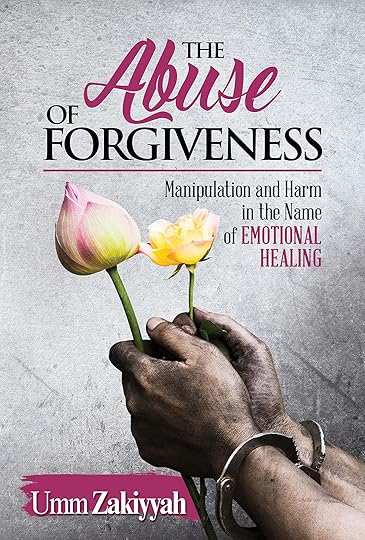
Umm Zakiyyah is the internationally acclaimed author of more than twenty books, including the If I Should Speak trilogy, Muslim Girl , and His Other Wife . She recently launched her “ Choosing To Love Alone ” series via UZuniversity.com to support struggling believers seeking to nourish their emotional and spiritual health.
Join UZ University now.
Subscribe to Umm Zakiyyah’s YouTube channel , follow her on Instagram or Twitter , and join her Facebook page.
Copyright © 2020 by Al-Walaa Publications. All Rights Reserved.
The post Dear Survivor, Choose Yourself: Healing in Solitude (Day 8) appeared first on Umm Zakiyyah.
April 18, 2020
Reaching for Love: Healing in Solitude (Day 7)
“Sometimes in order to love yourself properly, you have to be willing to be hated by the ones you love. This isn’t easy for those who care deeply.”
—Khalil Ismail, founder of The Measured Path
The “Healing in Solitude” reflections offer a glimpse into the heart of Umm Zakiyyah, as she continues her emotional healing journey during the social distancing lockdown amidst the coronavirus epidemic. Each journal reflection represents a “new day” in her healing journey and/or a new day in the mandatory isolation of social distancing. The following is Day 7:
People can only love you as much as they love their own souls. This is something that has taken my heart years to understand on a deep level. And I’m still learning. We often hear this in connection to the limits of a person based on how much they love themselves emotionally. But I think there’s a difference between how much someone loves themselves emotionally and how much they love themselves spiritually.
Too often we allow our hearts to get so tangled up in emotional love that we forget that true, nourishing love stems from a healthy relationship that each of us has with our own souls, spiritually. Without a lifestyle of soul care, it is impossible for any of us to be truly healthy in our relationship with ourselves or with others.
Unfortunately, those of us who are striving upon a lifestyle of soul care but are still struggling on a path to emotional healing continuously seek love from unhealthy places. As a result, we find ourselves heartbroken over and over again. In this, we are still learning that those who do not love their souls do not have the capacity to love us, no matter how much we want them to—and no matter how much they themselves sincerely try to.
This is the weighty point that I was hoping to convey to my sisters in faith when I wrote this heartfelt reminder in my journal:
Dear women,
Know that a man who doesn’t respect his soul cannot respect you. A man who does not guard the sacredness of his private parts should not be given access to yours — even in marriage. You are not a savior or constellation prize for broken, soul-damaged men.
Too often our society teaches men that it’s okay to destroy their souls and sleep around, caring nothing about their bodies and spiritual health until they meet a “good woman.” This good woman is painted as so special and valuable that it makes this “bad boy” want to straighten up and live an honorable life. But if he isn’t straightening up and living an honorable life for the sake of his own soul—irrespective of whether he marries you—then he isn’t an honorable man, period.
No, it doesn’t matter how much money or success he has or how much he claims to love you more than life itself. A man whose soul and body is worthless to him could never value the soul and body of a female companion, even if she carries the title “wife.”
So dear women, if you love your soul and the body God has gifted you with, and are living a life nourishing your spiritual health and guarding your private parts, love yourself enough to say no and walk away. It is better to live a life of beautiful, soul-nourishing solitude than to open your heart and body to a man whose life experience thus far has only been in destroying his.
And know that there are truly good men in this world who love their souls and the sacredness of their bodies just as much as you do.
Seeking a Soul Companion in This World
When I wrote the journal reflection to my sisters in faith, my heart was praying that Allah grants each of us soul companions who love Him above all else, who value their souls more than anything else, and who are sources of compassion, mercy, and soul-nourishment for us on earth.
My heart was also praying that Allah heals and purifies our hearts such that we ourselves are healthy soul companions, beneficial friends, and sources of mercy to His beloved servants in this world. In this, I was hoping that Allah would heal our emotional wounds and purify our ailing hearts so that we can become spiritually-nourishing to others during our brief sojourn on earth.
As we pray for healthy love in our lives, it is important to remember that our need for soul companionship is not limited to romantic love in marriage. We also need healthy soul companionship in our other relationships as well. Thus, even in our friendships, in our bonds of faith, and in our families and blood relationships, we need meaningful connections that nourish our hearts and souls. Otherwise, we will continue to suffer emotional and spiritual wounding in the very places that we are seeking love.
Perhaps They’re Not Good for You
Some time ago, I saw a post on Instagram that really resonated with me: Don’t worry about the people God removed from your life. He heard conversations you didn’t, saw things you couldn’t, and made moves you wouldn’t.
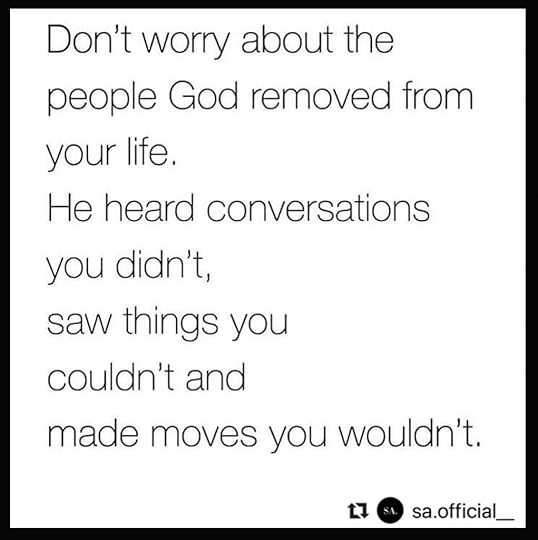
As I reflected on my own emotional healing journey, I had to admit that this has been a very difficult lesson for my heart to embrace, especially when the relationship I lost was of a close friend or loved one. But in reflecting on the profound message of the post itself, I reminded my heart of this weighty reality that we so often forget as we nurse our hurting hearts:
Just keep in mind that two good people can simply not be meant for each other as friends, soul companions, or part of each other’s life in any meaningful way—and that God can be removing us from someone else’s life due to our own faults and sins, while we imagine they’re being removed from ours due to theirs. That said, yes, absolutely, sometimes God is removing a harmful person from our life while we think we’re suffering a loss.
Just Let Go and Move On?
“Just let it go, and move on,” we’re so often told. “Stop holding on to anger. Don’t let them disrupt your peace.” When people respond to others’ suffering with this dismissive advice, I can’t help wondering if they know what emotional pain feels like, or if they even care. Or perhaps they’ve suppressed their own pain so much that it’s now hidden from even themselves.
Emotional wounding is not a choice, and it’s not a creation of our minds. Thus, we can’t just “let it go” and “move on” by deciding to feel “happy” about all the things that torment our hearts and souls daily. The human mind never has had (and never will have) the ability to simply make wounds disappear. This is true for physical wounds, and it’s even more so true for emotional wounds.
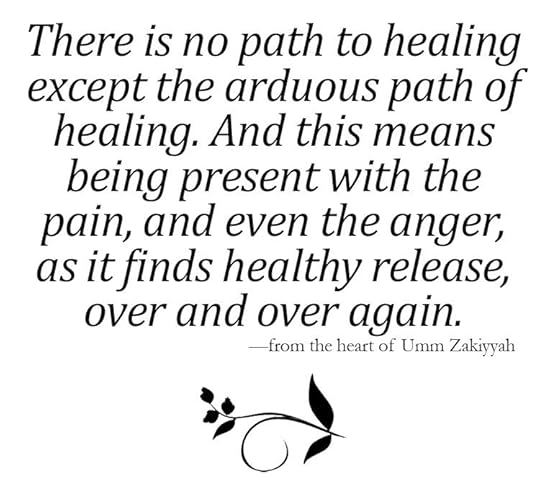
There is no path to healing except the arduous path of healing. And this means being present with the pain, and even the anger, as it finds healthy release, over and over again.
When it comes to having a soul companion to support you during this difficult journey, one of the healthiest forms of healing is having a compassionate, empathic soul who listens patiently and lovingly as you speak about what’s ailing you. And one of the most emotionally damaging things that we can do to someone is to stunt their healing or exacerbate their wounds through dismissiveness or insensitivity.
This is when we impatiently rush them through the parts of their journey that make us comfortable, or when we resort to toxic positivity because we ourselves are unfamiliar with how to navigate negative emotions healthily. Thus, we tell them, “Happiness is a choice.” Or we urge them, “Just let it go, and move on!” as if their pain is a burning coal that they eagerly hold on to because they value daily suffering so, so much.
Yet if there is anything that we should indeed “let go of” and move beyond, it is offering dismissiveness and insensitivity instead of empathy and compassion in our advice.
I think on this now as I continue my own healing journey and reflect on some relationships that I myself have had to let go of. These were relationships wherein trusted friends or loved ones sought to disrupt the parts of my spiritual journey that they found inconvenient for their own life paths. These were also relationships wherein trusted friends and loved ones tried to silence the parts of my emotional healing that they found unacceptable because their minds and hearts were addicted to a story that denied my deepest wounds.
Broken Souls Need Your Silence
“What’s the point in mentioning any of this?” they’d say to me, or “Why are you focusing on the negative when this person has done so much good for you?”
These are people who view painful honesty as mutually exclusive to sincere gratitude, and they view inflicting abuse as an impossibility if that person has also benefited you in any way. These mindsets are the very definition of toxicity for souls seeking emotional wellness.
Only broken souls trapped in their own wounding need others to deny their painful experiences in order to appreciate the complexity and beauty of their human story. These broken souls need every story to be about either an evil monster or an angelic saint. They have trouble accepting the reality that most human stories fall somewhere in between—including their own.
These broken souls also believe that the only type of wrongdoing or abuse that should ever be openly acknowledged and addressed is that which points the finger at “the other.” Their own self-denial and lack of healing compels them to reject any truth-telling wherein a wrongdoer or abuser is from their own ethnic group or is a respected elder, family member, or a spiritual leader they love or admire. Consequently, they accuse you of being disrespectful or sinful if your story violates this unspoken rule of their own unhealed heart: Your healing is only allowed if it doesn’t force me to look at myself.
In reminding my own heart that I have the right to speak about what happened to me—and that I have divine support while I do—I think of the ayah in the Qur’an where our Merciful Creator says what has been translated to mean, “Allah does not like the public mention of evil except by one who has been wronged. And ever is Allah Hearing and Knowing” (Al-Nisaa, 4:148).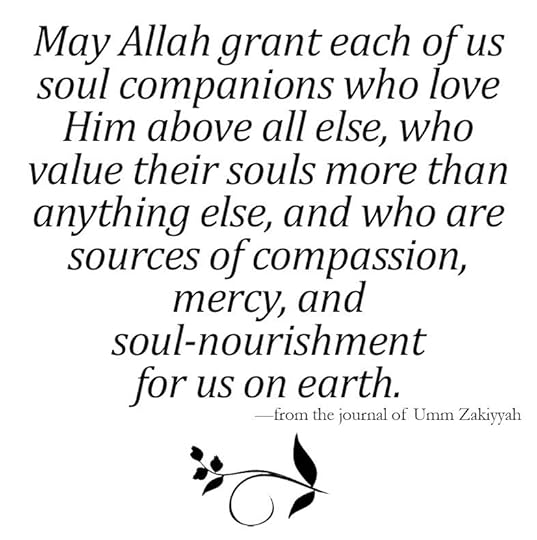 Validate Yourself
Today I realize that there is no true letting go or moving on until the evil or wrongdoing that you have suffered has been acknowledged, expressed, and addressed—and until your emotional wounds have been properly healed. But the bittersweet reality that our hearts must embrace is that this validation on your healing journey must come mostly from yourself.
Others likely won’t join you or support you, even if they need healing themselves.
Therefore, you must humbly accept that your idea of love, companionship, and even healing is not shared by so many whom you care about most. So you must find another source of emotional connection as your heart seeks bonds of friendship, family, or faith.
Because anyone who is more pleased with your silent suffering than your journey of healing and spiritual nourishment is not a true soul companion for you, no matter how much your heart reaches for their love.

You don’t have to struggle alone. Let’s work together: uzuniversity.com

Umm Zakiyyah is the internationally acclaimed author of more than twenty books, including the If I Should Speak trilogy, Muslim Girl , and His Other Wife . She recently launched her “ Choosing To Love Alone ” series via UZuniversity.com to support struggling believers seeking to nourish their emotional and spiritual health.
Join UZ University now.
Subscribe to Umm Zakiyyah’s YouTube channel , follow her on Instagram or Twitter , and join her Facebook page.
Copyright © 2020 by Al-Walaa Publications. All Rights Reserved.
The post Reaching for Love: Healing in Solitude (Day 7) appeared first on Umm Zakiyyah.
April 13, 2020
Unwrapping a Hidden Gift: Healing in Solitude (Day 6)
“…But perhaps you hate a thing and it is good for you; and perhaps you love a thing and it is bad for you. And Allah knows, while you know not.”
—Qur’an (Al-Baqarah, 2:216)
The “Healing in Solitude” reflections offer a glimpse into the heart of Umm Zakiyyah, as she continues her emotional healing journey during the social distancing lockdown amidst the coronavirus epidemic. Each journal reflection represents a “new day” in her healing journey and/or a new day in the mandatory isolation of social distancing. The following is Day 6:
I still miss them, and I still love them, I allow my heart to admit to myself. But I still need to emotionally quarantine myself from them, if I am to have any chance at a healthy emotional and spiritual life.
This resolution seems so simple, so obvious to me right now. But it has taken many years of emotional turmoil to accept what my soul has been telling me for quite some time. Simple truths are sometimes the most difficult truths, especially when the heart is reaching for a different path.
And so it has been for me.
Allah teaches us to forgive and overlook, I wrote in my journal some years ago, inspired by a deeply moving conversation I had with one of my loved ones. But He also says the earth is spacious. So there are some people you forgive but move away from to preserve yourself.
A Testimony of Spiritual Purification
I now understand trauma as a spiritual purification and a personal testimony. It is a purification process that fulfills the divine promise to not leave any child of Adam merely upon the path of the tongue. In this world, the path of the tongue allows us to say, “I believe” and be left alone upon this claim.
Naturally, some of the “purifying trials” that befall us are quite obviously a direct result of the deen (spiritual path) of our tongue. This happens when we face personal, social, or political harm or persecution due to saying, “I believe in Allah.” However, some purifying trials befall us due to the deen of our fitrah, the natural spiritual inclination to submit to our Creator that is gifted to every human soul at birth.
Purifying trials due to our fitrah are often preemptive and are thus disconnected from any conscious spiritual way of life. Often they are disconnected from any sin or poor choice in life. For this reason, suffering trauma is not limited to only adults. Innocent children suffer trauma as well.
Suffering in Childhood and Innocence
As I reflect on some of my difficult trials in life and continue to seek healing, I know some of these painful trials began in childhood. Growing up as a child of Muslim converts to Islam and then going each day to an unwelcoming public school environment was not easy for me emotionally. Facing daily harm from both fellow classmates and trusted adults is something I’ll never forget. I know for many others, their trials of childhood were even more emotionally damaging than mine.
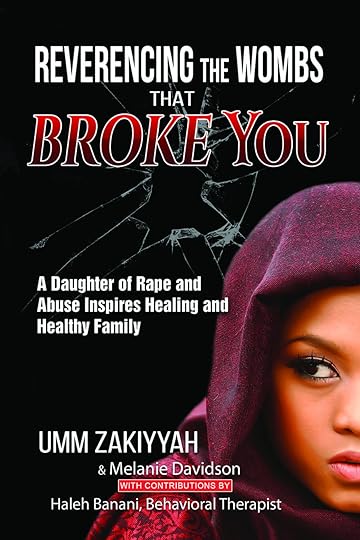
In my book Reverencing the Wombs That Broke You, I share the true story of Melanie Davidson who is a child born of rape. After being given away as a baby, she was returned to her mother’s care a few years later only to be abused by her mother who was continuously triggered by the mere sight of her. In one scene Melanie describes how she learned that her stepfather (her mother’s husband and the father of her siblings) was not her father:
“That’s not your daddy!”
I was only three years old and recently restored to my mother’s care when my stepsister screamed these words at me. I don’t know what prompted the outburst. Maybe we’d had a disagreement and I’d said I was going to tell Daddy, or something about Daddy, and that was enough to send my sister into a fit of rage. She was ten, or maybe eleven, at the time, and naturally, she knew more than I did about the circumstances surrounding my birth. But until that moment, I’d had no idea that the man she called Daddy had no blood relation to me.
At three years old, you don’t understand family dynamics, so in my young mind, the man who was taking care of us was my daddy, just like my mother was my mommy. Of course today, I know that he was my stepfather, the man my mother married after giving birth to me.
“You don’t have a daddy!” my sister continued to scream. “We don’t know who your daddy is! That’s my daddy!”
I still remember how I’d run to my mother to report what my sister had said. I was hurt and upset, not only by my sister’s words but also by her having broken a lamp over my head. I was crying and bleeding when I stood before my mother and told her what my sister had said. Ironically, at that moment, I viewed my sister’s insulting words as the greater crime. But I’d assumed even these were just amongst the many daily insults that my sister inflicted upon me since I arrived in the home. It didn’t occur to me that there was any truth to them.
“He’s not your daddy!” my mother responded in obvious annoyance. It was as if her disgust with me surpassed even my sister’s. I stood in utter confusion, holding my bleeding head as my young mind tried to understand what I’d done to make my mother so upset. “Your father raped me!” she said.
These words were shouted as if she were really saying, “You already ruined my life, now leave me alone! I don’t want to even look at you!” I had no idea what the word rape meant, but there was a place deep inside of me that imbibed these unspoken words more viscerally than if my mother had spoken them aloud.
When I think on painful trials of childhood like Melanie suffered, I think of them as preemptive trials of the soul that incite a wounding that ultimately becomes potential purification for us as we continue to process the pain of the wounding throughout adulthood.
Preemptive Purification Paths
Generally speaking, a preemptive “purifying trial” is one that befalls us in early childhood or before we have found any definite spiritual path for ourselves. It can also be a difficult trial that befalls us that is disconnected from any bad choice or sin on our part.
In a preemptive purification path, we might suffer harm, neglect, abandonment, or abuse at the hands of someone we love and trust, or whom we depend on for our most basic and vulnerable needs. We then carry the wounds of this suffering into adulthood, into relationships and environments completely disconnected from the original wounding, and even into our most intimate relationship with ourselves. Often this battle against the emotional wounds incited by preemptive trials of the soul continues until old age and when we are approaching death.
In this way, for so many of us, a preemptive trial of the soul is a lifetime trial of the soul.
However, though it’s difficult to understand or appreciate while we’re in the throes of trauma, suffering the wounds of our “carried pain” is merely a process of unearthing the spiritual state of our hearts. This unearthing—or unwrapping of our hearts—is meant as a divine, life-altering invitation to spiritual self-honesty and to choosing our spiritual path in this world, as well as our eternal home in the Hereafter.
But so many of us get so lost in our pain that we become spiritually lost just trying to make sense of it.
Unwrap Your Pain
Though I’m a writer, I don’t always find it easy to express to others what’s on my heart. Sometimes I don’t even know how to express to myself what I’m feeling, or how to even put the heaviness of my heart into words. I think on this internal battle as I reflect on how so often I’ve tried (and failed) to convey to others how I see the weightiness of the spiritual trial we are all carrying in this world. So often we let our pain direct our spirituality, instead of allowing our spirituality to direct our pain.
Unwrap the pain, I tell myself. What message is hidden beneath the painful wrapping enveloping your heart?
As I mentioned in an earlier blog reflection, this is a question I ask myself each time I face yet another difficult trial in life, especially whenever it incites emotional suffering or indignant anger. This self-questioning helps me navigate my soul pain in a way that, prayerfully, results in spiritual purification instead of spiritual loss or corruption.
Each time we are faced with making sense of our pain or trauma, we are being given the opportunity to choose between the deen (spiritual path) of our Merciful Creator and the deen of our wounds—the deen of emotionalism.
A heart that chooses the deen of its Creator does not clamor for manmade behavior codes that force a very specific path of escaping emotional pain or avoiding certain trials in life. Rather it humbly (even if painfully) trusts in the guidance of its Creator and knows that what it frantically reaches for in hopes of escaping pain might be spiritually damaging to the soul. It also knows that what it frantically runs away from in seeking to escape pain might be spiritually healthy for the soul. Hence the saying of our Creator that has been translated to mean, “…But perhaps you hate a thing and it is good for you; and perhaps you love a thing and it is bad for you. And Allah knows, while you know not” (Al-Baqarah, 2:216).
But subhaanAllah, how so few of our hearts comprehend.
What Pathway Is Your Pain Carving for You?
Escaping pain and seeking pleasure are two powerful motivators within the heart, I wrote in my journal some weeks ago. So be alert, dear soul, for when these inclinations are at odds with the needs of your soul. Pay attention to the pathways in your heart toward love and escaping hurt.
We speak a lot about the importance of self-honesty, but it is rare that we actually look deep inside to learn what this actually means—for us specifically.
When it comes to soul-care, one of the most essential aspects of self-honesty is being keenly aware of your weaknesses and inclination toward sin. However, this is only a starting point. Focusing all your attention on only one pathway to spiritual harm is like looking only one way when crossing a busy intersection. There are numerous pathways that can harm our souls.
And the most dangerous pathway to harm does not always stem from temptation toward sin. It also includes the pathways of seeking our hopes and dreams—especially in pursuit of love, family, and wealth. It also includes the pathways to escaping pain—especially when some aspects of our faith and spiritual practice trigger painful memories from our past.
In guarding these pathways in our hearts, here are some questions we can ask ourselves:
When I think of love or escaping pain, what am I hoping for? What am I seeking? And what am I willing to do to get it? What am I willing to do to keep it?
And what am I not willing to do?
How do I protect my soul from harm that comes from seeking love or escaping pain? Am I willing to sacrifice love for the sake of my soul? Am I willing to endure pain?
Am I allowing my emotions to guide my spirituality, or am I allowing my spirituality to guide my emotions?
Don’t Let Your Pain Misguide You
In seeking to share with my sisters and brothers in faith the weighty spiritual lessons I learned on my own healing journey, I used thousands upon thousands of words in blogs like “Does Your Pride Make You Honorable?”, “Wronging Others for the Sake of Justice” and “How ‘Good People’ End Up Destroying Lives and Souls.” But looking back, I suppose they all could have been summarized in this six-word heartfelt exhortation to my soul and theirs: Don’t let your pain misguide you.
I don’t speak this advice from a place of having won this internal battle myself. Every day I’m in exhaustive combat with myself on the battleground of my own soul. Sometimes I feel I’ve done well in this conflict of the nafs (inner self). Other times I fear I’ve compromised or weakened every spiritual fortress I’ve worked so hard to build to protect my soul.
And the struggle continues.
You Choose Your Gift Certificate
Whether our trauma is incited by a preemptive trial of the soul that is suffered in early childhood or by the unexpected pain and suffering of adult life, our trauma is a means of facilitating our most intimate relationship with our souls.
The more painful and traumatic our suffering, the deeper and stronger our connection with our souls—potentially. This deep soul connection then gifts us with the deen (spiritual path) of our hearts, which our life (in word and deed) will bear witness to thereafter. But whether this deen will be that gifted to us by our Merciful Creator or that “gifted” to us by the emotionality of our wounds, is a choice that lies within the conscious choices of our own hearts as we navigate our pain.
The life path we take in response to our emotional trials—as manifested through our speech, actions and convictions—are our personal testimony to our Creator (and ourselves) regarding the deen we would like to carry with us to our graves. This is the deen that will be our spiritual fuel when we face Munkir and Nakir (the angels of interrogation in the grave) and when we ultimately face Allah Himself on the Day of Judgment.
In this way, our life path following any difficult trial, emotional pain, or deep trauma is our spiritual signature upon a sacred contract.
In this sacred contract, it is as if we are filling out an application to purchase for ourselves a “spiritual gift certificate” in this world. Then after our soul is taken, we hand over this gift certificate—a sacred testimony to our every personal truth (good and ugly) inscribed in our Book of Deeds—which we redeem in hopes of being recompensed for our spiritual investment. Upon redeeming this “spiritual gift certificate,” we are handed our customized gift (of Paradise or the Fire) that our busy tongues, restless hearts, and active lives worked so tirelessly for in this world.
And our reason for having eagerly chosen either “gift”—Paradise or the Fire—is due to the state of hearts in this world, which was hidden beneath all the painful trials and trauma we endured on our life path.
But is only in that moment after our soul is taken that we understand with a visceral yaqeen (heartfelt certainty) that our pain and trauma were just the wrapping on this sacred gift (of Paradise or the Fire) that we are being handed in exchange for our sacred “gift certificate” purchase for our souls.
That is the moment we realize, without a shred of doubt, that in responding to our painful trials as we did, we chose the hidden gift ourselves.
You don’t have to struggle alone. Let’s work together: uzuniversity.com
Umm Zakiyyah is the internationally acclaimed author of more than twenty books, including the If I Should Speak trilogy, Muslim Girl , and His Other Wife . She recently launched her “ Choosing To Love Alone ” series via UZuniversity.com to support struggling believers seeking to nourish their emotional and spiritual health.
Join UZ University now.
Subscribe to Umm Zakiyyah’s YouTube channel , follow her on Instagram or Twitter , and join her Facebook page.
Copyright © 2020 by Al-Walaa Publications. All Rights Reserved.
The post Unwrapping a Hidden Gift: Healing in Solitude (Day 6) appeared first on Umm Zakiyyah.
April 9, 2020
Suffering As Purification: Healing in Solitude (Day 5)
“Suffering is a means of purification. Solitude is a means of clarification. And loss—whether of companionship, wealth, or even comfort itself—is a means of enrichment. It is a gift.”
—from the journal of Umm Zakiyyah
The “Healing in Solitude” reflections offer a glimpse into the heart of Umm Zakiyyah, as she continues her emotional healing journey during the social distancing lockdown amidst the coronavirus epidemic. Each journal reflection represents a “new day” in her healing journey and/or a new day in the mandatory isolation of social distancing. The following is Day 5:
Unwrap the pain, I tell myself. What message is hidden beneath the painful wrapping enveloping your heart?
This is a question I ask myself each time I face yet another difficult trial in life. This is an integral part of my soul care. Because I know all too well that it is often in that intimate space of making sense of our pain and trauma that we choose our spiritual path in this world—and our eternal home in the Hereafter.
Sometimes our trauma incites in our hearts kibr (spiritually harmful pride). Sometimes it incites in our hearts hasad (destructive envy). And sometimes it even incites in our hearts anger or frustration with God. (May our Merciful Creator protect us from self-harm.)
But for the believing heart, pain and trauma incite only a deeper connection to their Merciful Creator, even if their heart remains restless and confused as they navigate the pain.
But Why So Much Suffering?
Some years ago I was reading a book by M. Scott Peck called People of the Lie: The Hope for Healing Human Evil. As it is with every book I read outside the Qur’an, I found in it some points that were beneficial and enlightening while others were troubling and harmful. Then there were those points that I really didn’t know what to do with, but they remained thought provoking nonetheless.
Today as I reflect on all the trauma and pain I’ve battled in my life, I recall so many moments that I couldn’t make sense of what was happening to me, especially when I was being deliberately harmed by people I loved and trusted. My heart just couldn’t reconcile how I understood our sacred bond should be, with what I was experiencing day after day at their tongues and hands. There were even moments that some of them appeared to enjoy the suffering they inflicted on me, and these were people I’d considered close friends and loved ones.
Till today, I struggle to understand that experience, but in this moment, I recall something that I read and noted from the book, People of the Lie:
“It is as if we automatically assume this is a naturally good world that has somehow been contaminated by evil. In terms of what we know of science, however, it is actually easier to explain evil. That things decay is quite explainable in accord with the natural law of physics. That life should evolve into more and more complex forms is not so easily understandable… If we seriously think about it, it probably makes more sense to assume this is a naturally evil world that has somehow been mysteriously ‘contaminated’ by goodness, rather than the other way around. The mystery of goodness is even greater than the mystery of evil” (Peck, 1985).
No, I don’t think he’s right about the nature of this world being rooted in evil, because I know that in our purest form—the of the fitrah (our inherent uncorrupted spiritual nature)—the world of humans is one of natural goodness and spiritual purity. But still, I can’t deny that the author is tapping into some truth here, especially when we view our limited experiences in this world as a reflection of the nature of the world itself. This is especially the case when we also view this transient worldly life as a complete “world” that is separate from a larger, more magnificent existence.
In other words, once our hearts and minds remove from the equation the events of the Barzakh (the commencement of the soul’s journey in the grave) or the Day of Judgment and beyond, then what the author is speaking holds an uncomfortable grain of truth.
How Do Our Souls See the World?
“I don’t spend a single moment of my life worrying about the grave or the Day of Judgment!” a spiritual leader once told me. This was the same spiritual leader whom I mentioned in Day 4 of my reflections and who insisted that I should stop studying and practicing Islam according to the teachings of the Qur’an and instead follow the teachings of the chief Imam he favored.
I think on this spiritual leader now because it seems that he, as well as so many other professed Muslims and spiritual teachers I’ve met during my sojourn in this world thus far, is so focused on what this world should (or must) offer him that the reality of the Barzakh becomes irrelevant to his heart, though he professes belief in an afterlife.
This is unsettling to think about because the vast majority of us—even in our most heartfelt prayers—are most concerned with what we want to amass, enjoy, and achieve in this world as opposed to the Hereafter. Meanwhile we make compromises and sacrifices in our spiritual beliefs and practice because we are genuinely convinced that if anything must be abandoned for a greater good, that “greater good” almost always refers to something we want in this world.
This is why it is so common for Muslims to have more heartfelt dedication to their own opinions about how people should dress or behave, or even how they live out their private lives in their marriages, than to what Allah actually says. It’s even become common for Muslims to trivialize the importance of the five foundational prayers as we prioritize spending our days binge-watching our favorite entertainment, amassing wealth, “following our dreams” and even reinterpreting the Qur’an itself until it aligns with our ailing hearts.
As a result, for the mast majority of our day, the wider spiritual world that we are part of ceases to exist in the experience of our hearts and minds, even as it continues to exist in the experience of our tongues that profess emaan (true faith and authentic spirituality).
How Can You Seek Good Only in This Temporary Life?
If our hearts experience the “nature of this world” as independent of the wider spiritual world that envelops it, it’s impossible (logically speaking) to see this world as full of overwhelming goodness and happiness while evil and suffering are merely appalling anomalies. This is because through this limited lens, we would be forced to see this worldly life for what it is—fraught with painful trials, loss, and suffering (with moments of happiness and joy sprinkled throughout)—not as a place where our every wish can be granted and our every desire can be fulfilled.
Yet this irrational view (full of wishful thinking and satiating our every desire) is actually necessary to any lost soul whose heart is filled with hopes and dreams that do not extend beyond the dirt of their grave. Thus, to the soul that is attached to this world, the “fairytale world” irrationality is unavoidable.
But it will never come true.
So long as our souls see our experiences in this world as the sum total of our world and purpose in life, then we will forever be compelled to transform this world into something that it’s not: a Paradise on earth. Then we’ll continue to be confused, angry, or frustrated due to all the sadness, pain, and loss we suffer in this world. This is because in the “fairytale Paradise” (i.e. our life in this world) that we’ve created in our minds, we keep seeing this worldly life as full of overflowing happiness, goodness, and abundance—a “fairytale” we’ll either never enjoy or that we’ll taste only for a short period of time before it all falls to pieces, again and again.
What Did You Expect?
I find the irrationality of the fairytale Paradise on earth to be very profound, mainly because of how I myself have so often processed my own pain. More times than I can count, I’ve battled the agony of my heart crying out, “But this isn’t how it’s supposed to be!” Even as this same heart expresses belief in the Words of our Merciful Creator, which have been translated to mean, “And We will surely test you with something of fear and hunger and a loss of wealth and lives and fruits, but give good tidings to the patient” (Al-Baqarah, 2:155).
So as I sit in the quiet space of social distancing and “alone time” with my soul, I ask myself in subdued exhaustion: What did you expect?
Then I pray to my Merciful Creator to purify my heart from any unhealthy traces of the “fairytale” that I myself continue to hold on to, even when I don’t realize it.
Suffering As Purification
As a consolation to myself regarding the difficult parts of my spiritual journey, I am reminded of something I wrote in my journal a while ago:
Suffering is a means of purification. Solitude is a means of clarification. And loss—whether of companionship, wealth, or even comfort itself—is a means of enrichment.
It is a gift.
It is like your Lord handing you a weathered roadmap, one retrieved from the aged dirt of the earth, and pointing you in the direction of home.
Yet you didn’t even know you were lost. You didn’t even know what was home.
Until He placed that roadmap in your hand.
That’s the moment your soul falls in submission—despite all the suffering, clamoring, and confusion of life—and you humbly accept this inescapable truth: You are all alone on this journey home.
And step by step, breath by breath, and pain by pain, you are being called back.
And all those worldly comforts and human relationships you thought you couldn’t live without? They were just temporary companions on your journey home. They were divine mercies—and tests—scattered along your path. But like a cool drink of water on an arduous journey, they quench the veins only for the moment, and only enough to keep you moving.
Because even they have a path and roadmap of their own.
And that’s the beauty. That’s the blessing.
Because without the suffering and abandonment when your roadmaps point to diverging paths, you’d think that these temporary comforts and tests scattered along your path were the destination itself.
You don’t have to struggle alone. Let’s work together: uzuniversity.com
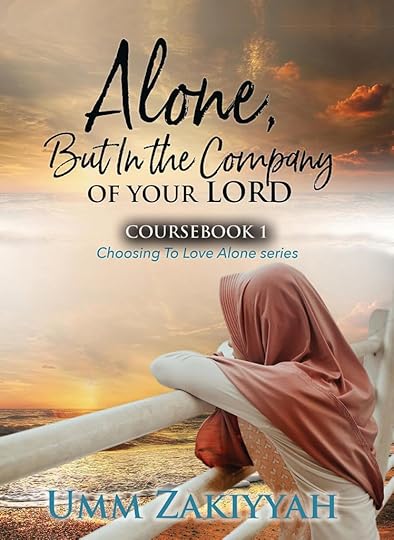
Umm Zakiyyah is the internationally acclaimed author of more than twenty books, including the If I Should Speak trilogy, Muslim Girl , and His Other Wife . She recently launched her “ Choosing To Love Alone ” series via UZuniversity.com to support struggling believers seeking to nourish their emotional and spiritual health.
Join UZ University now.
Subscribe to Umm Zakiyyah’s YouTube channel , follow her on Instagram or Twitter , and join her Facebook page.
Copyright © 2020 by Al-Walaa Publications. All Rights Reserved.
The post Suffering As Purification: Healing in Solitude (Day 5) appeared first on Umm Zakiyyah.
April 8, 2020
Burying Souls To Build Legacies: Healing in Solitude (Day 4)
“If Allah loves a person, He calls out to [the angel] Gabriel, saying, ‘Allah loves so-and-so, O Gabriel, so love him.’ So Gabriel loves him and then announces in the Heavens: ‘Allah has loved so and-so, therefore love him.’ So all the dwellers of the Heavens would love him, and then he is granted the pleasure of the people on the earth.”
—Prophet Muhammad, peace be upon him (Sahih Bukhari)
The “Healing in Solitude” reflections offer a glimpse into the heart of Umm Zakiyyah, as she continues her emotional healing journey during the social distancing lockdown amidst the coronavirus epidemic. Each journal reflection represents a “new day” in her healing journey and/or a new day in the mandatory isolation of social distancing. The following is Day 4:
Two steps forward, one step back. I think that’s how people would describe this, the place where my feet are currently resting on the road of my emotional healing. But alhamdulillah in every circumstance. For truly, no matter what test has befallen me—or is written to befall me still—alhamdulillah: All praise and thanks belong to my Merciful Creator alone.
Dear soul, I say to my aching heart. If your Merciful Creator had not decreed that you suffer the harm, slander, and wrongdoing that you did, then you would quite likely be standing where they are instead of where you are standing right now.
And subhaanAllah, this reminder gives my restless heart the much needed clarification and gratefulness it so badly needs right now. Because even in the midst of my not-yet-healed emotional wounds, my heart is more terrified at the prospect of supporting abuse than suffering it.
In this moment I recall something that I penned in my journal years ago and shared at the end of my book Prejudice Bones In My Body, and I recollect how the tears slipped from my eyes as my heart expressed these words:
O Allah! I thank You for the moments You allowed me to be the one who suffered harm, for perhaps You saved me from being the one who caused harm.
O Allah! I thank You for allowing me to be amongst the oppressed, for perhaps You protected me from being amongst the oppressors.
And O Allah! I thank You for decreeing that I was the one who cried, the pain suffocating me until I begged You to grant me relief. And I thank You for allowing the people to abandon me when I needed them most.
For by Your Grace and Glory, You’ve replaced every sorrow of this world with the tranquil certainty of the Hereafter, and You showed me that there is no abandonment more blessed than that which makes me run to refuge in You.
And O Allah, Al-Ghafoor, forgive me for any harm I’ve caused Your believing servants, even when I imagined I was doing good. And O Allah, Al-Afuw, pardon me for any wrong I’ve done to any of Your creation, even when I imagined I was right. And O Allah, for any servant who cried to You because of what my tongue has spoken, my pen has written, and my hands have sent forth, remove from their heart any anger or animosity toward me, and remove from my heart any anger or animosity toward them. And forgive us both, have mercy on us, and put in our hearts love for Your sake.
And O Allah, keep my heart firm upon Your religion until I meet You, and do not leave me to myself, even for the blink of an eye!
Who Is Your Prophet?
As I sit in the solitude of social distancing, I recall some of the bittersweet parts of my emotional and spiritual journey. I recall my earliest studies of Islam and how deeply moved (and terrified) I was when I first learned of the three questions that every soul will be asked in the grave: Who is your Lord? What is your religion? Who is your prophet?
Today I think on this last one, as it brings to the surface of my heart a painful memory of that spiritually tranquil time.
I was in my early twenties, in my second year of marriage, and embarking on studying the Qur’an and prophetic teachings now that I had finished my undergraduate studies and was a stay-at-home mom. I recall the internal peace I felt at reading the Words of my Merciful Creator and the inspiration I felt at learning from the authentic hadith of His beloved Prophet and Messenger (peace and blessings be upon him).
I recall how I’d spend my time morning to night in spiritual study and worship, and thereafter striving my level best to live in the way that I sincerely believed Allah required of me in this world.
I also recall a spiritual leader whom I loved and respected suddenly calling me one day and demanding that I stop what I was doing. He insisted that I must practice Islam in the way that our community’s chief Imam said we should practice Islam.
He insisted that it was my personal obligation as an African-American woman to blindly follow this chief Imam because he was the “Messenger” whom Allah sent specifically to “our people.” He reminded me that Allah said that He will send a Messenger to every people and every nation, speaking their language and guiding them in the spiritual knowledge and wisdom they needed. He then said that the Messenger whom Allah sent to the African-American people specifically was our chief Imam.
Hearing this took me aback. I’d always known that my small African-American Muslim community had deep respect for the head Imam, as I did I. But not for a moment did I imagine that anyone saw him as more than a community leader whose primary role was to support the Muslims in following the Qur’an and prophetic guidance.
In response, I told the spiritual leader that Prophet Muhammad (peace and blessings be upon him) was the last and final Messenger sent to all of mankind. Then I reminded this spiritual leader of the ayah in the Qur’an where Allah says what has been translated to mean, “Say, [O Muhammad], ‘O mankind, indeed I am the Messenger of Allah to you all…” (Al-‘Araaf, 7:158).
The spiritual leader grew angry and said, “Prophet Muhammad is dead! Our Imam is alive! We don’t have to look to a dead man to know how to live our lives!” He then said that our chief Imam was taught directly by Allah, was Jesus incarnate, and was carrying the soul of Prophet Muhammad with him. He said that this chief Imam was not only the personal “Messenger” to the African-American people but was also “the light of humanity” to all of the world. Thus, it was our chief Imam, and not an Arab man from centuries ago, who was sent as a Messenger to all the worlds.
I told him that I didn’t believe that because that’s not what the Qur’an says. He then told me it was my duty to understand the Qur’an as the chief Imam taught it, not according to what it actually said.
Building Legacies By Harming Souls
After I made it clear to the spiritual leader that I would follow the guidance of the Qur’an and the prophetic teachings over the spiritual beliefs of the chief Imam, he promised to ruin my reputation as far as he was able. He promised to contact everyone who knew me, who respected me, or who thought well of me and tell them what a horrible person I “really” was.
Then he took very deliberate steps to fulfill that promise—even reaching out to my closest friends and loved ones and painting me as an arrogant, deranged girl who was losing her mind. He embellished the details of our disagreements and sensationalized the truth so that he could convince them that I was brazenly disrespecting him as a spiritual leader while openly denigrating the legacy of our chief Imam.
When I asked him why he was doing this, he said he was not going to allow anyone to disrupt the honorable legacy of “our African-American leader.” In other words, he saw it necessary to make my story a cautionary tale, a warning to others to never follow my path.
He said he saw it as his mission to make sure that no one turned away from the blessing we had in “the light of humanity” (i.e. the chief Imam) whom Allah sent as a guide to our people and the world. Therefore, my public humiliation, slander, and character assassination were justified as a means to build and protect the chief Imam’s “honorable legacy.”
Only Our Image Matters, Not Our Souls?
Over the years, I’ve shared bits and pieces of my story in my writings. However, the reaction has not always been favorable. Few people wanted to hear it, some cast doubt on whether or not I was telling the truth, and many saw me as the spiritual leader saw me: harming the legacy of “our people” by speaking my truth.
In these people’s minds, since African-Americans had suffered so much already, we couldn’t afford to reveal any painful truths regarding anything that had happened in our communities. “We get enough bad press,” one sister said, taking issue with a blog I’d posted in which I shared part of my story.
It was the same point of view that so many of “my people” expressed in the Netflix documentary, Who Killed Malcolm X? In the case of Malcolm X, may Allah have mercy on him, far too many people saw his murder, as well as the wrongful imprisonment of two innocent men, as justified in the name of protecting some elusive legacy.
After watching it, I wrote this entry in my journal:
When you are being harmed or threatened by “one of your own”—especially if it’s someone your people love and praise—there is no place of safety for you, and there is nowhere you can run for help. Should any real harm come to you, they’ll find a way to say it’s your own doing, or that you brought it on yourself. This, because you “disrespected” someone whose right to honor and reverence (allegedly) matter more than your very existence, and even more than your right to your own soul.
This is the story of my life.
And here’s what I learned: You’ll always be a threat to those who see you merely as a pawn in their own game, and who see it as a vicious affront for you to choose the safety of your soul over the “honor” of worshipping them.
I was completely unprepared for this visceral lesson to be presented so plainly and painfully while watching the “Who Killed Malcolm X?” Netflix documentary. It deeply triggered me and uncovered so many old wounds that I thought had healed.
This story is the commentary on so many buried black souls.
Blaming stuff like this on “the white man” is about as sensible as blaming the devil for your own sins. Yes, maybe he benefited from it and even encouraged you to do it. But in the end, you still did it. And on the Day of Judgment, that’s all that will matter for YOUR soul.
When Do We Choose Our Souls?
Hearing sentiments like “We get enough bad press” is so heartbreaking to me that I often don’t have the words to express the pain I feel upon hearing it. But the frequency with which I hear it tells me that so many of us are willing to have hundreds of thousands of their own people being abused and harmed in private, and so long as they keep their mouths shut about it, it’s all good.
This “private suffering for the greater good” is allegedly for the noble purpose of making sure that racists (who already think badly about us, no matter what we do) won’t have yet another “bad thing” to add to their proof against our humanity.
But in my view, our private struggles and imperfections are merely proof of our humanity. We are, after all, only human beings. And like all human beings, amongst us are those who are striving to please their Creator and live a soul-nourishing life, and amongst us are those who are striving to please their nafs (lower self) and are being influenced by Shaytaan (the devil), whether knowingly or unknowingly. But most of us—like most humans on earth—are wavering somewhere in between.
Meanwhile, so many souls are suffering, because somehow, in every group of people—regardless of skin color, ethnicity, or religion—misguided humans find a way to equate protecting an elusive public image with silencing or burying painful truths. Then we stunt or block others’ healing, thereby guaranteeing their suffering and that of their children. Consequently, transgenerational trauma and abuse continues while we uphold this culture of harming souls in the name of protecting some “honorable legacy.”
It was in realizing this heartbreaking trend that I wrote this reflection in my journal, as I share in my book Pain. From the Journal of Umm Zakiyyah:
Many Muslims do not seek healing from childhood wounds because they think that to do so is blaming their parents. In this, they are like ones struck by accidental gunfire, but they refuse treatment because the person didn’t intend to harm them. So the wound festers until even those around them suffer, as the person remains in pain and agony while refusing any means of treatment.
When asked about their pain or illness, they respond by speaking of the good traits of the one who inflicted it, imagining that this makes them pious and “respectful.” But they eventually die from health complications incited by an infected, untreated wound. They thereby leave behind no legacy except learned helplessness and the “honor” of harming the self in the name of piety.
The Arm of Moses
One thing that both my healing journey and spiritual studies have taught me is this: Protecting a legacy never requires hiding painful truths or harming innocent souls. True legacies stand strong even in the face of painful truths—and true legacies nourish the human soul; they don’t harm it.
In reflecting on true human legacies in history, even in the face of painful truths, I think of the frown of Prophet Muhammad (peace and blessings be upon him), the hands of ‘Umar Ibn al-Khattaab (may Allah be pleased with him), and the arm of Moses (Prophet Moosaa, peace be upon him).
I remind myself how in the chapter titled ‘Abasa (surah 80) in the Qur’an, Allah did not hide the mistake of the Prophet in how “he frowned and turned away” when a blind man came to him interrupting some important da’wah (spiritual teaching) he was doing. Allah didn’t even hide (in Al-Ahzaab, 33:37) the embarrassing truth about how the Prophet felt ashamed to tell the people about being commanded to marry the former wife of his adopted son, fearing what the people would think.
Yet despite these “imperfect” and naturally painful parts of his humanity, the powerful, indisputable legacy of our Beloved Prophet (peace and blessings be upon him) lives on.
I also remind myself of how in the Islamic history books, it is not hidden that the hands of the famous Companion of the Prophet, ‘Umar Ibn al-Khattaab (may Allah be pleased with him) once carried a sword intended to kill the Prophet himself, and also during the Days of Ignorance, those same hands buried his young daughter alive.
Yet Allah guided this man, honored this man, chose him as one of the best Muslims for all time, then assigned him as the caliph of the believers. And despite the painful truth of his past, the indisputable, honorable legacy of ‘Umar Ibn al-Khattaab (may Allah be pleased with him) lives on.
I also remind myself of how in both the Qur’an and the scriptural history of the People of the Book, we know that the strong arm of Prophet Moses (peace be upon him) struck a man so fiercely that this blow ended in the man’s wrongful death. Yet that same arm was the one in which Allah placed the rod that would split the Red Sea and bring the Children of Israel to safety.
And till today, not a single Jew, Christian, and Muslim even attempts to hide the painful truth that the arm of Moses once killed a man. Yet still, not a single Jew, Christian, or Muslim denies that this man remains a noble Prophet and Messenger (peace be upon him) and has an honorable station in front of His Lord, in this world and in the Hereafter.
In other words, in the hearts of all of us, the legacy of Moses is not tainted in the least due to the painful truth of his past. Rather, the powerful, indisputable legacy of Prophet Moses (peace be upon him) remains despite it.
And even as Allah Himself mentions in the Qur’an the wrongful death suffered due to the arm of Moses, a huge part of the legacy of this noble Prophet is highlighted in another story that involves that same arm: Through that powerful arm of Moses, God chose to split a sea, grant victory to the believers over the tyrannical Pharaoh, and guide the Children of Israel to the path of worshipping their Creator.
Building a Legacy or Beautifying a Lie?
True legacies don’t require us to lie, to hide painful truths, or to harm a single human soul striving to please his or her Creator.
And if we are sincerely worried about harm coming to us due to us being an already vulnerable group of people who are so often unprotected in this world, I ask us to sincerely reflect on the Words of our Merciful Creator, which have been translated to mean:
“O you who believe! Stand out firmly for justice, as witnesses to Allah, even as against yourselves, your parents, your kin, and whether it be [against] rich or poor. For Allah can best protect both. So follow not the lusts [of your hearts], lest you may avoid justice. And if you distort [justice] or decline to do justice, verily Allah is well-acquainted with all that you do” (An-Nisaa, 4:135).
These are the Words that we so often quote to justify speaking up for justice against others. But how often we forget that these divine Words also urge us to speak us against our own selves. Meanwhile, Allah is fully aware of our vulnerable position when we fulfill this duty, whether we are of the privileged or underprivileged, hence His saying, “…For Allah can best protect both.”
And since all honor and protection ultimately come from Allah alone, not a single word uttered against a true living legacy—especially if it is the truth—has the ability to disrupt this honor and protection in any way. For if Allah loves someone, it is He who will ensure not only their safety and protection, but also that their name becomes beloved amongst His believers on earth. And not even the most well-crafted smear campaign from all corners of the earth can ruin the honorable legacy of someone whom Allah has decided will be honored in this world generation after generation.
Protect Your Soul, Allah Protects Legacies
So dear believing soul, know this and know it well, and then teach it to your heart: Never in human history has our Merciful Creator ever condoned lying, silencing painful truths, and harming innocent souls to protect the honorable legacy of any His servants.
In fact, our All-Wise Creator put those very painful truths in divine public record—in the Qur’an itself—for everyone to read till the end of time. And not a single one of those painful truths—whether in the frown of the Prophet, the hand of ‘Umar Ibn al-Khattaab, or the arm of Moses—takes away from the legacies of His true, honorable believers in this world.
In fact, their legacy stands taller, stronger, and more honorable than so many others who never frowned at a blind man, who never buried their child alive, and who never killed a man.
So why am I being asked to bury my soul to protect a legacy? my heart asks.
In reality, there are only two groups of people who see it as their duty to silence painful truths and destroy innocent souls for the “noble purpose” of building a legacy: cults and abusers.
So dear soul, if this is your method of protecting the legacy of anyone you love or admire, then sincerely ask yourself: Which one are you?
You don’t have to struggle alone. Let’s work together: uzuniversity.com
Umm Zakiyyah is the internationally acclaimed author of more than twenty books, including the If I Should Speak trilogy, Muslim Girl , and His Other Wife . She recently launched her “ Choosing To Love Alone ” series via UZuniversity.com to support struggling believers seeking to nourish their emotional and spiritual health.
Join UZ University now.
Subscribe to Umm Zakiyyah’s YouTube channel , follow her on Instagram or Twitter , and join her Facebook page.
Copyright © 2020 by Al-Walaa Publications. All Rights Reserved.
The post Burying Souls To Build Legacies: Healing in Solitude (Day 4) appeared first on Umm Zakiyyah.
April 5, 2020
The Story Locked In My Soul: Healing in Solitude (Day 3)
“We tend to see the world in binary terms—sinner or saint, angel or devil—but I think life is much more nuanced than that.”
—Judy Smith, Good Self, Bad Self
The “Healing in Solitude” reflections offer a glimpse into the heart of Umm Zakiyyah, as she continues her emotional healing journey during the social distancing lockdown amidst the coronavirus epidemic. Each journal reflection represents a “new day” in her healing journey and/or a new day in the mandatory isolation of social distancing. The following is Day 3:
Today the stillness of social distancing is revealing that at least some of the restlessness that I’ve been unable to calm during this forced “alone time” with my soul is the untold story inside of me. It’s the story of my emotional and spiritual journey—in full.
It’s true that I’ve been suppressing so much of it for years, but it’s also true I’ve been sharing bits and pieces of it for years.
Isn’t that enough? I ask my restless heart.
I feel overwhelmed at the thought of saying more than I already have. I know that I have a right to, and I know that part of me has a need to. But I also know that this doesn’t mean that I must.
Or does it?
In my mind are flashes of memories that I’m afraid to fully confront. The slander. The public humiliation. The dragging my name through the mud. The promise to ruin my life.
And the fulfillment of that promise—with glee.
And the fact that at the head of this character assassination was someone I loved, trusted, and respected more than life itself.
I recall the initial confusion when life as I knew it began to fall apart. But at the time, what was happening to me was so disconnected from what I was used to that I didn’t even fully process what was going on. I suppose some would call this denial, and others would call it shock. But I don’t see how I could be in denial about something that I didn’t even realize was a possibility in my world at the time. It would take years for me to understand that this really was a deliberate campaign to tear me down.
And still, even with this painful realization, it made no sense. Why would a well-respected prominent spiritual leader be so angry at a twenty something girl for doing nothing other than worshipping Allah the best way she knew how? Yes, he had taught her so much about life and the soul. But wasn’t he the same one who always advised his students to put God first? Why then shouldn’t this injunction apply to me?
Or did he see himself as God?
Another Unknown Path
My heart wavers just a bit as I stare at the unknown road ahead of me, the one that was hidden from me on the roadmap within. I wonder if I have any strength left in my soul to, yet again, take a single step. My first journey was much more than a thousand miles, and I wonder if this one will be too. But from where I’m standing, all I can see is a path of seemingly endless winding roads and hidden detours—and more darkness than light.
You’ve treaded an unknown path before, I tell myself, and you can do it again.
But I feel the wavering within.
The anxiety is clutching me—not so much due to the unknown of the path ahead of me, but due to the known of what has already past. Because even if every step I take on this unfamiliar journey will be only as painful as the path I walked before, I fear that my legs just don’t have the strength to support me anymore.
Then I think of an inspirational quote I read some time ago: So far, you’ve survived 100% of the days you thought you wouldn’t, and that’s pretty good. And gratefully, I find that this recollection brings some calm to my restless heart. I can’t remember where I first read it, or even who said it, but the memory of it helps me now.
Because I no longer know how to suppress the story locked in my soul.
But with the help of God, I’m determined to try.
I just can’t imagine treading another unknown path. Again. And being slandered and publicly humiliated. Again. And enraging those whose claims of love are merely one-sided transactions wherein I’m the only one being asked to silence my soul.
So I stay silent. Because I’ve seen the beast behind those eyes that claim love. They promise to destroy every bit of me should they learn that I uttered a single word—even in the privacy of my home—that they dislike. They imagine themselves to be protecting some phantom legacy of “our people.” In their phantom legacy, disturbing truths are suppressed, and beautiful lies are embellished.
So I leave them to their beautiful lies.
And I choose the restless silence of my soul.
Keeping Quiet
The other day a compassionate loved one shared with me some lyrics of a song I’d never heard before called “Quiet.” They felt the words mirrored the path that I was destined to take in this world: I can’t keep quiet. For anyone. Anymore.
The words of the song moved me. But they scared me even more.
Over the years, I’ve let pieces of my story out in hiccups of pain and anxious hesitation, but only when the agony of suppression allowed me no peace.
Yet even then, I knew it was only a partial release.
I hid the raw details of my story from the world and kept the most painful parts of it locked inside.
I covered up names and places and altered descriptive traits, desperate to find release in a partial truth-telling that I hoped would help heal the wounds on my soul.
But I didn’t realize that this partial truth-telling would also bury parts of me.
The Pretty Box
It’s true that I find healing in truth-telling. But it’s also true that not all truths need to be told.
Besides, I’m not fully convinced that my story is one the world wants to hear. People like stories wrapped in “pretty boxes,” where everything has a clear label and can be filed neatly into a predictable category in their mental shelf. Good or bad. Righteous or evil. Saint or devil. Right or wrong.
They don’t like the messy in-between.
It’s true that this messy place of uncertainty—and of wavering between darkness and light—is the space that every human being navigates each day. But when it comes to hearing other people’s stories, especially when it involves wrongdoing or abuse, the world somehow needs a pretty box that tells them, “This person is really, really bad, so hate them,” and “This person is really, really good, so love them.” Then they smile in contentment after reading the story, and feel good about themselves for hating the bad guy and loving the good guy.
They don’t like it when the bad guy and the good guy are one and the same. This is especially the case when it comes to stories of wrongdoing or abuse in spiritual environments. I suppose the clear distinction between the evil of the devil and the goodness of God in scriptural contexts leads religious people to imagine that the same clear distinction must exist in worldly contexts of religious people themselves.
But it simply doesn’t, no matter how badly we want it to.
Our Need for a Villain
“He’s not a villain.” Till today these four words keep coming back to me, even though it’s been a couple of years since I heard them. They were spoken by the arbiter appointed by the Muslim organization I worked for at the time, and they were spoken immediately after I poured my heart out to her, sharing how the head of the organization had wronged me and broken the terms of my contract.
But apparently, she valued the “pretty box” with the neat labels on it more than she valued me or my rights. So when I finished telling my side of the story, she immediately declared who the villain was not. And since there were only two “characters” in this particular story, that didn’t leave too much guessing regarding who the villain actually was.
That this happened in a well-respected organization known for its spiritual work worldwide reminds me why, at least for now, I choose to keep so much of my story locked inside. It’s scary when you realize that merely speaking up to say, “I hurt” is enough to earn you the villain label and your name being stashed away forever in the dark “pretty box.”
I don’t want my name to live forever in a pretty box labeled “villain.” And I don’t want my name to live forever in a pretty box labeled “saint.” And despite all that I’ve suffered at the hands of those who’ve wronged me, I don’t even want my name to live forever in a pretty box labeled “victim.”
My story isn’t about pointing fingers at villains and pinning stickers on me the saint. It’s about a spiritual refugee trying to find her way home, and how along the way, some hurting souls were so lost themselves that they thought her journey threatened their own. So they saw it as their “divine duty” to push her off the road, and then drag her back to where they felt she belonged.
The problem is we want stories of dhulm—inflicting harm, injustice or wrongdoing—to be monster stories, I wrote in my journal the other day. We want to believe that abusers, oppressors and wrongdoers are evil, corrupt people, who are dead set on harming or destroying others for mere personal gain or sadistic pleasure. While some stories of dhulm certainly are of this sick nature, most are just stories of complex, broken human beings whose unhealed wounds kept them from controlling their internal demons when the ones who loved and trusted them needed compassion and emotional safety most.
But I doubt anyone would believe my story anyway, so I’m keeping it locked away deep in my soul. There, it doesn’t need a pretty box or a neat label—except the one that says “my truth.”
You don’t have to struggle alone. Let’s work together: uzuniversity.com
Umm Zakiyyah is the internationally acclaimed author of more than twenty books, including the If I Should Speak trilogy, Muslim Girl , and His Other Wife . She recently launched her “ Choosing To Love Alone ” series via UZuniversity.com to support struggling believers seeking to nourish their emotional and spiritual health.
Join UZ University now.
Subscribe to Umm Zakiyyah’s YouTube channel , follow her on Instagram or Twitter , and join her Facebook page.
Copyright © 2020 by Al-Walaa Publications. All Rights Reserved.
The post The Story Locked In My Soul: Healing in Solitude (Day 3) appeared first on Umm Zakiyyah.
April 4, 2020
A Seat In My Restless Soul: Healing in Solitude (Day 2)
“Pain is a color. I realize that now. It’s the color of life. Or maybe it’s the canvas. But either way, I’m going to try to paint some strokes of love, patience and gratitude in the foreground.”
—from the journal of Umm Zakiyyah
The “Healing in Solitude” reflections offer a glimpse into the heart of Umm Zakiyyah, as she continues her emotional healing journey during the social distancing lockdown amidst the coronavirus epidemic. Each journal reflection represents a “new day” in her healing journey and/or a new day in the mandatory isolation of social distancing. The following is Day 2:
Today the burden feels a bit lighter, even as my heart feels a bit heavier, as I walk this unknown path of social distancing and “alone time” with my soul. The restlessness within remains, but I don’t imagine it will be going anywhere for some time. So I’m beginning to accept that it is a companion on this part of my journey, and perhaps for every other unknown journey that awaits my soul.
But I can’t quell the restless hope that I’m nearing the end of my painful journeys in this world. I don’t know how many more journeys my heart can take, because so much of me feels exhausted from the ones I’ve already walked.
It seems that despite all the trials I’ve faced in life, my story isn’t over just yet—and neither is my pain. And I am still a spiritual refugee trying to find her way home.
I know this exhaustion that I’m feeling isn’t a good thing. So I know I can’t afford to feel it too deeply. But I also know I can’t force myself to feel anything other than what I feel.
So I search my heart for a middle ground. I search for a way to be compassionately present in my exhaustion while not allowing my exhaustion to keep me from doing what I need to do to survive—emotionally, physically, and spiritually.
So I push on.
I let myself feel exhausted while I move forward in doing what needs to be done. I even let myself have a good cry (or two), and I even let myself feel pain.
My Companions on the Journey
In this forced stillness—of being quarantined from the emotional and physical toxins of the environment outside my home—I imagine this is how it’s supposed to be. Pain is my companion on the journey, as is that restlessness and confusion within.
Also among my companions are the moments of joy and happiness that grant me comfort and sudden laughter, and a fleeting glimpse of what my restless soul is reaching for beyond this world.
So my heart drafts another affirmation for compassionate presence to help me get through another day: I will not force away the pain, and I will not force away the happiness. I will allow each to settle upon the canvas of my soul. Then I will paint those strokes of gratitude that belong in every frame.
A Truce Overdue
In an effort to make this journey a bit more tolerable, I’m making peace with the consistent pain and restless confusion, and I’m allowing my heart to peacefully offer them a seat at the table within. After all, they’ve always forced their way in, time and time again, no matter how frantically I refused them.
The world offers me a dozen prescriptions for always “choosing joy” and “letting go” of pain and unhappiness—and of anything else that isn’t “serving me.” But today I ask myself why I should insist that my every choice and feeling serve me, when my only duty in this world is to serve my Creator and nourish my soul.
And certainly, pain and discomfort have a purpose in serving my Creator and purifying my soul, so why shouldn’t they have a purpose in serving me?
Beyond This World
During my healing journey, I’ve been forced to accept that there is no healthy way to run from pain and discomfort, especially when so much of what is happening inside you and around you is inciting those very things.
So no, I won’t chase away the pain and confusion anymore. Nor will I ask them to find some other place to live. I will instead ask them what they are trying to teach me as I open the door to them in my life.
Because even in those moments that I bade them farewell in peace and quietly closed the door on them, I found them suddenly disrupting the quiet “positivity meal” I had set aside for myself. This repeated experience reminds me that pain, discomfort, and confusion will always have a home in the human heart. So why should my human heart be any different?
And why should I even want my heart to be different? What good is there in a human heart seeking to have other than a human heart?
Perhaps in our sincere efforts to escape the inevitable trials of life, we imagine we can decide which tests will visit us and which ones won’t. This is what so many “positivity gurus” teach us—as they invite us to make pleasure and happiness our deen (spiritual way of life) and sole purpose in life.
This world is their Paradise, I remind myself.
But it certainly isn’t mine—nor do I wish it to be. So I remind myself that chasing away pain and confusion is a natural requirement of lost souls whose deen teaches them that their “highest level of Paradise” is found in this world, while shutting their eyes to their own suffering.
But my soul reaches for a Paradise beyond the suppressed suffering in this world.
Yet still, my soul reaches for a fulfilling life while I’m here.
Seeking an Authentic Life
My soul has beseeched me over and over to seek an authentic life, not a “happy” life. It has urged me over and over to understand that an authentic life is a fulfilling life, and that a fulfilling life is an honest life—and that a life of spiritual and emotional honesty offers the closest thing to happiness that any soul can experience in this world.
It was due to being touched by these spiritually nourishing lessons that I penned this reflection in my journal some time ago: More than happiness, it is gratefulness that is a choice. It is through acts of gratefulness that we experience the deepest possible happiness in this life.
The trials of life have taught my soul that there is no emotional or spiritual honesty in a heart that does not allow for the natural pain-pleasure balance of life. We can run from our pain, and we can suppress our pain. But still, it doesn’t disappear. It just manifests itself in ways we refuse to see, acknowledge, or take responsibility for.
This is because at the table of life, there will always be a seat for pain, discomfort, and confusion—just as there will always be a seat for love, patience, and gratitude (if you allow them in). In fact, we are more capable of denying love, patience, and gratitude into our lives than we are of refusing pain, discomfort, and confusion.
I think now on the famous quote by Chinua Achebe that always touches a deep part of me because it wraps up so neatly into words the difficult relationship I’ve always had with the pain and confusion of my life: “When suffering knocks at your door and you say there is no seat for him, he tells you not to worry because he has brought his own stool.”
You don’t have to struggle alone. Let’s work together: uzuniversity.com

Umm Zakiyyah is the internationally acclaimed author of more than twenty books, including the If I Should Speak trilogy, Muslim Girl , and His Other Wife . She recently launched her “ Choosing To Love Alone ” series via UZuniversity.com to support struggling believers seeking to nourish their emotional and spiritual health.
Join UZ University now.
Subscribe to Umm Zakiyyah’s YouTube channel , follow her on Instagram or Twitter , and join her Facebook page.
Copyright © 2020 by Al-Walaa Publications. All Rights Reserved.
The post A Seat In My Restless Soul: Healing in Solitude (Day 2) appeared first on Umm Zakiyyah.
March 31, 2020
Journey of a Thousand Miles: Healing in Solitude (Day 1)
“A journey of a thousand miles begins with a single step.”
—Chinese proverb
The “Healing in Solitude” reflections offer a glimpse into the heart of Umm Zakiyyah, as she continues her emotional healing journey during the social distancing lockdown amidst the coronavirus epidemic. Each journal reflection represents a “new day” in her healing journey and/or a new day in the mandatory isolation of social distancing. The following is Day 1:
I sit in the stillness, locked away in my home, forced to spend “alone time” with my soul. They call it social distancing, and they say it’s to protect myself and others from harm.
I believe them. But then again, I don’t require much convincing.
It’s been more than four years now since I first began some social distancing of my own. And it was for pretty much the same reason as this current lockdown: to protect myself from harm.
I did a lot of healing in those four years of being locked away from the rest of the world. Or at least away from the world I was used to.
I needed time to process what had happened to me, and what was happening to me still.
But now as I sit in this quiet space creating a social distance between me and the rest of the world, I detect the restlessness within, and the aching voice inside me says, “You’ve still much healing to do.”
I knew it wasn’t going to be an easy journey or a quick one when I first quarantined myself away from the toxic relationships and environments that incited my deepest wounds. So I suppose it makes sense that I haven’t healed as much as I thought I had.
But I shift my thoughts to a space of compassionate presence and remind myself that I’ve come so far, and there’s so much to be grateful for.
And it’s true. I couldn’t count my blessings or measure the breadth of progress on my journey, even if I tried.
And at times, I do try. But I’ve come to accept that there are parts of the human spirit that not even the heart can see, so I’m making peace with holding on to what is in my reach.
Most times, my hands grasp a beautiful story of a spiritual refugee who has come so far in search of home. She has survived storms she thought she never could, and she has let go of things she thought she never would.
There were times she thought her suffering would tear the very life from her, and there were times that the darkness urged her to tear the life from herself.
But then her Merciful Creator intervened between her and her heart and allowed her to say, “I choose tomorrow today.” These words were told to her—to me—by a beloved companion who too had suffered amidst the tumultuous emotional storms of life, yet held on to the knowledge that “this too shall pass.”
But that restlessness within my heart tells me that my journey as a spiritual refugee is taking another road, an unexpected detour that I didn’t perceive on the roadmap of my soul.
Or perhaps it isn’t a detour so much as it is a hidden road that my Merciful Creator had initially shielded from my hurting heart. I imagine that in His infinite knowledge, compassion, and wisdom, He knew that I wouldn’t have taken that single step if I had known that my journey would be, in fact, more than a thousand miles.
You don’t have to struggle alone. Let’s work together: uzuniversity.com
Umm Zakiyyah is the internationally acclaimed author of more than twenty books, including the If I Should Speak trilogy, Muslim Girl , and His Other Wife . She recently launched her “ Choosing To Love Alone ” series via UZuniversity.com to support struggling believers seeking to nourish their emotional and spiritual health.
Join UZ University now.
Subscribe to Umm Zakiyyah’s YouTube channel , follow her on Instagram or Twitter , and join her Facebook page.
Copyright © 2020 by Al-Walaa Publications. All Rights Reserved.
The post Journey of a Thousand Miles: Healing in Solitude (Day 1) appeared first on Umm Zakiyyah.