Umm Zakiyyah's Blog, page 4
December 25, 2019
Jesus, Christians and Afterlife: What Do Muslims Think?
An American high school student was given the homework assignment to interview someone from a different faith, and he chose Muslims. Here are his questions and my answers, as shared in the book He Asked About Islam :
Who is your God and why do you worship Him?
My God is the Creator of the heavens and the earth. He is the Creator, Owner, and Manager of all that exists, from what we see and from what we don’t see, from what we know and from what we don’t know. God (whom we call “Allah” in Arabic) is the God of all people—you, me, and all humans who have ever walked the earth.
I worship Allah because He alone has the ability to hear and answer prayers and reward worship in this world and in the Hereafter.
How can you get to know your God better?
We come to know Allah better in three ways:
Reflecting on His signs all around us and within us: He created the heavens in the sky, the ground beneath our feet, and even the hearts in our breasts. These signs remind us that Allah created all of this and us for a very important purpose.
By praying to Him directly and asking for His guidance in all affairs: We do this by calling on Him alone, without the aid of “saints,” prophets, or anything of His creation or our imagination.
Studying from the two revelations He has given to humans as a guide until the end of time, the Qur’an and the Sunnah: The Qur’an is the final holy Book revealed to Allah’s Messenger, Prophet Muhammad, peace be upon him; and the Sunnah is God’s Wisdom that inspired the life, words, and actions of Prophet Muhammad.
What do you have to do to live a good life in the eyes of your God?
Allah requires us to do only this to live a good life: Believe in Him as He has asked us to, follow what His Messenger taught us, and continually repent from the mistakes and sins that we will all make while we live on this earth.
In the Qur’an, Allah says what has been translated to mean,
“Say [O Muhammad to all people], ‘If you [really] love Allah, then follow me. Allah will love you and forgive you your sins. And Allah is Oft-Forgiving, Most Merciful.” Ali’Imraan, 3:31
Where do you go after you die and how do you get there?
After we die, all humans enter the grave, where they will remain until the Last Day. The first part of this journey begins when the Angel of Death seizes our soul until no more life remains in our limbs. We are then placed beneath the soil of the earth, our graves.
Once there, we are asked three questions by the angels Munkar and Nakir pertaining to the life we lived on earth: Who is your Lord? What is your religion? and Who is your Prophet [sent to you]?
Humans remain in these graves until Allah resurrects all descendants of Adam. On this tremendous day, the bones will be reassembled, and they will be clothed with flesh and skin like we had in this world. During this resurrection, we will come from our graves in a drunken state, caused by the trepidation that afflicts us in the heart-wrenching knowledge that we must face our Lord for Judgment regarding how we passed our lives in this world.
Allah says,
“Does man think that We shall not assemble his bones? Yes, We are Able to put together in perfect order the tips of his fingers.”Al-Qiyaamah, 75:3-4
We arrive at this point of resurrection as a result of our Creator simply saying “Be!” and it will be done.
The Day of Judgment stretches out for what would account for 50,000 years in this world. On this somber day, the sun will be drawn close to the earth such that the heat becomes excruciating. No one will be exempt from the distress suffered at this moment except those who lived a life of belief and righteousness in the world.
A Scale is placed before each person, and their deeds are weighed. Those whose scale is found heavy with good deeds will enter Paradise. Those whose scale is found light will enter the Fire unless Allah, from His infinite Mercy, pardons or forgives him. But pardon and forgiveness are only for believers, who worshipped Allah alone with no partners, sons, daughters, or intermediaries; for Allah does not forgive this sin if a person dies upon it.
Allah says,
“Verily, Allah does not forgive that partners should be set up with Him in worship, but He forgives anything other than that to whom He pleases…”Al-Nisaa, 4:48
The people who, during their time on earth, turned away from the Truth once it reached them will not even be addressed on that Day. Their Creator will not look at them or speak to them, and their eyes will be blinded so that they will not gaze upon the Face of their Lord. These people will be driven into Hell immediately, trailing behind the false gods they used to worship.
Allah says,
“Nay! Surely, they [evil-doers] will be veiled from seeing their Lord that Day. Then verily, they will indeed enter and taste the burning flame of Hell.” Al-Mutaffifeen, 83:15-16
Then a bridge will be laid over Hellfire. This bridge is thinner than a hair and sharper than a sword, and every person must cross it—for at its end is Paradise. Some people will slip and fall into Hellfire. Others will cross safely and enter Paradise.
Once a person enters Paradise, they remain there for eternity; but Paradise is only for the believers. Some sinful Muslims will enter Hell-Fire before being admitted to Paradise. However, disbelievers remain in Hell-Fire for eternity—and they have no hope of pardon or escape.
People enter Paradise as a reward for having believed in Allah as He taught them and having followed the Messenger sent to them. When they receive this magnificent news on the Day of Judgment, their faces will glow with immense happiness that emanates from their light of faith. These believers will gaze upon their Lord that Day, beaming with delight at this indescribable pleasure.
Allah says,
“Some faces that Day will be shining and radiant, looking at their Lord [Allah].” Al-Qiyaamah, 75:22-23
After this monumental Day draws to a close, everyone will have entered their final abode—Paradise or Hell.
What does Heaven look like?
Paradise, which is often called Heaven, is the final destiny of all believers. Paradise is filled with delights and pleasures that no eye has ever seen, no ear has ever heard, and no mind or heart could even imagine.
Allah and His Messenger have shared with us a glimpse into this world of lasting bliss, wherein the smallest reward encompasses more than what a king enjoyed of riches and pleasures on earth, and wherein the greatest reward is beyond what any human could fathom on earth.
In Paradise, there will be gardens with rivers flowing beneath. Its inhabitants will wear garments of soft silk and drink from silver vessels that are clear as glass, and they shall have whatever they desire or hope for. Every man will have beautiful, large eyed companions as mates. Every woman will be endowed with a beauty that surpasses even the most phenomenal beauty of this world; and each time her husband comes to her, she will be more beautiful than before.
There will be large trees, expansive pastures, delicious fruit, and food that is pleasure itself. Much of this remarkable sustenance will remind believers of what they had eaten in this world.
Allah says,
“And give glad tidings to those who believe and do righteous good deeds that for them will be Gardens under which rivers flow. Every time they will be provided with a fruit therefrom, they will say [in pleasant remembrance and delight], ‘This is what we were provided with before.’ And they will be given things in resemblance. And they shall have therein [in Paradise] purified mates, and they [the believers] will abide therein forever.” Al-Baqarah, 2:25
Believers who were friends or companions in this world will be reunited with a brotherhood inspired by the light of faith. Their hearts will be illuminated with purity, and their breasts will be free of any ill will that had ever come between them in the world. They will recline, laughing in lighthearted pleasure, on thrones of dignity, looking out at the expanse beneath them.
Allah says,
“Verily, the pious will be in delight [in Paradise], on thrones, looking [at things from a high place]. You will recognize in their faces the brightness of delight. They will be given to drink pure sealed wine. The last thereof [of the wine] will be the [sweet] scent of musk, and for this let [all] those strive who want to strive [in obeying Allah].” Al-Mutaffifeen, 83:22-26
The pleasures of Paradise are such that the person who has been given the least reward will imagine that there is no person granted more pleasures and blessings than he.
What does Hell look like?
In sharp contrast to Paradise, immeasurably so, Hellfire is a place of misery and despair. The flames of Hell are sordidly black, and its seething heat is exponentially more excruciating than any blazing fire in this world. The Fire is kept burning by the aid of a most potent fuel that is more effective in inciting a powerful blaze than the black coal and dry logs we use in this world. And that potent fuel is none other than stones and humans.
Allah says,
“Then fear the Fire whose fuel is men and stones, prepared for the disbelievers.” Al-Baqarah, 2:24
There will be no death or reprieve from this everlasting torment, and those in Hellfire will cry out in agony, begging the people of Paradise to pour down even the smallest drink to them. But the people of Paradise will, in response, call out to the people of Hell, reminding them of what transpired between them on earth; they made fun of the believers and scoffed at Islam and the promise of eternal punishment, thereby selling their souls in preference for the paltry pleasures of the transient world instead of the eternal bliss rewarded for the sincere in faith.
Allah says,
“And the dwellers of Paradise will call out to the dwellers of the Fire (saying), ‘We have indeed found true what our Lord had promised us. Have you also found true what your Lord has promised?’ They [the people suffering the agonizing torment of Hell] will say, ‘Yes!’ Then a crier will proclaim between them, ‘The Curse of Allah is on those who do wrong [through evil and disbelief]’.” Al-‘Araaf, 7:44
Thus, those in Hellfire will be filled with unbearable regret at having turned away from something as simple as saying “I believe in Allah.” They will suffer torments the like of which no eye has ever seen, no ear has ever heard, and no mind or heart could even fathom. They will be given to drink boiling fluid and the pus of infected wounds, and their thick skin will be burnt from their bones; and then the skin will be replaced anew to be tormented and burned again. And not even the least bit of reprieve will be offered to them, as they will be suffering an agonizing punishment that no human heart or mind can withstand with any patience, forbearance, or strength…yet their torment will only increase.
All of this because they took religion as a game and preferred disbelief to the light of faith in Islam, focusing on their transient joys and pleasures granted in this world.
Allah says,
“And leave alone those who take their religion as play and amusement, and are deceived by the life of this world. But remind [them] with it (the Qur’an) lest a person be given up to destruction for that which he has earned, when he will find for himself no protector or intercessor besides Allah, and even if he offers every ransom, it will not be accepted from him. Such are they who are given up to destruction because of that which they have earned [through disbelief and sin]. For them will be a drink of boiling water and a painful torment because they used to disbelieve.” Al-An’aam, 6:70
The torment of Hell is such that the person who has the least torment—like that of an iron rod placed beneath his feet, the heat of which causes his brain to boil—will imagine that there is no person who is suffering more agony and torment than he.
What are your views on Christianity and other religions?
Christianity, in its original form (the monotheistic religion taught by Christ Jesus, the son of Mary), is no different from Islam, which is based on worship of Allah alone and belief in all His prophets and messengers, including Noah, Abraham, Moses, Jesus, and Muhammad (who was prophesized in the Bible). The same is true for Judaism in its original form (the monotheistic religion taught by Prophet Moses to the Children of Israel).
However, when the teachings of Christianity and Judaism strayed from their prophets’ original teachings, they became new religions that do not reflect the revelation of Allah or the teachings of Prophet Jesus and Moses.
A similar phenomenon exists amongst Muslims: Some professed Muslims have strayed so far from the original teachings of Islam that they are actually following a new religion that has no connection to Islam in any way.
Therefore, the Islamic view of all religions is simply this: Those who historically believed in God alone and followed their prophets and messengers lived upon the truth and will be rewarded with Paradise in the Hereafter. Of these earlier generations of believers, Allah says,
“Verily, those who believe and those who are Jews and Christians and Sabians, whoever believes in Allah and the Last Day and do righteous deeds shall have their reward with their Lord. On them shall be no fear, nor shall they grieve.” Al-Baqarah, 2:62
However, for those people living in modern times, the only religion of truth is that of Islam. Allah sent prophets to each generation of people to call them to the truth. The prophets Moses and Jesus were sent to the Children of Israel; and before them the prophets Noah, Abraham, Lot and many others were sent to their respective people, as specified by Allah.
In our generation, the final prophet and messenger to all humankind is Prophet Muhammad, peace be upon him. Whereas earlier prophets were sent to only a certain group of people, Prophet Muhammad was sent as the final prophet to all people until the end of time. Allah says,
“Say [O Muhammad to the people], ‘O mankind! Verily, I am sent to you all as the Messenger of Allah.’” Al-‘Araaf, 7:158
Therefore, in today’s world, any religion other than Islam will not be accepted by Allah in this world or in the Hereafter, and this includes beliefs systems that carry the name “Islam” but do not adhere to its foundational precepts. Allah says,
“And whoever seeks a religion other than Islam, it will never be accepted of him, and in the Hereafter, he will be of those who have lost [all spiritual good].” Ali’Imraan, 3:85
What are your views on Jesus and who he is?
Jesus the son of Mary (peace be upon him) is a prophet and messenger who, by the will of Allah, was born to the Virgin Mary. This miraculous birth, wherein Jesus was born without a father, is similar to that of our father, Prophet Adam, who had neither a mother nor a father. Allah tells of Jesus’ miraculous birth in the Qur’an,
“She [Mary] said, ‘O my Lord! How shall I have a son when no man has touched me?’ He said, ‘So [it will be], for Allah creates what He wills. When He has decreed something, He says to it only, ‘Be!’ and it is.’” Ali’Imraan, 3:47
Therefore, Jesus’ birth was simply one of the many miracles that Allah decreed to happen to prophets and messengers on earth. These miracles are shown to us for the purpose of strengthening our faith in the truth of Allah’s message, with which prophets and messengers are entrusted. In John, 4:48, the Bible reports Jesus himself as saying of these signs of God, “Unless you people see miraculous signs and wonders, you will never believe.”
How was the Universe and the world created?
The universe and the world were created by Allah simply commanding them to come into being. Allah says,
“[Allah is] the Originator of the heavens and the earth. When He decrees a matter, he only says to it, ‘Be!’ and it is.” Al-Baqarah, 2:117
How do you worship?
We worship Allah in the way He taught us through His messenger, Prophet Muhammad (peace be upon him). This includes praying and supplicating to only Allah without the aid of intermediaries, false gods, or through means humans invented or decided amongst themselves.
This worship also includes obeying Allah by doing what He has commanded and leaving what He has forbidden, as well as seeking His pleasure in all our worldly affairs.
What would you say is the message at the heart of your religion?
I would say the message at the heart of Islam is this: Worship Allah alone, and strive your best to live in the way that He taught through the life, example, and words of His final prophet and messenger, Prophet Muhammad. If you die upon this way of life, even if you fall short or sin at times, you are guaranteed Paradise in the Hereafter. Prophet Muhammad (peace be upon him) said,
“If anyone testifies that none has the right to be worshipped except Allah Alone Who has no partners, and that Muhammad is His Slave and His Messenger, and that Jesus is Allah’s Slave and His Messenger and His Word which He bestowed on Mary and a Spirit created by Him, and that Paradise is true, and Hell is true, Allah will admit him into Paradise with the deeds which he had done even if those deeds were few” (Bukhari).
Download the eBook FREE: He Asked About Islam


Umm Zakiyyah is the internationally acclaimed author of twenty books, including the If I Should Speak trilogy, Muslim Girl , and His Other Wife . In 2019, she launched UZ Soul Gear , a passion project fueled by her love of both art and inspirational reflections. UZSoulGear.com offers apparel, wall décor, and more, aimed at supporting and inspiring the soul-centered lifestyle.
Want to find or improve your writing voice? Join UZ University to learn how, so you too can share inspirational stories with the world: UZuniversity.com
Subscribe to Umm Zakiyyah’s YouTube channel , follow her on Instagram or Twitter , and join her Facebook page.
Copyright © 2012, 2019 by Al-Walaa Publications. All Rights Reserved.
The post Jesus, Christians and Afterlife: What Do Muslims Think? appeared first on Umm Zakiyyah.


December 21, 2019
Teaching Your Heart Love for Allah’s Sake
“And remind, for indeed, the reminder benefits the believers.”
— Qur’an (Adh-Dhaariyaat, 51:55)
In seeking to teach our hearts true love for the sake of Allah, it is important to remember that ultimately, this is an emaan issue rooted in the spiritual state of a person’s heart more than anything else. This spiritual reality is conveyed in the prophetic hadith: “By the One in Whose Hand is my soul, you will not enter Paradise until you believe, and you will not believe until you love one another” (Tirmidhi). This statement clarifies that emaan (true faith) in Allah Himself is manifested in our sincere love for other believers.
This reality is also conveyed throughout the Qur’an in many places, such as in this well-known ayah from Al-Hujuraat, which has been translated to mean: “The believers are but a single brotherhood…” (49:10).
In this ayah Allah directly attaches the description of a bond of brotherhood to our emaan (i.e. mu’minoon, the believers). Here, our Creator, the Most High, is not saying that the people of emaan—the mu’mimoon (believers)—are supposed to be a single brotherhood; rather, He is saying that they are in fact a single brotherhood in reality. Therefore, this ayah is making it undeniably clear that if our hearts do not view other Muslims as brothers and sisters in faith similar to how we view our close, beloved family, then we are not truly people of emaan.
Look To the State of Your Heart
Allah also points to the state of the human heart when He describes how the Ansaar (the believers of Madinah who granted asylum and protection to the believers of Makkah) treated the Muhaajiroon (the believers of Makkah who migrated to Madinah to escape persecution).
He says what has been translated to mean: “And those who, before them, had homes (in Al-Madinah) and had adopted the Faith, love those who emigrate to them, and have no desire in their breasts for things given to the [latter], and give them (i.e. emigrants) preference over themselves, even though they were in need of that. And whosoever is saved from his own covetousness, such are they who will be the successful” (Al-Hashr, 59:9).
In describing the brotherhood between the believers of Madinah and the believers of Makkah, Allah describes what is happening in the hearts of the Ansaar: They had no desire in their breasts (i.e. their hearts) for what Allah has given the other believers. Moreover, they showed these believers preference over their own selves, even though they were in need of the very things that they were sharing so generously with those who’d emigrated from Makkah.
Then Allah ends the ayah by speaking about humans in general (instead of the Ansaar in particular) by linking every human’s ultimate success in this world and in the Hereafter with being protected from acting on the selfish desires that reside in each and every one of us.
What is so profound about this part of the ayah is that Allah does not describe these successful people as having no shuh (i.e. covetousness or stinginess) in their hearts, but that they are actively protecting themselves from that shuh. And the earlier part of the ayah makes it clear that this protection from selfish desires is due to none other than their emaan (true faith), which is directly manifested in not only a feeling in their hearts or a claim of faith on their tongues, but instead (and more evidently) in their treatment of their brothers and sisters in faith—despite what they themselves battle internally.
It is this manifestation of true emaan that is ultimately rooted in our actual love of Allah, a love which (if genuine) immediately inspires in our hearts and actions sincere love and good treatment of fellow believers.
If You Hate Believers, You Don’t Truly Love Allah
What these divine teachings point to is that our love for each other (or lack thereof) is a direct reflection of our soul’s connection to and love of Allah Himself (or lack thereof). Therefore, this is not a small matter, hence the weighty reality conveyed in the prophetic hadith above: We cannot enter Paradise unless we have emaan, and we cannot have emaan unless we love each other.
Moreover, if we have ill feelings in our heart toward each other, such as hasad (envy) and hatred, these feelings literally remove emaan from our hearts like a razor removes hair from one’s head. Prophet Muhammad (peace and blessings be upon him) taught us this when he said: “There has come upon you the disease of the nations before you: envy and hatred. These are the shavers. I do not mean that they shave hair, but they shave away religious commitment. By the One in Whose Hand is my soul, you will not enter Paradise until you believe, and you will not believe until you love one another” (Tirmidhi).
One might wonder how it is possible that envy and hatred can cause that much damage to someone’s commitment to God Himself. This in itself is a vast topic, but here are two examples of how these feelings directly reflect how our hearts feel toward Allah, and how we practice His deen:
One: Believing That Allah Is Unjust
Firstly, when our hearts harbor envy toward anyone, it is due to a deep frustration and bitterness that we ourselves are being denied something we “deserve.” Meanwhile, we feel that what we deserve is being given to someone else. Or we feel that someone else is being given something that they themselves do not deserve, and thus it should be taken from them.
At the root of each of these feelings is a disagreement with God Himself and the belief that Al-‘Adl (The Most Just), Al-Hakeem (The All Wise) is doing something unfair and/or unwise. Obviously, this perspective (even if unconscious) directly contradicts emaan in a blatant and chilling way.
In discussing the blessings that He grants to some people but not to others, specifically with regards to the blessing of prophethood, Allah says: “That is the Grace of Allah, which He bestows on whom He wills. And Allah is the Owner of Mighty Grace” (Al-Jumu’ah, 62:4).
Moreover, in discussing His decisions in both worldly and spiritual matters, in which some people are given more than others, Allah reminds us over and over again throughout the Qur’an: “…Verily, Allah does what He pleases” (Al-Hajj, 22:14).
Therefore, hasad by nature is showing displeasure with Allah’s description of Himself as conveyed in the Qur’an. It is further viewing Allah’s divine attribute of “unequal generosity” as unjust.
Two: Changing the Religion and Disagreeing with Allah
Secondly, when our hearts envy or hate a believer, particularly if these feelings are incited due to them either making a halaal choice that we dislike or having divine permissions and options that we take issue with, it can lead to making direct changes to Allah’s deen (religion) itself. Additionally, it can lead to expressing outright disagreement with divine revelation.
For example, in my blog “Do We Care What Allah Wants For Us?” I share the story of a fifty-something Muslim man who harbored resentment toward women due to men having the divine responsibility and obligation to spend their wealth on them in marriage. This man stated frankly that he felt that most women don’t deserve this. Yet this same man wanted to have a halaal sexual relationship with a woman in marriage:
“My presence should be enough for her,” he said. “If she wants me to provide for her and pay her bills, then she doesn’t love me for who I am. She loves me for the money I can give her.”
But I told him, “That’s like saying a man wanting to have sex with his wife means he doesn’t love her for who she is, but he only wants her for sex.”
“That’s not true,” he said. “We’re giving each other sex, so that makes us equal. But if I have to give her money too, then that’s not fair.”
Yet he didn’t see it as “unfair” to live off of his wife’s money and effectively have her provide for them both. That represented “true love.”
In his mind, Allah’s requirement for the man to be a qawwaam—a maintainer, protector, and provider for women—was “unjust.”
In this example, we see how the mere feeling of resentment in this man’s heart toward women (based on something that Allah obligated men to do) caused him to have no problems with changing the religion of Islam itself, until women ended up providing for men. We also see how this man was directly disagreeing with divine revelation by viewing it as unjust that Allah obligated the man to be a qawwaam (provider and protector of women) at all.
Similarly, we find this same sort of resentment in some Muslim women toward men due to Allah permitting a man to marry up to four wives. This resentment leads many Muslim women to continuously refer to this allowance as a form of injustice and even oppression of women.
Other women show resentment toward this allowance by saying, “Most of these men don’t deserve another wife.” Meanwhile, like the Muslim man who resented having to provide for his wife but had no problem fully enjoying the benefits of marriage for himself, these women have no problem enjoying their rights in marriage, irrespective of whether or not they “deserve” these blessings, or if they would even be counted as true believers in front of Allah. It was only men who had to pay for their human faults by being denied the mercies of Allah—similar to how the resentful Muslim man felt it was only women who had to pay for their human faults by being denied their rights in marriage.
Naturally, these types of resentment lead to changes in the religion, such as a man believing it is his right to live off of his wife’s provision. In the case of resentment toward polygyny specifically, it has already become socially acceptable for Muslims to claim that this part of the Qur’an and prophetic example is no longer applicable in our times—hence an obvious and blatant change in Allah’s religion.
Furthermore, we also find believers ostracizing, mistreating, and slandering women and men who have chosen polygyny (even if it doesn’t directly affect their own lives in any way). This action is a clear testimony to the hatred they have in their hearts towards not only these believers themselves, but also toward a part of Allah’s religion itself.
In all of these cases, we see a direct connection between ill feelings in the heart toward believers (whether women for what Allah has granted them or men for what Allah has granted them) and the subsequent “shaving” of emaan in the heart. Consequently, Islam is viewed as unjust in these people’s hearts and thus in need of change. This is clearly a perspective that reflects an outright rejection of divine revelation—and a testimony to a lack of love of Allah Himself.
Teaching Your Heart Love for Allah’s Sake
If we desire for ourselves sincere emaan in our hearts and the ultimate ability to enter Paradise after we die, then we have no choice but to strive to have hearts filled with true love for the sake of Allah.
Here are five ways that we can, bi’idhnillaah, begin this journey of teaching our hearts love for the sake of Allah, and thus sincere emaan itself:
Build your day and life around Sabr and Salaah. In practical spiritual application, Sabr is two things: (1) displaying patience in consistently doing and saying those things that will nourish your soul in this world and in the Hereafter, and (2) displaying patience in staying away from doing and saying those things that will harm your soul in this world and in the Hereafter.
Allah says what has been translated to mean: “And seek help in Sabr and Salaah, and truly it is extremely heavy and hard except for Al-Khaashi’oon (the humbly submissive)” (Al-Baqarah, 2:45).
In seeking help through Salaah (formal prayer), you can build your entire day around the Salaah. This means that your schedule is based on the daily prayer times (i.e. you plan what you’ll do before and after prayer vs. at a specific time on the clock). And you can pray Qiyaam (the night prayer) regularly, even if for only one night each week.
Naturally, in order to benefit most from any Salaah (whether obligatory or Sunnah), you must strive for khushoo’ (sincere humility, reflection and concentration). You do this by asking Allah to make you amongst the khaashi’oon, and by spending extra time in rukoo’ and sujood, while making extra du’aa to Allah while in sujood particularly.
Attach your heart to the Hereafter. One way to attach our hearts to the Hereafter is by reading Qur’an every day, even if only one ayah or for a few minutes. This helps soften our hard hearts, bi’idhnillaah, and put our life (and the lives of others) into proper perspective.
Allah says what has been translated to mean: “Do they not then think deeply on the Qur’an, or are their hearts locked up?” (Muhammad, 47:24). Naturally, it is impossible to think deeply on the Qur’an (and thus avoid a heart that is “locked up”) if we are not reading Allah’s Book regularly.
Here are some tips for benefiting the most from Qur’an during our daily reading:
If you come across an ayah discussing those with whom Allah is pleased, supplicate to Him and ask to be amongst them. If you come across an ayah discussing right guidance, ask to be amongst the rightly guided. If you come across an ayah discussing those who are disobedient or oppressive, ask for protection from being amongst them (as the oppressor or the oppressed). If you come across an ayah discussing Allah’s forgiveness and mercy, ask Allah for forgiveness and mercy for yourself. If you come across an ayah discussing Paradise, ask to be admitted amongst the companions of Paradise. If you come across an ayah discussing Hellfire, ask for Allah’s protection from it. If you come across an ayah that you do not understand or incites confusion, ask Allah to increase you in beneficial knowledge and understanding.
Dhikr and du’aa throughout the day. Throughout the Qur’an and prophetic teachings, we are consistently reminded to keep our minds, hearts, and tongues in the remembrance of Allah (dhikr) and supplicating to Him (du’aa).
The practice of dhikr in particular brings calm, rest, and satisfaction to our hearts. Due to the natural trials of life, our hearts are often in a state of pain, confusion, and frustration—which then cause us to use our tongues to complain about our own lives, or about what other people are receiving or doing in theirs.
In this, we use the tongues that Allah has given us to express how unfair it is that some people have such-and-such or get to do such-and-such. We saw this tendency clearly in the examples of the man complaining about men having to provide for women, and some women complaining about men being able to marry more than one wife.
This sort of thinking and speaking is undoubtedly the result of an unsettled, troubled heart. And it is the unsettled, troubled heart that becomes distant from Allah and most prone to harboring ill feelings toward believers, and also taking issue with divine teachings themselves.
Allah says what has been translated to mean, “Those who believe, and whose hearts find rest (and satisfaction) in the dhikr of Allah, for without doubt in the dhikr of Allah do hearts find rest” (Ar-Ra’d, 13:28).
Additionally, Allah lets us know that turning away from this dhikr is a cause for us to take into our company a shaytaan (devil) as an intimate companion. He says: “And whoever turns away (or blinds himself) from dhikr of the Most Merciful, We appoint for him a devil to be an intimate companion” (Az-Zukhruf, 43:36).
It is undoubtedly the result of having this corrupt companionship that so many of us use our tongues to backbite and criticize believers, and to complain about believers enjoying the divine mercies of their Lord.
In this, our misguided intimate companion encourages us to resent believers and to disagree with (or seek to reinterpret or change) divine revelation. Meanwhile, we genuinely imagine that our feelings, complaints, and convictions are based on what we’ve seen from these people in real life or what we’ve experienced and observed in our own lives in general. But in reality, it is all coming from our nafs welcoming into our most intimate space (i.e. our hearts) a devil to urge us toward this thinking.
What will help us overcome this, bi’idhnillaah, is to instead use our tongues for dhikr instead of backbiting, expressing ungratefulness, and criticizing Allah’s teachings.
There are numerous adhkaar and supplications that we are taught in the Qur’an and prophetic teachings that can help calm and purify our hearts throughout the day. Many can be found in the book Hisnul-Muslim or Fortress of the Muslim by Sa’id bin Ali bin Wahf Al-Qahtani (published by Darussalam), which is now available via a downloadable app. And of course, we can find numerous supplications in the Qur’an itself.
Here is one dhikr in particular that (bi’idhnillaah) can help with instilling in our hearts love of our faith and the believers: Radheetu billAllaahi rabban wa bil islaami deenan wa bi muhammadan rasoolaan (which means): “I am pleased with Allah as a Lord, Islam as a deen (way of life), and Muhammad (peace and blessings be upon him) as a prophet.” I discuss this dhikr in my blog: “Are You Pleased With Allah As Your Lord?”
Other adhkaar we can say throughout the day include istighfaar (seeking Allah’s forgiveness), or any glorification of Allah such as “SubhaanAllahi wa bi hamdi wa subhaanAllaahi’adheem,” as Prophet Muhammad (peace and blessings be upon him) taught: “Two words are beloved to the Most Merciful. They are light on the tongue but heavy on the scale: SubhaanAllaahi wa bihamdihi, wa subhaanAllahil-‘adheem. (Glory and praise to Allah, and glory to Allah the Almighty)” (Ṣaḥīḥ al-Bukhārī 7124, Ṣaḥīḥ Muslim 2694).
We can also keep our tongues busy with dhikr by sending prayers of peace and blessings of Allah upon Prophet Muhammad, especially on Friday.
Allah says what has been translated to mean, “Indeed, Allah confers blessing upon the Prophet, and His angels [ask Him to do so]. O you who have believed, ask [Allah to confer] blessing upon him and ask [Allah to grant him] peace” (Al-Ahzaab, 33:56).
It was narrated from Aws ibn Aws (may Allah be pleased with him) that the Prophet (peace and blessings be upon him) said: “The best of your days is Friday. On that day Adam (peace be upon him) was created; on that day he died; on that day the Trumpet will be blown and on that day all of creation will swoon. So send a great deal of blessings upon me, for your blessings will be shown to me…” (Abu Dawood, 1047; Sahih by Ibn al-Qayyim and al-Albaani).
We can also set aside time to recite the adhkaar designated for morning and evening, for after each obligatory Salaah, and for entering and exiting the home, and so on. (Many of these prophetic supplications are listed in the Hisnul-Muslim or Fortress of the Muslim book mentioned earlier).
Be proactive in removing ill feelings from your heart. This includes actively making du’aa and asking Allah to remove from your heart any ill feelings—whether of resentment, envy, or hatred—toward any believer, even if you genuinely don’t perceive that you have any of these ill feelings).
Moreover, being proactive in purifying our hearts from ill feelings also includes making a conscious effort to speak about and to believers in a way that inspires true love and husnu-dhann (the best assumption) in your heart. This is especially beneficial and crucial if you are reacting to a halaal decision someone has made in their lives while you find your heart disliking it or recoiling against it.
Here is du’aa from the Qur’an that can help us in removing unhealthy feelings or resentment from our hearts: “Our Lord, forgive us and our brothers who preceded us in faith and put not in our hearts [any] resentment toward those who have believed. Our Lord, indeed You are Kind and Merciful” (Al–Hashr, 59:10).
Furthermore, in seeking to remove ill feelings from our hearts, applying the rule of thumb, “If Allah says it’s okay, I have no opinion about it” (as mentioned in the blog, “In Search of True Love for Allah’s Sake”) is quite relevant and helpful, especially if we are seeking to act on the sincere love that we are praying for.
Do not covet what people possess. When we strive to avoid having unhealthy covetousness toward what other people have, this is not only in relation to things like their wealth, lineage, and beauty. It is also in relation to what Allah has granted others with regards to their roles on earth, such as women being granted part of men’s wealth in marriage, and men being granted permission to marry up to four wives.
Allah says what has been translated to mean: “And do not covet (or wish for) that by which Allah has made some of you exceed others. For men is a share of what they have earned, and for women is a share of what they have earned. And ask Allah of his bounty. Indeed Allah is ever, of all things, Knowing” (An-Nisaa, 4:32).
A man came to the Prophet (peace and blessings be upon him) and said, “O Messenger of Allah, guide me to such an action which, if I do, Allah will love me and the people will also love me.” The Prophet (peace and blessings be upon him) said, “Have no desire for this world, and Allah will love you; and have no desire for what people possess, and the people will love you” (reported by Sahl bin Sa’d As-Sa’idi, may Allah be pleased with him [Ibn Majah]).
O Allah! We ask You to remove from our hearts any ill feelings toward our sisters and brothers in faith, and help us guard our tongues and protect the honor of each other! And we beg You to place in our hearts sincere love for Your sake, such that we sincerely and compassionately support Your believing servants in anything that You are pleased with—even if our hearts struggle to be pleased with it ourselves.
And O Allah, Al-Ghaffaar, At-Tawwaab! We beg of You that You continuously forgive us, cover our faults and sins, accept our repentance, and shower Your Mercy upon us, even though we could never deserve it! And O Allah! Al-Haadee, Ar-Rasheed! We beg of You that You guide us to the right path, and preserve us upon that which is most beloved and pleasing to You—even if in error and ignorance, our hearts seek what we imagine to be right guidance!
And, O Allah, we beg of You to take us as believers in a state of ihsaan, while reciting Your Oneness and Greatness on our tongues!
For more inspiration and advice on this topic, watch this video of the keynote speech by Umm Zakiyyah entitled, “One Ummah, One Body, One Unit”:
Umm Zakiyyah is the internationally acclaimed author of twenty books, including the If I Should Speak trilogy, Muslim Girl , and His Other Wife . In 2019, she launched UZ Soul Gear , a passion project fueled by her love of both art and inspirational reflections. UZSoulGear.com offers apparel, wall décor, and more, aimed at supporting and inspiring the soul-centered lifestyle.
Want to find or improve your writing voice? Join UZ University to learn how, so you too can share inspirational stories with the world: UZuniversity.com
Subscribe to Umm Zakiyyah’s YouTube channel , follow her on Instagram or Twitter , and join her Facebook page.
Copyright © 2019 by Al-Walaa Publications. All Rights Reserved.
The post Teaching Your Heart Love for Allah’s Sake appeared first on Umm Zakiyyah.
In Search of True Love for Allah’s Sake
“By the One in Whose Hand is my soul, you will not enter Paradise until you believe, and you will not believe until you love one another.”
—Prophet Muhammad, peace and blessings be upon him (Tirmidhi)
Years ago I was visiting a Muslim woman I’d met, and she shared the difficult relationship she had with her uncle. Other than the woman herself, her uncle was the only person in her Christian family who’d converted to Islam. During my visit, the sister lamented how despite their shared faith, she and her uncle had frequent disagreements about what Islamic spirituality meant and how the faith should be lived.
At the end of one particularly distressing argument, she sought to make peace by telling her uncle how much he meant to her, so she said, “I love you for the sake of Allah.” This utterance seemed to aggravate him more than the troubling conversation itself.
“You love me for the sake of Allah?” he said bitterly, repeating the last words in disgust. “If you love me ‘for the sake of Allah’, then you don’t love me.” Then he angrily walked away from her.
What Is ‘Love for the Sake of Allah’?
One day a man was sitting with the Prophet (peace and blessings be upon him) when another man passed. The sitting one said, “O Messenger of Allah! I love this man.” The Prophet said, “Have you told him?” The man said, “No.” The Prophet said, “Tell him.” The man then rose to his feet and went to the man who was passing by and said, “I love you for the sake of Allah.” He said [in return], “May the One for whom you love me, love you” (Abu Dawud and Al-Tirmidhi).
In another hadith, Prophet Muhammad (peace and blessings be upon him) said, “On the Day of Judgment, Allah will say, ‘Where are those who loved one another for My glory? Today I will shade them in My shade on the Day when there is no shade but Mine’” (Muslim).
At the time that the sister shared the story of her conversation with her uncle, I’d never really thought much about the difference between saying only, “I love you” and adding the phrase “…for the sake of Allah.” And given that in front of Allah, both were acceptable expressions of love for someone, I didn’t give it much thought.
Whether someone said merely, “I love you,” or extended their expression of love by saying, “I love you for the sake of Allah,” seemed more of a personal preference at the moment than anything significant emotionally or spiritually. However, when I’d first begun my studies of Islamic spirituality and principles, I did find the added phrase a bit perplexing, but in a magnificent, beautiful way.
Initially, I didn’t fully grasp what “love for the sake of Allah” meant (if that’s at all possible), but I do recall how the phrase touched a deep part of my heart. In hearing the declaration, “I love you for the sake of Allah,” I sensed that I’d happened upon the expression of a heartfelt, soul-nourishing bond that was deeper and more meaningful than any of the transient love we felt in this world. It was a love that transcended this worldly life and became only more magnified and deeply felt when we received the glad tidings of an everlasting abode of Paradise in the Hereafter (Yaa Rabb! We beg You to grant us this honor!).
Discovering Soul-Nourishing Love
Recently, the conversation between the sister and her uncle came to my mind as I was navigating a difficult emotional moment and speaking to myself with self-compassion through my tears and hurting heart. Then I thought of something profound that the artist and activist Khalil Ismail had said some time ago and that someone recently re-posted on social media: “If Allah says it’s okay, I have no opinion about it.”
Initially, the two memories didn’t seem to connect. Until I realized that so much of the pain I was navigating was due to the repeated emotional triggers I battled, specifically whenever I found myself in the company of my brothers and sisters in faith who had yet another opinion about something that Allah had already clarified through the Qur’an and prophetic teachings. Yet they were committed to using their own feelings, convictions and opinions to shame and humiliate anyone who violated their manmade behavior codes. This was particularly the case if anyone’s enjoyment of the halaal mercies of their Lord in their personal life looked different from what these Muslims preferred for themselves in theirs.
That was when I understood just how deeply loving it was to discipline the heart and then the tongue to submit to the Creator’s guidance on every single matter in this world, no matter how big or small it seemed to us. This discipline of the heart and tongue was the very essence of emaan (true faith) for the sincere believer, regardless of whether or not we understood why our Lord, Al-Hakeem (The Most Wise), had permitted such-and-such and forbidden something else.
In reminding us of this, our Lord the Most High says what has been translated to mean, “It is not for a believer, man or woman, when Allah and His Messenger have decreed a matter that they should have any option in their decision. And whoever disobeys Allah and His Messenger, he has indeed strayed in a plain error” (Al-Ahzaab, 33:36).
Given this divine description of the true believing heart, it was no wonder that I, as well as so many other believing souls, was constantly hurt when in the company of those who professed Islam but continuously punished and humiliated believers for obeying Allah instead of their manmade behavior codes. In this, it was as if they were effectively telling us that whenever they decided a matter, we should have no option in their decision.
So it became clear that experiencing true soul-nourishing love in these environments was simply not possible. That’s why the sentiment, “If Allah says it’s okay, I have no opinion about it,” was an expression of true love—instead of spiritual hypocrisy overtaking the heart.
Spiritual Hypocrisy Amidst Claims of Faith
It is unfortunate that despite our claims of belief in Allah’s timeless merciful guidance, so many of us fall into the hypocrisy of professing emaan on our tongues yet approving of only our halaal choices (or those we like or approve of). Meanwhile we reject or speak disparagingly about anyone else’s halaal choices (or those we dislike or disapprove of).
In the Qur’an, our All-Knowing, All-Wise Creator describes this human tendency so perfectly when He says what has been translated to mean:
“And when they are called to Allah (i.e. His Words, the Qur’an) and His Messenger to judge between them, behold, a party of them refuse and turn away. But if the right is with them, they come to him willingly with submission.
“Is there a disease in their hearts? Or do they doubt or fear lest Allah and His Messenger should wrong them in judgment? Nay, it is they themselves who are the wrongdoers.
“The only saying of the faithful believers, when they are called to Allah and His Messenger to judge between them, is that they say, ‘We hear and we obey.’ And such are the prosperous ones (who will live forever in Paradise)” (An-Noor, 24:48-51).
Once, the Companion Abdullah ibn Amr (may Allah be pleased with him) reported that the Messenger of Allah (peace and blessings be upon him) said, “None of you has [true] faith until his desires comply with what I have brought” (al-Sunnah li-Ibn Abī ‘Āṣim 14, Sahih by Al-Nawawi).
The Spiritual Hypocrisy of Human Love
Often when I feel saddened or distressed about the lack of true love amongst many Muslims, I’m reminded of something that a friend of mine and I used to say. Whenever we encountered Muslims seeking to make fellow believers feel bad for doing something that they disliked but that our Creator permitted, we’d say, “If Allah didn’t forbid it, there’s a reason for that. We need to remember this.”
In recalling this, my hurting heart calmed, as I understood not only the source of my pain, but also the source of its healing: You need to surround yourself with those who truly and sincerely love you for the sake of Allah—instead of those who love you only for the sake of their ailing souls and unhealed emotional wounds.
This latter group was a people who often claimed that true love was “unconditional” and thus required no conditions or agendas. Yet they showed not the least bit of love or compassion when someone did not fulfill their own selfish conditions and agendas. Though their utterance of “I love you” felt genuine and sincere to their own unhealed hearts, the false sting of their “love” was felt by anyone who did not adhere to their personal code-book of how life should be lived.
In their world of false love, if you made a single choice in your personal or spiritual life that irritated their unhealed wounds or incited their spiritual insecurities, they genuinely imagined that you’d done something wrong, unwise, or unacceptable in front of Allah.
Whether it was wearing full hijab or niqaab, following a fiqh view on music that they detested, getting a divorce when they felt you should stay married, or choosing polygyny or entering an intercultural marriage; the “unconditional love” they claimed on their tongues became rife with endless conditions when their ailing hearts were disturbed. Then they demanded that even your love for your Creator must adhere to their fleeting feelings, emotional wounding, and spiritual hypocrisy.
If you attempted to remind them that your personal choice was divinely permitted or blessed by Allah, they accused you of twisting Islam for your own selfish purposes, or of “following your desires.” Meanwhile, they never considered the very real possibility that they themselves were doing this very thing—by denying your divinely granted right to choose from the very halaal options and mercies that they themselves freely enjoyed in their own lives.
Realizing all of this was when I understood where the sister’s uncle had gone terribly wrong in saying, “If you love me ‘for the sake of Allah’, then you don’t truly love me.”
In reality, true love was the opposite of what he’d proclaimed: If you don’t love someone for the sake of Allah, then you don’t love them at all.
Umm Zakiyyah is the internationally acclaimed author of twenty books, including the If I Should Speak trilogy, Muslim Girl , and His Other Wife . In 2019, she launched UZ Soul Gear , a passion project fueled by her love of both art and inspirational reflections. UZSoulGear.com offers apparel, wall décor, and more, aimed at supporting and inspiring the soul-centered lifestyle.
Want to find or improve your writing voice? Join UZ University to learn how, so you too can share inspirational stories with the world: UZuniversity.com
Subscribe to Umm Zakiyyah’s YouTube channel , follow her on Instagram or Twitter , and join her Facebook page.
Copyright © 2019 by Al-Walaa Publications. All Rights Reserved.
The post In Search of True Love for Allah’s Sake appeared first on Umm Zakiyyah.
Making the Most of Your Bad Days
“You know when I started feeling better? When I stopped feeling bad about feeling bad.”
—from the journal of Umm Zakiyyah
“Why do you and your husband have only one child? Are you trying to have more? Or is it because you don’t want any more children?”
These questions began when my daughter was around five years old, and they continued until she was a teenager—when I made the decision to distance myself from most people. Each time someone asked me this question, I felt a bit more uncomfortable and a bit more violated. The truth was that for years, I was experiencing loss after loss during pregnancy, and some of the losses had been life threatening for me, leaving me hospitalized for days.
Naturally, I didn’t want to divulge all of that. It was hard enough going through this painful trial, let alone having to say it out loud every time a sister decided that delving into my private life was an interesting way to pass time at a social gathering.
Most often, I would just offer a gentle smile and say something like, “It’s not my decision. It’s Allah’s.”
But that wouldn’t satisfy them. “What do you mean?” they would say, forehead creased as they took a sip of tea or a forkful of food, staring at me, waiting.
Inside I was a storm of emotions. I couldn’t believe what was happening. I had answered their question and shared more than I had any obligation to, and still, this wasn’t enough. The waiting silence in the room told me that these women genuinely felt that delving even deeper into my private life was the most natural topic of conversation in the world.
If I didn’t respond right away, they would get more specific. “Are you using birth control?”
Are these sisters serious? I’d think to myself. “Like I said,” I’d repeat. “It’s not my decision. It’s Allah’s.”
“So you’re not using birth control then?” they’d say, either oblivious to my growing frustration or seeing my feelings as insignificant in light of their “right” to know what was happening in the privacy of my home.
There were times that I’d grow annoyed and just blurt out how I’d loss several pregnancies and that this was really beyond my control. In my naiveté, I genuinely imagined that sharing this painful part of my struggle would shock the women into shame and silence, and put an end to all the questioning.
But it didn’t.
They would gasp, utter some du’aa, and then get right back to asking even more questions about my private life. “Are you seeing a fertility specialist for this? Are you doing ruqyaa’ in case this is sihr or ‘ayn? Are you praying to Allah to heal you and give you more children?”
Then after all their violating questions came the unsolicited advice: about what fertility specialist to use, what I should recite over myself to protect myself from jinn, how I should never despair of Allah’s Mercy, how something similar had happened to so-and-so, and how they did such-and-such.
All the while, I’d nearly lose my appetite for the untouched plate of food that I still held in my hand. I just wanted to go home and never come to any social gathering again. Each one felt too much like a cruel interrogation session. Never did it feel like any of these relentless questions and unsolicited advice sessions were really about helping me so much as they were about satisfying these women’s insatiable curiosity—and their personal need to feel like they had all the answers to every problem in my life.
I always left these gatherings feeling so small, humiliated, and exposed. At home, I’d chide myself for not being strong or savvy enough to shut the conversation down before it got to this point. But I was struggling with just how to do that because all my various attempts had failed.
It was as if there was no solution except to be so firm and rude that these women would be shocked and offended into silence. But even then, I knew that the topic would merely shift from my private life to my “bad character,” except I wouldn’t be included in the latter conversation. Besides, I didn’t want to have to become emotionally unhinged just to protect my privacy and peace.
There really was no winning in this.
So I eventually took my power back by simply removing my presence from these gatherings altogether.
‘But You Really Shouldn’t Give Up’
Despite distancing myself from the toxic social gatherings, I had a couple of friends who felt I shouldn’t just give up on the idea of having more children. They were convinced that my attitude of being satisfied with Allah’s qadar (divine decree) was really just me losing faith when I should instead be putting my full trust in Allah’s power and mercy.
This perspective confused me because in my mind, I was already putting my full trust in Allah’s power and mercy. I felt that my lack of restlessness about this was the very essence of being content with my Lord’s qadar, no matter what He decided for me.
“If you really trust Allah, you should go to a fertility specialist,” my friend insisted.
“But I don’t want to,” I told her.
“But you shouldn’t give up like that,” she said. “Having sincere trust in your Rabb means you are doing everything you can to have more children, instead of just waiting around for whatever He decides. Allah helps us when we help ourselves.”
Deep down, it really didn’t matter to me one way or the other if I had more children, but her words really got to me. I felt like I was less of a Muslim for not actively seeking to have more children. I felt like I was living in spiritual self-deception to view my contentment with my small family as sincere contentment with Allah’s decree. Consequently, I began to doubt whether or not I had any real faith in Allah at all if I wasn’t taking the active steps my friend insisted I should in order to have another child.
It was in this state of guilt and shame that I decided to make du’aa and pray Istikhaarah about actively seeking to have more children.
A few weeks later I was hospitalized—again—for an emergency surgery. Then the doctors told me that it would be dangerous to ever get pregnant again. By this time, I had lost six children during pregnancy.
Go Big or Go Home?
Today, I’m still healing from all the emotional and spiritual messaging that tells me that “true faith” means constantly seeking more and more from this world, even when my heart is content with what I have. I’m still healing from all the emotional and spiritual messaging that tells me that having “true faith” means trying to conquer the world, even when my heart is content with the small world inside my home.
“Go big or go home!” they say. “If your dreams don’t scare you, then they’re not big enough!”
There was a time that hearing these “motivational messages” was actually motivating to me. But today, not so much.
Nevertheless, I can appreciate these messages from afar. This is because I know that for some people, these words are actually beneficial and inspirational. But for me, they mostly just make me feel a bit sad and exhausted.
I remember once reading a post on the @shewriteswoman Instagram account that said something like, “People who say, ‘Go big or go home’ seriously underestimate my willingness to go home. I mean seriously, it’s like my only goal.” This made me smile and chuckle just a bit, and I immediately reposted it because it resonated so much with me.
Emotional healing itself can be so exhausting that many days, it really is a tremendous feat to just get out of bed and make wudhoo’ so you can pray with at least a semblance of concentration.
When you’re going through a difficult time, you can really begin to feel like a huge failure when every single “success story” or “motivational quote” is about people making millions of dollars or building some amazing business or traveling all over the world, when your biggest accomplishment is just getting a few more hours of sleep at night.
True Success Is Conquering Your Nafs
My heart just doesn’t understand why “success stories” are consistently about celebrating only big, flashy goals. My heart just doesn’t understand why “motivational messages” are consistently about seeking more and more from this world ad infinitum.
My heart just doesn’t understand why we don’t view the act of just waking up with sincere faith in your heart—while having a renewed commitment to improving yourself—isn’t viewed as the greatest achievement in the world.
Because without emaan and consistent self-betterment, no other achievement really matters, no matter how big and flashy it is.
Don’t get me wrong. I don’t see anything wrong with big and flashy goals, and I see nothing wrong with seeking to conquer to the world, so to speak. But I’m learning that it’s much more victorious and commendable—spiritually and emotionally—to conquer the restless discontent of my human heart.
If you can conquer your nafs, then it really doesn’t matter how big or small your worldly goals are. You’ve already achieved the greatest success in this world.
Are Your Lofty Goals Making You Ungrateful?
So no, I don’t see anything wrong with lofty goals. I have a few of them myself. But what scares me is when I feel myself becoming so focused on these future goals that my present life is no longer meaningful or satisfying to me. Or when I allow someone to guilt me into seeking some “lofty goal” in a part of my life where I’m already completely content (as I allowed when I began to try to have more children when this really wasn’t a focus or concern of mine).
The problem with this sort of mind shift is that it can result in a heart shift, where you become discontent with your current life as you seek a better life. It was due to detecting within myself an increasing discontentment with “the now” that I penned this reflection in my personal journal:
Ungratefulness can make times of ease feel like times of difficulty. So be careful.
In this, we’re so busy complaining about our hectic schedules, our personal troubles, and the things we don’t have, that we miss out on the soul-rejuvenating experience of shukr, that sincere gratefulness that allows us to truly appreciate all that we do have—and that can be easily taken away by the One who gifted it to us.
So how do we experience shukr—true and sincere gratefulness?
Shukr is not merely a declaration of thankfulness on the tongue. It is an action-based lifestyle rooted in sincere gratefulness in the heart. And the most basic form of sincere gratefulness is submission to Allah, our Creator. This is also the highest form.
Our Creator tells us what has been translated to mean, “Therefore remember Me. I will remember you, and be grateful to Me, and do not disbelieve [or show ungratefulness by refusing sincere submission]” (Al-Baqarah, 2:152).
Prophet Muhammad (peace and blessings be upon him) advised us: “Remember Allah during times of ease and He will remember you during times of difficulty” (Tirmidhi).
And as for all those blessings you are impatiently seeking and that are distracting you from true shukr? Allah says what has been translated to mean, “And [remember] when your Lord proclaimed, ‘If you are grateful, I will surely increase you [in favor]…” (Ibrahim, 14:7).
So today, I pray that Allah makes me grateful, more than I pray for a huge “upgrade” in my life.
Turning My Bad Days Into Good Days
Due to the trials that I now realize will always be a part of my life—even if I get that coveted “upgrade”— I’m striving to make the most of my “bad days.”
I know everyone is always talking about looking forward to a better tomorrow, and “manifesting” some amazing future for yourself. So they encourage you to channel all the “good energy” of the universe to your life though positive thinking, vision boards, and having faith that God will give you everything your heart desires and are praying for in this world.
But I’m more focused on finding the beauty in my life even when things are going far from how I planned, envisioned, or desired. Because let’s face it. We’re simply not going to get every single thing we seek or desire in this world, no matter how much we work for it or pray for it or “channel good energy” in its direction. And even if you do get it, it’s very likely that you’re going to lose much of it, or experience tremendous loss or pain along with it.
And no, that’s not negative thinking. It’s facing reality.
Allah says what has been translated to mean, “And We will surely test you with something of fear and hunger and a loss of wealth and lives and fruits. But give good tidings to the patient” (Al-Baqarah, 2:155).
Yes, even amidst all this promise for loss and struggle, you can still pray for the moon and the stars. I myself am praying for the moon and the stars too, and more besides.
After all, when I’m praying, I’m speaking to Ar-Razzaaq, Al-Kareem—the One who consistently bestows provision and wealth on His servants, and the One whose generosity is immeasurable. And He’s not at all like “generous” people. He doesn’t get annoyed when we keep asking for more and more, even when He’s given us so much already.
So when I speak about making the most of my bad days, I don’t mean giving up on having any good ones or abandoning praying for better ones. I’m speaking about striving for beautiful patience and sincere gratefulness—today, right now, and every day thereafter.
Even when the pain in my heart threatens to squeeze the life out of me.
Even when my heart cries out, “When will the relief come?”
Even when tears flood my eyes until I struggle to find the “Alhamdulillah” in my heart and my voice.
So when I’m striving to turn my bad days into good days, I’m speaking about the lesson that my heart is learning more and more each day: Having beautiful sabr and sincere shukr requires mindful presence—not wasting away my “bad days” in restless impatience in seeking something better.
I’m learning that I can seek “something better” while at the same time making the most out of the “not so good days” that would usually make me feel like I’m missing out on something—or that cause my heart to tread dangerously close to becoming frustrated with my Most Merciful Creator.
Allah is not your personal “servant” or wish granter, I tell myself. It is not His primary job to do everything you ask of Him. It’s actually the other way around.
So these days, I’m seeking a healthy balance—in being grateful for what I have, even as I strive to fulfill my lofty goals. And I’m striving to teach my heart that having sincere gratefulness and beautiful patience is far more important than seeking “more and more” out of life.
Are You Doing Your Part?
Allah says what has been translated to mean, “When My servants ask you concerning Me, [tell them] I am indeed near. I listen to the prayer of every suppliant when he calls on Me. Let them also, with a will, listen to My call and believe in Me, that they may be guided aright” (Al-Baqarah, 2:186).
There was a time in my life that I would read this ayah from Qur’an and focus mostly on the first part, where Allah is saying that He listens to the pray of everyone supplicating to Him. But today, I strive to focus on both parts of this beautiful message: Yes, you can ask anything from Allah, no matter how big or small, while having full faith that He is listening to you. But the more important question is, “Are you listening to Him?”
In this way, I remind myself that even on my “bad days,” I’m not missing out on anything—even if I’m tested with, one by one, seeing the vision of the “greater life” that I imagined for myself fade farther and farther away.
Prophet Muhammad (peace and blessings be upon him) said, “Amazing is the affair of the believer. Verily, every affair of his is good, and this is for no one except the believer. If something of good [or happiness] befalls him, he is grateful, and that is good for him. If something of harm befalls him, he is patient, and that is good for him” (Saheeh Muslim, 2999).
In reflecting on this prophetic wisdom, I realized that the “amazing life” that I was chasing was always in my grasp, even on my “bad days.” I just needed to focus on striving to have the heart of a sincere believer.
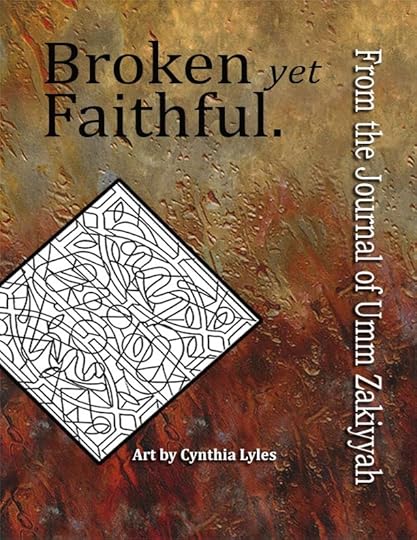
No, in striving for this sincere emaan (true faith), I don’t seek to be “happy” all the time. In my art therapy book, Broken yet Faithful. From the Journal of Umm Zakiyyah, I share this reflection:
True faith isn’t about walking through life completely happy and undisturbed in every circumstance. It’s about staying sincerely connected to your Lord despite the inevitable ups and downs in life.
But giving your problems to Allah and having tawakkul (complete trust in Him) is not always a smooth, tranquil process. When you’re really stressed out, hurt, or confused, you don’t always feel good or a sense of peace right away, even if you’re constantly praying and asking for guidance.
Many times, the process continues to be an internal battle for a very long time. But this isn’t a sign of weak faith. It’s a sign of the natural fragility of the human heart—and a sign of the believing soul seeking purity.
For having true faith and tawakkul isn’t about perfection. It’s about remaining in sincere remembrance of your Lord and in humble obedience to Him, whether you’re enjoying times of ease and happiness or enduring times of tremendous pain and difficulty.
O Allah! I beg You to write us down amongst the shaakireen—those who are sincerely and consistently grateful to You. And O Allah, Al-Wahhaab! I beg You to grant our hearts sabran jameelan (beautiful patience), even during the most difficult trials! And do not allow us to die except in a state of sincere emaan!
Umm Zakiyyah is the internationally acclaimed author of twenty books, including the If I Should Speak trilogy, Muslim Girl , and His Other Wife . In 2019, she launched UZ Soul Gear , a passion project fueled by her love of both art and inspirational reflections. UZSoulGear.com offers apparel, wall décor, and more, aimed at supporting and inspiring the soul-centered lifestyle.
Want to find or improve your writing voice? Join UZ University to learn how, so you too can share inspirational stories with the world: UZuniversity.com
Subscribe to Umm Zakiyyah’s YouTube channel , follow her on Instagram or Twitter , and join her Facebook page.
Copyright © 2019 by Al-Walaa Publications. All Rights Reserved.
The post Making the Most of Your Bad Days appeared first on Umm Zakiyyah.
December 17, 2019
Protect Your Muslim Image or Muslim Soul?
“Your Muslim image, or your Muslim soul? At a certain point, you have to decide which is more important to you.”
—from the journal of Umm Zakiyyah
“How in the world are we supposed to invite Americans to Islam if women are walking around with their faces covered and Muslim men are marrying multiple wives?” This is a question I’ve heard so many times that I’ve lost count. And each time I hear it, my heart breaks just a little and my concern for my soul—and the souls of my brothers and sisters in faith—grows just a bit more.
But I get it. We want the world to see the beauty of Islam, without any embarrassing optics or “strange” lifestyles to explain away. We want Islam packaged in a way that makes it easier to “market” to the people whose love and approval we value most. But with all these “weird” dress codes and lifestyles amongst Muslims, we fear that we’ll scare people away.
Yet Islam remains the fastest growing religion in the United States and elsewhere.
Feeling Ashamed of Our Submission To Allah
With the religious inferiority complex that afflicts so many of us, our hearts continue to genuinely imagine that Islam is in need of people more than people are in need of Islam. Allah discusses this tendency within us when He says what has been translated to mean, “They consider it a favor to you [O Muhammad] that they have accepted Islam. Say, ‘Do not consider your Islam a favor to me. Rather, Allah has conferred favor upon you that He has guided you to the faith, if you should be truthful’”(Al-Hujuraat, 49:17).
Despite Islam being the greatest favor that anyone could be granted in this world, so many Muslims remain anxious and feel ashamed to embrace the parts of their faith that involve anything that the disbelievers might dislike. Whether it is the option (or obligation) for women to wear niqaab, or the right of Muslim women to live in any type of marriage they choose, whether in monogamy or polygyny; or whether it’s the Creator’s definition of male and female, or His moral guidelines surrounding halaal sexuality; we find a way to wriggle out of submission to Allah and avoid spiritual self-honesty.
We cringe. We apologize. We lie. We claim these are “cultural practices” that aren’t really parts of Islam, or we say these lifestyles were meant only for “ancient Muslims” or times of war. Or our favorite—these things aren’t relevant to Muslims in America because they clash with the culture in which we live.
Because somewhere along the line, we fabricated and embraced the Muslim apologist school of thought, which says Muslims aren’t allowed to obey Allah or believe in all of His revelation unless the disbelievers give their nod of approval.
In this, we’re frantic to force Islam—and our Muslim brothers and sisters—to align with the religious inferiority complexes in our hearts.
What Is Happening To Us?
Each Monday, Muslims all over the world sit with their hearts glued to Jada Pinkett Smith’s Red Table Talk, and are filled with awe and admiration for Jada and Will’s commitment to dissolving God’s definition of marriage in favor of a “life partnership.” Through this, it is Jada and Will alone who decide what will and will not happen in their marriage—even if it means allowing any number of additional sexual partners in their union.
And our hearts are overwhelmed with respect and admiration for this man and woman being so “strong” and “self-honest” such that they openly do what works for them, even if it goes directly against nearly every concept of marriage that the society—and God—upholds.
Yet it doesn’t occur to us that we are walking contradictions when we as Muslims are able to admire and even applaud Jada and Will’s “unpopular” relationship choices while expressing shame and even opposition to Muslim men and women who choose similarly—but according to the guidelines of their Creator instead of their desires.
So it appears that for so many of us, any life that is rooted in Islamic spirituality more than arbitrary emotionalism is a cause for our deep shame, relentless opposition, and indignant concern.
The ‘Beautiful Path’ of Spiritual Loss
It is undeniable that many of our hearts are being tested with nifaaq (hypocrisy); may Allah heal us and guide us. Amongst the symptoms of this spiritual disease is that we admire and praise “unpopular” lifestyles of disbelievers, even if they transgress the limits of Allah. Yet we scorn and oppose the “unpopular” lifestyles of believers, even if they stay within the limits of Allah.
When we find ourselves falling into this mindset, we must sincerely ask ourselves if it is the deen of Allah that we truly desire, or the deen of desires and emotionalism.
With regards to the deen of Allah, our Creator says what has been translated to mean, “O you who believe! Enter into Islam kaaffah (completely and perfectly) and follow not the footsteps of Shaytaan (Satan). Verily, he is to you a plain enemy” (Al-Baqarah, 2:208).
In my blog, “Does Your Pride Make You Honorable,” I reflect on the meaning of this ayah:
The Arabic word kaaffah indicates an all-inclusive and all-encompassing submission. Thus, if we have entered into this merciful faith kaaffah, then we accept and obey all the rules, guidelines, and permissions of the religion, not just the parts we prefer in our own lives. Thus, anything short of a complete and all-inclusive submission to divine guidance—kaaffah—is following the pathway of Shaytaan, instead of Islam.
Unfortunately, in our modern practice of Islam, many of us embrace the parts of Islam that bring us comfort, stoke our egos, and make us feel good about what we want and prefer in our own lives. However, we reject or trivialize anything in Islam that makes us feel uncomfortable, that offends our pride and egos, that threatens our social standing amongst disbelievers, or that causes us emotional pain.
In the Qur’an, we are told how Iblis (Satan) said, “…I shall indeed adorn the path of error for them on earth…” (Al-Hijr, 15:39).
Consequently, many of us follow the footsteps of Shaytaan with our eyes wide open, even as we know that he is an open and obvious enemy to every human soul, whether Muslim or non-Muslim. In this, it is sufficient for us to agree to follow him so long as he continues to beautify for us our path to spiritual destruction.
The famous Companion Abu Hurayrah (may Allah be pleased with him) reported that the Messenger of Allah (peace and blessings be upon him) said, “When Allah created Paradise and Hellfire, He sent [the angel] Gabriel to Paradise saying, ‘Behold it and what I have prepared therein for its people.’ Gabriel came and looked at it and what Allah had prepared therein for its people. He returned to Allah and he said, ‘By Your Might, no one will hear of it but that he will enter it. Allah ordered that it be surrounded by adversity and He said, ‘Return to it and behold what I have prepared therein for its people.’ Gabriel returned and found that it was surrounded by hardship. He returned to Allah and he said, ‘By Your Might, I fear that no one will enter it.’ Allah said, ‘Go to the Hellfire and behold it and what I have prepared therein for its people.’ Gabriel found that it was in layers, one above another. He returned to Allah and he said, ‘By Your Might, no one who hears of it will enter it.’ Allah ordered that it be surrounded by desires and He said, ‘Return to it.’ Gabriel returned and he said, ‘By Your Might, I fear that no one will escape it’” (Sunan al-Tirmidhī 2560, Sahih by Al-Tirmidhi).
In the “beautiful path” of spiritual loss that Iblis continuously beckons us toward—and that so many of us willingly accept—our souls suffer “pleasurably” and “peacefully” on the path to Hellfire. Hence, the popularity of the deen of desires and emotionalism (even amongst professed Muslims) more than sincere belief in and submission to the deen of Allah, kaaffah.
Understanding the Deen of Desires and Emotionalism
In my book, Faith. From the Journal of Umm Zakiyyah, I share this reflection:
Every nation has the one idol that they don’t want to give up. Ours is human emotions and desires. And nowhere is this shirk more obvious than in our marriages (in how we seek to control our husbands and wives) and in how we view others’ sexuality when it violates the Book of Allah.
Every argument we have boils down to how someone feels or what they want—except when someone feels genuine emaan (faith or authentic spirituality) and wants to obey God. Then and only then do we say feelings and desires should be ignored. Because the religion of emotions and desires dictates that the most unforgivable sin is to put God before anything else.
It is heartbreaking to see so many Muslims adhering to this ideology, eagerly aligning their hearts and souls with the disbelievers who embrace it wholeheartedly. These Muslims even go as far as to oppose and slander any believers who put their Creator above their desires and emotions, and call others to do likewise.
Consequently, if a believer should share a single reminder about humans’ spiritual obligation to define gender, marriage, and sexuality according to only divine revelation and prophetic guidance, these Muslims accuse them of preaching “hate” and “intolerance,” or they label them as having a “phobia.” In this, these Muslims love and defend people who define themselves by their desires and emotions while displaying hatred and opposition to people who define themselves by their spiritual obligation to their Creator.
This is no doubt clear evidence of following the religion of desires and emotionalism instead of the guidance of Allah.
‘But We Need Beneficial Alliances!’
Some of us do not openly adhere to the religion of desires and emotionalism. Instead we show overwhelming compassion and understanding toward those committed to defining themselves by their sexual orientation instead of their spiritual orientation. Meanwhile we distance ourselves from any Muslims with “weird” or “scary” lifestyles, such as women covering their faces with niqaab or believers living in polygyny.
In this, we imagine that any association with these “strange Muslims” will cause us to compromise the respectable social standing and acceptance that we seek amongst the American disbelievers, in whose hands we imagine all worldly honor and power rests. For this reason, we eagerly scramble for social and political alliances with them.
Yet Allah says what has been translated to mean, “Those who take disbelievers as allies instead of the believers. Do they seek with them honor [through power]? But indeed, honor belongs to Allah entirely”(An-Nisaa’, 4:139).
“We can’t just live in a bubble!’” many of us say. “We need to establish beneficial alliances to protect Muslims from harm in this country!”
Yet Allah says, “And you see those in whose hearts there is a disease [of hypocrisy], they hurry to their friendship, saying: ‘We fear lest some misfortune of a disaster may befall us…’” (Al-Maa’idah, 5:52).
In this, we forget that it is Allah who holds the path to worldly safety and victory, so there is no need to harbor in hearts spiritual hypocrisy and shame of being associated with believers. Allah says, “…Perhaps Allah may bring a victory or a decision according to His Will. Then they will become regretful for what they have been keeping as a secret in themselves” (Al-Maa’idah, 5:52)
“The Prophet, peace be upon him, himself made alliances with the disbelievers!” we say. And through this claim, we consciously and intentionally ignore the central purpose and clear agreement that was at the heart of every single alliance he made: Inherent in every “interfaith prophetic alliance” was the promise of Muslims being protected in openly and unapologetically calling non-Muslims to Islam—kaaffah—and in Muslims openly living and teaching every part of their faith, including those parts that the disbelievers disliked. This prophetic alliance even included the promise of safety and protection in sharing and living the parts of Islam that contradicted the most coveted beliefs and lifestyles of the very disbelievers granting him this social and political protection.
In a sentence, every prophetic alliance placed the souls of the Muslims and their obligation to their Creator above all else, without compromising or apologizing for a single part of this beautiful faith—and while making it clear to every disbeliever that they themselves needed Islam to save their souls.
However, nearly every “beneficial alliance” we seek today is founded on the exact opposite: We agree to hide, deny, or trivialize the parts of our faith that the disbelievers dislike, while spending not a moment of our time inviting them to Islam and thus making it clear to them that they need to believe in Allah and the prophethood of Muhammad (peace and blessings be upon him) if they are to save their souls from spiritual harm and ultimately enter Paradise.
Moreover, in these so-called “mutually beneficial alliances,” we do not openly and proudly embrace all of the obligations, permissions, and lifestyles of our faith. Rather, we seek to hide or deny any Islamic belief or lifestyle that contradicts what the disbelievers love and value. In this, we are willing to make life more difficult for practicing Muslims if it means gaining social or political acceptance for ourselves.
Meanwhile we remain eerily silent in the face of open disbelief and sin.
Yet we have the audacity to compare our religious inferiority complex approach to “interfaith alliance” to the prophetic model of openly calling to all of Islam—while gaining the full support of disbelievers who were confident enough in the integrity of both the Prophet and the Muslims to fully back him and this “strange” faith.
On the rare occasions that we do find our voice amidst those whom we rush to align ourselves with, our words make it very clear that we are seeking to protect our Muslim image more than we are seeking to protect anyone’s Muslim soul.
Umm Zakiyyah is the internationally acclaimed author of twenty books, including the If I Should Speak trilogy, Muslim Girl , and His Other Wife . In 2019, she launched UZ Soul Gear , a passion project fueled by her love of both art and inspirational reflections. UZSoulGear.com offers apparel, wall décor, and more, aimed at supporting and inspiring the soul-centered lifestyle.
Want to find or improve your writing voice? Join UZ University to learn how, so you too can share inspirational stories with the world: UZuniversity.com
Subscribe to Umm Zakiyyah’s YouTube channel , follow her on Instagram or Twitter , and join her Facebook page.
Copyright © 2019 by Al-Walaa Publications. All Rights Reserved.
The post Protect Your Muslim Image or Muslim Soul? appeared first on Umm Zakiyyah.
December 14, 2019
ABCYL Opt In
The post ABCYL Opt In appeared first on Umm Zakiyyah.
December 12, 2019
Is Your Idea of Happiness and Success Spiritually Honest?
“You have to care about your soul more than you care about the specifics of the temporary comforts and tests God will give you in this world. That’s what it boils down to. This is what we need to teach our hearts, and this is what we need to teach our souls…”
—from the journal of Umm Zakiyyah
“I can’t do this anymore,” the woman told me. “All this praying and fasting and staying away from sex, hoping I’ll get married one day. What’s the point? I’m thirty years old, and I don’t even know how it feels to be touched. And right now all I want is for a man to touch me. What if I never get married? All those things we’re taught about being patient and obeying Allah so we can have a good life aren’t true. I haven’t experienced any of it. But you know who has? All my friends who broke every rule. While I was praying, they were partying. While I was fasting, they were feasting. While I was lowering my gaze and being a ‘good Muslim girl,’ they were out sleeping around. But now they’re the ones with husbands and children and big houses and lots of money. Meanwhile I’m alone, broke, and with no marriage prospect in sight. So I don’t see the point in following the rules anymore. All it’s brought me is misery and loneliness.”
It broke my heart listening to my Muslim sister’s emotional pain. I wished I could take the pain away from her. I wished I could tell her that she’d have everything she dreamed of one day. But I couldn’t. So I just told her the truth—the truth she should have been taught in her earliest lessons on Islam. “But we don’t obey Allah so that we can have a good life in this world,” I said. ”We obey Him so that we can have a good life in the Hereafter.”
“But can’t I have a good life in both worlds?” she asked in frustration.
“Yes,” I said. “But it’s Allah who defines what that looks like for us.”
Putting Things Into Perspective
I remember reading a quote by Yasmin Mogahed that really resonated with me: “The secret to happiness is to not make it dependent on that which can be taken away.”
However, so much of what we’re taught about our lives in this world, even from many spiritual teachers and imams, is that we’ll be granted worldly happiness and materialistic success if we’re “good Muslims.” Or if we just have enough faith. I’ve even heard advice from fellow Muslim entrepreneurs that equated our income with the state of our souls.
“If you think good of Allah, He’ll grant you all that you want in this world,” they say. “You just have to trust in Him.” While I certainly believe in both the power and necessity of thinking good of Allah, as well as our heart’s need to trust in Him, I grow very uncomfortable when these tools for spiritual nourishment and soul purification are used to achieve very specific worldly outcomes.
It’s not that I believe that we shouldn’t strive for worldly success. Quite the opposite. In fact, I personally believe that we need to do a much better job at securing economic independence as Muslims, if for no other reason than we shouldn’t be relying so heavily on those outside our faith to sustain our families and communities.
Once during a keynote speech I gave about increasing our wealth in this world, I shared this advice: Don’t use your belief in the Hereafter as an excuse to settle for failure and helplessness in this world. When the Prophet (peace and blessings be upon him) and the Companions lived simply, it was because they were generous with their wealth and worldly success, not because they didn’t have any. And it certainly wasn’t because they didn’t work for wealth and success in this world.
I then shared this ayah from Qur’an, which has been translated to mean: “But seek, with that (wealth) which Allah has bestowed on you, the home of the Hereafter, and forget not your portion of legal enjoyment in this world. And do good as Allah has been good to you, and seek not mischief in the land. Verily, Allah likes not those who do mischief” (Al-Qasas, 28:77).
Thus, it is upon us as believers to strive our level best for the best in this world and the best in the Hereafter, while seeking from this materialistic world that which is blessed and halaal for us.
However, as we strive for worldly success, we need to approach this noble goal with a different mindset than we do ultimate spiritual success in the Hereafter. If we do not, our spiritual lives will suffer tremendously, and we will continuously be confused when things don’t turn out the way we expected.
Why We Get So Confused
Here’s a reminder I wrote to myself in my personal journal, in hopes of protecting my heart from the unnecessary turmoil that would befall it if I didn’t keep this world in proper perspective:
You know why we get so confused? Because we think of success in this world how we should think of success in the Hereafter. Allah promises us very specific rewards in the Hereafter due to our soul work, and we promise ourselves very specific rewards in this world due to our dunya work.
Relationship advisors share tips that promise long-lasting, loving marriages—or for knowing when someone is right for you. Business gurus share tips for having plentiful wealth and a successful business—or for ways to be without debt and financial struggle forever. Even some spiritual teachers go as far as to tell you that all of this worldly happiness and success is promised to you if you’re a “good Muslim.”
And to prove they’re right, they’ll point to the perceived “success” in their own lives or in someone else’s—thereby taking credit for God’s work by saying these blessings are due to their own efforts.
But the life of this world doesn’t work like that.
You cannot gift your qadar (God’s decree) to someone else, no matter how convinced you are that they should follow in your footsteps to have success, wealth, or a lasting marriage. The result didn’t come from you, so someone following your advice won’t grant them your life path.
Yes, we can benefit from each other’s journeys, experiences and advice, but we cannot duplicate others’ results. And we shouldn’t even want to. Because we have no idea what trials await our souls and our families if we taste the result of someone else’s definition of “success.”
There are only two things that every soul is promised in this world: earthly trials and inevitable death. So if you want “foolproof” tips that promise success, then look to divine guidance on how to patiently endure worldly suffering and gratefully appreciate worldly blessings. And through this, bi’idhnillaah, you’ll learn how to attain the only success that really matters in the end: meeting your Lord in a state of sincere submission and faith, and then finding that He is pleased with you.
What Are You Teaching Your Heart?
The Companion Sahl bin Sa’d As-Sa’idi (may Allah be pleased with him) said that a man came to the Prophet (peace and blessings be upon him) and said, “O Messenger of Allah, guide me to such an action which, if I do, Allah will love me and the people will also love me.” He (peace and blessings be upon him) said, “Have no desire for this world, and Allah will love you; and have no desire for what people possess, and the people will love you” (Ibn Majah).
Prophet Muhammad (peace and blessings be upon him) also said, “Whoever makes the world his most important matter, Allah will confound his affairs and make poverty appear before his eyes and he will not get anything from the world but what has been decreed for him. Whoever makes the Hereafter his most important matter, Allah will settle his affairs and make him content in his heart and the world will come to him although he does not want it” (Sunan Ibn Mājah 4105, Sahih by Al-Albaani).
When I reflect on the spiritual beauty and soul nourishment in these gems of prophetic advice, I can’t help but notice how these directives are in stark contrast to what we are being taught today with regards to securing wealth and material success, even in Muslim circles. So much of the advice we receive on attaining worldly success is about using the tools of soul purification (such as worship and obedience to Allah) as a means to gain tangible worldly outcomes—like a lasting marriage, plentiful wealth, the perfect body, and so on.
In many cases, this sort of advice stems from us looking at the worldly happiness and success of the disbelievers and hoping to secure the same “happiness” and “success” for ourselves. With this mindset, we study concepts like “the law of attraction” and “channeling the energy of the universe,” and then attach our hearts to these ideologies in order to get what we want in life. Then we seek to make Islamic spirituality align with all of this, while pointing to how Allah promises to answer our supplications and how He is how His servant thinks He is.
We even shame those who remind us to focus on the Hereafter, by painting them as extreme ascetics who shun everything of this world and want to “sit around” in poverty and consider it piety. While there are certainly fringes of Muslims who have this misguided understanding of zuhd (spiritual detachment from this world), the issue goes so much deeper than that.
In this, no one is suggesting that we abandon seeking wealth and worldly comforts or happy, long-lasting marriages. Rather we must sincerely ask our hearts: Are we being honest with ourselves when we link Islamic spirituality to attaining specific worldly results? Is this what our Creator is teaching us? Is this what prophetic guidance is teaching us?
If our answer is “no” to these last two questions, then this weightier question remains: Why then are we teaching this to our hearts?
Which World Is Your Heart Attached To?
To be clear, the problem here isn’t that we are relying on Islamic spirituality to attain worldly success. Rather the problem is that we are making this worldly success our starting point and focus in life. While Islamic spirituality definitely includes divine prescriptions for attaining worldly success, all of these means are channeled through the lens of nourishing our souls, pleasing Allah, and placing the Hereafter above this world.
This is so much the case that nearly everything in the Qur’an and prophetic teachings points to this one foundational perspective on worldly success: True success in this world is attached to our willingness to let go of our wealth, worldly statuses, and even our own loved ones, if this is what it takes to save our souls and obey our Creator.
Allah says what has been translated to mean: “Say, ‘If your fathers, your sons, your brothers, your wives, your relatives, wealth which you have obtained, commerce wherein you fear decline, and dwellings with which you are pleased are more beloved to you than Allah and His Messenger and striving in His cause, then wait until Allah executes His command. And Allah does not guide the defiantly disobedient people” (At-Tawbah, 9:24).
What is so profound about this ayah is that Allah mentions our attachment to our loved ones and spouses before He even mentions our attachment to our wealth, property, and businesses. This in itself should be a deep lesson to our hearts that even when our religious advice fixates on having success in our family relationships and marriages, this is imbalanced if it is not filtered through an understanding that we might one day need to sacrifice these relationships to save our souls.
But if our hearts are attached to this world more than the Hereafter, how is this even possible?
Be Willing To Let Go Of It All
A couple of years ago, my then twenty-year-old daughter came to me excited about starting her own business. Naturally, as an entrepreneur myself, I was excited for her, and I offered my full support and prayed for her success. And I continue to.
However, I cautioned her:
If Allah blesses you with wealth, be sure not to get too attached to it. Because everything in this world is a trial, even our worldly blessings. Everything we seek or receive in this world should be used as a means of nourishing our souls and securing success for ourselves in the Hereafter.
So keep in mind that anything you love or are granted in this world, Allah will test you with it. This is to see if your heart values that worldly blessing more than you value Allah’s Pleasure and the Hereafter. So while it’s a tremendous blessing to be granted lots of wealth, if it ever comes to choosing between your soul and your wealth, you must be willing to walk away from it all if it means protecting your soul.
Once, the Companion Abu Dharr Jundub bin Abdullah (may Allah be pleased with him) said: “I advise you to fear Allah and obey Him (with taqwaa), and I advise you to adhere to the Qur’an, for it is a light in the dark night and a guidance during the day. So implement it no matter how much struggle and poverty you have to face. If a calamity befalls you, put your wealth forward to protect your religion, and if the calamity continues, put forward your wealth and your life to save your religion [but never risk your religion]. For the ruined is he whose religion is ruined, and the robbed is he whose religion is taken. And know that there is no poverty after Paradise, and no riches after the Fire” (Adh-Dhahabi, Siyar A’laam an-Nubalaa, 3/174).
God Isn’t Handing Out Stickers for Good Behavior
One of the things I remind myself is that we shouldn’t look at our worship of Allah like we look at the extrinsic reward system of this world, wherein we’re given stickers and rewards for being “good girls and boys.”
Getting worldly wealth, success, and happiness isn’t a mathematical formula where you input prayer and good deeds and then lots of money or the perfect marriage is the output. Allah is not our personal “servant,” bank teller or wish-granter, whose only role in our lives is to give us what we ask or demand from Him. Viewing our relationship with Allah in this way is not a sign of faith or tawakkul (sincere trust in Him). And it isn’t even thinking good of Him. Rather it’s a sign of entitlement and arrogance—and ignoring His divine attribute of being our Rabb, the Master and Owner of our lives.
In truth, Allah owes us nothing in this world. Yet we owe Allah everything—including our very souls and lives. It is we who are His servants and who are obligated to do what He asks and demands of us, not the other way around.
Yes, in this spiritual servitude, we are also granted many of the things we seek and desire of this world. But this is not because it is owed to us. It is because of Allah’s Mercy, Generosity and Compassion.
You Get What You Strive For
Allah says what has been translated to mean:
“Whoever should desire the transitory things [of this life], We hasten for him from it what We will to whom We will. Then We have made for him Hell, which he will [enter to] burn, censured and banished. But whoever desires the Hereafter and exerts the effort due to it while he is a believer, it is those whose effort is ever appreciated [by Allah]. To each [category] We extend – to these and to those – from the gift of your Lord. And never has the gift of your Lord been restricted. Look how We have favored [in provision] some of them over others. But the Hereafter is greater in degrees [of difference] and greater in distinction” (Al-Israa, 17:18-21).
He also says:
“…And whoever desires the reward of this world, We will give him thereof; and whoever desires the reward of the Hereafter, We will give him thereof. And we will reward the grateful” (Ali ‘Imraan, 3:145).
So as we seek the transitory enjoyments of this world, let us strive to be spiritually honest with regards to our ideas of the happiness and success during our brief sojourn here—before we are lowered beneath the ground.
O Allah! We ask you to purify our hearts from unhealthy attachment to anything of this world, and we beg You to grant us the best in this world and the best in the Hereafter. And O Allah, Ar-Razzaaq! We beg You to grant us blessed provision and wealth in this world, and to remove the dunya from our hearts and place it in our hands!
Umm Zakiyyah is the internationally acclaimed author of twenty books, including the If I Should Speak trilogy, Muslim Girl , and His Other Wife . In 2019, she launched UZ Soul Gear , a passion project fueled by her love of both art and inspirational reflections. UZSoulGear.com offers apparel, wall décor, and more, aimed at supporting and inspiring the soul-centered lifestyle.
Want to find or improve your writing voice? Join UZ University to learn how, so you too can share inspirational stories with the world: UZuniversity.com
Subscribe to Umm Zakiyyah’s YouTube channel , follow her on Instagram or Twitter , and join her Facebook page.
Copyright © 2019 by Al-Walaa Publications. All Rights Reserved.
The post Is Your Idea of Happiness and Success Spiritually Honest? appeared first on Umm Zakiyyah.
December 11, 2019
How Will My Child Eat? Reflections on the Mercy of Allah
“And if you would count the graces [or favors] of Allah, never would you be able to count them. Truly! Allah is Oft-Forgiving, Most Merciful.”
—Qur’an (An-Nahl, 16:18)

Today I was reviewing my Arabic vocabulary by reading a children’s book entitled Qisas An-Nibiyeen (Stories of the Prophets), and I reached the chapter about Prophet Moosaa (Moses), peace be upon him. I read the famous account of how the mother of young Moosaa had placed him in a box and put him in the Nile river, out of fear for his life. At the time, the tyrannical Pharaoh was killing all infants born to anyone from the Children of Isra’eel (i.e. the descendants of Prophet Ya’qoob [Jacob], peace be upon him).
Though Moosaa’s mother was able to hide her young child from Pharaoh’s army and spies for a few months, she knew that she would be unable to keep him safe in her home for much longer. It was at this time of deep trepidation for her child’s life and safety that Allah inspired her to put her child in the river.
Allah says what has been translated to mean, “And We inspired to the mother of Moses, ‘Suckle him; but when you fear for him, cast him into the river and do not fear and do not grieve. Indeed, We will return him to you and will make him [one] of the messengers’” (Al-Qasas, 28:7).
In obedience to Allah, the mother of Moosaa (may Allah be pleased with her) placed her trust in Allah then put her child in a box and cast it into the river. However, she still felt the natural anxiousness and distress that any mother would feel from being separated from her child. And how much more was her distress after leaving her child alone in the river of the land governed by a tyrant intent on murdering all children like her own?
But it was Allah’s plan was that her son would be raised and cared for by one of the best women to ever walk the earth—Aasiya, the Queen of Egypt and the wife of Pharaoh, may Allah be pleased with her.
Who Will Nurse the Child?
During my reading, I reached the chapter section entitled “Man yurdhi’ut-tifl?” (Who will nurse the child?”). As I read this part of the story, I marveled at how Allah decreed that the young baby, Moosaa, would take milk from no wet nurse until he was brought to his own mother to feed him (while no one in Pharaoh’s household knew that she was his actual mother).
I sat there reflecting on how much Allah must have loved and cared for Prophet Moosaa and his mother. Here was a woman whose child was being doted on and protected by the Queen of Egypt herself, thereby protecting the young boy from the harm of the tyrant Pharaoh. Yet the heart of Moosaa’s mother ached for him and was surely wondering in distress, How will my child eat? Then as a means of bringing comfort to the restless heart of Moosaa’s mother, Ar-Rahmaan (the Most Gracious and Merciful) granted her the reassurance of not only knowing that her child was safe and protected, but also the comfort of the child’s presence itself, as she held him in her arms and nursed him daily.
SubhaanAllah, I thought at that moment, imagining the great status this woman must have had in front of Allah. I wondered at the emaan (true faith) of this woman that Allah chose to shower His mercy on her in this way. By assigning her as the wet nurse, Ar-Rahmaan soothed her heart in direct response to her both missing baby Moosaa and stressing over how her child would eat. I imagined that a woman like Moosaa’s mother, and so many believers of earlier generations, held a special distinction in front of Allah that I couldn’t even fathom.
It was at that moment that I recalled something that had happened to me when my daughter was a baby, while I myself was stressing and restlessly asking, “How will my child eat?”
How Will My Child Eat?
When my daughter was nearly six months old, I was taken to the hospital emergency room after suffering severe pains that would not go away. After the triage nurses measured my vitals signs, I was admitted immediately for emergency surgery, and they told me that had I arrived even minutes later, I would have died.
An emergency code was announced throughout the hospital intercom, and within minutes a team of doctors rushed to my side and placed me on a mobile hospital bed. As they walked swiftly at my side while pushing the bed toward the operation room, they told me and my husband that the surgery they would be performing was life-threatening, so we both should prepare for the possibility that I would not come out of this procedure alive.
By the mercy of Allah, the procedure went well. However, when I woke up, I began to have an unexplainable allergic reaction causing body swelling and rashes all over my body, none of which the doctors understood or could get under control. This unexpected turn of events forced me to stay in the hospital for some time beyond the normal healing period after major surgery.
While the doctors tried to figure out how to preserve my life and health, I kept thinking of my young nursing baby and my need to get back to her. My concern was not only due to missing her deeply, but also due to knowing how she would take nourishment only directly from me while I nursed her.
Over the past few months, my husband, his mother, and I had tried over and over to give her a bottle—even with milk from me that we’d refrigerated or frozen—and she refused every single time. This had caused a great deal of stress to my husband and his mother, as they were unable to take my daughter anywhere without me being present. It also caused me a great deal of stress, as I was unable to get even a few hours break, or an extra few hours of sleep, especially since she nursed around the clock.
In the hospital, I asked the doctors if we could allow my husband or mother-in-law to bring my daughter to me each day so that I could feed her. But they told me that no children were allowed in this unit of the hospital. They also said that I couldn’t be allowed to nurse her in any case, or allow anyone to feed her any of my milk because the medications they were administering for my unexplained allergic reaction had harmful side effects for a child so young.
I lay in that hospital not only worried about my life and health, but also the nourishment of my child. I kept wondering, “How will my child eat?” I worried that my daughter herself would deteriorate in health if I could not get back home to her in the next day or two, because she would take absolutely nothing to eat or drink if it did not come directly from me during nursing.
Allah Will Take Care of Her and You
In the end, Allah intervened and nourished my daughter, even though I was not there. When I returned home after about a week in the hospital, my husband gave me all the details of what had happened while I was gone.
He told me how as soon as I was hospitalized, our daughter began to drink from the bottle as if it were the most natural thing in the world. Not only was she drinking the milk we’d frozen and she’d refused before, but she was also drinking formula when that ran out. She was even accepting bits of soft solid food whenever it was offered to her, and she was doing this without the least bit of protest.
“It was like she knew you couldn’t be there to feed her,” he told me, his voice in awe of what Allah had decreed, given how much difficulty our daughter had given us over the past few months. “So it was like she was intent on making everything easy for you and us, until you were okay enough to come home.”
“What?” I’d said in humored disbelief. “SubhaanAllah!”
“And the day you came home?” he said. “The minute you walked in the door, she started crying and refusing the bottle all over again.”
What made this particular point interesting was that the room where she stayed was on a completely different level than the entrance to the home. Thus, we had no idea how she, at merely six months old, would even know I was home without seeing me or hearing my voice, and without me even being close enough to detect my scent.
We both laughed in gratefulness at the instinct that Allah had given our daughter during that difficult time.
And today, as I recalled this moment from more than twenty years ago, I cried.
I cried as I realized the remarkable mercy of Allah that was bestowed on all of His servants.
I cried as I realized my own forgetfulness and ungratefulness in believing that His divine mercy was restricted to a particular generation of believers only.
I cried as I realized that Allah was immeasurably merciful to all of His creation, so much so that even disbelievers enjoyed the mercies and favors of Ar-Rahmaan in this world.
Then, as I was crying, I remembered a prayer I’d made from the hospitable bed a couple of days after I was admitted. At this time, the allergic reaction was getting worse and worse, and my body kept swelling until my eyes began to shut and the previously loose hospital wristband became painfully tight, until it was like a small rubber band that could only be cut off with scissors to protect my circulation. Meanwhile, the doctors felt unsure how to treat me, as they didn’t understand what was wrong. When it seemed inevitable that I would die from this, I prayed:
“O Allah, I beg You to spare my life. I know I am not ready to meet You in this state that I am in. I have not lived my life right, or in a way that is pleasing to You. So I beg You for another chance. And O Allah, if you spare my life, I promise that I will dedicate my life to You! I will study Your religion, and I will study Your Book, and I will share them both with the world!”
Moments after I made this heartfelt prayer, the doctors discovered the source of the allergic reaction and resolved it. Then immediately, my body swelling went down, and the rash slowly but surely left my skin. And days later, I returned home to my crying daughter refusing to take nourishment from anyone but me.
Umm Zakiyyah is the internationally acclaimed author of twenty books, including the If I Should Speak trilogy, Muslim Girl , and His Other Wife . In 2019, she launched UZ Soul Gear , a passion project fueled by her love of both art and inspirational reflections. UZSoulGear.com offers apparel, wall décor, and more, aimed at supporting and inspiring the soul-centered lifestyle.
Want to find or improve your writing voice? Join UZ University to learn how, so you too can share inspirational stories with the world: UZuniversity.com
Subscribe to Umm Zakiyyah’s YouTube channel , follow her on Instagram or Twitter , and join her Facebook page.
Copyright © 2019 by Al-Walaa Publications. All Rights Reserved.
The post How Will My Child Eat? Reflections on the Mercy of Allah appeared first on Umm Zakiyyah.
December 7, 2019
Do We Care What Allah Wants For Us?
“No,” the sister said indignantly. “I’m not going to pray about this because I know Allah will make it happen. And I don’t care if it’s good for me. I don’t want it, period. And I shouldn’t have to deal with it if I don’t want to.”
I grew quiet, as I realized that there was no further advice I could offer her. She had come to me, angry at her husband who was about to marry another wife, and I’d suggested that she pray to Allah regarding what she should do. “Some women really can’t handle this,” I’d told her. “In that case, divorce is permissible if your husband goes through with it. But make du’aa and Istikhaarah,” I’d said. “Sometimes the thing we feel we can’t handle ends up being a blessing for us.”
But she grew frustrated with me for even suggesting that she turn to Allah to seek His guidance.
Listening to her reminded me of a story about a friend of mine that I share in my book And Then I Gave Up: Essays About Faith and Spiritual Crisis in Islam:
Some years ago, I was sitting with a friend of mine and she started telling me about her struggles with hijab after becoming Muslim. She had grown up Christian and accepted Islam while she was in college.
“For me, hijab was the hardest thing,” she said. “I just didn’t want to wear it. So I made every excuse I could. ‘It’s too hot.’ ‘I can’t breathe’.” She shook her head, remembering. “But the funny thing is, I didn’t realize I didn’t want to cover.
“Until one day I was talking to some sisters and I was making the same excuses. And the sisters started trying to convince me, but for everything they said, I had an answer. And we kept going back and forth. But then a sister said something that I really couldn’t respond to.” She paused. “‘Just make du’aa. Pray that Allah makes it easy for you’.”
Her eyes grew distant, reflecting. “When she said that, I didn’t know what to say. In the back of my mind, I knew that if I asked Allah for help, I would wear hijab. And that’s when I knew I didn’t really want to cover. I didn’t even ask Allah to help me. Because I didn’t want Him to.”
Hardened Hearts We Refuse To Address
“Well, you know what they say?” our elders sometimes say in looking at how far astray this generation has gone. “Youth is wasted on the young.” In this way, the older generation places the blame on the younger generation for many widespread spiritual problems that we see. But this is being dishonest. There’s a reason that as we age, we are described as being “set in our ways.”
While the youth might struggle with youthful zeal and carelessness in many religious matters, the older generation struggles with something far more serious: hardened hearts. And it’s often much more difficult to offer elder people beneficial advice for their souls than it is to offer the same to youth.
For youth, it might take some time for them to appreciate what you’re saying, but with elders, there is the assumption that their attitudes and behavior represent “wisdom” instead of unhealed wounds, which have fermented into kibr (sinful pride and arrogance). Hence the popular saying amongst many experienced adults, “There’s nothing I ain’t seen or heard before. So you can’t tell me nothing!”
I once met a divorced fifty-something Muslim man who expressed how he resented that Allah required men to spend their wealth on their wives. “Why should I have to provide for her?” he said. “Most women don’t deserve it.” Yet this same man wanted to have a halaal sexual relationship with a woman in marriage.
“My presence should be enough for her,” he said. “If she wants me to provide for her and pay her bills, then she doesn’t love me for who I am. She loves me for the money I can give her.”
But I told him, “That’s like saying a man wanting to have sex with his wife means he doesn’t love her for who she is, but he only wants her for sex.”
“That’s not true,” he said. “We’re giving each other sex, so that makes us equal. But if I have to give her money too, then that’s not fair.”
Yet he didn’t see it as “unfair” to live off of his wife’s money and effectively have her provide for them both. That represented “true love.”
In his mind, Allah’s requirement for the man to be a qawwaam—a maintainer, protector, and provider—for women was “unjust.” And because he was over fifty years old with lots of life experience (which was really just having lived year after year with an unhealed broken heart), there was nothing I could tell him. He was “wise” and experienced. I was not.
Does Your Heart Want What’s Right?
When I hear stories like these, I think of the depths of the human heart. I think of how we think we know ourselves and our intentions. But really, we don’t.
For almost every one of us, there’s something we know we need to change but simply won’t. The issue may involve not praying regularly, not wearing hijab, watching inappropriate TV and movies, having “boyfriends” or “girlfriends,” or even denying the rights of a wife or husband in marriage. And for each, we have a convenient excuse, if we bother to make excuses at all.
Naturally, struggles like these are not unique to one group over another—whether women or men, youth or mature adults, or single people or married couples. We all struggle with spiritual honesty of the heart.
However, this struggle in itself is not a problem per se. As is well-known in Islam, jihaad-un-nafs (the soul’s constant internal battle against itself) is a necessary reality for every human soul. Rather the problem is when we reach the point where we don’t even care what’s right or that we need to change. This is when we become so content in our own thinking, behavior codes, and individual lifestyles that we do not even humble ourselves to ask Allah’s guidance, assistance, or forgiveness in every part of our lives.
For surely, if we ask Allah’s guidance in what to do when facing a problem in our marriage or business, or when deciding on divorce or polygyny, or when facing any personal or religious struggle, or when making any decision, no matter how seemingly big or small, He will certainly help us. But the question is: Do we really want His help?
Or have we already decided what we want or what we’ll do, and we couldn’t care less what is good for our lives and souls?
Allah says what has been translated to mean, “And your Lord says, ‘Call on Me, I will answer your [prayer]. But those who are too arrogant to worship Me will surely find themselves in Hell, in humiliation’” (Ghaafir, 40:60).
The truth is that sincerely praying to our Creator for guidance and assistance is not a hardship at all. We can utter a prayer to Him while lying in bed under our covers, while riding in a car, while our head is on the ground in sajdah, and so on—pretty much anywhere and any time. So if we don’t seek His guidance on something while we know we should, then there’s no explanation for this except that we have spiritually diseased hearts, which have been corroded with kibr, sinful pride.
Prophet Muhammad (peace and blessings be upon him) said, “Kibr (sinful pride or arrogance) means rejecting the truth and looking down on people” (Sahih Muslim).
When we avoid seeking Allah’s guidance in certain matters while we know we should—even if we seek His guidance in other matters—our kibr is manifested by rejecting both the truth of our neediness to Allah and of the possibility that the decision we’re making (or the lifestyle we’re living) could be wrong or unhealthy for our specific life and soul.
‘I’m Lazy and Weak, Not Arrogant,’ We Say
In my book, Faith. From the Journal of Umm Zakiyyah, I reflect on a lesson I learned from my own battles with spiritual pride, which at the time felt a lot like laziness, weakness, and even humility or shame in front of Allah:
When we give up, we think it’s because we’re tired of standing before Allah as a sinner. But we’re really tired of standing before Allah as a repentant. Because when you give up, you don’t give up sin. You give up repenting. But either way, you’re in front of Allah. This is perhaps why not praying or supplicating is equated with arrogance in front of Allah. There really is no other explanation for becoming so frustrated with being humble before your Lord that you refuse to ever do it again.
Nearly all of us struggle with feelings of laziness, weak will power, or loss of faith on some level. However, here’s something we should keep in mind regarding these personal struggles: Not one of these is mutually exclusive to arrogance entering our hearts or overcoming our lives—even if we don’t perceive what is happening.
The truth is that arrogance or sinful pride is not merely a “feeling,” a perception, or our personal opinion about what is happening with us. It is a reality known by Allah with certainty, even if it is completely unknown to us. For this reason, Allah details for us its signs in the Qur’an and prophetic teachings, thereby relieving us of the burden of “feeling” or perceiving the spiritual diseases of our hearts while using our limited and flawed human senses.
In any case, it is very rare that a person will feel arrogant. It is also rare that we’ll feel as sinful as we really are (even when our minds know we are in sin). Even secular psychologists describe humans as “rationalizing beings” more than “rational beings.” This is because we, as a general rule, lean more toward self-justification than self-honesty.
It’s There, Even If You Don’t Know It
In the end, we are all struggling with similar trials of the heart. But we should never think our feelings perceive everything that’s going on with us. Thus, arrogance can certainly be present in our hearts or lives along with laziness, weak faith, and even mental illness—even if we have no idea that it is there.
The bottom line is this: If we have the presence of mind or mental capacity to know that we need to improve our lives somehow or that we should seek Allah’s guidance in making a decision, yet we don’t (despite having the ability to), then this is arrogance. There’s no way around it.
The only people who are not responsible for praying to Allah for guidance in their lives are those who simply cannot (due to being in a coma, for example), or those for whom the angels are not writing their deeds, whether due to their mental faculties having left them completely or due to being very young children.
As we know, the Prophet (peace and blessings be upon him) described kibr as two things: looking down on people and rejecting the truth. When seeking to avoid sinful pride, we tend to think of only the first part of the definition (i.e. feeling superior to others). For this reason, it is rare that we realize that turning away from the truth (i.e. ignoring the reality and enormity of our sins, and of our neediness in front of Allah) is also a part of sinful pride and arrogance.
Protect Yourself From Yourself
Learning how easy it is to fall into kibr has made me fearful for my soul. It has also made me regretful of the times that I allowed myself or Shaytaan to deceive me away from turning to Allah for guidance and assistance. It was due to this fear and regret that I penned this reflection in my personal journal:
Pride will not introduce itself to you or warn you that it’s about to destroy your life and heart. It will come cloaked in whatever “good cause” is closest to your heart. If you feel you’ve been wronged or stripped of something that rightly belongs to you, it will come as your “voice of reason” in demanding what’s rightly yours—as it did with Iblis before you.
Be careful. Inflexible conviction in matters that permit, or even demand, flexibility is often a sign that it has settled in your heart.
Pride is the disease that turned the honored Iblis (who was worshipping Allah alongside angels), into the worst devil to ever walk the earth—and it is same sin that can reduce the greatest worshippers, most righteous believers, and celebrated scholars of this faith into the most arrogant, tyrannical people on earth.
Yes, this seemingly simple turning of the heart can cause that much damage.
Be careful.
The only way to protect your heart from pride is to fortify it against itself. And this fortification can only be achieved by constantly turning your heart over to the only One who can protect it from itself.
Don’t Be a Convenient Victim
Prophet Muhammad (peace and blessings be upon him) said, “No one who has an atom’s weight of kibr in his heart will enter Paradise” (Sahih Muslim).
This reality alone should be enough to inspire us toward self-honesty and self-correction, instead of self-justification and self-deception. However, so many of us escape facing ourselves via self-accountability and turning to Allah by pointing to the wrongs of others instead. This is a phenomenon that I call becoming a “convenient victim.”
When we are “convenient victims,” we frame our desires and wants in the context of being the victim of someone else’s pride, sinfulness, or selfishness. In this way, we make our own needs and desires someone else’s responsibility, and we turn our every hurt and frustration into someone else’s fault. In other words: When we don’t want to take responsibility for what we want, we ask someone else to.
In marriage, this often manifests itself as a man using spiritual manipulation to force his wife into living in polygyny or never divorcing him, or as a woman using spiritual manipulation to force her husband into living in monogamy or never divorcing her. In both cases, the man and the woman are running from themselves, thereby avoiding accepting responsibility for their own actions, desires, and needs. Instead, they place these on the shoulders of someone else, which allows them to make their entire problem about their wife’s or husband’s “refusal” to do such and such.
Most seriously, this convenient-victim mentality excuses both the man and the woman from having to sincerely and humbly turn to Allah and beg His guidance and help regarding what they should do—instead of insisting that the other person do their spiritual work on their behalf.
True spiritual sincerity and humility require understanding from the depths of our hearts that whatever we’re desiring or choosing for ourselves might not be best for our own lives and souls (hence the need to seek naseehah and to pray Istikhaarah before making a decision). Furthermore, even if Allah shows us that our desire or decision is indeed good for us, spiritual sincerity and humility require us to understand that it still might not be best for the life and soul of the one we love.
When we don’t want to face this basic reality of adult life (and who does, since it hurts so much?), we often choose “convenient victimhood” instead. But unfortunately, convenient victimhood destroys our spiritual lives just as quickly and completely as it destroys our personal lives.
In my book, Pain. From the Journal of Umm Zakiyyah, I reflect on the destructive nature of this self-ascribed victimhood:
Lack of privilege is privilege in victim culture. Here, anyone who can claim to have suffered discrimination or wrongdoing can say or do whatever they please, no matter who is hurt or wronged in the process. Even God and religion have little authority in this culture, particularly when a victim can claim to have suffered from them, too.
What’s the Solution?
The first step toward spiritual self-honesty and living a life that aligns with what Allah wants for us is to turn to Allah and seek His forgiveness and help. In this, it is important not to stress too much over our past mistakes and sins. Instead we should focus on moving forward in self-compassion and betterment, while trusting in Allah’s immeasurable mercy and forgiveness.
Allah says what has been translated to mean: “Say, O My slaves who have wronged their souls! Despair not of the mercy of Allah. Verily, Allah forgives all sins. Truly, He is Oft-Forgiving, Most Merciful” (Az-Zumar, 39:53).
In seeking to understand what is best for our lives and souls, it is also important to keep in mind that our perception of what is good for us will not always be aligned with the true reality of our lives and souls in front of Allah. Therefore, we need to constantly supplicate to Him and pray Istikhaarah before making any decision, no matter how convinced we are that what we are desiring or choosing is good, right, or best for us (or for others).
Allah says what has been translated to mean: “…But perhaps you hate a thing and it is good for you; and perhaps you love a thing and it is bad for you. And Allah knows, while you know not” (Al-Baqarah, 2:216).
Personally, what this has meant for me in my own spiritual journey is making du’aa (informal prayerful supplication), seeking naseehah (sincere advice from trustworthy believers), and praying Istikhaarah for anything that could significantly affect my personal or spiritual life, whether positively or negatively. This includes consulting Allah for direction and assistance in nearly everything I do—whether before and during any writing project or speaking engagement, before and during making any decision regarding my marriage or family, or before and during following a fiqh point of view that is subject to permissible disagreement—even if the point of view is the strictest or “safest” according to many scholars.
Can’t We Just Live a Happy, Carefree Life?
One of the phenomenal results of turning our lives and souls over to Allah’s guidance and direction is that what makes us feel happy and fulfilled in life begins to align with what Allah has decreed is best for us. This is the case even if we at first imagined we wanted something completely different from what Allah decreed for us. In this, I’m reminded of the saying that is popular even amongst those who don’t believe in God: I’m so grateful that I didn’t get all those things I thought I wanted.
And subhaanAllah, what profound truth that is.
What I find really profound about Allah’s Mercy, especially when we turn to Him for guidance, is this: While there are certainly times we’ll have to sacrifice something for the greater good (even if we don’t understand fully what this means), there are so many more times that we actually get what we want. These are the times when the things that we wanted so badly end up being good for us—or when Allah out of His Mercy simply places in these things so much good simply because we turned to Him first, before seeking them.
In my own life, there were times that I prayed to Allah about something and fully expected Him to block it from me (often due to my assumption that He would always decree the most difficult or emotionally painful path for my self-betterment), only to be pleasantly surprised that I was granted what I genuinely wanted. Or I was guided to what was easier for me.
In reflecting on this, I think of the prophetic teaching that whenever we give up something for the sake of Allah, Allah replaces it with something better. Abu Qatadah reported that the Prophet (peace and blessings be upon him) said, “Verily, you will never leave anything for the sake of Allah Almighty but that Allah will replace it with something better” (Musnad Aḥmad 22565; Sahih by Al-Albani).
So often when we hear this hadith, we think of leaving a particular sin or giving up a certain worldly enjoyment, which is certainly often the case. But this prophetic teaching goes so much deeper than this: It also includes leaving our pride or ego for the sake of Allah, and then turning over our desires and choices to Allah’s divine wisdom and decree via sincere du’aa and Istikhaarah.
Whenever we do this, Allah replaces whatever we initially had—i.e. our pride and ego—with something much better—i.e. humility, sincerity, and shukr (gratefulness) to Allah—even if these “better things” end up coming along with the very worldly thing we wanted in the first place. Only now we get what we want in a state of ikhlaas (spiritual sincerity) instead of in a state of kibr (sinful pride).
SubhaanAllah, how merciful our Lord is!
“O Ever-Living, O Self-Sustaining and Supporter of all! By Your Mercy I seek assistance. Rectify for me all of my affairs, and do not leave me to myself (or in charge of my own affairs), even for the blink of an eye!”

Umm Zakiyyah is the internationally acclaimed author of twenty books, including the If I Should Speak trilogy, Muslim Girl , and His Other Wife . In 2019, she launched UZ Soul Gear , a passion project fueled by her love of both art and inspirational reflections. UZSoulGear.com offers apparel, wall décor, and more, aimed at supporting and inspiring the soul-centered lifestyle.
Want to find or improve your writing voice? Join UZ University to learn how, so you too can share inspirational stories with the world: UZuniversity.com
Subscribe to Umm Zakiyyah’s YouTube channel , follow her on Instagram or Twitter , and join her Facebook page.
Copyright © 2019 by Al-Walaa Publications. All Rights Reserved.
Prophetic supplication to be recited each morning (Saheehah, 227 by Al-Albaani)
The post Do We Care What Allah Wants For Us? appeared first on Umm Zakiyyah.
December 1, 2019
Focus On More Important Things, They Say
“We should be talking about more important things!” No matter what topic I (or my brothers and sisters in da’wah) speak about, this is the typical response.
I think on this now because a friend of mine recently sent me a post where a Muslim called the topic of homosexuality “stupid” to be concerned about, even if the concern is the normalization and acceptance of it amongst Muslims. This person claimed (based on statistics) that there are “more important” things to be concerned about, as the percentage of Muslims who approve of this sexual sin is “negligible” and no Muslim scholar says it’s okay.
SubhaanAllah…
As if we are excused from commanding the good and forbidding the evil by looking at statistical research percentages and Islamic scholars’ attitudes on a topic.
As if Allah removes the responsibility for calling to Him if we can rationalize that “not enough people are going astray yet.”
As if even a single lost soul is insignificant to Allah such that we can accost and harass the believers who care about him and call them “stupid” for seeing this person’s soul as important at all.
And as if speaking about one topic means we don’t (or won’t) speak about other topics as well.
Every Soul Has the Right To Guidance
The other day I was reading the story of Prophet Yusuf (Joseph), peace be upon him, and one part of the narration really hit my heart. The author said that part of the wisdom of Allah placing Prophet Yusuf in the prison all those years was to call those prisoners to the worship of Allah, and the author said, “…because every soul has the right to guidance.”
SubhaanAllah…
Imagine if we as Muslims sincerely believed that every soul has the right to guidance. Would it then be possible to ever claim that there are more important things to discuss when someone is helping lost souls toward right guidance, and commanding the good and forbidding the evil?
What Does Islam Teach Us?
Allah says what has been translated to mean, “You are the best nation produced [as an example] for mankind. You enjoin what is right and forbid what is wrong and believe in Allah…” (Ali ‘Imraan, 3:110).
The Companion Abu Sa`eed al-Khudree (may Allah be pleased with him) said that he heard the Messenger of Allah (peace and blessings be upon him) say, “Whosoever of you sees an evil, let him change it with his hand; and if he is not able to do so, then [let him change it] with his tongue; and if he is not able to do so, then with his heart — and that is the weakest of faith” [Muslim].
Our Prophet (peace and blessings be upon him) didn’t say, “When you see enough evil to be concerned about based on statistics and your rationale…”
So why are we saying this?
If you don’t see something as evil, then there’s nothing for you to do about it. But if you do recognize something as evil, why are you attacking the one removing the evil, instead of attacking the evil itself?
Stop Shaming Believers for Fearing Allah
This tactic of shaming and humiliating believers for fearing for their souls and speaking the truth for the sake of Allah is unfortunately becoming widespread in many Muslim circles. Sometimes it’s couched in “We need to be concerned about more important things!” and sometimes, it is displayed as unabashed arrogance and cruelty—like the post I saw calling the entire Muslim concern about homosexuality “stupid.”
This is not only disrespecting believers. It is also disrespecting Allah and His Messenger (peace and blessings be upon him), implying that Allah spent time in His Book (via the story of Prophet Lut, peace be upon him) discussing something “stupid,” and that any hadith on this topic were time wasters that the Prophet should have been spent on “more important things.”
I’ve seen this “commanding the evil and forbidding the good” very often over the years, sometimes even from those who consider themselves imams, sheikhs, and Islamic teachers.
It’s so sad.
For the believer, we don’t turn away from speaking up against falsehood just because the falsehood hasn’t reached a certain statistical percentage (in our flawed human perception)—or just because you decide that a topic isn’t important.
You Could Simply Be Quiet
Here’s my advice: If you think a topic is “stupid” to address, then don’t address it. Simple as that. But to speak about the topic and then target all your criticism toward those fulfilling their duty in front of Allah is a dhulm (a wrongdoing) in itself.
So please don’t be the one who speaks up only to tell others to shut up—under the guise of telling them to get their priorities straight. Yes, priorities are important, but ours should never include disregarding someone else’s.
You are not Allah. Therefore, you don’t know what He wants most from someone else right now. Dismissing others’ concerns by telling them what they should be concerned about isn’t da’wah, and it isn’t activism. It’s narcissism.
We will never have a loving, united ummah until we learn to listen with our hearts—even to issues that we don’t understand or think are important. That it matters to someone you love (i.e. a believer) should be enough to make it matter to you—that is, if you truly love them for the sake of Allah.
But if the topic really doesn’t matter to you, then keep quiet about it and focus on what does. It really isn’t that complicated.
By speaking up and saying that someone else’s spiritual concern doesn’t matter is really just another way of saying that they don’t matter. And all souls matter to Allah. Thus, they should matter to you—if you have your priorities straight.
We Are One Body
The ummah is one body. If one part of it hurts, the rest hurts. We often think this concerns only the harm that others inflict on us. But it also concerns the harm we inflict on ourselves—intentionally or unintentionally. Just as with your physical body, you cannot wound one part of it and imagine that the other parts have no “right” to feel hurt.
So let’s stop hurting each other in these “priority popularity contests,” wherein we micromanage how much emotional and spiritual pain someone else should be feeling. Then we hop online or in front of a microphone to let the Muslim world know that only our concerns are real concerns.
You have your priorities. Others have theirs. You have your pain, and others have theirs. No priority is insignificant, and no pain is insignificant. If something is troubling or hurting someone, this isn’t because they’re “stupid” or because they can’t get their priorities straight. It’s because what is happening actually hurts them—and others—even if it doesn’t faze you.
Pain isn’t a choice. It’s a natural response to being hurt. And when we are hurt, we have not only the right, but the obligation to seek healing.
If you can’t offer that healing, that is fine. No human can do it all. But to tell someone that they shouldn’t even be seeking healing is not only a dhulm, but it is also a sign that something is wrong with the “spiritual nerves” in our own heart and soul.
Our emaan is like the nerves in the human body. The stronger and healthier they are, the more we feel when something is wrong. The weaker and less functional they are, the less we feel when something is wrong. Continuous sin and wrongdoing—and our collective approval of it, whether in the name of political gain, individual choice, or even “Let’s focus on more important things!”—causes long term “nerve damage.”
That’s why so many of us don’t feel anymore. And we can actually spend more time arguing about whether or not these feelings should exist than finding ways to seek healing.
When’s the Right Time To Prioritize Our Souls?
When I hear Muslims trivializing the spiritual concerns and da’wah of others, I wonder what is going on with us.
I mean, what could possibly be more important than obeying Allah and His Messenger (peace and blessings be upon him). And if this topic is not important right now—before our souls are taken and we’re in the grave—then when exactly is the right time?
When exactly is the right time to talk about the importance of avoiding shirk and misguidance?
About the necessity of praying five times a day?
About lowering our gazes?
About avoiding forbidden relationships?
About the danger of normalizing homosexuality?
About the importance of wearing hijab?
About the need to guard our tongues—or any other topic that helps us go to Paradise?
Or is your focus on going someplace else?
Umm Zakiyyah is the internationally acclaimed author of twenty books, including the If I Should Speak trilogy, Muslim Girl , and His Other Wife . In 2019, she launched UZ Soul Gear , a passion project fueled by her love of both art and inspirational reflections. UZSoulGear.com offers apparel, wall décor, and more, aimed at supporting and inspiring the soul-centered lifestyle.
Want to find or improve your writing voice? Join UZ University to learn how, so you too can share inspirational stories with the world: UZuniversity.com
Subscribe to Umm Zakiyyah’s YouTube channel , follow her on Instagram or Twitter , and join her Facebook page.
Copyright © 2019 by Al-Walaa Publications. All Rights Reserved.
The post Focus On More Important Things, They Say appeared first on Umm Zakiyyah.