Umm Zakiyyah's Blog, page 26
December 2, 2011
What’s a Wahhabi Anyway?
I THINK my first exposure to the word Wahhabi was in America—from a newspaper or television item about Muslims. And since this sort of anti-intellectual emotionalism designed to hold an audience is quite typical in the world of entertainment (for which TV “news” is quite well-known), I didn’t pay much attention to it. The word was pushed to the back of my mind with all the other anti-Islam rhetoric I’d heard over the years.
I can’t recall my first exposure to the word Salafi, but one of my earliest memories of hearing this term is when I began to study Islam for myself (My parents converted to Islam the year I was born).
Fortunately, I was raised to think critically, so labels and name-calling always held very little appeal to me—even if the label or name was praiseworthy. So when I found myself in a lighthearted Internet exchange with a convert to Islam who believed that calling oneself Salafi was an absolute must, I was genuinely intrigued. I wanted to understand why he felt this way.
“Why not just call yourself Muslim?” I asked.
“That’s not enough,” he said…


Prejudice Bones in My Body
“Good,” she said so matter-of-factly that I was momentarily confused. Blinking, I held the phone’s receiver as I processed this simple response that held little connection to what I had just said.
It was months after the 9-11 attacks, and I had just shared with my friend my distress over Muslims being unjustly detained and imprisoned on charges of “terrorism,” an injustice that affected mostly immigrant Muslims.
“Now they’ll know how it feels.”
I felt weak as the cruelty of her words took meaning. Like myself, my friend had repeatedly encountered the sober reality that dulled any lingering dreams of the “universality of Islam.” Muslims worldwide were “brothers and sisters” in Islam, we had been taught, joined by a bond that transcended color, race, and ethnicity. And we’d believed it — until we met those “brothers and sisters.”
But my friend’s hurt was deeper than mine…
November 25, 2011
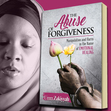
But I Don’t Want Forgiveness
November 16, 2011
Umm Zakiyyah on RADIO ISLAM
On Tuesday, November 15, 2011, Umm Zakiyyah was a guest on RADIO ISLAM out of Chicago, Illinois. During the show, she discusses her own journey to becoming a successful author and the ethical challenges involved in writing “Islamic fiction.” She also discusses the moral issues surrounding turning an Islamic novel into a movie.
LISTEN HERE:
(Full URL: http://radioislam.com/_asx/WCEV1450/2...)
September 11, 2011
Beyond Black Victim Status: Slaves Are Superior
“We were of the most disgraced of people, and Allah granted us honor with this Islam. Now, whenever we seek honor in other than that which Allah honored us with, Allah shall disgrace us (once again).”
—‘Umar b. al-Khaṭṭāb
“Black people in America can never be Muslim,” people in America can never be Muslim,” he said to me as I stood next to his desk. I stared at my teacher with an expression that must have conveyed very little of what I felt right then. I didn’t know what to say. I studied his eyes, slightly enlarged by the thick glasses he wore. The deep olive of his Arab complexion was nearly the same as my American brown. We even shared the same hair texture—though my hair was covered right then.
But, even so, to an outsider looking in, he could have easily been my father. And given that he was the only Muslim teacher I had at the high school, I should have at least shared with him the commonality of “brother and sister” in Islam. But that, I knew, was impossible to this man. He was Arab. I was American—and “Black” at that. He wanted to make sure I understood this impossibility. I did…
READ MORE at MuslimMatters.org…
August 6, 2011
Interview with Dr. Laurence Brown, author and physician
I recently had the honor of interviewing the author of the novel The Eighth Scroll, Dr. Laurence B. Brown:
A graduate of Cornell University, Brown University Medical School and George Washington University Hospital residency program, Laurence B. Brown is an ophthalmic surgeon, a retired Air Force officer, the medical director and chief ophthalmologist of a major eye center in the Middle East. The author of four books of comparative religion, he is also an ordained interfaith minister with a passion for writing reality-based fiction. The Eighth Scroll is one of three completed novels, and the first published. For the past two decades, he has divided his time between America, England, Jordan, and Saudi Arabia. Dr. Brown’s immediate family consists of his wife, three daughters and an ever changing assortment of hamsters and parrots.

August 4, 2011
Reality of Ramadan: You Might Not Benefit
I returned to my dormitory room after a full day of classes—and fasting. I was exhausted. Outside was dark, and my stomach grumbled. I had eaten only a little at iftaar because I had been so busy with schoolwork and meetings.
As I settled at my desk with a bagel and some grapes, I glanced at the clock. It was almost time for Ishaa. Already, I felt dread knotting in my chest. I could barely keep up with praying my five prayers on time; how would I pray Tarawih…alone?
I drew in a deep breath and exhaled, in that moment mentally scolding myself for my doubts. I will pray Tarawih every night this Ramadan, I told myself, no matter what.
An hour later I was facing the Qiblah as I completed my first two units of Tarawih. Heaviness weighed on my limbs and my mind wandered. How many more to go? I asked myself in irritation.
I mentally blocked out the question and moved on to the next set of prayers…and the next…and the next.
When I finished I almost collapsed in relief.
I was finally done. I met the warmth of my bed feeling as if a weight had been lifted from my shoulders…
July 6, 2011
My Thoughts on MOOZ-LUM Movie
Those who know me well know I’m not a fan of television and popular movies. But occasionally I make an exception when I hear of something that may be beneficial or relevant to Muslims in America or abroad.
I first heard of Qasim Basir’s movie Mooz-lum through the online trailer and was intrigued by both the title and plot. As a child of Christian converts to Islam, the struggles of the main character Tariq (played by Evan Ross) resonated with me although I myself never struggled with the practice of Islam itself. However, I was able to relate to both the taunting by classmates due to the Islamic affiliation and the “culture shock” of living as a Muslim on an American college campus.
However, I had reservations about how the movie would actually play out. From the trailer, I gathered the movie would be “Hollywood style,” complete with all the sexual innuendos and immorality that makes simply sitting in front of a film spiritually tormenting—for a religiously inclined person of any faith.
Thus, I wasn’t too excited about seeing it.
Nevertheless, as the plot was directly relevant to me personally and American Muslims in general, I decided I would watch the movie to at least know “what was out there” so to speak.
Due to my travels, I was unable to see the movie in theatres, but a week ago I was able to watch the film on DVD.
I was pleasantly surprised.
Unlike similar scenes advertised in popular Hollywood trailers, the scenes from the Mooz-lum trailer that had initially incited my reservations (namely the partying, drinking, and male-female interaction) were not “tasters” of something more licentious to come, but were merely snapshots from the main character’s life and portrayed little more than the trailer itself had. However, as other Muslim reviewers have expressed, I still felt uncomfortable with the scene (albeit brief) between Tariq (Evan Ross) and Ayanna (Maryam Basir) in the dorm room. This encounter disturbed me mostly because of the Muslim backgrounds of the writer and director Qasim Basir and actress Maryam Basir. The scene would have been more powerful, in my view, if there had been no intimate contact and if moving dialogue was used in its place.
Despite this brief disappointment, I found myself intrigued by the plot, particularly Tariq’s relationship with his mother and father (played by Nia Long and Roger Guenveur Smith) and the emotional and spiritual tug-of-war between both husband and wife and father and son.
I was most moved by the painful emotional and religious struggles of Tariq, especially after his traumatic experience in a Hifz school, a boarding school established for the memorization of the Qur’an.
The scenes following the September 11th attacks were very authentic to the experiences of American Muslims, who experienced the same shock and horror upon news of the Twin Towers collapsing yet were subjected to senseless hate crimes and “terrorism” themselves.
I was also deeply affected by the character Professor Jamal (Dorrian Missik) and his professional struggles with his superior Dean Francis (Danny Glover). This was one of the most disturbing parts of the movie to me because it reminded me so much of the opposition and jealousy I faced from some non-Muslim peers and superiors who viewed my successes in the American academic and professional realm with unwarranted suspicion and disdain.
The only major part of the movie that I wish was handled differently was the portrayal of Tariq’s father (Roger Guenveur Smith). I felt that the movie could have humanized his character more, as his “crime”—of being a strict father who was unaware of the depths of Tariq’s struggles—did not warrant his portrayal as a heartless “fanatic” to be blamed for all of Tariq’s suffering. In truth, the father was no more responsible for what Tariq experienced at the Hifz school than Tariq’s mother was responsible for what Tariq was subjected to at public school—or in college for that matter.
This imbalance of assigning blame to the father exclusively left me deeply troubled. No parent knows the unseen, and we all make mistakes. Allah does not put on us a burden greater than we have strength to bear. Why then should we place such burdens on ourselves and others? Especially our parents.
Nevertheless, I thoroughly enjoyed this movie and was moved.
I think both Muslims and non-Muslims will find it beneficial and heart-warming.
……………………………………………………………………………………………………………………..
See the live-action book trailer for Umm Zakiyyah’s latest novel Hearts We Lost and find out more about If I Should Speak–The Movie.
Inspiration Behind “Tamika” in If I Should Speak
Below is a story I found online written by my former college roommate, the woman who was the inspiration behind the fictional character Tamika in If I Should Speak.
……………………………………………………………………………………………………………………………………………………………………….
My Roommate was Muslim, I Wasn’t
Islam – Fresh Faces
By Jamika, Umm Zakiyyah’s real roommate in college
I first heard of Islam and Muslims by way of Malcolm X. This charismatic speaker was often mentioned during black history month along with others like Martin Luther King and W.E.B. Dubois. Looking back, I’m able to see how distorted or incomplete the telling of his story was. Few biographers went beyond his Nation of Islam days. During my sophomore year in high school my sister presented me with Malcolm X’s autobiography as a Christmas present. I liked the book but never thought of Islam and myself in the same context. While I understood the initial need for the Nation of Islam, I personally couldn’t accept some of their beliefs and principles. I don’t remember anything negative being said about Islam, it was just never for us.
I’ve never been much of a “religious” person. My grandmother and great-granny attend church very often. My mother made sure I was present on the mandatory Sundays. As a child I saw church as inconvenient yet entertaining. I was raised in a Baptist church where the service was very animated; people singing, shouting and dancing down the aisle was commonplace. However even as a child I never really believed any of it. It didn’t help that many of my questions couldn’t be answered or explained to my satisfaction. So I was often confused and frustrated trying to understand Christianity. This confusion coupled with witnessing corruption in the church led to my initial detachment from the church.
I attended college in a small town in Georgia. Since I didn’t know anybody I was assigned a roommate, who just happened to be Muslim. This really didn’t strike me in any particular way; my feelings about Islam during that time can be described as indifferent. I was more concerned about who she was as a person, not her religion. I’ve always tried to be an open-minded person; while I may not agree with other people I want to understand them. So during those first few days when she matter-of-factly informed me that she was a Muslim and asked did I know what that meant, I replied “Yeah, you guys sell the oils and newspapers while the men wear the bow ties. Just like Malcolm X”. At that moment I was so happy I’d read the book and seen the movie. This quickly left when she let out a long slow “nnnooooooooo. Let me tell you about the real Islam”. Huh, what is she talking about? I’ve read the book AND saw the movie.
May Allah (Subhanahu wa ta’ala) reward her and her family for the patience they showed me and for answering all of my questions. From that day I began to truly know and understand Islam. I learned so much being in her presence, watching her pray, fasting during the month of Ramadan and seeing how she interacted with others on campus. She was the only covering Muslimah on campus in this small southern town and was often confronted by others on campus. By the time our two years together were over I was able to perform wudu and pray on my own, I had fasted two Ramadans and had attended Jummah with her as often as I could. But most importantly I believed in only one God and I believed that Muhammad (saw) was the last prophet.
My family didn’t take this news well and made things very difficult. I was alone and afraid to go against my family and eventually stopped trying to practice Islam. I began to lead a life void of all religion, I certainly didn’t return to the church and Islam began to feel foreign again. I’d lost touch with my college roommate and began to feel I wasn’t good enough to be a Muslim. I didn’t want to bring my life of sin into Islam and “mess things up”.
Some time passed and I put Islam and all religions out of my mind. I felt so empty inside; I really had no clue where to turn or what to do. After much thought I decided to return to school and made a small promise to myself that I would really try and focus on my spiritual side. I’d avoided the topic of religion for several years by then and knew I desperately needed to do something.
While in school I still wasn’t too excited about giving religion another chance; it’d been a long and not too pleasant road, which caused me to have little faith in religious organizations.
In my last year of college I finally decided to work on my spirituality and returned to what was familiar: Christianity. I thought attending a service would be a good start, but being away from churches made me reluctant. So I decided that television would be the next best thing. In the beginning it seemed I’d made the right decision. However after watching all the popular preachers on television I felt no different, no closer to God, unfulfilled and still confused about the foundation of Christianity. I’d also found these ministers/prophets/bishops untrustworthy, which also caused me to back away from
Christianity.
One day after watching another sermon on television and feeling like I was at the end of my rope, I broke down. I’d cried like I’ve never cried before and I begged God to help me; I didn’t care who or what it was that He sent, I just needed help. I’d realized at that moment that I didn’t have a clue what I was doing, I gave up whatever control I thought I had and I surrendered myself to God. A few hours later my sister called and told me she was contacted by my old roommate in college and she was looking for me.
My former roommate and I exchanged emails that very next day. As we caught up she told me that she was an author, among other things, and her first book was based on our college years together. She mailed me a copy and while reading it all of my memories came rushing back. I remembered the beauty of Islam and the peace I felt while reading startled me. By the time I finished her first book I knew Islam was what I was searching for, but was still nervous and reluctant to admit that. I read that book several times and after each time I put it down I felt more at ease. Then the second book was published, which had nothing to do with me, and she sent me a copy. Something was pulling me toward Islam, and while I was nervous about making such a decision, I knew deep down what I had to do. I felt satisfied and excited by the mere thought of Islam; emotions I’d never felt when dealing with religion.
When I woke on September 7th, 2004 I had no plans of saying “La ilaaha il Allah, Muhammad-ur Rasool Allah” but as I learned that day, Allah (Subhanahu wa ta’ala) is the best of planners!
…………………………………………………………………………………………………………………………………………..
Sister Jamika recently relocated to Greenbelt, Maryland from Fort Lauderdale, Florida, where she received her Bachelor’s degree in Interactive Media Design. She reverted to Islam in September 2004.
Taken from: http://forums.almaghrib.org/archive/index.php/t-11756.html on July 6, 2011
June 25, 2011
Marrying at the “Right Time”
Our Dilemma: Placing Our Trust in Allah
It’s one of the most difficult questions faced by adult Muslims, especially women:
When should I get married? After I finish my studies, or now?
When I think of this dilemma, I often remember the advice of my parents:
When it comes to marriage, the most important question is not
when to get married but to whom?
And it is only Allah who knows the companion He created for us in this world and in the Hereafter. Therefore, when seeking to answer the question of when (and whom) to marry, we should turn to Allah and ask His guidance.
Allah says,
“And when My servants ask you concerning Me, then [tell them], I am indeed near. I respond to the prayer of every suppliant when he calls on Me … .”
—Al-Baqarah (2:186)
It is of the immeasurable blessings of Allah that the believer is promised correct guidance when he or she turns sincerely to the Creator for direction.
However, we often miss out on this tremendous blessing when we live our lives guided not by what Allah has shown us as a result of our supplications, but what humans and society (and our nafs) have suggested due to human desire and experience.
…
So many of us imagine that we can plan life and cover each important milestone at the “right time.” Thus, when we think of getting married, having children, or even taking practical steps toward crucial spiritual improvement, we mentally write for ourselves schedules, which we follow religiously, often without ever raising our hands in supplication to ask Allah if these approaches are best for us.
Fortunately, growing up, I was taught this profound lesson by my parents:
There is no such thing as the “right time” for anything in life.
There is only “the right time for you.”
And your “right time” is something of which only Allah has full knowledge.
…
No, this doesn’t mean we should avoid making judicious decisions based on our experience and wisdom—or even based on those personal desires and dreams we have. It just means that as we plan, we should also remember that Allah plans—and His plan is always best.
And it is often the case that submitting to Allah’s plan results in no major changes to the schedules we’ve set for ourselves: Certainly, sometimes our schedule and Allah’s schedule are in harmony with each other.
Nevertheless, even when we must alter our plans after consulting Allah, our du’aa and Istikhaarah guarantee that we are protected from harm and that we reap the best in this world and in the Hereafter as a result of our tawakkul. It is often only much later in life that we realize…