David Gessner's Blog, page 98
December 9, 2011
Cover Me (Part II)
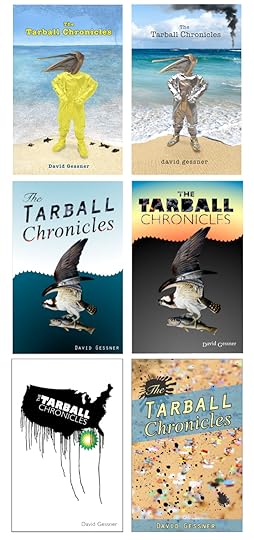
Here's a few of the possible covers that the designer came up with for The Tarball Chronicles. Below is an interesting link where he tells the story of finding the right cover. (And I do think it's the right cover.)
The Tarball Chronicles | Cover Design by Tonky
Monday, October 24th, 2011 | Tonky Graphic Design
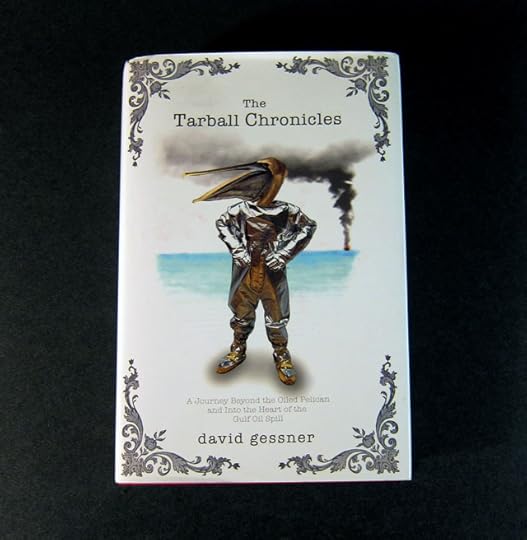
Take a gander at my most recent book cover design for Milkweed Editions. The Tarball Chronicles ($24) by David Gessner documents the author's road trip to and around the gulf coast during the 2010 oil spill.
This was a challenging project and it took a while to zero in on a design that encapsulated Gessner's work. You can see some of the rejected concepts below. Since Gessner asks his readers to look "beyond the oily pelican" that dominated news coverage I was tasked with designing a cover that was specific to the disaster while also not reading as cliche or "too similar" to every other image we associate with the rig explosion and subsequent months-long undersea gusher.
We settled on this collaged composition that features a monstrous BP cleanup worker with a pelican head ( courtesy of J.J Audubon) and framed out by filigrees appropriated from an early 20th century mardi gras ball invitation
thanks for looking,
-Tonky
Here is the address for Tonky's website.


December 8, 2011
My Amazon Revenge: Reviewing my Reviewer
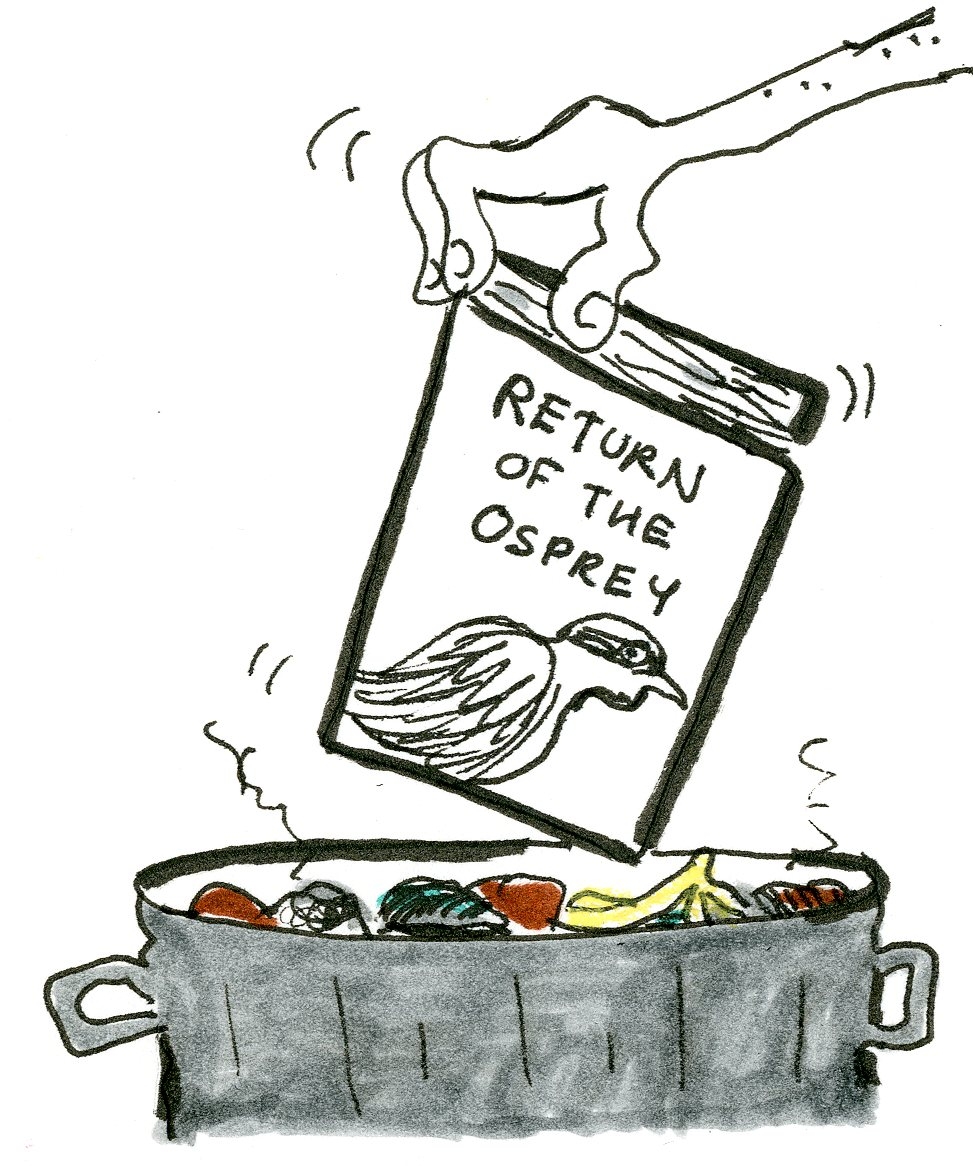 I am confident that a lot of people enjoyed reading my book, Return of the Osprey. That confidence is based on letters and conversations, and some pretty good reviews.
But one person who clearly did not enjoy the experience was a man who goes by the alias of "Dobx." In fact Dobx disliked it so much that he chose to reveal his displeasure in a review on Amazon.com.
I have been understating so far: Dobx hated the book.
Here is Dobx's review:
A poor version of Walden Pond redux, June 3, 2010
By
Amazon Verified Purchase(What's this?)
One of Four Stars
This review is from: Return of the Osprey: A Season of Flight and Wonder (Paperback)
We live on a sound on the Outer Banks and erected a nesting box, perhaps 50 feet from our dock, this March. We were fortunate enough to attract a nesting pair who built their nest, and we currently have three chicks in the nest.
I was hoping to get facts about ospreys from the book, but alas instead I got ruminations and regrets and etc. The author really wishes he was an osprey.
I think this is one of the worst books I have ever bought.
If you want osprey facts, simply Google osprey facts and save yourself from the author's angst.
If I want to reread On Walden Pond, I have a well-thumbed copy.
So that's the review.
Where to start?
How did my book get to be "one of the worst books" Dobx has ever bought?
Well, let's break it down:
1. The book clearly didn't supply Mr. Dobx with the thing he most wanted: facts. He compares the book, the product of years of work, unfavorably with a Google search.
And I see his point. That would certainly be a lot faster than reading. Also he's right: there are very few ruminations and regrets and etcs in your average Google search.
2. "The author clearly wants to be an osprey." No argument here.
3. Dobx would prefer to skim his "well-thumbed" copy of On Walden Pond.
Now I'm no Thoreau scholar, but I'm ready to guess that that book, if it exists at all, is not that well-thumbed, or if it is, it got that way without Mr. Dobx reading its title. I suggest this because he seems to have conflated the work of Henry Thoreau with that of Henry Fonda, perhaps thinking that the famous author spent his year of solitude On Golden Pond.
(Note to Dobx: the title of Thoreau's book is Walden.)
4. I reveal a lot about myself in Return of the Osprey, and apparently that irritates Dobx. But I find myself wanting to learn a little more about Dobx. Since he has a house with a dock on the Outer Banks (in the town of Duck) I will assume he is well-off, possibly retired. A quick review of his other Amazon purchases reveals that the guy loves technology, since most of the other products that he reviews are adapters and electronic gizmos and that sort of thing, but he also wants to know about the wind (he buys wind socks and anenometers—he lives on the Outer Banks after all) and loves his labradoodle (he can't be all bad) for whom he buys 2 packs of Zymox ear cleanser (the dog is "susceptible to nasty ears and fungi" from swimming in the ocean) and assorted swimming toys like amphibious boomerangs. (For a full account of Dobx's purchasing habits you can go here.)
One thing you will learn if you go to that link is that the only thing Dobx hates almost as much as whiny books about ospreys are too tight aviator hats. Here's his review:
Red Weatherproof Nylon Trooper Pilot Aviator Trapper Hat for Men and Women
Availability: Currently unavailable
1 of 1 people found the following review helpful:Got a little head?,December 28, 2009Two of Four StarsThis review is from: Red Weatherproof Nylon Trooper Pilot Aviator Trapper Hat for Men and Women (Apparel)
Got a Little Head? If so, it might fit. Wore it once, got a headache, took it to Goodwill. The end.
The picture of this hat did not come through but you can see my drawing of it below or the real thing here.

Well, as you'll obviously agree, that's enough of Dobx. Of course I realize I got a little bit carried away. But I feel okay about it. It has always seemed a little unfair to me that these anonymous strangers get to review you, but you don't get to talk back. This, then, is my remedy to that problem. This then is my Amazon revenge.
December 7, 2011
Bad Advice Wednesday: A List From John Lane
John Lane's Bad Advice
1. Don't follow your bliss.
2. Don't always write about what you know.
3. Never believe there's a light at the end of the tunnel.
4. Don't wait for the Luck Bus.
5. Never expect a promotion with that MFA.
6. Don't invest in plastics in spite of the current nostalgia for Simon & Garfunkel.
7. Practice brevity, especially when it comes to introductions.
8. Ignore the prizes and dream only of swimming with Keats.
9. As Isaac Denison so famously said, Write every day without hope and without despair.
10. If you break it, you buy it.
11. Never lie about the truth.
12. Feelings can be rented. You don't have to own them.
13. If you want to acquire a dog make it a low maintenance one.
14. The New Yorker's jokes are better when the issues pile up.
15. Don't believe there will be cell towers on Mt. Parnassus.
16. Yes, Kerouac did die unhappy, but his heirs are not.
17. Don't buy too many envelopes, even if they are on sale.
18. If you purchase first class stamps make sure they are eternal.
19. "Don't let it sleep in the house" doesn't work with email.
20. ABC. Mamet's "Always be closing."
21. Save the few letters you get for any available archive.
22. What's published on line stays on line.
23. Lay your dreams to rest and you'll come in second.
24. Unlike yogurt, literature never expires.
25. There are only two types of river stories: upstream and down.
26. Talking animals are hard to pull off.
27. Read The Odyssey again.
28. Holiday stories usually disappoint.
29. Don't call "Eleanor Rigby" a poem.
30. Measure twice and cut once still works.
December 6, 2011
Keep Hope Alive (In the South No Less)
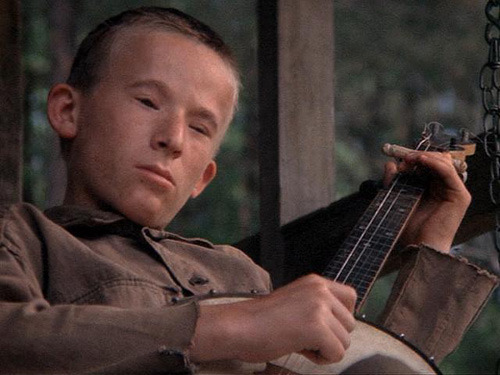 John Lane is the author of many books, including two very recent ones, Abandoned Quarry, his new and collected poems, and My Paddle to the Sea, which the literary critic David Gessner has called "beautiful—full of contemplation, life-and-death, humor and derring-do." John is going to be taking over grease cook duties here at Bill and Dave's Bar and Grill for the next couple of days, including the offering below and tomorrow's bad advice:
I know Dave is planning on writing about the west and Wallace Stegner in his next project and I just finished listening to Crossing to Safety, Stegner's story of two academic couples who have been friends for fifty years, one couple is from the west and one from the east. This plot got me I've been thinking a lot about the differences between regions, particularly about my native south and every other region. I haven't come to any profound conclusions, but I have formed some ideas.
Way back in early 1990s I was on a panel at a meeting of The Association for the Study of Literature and Environment in Missoula, Montana, and they wanted me to talk about the same thing, to hand out advice about understanding the South. Here's what I came up with:
In the introduction to Where the Bluebird Sings to the Lemonade Springs, Wallace Stegner explains how the remaining Western wilderness is America's "geography of hope." He says that the West is "hope's native home, the youngest and freshest of America's regions, magnificently endowed and with the chance to become something unprecedented and unmatched in the world."
In my geography, the southeast, hope is not among what most would consider the most common environmental compounds or elements. Our natural resources are mostly cut-over, planted, paved or gullied. The southeastern landscape– including suburbs, cities, small towns, neighborhoods, interstate highways, industrial parks, farms, tree plantations, and remnant wilderness– is a geography of acted on desire. Here are a few words I associate with desire and the southern landscape:
~ Contrariness. What people desire is often hidden. What Southerners desire is hidden like a spring in cut-over piney woods. It is not to be found only in the truly wild (read "non-human") places, but also in those places flowing boldly with the oddly human. To understand desire in the South, factor in contrary human nature, look closely at your neighbors, and look deep into the Southern woods between the small towns and larger cities. Read William Faulkner, Flannery O'Connor, Harry Crews, Walter Inglis Anderson, Annie Dillard, and Harry Middleton to get a fix on this Southern contrariness.
~ Deep Mystery. In an interview with James Atlas in 1980, Walker Percy said Will Barrett, the protagonist of his novel The Second Coming, is "a voracious and enraged pilgrim." Barrett's late middle age fictional search takes him away from his successful resort community retirement, into the arms of a mute young woman, and into the bowels of the earth, a deep southern cave (a particular but not peculiar Southern "wilderness") where relics of the Civil War have been found. It is in this landscapes of "deep mystery" that you need to look to see what it is to live in the South.
~ Isolation. The isolation explored by Jody Foster in the film Nell is one peculiar form of southern desire. Desire is the right word for what comfort I find in the "ethics" of Nell's story. Nell's desire slakes my own for living far from the maddening crowd. When trying to define my relationship to "Southern landscape" I must factor in Nell's realized desire to live in "some dark holler" far from Ted Turner's New South.
~Deliverance. The four suburban men embarking on a three-day canoe trip in James Dickey's 1970 novel Deliverance are pulled out of Atlanta by the desire for "a break." In their case, deliverance desire leads through violence into direct contact with "a southern wilderness river" and "survival." What is their deliverance? It is that the survivors are "delivered" back into "civilization" by their experience, or that they could find it in the first place? This sort of double "deliverance" I find very southern.
~ Ownership. Almost the whole of the Southern landscape has, at some time, been private property, owned by somebody's uncle or cousin, and Southerners have family Bibles and long narrative memories to prove it. When we speak of wilderness in the south, we usually speak literally and abstractly of only a few parcels of "government" land– Cumberland Island National Seashore, the Outer Banks, the Big Cypress, the Everglades National Park, Shining Rock Wilderness in Pisgah National Forest, Great Smokey Mountain National Park, the Chattooga National Wild & Scenic River, to name a few. Faulkner is the best on ownership. The long version of "The Bear" in Go Down Moses is the best example of how he feels about ownership.
Though Stegner would not call the South the landscape of hope, I have great hope for the South, and you should too. Because we are human you and I are full of desire. We desire clean water, clean air, open land of mixed forests, farmland, town and city. And for most Southerners I would wager the "landscape of the desire" is not one of the big government parcels with dramatic scenery and a short history, but instead some relatively small (by Western standards of hope) family, private or corporate owned plot of marginal land: a farm with a scrap of woods down by the river, a hunting club, an industrial park like the Milliken corporation maintains in Spartanburg, SC. Usually this land is highly mediated by history and commerce. Usually a parcel of Southern land has been diseased (a moment of silence for the mighty chestnut) logged (sometimes four or five times in the long European human history of the South), farmed, divided and subdivided, deeded and willed. But we can always remember, the two of the primary Southern vices, violence and ignorance, are often mediated by a accurate survey and a standing court house.
One of the most commonly cited virtues of Southern civilization is "sense of place," that narrative genius offering landscape as setting, but at the center of the South's landscape is desire, the fuse that drives Bartram's travels, Dickey's rapist and the Fraser magnolia.
If have any advice for you, say when reading Southern literature and watching Southern politics, it is to keep this list close by and consult it often. It is a road map to wildness.
December 3, 2011
Chester Greenwood Day: Our Parade
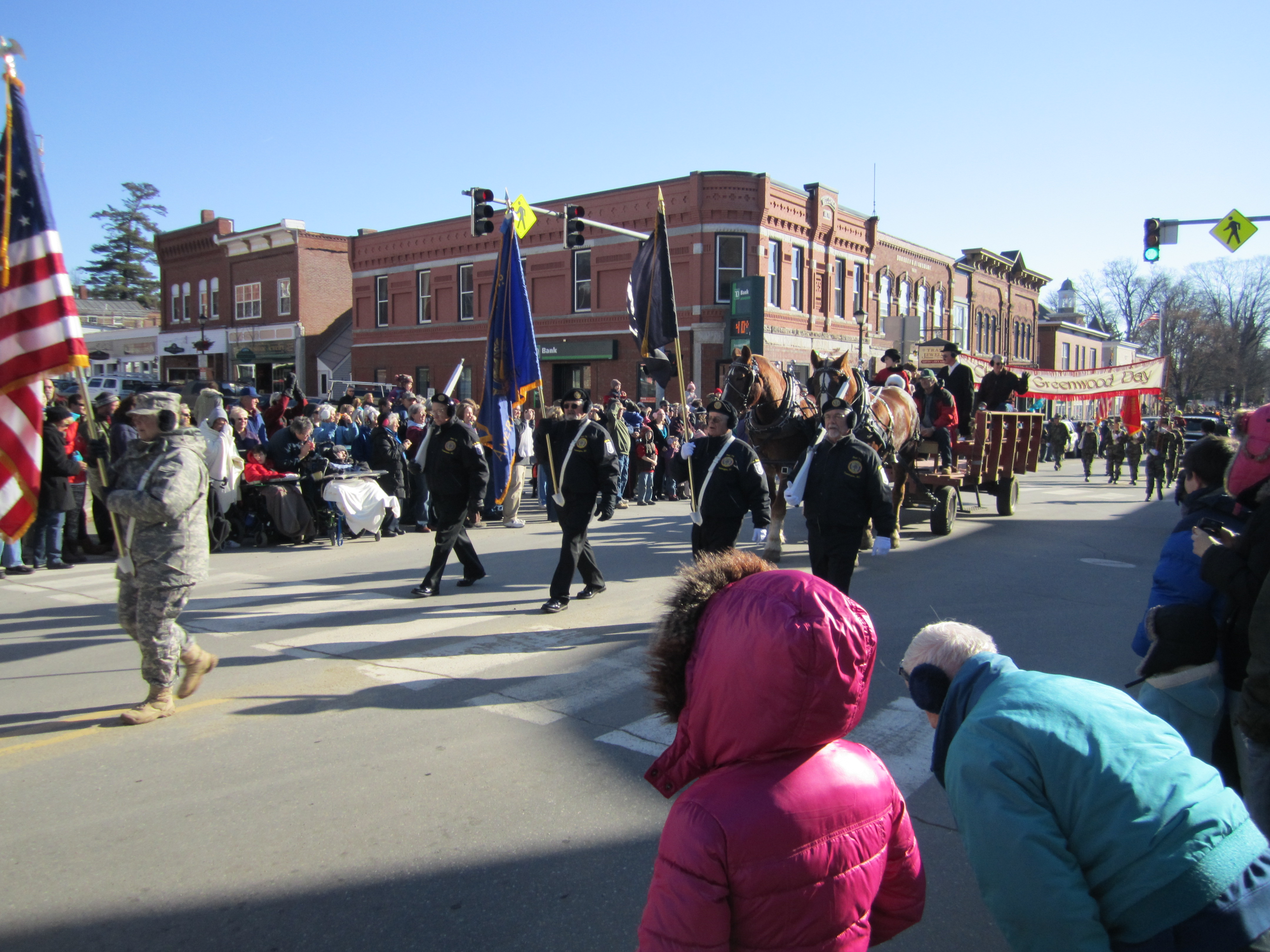
Broadway and Main
The first Saturday of December may be a lot of things a lot of places, but here in Farmington, Maine, it's Chester Greenwood Day, and we have a parade. It's not quite the Macy's Thanksgiving Day parade (which I wrote about last week), maybe two blocks worth, but it'll do!
Chester Greenwood invented the earmuff, among other things, and almost anyone in town can tell you how it happened: he loved to skate as a young teen, 1873, but his ears got cold. He wrapped his woolen scarf around his head, but that was too itchy and uncomfortable, so he got his grandmother to sew circles of beaver pelt on a metal frame he'd fashioned, and (as a French-challenged college student of mine once wrote): wallah!
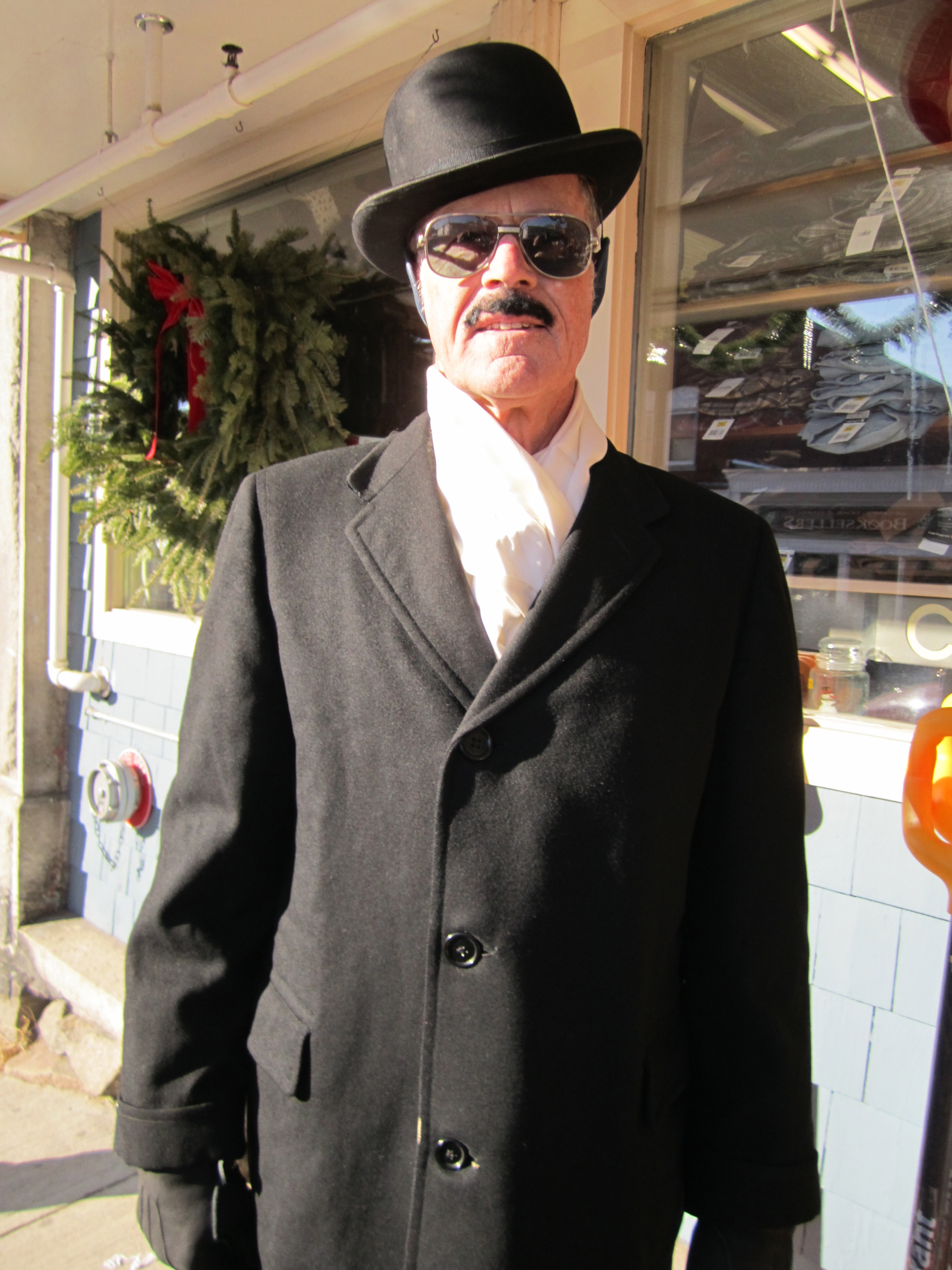
Chester Greenwood
He patented the invention as "ear-mufflers" on March 13, 1877, and went into business, building a factory that produced 400,000 sets of earmuffs a year at its peak. He made his fortune during World War I supplying the U.S. Army, and the factory continued production for 60 years, till Chester's death in 1937. His house is a beau
tiful old cube of federal architecture (clapboarded and painted yellow) high up on the bluff over the Sandy River, just behind and
above the Farmington offices of Maine Human Services.
The parade is great fun, always cold. Community groups sponsor home-style floats pulled behind pickup trucks, or just ride in a pickup truck, all wearing earmuffs. Kids march in school groups, yelling and waving. The championship Mount Blue High School ski team skis past on wheel trainers, wearing earmuffs. I wear ea
rmuffs, too, because I always run into Jan Roberts, my chiropractor and movie pal, who gets into Reny's early and buys a few dozen pair to hand out.
At the end of the parade someone tall (Chris Buschmann for a few years, husband of my massage therapist, now a man named Wayne, who wears a beautiful bowler his mother purchased back in the day and handed down) sports a fake mustache Chester Greenwood. And Ches
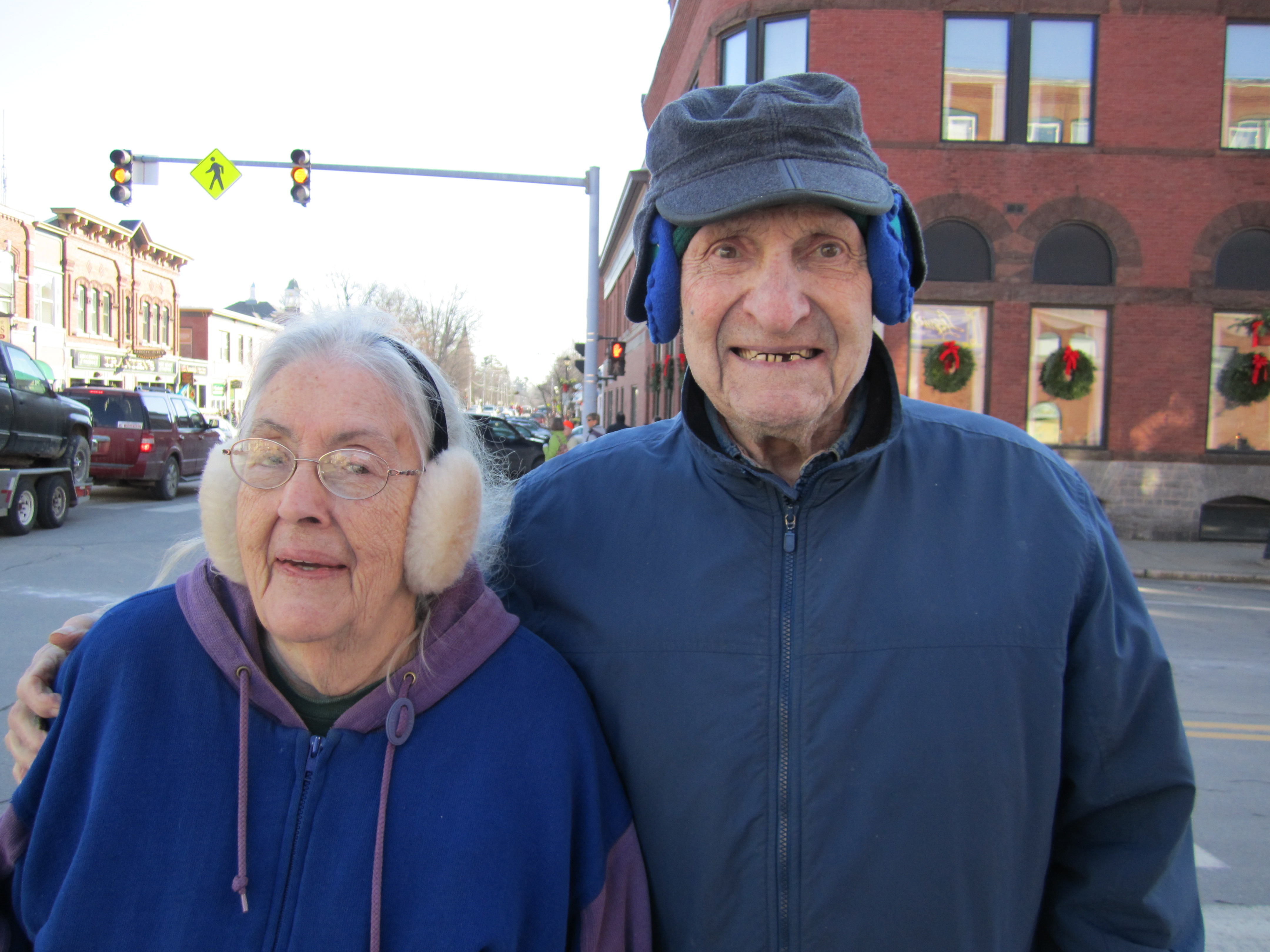
My friend Al and his girl, with muffs
ter's actual descendants ride past waving from old convertibles, wearing earmuffs, both cars and people. My favorite thing is the giant earmuffs on the school buses and fire trucks, and all the sirens. My other favorite thing is the Civil-war re-enactors, who march in a small phalanx of six or eight soldiers with muskets (but no earmuffs, since that wouldn't be accurate). They've apparently gotten over their animosities, as Gray uniforms and Blue uniforms march together. Every hundred yards or so they stop and load their muskets, lots of elaborate plunging and tamping, then aim at the sky and make an explosion so loud that the entire crowd (1000 or so intrepid souls) leaps in the air. Babies scream, dogs bark. The only people unaffected are guys wearing their ear protectors from work because they couldn't find their earmuffs that morning.
Oh, and several people march with dogs, or ride past on well-brushed ponies, or lead miniature horses. I'm here to tell you that there's no more beautiful thing than a horse or dog or mule wearing earmuffs.
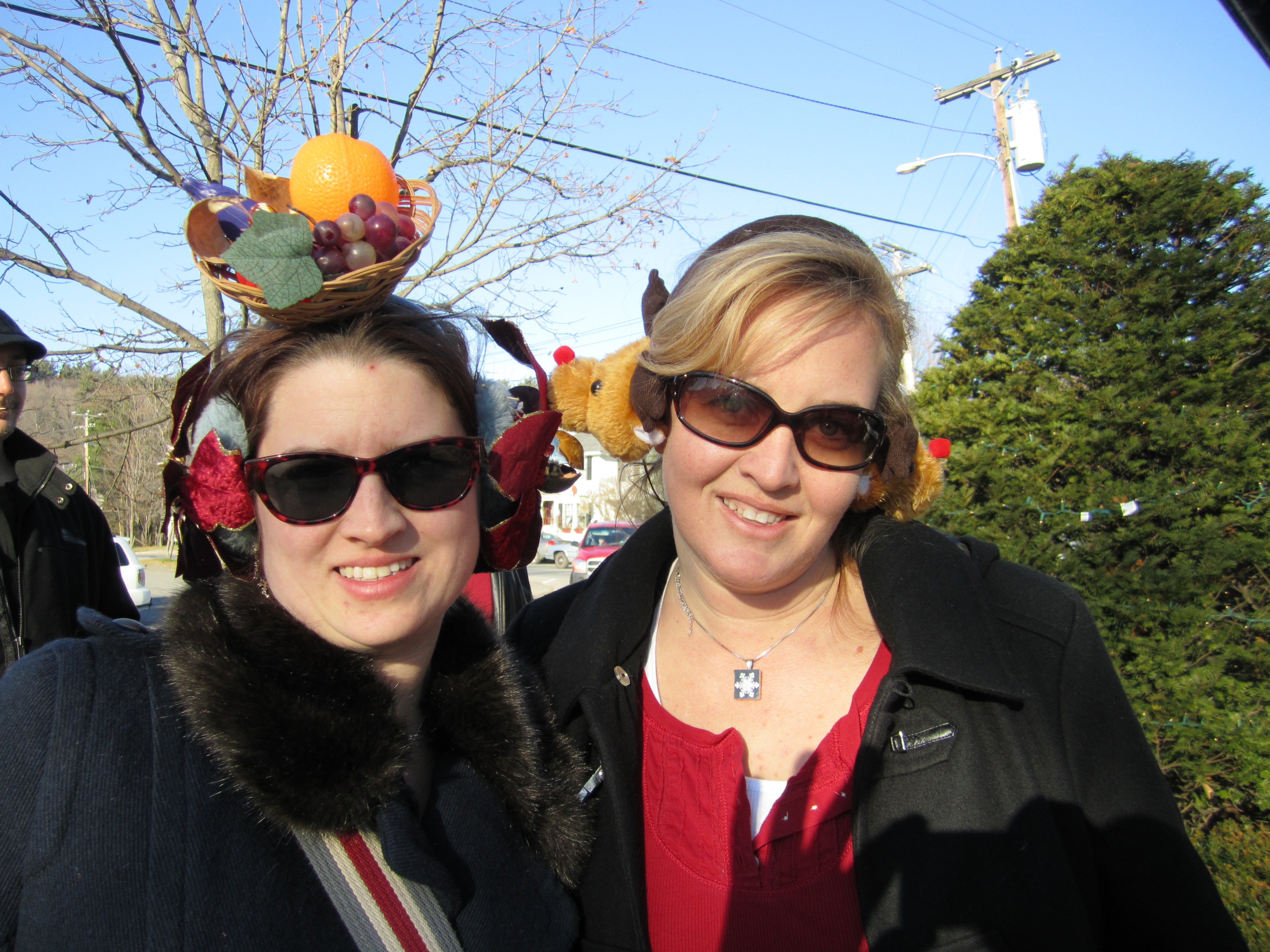
Stephanie and Stephanie
I guess all the teens wearing headphones and trying to disassociate are in the spirit despite themselves, because the
design of headphones surely goes back to Greenwood. I hope the kids are listening to John Philip Sousa marches. There's no marching band at Mt. Blue High anymore—budget constraints, lack of interest—but once there was (they won a competition and marched at the first George Bush's inauguration in Washington). And once they marched in this parade, which had its first year in 1977. Never fear, a couple of the floats have their own boom boxes, and not even ear mufflers can shut out the joy.
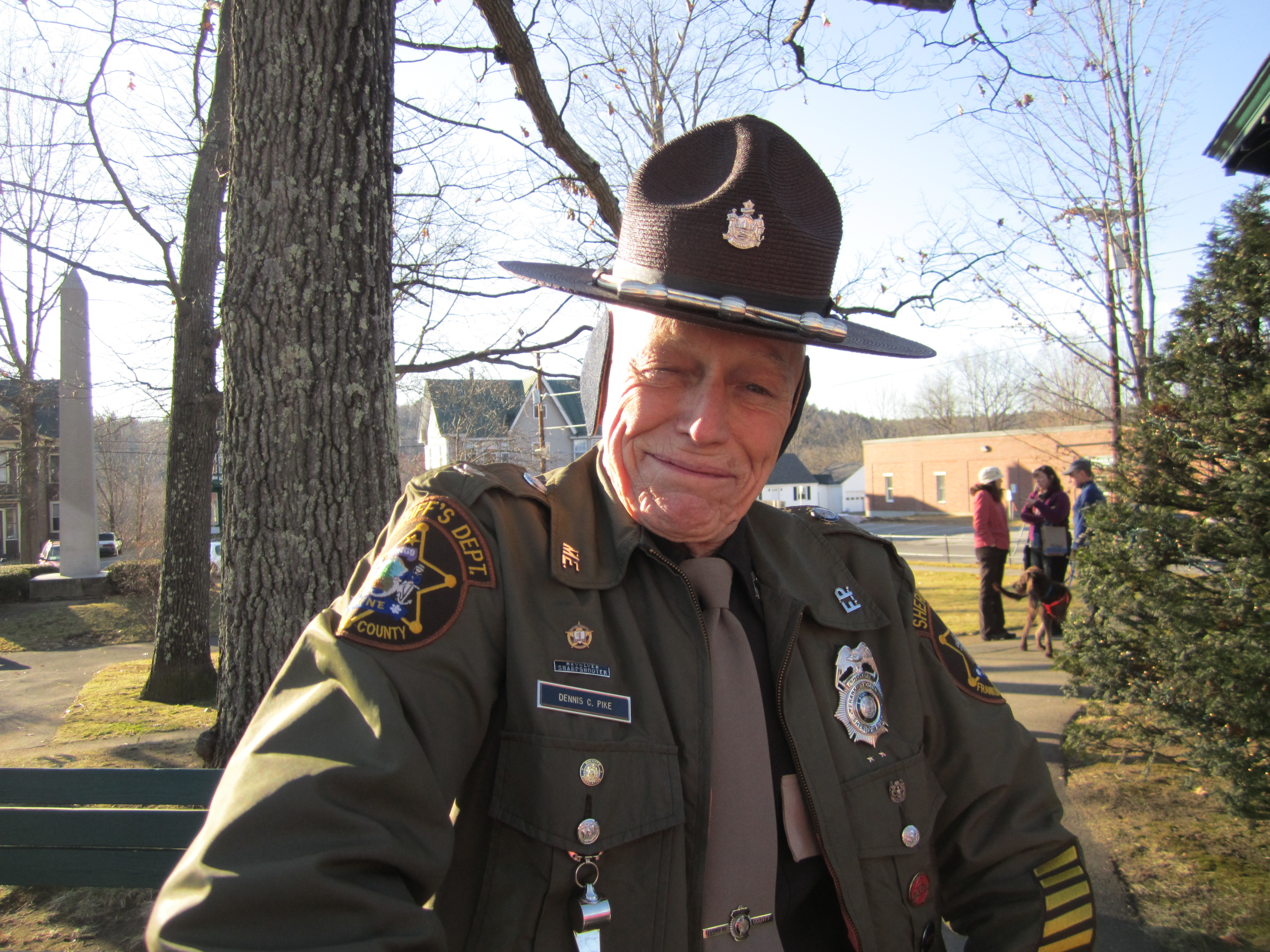
The Beloved Sheriff Pike, Grand Marshall
I'm thinking about building a giant pair of earmuffs for my house, with heating oil post
ed at $3.44 a gallon this week and firewood at $225 a cord. Gasoline is up there, too. I'm not sure how people are going to get through the winter. Apologies to Chester, but earmuffs alone aren't going to do it. Friday, I stopped at Irving to fill up. A nicely dressed
older woman came around the pump with a beseeching smile on her face. I recognized her vaguely, that small town ci
rcumstance, familiar face. I think she'd been a volunteer at one of the church booths, Farmington Fair. Maybe she recognized me, as well. Something was wrong with her right eye: it dripped tears, the lid was drooped, the sclera bright red, awful looking. I thought she was going to ask me to help pump her gas, and it made me happy to think I could be of service.
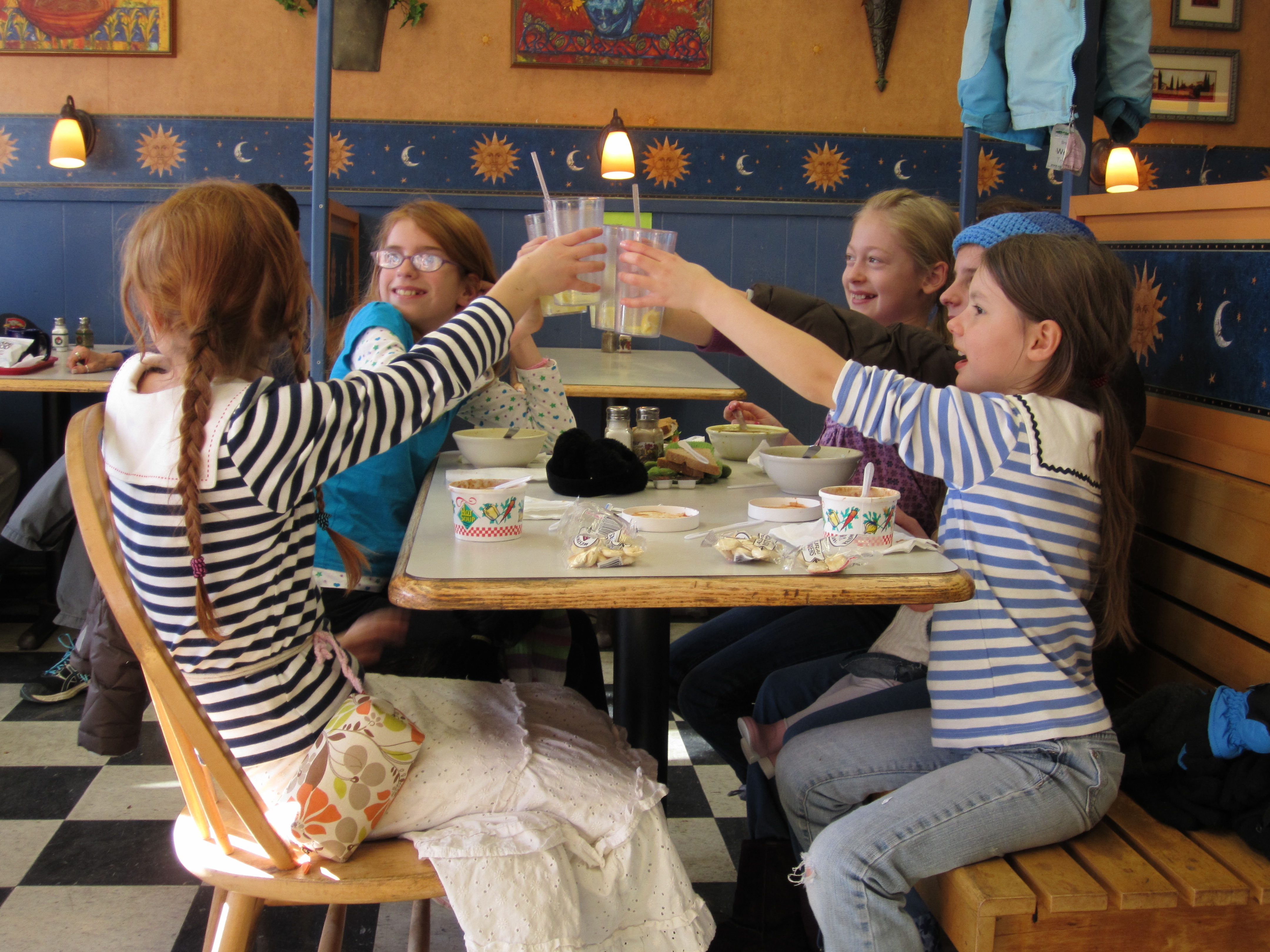
A toast to Chester
Rapidly she said, "I have an unusual little problem. I have to go to the doctor in Augusta, but I don't have enough gas." Of course what she meant was she didn't have enough money. "I've been working on the probl
em all morning, trying to get a ride, but nobody's available, nobody's home. My husband passed away last year. And I have to get there today. I really have to. They fit me in. My appointment's at 1:00." One hour away! "I should have thought of this last night. I just need ten dollars. Of course I'll pay you back."
Gently, I said, "Can't you go to the doctor here?"
Her good eye began to cry, too. She didn't want to have to explain. Clearly, the whole thing embarrassed her, from widowhood to illness to sudden poverty to supplication. She blubbered: "The Medicare won't pay if I go back here. I've already gone here. This is the specialist. He's in Augusta."
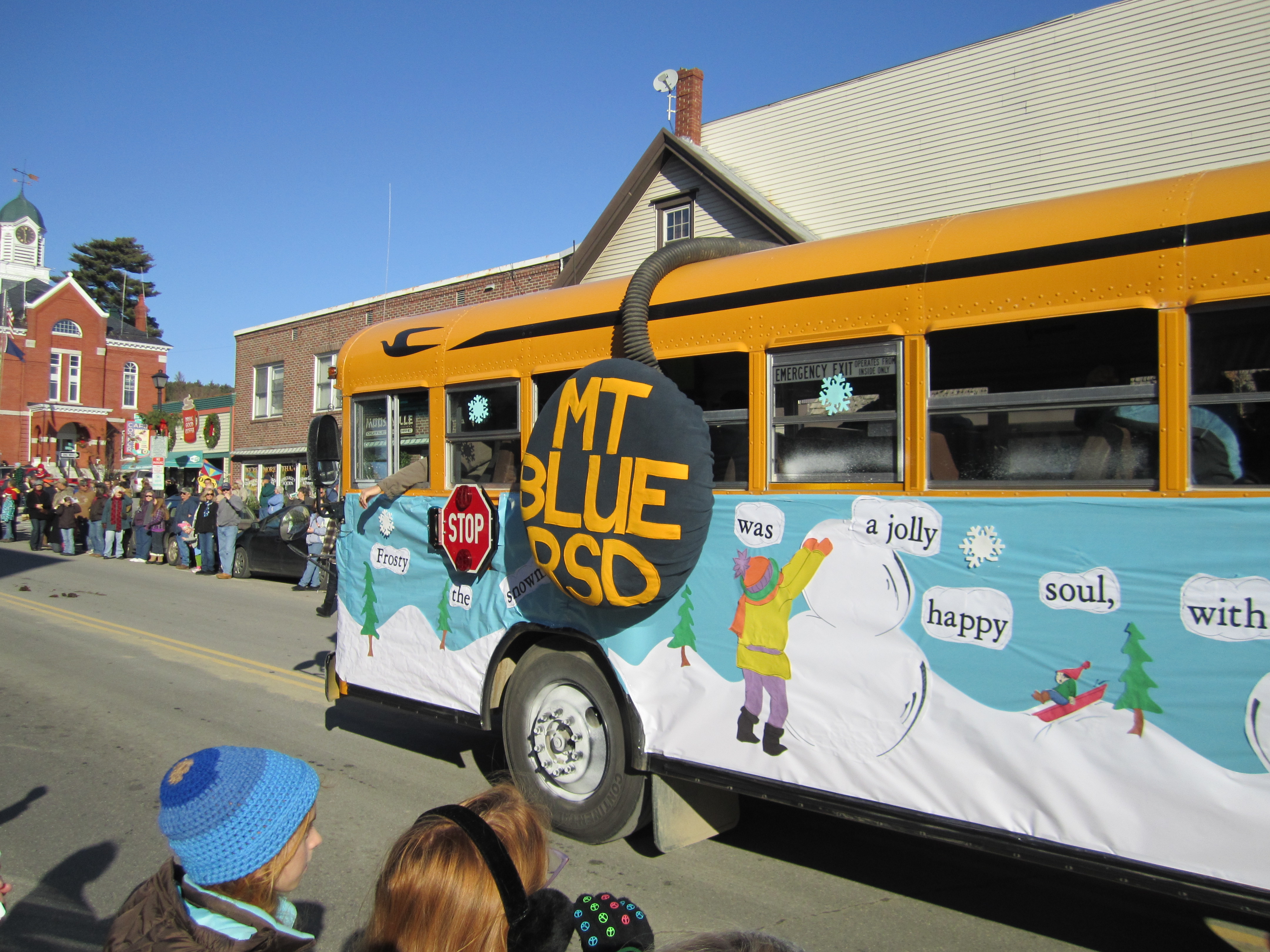
School bus with earmuffs
There's no public transportation in Farmington, and only a single taxi. The railroad tracks were torn up years ago, following a national trend. Maine Care will cover the costs for transportation to medical appointments they have set up, but perhaps my new friend wasn't yet part of that system, or had understandably clung to her independence. If you're paying yourself, the tab is seven dollars each way, plus seventy-five cents a mile: $31.00, roughly, and you have to plan well in advance. I thought of the afternoon's schedule-I didn't have time to give the good woman a ride, and of course that would be nearly the same as giving her the gas.
I said, "And you don't have a credit card?"
"I'm past my limit, I'm afraid."

After the hayride
No great sin-maybe she'd filled her heating oil tank—that'll max many a credit card this winter. Plus it was the end of the month. Pension checks, social security, part-time work, these things only stretch so far. Her vehicle was an old Chevrolet Suburban with Support Our Troops ribbons and a good deal of rust, her late husband's no doubt. I figured it for ten miles a gallon at best. Augusta is about 35 miles from Farmington, 70 miles round-trip, seven gallons of gas minimum at $3.19 a gallon, call it ten gallons in case my mpg estimate was too liberal (very likely): $31.90. I did this figuring out loud, in a tone of bemusement so as not to seem to chastise or judge her, tucked my credit card into the slot on her side of the pump.
She was horrified. "Oh, I can't take that much from you."
"But that's what you'll need to get over there."
I pumped the gas for her, and just let it keep pumping, 20.3 gallons in a 20 gallon tank, phew, almost $65.00, a good chunk of the average month
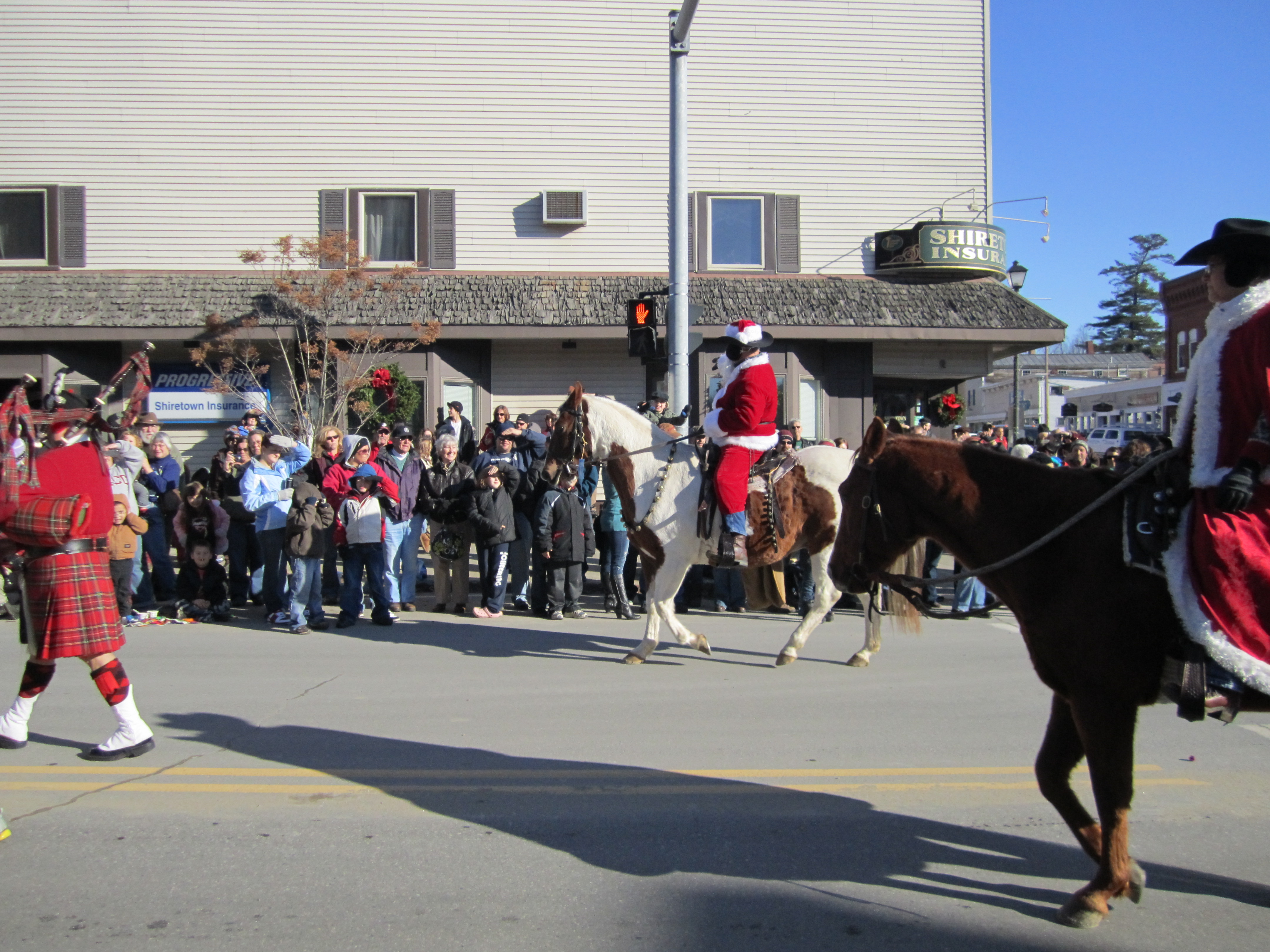
The real Santa, not like in New York!
ly Social Security check in Maine, which is $851.00. And Franklin County is below the average by quite a bit. And not everyone even gets Social Security. What do you do if a fill-up amounts to ten percent of your monthly income and your tea party state legislature is in the process of strangling state support and service programs?
You beg.
She wanted my address, promised to send me a check, her good eye crying again, but I didn't want to hang that over her head, not this month, what with Christmas coming and an eye patch looming. I said, no, no, it's on me. It's not a big problem. It's just gas. Happy Chester Greenwood Day."
And she said, "Earmuffs," disdainfully.
"Drive carefully," I said.
"Or don't drive at all," said she.
I watched her pull away.
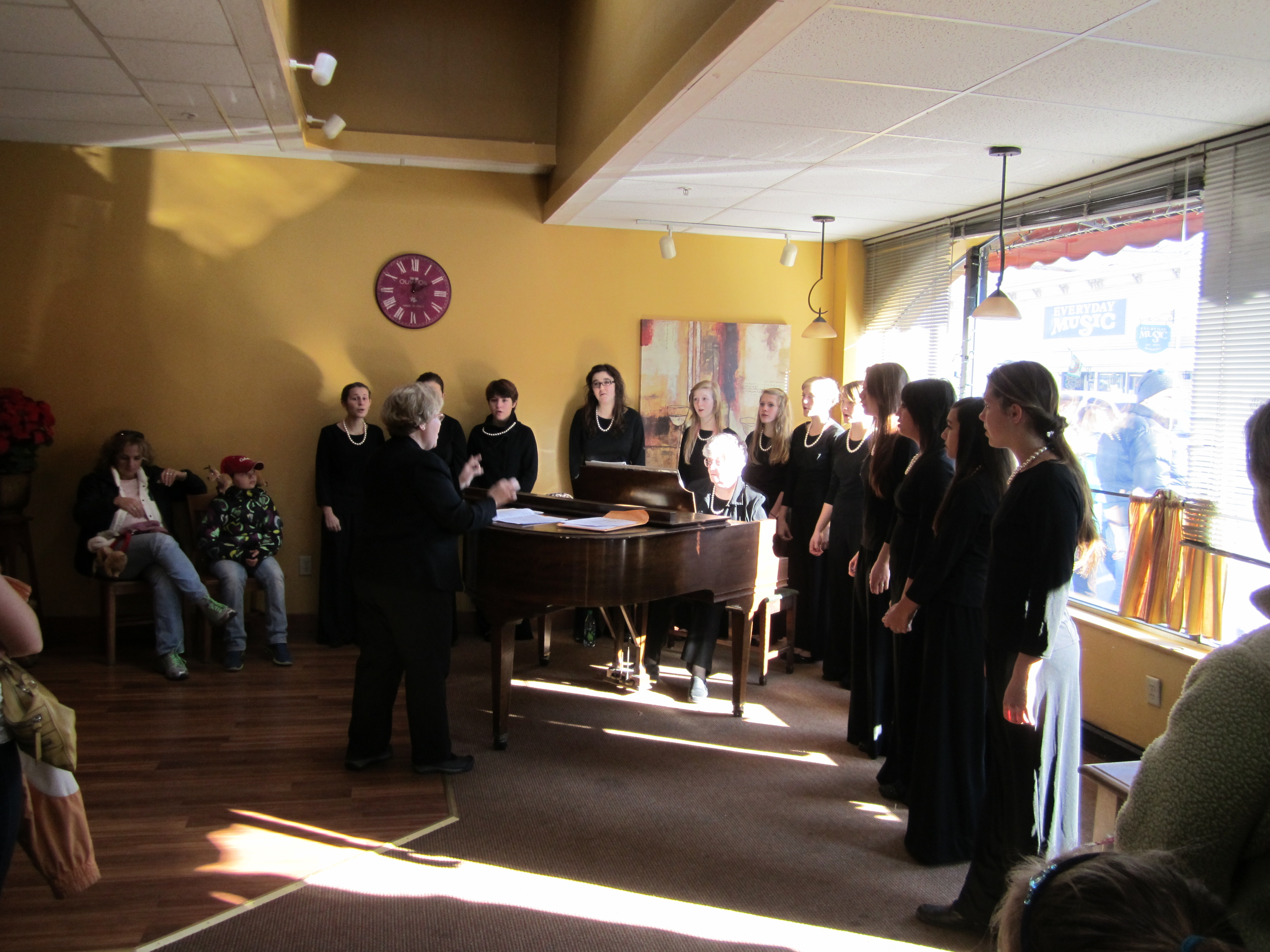
The Syncopations at the Homestead
At her speed she'd be lucky to make her appointment on time.
After the parade, a quick lunch at Soup for You, a listen to singers on the street and at the Homestead (the Syncopations, a high-school outfit led by Carol Shumway, piano by Patricia Hayden, who rode in the parade as this year's Farmington Gem, for all she does in the community), a hayride behind giant Belgian horses (over a ton each–24 quarts of grain twice a day), and then the historical society, samples of nine chili contestants at the bank (where four lovely middle-aged cloggers danced in the window), and finally the earmuff competition.
A big time in the small town.
December 1, 2011
Poker with Nelson Algren
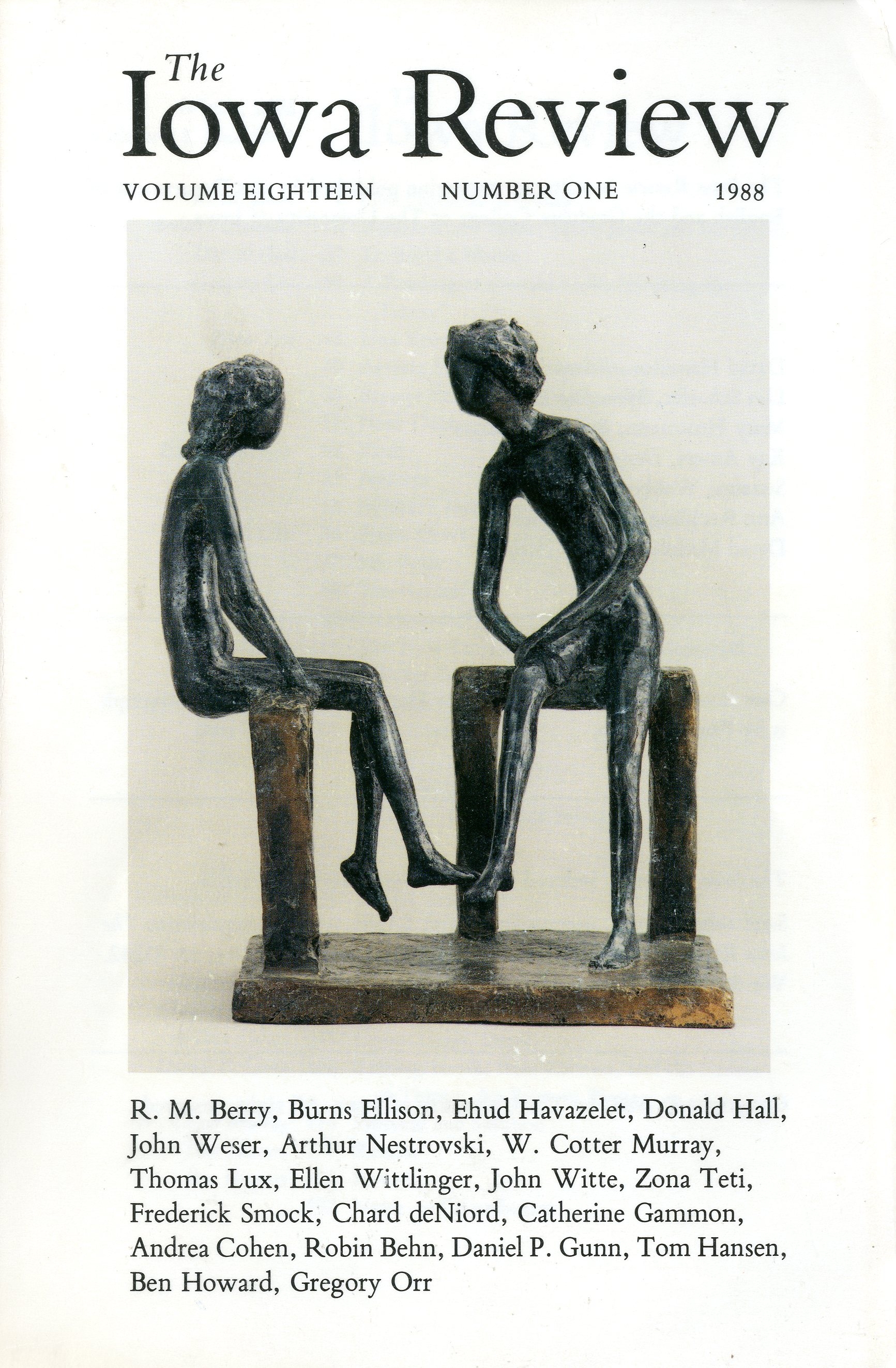 My old friend, Burns Ellison, is our featured guest this week. Burns and I met in grad school twenty years ago and this week he writes about a time–long before we met–when he played poker with Nelson Algren. "The First Annual Nelson Algren Poker Game" is a great essay, one of my favorites, and he first published it in the Iowa Review in 1988. Since I don't know a lot about Algren, I asked Peter Baker, who does, to write a short intro. Here it is:
At some point American letters forgot about Nelson Algren. If we hear about him at all, we hear two things: he wrote about Chicago, and he wrote about life's losers and the dispossessed. Implicit–and sometimes explicit–in our Algren non-conversation is the notion that he was an unsophisticated writer of lefty agitprop. What has been forgotten is that Algren became early in his career–after, indeed, writing some unsophisticated lefty agitprop–a great American stylist, a man capable of bringing poetry to bear on his given subject, and insisting upon the humanity of those dehumanized by the state.
Burns Ellison puts Algren where he belonged: at the center of a young writer's pantheon of idols. For Ellison, Algren was someone to learn from and to seek, however uncertainly, a place alongside. In relatively few pages, his essay gives as good a sense as any I've encountered of the way Algren made his way as a writer in the world. Here's his essay: The First Annual N. A. Poker Game
November 30, 2011
Bad Advice Wednesday: Do Something for Someone Else (30 Ideas for Writers)

A little help?
How to get published, how to get an agent, how to be a better writer, these are all high on the list of common questions we get asked here at Bill and Dave's. Where there's not a bit of desperation in the question there is often anger, and where the anger has faded there's sometimes sadness, maybe a whiff of self-pity. Or is that me, feeling all those things no matter where the writing takes me, often in equal measure with pleasure, even elation (but that comes most often in the making, sitting at my desk alone, lovely, soon to be dashed). What I'm proposing today is forgetting about our own careers (or lack) and thinking about what we can do for others, what we can do to make the world a more hospitable place for art, and for artists, which is to say for writing and writers. Doing for others may be your key to success, and is certainly the key to happiness. Herewith, 30 suggestions for writers. Karma, anyone?
1. Write a fan letter when you read something good. Every time. Big or small.
2. Listen to that guy at your cousin's wedding as he talks about his book idea, and take him seriously, take his name, make it a correspondence.
3. Read a friend's book when it's published and write a long letter in reaction. Or just a short letter. Or just an email. But something, and sincere, with details!
4. Praise the sentence wherever you find it.
5. Read a book you'd expect to hate, and think about why so many people love it, and see if you can't love something about it, too. (Those vampire books? Really?)
6. Start a writers group.
7. Start a readers group.
8. Offer to read work in manuscript. Do this for kids, for World War II vets, for your gastroenterologist, for friends (especially for friends).
9. Start a writing club for kids. Slowly put the kids in charge.
10. Promote the work of others.
11. Start a reading series.
12. Arrange a writers float for the Fourth of July parade.
13. Say yes. (I'll write that blurb. I'll query my agent. I'll read your daughter's poems. I'll contribute something to your new magazine. I'll let you use my name.)
14. Steer talented young writers away from careers in law, in banking.
15. Steer talented young writers away from grad school, at least till they're 27.
16. Steer talented young writers away from drink and drugs.
17. Steer talented young writers toward drink and drugs.
18. Steer talented young writers away from spouses who don't get it.
19. Steer talented young writers away from their parents.
20. Unless you are the parents, and then be the ideal parent for a writer: praiseful, supportive, attentive, and maybe a little neglectful and neurotic, so the poor kid has something to write about.
21. Babysit a writer friend's kids.
22. Help with the rent.
23. Offer a strapped writer a room in your house for an office–you're at work anyway and the place is empty, why not?
24. Loan a writer your house in the mountains for a month.
25. Loan me your house by the sea!
26. Give your not-that-old computer to a young writer. Or just a pencil.
27. Subscribe to three literary magazines, or at least go to the library and scatter their collection of such mags around the tables.
28. Give away books.
29. Buy more.
30. Praise an obscure writer.
31. Read to someone, anyone.
32. Comment on Bill and Dave's posts, and spread them far and wide.
Any more suggestions? Can we get 100?
November 29, 2011
Maps and the Mind
I don't think I've ever written a book where I didn't draw a map about the landscape I was writing about. This goes for both fiction and non-, and includes the fantasy apocalyptic young adult book I've been writing with my daughter. (For that one we've each drawn about a dozen maps.) Maps serve as, among other things, living malleable outlines for my books. They also serve as procrastination, inspiration and, in the case of two of the maps below, tools for the reader, since they actually ended up as the books' frontispieces. The one directly below is from Return of the Osprey, and marks out the four nests that I watched regularly during my osprey year.
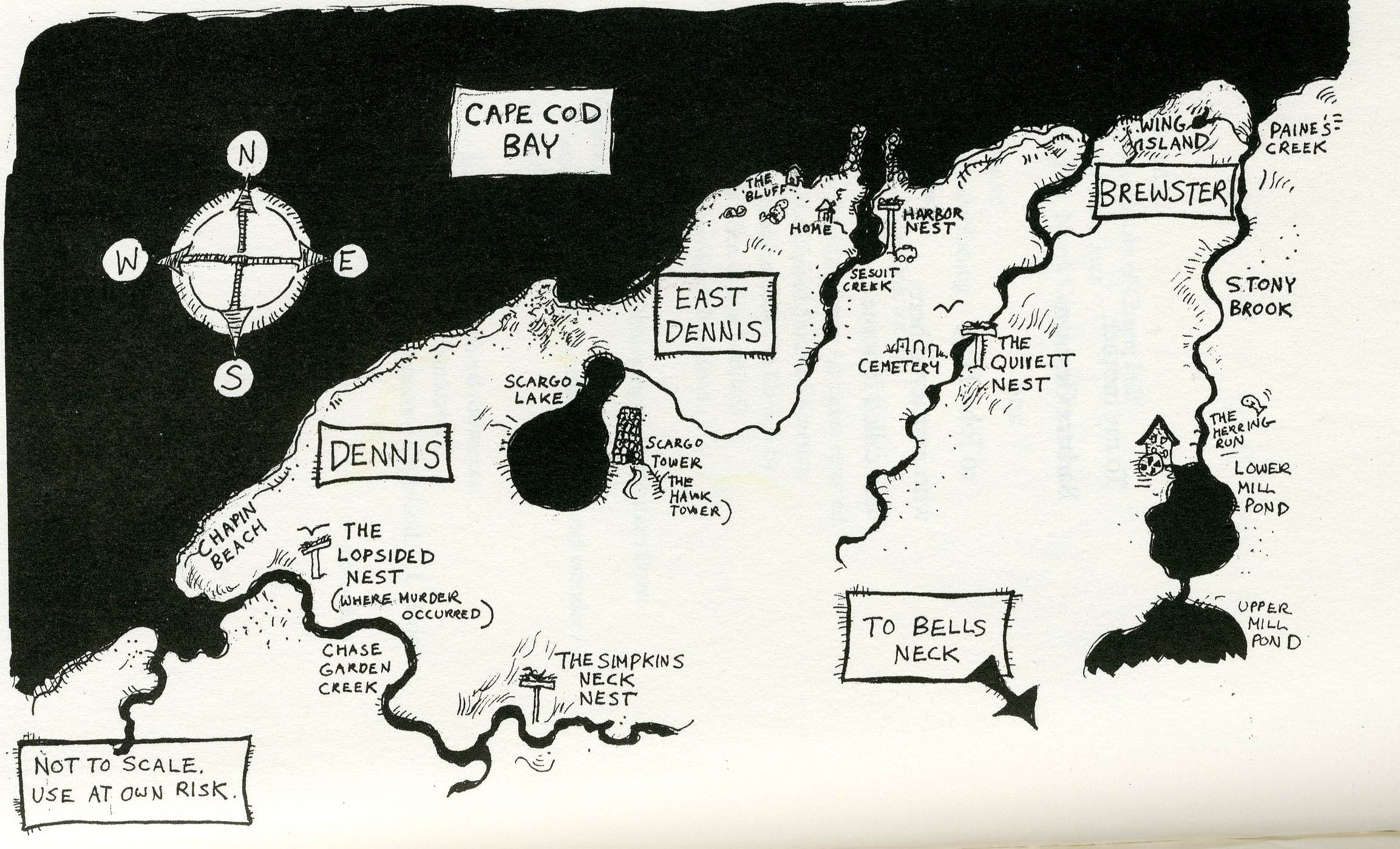
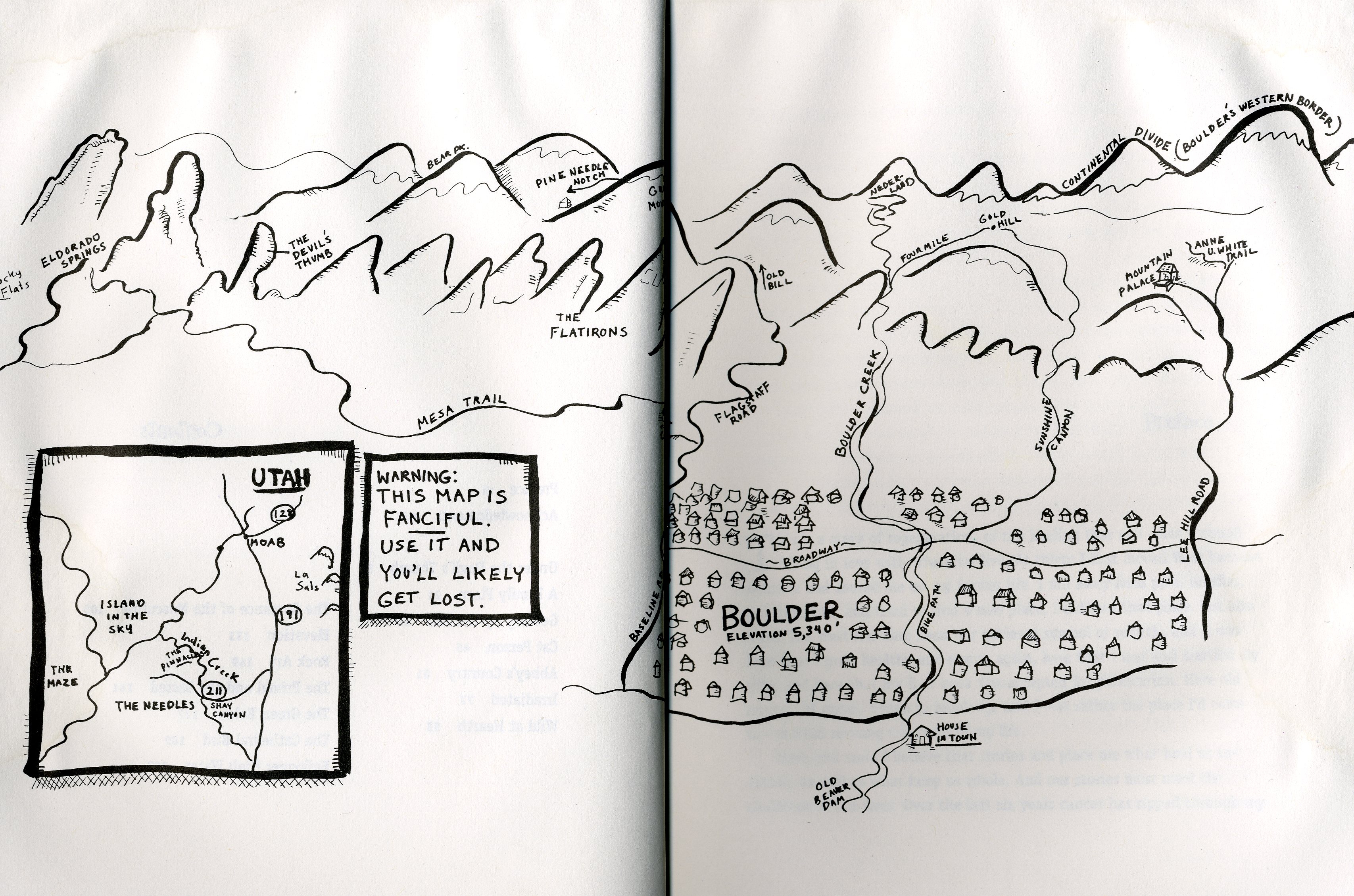
This one above is from Under the Devil's Thumb, my book about moving out west to Boulder, Colorado. A shout out to Rahul on this one, since he reminded me, in Boston, that it's a pretty good book. Sometimes I forget about it–my orphan book.
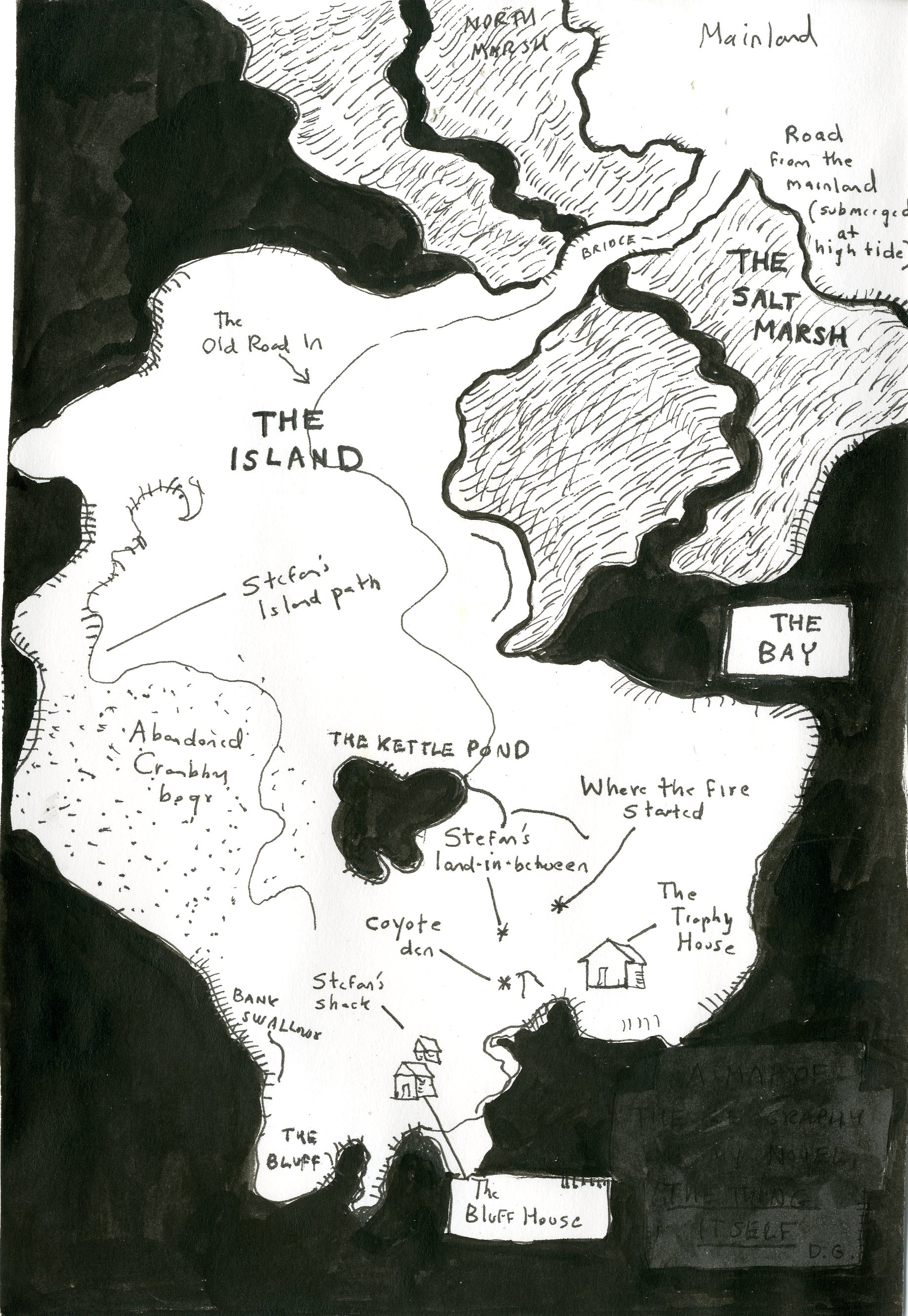
And finally here is the most recent map of the novel I've been writing, on and off, for twenty years. If things go well I'll be back at it on January 1, 2012.
November 26, 2011
Seven Good Things About Fall
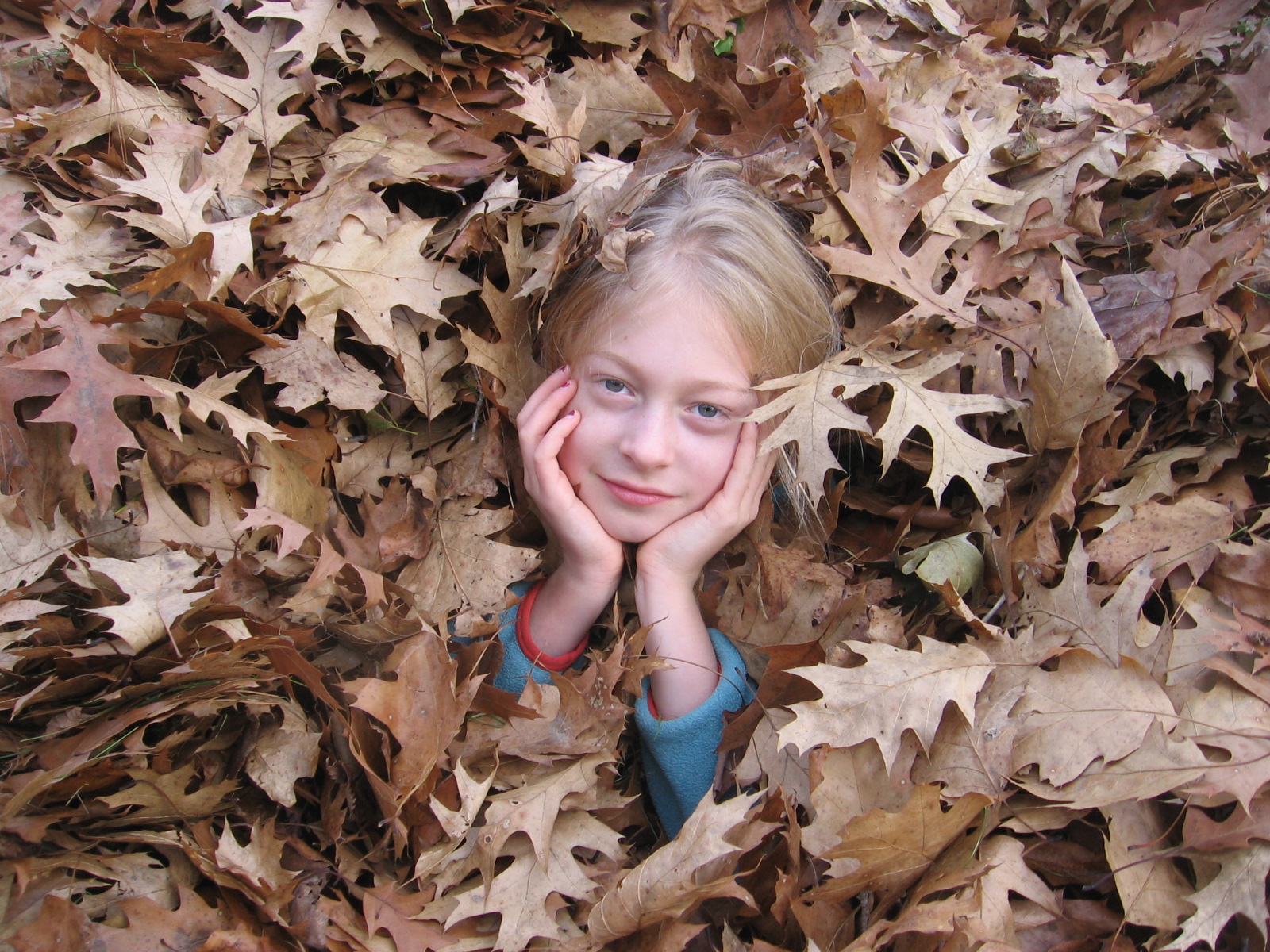
1. Jumping in leaves.
#
I don't love fall: the shortening days, the daylight-savings axe, the opening of troubling views through once-impenetrable forest, the birds of summer abandoning me, the regressive chores, the incremental turning inward. It's a big breath in, and hold, and wait, like waiting for death, or at least December 21, when you can breathe out again, and the light grows. Then again, Fall. You don't burn the leaves anymore, but still you can smell them. The kitchen's full of food from the garden. It's back to school, a rhythm I've never shaken.
2. The Slant of the Light

3. Halloween
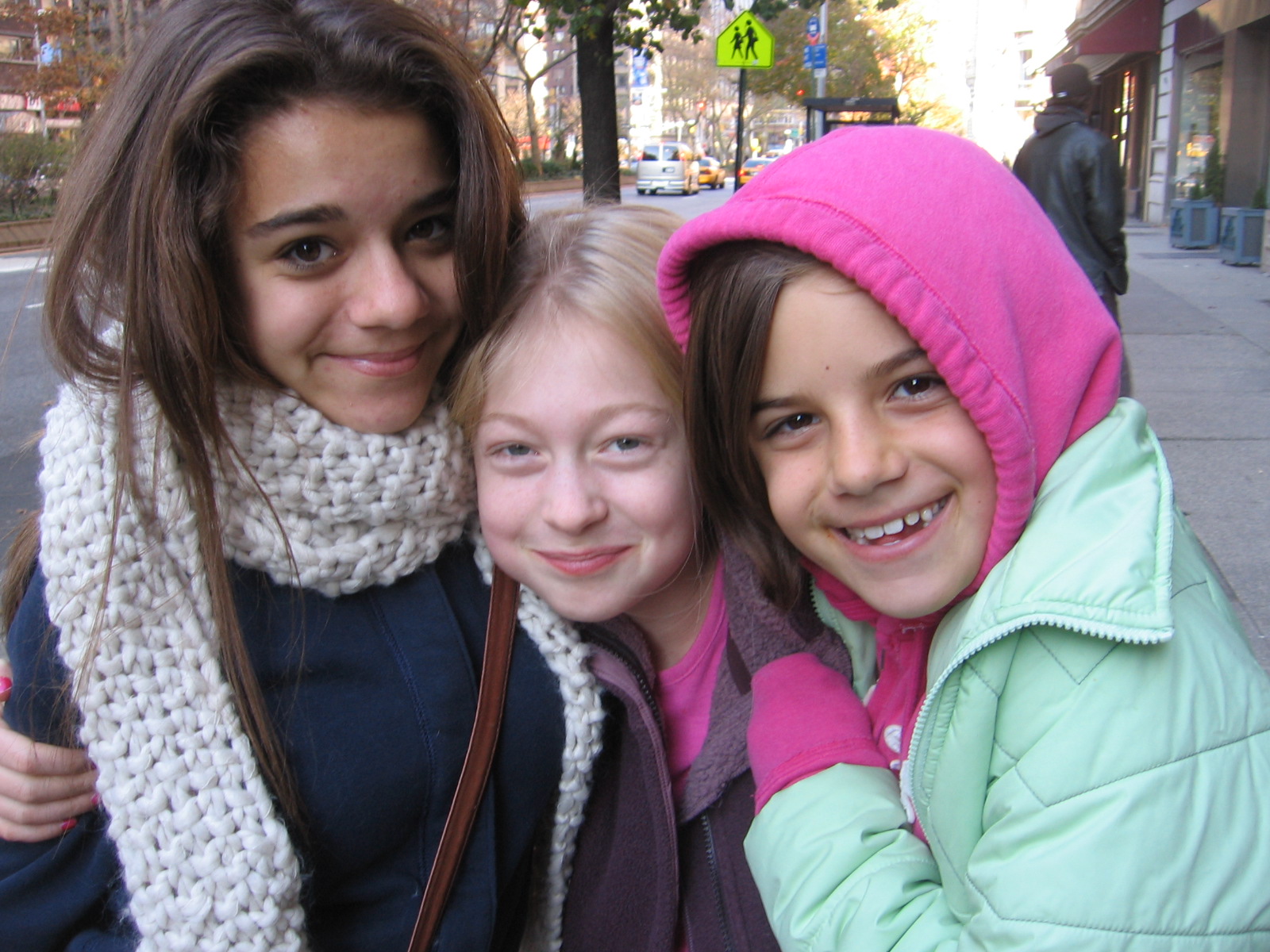
4. Thanksgiving
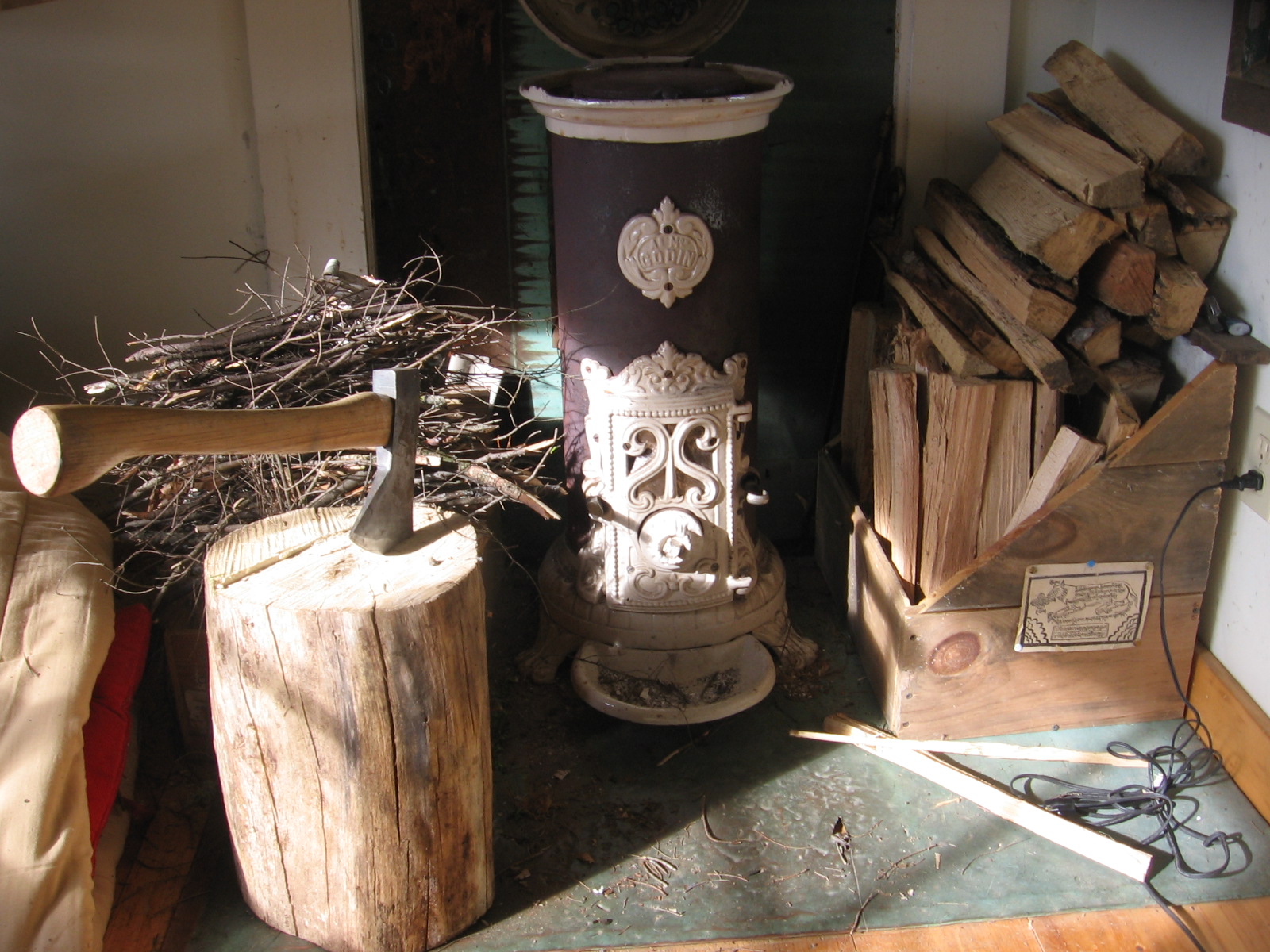
6. First Fire in My Studio

7. First Snow
November 24, 2011
Point of View, or Happy Thanksgiving from NYC

The view from here
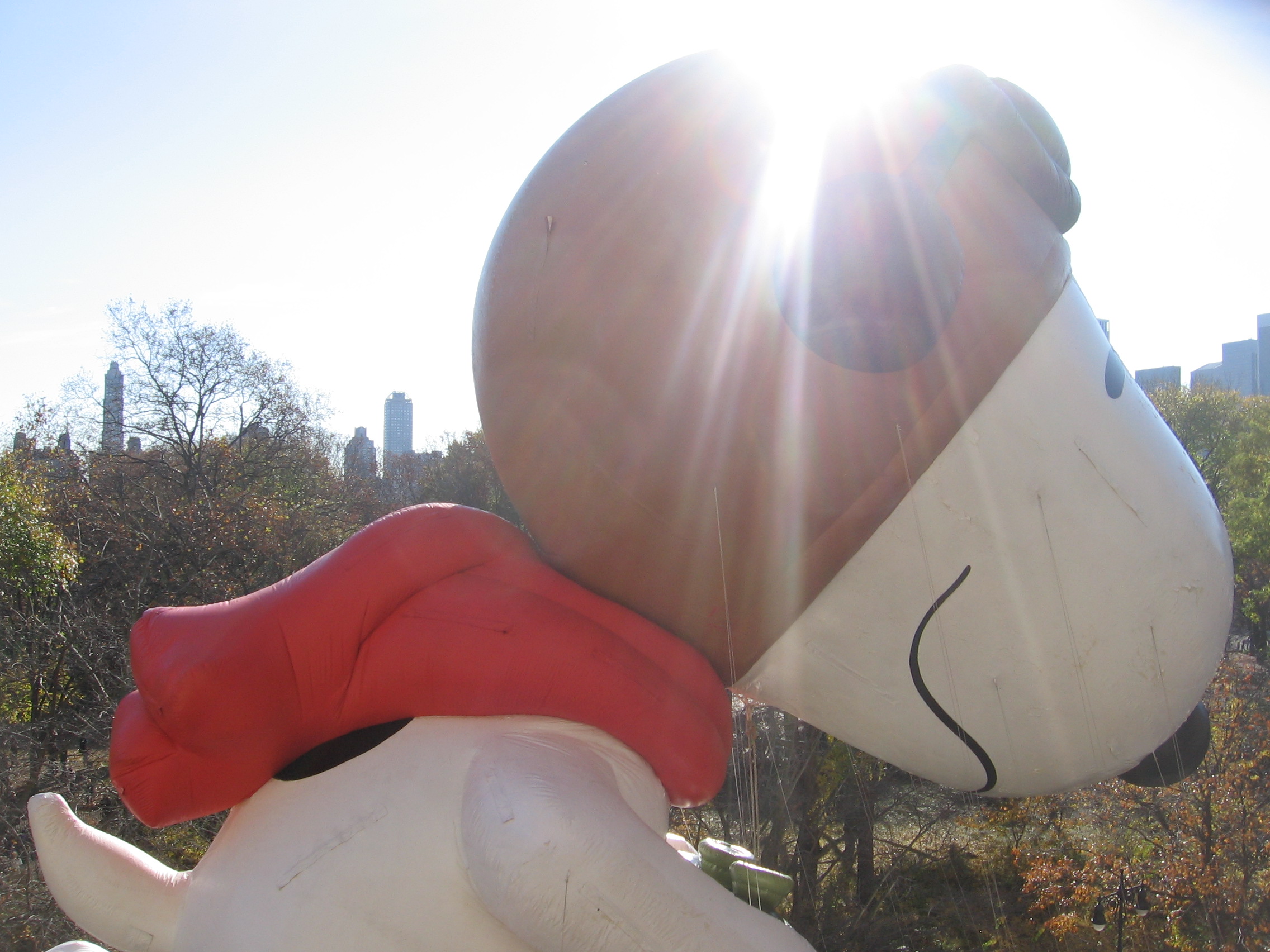
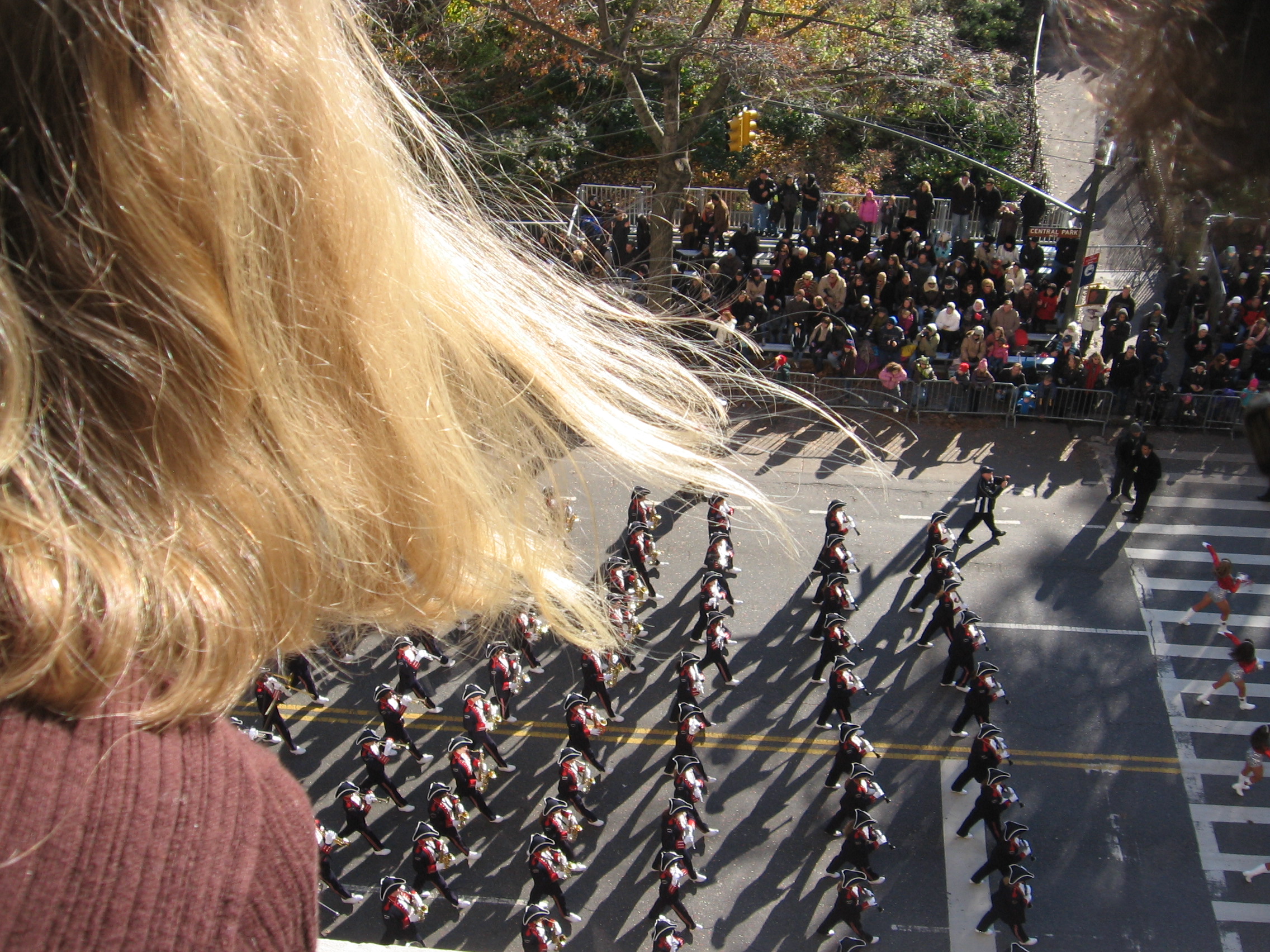
The view from my father-in-law's apartment in New York is always nice–Central Park. But the sixth floor is just about right on Thanksgiving Day, when the Macy's Thanksgiving Day Parade goes by. This year we trimmed things down quite a bit, as Grandpa Frank wasn't up for the usual party. But over the years he's always given a speech and hosted the parade as if it were his own. My favorite year was the one the Harvey Fierstein played Mrs. Santa. Santa, of course, always just plays himself. As the last celebrity on the route, he ushers in the Christmas season, and reminds us that it's all a big commercial, after all! But don't those floats warm my heart, and the balloons, many of them ragged, pull me back to more innocent days.
In 1929, one of the first parades, the balloons were released at the end of the route, with address tags for return. There's an amazing video extant that shows Wimpy, the Popeye character ("I'll gladly pay you Tuesday for a hamburger today.") being let go and disappearing into the sky. I can't find the clip right now, as the new Diary of a Wimpy Kid balloon is obscuring all searches.
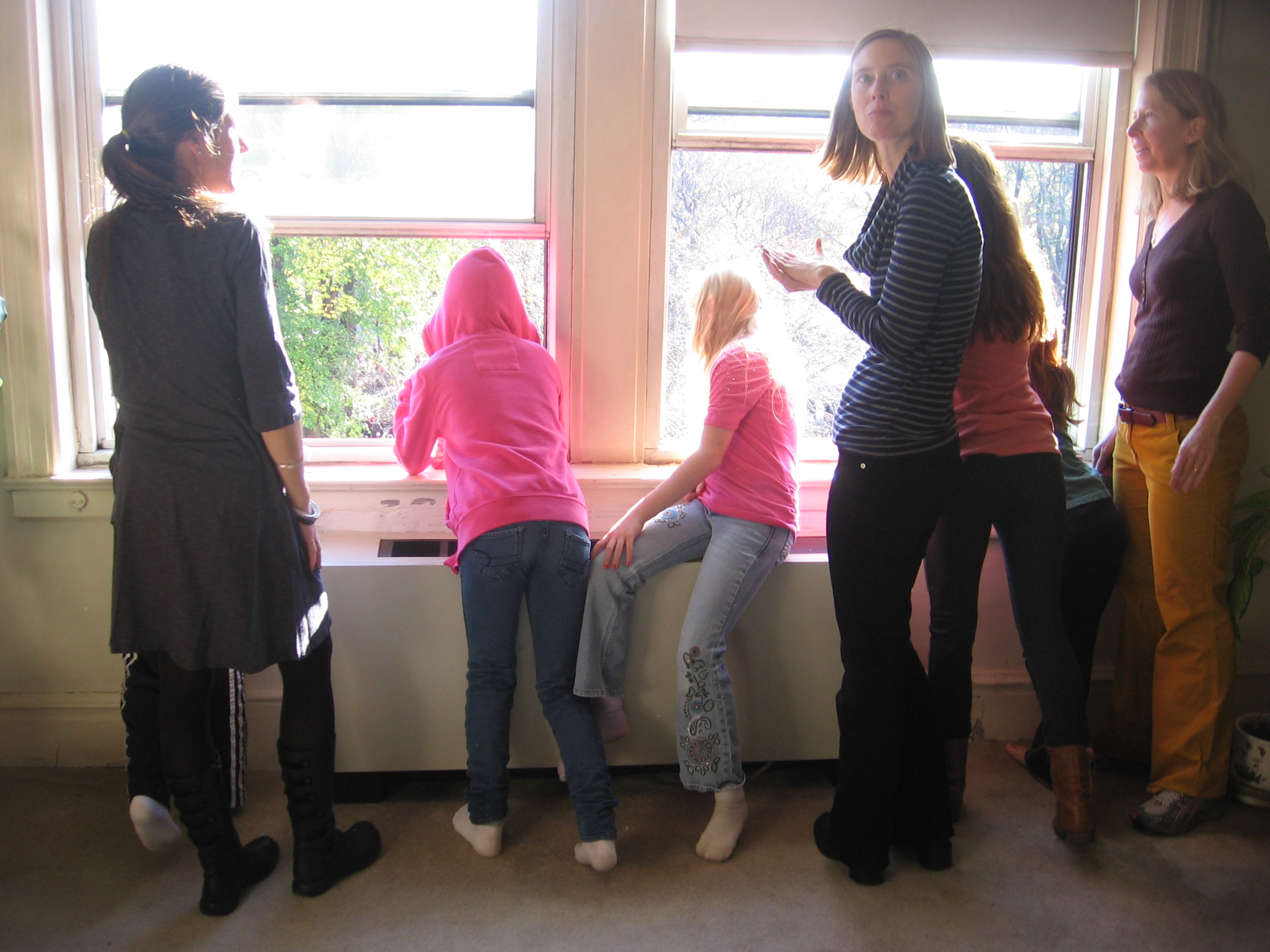 Another, more recent year, the wind was so strong that Kermit the Frog scraped along the buildings here and we could pet him. Later, he popped. Another balloon went so far off course that it knocked a traffic light down, killing a parade goer, very sadly. But, oblivious of that tragedy, we enjoyed watching the balloon wranglers being pulled off their feet, members of the crowd joining in to add ballast.
The night before, it used to be fun to go up to 79th and 81st Streets to watch the inflation, roam among the characters. But now that practice has grown so much it's just another managed crowd scene–last year, we spent nearly two hours shuffling among thousands of people through barricade walks, no fun anymore.
Doesn't the world suck?
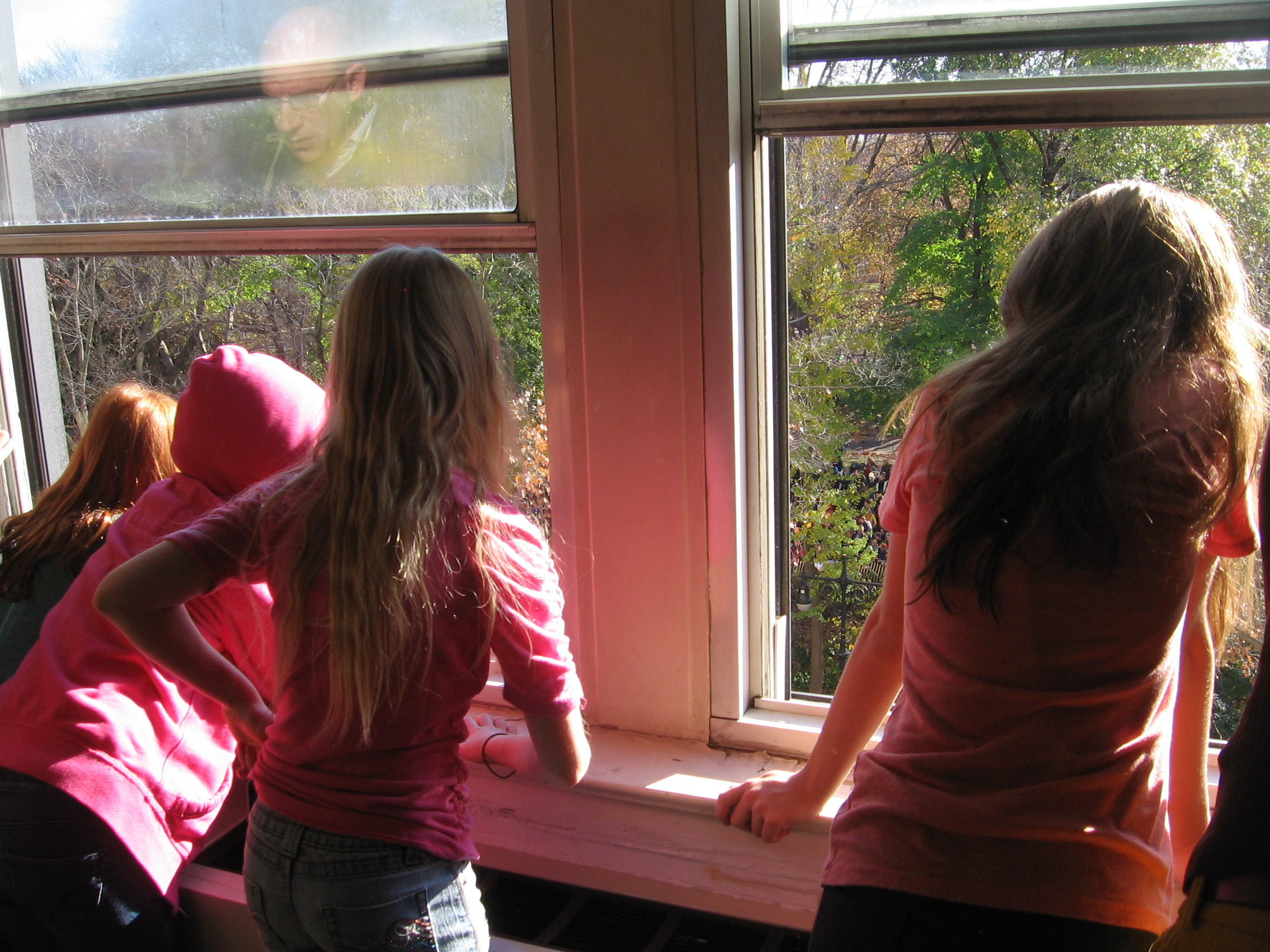
 No, it's still fun. And it's truly great to see the kids of our friends and the cousins of the cousins all leaning precariously out the window, shouting to the pop stars to get them to look up and wave. And it's great to see Grandpa Frank leaning on his walker, still enthralled, or at least less irascible than usual.
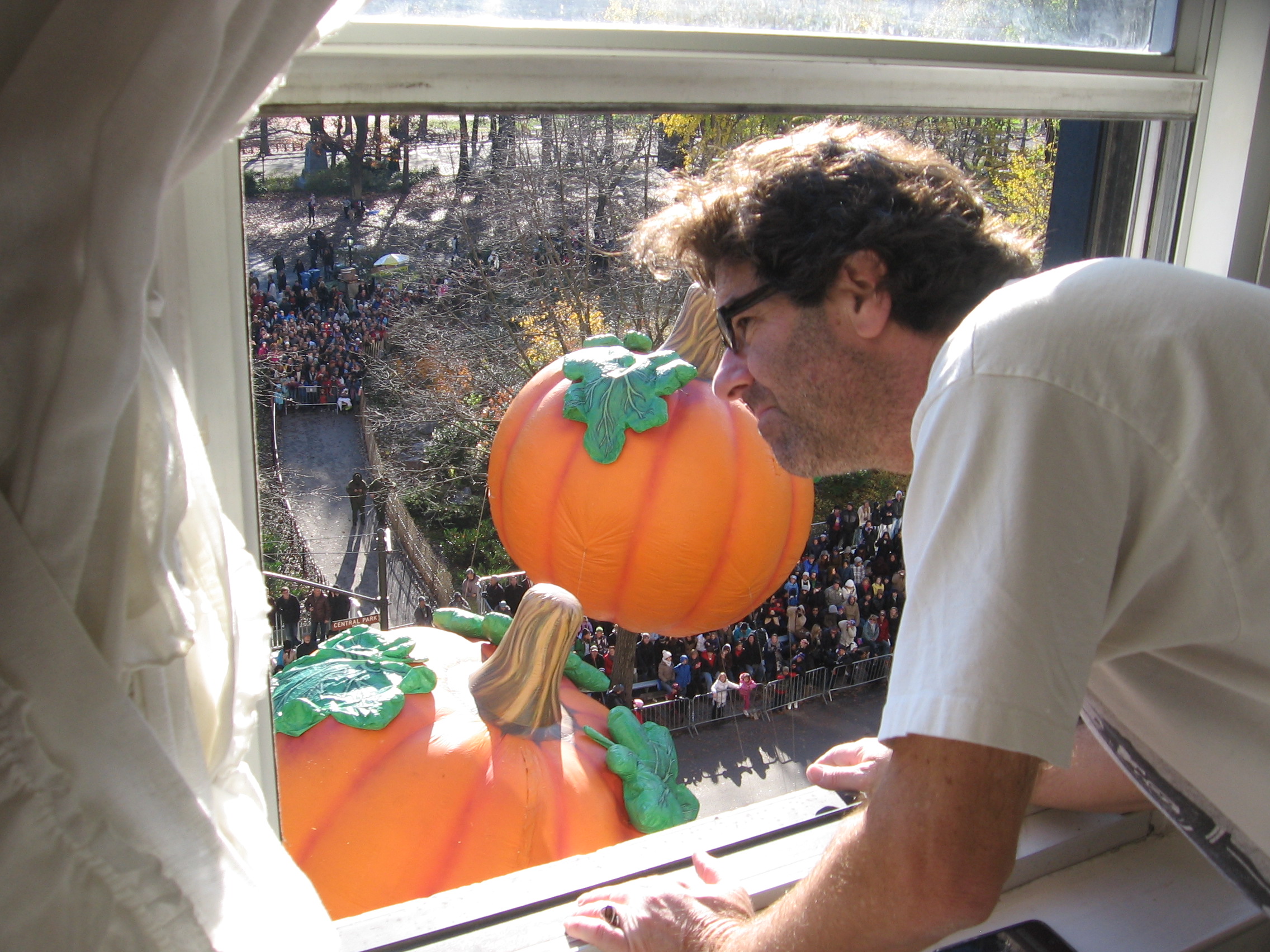
Perry, just in from San Francisco

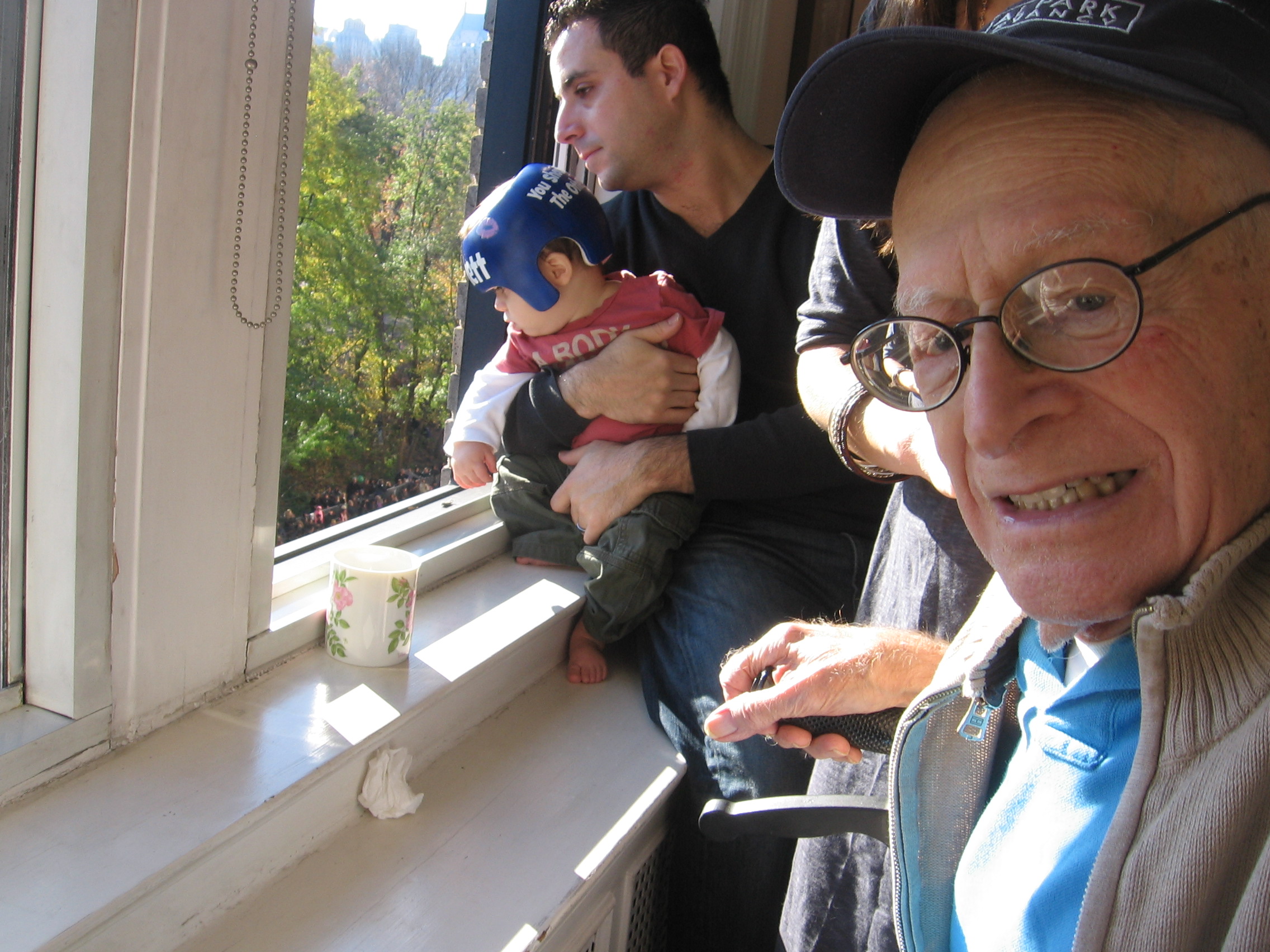
Grandpa Frank
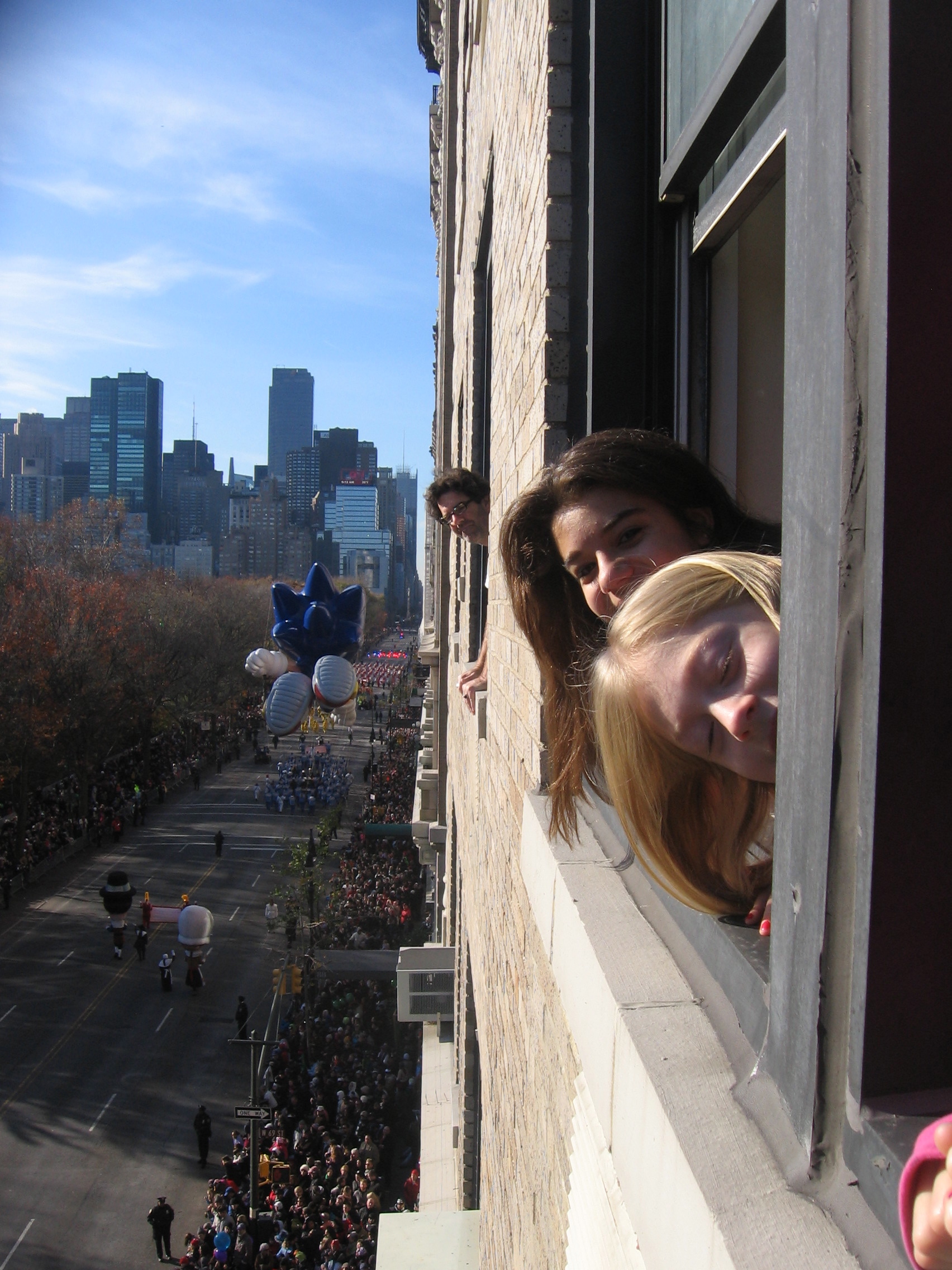
Elysia and Sydney