David Gessner's Blog, page 95
January 28, 2012
The Ballad of Rocky Flats
While I was digging out the cartoon of Newt Gingrich from my old Ballad of Boulder files, I also came across this one. Boulder, the healthiest town on the planet, is right down the street from the spot where a fairly unhealthy Nuclear Trigger plant called Rocky Flats thrived in secrecy for 40 years.
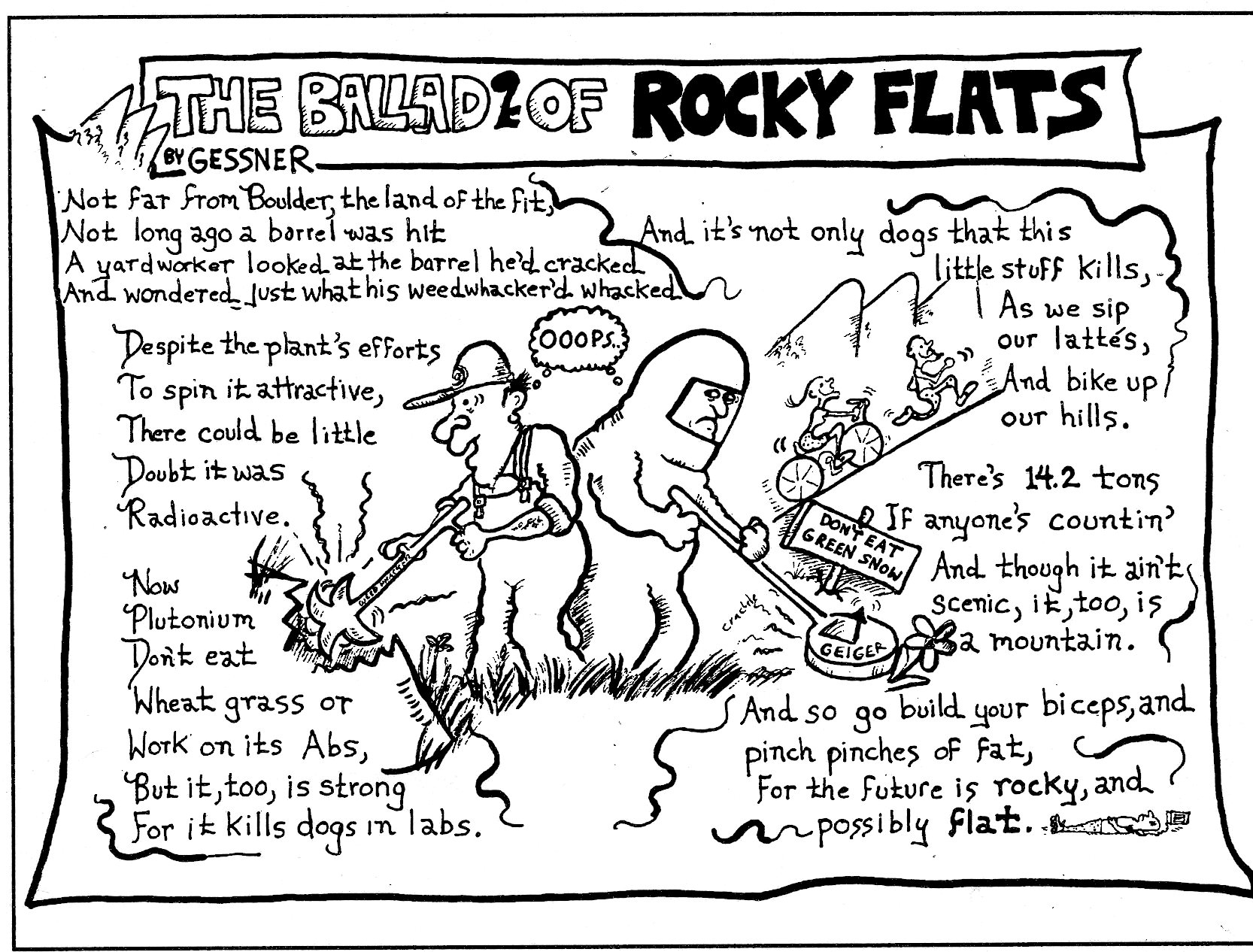
For more about Rocky Flats, scroll down……
For some scary reading, just check out Wikipedia's account of Rocky Flats. I'll start here in the 1980s, just before I arrived, but with a little digging around you can get the whole spooky story.
1980s
Rocky Flats became a focus of protest by peace activists throughout the 1980s. In 1983, a demonstration was organized that brought together 17,000 people who joined hands in an encirclement around the 17-mile (27 km) perimeter of the plant.
A perimeter security zone was installed around the facility in 1983 and was upgraded with remote detection abilities in 1985. Also in 1983, the first radioactive waste was processed through the aqueous recovery system, creating a plutonium button.
A celebration of 25,000,000 continuous safe hours by the employees at Rocky Flats happened in 1985. The same year, Rockwell received Industrial Research Magazine's IR-100 award for a process to remove actinide contamination from wastewater at the plant. The next year, the site received a National Safety Council Award of Honor for outstanding safety performance.
In 1988, a DOE safety evaluation resulted in a report that was critical of safety measures at the plant. The EPA fined the plant for polychlorinated biphenyl (PCB) leaks from a transformer. A solid waste form, called pondcrete, was found not to have cured properly and was leaking from containers. A boxcar of transuranic waste from the site was refused entry into Idaho and returned to the plant. Plans to potentially close the plant were released.
In 1989 an employee left a faucet running, resulting in chromic acid being released into the sanitary water system. The Colorado Department of Health and the EPA both posted full-time personnel at the plant to monitor safety. Plutonium production was suspended due to safety violations.
[edit] FBI/EPA Investigation
Insiders at the plant started to covertly inform the Environmental Protection Agency (EPA) and the Federal Bureau of Investigation (FBI) about the unsafe conditions in 1987. Late that year the FBI commenced clandestine flights of light aircraft over the area and noticed that the incinerator was apparently being used late into the night. After several months of collecting evidence both from workers and via direct measurement, the FBI informed the DOE on June 6, 1989 that they wanted to meet to discuss a potential terrorist threat. When the DOE officers arrived, they were served with a search warrant. Simultaneously, the FBI and EPA raided the facility. They discovered numerous violations of federal anti-pollution laws, including limited [2] contamination of water and soil. However, none of the original charges which led to the raid were substantiated. In 1992, Rockwell was charged with environmental crimes including violations of the Resource Conservation and Recovery Act (RCRA), and the Clean Water Act. Rockwell pled guilty and paid an $18.5 million fine. This was the largest fine for an environmental crime to that date.
Dubbed "Operation Desert Glow," the DOJ-sponsored raid began at 9 a.m. on June 6, 1989[6] after the FBI got past the DOE's heavily armed, authorized to shoot-to-kill security—whose armament included surface-to-air missiles—under the ruse of providing a terrorist threat briefing and served its search warrant to Dominick Sanchini, Rockwell International's manager of Rocky Flats, who as it happened died the next year in Boulder of cancer.[7][8]
After the June 1989 FBI raid of Rocky Flats, federal authorities used the subsequent grand jury investigation to gather evidence of wrongdoing and then sealed the record. The court allowed the Rocky Flats operators to withhold from the public data about the nature and extent of contamination on and off the site. In October 2006, DOE announced completion of the Rocky Flats "cleanup" without this information being available.[4]
The FBI raid led to the formation of Colorado's first special grand jury in 1989, the juried testimony of 110 witnesses, reviews of 2,000 exhibits and ultimately a 1992 plea agreement in which Rockwell admitted to 10 federal environmental crimes and agreed to pay $18.5 million in fines out of its own funds. This amount was less than the company had been paid in bonuses for running the plant as determined by the GAO, and yet was also by far the highest hazardous-waste fine ever; four times larger than the previous record.[9] Due to DOE indemnification of its contractors, without some form of settlement being arrived at between the U.S. Justice Department and Rockwell the cost of paying any civil penalties would ultimately have been borne by U.S. taxpayers. While any criminal penalties allotted to Rockwell would not have been covered, for its part Rockwell claimed that the Department of Energy had specifically exempted them from most environmental laws, including hazardous waste.[10][11][12][13][14][15][16]
Regardless, and as forewarned by the prosecuting U.S. Attorney, Ken Fimberg/Scott,[17] the Department of Justice's stated findings and plea agreement with Rockwell were heavily contested by its own, 23-member special grand jury. Press leaks on both sides—members of DOJ and the grand jury—occurred in violation of secrecy Rule 6(e) regarding Grand Jury information, a federal crime punishable by a prison sentence. The public contest led to U.S. Congressional oversight committee hearings chaired by Congressman Howard Wolpe, which issued subpoenas to DOJ principals despite several instances of DOJ's refusal to comply. The hearings, whose findings include that the Justice Department had "bargained away the truth,"[18] ultimately still did not fully reveal the special grand jury's report to the public, which remains sealed by the DOJ courts.[14][19]
The special grand jury report was nonetheless leaked to Westword. According to its subsequent publications, the Rocky Flats special grand jury had compiled indictments charging three DOE officials and five Rockwell employees with environmental crimes. The grand jury also wrote a report, intended for the public's consumption per their charter, lambasting the conduct of DOE and Rocky Flats contractors for "engaging in a continuing campaign of distraction, deception and dishonesty" and noted that Rocky Flats, for many years, had discharged pollutants, hazardous materials and radioactive matter into nearby creeks and Broomfield's and Westminster's water supplies.[20]
The DOE itself, in a study released in December of the year prior to the FBI raid, had called Rocky Flats' ground water the single greatest environmental hazard at any of its nuclear facilities.[21]
[edit] Withheld records
The final contamination levels of Rocky Flats itself as measured by the U.S. government after the Superfund cleanup, and those reported to an impanelled grand jury, are sealed records and have not been reported to the public. Denver area key leaders in both educating the public and pursuing contamination information that remains withheld by the U.S. Government include Dr. Leroy Brown, a Boulder scientist, retired FBI Special Agent Jon Lipsky,[20] who led the FBI's raid of the Rocky Flats plant to investigate illegal plutonium burning and other environmental crimes and Wes McKinley, who was the foreman of the grand jury investigation into the operations at Rocky Flats and is today a Colorado State Representative.[10][22][23]
Former grand jury foreman McKinley chronicles his experiences in the 2004 book he co-authored with attorney Caron Balkany, The Ambushed Grand Jury, which begins with an open letter to the U.S. Congress from Special Agent Lipsky:
I am an FBI agent. My superiors have ordered me to lie about a criminal investigation I headed in 1989. We were investigating the US Department of Energy, but the US Justice Department covered up the truth.I have refused to follow the orders to lie about what really happened during that criminal investigation at Rocky Flats Nuclear Weapons Plant. Instead, I have told the author of this book the truth. Her promise to me if I told here what really happened was that she would put it in a book to tell Congress and the American people.Some dangerous decisions are now being made based on that government cover-up. Please read this book. I believe you know what needs to happen.
—[24]
[edit] 1990s
Rockwell International was replaced by EG&G as primary contractor for the Rocky Flats plant. EG&G began an aggressive work safety and cleanup plan for the site that included construction of a system to remove contamination from the groundwater of the site. The Sierra Club vs. Rockwell case was decided in favor of the Sierra Club. The ruling directed Rocky Flats to manage plutonium residues as hazardous waste.
In 1991, an interagency agreement between DOE, the Colorado Department of Health and the EPA outlined multi-year schedules for environmental restoration studies and remediation activities. The DOE released a report that advocated downsizing the plant's production into a more streamlined facility. Due to the fall of the Soviet Union, production of most of the systems at Rocky Flats was no longer needed, leaving only the W88 warhead triggers.
In 1992, production was discontinued of submarine-based missiles using the W88 trigger, leading to the layoff of 4,500 employees at the plant. 4,000 others were retained for long-term cleanup of the facility. The Rocky Flats Plant Transition Plan outlined the environmental restoration process. The DOE announced that 61 pounds (28 kg) of plutonium lined the exhaust ductwork in six buildings on the site.
Starting in 1993, weapons-grade plutonium began to be shipped to the Oak Ridge National Laboratory, Los Alamos National Laboratory and the Savannah River Site.
In 1994 the site was renamed the Rocky Flats Environmental Technology Site, reflecting the changed nature of the site from weapon production to environmental cleanup and restoration. The cleanup effort was contracted to the Kaiser-Hill Company which proposed release of 4,100 acres (16 km²) of the buffer zone for public access.
Throughout the remainder of the 1990s and into the 2000s, cleanup of contaminated sites and dismantling of contaminated buildings continued with the waste materials being shipped to the Nevada Test Site, the Waste Isolation Pilot Plant in New Mexico, and the Envirocare company in Utah, which is now EnergySolutions after merging with three other waste disposal companies.
In 1999, 800 acres (3 km²) were turned over to the United States Fish and Wildlife Service creating the Rock Creek Reserve.
[edit] 2000s
In 2000, Congress proposed transforming Rocky Flats to a wildlife refuge, setting aside 6,400 acres (25 km²) after cleanup and closure. The Rocky Flats National Wildlife Refuge Act passed in 2001.[25]
The last contaminated building was removed and the last weapons-grade plutonium was shipped out in 2003, ending the cleanup based on a modified cleanup agreement. The modified agreement required a higher level of cleanup in the first 3 feet (1 m) of soil in exchange for not having to remove any contamination below that point unless it posed a chance of migrating to the surface or contaminating the groundwater.[26] About half of the 800 buildings previously existing on the site had been dismantled by early December 2004.
The site is contaminated with plutonium due to the several fires experienced on the site and other inadvertent releases caused by wind at a waste storage area. The other major contaminant is carbon tetrachloride (CCl4). Both of these substances affected areas adjacent to the site. In addition, there were small releases of beryllium and tritium, as well as dioxin from incineration.[27][28]
Clean-up was declared complete on October 13, 2005. About 1,000 acres (4.0 km2) of the new wildlife refuge, the former industrial area, will remain under DOE control to protect the ongoing environmental monitoring and remediation.
In July 2007, The United States Department of Energy transferred nearly 4,000 acres (16 km2) of land on the Rocky Flats site to the US Fish and Wildlife Service to establish the Rocky Flats National Wildlife Refuge.[29] Surveys of the site reveal 630 species of vascular plants, 76% of which are native.[30]
In September 2010, after a 20-year legal battle, the Tenth Circuit Court of Appeals reversed a $926 million award in a class-action lawsuit against Dow Chemical and Rockwell International.[31] The three-judge panel said that the jury reached its decision on faulty instructions that incorrectly stated the law. The appeals court tossed the jury verdict and sent the case back to the District Court. According to the Appellate Court, the owners of 12,000 properties in the class-action area had not proved their properties were damaged or they suffered bodily injury from plutonium that blew onto their properties.[31][32]


January 27, 2012
Put Your Best Photo Forward
Bill has already tackled the subject of author photos in a very funny post. But I want to chime in, too. As I mentioned in a recent cartoon, my author photo just celebrated it's tenth birthday. To celebrate the occasion I'd like to suggest that it might be time for writers to start using more authentic author photos. Below on the left for instance is the photo I use on my book jackets and for talks, and more than one of my hosts at those talks have come up and given me a double take (as in "Is this the right guy?") On the right is closer to what I really look like, a grumpy, constipated 50 year old.
I would suggest that the photo on the left demands the thought bubble: "I am up here on this windswept peak, contemplating nature and looking good doing it, and the west wind, like some majestic blowdrier, is fluffing up my hair just right." While the writer on the right seems to be thinking "Where's my fucking coffee?"

What I really look like.
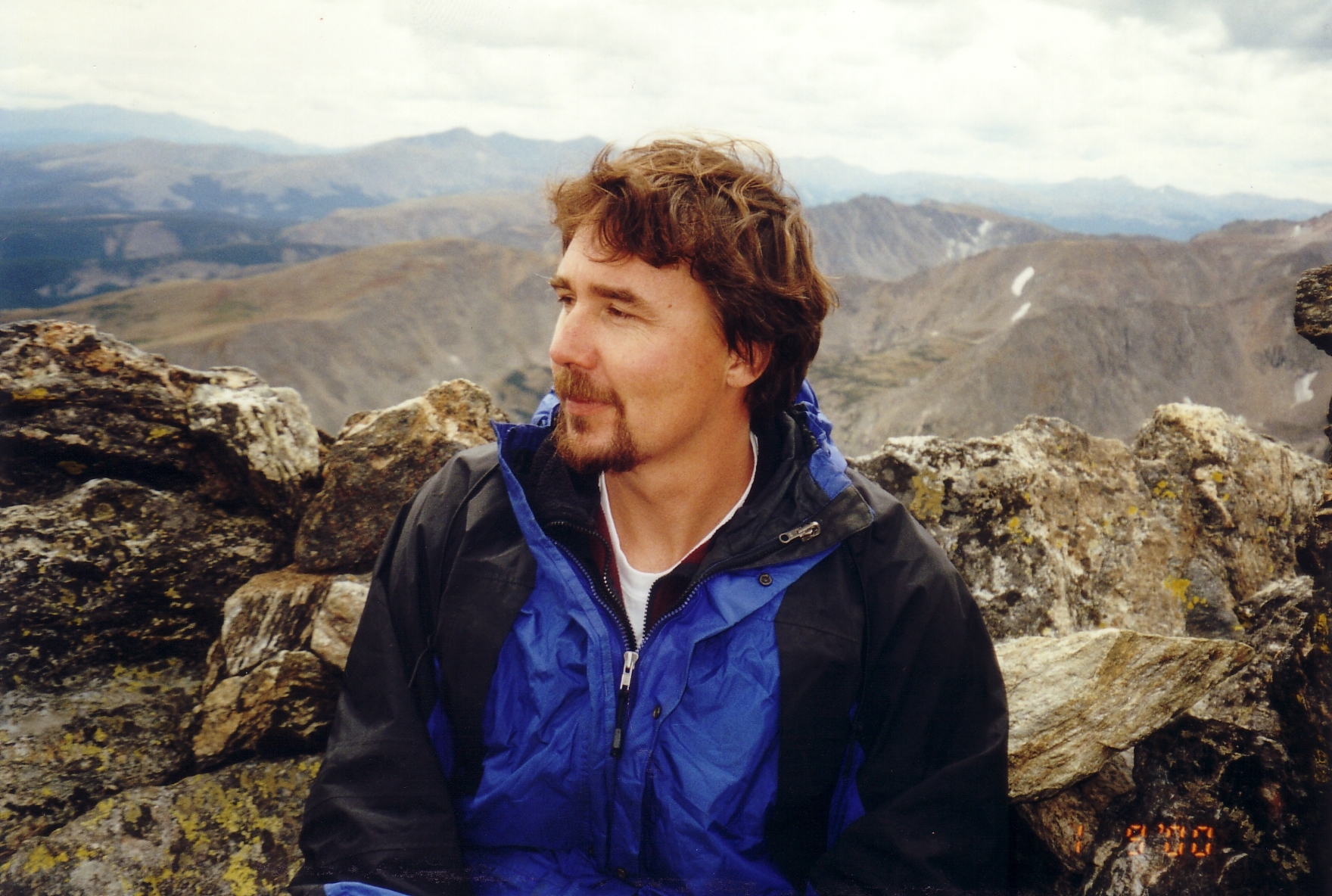
What my author photo looks like.
Here's another photo I once considered using, but after some thought, decided against. It just seemed a tad too exuberant: 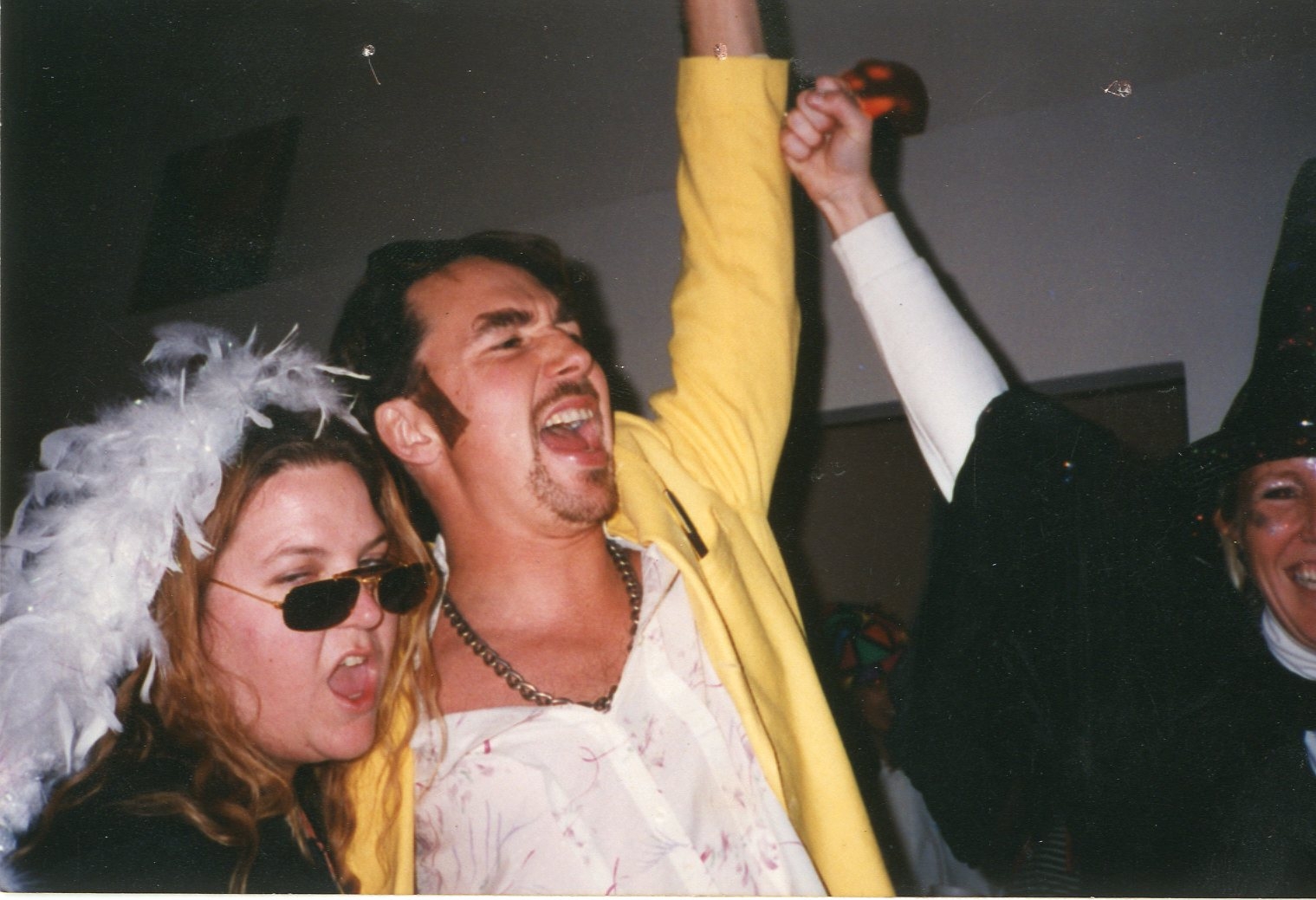
(But I'll never forget those wild nights partying with Janis.)
January 24, 2012
Bad Advice Wednesday: The Memory Game
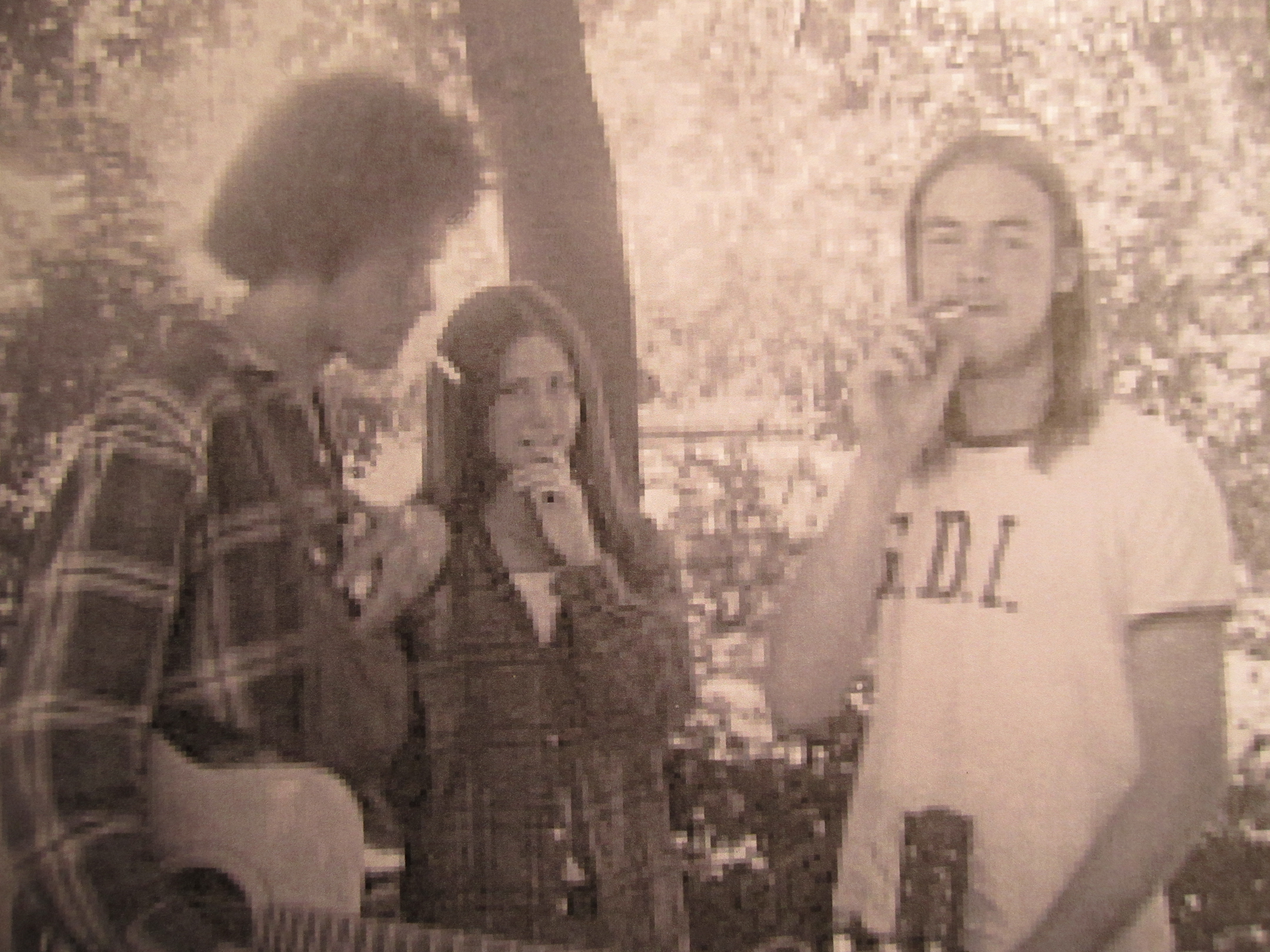
Bill and friends, August, 1972
#
One of the many curious things about the act of writing is the way it can give access to the unconscious mind. And in the hidden parts of consciousness lie not only hobgoblins and neurotic glimmers, but lots of regular stuff, the everyday stuff of memory. The invisible face of your grade school bully is in there, somewhere, and the exact smell of the flowers on vines in your grandma's backyard, along with most everything else, perhaps including borrowed memories, even false ones. Some memories are going to be painful, but some pleasurable, too. An awful lot is just informational, the stuff of lost days.
And—I'm just realizing this—memory is what people are made of. After skin and bone, I mean. And if memory is what people are made of, then people are made of loss. No wonder we value our possessions so much. And no wonder we crave firm answers, formulae, facts and figures. All are attempts (however feeble in the end) to preserve what's gone. The present is all that's genuinely available to anyone, and the present is fleeting, always turning instantly to the past. Even facts distort: what's remembered, recorded, is never the event itself, no matter how precise the measurement (a baseball score is not the game). Memoir is never a re-creation—that's impossible. At best what we can do is listen to memory and watch memory (the other senses are involved, as well), and translate for those we want to reach, our readers.
If you've written fiction at all, you know that detail is required to make a vivid scene. What's in the room? What sort of day is it? Who exactly is in the scene, and what exactly do they look like? All well and good writing fiction: you make it up. But writing nonfiction, the challenge is different: how to remember. For, of course, if we're going to call it a true story, the details better be true, right? Then again, we all know memory is faulty. Don't forget Tobias Wolff: "[M]emory has its own story to tell."
My sister Carol likes to tell the story of the time our younger brother, Doug, sucked on a hollow toy bolt till it suctioned onto his lips. He was maybe four. She and Mom and Doug were at Roton Point, our run-down beach club in Connecticut, end of the day, marching to the car carrying blankets and towels and pails and toys. Doug was a stocky little kid (we sibs meanly called him The Bullet till he shot up into a slim young man), and he looked cute as hell stumbling along carrying the Scotch cooler with this big blue bolt suctioned onto his lips. In the car he still wore it, all the way to the guard booth, where he liked to say good-bye to the genial old guard who watched the beach gate. Carol tells the story at Thanksgiving and Christmas about every year. And I believe she told it at Doug's wedding: rehearsal dinner. Anyway, at the gate, Bullet Boy tried to pull the bolt off to say hi to the guard, but it wouldn't come. He'd sucked on it so long and so hard he couldn't unstick it. So Carol grabbed hold of the threaded end of the thing, wrestled with it a little till pop it came loose.
And Carol looked at Doug and Doug looked at Carol and then Carol said, "My God!" and so Mom turned and said it, too: "My God!" Doug's lips—poor Doug!—were ballooned up like some character's in a cartoon, so big even he could see them. Doug freaked! Carol freaked! Mom freaked! Doug cried and cried, even though it didn't hurt, but before they could even get near the doctor's, the swelling had disappeared.
That's it. Cute little family story. But the trouble is, Carol wasn't there! I was there. And the bolt wasn't blue, it was yellow. And that guard was a nasty old guy. I can still see him, all crabbed in his cheap uniform. And Mom didn't freak; she laughed. She laughed despite herself, because poor little Doug looked so comical, and because—this is important—she knew he'd be all right. And I laughed and laughed, "Bwaa-ha-ha!" because I was a big brother, and big brothers laughed at the misfortunes of younger, at least they did in 1963.
I let Carol tell the story at meals, only occasionally challenging her, and now that's part of the family story, how we both claim the memory. I know she's wrong. She knows I'm wrong. Whom do you believe? Does it matter? Maybe we're both wrong. Is something more important than swollen lips at stake here?
Memory is faulty. That's one of the tenets of memoir. And the reader comes to memoir understanding that memory is faulty, that the writer is going to challenge the limits of memory, which is quite different from lying. One needn't apologize. The reader also comes expecting that the writer is operating in good faith, that is, doing her best to get the facts right.
Listen to Darrel Mansell, a teacher of writing, in his article on nonfiction in the old Associated Writing Programs Chronicle.
"You just can't tell the truth, the whole truth and nothing but the truth about that amorphous blob primary substance—language with its severely limited and totally unrealistic rules and regulations won't permit it. Furthermore the aesthetic and rhetorical demands of writing won't quite permit it either. The best you can do is to be scrupulous about facts and conscientious about what you and only you know to be the essential truth of your subject. That way you have a shot at telling one modest aspect of what really happened—something true, up to a point."
[From Writing Life Stories]
How the Gingrich Stole Christmas
When I lived in Boulder, Colorado I had a weekly cartoon called The Ballad of Boulder. After Newt won South Carolina I remembered that I had drawn a cartoon, almost twenty years ago, about him. Of course he hasn't changed a bit……(note picture of tiny Nina in corner.)

January 22, 2012
Read Local!
 I was sitting here musing the other night, and mulling (my friend Peter Campion told me on the same night that mulling refers to the medieval practice of heating an iron rod or poker white-hot and plunging it into your alcoholic beverage—instant boil, and instant vaporization of the alcohol, and so an efficient delivery of your musing fluid), that is, I was sitting here somewhat mildly fluthered (Irish for shitfaced, which I realize is a kind of absolute—I mean, what could "mildly shitfaced" actually mean?), anyway, sitting here pondering among and amid my bookshelves, and I thought, Think how far these books had to come to get here! Published all over the world, printed even moreso, tens of thousands of book-miles!
And I thought, I really ought to be reading locally.
And then the thoughts began to fall, brain dominoes: Does that mean, what, like, Eastern Seaboard? Or does it mean something tighter, like New England? Or tighter yet: Maine? Western Maine? Franklin County? Or just Farmington, where there are plenty of writers for a lifetime of dedicated reading. Or, now wait, maybe that's just too far-flung. How about just the western half of Farmington? Or even maybe just my neighborhood, say, 200 yards diameter? But, thought I, I can do better than that! What could be more local than this: my house!
We do have a writer here, after all. Actually two writers, counting Elysia, who is more prolific than I. But she's in the next room, and of course, that's just not local enough. Local is going have to mean right here, on this couch.
Can I, the only local writer couch-wise, produce enough verbiage to keep myself busy for the rest of my life?
Why yes, I believe so.
Read local!
And of course, that implies writing local. So. I can't go around using a computer made in China, even if Steve Jobs is Mona Simpson's actual birth brother. And I can't use electricity, since little of that is made right here.
An acquaintance has his washing machine hooked up to a ten-speed bicycle for relief of off-the-grid washday drudgery. But it's exhausting, all that pedaling, especially the heavy duty cycle that off-the-grid living requires.
But certainly there's no reason I couldn't hook a laptop up to an exercise bicycle and generator and pedal while I type. After all, my legs do very little while I write, and are they not part of the local economy?
Then again, as the Read Local! movement burgeons, my fans will be reading local too, finding writers closer to them, or becoming writers themselves in order to serve the new markets the movement will develop.
Revelation: Strict Read Local-ism means this: I don't need more than one copy of whatever I write.
Technical matters:
Can't use a pencil—they are not made in this room.
Can't use paper, ditto.
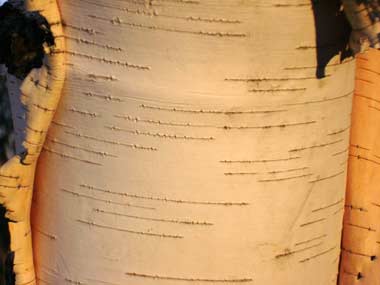
But there is a birch tree in the yard and I don't think it's stretching ethics too awfully much to run out there with my Leatherman and peel off a few sheets of bark.
With charcoal from the fire–right in this room, not two steps away–I can put words down on bark. Words just for me, for the one person who can read my handwriting!
You can't get any more local than that!
January 20, 2012
Reviewing My Reviewers: Part II
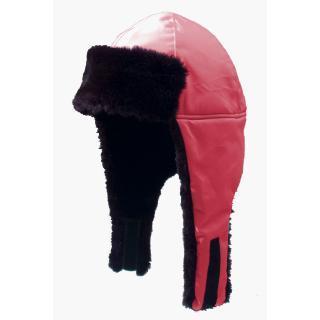 As some of you remember, a few weeks back I reviewed my Amazon reviewer, a strange man named Dobyx who mistook On Golden Pond for Walden. A couple of people suggested that I e-mail Dobyx the link to my post, but I didn't want to take it too far. (He lives pretty close, up in Duck on the Outer Banks, and I didn't like the idea of him running down here in his aviator's cap and sicking his water dog on me.)
Today's task is a happier one. I want to thank Gina Webb of the Atlanta Journal Constitution for her review this week. It's been a hard slog getting The Tarball Chronicles out in the world, trying to get folks to listen to a story they don't really want to hear. How heartening to have someone understand what you are trying to do. It's not just that it's a positive review–that's great of course–but the best part is that she gets it.
(Of course I especially like that she calls the book "a full-strength antidote to the Kryptonite of corporate greed and human ignorance," which somehow calls for a Bill and Dave superhero cartoon.)
Here's her review. If you're short on time, just read the last 'graph:
"The Tarball Chronicles: A Journey Beyond the Oiled Pelican and Into the Heart of the Gulf Oil Spill"
By David Gessner
By Gina Webb
 By June 2010, about two months into the Deepwater Horizon oil spill, millions of gallons of crude oil were still gushing into the ocean from a leak 5,000 feet deep.
Environmental writer David Gessner was a thousand miles away in North Carolina when a friend suggested he travel to the Gulf and cover the spill. At first, Gessner couldn't really see the point.
An associate professor of creative writing at the University of North Carolina at Wilmington, and the author of eight books, Gessner ("My Green Manifesto, " "Return of the Osprey") didn't see himself as the right person to cover the worst environmental disaster in U.S. history. "This is not the kind of nature you write about, " he told himself. "You write about birds and the coast, and you are not a journalist who chases stories."
But he remembered something the great naturalist John Muir said about the connections in life — "When we try to pick out anything by itself, we find it hitched to everything else" — and changed his mind. Gessner decided he needed to experience firsthand the reasons we were "giving up some of our land, and our people, so the rest of us can keep living the way we do."
The results of his investigation make up the passionately subversive, openhearted essays in "The Tarball Chronicles, " a book for all those who never quite believed BP when the company triumphantly capped the spill in July, dispersed the oil and claimed that all was well.
From the minute he sets foot in Florida, Gessner finds a different story unfolding, the first signs of which are the highly paid local crews he sees scouring a Florida beach clean of the "tarballs" of the title — wearing "fluorescent BP vests" and cautioned by the company not to talk to civilians.
But civilians are more than happy to talk to Gessner, who interviews the people who live and work in the thick of it: locals, shrimpers, fishermen, seafood company owners, rangers, scientists, naturalists and marine biologists.
With their help, he documents BP's sweep-it-under-the-carpet techniques and policies, their history of cost-cutting and accidents and the questionable decision to let them run the cleanup. The picture that emerges is grim, but for all the potential damage from the spill and the chemical dispersants used to mask it — to the wetlands, the migratory birds, marine life and the nearly invisible organisms at the lowest rung of the food chain — Gessner's chief concern in "The Tarball Chronicles" isn't BP.
It's what this latest disaster symbolizes: America's inability to recognize that in the pursuit of more fossil fuels, we're turning a blind eye to the risks involved. "Are we so desperate for this one particular type of fuel that we are willing to sacrifice our beautiful places, " he asks, "in a desperate attempt to slurp up what is left?"
The answer should lie in environmentalism, but as we now know it, Gessner says, its warnings are too dire; the term "global warming" has become a cudgel used to pound concerned citizens into hopelessness. "Maybe, " he writes, "it's time for the word environmentalism to go away altogether."
Instead, Gessner offers a blueprint for a more fluid, less black-and-white approach, based on the sort of sacrifice that has always been part of the ebb and flow of life: Homegrown solutions, based on realistic expectations, from the same people who make their living off an at-risk ecosystem and are willing to fight for it.
He talks to a local fishing and hunting guide in Louisiana who explains how the Mississippi River could be freed from its levees to allow freshwater to flow back into the wetlands, replenishing and replacing lost acreage. One of the country's leading experts on coastal geology, who has long warned of overbuilding on the shores, points out why sandbagging is bad for beaches and how letting "a few houses plop into the sea" is good coastal management.
Gessner repeatedly points out the dangers of any system that goes against nature and "seems to hint at the perfectibility of man." He'd like to see engineers "work with the world and not against it." And when mistakes are made, he suggests we keep "an honest ledger sheet, " not sink the evidence to the ocean floor with chemical dispersants.
Above all, we need to understand what we're in danger of losing: "It's about this beautiful gray river and the osprey and the line of clouds and the roseate spoonbill. It's about what is best even if we sometimes forget what best really is. It's about wildness, a wildness that is still there inside our human chests and that vibrates like a tuning fork when we see a match for our wildness in the world."
For those interested in putting the Gulf crisis in perspective, there can be no better guide than this funny, often uncertain, frank, opinionated, always curious, informed and awestruck accounting of how we've gone wrong and could go right, a full-strength antidote to the Kryptonite of corporate greed and human ignorance.
By its end, we, too, are hitched back to everything else, including a glimmer of hope.
Link to last week's NPR interview
Letter to my Representative by Lia Purpura
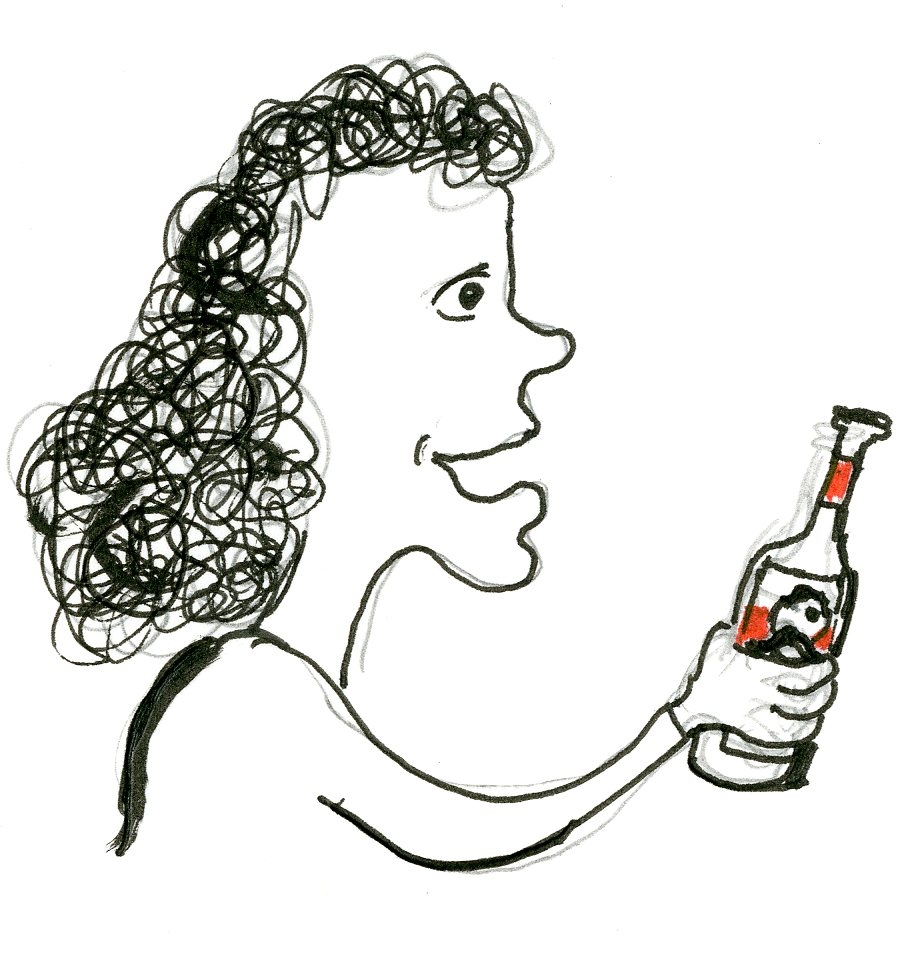 We are very proud to have Lia Purpura join us as our guest poster. She is the author of seven books of essays, poems and translations. Check out her latest book, Rough Likeness, which prompted Philip Lopate to say: "Lia Purpura is at the forefront of the New Essay, and this latest book (her best) takes us much closer into the rough terrain of her quirky mind than she has ever gone before. The surprises and insights keep coming."
Take it away, Lia:
Letter to My Representative: An Essay
Dear Representative,
Letters are so rare these days, and I believe we are sorely missing what they allow – a chance to feel oneself the sole subject of another's attention.
Here's the scene I've wanted to tell someone like you about for three years now. I had just finished watching Al Gore's film, "An Inconvenient Truth" in a church fellowship hall in Iowa City. It was well advertised and the room was full – students, professors, artist, writers, townspeople of all ages had gathered on this snowy evening.
There was a discussion after the film, and I remember being awash in images, and overwhelmed. (Strange, but the scene that's most alive to me now is Al Gore riding a cherry picker up to point out stuff on his giant graphs – as if to emphasize both the enormity of the news, and his willingness to be made small by it). I'm not very good in group discussions; they show me to be more anxious than I want to admit. I'm always beating back waves of too-rapidly associating thoughts, annoyed at my inability to lob a single, cleanly chisled comment. I envy those whose natural large-group rhythm allows them to converse with ease. But I stayed, because the need to talk with others felt so urgent it superceded my small concerns. The film left me feeling small, scared, ill-equipped, irresponsible, completely without resources and proper context for the crisis-sized issues at hand, and the talk was helping a great deal.
The conversation cycled from practicalities (what can we do) to laments (what have we done) and back again. I added some thoughts, some affirmations/elaborations of others' ideas. All the while, the conversation was punctuated by the insistent commentary of an older man — let's call him Jim – who thought the film too dramatic ("c'mon, the environment's not so bad, just yesterday I was walking in the woods behind my house and saw a red-tailed hawk. . ."), out of proportion ("his stats are skewed – it's still minus 4 out there, isn't it?"), defensive ("Gore's politically motivated, hasn't gotten over his defeat"). The group in the hall had been doing a lot of work to ignore, reroute, half-answer Jim, when finally, one woman his age (75? 80?) stilled the room by asking him respectfully, attentively, seriously: "Why can't you believe this, Jim?" And then he was quiet. The quiet hummed on for a socially long time. What filled the space of a pause so extended? Some kind of excavation was happening. You could hear the scrape of very heavy machinery grinding, shifting, moving boulders, junk, dirt, the detritus of a crumbled opinion aside. You could feel a new path taking shape. His voice was mild when he spoke now and wholly without assertion, defense, or anger.
"Because" he said, "it hurts too much."
I remember this scrap from Dickinson came to me: ". . . The Stilllness in the Room/Was like the Stillness in the Air –/Between the Heaves of Storm."
I remember thinking that this moment seemed like exactly the kind of revelation one should experience in a church. And that we provided exactly the kind of witnessing such a revelation deserved, words of understanding, a collective, murmuring gratitude for his willingness to speak. People put their arms around his shoulders as we left.
I hope this might be useful to you.
I'm writing to let you know that I witnessed someone change. I want to write it to you who might be able to make better, wider, use of this moment than I can. Because the circumstances surrounding the moment and every moment hence – the reversals of damage we need to undertake, the awareness we need to promote, the habits we all need to change, the laws we need to create and abide by – are dire, maybe you, in your capacity as a public person can do something else, something more with this moment. Maybe you can use it to advance your work, clarify a point, strategize, bring yourself back to a calm center after a particularly bad day.
Buff the story up, punctuate and dramatize for presenation, as needed. Know that it's an accurate report. Trust that I've got it right, the pause, the stillness in the air, the change that happened for us all, because a stubborn man broke open in the presence of others. I believe the stillness you'll create in order to receive this will inform your day. I believe – or I wouldn't write you at all – that it will leave a stain, an atmosphere, for you as it has for me, though the incident itself was small.
Letters are nearly extinct these days, because other modes are more effective (faster, briefer) and other elements (facts, negotiations, logistics) define so much of what passes between us. But even one letter might preserve the traditions I know to be restorative: the space reserved for composing. The little moment of faith when the letter's dropped into the unlikely dark of a mailbox on a street corner. And on the other end, the receiving of the letter, repairing to a private space with a drink, with a snack, near a window, in a comfortable chair. The ritual of slicing open the flap, the sensation of unfolding the pages, flattening the creases. Reading the opening few lines, catching the very first whiff of another's presence. Mine. Anyone's.
I'm trying here to preserve a space, into which this moment, Jim's moment, can extend – a moment which itself seemed the kind of realization one might come to in a letter, but which he came to very publicly. And since I'm not much good publicly, and am more adept at studying, as Virginia Woolf called them, "moments of being," I wanted to pass this on to you.
We all have to do what we can, each in our way.
I wish this could be more.
Sincerely
Lia Purpura is the author of seven collections of essays, poems and translations, most recently, Rough Likeness (essays, Sarabande Books, January 2012). Her awards include Finalist for the National Book Critics Circle Award (for the essay collection On Looking), NEA and Fulbright Fellowships, three Pushcart prizes, work in Best American Essays, 2011, the AWP Award in Nonfiction, and the Beatrice Hawley award in Poetry. Recent work appears in Agni, Field, The Georgia Review, Orion, The New Republic, The New Yorker, The Paris Review, and elsewhere. She is Writer in Residence at Loyola University, Baltimore, MD and teaches in the Rainier Writing Workshop MFA Program.
January 18, 2012
Bad Advice Wednesday: Jack Yourself Up! (Through Rituals)
 There are those who think it's hard to write every day. Maybe. I'm of the camp that it's harder to write once in a while. The rituals of daily-ness are built to contain a writing life in a way that the formlessness of the occasional is not. And for most of us who have chosen to make knocking words around our life, there are rituals a-plenty. Mine include getting up early, stretching my back (chronically bad since I was a teenager), drinking a cup of tea for calm before starting in on coffee for intensity (I am currently on day 11 of no coffee for the first time in many years so I apologize if my prose is sluggish), keeping note of my hours at the desk on a chart, listening to music (different albums for different drafts—The Talking Heads Stop Making Sense, for instance, for rolling along on first drafts), and, later in the day, long walks by the Cape Fear river armed with a microcassette recorder (and later still, notes in my journal armed with a beer.) Right off I notice that there are a lot of liquids involved in my rituals which seems right since there is an element of communion, and ablution, in the whole thing. Like most daily rituals mine was never planned but rather evolved, and did so for the single purpose of getting words on the page.
At the moment I am teaching a graduate class called The Writing Life, and some of you might remember that I posted the syllabus last year (I'll paste this year's revised syllabus below). The class starts, fittingly, with Annie Dillard's The Writing Life, and as I re-read that book I noted that her rituals were more extreme than my own, and seemed geared toward creating an intensity far beyond the everyday. She writes:
"…writing a first draft requires from the writer a peculiar internal state which ordinary life does not induce. If you were a Zulu warrior banging on your shield with your spear for a couple of hours along with a hundred other Zulu warriors, you might be able to prepare yourself to write. If you were an Aztec maiden who knew months in advance that on a certain morning the priests were going to throw you into a hot volcano, and if you spent those months undergoing a series of purification rituals and drinking dubious liquids, you might, when the time came, be ready to write. But how, if you are neither Zulu warrior or Aztec maiden, do you prepare yourself, all alone, to enter an extraordinary state on an ordinary morning?
"How to set yourself spinning? Where is an edge–a dangerous edge–and where is the trail to the edge and the strength to climb it?'
A couple of pages later she answers her own question in pracitcal terms:
"To crank myself up I stood on a jack and ran myself up. I tightened myself like a bolt….I drank coffee in titrated doses. It was a tricky business, requiring the finely tuned judgment of a skilled anesthesiologist. There was a tiny range within which the coffee was effective, short of which it was useless, and beyond which, fatal.
"I pointed myself. I walked to the water. I played the hateful recorder, washed dishes, drank coffee, stood on a beach log, watched bird. That was the first part; it could take all morning, or all month. Only the coffee counted, and I knew it. Now I smoked a cigarette or two and read what I wrote yesterday…."
This seems a tad extreme, even for me. But I get it. It's close to trying to work oneself up into a berserker's state of mind, and reminds me, not of my own rituals or those of other writers, but of the pre-game routine of the tennis player Rafael Nadal. In his autobiography, Rafael writes of his preparation before playing Roger Federer at Wimbledon:
"I was withdrawing deeper into myself, isolating myself from my surroundings, settling into the routines—the inflexible routines—I have before each match and continue right up to the start of play. I ate what I always eat. Pasta—no sauce, nothing that could possibly cause indigestion—with olive oil and salt and a straight, simple piece of fish. To drink: water….Forty five minutes before the game was scheduled to start I took a cold shower. Freezing old water. I do this before every match. It's the point before the point of no return….Under the cold shower I enter a new space in which I feel my power and resilience grow…Nothing else exists but the battle ahead….[Next] I stood up and began exercising, violently—activating my explosiveness…"
This is very similar to the routine that Bill R. has described to me before he writes in the evening. Kidding here, of course. No writer I know prepares for battle with quite the intensity of Mr. Nadal (of course no writer has ever had to type against Federer ). But if the preparation described is too extreme for our more sedentary profession, it isn't too far off. Here is Nadal stating his goal on the first page of his book: "Because what I battle hardest to do in a tennis match is to quiet the voices in my head, to shut everything out of my mind but the contest itself and concentrate every atom of my being on the point I am playing."
Tennis, Nadal says, is a sport of the mind, and the best player is the one who has "good sensations on the most days, who manages to isolate himself best from his fears and from ups and downs in morale…"
Though he is talking tennis, this does not sound entirely irrelevant to the writing life. Nor does his conclusion:
"And of one thing I have no doubt: the more you train the better your feeling."
Syllabus:
David Gessner
CRW 580—THE WRITING LIFE
3:30 pm-6:15 pm KE 1112
Course Overview:
This class will focus on all aspects of the writing life. What does it mean to live a life of writing and reading books? The course will be broken down into two halves. The first will focus on the spiritual aspects of the writing life, as well as work habits, and the second on more practical aspects, the brass tacks, from writing a cover letter to a book proposal. But while we will end on a practical note we will keep our focus on the larger picture, and the philosophical aspects of choosing to be a writer in today's world. Our reading will include books on writing, biographies, and more practical writing guides.
Requirements:
The main requirement of the class is keeping up with the reading. You will demonstrate that you have done this by:
1. Writing short reaction pieces that are due each class. These are answers to pre-assigned questions on the reading that I will hand out the week before we discuss each new book. The reactions should be short and creative, and are really meant to get you thinking about the reading so we can have a lively and engaged class. I will collect the reactions to check at mid-term and at the end of the semester.
2. Class participation. Everyone is expected to engage in our discussions. If you have shyness issues please come and talk to me.
Everyone will be assigned to be a co-leader for one of the books and expected, with their co-co-leaders, to run the discussion that day.
3. Everyone in the class will be asked to give an oral report.
Please focus on a writer who has influenced your work. Please describe the ways in which your work has been influenced by the writer. The report should also show some awareness of the author's work. But for the purpose of this class the real focus should be on how the author works: work habits, statements he or she has made on the writing life, overall arc and effort of career. Please try to engage the class—-poke, prod, stimulate. A great source for this, highly recommended but not required, is the Paris Review interviews: http://www.theparisreview.org/interviews
All books are available at Pomegranate Books. I'll e-mail you the ISBNS since it's essential we have the same copies for page numbers.
BOOKS:
Part I: SPIRITUAL UNDERPINNINGS
1. The Writing Life by Annie Dillard
2. Life Work by Donald Hall
3 . Winter Hours by Mary Oliver
4. First We Read, Then We Write by Robert Richardson
5. Bird by Bird by Anne Lamott
Part III: GETTING PRACTICAL
6. Aspects of the Novel by E.M. Forster
7. The Art of Fiction by John Gardner
8. The Burden of the Past and the English Poet by Walter Jackson Bate
9. The Forest for the Trees by Betsy Lerner
10. On Teaching and Writing Fiction by Wallace Stegner
Bad Advice Wednesday: Jack yourself Up (Through Rituals)!
There are those who think it's hard to write every day. Maybe. I'm of the camp that it's harder to write once in a while. The rituals of daily-ness are built to contain a writing life in a way that the formlessness of the occasional is not. And for most of us who have chosen to make knocking words around our life, there are rituals a-plenty. Mine include getting up early, stretching my back (chronically bad since I was a teenager), drinking a cup of tea for calm before starting in on coffee for intensity (I am currently on day 11 of no coffee for the first time in many years so I apologize if my prose is sluggish), keeping note of my hours at the desk on a chart, listening to music (different albums for different drafts—The Talking Heads Stop Making Sense, for instance, for rolling along on first drafts), and, later in the day, long walks by the Cape Fear river armed with a microcassette recorder (and later still, notes in my journal armed with a beer.) Right off I notice that there are a lot of liquids involved in my rituals which seems right since there is an element of communion, and ablution, in the whole thing. Like most daily rituals mine was never planned but rather evolved, and did so for the single purpose of getting words on the page.
At the moment I am teaching a graduate class called The Writing Life, and some of you might remember that I posted the syllabus last year (I'll paste this year's revised syllabus below). The class starts, fittingly, with Annie Dillard's The Writing Life, and as I re-read that book I noted that her rituals were more extreme than my own, and seemed geared toward creating an intensity far beyond the everyday. She writes:
"…writing a first draft requires from the writer a peculiar internal state which ordinary life does not induce. If you were a Zulu warrior banging on your shield with your spear for a couple of hours along with a hundred other Zulu warriors, you might be able to prepare yourself to write. If you were an Aztec maiden who knew months in advance that on a certain morning the priests were going to throw you into a hot volcano, and if you spent those months undergoing a series of purification rituals and drinking dubious liquids, you might, when the time came, be ready to write. But how, if you are neither Zulu warrior or Aztec maiden, do you prepare yourself, all alone, to enter an extraordinary state on an ordinary morning?
"How to set yourself spinning? Where is an edge–a dangerous edge–and where is the trail to the edge and the strength to climb it?'
A couple of pages later she answers her own question in pracitcal terms:
"To crank myself up I stood on a jack and ran myself up. I tightened myself like a bolt….I drank coffee in titrated doses. It was a tricky business, requiring the finely tuned judgment of a skilled anesthesiologist. There was a tiny ragne within which the coffee was effective, short of which it was useless, and beyond which, fatal.
"I pointed myself. I walked to the water. I played the hateful recorder, washed dishes, drank coffee, stood on a beach log, watched bird. That was the first part; it could take all morning, or all month. Only the coffee counted, and I knew it. Now I smoked a cigarette or two and read what I wrote yesterday…."
This seems a tad extreme, even for me. But I get it. It's close to trying to work oneself up into a berserker's state of mind, and reminds me, not of my own rituals or those of other writers, but of the pre-game routine of the tennis player Rafael Nadal. In his autobiography, Rafael writes of his preparation before playing Roger Federer at Wimbledon:
"I was withdrawing deeper into myself, isolating myself from my surroundings, settling into the routines—the inflexible routines—I have before each match and continue right up to the start of play. I ate what I always eat. Pasta—no sauce, nothing that could possibly cause indigestion—with olive oil and salt and a straight, simple piece of fish. To drink: water….Forty five minutes before the game was scheduled to start I took a cold shower. Freezing old water. I do this before every match. It's the point before the point of no return….Under the cold shower I enter a new space in which I feel my power and resilience grow…Nothing else exists but the battle ahead….[Next] I stood up and began exercising, violently—activating my explosiveness…"
This is very similar to the routine that Bill R. has described to me before he writes in the evening. Kidding here, of course. No writer I know prepares for battle with quite the intensity of Mr. Nadal (of course no writer has ever had to type against Federer ). But if the preparation described is too extreme for our more sedentary profession, it isn't too far off. Here is Nadal stating his goal on the first page of his book: "Because what I battle hardest to do in a tennis match is to quiet the voices in my head, to shut everything out of my mind but the contest itself and concentrate every atom of my being on the point I am playing."
Tennis, Nadal says, is a sport of the mind, and the best player is the one who has "good sensations on the most days, who manages to isolate himself best from his fears and from ups and downs in morale…"
Though he is talking tennis, this does not sound entirely irrelevant for the writing life. Nor does his conclusion:
"And of one thing I have no doubt: the more you train the better your feeling."
Syllabus:
David Gessner
CRW 580—THE WRITING LIFE
3:30 pm-6:15 pm KE 1112
Course Overview:
This class will focus on all aspects of the writing life. What does it mean to live a life of writing and reading books? The course will be broken down into two halves. The first will focus on the spiritual aspects of the writing life, as well as work habits, and the second on more practical aspects, the brass tacks, from writing a cover letter to a book proposal. But while we will end on a practical note we will keep our focus on the larger picture, and the philosophical aspects of choosing to be a writer in today's world. Our reading will include books on writing, biographies, and more practical writing guides.
Requirements:
The main requirement of the class is keeping up with the reading. You will demonstrate that you have done this by:
1. Writing short reaction pieces that are due each class. These are answers to pre-assigned questions on the reading that I will hand out the week before we discuss each new book. The reactions should be short and creative, and are really meant to get you thinking about the reading so we can have a lively and engaged class. I will collect the reactions to check at mid-term and at the end of the semester.
2. Class participation. Everyone is expected to engage in our discussions. If you have shyness issues please come and talk to me.
Everyone will be assigned to be a co-leader for one of the books and expected, with their co-co-leaders, to run the discussion that day.
3. Everyone in the class will be asked to give an oral report.
Please focus on a writer who has influenced your work. Please describe the ways in which your work has been influenced by the writer. The report should also show some awareness of the author's work. But for the purpose of this class the real focus should be on how the author works: work habits, statements he or she has made on the writing life, overall arc and effort of career. Please try to engage the class—-poke, prod, stimulate. A great source for this, highly recommended but not required, is the Paris Review interviews: http://www.theparisreview.org/interviews
All books are available at Pomegranate Books. I'll e-mail you the ISBNS since it's essential we have the same copies for page numbers.
BOOKS:
Part I: SPIRITUAL UNDERPINNINGS
1. The Writing Life by Annie Dillard
2. Life Work by Donald Hall
3 . Winter Hours by Mary Oliver
4. First We Read, Then We Write by Robert Richardson
5. Bird by Bird by Anne Lamott
Part III: GETTING PRACTICAL
6. Aspects of the Novel by E.M. Forster
7. The Art of Fiction by John Gardner
8. The Burden of the Past and the English Poet by Walter Jackson Bate
9. The Forest for the Trees by Betsy Lerner
10. On Teaching and Writing Fiction by Wallace Stegner
January 16, 2012
The Little Sweep
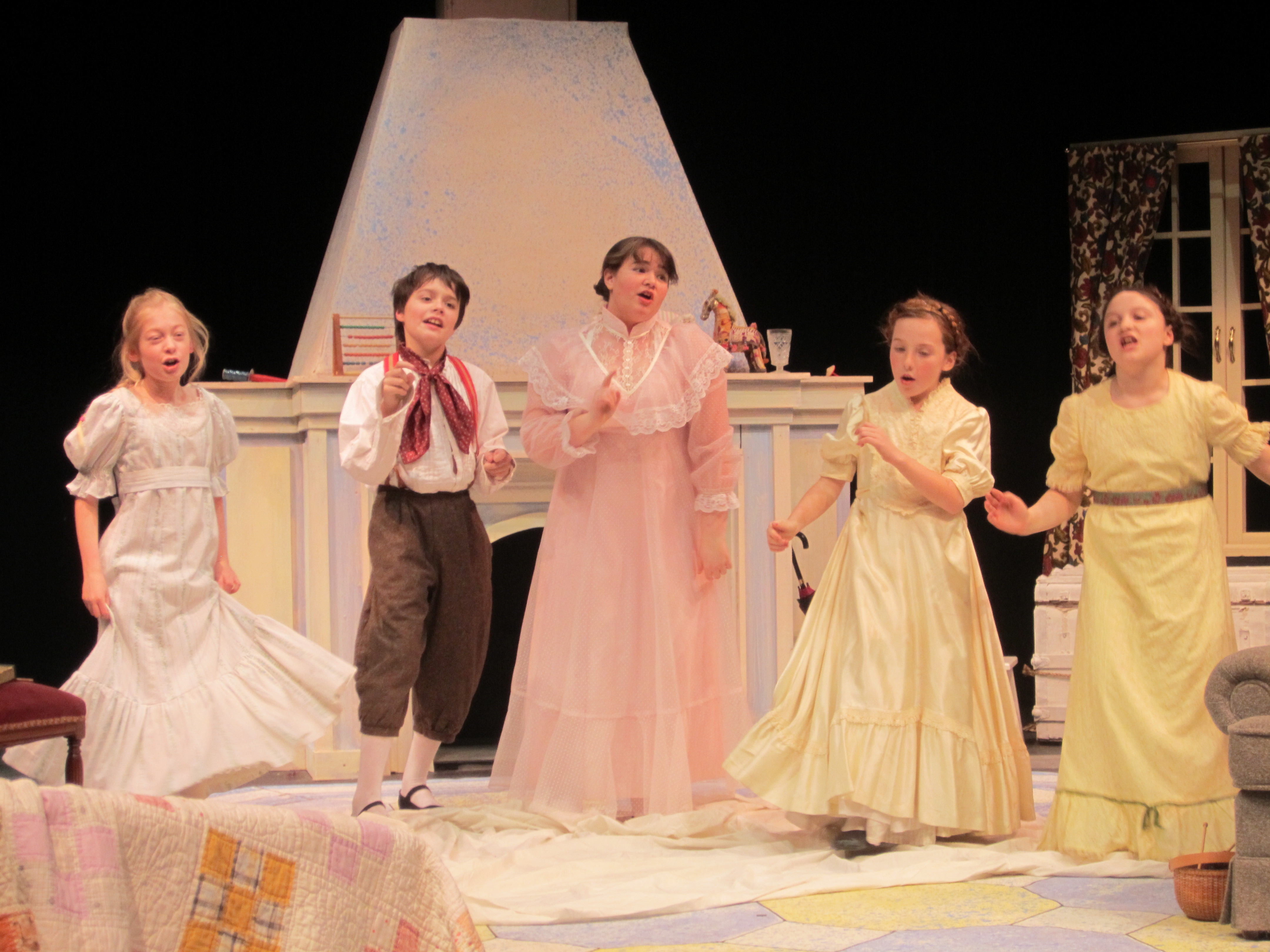
This past weekend I was in my first theater production. As a member of the chorus in Benjamin Britten's opera "The Little Sweep." Elysia played Sophie, and Juliet was in the chorus, too. A very stressful way to spend time together! And fun! Don't let me forget to say that! Three more shows this coming weekend, if you're in the vicinity, paired with A.A. Milne's short comedy, "The Man in the Bowler Hat." The talent in this little community is dazzling. I don't know where to start. But Jane Parker, the musical director, taught us the difficult music with great good humor and dedication (Britten and his dissonance, cantilevered waltzes, rockslides of emotion, and snowdrifts, too). And Dale Hill, the director of both productions, is a kind of wizard. He lets you know what you're doing wrong by means of fulsome praise–hard to explain–and moreso, comes up with the perfect touch to correct every glitch as it glitches, drop of the hat: "Dale! Disaster! What to do?" "Well, why don't we…" Both directors have had long careers in music, in theater, and yet here they are, a blessing, our little town. And the actors! They are also doctors and ornithologists and college professors, college students, retired thises and thatses. Donna Campion, who played Mrs. Baggott in "Sweep," has been a race-car driver and professional actress and singer, including a long stint with the New York Light Opera Company. Yes, a race-car driver. Her husband, who played Cruel Black Bob, is an anesthesiologist. But I can't give everyone's bio here. Suffice it to say that Mellisa Clawson's students would never recognize her in flapper dress and blond wig! As for me, I was lucky to remember the lyrics to the chorus numbers, and to get out the phrase "thickets of rushes and tussocks of reeds" at breakneck speed and high timbre without spitting, at least most of the time. And the kids. Wow, the kids. And a lot of parent-child combinations. Ellie Sloane Barton and Sarah Sloane, for one. I'll have to write an essay about community theater at some point, but for now I'll let the photos say their thousand words. And thanks to one and all!
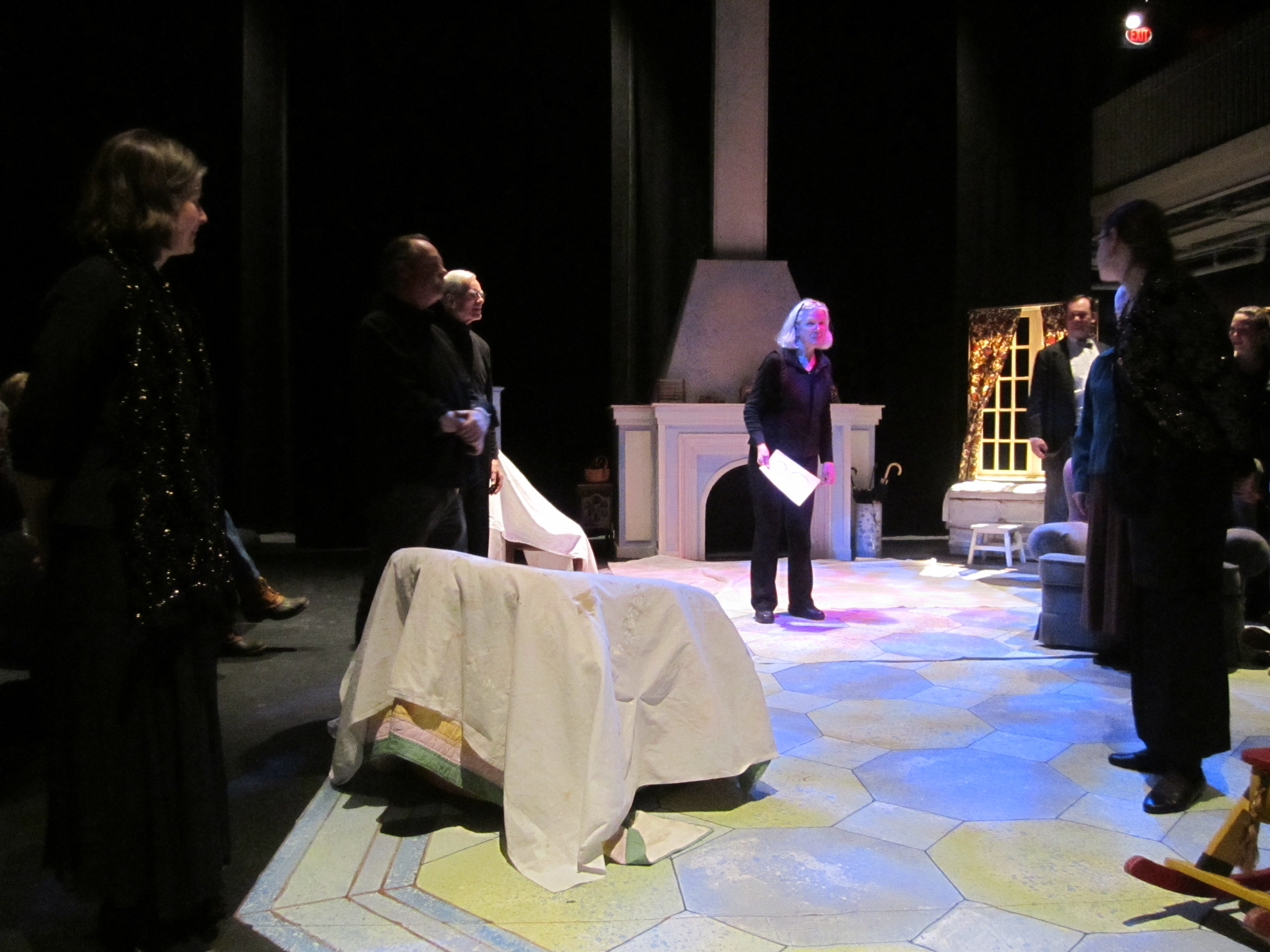
Jane Parker
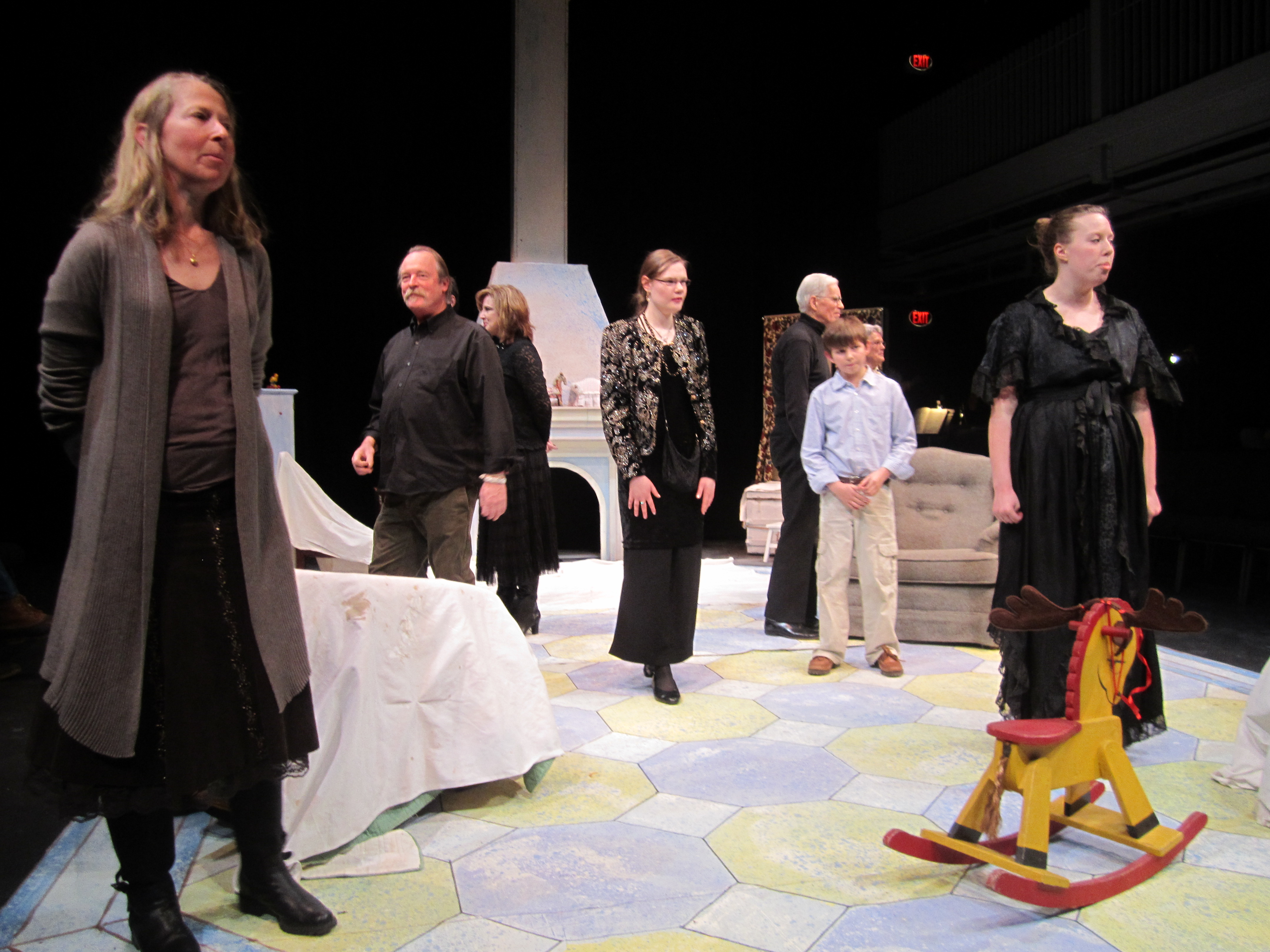
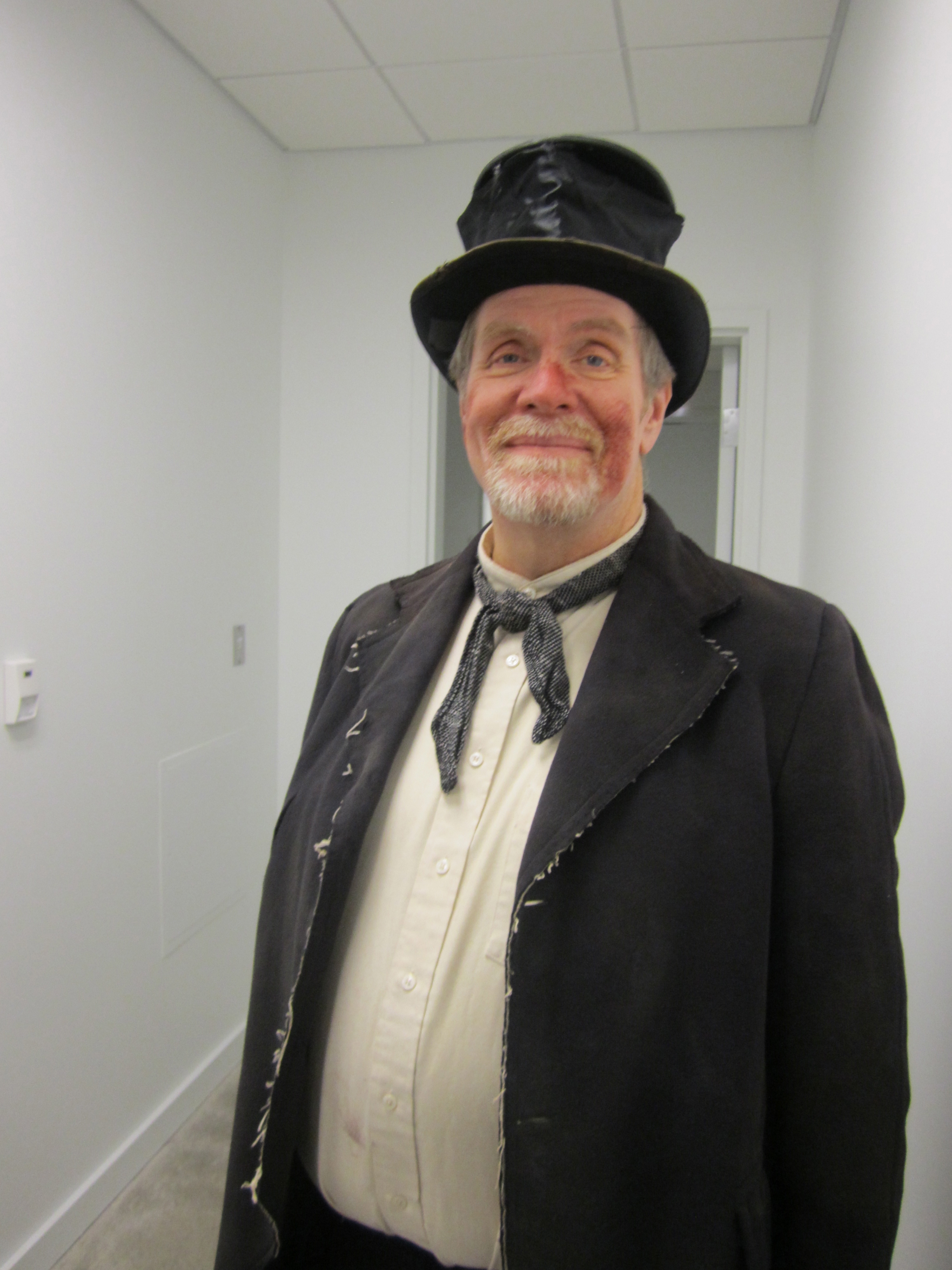
Dan Woodward, sullen apprentice sweep and tenor
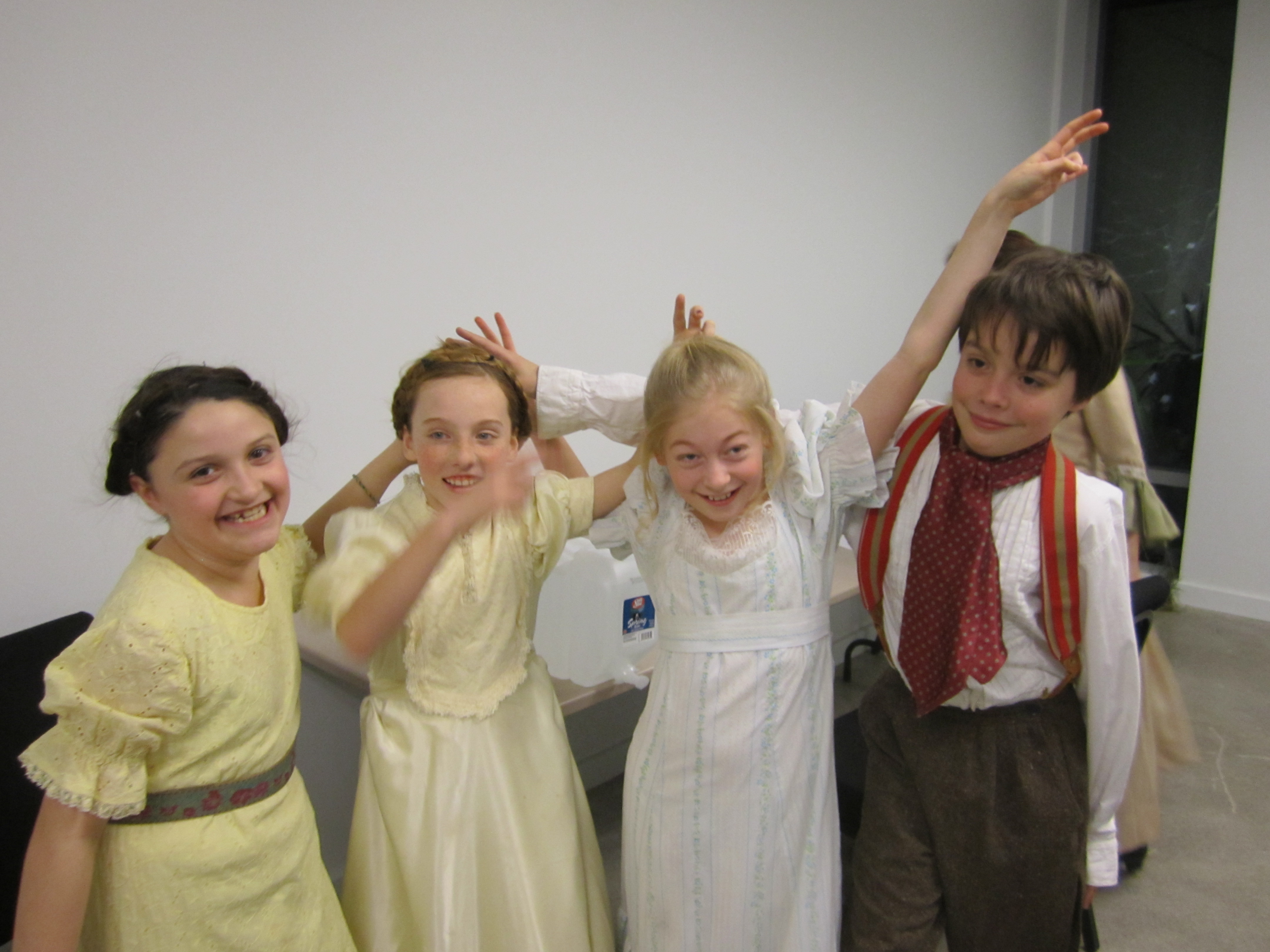
Green room hi-jinks
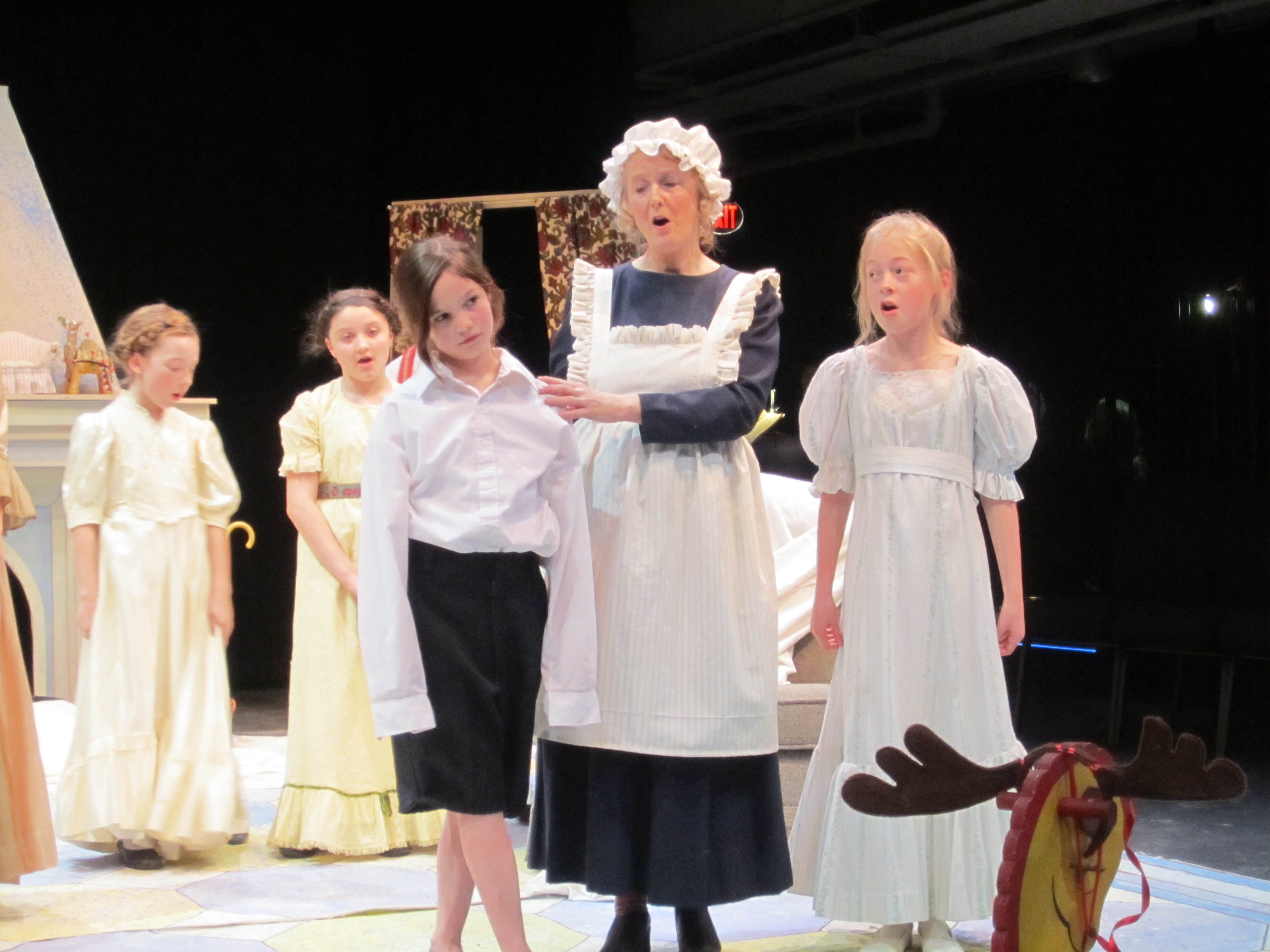
Sophie playing the sweep, Sarah Sloan as Rowan, Elysia playing Sophie
Dale Hill, behind the scenes as always
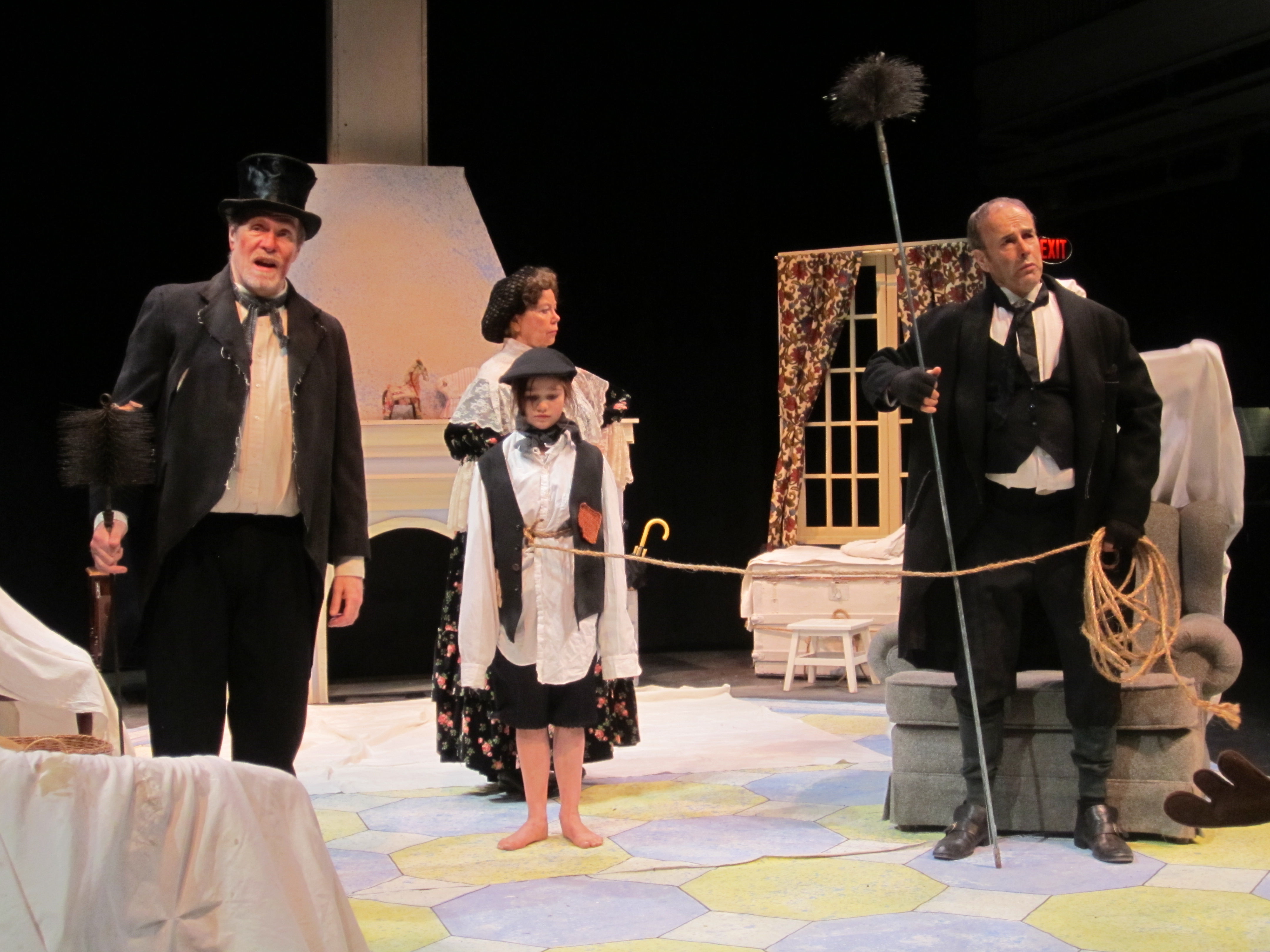
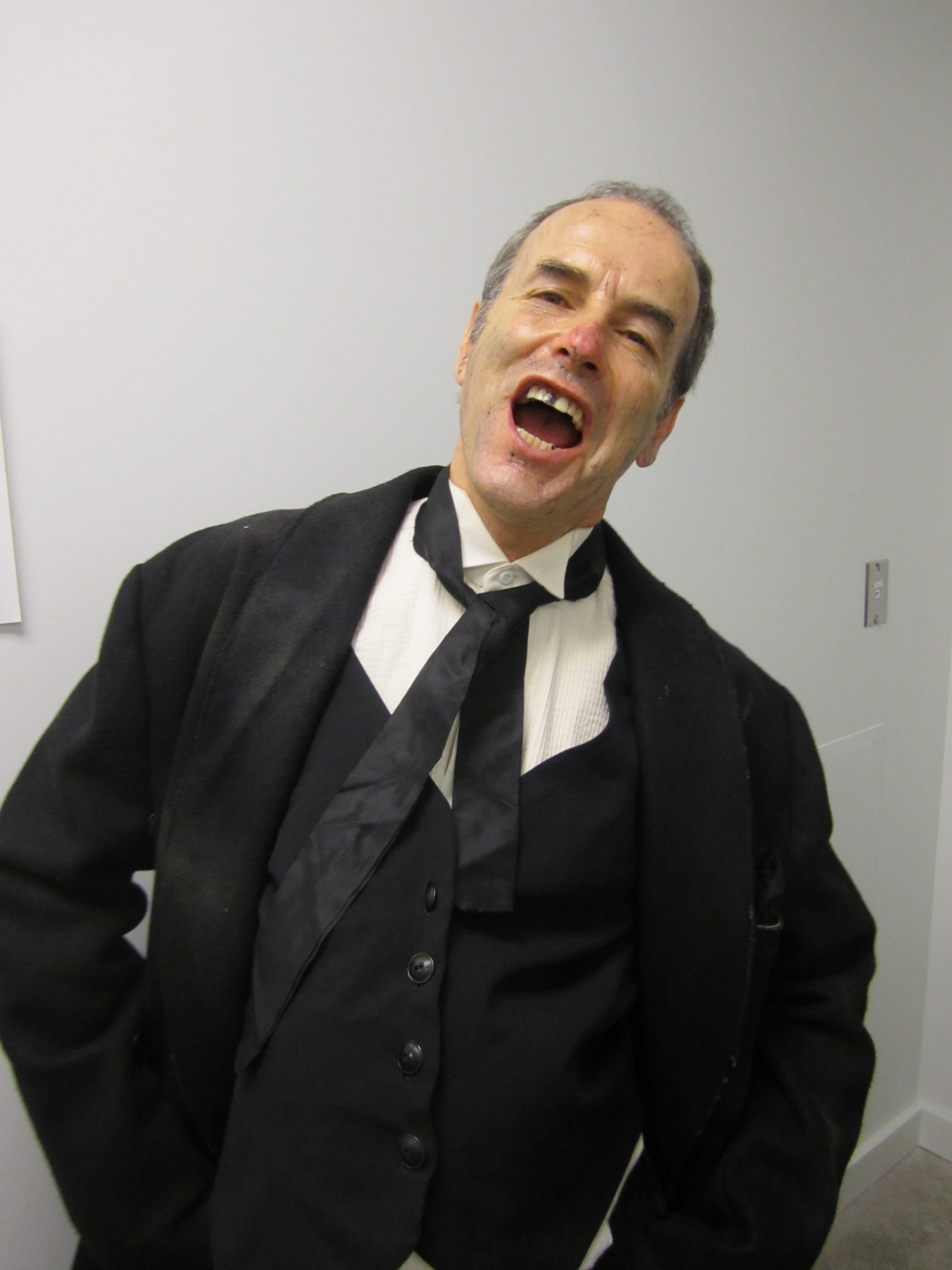
Dr. Campion, for once not about to put you to sleep!

Sawyer, Elysia, and Donna Campion