Rick Conlow's Blog, page 20
March 22, 2018
Working Hard to Accelerate Your Results as a Leader
In leadership, as with most things in life, working hard is often required to reap the rewards. To bench press 300 pounds, we must start lifting weights that are a bit smaller than we hope to one day handle. To bike 80 miles, we must practice pedaling shorter increments. To excel in calculus, we must fumble through foreign formulas until they become familiar. This same concepts relates to effective leadership.
 Working Hard
Anytime we want to do something well – there’s an open invitation on the table to practice. There should also be a warning: “You are about to venture out of your comfort zone. Are you sure you’re ready?”
When you want to get in shape, and you’re determined to do it at any cost, you welcome the pains and strains. You expect them. In fact, sometimes, these aches are our way of acknowledging that we’re doing things differently with our bodies. When you look in the mirror or get on the scale, it all becomes worth it. The physical cost and the physical benefit are fairly easy to assess at all times. When you’re not getting the results you want, you have the opportunity to change course to see if another way will work better. And when you decide it’s not worth it, you sadly realize that positive results are really unlikely to show up on the scene any time soon. You stop expecting the rewards or the disappointment because you’ve stopped – altogether.
 Becoming a Better Leader
So, why is it that when we decide we want to be a better manager or lead at a higher level, we don’t expect that the same hardship will be a part of the process? All too often, when individuals embark upon the journey of learning how to lead well, they stop dead in their tracks, surprised at the resistance they encounter. But, don’t we all know by now that going against the grain always requires more work? It builds strength. It establishes endurance. Neither is possible if effort isn’t part of the equation.
I think one of the best things someone can do if they start to dream of bigger and better things for him/herself – is to realistically assess the challenges that will come with the unfamiliar territory. By forming reasonable perspectives and expectations, you are less likely to get discouraged by the bumps in the road. If you anticipate the worst and prepare for the hardest, you can only be pleasantly surprised by the less-prominent potholes that get in the way. It’s not about maintaining a pessimistic perspective – no, no, no – it’s about being practically hopeful. On this note, this also means that if you think you’re an all-star leader, but you’ve never done a darn thing like working hard to improve… I’d reassess your all-star status.
Working Hard, Leading Well
 Don’t let hard work discourage you. Managers can accelerate their results quickly by learning to communicate and coach well. You don’t have to know everything about leadership to rise to the top. You just have to know a little more than others about leading and motivating people. The difference between winning and losing is often slight (like in track and field events, hundredths of second) Let the challenge inspire you to become one of the elite who lead well. Good leaders aren’t a dime a dozen, and there’s a reason: the work isn’t always easy, and it’s only the dedicated nonpareils that persist and prevail. They also achieve superior results. Hard work increases your talent and beats talent that doesn’t work hard.
Want help to ramp up your results as a leader, check out our Superstar Leadership online training.
 Keep learning, read our: Unparalleled Leadership book.
The post Working Hard to Accelerate Your Results as a Leader appeared first on Rick Conlow.


February 26, 2018
Eliminating the Whirlwind & Increasing Productivity
Many people harp on the all-too-disorderly whirlwind way of doing business these days. Today, even when we leave the office, we’re always accessible, we’re in constant contact with others and typically, we’re expected to be “on” all the time. If we don’t respond to an email or a text within a certain amount of minutes not hours, we know we’ll get a call. And well, we have to answer that (even in the evenings or on the weekends or vacations) because if we don’t… it’s going to look like we’re not hard workers. So, where do we draw the line? And what does all of this have to do with managing others? A LOT.
 4 Considerations to Move from Whirlwind to Productivity
As a manager, even though you have a million things on your plate, it is your responsibility to know and understand what’s occupying your team’s time. (No, this does not give you an excuse to micromanage.) Here are four considerations that may help.
First and foremost, you can’t truly help your team if you don’t have a clue what’s consuming their calendars. As a manager, one of your responsibilities is to remove obstacles and barriers – and an easy way to do this is to “trim the fat” off your team’s schedule. Identify the meetings that can be eliminated, take tasks that you ought to tackle, and shift things around that make sense. Talk to your team members individually. Do a series of team planning meetings. Clarify roles, goals and expectations. Discuss ways to avoid redundancies, delegate where you can and use team activities to get some things done. Track how as a team you are spending time. (see this assessment by HBR) Ask, what can we learn? These kinds of conversations with your team alleviates the pressure build up and often generates creative ways to be more effective.
Secondly, your ability to recognize team members for their contributions greatly depends on your awareness of the details. One of the main employee frustrations described in engagement surveys is that managers don’t know or recognize them for the hard work they do. So, get enough information to award and affirm your team regularly. See this for more ideas recognition-employees crave recognition.
Third, if you don’t know, they’ll know. Case in point: have you (in your personal experience) ever received an email from a boss (late at night or on the weekend) that asks something of you, something so significant, that you leave your inbox thinking… do they even know what’s on my plate right now? (This post is also not an excuse for employees to gripe or be idle.) Sometimes managers don’t even know the whirlwind of their teams: deadlines, priorities and stressors that their reports are facing, and so they don’t consider the competing factors – they just consider what’s convenient. So, do your best to balance your latest priorities with your team’s current challenges. So, take the time to engage your team on an on-going basis. Be involved and accessible.
Finally, remember to coach all employees one on one regularly. This will help you focus them and you on priorities. You will also gain a dialogue with good coaching that’s invaluable for generating input and ideas that lead to better employee engagement. In addition, you will improve performance because of the clarity of expectations. But also, you will know what is happening with your team and how well it is happening . This puts you in a better position to proactively deal with problems. See this brief training video: 5 Superstar Coaching Steps.
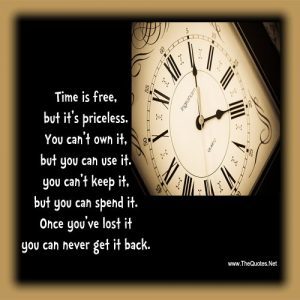
All in all, it’s important to keep a gauge on how overwhelmed your team is feeling. If you don’t have any idea what’s keeping them busy, you can’t help them make the most of their time. And that’s the point: it all comes down to productivity. By considering the above and taking the appropriate action steps, you are helping your team members increase their performance, which inevitably will translate into more success for them and you! As summary, think of this quote by Golda Meir, “I must govern the clock, not be governed by it.”
For accelerated individual online leadership training that will trample the workplace whirlwind, go here: RCI Online Leadership Training.
Want to accelerate your career and become one of the greatest leaders in your field? Check out my Superstar Leadership book or one of the others in the Superstar Book Series for a boost!

The post Eliminating the Whirlwind & Increasing Productivity appeared first on Rick Conlow.
February 20, 2018
Death in the Workplace: How do you handle it?
Here are two real examples and very contrasting ways to deal with death in the workplace. Have you experienced these? Which do you prefer?
The Death of a Colleague: No Grieving Allowed

Pete worked for his company 40 plus years. He worked his way up to executive. He continued to work into his 70’s as a troubleshooter for the company. I remember meeting him when I started working there. I asked him why he was successful, and he leaned back in his chair and laughed. “I didn’t go to college!” Then he told how he’d spend time with the employees every morning, talking to and listening to what was going on with them. After a while, we didn’t see him much. began hearing rumors about his whereabouts: on the golf course, a secret assignment etc. Finally, the real answer came out that he had died. There was no meeting, email, or announcement. We had to dig around to find out the arrangements. The bottom line was that it’s done, he’s gone. “Next!”
The Death of a Colleague: Compassion and Caring

Contrast the above behavior with another company. One Friday evening, one of the owners of a successful smaller company, Bill, died unexpectedly. Upon learning of this, his business partner quickly contacted the management team and had a phone conference that weekend. Monday morning, all managers held meetings with their teams to share this shocking news. Another manager meeting was held after that, to check in on them and their employees. An all-employee meeting was organized later that Monday morning, including a luncheon for everyone, to gather, grieve together and talk. At the luncheon, the business partner talked with compassion about the person who had died and with empathy for all those at home and work. The grieving process was discussed and support was provided to all that needed it. Questions were handled about ‘what’s next’? As much as possible, fears, anxieties, and concerns were handled delicately. Later, serious and funny stories were shared about Bill’s commitment to their mission/vision/values. Assistance was given throughout the week until the visitation and funeral. Communication was delivered openly with understanding and care.
Final Thoughts
Co-workers are our extended families. Coping with loss is a very personal thing. It affects all of us in different ways. It can’t be ignored. Psychologists say it’s important for people to share their feelings about the person that died, and use employee assistance or other programs to talk about things. (if they are available)
It seems to me that in too many organizations employees are regarded as cogs in the wheel, to be discarded casually and often without recognition. The emotional side of people’s lives is sorely overlooked. Companies can learn to do much better. In a few companies and with some leaders, employees are valued partners. Compassion and empathy are part of their culture. Wouldn’t it be honorable if it was the rule of corporate behavior instead of the exception? Let me know your thoughts. Thanks.

For 4 dynamic online leadership training programs go here: RCI Online Leadership Training.
Want to accelerate your career? Check out one of my books in the Superstar Book Series for a boost!
The post Death in the Workplace: How do you handle it? appeared first on Rick Conlow.
February 18, 2018
How would YOU Handle these 3 Management Problems?
Over the years, I have coached leaders confronted with management problems that sometimes conflict with the very ethics that a company proclaims. I admire most people who are managers. They are hard working, stuck right in the middle of an organization and bombarded by customers, executives, employees, shareholders, and vendors. When things go well, employees or executives most often get the credit. When things go bad it’s the managers who are blamed. I empathize with them. Managers, collectively, do make the biggest impact on a business’s success. At the same time, they can step up their game and help minimize the impact of the daily whirlwind. Check out these problems–how would you handle each one?
3 Management Problems: What would you do?
A manager’s team was behind on most goals. Then he caught his top performer stealing. If he let this person go, results would suffer more, and his job was on the line. It’s time to decide, what would you do?
Another manager learns first-hand from customer complaints about a defect in one of their company’s best-selling products. He researches the issue, identifies a pattern across the organization and documents his findings. He brings it up to his boss, who listens and says she will take care of it. Nothing happens. The manager brings it up two more times and no feedback. Problems and complaints are increasing. What’s the next step?
While business is decent, a manager’s boss raises some prices, cuts employee hours, and reduces expenses across the board to improve profits. Managers are expected to pick up hours to fill out the work schedule. He also starts mandatory half-day manager meetings on Saturdays to plan, redirect, and learn how to win. Essentially, he beats people up for a few hours. All managers are told this will continue until results improve. Now what?
Considerations for Handling Management Problems
In dealing with any management problems keep in mind these guidelines:
Define the issue clearly by gathering all the facts you can-reports, customers, employees or other managers.
Review your company policy if one relates to the situation.
Ask, what are my options and potential outcomes? If appropriate include other people in identifying this.
Ask, what’s the right and prudent thing to do, not necessarily the expedient thing to do?
Then, take action as soon as possible.
Follow-up and reinforce.
Remember this quote by philosopher Meister Eckhart, “The price of inaction is far greater than the cost of making a mistake.” In summary, how we handle management problems is about our character. Dr. King said it eloquently, didn’t he?
For other situations, and guidance, check this out: 12 Difficulties that Define a Manager’s Destiny.
For accelerated individual online leadership training, go here: RCI Online Leadership Training.
Want to accelerate your career and become one of the greatest leaders in your field? Check out my Superstar Leadership book or one of the others in the Superstar Book Series for a boost!
The post How would YOU Handle these 3 Management Problems? appeared first on Rick Conlow.
February 8, 2018
The Success Secret of the 5 Greatest Leaders of All-Time
Famed management theorist Peter Drucker wrote over twenty years ago, “We have a dearth of leadership.” This is even more true today but not for the greatest leaders of all-time.
Recently, in Davos, Switzerland the global business and political elite gathered for the World Economic Forum. While these leaders reveled in the perceived better economic news, some concerns were aired about income inequalities and leadership distrust. Ironically, an Oxfam study reported that 82% of wealth generated in the last year went to the top 1% of our population. In addition, the 2018 Edelman’s Trust Barometer was released and showed continued large-scale distrust in business and government around the globe. Trust in US institutions declined 37% across the board. In China, the trust level is perceived high. Yet it’s a government-directed response, as China moves to rate the trustworthiness of each of its citizens.
Do you see the problem here?
Misconceptions about “Real” Leadership
The job or position title doesn’t make you a leader. Few managers or politicians understand that. They may have the power but they don’t have the respect. Most leadership gurus define leadership as ‘influence’. I don’t agree. I believe leadership has to be a positive influence. The leader title has to be earned. The likes of Kim Jong-un, Adolph Hitler, Joseph Stalin, Andrew Jackson, and Mao Zedong are not leaders. They are mass murderers or tyrants. This non-leadership also applies to the business people who either rule their companies or teams like dictators or use the company as a playground for their ego or for personal profit. Some that come to mind are Lampert of Sears, Raines at Gamestop, Jeffries formerly of Abercombie and Fitch, and Menard of Menards. For these people, there is a night and day comparison to the greatest leaders of all-time.
The 5 Greatest Leaders
In a survey of historical leadership, five people come to mind that leave a legacy we can all learn from. Their leadership approaches are in stark contrast to most in power today. They each have similarly admirable traits but also highlight a distinguishable characteristic that sets them apart. Each focused on giving not taking. They are the greatest leaders because separates them at a quantum level above nearly all other so called leaders.
Abraham Lincoln
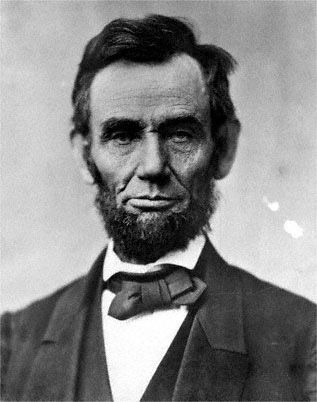
Lincoln grew up poor in the western frontier and was mostly self-educated. Lincoln gained the title of “honest Abe” as a store clerk. When he learned he had shortchanged a customer a few pennies, he walked miles to correct the situation. This happened a number of times and people grew to appreciate his integrity. Because of this, he would often be asked to judge disputes, which led him to practice law.
Yet, his most enduring quality was his perseverance through difficulties that prepared him for his future role. At one time he said, “You cannot fail unless you quit.” He lost eight political elections, failed in two businesses and suffered a personal nervous breakdown, becoming bedridden for six months. This led him to say, “I am now the most miserable man living. If what I feel were equally distributed to the whole human family, there would not be one cheerful face on the earth.”
As the 16th US President, he served his nation in some of its darkest hours during the Civil War. He helped preserve the nation, abolish slavery, and strengthen the United States for a significant world impact in the years beyond.
Mahatma Gandhi
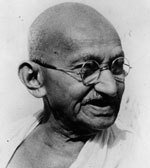
Mr. Gandhi was born and raised in the Hindu merchant caste system. He was an ordinary boy but one with determination to do well. He was trained in law in London and experienced racism in South Africa as he began to practice civil disobedience as an expatriate lawyer. Returning to India he became an activist, organizing peasants, farmers and laborers to gain social justice. He gained leadership of the Indian National Congress which led to nationwide campaigns for self-rule. Thirteen different times he was arrested and put in jail. Gandhi said this about his struggles, “Strength does not come from physical capacity. It comes from an indomitable will.”
He appealed for non-cooperation through his book, Hind Swaraij. Gandhi’s non-violent approach confounded British rule. He said,“ In a gentle way you can shake the world.”His approaches captured the attention globally, and rallied civil rights and freedom movements. It all eventually led to India’s independence. His humility is highlighted by his quote, “You must be the change you wish to see in the world.” It was never about him but rather about the Indian people and justice.

Mother Teresa
Mother Teresa was born in Albania and became a Roman Catholic nun. She served in Ireland and then moved to India. She became disturbed by the perpetual poverty that she saw every day. She tirelessly served the dying and poor by living among them and giving each person comfort. Her relentless compassion touched the hearts of people worldwide. She founded the Missionaries of Charity. It eventually grew to 4500 sisters in 133 countries. Few people have been respected or admired like her, for her devotion to those others often forgotten about or shunned. Mother Teresa said, “I have found the paradox–that if you love until it hurts, there can be no more hurt, only more love.”
Nelson Mandela
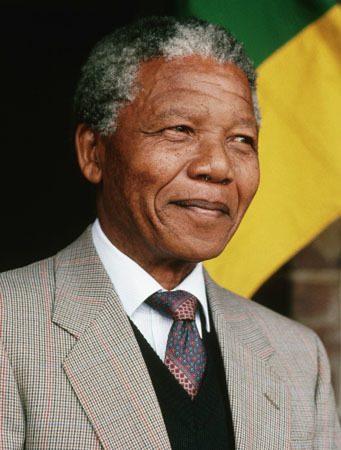
Nelson Mandela was jailed for 27 years for his activism and beliefs about freedom and equality. After first being abused and tortured, he suffered there through inhumane treatment and illnesses. He also earned his Bachelor’s Degree and smuggled out a draft of his book, Long Walk to Freedom. Upon his release from prison, in the midst of racial tension and political instability, he negotiated with F.W. de Klerk to end apartheid. They realized the Nobel Peace prize for their efforts. He eventually became the first black President of South Africa. He changed a nation by his selfless but resolute leadership. He demonstrated reconciliation and forgiveness for a “rainbow nation.” He created a multi-racial government. His devotion to peace and unity gave him a global stage and audience. Mandela reminds us, “Forgiveness starts here. Forgiveness liberates the soul. It removes fear. That is why it is such a powerful weapon.”
Jesus of Nazareth

Jesus had no formal degree or credentials and didn’t lead a multi-national company. His ministry lasted only 3 ½ years. In that time he helped the poor, sick and ordinary people all the time by healing and with miracles that no one could explain. With authenticity, he declared, ” As the Father has loved me, so have I loved you.” He spoke of God’s mercy and forgiveness. This all stunned and challenged the status quo of the religious and political leaders of his day. He called them hypocrites. This also scared them, and eventually he was wrongly put to death on a cross for being a heretic, which he himself predicted would happen.
He organized a core group of twelve mostly uneducated disciples. After his death, his disciples shared that he rose from the dead, and they began the Christian faith. Although people that believed him were persecuted for centuries; he now has 2 ½ billion followers which form the largest religion in the world. He is admired as a holy man or prophet by many who know about him. His book, The Bible, is an all-time best selling book ever.
The Success Secret of the Greatest Leaders
The five greatest leaders, it was seldom or never about personal gain, power, pride or their pocketbook. Their “success secret” is they took the path of servant leadership. Their cause mattered more than their own lives. If we could only startle the leaders of our day to emulate their life’s examples! They would realize that leadership greatness is not about gaining–it’s about giving. What a difference it would make!
For accelerated individual online leadership training, go here: RCI Online Leadership Training.
Want to accelerate your career and become one of the greatest leaders in your field? Check out my Superstar Leadership book or one of the others in the Superstar Book Series for a boost!
The post The Success Secret of the 5 Greatest Leaders of All-Time appeared first on Rick Conlow.
February 2, 2018
How to Lead Naturally and Effortlessly in the Zone
Psychologist Mihaly Csikszentmihalyi describes it as being ‘in the flow’. He said in his Ted talk, “There’s this focus that, once it becomes intense, leads to a sense of ecstasy, a sense of clarity: you know exactly what you want to do from one moment to the other… Sense of time disappears. You forget yourself. You feel part of something larger.”
Too many managers are frantic, anxious, unsure, even full of fear. Their actions instill doubt, worry and ambiguity in their teams. Extraordinary leaders find “the zone” as well. When they do their work, it is excellent but done seemingly naturally and effortlessly. It inspires their teams to reach a new level of performance.
 Two Ingredients to be in “The Zone” as Leader
Leading Naturally
Relentless preparation is the key to be able to do anything like it’s a natural talent.
Geoff Colvin shares his insights on this in his book, Talent is Overrated. Great talent still takes hard work. Great leadership, then, does also. An Olympic athlete puts in 10,000 hours of practice to be an elite competitor. Stars in any field diligently and deliberate apply themselves. They learn new techniques, study them and practice them. They attend training, get coached, and consciously and subconsciously work at getting better. This is above and beyond just doing the job. Colvin feels 10+ years of this kind of effort is required. Yet, it’s a lifetime endeavor for any professional.
Research shows that most managers receive less than one day of training per year. That’s why research likewise shows that 82% of managers aren’t fit for their job. Other studies show failure rates of 50-67%. Now, where do you want to be? The standard for excellence comes from the best companies in the world who provide 58-65 hours of training and education a year to each employee. In addition, to reach an elite level of leadership take on dedicated reading, experience reviews, online training, and video-based training every day and every week.
Sounds like a lot, doesn’t it? That’s what it takes to learn something so well that you perform as a leader exceptionally well, naturally, even without thinking about it. Concert pianists, professional ballad dancers and Oscar winning entertainers make this kind of effort routine. Why not you? In time daily experiences and thoughtful learning become a seamless entity in the leader’s mind that reaches for outstanding results in every experience.
Leading Effortlessly
Think about this. In my consulting business, our projects or coaching assignments most often involve a company or executive’s under-performance, or a desire to reach significantly higher goals. Inevitably, what the company and its management team couldn’t achieve in 1-4 years of effort we begin changing in 1-4 months. Why? Preparation, of course, but also excellent execution. A leader that does this understands how to motivate a team, and bring it together quickly while hitting on all cylinders. At our organization we teach and apply the High-Performance Formula. It involves using well-prepared skills in the right areas and at the right timing. Here it is:
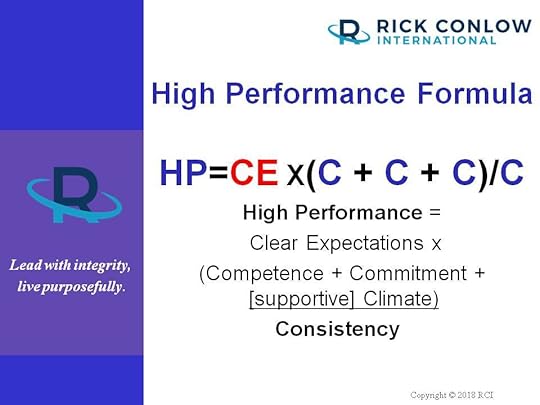
Any manager can do this if they have honed their skills and knowledge time over time. When the pressure is on, conflict arises, or problems escalate, you execute a plan of resolution, brilliantly considering the above. Each area requires certain knowledge and skills. Essentially you communicate with and involve the team positively each step of the way. You don’t worry about it. You aren’t desperate. You calmly and fearlessly deal with the whirlwind of issues through your team–effortlessly. You are in “the zone” and it transforms your team and results.
Pulling this all Together
A friend of mine named Rick worked for same retail outfit for pretty much his whole career. Rick was studious about everything. (Most of the other managers act that way, they just did their jobs.) He was always learning about his product, marketing programs, leadership and customer service. Then he took action on things. He first worked for the company as a sales employee and quickly moved his way up to store manager. He was so good that they made him a troubleshooter. Why? Because he took positive action that energized his team. He did it time and again. The company would put him in low performing stores and within a few months they started making money again. Soon they wanted to promote him to the corporate headquarters to run a region. He turned them down so he didn’t have to move, and could be close to home and help raise his three boys. Instead, he bought one of their franchises and started his own business.
I remember him calling his employees to a meeting early on. He said, “I can treat you as hired hands, or professionals. Hired hands punch in and out on a clock and are only paid an hourly rate. Professionals do what has to be done and share in the success of the business. Which way do you want me to treat you?”
His employee engagement was sky high, and he dominated his market. Rick was in the army reserves and was called to active duty for Operation Desert Storm. He was gone almost a year. His team was so well-prepared by then, they executed brilliantly and profitably grew the business. Most small businesses go into an immediate tailspin if the owner is gone. They had no doubts about what needed to be done. They did it naturally and effortlessly, just like he trained them.
This is “the zone” of leadership–confidence and effectiveness. You know what you need to know and aren’t phased by what you don’t know or what inevitably may happen. You and your team breakthrough to reach or exceed your goals anyway.
For accelerated individual online leadership training, go here: RCI Online Leadership Training.
Want to accelerate your career and leadership skills? Check out my Superstar Leadership book or one of the others in the Superstar Book Series for a boost!
The post How to Lead Naturally and Effortlessly in the Zone appeared first on Rick Conlow.
January 20, 2018
TO ALL EMPLOYEES: YOU ARE FIRED TODAY!
Have you ever been fired?
My brother-in-law worked as a sheet metal worker most of his career. He was also worked as the union steward. His philosophy: fair and firm. He was known for his integrity. He had put in over twenty years at his company.
One day he and the whole crew came to work and found out they didn’t have jobs. A company from the eastern US bought them out. The new management said, “Your fired. We will hire back 80% of you at $2 an hour less.”
Fired and Re-interviewed for Less
Interviews began the next day.
Most employees re-interviewed, it’s what they knew for many years. My brother-in-law got his job back.
A few weeks after this, I talked to him at a family gathering.
I said, “How’s it going?” He said, “Great, we are getting our $2 back.” I said, “Good.” He replied, “You don’t understand. The crew is only working when supervisors are around, and they aren’t around that much.”
Treating Employees as Partners

Recently another manager emailed me. He worked hard for his company. As he explained, weekends, holidays and seventy hours a week. He had excellent performance evaluations. When his daughter got sick and he took some time off to help with her healing. Within a few months he was laid off. He put his heart into the business. The company said they were restructuring.
Isn’t sad that in our modern technological age, people are treated like this, and the workplace ends up in an adversarial climate? Is it any wonder employee engagement is so low. With the mountain of leadership resources, thought, training, education, books available…to me it’s ridiculous. The company above could of done so much better. Chances are they wanted to cut expenses to reach profit goals. Instead of instigating labor problems. Come on, nobody in their right mind thought the employees would like what the company did, right? For example in my consulting career I have helped clients deal with these kinds of issues through partnering with employees by:
Meet with employees to discuss the challenge and goals, brainstorm ideas and build teamwork.
Set-up small fast acting functional teams to improve quality and productivity gains.
Establish cross functional teams to identify ways to reduce waste and cost.
Initiate training for new methods for all shop employees.
Ensure supervision was well trained to communicate with the shop employees.
If needed look at alternative ways to schedule the plant without laying people off or cutting pay.
Create a bonus incentive for hitting goals in quality, productivity and waste. (If pay has to be cut, add a bonus for greater gains if goals are achieved.)
Meet with employee regularly to update progress, issues and new challenges.
I have seen employees step up and show 25%, 56%, 75%, 122% gains on their goals.
What are your thoughts or experiences on this?
Managers that use the “hammer” as their initial strategy generally cause way more problems than they solve. Companies and managers that value employees as partners reap the benefits of higher loyalty, engagement and productivity. Companies that don’t see poorer results. It isn’t rocket science, or is it?
For accelerated individual online leadership training go here: RCI Online Leadership Training.
Want to accelerate your career? Check out one my books in the Superstar Book Series for a boost!
The post TO ALL EMPLOYEES: YOU ARE FIRED TODAY! appeared first on Rick Conlow.
January 11, 2018
Why Do Companies Have Bad Employee Engagement?
These disturbing trends from a 2017 study spell the continued dearth for employee engagement. Only:
21% of employees believe their performance planning is any good.
24% of employees feel connected at work.
25% of employees feel managers are transparent with employees while nearly twice as many managers truly believe that they are.
26% of employee feel valued at work.
All of these are going backward from prior years. Is there any wonder why employee engagement stinks in many places? For example, a CEO in a highly competitive market faced huge price pressures and under-performing businesses that rocked the bottom line. Morale was seriously low and employee turnover high. When does he want to work on it? Next year sometime!!! He needs the transfusion NOW! All business leaders need to learn and understand that turned on employees increase productivity, customer service, sales and profitability!
Richard Branson’s quote identifies a solution. Any manager–first line supervisor to CEO–must master the art and science of communication. Whether an employee is listened to and feels wanted mostly depends on the relationship to their direct supervisor.
How to Eliminate Bad Employee Engagement
Excellent companies partner with employees by committing to these actions:
Value people, listen to them and help them succeed.
Treat employees as #1 in the business.
Invest in on-going training, coaching, communication and recognition for employees.
Train all of your managers in good leadership and emotional intelligence skills.
With employee disengagement so high–87% worldwide–one thing is obviously true: companies have to do a better job. Also, each manager needs to take this personally in order to make a positive difference. Richard Branson also said, “Train people well enough so they can leave; treat them well enough so they don’t want to.”
What do you think about employee engagement? Leave a comment below.
For accelerated individual online leadership training go here: RCI Online Leadership Training.
Want to accelerate your career? Check out one my books in the Superstar Book Series for a boost!
The post Why Do Companies Have Bad Employee Engagement? appeared first on Rick Conlow.
January 8, 2018
12 Lethal Coaching Mistakes Made by Managers
Want to eliminate your coaching mistakes? Shhh, this is top secret! Not even the CIA, KGB, MI6 or Mossad know about this! Coaching is the ‘secret sauce’ to leadership success. So few managers understand this. Therefore they make the following lethal mistakes over and over. Hardly shocking, these mistakes lead to employee disloyalty and lower performance. Duh!?
According to research, 97% of people have self-limiting beliefs that derail their careers and performance potential. Great coaches help employees overcome these to achieve incredible results. Poor managers make these lethal coaching mistakes that reinforce the self-limits. This often leads to despair for the employees and defeat for the managers.
The 12 Lethal Coaching Mistakes
Dishonesty: If you lack integrity and ethics, you lose trust. Then you lose your team.
Yell, scream, and swear: Have you ever witnessed this before? Ever notice what the employees seem to be thinking? What they do later? Now the performance isn’t the issue–the manager is, for being a jerk. Payback will come to the manager one way or another. Not all managers believe this because their ego gets in the way. As one executive told me, “It’s my company, I will do what I want!”
Attack, attack, attack: Nobody deserves constant abuse or criticism. This, like the above, is inappropriate and shuts down employees. If you have been on the end of this you know what I mean. In addition, harassment, discrimination, bullying, sexual abuse or racial prejudice are illegal. As we are seeing in the media lately when this is exposed the penalties can be harsh. There is no excuse.
Not knowing the person: Trust is paramount. Great coaches take the time to build rapport and understand each employee. What are the employee’s strengths? Weaknesses? Career goals? Beliefs? Background? Motivations? Without this, breakthrough is almost impossible. Remember this quote by Bill Gates: “Everyone needs a coach. It doesn’t matter whether you’re a basketball player, a tennis player, a gymnast or a bridge player.” Too many managers just look at the business numbers and act as judge and jury. Then they say, “Next!”
Talk too much, listen too little: Coaching works as a dialogue and problem-solving effort. Listening and questioning are the bedrock skills of great coaches. It’s a communication process. Without listening, a manager communicates that he or she doesn’t care. Anyone conveys this, who make one-on-one meetings a monologue.
Come unprepared: What message does this send to employees? They aren’t important? Besides, it erodes standards for higher performance for the entire team. The manager loses credibility.
Show up late for a session or keep rescheduling it or never coach: Like being unprepared, this tells the employee that your time is more important than theirs. After a while, it erodes respect. Never forget that a manager’s success comes from their employees’ success. This is one of the top excuses managers have for not coaching, “I don’t have the time.” Whoever says this doesn’t have time to be a manager, let alone a leader.
Focus Only goals: Yes, do focus on goals and progress. But make development and learning the first priority. If an employee doesn’t learn to do a task on his or her own, then improvement or better results aren’t sustainable.
Offer no help or guidance: With questioning and listening to someone, you teach an employee to be self-directed and architects of their own successful destiny. By strategically offering your input you can lead them forward faster.
Don’t follow-up: Coaching is a process, not an event. Great coaches guide informally at every opportunity. See this post: 5 Crucial Coaching Times for Managers. Great coaches also coach through one-on-one opportunities. See this: 8 Steps to High Performance Coaching. Some say this is micromanagement but it’s actually leadership engagement.
Deny any responsibility: I have found that poor managers have abundant excuses: it’s the team’s fault or other departments or the economy or cutthroat competition. Excellent coaches are humble. They praise the team for good results and accept responsibility when things go wrong. Note: This doesn’t mean you don’t deal with poor performances. You do aggressively and positively. That’s part of what good coaching is all about.
Wanting to be liked versus being respected: Great coaches aren’t always the most popular. They set the highest standards, work the team the hardest, and hold people accountable to their commitments. Why? Because they are always simultaneously focusing on current performance and the greater potential. However, they do it genuinely, fairly, and consistently. Thus, they are respected. If employees want to be the best they can be, a great coach will help them get there. Someone who just wants to be liked will derail them.
Eliminating Coaching Mistakes by Taking Positive Action
The key to greatness in coaching is to sincerely desire to help others succeed. You have to work hard to eliminate the above coaching mistakes, too. Make use of the resources suggested in point #10 as well. And, get coaching and and more training for yourself. Then, continuing to learn how to unleash the potential of others by guiding them to learn how to learn how to win in their own careers. Author Tim Gallwey says it nicely: “Coaching is unlocking a person’s potential to maximize their own performance. It’s helping them to learn rather than teaching them.”
For accelerated individual online leadership training, go here: RCI Online Leadership Training.
Want to accelerate your career and leadership skills? Check out my Superstar Leadership book or one of the others in the Superstar Book Series for a boost!
The post 12 Lethal Coaching Mistakes Made by Managers appeared first on Rick Conlow.
January 4, 2018
8 Keys to Unlock Your Team’s Performance
Want to learn the keys to unlock your team’s performance this year? Consider these questions first:
What do your employees say at the bar or coffee cafe about you (the boss) or the company?
How about at tailgating before a football game or before and after a social event at Orchestra Hall?
Or at the kitchen table with their family? At work, employees may say one thing but how they talk about it outside of work is the true story.
With employee engagement dismal in so many places, there could be hidden morale problems in your organization which lead to unproductive work habits. Besides, bad news travels fast and it could inhibit your company’s reputation.
How organizational talent is treated and leveraged can make or break a company. Let’s clear up one thing first: most experts agree that there is much more to creating a highly motivated and productive team than money. Yet one thing is obviously true–people have to be paid. In addition, have the potential to be paid more and earn other perks: bonuses, 401 K, profit-sharing, comprehensive benefits, career advancement opportunities, pay adjustments above and beyond the cost of living.
The best companies tend to pay better or offer other perks that make up for it. For example, Costco pays upscale for a retail organization, and their results are consistently better than others. If the pay isn’t fair a company isn’t even in the game for the best talent, let alone having highly productive people.
Research shows that companies with a comprehensive talent management focus outperform others by 18% in profit. That certainly can add up quickly and give one company an edge over another. So, what can you do about it? Here are seven ways to unlock and unleash your team’s performance.
8 Keys to Unlock Your Team’s Performance
Frederick Herzberg’s research found that advancement, learning, growth, pride, the work itself, responsibility, and recognition are the keys to employee performance. The seven keys below take these principles into consideration.
Transform your managers into leaders. It all starts here. For employees to be their best a company must create a culture that values doing business right and engaging employees as partners. This needs to be communicated in many ways throughout an organization. Once stated and shared, the management team must learn to lead to back it up. The single biggest impact on an employee’s performance is their direct supervisor. I believe leadership training and coaching should be done several times every year. The title of ‘manager’ doesn’t earn the term ‘leadership’ without genuine and proven management practices. This involves a whole series of behaviors that engender higher performance. See the next keys.
Make training and development part of your culture, not an add-on if business is great. The point is that nobody can afford unproductive employees because it’s too costly. An Accenture study showed that only 21% of employees attended a company-sponsored training program in the last five years. That’s pathetic. Can you imagine sending your country’s best athletes to the Olympics without extensive training? Poorly developed talent leads to disengaged, under-performing employees. Most companies and managers have a lot of work to do here!
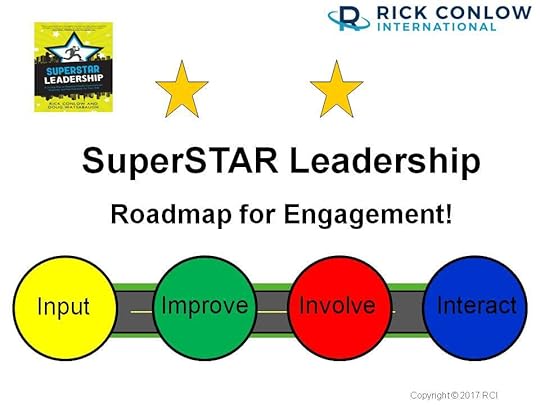
Apply the employee engagement road-map.(see the above pic) This involves regularly asking for and listening to your team’s input, continuously working to improve, involving employees in teams to get things done, and interacting with them consistently. I have had manager’s employees say to me, “Get that guy out of the office and into the field to see what’s going on!” Employee engagement isn’t an action plan–it’s a partnership and value.
Do the team thing–really! For example, one company we consulted with had serious competition and competitive disadvantages in customer loyalty. Through 22 action teams, they transformed their business and results. They also implemented most of the seven keys in this post. Specifically, leaders and employees alike were trained on how to make it all work. Notice that they didn’t have the CEO give a speech about TEAM (“Together Everyone Achieves More”) and just hope things would get better.
Do more than performance management. Few employees like the current performance management systems. While every company will have a system of some sort, they need an add-on. See this post: Performance Management Sings the Blues. In summary, managers need to engage their teams with consistent positive coaching strategies. This improves communication, prevents problems, promotes development and increases results.
Communicate strategically and consistently. On most of my consulting engagements, I hear horror stories about the lack of communication in organizations. I have found four simple steps that most managers can implement immediately to improve their results: conduct weekly team meetings (To learn to do good meetings, see this: The Top Ten Meeting Mistakes and How to Avoid Them), do regular one-on-one coaching sessions, informally engage with employees throughout any given day or week, and send out only positive emails or texts. Any critical info should be in-person unless you are separated by distance; then use the phone.
Work hard, have some fun! The best manager I had also set the highest standards. Our department worked hard and achieved some really remarkable things. This manager also went body surfing with us in the ocean. He rewarded us with nice dinners, comedy club night, and a day at the zoo. We had a lot of fun working hard and playing together. Too many organizations buy into what I heard Tom Peters say once: “The entrance to Harvard Business school says, ‘He who comes here will never smile again’ “.
Recognize and reward your team genuinely but lavishly. I shouldn’t have to put this in here but it is important. I notice that during my consulting projects, I do more recognition for employees and managers than their managers or the company do. It seems the attitude is mostly “What have you done for me recently?”. I have found that with good coaching, honest group or individual recognition and praise are motivators. This a a crucial ingredient to unlock better team performance.
They Didn’t Unlock it…A Quick Case Study in Futility

Let’s identify the challenge for any of the above to be applied. Just for kicks and giggles, I picked a Fortune 500 “Company X” which has $33B in revenue. Its Indeed/Glassdoor rating is averaged at 3.5 and its American Customer Satisfaction Rating is 73.These ratings are lower than its larger major competitors. Both of these numbers are mediocre at best. The sales trends have declined in the last five years, with the company losing over $2B in revenue as well as being unprofitable each year. Whatever Company X is doing isn’t working. They haven’t unleashed anybody. I am sure they have many smart managers working there but they are not focused on people.
Company X has significant employee productivity and engagement problems as well as customer service issues. Its future doesn’t look bright unless it makes serious changes. Certainly, financial management and marketing improvements are needed. In addition, the above eight principles could revolutionize the employee effectiveness of Company X. They haven’t learned how to unlock employee potential or creativity, and continue a downward spiral. My question is why haven’t they already implemented all of the above and more?
Pulling it all Together

I believe that if you want your team to be better you have to be a better leader. All of the above approaches go together. They are like a recipe. If you leave out something, it won’t taste too good. Many companies and managers seem oblivious to this. For example, one company I communicated with this year has over 100 new initiatives for their divisions. It’s ridiculous! You know that most will fail or fall short. They want more and more from their teams but seemingly unwilling to invest in them to help them become winners. When I consult with a company or coach a leader and we apply these seven keys, we unlock team performance. Results are transformed.
Commander Chris Hadfield was the first Canadian astronaut to walk in space. He said this: “Ultimately, leadership is not about glorious crowning acts. It’s about keeping your team focused on a goal and motivated to do their best to achieve it, especially when the stakes are high and the consequences really matter. It is about laying the groundwork for others’ success, and then standing back and letting them shine.”
For accelerated individual online leadership training, go here: RCI Online Leadership Training.
Want to accelerate your career and leadership skills? Check out my Superstar Leadership book or one of the others in the Superstar Book Series for a boost!
The post 8 Keys to Unlock Your Team’s Performance appeared first on Rick Conlow.