Rick Conlow's Blog, page 18
November 15, 2018
The Great Customer Experience Scam
 So, you would think customer service should be getting better. Consider, all of the new technology and the service promises made by companies. Plus, the quality service revolution the lasted three decades. Companies spent billions of dollars.
Right? Wrong!
The number of people reporting customer problems went up from 32 percent in the 1976 study, to 45 percent in 2011, and then 50 percent now.
The customer experience for the top 100 retailers has dropped.
The American Customer Satisfaction Index was 74.2 in 1994. Today it is 76.9. This 2.8% in 25 years . A business that improved at that rate would be gone!
For more, See my post, The Death of Customer Service.
The Customer has the Power
In any one company there may be excellent improvement. Many customer experience professionals are trying hard to get better. As a whole, little progress has been made, in the perception of customers. Some experts say customers are smarter today, and their expectations are higher. At the same time research shows that they want it all–best price, best service, and best products. Even thought most don’t expect to get it. Therefore, the customer has the power today!
Here are three corporate scams that make it difficult for a company to impress their customers. While the word “scam” is harsh, companies need a wake-up call. But, just about any company can make dramatic strides in results with a few key changes.
The First Customer Experience Scam
 Let’s face it, most companies really aren’t committed to improving. You and I both know that as customers. The airlines are perfect examples, except for Southwest or JetBlue. Collectively the airline industry has cut services and added all kinds of fees. Since they are making nice profits you would think they would add more services, right? They, like other organizations:
Create conflicting priorities–A large multinational company was convinced by a big six accounting firm to invest millions in Just In Time Inventory. For that reason, other customer experience initiatives were minimized. At the same time, the company continued to lose sales and customers. They had to merge with a competitor to survive.
Focus on short term profits–The bottom line seems to always trump making service or quality gains. Seems like the goal is to leave a customer angry to make a buck now. This is typified by a CEO I encountered whose #1 question is, “How much money have you made me today?”
Establish corporate silos that inhibit collaboration–A large B2B company had four regions and each did things their own way. They talked about great service and being “top dog”. But, they wouldn’t cooperate because they were too competitive with one another.
Block adequate resources--A service company’s CEO set a goal to be a customer experience leader. Yet, he never budgeted the resources to do it. His customer loyalty suffered which created high employee turnover.
Do the Wall Street dance to look good–A $35B retailer declared for a decade in its annual report that customer service is a top three priority. Industry ratings proved otherwise.
The Second Customer Experience Scam
At an international conference for CX , the most popular discussion at breakout sessions isn’t surprising. We have the data but can’t change the results to improve. What do we do? Many of these companies had the ability to drill down in the numbers to the Nth degree. However, few moved the needle for increasing loyalty. While data is important it doesn’t drive the customer experience.
 Most companies are sold and spend big bucks to keep surveying customers to get more information and customer intelligence. Yet, the data isn’t share or used to make positive changes. It’s all a smoke screen. One client we came across had been surveying customers for seven years. No progress. We asked for an action plan to review, there was none. If you don’t use the feedback why use, collect and report it?
Customers are now receiving surveys from nearly everyone. Surveys have become irritating and a negative. Many places, like the restaurant I was at last night, ask you to fill out their questionnaire. With a smile the server added, “We want you completely satisfied.” Some companies solicit perfect ratings. So, what good is the feedback if it is tarnished? Why not seek honest feedback and make a legitimate effort to improve?
Why not survey less, and save the wasted money. Use it to help improve processes and invest in people more. Also, survey quarterly, make positive changes and consistently implement them. Then, survey again.
The Third Customer Experience Scam
Data turns into plans–well, maybe. Plans today often include new CRM tools or other social interaction technology to interface mobile customers. Inevitably these plans and resources have to be implemented and used by employees. The problem is who is an afterthought? The employee! The front-line employee is the most neglected and are the butt of the biggest scam. These employees are asked to deliver the best service but are confronted by:
Ambiguous priorities and expectations
Inadequate training or coaching
Lack of support
Antiquated systems or tools
Little or no recognition
Poor communication
Lowest pay
Unfortunately, seldom are departments like marketing, accounting, sales, distribution, and IT included in a customer experience improvement process. Consequently, it is the sole job of customer service reps. This is the end result of executive leadership’s lack of commitment. So, is it any wonder that employees become dissatisfied?
Therefore, for a company to reach the full potential in its customer experience, all departments need to be included. Every area impacts the external or internal customer. If accounting gets the invoices wrong, no amount of smiling will make up for it. When a company can’t fulfill product orders on time, your customers will be unhappy. So, it doesn’t matter how many times you apologize. A website has to be user friendly. Otherwise, it doesn’t matter how good the products are.
Accordingly, too many companies have a narrow view of just what the customer experience is all about. Success requires “corporate cohesion” in all customer touch-points. So, to achieve great service all departments have to be part of the solution and effort. Finally, a superior customer experience demands excellent employee engagement. (See the post, The Secret Sauce to a Superior Customer Service)
3 Levels of Customer Experience
 As a rule, there are three levels of customer experience that we all encounter.
Expedient–Companies at this level don’t care. They are rip-off artists. There was a car dealer that used this approach in the Twin Cities of Minnesota. His shenanigans eventually caught up with him, and he’s in jail. Similarly, Bernie Madoff fit this category.
Adequate-Most companies land here. [See the American Customer Satisfaction Index’s monthly reports.] Almost all do just enough to get by. They say they deliver “good” service. For example, Sears said and believed this. So, another name for adequate is mediocre. This is the most devious level.
Finally, adequate companies hold annual conferences and extol the importance of the customer experience. Many even have a Chief Customer Officer. Also, customer service training is conducted for some employees. In addition, some managers see the customer survey reports. These companies aren’t fooling anyone. Their actions generate a lack of trust in leadership. Therefore, it’s very disappointing and frustrating for employees.
 Superior–These are the best of the best: Apple, Amazon, Disney, Zappos, Nordstrom, Starbucks and Wegmans. In contrast, to their competition, they more than satisfy the customer . Their superior service is the result of continuous improvement. Also, they have one other ingredient. Delighting customers is part of their culture. It isn’t a program. Employees are highly valued. Everyone is involved in training. Customer Feedback leads to action plans and significant changes. Likewise, CX managers have the ear of top executives. Customer service heroes are recognized and rewarded. Various teams work on key issues. In addition, compensation and results are connected. It’s how they do business, not an added workload. For that reason, superior service is their value proposition.
Pulling It All Together
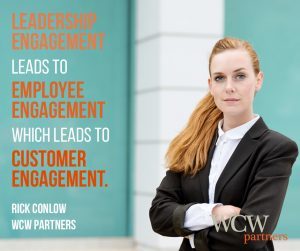
In summary, to prevent a customer experience scam a company needs continual innovation through leadership engagement. This accelerates employee engagement. As a result, the customer engagement is brilliant. It takes hard work and steadfast commitment. Hence, most companies and leaders don’t buy it. The proof is in the pudding and in their results. They are really scamming themselves.
Early in my career, I worked for a corporation that owned six companies and where the President was 100% committed service excellence. I was VP of Customer Satisfaction and Training. He said, “If the numbers go up, you have a job. If they go down, you are out of here.” Yet, he gave me the support I needed. We were the worst in the beginning and ended up the best. We won numerous awards. Certainly, without his support it wouldn’t have worked. Sometimes you need a push to back you up when confronted with organizational obstacles, difficult managers, and budget challenges.
In conclusion, J.D. Power & Associates declares, “Delivering extraordinary customer experiences is becoming more and more important. We know from the data that customers will pay for it.”
 Do you need better employee engagement? Check out this complimentary eBook: How to Motivate-No-Inspire Employees.
Want to lead the pack and avoid a customer experience scam? See this eBook, The Customer has the Power.
Want to accelerate your career? Check out one our books in the Superstar Book Series .
The post The Great Customer Experience Scam appeared first on Rick Conlow.


November 3, 2018
Where is the Honor? We the People, NOT We the Party
E pluribus unum is a Latin phrase meaning “out of many, one.” Most noteworthy, it implies people of honor working together for the common good. It is what the founding fathers hoped for. Congress adopted it as the motto of the United States with an act in 1782.
However, the leadership of the US government is increasingly polarized. Gridlock rules their efforts. Partisan politics drives polarization. Nothing divides people like politics. It’s sad that the divide is growing greater. Money, power, and influence are the goals. As a result, honor and service don’t appear on many platforms.
Political Leadership Gets Nastier with No Honor
[image error]
Unfortunately for the country, party attacks on one another are increasingly negative, according the Pew Research. Some recent political ads are calling their opponents terrorists. There is no honor in political attacks like that. Politicians are perceiving their adversaries as enemies. Each side claims their brand of patriotism.
So, the legislative branch of the government has the nickname of the “do nothing Congress”. A democracy requires bi-partisan cooperation to get important things done. That’s not happening. As a result, only 15% of Americans feel Congress is doing a decent job.
Does any of this sounds like E pluribus unum to you?
In addition, use of social media by the parties provokes the situation. A mass volume of tweets and posts ignite discord. This volume grows fast as people share their views. As a result, the country ends up with severe ranges in emotion. This divides people even more. It tends to get nasty and personal. Consequently, people’s anger explodes. They become more loyal in their points of view. Political leaders with no honor feed on this like a pack of coyotes on a wounded deer. Does this inspire us to work together?
The US civil war showed what chaotic division brings. It usually ends up with hatred, intolerance, violence, and even war.
A Call for Leadership with Honor
Instead, give me authentic leaders. We need leaders of honor that speak of and act on unity. Above all, honorable leaders seek what is good for the country. They don’t just focus on their party or pocketbook. Certainly, politicians need take a serious personal inventory. We must maximize,“we, the people”. We must minimize,“we, the party”. An example of bad leadership is being set for the next generation.
[image error]
Finally, read these words by Dr. Martin Luther King Jr. “May I stress the need for courageous, intelligent and dedicated leadership. Leaders of sound integrity. Leaders not in love with publicity but in love with justice. Leaders not in love with money, but in love with humanity. Leaders who can subject their particular egos to the greatness of the cause.”
[image error]
Do you want a proven plan for career success? Want to be known for your honor? If so, check out this training today: RCI Online Leadership Training.
Or, do you need more personal career support? See this: RCI Coaching Plans.
The post Where is the Honor? We the People, NOT We the Party appeared first on Rick Conlow.
October 28, 2018
The Lost Art of Servant Leadership
Management guru Peter Drucker wrote over twenty years ago, “We have a dearth of leadership”. He prophesied the lost art of servant leadership that we face today.

Have you ever lost something very valuable? You looked everywhere but just could not find it. Do you remember how frustrating, annoying and disappointing it was? Employees of companies and citizens of countries have these same negative feelings. Yet, they are amplified by bad bosses and seemingly leaderless organizations. Study after study demonstrates how most managers fail. Others proclaim the lack of trust at record lows, worldwide.
Why is Servant Leadership such a Lost Art?
Think about it. There are more management and leadership books, training, and coaches than ever before. However, failure is increasing, not decreasing. Here are key contributors to that:
Part of it is an increasinglycomplex, technology dependent and inter-connected globe. As a result, most organizations are disrupted and turned upside down. Another one was in headlines today with bankruptcy. Chaos often reigns with constant change processes in place, with everything a priority. And, the lure of more money, power and influence is greater than ever. This leads to avarice and corruption at unprecedented levels.
Communication is schizophrenic in companies. It moves at light speed because of the internet of things. However, it stalls like a car out of gas because people always seem too busy to talk to one another. So they use email, texts or mobile apps to engage others instead. It’s not the same as interacting face to face and never will be. Leaders talk about the importance of company communication. But, they are seldom heard or available except when there are problems. James Humes said, “The art of communication is the language of leadership”. Without authentic communication servant leadership is impossible.
Employees are gaining more control in companies. It’s an employee-hiring market. Jobs are more plentiful so employees go where they find better pay, benefits and working conditions. They don’t want to put up with the stupid or dishonest things some companies or managers do. Disengagement is so high in most places, can you blame them?
Finally, management jobs are tougher. There is more to do, fewer people to do it. The data analytics of many roles is a full time effort. Competition is greater and relentless.
As a result of the above, managers are overloaded with stress. So it isn’t easy, of course. It never has been.
The coup de grâce for Servant Leadership

Edelman’s Trust Barometer declares a polarization of trust in business, government, non-government organizations and the media globally. Trust has crashed in the US. Without trust, employees (and customers alike) won’t be loyal. They are suspicious of their company’s intention. As a result, they have little confidence they will treat them well or fairly.
What Creates the lack of Trust?
Managers at all levels in organizations lose trust because of:
asking for feedback but not listening or using the ideas,
not providing the tools or needed training or coaching or support,
poor communication and working relationships,
no follow-through on promises or decisions,
mostly criticizing not praising the team or company
lies and false truths,
not admitting mistakes or taking responsibility
lack of loyalty by managers,
and, so the list goes on.
Since managers have the greatest impact on employee performance the consequence is that productivity and results suffer. It isn’t surprising, is it?
Pulling it all Together

The bottom-line here is too many managers lack of integrity, character and ethics. These are the bedrock qualities for servant leadership. This is a death knell to working relationships. In addition, the four circumstances above also have created a poisonous environment where managers take shortcuts to survive. They compromise their values and ethics. For example, this was true of the scandals at Wells Fargo and Volkswagen. The end result is that leadership distrust is even more rampant and credibility fleeting.
Most experts define leadership as influence. I don’t because so much of the influence today is negative and self-serving. That’s not leadership. I believe leadership requires positive influence in a service role. Servant Leadership is about positive possibilities. It is honest, inspiring, daring, caring, courageous and visionary. Take away these characteristics and you have mediocrity, demagoguery, tyranny, despotism, and anarchy. There are servant leaders around, just not enough of them.
For the actual art of servant leadership to be practiced, the well-being of people have to be more important to those in authority than profit, personal promotion, or gain. Dr. Martin Luther King Jr. said it brilliantly, didn’t he!
 Do you want to dramatically change your management career for the better? Go here: RCI Online Leadership Training: 4 Options for Success.
Or, do you want a good read with practical management advice? If so, check out Rick’s Superstar Leadership book.
The post The Lost Art of Servant Leadership appeared first on Rick Conlow.
October 7, 2018
3 Telltale Signs of Leadership Intent
Recently these three situations came up in a couple of organizations. Each can define leadership intent-honest or dishonest. It reminded me that little things can make a big difference. At first I thought no big deal. However, after reviewing what happened and getting feedback from a few others a leadership lesson began to formulate in my mind. Businessman Harold Geneen said, “Leadership is practiced not so much in words as in attitude and in actions.”
Defining Leadership Intent
Leaders may aim to create trust but their intentions tell a different story. As a result distrust destroys their credibility and team efforts. Here are three example situations that help define their real objectives.
During an interview does the leader ask questions mostly about what talents you bring to their organization so it succeeds? Or, are the questions about how the company can help you succeed in your career at their company?

Only a daily basis does the leader talk more about the company’s success or his or her personal ambitions. And, takes credit for any good news and gives blame for bad news. Or, does the leader give the team credit for victories or progress? In other words, do they say or act on, I or We most of the time?
Does the leader treat relationships (co-workers, team members, customers) with respect and care? Or, does the leader make regular comments (smothered with niceties) that belittle, degrade, criticize or are sarcastic about other people?
Leadership Intent: Distrusted or Trusted
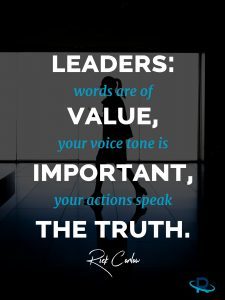 Over time the reality of leadership intent shows itself based on the words, tone of approach or voice, and the behavior of the leader. Would you agree with that? Dr. Albert Mehrabian pioneered discussion about the about what makes the biggest impact on a person’s communication. He found three areas determine the negative or positive impact of communication.
Words-this is what we say!
Voice tone-this how we say it!
Behavior-this what we do about what we say!
Certainly, all three matter but not the same amount. What percent do you think words make up? Voice tone? Behavior? Words equal 7% of our communication. Voice tone equals 38%. Consequently, that leaves 55% of our communication is what we do about we say. Therefore, our behavior, this includes body language, rules the communication result of leadership intent. It creates or breaks trust. If these are out of sync people distrust is exposed. Consequently, conflict rises regularly, animosity grows and problems fester. If they are aligned trust reigns, and team performance jumps to higher levels.
Have you seen these? Any other situations come to mind? Let me know your comments.
Do you want a proven game-plan for your management career success? If so, check out Rick’s Superstar Leadership book
Overcome your career obstacles and past management mistakes, go here to transform into a leader: Rick Conlow Online Leadership Training.
See this post, Learn the First Rule of Leadership Success.
The post 3 Telltale Signs of Leadership Intent appeared first on Rick Conlow.
September 20, 2018
Moments Magnificence by Customer Service Superstars
Customer Service Superstars are friendly and helpful when delivering the customer experience. Listening is their highest form of courtesy. The bottom-line to excellent customer service is the quality of the customer interactions in person, on the phone or online. This requires you treat customers with respect, dignity and grace. A negative attitude, poor systems or use of systems, and a lack of courtesy drives customers away.
 Duh? This emphasis is for all the companies and people that deliver horrible customer service and probably don’t think that they do. Doesn’t this only makes sense? Are you hearing this? Why is this so foreign to so many? Stick it out and consider two approaches for engaging customers: egocentric and altruistic customer service.
An Egocentric Customer Experience
First of all, there is a self-centered approach to relating to customers or other people for that matter. This means your focus is on you not others. What’s most important is what’s happening to you and how it affects you and why you do or don’t like it. If it doesn’t go your way, you get irritated, frustrated and angry and let people know. Yes, this is the wrong approach for customer service. It comes from a lack of maturity or a non-caring attitude. Not caring is a disease that has to be cured. Many companies and employees end up here. Companies who take this approach believe in profit over people. Tons of research says that higher profits come from investing in helping employees succeed. Then, they in turn provide better customer service. This is so unfortunate and unnecessary.
An Altruistic Customer Experience
In contrast is the other-centered approach. Your goal here is to genuinely assist everybody. For this reason it includes customers and your colleagues too. A successful businessman Bob Conklin said, ‘Help other people get what they want and you will get what you want.” Notice how he said this. First you help, then you get. This is a caring approach when done with integrity. In other words, you value how others are affected by your actions. You wish them well and try to do the right thing for them. If they have a problem or complaint, even though it wasn’t your fault, you go out of your way to support them. This is a prerequisite for Customer Service Superstars. They deliver because they want to, it’s an inherent value. As a result, fewer companies and employees end up here.
Customer Service Superstars Key Moments of Truth
You can organize your customer engagement into four key areas. Here are the definitions:
Moments of Truth are anything you or the company does that directly or indirectly affects a customer’s perception of you (remember, you are the company you work for) or your organization. They make up a customer’s journey or cycle. These moments of truth can become misery, mediocrity or magnificence for the customer.
Moments of Misery show up when you do less than what customers expect. This is poor service.
Moments of Mediocrity are created when you only meet a customers expectations. This is average service.
Moments of Magnificence- are designed as you exceed the customers expectations. This is exceptional service.
Moments of Magnificence for Customer Service Superstars
 A Customer Service Superstar’s goal is to treat customers much better than they expect. They do this by self-managing each moment of truth so the customer experiences exceptional service. Therefore, to learn what to do, think of what impresses you as a customer? Furthermore, think of what you wish people in customer service roles would do much better? In addition, be open to continuing education to become more effective.
Hence, all awesome service begins with courtesy and friendliness. Next, the service person needs to be engaging and positive. So, this could include asking a few questions and listening to what the customer wants or needs. Most noteworthy, the Customer Service Superstar really begins to solve the customer’s problem. This may include defining the product or service, offering options, and handling a problem. Or, just taking an order. Also, Customer Service Superstars keep learning about dealing with people. They read up on product info. They learn how to better help the customer use the company’s online or web based resources. An excellent conclusion to serving the customer includes a summary, positive final words and a thank you. Finally, Customer Service Superstars always follow-up to add that extra value to the customer experience.
Pulling it all Together
When a person (or a company) does all of this well during the customer experience, customers are extremely satisfied, if not supremely loyal. As a result, it’s magnificent but rarely found today. However, it doesn’t have to be. It’s a science because certain steps must be followed. It’s also an art because you can add your personality and flair to it while pleasing each customer. This is a differentiation. As a result, it stands out when done uniquely geared to each customer’s goal. Certainly, this is the essence of Customer Service Superstars. Even more, almost all employees can and will serve customers this way. Yet, their managers have to learn to lead more effectively.
 Do you want to achieve your career goals and reach more success? If so, check out this complimentary guide called GoalPower.
Do you want to fast track your customer service success? If you do, check out our book, Superstar Customer Service.
Does your company need help with improving customer service? See this, The Customer has the Power, and go here, RCI CX Consulting.
The post Moments Magnificence by Customer Service Superstars appeared first on Rick Conlow.
September 4, 2018
Horrible Customer Service Reigns, Have You Noticed?
Horrible customer service is the norm today. It reigns! Have you experienced any similar scenarios recently like the ones below? I have all within the last month. Can you relate to these? I know things like this have happened before to me. I thought, who am I to expect better service? Then, I thought, really, with all of the new technologies, where is excellent customer service?
Horrible Customer Service Examples this Month
No follow-up: The customer service reps says, “I would never do anything to imply that we don’t want to help you. I will check it out and call you back.” They never call back. This happened before with these guys. I am changing service.
Automated phone systems: I call a business and I get, “Thank you for calling. Press the number related to your problem (after six that don’t apply. Press 7 for all other issues.” I do it, like an idiot and then I get another six options. I say, “Get me a real person,” I get your “answer doesn’t apply.” So, I start all over….
Poorly trained reps: The third customer service rep I talked to says, “Can you tell me about your situation?” So for the third time I tell them, then I get transferred again. I really believe they wanted me to hang up, so they didn’t have to solve the problem because they had no solution.
Bogus contracts: I questions my bill with a service provider, and they said, when I adjusted my service a number of months ago, I agreed to another two years. And, that I will pay a penalty for early termination. I said, “I didn’t agree to that. I don’t have it in writing.” I ask for a manager. The supervisor proceeds to defend their team and say I didn’t understand by repeating the same things. I am thinking, who is the customer here?
Poor quality: I ordered a books online and all the covers came damaged. I thought, how could this happen, where’s the quality control? They do eventually replace everything. But, the damage is done so to speak.
Poor phone skills: I call a business and the phone rings forever., no one answers…not calling them anymore.
Online miscues: I fill out an a form online for an estimate and I get a response three days later. I already bought another service.
Horrible healthcare: The worst lately has been healthcare providers. All of them. My wife’s parents recently suffered some health issues, and have gone to live in an assisted living facility. The whole health system has been a nightmare. My wife has had to “coach” healthcare providers into delivering better
 service so her parents could be helped..really! Few know how to do it on their own.
The Expectation of Hope
I came across these two statements this week, during my dismay and anger over all of the poor service I experienced. It reminded me that I can do better at what I do. It gave me hope others may feel the same way about abolishing horrible customer service. Check these out:
“A customer is the most important visitor on our premises. He is not dependent on us. We are dependent on him. He is not an interruption of our work. He is the purpose of it. He is not an outsider of our business. He is part of it. We are not doing him a favour by serving him. He is doing us a favour by giving us the opportunity to do so.” (Some say Gandhi said this, although there doesn’t seem to be confirming evidence,)
“It is, of course, not possible to state with any practical exactitude what the customer is. But there are several common denominators to be found when we consider the customer in terms of what he is not. These things, I think, are fundamental to intelligent customer relationship and, it may be added, most of them apply pretty well to the vast majority of prospects as well.
The customer is not dependent upon us—we are dependent upon him.
The customer is not an interruption of our work—he is the purpose of it.
The customer is not a rank outsider to our business—he is a part of it.
The customer is not a statistic—he is a flesh-and-blood human being completely equipped with biases, prejudices, emotions, pulse, blood chemistry and possibly a deficiency of certain vitamins.
The customer is not someone to argue with or match wits against—he is a person who brings us his wants. If we have sufficient imagination we will endeavor to handle them profitably to him and to ourselves. (“Printers’ Ink: A Journal for Advertisers”, 1941. An interview with Kenneth B. Elliott, Vice President in Charge of Sales for The Studebaker Corporation.) These are great words but the company ended up having financial problems, was merged with others and didn’t make it. And, that’s the dilemma and opportunity.
After all, with the horrible customer service examples above, I did have one stellar situation, where the company and agent excelled while over-promising and over-delivering. They acted like what they did was no big deal. I like that approach, don’t you? What if…?
 By the way, does your company have horrible customer service? How about average service? Either way, download this complimentary eBook guide: The Customer has the Power.
And, do you want to enhance your leadership skills to drive customer-centered behaviors in employees? If so, check out this eBook, The Great Customer Experience Scam.
The post Horrible Customer Service Reigns, Have You Noticed? appeared first on Rick Conlow.
August 21, 2018
21 Great Leadership Coaching Quotes
Read these insightful and powerful coaching quotes. Each is especially selected to identify steps to great coaching, while sharing words of wisdom. Most organizations and managers talk about coaching people but fail in the practice of it. Be one of the “real” coaches who establishes trust, builds people up, and achieves significant sustainable positive results.
 Great Coaching Quotes to Remember and Apply
“Coaching…which can help managers talk with their subordinates about their developmental needs….absolutely affects the relationship.” Time Magazine
“Coaching is releasing a person’s potential to maximize their own performance. It is helping them to learn rather than teaching them.” Unknown
“I believe that wherever there is mastery, coaching is occurring and whenever coaching is done, mastery will be the outcome.” Andrea J. Lee
“Who exactly seeks out a coach? Winners.” Chicago Tribune
“The manager needs to have a coaching mindset, looking for opportunities to help others learn…. The coach and coachee relationship must be one that rests on a foundation of trust that can allow the coaching dialogue to take place.” James M. Hunt
 “Everything in coaching hinges on listening because what we are listening for affects where we are speaking from and unfolds how we are being with and for each other.” Marilyn Atkinson & Rae Chois,
“Probably my best quality as a coach is I ask a lot of questions and let the person come up with the answers.” Phil Dixon
“A coach is someone who tells you what you don’t want to hear, who has to see what you don’t want to see, so you can be who you always known you could be.” Tom Landry
“Coaching is the universal language of change and learning.” CNN
“A manager is a title, it does not guarantee success. Coaching is an action, not a title and actions will result in successes!” Catherine Pulsifer
“Coaching is a profession of love. You can’t coach people unless you love them.” Eddie Robison
“Everyone needs a coach, whether it’s a top level executive, a graduate student, a homemaker, a homeless person or the President of the United States.” Anthony Robbins
“The best coaches really care about people. They have a sincere interest in people.” Byron & Catherine Pulsifer”
“The goal of coaching is good management: to make the most of an organization’s valuable resources.” Harvard Business Review
“What I learned is that if a coach lacks sufficient persistence, he will be unable to complete the critical task of finding growth opportunities out of adversity.” Seth Davis
“I realized that life had much more to offer than I had anticipated and decided to help others in their human journey. Thus, I become a trainer and a coach with passion for transformation.” Ann Betz
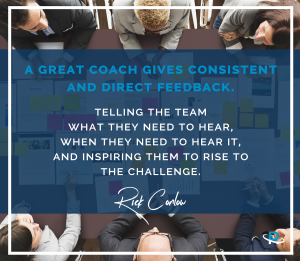 “Coaching is a unique process of human development, one that works to change a person’s life for the better and help him or her achieve a number of specific objectives.” Ian Berry
“I absolutely believe that people, unless coached, never reach their maximum potential.” Bob Nardelli
“Coaches and the people they coach know that for the future to be different, we need to change the way we do things in the present…. More often, changes involve shifts in attitudes, thinking, perceptions, and behavior.” Gary Collins
“A coach can play any number of roles-mentor, consultant, motivator, but one things she is not is a therapist. Coaching deals with the “how”: how you move from where you are and make change. It’s action oriented and concerned with the present and future not the past.” Shape Magazine
“Executives and HR managers know coaching is the most potent tool for inducing positive personal change, ensuring better than average odds of success and making the change stick for the long term.” The Ivy Business Journal
Summing It All Up
 You know it takes more than a few coaching quotes to create an excellent coach. Keep in mind the research shows that coaching works. Think about it, manager, you have to diligently work on your performance, just like the employees you want to do better. Check out the resources below to help. From this day forward become a student of the game. Ask yourself, what can I learn from these great coaching quotes? Get a coach yourself. Practice long and apply yourself. It will help transform you from manager to leader, dramatically increase your team’s results, and accelerate your career. Coaching is the secret sauce to leadership success.
Looking for some quick positive coaching tips? Watch this: The Art and Science of Exemplary Coaching
Want to ramp up your team’s results? Take this self-study coaching course: Superstar Coaching Self-Study Guide.
Do you desire to excel as a manager? Go here and get a coach for yourself: RCI Breakthrough Coaching for Managers.
The post 21 Great Leadership Coaching Quotes appeared first on Rick Conlow.
August 9, 2018
One Tactic that Immediately Jump-Starts Your Team’s Results
What do you do if your team’s results are slipping or down right poor? Check out these examples.
One by one, a new client’s team leaders covertly came to talk to me about their manager. The consistent message: “Get him out of the office and on the floor, and have him stop sending inflammatory emails and texts!”
 In another company, employees and supervisors said, “Enough with the bombastic meetings! They go on forever and aren’t helpful. Have her get in the field and see what’s really happening.”
The coup de gras was at one company where everyone said, “Where is Bill anyway? We can never get hold of him when we need him. He’s always tied up in a meeting or doing something else. Nothing ever gets done.”
In each of these cases and others like them, the teams were in despair, frustrated and floundering in terms of performance. Their so-called leader was either hammering them through critical text/email communication, negative meetings or was conspicuously absent when decisions were needed. Do any of these situations sound familiar?
Lessons from a One-Armed Baseball Catcher
 The position of baseball catcher is highly skilled. I know because I played it in high school and college. It takes a lot of work. Luke Terry is a one-armed catcher. What?! Yes, he had an arm amputated at nineteen months old because he became infected with the E.coli bacteria. As he grew up he wanted to play baseball, as a catcher. With hard work, help from family, and determination, he learned to do it extremely well. He’s a phenomenon! He reminds us that we all have tremendous latent potential regardless of any difficult circumstances.
Poor employee performance and engagement is most often not because of lackadaisical, unskilled people. It’s the result of poor and aloof leadership. With enlightened support, just like Luke Terry, employees can exceed almost any goal.
How to Jump-Start Your Team’s Results
Regardless of the reason that team’s results are poor or your role in it, you can change the dynamics immediately by leading by example. In other words:
Stop the bombardment with texts and emails, and get out there with your team! Forget the marathon meetings. Managers, you lose people in the first 10-15 minutes anyway. Sorry if this is news to you! They don’t hear your diatribes even if you have some good ideas. Not being available or involved is a death knell to excellence employee engagement. Those actions are leading by edict or abstentia. It creates resentment that destroys productivity and people doing their best.
Start showing up early or staying later and get involved. Put that other “stuff” on hold for a while and demonstrate teamwork by being a member of the team. So, get in the warehouse and load the trucks, talk to the customers, help sell something, handle a bundle of customer calls, and teach or coach with positivity. While you are doing this, get to know your team better, be the cheerleader, listen well and encourage your team. Learn about what’s working or what isn’t. Make positive changes, and keep it up.
Pulling It All Together
 It’s been said that leadership is influence. I disagree. The above managers had influence, but it’s negative and inhibits good efforts. That’s not leading. I believe leadership is positive influence through leading by example. It can quickly jump-start your team’s performance. I have seen managers learn and apply it to achieve superb results. So, go for it today, and make the effort to be better tomorrow. You will tap the true potential of your employees and your career growth opportunities.
Here you go–assess your leading by example skills now. It’s a complimentary Leading by Example assessment.
Or do you want a proven game plan for career success? If so, check out Rick’s Superstar Leadership book.
The post One Tactic that Immediately Jump-Starts Your Team’s Results appeared first on Rick Conlow.
August 4, 2018
7 Courageous Ways to Deal with a Horrible Boss
A horrible boss doesn’t just show up in the movies. How many times have you heard someone complain about a bad boss? Almost everyone has worked with one at some time in their careers. It’s an awful situation to be in, if you have one. Type in “bad boss” on Google and you receive millions of hits.
Not surprisingly, bad boss behavior is really harmful. The National Institute for Occupational Safety and Health says 77% of employees receive significant stress symptoms from a horrible boss. Research published in the Journal of Business and Psychology shows that negative leadership behavior produces lower employee morale and emotional distress.
How do you handle a terrible boss? First, consider that you can’t change the person. For whatever reason, your boss is unable to lead people well. Yet, the reality is that many companies keep bad bosses if they achieve their numbers or have personal relationships with key clients or executives. Second, you can only control and change how you respond. If you need or want to keep the job, don’t allow yourself to be a victim or whine about the situation. While it isn’t necessarily easy to tolerate what’s happening, here are seven courageous and proven methods you can use to train that horrible boss or minimize your suffering.
Your choices determine your destiny not your horrible boss

1. Control yourself
You spend way too much time at work to let a horrible boss ruin your career or family life. You start to handle a bad boss best by working on yourself first. Center yourself by doing an honest self-inventory about your strengths and areas to improve. Are you sure it isn’t you that has a problem? If it’s the boss, find some personal ways to let off steam: relaxation, exercise, talking with others or taking strategic timeouts. Take the high road, treat your boss with respect, learn to do a great job or at least a better job. Why does this matter? If you do your job above reproach, you lessen your bad boss’s impact on your work performance, and you will feel better about yourself.
2. Clarify priorities
Ask your boss for a meeting to clarify his or her expectations. Take notes. Create a plan, with goals and action steps for your responsibilities. Then present it and ask for input. Listen and make appropriate adjustments. Why will this help? You are minimizing misunderstandings about what has to be done and why. The incompetent boss will often be delighted with your initiative, sparing them that necessity. Nearly all bosses will appreciate this approach because it saves them time and effort.
3. Communicate upward
Most bad bosses, especially the tyrants, hate surprises. Regularly let your boss know what’s going on: email, meetings, casual update. One of my coaching clients had a obsessive data-driven manager who sent long emails at all hours. Other employees became overwhelmed and started complaining to one another. This caused them serious backlash from him. My client managed his boss with good follow-up on key priorities. It provided him lots of space his co-workers never received.
However, don’t overdo the communication; learn the timing and process that seems to work best for your boss. By doing this you will also learn other information that will help you help your boss look good. Why is this helpful? This isn’t “brown nosing” here. You are specifically checking in to keep your boss off your back and to make a tough situation better for you. A common mistake in dealing with bad bosses is avoiding or retreating from them. This just adds to your trouble.
4. Confront strategically
The book, Leadership Secrets of Attila the Hun, by Wess Roberts, provides a clue for a dealing with a horrible leader. Be principled, but don’t be stupid. If you fight a bad boss on everything you most likely will lose. One manager I worked with took no gruff from anyone and had some serious arguments with his no-nonsense manager. While my friend made his points, he also lost his job when he could ill afford to do so. Pick your fights and confront positively, with key data and plans to support your point of view. Document your concerns when communicating with a bad boss, and keep a copy. How does this help? You will gain the boss’s respect, you maintain your integrity, and you have a record.
5. Consult others
Discreetly talk to other people you work with. How do they experience your boss? Is it just you? What’s working for them? What isn’t working? How do others handle situations like yours? Do this to broaden your perspective and maybe pick up a new idea or two.
You may consider talking to your boss’s boss. Research the status of their relationship. What kind of leader is this leader? Is she like your boss or is the person approachable? Bring your documentation when meeting with her and refer to it, if it seems like she is empathetic to you. Going over your manager’s head can come back to haunt you. Do this thoughtfully and carefully.
6. Contact HR
Use this approach if nothing seems to get better. You have to gauge the type of Human Resource team you have. Are they compliance driven or are they employee advocates? If they are compliance driven they will often take the boss’ side, which doesn’t help you. And, horrible bosses tend to get resentful. Most often it ends badly for employees. If they are employee advocates you may gain some helpful counsel while they investigate and keep your comments anonymous. Some organizations have employee hotlines coordinated through HR. Research it, before you use it.
7. Cut Yourself Loose

You have to determine if can you live in the situation your boss creates. If you can, use these tips to help. Yet, if you can’t keep working with your boss, you can always quit, but get another job first. Remember, no one can stop you from dreaming and going for a fresh start. It is your choice and opportunity. Of course, you could try for a job at Amazon, who has a policy to pay unhappy employees to leave.
By the way, do you want to learn proven approaches to becoming a “good boss” and increasing employee engagement? If so, I suggest you check out this complimentary eBook: How to Motivate-No-Inspire Employees: 10 Keys to Employee Engagement.
Or, are you going through lots of change at work and want to help yourself or others cope with it better? Then, check out this complimentary eBook: Changing Change Management.
The post 7 Courageous Ways to Deal with a Horrible Boss appeared first on Rick Conlow.
July 27, 2018
The Most Glaring Weakness of Terrible Leaders Exposed
 While there are other despicable of traits of terrible leaders, the biggest complaint is that they are consistent purveyors of bad news just like the politicians and the media. They are downright negative most of the time. The words, language and intention that spews from their mouths are most often offensive.
Terrible Leaders Equal Terrible Results
Negative politics has become an art and a weapon. While it’s always been around, with social media it moves at the speed of light reaching more people faster. Research suggests that negatives ads are more memorable, change people’s minds and can increase voter turnout. It is well know that negative headlines get much more attention for the media. However, it doesn’t work the same way for terrible leaders.
Research shows bad leaders or bosses increase employee turnover and stress, and decrease engagement and performance. They drive people apart, they don’t bring them together through a compelling vision or consensus. With employee disengagement worldwide at 87%, there are a lot of managers out out there not leading well. Here are examples of their awful behavior that makes them stick out like a pimple on your nose.
Belittling or criticizing employees or co-workers or others
Foul language
Sarcasm
Trite platitudes
Insults
Instigator of conflict
Focus on weaknesses or mistakes
Temper tantrums
Blaming others for their problems
Lies or half truths
Managers or those in authority that treat employees abusively, and disrespectfully tend not to be transparent, supportive and helpful to them. Their main concern it to look out for number one.
 I believe leadership is about positive relationships, influence and trust. The main rule for enlightened leadership is that it is not about you. According to research good communication is the main element needed for strong partnerships. Poor communication is the top killer for employee engagement. It creates dejection, conflict, fear, frustration, ambiguity and resentment. All of which eventually produces poorer performance of even the best employees. A manager that fosters negativism quickly destroys his or her credibility. Even with the title or position they can never be a genuine leader. Of course, you know that or will know that if you work for a bad boss.
Pulling It All Together
If you are a manager and fit the description above-get help fast! (see the resources below or find ohters)
If you are an employee working for a bad boss, may the force be with you. (see this post 6 Proven Ways to Deal with a Bad Boss) Really…look for better job and manager. If you are looking for a job check out the GlassDoor or Indeed ratings for the company, and ask these questions in the interview whether or not the potential supervisor is involved:
How does the person rate in terms of employee engagement?
What is the employee turnover rate for the team?
What are the strengths and weaknesses of your potential supervisor based on the most recent 360 Leadership Assessment?
What leadership training has the person attended in the last year?
What is it like to be supervised by this person?
Unfortunately terrible bosses are like dinosaurs that still stalk the halls of corporate America if they make a profit, own the company, are elected for some reason, the company is a mess, good employees make up for their incompetence, or have relationships with key people. However bad bosses, in my opinion they aren’t leaders, can’t hide forever. What they say and do exposes their ineptness. They are like a cavity in a tooth. Left alone long enough, it will do some painful damage that can’t be ignored.
 Do you want to dramatically change your management career for the better? Go here: RCI Online Leadership Training: 4 Options for Success.
Or, do you want a good read with practical management advice? If so, check out Rick’s Superstar Leadership book.
The post The Most Glaring Weakness of Terrible Leaders Exposed appeared first on Rick Conlow.