Rick Conlow's Blog, page 19
July 18, 2018
Learn the First Rule for Leadership Success
In the movie, A Bug’s Life, Hopper the grasshopper says, “The first rule of leadership is everything is your fault.” That certainly can seem to be the way it is, but that’s more a potential outcome than a rule. There are a couple of other ways out there to define the first rule for leadership success:
Show up
Just be yourself
Both of these relate to good advice. You can’t lead your team if you aren’t involved. Leading from “on high”, through edicts, emails, phone conferences or texts doesn’t cut it today. Never really has. Employees experience way too much of that loftiness and it leads to their disengagement. It’s also hard trying to be something you aren’t. Plus, it isn’t authentic.
The Problem with Leadership
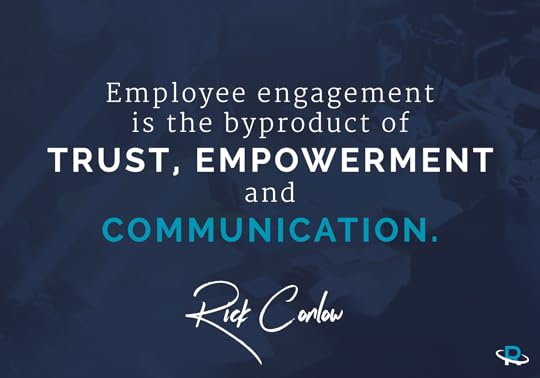
In a quick study of what’s going on in organizations today there are two powerful clues to the first rule of leadership. Here’s the evidence:
High leadership distrust, 63% of employees don’t trust executives.
Low employee engagement, 87% disengagement worldwide.
Lower employee engagement leads to significantly poorer business results. The top-down approach to leadership never really worked. That’s about holding on to power, not releasing the potential of people. Trust is broken at unprecedented levels in all types of organizations, especially in business and government.
The Antithesis of the First Rule for Leadership
Why don’t people trust business leaders?
Tony Hayward former CEO of BP declared the antithesis of the first rule of Leadership. In the midst of the tragic Deepwater Horizon oil spill of 2010, the worst spill in US history, while dealing with it Hayward said, “…I would like my life back.” He also commented to BP executives, “What did we do to deserve this?!”. He seemed more concerned about himself and the company, like so many other executives and managers, than he was about the employees who died, the environmental disaster and economic blow endured by the employees and their communities.
Employees are wary of leaders that:
are aloof and arrogant
are selfish and seemingly unconcerned about their success
are unethical and lack integrity
treat them poorly in terms of respect, compassion, kindness
don’t listen to their concerns
fail to deal with problems in a fair or timely manner
The First Rule for Leadership Success

The above traits fan the flames of employee fears, dissatisfaction and discontentment which decreases employee performances across the board. The first rule of leadership success for any supervisor, manager and executive is that “It isn’t about you.” Rare are the leaders who make the time to understand, listen, empathize, and act on the needs or issues of their teams and other constituents. These leaders know that when their team wins, they win. So they empower the team, clear away obstacles, encourage and train them, and support them in any positive way they can. They create trust.

Donald Rumsfeld, former US Defense Secretary, once said, “Reports that say that something hasn’t happened are always interesting to me, because as we know, there are known knowns; there are things we know we know. We also know there are known unknowns; that is to say we know there are some things we do not know. But there are also unknown unknowns – the ones we don’t know we don’t know.” This governmentese talk alienates others and gives a classic example of managers who are aloof to the needs of others and don’t know or care about the first rule of leadership.
In contrast Nelson Mandela said, “A good leader can engage in a debate frankly and thoroughly, knowing that at the end he and the other side must be closer, and thus emerge stronger. You don’t have that idea when you are arrogant, superficial, and uninformed.” And that’s the big problem isn’t it?
Do you want a proven game-plan for your management career success? If so, check out Rick’s Superstar Leadership book
 Overcome your career obstacles and past management mistakes, go here to transform into a leader: Rick Conlow Online Leadership Training.
The post Learn the First Rule for Leadership Success appeared first on Rick Conlow.


July 8, 2018
Money Isn’t the Only Thing that Motivates Employees
Here’s a question I received from a manager. What motivates employees to produce better results when I do not have options of offering them more money?
You might be surprised to learn that money isn’t all that motivates employees. In fact, it’s often not near the top of the list of motivators.
Does Money Motivate?
 To start employees don’t work for free so yes money is important. However, for most people, studies show that money isn’t the biggest motivator as long as the pay is fair. Your employees may be accustomed to having performance reviews that result in salary increases. or maybe some level of bonus or profit sharing. Unfortunately, most salary increases year over year are averaging 3.2%. The cost of living is 2.2% so the increase is really 1%. Worst yet, less than 10% of employees have access to year-end bonuses or profit sharing through their company. Not much to get excited about. Except for sales jobs or executives, significant pay increases are not the norm. So how can money be the biggest motivator? An employee who wants more money either has to get promoted or more educated to qualify for a higher paying job. Or, find a company or an entrepreneurial opportunity that promises more dollars.
More important motivators include a goals, passion, progress, achievement, pride, camaraderie, sense of belonging and learning. These fit the research by Frederick Herzberg summarized in his article, How to Motivate People, one more time. He adds the one more time because too many managers aren’t paying attention and get caught into trying to bribe employees with incentives or pay opportunities that aren’t really available.
Performance Management that Matters and Motivates
Meeting with employees regularly one on one can be a huge motivator. When this discussion is a dialogue not a monologue a lot happens that strengthens a trusting relationship. Heaven knows leadership worldwide is weak in the trust factor. In this one on one the conversation flows to job duties, priorities, how things are going, what’s working well, what isn’t working well, and ideas for improvement. A manager that listens and asks questions well empowers the employee to gain autonomy over their work, which provides a sense of engagement and contribution. This a communication process lacking in so many levels of management.
Support this effort with liberal praise and recognition, team meetings that are participative, on-going training and a decision making process that is inclusive. This is performance management that inspires intrinsic motivation that compels people to perform at high levels because they want to.
When the supervisor or manager changes his or her approaches as described the culture of the team blossoms positively. Trust develops and employees respond with better work regardless of the pay. If you want your team to be better, you have to become a better leader.
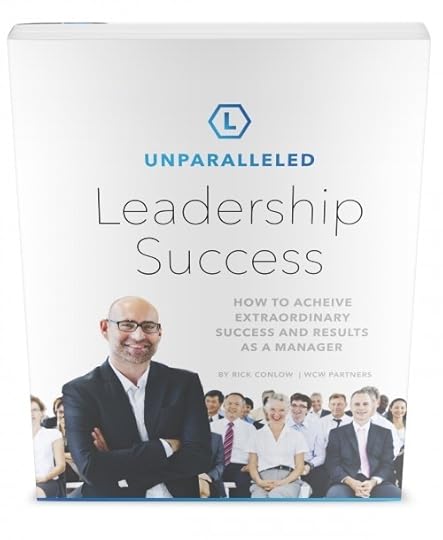 By the way, do you want to learn how to achieve extraordinary success and results as a leader? Check out my newest eBook: Unparalleled Leadership Success.
Want to accelerate your career? Check out my Superstar Leadership book or others in the Superstar Book Series.

The post Money Isn’t the Only Thing that Motivates Employees appeared first on Rick Conlow.
July 4, 2018
The Founding Fathers Compared to Today’s Congress
Here is the text of the Declaration of Independence. Yes, celebrate freedom! Maybe, all members of Congress today should read this document, and be tested on it.
 The founding fathers weren’t perfect. Did you know the founding fathers of our country were traitors to Britain of which they were citizens? They were racist, too, because most supported slavery, and genocide of Native Americans. Their attitudes towards women were unorthodox. Most supported the right to vote only for land owning white men. However, the founding fathers did unite and collaborated to resist British taxes and oppression. They took decisive action together and pledged their lives, fortunes and honor while doing so. They epitomize the model of effective leadership.
In contrast, Congress today is divisive. They malign the other party incessantly. Their apparent goal is to stay in office and not to make a positive difference. They seldom do what seems good for the country but what is good their party or pocketbook. It takes them forever to get anything done. They are out of touch with the average American. They spend way too much of the taxpayers money, and support policies that are against public opinion on most of the key issues of the day including background checks for guns, Medicare, immigration, capital gains taxes and others. Their approval rating is less than 15%, and nearly seventy percent of Americans say members of Congress should not be re-elected. They set the example for the worst in leadership.
Declaration of Independence: In Congress, July 4, 1776.
The unanimous Declaration of the thirteen united States of America, When in the Course of human events, it becomes necessary for one people to dissolve the political bands which have connected them with another, and to assume among the powers of the earth, the separate and equal station to which the Laws of Nature and of Nature’s God entitle them, a decent respect to the opinions of mankind requires that they should declare the causes which impel them to the separation.
We hold these truths to be self-evident, that all men are created equal, that they are endowed by their Creator with certain unalienable Rights, that among these are Life, Liberty and the pursuit of Happiness.–That to secure these rights, Governments are instituted among Men, deriving their just powers from the consent of the governed, –That whenever any Form of Government becomes destructive of these ends, it is the Right of the People to alter or to abolish it, and to institute new Government, laying its foundation on such principles and organizing its powers in such form, as to them shall seem most likely to effect their Safety and Happiness. Prudence, indeed, will dictate that Governments long established should not be changed for light and transient causes; and accordingly all experience hath shewn, that mankind are more disposed to suffer, while evils are sufferable, than to right themselves by abolishing the forms to which they are accustomed. But when a long train of abuses and usurpations, pursuing invariably the same Object evinces a design to reduce them under absolute Despotism, it is their right, it is their duty, to throw off such Government, and to provide new Guards for their future security.–Such has been the patient sufferance of these Colonies; and such is now the necessity which constrains them to alter their former Systems of Government. The history of the present King of Great Britain is a history of repeated injuries and usurpations, all having in direct object the establishment of an absolute Tyranny over these States. To prove this, let Facts be submitted to a candid world.
He has refused his Assent to Laws, the most wholesome and necessary for the public good.
He has forbidden his Governors to pass Laws of immediate and pressing importance, unless suspended in their operation till his Assent should be obtained; and when so suspended, he has utterly neglected to attend to them.
He has refused to pass other Laws for the accommodation of large districts of people, unless those people would relinquish the right of Representation in the Legislature, a right inestimable to them and formidable to tyrants only.
He has called together legislative bodies at places unusual, uncomfortable, and distant from the depository of their public Records, for the sole purpose of fatiguing them into compliance with his measures.
He has dissolved Representative Houses repeatedly, for opposing with manly firmness his invasions on the rights of the people.
He has refused for a long time, after such dissolutions, to cause others to be elected; whereby the Legislative powers, incapable of Annihilation, have returned to the People at large for their exercise; the State remaining in the mean time exposed to all the dangers of invasion from without, and convulsions within.
He has endeavoured to prevent the population of these States; for that purpose obstructing the Laws for Naturalization of Foreigners; refusing to pass others to encourage their migrations hither, and raising the conditions of new Appropriations of Lands.
He has obstructed the Administration of Justice, by refusing his Assent to Laws for establishing Judiciary powers.
He has made Judges dependent on his Will alone, for the tenure of their offices, and the amount and payment of their salaries.
He has erected a multitude of New Offices, and sent hither swarms of Officers to harrass our people, and eat out their substance.
He has kept among us, in times of peace, Standing Armies without the Consent of our legislatures.
He has affected to render the Military independent of and superior to the Civil power.
He has combined with others to subject us to a jurisdiction foreign to our constitution, and unacknowledged by our laws; giving his Assent to their Acts of pretended Legislation:
For Quartering large bodies of armed troops among us:
For protecting them, by a mock Trial, from punishment for any Murders which they should commit on the Inhabitants of these States:
For cutting off our Trade with all parts of the world:
For imposing Taxes on us without our Consent:
For depriving us in many cases, of the benefits of Trial by Jury:
For transporting us beyond Seas to be tried for pretended offences
For abolishing the free System of English Laws in a neighbouring Province, establishing therein an Arbitrary government, and enlarging its Boundaries so as to render it at once an example and fit instrument for introducing the same absolute rule into these Colonies:
For taking away our Charters, abolishing our most valuable Laws, and altering fundamentally the Forms of our Governments:
For suspending our own Legislatures, and declaring themselves invested with power to legislate for us in all cases whatsoever.
He has abdicated Government here, by declaring us out of his Protection and waging War against us.
He has plundered our seas, ravaged our Coasts, burnt our towns, and destroyed the lives of our people.
He is at this time transporting large Armies of foreign Mercenaries to compleat the works of death, desolation and tyranny, already begun with circumstances of Cruelty & perfidy scarcely paralleled in the most barbarous ages, and totally unworthy the Head of a civilized nation.
He has constrained our fellow Citizens taken Captive on the high Seas to bear Arms against their Country, to become the executioners of their friends and Brethren, or to fall themselves by their Hands.
He has excited domestic insurrections amongst us, and has endeavoured to bring on the inhabitants of our frontiers, the merciless Indian Savages, whose known rule of warfare, is an undistinguished destruction of all ages, sexes and conditions.
In every stage of these Oppressions We have Petitioned for Redress in the most humble terms: Our repeated Petitions have been answered only by repeated injury. A Prince whose character is thus marked by every act which may define a Tyrant, is unfit to be the ruler of a free people.
Nor have We been wanting in attentions to our Brittish brethren. We have warned them from time to time of attempts by their legislature to extend an unwarrantable jurisdiction over us. We have reminded them of the circumstances of our emigration and settlement here. We have appealed to their native justice and magnanimity, and we have conjured them by the ties of our common kindred to disavow these usurpations, which, would inevitably interrupt our connections and correspondence. They too have been deaf to the voice of justice and of consanguinity. We must, therefore, acquiesce in the necessity, which denounces our Separation, and hold them, as we hold the rest of mankind, Enemies in War, in Peace Friends.
We, therefore, the Representatives of the united States of America, in General Congress, Assembled, appealing to the Supreme Judge of the world for the rectitude of our intentions, do, in the Name, and by Authority of the good People of these Colonies, solemnly publish and declare, That these United Colonies are, and of Right ought to be Free and Independent States; that they are Absolved from all Allegiance to the British Crown, and that all political connection between them and the State of Great Britain, is and ought to be totally dissolved; and that as Free and Independent States, they have full Power to levy War, conclude Peace, contract Alliances, establish Commerce, and to do all other Acts and Things which Independent States may of right do. And for the support of this Declaration, with a firm reliance on the protection of divine Providence, we mutually pledge to each other our Lives, our Fortunes and our sacred Honor.
Congress Needs to be Reformed
Our Founding Fathers warned us and John Adams prophesied, “There is nothing which I dread so much as a division of the republic into two great parties, each arranged under its leader, and concerting measures in opposition to each other. This, in my humble apprehension, is to be dreaded as the greatest political evil under our Constitution.”
Bottom line: Congress is not respected as a credible representation of the country, and the people have lost confidence in their ability to govern and lead.
What can we do?
The US democratic process was once a beacon of hope. It is now often a laughingstock. I love and appreciate this country, but we could and should be so much better. When our representatives can’t collaborate, we all are to blame and bear the shame. We have serious issues that demand serious attention, but paralysis in the government keeps delaying constructive and needed action. If Congressional members were strictly executives in a business, they would have been fired or gone bankrupt long ago. I know leadership, and the United States lacks quality leaders in Senate and House of Representatives.
In my opinion Congress has to dramatically reform its ways of working together. If they don’t, we have to vote new people in, and create a better system.
Thomas Jefferson told us what to do about our situation in the Declaration of Independence:
“Governments are instituted among Men, deriving their just powers from the consent of the governed, That whenever any Form of Government becomes destructive of these ends, it is the Right of the People to alter or to abolish it, and to institute new Government…”
What do you think should be done?
By the way, do you want to learn how to achieve extraordinary success and results as a leader? Check out my newest eBook: Unparalleled Leadership Success.
Want to accelerate your career? Check out my Superstar Leadership book or others in the Superstar Book Series.
The post The Founding Fathers Compared to Today’s Congress appeared first on Rick Conlow.
June 8, 2018
4 Reflections for Positively Changing Habits
Think for a moment about changing habits in how you sign your name on a check-try using your other hand. Why not go ahead and actually try it…right now. Experiment for a minute. What happened? For most of us the penmanship will be awful. Now, what do you think you will do the next time you write your name? We tend not to stick with changes. You will use the correct hand, right? What if you couldn’t use your other hand anymore? Now what? You would change…? You would not have a choice anymore. Instantly your thinking would begin to change about what is possible and what you want. At first it your writing would be bad, but in time it would get better.
You have a few habits you wish you could change, don’t you? You believe if you did life or your work would be better? Whether the list that comes to mind is personal or professional, most of us have dozens that fall into both categories. Most of the time when we attempt to change the habits the years have formed we can become frustrated, discouraged, and hopeless. The journey toward change is never easy, but it’s always possible.
4 Reflections for Changing Habits
Habit. You know, the word that otherwise means ‘acquired pattern of behavior,’ or ‘an addictive practice.’ Some of our habits, we’re proud of. Other habits, we’d rather not claim as our own vices. So, how do we even go about changing a habit when the power of the pattern seems to override every effort made?
Ovid, a Roman poet, brilliantly noted that “habits change into character.” Now, a statement like that simply adds to the already-present pressure that bad habits need to abandoned (ASAP!). But, how do we do it? How is it that everything else seems to trump our efforts to change when that’s our primary focus and goal?
 As I’ve reflected on the powerful patterns we come to loathe in our lives, I came to four conclusions:
Oftentimes, we label a habit “good” or “bad” without looking at the outcomes.
The label we give it depends on the outcome it gives us, not the experience it offers.
Although we might enjoy the experience to some extent, we decide it’s a habit we want to rid, once the consequences of the outcome override the benefits of the experience.
All habits are interconnected. When deciding to make changes weigh the costs and benefits with other areas that may be affected.
Alright, a lot of that may be confusing. So, I’m going to illustrate these points by way of two examples: one professional and one personal; because as we all know, habits infiltrate each area of our lives.
Changing Habits: A Professional Example
 Let’s say Julie, the manager of Team A, habitually cancels meetings. She schedules one team meeting a week for her 8 reports to attend. This time is set aside to allow her team to converse about that week’s priorities, so that as a unit, they could come together and tackle things strategically and effectively. Yet, every week, Julie seems to notice that her team members are swamped with work. So every week, she cancels the meeting, hoping that the extra hour of time added back onto their calendars, is helpful. Over time, her team seems frustrated. She notices that they are rude to one another and seem overworked. So, she continues to cancel meetings, hoping that their “overworked” selves will benefit from the time and hoping that they’ll be happy to avoid the unnecessary tension that a team meeting would entail. Julie starts to wonder if her habit of canceling is actually to blame.
The purpose behind Julie’s actions seemed well-intentioned: “I want to give my team more work time because they seem really busy.” But, it was the outcome that eventually caught her attention and made her question the value of her habit: “By removing this team time from their schedule, am I somehow contributing to the team tension that’s present?” If Julie were to change her habit, she’d more than likely make changes based on “the outcome” she’s observing.
Changing Habits: A Personal Example
Jeff has four kids, a loving wife, an incredible executive job, and Jeff serves on the board of three major community organizations in town. He loves to run, but due to his busy schedule, he’s put it on the back-burner. His purpose is to make more time for his family, but his outcome is that it’s adding to his waistline. Again, it’s not Jeff’s “experience” that’s causing him to label this a “bad” habit (because it allows him more free time). It is the “outcome” that’s caught his attention (because the added pounds aren’t adding value).
Pulling It All Together
[image error]Research shows that it takes a good two months to make a habit stick. By reviewing the consequences of a changed habit, we gain the feedback we need to continue or discontinue our efforts. Ask yourself these questions regularly:
What’s working?
What isn’t working?
What can I learn?
How do the results relate to the experience I want?
What do I need to do or am willing to do differently or better?
Done consistently, this kind of mental review leads to new thinking, the behavior your want and the experience you hope for.
The good news in all of this is that once we really crystallize the “experience” we’re after, we can hopefully find better avenues to pursue that experience without having to maintain our unhelpful habits that give us outcomes we don’t want. Too many of us keep trying to change through different methods (new diets for example). Most people don’t take the time to think through and clarify their real goal or honestly review the results obtained. Einstein declared, “The world as we have created it is a process of our thinking. It cannot be changed without changing our thinking.”
For more on change, read this: A “Surefire” Positive Personal Change Formula.
 Want to accelerate your change and achieve more career success? See this complimentary assessment and guide, Success Practices.
The post 4 Reflections for Positively Changing Habits appeared first on Rick Conlow.
June 4, 2018
Bad Customer Service, Change to Win!
Have you ever been so frustrated with bad customer service that you wanted to scream? My family and I moved recently. I also moved my business. So we had to do all of the things required to change vendors for a variety of services. One company after another failed in their customer service. The companies included those related to the internet, mobile phones, utilities, newspaper, computer repair, mortgages and leasing, credit cards, delivery, CRM providers, supermarkets, the post office, and others. I consult with organizations in CX area and know of the challenges. Yet, by dealing with many companies at once as a customer, I was overwhelmingly shocked by how bad customer service it is out there! Too many people don’t do their damned jobs.
Bad Customer Service: A Torrential List
 Here’s an abbreviated list of problems I experienced which I am sure you have encountered at one time or another. I lived them all, multiple times in one week:
Promised orders not fulfilled, needing to be redone 3 or 4 times
Put on hold forever, then being cut off
Listening to endless and repetitive robotic phone answering options
Product not delivered anywhere near the promised date
Threatening letters due to the company’s own mistakes
Being blamed for the problem
No follow-up phone call or email as promised
Employee’s lying about product discounts
Multiple phony confirmation numbers
Slow internal systems for taking orders or tracking problems causing lengthy phone calls
Departments that can’t, won’t or don’t talk to one another–so you must tell your problem repeatedly, frequently five times or more
Different employees saying different things about what a product or service can or cannot do
Cap this all off with rude employees who don’t listen, communicate well, or know how to empathize
Oh, and you can’t reach a supervisor or manager or executive for help
Calling out one of the WORST
Can you identify with these? I normally don’t criticize companies in public but in my personal experience one company has bad customer service across the board. It’s the absolute worst I experienced. Its employees demonstrated most of the mistakes above: CenturyLink. They tout themselves as a leading provider of internet service. Their industry is among the lowest rated in the American Customer Satisfaction Index (ACSI) survey. They are rated 58 on a scale of 1-100 (higher being better). Consumer Affairs concurs with this and rates them 1.3 on a scale of 1-5. Both of these numbers are an ‘F’ on a grading scale. Their Glassdoor rating is 2.9 which is low and an indication of employee dissatisfaction.
Other review sources show them as generally poor as well. I wasted 9-10 hours on the phone with these people this week trying to get them to do their basic jobs competently. If they’d do that, imagine how much less stressful life could be for themselves and their customers? Finally, after five failed attempts as well as interactions with over a dozen employees, I came across a couple of competent people to help.
Two Service Winners
 In my recent interactions with companies, very few employees were accountable, responsible, or exhibited self-leadership to get the job done well, no matter what. However, Andrew K. and the rest of the crew out of the Woodbury, MN office of Men Two and Truck did a great job, start to finish. They have a 4.9 rating on Google. Superb! And Tony at Geek Squad did fabulous work–excellent communicator! He knows more about customer service than any CEO I ever met!
Is Bad Customer Service Increasing?
It’s as if employees in many of these organizations are in a malaise, only going through the required steps to get their paycheck. Look, the evidence has been mounting for years and I have written about it in many of my posts.
Most companies have toxic or blasé workplaces. Their priority is profit, not people. It seems that they regard their employees as merely necessary evils. Few companies really invest in people or care about their success. Most managers certainly don’t get the support they need to create positive, high-performing teams. Therefore, record numbers of employees are annoyed, disengaged and disgruntled with good reason.
Also, if someone didn’t grow up with a strong work ethic, it is the responsibility of the manager and the company to support a culture that develops it. Besides enhancing the skills of the individual, it creates happier customers, and the company thrives.
 As the result of all of the above, bad customer service is growing and that’s horrible news for you and me. Yet, the good news for us as customers is that WE HAVE THE POWER. We vote with our choices and money. Eventually these poor companies will join the ranks of the many recent bankruptcies or be bought out by a larger competitor.
Apparently, “a job well done” is a thing of the past for many. But it doesn’t have to be. Dr. Luther King Jr. said it so eloquently: “If a man is called to be a street sweeper, he should sweep streets even as a Michelangelo painted or Beethoven composed music or Shakespeare wrote poetry. He should sweep streets so well that all the hosts of heaven and earth will pause to say, ‘Here lived the great street sweeper who did his job well.”
By the way, do you want to enhance your career by increasing the customer experience of your department or organization today? Download this complimentary eBook guide: The Customer has the Power.
And do you want to enhance your leadership skills to drive customer-centered behaviors in employees? If so, check out this eBook, The Great Customer Experience Scam.
The post Bad Customer Service, Change to Win! appeared first on Rick Conlow.
April 26, 2018
11 CX Flaws that Foretell a Company’s Fatal Future
Fatal CX flaws in thinking and strategy foretell the demise of most companies trying to improve their customers’ experience. Their efforts become an epic comedy of errors to the tune of the 3 Stooges or the Marx Brothers. It’s sadly unfortunate.
You see, these companies and their executives aren’t doing their due diligence. These and other studies demonstrate the power of a superb customer experience.
According to Harvard Business Review’s Employee-Customer-Profit Chain, a 1.3% improvement in customer satisfaction scores results in a revenue increase of .5%.
The Profit Impact of Market Strategy’s database found that companies who lead in service have 12 times the profitability and 9% greater growth than poor service providers.
Bain & Co. found that a 12-point increase in the net-promoter score doubles a company’s growth rate.
A report by the American Customer Satisfaction Index proved that the leading companies consistently outperformed the market. Customer service leaders outperformed the Dow by 93%, the Fortune 500 by 20% and the NASDAQ by 335%.
Instead these organizations slip into eleven CX flaws that destroy customer loyalty and their futures.
Which of these CX Flaws Sidetrack Your Company?
1. Blind leadership
Ego’s, arrogance, not invented here, ignorance of CX facts, and poor emotional intelligence skills devour the best intentions for improving CX. Leaders have to be willing to learn, make a commitment and get out of the way in order to transform results.
2. Frontline Fanatics
A major airline responded to customer complaints by notifying customers of their “Customer First” initiative for employees. (The problems was really the management.)The airline went bankrupt and eventually was merged with a larger competitor. According to service gurus, 85-95% of service problems are management related. Research shows that high employee engagement leads to better customer engagement. With employee disengagement at all time negative levels companies are in peril right in the starting gate.
3.Ignorance is Bliss
Recently, a company shared with us that they survey their customers twice a year. What if you only looked at sales or profit numbers that often? The company would probably go bankrupt! If you don’t measure the customers’ experience regularly and use the data to excel, you can’t manage it. The best you can achieve is mediocrity.
4. Vision Without Vitality
One company President said, “We don’t want to be the biggest company, only the best service provider.” The President gave a five-minute speech everywhere he went; however, no plan or action ever followed. The company floundered. His vision had no substance.
5. The Panacea Approach
One CEO learned how an executive he knew improved his company’s service using a certain method. So, he did it exactly the same way and failed. That’s like a doctor giving the same treatment plan and prescription to every patient with a problem. To be effective, you need an approach based on best practices but customized for the specifics of your company.
6. Do It All and Have It All
One leader happily explained to his team that they had 120 new service change initiatives. Unfortunately, employees were overwhelmed and business stalled and performance sank. People can only handle so much. You have to focus. Ask, what’s most important?
7. I am a Rock – I am an Island
A $25-billion company we know has tried to improve service for a decade. They have achieved no gains and have settled for low stock prices, profits and growth. Recently they started selling off parts of the company to survive. Unless a company begins at startup with a zealous customer focus, there is practically no chance for improvement without a consulting partner. Why? Because the company already has serious internal blind spots, a full plate of priorities, and limited expertise in improving CX.
8. Drive by Training
Training is not the answer– it’s only part of the solution. Many leaders send their employees to a class to get “fixed.” You also have to work on organizational design, systems, processes and cross-departmental collaboration. Even though training is a vital pit stop on the way to success, it’s not a one-stop solution. The best training effort starts with a vision involving an going commitment to employee development and learning.
9. The Secret is Technology
 Too many companies figure that technology is the key to better service. This is one of the costliest CX flaws. The truth is – it can help, but it isn’t the answer. First of all, in today’s age, you need to be cutting edge in technology to be in the game, however, maybe not first. Many new technologies fail to deliver on their promises. One organization spent millions to improve customer retention through technology; unfortunately, their sales growth continued to spiral downward. Second, it’s people that make or break a customer experience transformation, rather than technology. Too often, people are an afterthought. Great service is an inside-out process that begins with employee satisfaction and loyalty.
10. The Tool-Chest Dilemma
Take your pick from new digital technologies, TQM, Six Sigma, GOALS, ISO, Kaizen and numerous other approaches to get better. Too often, these efforts cannot be executed well because employees are drowning in meetings, data and paperwork. Experience suggests that the best approach begins with a thoughtful and honest analysis of the customers’ needs and concerns. Next, it requires partnering with employees through a passionate and relentless drive to give customers what they need. This is a science and an art, which must be done with integrity and simplicity.
11. The Perils of Poor Execution
How often have you implemented a company strategy but failed to achieve the desired result because leadership changed direction or cut back on resources? Poor execution is deadly when attempting to improve the customer experience because it shows a lack of commitment from leaders to invest their time and resources. The promises become false exhortations, which of course demonstrate a lack of integrity. The trust within and around the organization dies. Now, there is an even bigger problem.
Bonus Flaw: CEO Don’t Walk the Talk
CEO’s agree that improving the customer experience gives a company its biggest competitive advantage. of executives identify improving the customer experience as a top three priority. Yet, studies show that less than 13% of companies have strong CX cultures that drive better business results. The rest are mired in these CX flaws. It seems everyone is talking about improving, but few are getting anything of substance done.
Eliminating CX Flaws
Quite frankly, in order to avoid these CX Flaws leaders have to look in the mirror. Their values, experience and habits are often their own worst enemy. They got to the top with strengths of hard work, drive, and business analytics but it inhibits their vision. All of what they have accomplished may be good. but the game has changed. The customer has the power not the CEO. Competition is global, customers are more discerning, and employees less loyal. Now the emotional intelligence skills of empathy, open mindedness, listening, team-building, and innovation are needed. CX leadership requires a total company effort led by a committed executive, you can’t short cut it. Steve Jobs said it brilliantly, “Get closer than ever to your customers. So close that you tell them what they need well before they realize it themselves.”
By the way, do you want to enhance your career by increasing the customer experience of your department or organization today? Download this complimentary eBook guide: The Customer has the Power.
 And, do you want to enhance your leadership skills to drive customer-centered behaviors in employees? If so, check out this eBook, The Great Customer Experience Scam
The post 11 CX Flaws that Foretell a Company’s Fatal Future appeared first on Rick Conlow.
April 19, 2018
3 Uncommon Steps to Coach Better
Managers coach better when they have been coached well. What happens if they haven’t experienced good coaching? Unfortunately, research indicates that only 75% of managers do more managing of tasks than they do coaching. In addition, they only invest 18% of their time in people management activities. In other words, good coaching doesn’t happen often for anyone.
 People learn best through experience, right? That’s a fundamental lesson we know to be true about humanity. Watch any young child, and you’ll see her observe others, imitating behavior until she feels as though she’s as competent as she wants to be in that particular task. Adults go through the same process. We see someone doing something that we want to learn – and we practice or get training on it, and then we make it our own. So, there’s essentially 3 parts to the process:
Engage – we learn by watching, reading or listening to something, in order to determine if it’s skill, knowledge or a principle that will help us make a difference.
Practice – we take whatever we engaged, and repeatedly imitate it.
Inherit – by taking what someone else teaches or shares & making it our own through our learning process, it becomes less of an act and more of an art.
Learn to Coach Better from a Coach
That process is one of the main reasons why I believe hiring yourself a coach might be a good first step if you’re hoping to become one yourself. I’d even go as far as to suggest you ‘shop around’ a bit. Get a taste for the various types of coaching personalities, approaches and techniques that exist. You can learn what you like, determine what you don’t, and try it all on for size to find your own style. You see, chances are that your boss isn’t a good coach. If he or she is great! So seek out someone who is.
Empathy Leads You to Coach Better
 Another reason I’d suggest finding your own coach is because it will help you to empathize with your employees and co-workers. You can’t know what it’s like if you haven’t sat on that side of the relationship. Empathy is the ability to understand how another feels, and to say it’s essential to good leadership and business is an understatement. It involves asking good questions, listening effectively and insightful feedback based on experience. Understanding how someone feels allows you to better answer their questions, console their concerns and exceed their expectations. Empathy is your way of saying to your employee, “this is about you, not me.” Empathy is the antithesis to selfishness and ego. These two things plague managers at all levels.
The final reason I recommend being coached by another before really coaching others is because it’s an act of humility. It’s our way of showing that we’re not above being helped. It’s our way of saying that we don’t have it all figured out. And although we’d all like to pretend we do. Sometimes we think it’s to our benefit to be that way. Yet, there’s something to be said about the person who’s willing to say, “I’m still learning, too.”
So, just think about it. A doctor is a better doctor when he understands his patient, and a teacher is a better teacher when he remembers what it was like to be a student. The experience, the empathy and the humility – help you to become a better coach.
Coaching well is paramount to a manager’s success. As John Maxwell said, “The best leaders are humble enough to realize their victories depend upon their people.”
 Want a coach to help accelerate your career and results? Go here: RCI Breakthrough Coaching.
Want help to ramp up your results as a leader, check out our Superstar Leadership online training.
 Keep learning, read our: Unparalleled Leadership book.
The post 3 Uncommon Steps to Coach Better appeared first on Rick Conlow.
April 12, 2018
A “SureFire” Positive Personal Change Formula
Lately, habits are habitually on my mind. I hear so many people, and so many professionals, talk about their desire for personal change- change within themselves and change outside of themselves. (Controllable change & uncontrollable change) It seems uncomfortable-almost wrong-to settle for anything in its current state. So, if we’re that uncomfortable with being where we’re at, what keeps us from moving in the direction we hope to head?
Why Personal Change Fails
Are you ready for the answer?
 We don’t commit to changing because no matter how uncomfortable we are with the idea of where we’re at – the reality is that we’re really rather comfortable when compared to the alternative. We don’t really want to stay where we are, and in fact, we blame our habits for keeping us there. But, when push comes to shove, it’s more comfortable to stay and less comfortable to leave our habits.
The situation looks like this: comfort of staying in current status > comfort of moving into mystery.
Until we become uncomfortable with what our comfort zone is costing us, we will not change. We can’t predict how things will feel once we achieve the change we desire, so at the end of the day, we choose familiarity over the unknown. And any change, inevitably, has a level of ambiguity to it. So, how important is change to us? At this point, are you convinced change is impossible?
Well, I’m here to tell you that your vision for how things can be, ought to be, should be – CAN become the reality. If you have a vision, that is step #1 to moving in the right direction. In fact, there are two ways you can look at this. Most of the time, if we are seeking to change something, we are either running FROM something [something we don’t want to be, something we’re afraid of becoming, something someone else has told us to fear, or anything that makes us feel just a wee bit anxious], or we are running TOWARD something different [something good, something positive, a better way of life, a new way of thinking].
If you run FROM something- it’s typically some level of fear that’s driving you forward. If you run TO something else- it takes courage, hope and a vision to keep you moving forward. It’s up to you which of the two motivations is your motive for moving.
Now, in whatever direction you head, for whatever reason you choose – it is inevitable that you will encounter some resistance. But, here’s the catch: if you are running to something that you believe in – it’s much more likely that you will see the value in overcoming the resistance. On the reverse, if you are running from something that you’re scared of – ultimately, your decision to keep going will depend on what’s scarier: the resistance you face or what you’re running from? Without this thinking process action steps to change fail because their is no emotional commitment.
To illustrate how these points can be put together, here’s a formula that models this process beautifully. Richard Beckhard and David Gleicher created The Formula for Change, which was later refined by Kathie Dannemiller and called Gleicher’s Formula. This equation helps to explain the process.
Personal Change Formula: D x V x F > R
Research shows that at least 40% of our daily activities-everyday-are always the same in similar situations because of our habits. Three factors must be present for meaningful personal change to take place:
D = Dissatisfaction with how things are now
V = Vision of what is possible
F = First, concrete steps that can be taken towards the vision
 If the product of these three factors is greater than R [resistance] – then the chances there will be change – are high. If the product of these three factors is less than the amount of resistance that’s present – the likelihood for change – is low. So, if you’re hoping to head in the direction of your dreams… there are a few simple things that you can do to help set the stage for success:
1) Understand what you want to change & why you want to change it.
2) Envision what it would be like if you made this change. Think it, feel it and picture it.
3) Make a list of steps (just a few for starters) that would help you get where you want to go. Having a few reasonable ‘action steps’ in mind can make the prospect of change less overwhelming.
Studies show it takes 15-254 days to establish a new habit. So follow three steps above, and get additional support to stay persistent. Consider these approaches: personal coach, a mentor, training, written goals, meditation, exercise and the like. Viktor Frankl, author of a Man’s Search for Meaning, said it powerfully, “When we are no longer able to change the situation, we are challenged to change ourselves.”
Go here for proven methods for developing success habits, see our complimentary inventory and action planning guide: Success Practices.
Want help to ramp up your results as a leader, check out our Superstar Leadership online training.
Keep learning, read our: Unparalleled Leadership book.
The post A “SureFire” Positive Personal Change Formula appeared first on Rick Conlow.
April 3, 2018
The Resurrection or Annihilation of Better Service?
Remember in the movie I, Robot, where the droids are activated as a group, and they begin to overtake the human population? It is a frightening idea with a lot of action. You could think of customers beginning to behave like that. Customers have the power, and they are demanding better service.
Market changes are already overwhelming nearly all organizations faster than predicted by futurists. This is especially true in the move to digital commerce. We are already witnessing the thinning of the ranks in retail companies. Those weak in customer service continue to bite the dust.
Customer service of the past was planned to be mostly personal attention. Today it’s vastly becoming digital. The internet and the younger generation that is growing up with it has changed everything. The customer service that we know from the past is gone. Most companies are scrambling to find the ‘secret sauce’ to get a market edge. For example, nearly 9 of 10 millennials use search engines to find customer service answers. In addition, over half of them use social media to ask customer service questions. With technological improvements, the expectations for better service are higher.
Few Companies Walk the Talk
 According to of companies name ‘improving customer service’ as their top priority. More research shows that only two out of ten companies have a top notch customer service culture. An Accenture study shows poor customer service costs companies $1.6 trillion a year. That’s nearly six times more than a decade ago. Over 54% of customers stopped doing business with the company because of poor service, up 5% from a year ago.
While the concept of resurrecting customer service is in vogue, it has not yet evolved into practice. One report showed that customer service is improving, but it included satisfied customers as part of their barometer for gain. This is folly. Frederick F. Reichheld’s company has well researched the fact that a ‘just satisfied’ customer is not a loyal business-building customer. Customer service is actually getting worse in most places. How many times a week do you get great service? Poor service? Need any more be said?
In 2014, my post The Death of Customer Service showed that companies do now and will continue to invest in technology over people. Today, customer service has been highly dehumanized in many organizations. Some studies predict that 80% or more of customer interactions in the near future will be without human interaction. However, customer service feedback indicates that 83% of customers still prefer dealing with a person rather than digital options to take care of specific service needs or concerns.
What Do Customers Want?
 Bottom line, a truly customer-focused company is continually changes to get better service. They gain greater profits and growth as a result. ACSI research backs this up. The following companies continually show they know what customers want because they regularly adapt and change: Wegmans, Amazon, Wistia, JetBlue, Publix, Disney, Ritz Carlson, USAA, Nordstrom, Trader Joes, Zappos and Apple.
Here’s what research shows most customers want:
Convenience is key! Make it easy to reach products or services anytime and anywhere, no confusion.
Faster service: long waits are death.
Helpful self-service options: they don’t want to be stuck in endless automation.
Competent service personnel availability online or in person; make it easy.
Positive and personalized engagement at each step of the service process online or in person. Incompetent people are unacceptable. Train and coach them!
Quality products along with service and quality guarantees without the fine print. Junk not allowed!
Competitive pricing, not necessarily the best price.
Don’t over promise and under deliver. Companies and service personnel must deliver, period.
A Revolution for Better Service
 Each step of a customer’s interaction with a company is crucial. Each has to be designed with the customer in mind, not necessarily what’s easy or convenient for the company. This is where many leaders fail. They don’t think like customers. Instead, they think like executives, accountants or IT personnel. All departments of an organization need to be included, not just operations, sales and service. Everyone is responsible. This takes revolutionary thinking. Most companies fail here as well. The obvious objective is to serve the external customer extremely well, and do the same for those who are helping customers. This means employee engagement is essential. This is another failure of most companies. The balance between digital and human touchpoints are crucial. Be technical–specific–but demonstrate empathy. The goal is to establish multiple channels for easy access and with people support readily available as needed. This all takes teamwork, creativity and initiatives that are constant in focusing on creating value and customer loyalty.
The Customers 2020 report says the customer experience will overtake price and product as the key brand differentiator in the near future. Those organizations that adapt will survive and thrive. Consumer discontent is a sleeping giant. It will take only so much, and today its wrath goes viral in minutes. As more companies begin to ail painfully, customer service must be resurrected since it becomes more important than ever. It will happen only if company leaders decide to put their customer service effort on life support. This also means investing heavily in bringing it back to robust health. This requires a steadfast customer-centric vision, and an employee-focused culture. Without these two ingredients, companies are doomed to fail and face annihilation. In summary, listen to this, business leaders: nearly 9 of 10 customers will pay more for better service.
By the way, do you want to enhance your career by increasing the customer experience of your department or organization today? Download this complimentary eBook guide: The Customer has the Power.
And, do you want to enhance your leadership skills to drive customer-centered behaviors in employees? If so, check out this eBook, The Great Customer Experience Scam
The post The Resurrection or Annihilation of Better Service? appeared first on Rick Conlow.
March 31, 2018
How to Transform Your Coaching Discussions
As soon as the word ‘coach’ enters the scene, subtly but seriously, an underlying tone is set for all coaching discussions. The coach has the expertise and the other persons needs the knowledge or skill. Power is divided. Authority is accomplished. And roles are recognized. The coach has all of the answers and dictates what has to be done and how. Right?
Now, I’m not even saying anyone in particular abuses this status. I’m just saying that whether we like it or not, or take advantage of it or not. The reality is that the coach and the “coachee” play varied roles in a two-part play. Too often the manager is dominant, and the employee is subservient. One is teaching, the other is learning. One is explaining, the other is absorbing. One is preaching, the other is practicing. Why not do your coaching discussions differently?
How to Level Set Your Coaching Discussions
 So, how do you level-set things when the scenario sets itself up to be imbalanced from the beginning? You make your coaching discussions-conversations. You do this by making them a dialogue, not a monologue. You fill them with curiosity and discovery. Think about it. In any situation where you’re trying to build common ground and establish a relationship, what do you do? You initiate conversation. You ask more questions and listen with empathy. Well conveniently, that’s the simple solution for equalizing the coaching environment. Conversation creates mutuality. Mutuality encourages respect. Respect breeds trust. And trust forms relationships. Positive influence is the goal of the relationship.
Now, this sounds logical and linear. You might be asking yourself, “If it’s so easy, why don’t most coaches coach this way?” In my opinion, the reason is because it’s too obvious. We’d rather think that the most critical component to coaching is our skill level, IQ, personality, success, reputation, and experience. We want it to be all about us (most of the time). Yet, that’s the point, a conversation can’t be all about you. If it is, most of your clients or employees will leave running for the hills. I know all of those things matter, but they aren’t the most important detail. The relationship is the essential ingredient. I’d like to compare it to some sort of pasta dish. All of the other elements are the spices that make the sauce what it becomes. However, at the end of the day, it’s still just sauce, if you don’t have the pasta (i.e., the relationship). The dish doesn’t have substance without the staple ingredient. The same is true of a coaching relationship.
Why a Conversation is so Important
 Here are four key reasons coaching conversations are so critical to the caliber of a relationship. First, the coach opens up the process for the employee. So the person thinks more independently to problem-solve his or her challenges. Hopefully doing it differently and for the better. The employee gives valuable input, too. After all, a coach won’t be there all the time. Second, coaching conversations generate opportunities for newness. Think about it. If you (the coach) are the only one doing the talking, the teaching, the helping and the training – nothing new can be discovered. But, if the two of you make it a dialogue, you are bound to raise new ideas, you are forced to challenge old ways. Then you gain new perspectives, and you are allowed to dream of different options. Third, the respect and trust mentioned above allows both people involved to talk honestly. This allows both try new things to perform at a higher level. Better choices are made because of commitment not compliance. This is what integrity based coaching discussions are all about. And, finally, according to Performance Coaching International, effective coaching conversations get better results.
In summary, business educator Marshall Goldsmith says, “People will do something—including changing their behavior—only if it can be demonstrated that doing so is in their own best interests as defined by their own values.”
Do you want more information on the power of coaching? Go here: Why Coaching is the Secret Sauce of Leadership.
Want help to ramp up your results as a leader, check out our Superstar Leadership online training.
Keep learning, read our: Unparalleled Leadership book.
The post How to Transform Your Coaching Discussions appeared first on Rick Conlow.