Rick Conlow's Blog, page 23
July 19, 2017
13 Characteristics of the Best Companies
Lower employee turnover and higher loyalty and employee engagement.
Superior customer service or high-quality products or, ideally, both.
Enviable and sustainable sales growth.
Good profits.
What are the Characteristics of the Best Companies? Do YOU Work for One?
After working with a couple hundred companies, studying the research, and reviewing numerous articles and books, I outlined the following characteristics for the best companies. Now many organizations preach how good they are but they are great pretenders instead. Glassdoor, engagement studies, and other resources quickly reveal the culture of most companies.
Use this as a checklist for rating your company. How does it stack up? What would you add?
Integrity
Customer focus
A purpose driven vision (that includes making this a better world)
Engaged Leadership
Risk-taking
Teamwork
High-performance standards
Highly engaged employees
Excellent employee development and training
Positive communication
Excellent benefits
Innovation
Limited or no politics
This is the twentieth year for Fortune’s list of the top 100 best companies to work for. Google is #1 for the eighth time in eleven years. These twelve companies have made the list every year: REI, Publix, Goldman Sachs, Whole Foods, Nordstrom’s, Four Seasons Hotels and Resorts, Cisco, W. L. Gore and Associates, TD Industries, Marriott International, SAS, and Wegman’s Food Markets.
Granted, companies on the Fortune list have to go through an application and certification process. There are other companies just as good or better who don’t bother with the process. Again, Fortune best companies do excel and give others a template for improving employee engagement, customer service, revenue growth (3X others) and profitability.
What’s Most Important for Leaders
If you are a manager, how do you embrace and apply these qualities to your team? A company can have a great culture but a manager can lead terribly because of poor people skills. Or a company can have a lousy culture and a manager can lead superbly with great people skills. The manager is the difference. Bottom-line, if you want your team to be better, you have to be a better leader.
For accelerated individual online leadership training go here: RCI Online Leadership Training.
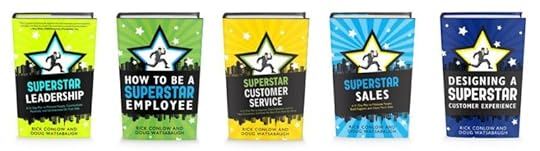
Want to accelerate your career? Check out one my books in the Superstar Book Series for a boost!
The post 13 Characteristics of the Best Companies appeared first on Rick Conlow.


July 13, 2017
5 Stages of Terrific Teamwork that Work
Teamwork in organizations is like Dr. Jekyll and Mr. Hyde. Teams get together, and even make a little progress. Then, BOOM, they materialize into a nightmare. Before you know it, people want out, conflicts arise, and nothing happens. It seems that everyone talks about the importance of “team” so it’s become a worn out cliché. Together everyone achieves more (T.E.A.M.) is the spoken acronym. Yet, nearly 2/3 of teams falter and fail. Most fall far short of their intended objectives.
 You can change that for any team you are a part of or lead. You need to learn content and process for each stage of teamwork development. Content is the what of a team; the details of their work. It involves their goals, plans and expected results. The process is how the people work together. It involves their relationships to collaborate. It also includes their efforts to elevate their creativity to exceed the team goals. None of this happens naturally by holding a few meetings.
5 Top Reasons for Terrible Teamwork
Teams are unique organisms possessing the potential to perform amazing work that no single member of the team could ever dream of accomplishing. But a team doesn’t just happen, rather it is developed. Yet, most managers don’t learn the stages of team development and make the same mistakes over and over. Teams fail because of:
No goals or plan
No roles
No training
No conflict
No Communication
Each of these must be addressed by the leader and team. Let’s say the team had been formed to improve a workflow procedure. Goals and plans have to be established and tracked. The roles of each team member needs to be reviewed. Team training on planning, communicating, and problem-solving will be helpful so everyone becomes more skilled. Steps for handling conflict need to be organized, and guidelines set-up for working together. A schedule for meeting has to be laid out. There needs to be discussions of work expectations, measurement of results, and documentation of team activity. If any of these strategies are missed, chances are the workflow team will fail and not change or improve anything.
5 Stages of Terrific Teamwork
 Years ago, Dr. Bruce Tuckman created a model of five stages of team development. Many people have added to his stages of team development over the years. Today the same descriptions of the stages still apply. He named them: Forming, Storming, Norming, Performing and Adjourn. We added a reforming for adjourning. Each steps requires thoughtful actions and facilitation by the team leader. The leadership training video will give an overview of the purpose of each stage. When content and process is followed in each stage the possibility of a successful team greatly rises. Yale professor H.E. Luccock said, “No one can whistle a symphony. It takes a whole orchestra to play it.”
Do you want assess your team’s effective? Check out this complimentary Team Effectiveness Assessment.
 For more details on teamwork, see our books: Creating a High Performance Team (paperback), or Creating a High Performance Team, 7 Lessons for Team Mastery (updated in eBook format).
Or, do you want a proven game-plan for career success? If so, check out Rick’s Superstar Leadership book.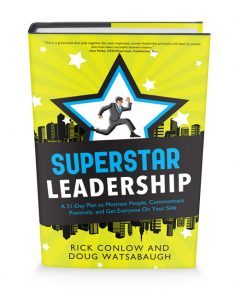
Call for more information – 888-313-0514
The post 5 Stages of Terrific Teamwork that Work appeared first on Rick Conlow.
July 10, 2017
Winning is an Attitude not a Score: Two Powerful Steps
Being a winner is a state of mind. Success and winning is indeed a state of mind. Winning is a habit that can be cultivated through purposeful training and coaching, and positive imaging. It’s just like a farmer does with his crops. Certainly obstacles will arise; the farmer faces hazardous weather, insects, and market deviations. However, the successful farmer is persistent day in and day out, seeing a bountiful crop while working smart to nourish the result. Winners take the same approach whatever the job is, whoever the competition is, and no matter the market conditions.
How Do You Cultivate a Winning Attitude?
 First, winners go within. What matters most is the attitude and actions taken day to day. Winners imagine the best, not the worst. They think about what they want, not what they don’t want. Winners pre-play positive results and don’t replay negative situations. Winners create the futures they imagine and don’t lament the past mistakes or lost opportunities. This type of mental rehearsal is the master skill of the best in any field. Then they act purposely and persistently to achieve perfection. It takes work. Sure there are bad days but they don’t quit-ever.
Dick Fosbury, inventor of the Fosbury Flop, used hard training and imaging to set a world record in the high jump, 7’3”. He also won the gold medal in the 1968 Olympics. He set the standard for future generations. He’d rock back and forth a few times at the starting line to stimulate his run and jump. He visualized the best. Then, he’d take off, run and high jump backwards over the bar. He was a world champion – a winner!
Next, all champions train excessively, and are helped by great coaches. Jean Claude Killy won three Olympic gold medals using this approach. Great performers in any profession are students of their game. They work hard, and enlist the support of others. Why? Because it helps them refocus on their best form, not on the mistakes.
Some of the most exceptional examples of successful training and positive attitudes are the astronauts. Nobody knew what the Apollo moon expeditions would really be like, except maybe science fiction writers Jules Verne or Ray Bradbury. However, the astronauts performed their projected tasks with precision. Thousands of hours of review and practice in the desert and ocean made them winners. They perfected the end result with NASA simulations. Neil Armstrong said of the moon expedition, “It was beautiful, just like drill.” Captain Conrad concurred, “It feels like I’ve been there many times before.”
How Do These Steps for Winning Apply to You?
Do you face obstacles? Sure! But, so did the POW’s in Vietnam. Many spent three to seven years behind bars deprived of most intellectual activity or physical comforts. To combat boredom and loneliness, they took self-development courses in their minds. Some learned to play the guitar and piano without even touching the instrument. They used make believe instruments made of sticks. Col. George Hall maintained his golf skills by playing 18 holes of golf in his mind everyday. Winning requires working through problems regardless of the disappointment, with an intense desire to excel. With ingenuity, creativity and innovation winners find a way to persevere and succeed. It’s not always pretty, but they move forward.
 Do you want to be a winner and achieve the success you desire in your career? Start imagining superior results, happy customers, and a turned on team. Keep learning, and seek ways to improve. Don’t give up. Remember these words by Thomas Jefferson, “If you want something you’ve never had, you must be willing to do something you’ve never done.”
TO ACCELERATE YOUR CAREER? READ THESE BOOKS:
FOR EMPLOYEES: THE EXTRAORDINARY EMPLOYEE: A ROADMAP FOR SUCCESS

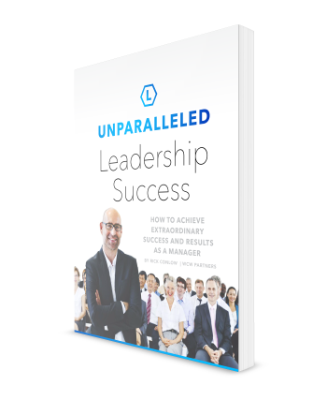
FOR MANAGERS: UNPARALLELED LEADERSHIP: HOW TO ACHIEVE EXTRAORDINARY SUCCESS AND RESULTS AS A MANAGER
The post Winning is an Attitude not a Score: Two Powerful Steps appeared first on Rick Conlow.
June 28, 2017
High-Tech Tools vs. High-Touch Coaching
Wearable tech
Social collaboration tools
Gamification
Mobile tech
Cloud applications
High-Tech Tools
 According to the articles, technology rules, and employees and managers have to be capable of using these tools. The new tools promise exciting new capabilities to communicate, collaborate, gain insight about customers and manage our businesses like never before. Significant new progress in data mining, cloud computing and the use of applications that generate a sea of analytics will present both new opportunities and challenges for companies in the next generation of business leaders. Understanding and using all of these tools can be rewarding, we all are learning something new and striving to use these tools to be more productive.
Yet, while we are struggling to stay abreast of all of these new tools and applications we are in danger of losing ourselves and the ability to build and maintain relationships that link us to one another and our valued customers. To borrow words from a past futurist named John Naisbitt, our workplaces are becoming more “high-tech” and they are rapidly losing the capability to be “high-touch.” In his book, Megatrends, Naisbitt predicted ten directions transforming the future. One of the trends he identified was what he called “high-tech and high-touch.” Today, we have the “high-tech” side but an emphasis on improving “high-touch coaching” has not materialized.
The more we rely on new technology, and become absorbed with using these tools, the less we seem to learn and grow in realizing the value of our working relationships. We are losing the emotional intelligence skills that internationally known psychologist, Dr. Daniel Goleman, identified as keys to life and business success. Today, we send an email or text to the cubicle next door rather than call or talk to our employees or colleagues face-to- face. We sit together in clubs and restaurants with our friends and family, and communicate with others through social networks and messaging systems. Take notice next time you are out in a mall or airport; people are so consumed with their Smartphone’s, and don’t even look at each other anymore. At the leadership level, coaching skills from our supervisors and managers which require engaging people seem to be dying an unnoticeable death and are in danger of becoming extinct.
Workplace Climate Issues
 Various workplace climate studies conducted by Gallup, The Conference Board, Dale Carnegie and others, concur that employee disengagement and disenchantment are at all-time highs.Employee dissatisfaction leads to lower employee morale, productivity, and poorer customer service. The Bureau of Labor Statistics shows slower productivity growth in farm and non-farm industries since 2007. Similarly, The American Customer Satisfaction Index reports mediocre customer service across industries.
Numerous research studies show companies benefit immensely by investing in their leaders’ capability to coach successfully. Leaders need a balance between the focus on technology, and the equally important commitment to employee development, and performance management. It is well documented that company cultures that focus on people; inspire employee involvement, service quality, and peak performance. Right now the great pendulum of focus doesn’t seem to reflect the importance of high-touch coaching as a business skill, and has swung in favor of technology instead of people.
High-Touch Coaching
 High-Touch does not mean non-friendly or inappropriate human behavior (for example: harassment, discrimination, violence, bullying, dishonesty, abuse etc.). It means having “people” skills that support better coaching, for example:
Working well in a team setting.
Communicating effectively.
Setting goals and performance expectations.
Listening for understanding.
Adapting to change.
Flexibility and capability to interact with all kinds at people at different levels.
Solving problems proactively.
Managing stress and emotions positively.
Facilitating meetings.
Giving appropriate feedback.
Handling poor performance and conflict constructively
Executing strategy including new technologies
Most people think that they are performing better than they are. Likewise, most people can perform significantly better than what they are currently doing. New technology is only a tool; it doesn’t bring out the best in people. Leaders that coach effectively do.
 There is a real opportunity to improve the levels of employee engagement and commitment in the workplace today. This requires more “high-touch” and less “high-tech” to balance the continuing flood of technological resources that we encounter. It requires greater emphasis on treating employees with respect, dignity, and as valuable partners. People, not technology, are a company’s greatest resource. High-touch one on one coaching is becoming the differentiator from one company to the next and one leader to the next. High-Touch coaching requires emotional intelligence skills.
Leaders that focus just on the new tech tools will continue to have employee productivity and engagement problems. Companies and managers that re-vitalize the relevance of time-tested coaching strategies and skills will reap bottom-line benefits. This includes more loyal employees, better employee engagement, less labor turnover, enhanced teamwork, greater productivity, improved quality and better customer service.
By the way, do you want to learn how to improve your high-touch coaching to increase employee engagement and inspire your team? Check out our complimentary eBook: How to Motivate–No, Inspire!– People.
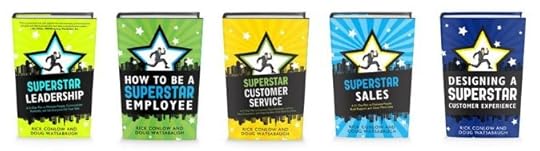
Want to accelerate your career? Check out one my books in the Superstar Book Series for a boost!
The post High-Tech Tools vs. High-Touch Coaching appeared first on Rick Conlow.
June 27, 2017
“ONE THING” to Accelerate Your Career Forward
Failure, setbacks, disappointments and defeats. Everyone experiences this. For some, many times. It’s part of life, like it or not. People often “fold like a cheap suit”, meaning they collapse, blame others and forever seem stuck in a never-ending story of ‘it can’t be done’. ONE THING can change all of that.
 10 Examples of People Who Turned Failure to Success
Research suggests that only 6% of people are working the dream job they had envisioned when they were younger. What if it didn’t have to be that way? What if you could dramatically catapult your current career forward? Here are ten world famous people who encountered tremendous obstacles but still rose to succeed admirably. What do they have in common that advances career success?
Businessman Soichiro Honda failed in getting a job with Toyota. He then started his own company, selling piston rings. A bomb destroyed his plant in WWII as did an earthquake later. He made scooters at home and was spurred on by his friends. He succeeded, and today Honda sells motorcycles and cars worldwide.
Geeky Bill Gates dropped out of college and failed in his first attempt in business with Paul Allen in a company called Traf-O-Data. Today Microsoft is one of the best known brands worldwide. Bill Gates is the richest man in the world.
Sage Socrates was called “an immoral corrupter of youth” in his time. He had new ideas that challenged the thinking of his day. He was sentenced to death but he continued his teaching and ideals. Eventually he was forced to poison himself. Yet, he is considered one of the greatest philosophers of the classical era.
TV star Oprah Winfrey lived in rural poverty and was raised on welfare. She was abused while growing up and, at the age of fourteen, had a premature child who died. As an evening news anchor in Baltimore, she was fired and considered “unfit for TV”. She became the first black woman to become a billionaire in world history.
Composer Ludwig van Beethoven was considered awkward on the violin and often neglected to practice. His teachers felt he couldn’t compose and would never succeed. Yet he composed some of the best selling symphonies through history–and he created five while he was deaf!
Author JK Rowlings lived on welfare while raising a child alone. She had little and became severely depressed. Twelve major publishers rejected her novel. Today, the Harry Potter series have sold over 450 million books and nearly $5B in movie sales. Eventually it made her one of the richest women in the world.
Singer Katy Perry dropped out of high school to begin her career. Her first album was unsuccessful. Eventually three different labels dropped her. Today she has sold over 80 million single recordings, and 11 million albums. She has won every conceivable music award in the US.
Basketball player Michael Jordan was cut from his high school basketball team. Yet he rose to be considered the best players of all-time. He won 6 NBA titles and MVP awards. Jordan owns numerous honors, awards, and is well known worldwide.
Actor Jim Carrey grew up in a low-income neighborhood. His father struggled to work steadily. Carey dropped out of school at 15 to work as a janitor to help his family. At his first comedy gig, he was booed off the stage. Saturday Night Live turned him down for a job. Today he’s one of the highest paid actors in Hollywood.
Businessman Richard Branson has dyslexia. He was also arrested for breaking the law in his first venture. His next business had continual cash flow problems. He had a bitter court battle with British Airways and had to sell his music company to stay in business. Today his Virgin Group involves over 400 companies with over $15B in revenues.
What do they all have in common-the ONE THING?
 When you research deeper into the people above and others with similar stories you discover one thing: resiliency. They all had failures and disappointments. Yet they didn’t quit. They may have had their bad moments but they bounced back. Resiliency is the one trait psychologists say that determines the quality of a person’s life. Without it, people who meet defeat never seem to move forward. Instead they tend to blame others or circumstances. They also hold grudges, lack direction, quit too soon, give little effort, short-change discipline and persistence, and don’t ask for or listen to advice. These qualities don’t produce career success and advancement.
 Resiliency is a capacity for self-transformation and change. It’s not genetic; it’s learned. Resilient people recover relatively quickly from difficulties to try again and to live even more effectively. This ONE THING- tends to have five characteristics:
Self-awareness– They recognize their emotional responses and why it happens. In addition, they pay attention to the behavior of others it impacts.
Internal focus of control– They take responsibility for their own actions. They know the importance and power of their own choices.
Setbacks are a part of life-They realize that perfection and winning in everything is not the script for a fulfilling life. They seem to enjoy the process and seek the humor in it, too.
Problem-solving skills-They have learned how to learn to deal with their challenges and to persevere.
Social support structure-They have networks of people they depend on for help, hope, and guidance.
Resilient people cultivate an inner toughness to re-frame their circumstances. This activates successful living even when some of their goals or activities don’t work out. They aren’t devastated by failure; they learn from and are fueled by it. This is the ONE THING to accelerate your career forward.
Writer and poet Maya Angelou said these beautiful words that relate to resiliency: ” If you don’t like something, change it. If you can’t change it, change your attitude. You may not control all the events that happen to you, but you can decide not to be reduced by them.” Winston Churchill added this wisdom:“Success is not final, failure is not fatal: it is the courage to continue that counts.”
Want help to develop the ONE THING to accelerate your career? Read these books:
For employees: The Extraordinary Employee: A Roadmap for Success
For managers: Unparalleled Leadership: How to Achieve Extraordinary Success and Results as a Manager

The post “ONE THING” to Accelerate Your Career Forward appeared first on Rick Conlow.
June 15, 2017
3 Ways to Prevent Leadership Failure
Leadership failure is so prevalent today it’s the norm and people expect to be let down. Unrest is rampant and every leader needs to learn what to do.
The Evidence of Leadership Failure
Unfortunately in the US, (this is true in many other nations as well) many of our current political leaders highlight all that is wrong with leaders today. I did some due diligence and found these troubling stats:
7% of Americans trust members of Congress to have high ethical standards.
24% of Americans give Congress a positive approval rating.
38% approve of President compared to a 61% presidential average.
59% of Americans think Congress sells votes for cash. According to one survey, the profession of ‘Congressperson’ is considered to be one of the top ten sleaziest ways to make a living, just a few notches below a drug dealer. I saw this T-shirt that sadly describes them: “97% of politicians give the other 3% a bad name”.
Businesses also have their leadership challenges with nearly 9 out 10 employees disengaged:
50-67% of managers fail, according to leadership derailment studies, mostly due to “poor people skills”.
67% of worldwide employees don’t believe CEO’s are credible or very credible. This is down 12 points since 2016 and the lowest level since Edelmann’s Trust survey began in 2001.
70% of people don’t believe business executives add very much value to society, according to Pew Research.
82% of managers, according to Gallup, are not the right hire to do the job and lack the talent.
The quit a job is that they hate their boss.
The Words of Dr. Martin Luther King Jr.

Dr. King’s quote defines three characteristics that help prevent leadership failures.
Cause
When leaders lack the greatness of a clear cause they ultimately let their egos and selfish desires get in the way of helping others or in making a positive difference in the world. Simon Sinek talks about the important of why this allows great leaders to inspire others to action.
Care
When leaders don’t really care about others that much they treat them differently, often very poorly. Their goals are personal recognition, power, or money. This leads to a lack of trust which affects employee performance in all areas. These leaders don’t know that leadership is not about the paycheck but about people. They are less successful and often are faced with conflict, opposition, and subversion.
Character
Leaders without integrity invariably fail or fizzle out. We regularly see corporate executives in the media that fall from grace or politicians that got caught with their hand in the cookie jar. People are so jaded and tired of leaders that lack the courage or dedication to stand for something of value other than themselves. Those who lead with ethics rally others to a higher standard of conduct and relationships.
I believe that the next great revolution in business, if not government, is about people. Dr. King also said, “Life’s most persistent and urgent question is, ‘What are you doing for others?’ ” Leadership, then, is not about job titles, profit or stock prices. To prevent leadership failure, it has to be about positively influencing and uplifting other people’s lives. When you do that well, a business will succeed dramatically and a country will thrive.
For accelerated individual online leadership training go here: RCI Online Leadership Training.
Want to accelerate your career? Check out one my books in the Superstar Book Series for a boost.

The post 3 Ways to Prevent Leadership Failure appeared first on Rick Conlow.
June 9, 2017
4 Success Habits to Maximize Your Potential
Each person defines success on a very personal level, and the definitions are as unique as each individual. Bottom-line success involves a goal or way of life we are striving to attain. It is also what we value in life or want to have, or do or be.
Where Does Our Success Come From? Our Habits…
 However we define success, our habits determine our fate. Habits are behaviors that work repeatedly and are reinforced. Our state of mind is supported by good habits and vice versa. Regardless of the outcome and whether it’s positive or negative, we do things the way we do because we receive reinforcement and even satisfaction from our behaviors. Smoking is a habit that some people acquire. The initial reinforcement for smoking may be that it “calms my nerves” or “makes me look cool.” After I smoke for a period of time, it becomes part of me. Eventually, I’m stuck with the habit, and I may even forget the original reasons for adopting the behavior. Work practices are formed the same way.
Here are four success habits when relentlessly emphasized give us a process for our success. It’s takes a commitment to learning. Famed football coach Nick Saban at Alabama (winner of five national championships) often talks about this with his players. Too often the gurus overlook this as they share their formula for a better way of life.
Success Habit #1
 Start by build on your positive behaviors. Emphasize your strengths. Reflecting on your positive attributes is like stopping to smell the roses. Consciously review the experience and savor it. This success is what we are targeting, so it’s important to soak it in. Enjoy it! If you just mark your accomplishment off your To-Do list and start on the next goal, nothing will feel significant. There will always be more to do.
Success Habit #2
>Next, address self-limiting behaviors. To consistently succeed, we all need to raise an awareness of the things that we don’t do which keeps us from achieving our goals. We can use this information to make conscious changes in our behavior.
Success Habit #3
One of the most effective ways to learn a new successful practice and incorporate it into your daily life is to share it with others. This is about mentoring others. Use the LUTI model, which stands for “Learn it, Use it, Teach others, and Inspect it.” It represents an effective way to fully integrate new learning while changing personal behavior.
Success Habit #4
 Make sure that your future avoids being doomed. Seize the future! Our current habits got us where we are now. If we don’t do things differently, we will experience the same results in the future. Small things done differently in strategic places creates major impact With our disruptive world, continuous improvement is a critical success factor for anyone. Finally, remember this, with these four success habits, “success is a state of being not a destination or journey.”
 Engage our complimentary Success Practices Assessment & Guidebook now!
Check out our services:
Consulting Services
Books & Training Resources
Call for consulting, training and coaching services – 888-313-0514 or email rick: rick@rickconlow.com.
The post 4 Success Habits to Maximize Your Potential appeared first on Rick Conlow.
June 5, 2017
What Would You Dream if You Knew it was Possible?
 What would you dream if you knew it was possible?
Do you remember as a child, when you used to toss pennies into a fountain or wishing well? Closing your eyes, holding the penny tight, wishing for something specific, and then throwing the penny into the water? Then, you would excitedly skip along as you kept your secret. After all, it wouldn’t come true if you told anyone, right? How imaginative and excite you were.
What do you dream about today? Nightmares and scares? Or, hopes and aspirations? Nothing?
Dreams are Lost
But sadly, the truth is that for most people, wishes vanish quickly, they often fade faster than the water ripples calm after a penny is dropped. Only 6% of people live their childhood dreams. Instead as adults, we rarely believe in wishes any more than we believe in Santa Claus or the Tooth fairy. Dreams are lost and forgotten for most. As a young man I wanted to be a professional baseball player, but it didn’t happen. My baseball coach helped dream again, that I could start my own business someday.
Unfortunately, not enough people dream anymore because of failure. People seem too busy or sophisticated or gun-shy. An antagonist might say many things like:
keep your head out of the clouds
you’re a silly dreamer
don’t waste your time thinking about what can’t be
wishes don’t come true, so why make them?
daydreaming is a waste of time
Negative noise in our minds may chastise us the same way. We have to fight this and persevere. There are far too many excuses. Your heart has the dreams, you just have to listen.
Dreams are wishes you decide to believe in. Real dreams do not fade. They become goals you decide to have. Deep in our soul, you believe they are possible. Dreams are the pictures and beliefs you create in your mind about what you want to be, what you want to do, or what you want to have. The more you believe it, the clearer you see it. Your dreams involve your ideas and thoughts for a better life.
Life Goes On, Dream for it to be Possible
If you aren’t living a dream life or achieving a dream don’t despair. Great American poet Robert Frost said, “In three words I can sum up everything I’ve learned about life: it goes on.” Don’t give up, adapt, it’s the nature of things as a human being.
I do encourage you to dream again and again. John Keating declared in the movie, The Dead Poets Society, “But only in their dreams can men be truly free. ‘Twas always thus, and always thus will be.”

James Allen also defined in As a Man Thinketh, “Dream lofty dreams, as you dream, so shall you become. Your vision is the promise of what you shall one day be; your ideal is the prophecy of what you shall at last unveil.”
Want help in dreaming and achieving new goals? Check out GoalPower, an interactive road-map with action exercises to guide you.
Or, Engage our complimentary Success Practices Assessment & Guidebooknow!
The post What Would You Dream if You Knew it was Possible? appeared first on Rick Conlow.
May 25, 2017
How My Embarrassing Weakness Became a Strength
I was a senior in high school, and I arrived at school at the main entrance. Little did I know that my weakness would soon set me up for failure. I noticed people were wearing black arm bands.
I asked a friend, “What’s up?”
He said, “I don’t know but everybody is doing it.”
The Protest

Apparently, a protest was being organized. At a table near the entrance of the school, a few students were handing out black construction paper, cut out to form an armband. I grabbed one and followed a crowd to the cafeteria. It had a stage at the front of the room. I jumped up to sit on the edge of it. More students began to pour into the room. A few teachers appeared and leaned on the walls with wariness in their eyes.
Someone shouted, “Let’s do it!”
Another proclaimed, “It’s time!”
Which caused a cheer from others and an applause. Suddenly it became quiet. The student council President turned to the stage and saw me sitting there.
He said, “Rick, you be the leader.”
My Weakness and Failure
Stillness filled the cafeteria as all turned to look at me for answers and wisdom. I immediately thought, me? Not ME! I am a shy person. I didn’t even know what this whole thing was all about. I tried to say something. My tongue was stuck to the roof of my mouth. For a few minutes, quietness hung in the room. It seemed like an eternity. I couldn’t say anything even though I desperately tried to talk. I felt myself becoming the incredible shrinking man from embarrassment. Finally, people turned away, others started talking. I became oblivious to their conversations and froze to the stage. After everybody left, I went to my first class, late. Throughout the day, my friends and others would see me in the hallway or classroom, and say, “Great speech, Rick!” They’d laugh, as my humiliation deepened. My failure intensified. My weakness was laid bare.
As time went on a resolve fortified me. I decided that one day I would get up in front of people and speak positively, enthusiastically, competently and powerfully. Over the years I learned to that, through diligence and putting myself out there speaking and attending numerous engaging training sessions to get better. Over the last twenty years, I have spoken to or trained thousands of others on all kinds of stages. My embarrassing weakness had become a strength because I (thankfully) learned and applied myself.
Summing It Up
I primarily consult with or coach managers in varied industries. I find that so many fail or struggle unnecessarily (regardless of their education level or experience). They are unwilling to consistently put in the time and effort (on their own) to keep learning, to elevate their effectiveness or success as leaders. From my experience, I know that their potential is significantly greater. If only they would realize what I learned and Freud said: “Out of your vulnerabilities will come your strength.”
By the way, do you want to elevate your performance and more effectively lead your team? Check out this complimentary Creating a High Performance Team Ebook.
Want to accelerate your career? Get a coach, see Rick’s Dynamic Coaching Plans.
The post How My Embarrassing Weakness Became a Strength appeared first on Rick Conlow.
May 23, 2017
5 Steps to Manage Emotions in the Workplace
What place do emotions have in the workplace? What role do they serve? What benefits (if any) do they bring? I hear these questions often, and I can completely empathize with the efforts to deal with this side of people in the appropriate way.
In personal settings, feelings can be a sensitive subject; for this reason, it is no surprise that in professional settings – the emotional side of people is often a touchy topic,too. Emotions are unpredictable, sometimes very distracting, enlightening, and everything in between. How they are expressed, when they are expressed and who expresses them – all make a world of difference.
 As a leader or manager, regardless of your personal stance on this issue, it is professionally wise to determine how you plan to address your own emotions, how you plan to respond to others, and how you plan to approach emotionally charged situations. Although you can’t plan for every situation, the reason I still recommend taking a proactive stance (as much as possible) is because when feelings get involved, sometimes our logic goes out the window.
5 Positive Steps to Managing Emotions
Accept that emotions are part of reality. – Ignoring or denying that emotions will happen and do happen will only escalate your anxiety when emotions arise on the scene.
Acknowledge when strong feelings are present. – This is similar to #1 but different because it’s about increasing your awareness and ability to recognize what’s going on. Identifying and naming the emotional expression you or others are experiencing helps you take a powerful step toward knowing what to do with them. For example, recognizing and encouraging your team’s excitement about a new project can help you get a successful start towards goal accomplishment.
Channel your emotional energy and/or strategically “let off steam.” – The one thing about feelings is that if we don’t control them, they control us. It’s an either/or situation. We either take our emotions by the reigns or they will take us for a ride. Increasing your awareness helps you to build strategies on how you will handle certain emotional experiences in the future. A key questions is: how do you build on positive energy, and minimize negative energy? By making a plan, you can take the appropriate actions at the appropriate time.
Establish a mentoring relationship to explore and digest feelings. – Having a professional relationship where emotions can be explored is pivotal for professionals. This can be in the form of a colleague, a mentor or an old manager. Find someone you can trust to give you good feedback regarding how you want to or plan to address your emotions or others’ emotions.
 After all of the above, express emotions – professionally and relevantly. – Once you’ve taken the appropriate steps to acknowledge, understand, channel and digest the sentiments that have emerged, address the situation at hand. If you have been fuming over a coworker, struggling with a report, or watching two of your team members destroy your team through disagreements – take appropriate action (as you would have identified in earlier steps). Confronting emotional environments directly demonstrates to your team that harmful expressions shouldn’t be ignored. Quite frankly they can’t be ignored. For example, an angry outburst from a co-worker left on checked can leave a residue of resentment. Events like this should be professionally, appropriately and strategically managed.
These 5 steps relate to emotional intelligence skills in dealing with others in positive or negative situations. Understanding and applying these points will start to set a solid example for handling working relationships more constructively. Writer Victoria Klein said, “Emotions make us human, denying them makes beasts.”
Do you want to create an environment that brings out the best in people and increases employee engagement? See this complimentary article: How to Motivate People and the High Performance Formula.
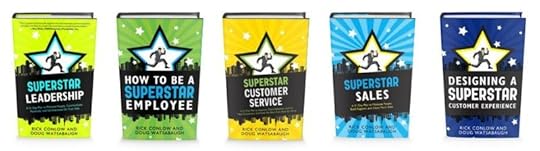
Want to accelerate your career? Check out my Superstar Leadership book or others in the Superstar Book Series
The post 5 Steps to Manage Emotions in the Workplace appeared first on Rick Conlow.