Rick Conlow's Blog, page 27
November 27, 2016
How to Engage Your Most Uninspired Employees
Every team has uninspired employees. Heck, every social circle has them – the naysayers, the downers, the pessimists – well, you know who I’m talking about, the people we don’t particularly enjoy. Now, some managers choose to leave these gloom-and-doom employees alone. But, I argue that taking another approach might work to your better advantage.
If your employees aren’t happy, inspired, or driven to come to work each day – you have the opportunity to ignore their demeanor or identify their reasons. The reason that taking the latter approach is the better alternative for a manager is because although ignoring the employee is the easy route, it won’t get you or that employee any further in your endeavors toward success (and it won’t do the rest of your team any good either!).
 3 tips to involve your most uninspired employees
1. Informally pursue one-on-one casual meetings with the employee
The best way to break someone’s bad attitude is to build a relationship with him or her. You can’t expect to know every emotion (nor should you want to, for professional reasons) your employees have, but you can challenge yourself to care about the general well-being of your employees. If they are continually distressed, dissatisfied and distracted at work – a sincere relationship with their manager might be the right medicine to engage their attention. Furthermore, once each of your reports has a relationship with you, each will have more skin in the game. And once people are personally invested in their team’s project or process, that’s when their engagement drives their excitement, which creates a positive, thriving work environment.
2. Intentionally plan team activities that revolve around team goals
If you have a few employees who aren’t connected to the greater part of your team’s clan – you can bet money that they probably aren’t collaborating with the majority of your team either. The more connected team members feel, the more collaborative they are. This doesn’t mean that every competitive streak has to be cancelled out – no, no, no… not at all! In fact, just the opposite. Sometimes, a little healthy competitive match amongst team members is exactly what each individual needs to demonstrate his/her strengths in the right setting. Through this sort of event, you might just see how intertwined one’s personal confidence and one’s professional commitment are. The more opportunities you give your employees to feel good about themselves, the greater their commitment to your team will be. The inspired and uninspired employees will all get fired up.
 3. Invest in establishing good communication skills
I’m telling you now, if there’s one thing that everybody can benefit from – it’s getting better at communication. So, stock up on some top-selling books that solidify your communication skills, collaborate with a few communication consultants and mirror your favorite mentors. The worst employees that are the least engaged feel isolated – and the simplest way to engage them in the short term is to… talk to them! Sounds like common sense, right? Right. But, the problem is that most employees and managers avoid the cynics because they’re unpleasant. This strategy only perpetuates the cycle – they simply get more alone, which gives them ample more reason to withdraw their attention to and association with the rest of the team. Stop the problem where it starts – don’t hope it just suddenly goes away… because if that employee quits, your team (and you) have learned nothing.
As the old saying goes, “No man is an island.”
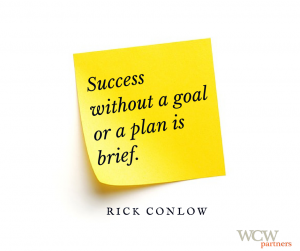 By the way, do you want to elevate your performance planning with employees? If so, check out this complimentary resource: Bluebook Goal and Planning Guide
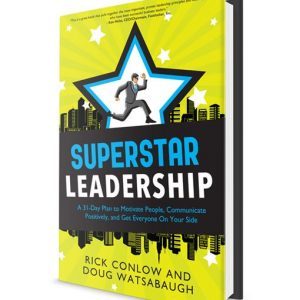 Or, do you want a proven game-plan for career success? If so, check out Doug and Rick’s Superstar Leadership book.
Consulting ServicesBooks & Training ResourcesTraining and coaching services – 888-313-0514
The post How to Engage Your Most Uninspired Employees appeared first on Rick Conlow.


November 18, 2016
Communication is More than a Two-Way Street
Managers, here’s a thought for the day, really communicate with your team. We have been duped by education. In business and certainly in life communication is more than a two-way street. 50/50 doesn’t work. There isn’t commitment. I believe at work the leader is 100% accountable. Performance issues, workplace conflicts and employee disengagement often are the result of poor communication. Oh, yeah, no time is not a legitimate excuse.
So today, really communicate with your team:Say hi to each person during the day sometime, and use their nameCheck in, How are YOU doing?Praise an employee’s progressListen to an employee’s concernEncourage your teamValidate an employee’s ideaFacilitate an effective meeting that’s more a dialogue than a monologueBe available for a questionClarify a concern about prioritiesShare key informationHave your team’s backMake time to discuss a problemPlan with your teamCompliment an employee in front of a co-workerTake the time to coachInvolve them in value-added trainingCelebrate a victory togetherMake a constructive decision on a requestDeal with poor performance constructively but quicklyAdmit a mistakeGive your team the credit for a winExpress enthusiasm for your team and its missionSmile once in a whileHave some funBe positive not negative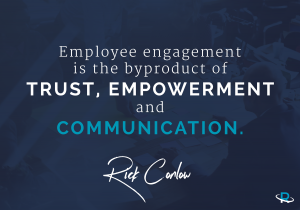 While there are many other actions to take, you get the idea. Genuine communication like this creates respect and trust. It also builds positive working relationships and a higher performing team. However, it’s seems to be rare. Why not do these every day seamlessly in the midst of the whirlwind of work? This isn’t an assignment. These kinds of actions are more than management, it’s leadership.
 By the way, do you want to increase results by coaching better? If so, check out this complimentary resource: Coaching for Results.
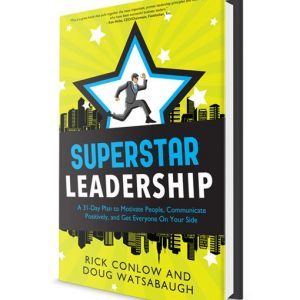 Or, do you want a proven game-plan for career success? If so, check out Doug and Rick’s Superstar Leadership book.
The post Communication is More than a Two-Way Street appeared first on Rick Conlow.
November 16, 2016
How Successful Managers Plan to Win with Their Teams
What’s your plan for your team’s success this month, quarter and year? If you don’t plan well, you are planning to fail. In this leadership training video, Rick will share with you 3 levels of operational planning that will lead you to victory. Most managers and companies don’t plan well. See these telling statistics about company leaders:
Only 27% of plans are based on employees workload.Only 35% believe their planning and execution process gets results.73% of CEOs say improvement is needed in planning, strategy & execution.75% of mgrs. don’t have an incentive tied to executing new strategies and plans.82% of CEOs believe don’t believe their execution of plans is effective92% of organizations don’t track results on the execution of their plans.95% of managers and employees don’t understand what’s expected of them related to company plans and execution.What will this affect your team plan?If you get your team involved in creating a team plan, and ask for their input; you will create understanding, commitment, motivation and buy-in. You will have an advantage over other managers. Your team will begin to perform better than others.
 A key area of planning involves translating team plans into individual performance plans for each employee. Help your team achieve their career and personal goals. This will help accelerate your team’s productivity and results. Follow-up and reinforce this with great coaching to catapult results. Give your team what they want and you will get what you want.
Finally, just as each employee needs goals and plans so does each manager. You have to know what you want, too. Take the time to formulate your personal and professional game plans.
These 3 planning levels gives you a Win/Win scenario for your team and you. Want to have a great year and improve results? Watch this leadership training video clip and access the resources below. If you like the video, click thumbs up.
 By the way, do you want to elevate your performance planning with employees? If so, check out this complimentary resource: Bluebook Goal and Planning Guide
Or, do you want a proven game-plan for career success? If so, check out Doug and Rick’s Superstar Leadership book.
The post How Successful Managers Plan to Win with Their Teams appeared first on Rick Conlow.
November 9, 2016
Most Managers are Administrators not LEADERS
Are you looking for a way to accelerate your team’s success? If you are–READ ON! You will be shown how most managers are administrators, not leaders as they focus on activities not people. The definition of an administrator is:
a person responsible for running a business, organization, or departmenta person who performs official duties in some spherea person who deals out punishment when things don’t go right or well
Research demonstrates that managers fulfill this definition by doing many other things rather than leading. They spend their time running their departments, doing reports, dealing with work procedures, completing documents, attending meetings, dealing with customers, following up emails and other requests, planning, reviewing strategy, engaging other internal operations, and dealing with problems. When it doesn’t go well the employees bear the burden of the problem, can you relate? While all of these things have to be done to some degree, you can argue that these are elements of leadership. However, research shows employees seem to be left out of many of these activities, and the disengaged are at record levels.
Additional research shows the average manager works 49.4 hours per week. Only 18% of a work day–or less than 2 hours per day–are focused on the team through leadership or “people management.” In the areas of coaching, team-building, training and mentoring; managers average only about 2.7 hours a week.
Managers do this because:
It’s often expected by the organization, contrary to stated values or corporate training.They have personally bought into system of what every other manager seems to do.They are complacent and it’s easier (at least they think it is) than finding a more effective collaborative approach.How to Accelerate Your Career as a Leader not a Manager
You become a leader by doing those things that other managers don’t do. Real leaders don’t punish employees or abdicate responsibility; they inspire people. They invest more time in the higher payoff activities to improve employee communication, motivation, engagement and buy-in. Why not double, triple, or quadruple your time team-building, training, coaching and mentoring? Most employees will then have to learn to work with you differently as you change.
For example, if you have a cross-functional meeting to attend, bring one of your key employees or send them instead of you attending. They learn new information, you can delegate some of the work, and coach them to be more effective. In another example, let’s say you handle a few key customers. You can begin to introduce these accounts to another capable employee, and develop the employee to take over. Your goal is to include employees in as many other activities as possible. As you do, you coach them to do it well and delegate the responsibility, which frees you up to focus on other priority activities.
Bottom-line, this is work, but you end up seamlessly leading your team to do this on many fronts while simultaneously getting more done in less time, as well as empowering your team with new responsibilities and accountability. This will increase your team’s performance and loyalty because of the trust you establish.
How to make this work
As leader you have to be a student of the game, commit to your development in needed communication, coaching and people skills. This means on-going personal development and leadership mentoring, coaching, and training. You also need to genuinely value helping your team win and doing it with integrity. You may not want to do this or even enjoy it at first but to separate yourself from others, it’s a “have to.” The payoff for you is a higher performing team, dramatically better results and more career opportunities. Consider these quotes:
“I am always ready to learn although I do not always like being taught.”Winston Churchill
” I took the one less traveled by, and that has made all the difference.”Robert Frost

Want to accelerate your career? Enroll in this one of a kind complimentary Excellence in Management training for managers. Then, pay it forward.
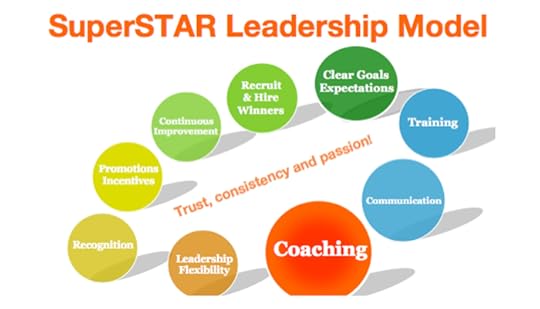
Rick and his business partner Doug published these approaches in their book, Superstar Leadership. They created the Superstar Leadership Model as a way to remember and apply the principles.
For leadership coaching, consulting and training services call here: 1-888-313-0514 or contact Siobhan@wcwpartners.com
The post Most Managers are Administrators not LEADERS appeared first on Rick Conlow.
November 4, 2016
WHY CEO’s CAN’T DANCE
Let’s face it, CEO’s are often isolated from the average employee. Most are sequestered in the penthouse office of the corporate headquarters. They can’t dance with employees because they think they are too busy to engage them. Too many don’t dance because many have lost touch with reality. They operate in a bubble and don’t attend the party. (Dancing here refers to engaging employees in multiple ways.)
For example, The Great Man showed up for budget review in a white limo, flanked by two black SUVs. He entered the building protected by multiple body guards. Local executives gave presentations to him on a stage in an auditorium setting. This CEO sat way up in the stands. All lights were off except a spotlight on the presenting manager and the CEO’s reading light. When things weren’t right he interrupted or degraded them. This archaic practice motivated no one. It wasted a lot of time and generated fear and insecurity.
 CareerBuilder found that 40% of employees don’t even know their CEO’s name. Worldwide, nearly all employees agree that CEOs are paid too much for the value they bring. Add the fact that 87% of the world’s employees are disengaged. Because of this, CEOs are leaving a tremendous amount of employee potential talent and contributions on the table. By not dancing, CEOs cost their companies billions of dollars of lost employee innovation, productivity and customer service. Here are three reasons why CEOs let this happen:
 Among CEO top priorities are generally sales growth and profit. While companies have to grow and make money, executives often forget how it happens. They pay way too much attention to numbers and data and not enough to the power of people. Customer loyalty generates sales growth and profit. Customer loyalty comes from an exemplary customer experience. Employees determine the quality of a company’s customer experience.
Consider GM as a case study. In the 1940’s, Peter Drucker praised the company for its product decentralization but criticized it, even back then, for treating employees as a feudal cost center rather than a base of knowledge and potential. The lack of quality for their customers has dogged GM for years. Even today, GM has record recalls. A finance executive said this of the decades-old corporate attitude, “We are GM. We know everything. We don’t need to change.” How wrong they are! GM market share fell from 62.6% to 17.9%, from 1980 to 2015. In between, we all know about the bankruptcy and bailout. The point is, unfortunately, so many companies have the same attitude about employees and customers today.
CEO’s don’t communicate well. According to several management studies, a key reason leaders derail is that they don’t communicate well. According Dr. Travis Bradberry, CEOs and other executives have the lowest emotional intelligence skills of all management levels. Research shows that CEOs only spend 4.3 hours a week on people management issues. These means they aren’t very good at one on one conversations, cultural sensitivity, listening, team-building, managing their emotions, handling conflict or communicating clearly. This list goes on but you get the picture.
A global IBM study found that 33% of CEOs had engineering degrees and another 15% had finance degrees. CEOs focus on data, facts, figures and metrics. No wonder the #1 issue on employee engagement surveys is the lack of communication. CEOs tend to think communication is too “soft” to pay much attention to it. Yet, according to the change master, Kotter, 70% of their strategies fail to reach their intended outcomes because of poor execution. A lack of communication is the usual culprit. As an employee, I am sure you can identify with the poor communication you have seen from your employers related to: expectations, priorities, medical benefits, lack of recognition, policy changes, work procedures etc., Most, if not all, of this is avoidable.
CEO values are often misplaced. Over 60% of all CEOs say that creativity is their most important trait; only 12% say fairness and humility are. Kouzes and Posner, authors of The Leadership Challenge,found that over 80% of managers value honesty as a key characteristic in their leaders. Yet 82% of employees don’t trust their boss, according to the Edelman’s Trust Barometer. Too many employees don’t trust their companies either. Now I know some very fine CEOs; however, far too many CEOs think more about their perks and paycheck than their people.
The book, The Speed of Trust, by Stephen M.R. Covey, demonstrates that the lack of integrity and ethics causes problems for managers and companies all day long. If the culture of a company is about countless checklists, policies and procedures, employees will begin to look over their shoulders rather than doing a great job. Their task becomes not getting caught making a mistake as opposed to doing a better job. With trust, most people rise to the occasion and go the extra mile. Fred Kiel is author of Moral Intelligence and Return on Character. He shows that corporate leaders with high integrity and compassion have greater returns than leader who are egotistical and self-absorbed.
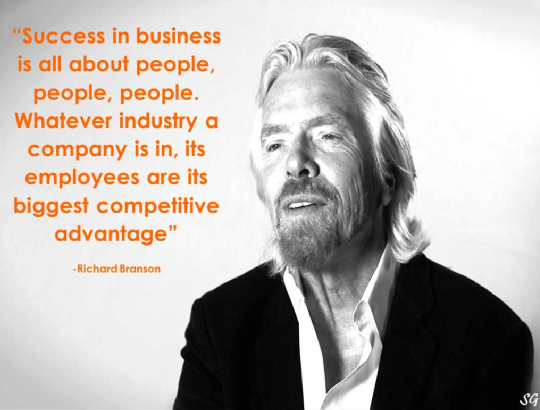 Those CEO’s who don’t dance think business is only about the bottom line. It’s really about people: employees and customers. Richard Branson, founder of the Virgin Group of 400 companies, has built a large organization on this very principle. He’s dancing, having a great time and so are his people. Wouldn’t that be a nice way to invest and spend your working years?
 Do you want to benchmark your career with the habits of highly successful people? If so, check out this complimentary inventory and guidebook: Success Practices.
Want to really advance your career? Check out one or more of our books in the Superstar Book Series for a boost.

The post WHY CEO’s CAN’T DANCE appeared first on Rick Conlow.
October 29, 2016
3 Easy Ways to Motivate Yourself Today!
I believe everyone is a winner. Everyone is motivated. The truth is some days are better than others, right? Just because a day goes bad or you fail to achieve a goal, it doesn’t mean you are a loser. The trick is to ensure one depressing day or situation doesn’t become a trend. Can you relate to this? We all need a “pick up” once in a while. The reality is, you are the best person to motivate yourself. In this brief motivational video, learn three easy ways to motivate yourself…now!
Motivate Yourself with 3 Easy MethodsEach method I share, has an interesting story that will get you into action.
Focus on your strengthsSmall things done consistently in strategic places create major impactDo one more With these positive thinking and motivational techniques you will be able to persevere even if it feels a little hopeless. Often times it takes setbacks, disappointments and problems to bring out the best in us. Watch this video and use it to motivate yourself to deal with your challenges positively and constructively. The best of success to you!
If you are a manager or want to be one here are two proven game-plans for career success. Go here for Rick’s Superstar Leadership book or his Unparalleled Leadership eBook. 
For accelerated performance training or coaching call Rick: 888-313-0514 email him: rickconlow@gmail.com.
Consulting Services
Books & Training Resources
The post 3 Easy Ways to Motivate Yourself Today! appeared first on Rick Conlow.
October 24, 2016
Coaching is the Key to Leadership Success

Leadership is a high contact sport, and this must involve coaching. The late Sam Walton of Walmart was asked why he spent one day a week in his office and the rest of the time in his stores with employees. Mr. Walton replied that he knew that was too much time in the office, but he wasn’t too old to learn to be a better manager. If you aren’t meeting with employees on your team regularly, one on one, you are missing a key opportunity to influence them to be more successful.
Consider the biggest obstacle managers face: time! It’s legitimate. With the digital explosion everyone is busy and has too many things to do. That’s what nearly all managers say. There is an advantage hiding inside of this excuse for you.
 A company has three key resources with which to conduct business.
The human resources – people – are the most important element of any business. People put the capital and material part of the business to work and make the creative decisions on how to do so effectively and efficiently. The important question is why would a manager not want to invest time in people? A leader’s success depends on his or her team’s success. The sad reality is that the real reason they don’t is too many get caught up in their inflated self-importance to want to interact with employees, or they don’t know how to do it well. Most managers lack the emotional intelligence skills that Dr. Daniel Goleman has identified.
One business we worked with highlights a manager’s coaching deficiencyAfter talking to employees and spending time in their work areas, they asked us to get their manager to “listen to us and see what we are trying to do.” They said he spent all day sending out inflammatory e-mails and creating reports on minutia. They wanted him to open his office door, get out from behind his desk and communicate with them.
Formal coaching in a one-on-one meeting is an effective way for managers to communicate with employees on a regular basis. A one on one should be done privately, and can take as little as ten to as much as sixty minutes, depending on employee needs. Great coaches do it continuously not just once in a while. The secret sauces is learning an effective process and using it consistently.
Invest in yourself to become a better leader, watch this complimentary video, and then obtain this coaching guide today. “The fastest way to accelerate the success of your team is to coach them with excellence.”
The Art and Science of Exemplary Coaching

Superstar Coaching Self-Study Guide

The post Coaching is the Key to Leadership Success appeared first on Rick Conlow.
October 19, 2016
Real Leaders Listen and Act

A client manager of mine recently asked this question: How do you handle the team when they give you input and suggestions but you don’t use it all. Then they think you don’t listen?
Bottom-line, once you ask for input, you have to close the loop on the communication. Consider these steps with your team.
Summarize what they are saying…”What I hear you saying is…” Take notes and keep track of their recommendations.Ask questions to clarify the issue or recommendation.Answer immediately where you can…and act on it.Follow-up on other items in a timely manner and re-communicate with the team: “What we heard is…” “What we have decided to do is…and why.” “What we can’t do is…and why.”Thank you…Always appreciate the input. Asking for input doesn’t mean you do everything they ask. You do have to have to listen. It does mean you have to get back to them quickly and respond constructively and positively even when you don’t use some of their ideas. This is respectful. It’s a lot like your approach with customers. You don’t answer a customer’s question without summarize your understanding of their issue and then thoroughly reviewing what you will do. Why would we treat our team any differently?
One manager I know holds feedback sessions with his team three to four times a year. He holds small group meetings and takes notes on their suggestions on a flip-chart. Then he publishes office hours so those who want to can meet with him one on one. Then a couple of weeks later he follows up and tells people what he will do and won’t do and why. He also forms a couple of ad hoc teams to work on any complicated issues. This is the essence of employee engagement. His results: leadership in sales and customer service, employee turnover rates 10X below industry averages. It works.
Check out these two posts for additional thoughts. The best of success to you!
How to Give Feedback When You are the LeaderHow to Get Feedback When You are the LeaderBy the way, do you want to elevate your coaching effectiveness and success? If so, check out this complimentary Coaching for Excellence article.
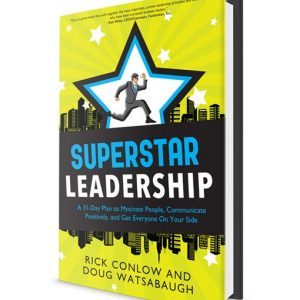 Or, do you want a proven game-plan for career success? If so, check out Doug and Rick’s Superstar Leadership book.
Rick Conlow, CEO/Founder, Rick Conlow International
Rick Conlow International is a business consulting and training company that coaches leaders to achieve record-breaking performances in sales growth, customer experience improvement, employee engagement and leadership effectiveness. It also has online resources to coach and train any and all managers to higher levels of success.
Consulting and Coaching Services
Books & Training Resources
Call for more information – 888-313-0514
The post Real Leaders Listen and Act appeared first on Rick Conlow.
October 5, 2016
3 Performance Based Questions for Positive Planning

What’s your game-plan for planning for the rest of the year, and into next year? Based on the US and world economies growth rates, most companies are below plan. That means most managers are under-performing. It doesn’t have to be you. Here’s a quick hitter reminder about how to plan better and ultimately achieve greater results.
You begin by gathering all the data and business intelligence you can from company and industry reports. Next, ask employees for their input in a planning meeting. Finally, what do your customers say? For external customers use customer experience reports and questionnaires. Survey or interview internal customers. Search LinkedIn and see what people are talking about in groups or articles. Once you have this information, ask yourself three purposeful but performance based questions.

Peter Drucker said, “Plans are often worthless, but planning is absolutely essential.” It’s the thought process that’s golden for you and your team. Set aside all of the posturing and rhetoric, and any departmental or strategic planning needs to answer these three questions.
What’s working?
Recognize progressCelebrate successesIdentify strengthsLearn from others (competitors, customers, co-workers, colleagues, experts)What isn’t working?
Assess and review problemsIdentify mistakes and learningsDetermine weaknessesEstimate blind spots and vulnerabilitiesWhat do we need do better or differently next time?
One organization we worked with was having a slow year. They brought the key managers together, and me to help to facilitate a robust creative planning process for the final quarter. With a new direction, and increased vigor, they grew the business 30%. With adaptations for the new year, another 40% was gained. (same products, people, processes and pricing) The talent and potential was always there. The difference came from the buy-in from the team achieved through the planning process, and the on-going coaching in the execution strategies. This kind of reinforcement and support often determines whether you win or lose. Finally, Gloria Steinem said, “Without leaps of imagination or dreaming, we lose the excitement of possibilities. Dreaming, after all is a form of planning.”
By the way, do you want to elevate your coaching effectiveness and success? If so, check out this complimentary Coaching for Excellence article.
Or, do you want a proven game-plan for career success? If so, check out Doug and Rick’s Superstar Leadership book.
Rick Conlow, CEO/Founder, Rick Conlow International
Rick Conlow International is a business consulting and training company that coaches leaders to achieve record-breaking performances in sales growth, customer experience improvement, employee engagement and leadership effectiveness. It also has online resources to coach and train any and all managers to higher levels of success.
Consulting and Coaching Services
Books & Training Resources
Call for more information – 888-313-0514
The post 3 Performance Based Questions for Positive Planning appeared first on Rick Conlow.
September 21, 2016
3 Hints to Quickly Achieve an Engaged Team
In this employee engagement training video I will provide you with three hints you can use as a manager to quickly engage your team. Much has been written about employee engagement. The bottom-line, it all comes down to trust as the starting point. I use methods similar to these leadership strategies on consulting assignments. Most often these assignments are with poor performing teams or companies. Then, within a matter of weeks or sometimes days performance ramps up!
 First, you have to do your homework, observe your team, and gain new perspective. This involves excellent communication: listening, asking questions and clarifying expectations and needs. You will gain team buy-in and commitment through this approach. This begins to engage employees.
Second, you have to invest in the team through training and education. The more you do the better. Often managers have to learn how to train. This needs to be done through participatory learning strategies. People learn best by doing. You have to raise their competence to achieve more and to do it faster. Also, through competition and recognition, you can make your sessions relevant, fun and exciting.
Third, you have to apply coaching for excellence methods. I recommend that you always be coaching. Great leaders coach all performers not just the poorer ones. Great coaching leads to engaged employees. Coaching increases commitment and consistency of effort. These are keys to top performance.
 Watch this employee engagement motivational video and act on it. It gives you the initial tools to catapult your team forward.
By the way, do you want to elevate your coaching effectiveness and success? If so, check out this complimentary Coaching for Excellence article.
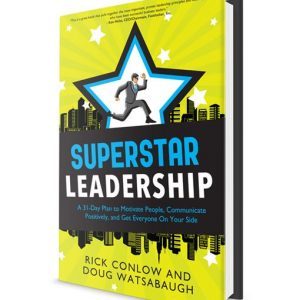 Or, do you want a proven game-plan for career success? If so, check out Doug and Rick’s Superstar Leadership book.
Rick Conlow, CEO/Founder, Rick Conlow International
Rick Conlow International is a business consulting and training company that coaches leaders to achieve record-breaking performances in sales growth, customer experience improvement, employee engagement and leadership effectiveness. It also has online resources to coach and train any and all managers to higher levels of success.
Consulting and Coaching Services
Books & Training Resources
Call for more information – 888-313-0514
The post 3 Hints to Quickly Achieve an Engaged Team appeared first on Rick Conlow.