Rick Conlow's Blog, page 2
May 31, 2023
Synergy Unleashed: The Power of Great Teamwork
A great leader knows that employee synergy unleashes the power of great teamwork. Conversely, mediocre or bad bosses enable poor attitudes and destroy teamwork.
We collaborated with other consulting firms to work with a global client that had intense competition and needed significant performance improvement. Our assessment identified a silo mentality throughout the organization and minimal leadership development or training. As a result, employee engagement, quality, and customer service results were average at best. This cost the company significant business. Can you relate to that?
We addressed the issues with new communication channels, customer service and quality initiatives, on-going quality leadership training for all leaders (executives, too), and team development applications. As the organization learned to work together better through training, numerous cross functional teams arose to deal with process, quality systems, and procedural issues. As a result, business results increased, and the company won the Malcolm Baldrige award for quality service.
This post will give you the lessons we learned on teambuilding and hopefully inspire you to believe in your employees so that they can become a high-performing team.
 The Top 10 Culprits of Bad Teamwork
Bad teamwork results from both internal and external forces that impact companies. Here are the top ten.
Lack of communication: Communication breakdowns can hinder effective teamwork. When team members don’t communicate clearly, misunderstandings and conflicts can arise, leading to a breakdown in collaboration.Lack of trust: Trust is essential for effective teamwork. If team members don’t trust one another or leadership, it can create a toxic environment where individuals hesitate to share ideas, delegate tasks, or provide support.Unclear goals and roles: When team members are uncertain about their roles and responsibilities or the team’s overall goals, it can lead to confusion and inefficiency. Without clear direction, team members may work in different directions or duplicate efforts, hampering overall teamwork.Personality clashes: Differences in personalities, work styles, or values among team members can result in conflicts and hinder effective collaboration. If individuals are unable to work together harmoniously, it can create a negative team dynamic.Poor leadership: The behavior and actions of team leaders can significantly impact teamwork. If leaders fail to provide guidance, support, or recognition, it can demotivate team members and lead to disengagement.Lack of accountability: When team members are not held accountable for their actions or their commitments, it can result in a lack of responsibility and a decrease in overall team performance.Limited resources: Insufficient resources, such as time, budget, or equipment, can impede teamwork. When team members are overwhelmed by workload or face constant constraints, it becomes challenging to collaborate effectively.Inadequate training or skill gaps: If team members lack the necessary skills or knowledge to perform their tasks, it will hinder teamwork. Training and development opportunities are essential to ensure that everyone has the required expertise to contribute effectively.Negative organizational culture: The overall culture within an organization can impact teamwork. If the organizational culture promotes competition, silos, or a lack of collaboration, it can trickle down to the team level and hinder cooperation.External factors: Sometimes, external factors beyond the team’s control, such as external pressures, changes in market conditions, or unexpected events, can disrupt teamwork and make it difficult for team members to work together effectively. 12 Negative Ways Poor Teamwork Hurts Employees and Organizations
Poor teamwork demoralizes employees and produces a lack of respect for them. Which was a major reason for the Great Resignation and Quit. But the negative impact has other serious consequences, too.
Lack of support: When teamwork is lacking, employees may feel unsupported or isolated. They may have to tackle tasks or challenges on their own without the assistance or collaboration of their teammates. This can lead to feelings of overwhelm, stress, and frustration, which can demoralize employees.Ineffective communication: Poor teamwork often goes hand in hand with ineffective communication. When team members do not communicate well or fail to provide timely and clear information, it can hinder productivity and create confusion. Employees may struggle to perform their tasks or meet deadlines due to a lack of information or coordination, leading to poor attitudes.Reduced motivation and engagement: When teamwork is poor, employees may feel disconnected from their colleagues and lack a sense of purpose or shared mission. This can result in reduced motivation, disengagement, and a decline in overall job satisfaction.Increased workload and stress: Ineffective teamwork can lead to an uneven distribution of workload. If some team members are not pulling their weight or there is a lack of coordination, others may have to take on additional responsibilities or work longer hours to compensate. This can lead to burnout, increased stress levels, and a sense of unfairness, all of which contribute to demoralization.Conflict and tension: Poor teamwork often breeds conflict and tension within a team. When team members do not work well together, disagreements, misunderstandings, and clashes of personalities can arise. This creates a negative work environment, strains relationships, and can significantly demoralize employees.Limited growth and development: Effective teamwork provides opportunities for learning, skill development, and knowledge sharing. When teamwork is poor, employees may miss out on these growth opportunities. They may be deprived of mentorship, collaborative problem-solving, or exposure to diverse perspectives. This can lead to a sense of stagnation and limited professional development, which can be demoralizing.Decreased productivity: Bad teamwork can lead to decreased productivity as team members may struggle to work together efficiently. Miscommunication, conflicts, and lack of coordination can result in wasted time and duplicated efforts. This inefficiency can lead to delays in project completion, missed deadlines, and ultimately, reduced output, poor customer service and lower sales.Increased employee turnover: Poor teamwork can contribute to higher employee turnover rates. When employees experience a negative work environment characterized by conflicts, lack of support, or ineffective collaboration, they may become dissatisfied and seek opportunities elsewhere. High turnover incurs costs for recruiting, training, and onboarding new employees, as well as potential disruptions to workflow and productivity.Lower quality outcomes: Bad teamwork can have a direct impact on the quality of outcomes produced by the team. When team members do not effectively collaborate or communicate, errors, mistakes, and oversights can occur. This can result in defective products, customer dissatisfaction, and the need for rework or recalls, all of which can incur additional costs and damage the company’s reputation.Increased costs of conflict resolution: Poor teamwork often leads to conflicts within the team. Resolving conflicts and addressing the underlying issues require time and resources. Managers may need to intervene, hold meetings, or engage in mediation processes to resolve conflicts. These activities take away valuable time and resources that could have been invested in productive work.Lost opportunities for innovation: In an environment of bad teamwork, team members may be less inclined to share ideas, collaborate on problem-solving, or contribute to innovation. This results in missed opportunities for new products, process improvements, or creative solutions to challenges. Lost opportunities for innovation can impact the company’s competitiveness, growth, and profitability.Damage to company culture and reputation: Poor teamwork can have a negative impact on the overall company culture and reputation. A toxic work environment marked by conflicts, lack of trust, and ineffective collaboration can discourage talented individuals from joining the organization. Additionally, if customers or clients experience the consequences of bad teamwork, such as poor service or communication breakdowns, it can damage the company’s reputation and result in lost business opportunities.Matthew Woodring Stover, author of Star Wars novels, summed this up aptly, “If you take the team out of teamwork, it is just work. Now who wants that?”
 Why do companies tolerate poor teamwork?
Companies may tolerate poor teamwork for mundane reasons, although it is not in their best interest to do so. Check these out.
Lack of awareness: Sometimes, company leaders may not be fully aware of the extent or impact of poor teamwork within their organization. They may be unaware of the specific issues or the negative consequences it has on employee morale, productivity, and overall performance. Of course, this is ignorance and not a viable excuse.Focus on individual performance: In some cases, companies may prioritize individual performance over teamwork. They may place a higher emphasis on individual achievements and rewards, which can inadvertently discourage collaboration and teamwork. This can create an environment where poor teamwork is tolerated or even encouraged.Fear of confrontation: Addressing poor teamwork often requires confronting and addressing underlying issues, which can be uncomfortable and difficult. Some leaders may shy away from confronting team members or addressing conflicts, fearing that it may escalate the situation or damage relationships. As a result, they tolerate poor teamwork instead of proactively dealing with it.Lack of resources or time: Addressing poor teamwork requires investment in resources, time, and effort. Companies that are stretched thin or facing resource constraints may struggle to allocate the necessary resources to identify and work on teamwork issues. This can lead to poor teamwork being tolerated as a lower priority compared to other pressing matters.Inadequate systems and processes: Companies with inadequate systems, processes, or structures in place may inadvertently contribute to poor teamwork. Lack of clear roles and responsibilities, ineffective communication channels, or inadequate team development programs can hinder effective collaboration. Companies that do not prioritize or invest in improving these areas may inadvertently tolerate poor teamwork.Organizational culture: The prevailing organizational culture can also influence the tolerance for poor teamwork. In some organizations, competition, individualism, or a hierarchical structure may be ingrained, which can undermine the importance of teamwork. If the culture does not prioritize or value collaboration, companies may inadvertently support poor teamwork.Poor Leadership: Many leaders at the top come from a finance background and this inhibits their focus on people. Others just do not care. They value power, money, and influence over people and purpose. Research shows that executive leadership has the lowest level of emotional intelligence and people skills of all layers of management.Unfortunately, companies that recognize the importance of teamwork and actively work to address and improve it are rare. Research shows that 60% of all teams fail. Leadership consultant and author Ken Blanchard defined this by saying, “None of us is as smart as all of us.”
 6 Powerful Bottom-line Benefits of Great Teamwork
Here are key statistics highlighting the potential benefits of better teamwork:
Increased productivity: A study published in the Harvard Business Review found that companies with effective collaboration and teamwork were five times more likely to be high-performing organizations. Improved teamwork can lead to better coordination, streamlined processes, and enhanced productivity.Reduced rework and errors: Effective teamwork can lead to better quality control and reduced errors, which can result in cost savings. A study by the Project Management Institute found that organizations with mature project management practices experienced a significant reduction in project rework, resulting in cost savings of up to 28% compared to organizations with poor project management practices.Higher employee retention: According to a report by Gallup, employees who strongly agree that their opinions count at work are 4.6 times more likely to feel empowered to perform their best work. When teams work well together and employees feel valued and supported, it can contribute to higher employee engagement and retention, reducing turnover costs.Enhanced innovation and creativity: A survey conducted by McKinsey found that organizations that prioritize collaboration and teamwork are twice as likely to be top financial performers in their industries. Collaboration fosters diverse thinking, encourages knowledge-sharing, and promotes creativity, leading to innovative solutions and potential competitive advantages.Improved customer satisfaction, loyalty, and sales: Research by Bain & Company shows that organizations with highly engaged teams achieve, on average, a 10% increase in customer loyalty and a 20% increase in sales. When teams work cohesively and effectively, it positively impacts the customer experience, resulting in higher satisfaction and increased loyalty.Cost savings through streamlined processes: Effective teamwork can lead to improved operational efficiency and streamlined processes. By eliminating duplication of efforts, minimizing errors, and enhancing communication and coordination, organizations achieve cost savings, and reduce operational inefficiencies.Therefore, fostering a culture of great teamwork associates with positive financial outcomes and improved overall performance.
 7 Best Practices for Achieving Great Teamwork
Learn these seven best practices that accelerate the creation of superb teamwork.
Clearly Define Roles and Responsibilities: Ensure that each team member has a clear understanding of their roles and responsibilities within the team. This clarity helps in avoiding confusion, duplication of efforts, and conflicts. Clearly defined roles also enable better coordination and collaboration.Foster Open and Transparent Communication: Establish channels for effective communication, such as regular team meetings, email updates, town hall type company meetings, or regular performance discussions. Create an environment where team members feel comfortable sharing their ideas, concerns, and feedback.Set Clear Goals and Expectations: Clearly communicate goals and expectations to all team members and ensure that everyone understands what is expected of them. Get them involved in creating the plans. This clarity and inclusion helps in aligning efforts towards common objectives and motivates team members to work together.Promote Trust and Respect: Build trust among team members by promoting a culture of respect and appreciation. Encourage team members to value each other’s opinions, ideas, and contributions. Recognize and celebrate individual and team achievements to boost morale and reinforce a positive team environment.Provide Regular Feedback and Performance Evaluation: Establish a system for providing regular feedback and performance evaluation. Offer constructive feedback to team members, highlighting their strengths and areas for improvement. Regular evaluations help in identifying any issues or challenges that need to be addressed, and they provide an opportunity for growth and development.Deliver Team and Leadership Training: On-going management and employee development leads to better performers. This includes executive leadership, too. People need to learn how to be team players. And they need to learn how teams work. Plus, management must learn servant leadership skills that foster team development.Apply Servant Leadership: A proven approach to foster a culture of collaboration and cooperation within the team. Servant Leader’s support individual and team development. They also encourage team members to work with a sense of purpose, share knowledge, and support each other. Furthermore, they promote cross-functional collaboration and create opportunities for team members to solve problems or work together. Guy Kawasaki said, “The companies that are successful, they start out to make meaning, not to make money.”

In the final analysis, teamwork is an ongoing process, and it requires consistent effort and commitment from all team members and leaders. You must also value people-first. By implementing these best practices, you will unleash the power of synergistic teamwork and elevate the overall performance of your company, department, or team. Management guru Tom Peters succinctly sums this up, “The leaders who work most effectively, it seems to me, never say ‘I’. They don’t think ‘I’. They think ‘we’; they think ‘team’.”
Why not join us on LinkedIn for the Servant Leadership revolution that is taking place about the power of people? Go here: ServantLeadership@RickConlow International. THANK YOU!
Also, click here for excellent insight and a complimentary resource called–4 Keys to Creating a High-Performance Team.
 In addition, see our RealTime Learning & Training leadership and personal development website–over 250 resources. Micro-learning and career advancement at your fingertips!
Finally, see Rick’s newest book. The 5 Dynamics of Servant Leadership: How to accelerate your career and inspire your team! See his newest self-directed leadership training: 21 Servant Leadership Training Lessons.
CEO/Founder, Rick Conlow International: RCI transforms managers into leaders by coaching and training them to become Servant Leaders. Clients achieve record-breaking performances in sales growth, customer experience improvement, employee engagement and leadership effectiveness. Furthermore, RCI’s online resources coach and train all managers or employees to higher levels of career success.
Partner with RCI Consulting Services. Visit the RCI store: Books & Training Resources.The post Synergy Unleashed: The Power of Great Teamwork appeared first on Rick Conlow.


May 22, 2023
The Art of Communication is the Language of Leadership
The quote “The art of communication is the language of leadership” is often attributed to James Humes. He was a an author, and speechwriter for several U.S. presidents, including Ronald Reagan. This quote punctuates the critical nature of communication to effective and successful leadership.
Why do leaders communicate poorly?
Check out these eight common factors that can contribute to ineffective leadership or management communication:
Lack of clarity: Leaders may fail to articulate their thoughts and ideas clearly, leading to confusion among their employees. They might use jargon, technical terms, or complex language that is difficult for others to understand. Or they speak about conflicting priorities that confuse their team.Poor listening skills: Effective communication is a two-way process that involves listening as well as speaking. Leaders who do not actively listen to others may miss essential information or fail to address the concerns and needs of their team members. In addition, the lack of listening signals that a leader does not value the employees very highly.Lack of empathy: Empathy is crucial for effective communication. If leaders fail to consider the perspectives and emotions of their employees, they may come across as insensitive or disconnected. This can hinder communication and create a sense of distrust.Inadequate feedback mechanisms: Leaders who do not provide regular feedback or create an environment where feedback is encouraged may hinder successful communication. Feedback is essential for understanding how messages are received and for addressing any issues or misunderstandings that may arise.Lack of transparency: When leaders withhold information or fail to be transparent about their intentions or decisions, it can erode trust and lead to poor communication. Employees or team members may feel left in the dark, which can result in rumors, speculation, and decreased engagement.Time constraints: Leaders often face busy schedules and multiple responsibilities, leaving them with limited time for communication. This can result in rushed or incomplete messages, leading to misunderstandings or incomplete information being conveyed.Cultural or language barriers: In diverse work environments, leaders may struggle to effectively communicate with individuals from diverse cultural backgrounds or who speak different languages. Differences in communication styles, norms, or language proficiency can contribute to poor communication.Lack of communication skills: Leaders may simply lack the necessary skills to convey their ideas effectively. Communication is a skill that can be developed and improved. However, those who have not focused on honing their abilities may struggle to communicate well.In summary, it is important to note that not all leaders communicate poorly, and there are good communicators in leadership roles. However, the above factors illustrate why leaders face communication challenges.
What are common examples where communication breaks down? Poor communication can manifest in multiple ways. Here are common signs and examples of poor communication. A leader:
It is vital to note again that positive communication is a skill that can be learned and improved with conscious effort and practice.
What is the impact of poor communication? Learn, study, and avoid these eight common consequences of poor communication:
Overall, poor communication can have a far-reaching impact on individuals, teams, and organizations. Research by the Economist Intelligence Unit shows how poor workplace communication can undermine the performance of a company. leading to:
52% more stress for employees.44% failure to complete a project.31% low employee morale.25% missed performance goals.18% lost in sales.Furthermore, note these statistics:
67%of managers feel uncomfortable with face-to-face communication with employees.74% of employees believe they are missing important company information.92% of employees believe negative feedback is an effective way to improve performance.Recognizing the importance of communication and actively working to improve it can help mitigate all the above negative consequences.
 How can leaders improve their communication skills?
Here are ten strategies that Servant Leaders apply and others can employ to demonstrate positive communication with their teams and others.
Actively listen: Effective communication starts with active listening. Managers should strive to listen attentively to their team members, seeking to understand their perspectives, concerns, and ideas. As Peter Drucker declared, “The most important thing in communication is hearing what isn’t said.” This helps build rapport, trust, and demonstrates respect for others’ input.Be clear and concise: Managers should strive to communicate their messages in a clear and concise manner. Avoid jargon, technical language, or unnecessary complexity. Use simple and straightforward language that is easily understood by the intended audience.Use various communication channels: Different individuals have different communication preferences. Managers should adapt their communication style and utilize various channels such as face-to-face meetings, emails, instant messaging, or video conferences to proficiently convey their messages. This ensures that information reaches team members through their preferred or multiple means.Provide regular feedback: Feedback is essential for growth and improvement. Leaders should provide constructive feedback to their team members regularly. This includes both positive reinforcement and areas for improvement. Constructive feedback should be specific, timely, and focused on behaviors and outcomes.Foster an open and inclusive environment: Managers should create an environment where open communication is encouraged and valued. Team members should feel comfortable expressing their thoughts, ideas, and concerns without fear of judgment or reprisal. Encourage dialogue, ask for input, and create opportunities for collaboration.Practice empathy: Empathy is key to great communication. Managers should strive to understand and consider the emotions, perspectives, and experiences of their team members. This helps build trust, strengthen relationships, and facilitates more meaningful and productive communication.Seek clarification: Managers should encourage their team members to ask questions and seek clarification when needed. Similarly, managers should also be willing to clarify their own messages if team members express confusion or need additional information. This helps prevent misunderstandings and ensures that everyone is on the same page.Improve nonverbal communication: Nonverbal cues, such as body language and facial expressions, play a significant role in communication. Managers should be mindful of their own nonverbal signals, ensuring they align with their intended message. Similarly, they should be observant of others’ nonverbal cues to gauge understanding and engagement.Invest in communication and leadership training: Managers must actively seek out opportunities for professional development in communication skills. This can include attending workshops, seminars, or courses on communication. Additionally, they must seek feedback from their manager, employees, colleagues or mentors to identify areas for improvement.Lead by example: Leaders should demonstrate excellent communication in their own actions and behaviors. By modeling clear and respectful approaches, they set the tone for their team members and inspire them to follow suit.Pulling It All Together
#image_title
Author George Bernard Shaw wrote, “The single biggest problem in communication is the illusion that it has been accomplished.” No wonder a lack of communication is the leading issue in employee engagement surveys. However, the best leaders communicate better because they make people a priority and work at it. This is called Servant Leadership. As a result, their teams perform better. As composer John Powell declared, “Communication works for those who work at it.”
Why not join us on LinkedIn for the Servant Leadership revolution that is taking place about the power of people? Go here: ServantLeadership@RickConlow International. THANK YOU!
Also, click here for excellent insight and a complimentary resource called–4 Keys to Creating a High-Performance Team.
In addition, see our RealTime Learning & Training leadership and personal development website–over 250 resources. Micro-learning and career advancement at your fingertips!
Finally, see Rick’s newest book. The 5 Dynamics of Servant Leadership: How to accelerate your career and inspire your team! See his newest self-directed leadership training: 21 Servant Leadership Training Lessons.
The post The Art of Communication is the Language of Leadership appeared first on Rick Conlow.May 17, 2023
Servant Leadership: Principles, Popularity, and Payoff
Grasp Servant Leadership principles, popularity, and payoff to begin to excel as a leader. With employee engagement and retention on a decline this leadership approach is long overdue. Robert Greenleaf first introduced the Servant leadership style in his 1970 essay, “The Servant as Leader.” The concept of servant leadership is simple: leaders focus on serving the needs of their team members, rather than their own personal interests or only emphasizing profit.
Servant leaders prioritize the needs of their team members, empowering them to reach their full potential. This type of leadership creates a culture of trust, respect, and open communication within the organization. By elevating the needs of their team members, servant leaders create an environment in which employees feel valued and respected. This, in turn, leads to increased employee satisfaction, engagement, and retention.
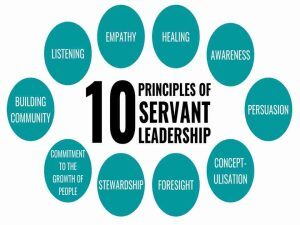
Embrace the ten key principles of servant leadership.
Listening: Servant leaders listen carefully to their team members, seeking to understand their needs and concerns. They create an environment where team members feel comfortable sharing their ideas and feedback.Empathy: Servant leaders have empathy for their team members, putting themselves in their shoes and understanding their perspectives. They show compassion and support for their team members, both personally and professionally.Healing: Servant leaders strive to create a positive and healthy work environment, where team members feel safe and supported. They work to heal any conflicts or issues that arise within the team.Awareness: Servant leaders are self-aware and have a deep understanding of their own strengths and weaknesses. They are open to feedback and actively seek to improve themselves.Persuasion: Servant leaders use persuasion and influence to guide their team members towards a common goal. They do not rely on their authority or power to get things done, but rather on their ability to build consensus and cooperation.Conceptualization: Servant leaders have a sharp vision for the future and can communicate it effectively to their team members. They use this vision to guide their decisions and actions and inspire their team members to work towards a common goal.Foresight: All effective Servant Leaders exhibit vision. This demands clarity on the value of the team and what collaboration and teamwork really looks like. In addtion, it provides inclusive focus on the purpose, goals, and plans of the team.Stewardship: Servant leaders see themselves as stewards of the organization, responsible for its long-term success. They prioritize the needs of the organization over their own personal interests and make decisions that are in the best interests of the organization.Commitment to People: As described, servant leadership organizations aim to help people succeed at work and life. They know that when you do this employees excel at work, and as a result the company excels.Building Community: The goal involves a positive impact on employees and the local and world community. Servant leaders are driven to do what is morally right for the many not the few.Servant leadership is not just a feel-good philosophy – it demonstrates tangible benefits for organizations. Research has shown that organizations with servant leaders have higher levels of employee engagement, lower turnover rates, and higher levels of customer satisfaction. Servant leaders create a culture of trust, respect, and genuine communication that fosters innovation, creativity, and collaboration.
 5 Companies that Lead by Example through Servant Leadership
Check out these examples of companies that have applied servant leadership principles.
Southwest Airlines: Southwest Airlines is known for its strong commitment to servant leadership. The company’s founder, Herb Kelleher, believed that putting employees first was the key to success. Southwest prioritizes its employees’ needs by offering competitive wages, flexible schedules, and opportunities for advancement. As a result, the airline has consistently ranked high in customer satisfaction and employee engagement.The Container Store: The Container Store is another company that has embraced servant leadership. The company’s CEO, Kip Tindell, believes that by putting employees first, the company can create a culture of service that extends to its customers. The Container Store offers its employees competitive pay and benefits, as well as a strong focus on training and development. This has led to elevated levels of employee engagement and a strong commitment to customer service.Marriott International: Marriott International is a global hotel chain recognized for its commitment to servant leadership. The company values the needs of its employees by offering competitive wages, comprehensive benefits, and opportunities for advancement. Marriott also encourages its employees to get involved in their communities and has a strong commitment to sustainability.TDIndustries: TDIndustries is a construction and facilities services company that has embraced servant leadership. The company focuses on creating a positive work environment that empowers its employees to reach their full potential. TDIndustries offers its employees a comprehensive wellness program, opportunities for professional development, and a strong commitment to community service.Starbucks: Starbucks is a company identified for its commitment to servant leadership. The company’s former CEO, Howard Schultz, believed that by putting employees first, Starbucks can create a culture of service that extends to its customers. Starbucks offers its employees comprehensive benefits, including health insurance and stock options, as well as opportunities for professional development. The company also has a strong commitment to sustainability and social responsibility.In summary, these companies serve as excellent examples of how servant leadership applies in various industries and contexts. By focusing on the needs of their employees, these companies have been able to create strong cultures of trust, respect, and service. Consequently, this commitment leads to prominent levels of employee engagement, customer satisfaction, and organizational success.
Here are five reasons companies or CEOs may not implement servant leadership principles.
Short-term thinking: Company leaders may prioritize short-term gains over long-term success. Servant leadership requires a longer-term perspective and investment in building relationships and trust, which may not align with short-term profit goals.Focus on shareholder value: Companies set up shareholder value above the needs of employees or other stakeholders. Servant leadership requires a more holistic view of the organization and a laser focus on creating value for all stakeholders, not just shareholders.Hierarchical structures: Companies have hierarchical structures that establish power and control over collaboration and empowerment. Servant leadership requires a more team based and inclusive approach to leadership, which may not align with traditional hierarchical structures.Lack of awareness or education: Leaders may not be aware of servant leadership principles or may not understand how to apply them effectively. Without changes outdated polices and training on the topic, it is challenging to adopt and implement servant leadership principles.Fear of losing control: Servant leadership requires a certain level of vulnerability and trust in others. Leaders may fear losing control or may not believe in their employees enough to change. Furthermore, companies may feel pressure to meet external expectations or standards, such as quarterly earnings targets or market share goals. Servant leadership requires a devotion to building relationships and trust, which may not be seen as a top priority in high-pressure environments.In conclusion, overcoming the above barriers requires a willingness to embrace a more collaborative and inclusive approach to leadership and a commitment to building relationships and trust with all stakeholders.
 6 Statistics that Prove the Payoff of Servant Leadership
Learn these statistics and examples of the positive impact of servant leadership.
Increased Employee Engagement: According to a Gallup survey, organizations with highly engaged employees outperform their competitors by 147% in earnings per share. Servant leaders prioritize the team, creating a culture of trust and respect that leads to increased employee engagement.Improved Customer Satisfaction: A study published in the Journal of Business Ethics found that servant leadership positively influenced customer satisfaction through its impact on employee attitudes and behavior.Higher Employee Retention: A study by the Harvard Business Review determined that employees who feel they are a part of something bigger than themselves and have a sense of purpose and meaning at work are 1.4 times more engaged and are more likely to stay with their employer.Improved Organizational Performance: A study published in the Journal of Leadership & Organizational Studies found that organizations with servant leaders had higher levels of financial performance than those without servant leaders.Increased Innovation: Servant leaders create an environment that fosters creativity, innovation, and collaboration. By empowering their team members and encouraging them to share their ideas and feedback, servant leaders can tap into the collective intelligence of the team, leading to more innovative solutions and approaches.Positive Impact on Society: Servant leaders focus on creating a positive impact on society and making a difference in the lives of others. As a result, they create a culture of service that extends beyond the walls of the organization.In conclusion, with the above benefits servant leadership achieves positive results for organizations. This makes servant leadership an effective and compelling style for organizations looking to create a culture of trust, respect, and service.
 How to Implement Servant Leadership with your Team
Here are seven proven steps for implementing servant leadership in a company or with your team.
Define servant leadership: The first step in implementing servant leadership is to define what it means for your company or team. Study the literature, get training and coaching, and do your homework. Also, educate employees and leaders on the principles of servant leadership and how to apply them in the workplace.Assess the current culture: The next step is to assess the current culture of the organization. This may involve conducting surveys, focus groups, or other forms of feedback to understand the strengths and weaknesses of the current situation.Set goals and metrics: After your assessment, with an open mind review your strengths and weaknesse. It is important to also set goals and metrics for implementing servant leadership. This may involve identifying specific behaviors or actions or processes that align with servant leadership principles.Train and develop employees: To effectively implement servant leadership, it is important to provide training and development opportunities for employees and leaders. This may involve workshops, coaching, or other forms of education to help employees understand and adopt key principles.Empower employees: Servant leadership requires empowering employees to take ownership of their work and make decisions that benefit the organization and its stakeholders. This may involve delegating decision-making authority, providing resources and support, and creating a culture of trust and accountability.Foster open communication: Open communication is a critical aspect of servant leadership. Various policies and approaches may need to change to encourage and facilitate open communication between employees and between employees and leadership. Most importantly, this needs to be a way of doing business not a program to ensure that the collective needs and concerns are heard and addressed.Lead by example: Finally, it is important for all leaders to lead by example and embody the principles of servant leadership in their actions and behavior. This means demonstrating empathy, listening actively, empowering employees, building relationships, and fostering a culture of service.Implementing servant leadership in a company requires a deliberate and concerted effort by leaders and employees. By following the steps above as guidelines, companies can create a more positive and productive work environment that prioritizes the needs of all stakeholders.
Pulling It All TogetherIn conclusion, as companies continue to experience labor shortages, engagement issues, and retention problems the popularity of Servant leadership grows. Why? Because it elevates people first. Servant leadership creates the positive work environment that employees desire and seldom experience. And it produces generous bottom-line benefits for organizations that executives need. The Servant Leadership potential is becoming increasingly important for leaders who want to separate themselves from competitors through a healthier and likewise higher-performing organization. Engage servant leadership today. It leads the next revolution in leadership thought and practice. As Robert Greenleaf declared years ago: “Good leaders must first become good servants.”
Why not join us on LinkedIn for the Servant Leadership revolution that is taking place about the power of people? Go here: ServantLeadership@RickConlow International. THANK YOU!
Also, click here for excellent insight and a complimentary resource called–4 Keys to Creating a High-Performance Team.
In addition, see our RealTime Learning & Training leadership and personal development website–over 250 resources. Micro-learning and career advancement at your fingertips!
Finally, see Rick’s newest book. The 5 Dynamics of Servant Leadership: How to accelerate your career and inspire your team! See his newest self-directed leadership training: 21 Servant Leadership Training Lessons.
CEO/Founder, Rick Conlow International: RCI transforms managers into leaders by coaching and training them to become Servant Leaders. Clients achieve record-breaking performances in sales growth, customer experience improvement, employee engagement and leadership effectiveness. Furthermore, RCI’s online resources coach and train all managers or employees to higher levels of career success.
Partner with RCI Consulting Services. Visit the RCI store: Books & Training Resources.The post Servant Leadership: Principles, Popularity, and Payoff appeared first on Rick Conlow.
May 9, 2023
Debt Ceiling: The Astounding Lack of Leadership in Washington D.C
There is an astounding lack of leadership in Washington D.C. Have you noticed? Its ugly face revealed itself again around the debt ceiling issue. The debt ceiling is a statutory limit on the amount of money the United States government can borrow to fund its operations. The current debt ceiling is $31.4 trillion. Recently, the U.S. Treasury Department said it has used extraordinary measures to avoid breaching the debt ceiling.

Democrats and Republicans, take different positions. Unfortunately, they fight the battle in the press, and bash one another’s position and views. The drama increases as outspoken politicians exhibit self-centered ego driven demands in the media. This helps nothing, especially American citizens. And nations like Russia, Iran, North Korea, and China, cheer at our inability to collaborate.
As of May 2023, the situation is still unresolved, and there is a risk of a government default if the debt ceiling is not raised soon. The situation is further complicated by the partisan politics in Washington DC, with each party continually blaming the other for the impasse. This only generates distrust between the parties and the American people.
In summary, the issue of the debt ceiling has become a highly politicized and contentious issue in Washington DC, with the risk of severe economic consequences for the US and the world if a resolution is not reached soon.
Republican view on the debt ceilingRepublicans have generally taken the position that any increase in the debt ceiling should be accompanied by significant spending cuts and deficit reduction measures. They argue that the country’s growing debt and deficit are unsustainable and pose a long-term threat to the economy. Republicans have also expressed concern that raising the debt ceiling without addressing spending would simply enable the government to continue overspending and exacerbate the problem. McCarthy says, no deal without budget cuts. McConnell says I am staying out of it. (Then, why is he in Congress? Quit or do your job.)
Some Republicans have also used the debt ceiling as a bargaining chip to try to extract concessions from Democrats on other issues, such as tax cuts or immigration reform. However, this tactic has been criticized by some members of the party, who argue that threatening to default on the country’s debt is reckless and could have disastrous consequences for the economy.

Overall, many Republicans generally support raising the debt ceiling. They believe that it should be done in a fiscally responsible manner and accompanied by measures to address the country’s long-term fiscal challenges.
Democratic view on the debt ceilingDemocrats have generally taken the position that the debt ceiling must be raised to avoid a catastrophic default on the country’s debt, which could have severe economic consequences. They argue that the debt ceiling is a legal obligation that must be fulfilled and that refusing to raise it would be irresponsible and dangerous.
Democrats also point out that much of the country’s debt was accumulated through policies enacted by previous administrations, including tax cuts and unfunded wars. They argue that it is unfair to hold the debt ceiling hostage to demands for spending cuts without addressing the underlying causes of the debt.
Overall, while Democrats recognize the need for fiscal responsibility, they believe that the debt ceiling should not be used as a bargaining chip or a tool for partisan politics. Instead, they advocate for a bipartisan approach to address the country’s long-term fiscal challenges and ensure that the government can meet its financial obligations. Biden says the debt ceiling and budget are separate issues.
Why Do Democrats and Republicans use the debt ceiling as a political tool?It is true that both Democrats and Republicans have used the debt ceiling as a political tool in the past, and this has led to political brinkmanship and uncertainty over the country’s fiscal stability.
One reason for this is that the debt ceiling provides an opportunity for both parties to advance their political agendas. Republicans may use the debt ceiling as a tool to push for spending cuts and deficit reduction measures, which are core priorities for their party. Democrats, on the other hand, may see the debt ceiling as an opportunity to secure funding for programs and initiatives they support, such as infrastructure investment or social welfare programs.
Another reason is that the issue of the debt ceiling is often tied up with broader political and ideological differences between the two parties. Republicans tend to prioritize fiscal conservatism and limited government, while Democrats tend to prioritize social welfare and public investment. These fundamental differences can make it difficult for the two parties to reach a compromise on issues related to the debt ceiling and government spending.
However, it is important to note that many politicians from both parties have expressed a desire to find a bipartisan long-term solution to the issue of the debt ceiling and to address the fiscal challenges facing the country. The political deadlock over the debt ceiling reflects a fundamental disagreement over how best to address those needs. And the inability and unwillingness of party leadership to collaborate in good faith to fix the problem.
While many politicians on both sides want a bipartisan solution to the debt ceiling issue, the leaders of the parties push their party’s agenda rather than work towards consensus. This single-mindedness pushes the country towards a catastrophic default. Thereby ignoring what is good for the country or the needs of the people. Quite frankly, they generate a circus atmosphere, ill will, and division not patriotism or unity.
How can politicians achieve a breakthrough and achieve this?Achieving a breakthrough on the debt ceiling issue, politicians must put aside their political and personal differences and work towards a common goal. That is what real leadership does. Here are some ways that politicians could achieve this:
Overall, achieving a breakthrough on the debt ceiling issue and other challenging problems will require a commitment to bipartisanship leadership. In fact a new breed of leader, and a Servant Leadership Style. This means an open positive dialogue, collaboration, compromise, and a focus on the long-term interests of the country. It also requires integrity, honor, ethics, and character in action. Washington politicians must learn from this quote from Dr. Martin Luther King as he declared, “May I stress the need for courageous, intelligent, and dedicated leadership–Leaders of sound integrity, Leaders not in love with publicity, but in love with justice. Leaders not in love with money, but in love with humanity. Leaders who can subject their particular egos to the greatness of the cause.”
Why not join us on LinkedIn for the Servant Leadership revolution that is taking place about the power of people? Go here: ServantLeadership@RickConlow International. THANK YOU!
Also, click here for excellent insight and a complimentary resource called–4 Keys to Creating a High-Performance Team.
In addition, see our RealTime Learning & Training leadership and personal development website–over 250 resources. Micro-learning and career advancement at your fingertips!
Finally, see Rick’s newest book. The 5 Dynamics of Servant Leadership: How to accelerate your career and inspire your team! See his newest self-directed leadership training: 21 Servant Leadership Training Lessons.
The post Debt Ceiling: The Astounding Lack of Leadership in Washington D.C appeared first on Rick Conlow.May 3, 2023
The Succeeding as a Leader Webinar Series by Rick Conlow
Do you want or need to take your leadership skills or team to the next level? Seriously, consider the Succeeding as a Leader Webinar series. This dynamic series includes eight high-impact on-demand or virtual sessions. Plus, the important and timely bonus webinar: The Power of Servant Leadership.
As a result, you will gain a roadmap for realizing exceptional management performance in any environment. Furthermore, you will learn how to create and sustain peak team performance, employee engagement, and retention. To clarify, the webinars outline the precise strategies and mental approaches that separate the best leaders from the rest.
Do you…Want or need a breakthrough in your employee engagement, productivity, and retention?Desire to ramp up your management skills to become an exceptional performer?Need to accelerate your success as a leader–now?Aim for a promotion in the future? Certainly, if you answer YES to any of these, ENROLL TODAY! The Succeeding as a Leader Webinar series offers on-demand sessions or LIVE virtual sessions.
In addition, RCI’s communication and roadmap will give you valuable tips and encouragement. Likewise, we will guide you to follow-through on your good intentions to achieve the results you desire and need.
9 High Impact Webinars Overall, The Succeeding as a Leader on demand webinar series models a 90-day FastTrack Plan for achieving better results.
 The Succeeding as a Leader Webinar series is packed with real-life successful experience. RCI and Rick Conlow have worked with over two hundred companies worldwide. In addition, we have coached or trained 500,000 managers.
As a result, you count on our strategies and delivery. Also, you will learn to apply the Superstar Leadership Model. Furthermore, you will gain a servant leadership approach, and other bottom-line oriented strategies. Most noteworthy, these approaches helped our clients achieve:
95% NPS, improving CX scores 19 points.83% eNPS, increasing EX scores 16 points.4X decrease in employee turnover.60% reduction in customer complaints.48-122% sales increases.48 Quality Service Awards.FOR MORE INFORMATION CONTACT RCI OR EMAIL: rick@rickconlow.comOR CALL: 612-868-8521The post The Succeeding as a Leader Webinar Series by Rick Conlow appeared first on Rick Conlow.
April 23, 2023
Servant Leadership: The Unstoppable Force for Greatness
Servant Leadership is an unstoppable force for positive change that can transform toxic workplaces. Current leadership approaches fail to realize employee potential and the connection to business success. Instead, toxic workplaces and a disconnect with people reigns in corporate offices and work environments worldwide. Certainly, people go to work and business happens. Yet, it is so very inefficient. It could be so much better.
Unfortunately, leadership–business owners and executives–tend to look at a toxic culture with a blind eye. Look at the stats below. Companies cannot blame anyone but themselves. Managers are poorly trained and disengaged from executive leadership. This leads to poor working conditions and disengaged employees. Note these examples of toxic work environments. The negative bottom-line results equal lower customer service, quality, productivity, and sales.
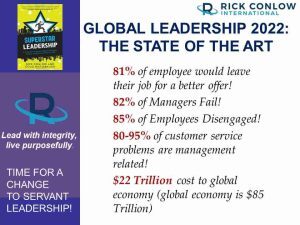
The GREAT Resignation signaled a revolution against top leadership. Record breaking numbers of employees quit their jobs from 2020-2022. It is continuing this year. I wrote about this potential in 2017–The Foreshadowing of an Employee Apocalypse. What are the reasons for quitting? See these from Fortune magazine.
Lack of opportunities for advancement.Disrespect at work.Childcare issues.Lack of flexibility in work hours.Benefits not good.Wanted to relocate.Working too many hours.Working too few hours.Covid19 vaccines required.Because of the above, companies are grappling what to do about it. A recent New York Times article, The Power of American Capitalism, lauds the US economic system and how it has grown stronger. While the stats included are impressive, it could be so much better by applying people-first approaches with Servant Leadership. This is what people want and need. It means creating a great place to work by focusing on treating employees as valued partners and not disposable resources. Here are three strategies organizations and leaders must apply to change corporately and with any given team.
Servant Leadership: Create a Trust MindsetThis starts at the top, but all managers must work at it, and it is challenging work. Leaders must be accessible, and good listeners. With genuine and empathic communication, they can win people over. Leaders must also trust in employee potential. All managers will need regular training to improve their Servant Leadership and performance management skills. Furthermore, the company must provide a plethora of opportunities for employee growth and advancement.
A company’s culture is fluid, and it moves in the direction of how people interact. It is not the company rules or reporting structure that defines the culture. Working relationships spell the truth. You weaken culture with lies, negative or abusive communication, no response to raised issues, a lack of follow-through and blaming or shaming others for problems or mistakes. Support, listening, encouragement, genuine communication, fun, honesty, and integrity strengthens trust and a high-performing working atmosphere.
Servant Leadership: Celebrate the TeamAs a consultant, I noticed that most companies I began to work with have little recognition for managers. As part of our strategy to help improve performance we added management recognition. We used a variety of approaches. (Contests, awards, competition, teambuilding). We did it all in an atmosphere of performance enhancing fun. In addition, we translated how they could do this with their teams.
In one company they wanted to improve sales and increase retention with existing customers. With planning, training, coaching, and recognition, they increased positive results by 75% in eight months. This was a huge positive result and morale booster to this company. When you invest in people this is what they can do.
 Servant Leadership: Coaching for High-Performance
A Servant Leader believes in and cares about people. They realize that when employees win, they win. So, they take the time to do regular one-on-one coaching sessions with all employees. Likewise, they do informal coaching. This means using daily employee interactions (by chance or design: in-person, phone, email, text, or virtual) as opportunities to be supportive, helpful, and encouraging.
I was interviewing a manager at one of my client’s offices. Our goals were to increase employee engagement and positive communication throughout the company. I asked her about her boss’s communication. She said, “He is friendly and helpful but has a backbone of steel.” I loved the comment. It demonstrates that a leader cares, does all that he or she can to help an employee succeed. Yet, at the same time, sets lofty expectations and expects the team to step up. So, you hold them accountable. This is not a negative. You do not have to beat them up, you can build them up to succeed.
Pulling It All Together In summary, creating a great place to work requires a commitment to do lead differently than the norm. Research shows to Servant Leadership companies or managers outperform their competitors. See these studies:
Servant Leadership becomes an unstoppable force for greatness in leaders and companies that decide people-first in their values and approach. They will discover the outstanding difference they can make in people’s lives and business results. As Ken Blanchard declared, “When people lead at a higher level, they make the world a better place because in addition to relationships and results, the goals area focused on the greater good.”
Why not join us on LinkedIn for the Servant Leadership revolution that is taking place about the power of people? Go here: ServantLeadership@RickConlow International. THANK YOU!
Also, click here for excellent insight and a complimentary resource called–4 Keys to Creating a High-Performance Team.
In addition, see our RealTime Learning & Training leadership and personal development website–over 250 resources. Micro-learning and career advancement at your fingertips!
Finally, see Rick’s newest book. The 5 Dynamics of Servant Leadership: How to accelerate your career and inspire your team! See his newest self-directed leadership training: 21 Servant Leadership Training Lessons.
CEO/Founder, Rick Conlow International: RCI transforms managers into leaders by coaching and training them to become Servant Leaders. Clients achieve record-breaking performances in sales growth, customer experience improvement, employee engagement and leadership effectiveness. Furthermore, RCI’s online resources coach and train all managers or employees to higher levels of career success.
Partner with RCI Consulting Services. Visit the RCI store: Books & Training Resources. The post Servant Leadership: The Unstoppable Force for Greatness appeared first on Rick Conlow.March 30, 2023
The Know It All Leader and What It Means
Know it all leaders abound. I think I know it all. You think you know it all. This post is for the leaders, entrepreneurs, managers, executives, and CEOs. In truth, this message is a for everyone because it can benefit everyone. In many circumstances (not all), we approach an individual, a prospective problem, a conversation, and the situation with a major misconception. We think we know it all or at least we know the answer. Why? Because of our experience and role, we have success and authority. This is a strength and our greatest potential weakness.
We Know it all, Don’t We?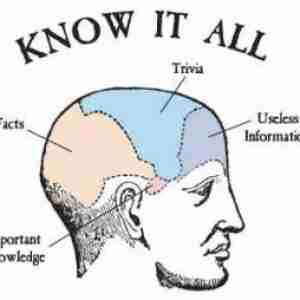 In these situations, our job demands we know it all, or at least to know what to do. Is there a difference?
Objectively, these can all look like wonderful things. We are committed in all cases. So why are any of them an issue?
We are committed to our goals, our perspectives, our interpretations, our understandings, and our visions. Despite how we attempt to convince ourselves that it is about the other person’s (or the team) needs, and the corresponding benefits, our efforts still evolve out of our objectives. This limits our ability to learn or innovate with alternative ideas and insights. We lack empathy as a know it all.
If We Know It All, Can We Know More?However, our knowledge in the above situations also interferes with the work we do, our communication, and the relationship we have with the other person or team, in every single situation. The old saying, “There’s more than meets the eye,” is all you need to remind yourself that no matter what, you cannot know it all. And this is the attitude you should aim to adapt. Let me illustrate to you how dramatically this would affect the way you might approach the 4 circumstances above.
Individuals or team: Learn to understand what they need, so ask what does the person or team think they need?Problems: We need to solve a problems, so what is the issue from other’s perspective?Conversations: We know they are sending us a message, so what are they trying to communicate?Situations: What do they hope to see happen and why is this their goal? Do you see the difference? Everything becomes a question instead of a smug conclusion. Something for us to discover, unravel and explore–instead of something we define, decide and direct. It also gives us the opportunity to really listen, although research shows that 90% of people are poor listeners, especially leaders. This approach is advantageous for you and the other party, and I will tell you why.
Most importantly, it establishes a tone of respect, care, and trust. If you assume that you know it all and that your role is to tell them what you know, you are bound to leave them feeling belittled and ignored.
By giving the opinions of others genuine regard and attention, you are communicating that their voice is more important than your perspective. Better listening rings loud as the key to better working relationships. This is crucial for leadership and all genuine relationships. In contrast, to those that know it all or for those who always want to be right.
Pulling It All TogetherFurthermore, as a leader, asking questions invites employees or customers to explore their own line of thinking and personal growth. If they have not seen it this way before, they may now consider your involvement in the process to be a gift. Certainly, it communicates that they are the experts on their situations. And that you are solely a partner, contributor, or supporter to their process.
In summary, it does wonders for the dynamics of the working relationship because it makes it about others and not you. Subsequently, our goals involve helping, listening, coaching, consulting, supporting, and serving. This is classic Servant Leadership. A leader’s success depends on the team. Film director Richard Eyre commented, “Change begins with understanding and understanding begins with identifying oneself with another person: in one word, empathy. The arts enable us to put ourselves in the minds, eyes, ears and hearts of other human beings.”
 Also, are you committed to your team’s success? If so, see this complimentary Coaching for Results eBook.
In addition, go here for our RealTime Learning & Training leadership and personal development website. Micro-learning and career advancement at your fingertips!
Finally, you are not a know it all, so accelerate your leadership success. Go here for Rick’s Superstar Leadership eBook.
The post The Know It All Leader and What It Means appeared first on Rick Conlow.March 22, 2023
The Secret Sauce to a Superior Customer Experience
A superior customer experience is rare. I travel often. As a result, I live the best and worst customer experience’s companies have to offer. The poor examples outnumber the good.
For example, recently I was going from Minneapolis to NYC. The plane was late, and the attendants crabby. When I got to my hotel, the clerk seemed annoyed with me. He acted more tired than I was. Chalk one up for mediocre service. Maybe you take the corporate jet, and this is not a concern. But I am sure that you buy “stuff” with your money at a variety of places, and it does not take long to experience service breakdowns, does it?
 Horrible Service Reigns not a Superior Customer Experience
Quickly customers everywhere encounter the following:
Discourteous rude employees.Unresponsiveness zombie-like employees.Customer service reps that can’t make a decision.Excessive delays on the phone.Untrained employees.Too many options on phone calls.Lack of complaint resolution online and in-person.Dinosaur service policies that do not help.Confusing service options on websites.Automated chat services that cannot help and overall slow responses.Websites that are unresponsive or marketed products that are unavailable.How do the above play out in organizations? For example, Target consistently is out of stock on items, and has website problems. Kroger employees seldom ask you if you need help, you must find someone to help. Delta Airlines employees never seem to be happy. They are like robots doing their jobs. Walmart stores are often dirty, the aisles are cluttered, and the employees going through motions. Comcast has continual technology problems. Wells Fargo has a poor reputation because of recent scandals. Customer support is not their priority.
This list could go on, but let’s not get depressed. Sometimes I wonder what these organizations are thinking. Did they plan for their employees to do a poor job? Do they just not know what to do? Do they care? Are they stupid?!
A Superior Customer Experience Pays I receive the American Customer Satisfaction Indexes (ACSI) monthly reports. The average customer satisfaction rating is 77.0. This is a “C” grade at best. Currently, the overall rating for over 500 corporations took a dive to 73.4.
Consequently, I wouldn’t give the two companies mentioned above that high a rating. It’s too bad that so many companies have poor service or, at best, average service. Research shows us that the top service companies have higher sales growth and profits over time. Check out the PIMS Database, US Office of Consumer Affairs, Forrester, Bain and ACSI. Intuitively, we all know it is common sense. Furthermore, companies with awesome service have higher customer loyalty and financial success. Superior service pays.
Keys to the Secret Sauce for a Superior Customer ExperienceInstead of working to improve, it seems like everyone keeps surveying customers for even more feedback. However, little changes. Or, they keep adding new technology to fix things, but all the new stuff creates additional problems.
 Secret Sauce #1 Ingredient
Companies need to stop spending millions of dollars on customer surveys for data that isn’t used. Instead, why not invest in applying the data to create customer driven processes and teams? It is obvious that few companies do this. Why not survey and measure less. Then, spend significantly more time and money improving, updating, and changing processes. And training, coaching, recognizing, and supporting your employee teams so they become superstars.
Secret Sauce #2 IngredientWhat if company managers treated the employees like Olympic athletes? In our technology driven society this next sentence may be a radical thought. Become people focused, not system focused. Imagine if we made employees the heroes of the business? They would come up with super ideas for improvement. In addition, I believe they would serve customers in grand style, don’t you? They would do it because they want to not that they have to. These are the two ingredients to the “secret sauce” for a superior customer experience that so many companies have discounted or forgotten.
Pulling It All TogetherFinally, Jeff Bezos of Amazon says, “If you do build a great experience, customers tell each other about that. Word of mouth is very powerful.” Walt Disney added, “Do what you do so well that they will want to see it again and bring their friends.” I just had to share these words of wisdom. I hope you or your organization consider the secret sauce to a superior customer experience. Your career and your company’s survival may depend on it.
 By the way, do you want a game-plan to increase the customer experience of your team today? Download this complimentary guide: The Customer has the Power.
Furthermore, do you want to enhance your leadership skills to drive customer-centered behaviors in employees? If so, check out my new book, Superstar Leadership Model: Good Boss Bad Bos Which One are YOU?
Finally, do you want to become a leader that makes a positive difference on people and this world? See this: 21 Servant Leadership Training Lessons.
The post The Secret Sauce to a Superior Customer Experience appeared first on Rick Conlow.March 11, 2023
Why is Customer Service Still so Bad?
Why is customer service so bad, so often? I published this question in a post in LinkedIn in 2017, updated two years after, and again now. It engaged 976 comments and over 56,000 likes with many more readers. Clearly it is an issue that irritates so many of us. Now, notice the slight change in the title of the post.
 The big debate now is whether customer service is getting better or worse. We would hope it would improve with added research on the profitability of good service, with new product innovations, greater competition, and advanced technologies.
CX management technology has helped….and hurt. Expectations are higher. Customers have significantly more options, but the reality often fails to be delivered. Why? Because employees and customer do not always know how to use the technology to its fullest capacity, or it has defects which causes new complaints. In addition, customers are much more impatient now. According to research, customer loyalty comes from:
High quality products or services,A brand’s promise,The customer service to back it up.Yet, companies often make it too complicated to deliver on the promise. While organizations try to delight customers in creative ways, Steve Jobs quote rings truer today than ever.
I have seen research that says, if you do not do the first two steps above right, your customer service can’t save you. Yet, if you do the first two well but give poor customer service, you lose. Research by HBR shows that customers are 4X more likely to leave and become disloyal because of a poor customer service interaction. Unfortunately, customer service teams are the forgotten people. Executives hype customer service teams but do not give enough substance to support them to help and keep customers.
Overall, how good or bad is the customer experience you receive? What does the research say? I know it depends on the company and even the person. Yet, overall, how would you rate the service delivered by companies? Check out these statistics from research on what’s really happening. Then give a rating…at least mentally.
In addition:
80% of CEO’s believe they deliver superior customer service, yet when customers are surveyed only 8% believe this.89% of customers who experience poor service will leave a brand.90-95% of service problems are management related according to Deming, Juran and Crosby.95% of unhappy customers tell others and will tell three times as many people as happy customers. So what is your overall rating, now? Is customer service getting better or worse?
April is International Customer Loyalty Month. It’s a reminder to all of us that the customer has the power. The American Customer Satisfaction Institute (ACSI) has been rating service since 1994. The overall rating was 74.2 at the end of the year. As of the fourth quarter 2022, with over 500 companies included, it’s 73.2! That is at best a C average. Isn’t it time that companies and employees alike renew their commitment to the highest levels of quality and service? What do you think?
Every month should be customer service month. If we need a given month to focus, we have lost sight of the daily importance of the customer and their experiences every time.
 Want to learn how to serve the customer better as an organization? Check out this complimentary whitepaper: The Customer has the Power!
Maybe you want to enhance your individual skills or your teams, see Rick’s book, Superstar Customer Service: A 31 Days Plan for Individuals to Improve Client Relations, Lock in New Customers, and Keep the Best Ones Coming Back for More.
Want to become a leader that makes a positive difference on people and this world leader? See this: 21 Servant Leadership Training Lessons.
March 9, 2023
The Servant Leader Trusts You
The Servant Leader trusts you. As a result, they focus on your personal growth and career success. When you succeed the Servant Leader succeeds. In addition, the company reaches its goals. This is what contrasts Servant Leadership with traditional leadership. People-first is the priority not an afterthought.
Resources to Accelerate Your Career Also, see our RealTime Learning & Training leadership and personal development website-over 250 resources. Micro-learning and career advancement at your fingertips!
In addition, get Rick’s newest book. The 5 Dynamics of Servant Leadership: How to accelerate your career and inspire your team!
Finally, check out our newest self-directed leadership training: 21 Servant Leadership Training Lessons.
RCI’s Consulting, Coaching & Training ApproachPurpose & PlanRCI’s purpose elevates “People-first” through #ServantLeadership. We accelerate Leadership trust, employee engagement, and customer engagement. We lead the charge in the next revolution in leadership thought and practice that embraces the “power of people.”
RCI partners with companies by applying high-performance strategies to coach, train, and consult to achieve breakthrough results through their management teams. We believe in Sservant Leadership, leading by example, high-perforamnce coaching, and leading with integrity.Servant Leadership is about “them” not I or we.
Research shows it is the most effective leadership approach. We passionately and relentlessly focus on this undiscovered potential. Too many companies are enamored by technology. While a company must keep pace, too many have lost the loyalty of their teams in the process. As a result, organizations experience toxic workplaces, bad bosses, employee retention issues, and the GREAT RESIGNATION.
High Performance ResultsWith the rise of AI technology and automation employees are the forgotten critical success factor to a company’s success. Today, too many organizational cultures inhibit employee engagement even with the best of intentions. As a result, poor execution leads to lower sales growth, profit, or customer loyalty.
With a people-first focus through Servant Leadershipi RCI client’s achieved:
EX gains 15-20 pointsCX gains 12-19 pointsNPS scores of 68-95%eNPS 60-85%Employee turnover reduced four timesSales gains 48%, 75%, 122%, 212%48 Quality Service AwardsROI: 187: 1Publishing RCI also publishes our blog and digital leadership and personal development learning modules, assessments, eBooks, and training programs. We offer over 400 posts on our blog.
In addition, our RealTime Learning & Training subscription provides over 250 resources. Furthermore, we provide over a hundred added learning resources for self-directed and team development.
See our resources above and check out the RCI store.
The post The Servant Leader Trusts You appeared first on Rick Conlow.