Rick Conlow's Blog, page 8
October 5, 2021
Creating Employee Engagement: 4 Methods That Work
Do you want to achieve a higher level of employee engagement, motivation, and performance? Do you want more self-satisfaction and recognition for your efforts? Ramp up your team through four keys approaches to creating exceptionally high levels of employee engagement. Consider, disengagement costs companies close to $2 trillion worldwide.
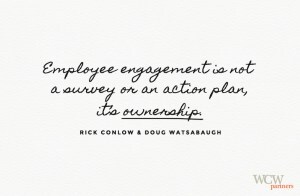 Bottom-line, most companies and managers want employee engagement. Consequently, nearly everyone measures it and does action plans. It’s the talk of the town. Yet, while there is some improvement, we continue to have the high levels of employee dissatisfaction according to Gallup, Dale Carnegie, and Aon Hewitt research. Why?
Employee engagement has become a strategy not a way of doing business. It seems to be all about the numbers and action plans. It is something corporations and leaders are trying to do to people. For it to work it needs to be personal and emotional, and a process focused on the potential and well being of people. As a result, a company leadership really needs to care about the success of their employees. Once leaders begin to figure this out, they can tap the most important part of their business-their employees.
The Payoff of Employee EngagementIn this leadership training video, Rick reveals four leadership skills to drive employee engagement. To use these approaches and succeed as leaders, managers need to change. It is a matter of trust, and leadership engagement. Leadership today is a high contact sport which leads to employee ownership, buy-in, commitment and motivation. This is often uncomfortable for managers to do because they lack people skills. However, it is doable with leadership training.
Watch this brief but powerful video training to discover a way to win. The payoff is big. Above all, research shows that highly engaged employees are much more productive and effective. This means 21% more profitability, and 202% overall better productivity. In addition, employee turnover decreases by 87%. Furthermore, they bring in 2.5 times more revenue. High employee engagement adds significantly to a company’s success. What honest leader would reject that?
 In addition, do you want to learn more techniques to engage and motivate employees? Click here for the article, Coaching for Results.
Also, do you want to accelerate your career as a leader? Then check our eBook, Superstar Leadership.
Finally, see Rick’s newest book, The 5 Dynamics of Servant Leadership.
The post Creating Employee Engagement: 4 Methods That Work appeared first on Rick Conlow.


October 2, 2021
The Greatest Leadership Myth Ever-Busted!
The greatest leadership myth is not just about the American culture. Unfortunately, it’s a phenomenon that has infiltrated leadership thought globally. For example, we see the negative side effects of it show up in the media. Almost every day another leader bites the dust because of an indiscretion and receives infamous publicity. Why? What’s the underlying cause for most of these failures? Here are a few examples of that give clues. You undoubtedly can add some of your own:
A CEO who cut employee benefits because the company’s insurance costs rose when two employees had babies born with complications that cost a million dollars each for care. He has an estimated net worth of $80M.A CEO who doesn’t want fracking near his home, but his company supports it worldwide.The CEO who has his name on everything he owns, and if you look at his website employees are nowhere to be found.A CEO who spent $200M on his home and had a lake created to get to it.The CEO who said, “I am all for employee involvement as long as they come up with what I want.”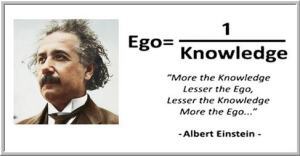 The Greatest Leadership Myth Busted
The greatest leadership myth says it is all about the leader. Therefore, far too many leaders let their ego get in the way and they possess three self-focused strategies to:
Take power for personal recognition and advancement.Control and manipulate people for their own means and agenda.Strive to get others to serve them to gain what they want when they want it.Even the dictionary agrees. It says leadership is about direction, command, authoritativeness, control, superintendence, and administration. The bottom-line for these leaders is greed, selfishness, and the lack of integrity. As one CEO explained to his leadership team on the deck of his new home. “Do you see all of this land by the river? If you work hard, one day it will be all mine.” The result of this we all know. Leaders like this engender distrust, resentment, and resistance in people. Consequently, in business terms they create poor employee engagement, high turnover, lower productivity, and bad customer service. Pay attention leaders it isn’t working. Here are a few survey examples:
A Gallup poll shows that members of Congress in the US are the second lowest rated profession.Pew Research shows that 70% of people don’t believe business executives add very much value to society.Furthermore, a Survey of Trust in the Workplace found that nearly half of employees lack trust in their senior management and they are the least trusted group in companies.A Proven Option to the Greatest Leadership MythWho are the most admired leaders? They aren’t the ones who have the biggest homes, scroll their name on the business, do one thing and say another, or treat people disrespectfully. True leaders realize that authentic leadership is about serving others and helping others succeed. In business terms this equals greater success and profitability for a company. Many research reports demonstrate that higher employee productivity and innovation comes from greater employee satisfaction and loyalty. This is achieved through trust, openness, and ownership.
 In summary, leaders who take this approach use three other-focused strategies to:
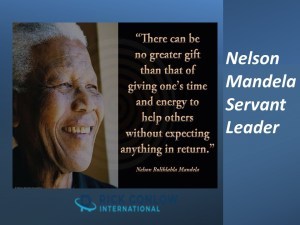
This is Servant Leadership. Nelson Mandela understood. He cared. He said, “For to be free is not merely to cast off one’s chains, but to live in a way that respects and enhances the freedom of others.” It wasn’t about injustices done to him or getting what he wanted in life. Above all, it was about his country and the people living in it. After surviving years in a horrible prison, he became President of South Africa. Most importantly, he pulled his racially divided nation together through the power of sport. He motivated his rugby team to reach a higher plane of excellence and purpose, and this lowly team won the Rugby World Cup in 1995. As a result, his process of rugby teambuilding led to inspirational nation building.
Pulling It All TogetherIn conclusion, leaders like Mandela, Maya Angelou, Gandhi, Dr. Martin Luther King, Jesus, Aung San Suu Kyi, Abraham Lincoln, Cesar Chavez, and Mother Teresa; set a whole new standard to strive for if we learn from it. The greatest leadership myth ever is that leadership is about the leader. In contrast, servant leaders with vision and a heart know it’s all about the people they serve.
 Also, do you want to Motivate-NO-Inspire People? See this: 10 Keys to Elevating Employee Engagement.
In addition, go here for our RealTime Learning & Training leadership and personal development website. Over 130 micro-learning and career development resources at your fingertips!
Finally, do you want to accelerate your leadership success and learn more about Servant Leadership? Go here for Rick’s newest book, The Dynamics of Servant Leadership: Inspire Your Team to Achieve Extraordinary Goals!
The post The Greatest Leadership Myth Ever-Busted! appeared first on Rick Conlow.
September 23, 2021
Human Sigma: The Lucrative Link for Better Results
Human Sigma involves the connection between employee engagement and the customer experience. Each undoubtedly linked in influencing a company’s financial results. Yet, it’s important to clarify that this connection isn’t always linear. In other words, companies can inaccurately assume that by improving one, they’ll automatically improve both ingredients to a positive human sigma. Consequently, they start with the easier option. Most often they just work on the customer experience. This is the wrong way to go about it.
It Isn’t That Easy For example, just as exercising and eating healthy are two factors to losing weight. Treating employees well and satisfying customers are two factors to driving business success. That being said, if you just do one, the other won’t automatically change for the better. If you eat well that’s good. Yet, if never move your body, you won’t necessarily lose weight or be healthy. And similarly, if you just strive to satisfy your customers, your employees might not feel any different. Unfortunately, companies often sabotage their efforts because of neglecting their culture. Doing both parts of human sigma well substantially increases your likelihood of achieving financial impact.
 If you’re wondering why the linkage matters, let’s look at the research by Fleming and Asplund. Through their research, they discovered the following:
Interestingly, they did not have to be the best in each area. You just need to be making good strides in each areas of the human sigma to achieve better results overall.
Great News for 4 Main ReasonsIt provides a focus. Companies can spin their wheels when deciding where to begin when they know they need to change. This human sigma evidence provides companies the direction they might be lacking.It produces a realistic approach to reaching results. Knowing how these two things work in tandem can spread the responsibilities around. Nobody must do it all. It needs to be a team approach.It proves that everyone matters. If just employees mattered – your customers wouldn’t want to return for more. And if just your customers mattered – your employees might feel severely shunned. But with this news, both factors matter. Ultimately this means more people will be pleased with your company.In conclusion, the location or department manager is the driver not the corporate office. How well managers relate to their teams and customers determines the success. Therefore, leadership development and training are crucial to improving results.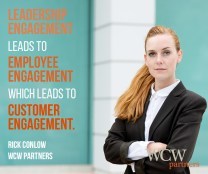 Finally, this lucrative link simply makes common sense. How can you expect exceptional customer service if employees don’t like their boss? Or they hate the company? Or how can you deliver subpar service with employees that love their boss and the company? In either case it is a leadership challenge. Steve Jobs said it well, “That’s been one of my mantras – focus and simplicity. Simple can be harder than complex. You must work hard to get your thinking clean to make it simple. But it’s worth it in the end because once you get there, you can move mountains.”
Also, do you want more ideas on how to inspire your team? Check this out this eBook-How to Motivate-NO-Inspire People.
In addition, go here for our RealTime Learning & Training leadership and personal development website. Micro-learning and career advancement at your fingertips!
Finally, do you want to accelerate your leadership success? Go here for Rick’s The 5 Dynamics of Servant Leadership.
The post Human Sigma: The Lucrative Link for Better Results appeared first on Rick Conlow.
September 16, 2021
Legendary Leadership Lessons from Ten Great Leaders
What legendary leadership lessons can be learned from the past? No leader is born great or a hero. Research shows that the greatest in us comes from education, experience, and the lessons learned from others. Here are ten great servant leaders and the legendary leadership lessons they have given us. Are you willing to receive and apply them?
Foundational Values: Legendary Leadership Lessons 1-3Nelson Mandela For 27 years opponents jailed Mr. Mandela for his beliefs about freedom and equality. He eventually became the first black President of South Africa. Mandela changed a nation and ended apartheid by his selfless but resolute leadership. His example demonstrated reconciliation and forgiveness. Legendary Leadership Lesson 1 is to be clear on your values. Mandela reminds us, “For to be free is not merely to cast off one’s chains, but to live in a way that respects and enhances the freedom of others.”
Lucius Quinctius CincinnatusAs a statesman and hero in early Rome, all highly regarded him. In addition, he confronted the ruling elite of his day. As a result, opponents condemned his son. So, through force he simply lived on his small farm. When Rome was under attack by their enemies the government called on him (because of his military background) to be a dictator. After his victory he resigned his office and gave up absolute power all within two weeks. His virtuous deed and lack of personal glory sets an example of outstanding leadership and service. He thought that any Roman should serve his country, not the other way around. Lesson 2 reminds us to lead with integrity. Cincinnatus did his duty and did not ask or take more.
Dr. Martin Luther KingDr. King led non-violent protests as an activist for civil and human rights. He captivated people’s attention with his powerful speaking. More importantly, King rallied them with his dream that all people were created equal. His speech, I Have a Dream, is one of the most eloquent of all-time. He also walked the talk and received the Nobel peace prize for his efforts. Lesson 3: the greatest leaders have a vision or dream that inspires others to follow them. King said, “Now, I say to you today my friends, even though we face the difficulties of today and tomorrow, I still have a dream. Today the dream speech is deeply rooted in the American dream. I have a dream that one day this nation will rise up and live out the true meaning of its creed: – ‘We hold these truths to be self-evident, that all men are created equal.”
Leading with Action: Legendary Leadership Lessons 4-7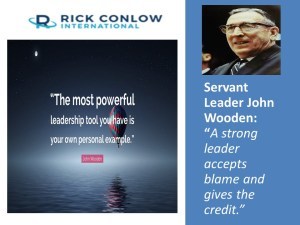 Wendy Kopp
While attending college Wendy interacted with students with diverse backgrounds unlike what she experienced in high school. She realized that many came from disadvantaged backgrounds and were not as prepared as others. For her senior thesis she designed the idea of a national service organization like Peace Corps. She envisioned college graduates teaching in underserved areas and named her thesis, “A Plan and Argument for the Creation of a National Teacher Corps.” Her belief was, “People are everything in education, just as in the corporate world.” She worked briefly on Wall Street, but her heart was not in it.
Whenever she read stories about executives who believed in education, she sent them a copy of her thesis. Eventually, a variety of companies donated money and she Founded Teach for America in 1989. Today her organization serves millions of children in 32 countries worldwide helping social entrepreneurs teach in low income underfunded rural and urban public schools. Legendary Leadership Lesson 4 shows that education and training are crucial. Her vision, “To narrow the educational disparities around the world.” She has written several books including, One Day, All Children.
Ashoka the GreatThis leader ruled an empire in India that covered nearly the entire subcontinent. Early in his reign he was consider fierce and ruthless. After a massive war, he rejoiced with victory. However, the staggering amounts of death and destruction moved him. He cried, “What have I done? If this is a victory, what is a defeat, then? Is this a victory or a defeat? Is this justice or injustice? Or gallantry or a rout…?” Consequently, he transformed his ways and became a patron of Buddha. He led a peaceful life and did great acts of welfare and construction. Lesson 5 shows that great leaders learn, grow and change.
Abraham LincolnAbe Lincoln educated himself and persevered despite many setbacks in business, life, and politics. As the 16th US President, he became the right man at the right time as he led the US through a terrible civil war. He steadfastly believed that the union must be preserved. Also, he had a conviction of equality, and his Emancipation Proclamation freed the slaves. He was a man of great humility and oratory skills. Therefore, these traits helped him gain respect even from his enemies. Legendary Leadership Lesson 6 requires that to lead effectively you must communicate, influence, and persuade positively. Lincoln declared, “You can fool all the people some of the time, and some of the people all the time, but you cannot fool all the people all the time.”
Malala Yousafzai Malala is a Pakistani activist for education for girls. She is the daughter of an educational activist, and the family came to run a chain of schools. She was inspired by her father’s humanitarian work, so she started a blog under a pseudonym outlining her life under the Taliban. The New York Times did a documentary about her struggle, activism, and life. Malala was nominated for a Noble Peace prize. The Taliban shot her and two other girls while on a bus after taking an exam. As a result, she became famous while the Taliban threatened another attempt. After her recovery, now based in the US, she co-founded Malala Fund. She won the Nobel Peace prize and was featured on Time Magazine.
Legendary Lesson 7 that passion for others drives success. She declares, “I raise up my voice-not so I can shout but so that those without a voice can be heard. We cannot succeed when half of us are held back.”
Helping Others Succeed: Legendary Leadership Lessons 8-10Mahatma GandhiGandhi was the premier leader in India’s movement for independence. Trained as a lawyer; he learned nonviolent civil disobedience practicing law in South Africa. Returning to India he led campaigns to help the poor, expand women’s rights, and achieving self-rule (Swaraj). Many times, the British government imprisoned him, but he did not quit. Through non-violent opposition and not firing a gun. For example, he collaborated tirelessly with multiple governmental levels and groups to protest oppression. Together they resisted the tyrannical British government. Certainly, history unofficially considers him the “Father of the Nation” of India. Lesson 8 emphasizes that great leaders enable others to act by unifying them with a vision. Furthermore, they organize them into productive but cooperative groups (teams).
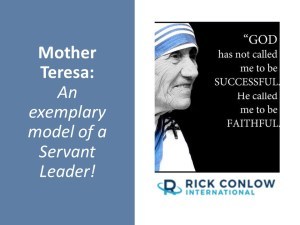 Mother Teresa
 Born in Albania, Mother Teresa became a Roman Catholic nun. She served in Ireland and then moved to India. She became disturbed by the perpetual poverty. In addition, she relentlessly served the dying and poor by living among them and giving each one comfort. She founded the Missionaries of Charity. It eventually grew to 4500 sisters in 133 countries. Lesson 9 demonstrates that great leaders lead by example. Mother Teresa said, “I have found the paradox, that if you love until it hurts, there can be no more hurt, only more love.”
George WashingtonThe first US President and one of the founding fathers, Washington set an early collaborative tone for US Presidents. As commander of the continental army, he led an ill-equipped and poorly trained force to victory against the British. He presided over the convention that drafted the US constitution. People admired his leadership skills as he set the course of the nation with strength and tenacity. He also served only two terms, which is the precedent for today.
Most notably, Washington stated, “Let your heart feel for the afflictions and distress of everyone, and let your hand give in proportion to your purse.” Legendary Leadership Lesson 10: a leader’s role is to serve.
In SummaryIn conclusion, whether you are a leader with or without a title, everyone has greatness within. All these qualities together define servant leaders. All can be learned. Therefore, the next step is up to you. As former US President John F. Kennedy said, “Leadership and learning are indispensable to one another.”
Also, are you committed to your team’s success by applying these legendary leadership lessons? If so, see this complimentary Coaching for Results eBook.
In addition, go here for our RealTime Learning & Training leadership and personal development website. Micro-learning and career advancement at your fingertips!
Finally, do you want to accelerate your leadership success? Go here for Rick’s newest book, The Dynamics of Servant Leadership.
The post Legendary Leadership Lessons from Ten Great Leaders appeared first on Rick Conlow.
September 10, 2021
Defining Your Leadership Legacy
Have you ever thought about your leadership legacy? In other posts, we discussed an important difference between good bosses and bad bosses. Good bosses believe right now is the right time to act – bad bosses wait for the “right” opportunity. Good bosses serve. Bad bosses want to be served.
A Leadership Legacy This got me thinking about a leader’s legacy. All of us, regardless of our position or place in a company, leave a legacy. We all have extraordinary potential, it’s just a matter of whether we’re going to bring it out and leave it behind in a positive memorable positive way or or a milk toast manner or a negative destructive way. For example Nelson Mandela left a grand legacy of collaboration and forgiveness. On the other hand, Steve Job’s legacy is mixed. He was a passionate and brilliant business visionary but a horrible leader in how he treated others. What will be yours?
Let me rewind for one minute. Legacy can have a morbid connotation – we can think that legacies only linger after someone has died. But that’s not the case here – I’m talking about the aftermath of someone’s contributions. Employees can be promoted, leave a company, help people, change directions, treat people well or not, achieve a significant goal, or do several things that give their legacy certain enduring qualities. So again, what kind of legacy do you want to leave?
Your LegacyGood leaders know that right now is the right time. And the reason they do is because they know that first-class leadership has so much more to do with the big picture and other people than it does with them. They know that little things accumulate, they know that people matter, and they know that in the long run, the benefit of their contributions can last much longer if they make the most of what matters in the meantime.
John Maxwell says, “People will summarize your life in one sentence – pick it now.” I agree with this, and I also encourage you to pick a professional one-liner, too.
Are you wondering where to begin as you define the legacy you want to leave? Take your time and use these questions to generate ideas.
When you’re at work, what do you do that makes time fly?What are your strengths? What do you need to improve?How do you think others experience you at work? How do you want to be viewed?What do you value most about yourself as a leader? What do others say?Consider, leaders you admire? Why do you admire them?What 3 words do you want to come to mind when others reflect on you as a leader?In other words: Your team, your company and your peers will remember your contributions in one sentence – pick it now. Then make the needed changes so it becomes a reality for others and then you.
Pulling It All TogetherIt may seem trivial to take the time to define your leadership legacy, but you are creating one, nonetheless. You can’t take steps to become the leader you hope to be, if you don’t even know what that real leader looks like or are unwilling to change to get there. In summary, Dolly Parton said, “If your actions create a legacy that inspires others to dream more, learn more, do more and become more, then, you are an excellent leader.”
 Also, do you want more want to become a Servant Leader and achieve the best results? Read this: The Dynamics of Servant Leadership eBook: Inspire Your Team to Achieve Limitless Positive Performance.
In addition, go here for our RealTime Learning & Training leadership and personal development website. Micro-learning and career advancement at your fingertips!
Finally, do you want to accelerate your leadership success? Go here for Rick’s Superstar Leadership eBook.
The post Defining Your Leadership Legacy appeared first on Rick Conlow.
August 29, 2021
Managing a Leadership Mistake through 6 Phases for Recovery
Review these six universal phases to minimizing the magnitude of a leadership mistake. These do not necessarily make up a step-by-step process because problems are always so coherent.
Identify what went wrong.Before doing anything else, make sure you understand where you went wrong. If you prematurely accept responsibility and apologize to others, you will come across as ill-prepared and uninformed. As a leader, you want to demonstrate to others that it is okay to make mistakes, if they are handled professionally and responsibly. Considering getting input from a coach or another manager you trust. So, once you know a mistake has been made, do your best to identify what went wrong, acknowledge how you were at fault, and all the details that made this mistake what it is. This way you can approach your team positively with the facts rather than hearsay or guessed at suppositions.
Accept responsibility.With step one under your belt, now accept appropriate levels of responsibility. It is important not to overstate your role nor to understate your fault, which can be a hard balance to find. This is because if you accept responsibility for everything, but others were involved, you are subtly communicating that it is okay for others to pass the buck, which is not the example you want to set. If you do not accept your role in all of it, you are setting the stage for others to overlook their roles and further problems. Neither of these extremes help.
Apologize to the appropriate teams and individuals.Yes, acknowledge that you were wrong. It is an honorable way to act. Also, determine who was affected by your mistake. Too often, managers make a blanket apology that feels insincere and unauthentic. When an apology is done right, leave the situation with more respect and admiration for your courage, humility, and honesty. Monitor and manage your emotions and apologize for your part in all of it.
Problem-solve if possible and/or outline future considerations.
Determine what can be done now to resolve the issue. If it is too late to clean up the mess. Remember, planning eliminates many issues or mistakes.
Take appropriate action.After identifying the real problem and the potential problem-solving solutions, act. Delegate tasks do your part with integrity and work hard to reduce the repercussions of the mistake.
Ask, what can you learn or relearn?This phase requires self-reflection, learning, and personal development. Ask yourself this question-honestly. Get input from those you trust and value. This is where you grow and do better next time.
Summary for Handling a Leadership MistakeFinally, a key to future success is to focus on continuous improvement. Ask a mentor for feedback about the situation. Think about what you did well. Think about what you can do better next time. As George Bernard Shaw once said, “Success does not consist in never making mistakes but in never making the same one a second time.”
Also, do you want to minimize your leadership your leadershipmistakes? If so, see this complimentary Coaching for Results eBook.
In addition, go here for our RealTime Learning & Training leadership and personal development website. Over 130 micro-learning and career development resources at your fingertips!
Finally, do you want to accelerate your leadership success? Go here for Rick’s Superstar Leadership eBook.
The post Managing a Leadership Mistake through 6 Phases for Recovery appeared first on Rick Conlow.
August 19, 2021
7 Traits that Unlock the Powerful Presence of Servant Leaders
The presence and impact of Servant Leaders depends on their personal power. Most leaders rely on position power that comes with their job title. How do you get someone to follow you? Read on.
Leadership through position power involves these strategies:
Domination approach.Employees are subordinate.“Do as I say!”Fear strategies.The leader has all the answers.Controlling through intimidation or analytics.Leadership through personal power includes these strategies:
Service approach.Employees are associates.“Do as I do also!”Creating organizational engagement and teamwork.The team has answers, too.Influencing and empathy through people skills.This is an exciting time to be a leader. Never has there been so much statistical evidence linked to leadership effectiveness. The essence of servant leaders has more to do with who they are and how they treat others. The position or title is secondary. Research also suggests that managers who focus on service to others are more successful than those that do not. (See this: Servant Leaders Achieve Extraordinary Results) Most importantly, then, seven key traits unlock the depth of position power that define a Servant Leader’s powerful presence.
The Characteristics of Servant LeadersWhat are these characteristics of servant leadership? Research by Kouzes and Posner indicates key characteristics of the most admired leaders. Aspiring and experienced supervisors, managers and executives alike have benefited from their findings. Their work correlates with the teaching of author and consultant Warren Bennis. He describes that you master the context of leadership by not just doing things right, but more importantly doing the right things.
Kouzes and Posner found five crucial traits. Their study’s methodology included a questionnaire and case studies. It included 20,000 managers from four continents. Listed below are my brief definition of each these traits. From my experience, I added a six and seven as bonus. These are the bedrock traits of Servant Leaders.
Being Honest Not surprisingly, honesty is the most important trait. We see lack of integrity displayed so often in high- level officials from government, religion, and business. How can you measure honesty? The leader’s behavior often leaves clues in their relationships. Does the leader do what he or she says is important? Does the leader follow-through on commitments? How does the leader handle conflict? Is the leader consistent in various practices and policy execution? How well does he or she listen to others?
For example, one manager declared that customer service was his #1 priority. Yet, he often described complaining customers as “bananas”. As a result, his company’s service levels did not improve. Leaders who are genuine not only act the part but also declare their values, ethics, and standards quite clearly. To clarify, without integrity everything that potential leaders do is a ruse.
Being Forward LookingPeter Drucker said it well, “the best way to predict the future is to create it.”
Employees want to know where the organization is going. Servant Leaders do this well. They also give hope that the company or department can do it. This adds a level of comfort and security. I also add the inner motivation for employee performance. Therefore, effective leaders identify a vision that supports the values of the organization. Then they consistently communicate this direction to others. Today the most successful leaders define a purpose driven vision that will make a difference in local communities and the world, above and beyond profit.
Being InspiringYou do not have to be a motivational speaker to have this characteristic. However, the leader does need to be positive, enthusiastic, and energetic about their company or department. They also must believe in what they are attempting to accomplish. Too many managers are negative. Negativity destroys employee commitment. There is also no better way to sap the vitality of a group than to show up for work with a ho-hum attitude. Servant Leaders have passion for their work. It is contagious. Passion leads to purpose which makes work much more meaningful to others. Therefore, they do a better job. This all leads to constant and consistent interaction in a variety of ways with all levels of the company.
Being Competent In today’s volatile marketplace leaders need to be “students of the game.” In other words, they need to know their field well technically. In addition, they must understand the business. The leader does not have to be the best technical person. Yet, they should be able to add real value to the job.
Furthermore, Daniel Goleman’s work with emotional intelligence suggests that a key competency is “people skills”. How well does the manager master personal and emotional self- control? And how well does the manager interact with others? Does his or her behavior bring unity or division?
Being CredibleHow do you know you are a credible leader? In summary, leaders who are credible are: honest, forward looking, inspiring and competent. Communication experts call this source credibility. In other words, it means trustworthiness, dynamism, and expertise. Servant Leaders have credibility by delivering a positive track record, and concise clear expectations. They are consistency constant between words and deeds. Leaders with these attributes are believed. All of us want leaders we can believe in and trust. Kouzes and Posner call this the First Law of Leadership: If we do not believe in the messenger, we will not believe the message.
Humility Most leaders want the attention. Consequently, their ego demands recognition. Leaders like Elon Musk, Richard Branson or the late Steve Jobs come to mind. Servant Leaders inspire others by giving them the attention and recognition. When things go well the team is lifted up. When things do not go well, they take the blame. Most people are not familiar with this today. Furthermore, humble leaders do not get the press or name recognition, but they most often get the results.
Former CEO of Medtronic, Bill George, led by example. He facilitated Medtronic’s growth into a great company. He did it with an authentic focus on employees and patients and not on himself. In conclusion, Pastor Rick Warren said, “True humility is not thinking less of yourself; it is thinking of yourself less.”
HeartServant Leaders have heart. They lead to have an impact in the lives of their customers and employees. They leverage their position and make it purposeful. In fact, research shows that purpose-driven businesses excel in a variety of business metrics better than others. Simon Sinek says, “Profit isn’t a purpose. It is a result. To have purpose means the things we do are of real value to others”. Consequently, Servant Leaders have compassion for people and in dealing with the world’s pressing problems. Most notably, like Mother Teresa. More and more people–employees–want that kind of leader and workplace.
Recently I posted an article entitled, The Philosophy of Management. It went viral as people shared their views that most managers and companies today don’t create positive work cultures or relationships. In other words, there is no heart–only the bottom-line. People are sick and tired of toxic corporate environments.
Pulling It All Together for Servant LeadersIn conclusion, Servant Leaders stand out. Servant leadership is a lost art. Why? Because they appear to be an anomaly today. Most notably, they exhibit the traits that we long for in leaders that we are willing to follow. Plus, according to research they achieve better results. However, few managers lead that way. Be one of the few that matter! Finally, as Dr. Martin Luther King Jr. said, “Life’s most persistent and urgent question is, what are you doing for others?”
Also, do you want more want to become a Servant Leader and achieve the best results? Read this: The Dynamics of Servant Leadership eBook: Inspire Your Team to Achieve Limitless Positive Performance.
In addition, go here for our RealTime Learning & Training leadership and personal development website. Micro-learning and career advancement at your fingertips!
Finally, do you want to accelerate your leadership success? Go here for Rick’s Superstar Leadership eBook.
The post 7 Traits that Unlock the Powerful Presence of Servant Leaders appeared first on Rick Conlow.
August 4, 2021
Servant Leaders Achieve Extraordinary Results
Servant leaders’ behaviors and traits have been known for centuries but remain ambiguous. However, the term Servant Leader was first introduced only in 1970, by Robert Greenleaf’s essay, “The Servant as a Leader.” It has risen in popularity, but it is obscure because many deride it for being soft and out of touch in this “dog eat dog” world of competition, and fast paced business reality. Consequently, 82% of managers fail and 85% of employees are sadly disengaged worldwide.
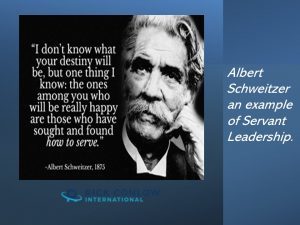 Yet, according to research and other sources Servant Leaders achieve better-even extraordinary results. Adam Grant, management researcher and professor at the Wharton School of Business, shows in his book Give and Take that servant leaders are more productive and more highly regarded by employees. Furthermore, see these additional studies that back this up. Then, consider how you can become a Servant Leader and transform your career?
The University of Illinois at Chicago Business School (2015) conducted a study at national restaurant chain. It demonstrated that the stores with servant leaders gained 6 percent higher job performance, 8 percent increase in positive customer service ratings, and 50 percent higher staff retention rate.
Also, research by Schaubroeck, Lam, and Peng (2011) found servant leadership at the team level gained 10% in performance. In addition, research by Hoch, Bommer, Dulebohn & Wu (2016) showed an additional 12% gain in outcomes beyond other studies.
Servant Leaders are Better than Great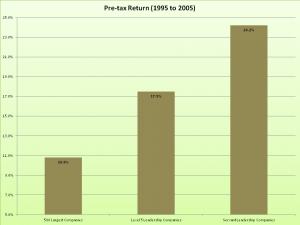 Most importantly, Sipe & Frick study (authors of the 7 Pillars of Servant Leadership), found these results over a ten-year period (1995-2005).
In conclusion, Servant Leadership companies and managers better than great!
Pulling It All Together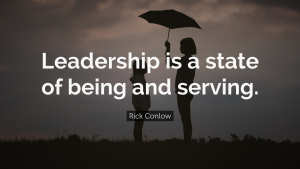 Why do Servant leaders achieve more? Bottom-line they focus on people and not the other trapping of business life. They create winning cultures through authenticity, teamwork, and personal development. As a result, they learn to tap into hearts and minds of people to bring out their best performances. Of course, they also lead by example and with integrity. These approaches are rare today, yet they work in extraordinary ways! To sum up, superb leadership involves being and serving.
 Also, do you want to Motivate-NO-Inspire People? See this: 10 Keys to Elevating Employee Engagement.
In addition, go here for our RealTime Learning & Training leadership and personal development website. Over 130 micro-learning and career development resources at your fingertips!
Finally, do you want to accelerate your leadership success and learn more about Servant Leadership? Go here for Rick’s newest book, The Dynamics of Servant Leadership: Inspire Your Team to Achieve Extraordinary Goals!
The post Servant Leaders Achieve Extraordinary Results appeared first on Rick Conlow.
July 28, 2021
19 Positive Thinking Quotes that Empower and Motivate Us to Succeed
These positive thinking quotes can help you change your life for the better. According to numerology the number 19 represents success and achievement. Furthermore, other sources describe the number nineteen to mean order and focus. Read these positive thinking quotes and remind yourself of your unlimited potential to reach your goals and to live the success you desire.
 10 Potent Positive Thinking Quotes“Keep my word positive. Words become my behaviors. Keep my behaviors positive. Behaviors become my habits. Keep my habits positive. Habits become my values. Keep my values positive. Values become my destiny.” – Mahatma Gandhi“All limitations are self-imposed.” – Oliver Wendell Holmes“Look for something positive in every day, even if some days you have to look a little harder.” – Unknown“Work hard for what you want because it won’t come to you without a fight. You must be strong and courageous and know that you can do anything you put your mind to. If somebody puts you down or criticizes you, just keep on believing in yourself and turn it into something positive.” Leah LaBelle“If you can dream it, you can do it.” – Walt Disney“Aspire to inspire before we expire.” – Unknown“Your mind is a powerful thing. When you fill it with positive thoughts, your life will start to change.” – Unknown“Live life to the fullest and focus on the positive.” – Matt Cameron“Positive thinking is a valuable tool that can help you overcome obstacles, deal with pain, and reach new goals.” – Amy Morin“I believe one of my strengths is my ability to keep negative thoughts out. I am an optimist.” – John Wooden
 9 More Positive Thinking Quotes that Inspire“Be positive. Your mind is more powerful than you think. What is down in the well comes up in the bucket. Fill yourself with positive things.” – Tony Dungy“Everything you can imagine is real.” – Pablo Picasso“A positive attitude causes a chain reaction of positive thoughts, events and outcomes. It is a catalyst, and it sparks extraordinary results” – Wade Boggs“Always turn a negative situation into a positive situation.” – Michael Jordan“Optimism is a happiness magnet. If you stay positive, good things and good people will be drawn to you.” – Mary Lou Retton“I really believe in the power of positive thinking and the collective power of people’s thoughts spawning something into becoming reality.” – Finn Balor“Success is a state of mind. If you want success, start thinking of yourself as a success.” – Joyce Brothers“What we think, we become.” – Buddha“Tough times never last but tough people do.” – Robert H. SchullerPulling It all Together
Success is directed by positive thought, driven by corresponding action, and defined by relentless tenacity. Consequently, anything is possible. Impossible becomes improbable. In conclusion, sear this quote by William James into your subconscious mind. He said, “The greatest discovery of our generation is that people can alter his or her life by altering the inner attitudes of the mind.” May the best of success be yours!
 Also, do you want more personal success in life? See this complimentary Success Practices Assessment and Guidebook.
In addition, go here for our RealTime Learning & Training leadership and personal development website. Over 140 micro-learning and career development resources at your fingertips!
Finally, do you want to accelerate your leadership success? See Rick’s newest book, The Dynamics of Servant Leadership: Inspire Your Team to Achieve Extraordinary Goals! And go here for Rick’s best seller, Superstar Leadership eBook.
The post 19 Positive Thinking Quotes that Empower and Motivate Us to Succeed appeared first on Rick Conlow.
July 20, 2021
20 Servant Leadership Quotes that Elevate our Thinking
Servant leadership reflects an approach that challenges traditional leadership practices today. Why? Because it focuses first on people and then the rest of the activities of leaders. The goal is to serve. Now, it is not a milk toast approach to leadership as some think. Studies show it to be the most effective and successful form of leading. By focusing on the team with integrity, setting high standards, demonstrating compassion and support, servant leaders inspire others and bring out the best in their potential.
Read these servant leadership quotes to learn and be inspired.
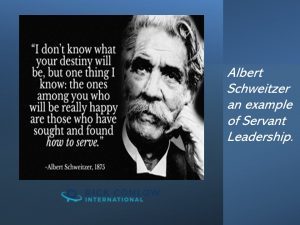 10 Compelling Servant Leadership Quotes“Serving others prepares you to lead others.” Jim George“Of all the things that sustain a leader over time, love is the most lasting. The best-kept secret of successful leaders is love staying in love with leading, with the people who do the work, with what their organizations produce, and with those who honor the organization by using its work.” James Kouzes and Barry Posner“Leadership should be born out of the understanding of the needs of those who would be affected by it.” Marian Anderson“Servant leadership is all about making the goals clear and then rolling your sleeves up and doing whatever it takes to help people win. In that situation, they don’t work for you; you work for them.” Ken Blanchard“People do not care how much you know until they know how much you care.” John C. Maxwell“The true heroes of the new millennium will be servant leaders, quietly working out of the spotlight to transform our world.” Ann McGee-Cooper“The ear of the leader must ring with the voices of the people.” Woodrow Wilson“Everybody can be great…because anybody can serve. You do not have to have a college degree to serve. You do not have to make your subject and verb agree to serve. Mostimportantly, you only need a heart full of grace. A soul generated by love.” Martin Luther King, Jr.“We make a living by what we get. We make a life by what we give.” Winston Churchill“I don’t know what your destiny will be, but one thing I do know: the only ones among you who will be really happy are those who have sought and found how to serve.” Albert Schweitzer10 Additional Remarkable Servant Leadership Quotes“It is one of the most beautiful compensations of life that no man can sincerely try to help another without helping himself. Serve and thou shall be served.” Ralph Waldo Emerson“Organizations exist to serve. Period. Leaders live to serve. Period.” Tom Peters“Service is the very purpose of life. It is the rent we pay for living on the planet.” Marian Wright Edelman“Your rewards in life will be in direct proportion to the value of your service to others.” Brian Tracy“A noble leader answers not to the trumpet calls of self-promotion, but to the hushed whispers of necessity.” Mollie Marti“The servant-leader is servant first. It begins with the natural feeling that one wants to serve, to serve first. Then conscious choice brings one to aspire to lead.” Robert K. Greenleaf“It has generally been my experience that the very top people of truly great organizations are servant-leaders.” Stephen Covey“Bosses push, Leaders pull. Real leadership is servant leadership.” Dave Ramsey“The best way to find yourself is to lose yourself in the service of others.” Mahatma Gandhi“In the past a leader was a boss. Today’s leaders must be partners with their people… they no longer can lead solely based on positional power.” Ken BlanchardPulling It all Together
In conclusion, Servant Leaders excel. You can become one by assessing your approach and beginning a self-development plan relating to helping others with integrity and purpose. As Nelson Mandela said, “I stand before you not as a prophet but as a humble servant of you, the people.”
Furthermore, the world desperately needs leaders that have empathy and build consensus. Go here for support and resources to share with others. ServantLeadership@Rick Conlow International on LinkedIn.
Finally, do you want to accelerate your leadership success and learn more about Servant Leadership? Go here for Rick’s newest book, The Dynamics of Servant Leadership: Inspire Your Team to Achieve Extraordinary Goals!
The post 20 Servant Leadership Quotes that Elevate our Thinking appeared first on Rick Conlow.