Rick Conlow's Blog, page 10
April 16, 2021
The Succeeding as a Leader Webinars: Enroll Today!
This best-in-class webinar series includes eight high-impact sessions. That is to say, you will gain a roadmap for realizing exceptional performance in any environment. To clarify, the webinars outline the precise strategies and mental approach that separates the best leaders from the rest.
Want or need a breakthrough in your career?Do you desire to ramp up your team to be high performers?Need to accelerate your success as a leader now?Are you aiming for a promotion? Certainly, if you answer YES to any of these, ENROLL TODAY!
Consequently, every week you will receive an email with a link for a pre-recorded Succeeding as a Leader Webinar. Furthermore, this virtual program gives you the flexibility to fit it in your busy schedule. Also, you will receive notetaking guides and a host of bonus information to support the series.
In addition, RCI’s communication and roadmap will give you valuable tips and encouragement. Likewise, we will guide you to follow-through on your good intentions.
8 High Impact Webinars Overall, The Succeeding as a Leader Webinar series entails a 60-day FastTrack for achieving higher performance.
The webinar series is packed with real-life successful experience. RCI and Rick Conlow have worked with over 200 companies, and 500,000 managers worldwide. As a result, you will learn to apply the Superstar Leadership Model. In addition, you will gain a servant leadership approach, and other bottom-line oriented strategies. Most noteworthy, these approaches helped our clients achieve:
95% NPS, improving CX scores 19 points.69% eNPS, increasing EX scores 16 points.4X decrease in employee turnover.60% reductions in customer complaints.48-122% sales increases.48 Quality Service Awards. In conclusion, enroll today: Succeeding as a Leader Webinar Series!
The post The Succeeding as a Leader Webinars: Enroll Today! appeared first on Rick Conlow.


April 15, 2021
Modeling Great Managers to Succeed
Modeling great managers provides you a short cut to leadership success. Consequently, the positive part of this reality is that if you do what it takes, you can make it to the top. How do you do it? Well, first and foremost, it is a process. It is not an easy 1-2-3 equation that magically makes you into something you are not. However, it is an intentional process of becoming your best while focusing on helping your team succeed and win.
Our book, The SuperSTAR Leadership Model: Good Boss, Bad Boss, Which One Are You? identifies the skills for modeling great leaders. By exploring the differences between the best bosses and the bad bosses, we help you understand what you need to do to secure your spot among the best.
 Are you curious which category you fall into? Take action to avoid that ambiguity. You cannot get to where you want to go without knowing where you are at, so the first step is to identify your current position.
We often think of investments as financial contributions for future security and satisfaction, which sometimes investments are just that. But have you ever thought of investing in yourself? Aren’t you your own best asset? How are you investing in yourself and your skills? Also, invest in your team. We are only as good tomorrow based on what we learn today.
A Checklist for Modeling Great ManagersResearch supports each of these qualities and skills. How do you rate? Each of them works in tandem. Combined they help you help and serve your team succeed. Mediocre managers focus on the task. Great ones focus on the team. Consequently, they will do well and achieve high performance. Then, you win, too.
Build trust with integrity and care.Set clear goals and expectations.Communicate positively and proactively.Coach for excellence.Give positive feedback and rewards.Deliver effective training.Manage with flexibility.Create incentives and fun.Focus on continuous improvement in quality and service.Hire effectively. Summary
All the above takes work. When you begin modeling great managers you will fail and make mistakes. That is part of the process of learning to become better. Do not quit-persist! Be a student of the game. Keep learning. See our resources below for guidance. Furthermore, check out our webinar series that correlates to our book, Succeeding as a Leader Webinar Series. Be willing to keep learning, as you do this you will transform from manager to leader. In conclusion, remember this, if you want your team to be better, you must become a better leader.
 Also, are you committed to your team’s success? If so, see this complimentary Coaching for Results eBook.
In addition, go here for our RealTime Learning & Training leadership and personal development website. Over 140 micro-learning and career development resources at your fingertips!
Finally, do you want to accelerate your leadership success? Go here for Rick’s Superstar Leadership eBook.
The post Modeling Great Managers to Succeed appeared first on Rick Conlow.
April 6, 2021
The Power of One-on-One Coaching
According to research one on-one-coaching becomes a force when you do it. Why? Because of the engagement with employees face to face: virtually or in-person or on the phone. Many managers today do not talk to their employees or customers enough. The media asked the late Sam Walton of Wal-Mart about that. They wanted to know why he spent only one day a week in his office, and the rest of the time in stores with employees or customers. He replied that he knew that was too much time in the office. However, he could learn to do better. Therefore, if you are not meeting with employees regularly, in groups and one-on-one, you are missing a key opportunity to positively influence them. Furthermore, you miss the time that will increase their productivity and improve their results.
The biggest objection managers give about coaching is it takes too much time. Three key resources make up a business: capital, material and human. People are the most important resource because they creatively put the other resources to work. Of course, people are more than resources, they should be valued partners. We need a whole new view about this. The question arises why wouldn’t a manager want to invest time in people?
For example, one business we worked with highlighted this dilemma. After talking to employees and spending time in their work areas, they asked us to get their manager to “listen to us and see what we are trying to do.” Instead, they said, he spent all day sending out inflammatory emails and creating reports in minutia. They wanted him to open his office door, get out from behind his desk to work with and help them.
 Benefits of One-on-One Coaching Meetings
One-on-one coaching meetings benefit the managers and employees alike for a variety of reasons.
Promotes effective communication and feedback.Provides opportunity for training.Creates a working partnership.Creates an atmosphere for trust and continuous improvement.Focuses on development for the future.Supports effective performance management and productivity.Builds a positive and valued relationship.How do you conduct a one on-one-coaching meeting? They are usually done weekly to monthly and last 30-60 minutes. A one-on-one begins with a warm friendly greeting, and then is specifically about goals/expectations, plans, problems, and solutions. You ask the employee to analyze their results first. Certainly, you give employees praise about their positive results and establish performance issues clearly and directly.
Also, you need to give feedback, it has been called breakfast of champions. Why? Positive feedback reinforces the right behaviors and developmental (constructively given) feedback will help the employee make corrective actions for improved behavior. Here are examples:
Positive feedback: For example: I compliment you Sue for your presentation today. You were well prepared and answered questions knowledgeably. Your PowerPoint was clear, readable, and entertaining. You covered the three key areas of our plan that we needed to discuss. Thank you for your professionalism.Developmental feedback: For example: Bob, tell me your assessment of your customer call? Good. Notice as I comment where we agree and have some differences. Here are three things I thought you did well. In addition, consider these two areas I thought you could have been more effective. You interrupted the customer twice. You seemed to get agitated and started talking louder as he explained his problem. Do you remember these points from an earlier conversation? How might you have handled these better?Pulling It All TogetherIn conclusion, your goal in one-on one-coaching is to develop the capability of the employee to perform at a high level independently. Just like an athlete gets better with consistent sports coaching over many practices, coaching through one-on-ones is a process you must do over time. In sum, the power for improvement comes from effective repetition and reinforcement. Furthermore, it releases an employees inner desire and capability to become self-directed. This iterative process allows for and will help sustain significant performance gains including exceptional employee engagement.
 Also, are you committed to your team’s success? If so, see this complimentary Coaching for Results eBook.
In addition, go here for our RealTime Learning & Training leadership and personal development website for individuals. Over 140 micro-learning and career development resources at your fingertips!
Finally, do you want to accelerate your leadership success? Go here for Rick’s Superstar Leadership eBook.
The post The Power of One-on-One Coaching appeared first on Rick Conlow.
March 29, 2021
The Greatest Leadership Principle of All-Time
The greatest leadership principle of all-time is elusive even though it is common sense. Unfortunately, “The obscure we eventually see. The completely obvious, it seems, takes longer,” says journalist Edward Murrow. Managers often miss the greatest leadership principle of all-time. This is true about what it takes to be a successful leader. There is so much noise out there! Let’s get to where the rubber meets the road.
In addition, famed New York Yankee catcher Yogi Berra added, “You can observe a lot by just watching.” See these few quick facts. They give you clues to what’s going on in organizations, and the potential impact of The Greatest Leadership Principle of All-Time.
5 Clues about the Greatest Leadership PrincipleA time management study by Theodore Barry and Associates showed that 40-50% of employee time is unproductive!A conference board study outlines how 70% of employees are not motivated toward the company goals.A Gallup Study shockingly demonstrated that 85% of employees worldwide are disengaged.A Jackson Organization ROI study found a 3X greater return for higher morale companies over lower morale companies. In addition, 90% of CEOs say they need to improve productivity but few do anything different that will fix it.A Sirota Study outlines that high morale companies grow 19.4% in stock price and low moral companies 10%. A Brief Story about Leadership
Hall of Fame pitcher Warren Spahn of the Milwaukee Braves illustrates the greatest leadership principle. It was the top of the ninth inning and Spahn had a 2-0 lead with two out and two men on. The opponents’ best hitter came up to bat. Spahn’s manager called time out and came out to talk to him and said, “Whatever you do, don’t throw it high and inside!” Unfortunately, Spahn wound up and threw it high and inside. The hitter smashed a three run home-run that eventually led to winning the game. Think about that, why wouldn’t the manager talk about what to do. For example, or tell a joke to lighten the moment or give a compliment for inspirational purposes?
Furthermore, the above corporate stats show that disengaged employees perform significantly less effectively than engaged employees. The managers of disengaged employees do not reinforce positive behaviors or goals. Instead they create a complacent, critical or combative work culture. Consequently, this equals that 85% worldwide employee disengagement.
Certainly, in the best companies, the opposite rings true about leadership behavior and the impact on employees. In my career consulting with clients I learned that a manager’s influence and behavior determines how engaged employee become. Most importantly, read and understand the greatest leadership principle of all-time:
Backed up by research, experience.modeled the best leaders.supported by Olympic champion’s training regimens.executed by excellent coaching anywhere.The Greatest Leadership Principle of All-TimeIn conclusion, “What gets reviewed, reinforced and rewarded, gets done!”
 Also, commit to your team’s success. See this complimentary Coaching for Results eBook.
In addition, go here for our RealTime Learning & Training leadership and personal development website. Over 130 micro-learning and career development resources at your fingertips!
Finally, do you want to accelerate your leadership success? See this for Rick’s Superstar Leadership eBook.
The post The Greatest Leadership Principle of All-Time appeared first on Rick Conlow.
March 22, 2021
7 Ways to Lead Positively without the Title
Real leaders do not depend on the “leader” label to launch their leadership legacy. They lead in the moment anyway.
Here is what I mean by that – a leader is one who is in the top role by title or influence relating to a group, team, organization, business, or country. Because of this, many everyday employees don’t consider it the right time to begin their own leadership efforts. They are waiting for the promotion, the position, the award, or the outside recognition – to confirm that they are worthy of the status and authority to be designated the leader. The problem with this is that it seriously postpones their ability to actualize their potential.
You are a Leader by Action not Title Why wait for others to declare you a leader when you can decide to be one right now? What benefits does waiting bring you?
A real leader does not depend on a title – a real leader leads through everyday actions, ordinary events, and unusual circumstances. Real leadership is about positive influence. People who influence positively do so because it is right and makes a difference not because of their title or even the desire to have one. If you are waiting for someone else to call you a leader, you will be severely disappointed when that day finally comes, and you realize nothing really changes besides the expectation’s others have for you. Taking it upon yourself to influence others positively in ways you can, right now, gives you time to practice, gain experience and build your confidence for more difficult challenges later.
To be completely honest, I think there is a very valid reason most employees would rather follow than attempt to lead through positive influence- they are afraid of failure. When you start holding yourself to higher standards, you have further to fall when you fail. This can be an intimidating fear to conquer; however, I encourage you to challenge yourself. Failing and making mistakes are risks that are worth your while, especially when they are done in efforts to achieve more, inspire more and become more. The best leaders are not the ones that avoid mistakes, they are the ones that make the most of the mistakes they make.
 7 Ways to Lead by Activating Your Influencing Skills
So, here are 7 simple suggestions on ways you can lead even when you are not a “leader”:
Encourage your coworkers. Notice their strengths, praise their accomplishments, and be aware of their contributions.Notice opportunities for change and improvement – and put together action plans on how to address these opportunities.Do your current job well, look for ways to improve and keep learning to get better.Be a team player. Positive working relationships are crucial to effective leaders. Build bridges not barriers with others.Strive to manage what you typically expect your manager to manage. This does not mean that you should stop utilizing your manager and his or her resources and expertise – it does mean that you should stop and ask yourself if you can do the things you typically ask him or her to do for you.Make the most of leadership resources in the meantime. It is never too early to start reading leadership blogs, soliciting feedback, or learning leadership lessons. Even if you cannot relate to everything, it will help to increase your knowledge and awareness for the future.Invest in your network. Find mentors, meet with others you respect and admire, ask questions, and do your best to invest in establishing and solidifying your network of already-established leaders.Pulling It All TogetherDo not wait for someone else to deem you a leader. Start by influencing others positively, and leadership will be thrust upon you. You can define this by what you are and how you act and where you want to go – right now.
By the way, do you want to elevate your performance for career advancement? If so, check out this complimentary guide: Success Practices.
Also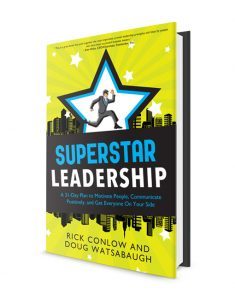 , do you want a proven game-plan for career success? If so, check out Rick’s Superstar Leadership book.
In addition, do you want more success in life? See this complimentary guide and assessment on habits of successful people: Success Practices Assessment and Guidebook.
Finally, go here for our RealTime Learning & Training leadership and personal development website. Over 130 micro-learning and career advancement resources at your fingertips!
The post 7 Ways to Lead Positively without the Title appeared first on Rick Conlow.
March 17, 2021
How to Get a Job Promotion this Year-Faster!
In this career training video learn six keys to getting a job promotion faster. So, how do you get ahead in your job? Is it who you know and office politics? Granted there is some of that in companies. Often, it is about your performance. The bottom- line is that you must change your mindset. You may need to change some habits. You MUST focus on continuous personal improvement. While it takes work, it pays off in terms of career advancement and a potentially greater income. This means more success for you and security for your family.
What are the steps to improving your performance? Rick will review the six keys to improving your performance and significantly separating you from the pack. He gives you select important pointers in each area so that next job promotion will be yours.
Rick has taught these steps to hundreds of others to help people fast track their careers. These are proven steps that Rick applied in his career to gain six job promotions within the three corporations. He moved up the ranks of management to become an executive. Pay attention, take notes, and get into action. Make this your most successful year ever for your career.
Also, do you want more success in life? See this complimentary guide and assessment on habits of successful people: Success Practices Assessment and Guidebook.
In addition, go here for our RealTime Learning & Training leadership and personal development website. Over 130 micro-learning and career advancement resources at your fingertips!
Finally, do you want to accelerate your leadership success? Go here for Rick’s Superstar Leadership eBook.
The post How to Get a Job Promotion this Year-Faster! appeared first on Rick Conlow.
March 16, 2021
3 Ways to Handle Poor Employee Performance Constructively
Poor employee performance confronts all team leaders, supervisors, managers, or executives. It goes with the territory. Fortunately, there are really few bad employees, just some that have performance issues. Most employees think they are performing better than they are. Most employees can perform significantly better than they are.
In fact, everyone develops problems at some point in their careers if they are growing and learning. This leadership training video will give you precise steps to take to be successful at being a positive influence with employees.
How to Minimize Most Employee Performance ProblemsAbove all, most performance issues can be minimized or eliminated. For example:
Hire better by using a behavioral interviewing process, checking references and using the rule of 3’s (3 final candidates, 3 interviews each, with 3 interviewers).Set clear expectations with every team member. 80% of job problems are a lack of clear expectations/goals and recognition.Recognize your team genuinely but lavishly.Do a great job planning with each employee.Provide monthly training by yourself, outside resources or your HR team.Hold regular coaching sessions with each team member-monthly.Communicate effectively through team meetings and one on ones. This means listening, too.
Without these behaviors, managers lose trust. As a result, managers facilitate many employee issues because they neglect the performance management strategies above.
Objectives of the How to Handle Poor Employee Performance VideoThe best managers develop their leadership coaching skills and learn how to deal with performance issues constructively and effectively. How do you know if you are successful? Employees become more motivated and improve their results. In the leadership training video, you will learn:
10 Examples of Poor Performance3 Proven Methods for Dealing with Poor PerformanceThe Leadership Mindset in Dealing with Performance IssuesPulling It All TogetherMany managers struggle with leadership because that cannot deal with poor employee performance. They ignore it until the problems explodes. Or they pounce on the employee right away, yell, criticize and tell, and give no help. Too many lack competence in the key people skills of empathy, listening, problem-solving and giving feedback.
You know you are moving from manager to leader when you can motivate employees to achieve significantly better results while helping them with their performance problems. In summary, remember this: “If you want your team to be better, you must be a better leader.”
Also, are you committed to positively helping with employee performance problems and achieving better results? If so, see this complimentary Coaching for Results eBook.
In addition, go here for our RealTime Learning & Training leadership and personal development website. This is for individuals. Over 130 micro-learning and career development resources at your fingertips!
Finally, do you want to accelerate your leadership success? Go here for Rick’s Superstar Leadership eBook.
The post 3 Ways to Handle Poor Employee Performance Constructively appeared first on Rick Conlow.
March 11, 2021
Rethink Leadership or Fail: Change to Succeed
Rethink leadership or fail. We live in challenging times. Similarly, Abigail Adams wrote to Thomas Jefferson in 1790, “These are hard times in which a genius would wish to live. Great necessities call forth great leaders.” We desperately need great leadership now, in business and all walks of life. In this leadership training video Rick will give you the keys to change and success.
We are in those difficult times today with serious economic and political problems. Our leaders are increasingly incapable of dealing with these problems to make any substantial positive progress.
Businesses are confronted with quandaries within all the above. At the same time, they face a devastating lack of trust in corporate leaders, whose priorities seem out of step with employee and public concerns. Employees and constituents at all levels are more dissatisfied and disengaged than ever before. We need to rethink leadership approaches.
 RETHINK EGOCENTRIC LEADERSHIP
I believe the fundamental reason for these failures is that too many leaders are self-focused and favor political partisanship. This means they are too selfish and seemingly only want what they want. Their needs trump the needs of others. Personal gratification and cash seem to rule for them more than anything else. Therefore, this supplants the dire need for synergies, teamwork, and cooperation. As a result, trust in our leaders disappears.
Many of these leaders follow a traditional ego-driven model of leadership that focuses on their interests, views, goals and needs above all others. See the details in this leadership video. The selfish driven approach wreaks havoc with employees and the economy. For example, recently the state of Texas in the US had a horrific winter storm that knocked out power for millions of people. For days everyone was without water, heat, and some cases food. One of their senators went to sunny and warm Cancun for a family vacation.
RETHINK LEADERSHIP: A MORE EFFECTIVE APPROACHThroughout history, some leaders have given us clues to the powerful potential in a divergent but other-focused leadership approach: Mahatma Gandhi, Dr. Martin Luther King, Mother Theresa, Albert Schweitzer, Abraham Lincoln, Nelson Mandela, and Jesus of Nazareth to name a few. When you read their words and see their example, they all disrupted accepted leadership practices of their day. Most importantly, their goal was to help create a better world, not to gain recognition or become wealthy. For three keys to leadership success and motivation watch the video clip.
Many of the skills of an altruistic or servant leader are people and relationship focused. For example:
Listening.Managing emotions.Coaching.Communicating.Enrolling people in a vision.Valuing diversity.Treating others respectfully.Team-building.Engaging employees.Dealing with conflict constructively.In the same vein, these are the skills of emotional intelligence embraced by Dr. Daniel Goleman.
PULLING IT ALL TOGETHERMother Teresa said, “We ourselves feel that what we are doing is just a drop in the ocean. But the ocean would be less because of that missing drop.” While our business schools need to put more humanity in their teaching, leadership change begins one person, one manager, one executive, one senator at a time. Thankfully, there are other servant leaders, in many areas, with little money, who are doing the right things, selflessly and without attention, and strive to make a positive difference. Certainly, we need to champion these people and their efforts.
In conclusion, consider the words of Einstein: “The world as we have created it is a process of our thinking. It cannot be changed without changing our thinking.” Why not begin to rethink YOUR leadership today?
 Also, are you willing to rethink leadership for how to inspire employee engagement? Check this out this eBook-How to Motivate-NO-Inspire People.
In addition, go here for our RealTime Learning & Training leadership and personal development website. Over 130 micro-learning and career advancement resources at your fingertips!
Finally, do you want to accelerate employee career and become a servant leader? Go here for Rick’s Superstar Leadership eBook.
The post Rethink Leadership or Fail: Change to Succeed appeared first on Rick Conlow.
March 7, 2021
Workplace Diversity: 4 Ways to Lead Respectfully
We live in a world of diversity. It is obvious to almost everyone. For an authentic leader, workplace relationships are free from prejudice and discrimination, and does not include racial slurs or off-colored humor. A respectful leader welcomes the richness of that diversity and always treats all people with esteem and dignity. Unfortunately, bad bosses disregard the need for respectful communication, through their own ignorance or blatant denial of its necessity. Disrespect toward others, implied or explicit, will negate everything else you might do well as a leader.
Building Awareness Today, one cannot miss the diversity. Many communities are a “rainbow coalition” of people from all walks of life, from all over the world. In the workplace, both customers and employees mirror this diversity. As a result, managers have a critical responsibility to model respect and acceptance that their employees can emulate. Your actions as a manager, as the adage says, will speak louder than your words.
Communication is easier than ever today with Smartphone’s, e-mail, networking, texts, websites, and other social platforms. We relate with one another with ability to connect at any time with minimal effort. Whether we fly overseas, make a phone call, or interact through a virtual conference. We can meet new people from different cultures with ease. Yet, it is not quite so easy to melt away the distrust and prejudice that sometimes accompanies cross-cultural interaction. Furthermore, we lose empathy. Also, people have various histories and customs in these and other areas that often make it a challenge to communicate effectively. For example
Family and educational backgroundsPolitical beliefsSocial statusCultural normsEthnic backgroundReligious beliefsPersonal preferences and tastesMaslow and DiversityIn the 1940’s, Abraham Maslow identified a hierarchy of human needs that applies to everyone. He levels of need are physiological care, safety, social acceptance, personal esteem, and a sense of self-fulfillment. Even in this 21st century, people have the same basic set of needs, whether they are short, tall, male, female, black, or white. This also includes, GLBT, Methodist, Muslim, Spanish, Japanese, manager or employee. No matter the socioeconomic status, these human needs are consistent for all people. Respectful leaders understand that all people are valuable people–no matter their diverse characteristics. Thus, they treat them equally well.
Respectful leaders know that the greatest resource of a business is its people. They recognize the value of diverse people working together as a team. The possible synergy creates newer and better ideas. This added depth of perception and ingenuity in organizations improves customer service and productivity.
Accepting DiversityIn many instances, for example across the U.S., diversity training has become a legislated because many people fail to accept one another by their own initiative. People often fail to understand that differences are not something to fear, but an opportunity to understand. As a result, it is unlawful, and simply not right, to discriminate, show prejudice, or practice harassment towards others in the workplace or society.
Companies in the US are required by law to implement policies or procedures that support discrimination laws and protect both employees and customers. Managers who strongly support diversity are assets to a company and contribute to a collaborative company climate. Those who do not are expendable, a liability to their companies as they sow discontent and hatred. Their prejudices create a hostile environment for everyone.
Accepting the differences among people comes from within, not from a law or policy. Acceptance extends from the heart as a authentic leader communicates with every one with courtesy, respect, dignity, and care. A respectful leader works to understand differences, not eliminate them.
 Leading from the Heart
Respectful leaders move from “heart” acceptance to “hands-on” action, helping their employees become the best they can be. A good employee reflects a good leader. Success reflects success as both customers and the company are well served. A respectful leader gives every employee the same opportunity to succeed or helps them find their niche elsewhere.
Think of a person with whom you have a hard time working with. Consider someone with cultural background, ethnicity, or values that differ from your own. How well do you really know or understand this person? What do you know of his or her interests or hobbies, career experience, and education. Or, their background, family, likes or dislikes, or dreams? Most difficulties in relationships come from a lack of knowledge or understanding that breeds distrust and prejudice. Educating oneself about that which is unknown often eliminates fear of that which is unfamiliar.
Encouraging DiversityRespectful leaders learn to masterfully work with diversity among employees and create positive and motivating work environments. However, they often first see themselves in the mirror and realize, “The enemy is me.”
Respectful leaders understand that to effectively influence others, they must first manage their own perceptions. Many managers discover, through diversity exercises, that they do not know their co-workers as well as they thought they did. For example, they learn that their critical assumptions and judgments about others arise out of a lack of understanding or learned biases and prejudices.
Authentic leaders learn that they can change their perceptions. By using a four-step framework called PACT, almost any manager can learn and constructively demonstrate the positive attributes of diversity if they care.
P: Practice being polite, respectful, and helpful with all people.A: Accept the differences in others without judgments. Accept the similarities, too.C: Collaborate and communicate with all people by being a good listener.T: Treat all people with dignity, empathy, fairness, and equal opportunity.Respectful leaders learn be sensitive to others’ differences. Most importantly, how to positively engage these differences can significantly boost their personal effectiveness and that of their team.
Taking Positive ActionA large agricultural company in the U.S. was trying to work a deal with a multi-national company from Spain. Soon after introductions were made, the U.S. executives wanted to get approval on a contract. The Spanish executives were puzzled and asked the interpreter what was going on. The U.S. executives did not understand that social bonding in the Spanish culture presumes that the parties will take time to talk, and maybe eat together. The goals is to get to know each other better before conducting formal business. The U.S. managers did not understand their cross-cultural differences beforehand. As a result, they did not accommodate diversity, communicate effectively, or get the contract.
Businesspeople worldwide are beginning to learn the positive and powerful force of accepting and embracing diversity. This is a lesson learned by adoption agencies that regularly connect people from different cultures. Certainly, these agencies have shown that disadvantaged children who are adopted and brought into loving and caring yet culturally different homes can overcome inherent obstacles and differences. The adoption process is predicated on the wisdom of a simple philosophy: love one another.
Pulling It All TogetherIn summary, businessman and author Bob Conklin re-stated this philosophy for the work world:
Give other people what they need, and you will get what you need.Help others be successful and you will be successful.Above all, authentic servant leaders embrace the reality and richness of diversity and use that as a basis for more effective and helpful communication. As a result, these leaders are proven genuine and credible.
Also, do you want more ideas on how to inspire employee engagement team? Check this out this eBook-How to Motivate-NO-Inspire People.
In addition, go here for our RealTime Learning & Training leadership and personal development website. Over 130 micro-learning and career advancement resources at your fingertips!
Finally, do you want to accelerate employee career and become a servant leader? Go here for Rick’s Superstar Leadership eBook.
The post Workplace Diversity: 4 Ways to Lead Respectfully appeared first on Rick Conlow.
March 2, 2021
The Best Bosses Lead with Flexibility
The best bosses lead with flexibility consistently and effectively. As I have stated previously, it is not about mastering all elements of The Superstar Leadership model. It is about using them in tandem, getting familiar with the nuances and needs of each strategy. In addition, practicing each to become more proficient as a leader over time. It is a process of improvement and increasing a positive impact on your team.
It takes a day in anyone’s world as an adult to realize that everybody is different. Yes, there are some similarities here and there, but for the most part, we are all incredibly unique. From our background to our appearance to our experience to our personality, we are different. So, it makes all the sense in the world that a leader’s ability to be flexible MATTERS. Unfortunately, many do not want to be. Research says 80% of leaders use one style.
A leader cannot always pick and choose the sort of team, projects, environments, or crises that will come one’s way. If a leader cannot figure out how to navigate the unpredictable waters, she will probably go down with the ship. To some extent, it is about going with the flow to adapt to what your followers need. And doing that without forfeiting the things that matter.
An Example How to Lead with FlexibilityFor example, the analogy that comes to mind for me is this. We would never call someone a chef or even a decent cook for that matter if they could only cook one dish. We would deem someone a chef that has mastered the art of cooking. Now, that does not mean that chefs cannot specialize in one cuisine over another. However, the caliber of chef sort of depends on one’s ability to improvise as needed. Furthermore, doing this without compromising the quality of the dish. Therefore, the same is asked of leaders.
 Your team is going to vary by individual. The level of need, knowledge, experience, behavior, and guidance will inevitably change by day by team member by project. That is a lot of change. So, will you be the leader that refuses to adjust accordingly? Or will you be the one leading the pack through the unprecedented territory? Will you expect every member of your team to be always on the same page as you? Or will you willingly and cooperatively work to understand the unique needs of each team member? As a result, if you do you can effectively and collaboratively reach your goals together? Remember, the greatest impact on an employee’s performance is their direct supervisor.
Your approach as a leader must adapt to the needs of your followers. It cannot be all about you if you are hoping to help your team reach success. For example, if you have team members who are struggling, the help you need to offer them would feel too handholding for a top performer. Likewise, what you would give the star on your team would be too overwhelming for a beginner. Most importantly, the only way to adapt as needed is to KNOW YOUR TEAM and do it with an open mind.
7 Questions about How to Lead with FlexibilityAs you seek to reach the ranks of the best bosses or as we say superstar leaders, ask yourself these questions:
Do I know what makes each of my team members motivated? Discouraged?What is the depth of my knowledge about the level of skill of each employee? How am I adapting to the abilities of each?Am I creating an environment that encourages uniqueness and difference?How might I be suffocating others with the “my way or the highway” mentality I have?How am I utilizing each person to her utmost potential, regardless of how she compares to other team members?Am I rigid and unable to adapt to needs and team members accordingly? Do I want everyone to be like me?What am I doing to develop this skill? What support am I seeking?Pulling It All TogetherIn conclusion, it is almost as if you are completing one big puzzle. Each piece is unique, for the whole project to be complete. And just like putting together a puzzle, leading a team takes a lot of patience, resiliency, and versatility. You cannot know it all before you get started, but you can be open to figuring it out along the way based on what fits. Certainly, being open minded about what is needed and what works. In sum, when you lead with flexibility you increase trust and employee engagement. Why? Because it is more about them than you.
Awhile back, I came across this anonymous quote, which suits this strategy well. “Blessed are the flexible, for they shall not be bent out of shape.” It is an excellent image to keep in mind as you are hoping to become a better leader while helping your team succeed.
Also, are you committed to your team’s success? If so, see this complimentary Coaching for Results eBook.
In addition, go here for our RealTime Learning & Training leadership and personal development website. Over 130 micro-learning and career development resources at your fingertips!
Finally, do you want to accelerate your leadership success? Go here for Rick’s Superstar Leadership eBook.
The post The Best Bosses Lead with Flexibility appeared first on Rick Conlow.