Rick Conlow's Blog, page 13
July 8, 2020
How to Accelerate Your Goal Achievement
Who doesn’t want more goal achievement? Here is the first step, to be all you can be you must dream of being more. Once you do that goal setting principles can begin to work for you. This goal achievement training video will teach the secret of the 5 Laws of GoalPower and how to activate them in your life. However, Earl Nightingale once said, “People with goals succeed because they know where they’re going.”
Goal Achievement for You Means…
Certainly, the clearer you become and the more you take action, the greater success. So, what do you want out of life? Take the time to make a few notes and dream a little. Goal achievement requires you do your homework, and a sincere desire to do better.
Success?
Happiness?
Peace of Mind?
Career Advancement?
A Great Family?
Financial Independence?
Friends?
Travel?
Health?

What the mind can conceive and believe it can achieve. That is to say, think big, believe Big. and act big. Consequently, follow-through with the five Laws of GoalPower. Furthermore you will discover more goal achievement as you answer these questions about your progress:
How am I doing?
What’s working?
What isn’t working?
What will I do differently or better?
To clarify, notice there is no shame or blame in these questions if your goal achievement is slim. Therefore, these four questions give you a positive review so you can learn and then act on it. Therefore, you become your own best coach and keep your commitment to achieve your goals. As you do you have the opportunity to create the success you have only dreamed about. In conclusion, watch this video now, and you will want to give it a THUMBS UP!
In addition, do you want more success in life and goal achievement? See this complimentary guide and assessment on success habits: Success Practices.
 Finally, do you want to accelerate your goal achievement? See our 93 page goalsetting and achieving eBook: GoalPower: How to Increase Your Personal Achievement and Career Success.
The post How to Accelerate Your Goal Achievement appeared first on Rick Conlow.


June 22, 2020
The First & Only Leadership Rule Video Training
In the movie, A Bug’s Life, Hopper the grasshopper says, “The first rule of leadership is everything is your fault.” That is scary, isn’t it? It certainly can seem to be the way it is, but that’s more a potential outcome than a rule. I have heard of a couple of ways to define the first rule of leadership:
Show up
Just be yourself
However, you can’t lead your team if you aren’t involved or available. Leading from “on high”, through edicts, emails, phone conferences or texts doesn’t cut it today. Never really has. Employees experience way too much of that loftiness and it leads to their disengagement. It’s also hard trying to be something you aren’t. Plus, it isn’t authentic.
The Problem: Trust is Broken
 In a quick study of what’s going on in organizations today there are two powerful clues to the first rule of leadership.
High leadership distrust, 63% of employees don’t trust executives.
Low employee engagement, 87% disengagement worldwide.
Consequently, significantly poorer results are realized. Why don’t people trust business leaders?
Tony Hayward former CEO of BP declared the antithesis of the first rule of Leadership. In the midst of the tragic Deepwater Horizon oil spill of 2010, the worst spill in US history, while dealing with it Hayward said, “…I would like my life back.” He also commented to BP executives, “What did we do to deserve this?!” He seemed more concerned about himself and the company, like so many other executives and managers, than he was about the employees who died, the environmental disaster and economic blow endured by the employees and their communities.
Employees are wary of leaders that:
are aloof and arrogant
act selfishly and seemingly unconcerned about their success
are unethical and lack integrity
treat them poorly in terms of respect, compassion, kindness
don’t listen to their concerns
fail to deal with problems in a fair or timely manner
The First Rule of Leadership Defined
 The above traits fan the flames of employee fears, dissatisfaction and discontentment which decreases employee performances across the board. The first rule of leadership for any supervisor, manager and executive is that “It isn’t about you.” Rare are the leaders who make the time to understand, listen, empathize, and act on the needs or issues of their teams and other constituents. These leaders know that when their team wins, they win. So they empower the team, clear away obstacles, encourage and train them, and support them in any positive way they can. They create trust.
Most importantly, Nelson Mandela said, “A good leader can engage in a debate frankly and thoroughly, knowing that at the end he and the other side must be closer, and thus emerge stronger. You don’t have that idea when you are arrogant, superficial, and uninformed.” And that’s the big problem isn’t it?
By the way, do you want to elevate your performance as a leader? If so, check out this complimentary eBook: Coaching for Results.
Finally, do you want a proven game-plan for your management career success? If so, check out Rick’s Superstar Leadership book.
The post The First & Only Leadership Rule Video Training appeared first on Rick Conlow.
May 30, 2020
Employee Disengagement is a Dinosaur Result
Employee disengagement plagues many companies. Subsequently, with the pandemic many companies added to their neglect and abuse of employees. For example, read these situations.
Recent Employee Disengagement Examples
The May Day strike of Amazon, Target, Walmart, Instacart and others highlights employee disengagement. Front-line employees are concerned about demanding work schedules, the lack of safety and improper social distancing. Yes, some of these organizations provide bonuses, masks and gloves. However, the fact remains that companies pay employees poorly. In addition, covid19 created great fear for their safety and health. Yet, they go to work because in order to survive financially. The companies claim only a few employees are involved. Yet, if a few are involved, many more are concerned but do not saying anything because of fear.
The Meatpacking plants are a debacle. Employee work inches apart, lunchrooms are crowded, sanitation is inconsistent, and communication poor. Hundreds are getting sick. Employees don’t seem to be a concern of these organizations. Production is the goal. Now, the government has stepped in to tell the companies what to do to keep people safe. As a result, some plants shut down therefore, erasing incomes.
Healthcare worker’s situations are unprecedented and desperate. Many have been warned not speak out about their work environment. Resources are thin, decisions impossible to make at times on who to help and with what. Conflicts naturally arise between medical personnel in dealing with this. But, most are caring and kind in doing their jobs. They do the best they can helping the sick and dying. They courageously show up daily even in the face of significant health risks. Likewise, confronted at times with uncooperative hospitals and administrators.
Employee Disengagement Still Shamefully Low
We have known about this virus since January. Quarantines began in Feb/Mar depending on where you live. The health concerns and precautions described in the media or by governments daily were widely distributed. Unfortunately, the organizations above only began to act “above and beyond” to help employees as they complained or became sick. Why wasn’t more help provided right away in January? In addition, do they need the government telling them how to help their employees? Can you blame employees for being disengaged or dissatisfied?
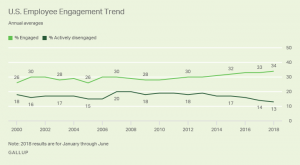
Gallup says actively engaged employees are rising. However, the engagement numbers are still pitifully and ridiculously low with only 35% actively engaged in the US. Worldwide the ‘highly engaged’ figure is 15%. As a result, these low numbers cost organizations billions, slows the economy and are incredible wasters of human talent. This is a crisis, too, of epidemic proportions. Any company with only 1/3 of its workforce actively engaged should be ashamed.
Certainly, with covid19 many companies changed some approaches to keep and attract employees. Their changes haven’t been done out of the goodness of their hearts.
100% Employee Engagement NOT Disengagement is the New Leadership Goal
How many employees go to work in the morning and say to themselves, “I am a puke and slug and I hope they fire me by NOON?” Most people enjoy pride in their work and want to do a good job. Similarly, they hope to get a raise or promotion to have a better standard of living. With consistent support and encouragement this is possible. The commitment of employees in retail, the meatpacking industry, healthcare and the supermarkets inspires me. They demonstrate the possibilities.
It’s time, isn’t it, to tap the incredible power of people? We need radical and revolutionary leadership change in thought and practice. For instance, a manufacturer’s goal is Zero Defects. This means no mistakes; every product produced right the first time. Furthermore, mathematically this equals 3.4 defects per million opportunities.
What if managers managed their team’s right the first time? So, what if fewer than 3.4 disengaged employees per million showed up for work–engaged? Let’s make “100% Engagement” the goal for human beings. Aren’t people more important than products? Consequently, why not put employees first?
Make Employees First
In addition, the greatest influence on an employee’s performance is their direct supervisor. Furthermore, research demonstrates these seven keys to reducing employee disengagement:
On-going communication
Consistent training
Liberal recognition
Clarified goals and expectations
Helpful coaching
Input and feedback loops
Personal development opportunities
Certainly, company leaders must foster a people-first culture. Consequently, companies must invest heavily in developing competent management to carry it out.
The crisis shows that people–human beings– are the greatest resource of a company. Similarly, disengaged or sick employees lead to poorer results. Products and buildings don’t produce, people do. It comes down to leadership commitment. Policies or protocols mean little. Most importantly, it’s about values–empathy and caring for people.

Real–servant–leadership involves relationships and partnerships, not reporting structures and policies. In summary, start achieving 100% Employee Engagement Today. Treat employees respectfully as partners.
Also, do you want more insight on employee disengagement? See this training video: How to Create Employee Engagement: 4 Methods that Work.
Finally, for additional complimentary resources see this: How to Motivate– NO– People: 10 Keys to Employee Engagement.
RCI has helped clients gain 48 Quality Service Awards. It all begins with the employee experience. So, do you want better results? Contact RCI Consulting, Coaching and Training.
The post Employee Disengagement is a Dinosaur Result appeared first on Rick Conlow.
May 15, 2020
What Great Leaders Do: Engaging Employees in a Crisis
Great leaders shine in a crisis. Certainly, in good times great leaders communicate well. More importantly, during tough times they communicate brilliantly.
3 Examples How Great Leaders Engage Their Teams
Watch this short but powerful leadership training video as Rick shares what great leaders do differently. In this leadership motivation clip you will hear three examples of what the best leaders do and learn how you can adapt that for what you do. Consequently, in a crisis, everything changes, particularly how you keep and improve employee engagement.
How do you deal with people?
What about the problem?
Where do you put your focus?
 For another example, check out this recent news. The leaders of GM and Tesla showed up in the press. Elon Musk (Tesla) defied California officials “stay at home” orders for Covid19. He played to the media and threatened to move his operations. Mary Barra (GM) reached out to employees with a “back to work” package, and focused on personal communication with them and their safety. Which one is all about me or the employees?
The Great Leadership Challenge
The answers to all of the above questions determine whether or not a leader connects and maintains trust with his or her audience, team or constituents. All managers will face challenges, big or small, like this. Will Rogers said, “In a time of crisis people want to know how much you care, more than they care about what you know.” James Kouzes, co-author of the Leadership Challenge book added, “Only those leaders who act boldly in times of crisis and change are willingly followed.” I add that to be a great leader a person needs to act boldly and consistently while communicating with people: positively, constructively, consistently and with empathy. Consequently, this gives them hope and encouragement while accelerating their performance and engagement.
Hope you enjoy this and get value. Give it a “Thumbs up” if you do, and please share it.
 Also, do you need or want to accelerate your skills to motivate and lead others? See this complementary guide–How to Motivate-NO-Inspire People: 10 Keys to Employee Engagement. Finally, do you want a helpful and proven game-plan for your management career success? If so, check out Rick’s Superstar Leadership Performance Plan.
+Consulting Services +Books & Training Resources
The post What Great Leaders Do: Engaging Employees in a Crisis appeared first on Rick Conlow.
April 30, 2020
How to Turn Your Setback into a Payback: 4 Methods
Courageous people can survive just about any setback because they are resilient. Consequently, they learn to turn it into payback. They demonstrate hope within despair and defeat. All of us could use encouragement in the midst of this current pandemic. Likewise, we become more effective with help during our problems, setbacks or challenges. Watch this motivational video to gain ideas how to rise about any crisis you face in your life. You will gain four methods that work.
The Cultural Challenge to Our Setbacks
 Unfortunately, Steven Wolin, Professor of Psychiatry at Georgetown University, says our culture tends to perpetuate all of us as victims. He says it encourages frailty by enabling people to dwell on their troubles too much. This inhibits the capability to rise above a life crisis or setback, and to rebound positively. Research shows all people have the capacity for resiliency and that needed behaviors are learned. These positive “rising above the situation” habits include:
Believing in yourself
Expressing positive and negative emotions
Sharing constructive emotions
building strong relationships with others for support
Do these and you will make progress on turning your setback around. Also, do the behaviors discussed in the video. Certainly, you will find the payback you want and need. Consider, there is no self-improvement only increasing in the ability to be all that you already are.
Pulling It All Together
In conclusion, courageous people face all the challenges life has to offer and are able to turn failures into successes. Consequently, they learn to build their broken places to become stronger. While it isn’t easy, you can, too. Watch this brief but inspirational video now and succeed. Regardless of what kind of setback you are facing, learn from the examples. Begin to use your life’s hardships to expand your capacity to live fully.
In addition, do you want to turn a setback into a payback with more success? See this complimentary guide and assessment on Success Practices.
Finally, if you are a manager, see the complimentary Coaching for Results Assessment and Guide. You will learn how to help others with their challenges, goals and setbacks.
The post How to Turn Your Setback into a Payback: 4 Methods appeared first on Rick Conlow.
April 9, 2020
Employees are People NOT Assets
Calling employees assets, human capital, talent, worker bees, personnel, human resources, laborer, the help, and blue collar is demeaning. It generates a whole aura about how a company values people. Even the word employee carries negative connotations. It can mean average, or a cog in wheel or a commodity or a peon. In contrast, one of my clients has been in business and calls employees Associates. (Notice the capital A) Another organization calls employees-Partners. Still one more calls them Team Members. A company culture dictates (good or bad) what an employee really is to the organization. In addition, Disney for years uses the term “cast member.” Taco Bell calls cashiers, “champions.”
Isn’t it time we place the true value on employees. They are mission critical. Nothing is more important. Companies are finding that out during this pandemic. You can’t serve customers without them in the office, manufacturing plant, distribution center, sales floor, or front-line. Yes, some robots are taking their place. However, the digital teams direct their efforts.
Employees are not assets they are people.
 People are the greatest resource of a company. They are human beings, partners, not assets to manipulate. I believe this about how employee should be treated in organizations but not enough people do. This isn’t new news. Consequently, they deserve respect. Sure some employees may abuse this kind of thinking, most don’t. It has been said that the art of communication is the language of leadership. Consider, how and what we communicate with people in organizations greatly influences their experience and engagement. The strength of the relationship determines the depth of the trust between management and employees. Bottom-line, if we treat people well and demonstrate care for how important they are, they nearly always go above and beyond. Great leaders treat employees as champions. They coach and develop high employee performance and engagement.
People Power not Assets: The new goal-100% Employee Engagement
Gallup reports record high employee engagement at 34% in the US. Worldwide the number is 15% engaged. Both numbers are ridiculous to get excited about. It means about 2/3 or more of employees aren’t engaged. Companies set their sights way too low. Could you imagine a company getting excited about 65%product defects. No! Instead they go for Zero Defects. Why not 100% people engagement? We need a servant leadership revolution to make this happen. Why not join the revolution? The change is already underway.
Do you agree?
For your on-going education, watch this brief video on how to raise employee engagement: Creating Employee Engagement: 4 Methods that Work.
 Also, for an in-depth complimentary success assessment and action plan, see this: Success Practices.
Finally, do you want to accelerate your management career? Check out Rick’s Superstar Leadership book.
The post Employees are People NOT Assets appeared first on Rick Conlow.
March 25, 2020
13 Difficulties that Define a Manager’s Destiny
Management difficulties are like a tsunami that never ends. Every day I hear about it from managers at all levels. Successful managers learn to absorb the issues as nourishment, to build a high performance team. Others become swamped, panicked, and succumb to a never ending nightmare. Believe it or not, a manager’s destiny is a choice. Here are thirteen of the most persistent problems managers face and a few ideas on what to do.
 7 Difficulties that Make or Break a Manager’s Career
Managing in a Crisis
In tough times (like the coronavirus crisis) a leader needs to wear two hats. First, be compassionate and empathetic. These are skill of the heart. These means engaging their team positively. Second, at the same time leaders need a backbone of steel. For example, they have to make hard decisions and choices. While they care about the team, they don’t let emotions dictate what they do. During a crisis it is important to over communicate. Difficulties breed fear, worry and doubt in people. Be a good listener, ask for input and then take a course of action. Above of all, this balanced approach will help a leader maintain an authentic and sensitive approach that ensures the trust of the team.
Getting everything done
With budget cutbacks, Sue now manages one hundred people in her nursing department at a hospital in a major city. Her anxiety grows from the avalanche of multiple issues and responsibilities. With no help coming in the near future, her solution in a difficult situation has been to empower the team to make decisions and focus on the highest priority problems. Her dilemma showcases the troubles of many managers. They are overwhelmed with things to do and not enough time or people to get it all done effectively.
Reaching Team Goals
Managers are paid to move the needle and achieve department goals. I have been amazed at how many struggle with executing company strategy or department initiatives. Many times it’s an ambiguity issue of what’s expected. At one company it took 2 1/2 hours with twenty-one managers to clarify the Senior VP’s stated and written goal. Equally problematic is the lack of training and coaching so the team is competent and committed enough to give their best while striving to achieve the goals.
The Difficulty of Giving negative feedback
I facilitated a meeting in my office with fifteen senior human resource executives. We talked about many issues including how managers handle performance issues. The group unanimously agreed that most leaders put off negative feedback. The typical scenario plays out this way:
The manager sets up a meeting with HR and asks for help to fire an employee. The HR rep asks the manager what intervention has been done with the employee. Most of the time the managers say, “Nothing, yet.”
Through training, study, and mentoring, almost any manager can learn how to give negative (and positive) feedback seamlessly in their daily communication or engagement with employees. Proactive managers learn to do this to inspire their teams. Reactive managers just push to get the tasks done. See this post for ideas, How to Give Feedback When You Are the Leader.
Dealing with Poor Performance
Giving negative feedback is related to this. All employees do some things right and others wrong. No one is perfect. Leadership is a high contact sport. In this high tech age, managers have to engage their team’s one on one.
This requires coaching effectively and regularly to reinforce good performance and redirect poorer performance. If done correctly it becomes a matter of course, not a big “to do” or a nightmare at performance review time. Few managers want to do this and say they don’t have time. I say they don’t have time not to do it or all of the problems cited here become mountains, not molehills. See this post for ideas, 3 Ways to Handle Poor Performance.
Handling team conflict
Interpersonal conflict on a team in the workplace is inevitable. Most people aren’t bad or screw offs; they just have behavior problems at times.
Handling conflict constructively is an emotional intelligence skill. It involves communicating directly, honestly and with empathy. Consequently, top managers invite conflict but learn how to facilitate it so improvement is reached. Numerous manages avoid conflict so it festers and becomes a poison.
Firing an employee
Terminations cause headaches for far too many managers. When an employee fails, the manager fails. With a litigious society all managers need to learn to fire appropriately. Communicate with your boss and HR to ensure it is done right. See my post, The Hardest Thing a Leader will Do, for a few ideas.
 6 Additional Difficulties that can Build a Manager’s Character
Communicating with the boss
My research shows 80% of performance issues are due to the lack of clarifying expectations and goals. Unfortunately, too many managers waaaaaaaait. They wait for the boss, and this lack of interaction produces misunderstanding, insecurity and doubt in employees and leaders.
All managers have to communicate upward today. With the speed of change, data driven decisions, and business intelligence, they have to be proactive. Failing that, they get into trouble for not knowing, even if it wasn’t their fault.
Losing key employees
Employee turnover causes lower morale and employee productivity. Losing key people accelerates this. Managers often neglect their top people and continually add to their workloads. Instead, they need to over-communicate, be good listeners, coach regularly, clear out obstacles and give them recognition.
Solving co-worker issues
Recently I was in the Midwest on a coaching assignment. The District Manager couldn’t meet up with me the second day because of problems at another location. There were emergency issues between office operations and merchandising. This happened at a busy time and really should never have occurred. Yet, concerns like this happen every day for most managers, and it wears them out.
Planning, coaching and preparation can help minimize these incidents. More importantly, is how these situations are handled. Managers need to learn in these type problems to create a solution with the team, execute it while simultaneously building up the team, and improve their capability for the next difficulty. It isn’t easy but it is doable over time.
Creating buy-in to a team plan
Research demonstrates that only 10% of executives are confident in their team’s ability to implement their plans. A key to victory is capturing the hearts and minds of the team to execute the plan successfully. Most managers just want to get on with it and act. While that is admirable, they must to do three things first or generate unnecessary resistance and messy mistakes:
Ask the team for their ideas, input and concerns when creating a plan
Prepare the team to execute these effectively
Determine how to measure, adjust and reinforce that plan in process
Managing change
On a client phone conference a HR executive proudly said, “We have 100 new initiatives.” Think about it, that’s a ridiculous number. Success requires focus. This is why Kotter, the leading guru on change, says that over 70% of change plans fail. Leaders don’t do what is mentioned in the previous point, and they fail to communicate. What happens instead?
Inconsistent execution.
Resistance to change.
Lack of understanding related to the plan.
Sabotage to the plan.
Alternative variations of the plan being followed.
Chaos and conflict in many cases.
Furthermore, this ends up in low morale, sagging productivity, poorer customer service and rising costs. See this eBook for ideas, Changing Change Management.
The Difficulty of Grappling with Personal Stress
Far too many managers are burned out or stressed out. The avalanche of issues continues every day with little upper management support. No wonder reports say 50-70% of managers fail today. Managers come in early, stay late and take work home. Unfortunately, there is little real work/life balance. Maybe the biggest problem facing managers is self care. so they can do their best work, stay sane and healthy.
Most managers need alone time at work and at home. They need more training. They need support that a competent coach would give them. Unfortunately, the demands of most jobs seldom allow time for this or provide these opportunities. I say to all managers: seek out the help if your organization provides it. If not, get it from your network. See these stress management tips from the Mayo Clinic.
[image error]Pulling It All Together
Bottom-line, managers today are under supported, over tasked and failing. It is killing employee engagement, teamwork, customer service and productivity. This isn’t going to change any time soon. Successful managers learn to operate effectively in spite of the deluge of problems. It does take a commitment to become better at leading people, managing priorities, coaching and problem-solving. This means ongoing preparation with time dedicated specifically to this, like an athlete training for the Olympics. Quick meetings in a hallway or reading an article while in the washroom are not enough.
How a manager prepares for the leadership difficulties that surround the job is ultimately more important in determining destiny than the issues themselves. Businessman Arnold Glasow said, “One of the tests of leadership is the ability to recognize a problem before it becomes an emergency.”
Also, for an in-depth complimentary success assessment and action plan, see this: Success Practices.
Finally, do you want to accelerate your management career? Check out Rick’s Superstar Leadership book.

The post 13 Difficulties that Define a Manager’s Destiny appeared first on Rick Conlow.
March 14, 2020
10 Phrases that Good Managers Say Regularly
Good managers use phrases and words that are different from other bosses. If you have had one lately you probably noticed they have high standards, are upbeat, knowledgeable and straight talkers. You will get the feedback you need to succeed. If you are lucky enough to have one you will want to excel, because you believe in yourself a little more when you are around them.
 A key attribute about good managers is that they talk differently than their colleagues, and that adds to our sense of empowerment. Here are ten statements that good managers (real leaders) say regularly that show they care about their people more than their title.
Phrases that Encourage Employees
“I am glad you are on our team.”
Yes, some leaders actually say that once in a while instead of something like “What have you done for me lately?” I had one that used to say, “How much money have you made me today?” All employees want to be part of something bigger or grander than the everyday grind, and it’s nice to know work can be that something. Leadership is influence, and it’s either positive or negative. There is no neutral.
“My vision is…”
It seems this is a novel concept, to communicate the overall goal of the work team, department, or company. It gives the big picture to everyone’s job and the why. Good managers do this concisely but with passion, not matter what the work is. Plus, they think bigger. It is also important for on-going updates, telling everyone on the team “Here is how we are doing.” With mediocre bosses every day is “same old, same old.”
 “My expectations for you are…”
Few managers are good at providing clear goals and expectations. Our research shows that 80% of performance problems are because of a lack of clear expectations and goals. The best managers also say, “Let’s talk about your progress,” and not “Let me give you some feedback.” This means LOOK OUT! The excellent managers adhere to this quote by Pat Riley, President of the Miami Heat: “A coach must keep everyone on the team in touch with present-moment realities- -knowing where they stand, knowing where they’re falling short of their potential, and knowing it openly and fairly.”
“You can do it, I believe in you.”
We all need someone to believe in us. Good managers give encouragement, and they challenge you to do the better. I had one that would say, “You can do it, let’s keep hustling.” I had another one that used to sing the song, “Sixteen Candles” down the hallway. Then he’d come over and praise me about some goal and head back down the hall singing. It set a light tone to our brief meeting. Poorer managers always seem to be about bad news. Most importantly, good managers communicate in positive phrases that encourage people and improve their engagement.
“Thank you!”
People want to be appreciated. A simple thank-you often is enough. ‘Great job on…’,’keep up the good work…’ are also others ways they recognize but they do it regularly and sincerely. It’s hard to get a compliment from other managers. It’s documented that genuine praise works, plus it’s the right thing to do. A genuine phrase like this to an employee is golden.
Phrases that Engage Employees
“How’s it going?
They are willing to talk to you. Mr. Jim Low was a master at this. When I first met him his legend preceded him. For over a decade he led his market in profit, sales and employee retention. I asked why he was so good. He replied by laughingly saying, “I didn’t go to college.” He added that every day he’d come to work and first go talk to as many employees as he could by asking, “How’s it going?” He might relate this to something he knew about the person. The employees mostly talked about their lives. He discussed business only if they brought it up. Then, when he had a problem, he would go to employees and get the straight info, no BS, because he already had a positive relationship with them.
 “What do you think?”
Considering the pressures of our jobs and the need for innovation and improvement, why wouldn’t a manager ask this question of his or her team members often? Here are two reasons to do it. First, you don’t want people bringing all of their problems or concerns to you. There isn’t enough time. You have to train them to problem-solve and become solution focused. Second, they will become more proactive while improving their performance. Most employees are astounded when their managers ask this question and reply, “What????” Sadly, less effective managers are fearful of the answers or don’t care. Famed basketball coach from UCLA John Wooden said, “It’s what you learn after you know it all that counts.”
“How do you think we can improve?”
Phrases like this often shock employees because they seldom here the. This question is the next logical one to ask a team. When you do, you begin to get their buy-in and commitment grows. They want to achieve their goals for their reasons too, not just yours. Each employee has untapped potential for great ideas. Why not ask? The best do this and their employee engagement and productivity soars.
“I made a mistake.”
Nobody’s perfect. Good bosses admit it when they screw up and even apologize. Obviously, they aren’t making so many mistakes that they are apologizing all of time. I put this in here because it is so out character by leaders to do this at all.
I was at a conference a few weeks ago where a manager talked to his team about a marketing campaign that failed. The manager owned the failure, and said he was sorry to his team because he really pushed for it. Because he had trust with his employees, they got through it. In addition, by learning from this situation and collaborating they created a better plan-that worked. When was the last time you heard a manager say, “I made a mistake”?
“My success comes from the team.”
Sometimes managers say this to their teams, but more often it’s about self-glorifying their success to a boss or colleague. That gets around, and their credibility is destroyed. However, the managers that highlight their teams’ efforts and give credit to them for any victories are golden leaders. A leader’s success is all about the team. In the movie “The Mighty Ducks”, Coach Bombay tells his team,”A team isn’t a bunch of kids out to win. A team is something you belong to, something you feel, something you have to earn.“ With low employee morale and engagement in many companies, this is a valuable lesson that most managers have yet to learn.
Pulling It All Together
Napoleon Hill declared, “Think twice before you speak, because words and influence will plant the seed of either success or failure in the mind of another.” Hopefully these ten phrases give you a lift, and helps you build your team up, not down like so many other managers do. Let’s not forget another quote filled with wisdom, by Emerson: “What you do speaks so loudly that I cannot hear what you say.”
What phrases or statements do you hear good managers say-often?
Also, do you want more ideas on how to inspire your team with positive phrases and other motivation? Check this out this eBook-How to Motivate-NO-Inspire People.
Finally, would like more success in life or your career? See this complimentary guide and assessment on habits of successful people: Success Practices Guidebook.
The post 10 Phrases that Good Managers Say Regularly appeared first on Rick Conlow.
March 10, 2020
Great Coaching: The Art and Science of Success
With great coaching you can become a great leader. Unfortunately, coaching is a lost skill. If you walk the halls of the corporate world, you won’t hear or see much of it going on for two reasons.
Managers seem too doing reports or analysis.
Managers are in too many meetings.
When I talk to managers about coaching, the #1 thing they tell me is I don’t have time or they look at me like I am an alien. One manager even said, “Today’s employees don’t need it.” That’s like saying a bird doesn’t need wings. Maybe that’s why this manager was failing! Or, that many others are, too. Way too many managers are seriously lacking in the willingness and capability to coach, so little gets done. It often is not an expectation of what managers do today. It is one of the reasons for poorer employee engagement, customer service and productivity throughout the world.
 Does Coaching Work?
Leadership is a dynamic partnership in which coaching can significantly empower employees. This involves clarifying goals, creating action plans, moving past obstacles, and achieving crucial results. The manager supports the employee with a focus on possibilities, and accountability. A study by the Personnel Management Association found that training alone increased productivity by 22.4%. Training plus coaching increased productivity by 88%! Another study found a return on investment of coaching to be 529%. My own experience proves it works as I have helped companies improve 22%, 58%, 122% and 223%!
Why Don’t Managers Do a Better Job?
Four reasons separate out the poor managers from all the rest.
Most don’t know what to do.
Many don’t know how to do it.
Some don’t want to do it. Unfortunately, don’t believe in people enough to invest the time and effort.
They can’t do it.
Through thorough education and training, most managers can learn better leadership skills and effective coaching techniques.
The Art of Great Coaching
Coaching is an art because it involves a creative process. While certain steps are important, each person that a manager coaches is unique. A good manager learns to facilitate the dynamics of positive interpersonal relationships. This skill is not automatic for most folks but can certainly be learned. In summary, it involves good people skills.
However, there are two key values to possess if you want the art of coaching to work for you.
Believe in the people you work with. It’s not about you, it’s about the team. Certainly, all employees have untapped personal potential.
Engage people with integrity and care.
Furthermore, make the time to coach-it has to be a priority.
The Science of Great Coaching
One definition of a science is “proficient skill, especially reflecting a precise application of facts or principles.” With a trusting relationship you can apply step by step procedures and to begin to make a difference. Too many managers focus on the mistakes. They catch people doing things wrong. Consequently, this demoralizes people over time. While you may need to give negative feedback at times, it’s how you phrase it that matters. In contrast, great coaches leverage the strengths! Also, they give plenty of positive learning and support.
One of the greatest sports coaches of all-time, John Wooden of the UCLA Bruins, was studied and found to be 99% positive. His teams won 10 NCAA titles in twelve seasons. Above all, he taught that genuine praise powers progress. Therefore, apply these concepts to your team and you will discover how to electrify employee engagement and better performances.
 Finally, do you want to elevate your coaching effectiveness and success? If so, check out this complimentary eBook, Coaching for Results.
Consulting Services
Books & Training Resources
The post Great Coaching: The Art and Science of Success appeared first on Rick Conlow.
February 28, 2020
25 Team Leadership Quotes that Inspire Greatness
Team leadership is a precious skill. However, teams in organizations are like Dr. Jekyll and Mr. Hyde. They work and make progress. Then, boom, they materialize into a nightmare. Everyone talks about the importance of “team” so it has become a worn out cliché. Together everyone achieves more (T.E.A.M.) is the spoken acronym, and nearly 2/3 of teams falter and fail. Most others fall far short of their intended objectives. You can change that for any team you are a part of or lead if you become a student of team-building.
25 Quotes about Team Leadership
 The number 25 represents wisdom, with diplomacy and curiosity. Also, it suggests unity, cooperation and a unique ability to communicate well with others. Consequently, hopefully, this is true for you and any team you are involved in. Read on.
“The strength of the team is each member. The strength of each member is the team.” Phil Jackson
“No one can whistle a symphony. It takes a whole orchestra to play it.” -HE Luccock
“Teamwork makes the dream work.” – Bang Gae
“It is literally true that you can succeed best and quickest by helping others to succeed.” – Napoleon Hill
“A leader must inspire or his team will expire.” – Orrin Woodward
“Leadership is much more an art, a belief, a condition of the heart, than a set of things to do.” Max De Pree
“The ratio of We’s to I’s is the best indicator of the development of a team.” -Lewis B Ergen
“Talent wins games, but teamwork and intelligence wins championships.” -Michael Jordan
“Gettin’ good players is easy. Gettin’ ’em to play together is the hard part.” – Casey Stengel
“Good teams incorporate teamwork into their culture, creating the building blocks for success.” -Ted Sundquist
“A group becomes a team when each member is sure enough of himself and his contribution to praise the skills of others.” – Norman Shidle
“No individual can win a game by himself.” -Pele
More Great Quotes about Team Leadership
“Together, ordinary people can achieve extraordinary results.” – Becka Schoettle
“Alone we can do so little; together we can do so much” -Helen Keller
“Team leadership is the secret that makes common people achieve uncommon results.” -Ifeanyi Onuoha
“A leader takes people where they want to go. A great leader takes people where they don’t necessarily want to go, but ought to be.” – Rosalynn Carter
“The speed of the boss is the speed of the team.” -Lee Iacocca
“A successful team is a group of many hands and one mind.” Bill Bethel
“Good management consists in showing average people how to do the work of superior people.” – John Rockefeller
“None of us is as smart as all of us.” -Ken Blanchard
Trust is knowing that when a team member does push you, they’re doing it because they care about the team.” —Patric k Lencioni
“Coming together is a beginning. Keeping together is progress. Working together is success.” -Henry Ford
“Team-building is so important that it is virtually impossible for you to reach the heights of your capabilities or make the money that you want without becoming very good at it.” —Brian Tracy
“Great things in business are never done by one person. They’re done by a team of people.” —Steve Jobs
“Talent is extremely important. It’s like a sports team, the team that has the best individual player will often win, but then there’s a multiplier from how those players work together and the strategy they employ.” Elon Musk
Pulling It All Together
 Maybe for the project on that one day it was true; you are better than the team. But in most cases effective team leadership produces better, more complete, and more positive results. A team that communicates and works together well- rockin and rollin-offers:
More expertise and knowledge than even an exceptionally smart individual
can.
Perspective from different levels and disciplines of the organization.
Richness of ideas and thinking styles.
Make no mistake about it; team-building does take more time. But the product of great team leadership far surpasses the contribution of a person working alone. Excellent teams also change the dynamics of the entire organization through the collaborations that develop and the quality of projects delivered. Team leaders that learn to facilitate this kind of effort are golden. John Buchan, former Governor General of Canada said, “The task of team leadership is not to put greatness into people, but to elicit it, for the greatness is there already.”
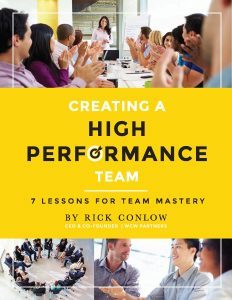 Finally, do you want more tips, and techniques on team leadership? If so, check out our complimentary and fascinating eBook: Creating a High Performance Team.
The post 25 Team Leadership Quotes that Inspire Greatness appeared first on Rick Conlow.