Rick Conlow's Blog, page 9
July 13, 2021
Achieving Your Personal Best Leadership Results
What if you could achieve your personal best leadership results today? Have you ever asked yourself this question: how can I be the best manager I can be? Or how can I use my leadership ability to be the best at what I do? Read on.
Personal Best Leadership Exercise Here is the way to start to answer that question. Think of a time in your career when you did your best work ever. Therefore, choose a situation that exemplifies your highest performance. Olympic athletes today use technology to analyze personal best performance and then compare it to the best in world. Then they use superb training and coaching to bridge the gap to reach their highest potential.
You can initiate this as well through this mental exercise. Get a clear picture of the event in your mind of what you accomplished. Relive it with as many specifics as you can. Replay it in your mind as if it were a movie. Think of the details – people, problems, sounds, feelings, and surroundings. Review in your mind what happened, how you behaved, what you felt and what you achieved. This type of mental rehearsal is called the master skill to high achievement. It helps some people to write you answer to these areas:
Describe the situation.Outline the challenge or problem.Identify your best positive actions as a leader.Summarize the result: customer behavior, teamwork, bottom-line metrics.List 3-5 lessons learned.How to Replicate Your Personal BestToo often as managers we replay or review our shortcomings or failures not our successes. We focus on the obstacles not the breakthroughs. This can diminish your effectiveness as your attention focuses on the negative.
Next, ask yourself, how apply this experience to my current role? What new actions will I take? What do I need to learn to do these consistently? Who will help me? How can I leverage my relationships better?
Furthermore, to be the best leader you can be, make a commitment to personal development and excellence. Attend leadership course, read new books, and listen to CDs or watch DVDs. Get a coach to mentor your activities. If you want to be exceptional, do exceptional things. The difference between winners and losers is that the winners do what losers will not do at all or will not do enough of. Author John Maxwell said, “Successful and unsuccessful people do not vary greatly in their abilities. They vary in their desires to reach their potential.”
Pulling It All TogetherBoil down all the research and literature that describes successful leaders and here is what you get: they are passionate about their vocation, they are goal-oriented, they coach exceptionally well, they involve themselves in ongoing education and training, they have mentors to guide them, and they become superb communicators.
In sum, you can achieve your personal best behavior if you do what is described above. Also, adapt the characteristics of other excellent leaders and you will become, overtime, the best that leader you can be. In conclusion, remember this, if you want your people to be better you must be a better leader.
Do you want more on increasing your personal best? See this: 10 Success Secrets of Great Managers.
 Also, are you committed to your team’s success? If so, see this complimentary Coaching for Results eBook.
In addition, go here for our RealTime Learning & Training leadership and personal development website. Over 130 micro-learning and career development resources at your fingertips!
Finally, do you want to accelerate your leadership success? Go here for Rick’s Superstar Leadership eBook.
The post Achieving Your Personal Best Leadership Results appeared first on Rick Conlow.


June 13, 2021
Why Women are Better Servant Leaders than Men
Evidence grows that women tend to become better leaders than men. However, women face a long journey in their march for equality.
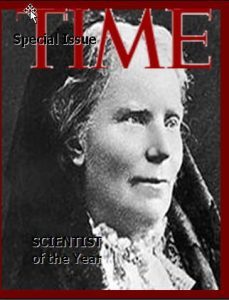 Over 168 years ago the United States received its first woman doctor, Elizabeth Blackwell. Twenty-nine colleges turned down her applications for medical school. She was ridiculed and told it “Wasn’t women’s work”. But she did not quit. Finally, Hobart College accepted her. almost on a whim. The faculty and Dean really did not know how to respond to her. So, thinking she had no chance, they said they would admit her if 100% of the 150 male students voted yes. They voted unanimously to accept her. She proved that women are better than they thought.
After completing her degree, Elizabeth continued her studies in Europe. Just like in America, discrimination rose strongly against her. She was allowed to be enrolled in La Maternité clinic/hospital as a student midwife, but not accredited as a physician. She did gain much additional medical experience. Eventually returning to America, she started writing and lecturing to make her way. She created the Blackwell Sisters that helped in the Civil War. Blackwell steadfastly dealt with all obstacles and went on to establish hospitals in New York and London. While engaged in medicine she championed many social reforms in the US and Europe.
Inequalities for Women in Today’s WorkplaceWomen in America, and around the world for that matter, still face great inequalities in the workplace, as identified in a recent Chicago Tribune article. For example:
Women are rated lower in their competence by U.S. decision makers (mostly white males).Pay is one third less than males in the same job, over a lifetime.Lack of recognition or credit.Men are promoted more on potential, women on performance.Few second chances.Worldwide discrimination and inferior treatment haunt women of all nationalities. Opportunities are much fewer compared to men. Incredibly, in 2017, men in most nationalities still believe that they are superior to women.
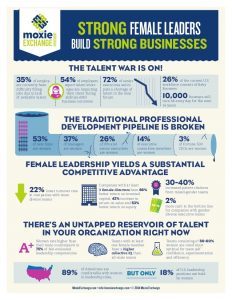 Women are Better in Leadership Roles
Most of the women that I have engaged through LinkedIn or consulting projects continually exhibit the qualities of Elizabeth Blackwell. They like her demonstrate their leadership skills by breaking the glass ceiling in many industries today. Businesses, this country, and the world desperately need better leaders. In their highly disengaged state, employees are begging for transformational and servant leaders. Research suggests compelling evidence that many women tend to adopt more effective leadership approaches and styles-servanthood-than men. Consequently, women tend to learn more and work harder to earn the role. As a result, women are better leaders than men.
According to personality profiler Dr. Tomas Chamorro-Premuzic, men tend to narcissism and hubris which often leads to serious leadership mistakes and failure. Studies show that men tend to obtain more leadership roles because confidence is confused for competence.
The Next Revolution in Leadership ThoughtElizabeth Blackwell confronted discrimination in a time that was even more male-dominated. She forged ahead and said, “My mind is fully made up. I have not the slightest hesitation on the subject; the thorough study of medicine, I am quite resolved to go through with. The horrors and disgusts I have no doubt of vanquishing. I have overcome stronger distastes than any that now remain and feel fully equal to the contest. As to the opinion of people, I do not care one straw personally; though I take so many pains, as a matter of policy, to propitiate it, and shall always strive to do so; for I see continually how the highest good is eclipsed by the violent or disagreeable forms which contain it.”
I believe that the next great advance in leadership involves the power of people and how to serve. I also believe that women drive this movement. What do you think?
 Commit to your team’s success, see this complimentary Coaching for Results eBook.
In addition, go here for our RealTime Learning & Training leadership and personal development website. Over 140 micro-learning and career development resources at your fingertips!
Finally, do you want to accelerate your leadership success? Go here for Rick’s Superstar Leadership eBook.
The post Why Women are Better Servant Leaders than Men appeared first on Rick Conlow.
June 3, 2021
6 Turnaround Tactics for a Failing Team
A failing team creates discomfort for everyone. Team failures, which sit at about 60%, demoralize employees, reduce productivity, cost companies billions of dollars, and inhibit innovation. If you are the leader, besides the personal frustrations and disappointment a failing team causes, it is also a potential career buster.
Here are other roadblocks to get out in the open. Failing teams reinforce three inter-related issues:
Only 15% of employees are engaged, based on employee engagement studies. In other words, they do not like what is happening at work and are not really ‘plugged in’ or giving it their best.Over 80% of managers fail according to leadership derailment studies. Besides a lack of people skills, a key reason for the failure is the inability to lead teams.Less than 25% of employees have attended a company sponsored training program in the last five years. Companies do not prepare employees to work well as a team.The stakes are big, whether you move the needle or you do not. When you achieve a breakthrough with a difficult team you become invaluable to your company. You become a proven performer. As a result, you inspire the team members and establish a credible relationship with them, and others connected to the team.
 3 Turnaround Tactics for a Failing Team
When I use the word ‘team’, I refer to either a department or work group. The following six proven turnaround tactics come from my consulting practice. I have learned that success is possible in nearly every case. Why? Most people want to do a good job. Most people think they are performing better than they are, and most can perform significantly better than they are. However, too often they lack the knowledge, tools, and expertise to deliver effective teamwork.
Jump the GunDo not wait for your boss to tell you to do something differently to improve. If you do, you add to your woes. You must act. Many teams get in a routine and keep banging their head against the wall.
One large retail company tried for four years to improve their customer experience to no avail. A few people were fired as a result. Yet, they kept doing the same things. With a change of pace and new strategies that I brought, they made significant gains in four months. (With the same product, policies, and people)
Peer into the Looking GlassIf you have not done so, take an unemotional look and analyze the team, including yourself. Ask, what is holding the team back? What are the team’s strengths and weaknesses? Review the contributions of each person. Consider, who might have to go? The reasons for team difficulties are well–documented. See my post: 13 Troubles of Terrible Teams and the Antidote. Use this as a checklist to find your issues. Also, take a personal inventory; what do you have to do better or differently as the leader? Create a 1–2-page summary of your findings. The antidote to terrible teams is better leadership.
Create a Mars Plan– but NOW!Can you imagine the years of detailed of planning, the time commitment, and the team effort that is going into the Mars Mission? Think as if you are the leader of that mission, be that focused but do it now. You cannot wait. Get your team involved in planning to rejuvenate your efforts. Do not share with them all that you came up with in the above, not right away. Get some of their input and ideas first. Then share your thoughts as part of the discussion.
Then, explain the challenge, goals and what must change. If you have a large team break them into smaller groups for discussion purpose. Basically, facilitate a dialogue related to:
Current Progress: Goals, Performance.Strengths and weaknesses.Problems-–task and process related.Problems-–people related.Problems-–resource related.New ideas.Prioritizing changes with action steps.Measuring success.Responsibilities and commitment.Keep in mind that it takes skill to manage team dynamics. Most importantly you must facilitate with openness, sensitivity, involvement, and purpose. If you are the leader you will need to know how to do this or need to engage a trained facilitator to help you. Finalize your initiative in a 1–2-page game plan.
 3 Additional Tactics to Help Failing TeamsProfessionalize Your Team
A common problem on teams is that nobody knows how to work together as a team. To clarify, employees need to learn planning tools, handling conflict, group process, listening skills, consensus seeking, constructive communication, demonstrating reliability, collaborating skills, problem-solving approaches, and respect for others. Whether you have resources for this or not is not an excuse. You can find complimentary or reasonably priced information and materials online in a heartbeat.
Certainly, all team needs group dynamics training or they will stumble unneccesarily. (See this–SPICA: Team Management Skills.) For example, one organization I worked with had no training and were last in their market. With training for multiple process improvement action teams, they won the JD Power Award. Most noteworthy, many IT team projects fall short of their goals because they dig right into the technical stuff and forget about how they need to work together.
Do What Most Other Managers Do Not Do!The first four steps are crucial. They lay a foundation for progress. Yet, without coaching, (Few managers coach well) each team member, or the subgroups will under-perform and fall short of expectations. If employees could operate as a well–oiled machine without training and coaching, you would not be in the mess you are in. By the way, cross functional team members need coaching even if you are not their direct supervisor.
However, if you do not know how to coach well, learn. Begin, today. See my post: 8 Steps to High Performance Coaching and watch this High Performance Coaching video as starters. Your career success may depend on it.
Innovate and AccentuateYou must innovate by proactively communicating with your boss or other managers across your organization. Subsequently, this builds bridges and positive working relationships. No team works in a vacuum. Therefore, you need support from others to win. This is often defined in terms of resources: budget, time, and expertise.
Furthermore, accentuate, by reinforcing your planning, training, and coaching. One-time events on any of these steps are almost useless. You must do them consistently. For example, you may schedule training at the formation of the team and then at regular intervals. Regular coaching involves one-on-one sessions in a weekly to monthly timeframe. In addition, depending on the complexity of the team’s goals, plans should be tracked daily and reviewed weekly to monthly. These kinds of actions can swiftly turnaround a failing team.
Pulling It All TogetherGreat team leaders creatively renew the energy and focus of this team, this takes reiteration. This may be changing the meeting place, assigning new task leaders, bringing in a special speaker, creating a contest, giving unexpected recognition, or going out to socialize.
Creating a high-performance team takes work. However, helping a failing team takes even more work. If you are consistent and effective as a leader, it is doable and enjoyable. In summary, any leader needs to learn that to achieve your dream, you need a team.
Also, do want to prevent living through a failing team? Go here for the complimentary dynamic eBook: Create a High Performance Team.
In addition, go here for our RealTime Learning & Training leadership and personal development website. Over 140 micro-learning and career development resources at your fingertips!
Finally, do you want to accelerate your leadership success? Go here for Rick’s Superstar Leadership eBook.
The post 6 Turnaround Tactics for a Failing Team appeared first on Rick Conlow.
June 1, 2021
Character Defines a Leader’s Success
Character defines a leader’s success and legacy. For example, think of a leader you know. Answer these questions about that person’s character. Answers to these questions define a pattern or behavior.
 10 Questions that Define a Person’s CharacterDoes the leader tell the truth?Can you count on this leader to really listen to you?Does the leader follow-through on his or her commitments or promises?Will this person ‘have your back’?Does the leader give you help (coaching, training, support or other) to succeed?Can he or she be trusted to do the right thing, even when it is hard to do it?Will this person help others without looking for a payback at some level?When the leader talks about other people is it generally positive? (particularly when the person is not there.)Does this person collaborate with and unify diverse groups of people?When making decisions will this person do the right or best thing for others rather than what helps him/her personally?
 For instance, an employee will answer either ‘yes’ or ‘no’ to these kinds of questions; there is no middle ground. These ten questions illustrate the key trait of servant leaders that differentiate their character from all others. An admirable character is highlighted by integrity. ‘Yes’ answers lead to trust, employee engagement, positive working relationships, and better results. ‘No’ answers create the opposite. In summary, who you are eventually speaks louder and more clearly than what you say.
Edelman’s Trust Barometer shows nearly half of employees do not trust business leaders to make honest or ethical decisions. That is a travesty, but an outcome made by choice. Yet, it is an improvement and identifies business as the most trusted institution. Furthermore, people are asking for more. If you are a leader, you can be a disruptive positive force for your team and company by standing up front in this momentum of change. Lead with integrity–it is still rare today. Your character will distinguish you and your team.
Also, do you want to Motivate-NO-Inspire People? See this: 10 Keys to Elevating Employee Engagement.
In addition, go here for our RealTime Learning & Training leadership and personal development website. Over 130 micro-learning and career development resources at your fingertips!
Finally, do you want to elevate your character and accelerate your leadership success? Go here for Rick’s Superstar Leadership eBook.
The post Character Defines a Leader’s Success appeared first on Rick Conlow.
May 24, 2021
The 5 Greatest Servant Leaders of All-Time
The greatest servant leaders of all-time illuminate famed management guru Peter Drucker’s disheartening quote. He wrote over twenty years ago, “We have a dearth of leadership.” This is even more true today. In contrast, it is not so for servant leaders. Consequently, we need more of them.
Recently, in Davos, Switzerland the global business and political elite gathered for the World Economic Forum. The leaders discussed better economic news. Some concerns were also aired about income disparity and leadership distrust. Ironically, an Oxfam study reported that 82% of wealth generated in the last year went to the top 1% of our population. In addition, the Edelman’s Trust Barometer showed continued large-scale distrust of leaders in all areas around the globe. Trust in US institutions declined 37% across the board. In China, the trust level is perceived high. Yet, it is a government-directed response. China rates the trustworthiness of each of its citizens. Do you see the problem here? This world lacks people like the greatest servant leaders of all-time.
Misconceptions about “Real” Leadership vs. the Servant LeadersThe job or position title does not make you a leader. Few managers or politicians understand that. They may have the power, but they do not have the trust. Most leadership gurus define leadership as ‘influence’. I do not agree. I believe leadership must be positive influence. People give you the title of leader not the job. The likes of Kim Jong-un, Hitler, Stalin, Andrew Jackson, and Mao are not leaders. They are mass murderers or tyrants. This non-leadership also applies to the businesspeople who rule their companies or teams like dictators. Or use the company as a playground for their ego or for personal profit. Leaders like this include Lampert of Sears, Raines of GameStop, Jeffries of Abercrombie and Fitch, and Menard of Menards. What a contrast they are to the greatest servant leaders defined below.
The 5 Greatest Servant LeadersIn a survey of great servant leaders, five people come to my mind. No doubt there are other worthy servant leaders. The legacy of these five teaches volumes about leadership success and effectiveness. They each have similar admirable traits. Each also highlight a key trait that sets them apart. All of them focused on giving not taking. This quality alone separates their honor above nearly all others.
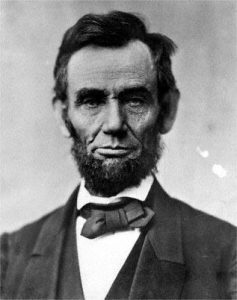 Abraham Lincoln
Lincoln grew up poor in the western frontier. He was mostly self-educated. Lincoln gained the title of “honest Abe” as a store clerk. Once he realized he had shortchanged a customer a few pennies, he walked miles to correct the situation. This happened several times and people grew to praise his integrity. Because of this, he would often be asked to judge disputes, which led him to practice law.
Yet, his most enduring quality was his perseverance. He had many personal difficulties that prepared him for his future role. At one time he said, “You cannot fail unless you quit.” He lost eight political elections and failed in two businesses. Lincoln also suffered a personal nervous breakdown. He became bedridden for six months. This led him to say, “I am now the most miserable man living. If what I feel were equally distributed to the whole human family, there would not be one cheerful face on the earth.”
As the 16th US President, he served his nation in some of its darkest hours during the Civil War. He helped preserve the nation and abolish slavery. In addition, he helped strengthen the federal government. This positioned the US for a world impact years later. Lincoln is considered one of the finest president’s of the United States. Certainly, he joins the ranks of one of the greatest servant leaders.
 Mahatma Gandhi
Mr. Gandhi was born and raised in the Hindu merchant caste system. He was an ordinary boy but one with determination to do well. He was trained in law in London and experienced racism in South Africa as he began to practice civil disobedience as an expatriate lawyer. Returning to India he became an activist, organizing peasants, farmers, and laborers to gain social justice. He gained leadership of the Indian National Congress which led to nationwide campaigns for self-rule. Thirteen different times the government arrested him. Gandhi said this about his struggles, “Strength does not come from physical capacity. It comes from an indomitable will.”
He appealed for non-cooperation through his book, Hind Swaraij. Gandhi’s non-violent approach confounded British rule. He said, “In a gentle way you can shake the world.” His approaches captured the attention globally, and rallied freedom movements worldwide. For that reason, it all eventually led to India’s independence. Finally, his humility is seen in this quote, “You must be the change you wish to see in the world.” It was never about him but rather about the Indian people and justice. This is untrue of so many leaders, but true of the other greatest servant leaders.
 Mother Teresa
Mother Teresa was born in Albania and became a Roman Catholic nun. She served in Ireland and then moved to India. The perpetual poverty disturbed her. So, she tirelessly served the dying and poor by living among them and giving each person comfort. Her relentless compassion touched the hearts of people worldwide. Like the other greatest leaders of all-time value and love people. She founded the Missionaries of Charity. Thus, it eventually grew to 4500 sisters in 133 countries. Her single devotion was to the poor or dying. As a result, people worldwide respected and admired her for this. Therefore, Mother Teresa said, “I have found the paradox–that if you love until it hurts, there can be no more hurt, only more love.”
Nelson Mandela Authorities jailed Nelson Mandela for 27 years for his activism and beliefs about equality. They abused him. Even more, he suffered their inhumane treatment and torture. Despite this, he earned his bachelor’s degree while in prison. In addition, he smuggled out a draft of his book, Long Walk to Freedom.
Upon his release from prison, Mandela negotiated with F.W. de Klerk to end apartheid. They accomplished this during racial tension and political instability. Consequently, they won the Nobel Peace prize for their efforts. Mandela eventually became the first black President of South Africa. He also changed the country by his selfless but determined leadership. Like the other greatest servant leaders, he possesses the outstanding trait of forgiveness. He also created a multi-racial government. Finally, his devotion to peace and unity gave him a global stage and audience. Mandela reminds us, “Forgiveness starts here. Forgiveness liberates the soul. It removes fear. That is why it is such a powerful weapon.”
Jesus of Nazareth

Jesus had no formal degree. He did not lead a multi-national company. His ministry lasted only 3 ½ years. In that time, he helped the poor, sick and ordinary people all the time. He did things-miracles-that no one could explain. Jesus declared, ” As the Father has loved me, so have I loved you.” In addition, the spoke of God’s mercy and forgiveness. Therefore, this stunned and challenged the status quo of the religious leaders of his day. He called them hypocrites. As a result, they crucified him on a cross for being a heretic. He predicted this would happen.
Jesus organized a core group of twelve mostly uneducated disciples. After his death, his disciples shared that he rose from the dead. They began the Christian faith. For centuries, his followers have been persecuted. However, today he now has 2 ½ billion followers which form the largest religion in the world. People around the world admire Jesus for his princples about love and life. He
is known as a holy man, prophet, healer, and son of God. His book, The Bible, is the all-time bestselling book. No doubt is he is one of the greatest servant leaders of all-time.
The Success Secret of the Greatest Servant LeadersSeldom, did these five greatest servant leaders seek personal gain, power, money. Above all, their “success secret” is the path of servant leadership. Certainly, their cause mattered more than their own lives. If only the leaders of our day would copy their life’s examples. And realize that leadership greatness is not about gaining–it is about giving and serving.
Also, are you committed to your team’s success and achieving results like the greatest servant leaders? If so, see this complimentary Coaching for Results eBook.
In addition, go here for our RealTime Learning & Training leadership and personal development website. Over 140 micro-learning and career development resources at your fingertips!
Finally, do you want to accelerate become a servant leader? Go here for Rick’s Superstar Leadership eBook.
The post The 5 Greatest Servant Leaders of All-Time appeared first on Rick Conlow.
May 21, 2021
Why Coaching is the Secret Sauce of Leadership
Coaching is the secret sauce of leadership success. Ssshhh…did I write that? I let the cat is out of the bag. Check out these verses.
“On Raglan Road” by Van Morrison and the Chieftains has these lines about hidden, secret ideas:
I gave her gifts of the mind,
I gave her the secret signs,
That’s known to the artists who have known
The true gods of sound and stone.
 With the rapid pace of life and change in the modern world, there is not time for not revealing any secrets today. Too many managers fail unnecessarily. I hope they all succeed. While there are other important leadership skills, the lack of coaching is one of the main reasons for leadership derailment. Poor leaders do not seem to care. I have seen too many managers in too many companies short circuit their results, careers, and employees’ potential because of this. Coaching is not an inborn trait. It is about learning a process and applying all the skills required for good relationships and emotional intelligence. If you are a manager or want to be a manager, you can learn it. You must become a lifelong student. Furthermore, to be a good coach you must become a servant leader. A servant leader’s foremost desire and care involves helping each team member succeed.
Managers do not coach because of these reasons:
Managers do not know what to do–this is the lack of knowledge.Many do not how to do it–this is the lack of skill .Some do not want to do it–this is the lack of valuing people.A few cannot do it–a rare situation.Jerry called me and said, “Rick, my numbers are declining, I am in meetings all the time, and I have a ton of paperwork to do. I don’t have time to coach my people!” I asked him if he remembered that coaching is the secret sauce of leadership success? As a result, if he did not have time coach, then, he did not have time to be a leader either. While he did not like that feedback, we talked, met, and designed a plan for him to change it around. He coached his team, and results began to improve almost immediately. Unfortunately, the ‘time’ excuse is what I hear most of all. Behind this is their unwillingness to put in the time to learn how to coach.
Just a note to those managers who think they are coaching but are not. What you really are doing is yelling, telling, abdicating, coercing, or intimidating people. It is not helping. Moreover, that is one reason employee engagement is so dismal almost everywhere.
Why does coaching work? Most importantly, coaching works simply because people need help to be their best. With expert guidance, support, and encouragement they will try harder, do more, and learn to apply their latent potential.
Excellent coaching involves informal and formal coaching. Informal coaching involves all engagements with an employee that are short in nature planned or unplanned. (including texts, emails, phone calls, virtual or in-person) These usually take at the most a minute or two. According to our research managers have on average 40-50 of these encounters in any given day. Formal coaching means scheduled one-on-one performance discussions. Both are about the relationship with the employee focusing on his or her job performance and personal development.
I think of a manager that I coached. He had great talent, but he lacked focus. As a result, he made dumb mistakes. With feedback, learning, and my mentorship, he learned to excel. Ultimately, he ended up receiving a promotion. Left on his own, he would have failed, despite his exceptional talent. It is like having a prime vintage wine that you never decant–it is not much good to you if left sealed and in the bottle.
There is hard evidence for a bottom-line to coaching. For example, a study by the Personnel Management Association compared training alone to coaching and training. They found that training alone increased productivity by 22.4%. Training plus coaching increased productivity by 88%! Furthermore, another study found a return on investment of coaching to be 529%! My own consulting and coaching experience proves it works. The evidence shows that exemplary coaching is the secret sauce of leadership because it produces high performance and employee engagement. Certainly, for any leader who wants to do better, or is struggling, when all else fails-coach.
Why is coaching the ‘secret sauce of leadership’?In conclusion, 82% of managers fail. So, few managers coach or do it well. Too many do not believe in it. If you learn to coach well or even in an exemplary fashion, you will quickly separate yourself from all others. Above all, you establish trust with your team. You will learn how bring out the best in your team. You will discover the key to achieving outstanding results as a leader. Therefore, you will take a giant step forward to accelerating your career. CNN stated, “Coaching is the universal language of change and learning.”
Also, since coaching is the secret sauce of leadership, check this out-a complimentary Coaching for Results eBook.
In addition, go here for our RealTime Learning & Training leadership and personal development website. Micro-learning and career advancement at your fingertips!
Finally, do you want to accelerate your coaching and leadership success? Go here for Rick’s Superstar Leadership eBook.
The post Why Coaching is the Secret Sauce of Leadership appeared first on Rick Conlow.
May 20, 2021
Servant Leaders Embrace the Multigenerational Workforce
Servant leaders do not pay much attention to the concept of a multigenerational workforce. Factors such as age, or sex, or background, or religion are relatively oblivious to them. While at the same time they take a keen and sensitive approach to each employee’s potential, needs, aspirations, and uniqueness.
New research shows that millennial’s want variety, choice, access, appreciation, and transparency in the workplace. Coincidentally traditionalists, generation X, Y and Z and baby boomers want about the same things. Also, research demonstrates that the differences of generations have been exaggerated and may be a myth.
Servant leaders are not that concerned with these matters anyway. Instead, they deal with each person as an individual not as a grouping or category or mindset. For example, just because a person is older does not mean he wants to retire or cannot be creative. Likewise, just because someone is younger and inexperienced does not mean she is not capable of supervising others or making quality decisions. Servant leaders give everyone an opportunity to contribute fully and to do what they do well and to improve. As much as anyone can they have few biases or prejudices.
 The Multigenerational workforce: Servant leaders relate to each person uniquely.
Servant leaders relate to each person uniquely and with empathy. This is what keeps them from stereotyping and limiting their employees. They ask these five key questions about each member of their team to supervise them with flexibility and care. Note the multigenerational workforce needs are not included.
Skills: What are employee’s strengths and where does he or she need to improve?Performance: What is the employee’s performance level strengths, development needs, and how can I help them get to the next level?Career: What are the employee’s goals?Motivations: What is the employee’s “hot buttons”?Interests: What does this employee care about most?Age is not that crucial to servant leaders when determining how to treat employees. Instead, they relate with each person respectfully, with dignity and fairness. (See my post, Workplace Diversity: 4 Ways to Lead Respectfully) Their goal is to help each employee succeed on the job. They are other centered, committed to bringing out the best in each person, while achieving their company goals. So, they set high expectations in terms of job performance and teamwork.
Multigenerational Differences: Two ExamplesFor example, Joe is a Service Manager for a large international company. With the economy booming in his country because of the oil business, and it was tough to keep employees who became lured away by big money. Joe pulled long hours, did double duty as manager, and filled in when he was short of employees. He never complained. Everyone knew he understood what it took to succeed at the job. Joe asked his team for three things:
Want to do a good job.Do a good job.Step up when it is needed.While establishes high expectations, he had no employee grievances. He treated people right (communication, training, recognition, incentives etc.) and he formed a culturally diverse team. Eventually, despite the oil business, he reduced employee turnover significantly. He also led his company in sales and was a leader in customer retention. None of this was by accident. Oh, by the way, I am not sure he ever read about a multigenerational workforce. Yet, he focuses on his team. As a result, he gained trust and respect.
In on other example, Martha manages a call center for a large hotel chain. She has close to two hundred employees of all age groups and nationalities on her team. She says her goal is equity and integrity. Her supervisors are well trained in call mechanics, customer retention, employee relations, and coaching skills. She says, give respect and you get respect. Also, she learns everyone’s name and continually emphasizes individual strengths and goals. In addition, she achieves the highest levels of customer service. The idea of a multigenerational workforce never came up as a problem for her.
Pulling It All TogetherYou know, I have come across a few managers like Joe and Martha. They lead people and do not manage multigenerational differences. Sometimes, researchers or academics study others and generalize that certain behaviors are true for everyone in a specific classification. Servant leaders are authentic and talk to their employees, get to know them, establish clear expectations, provide appropriate resources, have some fun and achieve their goals. Furthermore, they know individual people are different and have a genuine care for each of them. In addition, they focus on building trust through positive and genuine relationships. As a result, the reporting structure of the company is not the dominant factor.
Servant leaders do not make leadership more complicated than it needs to be. They stay focused, clear the obstacles, help employees become successful and treat them even better than customers. Certainly, servant leaders are not perfect. They are human, just like the people they work with. So, servant leaders are vulnerable, humble, admit mistakes and keep learning. Guess what, a multigenerational workforce melds into the background. Therefore, the concept becomes a non-event.
In conclusion, most servant leaders become remarkably successful, and just may be great leaders. I found they believe that their success depends on the success of their team. This quote by Eleanor Roosevelt describes them, “To handle yourself, use your head; to handle others, use your heart.”
Resources for Developing a Multigenerational Workforce Also, do you want more ideas on how to inspire employee engagement in a multigenerational workforce? Check this out this eBook-How to Motivate-NO-Inspire People.
In addition, go here for our RealTime Learning & Training leadership and personal development website. Over 140 micro-learning and career advancement resources for any multigenerational workforce: for individuals and companies.
Finally, accelerate career and become a servant leader. Go here for more–Servant Leadership@RickConlowInternational. And go here for Rick’s: Superstar Leadership eBook.
The post Servant Leaders Embrace the Multigenerational Workforce appeared first on Rick Conlow.
May 12, 2021
How to Change Habits Positively and Powerfully
How do you change habits positively? Lately, this has been on my mind. I hear so many people, and so many professionals, talk about their desire for personal change- change within themselves and change outside of themselves. (Controllable change & uncontrollable change) It seems uncomfortable-almost wrong-to settle for anything in its current state. So, if we’re that uncomfortable with being where we’re at, what keeps us from moving in the direction we hope to head?
Why We Fail Trying to Change HabitsAre you ready for the answer?
We don’t commit to changing because no matter how uncomfortable we are with the idea of where we’re at – the reality is that we are rather comfortable when compared to the alternative. We don’t really want to stay where we are, and in fact, we blame our habits for keeping us there. But, when push comes to shove, it’s more comfortable to stay and less comfortable to leave our habits.
The situation looks like this: comfort of staying in current status > comfort of moving into mystery.
Until we become uncomfortable with what our comfort zone is costing us, we will not change a habit. We can’t predict how things will feel once we achieve the change we desire, so at the end of the day, we choose familiarity over the unknown. And any change, inevitably, has a level of ambiguity to it. So, how important is change to us? Start with this, significant change is not impossible.
A Vision for Change without Fear Well, I’m here to tell you that your vision for how things can be, ought to be, should be – CAN become the reality. If you have a vision, that is step #1 to moving in the right direction to change habits. In fact, there are two ways you can look at this. Most of the time, if we are seeking to change something, we are either running FROM something [something we don’t want to be, something we’re afraid of becoming, something someone else has told us to fear, or anything that makes us feel just a wee bit anxious], or we are running TOWARD something different [something good, something positive, a better way of life, a new way of thinking].
If you run FROM something- it’s typically some level of fear that is driving you forward. If you run TO something else- it takes courage, hope and a vision to keep you moving forward. It’s up to you which of the two motivations is your motive for moving.
Now, in whatever direction you head, for whatever reason you choose – it is inevitable that you will encounter some resistance. But here’s the catch: if you are running to something that you believe in – it’s much more likely that you will see the value in overcoming the resistance. On the reverse, if you are running from something that you fear- ultimately, your decision to keep going will depend on what is scarier: the resistance you face or what you’re running from? Without this thinking process action steps to change fail because there is no emotional commitment.
A Formula for Changing Habits: D x V x F > RTo illustrate how these points can be put together, here’s a formula that models this process beautifully. Richard Beckhard and David Gleicher created The Formula for Change, which was later refined by Kathie Dannemiller and called Gleicher’s Formula. This equation helps to explain the process.
Research shows that at least 40% of our daily activities-everyday-are always the same in similar situations because of our habits. Three factors must be present for meaningful personal change to take place:
D = Dissatisfaction with how things are now
V = Vision of what is possible
F = First, concrete steps that can be taken towards the vision
If the product of these three factors is greater than R [resistance] – then the chances there will be change – are high. If the product of these three factors is less than the amount of resistance that’s present – the likelihood for change – is low. So, if you’re hoping to head in the direction of your dreams… there are a few simple things that you can do to help set the stage for success:
1) Understand what you want to change & why you want to change it.
2) Envision what it would be like if you made this change. Think it, feel it, and picture it.
3) Make a list of steps (just a few for starters) that would help you get where you want to go. Having a few reasonable ‘action steps’ in mind can make the prospect of change less overwhelming.
Pulling It All TogetherStudies show it takes 15-254 days to establish a change a habit and create a new one. So, follow three steps above, and get additional support to stay persistent. Consider these approaches: personal coach, a mentor, training, written goals, meditation, exercise, and the like. Viktor Frankl, author of a Man’s Search for Meaning, said it powerfully, “When we are no longer able to change the situation, we are challenged to change ourselves.”
Also, go here for proven methods for developing and changing habits related to success, see our complimentary inventory and action planning guide: Success Practices.
In addition, go here for our RealTime Learning & Training leadership and personal development website. Over 140 micro-learning and career development resources at your fingertips!
Finally, keep learning, read our: Unparalleled Leadership book.
The post How to Change Habits Positively and Powerfully appeared first on Rick Conlow.
May 8, 2021
13 Lethal Coaching Mistakes Made by Managers
Want to eliminate your coaching mistakes? Do you want to be a better coach? Shhh, this is top secret! Not even the CIA, KGB, MI6, or Mossad know about this! Great coaching is the secret sauce to leadership success. So few managers understand this. Therefore, they make the following lethal mistakes over and over. Hardly shocking, these mistakes lead to employee disloyalty and lower performance. Duh!?
According to research, 97% of people have self-limiting beliefs that derail their careers and performance potential. Great coaches help employees overcome these to achieve incredible results. Poor managers make these lethal coaching mistakes that reinforce the self-limits. This often leads to despair for the employees and defeat for the managers.
 4 Foundational Coaching MistakesNot applying the First and Only Rule of Leadership: It is not about you. Great coaching requires servanthood. You goal is to bring out the best in your team. Help you team succeed and you succeed. It is not about accolades or looking good. Get this wrong and your team will know, and your coaching will fail. You will make many of the rest of these mistakes. When you get it right great performances follow for your team and you!Dishonesty: If you lack integrity and ethics, you lose trust. Then you lose your team.Yell, scream, and swear: Have you ever witnessed this before? Ever notice what the employees seem to be thinking? What they do later? Now the performance is not the issue–the manager is, for being a jerk. Payback will come to the manager one way or another. Not all managers believe this because their ego gets in the way. As one executive told me, “It’s my company, I will do what I want!”Attack, attack, attack: Nobody deserves constant abuse or criticism. This, like the above, is inappropriate and shuts down employees. If you have been on the end of this, you know what I mean. In addition, harassment, discrimination, bullying, sexual abuse, or racial prejudice are illegal. As we are seeing in the media lately when this is exposed the penalties can be harsh. There is no excuse.4 Personal Coaching Relational MistakesNot knowing the person: Trust is paramount. Great coaches take the time to build rapport and understand each employee. What are the employee’s strengths? Weaknesses? Career goals? Beliefs? Background? Motivations? Without this, breakthrough is almost impossible. Remember this quote by Bill Gates: “Everyone needs a coach. It doesn’t matter whether you’re a basketball player, a tennis player, a gymnast or a bridge player.” Too many managers just look at the business numbers and act as judge and jury. Then they say, “Next!”
 Talk too much, listen too little: Coaching works as a dialogue and problem-solving effort. Listening and questioning are the bedrock skills of great coaches. It is a communication process. Without listening, a manager communicates that he or she does not care. Therefore, if you coach through a monologue you inhibit the growth of your team.Come unprepared: What message does this send to employees? They are not important? Besides, it erodes standards for higher performance for the entire team. As a result, the manager loses credibility.Show up late for a session or keep rescheduling it or never coach: Like being unprepared, this tells the employee that your time is more important than theirs. After a while, it erodes respect. Never forget that a manager’s success comes from their employees’ success. This is one of the top excuse’s managers have for not coaching, “I don’t have the time.” Whoever says this does not have time to be a manager, let alone a leader.5 Process Oriented Coaching ErrorsFocus only goals: Yes, do focus on goals and progress. But make development and learning the priority. If an employee does not learn to do a task on his or her own, then improvement or better results are not sustainable.Offer no help or guidance: With questioning and listening to someone, you teach an employee to be self-directed and architects of their own successful destiny. By strategically offering your input you can lead them forward faster.Do not follow-up: Coaching is a process, not an event. Great coaches guide informally at every opportunity. Furthermore, they do one-on-one coaching performance discusssions monthly. Some say this is micromanagement but it is actually leadership engagement. This an unforgiveable coaching mistake.Deny any responsibility: I have found that poor managers have abundant excuses: it is the team’s fault or other departments or the economy or cutthroat competition. Excellent coaches are humble. They praise the team for good results and accept responsibility when things go wrong. Note: Most notably, this does not mean you do not deal with poor performances. You do aggressively and positively. That is part of what good coaching is all about.Wanting to be liked versus being respected: Great coaches are not always the most popular. They set the highest standards, work the team the hardest, and hold people accountable to their commitments. Why? Because they are always simultaneously focusing on current performance and the greater potential. However, they do it genuinely, fairly, and consistently. Consequently, they are respected. If employees want to be the best they can be, a great coach will help them get there. Someone who just wants to be liked will derail them.Eliminating Coaching Mistakes by Taking Positive Action
The key to greatness in coaching is to sincerely desire to help others succeed. You must work hard to eliminate the above coaching mistakes, too. And get coaching and more training for yourself. Then, continuing to learn how to unleash the potential of others by guiding them to learn how to learn how to win in their own careers. See these resources:
The Power of One-on-One Coaching 5 Crucial Team Coaching Opportunities Pulling It All TogetherFinally, author Tim Gallwey says it nicely: “Coaching is unlocking a person’s potential to maximize their own performance. It’s helping them to learn rather than teaching them.”
Also, are you committed to eliminating your coaching mistakes to help you team succeed more? If so, see this complimentary Coaching for Results eBook.
In addition, go here for our RealTime Learning & Training leadership and personal development website. Over 140 micro-learning and career advancement resources at your fingertips!
Finally, do you want to accelerate your leadership success? Go here for Rick’s Superstar Leadership eBook.
The post 13 Lethal Coaching Mistakes Made by Managers appeared first on Rick Conlow.
April 29, 2021
5 Tips for Leading a Remote Workforce
It is not business as usual with so many working as a remote workforce. And it is business as usual. Certainly, the pandemic facilitated employees working at home. Yet, with technological gains this was beginning to happen anyway. However, in chaotic times communication is of greater importance to strengthen team relationships and results. And you cannot allow a remote team to be an excuse for poorer performances.
Here are 5 tips for Leading a Remote Workforce Do not rely on email or phone conferencing. Use these to follow-up on decisions and announcements of information. Use a system like Zoom, WebEx, or Microsoft Teams to keep in touch. Learn how to do it so you are not clunking around during a meeting. It is not face to face, but it works great for communicating and problem-solving. Conduct weekly team meetings of sixty minutes or less. A team of remote workforce employees is not a valid excuse not to do this. Include the team in sharing information (assignments, presentations, support, or round robin communication). Most importantly, start on time, end on time. Send an agenda out in advance and ask for other items.Do a brief warm-up or icebreaker or teambuilding activity before a meeting-5-10 minutes. It helps keep things interesting, different, and fun. Get other team members involved in leading this part.Establish weekly one-on-one meetings that you schedule with each direct report. Use excellent coaching skills. You cannot lead just by doing meetings. You are not face-to-face as much. Consequently, these sessions are even more critical than ever. You and each employee need engagement time.Give more recognition: Add this to your agenda for team meetings, and one-on-ones. Recognition is always valuable when genuine and appropriate. Focus on progress, engagement, and performance. With the pandemic people’s negative emotions are rampant. Therefore, they need encouragement and positivity.Bonus: Do not deal with employee’s performance issues on a Zoom call for example. Take it offline one-on-one. Of course, if someone is obviously insubordinate that is another issue. If you must deal with team conflict issues in a meeting, make sure you do your homework ahead of time. Certainly, this may include some one-on-one prep work. Always remain calm. Emotions are highlighted online.Pulling It All Together
In summary, whether you have a remote workforce or not genuine communication remains paramount. Each of the abouve tips adds to better teamwork. Furthermore, you must treat your team with the utmost respect. Your integrity as a leader is on the line. Without it you become a boss and a placeholder. You lose all trust.
P.S. As a reminder, see this quick post: The Greatest Leadership Principle of All-Time for elevating positivity with your team in these challenging times. This is crucial for genuine team cohesion and communication. Even more so with remote workforces. They need encouragement and support. Be safe and take care.
 Also, are you committed to your team’s success? If so, see this complimentary Coaching for Results eBook.
In addition, go here for our RealTime Learning & Training leadership and personal development website. Over 140 micro-learning and career development resources at your fingertips-great for remote workforces!
Finally, do you want to accelerate your leadership success? Go here for Rick’s Superstar Leadership eBook.
The post 5 Tips for Leading a Remote Workforce appeared first on Rick Conlow.