Rick Conlow's Blog, page 7
December 27, 2021
7 Communication Tips for Collaborating with Other People
Do you want 7 communication tips that are proven to work? Someone once said, “Career success is simple, just do the right thing at the right time in the right way.” Getting along with other people is a key part of this equation. This doesn’t always mean you have to approve or agree with what others do or say. Rather, it means working effectively with others towards common goals.
 People have an innate desire to get along with others by communicating well. Once, at a conference with about 500 people in attendance, the speaker asked for any member of his audience to stand up that couldn’t get along with other people. No one stood up. The speaker issued the command again and still no one stood up. After a little silence, finally, a man stood up at the back of the group. The speaker said, “Sir, you mean to tell me you can’t get along with other people.” The guy replied, “Sure I can. But I felt sorry for you standing all by yourself.”
Though everyone may want to get along with others this does not always mean they do successfully. The lack of these communication tips appears in any given day. They show up when you open the newspaper, go online, or watch the news there are countless stories of burglaries, murders, divorces, business strife and family problems. Sources say at any given time there are over 40 wars in the world. The caustic rhetoric of political campaigns demonstrates the lack of collaboration in government. Conflict in the workplace is highlighted every day. In fact, the #1 reason people leave a job is not money, it’s because they either dislike their boss or the people they work with. This begs the question, are people really getting along?
How to Get Along with Other PeopleAuthor, businessman and motivator Bob Conklin had a unique way of looking at relationships. He said, “Help other people be successful and you will be successful.” Motivational speaker Zig Ziglar has a similar approach as he adds, “Give other people what they want, and you will get what you want.” Religious philosophers have written similar ideas. Too often we lose the wisdom of the ages in our frantic effort to succeed or take care of ourselves. It often comes down to these values: follow the golden rule and love thy neighbor as thyself.
Take a second to notice the structure of the ideas of each of these statements. First, help others be successful or get what they want. Second, you will be successful or get what you want. Most of the time we hear the opposite, first, it is “I” or “me” then usually as an afterthought the needs of others are considered. Too many people follow the axiom, “Look out for number one.” However, this kind of selfishness destroys relationships at work and at home.
7 Communication Tips Being concerned about the needs of others is a thought process. It is an other-centered focus to life. With this focus you can begin to take actions that create positive working relationships. With the right attitude the right actions will follow. What are the right actions to get along with others? Consider these seven quick, but powerful, communication tips.
In business, people who can get along with others are invaluable to organizations. Why? Because they help build high performing teams, connect across continents with a diversity of people, inspire people to reach new goals, accelerate sales or profits and challenge others to innovate while cooperating with their peers. Consequently, the bottom-line impact to all these communication tips is priceless.
The Dr. of Love’s Advice Years ago a popular song said, “What the world needs now is love sweet love that’s one thing there is just too little of.” The late Leo Buscaglia, also known as Dr. Love, said people have forgotten how to care for or love others. During his career he authored books, spoke to thousands, encouraged them to love and hug one another more. His fundamental message spoke not just to loving one another. In addition, he basically dealt with these communication tips for getting along with other people and expressing your love genuinely.
We don’t really need Dr. Love to tell to love. Care, concern, and love of others are natural emotions. We need to communicate better and express these emotions more. As we do our relationships will improve. Then, a marvelous thing will happen as a result; we feel better and receive more of what we want in life.
Samuel Smiles said it eloquently, “It is one of the most beautiful compensations of this life, that no person can sincerely try to help another person without helping himself.”
In addition, go here for our RealTime Learning & Training leadership and personal development website. Micro-learning and career advancement at your fingertips!
 Also, do you want ramp up your career progress? Check out this eBook: How to Become a Superstar Employee.
Finally, are you a leader that needs or wants more success. Check out our best-selling book, Superstar Leadership.
The post 7 Communication Tips for Collaborating with Other People appeared first on Rick Conlow.


December 20, 2021
Maximize Employee Retention by Mentoring “Spirited Patriots”
 What if your employee retention was sky high? How would that impact your customers and business results? Let us be honest, too many employees are like paid mercenaries not spirited patriots. They have little loyalty to the organization. The pandemic highlights the dismal employee engagement tactics by companies which helped to facilitate the current nightmarish labor market. As a result, managers and companies are desperate to recruit and retain employees.
In response to the tight labor market companies are increasing wages. Duh? If you must do it now, you should have done it before. However, pay increases alone will not keep employees. A nasty company culture and oppressive management behavior reduces employee performance and drives them away.
Embrace the following two critical approaches to instill enthusiasm and commitment in your team so they want to stay and do an excellent job.
Values and Culture Drive Employee RetentionYou heard the saying, if you keep doing what you have always done, you will keep getting what you always got. If you have an employee retention problem, you must change! That means redefine the lifecycle of an employee in your organization from recruiting to retiring. That is a daunting process that will compel most to fail. Here is where to start, redefine or reignite your values and culture. People today want positive work cultures that make the world a nicer and safer place. Make sure your culture supports this building spirited patriots not paid mercenaries. By the way, any manager can, regardless of company strategy, do this in his or her department or team.
Then, prioritize training and coaching your managers how to become better managers. Why? They are the ones that deliver on the culture. Research shows they own 70% of the variance in employee performance and engagement. Furthermore, over time change your approaches in other areas.
Use Servant Leadership to Inspire Employees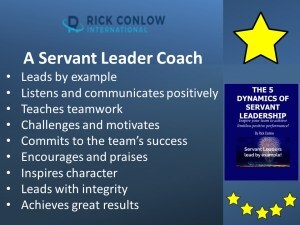 Overtime managers learn through training or education to focus on goals, plans, procedures, products sales, and results. These are the seen elements of managing. These are the measured statistical elements of a job. That is all good. However, while these elements focus an employee getting a job done, they do not necessarily inspire people to be their best.
Herzberg and others determined that true motivation is intrinsic. The unseen elements include recognition, learning, growth, advancement, pride, well-being, and achievement. These are the unseen elements of performance. This involves the inner spirit of a person. Through Servant Leadership training managers learn how to tap this spirit in people. Servant Leaders prioritize elevating People First to help them get what they want or need to be successful. Most importantly, Servant Leadership approaches achieve 24% greater performance which is much better than other methods.
Servant Leaders care for and earn the trust of their employee’s. Consequently, this positive relationship compels employees to perform their jobs at higher levels. They become spirited patriots driven by the fulfillment of intrinsic unseen motivational forces.
Pulling It All TogetherA company that values employees-People First-provides a compensation and benefits package that is above average if not industry leading. Research shows the pay/benefits are also important in recruiting, keeping people, and improving goal performance. After all, nobody is doing the job for free.
In conclusion, with attention on these areas companies and managers can quickly create reputations that honor people, help them win, and treat them right. This will go a long way to increase employee retention.
In addition, do you want to learn proven approaches? Do you want to become a better leader? If so, I suggest you check out this complimentary eBook: How to Motivate-No-Inspire Employees: 10 Keys to Employee Engagement.
 Also, go here for our RealTime Learning and Training leadership and personal development website. Micro-learning at your fingertips!
Finally, see this for details on Rick’s latest book, click here: The 5 Dynamics of Servant Leadership.
The post Maximize Employee Retention by Mentoring “Spirited Patriots” appeared first on Rick Conlow.
December 3, 2021
FIRING SOMEONE HUMANELY NOT HORRIFICALLY IS HARD FOR MANAGERS
Firing someone is among a manager’s least favorite things to do. For anyone with a heart, it’s the dreaded duty that comes with the title. However, for any leader that’s committed to creating an extraordinary team, it’s an inevitable reality.
When you’re put in this position, where you must let someone go, how do you do this well? There’s no secret solution that fits everyone across the board – but there are some ways to navigate this terrifying territory. Donald Trump’s approach on the Apprentice is not the model to follow. As a result, here are five straight-forward suggestions to do better.
HOW TO FIRE SOMEONE HUMANELY NOT HORRIFICALLY 1. Caution. Nobody should be fired without some forewarning, unless the person is breaking the law or known and accepted protocols. Make sure you are coaching your employees effectively which will minimize those that need firing. (See my post, 8 Steps to High Performance Coaching.) Therefore, give employees at least one notice that outlines your concerns and shares your expectations. If an employee isn’t given a fair shot, it’s just not right to send him packing.
2. Compassion. Consider the circumstances of the employee. A level of empathy and sensitivity is critical when you fire someone because despite how uncomfortable you are, this is one of the worst things for an employee to experience. Remember, it impacts their career, livelihood, and family.
3. Candid. Don’t drag the conversation out longer than it needs to last-usually a few minutes. Get to the point. Be straight-forward without losing your sincerity. If you sugar coat your message, it’ll get lost in translation. If you are too harsh or judgmental, you’ll leave them feeling hopeless and resentful. Do your best to balance hope and honesty.
4. Conserve. Maintain your professionalism. Most importantly, prepare for the conversation, and consult your boss or human resources for advice. Reserve a space that’s private. You want to deliver the news to them in a way that provides them with tangible feedback to apply in the future. When done well this can be a developmental process for an employee.
5. Complement. Identify strengths in the employees you fire, so that you explain to them what they have to offer in other environments. If you make it solely about what they’re lacking, they’ll leave feeling worthless. If you know of an opportunity that seems to be suitable for them, share these options with them. Consequently, be genuine. If you are a fake – you’re harming, not helping.
SummaryI leave you with a quote from Steve Jobs that will bring some hope to this hard process. The reason I share it is because it demonstrates that letting someone go can sometimes free individuals to move in unexpected ways. “I didn’t see it then, but it turned out that getting fired from Apple was the best thing that could have ever happened to me. The heaviness of being successful was replaced by the lightness of being a beginner again, less sure about everything. It freed me to enter one of the most creative periods of my life.”
In conclusion, firing someone is just one of the tough tasks of a leader. But if it’s done well, your team will be better off, and even the employee you fire can be freed to find a better fit.
By the way, do you want to learn proven approaches? Do you want to become a better leader? If so, I suggest you check out this complimentary eBook: How to Motivate-No-Inspire Employees: 10 Keys to Employee Engagement.
Also, go here for our RealTime Learning and Training leadership and personal development website. Micro-learning at your fingertips!
Finally, see this for details on Rick’s latest book, click here: Superstar Leadership.
[image error]
The post FIRING SOMEONE HUMANELY NOT HORRIFICALLY IS HARD FOR MANAGERS appeared first on Rick Conlow.
November 25, 2021
17 Memorable Quotes about Gratitude and Thanksgiving
Gratitude means the quality of being thankful, and the readiness to show appreciation for or to return kindness. In our drive for success, many times we neglect what’s most important and who is most important. We focus more on the “what” and forget about the “how”. As one forward thinking CEO told me recently, “The how matters.”
 In business it is about the numbers, facts, figures, data, metrics, business intelligence, profits, and results. People and our relationships become an afterthought. I hope these quotes rekindle your gratitude for those close to you at work and home, and for your blessings you enjoy in life. We do not need a thanksgiving day. Every day is a great day to give thanks and to be grateful.
I must add one more quote related to a story I read years ago. This quote refers to a true story published in Reader’s Digest in 1991, by Sister Helen P. Mrosla. She was a teacher who made it difference. She says, “Sometimes the smallest things, can mean the most to another. We forget that life will end one day. So please, tell other people you love and care for that they are special and important. I leave this message with you and ask you to spread the messages to everyone you know.”
To read the whole story, go here: All Good Things. It is about the impact of appreciation and gratitude on unruly third graders, and how it positively influenced their entire lives, as they grew up and even went to war.
Gratitude is as important as attitude in determining your altitude. I wish you all good things throughout the year, and the gratitude to go with it.
 Also, do you want to minimize management mistakes and achieve the best results? Read this: The 5 Dynamics of Servant Leadership eBook: Inspire Your Team to Achieve Limitless Positive Performance.
In addition, go here for our RealTime Learning & Training leadership and personal development website. Micro-learning and career advancement at your fingertips!
Finally, do you want to accelerate your leadership success? Go here for Rick’s Superstar Leadership eBook.
The post 17 Memorable Quotes about Gratitude and Thanksgiving appeared first on Rick Conlow.
November 24, 2021
Excellent Execution: 4 Leadership Pillars
Most managers lack excellent execution skills. “Execution is the great unaddressed issue in the business world today. Its absence is the single biggest obstacle to success. Furthermore, it creates most of the disappointments that are mistakenly attributed to other causes.” Larry Bossidy and Ram Charan declared this in their book, Execution: The Discipline of Getting Things Done. In addition, studies show that only one in three change initiatives work.
Poor Results the Norm not Excellent ExecutionCertainly, to compete effectively today companies and managers need to continually look for ways to improve performance. Customers are demanding and competition relentless. However, these statistics demonstrate how poorly leaders execute their grand plans. For example:
John Kotter, the change master, says 70% of change initiatives fail.A scant 10% of CEOs believe their companies can execute on their plans. Yet, 82% of CEOs say change is important to their companies.Only 27% of new strategy considers the workloads of managers or employees.95% of managers lack clarity in their company’s expectations and goals.

How do you dramatically alter these results? Unfortunately, most companies and leaders discount the importance of how they engage employees with change or new strategies. Instead, they focus on technology over people. I discuss this in other posts. Also, see The Death of Customer Service.
In this leadership video, I share four keys for preparing and helping your employees to achieve excellent execution.
Plan-Clarify the project’s expectations.Train-Develop your team’s competence.Coach-Manage the team’s commitment.Renew-Support the process and the team with consistent follow-through and communication.Pulling It All TogetherIn conclusion, through this Excellent Execution Formula managers attain greater success in achieving their goals. How many times do companies fail to full support a new initiative so it fails? Furthermore, employees call these programs of the month. You can change this. By using these four pillars you will inspire your team to be spirited patriots not paid mercenaries.
[image error]Also, learn more about proven approaches for increasing excellent execution. Go here for this complimentary eBook: How to Motivate-No-Inspire Employees: 10 Keys to Employee Engagement.
In addition, check out this complimentary eBook: Changing Change Management.
Finally, go here for our RealTime Learning & Training  leadership and personal development website. Micro-learning and career advancement at your fingertips!
The post Excellent Execution: 4 Leadership Pillars appeared first on Rick Conlow.
November 15, 2021
4 Courageous People: Turning Setbacks into Successes
Courageous people can survive just about anything because they are resilient. They demonstrate hope within tragedy and defeat. All of us could use more encouragement like this amid this pandemic. Unfortunately, Steven Wolin, Professor of Psychiatry at Georgetown University, says our culture tends to perpetuate all of us as victims. He says it encourages frailty by enabling people to dwell on their troubles too much. This inhibits the capability to rise above a life crisis or difficulty, and to rebound positively. Yet, we all have the capability to live courageously.
Here are four people who engulfed by life challenges, persevered. Each demonstrates important courageous traits of resilience that we can learn from to face our problems head on.

Cliff Miedl was a plumber’s apprentice. As he was jack hammering a hole to get to a water pipe, he accidentally touched a high voltage cable and received 30,000 volts of electricity. He became horribly burned as well as suffering three cardiac arrests. As you could imagine, Cliff had a long, arduous recovery including fifteen surgeries over fifteen months. He defied the doctors by learning to walk again. Soon he began to kayak to become stronger. Eventually he entered and won races and made the US Olympic team. At the Sydney Olympics in 2000, 603 of his team members voted Cliff the flag bearer as they marched into the stadium on opening night.
Cliff’s indomitable human spirit and courage helped him transform his perception of a tragedy and turn it into a life-changing success story. He earned an MBA in Asset Management from USC. Today, he is a successful speaker and author. He has also won various awards for his courage and contributions to others. Dr. Martin Luther King said, “The ultimate measure of a man is not where he stands in moments of comfort and convenience but where he stands at times of challenge and change.”
Challenge Yourself to have CourageKyle Maynard was born with a condition known as congenital amputation in both his arms and legs. His parents made a key decision early on to teach him to be as independent as possible in a drive for the “pursuit of normalcy.” Kyle’s parents courageously pushed him to learn and do everything any other child had to learn. They constantly challenged him, and he habitually began to do the same to himself.
Kyle grew up knowing he could accomplish anything he put his mind to do. He learned to type fifty words a minute with two elbows. He wrestled in high school. For the first year in a half, he lost every match. By his senior year he had won thirty-six matches, beating several state champions along the way. He has written a book, No Excuses. He was the first amputee to crawl to the top of Mt. Kilimanjaro, the highest mountain in Africa. On a show with ESPN, he fought in mixed martial arts, bench pressed 240 pounds coached others to get physically fit and talked about climbing Everest. Whether or not he does make that climb, his words are important to all of us. When asked about his disabilities he says, “What disabilities? Life is full of possibilities.”
Commit to Act CourageouslyDiane Van Deren was pregnant with her third child when she received a diagnosis of epilepsy. She had multiple grand mal seizures but found when she committed to action and ran, she had no seizures. Running brought her relief so she continued to do so. It was a metaphor to her for living fully. Eventually she had radical surgery that removed her right temporal lobe in the brain. The seizures stopped but the surgery caused her to lose the ability to process the passage of time. Afterwards, she learned she could courageously run for days without sleep or an understanding of how far she had run. Her weakness had become a strength in running.
Diane has shocked the field of distance running. She set a world record in North Carolina’s 1,000-mile Mountain-to-Sea Trail and won the Yukon Arctic Ultra 300. She has completed all of her events with unbelievable results. While daily life is a struggle, Diane has pursued a passion for running that exemplifies this quote by German philosopher Friedrich Nietzsche, “What does not kill me makes me stronger.”
Cultivate Persistent Optimistic CourageMax Cleland went to Stetson University and received a B.A. degree. After one year of study for his master’s in history at Emory University, he entered the army and served in Vietnam as a captain. One day while returning to his barracks, a grenade went off. Max fell on it saving others but lost both of his legs and his right arm in the explosion. It took 41 pints of blood to save his life. The nurse told him, “You can thank God, it’s a miracle you are alive.” He thought, “Thanks for nothing!”
However, over time and through turmoil, frustration and pain, Max’s attitude changed. He told others, “God didn’t make me to be 4 feet tall!” Eventually he courageously discovered he could walk, swim, drive and dance. He persisted and did more than others expected. Certainly, he began to think bigger, and he optimistically saluted life with others in his situation. Max went on to serve as administrator of the Veteran’s Administration for President Carter. He championed for the rights of all the disabled. Furthermore, he served two terms in the Georgia State Senate. And Georgia voters elected him to the US senate. His book, called Stronger at the Broken Places, tells his story.
Pulling It All TogetherResearch shows all people have the capacity for resiliency and that needed behaviors are learned. These include expressing positive and negative emotions, sharing constructive emotions, and building strong relationships with others for support.
In conclusion, courageous people face all the challenges life has to offer and can turn failures into successes. Consequently, they learn to build their broken places to become stronger. While it is not easy, you can, too. Regardless of what you are facing, learn from these examples, and use your life’s hardships to expand your capacity to live fully anyway.
 Do you want more success in life and in achieving your goals? If so, check out this 98 page eBook road-map to success: GoalPower: How to Increase Your Personal and Professional Success.
In addition, do you want more success in life? See this complimentary guide and assessment on Success Practices.
Also, go here for our RealTime Learning and Training leadership and personal development micro-learning website. Learning means winning at fingertips.
The post 4 Courageous People: Turning Setbacks into Successes appeared first on Rick Conlow.
November 9, 2021
An Excuse: The ONE Word that will Derail Your Career
My excuse was light speed immediate when my high school baseball coach called and invited me to speak at a Legion Baseball banquet. I told him I had a busy day that day. He encouraged me and said, “You are doing all right. Come and tell them what it takes.” Noticed he said, ‘all right’. I agreed to talk but immediately regretted it.
The One Word: An ExcuseIt was four weeks or so before the banquet. “Who I am to influence them?” I thought. As the date approached, I could not think of anything to say. I agonized over this. I kept thinking, “I didn’t make the pros. My failure to reach my goal was because I did not work hard enough. Maybe I should have practiced more. I played in Minnesota, not California. The weather short-changed me. If I did not have to wear glasses, things would have been different.” I kept thinking of a new excuse every day. I had a vision in my mind with this headline in the local paper: “Hometown Failure Returns.”
 The night of the banquet, I still had no speech as I drove to the Legion Hall. Finally, I thought, did I learn anything even though I didn’t achieve my dream?” For the first time in my life. I released my excuses and feelings of failure. My mind focused on what I had learned. That evening I shared the value of a dream. Now I had a new one, to own a consulting business promoting coaching and training. It was a liberating event for me. I believe it was of importance to those young men on the baseball team, too. By began to forget my trumped-up excuses. Now, I could focus on a new dream. I began to learn how to tap my real potential.
The truth is that sometimes we fail. Sometimes we are not good enough yet to accomplish something we have set our sights on. Maybe it will never happen. If we stay there, we get stuck making excuses for our inactivity or failure. Then we have a choice to make. Do we learn or do we continue to make excuses?
An excuse is a reason or explanation that we create to make us feel better as we defend or justify a fault, mistake failure or an offense. Excuses do not serve us; they derail us. Why? Because as soon as we buy in to one, it is easier to embrace another. Before you know it, just as I learned, they are unpleasant habits.
10 Quotes about the Pain of ExcusesReview these ten quotes that define how dis-empowering excuses are:
“I attribute my success to this – I never gave or took any excuse.” Florence Nightingale“Nothing is impossible; there are ways that lead to everything, and if we had sufficient will, we should always have sufficient means. It is often merely for an excuse that we say things are impossible.” Francois de La Rochefouauld“Excuses are the nails used to build a house of failure.” Don Wilder and Bill Rechin“Don’t make excuses — make good.” Elbert Hubbard“He who excuses himself accuses himself.” Gabriel Meurier, Trésor des sentences“Maybe you do not like your job, maybe you didn’t get enough sleep. Well, nobody likes their job, nobody got enough sleep. Maybe you just had the worst day of your life but, you know, there is no escape, there is no excuse, so just suck up and be nice.” Ani Difranco“No one ever excused his way to success.” Dave Del Dotto“Excuses are the tools with which persons with no purpose in view build for themselves great monuments of nothing.” Steven Grayhm“The best day of your life is the one on which you decide your life is your own. No apologies or excuses. No one to lean on, rely on, or blame. The gift is yours — it is an amazing journey — and you alone are responsible for the quality of it. This is the day your life really begins.” Bob Moawad“The person who really wants to do something finds a way; the other person finds an excuse.” Author Unknown A Story about a Setback and Comeback
We all face challenges in life. Whatever it is, a hopeful vision propels us to success not our excuses. But we must make a choice. Consider Cliff Miedl a plumber’s apprentice. As he was jackhammering a hole to get to a water pipe, he accidentally touched a high voltage cable and received 30,000 volts of electricity. He was horribly burned as well as suffered three cardiac arrests. As you could imagine he had a long, arduous recovery including fifteen surgeries over fifteen months.
Cliff’s body was in pain, so much so that he could not walk. Certainly, many excuses confronted him, but he persevered anyway. He defied the doctors by learning to walk again. He began to kayak to become stronger. Over time he entered and won races, and eventually made the US Olympic team. At the Sydney Olympics in 2000, 603 of his team members voted Cliff the flag bearer as they marched into the stadium on opening night. More importantly, while he did not win a medal, he was a champion.
Pulling It All TogetherIn conclusion, Cliff’s indomitable human spirit helped him transform his perception of a tragedy and turned it into a life-changing triumph. Today he is a successful speaker and motivator.
Furthermore, we all have this spirit. When we lose or are faced with difficult life circumstances, we must deny fuel to our excuses. Instead, choose to create a new goal or dream. Then act today! Do not quit. It is called being resilient. Dr. Martin Luther King said, “The ultimate measure of a man is not where he stands in moments of comfort and convenience but where he stands at times of challenge and change.”
 Also, do you want more personal success in life? See this complimentary Success Practices Assessment and Guidebook.
In addition, go here for our RealTime Learning & Training, a leadership and personal development website. Over 210 micro-learning and career development resources at your fingertips!
Finally, do you want to accelerate your leadership success? See Rick’s newest book, The 5 Dynamics of Servant Leadership: Inspire Your Team to Achieve Extraordinary Goals! And go here for Rick’s best seller, Superstar Leadership eBook.
The post An Excuse: The ONE Word that will Derail Your Career appeared first on Rick Conlow.
October 23, 2021
Achieving a Winning Attitude
The parable of the contented frog illustrates the obstacles we face in winning. If you boil a pot of water and drop a frog in it, guess what happens? The frog quickly jumps out. However, if you put a frog in a pot of cool water and then slowly heat the pot up, guess what happens? The frog boils to death!
How often do people become contended where they are at or with what they are doing? To win we must be willing to change. To win we must be willing to look bad by trying novel approaches or ideas to look even better.
3 Ways to Achieve a Winning AttitudeDo you want more success in your job or life? More recognition? More personal satisfaction? If you do, read on. Get more motivated to be all you can be with a winning attitude. Tom Watson, the founder of IBM, created a world giant of a company with a winning attitude and performance. He believed strongly that people learn to win. Here are three words that define winning that are worth learning.
PossibilityThis is the first characteristic of a winning attitude. Dr. Viktor Frankel declared, “Man’s ultimate freedom is his ability to choose his own attitude.” Are you choosing a winning attitude?
Positive over negativeStrength over weaknessSuccess over failurePersistence over despairYes, over noWinning over losing Possibility over problemsUnfortunately, Henry David Thoreau said, “Most men lead lives of quiet desperation and go to the grave with the song still in them.” Far too many people look at the world with fear and see disaster and turmoil. They think it’s natural to think negatively; it is the way of the world. Their views reinforce their thinking patterns.
Winners think of possibility. They seek solutions and strive after goals. Instead of GIGO (garbage in, garbage out) they work at PIPO (positive in, positive out). Positive thinking is similar to the game of golf. Just when you think you have perfected the game, you shank a shot. Positive thinking must be worked at day by day, every day. Winners in sales, management, customer service or any career seek an edge. They are never 50% better than competitors. Success comes by being 1%, 2%, 3% better by focusing on the possibilities not the problems in life circumstances.
PersistenceYou may be saying, “Who are you to talk?” You don’t know me or what I’ve been through.” And that’s right. Yet I do know winners have persistence. Abe Lincoln once wrote, “I am the most miserable man alive, whether I’ll make it, I do not know.” Yet he did, didn’t he? He persisted.
Helen Keller had a few bad days, but she kept on keeping on. Beethoven wrote his best work while in debt to his creditors. Handel composed the Messiah while he was deaf. Socrates was bald, fat, and ugly. However, he is considered one of the greatest philosophers of all time.
What is the secret of persistence? It is between the lines in these words by William Henley: “It matters not how strait the gate or marred with punishments the scroll; I am the master of my fate: I am the captain of my soul.”
PrideAll winners have pride! A sales survey of top performers indicated their best attributes included their pride and ability to work hard. In other words, they wanted to win, and they did because they kept learning to perfect their craft. Do not be like the little girl who wrote the following letter:
Dear Miss Harper:
My mother said if I wanted to be good at the piano that I should work hard, practice long and apply myself. That is why I am writing this letter; I decided to quit the piano.
Your student, Susie Thompson
All excellence is equally difficult. Work hard! Practice long! Apply yourself! You will win more success, recognition and personal satisfaction in your career and life.
“I have a vision that soars on golden wings and visualize of your achievements and your legacy that sings. I do not know all about your awesome goals or persistent efforts to raise the bar. However, I only know you can be the best-a superstar!” May you be inspired to reach your greatest heights with a winning attitude.
 Do you want more success in life and in achieving your goals? If so, check out this 98 page eBook road-map to success: GoalPower: How to Increase Your Personal and Professional Success.
In addition, do you want more success in life? See this complimentary guide and assessment on Success Practices.
Also, go here for our RealTime Learning and Training leadership and personal development micro-learning website. Learning means winning at fingertips.
[image error]
To accelerate your career, contact Rick at RCI: 612-868-8521 or rick@rickconlow.com.
The post Achieving a Winning Attitude appeared first on Rick Conlow.
October 21, 2021
7 Common Management Mistakes of Bad Bosses
Bad bosses have many things in common – and most of those “things” happen to be the common management mistakes they make. This list does not cover every mistake, but it tackles seven that are worth avoiding.
4 Common Management MistakesRelying on your promotion to give you powerA promotion to a management position gives you the title to do your job, but it is your responsibility to get the tools to do your job. So, what are you actively doing to learn the ropes, seek feedback along the way, and develop yourself as a manager? Your team will have a tough time respecting you if you do not do the job your entrusted to do.
Acting on assumptionsCan you read minds? No. Can your team? No. Despite these two answers, you would be amazed at how often managers assume their teams know what they want – and how often managers make assumptions regarding their teams’ true feelings about them. Two things that managers must do to avoid mind-reading efforts: 1) Clearly communicate goals and expectations – do not assume your teams know these. 2) Directly request feedback from team members and listen – you cannot expect your team to be candid with you if you do not invite them to share their insights. Communication is critical.
 Being critical and negative
Unfortunately, nasty negative managers are a fact. Of course, employees hate their approach. Consequently, it affects their morale and engagement. Bosses who are critical lack a caring value. In addition, they give little praise or recognition. Unfortunately, for the employees there is too much of this going around.
Lack of reliable performance discussionsPoor leaders do not communicate well with their teams. They either skip doing team meetings or one on ones or do them poorly. Research shows that effective one on one performance discussions increase employee motivation and performance (Go here to do an outstanding performance review.). Also, when done well performance discussions increase innovation, teamwork, and customer service. You do not want to commit this management mistake.
3 Additional Management MistakesLeading without exampleMost leaders have no problem telling others what to do and what to change – but the mistake they make is they master “talking the talk,” but they fail to “walk the walk.” Great managers lead by example; they do not ask or expect their teams to do anything they are not willing to do themselves.
Ridding the workplace of funSometimes managers get such tunnel vision that they forgo all fun to get serious about success. This is a dangerous managing mentality that is driven by a huge misunderstanding. Having fun does not interfere with driving success unless it is not clear which effort is the priority. So once again, refer to #2 and clarify your goals, but do not compromise fun in the process – ensuring the workplace environment is enjoyable to your team members is worth your time.
Getting comfortableLet us say you achieve your goal, accomplish your vision, and deliver results – then what? Well, mediocre managers would leave it at that and call it a great day! This is a big management mistake. But great managers would keep at it – their commitment to continual improvement and learning would override their opportunity to get complacent. Do not stop with success!
Also, do you want to minimize management mistakes and achieve the best results? Read this: The Dynamics of Servant Leadership eBook: Inspire Your Team to Achieve Limitless Positive Performance.
In addition, go here for our RealTime Learning & Training leadership and personal development website. Micro-learning and career advancement at your fingertips!
Finally, do you want to accelerate your leadership success? Go here for Rick’s Superstar Leadership eBook.
The post 7 Common Management Mistakes of Bad Bosses appeared first on Rick Conlow.
October 8, 2021
How to Eliminate the Whirlwind & Increase Productivity
Many managers harp on the all-too-disorderly whirlwind way of doing business these days. Today, with many employees working remote, we are expected to always be accessible. So, we are in constant contact with others and typically, we are expected to be “on” all the time. If we do not respond to an email, text or check-in within a certain time, we know we will get a phone call. And well, we must answer that (even in the evenings or on the weekends or vacations) because if we do not… it is going to look like we are not hard workers. So, where do we draw the line? And what does all of this have to do with managing others? A LOT.
2 Considerations to Move from Whirlwind to ProductivityAs a manager, even though you have a million things on your plate, it is your responsibility to know and understand what is occupying your team’s time. (No, this does not give you an excuse to micromanage.) Here are four considerations that may help.
 Most Importantly, you cannot truly help your team if you do not have a clue what is consuming their calendars. As a manager, one of your responsibilities is to remove obstacles and barriers – and an uncomplicated way to do this is to “trim the fat” off your team’s schedule. Identify the meetings that can be eliminated, take tasks that you ought to tackle, and shift things around that make sense. Talk to your team members individually. Do a series of team planning meetings. Clarify roles, goals, and expectations. Discuss ways to avoid redundancies, delegate where you can and use team activities to get more things done. Track how as a team you are spending time. (see this assessment by HBR) Ask, what can we learn? These kinds of conversations with your team alleviates the pressure build up and often generates creative ways to be more effective.Furthermore, your ability to recognize team members for their contributions depends on your awareness of the details. One of the main employee frustrations described in engagement surveys is that managers do not know or recognize them for the hard work they do. So, get enough information to award and affirm your team regularly. See this for more idea’s recognition-employees crave recognition.2 More Considerations to Move from Whirlwind to ProductivityIn Addition, if you do not know, they will know. Case in point: have you (in your personal experience) ever received an email from a boss (late at night or on the weekend) that asks something of you, something so significant, that you leave your inbox thinking… do they even know what is on my plate right now? (This post is also not an excuse for employees to gripe or be idle.) Sometimes managers do not even know the whirlwind of their teams: deadlines, priorities, and stressors that their reports are facing, and so they do not consider the competing factors – they just consider what is convenient. So, do your best to balance your latest priorities with your team’s current challenges. So, take the time to engage your team on an on-going basis. Be involved and accessible.Finally, remember to coach all employees one on one regularly. This will help you focus them and you on priorities. You will also gain a dialogue with good coaching that is invaluable for generating input and ideas that lead to better employee engagement. In addition, you will improve performance because of the clarity of expectations. But also, you will know what is happening with your team and
how well it is happening
. This puts you in a better position to proactively deal with problems. See this brief training video: 5 Superstar Coaching Steps.Pulling It All Together
Most Importantly, you cannot truly help your team if you do not have a clue what is consuming their calendars. As a manager, one of your responsibilities is to remove obstacles and barriers – and an uncomplicated way to do this is to “trim the fat” off your team’s schedule. Identify the meetings that can be eliminated, take tasks that you ought to tackle, and shift things around that make sense. Talk to your team members individually. Do a series of team planning meetings. Clarify roles, goals, and expectations. Discuss ways to avoid redundancies, delegate where you can and use team activities to get more things done. Track how as a team you are spending time. (see this assessment by HBR) Ask, what can we learn? These kinds of conversations with your team alleviates the pressure build up and often generates creative ways to be more effective.Furthermore, your ability to recognize team members for their contributions depends on your awareness of the details. One of the main employee frustrations described in engagement surveys is that managers do not know or recognize them for the hard work they do. So, get enough information to award and affirm your team regularly. See this for more idea’s recognition-employees crave recognition.2 More Considerations to Move from Whirlwind to ProductivityIn Addition, if you do not know, they will know. Case in point: have you (in your personal experience) ever received an email from a boss (late at night or on the weekend) that asks something of you, something so significant, that you leave your inbox thinking… do they even know what is on my plate right now? (This post is also not an excuse for employees to gripe or be idle.) Sometimes managers do not even know the whirlwind of their teams: deadlines, priorities, and stressors that their reports are facing, and so they do not consider the competing factors – they just consider what is convenient. So, do your best to balance your latest priorities with your team’s current challenges. So, take the time to engage your team on an on-going basis. Be involved and accessible.Finally, remember to coach all employees one on one regularly. This will help you focus them and you on priorities. You will also gain a dialogue with good coaching that is invaluable for generating input and ideas that lead to better employee engagement. In addition, you will improve performance because of the clarity of expectations. But also, you will know what is happening with your team and
how well it is happening
. This puts you in a better position to proactively deal with problems. See this brief training video: 5 Superstar Coaching Steps.Pulling It All TogetherOverall, it is important to keep a gauge on how overwhelmed your team is feeling. If you do not have any idea what is keeping them busy, you cannot help them make the most of their time. And that is the point: it all comes down to productivity. By considering the above and taking the appropriate action steps, you are helping your team members increase their performance, which inevitably will translate into more success for them and you! As summary, think of this quote by Golda Meir, “I must govern the clock, not be governed by it.”
 Also, are you committed to your team’s success? If so, see this complimentary Coaching for Results eBook.
In addition, go here for our RealTime Learning & Training leadership and personal development website. Over 130 micro-learning and career development resources at your fingertips!
Finally, do you want to accelerate your leadership success? Go here for Rick’s Superstar Leadership eBook.
The post How to Eliminate the Whirlwind & Increase Productivity appeared first on Rick Conlow.