Rick Conlow's Blog, page 4
December 6, 2022
The Roadmap to the Secret Sauce of Employee Engagement
Few companies or leaders have or know the “secret sauce” to employee engagement. This is a business disaster. This employee engagement training video will highlight these facts. I will share the “secret sauce” of employee engagement. It all begins with leadership. Managers, supervisors, team leaders, and even executives must change. If leaders need to transform how they view and relate to employees. As a result, they will tap an incredible potential of people. Also, highlighted in the video are four leadership strategies that power drives the ‘secret sauce’.
Coke has a secret formula. McDonald’s has a special sauce. Kentucky Fried Chicken has eleven key herbs and spices. However, most companies lack the secret sauce to employee engagement. Research shows 85% of employees are disengaged in organizations worldwide. A lack of engagement produces poorer productivity, morale, and overall business results. This costs companies billions of dollars in lost sales, and profits. Countless managers fail as a result. Even more important, millions of employees are distressed and unhappy at work. Why? Because of being treated poorly by their supervisor or company. This negatively affects their lives and families. In addition, it degrades the customer experience, sales and profits. Employee engagement has a secret sauce or a roadmap for outstanding success. Watch this video and learn how to reach the highest levels of success.
This secret sauce and the next revolution in leadership thought focuses on the power of people. Unfortunately, not many companies apply the know this. They treat people as commodities–human capital. They believe people are the “soft” side of the business, expendable human resources. Technology has become more critical than people. Instead, employees should be treated as the greatest resource of a company–the heartbeat of a company. Unfortunately, the average eNPS (employee Net Promoter Score) rating for companies is 14 on a scale of 100+ to -100. That’s a pathetic result.
 Employee Engagement: Secret Sauce to Organizational Success
When employees feel valued, they put their hearts into their work. They become spirited patriots, not just paid mercenaries. In addition, they willingly go the extra mile and perform significantly better. This means better customer service, sales, productivity, and profits. Furthermore, they act this way not because they must but because they want to. This secret sauce inspires employees to achieve outstanding performances and company results. What leader would not want that?
 Also, why not commit yourself to your team’s success. See this complimentary white paper: 5 Cultural Habits of Customer Driven Companies.
In addition, go here for our RealTime Learning & Training leadership and personal development website. Over 140 micro-learning and career development resources at your fingertips!
Finally, do you want to accelerate your leadership success? Go here for Rick’s Superstar Leadership eBook.
The post The Roadmap to the Secret Sauce of Employee Engagement appeared first on Rick Conlow.


December 1, 2022
Elevate Employee Engagement: 5 Critical Leadership Skills
Leadership worldwide is in crisis mode. In all areas of life, leadership distrust has hit rock bottom. Seldom does a day go by without another story in the media about a leader–in government, religion, or business–that bites the dust because of an ethical or behavioral failure.
In the business arena leadership failures abound. Aon Hewitt’s report, Trends in Global Employee Engagement, shows that 80% of employees in companies are not actively engaged. Gallup’s report, The State of the Global Workplace; shows comparable results with 85% as unengaged. In other words, employees are not that committed to doing their best for their leader or company. Unengaged employees are less productive and lose companies billions of dollars in lost sales, poor customer service and inferior quality.
 The solution seems elusive because not much has improved in recent years, but it is simple. Here are five laws of human interaction that can help leaders change their approach, and at the same time transform the attitudes and actions of employees and teams.
This is a fundamental problem with poor leaders; it is all about them. Too many are selfish and egotistical. Recently, AOL’s president demonstrated this when he cut employees’ health benefits because of what he called two “million-dollar babies.” He did this while the company enjoyed better profits and his income was $12,000,000 for the year. This kind of insensitivity happens often in leadership roles, and it destroys employee morale. The best leaders win because they help others win. Their focus is on others’ success, not just on their own personal success.
#2 Treat people with respect and honesty–not as commoditiesEmployees are the most important part of a company. However, leaders often treat them like Cinderella, the unwanted and abused stepchild. Target Corporation recently had a costly security breach in their credit cards that affected 110 million customers. One estimate predicts this will cost them $680 million dollars. Shortly after this breach, 475 employees lost their jobs in a layoff. Did these employees cause the breach? Were they all poor performers? Companies often do layoffs without concern for employees, to show Wall Street that they are taking action and, in this case, trying to restore the public’s faith in the company. However, these actions deaden employee’s loyalty.
What if leaders in the corner office or on the showroom floor showed more genuine courtesy? What if they listened better, admitted a mistake, or managed conflict constructively? What if they did more genuine leadership coaching? These kinds of actions produce employee engagement and productivity, as well as trust. Gallup’s employee engagement studies show that employees fully engaged perform 202% better on performance drivers than other employees. Treat employees as valued partners not as expendable commodities.
#3 Communicate, communicate, communicate–you are not in a secret societyAt one company, the employees confided in the consultant about their leader. They said, “Get him out of the office to see what is happening. All he does is use his reports to send out inflammatory emails all day.” On employee engagement surveys poor communication is often the highest complaint about leaders at all levels. Yet, CEOs proudly proclaim that the #1 reason for their rise to the top is their ability to communicate. Clearly there is a communication gap! Leaders today need to ask more questions, listen better, hold better and purposeful meetings, and engage their employees more. Leadership engagement such as this creates more employee engagement.
#4 Give your team the praise–get out of the limelightFor too many leaders, work is like the big party, and they are the center of attraction. Up and down the corporate ladder, supervisors, managers, and executives clamor for credit when things go well and blame employees for the failure. Research by the Jackson ROI Study proclaims that the more genuine recognition you give to employees the greater the impact on the bottom-line. Common sense says that when you appreciate others, they will respond in kind. In the workplace this means employees do a better job. Employees tend to repeat praised and rewarded behavior.
 #5 Your Leadership Skills: If you do it first, others will follow.
Muhammad Ali captured people’s attention because he believed in himself. He said, “I am the greatest!” His ability to communicate and his boxing talents captured the hearts of millions worldwide. Mother Teresa took approach one step further. Her faith was in her calling and in God. Becoming homeless, hungry, and sick herself, she served the dying and the poorest of the poor. Eventually she built a network of 4,500 sisters in 133 countries. This leadership principle–leading by example–is an art forgotten by managers.
Corporate executives want more technological advances, electronic gadgets, and business intelligence today. High-tech not high touch rules the corporate priority list. Executives use the excuse that they are too busy to enter the fray to interact with employees, talk to customers, or work the midnight shift. Successful leaders do what they ask others to do. Best- selling author and leadership consultant Steven Covey said, “What you do has far greater impact than what you say.”
Pulling It All TogetherLeadership is influence and it is either good or bad. There are no grey areas. Positive leadership engagement will elevate and transform employee engagement. By diligently applying these five basic Servant Leadership skills any manager or company will improve results. Lao Tzu said, “A leader is best when people barely know he exists, when his work is done, his aim fulfilled, they will say: we did it ourselves.”
Resources for Your Development Also, check out our new resource: 21 Servant Leadership Training Lessons.
In addition, go here for our RealTime Learning & Training leadership and personal development website. Over 250 micro-learning and career advancement resources at your fingertips!
Finally, do you want to accelerate employee career and become a servant leader? Go here for Rick’s Superstar Leadership eBook.
The post Elevate Employee Engagement: 5 Critical Leadership Skills appeared first on Rick Conlow.
November 26, 2022
26 Exceptional Employee Engagement Quotes
You can measure employee engagement by the performance of employees, or a company compared to the competition. Highly engaged employees, according to research:
Sell more.Serve customers better.Stay longer at their company.Share more ideas and input.Overall, are 240% more productive on key measures.Their companies make 22% more profit. Despite these stellar numbers, 85% of employees worldwide are disengaged. In the US it is about 70%. Obviously, CEOs and executives are leaving valuable sales and profit on the table by tolerating toxic workplaces and bad bosses.
Furthermore, the eNPS (employee net promoter score) rating shows the extent of the employee engagement in a company. And you can compare this to other organizations. To determine an eNPS score, employees are surveyed for their input and rating on a series of company culture related questions. A key example question is, “I recommend my company as a great place to work.” Employees use a rating scale of 0-10. 0=lowest recommendation, 10= highest recommendation. Ratings of 10 and 9 equal highly engaged employees-promoters. 8 and 7 are somewhat engaged-neutrals, and 6-0 are disengaged employees-detractors.
The eNPS score equals the percentage of 10 and 9 minus the percentage of 6-0. For example, if you have 60% with 10 and 9, and 15% 6-0, the eNPS is 45%. The average eNPS score is 14 for all companies. 30 is consider good. Top rated companies realize a 60+ an eNPS score.
13 Crucial Employee Engagement Quotes“When people go to work, they should not have to leave their hearts at home.” Betty Bender“Paychecks can’t by passion.” Brad Federman“Employee engagement is the art and science of engaging people in authentic and recognized connections to strategy, roles, performance, organization community, relationship, customers, development, energy, and happiness to leverage, sustain, and transform work into results.” David Zinger“Dispirited, unmotivated, unappreciated workers cannot compete in a highly competitive world.” Francis Hesselbein“Customers do not come first. Employees come first. If you take care of your employees, they will take care of your customers.” Richard Branson“To win in the marketplace you must first win in the workplace.” Doug Conant“We think it’s important for employees to have fun… it drives employee engagement.” Tony Hsieh.“The way your employees feel is the way your customers will feel. And if your employees do not feel valued, neither will your customers.” Sybil F. Stershic“Always treat your employees exactly as you want them to treat your best customers.” Stephen R. Covey“Employee engagement is the emotional commitment an employee has to the organization and its goals.” Kevin Kruse“Everyone talks about building a relationship with your customer. I think you build one with your employees first.” Angela Ahrendts“Appreciate everything your associates do for the business. Nothing else can quite substitute for a few well-chosen words of praise. They are absolutely free and worth a fortune.” Sam Walton“It’s about getting the best people, retaining them, nurturing a creativeenvironment, and helping to find a way to innovate.” Marissa Mayer13 Additional Engaging Employee Engagement Quotes“Engaged employees are in the game for the sake of the game; they believe in the cause of the organization.” Paul Marciano“Employees who believe that management is concerned about them as a whole person-not jus an employee-are more productive, more satisfied, more fulfilled. Satisfied employees mean satisfied customers, which leads to profitability.” Anne Mulcahy“On what high-performing companies should be striving to create: A great place for great people to do great work.” Marilyn Carlson“Engaged employees are psychological “owners,” drive performance and innovation, and move the organization forward.”“Our number one customerare your people. Look after employees first and then customers last.” Ian Hutchinson“When people are financially invested, they want a return. When people are emotionally invested, they want to contribute.” Simon Sinek“A good coach can changea game. A great coach can change a life.” John Wooden“Turned on people figure out how to beat the competition. Turned off people only complain about being beaten by the competition.” Ben Simonton“It all came down to employee engagement. It all came down to recognition. It all came down to leadership, which led to every sailor feeling ownership and accountability for the results. You can ask a team to accomplish a mission, but you cannot order excellence.” Mike Abrashoff, Commander USS Benfold“There are only three measurements that tell you nearly everything you need to know about your organization’s overall performance: employee engagement, customer satisfaction, and cash flow.” Jack Welch“Employee engagement is not hard. Apply Servant leadership and treat your employees as partners not assets or resources.” Rick Conlow“Culture is about performance, and making people feel good about how they contribute to the whole.” Tracy Streckenbach“Engaging the hearts, minds, and hands of talent is the most sustainable source of competitive advantage.” Greg Harris
 Pulling It All Together
In conclusion, high employee engagement pays. Low employee engagement costs companies billions. The benefits are well known, and numerous people laud the benefit of a positive work culture. Unfortunately, most companies ignore the wisdom and strategies of creating a high-powered people first culture. As a leader, pay attention to these quotes and information. Be different, be better. Serve your team and watch them win.
NOTE: RCI’s client-partners achieved eNPS ratings of 60%-85%. And NPS ratings of 63%-95%. Aslo, they gained 48 quality service awards. For more: CONTACT RCI.
Resources for Your DevelopmentAlso, check out our new resource: 21 Servant Leadership Training Lessons.
In addition, go here for our RealTime Learning & Training leadership and personal development website. Over 130 micro-learning and career advancement resources at your fingertips!
Finally, do you want to accelerate employee career and become a servant leader? Go here for Rick’s Superstar Leadership eBook.
The post 26 Exceptional Employee Engagement Quotes appeared first on Rick Conlow.November 20, 2022
Achieving and Sustaining Customer Experience Leadership
This customer experience training video will share the state of the art in the field. Unfortunately, it is not that good. Companies lose billions of dollars a year because of poor customer service. Few companies have learned how to get it right and lead their markets. Most try and end up failing. They most often fail because they lack the commitment, patience, investment, values, and they do not know how. In addition, they do not understand the value of their team.
However, executives are focused on their industry, finances, marketing, and profitability. Most importantly, their priority does not include helping customers or inspiring their teams. The customer experience or CX is influenced by their EX or employee engagement. While they may talk a good game, they inadvertently sabotage any serious level of change and improvement. Today, to lead in an industry a company must be stellar in their online marketing and any customer contact digitally or personal. This is now called the “business experience” a customer has with a company.
5 Keys to Understanding a Great Customer Experience Rick shares in the customer experience (CX) training video how to improve the CX and your NPS scores in your company. You will learn about:
1. Current industry results,
2. 10 reasons companies fail to get better,
3. The 5 cultural habits of customer driven companies,
4. The key formula for success in any organization,
5. Bottom-line impact for improving the customer experience.
Every company delivers a customer experience. A few excel at it. Watch this video and take note on what is required to succeed. While it takes hard work and persistence, the formula for success is ever present. Those who succeed make a cultural habit and a way of life not a program.
Pulling It All TogetherIn summary, those leaders and companies who persevere (Wegmans, Disney, Nordstrom’s, and others), receive the payoff in greater sales growth, customer loyalty, employee loyalty, and profit.
 Also, do you want to learn more about becoming a customer experience leader? See our eBook: The Customer has the Power.
In addition, go here for our RealTime Learning & Training leadership and personal development website. Over 250 micro-learning and career advancement resources at your fingertips!
Finally, do you want to accelerate your leadership success? Go here for Rick’s Superstar Leadership eBook.
The post Achieving and Sustaining Customer Experience Leadership appeared first on Rick Conlow.November 9, 2022
Servant Leaders Focus on People NOT Generational Differences
Servant leaders do not care that much for generational differences. I have found that factors such as age, or sex, or background, or religion are oblivious to them. While at the same time they take a keen and sensitive approach to each employee’s potential, needs and aspirations.
New research shows that millennial’s want variety, choice, access and transparency in the workplace. Coincidentally traditionalists, generation Xers and baby boomers want about the same things. Also, research demonstrates that the differences of Generation Y have been exaggerated. Servant leaders are not that concerned with these matters anyway. They deal with each person as an individual not as an age group, category, or mindset. For example, just because a person is older does not mean he wants to retire or cannot be creative. Likewise, just because someone is younger and inexperienced does not mean she is not capable of supervising others or making quality decisions. Servant Leaders give everyone an opportunity to contribute fully and to do what they do well and to improve. As much as anyone can they have few biases or prejudices.
 Generational Differences: Servant Leaders relate to each person uniquely
Servant leaders don’t yell, berate, or abuse people. They treat people with respect and relate to each person uniquely and with empathy. This is what keeps them from stereotyping and limiting their employees. They ask these five key questions about each member of their team to supervise them with flexibility:
Skills: What are employee’s strengths and where does he or she need to improve?Performance: What is the employee’s performance level and how can I help them get to the next level?Career: What are the employee’s goals?Motivations: What is the employee’s “hot buttons”?Interests: What does this employee care about most?Age is not that crucial to a good manager when determining how to treat employees. Instead, they relate with each person respectfully, with dignity and fairness. (See my post, Workplace Diversity: 4 Ways to Lead Respectfully) Their goal is to help each employee succeed on the job. They are other centered, committed to bringing out the best in each person, while achieving their company goals. So, they set high expectations in terms of job performance and teamwork.
Generational Differences: Two ExamplesFor example, Joe is a Service Manager for a large international company. The economy was booming in his country because of the oil business, and it was tough to keep employees who became lured away by big money. Joe pulled long hours, did double duty as manager, and filled in when he was short of employees. He never complained. Everyone knew he understood what it took to succeed at the job. Joe asked his team for three things:
Want to do excellent job.Do an excellent job–ask for help if you need it.Step up when needed.While he had lofty expectations, he had no employee grievances. He treated people right (communication, training, recognition, incentives) and he formed a culturally diverse team. Eventually, despite the oil business, he reduced employee turnover significantly. He also led his company in sales and was a leader in customer retention. None of this was by accident. Oh, by the way, I am not sure he ever read about generational differences. Yet, he is employee focused and well respected.
In on other example, Martha manages a call center for a large hotel chain. She has close to two hundred employees of all age groups and nationalities on her team. She says her goal is equity and integrity. She trained her supervisors in call mechanics, customer retention, employee relations and coaching skills. She says, give respect and you get respect. Also, she learns everyone’s name and continually emphasizes individual strengths and goals. In addition, she achieves the highest levels of customer service. Generational differences never came up as a problem when I was collaborating with her.
Pulling It All TogetherYou know, I have come across managers like Joe and Martha. They lead people and do not manage generational differences. Sometimes, researchers or academics study others and generalize that certain behaviors are true for everyone in a specific classification. Servant Leaders are authentic and talk to their employees, get to know them, establish clear expectations, provide appropriate resources, have fun and achieve their goals. Furthermore, they know individual people are different and have a genuine care for each of them.
Servant leaders I have worked with do not make leadership more complicated than it needs to be. They stay focused, clear the obstacles, help employees become successful and treat them even better than customers. Guess what, generational differences meld into the background. Therefore, the concept becomes a non-event.
In conclusion, the Servant Leaders I speak of are remarkably successful, and just may be great leaders. They believe that their success depends on the success of their team. This quote by Eleanor Roosevelt describes them, “To handle yourself, use your head; to handle others, use your heart.”
Resources for Your DevelopmentAlso, check out our new resource: 21 Servant Leadership Training Lessons.
In addition, go here for our RealTime Learning & Training leadership and personal development website. Over 130 micro-learning and career advancement resources at your fingertips!
Finally, do you want to accelerate employee career and become a servant leader? Go here for Rick’s Superstar Leadership eBook.
The post Servant Leaders Focus on People NOT Generational Differences appeared first on Rick Conlow.
October 22, 2022
The Success Mindset
Everyone wants a success mindset. However, according to research most people do not feel successful. Part of the reason is that do not understand success. New research shows that success is s less about money, fame, likes, position, power, or influence. These are things outside a person. They relate to achievement but not necessarily a success mindset. This concept tends to blow the mind of most people. We see in the media advertisements about how we should look, the car we should drive, and people we did to hang with to be successful. It is all a big lie. Why? Because most people are happy, so the keep trying to get more of whatever it is out there to fulfill their lives. But it never works.
Success is more about a state of being. It is not a journey or destination. This involves self-acceptance, confidence, belief, values, and personal awareness. These are traits that grow from the inside out. So, not matter what happens in life good or bad out there, you maintain your self-worth. Research has defined ten success mindset habits of extraordinary people that guide into learning how to do that.
This success mindset video training discusses these then habits. In addition, Rick shares and explores four excellent examples of successful people and how they do it. Furthermore, he will review how to create this success mindset by forming new positive habits. Watch this positive inspirational video training. Take notes and apply it your personal and career development.
PLEASE GIVE US A “THUMBS UP” AND REVIEW OUR RESOURCES BELOW. THANK YOU!Also, do you want more success in life. See this complimentary guide and assessment on Success Habits and Practice.
In addition, go here for our learning site on leadership and personal development website. Micro-learning at your fingertips–RealTime Learning and Training!
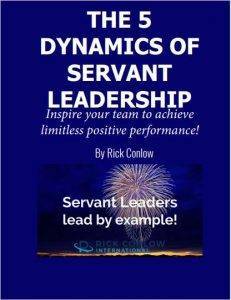 Finally, see Rick’s newest book. The 5 Dynamics of Servant Leadership: Inspire Your Team to Achieve Extraordinary Goals!
The post The Success Mindset appeared first on Rick Conlow.
October 8, 2022
19 Communication Quotes of Insightful Wisdom
The number one problem in organizations is the lack of communication. This includes executives with one another. Furthermore, it maliciously spreads to management across departmental silos. And, of course, between managers and employees. It is a deadly disease that saps the productivity out of everyone. Why is it such a problem? First, people in general are selfish and looking out for themselves. Second, organizations tend to promote competitive cultures that pit people against one another. Therefore, distrust, fear, and a lack of teamwork prevail. As a result, company cultures become negative, combative, and toxic in nature.
These nineteen communication quotes remind us there is a better way. Things can change for the better. How? We focus on the needs of others not just our own–people first. This is also the way of Servant Leadership. Companies and leaders that communicate powerfully and positively gain a competitive edge in the marketplace.
 10 Valuable Communication Quotes “Another vitally important attribute along the road to wisdom in interpersonal success is to listen well. This means that you pay total attention to those that are speaking to you and not barging into the conversation because you want to insert your opinion.” Catherine Pulsifer“The 3 C’s of healthy relationships: communication, compromise, commitment.” Unknown“Emotional awareness is necessary so you can properly convey your thoughts and feelings to the other person.” Jason Goldberg“But good healthy communication is impossible without openness, honesty, and vulnerability.” Paul Kendall, “Good communication is just as stimulating as
black coffee
, and just as hard to sleep after.” Anne Morrow Lindbergh“To effectively communicate, we must realize that we are all different in the way we perceive the world and use this understanding as a guide to our communication with others.” Tony Robbins“When we are fully present, we have access to our greatest power, creativity and ability to communicate and perform exceptionally at whatever we are doing.” Christopher Babson“The way we talk to our children becomes their inner voice.” Peggy O’Mara“We have two ears and one mouth so that we can listen twice as much as we speak.” Epictetus“Communication – the human connection – is the key to personal and career success.” Paul J. Meyer
10 Valuable Communication Quotes “Another vitally important attribute along the road to wisdom in interpersonal success is to listen well. This means that you pay total attention to those that are speaking to you and not barging into the conversation because you want to insert your opinion.” Catherine Pulsifer“The 3 C’s of healthy relationships: communication, compromise, commitment.” Unknown“Emotional awareness is necessary so you can properly convey your thoughts and feelings to the other person.” Jason Goldberg“But good healthy communication is impossible without openness, honesty, and vulnerability.” Paul Kendall, “Good communication is just as stimulating as
black coffee
, and just as hard to sleep after.” Anne Morrow Lindbergh“To effectively communicate, we must realize that we are all different in the way we perceive the world and use this understanding as a guide to our communication with others.” Tony Robbins“When we are fully present, we have access to our greatest power, creativity and ability to communicate and perform exceptionally at whatever we are doing.” Christopher Babson“The way we talk to our children becomes their inner voice.” Peggy O’Mara“We have two ears and one mouth so that we can listen twice as much as we speak.” Epictetus“Communication – the human connection – is the key to personal and career success.” Paul J. Meyer
 9 More Eloquent Communication Quotes“To have good communication skills means you are able to make your point without a lot of fillers and stumbling.” Gregory Davidson“Communication is your ticket to success, if you pay attention and learn to do it effectively.” Theo Gold“The most important thing in communication is to hear what isn’t being said.” Peter Drucker“Every time I stand to communicate, I want to take one simple truth and lodge it in the heart of the listener. I want them to know that one thing and know what to do with it.” Andy Stanley“Conflict
avoidance
is not the hallmark of a good relationship. On the contrary, it is a symptom of serious problems and poor communication.” Harriet B. Braiker, “A great leader needs to possess a balance of traits, and the ability to share them with others, including commitment, communication, confidence, creativity, honesty, inspiration, intuition, loyalty, prioritization, and the ability to laugh and learn from mistakes what I like to call experience.” Jason NavalloWhen we listen with the intent to understand others, rather than with the intent to reply, we begin true communication and relationship building. Opportunities to then speak openly and to be understood come much more naturally and easily.” Stephen Covey“We are stronger when we listen, and smarter when we share.” Rania Al-Abdullah“The art of communication is the language of leadership.” James Humes
9 More Eloquent Communication Quotes“To have good communication skills means you are able to make your point without a lot of fillers and stumbling.” Gregory Davidson“Communication is your ticket to success, if you pay attention and learn to do it effectively.” Theo Gold“The most important thing in communication is to hear what isn’t being said.” Peter Drucker“Every time I stand to communicate, I want to take one simple truth and lodge it in the heart of the listener. I want them to know that one thing and know what to do with it.” Andy Stanley“Conflict
avoidance
is not the hallmark of a good relationship. On the contrary, it is a symptom of serious problems and poor communication.” Harriet B. Braiker, “A great leader needs to possess a balance of traits, and the ability to share them with others, including commitment, communication, confidence, creativity, honesty, inspiration, intuition, loyalty, prioritization, and the ability to laugh and learn from mistakes what I like to call experience.” Jason NavalloWhen we listen with the intent to understand others, rather than with the intent to reply, we begin true communication and relationship building. Opportunities to then speak openly and to be understood come much more naturally and easily.” Stephen Covey“We are stronger when we listen, and smarter when we share.” Rania Al-Abdullah“The art of communication is the language of leadership.” James HumesIn conclusion, as individuals and managers take responsibility and the initiative to create better communication, any workplace or relationship can improve. It starts with caring and empathy for one another. All of us must learn, train, study, and prepare to be more effective. Yes, even in the office, shop floor or at home. For a bonus quote, as Joseph Sommerville said, “We take communication for granted because we do it so frequently, but it’s actually a complex process.”
 Also, go here for our RealTime Learning & Training leadership and personal development website. Over 250 micro-learning and career development resources at your fingertips!
In addition, see this RealTime Learning and Training module: Communicating Powerfully and Positively with Your Team.
Finally, do you want to accelerate your leadership success and learn more about Servant Leadership? Go here for Rick’s newest book. The 5 Dynamics of Servant Leadership: Inspire Your Team to Achieve
The post 19 Communication Quotes of Insightful Wisdom appeared first on Rick Conlow.
September 24, 2022
Managing Your Time for Results
Managing your time, leads to managing your life. Real time management is self-management. Talent, information, and desire are not enough to be successful in a career. Your personal habits rule your behavior. A change in self-perception and behavior is required, especially in implementing new approaches. But do not worry. Big changes aren’t usually required. It is the little things, if changed that begin to make a difference. Everyone has comfort zones and blind spots. Often, small things done consistently in strategic places create major impact.
For example, quickly count the f’s in this sentence:
“Finished files are the result of years of scientific study of a few dedicated experts.”How many f’s did you get? Most count five; some get six, and a few, seven (on the first try). There are seven f’s in the sentence. Sometimes we miss the obvious.
Read aloud the sentence in each illustration below–quickly.
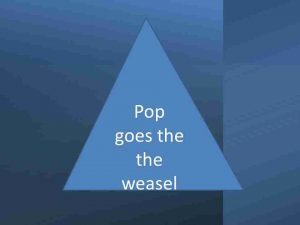
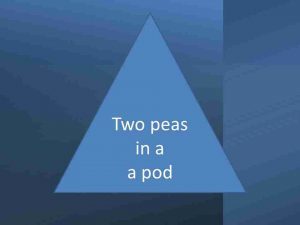

Did you just read the sentences as you remember them? Notice each has an extra word – the, a, and the. Most people do not see this the first time.
Here is the point: What are you missing that is right in front of you? Sometimes its solutions to present problems, ideas, and answers to future issues. What you need is often in front of you, but you don’t see or use it. Why? It happens to everyone. It has much to do with conditioning, and blinders we put on caused by the beliefs we have learned over the years.
I cannot change!I am what I am!I’m not that kind of person.That is not me.I always do it this way; it has worked before.I am not educated enough.As on manager said, “Everyone gets more than I deserve.”Everyone has their problems. However, personal excellence requires a willingness to change or try new things if it will get better results. Top performers will shed old habits and beliefs as easily as leaves fall from trees in the autumn.
 4 Successful Techniques to Manage Your Time for Results
You cannot really manage time because it is constant. You can manage yourself! According to high performance research, self-management requires you to: expand your comfort zone, build positive beliefs, increase your productivity, and be satisfied with your life.
Expand Your Comfort ZoneAll of us put blinders on to our self-imposed limitations. Don’t stay a creature of habit. To expand our potential, all managers need:
Feedback – positive and negative; ask for it!New ideas – try different methods, brainstorm.Failures – Andrew Carnegie said the way to succeed is to fail more.Change – make a new habit or action step and stay with it for 30 days.Build Positive BeliefsYou do want to increase your performance, energy, and success, don’t you? Never forget that talent, knowledge, and desire aren’t enough to achieve that. You must change your beliefs as well. Your beliefs affect your attitude. Your attitude determines if you use your talent, knowledge, and desire.
Here’s how to build positive beliefs:
Focus on positive results. Sounds simple, but psychologists tell us 85% of our thoughts are negative.Use mental rehearsal. Pre-play positive results on sales, goals, and customer contacts. Olympic athletes do this.Try self-talk or affirmations. Take time to put positive info words in your mind. Do positives, positive our (PIPO), not garbage in, garbage out (GIGO).Try affirmations like these:I am an excellent manager!I am healthy and fit!I communicate well and with sincerity!Write a few of your own affirmations. Make them present tense, positive and about yourself.
 Increase Your Productivity
 Most of us, leaders included, spend most of their time on the urgent, or crises or problems. Schedule and invest more time on organizing, planning, thinking, tracking, communicating, training, and learning. Your true payoff activities involve these functions. Be a pro; make the time to get them done. Eliminate the word “can’t” and in the words of Winston Churchill, “never give up, never, never give up.” Implement these peak performance techniques:
Follow a personal management system – for organization, scheduling, goal tracking, and time management. Multiple apps and smartphones have this capability. Each must include these key elements:
yearly overview calendar monthly overviewdaily calendar (to do list, calls, and appointments)project listtelephone lognotes sectionFind one planner and use it. Don’t use two or three; you’ll be ineffective. Also, if it’s important, write it down or log it. (Meeting, ideas, activity, goal). Initiate this concept in a personal planner and you’ll literally save an hour a day. In addition:
Write personal and career goals and action plans. Again, if it isn’t written down, it’s not important to you. All great achievers are great planners. Chance favors the prepared mind.Keep learning. Read, listen to tapes, and take courses on management. No matter how successful you are now, you will limit yourself if you stop learning.

This involves living each moment to the fullest on the things that matter most. Always ask these questions, what is most important to my family? My team? (If you have one) and my career?
Plan for tomorrow while you get things done today. To be successful also means self-development. However, it’s easy to get trapped by a whirlwind or grind and never enjoy or appreciate who you are or what really is important. Remember these ideas as well:
Do what you love.Nurture your relationships.Do nothing sometimes.Have alone time.Help others.In conclusion, remember these words by Benjamin Franklin: “Does thou love life? Then don’t squander time. It’s the stuff life is made of.”
Also, see this for your personal development
In addition, go here for our RealTime Learning & Training leadership and personal development website. Over 250 micro-learning and career development resources at your fingertips!
Finally, do you want to accelerate your leadership success and learn more about Servant Leadership? Go here for Rick’s newest book plus a complimentary 21 Lesson Servant Leadership Training, The 5 Dynamics of Servant Leadership: Inspire Your Team to Achieve
The post Managing Your Time for Results appeared first on Rick Conlow.September 14, 2022
Great Coaching Begins with Servanthood
Great coaches live servanthood. You cannot be effective as a coach if you do not put people first. That’s the first and only rule of Servant Leadership.
Do you want to accelerate your career and inspire your team? Become a Servant Leader Coach. Review this mini-training to elevate your thinking and results. It will begin to advance your thinking as a leader. And help you combat toxic work environments.
7 Signature Traits of Servant Leaders
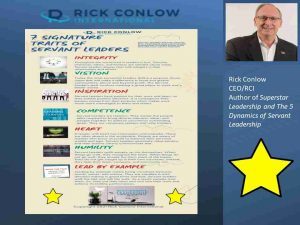
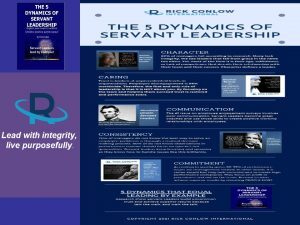
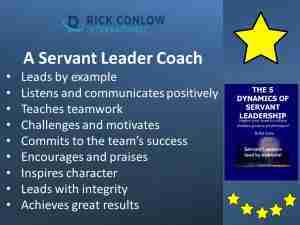
Coaching is the secret sauce to leadership success at any level. Countless managers fail because they lack the trust of their team because they coach poorly. Research on Servant leadership shows it is the approach that out performs others. Coaching is the bedrock skill of Servanthood. See these resources:
Servant Leaders Achieve Extraordinary Results 5 Coaching Steps to Steps that Bring Out the Best in PeopleCoach informally engaging employees positively in numerous short interations daily that reinforce and strengthen a healthy constructive relationship. Furthermore, coach in montly Performance Discussions. Using an interactive process that reviews the employees well-being, performance, and personal/career development. As you do this, you do not need to motivate anyone. Employees become self-directed and inspired to excel at what they do.
Also, do you want to learn more about Servant Leadership? See this: How Does Servant Leadership Work?
In addition, go here for our RealTime Learning & Training leadership and personal development website. Over 250 micro-learning and career development resources at your fingertips!
Finally, do you want to accelerate your leadership success and learn more about Servant Leadership? Go here for Rick’s newest book plus a complimentary 21 Lesson Servant Leadership Training, The 5 Dynamics of Servant Leadership: Inspire Your Team to Achieve
The post Great Coaching Begins with Servanthood appeared first on Rick Conlow.
September 2, 2022
Toxic Workplaces Cause Even More Employees to Disengage and Quit
Toxic workplaces raise their ugly heads again and again at employees. As a result, they disengage and resign. While companies say they are for employee engagement, as a recession looms, they speak out of both sides of their mouth.
According to Gallup, employee engagement continues its downward trend with only 32% of employees engaged in the US. Interestingly, remote employees have a 37% engagement rate. (Global engagement is 21%.) Furthermore, the #1 reason for employees quitting jobs involves a toxic workplace.
Employee disengagement is an estimated $25 Trillion worldwide problem that openly stunts business growth and steals profits. Gallup estimates less of a dollar impact, but they do not take into consideration the impact of disengagement on the customer experience. Companies tend to ignore that people who are genuinely engaged and happy at work deliver superior performance and optimal results.
5 Examples Toxic Workplace ApproachesGoogle sales executive warns and threatens employees that if third quarter results, “don’t look up, then there will be blood on the streets”. Zuckerberg of Facebook told his employees at a meeting, “Realistically, there are probably a bunch of people at the company who shouldn’t be there.” Thereby threatening layoffs due to the company’s poor performance.CEO Braden Wallake of HyperSocial, posts a crying selfie about how laying off people made him upset. It was met with backlash because it was about him not his team.Through an email, Billionaire Elon Musk of Tesla demanded that all employees come back to work. And he heaped on a 10% layoff threat to his workforce, later clarified to mean white-collar employees.Hundreds of Gannett journalists walk out in a coordinated effort to protest a series of emails by management threatening layoffs. CEO Mike Reed said Gannett must, “responsibly and proactively [align] resources to our highest strategic priorities and [lower] costs to be in line with revenues.” Meanwhile, Gannett spends millions on lawyers for fighting unions, and violating wage and hour laws.The US is the only wealthy country in the world without a national program for parental leave. In addition, a survey of over three thousand companies by the Society for Human Resource Management, shows that companies with paid leave beyond what the law requires, dropped from 53% to 37% since 2020.The potential downturn in business and a decline in profits brings out the worst in most companies’ leadership. As a business owner I know you must make money. However, executives’ pay plans and fear drives them to do stupid things like the above.
When push comes to shove most organizations see employees as numbers or pawns, not as partners. Pawns you can move around, change, or discard with no emotional attachment. The relationship is a fleeting low priority. As a result, employees react in fear and worry, which destroys their morale and productivity. Ironically, a company’s single minded bottom-line thinking costs them even more money.
A Contrast to Toxic WorkplacesIn contrast, one of our clients received a big order with strict strings attached that taxed their capabilities. Rather than making an executive decisions from on high, they held meetings with their employees to gain their help. They explained the situation, that they needed a 25% productivity gain and could not hire more people because of the current economy, and they had to perform to get paid. So, they broke into small groups and asked for input and ideas.
As a result, the employees said that for every 5% improvement in productivity they should give a day off with pay. The company agreed and it exceeded the productivity gains. Later, when the revenue came in, the company gave bonuses to everyone, too.
Pulling It All TogetherWith partners the relationship matters. To maintain trust, you must genuinely and empathetically communicate—talk, listen, and collaborate with employees. This is the way of Servant Leadership, a needed but foreign approach in most companies. If only the companies above did that instead of blaming and threatening. If only managers everywhere put people first! Employee engagement would soar.
Also, do you want to help lead the change in transforming leadership practice and thought to elevate “People First”? See our page ServantLeadership@RickConlowInternational on LinkedIn.
In addition, go here for our RealTime Learning & Training–a leadership and personal development website. Micro-learning and career advancement at your fingertips!
Finally, see Rick’s newest book. The Dynamics of Servant Leadership: Inspire Your Team to Achieve Extraordinary Goals!
The post Toxic Workplaces Cause Even More Employees to Disengage and Quit appeared first on Rick Conlow.