Rick Conlow's Blog, page 15
October 28, 2019
Communicating Well in Spite of a Difference in Opinion
Today it appears that your opinion on whatever subject, it’s either black or white and no in-between. Many of us feel compelled to tell everybody how right we are in our views. Consequently, a difference in opinion is less and less tolerated. Have you noticed that?
Check out this prose, Differences of Opinion, by Wendy Cope, a contemporary English poet. It went viral as a mansplaining work. But it’s even more than that. It also relates to when one person assumes that another person is wrong, ignorant, or misinformed. Unfortunately, this is often based simply on the other person’s gender, race, or opinion.
Differences of Opinion
He tells her that the earth is flat. He knows the facts and that is that.
In altercations fierce and long. She tries her best to prove him wrong.
But he has learned to argue well. He calls her arguments unsound.
And often ask her not to yell. She cannot win. He stands his ground.
The planet goes on being round.
Global polarization on opinions is the growing norm
According to research, it’s not the issues that matter to most people but the social identity, particularly in politics. Social media makes the problems worse because it limits the dialogue with short communication. So, views become narrow and extreme because there is no real conversation. Plus, people write things they many never say in person. Unfortunately, this leads to a multitude of negative and often conflicting emotions.
The most recent US presidential election was particularly divisive. The next seems to be building on that. In fact, democracies worldwide are slipping into a “political autoimmune disease.” Extremism rules! Discussions seldom take place amicably and are intensifying. Of course, this fuels the dark web political hackers. They feast on Facebook, government institutions, and other social sites. Their goal is to facilitate false news, condemnation, anger and hate.
Countries like China and Russia haven’t taken kindly to opposing opinions for quite some time. Corporations aren’t exempt; as one CEO told me, “I am all for employee involvement and engagement, as long as they come up with what I want.” Another version of that is the quote from Henry Ford when his Model T assembly line method was taking off: “Any customer can have a car painted any color that he wants, so long as it is black.”
Unfortunately, we all somehow get caught up in the political autoimmune disease and don’t recognize it as a form of self-destruction or autophagia.
Too many leaders that can’t lead
Philosopher Voltaire wrote, “I disapprove of what you say, but I will defend to the death your right to say it”. In politics and our organizations, we must stop the moralizing, criticizing, spewing rumors, calling names, inciting conflict and judging. We don’t have to always agree but we can listen without malice. We need much more collaboration, compromise, consensus and compassion to co-exist peacefully. This can come only from open minds. Or, people that care for the intrinsic value of another person’s rights and opinion. Wishful thinking, maybe, but it is the very essence of liberty.
So, where is the leadership? Where are the leaders that take the high road in the midst of this escalating chaos? Where is integrity, character, ethics and honesty? Nelson Mandela declared, “A good leader can engage in a debate frankly and thoroughly, knowing that at the end he and the other side must be closer, and thus emerge stronger. You don’t have that idea when you are arrogant, superficial, and uninformed.”
Mother Teresa challenged us responding to another person’s opinion by saying, “Kind words can be short and easy to speak but their echos are truly endless.” She added, “If we have no peace it’s because we have forgotten we belong to one another.”
 Do you want more career success? See this: Success Practices Guide and Assessment.
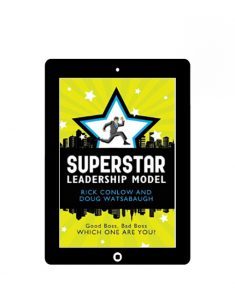
Do you want a proven game-plan for management career success? If so, check out the Superstar Leadership eBook.
The post Communicating Well in Spite of a Difference in Opinion appeared first on Rick Conlow.


October 12, 2019
Micromanagers Lie by Not Admitting It
Do you know a micromanager? My wife and I are fortunate to know Dr. Rand Rasmussen, a therapist and educator in Family Counseling and Therapy. He has long been a trained observer of human nature and we are regularly treated to his Will Rogers-like commentary. He claims that there are three things people will always lie about.
The 3 Things People Steadfastly Deny:
They have no sense of humor.
They are not good in bed.
That they are micromanagers.
Lying is More Normal than We Think
 Before you doubt this information, research by psychologist Robert Feldman at the University of Massachusetts demonstrates that 60% of us lie at least once, and many folks will three times in a ten minute conversation. In fact, further research says that lying is embedded in 90% of children by the age of 4. Men tend to lie to make themselves feel better and women to make others feel better. Another study found that 18-44-year-olds tell up to an average of 5 lies a day.
National Geographic found that most people report telling the truth in any given day. However, when followed and asked, “Did you lie in the last week?”, 92% reported that they did. And, Career Builder found that 56% of hiring managers have caught people lying on resumes. In summary, people lie more than they want to admit.
For the first point above, a good sense of humor can aid all of us in getting through some rough days. Everyone thinks that they’re witty and funny, and some are. Not everyone, though. Let’s leave the second point alone! The third point is the one that we want to focus on.
More Micromanagers than We thought
We know that bad bosses kill employee engagement, productivity and morale. Most of us have read or heard about the studies that eighty-plus per cent of managers fail. Is it surprising that many of them may be closet micromanagers but they are just in denial about it? They do not or cannot see themselves that way. They believe the T-shirt slogan: “I’m Not Bossy! I just know what everybody should be doing.” Somehow they believe they are the only person that understands all that needs doing and how it should be done. They seldom listen to feedback.
A past client of mine was a full-blooded micromanager. Consequently, he had to be copied on everything. He sent emails at all hours into the night and morning to ensure everybody got his message on everything.. He once said to me, “I don’t want people to think, I want them to do what I want them to do.” Every decision had to be run through him. Polices and procedures were written for nearly every possible contingency. This person felt he was a great manager, too.
Unfortunately, it seems, micromanagement is more prevalent than we think. Organizations often turn a blind eye to micromanagers who tend to bring some sense of order to chaotic corporate cultures. So, lying to ourselves and others does seem to be fairly common after all, doesn’t it? Employees eventually know, and feel the brunt of poor leadership. This erodes trust in the person, the company or the government. In addition, it decreases results. Actor Bill Murray tweeted, “So, if we lie to the government, it’s a felony. But if they lie to us its politics.”
Finally, what do you think? Should micromanagers come out?
 Want to gain fresh ideas for motivating others, check out the eBook: How to Motivate–No, INSPIRE–People!
Or, check out Rick’s best selling book, Superstar Leadership.
The post Micromanagers Lie by Not Admitting It appeared first on Rick Conlow.
September 30, 2019
The One Trait that Turns Setbacks into Comebacks
We all face setbacks, stress and difficulties in life. A friend of our family returned home early from a business trip one weekend, and found his spouse in bed with another man. Consequently, he was stunned, and eventually got a divorce. Soon after this, he found out he had cancer and began an intense treatment. In addition, he missed a lot of time at work because of his health, where he ended up being re-organized into a lay off. Experts suggest this list as a top ten for setbacks in life:
The Top 10 Setbacks in Life
Serious illness
Financial problems
Loss of a loved one
Loss of a child
An accident with personal injury
Drug or alcohol addiction
A Relationship Breakup or Divorce
Getting fired or laid off
A Bad Boss or work related conflict
A catastrophe that affects many at the same time
 When you research deeper into successful people who’ve suffered setbacks in life, you discover one thing in common: resiliency. They all had failures and disappointments, yet they didn’t quit. They may have had their bad moments but they bounced back. Our friend suffered three awful events around the same time that literally crushed the life out of him. Yet, he hung on with resiliency which is often called “heart”. This refers to courage, determination, persistence, resolve, fortitude, and a hope that life will get better. Eventually our friend recovered for his illness and landed a better job. He’s still looking for a new love.
Resiliency is the one trait psychologists say that determines the quality of a person’s life. Without it, people who meet defeat never seem to move forward. Instead they tend to blame others or circumstances. They also hold grudges, lack direction, quit too soon, give little effort, short-change discipline and persistence, and don’t ask for or listen to advice. These qualities don’t improve life’s difficult circumstances.
5 Ways to Turn Setbacks into a Comeback
Resiliency is a capacity for self-transformation and change. It’s not genetic; it’s learned. Resilient people recover pretty quickly from difficulties to try again and to live even more effectively. According to research they have five characteristics:
Self-awareness– They recognize their emotional responses and why it happens. In addition, they pay attention to the behavior of others their emotions impact.
Internal focus of control– They take responsibility for their own actions. They know the importance and power of their own choices.
Setbacks are a part of life– They realize that perfection and winning in everything is not the script for a fulfilling life. They seem to enjoy the process and seek the humor in it, too.
Problem-solving skills– They have learned how to learn to deal with their challenges and to persevere.
Social support structure– They have networks of people they depend on for help, hope, and guidance, which is extremely important.
Resilient people cultivate an inner toughness to re-frame their hardships. This activates successful living even when some of their goals or activities don’t work out. People with heart rise above failure or unexpected challenges. These events fuel them forward. Therefore, in time, resilient people sustain a happier and more fulfilling life.
 In Summary
Writer and poet Maya Angelou said these beautiful words that relate to resiliency: ” If you don’t like something, change it. If you can’t change it, change your attitude. Nobody controls all the events that happen to them, but all of us can control how we respond. ” Winston Churchill added this wisdom: “Success is not final, failure is not fatal: it is the courage to continue that counts.”
How do you survive life’s curve balls and keep your sanity? Author Rick Warren concludes, “Life is full of problems and solutions. The challenges we face either destroy us or make us stronger.”
Do you want a proven game-plan for your management career success? If so, check out my Superstar Leadership eBook .
Or, do you want new ideas for reaching and exceeding your goals? See the interactive book, GoalPower.
The post The One Trait that Turns Setbacks into Comebacks appeared first on Rick Conlow.
September 24, 2019
Creating Leadership Trust that Inspires People
 Leadership distrust is rampant today according to research. This leadership trust training video will share the antidote to that.
For example, the US Congress is rated lower in trust than car salespeople. Only 15% of Americans feel our elected officials are doing a good job. Most employees don’t trust their leaders. As a result, business executives are rated in the bottom one third. Too many leaders don’t value employees based on how they treat them. Unfortunately, employees are often an afterthought. Products, the balance sheet and customers are the priority. Recently, GM and the union are at odds over healthcare and fair wages. Therefore, the union went on strike. Trust is extremely low as the strike will cost both sides heavily.
The Payoff for Trust
Great companies and managers treat employees as their greatest resource. In other words, they respect them, treat them with care and as partners for success. Furthermore, it means the management has high expectations and standards. In addition, they invest in the team. For example, companies or managers provide many opportunities for training, and recognition. Certainly, these kinds of actions begin to create trust.
When leadership and employees trust each performance improves. This means better customer service, greater productivity, and increased sales. The return on investment is huge for any organization. You can tell if a company or manager lacks trust. First, there is higher employee turnover. Consequently, they lag others in their industry in quality or customer service. Today, you can go online to Indeed or Glassdoor to see how employees rate their companies. Generally, a rating below 4.0 means there are issues.
What can you do as a manager? This leadership training will briefly share ten actions that matter. RCI research has discovered critical trust building behaviors. They are a roadmap-that separates great leaders from the everyday manager. It all begins with the integrity of leader. Most importantly, this means honesty, and honoring promises. People respect these actions and it creates trust in the leader. Watch this leadership motivation video now. Give it a “thumbs up” for focusing on ethics and character. We all need this to create a better world. As Jack Welch, former CEO of GE, said, “People have to trust you. You have to build in trust for people.”
So, do you want a proven game-plan for career success? If so, check out Rick’s Superstar Leadership book.
Need coaching or leadership training? Contact RCI for goals exceeded, results achieved.
The post Creating Leadership Trust that Inspires People appeared first on Rick Conlow.
September 11, 2019
How to Listen Effectively and Positively
Good communicators listen effectively. Leaders that really listen, lead better. Why? When you listen well it projects care, concern and empathy. As a result, it helps people you relate to feel valued and important.
Whether you are a manager or not, listening is the golden key to effective communication. This communication video training will give you practical skills that you can use today. (CHECKOUT THE COMPLEMENTARY LISTENING CHECKLIST LINK BELOW.)
What’s the payoff for better listening? You build trust and respect with your team or others. Positive communication increases. As a result, your team will work together better. They will perform better. This leadership training gives you easy to use steps. Most importantly, apply them. All your relationships will benefit.
Barriers to Effective Listening
 By listening to someone you are not necessarily agreeing with them. Therefore, the major goal of the listening technique is to better understand the person or employee. And, during that process, to express interest and concern. As you do this, you help the person or your employee solve their problem. Consequently, when you listen you project the highest form of courtesy and respect. Successful salesman, businessman, and motivator Bob Conklin says, “To listen, you must want to listen.” That’s the first ingredient. Above all, do you care enough to pay attention? All excellent managers listen well. They take time to hear the problems of subordinates, co-workers, or customers.
There are many barriers to effective listening. Here are a few of them:
Noise distractions
Interruptions
Differences of opinion
Prejudices or biases
Different priorities
Busyness
No interest
Limited time
Thinking of other things
Believing someone is wrong
Tiredness
Perception differences
How to Listen Better
Listening can be tough work. My brother in law has counselled AIDs patients. He said, “It was the hardest thing he ever did.” Unfortunately, few managers or people in general want to put in the effort. Often the only reason employees say they don’t feel appreciated is because no one listens to them. Therefore, the lack of listening costs businesses millions of dollars a year in poor morale.
In conclusion, first you have to want to listen. However, there are other techniques that help. For instance see the items below.
Make eye contact
Remove barriers
Use positive body language
Use the person’s name
Paraphrase what’s said
Ask clarifying questions
Certainly, watch this leadership training video and learn more. In addition, as up listen better you will improve your communication with others. Likewise, others will value your advice, influence and relationship. Finally, see this post: 3 Communication Skills with Authentic Power and Positivity.
GIVE THIS VIDEO A THUMBS UP IF YOU LIKE. Please share it with others in your network.
Go here for your: LISTENING CHECKLIST and GUIDE.
 Want to accelerate your leadership and coaching skills? See this complimentary guide: Coaching for Results.
Do you want a proven game-plan for career success? If so, check out Rick’s best selling book: Superstar Leadership.
The post How to Listen Effectively and Positively appeared first on Rick Conlow.
August 16, 2019
17 Learning Quotes that Inspire Life Achievements
 The number 17 signifies wisdom, learning, insight, strength, victory, and self-discipline. Certainly, these seventeen quotes about learning connect us to that inner drive to tap our human potential. In addition, challenge us to be mutually responsible for harmony and peace in the world.
17 Inspiring Quotes about Learning
“Perfect is the enemy of good.” Voltaire
“Develop a passion for learning. If you do, you will never cease to grow.” Anthony J. D’Angelo
“Success is no accident. It is hard work, perseverance, learning, studying, sacrifice and most of all, love of what you are doing or learning to do.” Pele
“Learning is the beginning of wealth, health, and spirituality. Searching and learning is where the miracle process all begins.” Jim Rohn
“Be curious, not judgmental.” Walt Whitman
“Anyone who stop learning is old, whether at twenty or eighty.” Henry Ford
“The will to win, the desire to succeed, the urge to reach your full potential… these are the keys that will unlock the door to personal excellence.” Confucius
“There are no secrets to success. It is the result of preparation, hard work, and learning from failure.” Colin Powell
“I am still learning.” Miichelangelo
“Stay positive and happy. Work hard and don’t give up hope. Be open to criticism and keep learning. Surround yourself with happy, warm and genuine people.” Tena Desae
“Live as if you were to die tomorrow. Learn as if you were to live forever.” Mahatma Gandhi
“Change is the end result of all true learning.” Leo Buscaglia
“Learning is not attained by chance, it must be sought out for with ardor and attended to with diligence.” Abigail Adams
“There is no end to education. It is not that you read a book, pass an examination, and finish with education. The whole of life, from the moment you are born to the moment you die, is a process of learning.” Jiddu Krishnamurti
“Learning and innovation go hand in hand. The arrogance of success is to think that what you did yesterday will be sufficient for tomorrow.” William Pollard
“The library is the temple of learning, and learning has liberated more people than all the wars in history.” Carl T. Rowan
“An organization’s ability to learn, and translate that learning into action rapidly, is the ultimate competitive advantage.” Jack Welch
Pulling it all Together
In conclusion, by 1900 knowledge doubled every 100 years. At the beginning of the 21st knowledge it doubled every 1-2 years. In contrast today, according to research knowledge it doubles every 12 hours. Consequently, all of us are faced with the need to relearn how to learn or be left behind. Just to be aware of the knowledge available, learning means constant input. Most importantly, to stay abreast of the what’s happening, we need self-directed, seamless and ceaseless educational activity. Finally, former President John F. Kennedy said, “Leadership and learning are indispensable to one another.”
 Want to gain fresh ideas for motivating others? Check out the eBook: How to Motivate-NO-Inspire People.
The post 17 Learning Quotes that Inspire Life Achievements appeared first on Rick Conlow.
August 5, 2019
Good Bosses vs. Bad Bosses: What’s the Difference?
Do you work for a good boss or bad boss? Start by thinking of the worst supervisor or boss you ever had. Chances are someone comes immediately to mind. Why do you consider this person “the worst?” How did he or she act? How did this person’s approach affect your attitude and work effort? Did this person influence you to do your best?
Now, think of a situation where you had the best manager ever. It’s harder to identify a boss who shines, isn’t it? What was this person like, and what did he or she do differently? How did this person affect you and your work effort?
What can we learn?
Did you want to do a better job for the best or the worst boss? The answer is obvious, isn’t it? Regrettably, it’s far more likely that the majority of our work life has been spent reporting to bad bosses. Poor managers continue to dominate the landscape of corporate world globally. Despite the research on effective leadership there are too many of them. They are an epidemic killing off employee productivity, loyalty, creativity and company profit. It’s a gloomy picture if we feel we can’t alter it. But we can.
Knowing how dismal it can be to work for an incompetent supervisor, we can decide to be the good manager if that is our goal to have that role. And if we have a few rough edges (and don’t we all), we can get them polished. Maybe you can become an exceptional leader. In addition, as an employee, we can choose how to interact with a horrible manager.
So how do know whether YOU work for a “bad” boss or a “good” boss?
Look at the results. The number one reason employees say they quit is because of unhappiness with their boss. Have a lot of people quit the team you are on? Do you want to quit? How excited are you about coming to work each day? Employees with bad bosses are four times more likely to leave than employees who believe they have good bosses. Interviews in seven hundred companies of 2 million employees suggest that the productivity of employees depends on their relationship to their boss.
 The worst bosses contribute to poor morale and bad attitudes, which lead to poor productivity, indifferent customer service, lower sales, reduced quality, and poorer overall financial results. They have employee turnover problems and often have to coerce or bribe employees to do things. Employees perform because they have to, not because they want to. They are like mercenary soldiers being paid to do the job. They aren’t the spirited patriots fighting to protect their homes. If you have a bad boss, see this for help: 7 Courageous Ways to Deal with a Bad Boss.
In big companies, poor bosses stand on every step of the corporate ladder. Many times in smaller organizations, the owners or key executives are often the culprits. In fact, research from various suggests that there are many bad bosses out there.
Eighty percent of employees say they get no respect at work.
Less than 53 percent of Americans are unhappy with their jobs.
Fifty-four percent of employees in lower performing companies are disengaged.
However, good bosses have great people skills that inspire their teams.
Pulling It All Together
I know what you’re thinking. What about those awful bosses who get good results? Yes, it does seem that some managers do well in spite of the pitiful leadership practices. In fact, if you talk to enough people, you’ll find poor bosses and good bosses can both achieve organizational objectives. The difference is in the “how” and what happens long-term. Lack of respect and poor relationships are weak fuel, leaving poor bosses with nothing to drive sustainable results. Results are unsustainable because poor bosses sap employees’ commitment and positive emotion to invest their best in their work.
In other words, bad bosses’ behavior does eventually catch up with them (or their organizations), but unfortunately for their victims-the employees-and, it doesn’t seem to happen fast enough.
How do you start to become a better boss, if you are one? If you want your team to be better you have to be a better leader. So, keep learning: read new leadership books, attend seminars and webinars, and get a personal coach. Do this consistently and apply new strategies immediately. This will be a great beginning to improving your performance, to helping employees effectively, and to achieving your goals.
 Do you want to learn more about how effective employees succeed? If so, check out Rick’s eBook, The Extraordinary Employee.
Also, check out this complimentary article: The 5 Laws of GoalPower.
Furthermore, if you want to be a leader, check out this proven game-plan for management career success? Check out Rick’s Superstar Leadership book.
The post Good Bosses vs. Bad Bosses: What’s the Difference? appeared first on Rick Conlow.
July 22, 2019
7 Habits of Highly Effective Employees
Want to advance in your career like other effective employees? Want to accelerate your results? Do you want a better job and to make more money? Therefore, watch this career development training video.
Rick will share the 7 habits from high effective employees. These career tips are invaluable. Too many people take short cuts, and do just enough to get by. However, when they aren’t progressing or doing well financially they blame others. Certainly, they make excuses and say it isn’t their fault. Others find a better path. In his career, Rick, used these seven habits to start at the bottom and eventually become an executive and business owner. He had numerous promotions and of course his income climbed.
2 Examples of the Habits of Highly Effective Employees
 This career training video clip will show you a proven way. For example, one of the tips involves being a collaborator. This means you have to work well with others. It’s about extraordinary teamwork. YOU can do this well if you want to. Nobody knows this intuitively. It will take effort, and personal change. In addition, effective employees start with a belief about positive possibilities which lays a good foundation for working well with others.
Also, highly effective employees keep working to development their skills and influence. They are learners. On-going learning often separates the winners from the losers. Too many people don’t read or study after their formal education. Today, learning is a lifelong process. Effective employees understand this and they get promotions.
Finally, if you don’t quit, these seven habits work for you. Now, watch this video, and may the best of success to you.
Do you want to learn more about how effective employees succeed? If so, check out Rick’s eBook, The Extraordinary Employee.
Also, check out this complimentary article: The 5 Laws of GoalPower.
Furthermore, if you want to be a leader, check out this proven game-plan for management career success? Check out Rick’s Superstar Leadership book.
The post 7 Habits of Highly Effective Employees appeared first on Rick Conlow.
July 15, 2019
Two Powerful Questions Employees Should Ask Their Boss
Questions are powerful. It takes courage to ask and answer them honestly. For example:
Are you stuck in a job and going nowhere?
Do you want to get ahead in your career?
Are you doing interviews but getting no job offers?
Have you landed a few jobs and they ended up being entirely different than what you expected?
Are you doing all you can to succeed?
Introduction
Benjamin Franklin said, “The definition of insanity is doing the same thing over and over and expecting different results.” So, don’t quit. This post will help you in these two situations:
You are considering that you need a new job, and are beginning the job seeking and interview process.
You have a job but you are not going anywhere–limited pay increases and no opportunities for a promotion.
 Good news! The economy is growing worldwide. Jobs are becoming more plentiful. Companies have over $2 trillion in cash and are beginning to spend some of it. The bad news is that the economic conditions aren’t equal everywhere. Regardless of where you are, there are two key questions that you want to ask your boss or potential boss. Before reviewing these two questions, let me give you food for thought.
Few companies today are really loyal to employees. Companies are loyal to their bottom-line. Recently, Target recently laid off 1700 employees in Minneapolis to save $2B in the next two years. These employees were all doing a fine job as far as they knew. Upper management made strategy mistakes in security, merchandising, and in the Canadian operations (17,600 more people lose their jobs); now employees are paying the price. During the 2007-10 Great Recession over 7M people lost their jobs in the US. Worldwide, the job losses amounted to a staggering 50M. Employees didn’t cause the economic downturn. Government and Wall Street policies did, but employees lost their jobs anyway.
CEO pay, compared to employee pay, is 48:1 in Denmark, 67:1 in Japan, 147:1 in Germany and 354:1 in the US. Almost everyone agrees that it is way out of line. Peter Drucker suggested that it should be 20:1, or you risk increasing employee resentment and decreasing employee morale. CEO pay has increased 937% since 1978, while employee pay increased only 10.2%. In the US, pay for employees the last three years has grown slightly, 2-2.9%, which is barely above the inflation rate.
Employee disengagement worldwide is 87%. In other words, most employees are unhappy. Companies have lost employee trust. This negatively affects employee productivity, sales, innovation, teamwork, customer service, and income.
The lesson learned is don’t count on your company or your boss for career development and advancement in your position or pay. It’s a do-it-yourself project most of the time. Few managers want your success as much as they want their success. Companies and managers want to control costs and increase profit. That means less for you.
These two powerful questions get to the heart of the matter for your success.
Powerful Question #1
 You need to clearly know what you are accountable for, so ask your boss: What are my job priorities, expectations and goals? However, few managers are good at determining this. Most have ambiguous goals. So, manage upward. Don’t accept a fuzzy answer; ask probing questions.
In an interview, ask the question, and take notes. Clarify any statements. One colleague came to me who wanted a different job. He had six interviews but received no offers after six months of effort. I took an afternoon to coach him on answering interview questions, asking questions, and showed him how to write a game plan. In the next month he received two job offers.
Whether you are going after a new job or you want to succeed in your current job, create and write out a two-page game plan to share with the boss. Use these headings: Job Goals & Expectations/Action steps. You can use this in a multiple interview process. (Few other interviewees will have a plan.) Once you get the job, review this with your new boss again. After that, get to work on it! In any job, review your plan progress in monthly updates with your manager. (See my post: 5 Steps to ACE Your Next Performance Review).
Few employees ever do this. Former US President Teddy Roosevelt declared,“Whenever you are asked if you can do a job, tell ‘em, ‘Certainly I can!’ Then get busy and find out how to do it.” To make this work you have to perform well. Get all of the training that you can. Learn from top performers, by talking to someone who is successful and at your job level. Aim to improve and excel!
I can tell you that I have done this when I was inside of some organizations. I received promotions and pay increases that others didn’t get because I made this effort. Does this always work like a charm, and do you get everything you want? No. Does it help? Yes. This is about being proactive and taking ownership for your performance and career development. Otherwise, most companies and bosses will take advantage of you. Or you won’t be on their radar and others will be.
Powerful Question #2
 If you want to make more money and make a bigger difference, you have to ask this question, too: what is the career path for my job, and what resources are available to help me move ahead? (Training, coaching, etc.) I have found that if the answers are vague, the manager lacks a system, and there won’t be a clear cut path or opportunity for you to move up. That’s problematic if you want to advance, isn’t it? So ask for specifics; for example, a training calendar or an organizational chart. H. Jackson Brown suggests, “Don’t be afraid to go out on a limb. That’s where the fruit is.” Go for jobs where you can get clarity and a line of sight for your next move. After all, it’s your future.
So, ask. You need to know what you have to do to get to the next level. One company president that I know started out as the salesperson. He worked his way up. In each job, he would ask what it took to move ahead. Then he did it, and he would tell his boss he wanted the next job in line. The next thing you know, he was the running the place! If you don’t ask, you don’t get, because you don’t know or you don’t challenge yourself, or you don’t put others on notice.
Of course, you will have to keep learning and prepare yourself to make things happen. You’ll need to add a third page to your plan, that’s just for you. This page describes what you have to learn, people you need to meet and experiences you must create to accelerate results. All of this takes work, but remember the payoff. You increase your competence, capabilities and confidence. Does this have to be in writing? Yes, because it’s a physical sign of commitment to your own success. Create the routine of reviewing this regularly.
Pulling it All Together
You deserve a better job with more pay, don’t you? Your career development is in your hands. By boldly asking these questions and creatively designing a plan, you will increase your chances to elevate your career success. It doesn’t guarantee that your company won’t do a lay off someday, but it does make you better prepared to land on your feet. George Eliot encouraged us all by saying, “It is never too late to be what you might have been.”
Do you want to build on these powerful questions by bench-marking your career success with the habits of highly successful people? If so, check out this complimentary inventory and guidebook: Success Practices.
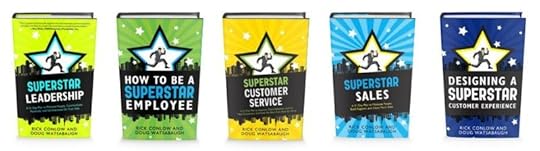
Want to accelerate your career growth? Check out our
Superstar Book Series
for a boost.
The post Two Powerful Questions Employees Should Ask Their Boss appeared first on Rick Conlow.
July 10, 2019
How to Inspire Someone with this Simple Secret
How do you really inspire people? It begins with you. Be inspired to be better in your approach. Then, start with the source: your team, your people, your employees. There are many reasons this all-too-easy and gets bypassed, doubted and ignored. If you ask, you appear to be a great leader. But, if you don’t do anything differently, you are a poor leader. In other words, it comes down to what it always comes down to: CHANGE.
In reality, just inquiring about how to motivate employees can be a leader’s way of pretending she cares. However, when really, she only wants to know if the answer is easy and what she expected. Are you doubting that this could be the case?
Two Examples to Learn From
 Well, let me give you two examples, and then I’ll continue. When you were in college, and your professor did a poor job explaining an assignment, would you seek more details? People who care about their grade, will probably ask the professor for clarity and inspiration where it is lacking in order to exceed the expectations. Let me give you one more example. Pretend you’re a bartender, and a couple orders a drink that you don’t recognize. Now, if tips are your only source of income, you are probably going to probe this couple for more details about the drink, so that you can make it how they want it. Right? It’s simple. In any other environment, when we really don’t know the answer to something that we really want to know- WE APPROACH THE ONE WHO KNOWS. It’s a learning process supported by authentic interest and communication. (See this post for more details on authentic communication.)
It’s common sense, too. Now, I don’t mean to sound harsh. I’m not saying every leader does this intentionally. I am simply saying that if you really want to know – it’s going to show by who you ask and how you ask it. You’re going to seek the solution from the right source.
The Simple Secret that Helps Inspire Someone
Want to do this well? Follow these three communication steps.
Approach the team members that seem to be lacking motivation.
Tell them that you care and want to do your part in helping them succeed.
Then, invite them to tell you directly what would be helpful for them.
Start a conversation, so that your team members know that you’re the type of leader that doesn’t pretend to know it all, but does genuinely care about figuring it out together. This approach is inquisitive, collaborative and non-threatening. That’s inspiring way to work with someone. Oh yeah, remember ask with empathy and be a good listener. It’s also really quite simple, in theory, isn’t it? It does require that we leave a few things behind when we approach motivation this way. This particularly means our ego, preconceived ideas and our judgment.
This principle applies to just about any uncertainty in the workplace. If you’re wondering about something, go talk to the person (or people) who knows. Abigail Adams declared, “Learning is not attained by chance, it must be sought for with ardor, and attended to with diligence.”
Want to accelerate your team’s results? See this complimentary guide-How to Motivate-NO-Inspire-People.
 Do you want a proven game-plan for your management career success? If so, check out Rick’s Superstar Leadership Performance Plan.
The post How to Inspire Someone with this Simple Secret appeared first on Rick Conlow.